
Créé par Emilie, le 3 juin 2026
Votre guide Ryo
© Shutterstock
Porto earns its reputation the old-fashioned way: through cobblestone streets that disorient you at every turn, a river that reflects azulejo tiles in shades of blue you haven't seen elsewhere, and port wine drunk in cellars older than most nations. This is a city of roughly 300,000 people that somehow packs the cultural density of a capital, two UNESCO World Heritage districts, one of the world's most visited bookshops, and a wine trade that has shaped European commerce for three centuries. If you're planning a visit, the Ryocity Porto audio guide from Ryo is an excellent companion for navigating the historic centre at your own pace, with curated commentary that turns each square and façade into a story rather than a label.
You'll find a tram that runs through living neighbourhoods rather than tourist loops, a cable car that swings over terracotta rooftops, and a covered market rebuilt from scratch after decades of neglect, now one of the best places in the country to eat. Beyond the usual landmarks, this guide covers river cruises, a day trip to the Douro Valley, street art in Matosinhos, contemporary architecture at Casa da Música, and a canal town an hour south that feels entirely different from Porto while sharing the same Atlantic light. Twenty-five things to do in Porto, ranked by no one, pick the ones that match your pace.
1. Walk the Ribeira Waterfront
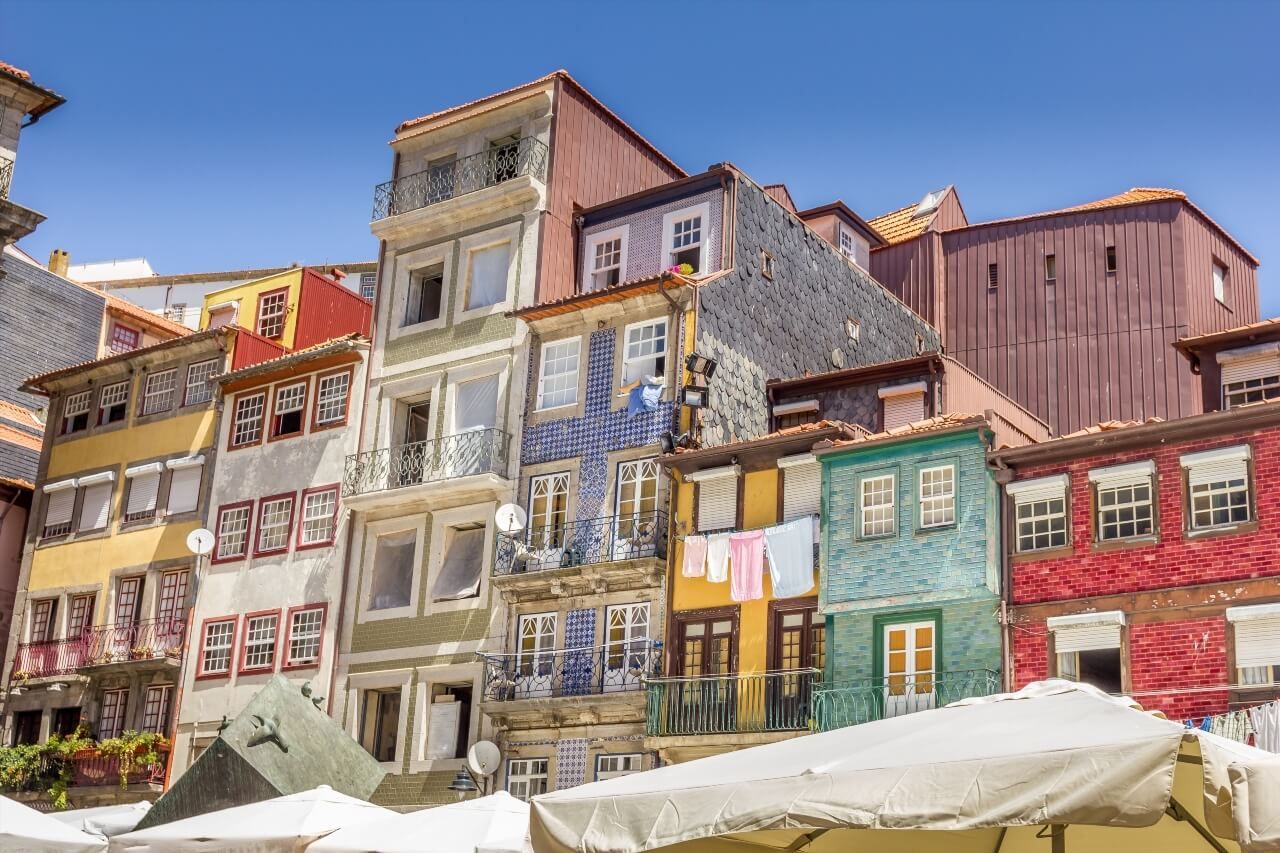
The Ribeira is Porto's most-photographed stretch, and for once the photographs don't lie. The row of narrow, colour-washed townhouses pressed up against the Douro River is genuinely striking, particularly in the late afternoon when the sun comes from the west and the façades shift from terracotta to deep orange. But the Ribeira isn't just a backdrop, it's a working neighbourhood with restaurants open since breakfast, wine bars wedged between old warehouses, and fishing boats still moored at the lower quay.
Walk west from Praça da Ribeira toward the old customs house, then double back east along the lower embankment to reach the stairs that climb toward the Sé. The whole loop takes about forty minutes at a leisurely pace. Avoid the restaurants directly facing the river on summer evenings, they're priced for tourists and surrounded by hawkers. Instead, turn one street back into the Bairro da Sé for smaller, cheaper and considerably better options.
2. Cross the Dom Luís I Bridge
Dom Luís I Bridge (Ponte Dom Luís I, 4430-999 Vila Nova de Gaia, rated 4.8/5 on Google (94 865 avis)) is the most dramatic structure in Porto, and walking across it delivers two entirely different experiences depending on which deck you use. The upper deck sits 45 metres above the Douro and is reserved for pedestrians and the Metro line, the views from here stretch over both banks and reveal the terracotta roofscape of the Ribeira on one side and the barrel-stacked wine lodges of Vila Nova de Gaia on the other. The lower deck carries road traffic, with narrow pedestrian walkways on either side.
Most visitors cross on the upper level heading from Porto into Gaia, then return on the lower level, a good strategy since the lower deck puts you right at river level where the wine lodge tours begin. The bridge was designed by Théophile Seyrig, a collaborator of Gustave Eiffel, and completed in 1886. It remains in daily use as both a transit corridor and one of the most recognisable landmarks on the Iberian Peninsula. Cross it at sunset if your timing allows; the light across the Douro at that hour is reliably spectacular.
3. Explore São Bento Train Station
São Bento Station (Praça Almeida Garrett, 4000-069 Porto, rated 4.7/5 on Google (5 061 avis)) is the most ornate train station in Portugal and arguably one of the most beautiful in Europe. The main hall is lined with roughly 20,000 azulejo tiles painted by Jorge Colaço between 1905 and 1916, depicting scenes from Portuguese history, medieval battles, royal processions, rural landscapes. Trains to Aveiro and the Douro Valley depart from here, which means the building serves a genuine transport function rather than existing purely as a tourist attraction.
Entry is free. Allow fifteen minutes to examine the tile panels properly; bring binoculars if you want to study the upper registers in detail. Avoid arriving at 10 a.m. on weekdays when tour groups fill the hall simultaneously and the acoustics become overwhelming.
4. Visit the Livraria Lello Bookshop
The Livraria Lello (Rua das Carmelitas 144, 4050-161 Porto, rated 4/5 on Google (85 063 avis)) has been called the most beautiful bookshop in the world often enough that the label has become both accurate and exhausting. The Neo-Gothic façade dates to 1906, and the interior, a double staircase in carved wood, stained-glass ceiling, carved wooden galleries rising three floors, is genuinely extraordinary. J.K. Rowling famously taught English in Porto in the early 1990s and visited this shop; the staircase is frequently cited as an inspiration for Hogwarts. Whether that connection interests you or not, the architecture stands entirely on its own.
Because the reputation has driven foot traffic to levels that threatened the collection, Lello introduced a paid entry voucher system to manage queues. The standard Silver ticket starts at €10 (fully redeemable against a book purchase), with Gold and Platinum tiers available if you want bundled books or access to the rare-book Gemma Room. It works: the shop is now manageable rather than impossible. You'll still encounter a crowd, but nowhere near the complete gridlock of a few years ago.
If you want to browse rather than be carried through by a tide of people, arrive at 9 a.m. when the doors open, the first thirty minutes before the tour groups arrive feel almost quiet. The book selection is serious and eclectic, with a strong section on Portuguese literature in translation. Budget at least half an hour; the upper gallery has a reading nook overlooking the main hall that most visitors miss entirely.
The shop is located on Rua das Carmelitas, a two-minute walk from the Torre dos Clérigos. Combining both in a single morning is easy and logical, and it happens to match one of the recommended walking segments inside the Ryocity Porto audio tour.
5. Tour the Port Wine Cellars in Vila Nova de Gaia
Vila Nova de Gaia sits on the south bank of the Douro, directly across the river from Porto's historic centre. The strip of wine lodges running along the waterfront, Graham's, Taylor's, Sandeman, Ramos Pinto, Ferreira and a dozen others, represents the commercial heart of the port wine trade, a business that has operated on this side of the river since the 17th century. The lodges are built here rather than in the Douro Valley because the cooler, more humid microclimate near the Atlantic is better suited to the long ageing that port wine requires.
Most lodges offer guided tours lasting between 45 minutes and 90 minutes, culminating in a tasting. Prices range from €15 to €30 depending on the depth of the tour and the quality of wines poured. Graham's, perched higher on the hillside with a terrace view over the river, is consistently rated among the best for both the tour content and the tasting selection. Taylor's runs a similarly strong operation with an excellent shop. Sandeman is worth visiting for the striking cellar architecture even if the tour itself is more tourist-oriented.
A few things worth knowing before you go. First, book ahead during summer, the better lodges fill their time slots by mid-morning. Second, if you've done one comprehensive tour, subsequent ones cover similar ground; consider using the entry fee for a standalone tasting instead. Third, the Espaço Porto Cruz lodge has a rooftop bar that's free to enter and offers one of the best elevated views of the Dom Luís I Bridge, worth combining with any cellar visit.
Port wine comes in more styles than most visitors expect. Beyond the ruby and tawny categories familiar to most, ask about colheita (single-vintage tawny, often revelatory) and white port, which local bars serve as an aperitif over ice with a slice of lemon.
6. Climb the Torre dos Clérigos
Torre dos Clérigos (Rua São Filipe de Nery, 4050-546 Porto, rated 4.6/5 on Google (21 268 avis)) is the defining vertical element of Porto's skyline, a Baroque tower designed by the Italian architect Nicolau Nasoni and completed in 1763. At 76 metres, it remained the tallest building in Portugal for most of the 19th century. The climb involves 225 steps in a tight spiral; the staircase is narrow enough that ascending and descending groups create brief logjams, but the summit view over the city's rooflines, the river, and on clear days the Atlantic coastline, is worth every step.
Tickets cost €8 and include access to the attached church. Morning light is better for photographs from the top. The tower is located on Rua São Filipe de Nery, a short walk from Livraria Lello, making the two natural companions for a morning of things to do in Porto's historic centre.
7. Discover the Sé Cathedral
Porto's Sé Cathedral has been continuously modified since its original construction in the 12th century, which gives it a layered quality unusual even among medieval churches. The Romanesque base is visible in the nave; the cloister is lined with azulejo panels added in the 18th century depicting scenes from Ovid's Metamorphoses and the life of the Virgin, an unexpected combination of pagan and sacred iconography that nobody seems to have questioned at the time. The silver altarpiece in the north chapel is among the finest examples of Portuguese Baroque silversmithing.
Entry to the cathedral is free; the cloister costs €3. The terrace in front of the cathedral offers a commanding view over the Ribeira and is one of the few elevated vantage points in the historic centre accessible without a ticket. Walk there at any hour, the perspective changes dramatically as the light shifts.
8. Ride the Historic Tram Line 22
Porto's Tram Line 22 is one of three remaining historic tram routes still running in the city. Unlike the more touristy Line 1 (which runs along the Douro to Foz), Line 22 serves a genuine commuter function, it loops through Carmo, Batalha, and Cordoaria, areas that most tourists don't reach on foot. The yellow wooden trams, dating from the early 20th century, rattle and groan around corners at a pace that allows you to watch the city rather than just pass through it.
A single ticket costs €3.50. The full loop takes about 30 minutes and deposits you more or less where you started. Take it without a plan, the best moments are the ones where the tram squeezes through an alley you'd assumed was too narrow for any vehicle.
9. Stroll Through the Bonfim Neighbourhood
Bonfim (Rua de Bonfim, 4300-068 Porto, rated 4.5/5 on Google (2.1K reviews)) spent years as Porto's forgotten eastern district, close to the centre but bypassed by most tourist itineraries because it lacks a single headline attraction. That changed gradually over the past decade as the neighbourhood became the preferred address for independent bookshops, natural wine bars, ceramics studios, and the kind of low-key restaurants that locals actually use. It's now one of the most interesting things to do in Porto if you want to spend a morning without a specific agenda.
The area around Rua de Bonfim and Rua de Costa Cabral is the densest for shops and cafés. The Jardim de São Lázaro, a small formal garden with benches and a public library, is worth pausing at. The neighbourhood also has a concentration of surviving azulejo façades on residential buildings, exterior tile decoration that was once standard across Porto and is now gradually disappearing as buildings are renovated. Bonfim has more intact examples per block than most of the historic centre. The Ryocity Porto walking route doesn't pass directly through Bonfim, which is part of why the district still feels off the main circuit.
10. Visit the Bolhão Market
The Mercado do Bolhão (Rua Formosa 322, 4000-214 Porto, rated 4.5/5 on Google (33 931 avis)) reopened in 2022 after an eight-year renovation, and the result is one of the most successful market restorations in Portugal. The original wrought-iron structure, built in 1914, was retained and restored; the upper gallery stalls now trade in traditional crafts, ceramics, and regional food products, while the lower level remains a working food market with fishmongers, greengrocers, cheese vendors, and butchers.
Come on a weekday morning for the full experience, by early afternoon the fish stalls start wrapping up and the atmosphere quietens considerably. The best single purchase in the market is arguably a bag of dried bacalhau (salt cod) if you're in a position to cook it; if not, the charcuterie stalls have excellent presunto and chouriço for immediate consumption. The covered café in the northeast corner does a creditable coffee at a price that reminds you this is still a market, not a tourist attraction.
11. Take a Douro River Cruise
The standard option is the Six Bridges cruise (Cruzeiro das Seis Pontes), a 50-minute loop under the six bridges that span the Douro within Porto's metropolitan area. It departs from the Ribeira quay on the Porto side or from the Gaia waterfront on the south bank, runs every hour during peak season, and costs around €15 per person. The views from the water are genuinely different from anything available on land, the full scale of the Ribeira embankment and the Gaia wine lodges only becomes apparent when you're looking up at them from the river.
For something more substantial, longer cruises run upriver toward Régua in the Douro Valley, journey times of around three hours each way, often with lunch and wine tasting included. These are best booked as full-day excursions from Porto and are particularly worth considering if you don't have a car and want to see the terraced vineyards without organising independent transport.
A few practical notes. The boats are open-topped with bench seating and can be cold even in summer if the river wind is up, bring a layer regardless of the weather forecast. Sunset cruises book out quickly in July and August; reserve at least 48 hours in advance during peak season. The departure points on both banks are clearly signed and within easy walking distance of the Dom Luís I Bridge.
If you're travelling with children, the standard six-bridges circuit is very manageable at under an hour. For couples or those who want a more atmospheric experience, the evening departures with a glass of port on board are a reasonable indulgence.
12. Explore Palácio da Bolsa
The Palácio da Bolsa (Rua de Ferreira Borges, 4050-253 Porto, rated 4.5/5 on Google (13 504 avis)) (Stock Exchange Palace) is the most formally opulent building in Porto, a 19th-century neoclassical pile built by the city's commercial association after the adjacent convent burned down. The exterior is restrained and institutional; the interior is anything but. The main hall, the Salão Árabe (Arab Room), was decorated over 18 years by Gonçalves e Sousa in a Moorish Revival style that draws on the Alhambra in Granada, horseshoe arches, geometric plasterwork, and gold leaf applied in quantities that would have been obscene even at the time.
Guided tours run every 30 minutes and last about 45 minutes; they're the only way to access most of the rooms. Tickets cost €13. The guide quality varies, some are excellent, others mechanically deliver a script, but the rooms are worth seeing regardless of the commentary. Combine with the nearby Igreja de São Francisco (see below), which is directly adjacent and included in a joint ticket discount.
13. Day Trip to the Douro Valley Vineyards
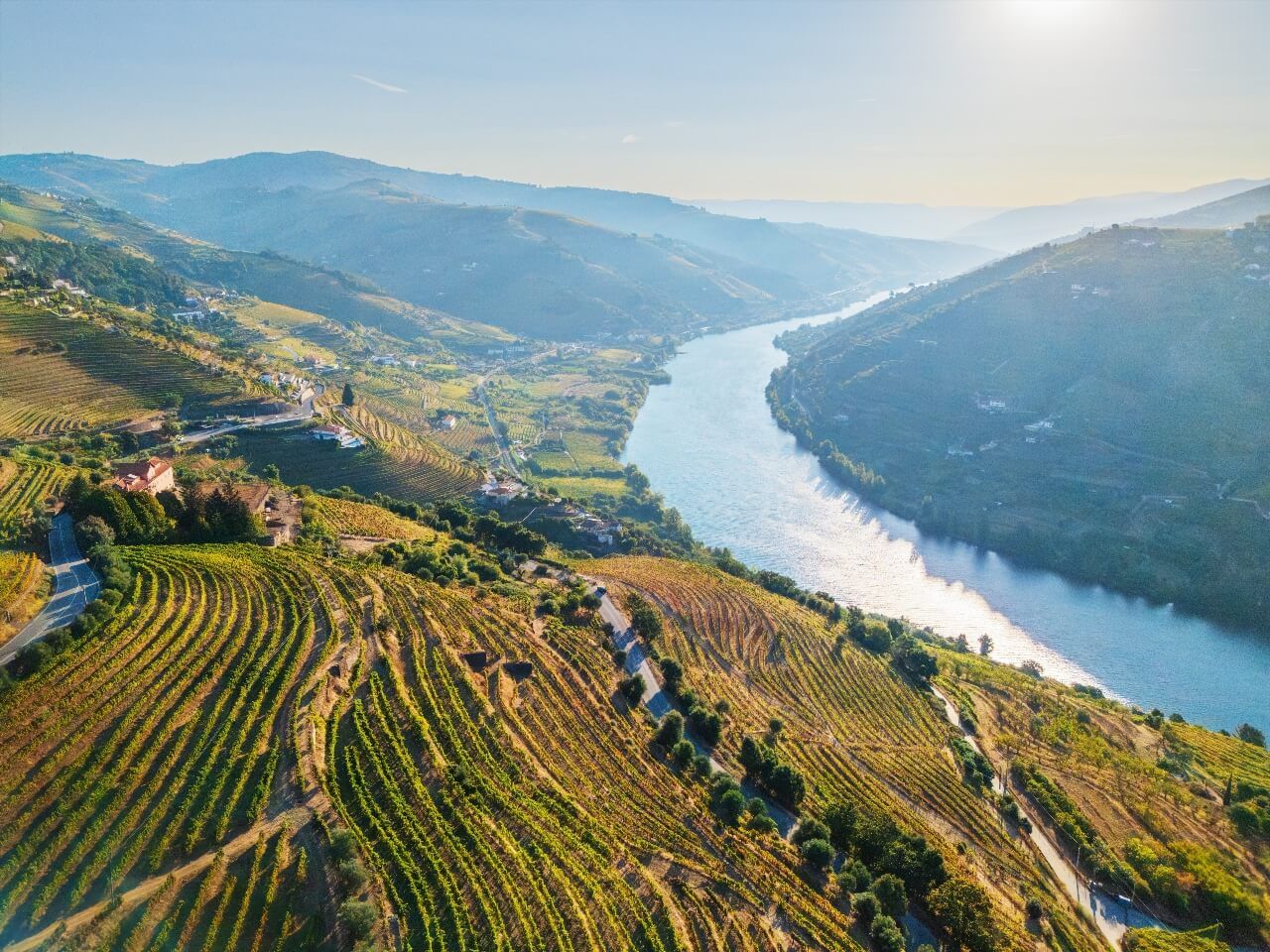
The Douro Valley is the world's oldest demarcated wine region, the boundaries were established in 1756 under the Marquis of Pombal, predating both Chianti and Tokaj as a formally regulated appellation. The landscape along the river between Régua and Pinhão is classified as a UNESCO World Heritage Site, and the visual case for that designation is immediately obvious: terraced vineyards carved into near-vertical schist slopes, small white quintas (wine estates) punctuating the hillsides, and the river running green at the bottom of it all.
From Porto, you have several options for getting there. The train from São Bento to Pinhão (approximately 2.5 hours, changing at Régua) is one of the most scenic rail journeys in Europe, the line runs through the valley with the river on one side and the vineyards rising on the other for the final hour. Tickets cost around €15 each way and should be booked in advance during summer. By car, the drive via the IP4 takes about 90 minutes to Régua, with better flexibility for visiting multiple quintas.
Once in the valley, the best approach is to base yourself around Pinhão and walk or take taxis between quintas for tastings. Quinta do Crasto, Quinta do Vale Meão, and Quinta das Carvalhas are all well-regarded for both their wines and their tasting room experiences. Prices for tastings typically run €10, €30 depending on the tier of wines poured. Reserve ahead, the better quintas limit visitor numbers to maintain quality.
If you want a single day that covers both the valley scenery and a proper tasting, the most practical solution is an organised tour departing from Porto. Several operators run full-day trips that include train travel (or minibus), two or three quinta visits, and lunch with wine for around €80, €120 per person. It's not the most independent way to experience the valley, but it eliminates the logistical overhead of a place where transport connections between individual estates are limited.
14. Visit the Serralves Museum and Gardens
The Serralves Museum of Contemporary Art (Rua Dom João de Castro 210, 4150-417 Porto, rated 4.4/5 on Google (6 907 avis)) (Museu de Arte Contemporânea de Serralves) is the most important contemporary art institution in Portugal, housed in a building designed by the architect Álvaro Siza Vieira and completed in 1999. The museum's permanent collection covers European and international art from the 1960s to the present, with particular strength in Portuguese and Brazilian work. Temporary exhibitions rotate frequently and regularly feature major international names.
The surrounding Serralves Park deserves at least as much time as the museum itself. The gardens were laid out in the 1930s around the Art Deco Casa de Serralves, a pink manor house that functions as an annex exhibition space. The park covers 18 hectares with formal gardens, woodland walks, a kitchen garden, and a working farm, it's one of the best urban parks in Portugal and remains calm even when the museum is busy.
A combined ticket for both the museum and the park costs €20 for adults. The museum is located in the Boavista neighbourhood, about 4 kilometres from the historic centre, easily reachable by Metro (Casa da Música station, then a 15-minute walk) or by taxi. Mondays are often free for residents, but tourists should check the current policy on the Serralves website before going.
Allow at least three hours, more if the current temporary exhibition is substantial. The museum café is run at a serious level and worth a stop for lunch.
15. Ride the Funicular dos Guindais
The Funicular dos Guindais (Rua Augusto Rosa, 4000-098 Porto, rated 3.9/5 on Google (1 533 avis)) connects the upper Batalha quarter with the Ribeira embankment below, covering a 62-metre height difference in about ninety seconds. It opened in 1891, was closed for most of the 20th century, and was restored to service in 2004. The ride itself is brief but offers a clear view over the Douro and into Gaia during the descent.
A single ticket costs €3.50 (included in the Porto Card). It's most useful as a practical connector rather than a sightseeing experience in its own right, but if you're already on the Ribeira and facing the steep climb back up to Batalha, it's a far better option than the stairs.
16. Explore the Foz do Douro Neighbourhood
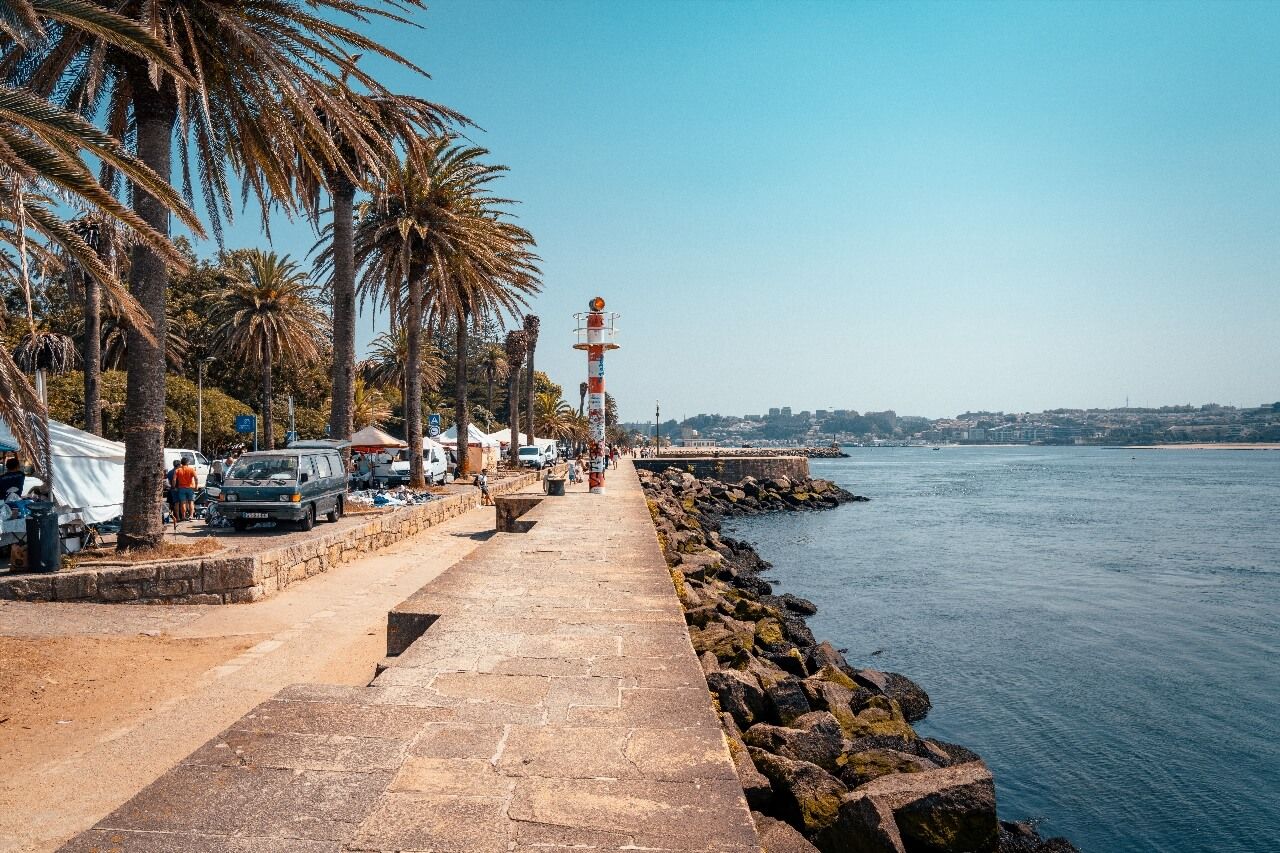
Foz do Douro (Avenida do Brasil, 4150-126 Porto, rated 4.7/5 on Google (5.3K reviews)) is where the Douro River meets the Atlantic Ocean, roughly 4 kilometres west of Porto's historic centre. The neighbourhood has a completely different character from the medieval city: wide coastal promenades, 19th-century bourgeois villas, small beaches scattered with rocks, and an ocean-facing serenity that Porto proper lacks. On summer weekends it fills with families from the city; on weekday mornings it's quiet enough to be almost meditative.
The walk along Avenida do Brasil from the mouth of the Douro to the Castelo do Queijo (a small coastal fortress) takes about 30 minutes at an easy pace and covers most of the neighbourhood's highlights. The restaurants around Largo do Eixo and along the promenade are generally better value and more locally-oriented than anything in the historic centre. Cafeína is a long-established café-restaurant in the neighbourhood with a terrace; worth booking ahead for lunch on weekends.
Foz is reachable by the historic Tram Line 1, which runs from Infante along the river, or by taxi in about 15 minutes from the centre. If you've already explored the historic core with the Ryocity Porto guide, Foz makes a natural afternoon counterpoint, a slower, salt-air pendant to the river-and-azulejo intensity of the centre.
17. Wander Matosinhos for Seafood and Street Art
Matosinhos is Porto's northern neighbour, technically a separate municipality, but connected to the city by Metro and seamlessly urban in character. It has two strong reasons to visit. First, the seafood: the area around Rua Heróis de França and the adjacent streets constitutes one of the best concentrations of charcoal-grilled fish restaurants in Portugal. The cooking here is unadorned and direct, whole fish, salt, olive oil, charcoal, and the prices are substantially lower than anything comparable in Porto's historic centre. Arrive for lunch before 12:30 to secure a table without a long wait.
Second, the street art. Matosinhos has accumulated an impressive collection of large-format murals over the past decade, particularly along the streets near the fishing port and the Rua Roberto Ivens corridor. The work ranges from abstract geometry to hyperrealistic portraiture, and several pieces are by internationally recognised artists. A self-guided walking tour of the murals takes one to two hours and covers streets that most Porto visitors never see.
The Matosinhos fish market operates on weekday mornings and is worth a visit even if you don't intend to cook, the variety of Atlantic species on display is extensive and the market retains a working atmosphere entirely unlike the renovated Bolhão. The Metro Line A connects Matosinhos Sul to Porto's downtown in about 20 minutes; the frequency is good enough that no planning is required.
18. Visit the Crystal Palace Gardens
The Jardins do Palácio de Cristal (Rua de Dom Manuel II, 4050-346 Porto, rated 4.6/5 on Google (47 170 avis)) occupy a hillside site overlooking the Douro, roughly ten minutes on foot from the Ribeira. The original Crystal Palace, a 19th-century iron and glass structure modelled on London's, was demolished in the 1950s and replaced by a sports pavilion, but the gardens themselves survive in excellent condition: rose terraces, peacocks wandering freely, pergolas draped in wisteria and bougainvillea, and at the lower edge, a terrace with an unobstructed view down to the river.
Entry is free. The gardens are a good place to decompress after the density of the historic centre, and the view terrace at the southern end is far less crowded than the more famous viewpoints like Miradouro da Vitória or the Sé steps. Bring a book, this is one of the few places in Porto where you can sit undisturbed for an extended period.
19. Catch Sunset at Miradouro da Vitória
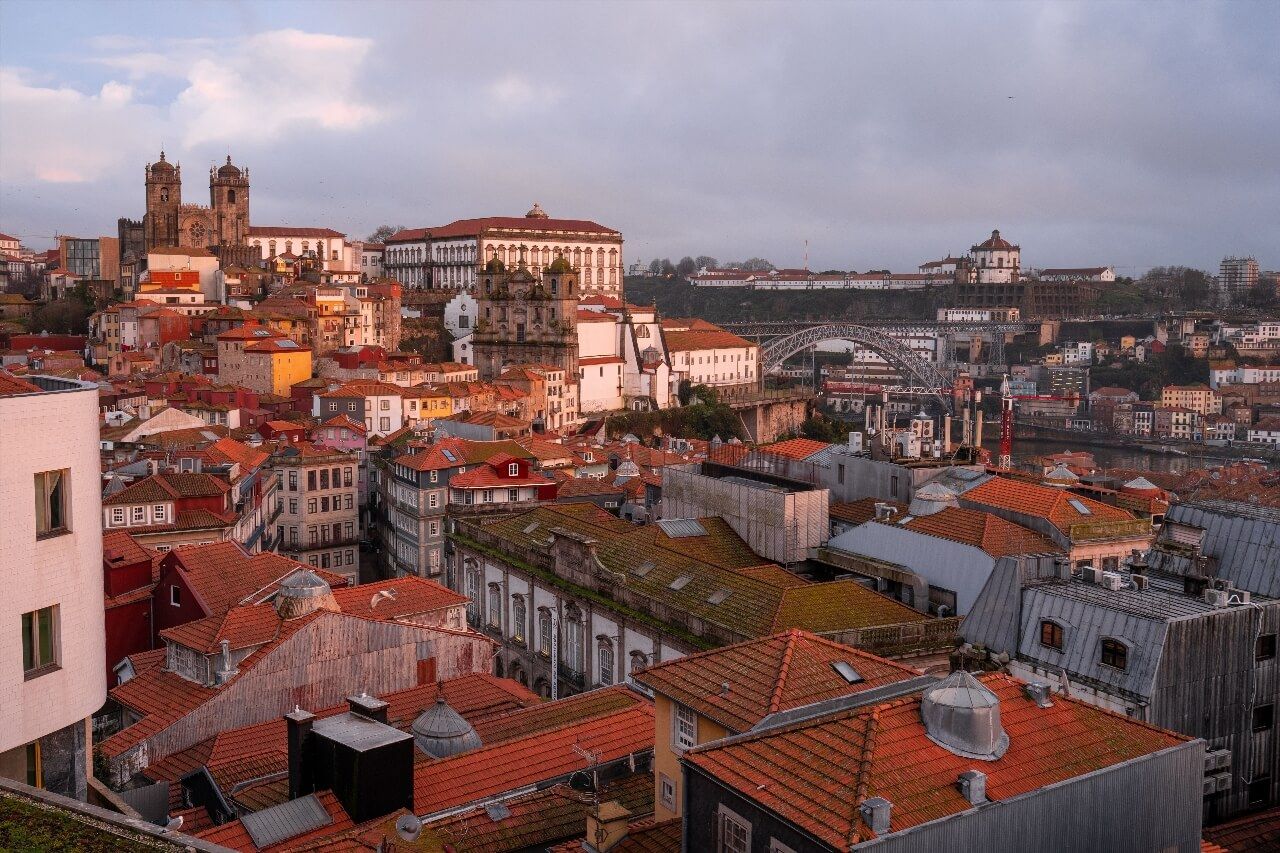
Miradouro da Vitória (Rua de São Bento da Vitória, 4050-543 Porto, rated 4.5/5 on Google (6 916 avis)) is a small terrace on the edge of the historic hilltop neighbourhood, offering a direct west-facing view over the Douro and into Gaia. It's one of several viewpoints in Porto, but this one has the best combination of accessibility (a short walk from the Carmo Church), views, and relative quiet, it's smaller and less advertised than Miradouro da Serra do Pilar on the Gaia side.
Arrive 30 minutes before sunset and bring something to drink; the terrace has a small kiosk but it closes unpredictably. The view at the precise moment the sun drops below the river horizon is reliably worth the effort, and on clear days you can make out the Atlantic about 4 kilometres to the west.
20. Explore the São Francisco Church
The Igreja de São Francisco (Rua do Infante Dom Henrique, 4050-297 Porto, rated 4.4/5 on Google (9 600 avis)) stands immediately adjacent to the Palácio da Bolsa and represents perhaps the most extreme example of Portuguese Baroque interior decoration anywhere in the country. The exterior is Gothic, built in the 14th and 15th centuries as a Franciscan convent church, and prepares you for nothing of what's inside. Every surface of the interior, from the lower walls to the ceiling vaults, is covered in gilded carved wood: estimated at between 300 and 600 kilograms of Brazilian gold, applied over the woodwork during the late 17th and early 18th centuries.
The effect is overwhelming and intentional. This was a statement of power by the merchants and religious orders who funded the work at the height of Porto's commercial dominance. Stand in the nave for a few minutes and let your eyes adjust, details emerge gradually from the gold that aren't immediately visible.
Tickets cost €7.50 and include access to the attached museum and the ossuary beneath the church, where the bones of Franciscan friars and members of Porto's wealthiest families are visible through a glass floor, an underground chamber that is, to put it gently, memorable. The joint ticket with the Palácio da Bolsa is worth considering if you plan to visit both.
21. Time Out Market Porto
The Time Out Market (Rua de Monchique 9, 4050-393 Porto, rated 4.3/5 on Google (1 781 avis)) in Porto opened in 2019 in the Mercado Beira-Rio building on the Ribeira waterfront and follows the same format as the original Lisbon location: a curated food hall with stalls run by respected local chefs and producers, a central seating area, and opening hours that run from morning through late evening. The quality control is noticeably stricter than a typical food hall, the selection rotates, underperforming stalls get replaced, and prices are honest rather than exploitative.
For a quick orientation to Porto's food culture, it's a reasonable place to start. You'll find bacalhau in multiple preparations, petiscos (Portuguese small plates), proper francesinha sandwiches, and a section dedicated to regional charcuterie and cheese. Go for lunch on a weekday rather than a weekend evening when the queues at popular stalls can be long and the seating competitive.
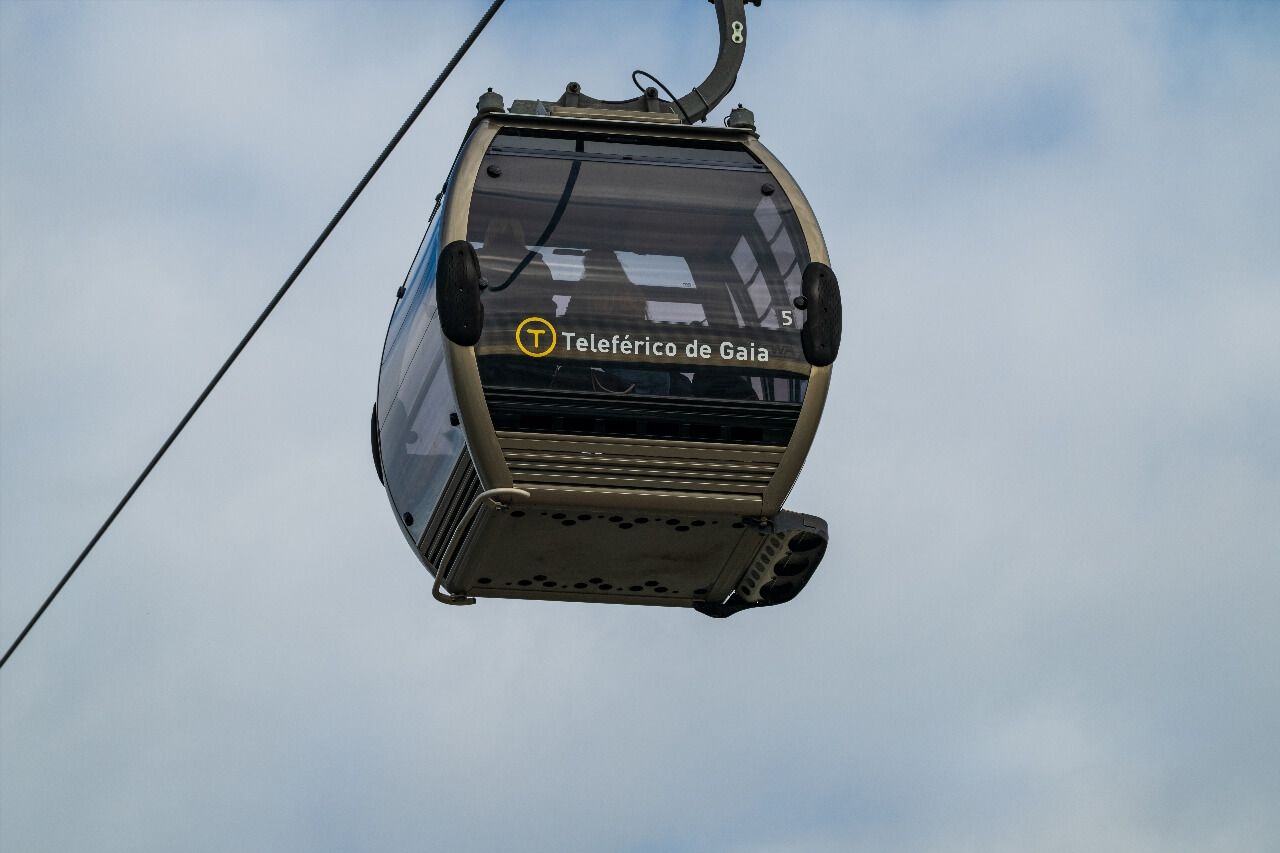
22. Take the Teleférico de Gaia Cable Car
The Teleférico de Gaia (Avenida Ramos Pinto, 4430-233 Vila Nova de Gaia, rated 4.3/5 on Google (7 362 avis)) runs from the upper hillside near the Serra do Pilar monastery down to the Gaia waterfront at river level, a short gondola ride covering about 550 metres with views directly over the Dom Luís I Bridge and back across to the Porto skyline. The journey takes roughly five minutes each way.
Tickets cost €6 one-way or €9 return. There's no strong reason to return on the cable car if you've crossed via the bridge, use it as a scenic descent to begin your wine cellar tour on the Gaia waterfront, then walk or Metro back to Porto. The upper station is adjacent to the Serra do Pilar viewpoint, which offers the most expansive panorama of Porto available from anywhere on the Gaia side, a good reason to walk up even if you don't take the cable car.
23. Explore the Bairro de Miragaia
Miragaia is one of Porto's oldest residential neighbourhoods, running west of the Ribeira along the north bank of the Douro. It has a quieter, more worn character than the more-visited Ribeira and Bonfim, grand 17th-century palaces standing next to crumbling buildings, narrow lanes that end abruptly at garden walls, and the kind of lived-in atmosphere that comes from a neighbourhood where renovation has been selective rather than comprehensive.
The Museu do Carro Eléctrico (Alameda de Basílio Teles 51, 4150-127 Porto, rated 4.4/5 on Google (3 445 avis)) (Tram Museum), housed in a former tram depot at the western end of the neighbourhood, holds the best collection of historic Porto trams in existence, around 40 vehicles spanning more than a century, many in working condition. Tickets cost €8. The museum is less visited than it deserves, which makes it a good choice if you want something genuinely unhurried. After the museum, walk back east along the river path toward the Ribeira, the low-angle view of Porto's hillside from this stretch of the bank is excellent.
24. Visit Casa da Música
Casa da Música (Avenida da Boavista 604, 4149-071 Porto, rated 4.6/5 on Google (20 983 avis)) is Porto's main concert hall and one of the defining works of Dutch architect Rem Koolhaas. Completed in 2005 for Porto's tenure as European Capital of Culture, the building is a white concrete polyhedron planted in the middle of a plaza in the Boavista district, deliberately anti-contextual, shaped by acoustic requirements rather than urban deference. The exterior divides opinion; the interior, particularly the main concert hall with its floor-to-ceiling corrugated glass walls and white oak surfaces, is extraordinary.
If you want to see the building properly, take one of the guided architecture tours that run daily (usually at 11 a.m. and 4 p.m.) for €12. These access the main concert hall, the two smaller halls, and the backstage areas, with commentary that explains both the architectural decisions and the unusual construction process. Alternatively, attending a concert is the most complete way to experience the space, the programming covers orchestral, contemporary, and world music, with ticket prices starting at around €10. The resident orchestra is the Orquestra Sinfónica do Porto.
The building is also worth seeing from the outside even without a ticket. The plaza that surrounds it functions as a public space and the building's angles shift dramatically depending on where you stand. The Metro stop is directly below, Boavista/Casa da Música on the Purple Line, making it easily combinable with a visit to Serralves, fifteen minutes' walk away.
25. Day Trip to Aveiro
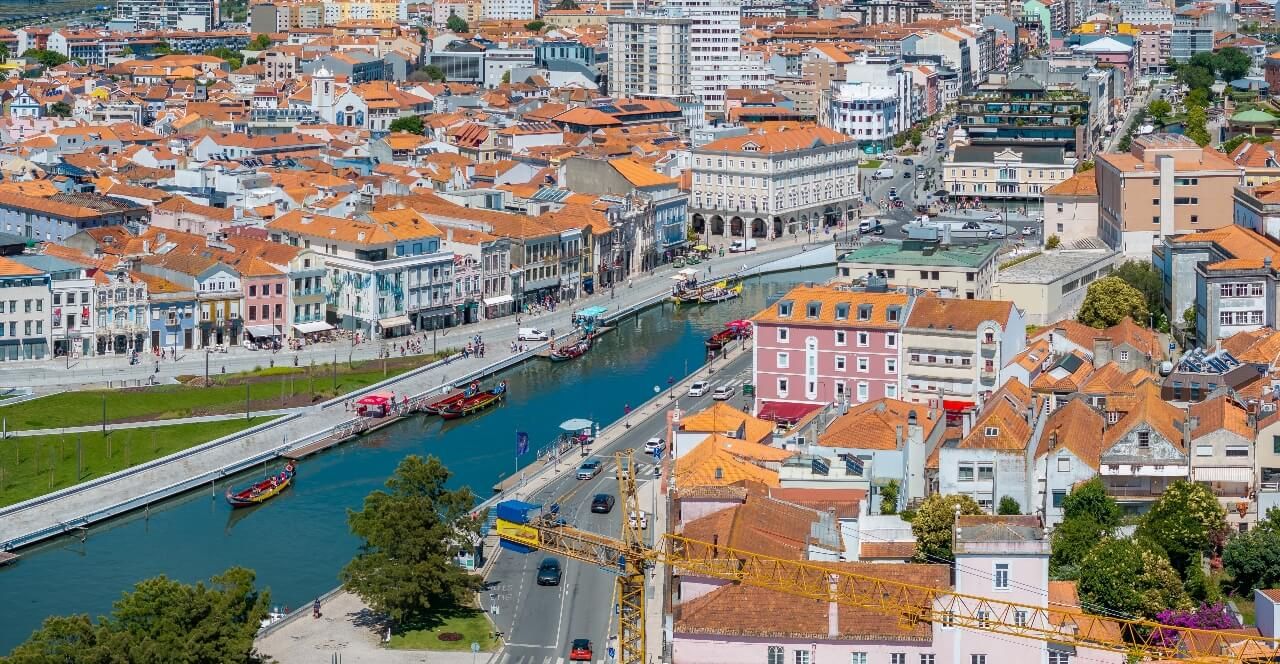
Aveiro sits 70 kilometres south of Porto along the Atlantic coast and is often described, lazily, as the Portuguese Venice. The comparison is reductive but not entirely wrong: the city is built around a central lagoon (the Ria de Aveiro), crossed by painted wooden boats called moliceiros that once harvested seaweed from the lagoon floor and now carry tourists on half-hour circuits. The moliceiro paintings, depicting local scenes in a deliberately bawdy folk-art style, are worth examining closely.
Beyond the boat rides, Aveiro has a genuine character of its own. The Art Nouveau architecture concentrated around the central canal district reflects the prosperity of the early 20th century, when salt production and the cod fishing trade funded elaborate tiled façades and ornate civic buildings. The Museu de Arte Nova on Rua Barbosa de Magalhães is the best entry point into this history, housed in a building that is itself an excellent specimen of the style.
The Aveiro City Museum (Museu da Cidade de Aveiro) is also worth a visit for context on the lagoon culture and the city's history. Aveiro is also famous for ovos moles, fragile pastry shells filled with a sweet egg-yolk paste, a local speciality traceable to the nuns of the Mosteiro de Jesus, where the egg whites were used for starching habits and the yolks redirected into confectionery. Buy them from one of the established producers on Rua Direita rather than from tourist kiosks near the boat dock.
Trains from Porto São Bento to Aveiro run approximately every 30 minutes; the journey takes 40 : 55 minutes and costs around €6 : 8. An Aveiro day trip fits comfortably into a half-day, take the morning train, spend four to five hours, and return for dinner in Porto.
FAQ
How many days do you need in Porto?
Three days is enough to cover the main historic-centre landmarks, cross to Vila Nova de Gaia for a cellar tour, take a river cruise, and have time left for a neighbourhood like Bonfim or Foz. Four or five days adds space for a day trip to the Douro Valley or Aveiro without feeling rushed. Two days is possible but leaves Porto feeling like a checklist rather than a place.
What is Porto best known for?
Port wine and the wine trade with Britain are the foundation of Porto's international reputation, the city's name is literally the origin of the word « port » as applied to fortified wine. Beyond wine, Porto is known for its azulejo tile architecture, its medieval Ribeira district (UNESCO World Heritage), the Dom Luís I Bridge, and São Bento Station's painted tile panels. Increasingly, it's also recognised as a serious food and contemporary architecture destination.
Is Porto or Lisbon better to visit?
The two cities serve different moods. Lisbon is larger, more cosmopolitan, and broader in its cultural offer, more museums, more international dining, more varied neighbourhoods. Porto is more compact, more intense, and arguably more architecturally coherent. Many visitors who see both cities find Porto more immediately likeable, partly because its smaller scale makes it easier to feel you understand a place. For a first-time visit to Portugal, Porto makes a particularly strong impression.
Is Porto expensive?
Porto has become significantly more expensive over the past five years due to tourism pressure and rising rents, but it remains meaningfully cheaper than most Western European capitals. A solid restaurant meal in a local neighbourhood costs €15 : 25 per person including wine. Coffee is still €0.80 : 1.20 at the counter in most cafés. Museum entry fees are generally €5 : 15. Accommodation prices have risen sharply and vary enormously by season, booking at least two weeks ahead for summer visits is strongly advisable.
What is the best time of year to visit Porto?
May, June, and September offer the best balance of weather, manageable crowds, and full operational hours across museums, cellar tours, and river cruises. July and August are hot and busy, not unpleasant, but significantly more crowded. October through April is cooler and wetter, with Atlantic rain arriving in sustained spells; the trade-off is lower prices, smaller crowds, and the peculiar atmosphere of a city operating for residents rather than visitors.
Do you need a Porto Card?
The Porto Card gives unlimited Metro and bus travel plus discounts or free entry at around 80 attractions. It costs €13 for 24 hours, €20 for 48 hours, or €25 for 72 hours (transportation included). Whether it pays off depends entirely on your itinerary. If you're staying in the historic centre and walking most of the time, the card's transport element is less useful. If you plan to visit Serralves, the Tram Museum, the Funicular, and several paid attractions in a single day, the 24-hour card almost certainly covers its cost.
Conclusion
Porto rewards visitors who look beyond the obvious. The Ribeira and the wine cellars are excellent, they're well-known because they're genuinely worth your time, but the city's best hours are often spent somewhere less anticipated: a Bonfim café on a Tuesday morning, an empty gallery at Serralves, or the train pulling into Pinhão as the Douro Valley opens up on either side. Pair this list with the Ryocity Porto audio guide from Ryo to navigate the historic centre with the kind of context that turns a walk into a story. The list above gives you the structure; Porto, and the Ryo soundtrack in your ears, will fill in the rest.