
Créé par Emilie, le 14 mai 2026
Votre guide Ryo
© Shutterstock
Barcelona is one of those cities where the gap between expectation and reality almost always runs in the right direction. You arrive expecting crowds, selfie sticks, and overpriced paella, and instead you find a medieval street that hasn't changed since the 14th century, a market hall whose roof looks designed by a fever dream, and a church that has been under construction for 143 years and counting. Few European capitals pack this density of architectural ambition into a single walkable core. Start your visit with Ryo's Barcelona audio guide, a 26-audio self-guided walk that covers 6.4 km in about two and a half hours, a smart way to orient yourself before diving into the list below.
What actually surprises visitors? A modernist hospital designed by Domènech i Montaner that UNESCO considers finer than the Sagrada Família. A rooftop terrace where Gaudí's stone warriors stand guard over the city at 65 metres above street level. A bunker from the Spanish Civil War that now offers the best panoramic view in town, free of charge, entirely tourist-free on weekday mornings. And a labyrinth garden built in 1791 that most travellers never find. The 30 things below range from iconic to quietly extraordinary, ranked roughly by impact, though every entry earns its place.
1. Sagrada Família
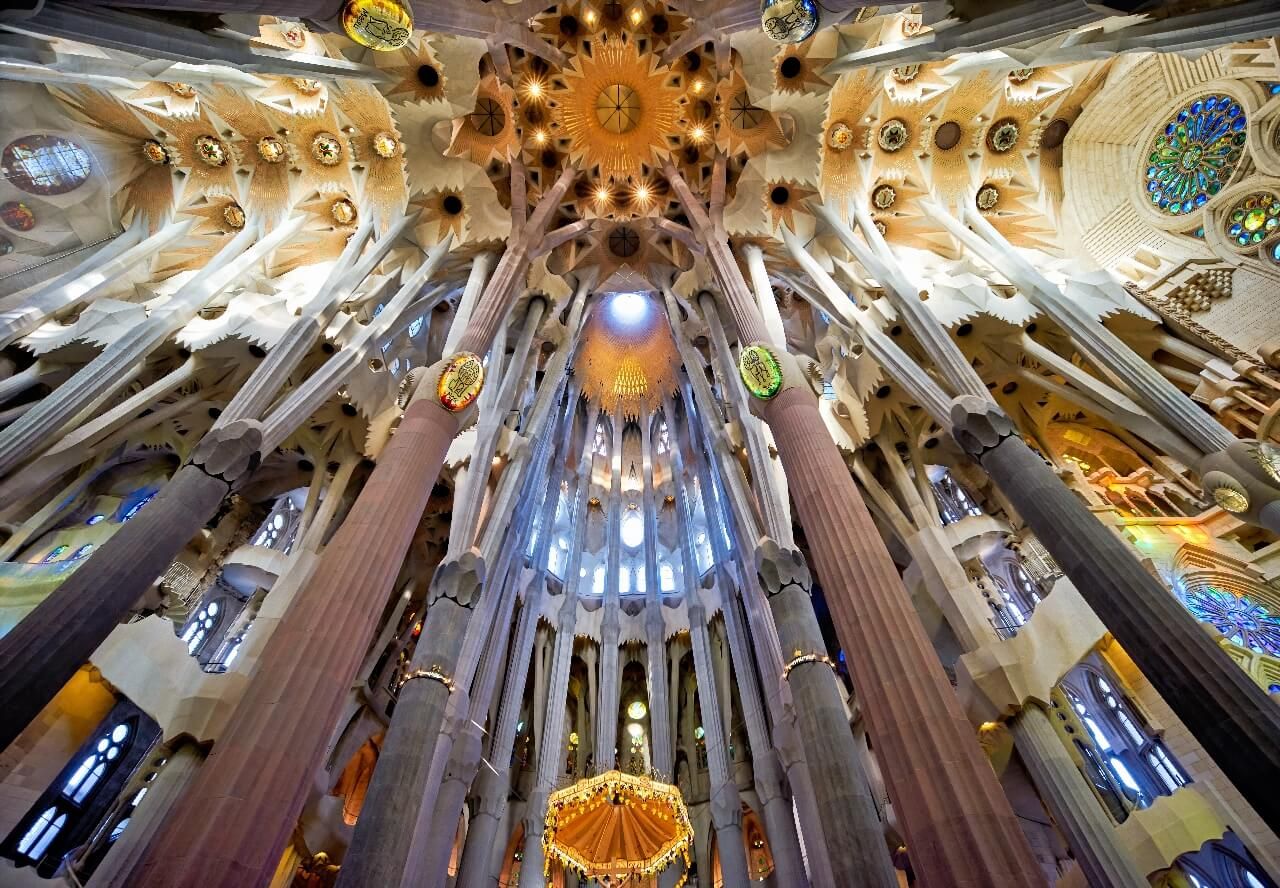
No building in Barcelona, and arguably in Europe, generates the same vertigo as Sagrada Família (Carrer de Mallorca 401, 08013 Barcelona, rated 4.8/5 on Google (323 227 avis)). Construction began in 1882 under Francisco de Paula del Villar; Antoni Gaudí took over the project in 1883, was formally appointed chief architect in 1884, and died in 1926 having completed only the crypt, the apse, and the Nativity façade. Construction has continued ever since, funded entirely by entrance tickets and private donations, with the central towers reaching completion in 2021 and the final tower, dedicated to Jesus Christ, topped out at 172.5 metres on 20 February 2026 when a 17-metre cross was set in place, making the basilica the tallest church in the world.
The two existing façades tell entirely different stories. The Nativity façade (east) is Gaudí's own work: encrusted, organic, almost biological, with stone dripping like candle wax around three doorways dedicated to Faith, Hope, and Charity. The Passion façade (west), designed by Josep Maria Subirachs decades after Gaudí's death, is angular and austere, its scenes of crucifixion deliberately stripped of beauty to concentrate on suffering. Inside, the effect shifts entirely. Natural light pours through 10,000 square metres of stained glass designed to shift from cool blues and greens on the east to warm ambers and reds on the west as the day progresses. The central nave soars 45 metres above the floor, supported by tree-like columns that branch at the top to distribute the load with no need for flying buttresses.
Book tickets well in advance, popular time slots sell out weeks ahead in high season. Tower access requires a separate ticket and the views across the Eixample grid are worth every euro. Audio guide included in most ticket tiers, though Ryo's dedicated Gaudí walk (see section 5 below) provides richer context than the in-house version.
Practical note: the best light inside falls between 10:00 and 12:00 on clear mornings when the Nativity windows are fully lit. If you go on an overcast day, the effect is dramatically muted, worth knowing before you plan.
2. Park Güell
Park Güell (Carrer d'Olot 7, 08024 Barcelona, rated 4.4/5 on Google (233 669 avis)) was designed as a private garden city, a gated community for Barcelona's wealthy bourgeoisie, but it failed commercially and was donated to the city in 1926. What remains is a 17-hectare public park containing Gaudí's most playful work: the serpentine ceramic bench on the Monumental Terrace, the hypostyle hall of 86 Doric columns that was intended to be a covered market, and the two gingerbread gatehouse pavilions at the entrance, one of which now houses a small exhibition.
The ceramic bench wrapping the main terrace is a collaboration between Gaudí and his long-time collaborator Josep Maria Jujol, who is responsible for much of the intricate trencadís mosaic work, fragments of broken tiles forming patterns that shift between abstract and representational. The views from the terrace look south over the entire city to the sea. On clear days you can trace the outline of the Balearic Islands on the horizon.
Tickets for the Monumental Zone (the paid area containing the main terrace and hypostyle hall) sell out fast in July and August, book a week ahead minimum. The surrounding park, however, is free to enter and far less crowded. The woodland paths and viaducts in the upper sections reward an extra hour of wandering. Get there before 9:00 if you want the terrace without the coach-tour rush.
One detail most visitors miss: Gaudí lived in a house inside the park from 1906 to 1925. That house is now the Casa Museu Gaudí and contains furniture he designed himself, sparse, functional, and nothing like what you'd expect from the author of the Sagrada Família.
3. Gothic Quarter (Barri Gòtic)
Barcelona's Gothic Quarter is simultaneously one of the most authentic medieval neighbourhoods in Europe and one of the most heavily visited. That contradiction is worth sitting with. The narrow streets around the Plaça de Sant Jaume preserve a genuine Roman and medieval street plan, in places you're walking above ruins that date to the first-century BCE Barcino colony, visible through glass panels set into the pavement.
The Barcelona Cathedral (Catedral de la Santa Creu i Santa Eulàlia) anchors the quarter's northern end. Construction ran from 1298 to 1448, though the neo-Gothic façade was only added in 1913. The cloister shelters 13 white geese, a tradition dating back at least to the 15th century, each goose symbolising the age of Saint Eulàlia at the time of her martyrdom. Entry to the main nave is free outside Mass hours; the rooftop terrace and choir stalls require a small fee.
Wander south through Carrer del Bisbe to reach the Plaça Reial, a grand 19th-century square whose lampposts were designed by a young Gaudí, his first public commission in 1878. The Roman Temple of Augustus, tucked inside the courtyard of a medieval building on Carrer del Paradís, preserves four Corinthian columns from a temple built in the first century CE. Easy to miss entirely; completely free to visit.
The Ryocity Barcelona walking route covers the main Gothic Quarter landmarks with audio commentary, useful if you want context on the Roman remains and medieval guild streets rather than just photographs. For the best sense of the quarter, arrive before 9:00 on a weekday. By 11:00 the main pedestrian axes fill with guided groups. The side streets, Carrer de la Palla, Carrer dels Banys Nous, are rarely congested even in high season.
4. La Boqueria Market
La Boqueria (officially the Mercat de Sant Josep de la Boqueria) has been feeding Barcelona since at least the 13th century, though the current iron-and-glass structure was built in 1914. It opens directly off La Rambla and draws several million visitors per year, a volume that has created something of a tension between its function as a working food market and its role as a tourist attraction.
The stalls closest to the Rambla entrance are tourist-oriented, with fresh fruit cups and jamón portions at premium prices. Push deeper into the market and you reach the sections where restaurant chefs actually shop: whole fish laid on crushed ice, seasonal vegetables, offal cuts. The mushroom stalls in the rear section are extraordinary in autumn, species you won't find in any supermarket in northern Europe.
A practical note: many of the best stall operators have been pushed out by rising rents in recent years. The city council has imposed restrictions on tourist-facing businesses within the market since 2022 in an effort to preserve the trade mix. Go before 10:00 on a weekday if you want to see La Boqueria functioning as a food market rather than a food fair.
5. Casa Batlló
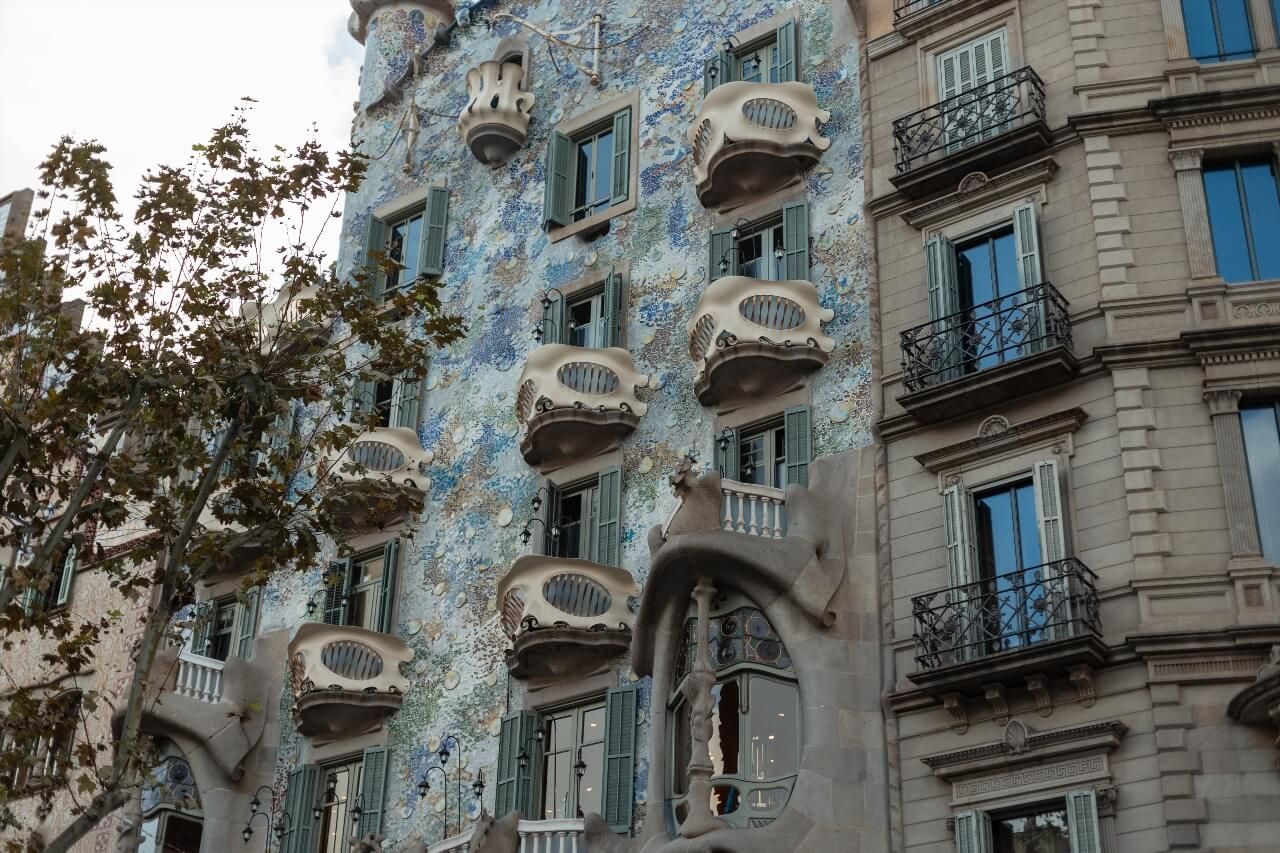
Casa Batlló sits on the block of Passeig de Gràcia known as the Manzana de la Discordia, the Block of Discord, alongside two other modernist buildings by different architects. Gaudí remodelled it between 1904 and 1906 for the industrialist Josep Batlló, and the result is among the most viscerally original buildings anywhere in the world.
The façade reads differently depending on how much you know. Taken at face value, it's extraordinary: undulating stone in shades of green, blue, and mauve, studded with round ceramic discs that shimmer in sunlight. The balconies suggest skulls and bones, one persistent interpretation reads the building as a representation of Sant Jordi (Saint George) slaying a dragon, with the ceramic-scaled roof as the dragon's back and the cross tower as the lance. Gaudí neither confirmed nor denied this reading.
Inside, the central light well is tiled in a gradient that shifts from deep cobalt at the top to pale sky blue at the base, a solution to the lighting problem created by the building's depth, which means lower floors would receive no natural light in a uniformly tiled shaft. The Noble Floor (the Batlló family's living quarters) has been restored to its 1906 condition: continuous curving spaces with no right angles, built-in furniture, and mushroom-shaped supporting pillars.
Tickets include an excellent AR tablet experience that reconstructs the building's original context. For the Gaudí walk that links this building with the Sagrada Família, Park Güell, and Casa Milà, the Ryo Barcelona guide through Gaudí's eyes covers all four in a single 10.5 km route with 22 audio commentaries, it makes the architectural connections between the projects legible in a way individual visits don't.
6. Montjuïc Castle & Hill
Montjuïc is Barcelona's south-western hill, rising 173 metres above the port, and it carries more historical weight than most visitors realise. The hill was the site of the 1929 International Exhibition, which produced the Palau Nacional (now the MNAC (Mirador del Palau Nacional, 08038 Barcelona, rated 4.7/5 on Google (38 013 avis)), see entry 15), the Fonts de Montjuïc, and the Pavelló Mies van der Rohe. The 1992 Olympic Games added the Estadi Olímpic and the Palau Sant Jordi.
The castle at the summit dates in its current form to the 18th century, built by Philip V after the War of the Spanish Succession. For most of its history it served as a prison and military garrison rather than a defensive fortification, the Catalan independence leader Lluís Companys was executed here in 1940. The city of Barcelona took control of the castle in 2008, and it now functions as a public space and history museum.
The views from the castle bastions are the best unobstructed panorama of the city and port. On clear days the Pyrenees are visible to the north. Below the castle, the Jardins de Laribal and the Jardí Botànic offer a quiet escape in the middle sections of the hill. The cable car (Telefèric de Montjuïc) runs from Paral·lel metro station to near the summit, a more atmospheric way to arrive than the bus.
7. Barceloneta Beach
Barcelona is unique among major European capitals in having a working urban beach within walking distance of its old town. Barceloneta beach extends 1.2 km along the waterfront and is genuinely used year-round by the city's residents, not just in summer, and not just by tourists.
The neighbourhood behind the beach, also called Barceloneta, is a grid of narrow streets laid out in the 1750s to rehouse fishermen and stevedores displaced by the construction of the Ciutadella fortress. It still feels like a working-class port neighbourhood despite the tourist pressure of recent years: laundry on lines between buildings, elderly residents on street corners, restaurants that serve caldos and arròs negre to regulars alongside the chiringuito crowd.
The beach itself is best early morning or in September, when the water is warm and the crowds have thinned. At midday in August, with 300,000 visitors on the sand, it becomes a different experience entirely. The Rebecca Horn sculpture (L'Estel Ferit, «The Wounded Star», 1992) at the northern end of the beach is one of the city's more understated public artworks.
8. Palau de la Música Catalana
Of all the things to do in Barcelona, a guided tour of the Palau de la Música Catalana (Carrer del Palau de la Música 4-6, 08003 Barcelona, rated 4.7/5 on Google (54 016 avis)) is the one most likely to genuinely astonish even visitors who've seen a great deal of European architecture. Lluís Domènech i Montaner designed it between 1905 and 1908 as the home of the Orfeó Català choral society, and it is, unmistakably, a building designed for joy.
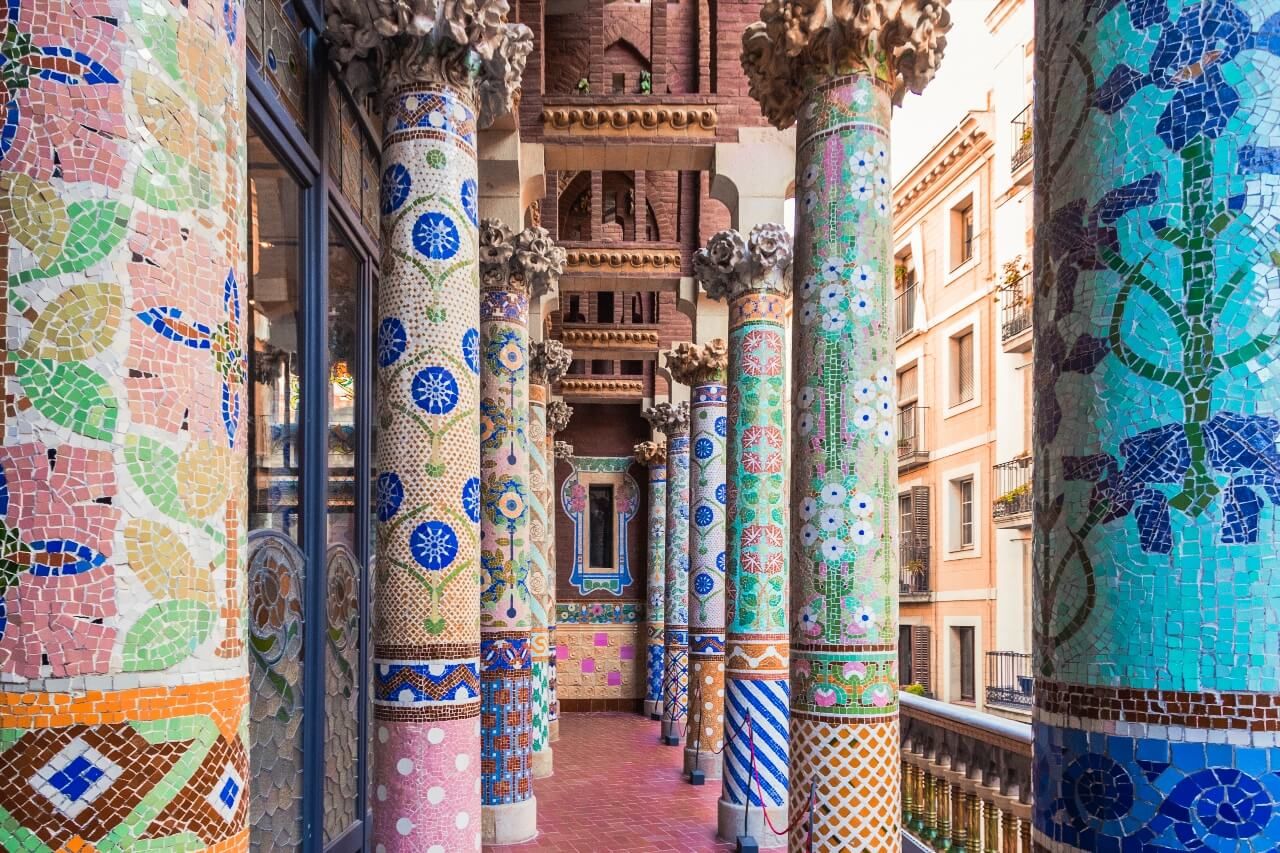
The auditorium's stained-glass skylight, an inverted dome of orange and blue glass, floods the hall with natural light during daytime concerts, a technical feat for 1908. The stage is framed by a ceramic bas-relief of the Muses of Music, with the central female figure dramatically bursting from the wall in three dimensions, her flowing dress merging with the organ pipes behind her. Every surface in the building is decorated: glazed tiles, mosaic columns, stained glass, sculptural reliefs.
The UNESCO World Heritage Site designation (shared with the Sant Pau Recinte Modernista) recognises the building as an outstanding example of Catalan Art Nouveau. You can visit on a guided tour in the mornings, or attend an evening concert, the acoustics and the visual experience together make it one of the finest concert experiences in Europe. Book well ahead for both; the Palau sells out regularly.
9. El Born & La Ribera
The El Born neighbourhood occupies the medieval merchants' quarter east of the Gothic Quarter. Its transformation from a derelict industrial zone into Barcelona's most fashionable neighbourhood took place over roughly two decades from the late 1990s onwards, driven partly by the renovation of the Born market building.
The Mercat del Born is now a cultural centre whose glass floor reveals the excavated remains of an entire neighbourhood demolished in 1714 to build the Ciutadella fortress, one of the most striking pieces of in-situ urban archaeology in Europe. The neighbourhood around it rewards wandering: Carrer del Parlament, the Carrer dels Flassaders, the Basílica de Santa Maria del Mar (built by the neighbourhood's own residents in the 14th century, without noble or ecclesiastical patronage, a genuinely unusual piece of history).
The density of good restaurants and cocktail bars here has made El Born one of the city's primary evening destinations, though the neighbourhood is equally rewarding during the day.
10. Passeig de Gràcia
Passeig de Gràcia (Passeig de Gràcia, 08007 Barcelona, rated 4.7/5 on Google (43K avis)) is Barcelona's main boulevard, a 43-metre-wide avenue running north from Plaça de Catalunya through the Eixample grid. The avenue was conceived in the 1860s as the spine of Ildefons Cerdà's rational expansion plan for the city, and the wealthy families who built their homes here in the late 19th and early 20th centuries commissioned the best architects of the Catalan modernisme movement.
The result is an open-air architectural museum: Casa Batlló (Gaudí), Casa Amatller (Puig i Cadafalch), Casa Lleó Morera (Domènech i Montaner), and Casa Milà (Gaudí) all within five blocks of each other. Even the street furniture, the hexagonal pavement tiles designed by Gaudí, the iron lamp posts, the benches incorporating stone seats, is worth looking at. The tiles are now produced in the same moulds and installed throughout the city. A stroll from Plaça de Catalunya to the Diagonal takes about 25 minutes; allow twice that if you stop to examine the facades.
11. Camp Nou
Football tourism has transformed in Barcelona since FC Barcelona began constructing the new Spotify Camp Nou (Carrer d'Aristides Maillol, 08028 Barcelona, rated 4.6/5 on Google (168 232 avis)) in 2023. The stadium, which held 99,354 spectators before renovation, making it the largest football stadium in Europe, is undergoing a complete rebuild, with the new structure planned to reach 105,000 seats while maintaining the characteristic oval form. The original Camp Nou opened on 24 September 1957.
During the renovation period, Barcelona FC has been playing at the Estadi Olímpic Lluís Companys on Montjuïc, the venue built for the 1992 Olympics. The temporary stadium holds approximately 55,000 people, which has made match tickets marginally more accessible than at the old Camp Nou, though high-profile fixtures (El Clásico, Champions League knockout matches) still sell out within minutes of going on sale.
The FC Barcelona Museum remains one of the most visited museums in Spain, consistently ranking in the top five by visitor numbers, ahead of most art museums. The collection covers the club's history from its founding by Joan Gamper in 1899, through the Franco-era years when the club became a focal point of Catalan cultural identity, to the Cruyff, Romário, Ronaldinho, Xavi, and Messi eras. The Joan Gamper trophy, the UEFA Champions League trophies, and an extraordinary archive of photographs and footage are all on display.
Match tickets should be purchased through the official FC Barcelona website or the stadium box office. Third-party platforms operate legitimately but at significant markup. If you're visiting during the renovation, check the current situation at the official site, access conditions change as construction progresses. For a match, prioritise Category 2 and 3 seats in the main stand over the goal-end sections, which can have obstructed views in a renovated configuration.
One additional note: the neighbourhood around the old stadium, Les Corts, is a quiet residential district with none of the tourist infrastructure you'd expect around a site this significant. The contrast with the Sagrada Família's commercialised surroundings is striking.
12. Picasso Museum
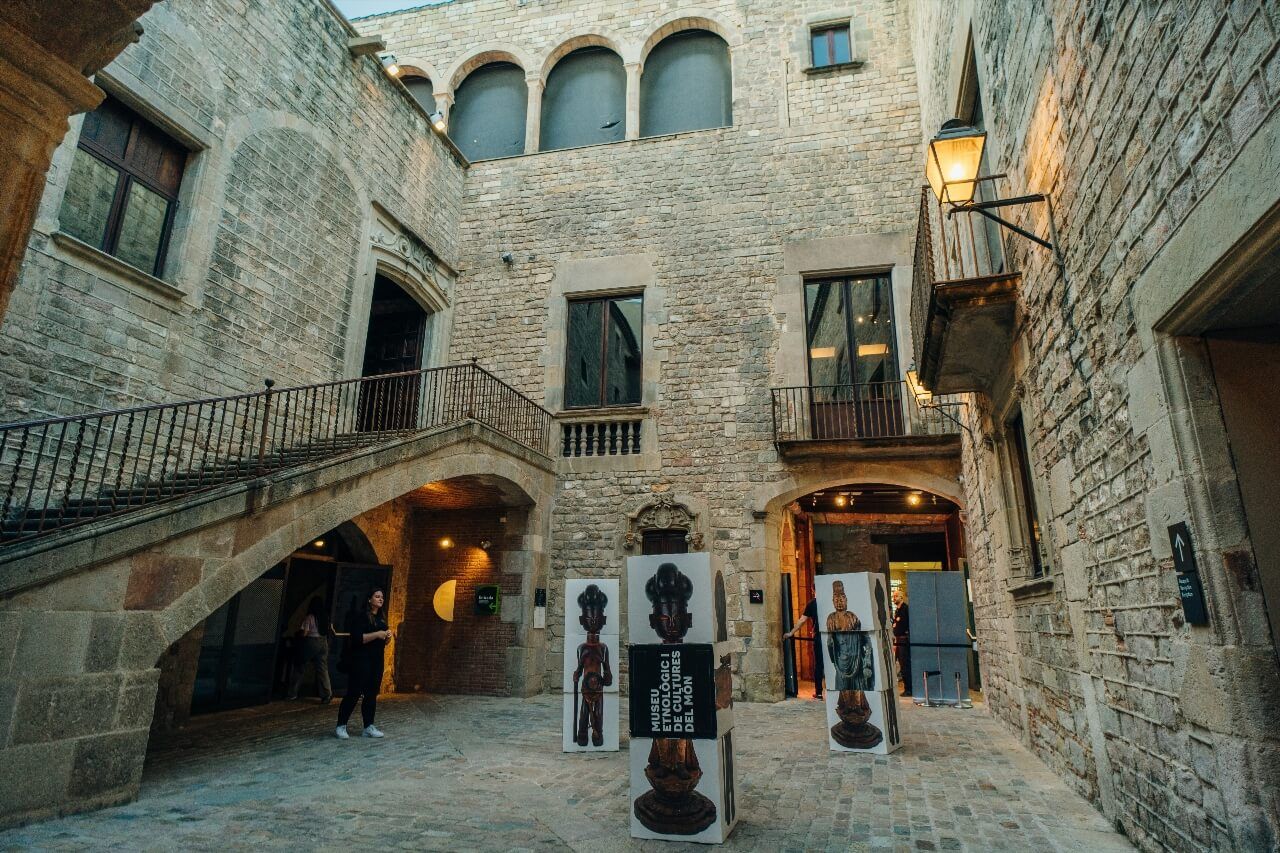
The Museu Picasso (Carrer de Montcada 15-23, 08003 Barcelona, rated 4.4/5 on Google (38 839 avis)) occupies five medieval palaces on Carrer de Montcada in El Born, a street that has barely changed since the 15th century. Its collection focuses specifically on Picasso's early years, from his childhood in Málaga and his student period in Barcelona (1895 : 1904), making it the most comprehensive record of how he learned to paint before he invented modern art.
The Las Meninas series, 58 variations on Velázquez's 1656 masterpiece, completed in 1957, is the collection's centrepiece and one of the most fascinating artistic experiments of the 20th century. First Thursday evenings of the month (18:00 : 21:00) are free; the queues form early. Online tickets are recommended for all other visits during peak season.
13. La Font Màgica de Montjuïc
The Magic Fountain at the foot of Montjuïc was built in 18 months by Josep Maria Jujol and Carles Buïgas for the 1929 International Exhibition, using the labour of 3,000 workers. The engineering involved synchronising water jets, coloured lights, and music, a system that still operates today with the original hydraulic mechanisms largely intact.
The light-and-music shows run on Thursday to Sunday evenings from late spring through autumn (check current schedules, the programming changes annually). The fountain is free to watch. The best viewing position is from the steps of the Palau Nacional above, which gives a top-down perspective on the water patterns. The Magic Fountain was restored in 2019 with new LED lighting and an updated soundtrack system, significantly improving the colour range.
14. Bunkers del Carmel
The Bunkers del Carmel are the ruins of an anti-aircraft battery built during the Spanish Civil War (1936 : 1939) on the hill of Turó de la Rovira, at 262 metres above sea level. For decades after the war they were occupied by shantytown housing; the last residents were evicted in the 1990s, and the site was cleared and opened as a public viewpoint in 2011.
The panorama from the top is routinely cited as the best in Barcelona, better than Montjuïc for the simple reason that you're looking across the whole city rather than from the edge of it, and the sight lines take in the Tibidabo tower to the west, the Sagrada Família below you, the sea, and the industrial port. Arrive at sunrise or sunset. The approach on foot from the Alfons X metro station takes about 20 minutes uphill. No entry fee, no facilities, open at all hours.
15. Museu Nacional d'Art de Catalunya (MNAC)
The Museu Nacional d'Art de Catalunya occupies the Palau Nacional built for the 1929 exhibition. Its collection spans Catalan art from the Romanesque period to the mid-20th century, but the Romanesque galleries are the reason to come.
In the early 20th century, a generation of Catalan art historians realised that Romanesque murals in abandoned churches throughout the Pyrenees were deteriorating. Working systematically between 1919 and 1923, they detached and transferred entire apse decorations, fresco by fresco, to Barcelona. The result is the most comprehensive collection of Romanesque painting in the world, assembled not by purchase but by rescue. The apse of Sant Climent de Taüll, with its Pantocràtor surrounded by the four Evangelists, is the collection's crown jewel.
The Gothic collection and the early 20th-century modernisme section are also well above average. The rooftop terrace offers one of the best views of the city's skyline. Free on Saturdays after 15:00 and on the first Sunday of the month.
16. Parc de la Ciutadella
Parc de la Ciutadella (Passeig de Picasso, 08003 Barcelona, rated 4.6/5 on Google (77 118 avis)) was created on the site of the fortress demolished after the 1888 Universal Exhibition, a deliberate act of symbolic restitution to the residents of the Ribera neighbourhood the citadel had displaced. It's Barcelona's largest central park: 17.4 hectares of gardens, a boating lake, a zoo, and the city's most elaborate 19th-century fountain.
The Cascada Monumental fountain at the park's entrance was partly designed by a young Gaudí as a student project in 1877, two years before he graduated from architecture school. The Catalan Parliament building occupies the old arsenal at the centre of the park. The boating lake rents rowing boats by the hour, a popular activity on weekend afternoons, reliably charming without being exciting. Free to enter at all times.
17. La Rambla
La Rambla is the most famous street in Barcelona and, depending on your expectations, either a disappointment or a genuine pleasure. The 1.2-kilometre pedestrian promenade runs from Plaça de Catalunya to the Columbus Monument and the port, dividing the Gothic Quarter from El Raval.
The street's current form dates from the late 18th and early 19th centuries, when the city built over the old city wall and transformed the tree-lined path outside into a promenade. The flower stalls that once made La Rambla distinctive have largely been replaced by souvenir shops and tourist restaurants. Pickpocketing is genuinely prevalent, keep phones and wallets in front pockets. That said, the human energy of the street at 22:00 on a summer evening, with the city fully awake and operating, is something worth experiencing at least once. Walk it early morning for the atmosphere without the crowds.
18. Casa Milà (La Pedrera)
Casa Milà, universally known as La Pedrera (the stone quarry), a nickname given sarcastically by Barcelona's citizens at the time of its construction, was Gaudí's last secular building, completed in 1912. It is almost certainly his most radical: a façade of undulating limestone with no straight line anywhere, crowned by a rooftop terrace that Gaudí called an «open theatre» and that Barcelonans immediately christened the «warriors' garden» for its helmet-shaped ventilation chimneys.
The interior is equally challenging. The building has no load-bearing walls: the entire structure is suspended from a skeleton of iron columns and beams, allowing Gaudí to route corridors and rooms as curves. The Espai Gaudí in the attic, a forest of parabolic brick arches that once supported the roof terraces, is one of the strangest interior spaces in any building anywhere.
At 65 metres, the rooftop chimneys are the city's finest observation platform for someone more interested in architecture than panoramas, from here you can see the relationship between La Pedrera, Casa Batlló four blocks south, and the distant Sagrada Família in a single frame. The Pedrera by Night evening experience includes access to the roof after dark with a live music performance and wine; tickets are considerably more expensive than the standard day visit but the atmosphere is different.
Book tickets online. In summer, the roof terrace fills quickly and the experience suffers if you visit at the same time as three coach parties.
19. Sant Pau Recinte Modernista
Sant Pau Recinte Modernista (Carrer de Sant Antoni Maria Claret 167, 08025 Barcelona, rated 4.6/5 on Google (60 765 avis)) is the complex that many architecture experts consider the finest work of Lluís Domènech i Montaner, and a number of them argue it surpasses the Sagrada Família in overall achievement. It was built as a functioning hospital between 1902 and 1930, replacing the old Hospital de la Santa Creu, and operated as such until 2009 when the medical functions moved to a modern facility.
The complex consists of 12 pavilions linked by underground corridors, set in gardens and oriented on an axis that points directly at the Sagrada Família, a deliberate gesture visible on any map of the Eixample. Each pavilion is a distinct architectural composition, with Islamic and Byzantine decorative references layered onto a Catalan Gothic structural language. The ceramics, stained glass, and sculptural programmes are lavish even by the standards of Catalan modernisme.
Visit on a weekday morning to avoid tour groups. The experience is quieter than most of Barcelona's main attractions, which is itself part of its quality.
20. Port Olímpic & Barceloneta Waterfront
The Port Olímpic (Moll de Gregal, 08005 Barcelona, rated 4.4/5 on Google (23 085 avis)) marina was built for the 1992 Olympics, transforming a derelict industrial waterfront into a leisure port with restaurants, beach clubs, and the twin towers of the Hotel Arts and Torre Mapfre. Frank Gehry's El Peix d'Or (the Golden Fish), a giant copper and steel sculpture, stands at the marina entrance.
The waterfront promenade from Barceloneta to the Port Olímpic and beyond to Poblenou covers about 4 km of continuous pedestrian and cycling path. The beach sections are lined with chiringuitos (beach bars) operating from April to October. At night, the Port Olímpic concentrates much of Barcelona's commercial nightlife, loud, crowded, and functional. The daytime waterfront, by contrast, is one of the city's genuinely pleasant spaces for a long walk or a bicycle ride.
21. El Raval & MACBA
The El Raval neighbourhood west of La Rambla has a complicated history: for centuries the district outside the old city walls where tanneries, slaughterhouses, and brothels were located, it became one of Barcelona's most densely populated and marginalised districts in the 20th century. Since the late 1980s it has been in continuous transformation.
The MACBA (Museu d'Art Contemporani de Barcelona), housed in a Richard Meier building that opened in 1995, anchors the neighbourhood's cultural rebirth. Its permanent collection focuses on European and North American art from the 1950s onwards, with particular strength in Catalan and Spanish conceptual art. The square in front of the museum, Plaça dels Àngels, has been a skateboarding hub since the building opened, a detail that bothered Meier considerably.
El Raval is also home to the Biblioteca de Catalunya in the old Hospital de la Santa Creu, and the CCCB (Centre de Cultura Contemporània de Barcelona), which programmes some of the best exhibition and festival content in the city.
22. Tibidabo Amusement Park
Tibidabo is the highest point in the Serra de Collserola range behind Barcelona at 512 metres, and it has housed an amusement park since 1901, making it one of the oldest functioning theme parks in the world. The Sagrat Cor church at the summit, with its gold statue of Christ visible from much of the city, was built in 1902 and extended into its current neogothic form through the 20th century.
The park retains several vintage rides dating from the early 20th century, including a carousel from 1928 and an aeroplane ride from 1921 that gives a full 360-degree view of the city as it rotates. These coexist with modern attractions added over the decades. The Ryo Barcelona Ryocity audio guide makes sense before heading up here, the historical context for the Sagrat Cor church and the early 20th-century park makes the summit visit considerably richer. The view from the summit is the most expansive in the Barcelona area, taking in the full coastline from the Ebro delta to the Costa Brava on clear days. The Tibidabo funicular and the old-fashioned Tramvia Blau (tram) are part of the experience, check current operating schedules before you go, as both lines have had intermittent service disruptions.
23. Mercat de Sant Antoni
Mercat de Sant Antoni (Carrer del Comte d'Urgell 1, 08011 Barcelona, rated 4.4/5 on Google (38 247 avis)), in the Eixample neighbourhood near the old city walls, underwent a major eight-year renovation completed in 2015 and is now one of the most pleasant food markets in the city to actually use. Unlike La Boqueria, it operates primarily as a neighbourhood market rather than a tourist attraction.
On Sunday mornings, the perimeter of the market building hosts the Mercat de Sant Antoni flea market, books, records, vintage clothing, and collectibles spread across the arcades. It opens at 8:00 and by 10:00 the better stalls have been picked over. A genuinely local experience in a neighbourhood that sees relatively few tourists.
24. Gràcia Neighbourhood
The Gràcia (Plaça del Sol, 08012 Barcelona, rated 4.6/5 on Google (12K avis)) district was an independent municipality until 1897, when it was absorbed into Barcelona's expansion. It retains a distinct identity: a network of plazas, Plaça del Sol, Plaça de la Vila de Gràcia, Plaça de la Virreina, that function as genuine community gathering spaces, surrounded by bars, small restaurants, and independent shops.
In mid-August, Gràcia hosts the Festa Major de Gràcia, during which residents decorate the neighbourhood's streets in elaborate themed installations competing for prizes, each street has a committee and a theme, the work takes months of preparation, and the result is one of the most original street festivals in Europe. If you're in Barcelona in the third week of August, don't miss it. The rest of the year, Gràcia is simply a very good place to eat, drink, and walk without tourist infrastructure.
25. Parc del Laberint d'Horta
Parc del Laberint d'Horta (Passeig dels Castanyers 1, 08035 Barcelona, rated 4.4/5 on Google (15 348 avis)) is the oldest surviving garden in Barcelona, laid out in 1791 by the Desvalls family with a neoclassical design centred on a cypress labyrinth. It sits in the northern district of Horta-Guinardó and receives a fraction of the visitors that Barcelona's more central parks attract.
The labyrinth itself is modest by international standards, about 750 metres of paths, but the surrounding terraced gardens, romantic pavilions, and canal system are beautifully maintained. Entry costs €2.23 (free on Wednesdays and Sundays). Getting here requires taking the metro to Mundet and walking about 10 minutes, which is most of the reason it stays quiet.
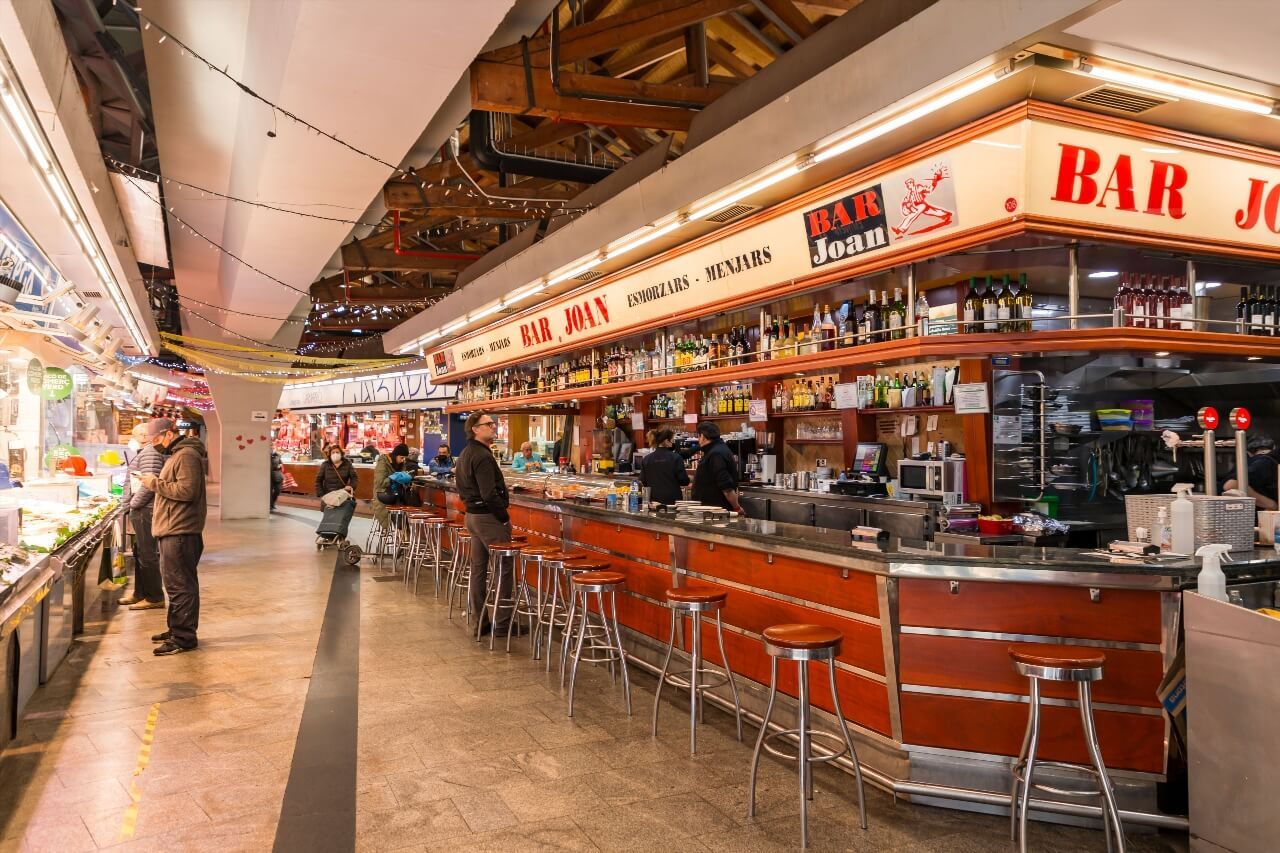
26. Mercat de Santa Caterina
Mercat de Santa Caterina (Avinguda de Francesc Cambó 16, 08003 Barcelona, rated 4.4/5 on Google (18 129 avis)) in El Born was renovated in 2005 by architects Enric Miralles and Benedetta Tagliabue, who replaced the original 19th-century roof with a dramatic undulating ceramic canopy depicting a mosaic of fruit and vegetables, 325,000 tiles in 67 different colours. The roof is best seen from the outside before entering.
Inside, it functions as a genuine neighbourhood market with lower tourist-to-resident ratio than La Boqueria. The archaeology section beneath the building preserves foundations of a Dominican convent from the 13th century. A more interesting market visit than La Boqueria for anyone who's already ticked that box.
27. Palau Güell
Palau Güell (Carrer Nou de la Rambla 3-5, 08001 Barcelona, rated 4.6/5 on Google (23 158 avis)) was Gaudí's first major commission, built between 1886 and 1890 for his principal patron, the industrialist Eusebi Güell. It stands on Carrer Nou de la Rambla, a street that at the time marked the edge of the Raval district, and its rooftop forest of ceramic chimneys prefigures the formal language Gaudí would develop at La Pedrera 25 years later.
The building functions as a chronological counterpoint to the mature Gaudí works. At Palau Güell you can see him working through the problems, the central salon with its parabolic dome pierced by small circular skylights, the interlocking spaces, the ambition to merge architecture and decoration, before he had found fully organic solutions. The basement stables with their mushroom-shaped brick columns are unexpectedly beautiful. Less crowded than Casa Batlló or La Pedrera; tickets available at shorter notice.
28. Cooking Class
Barcelona's food culture is distinct enough from generic Spanish cuisine to warrant learning its specifics. A hands-on Catalan cooking class gives you the context that restaurant menus rarely provide: why escalivada (roasted aubergine and pepper salad) appears so consistently, what makes pa amb tomàquet different from Italian bruschetta, and how the sofregit base underlies most of the region's sauces.
Classes typically run 3 : 4 hours and include market shopping at La Boqueria or Santa Caterina beforehand. Several operators offer small-group experiences (maximum 10 participants) in domestic kitchens in the Eixample, a format that produces better cooking instruction than the large commercial operations. Prices range from €80 to €150 per person.
29. Sailing Trip from Port Vell
The city's waterfront and the perspective it offers back toward the city makes a sailing trip from Port Vell (Moll de la Fusta, 08002 Barcelona, rated 4.5/5 on Google (2 315 avis)) one of Barcelona's more distinctive experiences. Several operators run 2-hour catamaran and motor yacht excursions along the coastline, offering views of the Barceloneta seafront, the cable car pylons, and the city skyline that are impossible to obtain from land.
Sunset departures (typically around 19:00 : 21:00 in summer) are the most popular and the most atmospheric. Book at least a week ahead from June through August. Prices for shared catamaran excursions start at around €25 : 35 per person.
30. Poble Sec & Carrer de Blai
Poble Sec sits on the lower slopes of Montjuïc and has emerged over the past decade as one of the city's more interesting neighbourhoods for eating and drinking. Carrer de Blai (Carrer de Blai, 08004 Barcelona, rated 4.3/5 on Google (244 avis)) is Barcelona's main pintxos street, an informal, high-energy row of bars serving Basque-style open sandwiches from €1.50 each, drawing a local crowd that understands value.
The street is best between 19:30 and 22:00 on weekday evenings, when the pintxos are fresh and the crowd is mixed local-tourist rather than tour-group dominated. Poble Sec also contains the Sala Apolo and the Teatre Grec, making it a natural starting point for evenings that combine dinner with a concert or theatre performance.
FAQ
How many days do you need in Barcelona?
Three to four days lets you cover the major Gaudí buildings, the Gothic Quarter, El Born, and Montjuïc at a reasonable pace without feeling rushed. For a city of Barcelona's cultural density, a week is more appropriate if you want to explore the different neighbourhoods (Gràcia, El Raval, Poblenou) and spend time at a beach. Two days is viable but means choosing between the major sites rather than visiting them all.
When is the best time to visit Barcelona?
May, June, and September are generally considered the best months: warm enough for the beach, cooler than the peak summer heat, and with significantly smaller crowds than July and August. October is excellent for weather and culture (festival season). December through February is mild by northern European standards (average highs around 14°C) and the city is far less crowded, though some outdoor venues operate reduced hours.
Is Barcelona safe for tourists?
Barcelona is broadly safe, but pickpocketing is a genuine problem, La Rambla, the Gothic Quarter, and the metro are the highest-risk areas. Keep valuables in front pockets or money belts, particularly in crowded tourist areas. Violent crime against tourists is rare. The city is well-lit and well-policed, and solo travel is comfortable for most visitors.
Do you need to book tickets in advance for the Sagrada Família?
Yes, in almost every circumstance. The Sagrada Família sells a fixed number of timed-entry tickets per day, and popular slots (10:00 : 12:00) can sell out 4 : 6 weeks ahead during July and August. Book through the official Sagrada Família website. Tower access is a separate ticket at additional cost and sells out even faster. For visits outside peak season (November through March), advance booking of 1 : 2 weeks is generally sufficient.
What is the best way to get around Barcelona?
On foot is the most practical option for the central districts, the Gothic Quarter, El Born, the Eixample, and Barceloneta are all walkable from each other. The T-Casual card (10-trip metro and bus pass) covers the entire integrated public transport network and represents good value for trips to Montjuïc, Tibidabo, Park Güell, or the Camp Nou area. Cycling is well-served by the Bicing bike-share system and a dense network of cycle lanes. Taxis and rideshare apps are readily available but not necessary for most tourist itineraries.
Is the Boqueria worth visiting?
Yes, but with adjusted expectations. It is one of Europe's great market buildings and the food quality at the inner stalls is genuinely high. Go early (before 10:00), push past the fruit-cup stalls near the entrance, and use it as a place to buy ingredients rather than to eat breakfast standing up. The experience is better in autumn, when the mushroom and game stalls are at their most varied.
Barcelona is an easy city to return to. Each of the 30 experiences above has a different character at different times of day, different seasons, and from different levels of familiarity. First-timers tend to do the Gaudí buildings and the Gothic Quarter; returning visitors discover Gràcia, the Bunkers del Carmel, and the Sant Pau complex. Ryo's Ryo's barcelona audio guide is a good way to make sure you understand what you're looking at on that first visit, 26 audio stops across a 6.4 km route, covering the city's history from its Roman origins to the 1992 Olympics and beyond.