
Créé par Emilie, le 20 juin 2026
Votre guide Ryo
What to Do in Tenerife: 18 Must-See Experiences in 2026
© Shutterstock
Knowing what to do in Tenerife is less about lack of ideas than embarrassment of choice. This island is far from an ordinary vacation destination: it's the only place in Europe where you can find yourself at the summit of Spain's highest volcano in the morning, cross a primeval forest several million years old in the afternoon, and watch pilot whales evolving just meters from your boat at the end of the day. The most populous island of the Canaries brings together eight distinct climate zones, a summit at 3,715 meters, beaches of black volcanic sand and others of sand imported from the Sahara. It's hard to know where to start, and even harder to see everything in a single stay.
This article takes you into the inaccessible gorges of a village founded by pirates in the 17th century, into a cloud forest with arborescent ferns classified as a Biosphere Reserve, on the slopes of a volcano where European astronomers observe the Milky Way with the naked eye, and before dry stone pyramids whose astronomical orientation remains unexplained. Eighteen places and experiences, chosen for their depth: the classics you cannot miss, and some gems your charter flight neighbors won't have seen. If you're preparing your stay, Ryo audio guides cover several neighboring destinations in the Canaries to complete your exploration of the archipelago.
1. Teide National Park: Lunar Landscape in the Heart of the Atlantic
The big mistake visitors arriving in Tenerife make is to see Teide from afar and think that's enough. It's not. Teide National Park (Carretera TF-21, 38300 La Orotava, rated 4.8/5 on Google for 39,746 reviews) is an experience in itself, independent of the summit ascent: its 18,990 hectares classified as UNESCO World Heritage since 2007 form one of Europe's strangest landscapes, where petrified lava flows in shades of ochre, black and red stretch as far as the eye can see under a sky of absolute transparency.
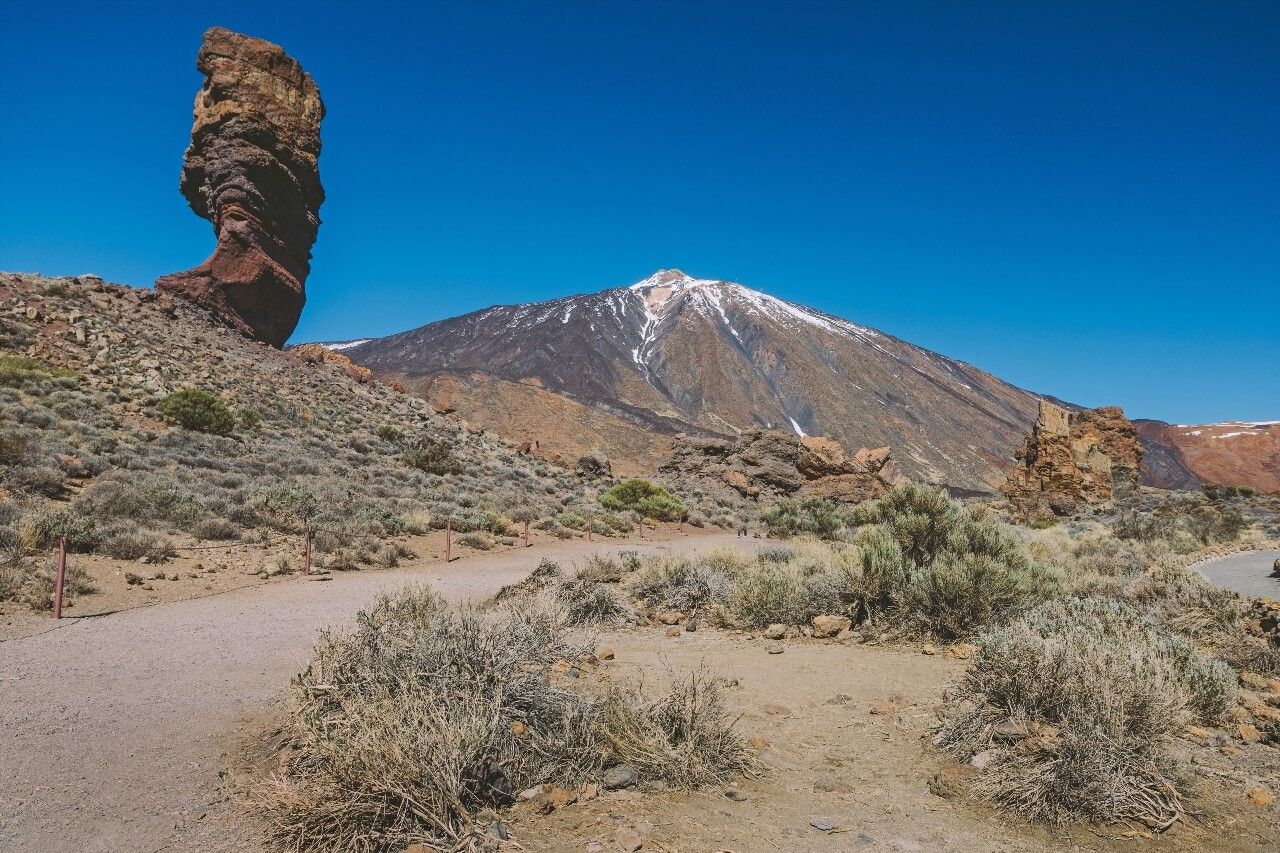
The TF-21 road that crosses the park from north to south is the main axis, but the best stops are on the edges. The Mirador de la Ruleta offers a vertiginous panorama of the Las Cañadas caldera: a 17-kilometer diameter depression surrounded by rock walls, formed by the collapse of an ancient volcano several hundred thousand years ago. Further on, the Roques de García are the island's most photographed geological formations: two dark rock monoliths rising in the middle of the volcanic plain.
The Roques de García walking loop (about 3.5 km, 1h30) is accessible without a permit, without special equipment, and offers viewpoints from four different angles on these formations and on Teide's cone in the background. At altitude, endemic vegetation is surprising: more than 60 species of plants exist only in this park, including the spectacular tajinaste rojo (Echium wildpretii), a red lance-shaped flower over a meter tall that blooms in May-June and whose fields color the slopes blood red.
Plan your visit early in the morning: tour buses arrive en masse between 10am and 2pm. At 7am or 8am, the park is almost deserted, the light is golden, and the temperature supports hiking without effort. Bring warm clothing imperatively even in summer: the contrast between the coast (25-28°C) and the park's altitude (around 2,000 meters, 10-15°C) is brutal and disconcerting for those who don't expect it.
One last thing few visitors know: the park is one of the five best stargazing sites on the planet. Canarian law prohibits any unfiltered lighting within a 40 km radius of scientific observatories, which means a night in the park or nearby gives you access to regulated darkness that no longer exists anywhere in continental Europe. To prepare these stages in advance, the Ryo app allows downloading audio content offline, useful in altitude areas where mobile network is patchy.
2. Ascending Mount Teide: To the Roof of Spain
Climbing to the summit of Teide at 3,715 meters is the most striking experience Tenerife can offer. It's not a hike for occasional walkers, but it's technically accessible to any person in good physical condition, provided you've organized one thing in advance: the summit access permit.
This permit is now reserved on the official Tenerife ON platform (tenerifeon.es), which manages the PNT 10 'Telesforo Bravo' trail leading to the crater. Attention: since January 19, 2026, access is no longer systematically free. Tenerife residents and children under 14 enter free of charge, residents of other Canary Islands pay 6 euros, and other visitors 15 euros for slots between 9am and 5pm. Places remain limited and new slots open every Monday at 7am (Canary time) for the following 56 days. In high season (July-August), they disappear very quickly: book on the day your dates open for reservation. The morning slot allows seeing sunrise from the crater, an otherworldly experience.
The quickest route goes through the Teleférico del Teide (TF-21, 38300 La Orotava, rated 4.3/5 on Google for 28,601 reviews), the cable car that drops you at 3,555 meters in eight minutes. From there, the trail to the crater rim represents another 160 meters of elevation gain on unstable volcanic soil. Without a permit, the cable car stops at the upper viewpoint: the view is already spectacular, but access to the crater itself is barred.
Those who prefer to climb on foot have two serious options. Trail #7 (Montana Blanca) starts from a parking lot at 2,350 meters altitude and climbs to the cable car in 3 to 4 hours of regular walking, on pulverized lava soil that resembles baker's ash. Trail #10 from El Portillo is longer but less frequented. In both cases, departure before dawn is imperative to reach the summit at sunrise.
What few brochures mention: altitude produces physiological effects even in perfectly fit people. Moderate headaches, slight respiratory fatigue, even mild nausea are common above 3,000 meters. Climb slowly, hydrate more than you normally would, and don't overestimate your resistance if you arrive directly from sea level. Teide's shadow cast on the sea of clouds at sunrise, when a perfect geometric triangle of shadow projects onto the endless carpet of cumulus, remains the image all those who made this ascent describe first.
Avoid July-August if you have a choice: attendance doubles, permit places go immediately, heat on lower slopes can exceed 35°C, and experience quality is inversely proportional to crowds.
3. Anaga Laurel Forest: The Forgotten Primeval Forest
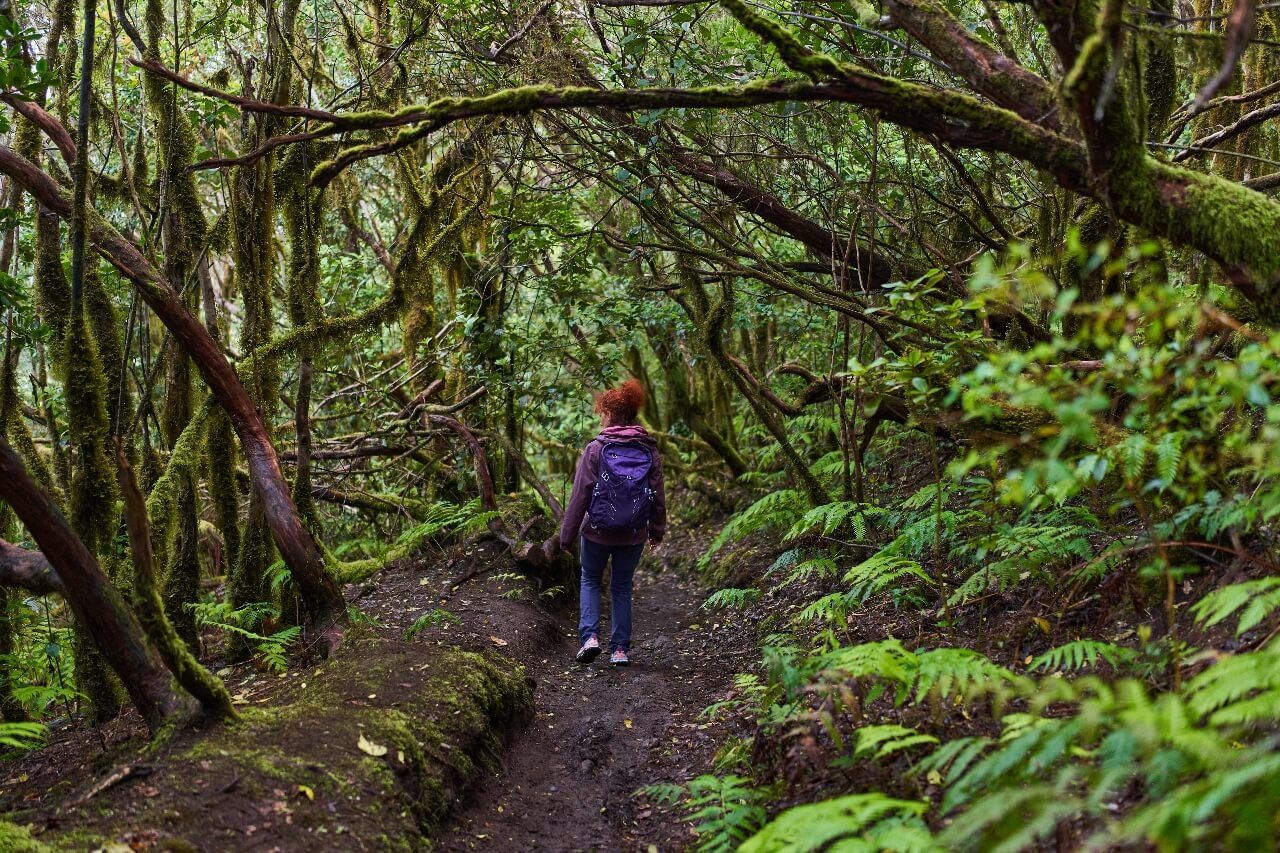
If Tenerife had only one place to preserve from mass tourist circuits, it would be the Anaga peninsula. The Anaga Laurel Forest, or laurisilva, is a cloud forest several million years old, remnant of vegetation that covered the Mediterranean perimeter in the Tertiary era, before the great glaciations that erased it from the European continent. It survived only here, in the Canaries, in Madeira and in the Azores, in areas where the Atlantic has regulated climate long enough that no glaciation came to destroy everything.
Classified as a UNESCO Biosphere Reserve, Anaga's laurisilva harbors more endemic species per hectare than any terrestrial zone in Europe. Tree ferns several meters tall, giant laurels with moss-covered trunks, tree heathers exceeding ten meters, endemic warblers that live nowhere else on Earth. To understand what you're looking at, look up at the ridge: a pack ice of low clouds remains permanently attached, feeding the forest with constant humidity and creating a green, filtered light unlike any European forest.
Hikes mainly start from the Las Heras Visitor Center, located at Cruz del Carmen, accessible by car from Santa Cruz in 30 minutes. Several marked trails open from there. The El Pijaral trail (7 km, 3h round trip) crosses the forest's densest areas with unexpected views of the north coast. The Punta del Hidalgo-Chamorga trail (15 km, 5-6h) is more demanding but ends at an almost abandoned hamlet at the peninsula's tip, where a few families still live according to virtually unchanged traditions.
Anaga's villages deserve as much as its trails. Taganana, nestled between two barrancos at the bottom of a steep valley, is one of the island's oldest, founded shortly after the 15th-century Spanish conquest. The road down from the main ridge is vertiginous but passable in a compact car. Avoid Sunday morning: hikers from Santa Cruz come en masse and parking lots overflow. On a Tuesday or Wednesday, Anaga resembles what it really is: one of the most striking nature experiences in the Atlantic islands.
4. Masca and the Gorges: The Island's Most Inaccessible Village
Masca is perhaps the most photographed place in Tenerife, and it's also one of the most poorly visited. Most tour buses stop at the viewpoint on the TF-436 road, take a few photos of the village clinging to its rocky ridge at 650 meters altitude in the Teno massif, and leave. That's not how to do it.
The access road to the village is a succession of tight hairpin bends along vertical cliffs, without safety barriers on several sections. Drive slowly, stop at the Mirador de Masca before the final descent to see the vertiginous position of this village founded according to local tradition by pirates in the 17th century, the gorges that protect it made it an almost impregnable natural refuge from the sea. A few restaurants on the edge serve papas arrugadas and mojo on terraces suspended above the barrancos.
The real experience is the descent of the Masca Gorges (Barranco de Masca). The trail descends from the village to a black sand cove at the bottom of the Atlantic: 400 meters of elevation drop over 3.5 km. The descent takes 2h30 to 3h depending on your pace, and offers views from inside the gorges of basaltic walls several hundred meters high that progressively narrow until leaving only a crack of blue sky above your head. Hard to describe the effect: you advance in a volcanic canyon whose walls are literally carved in cooled lava, with the sea rumbling ominously below.
Almost all hikers opt for the return by shuttle boat from the cove, with a crossing to Los Gigantes (about 12 euros). The trail was closed several years for safety work and has reopened progressively since 2023: check access conditions on the Cabildo de Tenerife website before leaving, as occasional closures remain possible after heavy rains. Starting early (7am from the village) avoids heat on exposed sections during midday.
5. Los Gigantes: The Cliffs at the Edge of the Void
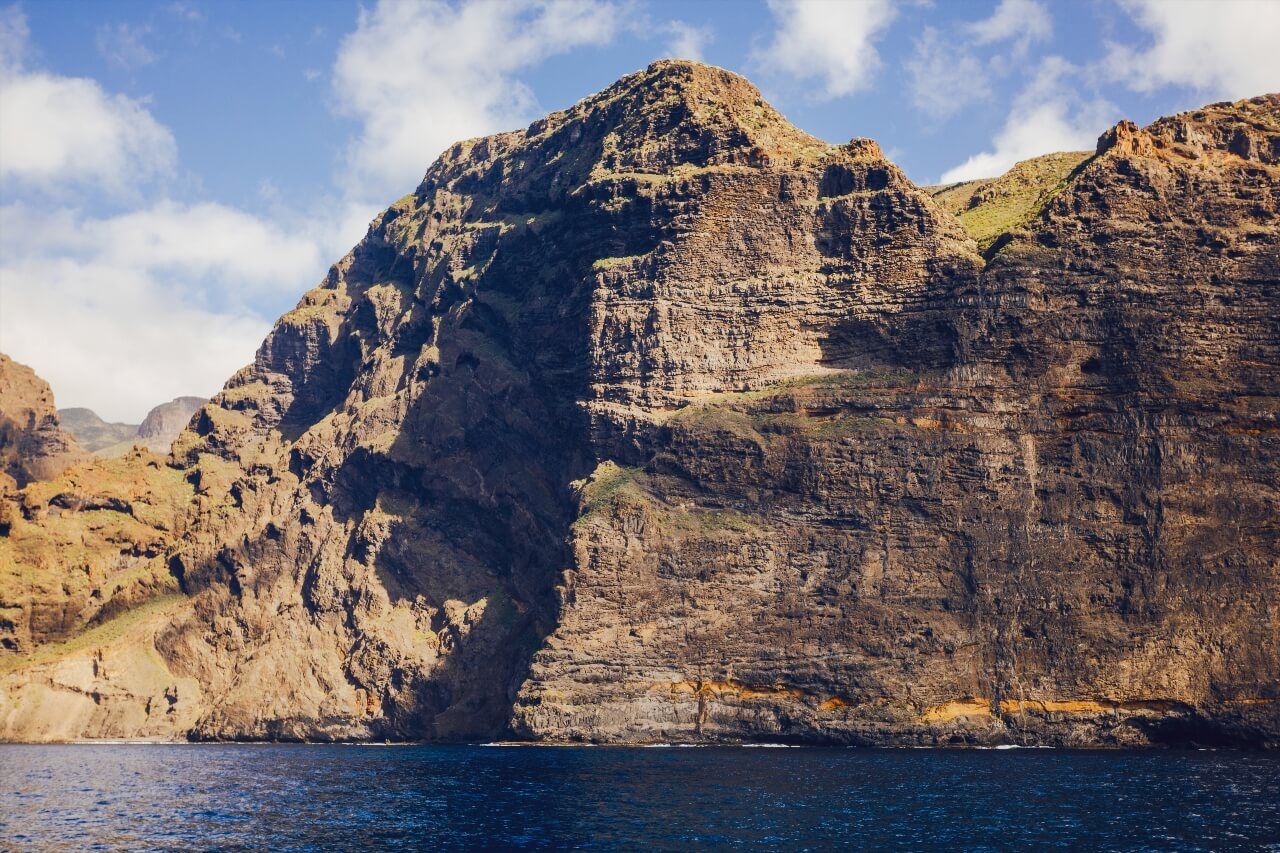
The cliffs of Los Gigantes are among Europe's highest: between 400 and 600 meters of black basalt plunging vertically into the Atlantic, without beach or promontory to cushion the gaze's fall. The coastal road along the corniche offers some spectacular viewpoints, but the only angle that truly conveys their immensity is from the sea.
Boat excursions from Los Gigantes port usually last 2 to 3 hours and run along the cliffs at close range. From the boat deck, the scale of the basaltic walls suddenly becomes real, and overwhelming. In late afternoon, raking light sets these walls ablaze with an intense copper color that no photo really captures. The same excursions often pass by the cetacean zones of the La Gomera strait, which can constitute a double natural program.
The village of Los Gigantes itself is a seaside resort without great architectural interest, built in the 1970s for a British retiree clientele. What's worth the detour: Playa de Los Guíos, a cove of gray volcanic sand just below the village, accessible by stairs from the waterfront. Rarely crowded, it offers swimming at the very foot of the cliffs, an experience of absolute minerality, between black basalt above and rocky seabed below.
From Los Gigantes port, you can also reach Valle Gran Rey beach on La Gomera island in one hour by ferry, a day excursion to an island that has preserved an atmosphere of confidential destination that Tenerife definitively lost in the 1990s.
6. Santa Cruz de Tenerife: The Capital That Doesn't Wait for Your Clichés
Santa Cruz often confuses travelers expecting a quiet capital. The city is dense, lively, cosmopolitan, carried by a carnival ranked among the world's five largest, attracting more than 200,000 people each February on Avenida de Anaga alone. But even outside carnival, Santa Cruz justifies a full day.
The Plaza de España (Plaza de España, 38003 Santa Cruz de Tenerife, rated 4.5/5 on Google for 184 reviews), redesigned in 2008 by Herzog & de Meuron architects, is the logical starting point. Its circular central basin in black volcanic stone is one of Spain's most successful contemporary squares. Nearby, the Mercado de Nuestra Señora de África is the island's most photogenic and active market: its colonial galleries house stalls of live fish, local goat cheeses, tropical flowers and fruits you won't recognize. Arrive before 10am to see market life at maximum intensity.
The TEA, Tenerife Espacio de las Artes offers high-quality contemporary art temporary exhibitions in a building also designed by Herzog & de Meuron, open every day except Monday (6 euros entrance). Playa de Las Teresitas (see section 11), 8 kilometers north of the center, is accessible by bus from the capital in less than 20 minutes. Santa Cruz is also the tram terminus connecting to La Laguna in 27 minutes for 1.45 euros, no reason to take the car between the two cities.
7. San Cristóbal de La Laguna: The Medieval City That Latin America Copied
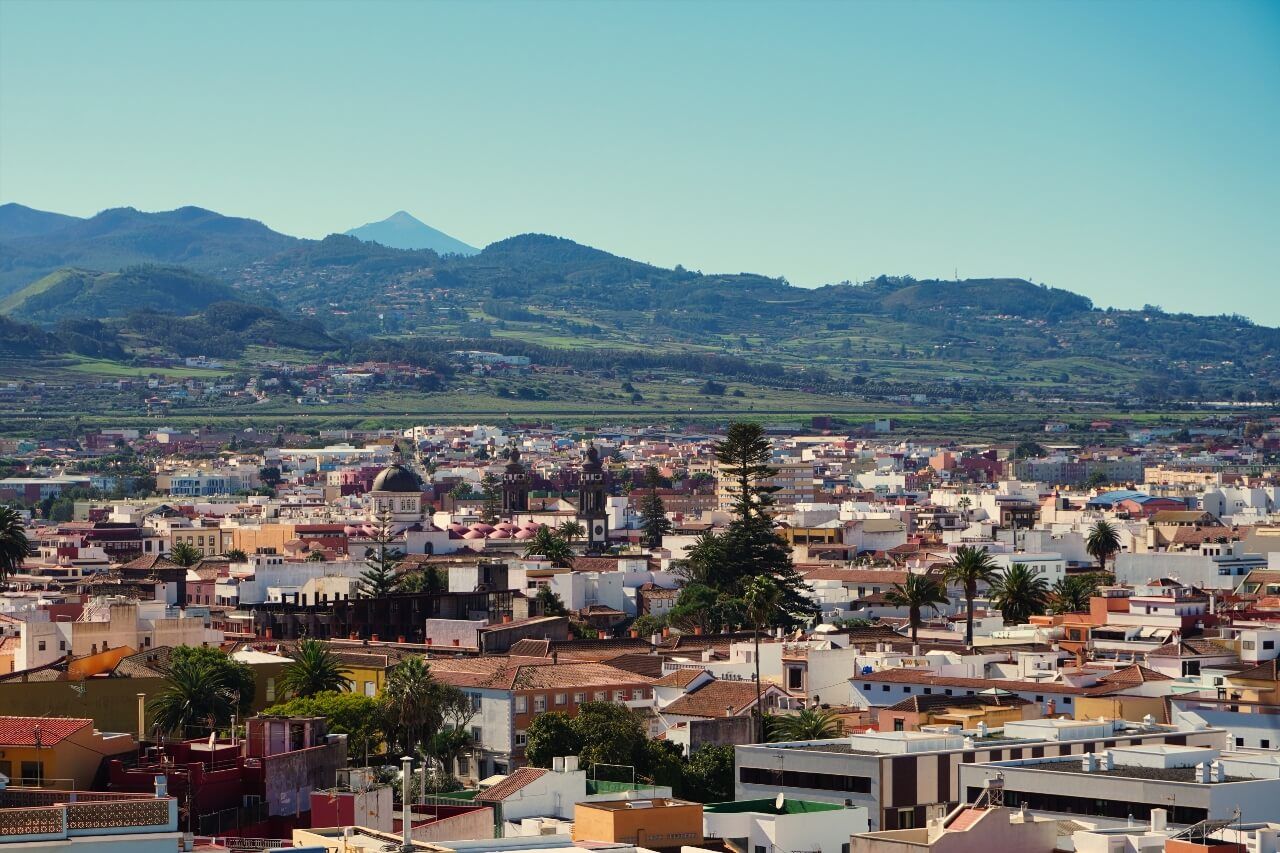
San Cristóbal de La Laguna is the only planned medieval city in the Canary Islands, and one of the few in Spain to have kept its original urban layout intact. Inscribed on UNESCO's World Heritage List since 1999, it served as a direct model for founding numerous Latin American colonial cities: its grid plan, wide streets, and open squares were reproduced in Havana, Lima, and San Juan, Puerto Rico. This is a historical fact often unknown to European visitors who see it as a pretty old town.
The historic center is entirely pedestrian and can be freely explored, without admission tickets. The Cathedral of La Laguna (Catedral de Nuestra Señora de los Remedios) houses in its side chapels 16th-century altarpieces preserved from 19th-century iconoclastic crises. The Palais de Nava is the finest example of civil baroque architecture on the island. The carved wooden balconies of patrician houses on Calle San Agustín constitute the most characteristic image of Canarian architecture.
La Laguna is also Tenerife's university city. The University of La Laguna, founded in 1792, is the oldest in the Canaries, and the presence of its approximately 25,000 students explains the vitality of cafés, bookstores and independent shops in the center. Come on weekdays if possible: cruise groups invade the center on Saturday mornings, briefly transforming the patrician alleys into human cable car corridors. On a Tuesday afternoon, however, it's one of the most pleasant cities in the Canaries.
8. Watching Whales and Dolphins in the La Gomera Strait
The channel between Tenerife and La Gomera is one of the few places in the world where pilot whales (short-finned pilot whales) reside year-round. These social cetaceans, whose family groups count up to 30 individuals, evolve in waters reaching 1,500 meters deep just kilometers from shore. Several dolphin species regularly cross the same area: Atlantic spotted dolphins, bottlenose dolphins, common dolphins, as well as fin whales and sperm whales in migration depending on seasons.
Excursions mainly depart from Puerto Colón (Avenida de Bruselas, 38660 Costa Adeje, rated 4.5/5 on Google for 12,614 reviews) (Costa Adeje) and Los Gigantes. Two types of boats: catamarans (more stable, snorkeling included, 3-4h, about 45-60 euros per adult) and fast ribs (closer to animals, less space, 2h, 35-50 euros). Some operators are certified by the SECAC protection program, which imposes regulatory approach distances. These providers respect animals and often offer naturalist commentary of much better quality.
The probability of observing pilot whales approaches 95% year-round according to serious operators, which is very rare for this type of excursion worldwide. The months from March to June are ideal for spotted dolphin groups, very active at the surface. If you're prone to seasickness, opt for the catamaran and choose a morning excursion: in the afternoon, wind regularly picks up in the strait and seas form faster than you'd think from the coast.
9. Loro Parque: Much More Than a Parrot Zoo
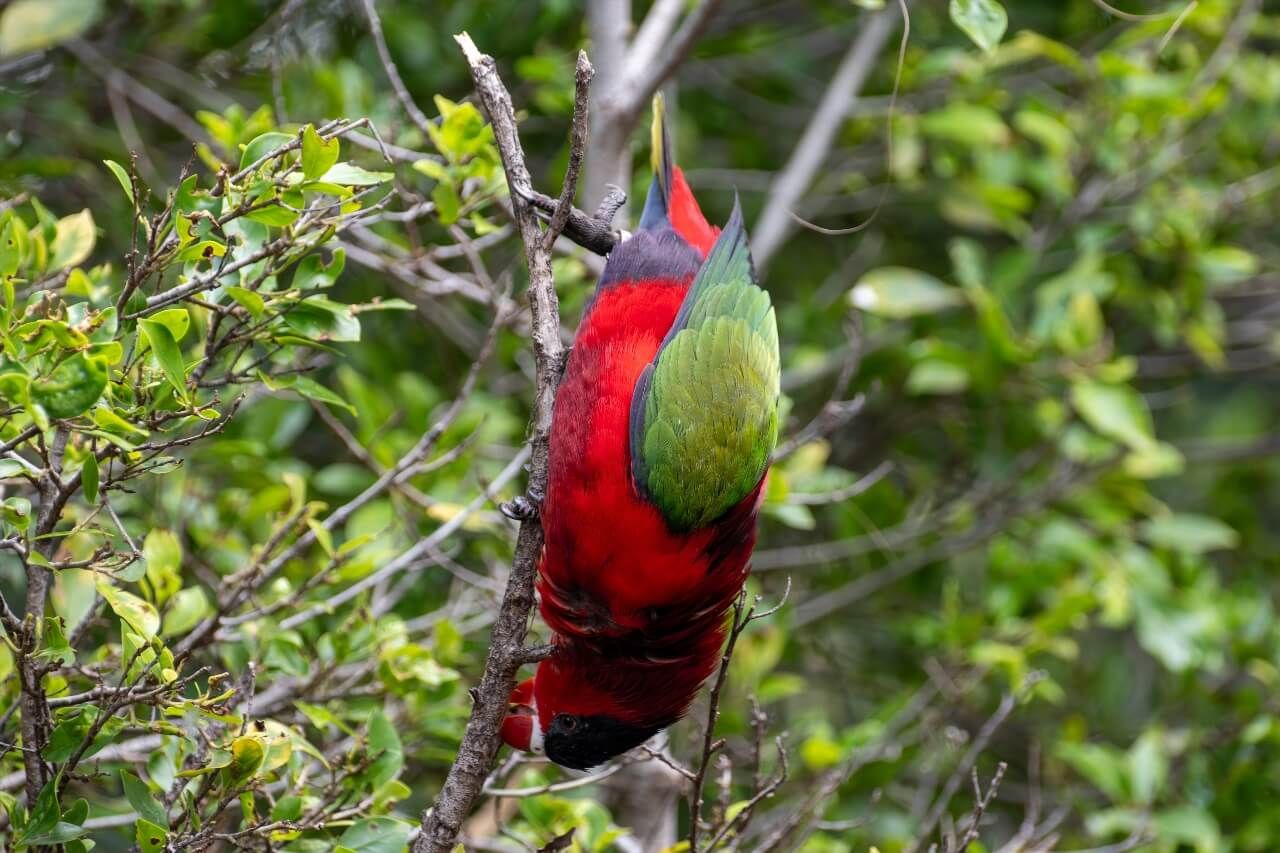
Loro Parque (Avenida Loro Parque, 38400 Puerto de la Cruz, rated 4.6/5 on Google for 99,758 reviews), founded in 1972 in Puerto de la Cruz, began as a parrot collection, hence its name. It now houses the world's largest parrot collection (more than 3,000 individuals, representing 350 species), but is now one of Europe's highest-rated zoos, with facilities recognized for their animal care standards. The 17-meter underwater tunnel through a shark aquarium, the Orca Ocean orca pool (Europe's largest orca tank), gorilla and chimpanzee enclosures, white tigers.
On the question of orcas in captivity: the debate is real. Cetacean detention remains controversial and Loro Parque has been criticized by animal protection associations. The park has announced a gradual evolution toward conservation programs rather than performances, but the transition takes time. What you choose to visit or not remains your decision.
What is not debatable: the parrot galleries are fascinating, the endangered species breeding program is serious (the park participated in saving Spix's macaw and Lear's macaw, two of the parrots closest to extinction), and the Loro Parque Fundación finances wild parrot protection programs in 40 countries. Allow 6 to 7 hours for a complete visit. Adult tickets cost about 38 euros, book online to avoid entrance queues, particularly long on weekend mornings.
10. Siam Park: The Water Park Ranked First in the World
Siam Park (Autopista del Sur TF-1, 38660 Costa Adeje, rated 4.4/5 on Google for 72,403 reviews), in Costa Adeje, held the top spot in TripAdvisor's worldwide water park rankings for several consecutive years. The Thai theme is pushed to the detail: entrance temples, curved roofs, tropical vegetation planted between attractions. But it's the immensity of facilities that justifies the reputation: the Tower of Power (vertical descent of 28 meters through a transparent shark aquarium), the Wave Palace (wave pool with 3-meter waves, Europe's largest), the Dragon (family rapids on wooden slides).
The park is open year-round, a considerable advantage over continental water parks closed six months of twelve. Expect between 36 and 44 euros depending on season; combined tickets with Loro Parque exist and allow notable savings if you plan both. Arrive at opening (10am) to enjoy major attractions without waiting: the Tower of Power regularly shows 45 to 60 minutes queues at midday. Plan a minimum full afternoon, a full day if coming with children.
11. Tenerife's Beaches: From Black Volcanic Sand to Sahara Sand
The contrast between Tenerife's beaches is one of the least well-documented realities of the island in tourist brochures. On one side, beaches in the north and non-developed areas, with their black volcanic sand, powerful waves and wild character. On the other, golden sand beaches in the south, massively imported from the Western Sahara in the 1970s to create seaside destinations that didn't naturally exist at that location. These are two distinct geographies, two atmospheres unrelated to each other.
Playa de Las Teresitas (Santa Cruz) is the island's most beautiful large beach accessible without a car. Protected by an underwater breakwater that breaks waves, it offers calm swimming in transparent water. Its beige Saharan sand, planted with a palm grove running along the entire waterfront, makes it the Canarian capital's only tropical beach. Arrive before 10am or after 5pm to find space.
Playa de El Médano is kitesurfing and windsurfing territory. The northeast wind blows here with regularity and power that make it one of the best water sports spots in the Canaries and Europe. The village of El Médano has resisted large hotel complexes and keeps a surfer station atmosphere, with its alleys, seaside bars and kitesurfing schools lined up on the beach.
Playa de Benijo, at the end of Anaga peninsula, is the island's most spectacular black volcanic sand beach. Monumental basaltic rocks emerge from waves at the cove entrance, views reach the Roques de Anaga islets, and swimming is discouraged except in very calm sea conditions due to undertow. Access is via a track from Taganana, which explains its moderate attendance even in high season.
Playa Jardín (Avenida Blas Pérez González, 38400 Puerto de la Cruz, rated 4.2/5 on Google for 769 reviews) in Puerto de la Cruz deserves special mention: this black volcanic sand beach in the city center was redesigned by famous gardener César Manrique with tropical gardens bordering it entirely. It doesn't have the extent of Teresitas nor the wild character of Benijo, but its setting is unique in the Canaries.
12. Garachico and Its Natural Pools: The Legacy of a Catastrophe
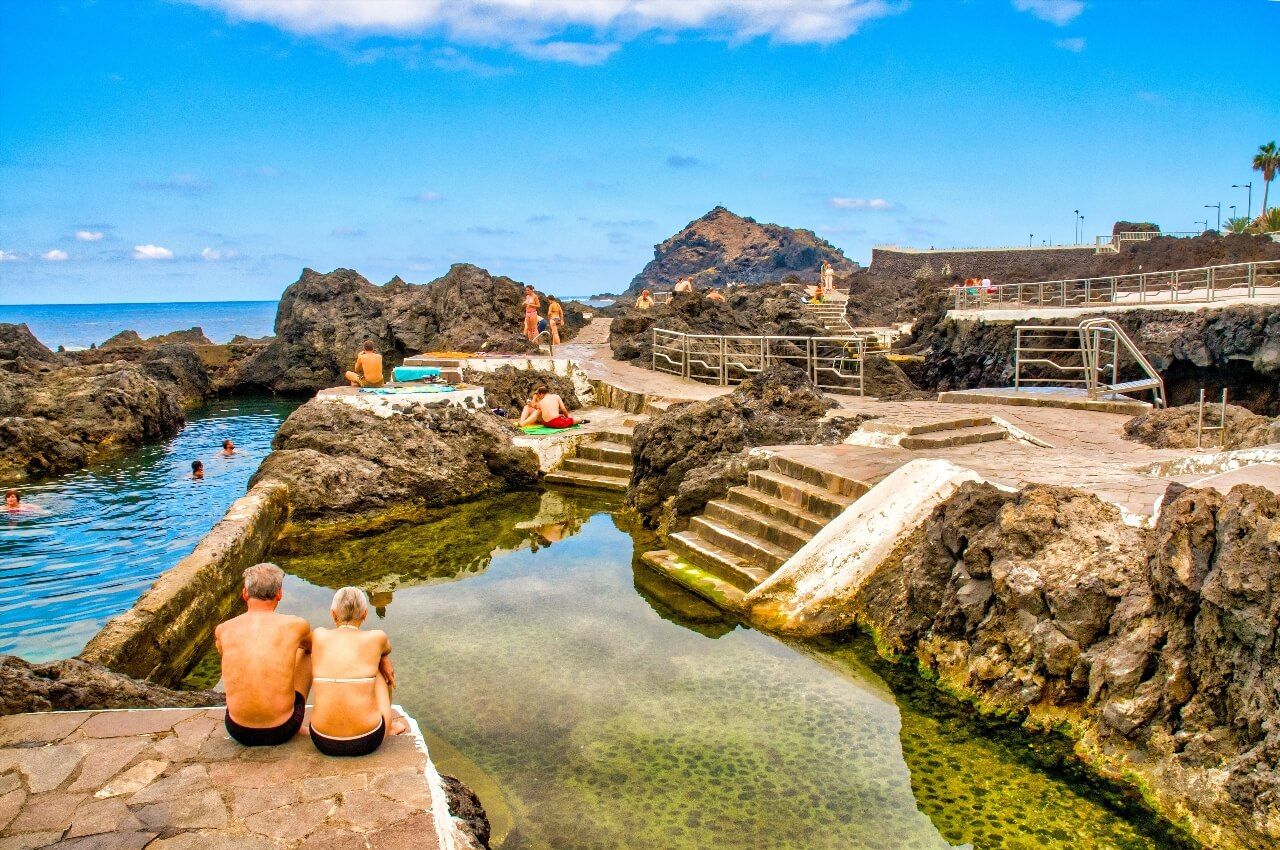
Garachico is the north coast's most endearing village, and its history bears traces of a catastrophe that paradoxically created its most beautiful jewel. Former commercial capital and Tenerife's first port until the early 18th century, the city was almost entirely destroyed by the volcanic eruption of 1706, which filled its natural port with cooled lava and ruined its economy overnight. What this lava left when cooling in the sea is a network of natural pools known as El Caletón: pools carved in black volcanic rock, filled at high tide by Atlantic water.
Entry is free. The pools are of varying depths, some safely accommodate children, others exceed two meters, and views of the Atlantic from the rocks are striking in clear weather. Come in the morning before tour groups arrive from southern hotels: between 9am and 11am, you'll share the pools with a few locals and not much else.
The village itself deserves an hour's walk after swimming. Its San Miguel Castle (16th century), its basalt-paved alleys, its San Francisco Church and its carved wooden balcony houses testify to what Tenerife was before 1706, a prosperous city turned toward the Atlantic, of which lava spared only the historic heart.
13. Puerto de la Cruz and La Orotava: The Soul of the Island's North
Puerto de la Cruz is Tenerife's oldest tourist town, the British came to winter here as early as the 19th century to escape northern fogs. The city has preserved a historic center that deserves better than the quick crossing between hotel and Loro Parque: the Plaza del Charco, the main square lively in the evening, the Lago Martiánez (outdoor pools designed by César Manrique, 4 euros entrance), the Playa Jardín.
At 5 kilometers climbing inland, La Orotava is Tenerife's most elegant city according to a consensus fairly shared by Canarians themselves. Its 17th-century historic center groups the finest examples of Canarian colonial architecture: houses with interior courtyards, carved cedar wood balconies, patios planted with banana trees. The Casa de los Balcones is the most photographed house, but several neighboring patrician residences are equally worth the detour.
During Corpus Christi (late May - early June), La Orotava is the theater of one of the most spectacular Canarian traditions: flower carpets and colored volcanic sand, composed directly on the Plaza del Ayuntamiento ground, cover several hundred square meters of meticulous geometric compositions reminiscent of Andean mandalas. If your stay coincides with this period, don't miss this day.
14. Teide Astronomical Observatory: Scrutinizing the Universe Above the Clouds
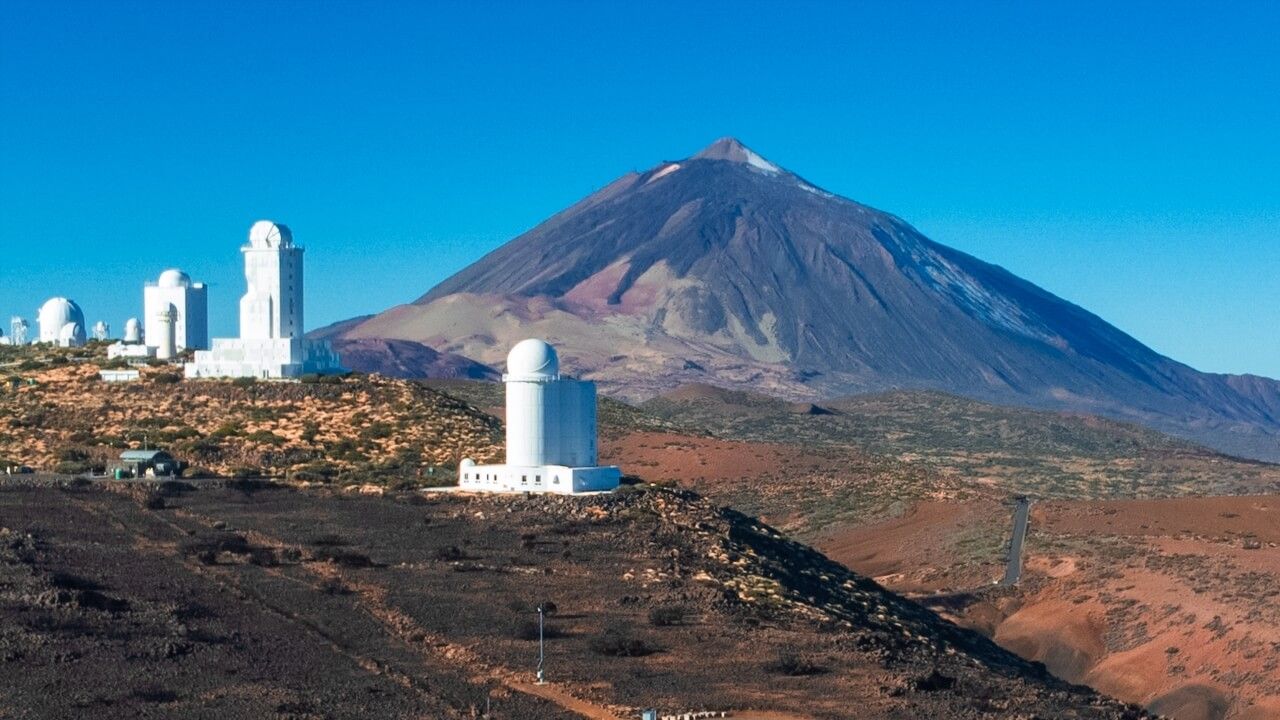
Tenerife houses one of the planet's five best celestial observation sites, a verifiable claim by the density of scientific installations concentrated there. The Teide Observatory (Observatorio del Teide (TF-328, 38330 La Orotava, rated 4.6/5 on Google for 1,957 reviews)), managed by the Canary Islands Institute of Astrophysics, is installed at 2,400 meters altitude on the volcano's slopes, permanently above the cloud layer that protects the sky from coastal light pollution. Canarian law prohibits any unfiltered lighting within a 40 km radius around observatories: darkness regulated by law, non-existent almost everywhere in continental Europe.
Guided daytime visits are offered by the IAC on reservation, allowing you to see solar telescopes in operation, including THEMIS, one of Europe's largest solar telescopes. In the evening, several private operators offer nighttime astronomy outings from the national park heights, with professional telescopes, transport from the coast and commentary available in English (60 to 70 euros per person). On cloudless nights, the Milky Way is visible to the naked eye from observation terraces. It's an experience hard to forget for anyone who grew up in Europe and never saw the sky without light pollution.
15. The Pyramids of Güímar: The Geometric Enigma of the Canaries
The Pyramids of Güímar (Calle Chacona, 38500 Güímar, rated 3.8/5 on Google for 9,131 reviews) are among Tenerife's most polarizing curiosities. These six dry stone structures, 4 to 12 meters high, were rehabilitated thanks to Norwegian explorer Thor Heyerdahl's intervention, who saw proof of a connection between Mediterranean and pre-Columbian civilizations. Spanish archaeologists lean more toward colonial period agricultural terraces converted into more elaborate structures.
Whatever their origin, one fact stands out: the pyramids are oriented with remarkable precision. Their stairs align exactly with sunrise and sunset during summer solstices. This is not coincidence, and doesn't correspond to ordinary agricultural construction. The site museum traces Heyerdahl's history and displays models of his reed boats. Entry costs about 12 euros and includes a tropical greenhouse with rare species. Allow 1h30 to 2h for the complete visit.
16. The Millenary Dragon Tree of Icod de los Vinos
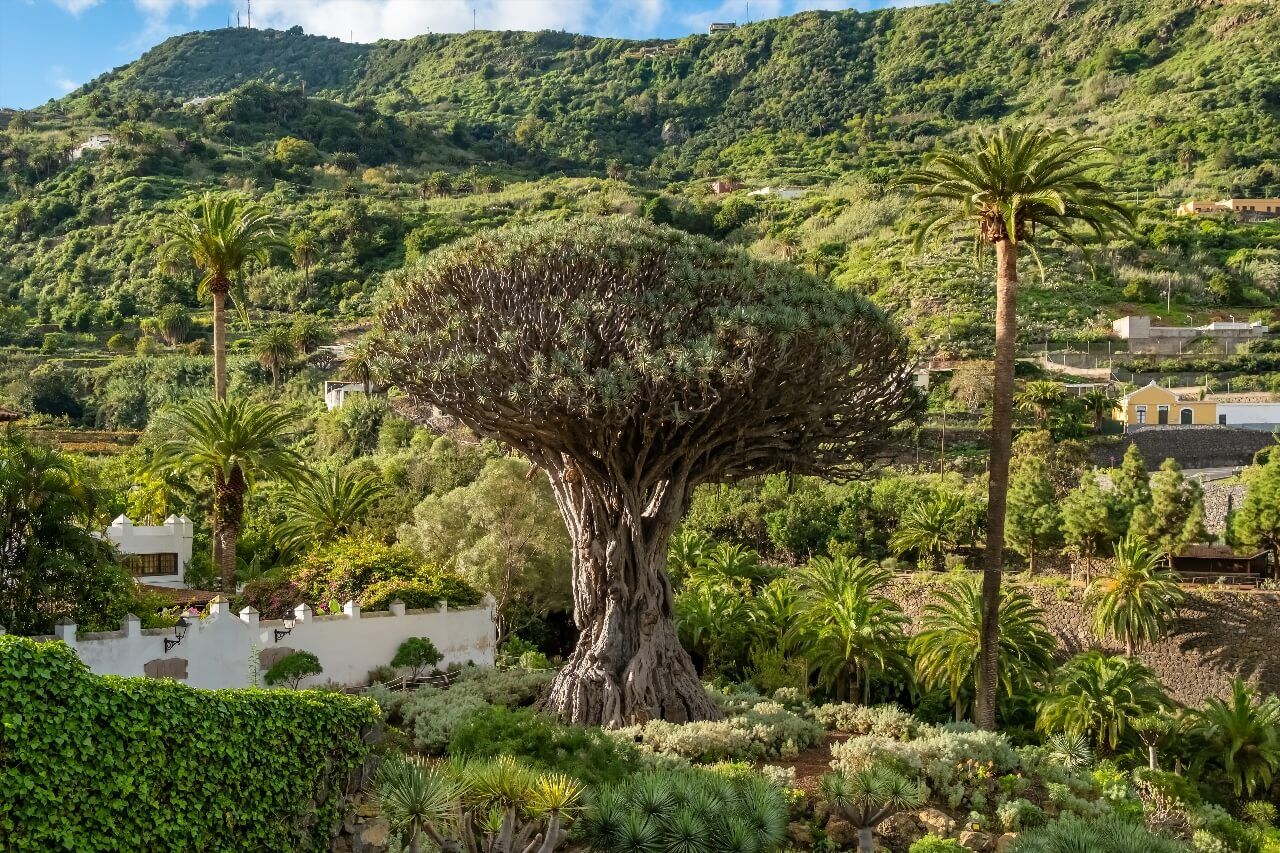
The Drago Milenario of Icod de los Vinos (Calle San Sebastián, 38430 Icod de los Vinos, rated 4.4/5 on Google for 32,483 reviews) is the Canaries' most famous tree, and one of the planet's largest living dragon trees. Its height reaches 17 meters, its circumference 20 meters at the base, and its estimated age varies according to sources between 500 and 1,000 years, a range that says less about botanists' uncertainty than the difficulty of dating a tree that doesn't form annual growth rings.
The dragon tree (Dracaena draco) is endemic to the Canary Islands and a few rare locations in Madeira and Morocco. Its blood-red sap, called 'dragon's blood,' was used for centuries in traditional medicine and lutherie, 17th-century Italian luthiers incorporated it into their violin varnishes. Access to the garden surrounding the tree costs 6 euros. From Icod's main street, it's possible to see the dragon tree free from an arranged viewpoint, which many hurried visitors do. If you're there, take the ticket: the close-up view is of another nature. Icod is also one of the island's best wine centers, its cellars produce malmsey wine (malvasía), a dry or semi-dry white whose commercial reputation dates from the 15th century.
17. Tenerife Auditorium: Santiago Calatrava Facing the Atlantic
The Tenerife Auditorium Adán Martín (Av. de la Constitución 1, 38003 Santa Cruz de Tenerife, rated 4.5/5 on Google for 10,170 reviews), inaugurated in 2003 on Santa Cruz's waterfront, is one of Spain's most photographed contemporary buildings. Designed by Valencian architect Santiago Calatrava, it unfolds like a petrified wave in white concrete with its characteristic central arch of 58 meters height. The silhouette is striking at night, when lighting underlines the structure's curves against the black sky and reflections in the water basin bordering the building.
The interior houses a main hall of 1,616 seats with exceptional acoustics, home to the Tenerife Symphony Orchestra. Programming covers opera, classical music and jazz; tickets start at 15 euros depending on the show. Even without a scheduled concert, the auditorium is a ten-minute walk from Plaza de España and worth the detour for its architecture alone. Ryo's audio guide to Santa Cruz, when available, will place this building in the reinvented urban landscape of the waterfront.
18. Canarian Gastronomy: Between Africa, Spain and the Atlantic
Canarian cuisine is the great unknown of Spanish gastronomy, and it's an injustice. Influenced by exchanges with African coasts, Guanche culinary traditions (the island's indigenous people) and Spanish colonial cuisine, it has developed identity flavors unfindable outside the archipelago.
The papas arrugadas are the undisputed national dish. These small wrinkled potatoes, of endemic varieties cultivated only at altitude on Teide's slopes, papa negra and papa bonita in the lead, are cooked in very salty water until complete evaporation, wrapping them in a crystallized salt crust. They accompany mojo rojo (peppers, garlic, cumin, vinegar) or mojo verde (coriander, garlic, olive oil). The result is simple, fragrant, absolutely inimitable outside the Canaries.
Among other must-tries: potaje de berros (Canarian watercress soup, thick and nourishing, served in all seasons), gofio (roasted cereal flour used in porridge, mousse or sprinkled on soups, direct heritage from Guanches), churros de chipirones in Puerto de la Cruz tapas bars. Viejo (wreckfish, a local fish with firm, flavorful flesh, simply grilled) is the knockout argument for lunching in a local restaurant rather than a tourist terrace.
To taste everything in an authentic setting, two reference addresses: the Mercado de Nuestra Señora de África (Calle de San Sebastián, 38003 Santa Cruz de Tenerife, rated 4.6/5 on Google for 16,946 reviews) in Santa Cruz, in the morning, for fruits, goat cheeses and standing tapas among locals; and restaurants on Calle del Casco Histórico in La Laguna, on weekdays, for daily menus under 12 euros without the tourist markup of southern resorts. Restaurants in Costa Adeje and Playa de las Américas seaside resorts serve acceptable Canarian cuisine, but rarely at the same level as those cooking for local clientele.
FAQ
What is the best time to visit Tenerife?
Tenerife enjoys a mild climate year-round, with coastal temperatures between 18°C in winter and 28°C in summer. The months from March to May and October to November are ideal: fewer tourists than in summer, temperate sea at 21-22°C, lush vegetation in high-altitude areas. July-August is high season with elevated prices, Teide permits unavailable last minute, and maximum crowds at all sites.
Should you rent a car in Tenerife?
Yes, unless you stay on the south coast. Tenerife has a decent bus network (TITSA) between major cities and resorts, but mountain villages like Masca, Anaga or Teide viewpoints are difficult to access without a car. Expect between 25 and 40 euros per day for a compact car booked in advance. Mountain roads are narrow but well-maintained, and road signage is clear.
How to get a permit to climb to the summit of Teide?
The permit is reserved on the official Tenerife ON platform (tenerifeon.es), which manages the PNT 10 'Telesforo Bravo' trail to the crater. Since January 19, 2026, it's no longer always free: free for Tenerife residents and children under 14, 6 euros for residents of other Canary Islands and 15 euros for other visitors during slots between 9am and 5pm. New slots open every Monday at 7am for the following 56 days, and places go quickly in high season. Without a permit, the cable car takes you to 3,555 meters, but the final 160 meters to the crater are forbidden.
Can you visit Tenerife as a family with young children?
Absolutely. Siam Park and Loro Parque are designed for all age groups. Southern beaches (calm waters thanks to breakwaters, complete infrastructure) suit young children. Garachico's natural pools and snorkeling at El Puertito (sea turtles within arm's reach) are accessible from ages 6-7. For the Teide altitude area, consider possible altitude sickness above 2,000 meters in some children.
Where to stay in Tenerife according to your travel style?
The south (Costa Adeje, Los Cristianos, Playa de las Américas) concentrates most hotels and all-inclusive resorts, with all budgets. The north (Puerto de la Cruz) is more authentic, with family hotels and local clientele. For a cultural stay, La Laguna offers city center apartments at reasonable prices. Santa Cruz suits travelers wanting to combine urban life, quick access to natural sites, and gastronomy without tourist markup.
How many days are needed to visit Tenerife properly?
A minimum of 7 days to cover the major areas: 2 days for Teide and surroundings, 1 day for Anaga, 1 day for the north (La Orotava, Puerto de la Cruz, Icod, Garachico), 1 day for cetaceans and Los Gigantes, 1 day for La Laguna and Santa Cruz, 1 free day for beaches and gastronomy. With 10 days, you can add Masca, Güímar and half-days in villages.
Is Loro Parque worth its entrance fee?
For a family with children: yes, clearly. The variety of animals, quality of facilities, serious conservation programs (Spix's macaw, Lear's macaw), and possible visit duration (6-7h) make it one of the densest zoological experiences in the Atlantic islands. For solo travelers sensitive to cetacean captivity issues, the answer is more nuanced, the orca question remains a legitimate ethical friction point.
Conclusion
Tenerife resists simplification. It's not the island of southern beaches nor only that of Teide, it's both at once, plus Anaga's primeval forest, Masca's gorges, strait whales and Güímar's enigmatic pyramids, all on an area roughly equivalent to Martinique's. The eighteen places detailed in this article trace an itinerary that goes far beyond organized tourism's beaten paths, but there's still much more to discover.
A simple rule for organizing your stay: book the Teide permit the day you lock in your dates, and keep at least two unplanned days. Tenerife rewards unexpected detours and nameless paths. To extend exploration of the Canaries or neighboring Atlantic destinations, Ryo audio tours cover several European cities and regions, a way to prepare or extend your trip at your own pace, with content designed by local teams.