© Shutterstock
 Votre guide Ryo
15 Activities in Seville Not to Miss in 2026
Seville burns. Not metaphorically: in July, thermometers regularly exceed 45°C in the alleyways of Santa Cruz, yet the city never empties. This paradox reveals something essential about the Sevillian character — an ability to transform constraints into an art of living. To help you plan your Seville activities for 2026, we have brought together the must-see sites and the best free options: a unique Arab-Andalusian heritage found nowhere else in Europe, museums free of charge for European nationals, and neighbourhoods where every hidden courtyard tells centuries of history. The Alcazar is one of the rare royal residences still occupied by a reigning family and open to the public; the cathedral holds the tomb of Christopher Columbus; the Triana neighbourhood shaped flamenco. Our Ryo's Seville audio-guided tour invites you to explore all of this with audio commentary that brings depth to everything you see.
What awaits you: 18th-century baroque bullring whose façade alone justifies a detour, a medieval Jewish quarter preserved almost intact, a gigantic wooden structure placed over an ordinary square to turn it into a viewpoint, and a public promenade that is four and a half centuries old. Seville is earned on foot.
1. The Santa Cruz Quarter, White Labyrinth and Orange Trees
The Santa Cruz quarter is Seville's former Jewish district, bounded by the walls of the Alcazar on one side and the Guadalquivir on the other. Its white limestone streets, barely two metres wide in places, were laid out in medieval times to trap shade and create natural ventilation corridors. The result: even at 38°C, walking here remains bearable.
The Plaza de Doña Elvira is its heart: a 17th-century fountain surrounded by ceramic-tiled benches, century-old orange trees and, almost always, a guitarist playing for himself. Around it, the alleyways lead to corrales, inner courtyards that residents adorn with geraniums and bougainvilleas. Some can be glimpsed from the street; others are sensed behind a half-open door.
The golden rule for Santa Cruz: come before 9 am or after 8 pm. Between those hours, organised tour groups reduce the experience to an obstacle course. Early in the morning, you will encounter only residents walking their dogs and delivery cyclists manoeuvring through impossible alleys. The raking light on the white façades is worth the early start on its own.
Santa Cruz is entirely free to enter, with no ticket or opening hours. Souvenir shops open around 10 am; restaurants serve lunch tapas from 1 pm. An hour of wandering covers the essentials, but those who truly get lost easily spend two hours among courtyards and hidden squares. Our Princess of the Guadalquivir audio-guided tour threads those same alleys before opening onto the Alcázar.
2. The Plaza de España, a Masterpiece of Excess
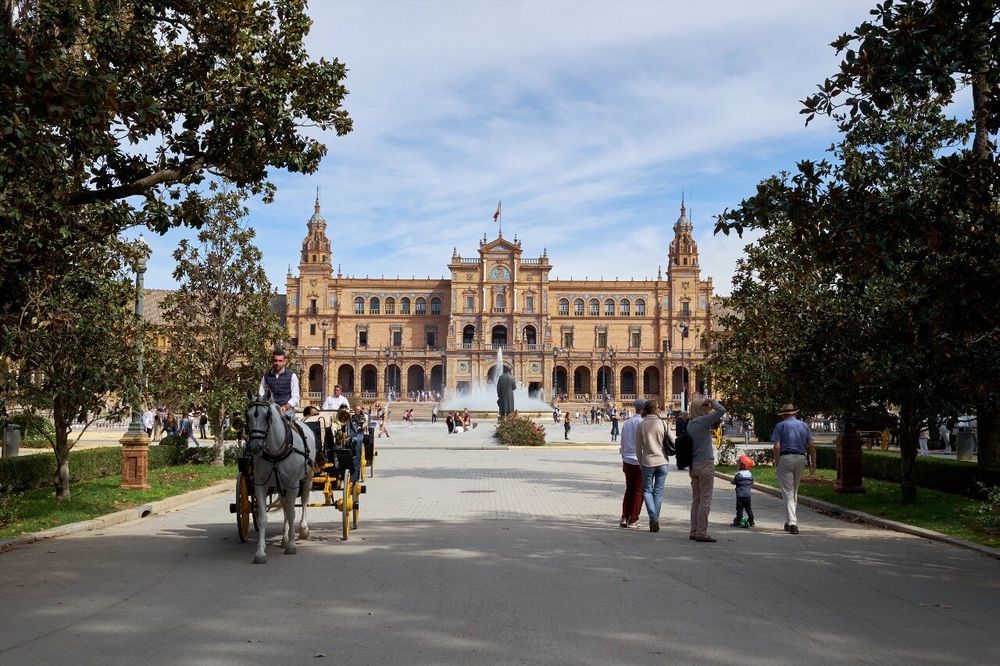
Built for the Ibero-American Exposition of 1929, the Plaza de España is one of the most spectacular architectural ensembles in Spain, and one of the least well explained to visitors. Its dimensions are breathtaking: 170 metres of façade forming a semicircle more than 200 metres in diameter, flanked by two towers of 76 metres each.
What most guides barely mention: the 48 ceramic alcoves lining the inner wall, each dedicated to a Spanish province. Every alcove features a mosaic map of the province and a major historical scene. Look for Seville of course, but also the Canary Islands or Navarre — the early 20th-century ceramic craftsmen took particular care with the geographical details. The entire ensemble was made in Triana, Seville's historic ceramics neighbourhood.
The canal running along the main façade allows you to rent rowing boats for around 6 euros. It is not free, but the perspective from the canal — façade as backdrop, baroque bridges in the foreground — is accessible from no other vantage point. Scenes from Lawrence of Arabia and several episodes of Star Wars were filmed here; you don't need to know that to appreciate the place, but it gives you an idea of its visual quality.
Entry is free and the gates open at 8 am. Arrive at opening time or at sunset to avoid the crowds that pack the square in the middle of the day. The late-afternoon light transforms the red brick of the façade into something almost unreal.
3. Parc María Luisa, 34 Hectares of Silence
Adjacent to the Plaza de España, Parc María Luisa stretches over 34 hectares of English-style gardens blended with Spanish-style flowerbeds. It is Seville's main public green space, entirely free, and permanently populated by residents jogging, walking their children, or simply reading on a shaded bench.
Peacocks roam freely among the palm-lined paths and ceramic fountains. Along the Paseo de las Delicias, horse-drawn carriages offer rides through the park. Two museums are housed in pavilions from the 1929 exposition: the Museo de Artes y Costumbres Populares (Andalusian ethnography, free for Europeans) and the Museo Arqueológico de Sevilla. Between the two, a kiosk café serves horchatas and granizados — ideal for a break after the Plaza.
4. The Royal Alcazar, Spain's Most Beautiful Residence
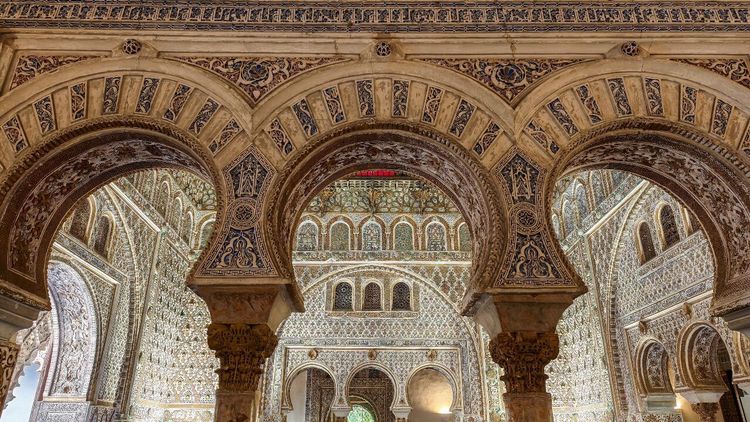
The Alcazar of Seville is not a museum. It is an active royal residence — the Spanish royal family still stays here every year — and what makes this building unique is that it is simultaneously one of the most beautiful palaces in the world and a real living space. That changes the way you visit it entirely.
The Alcazar was built by King Peter I of Castile in the 14th century, on the foundations of a 12th-century Almohad palace. He commissioned Arab craftsmen from Granada and Toledo to create the decorations: geometric zelliges and polylobed arches in sculpted stucco of breathtaking precision. This is the Mudéjar style at its peak — Christian architecture executed by Muslim craftsmen — a syncretism found nowhere else with such coherence.
The Ambassadors' Hall is perhaps the most photographed room: a gilded coffered dome 18 metres in diameter, adorned with 11,000 pieces of gilded wood assembled without a single nail. The Patio de las Doncellas (Courtyard of the Maidens) features a rectangular pool surrounded by marble columns and chiselled stucco arches reflected in the water. The gardens, spanning several hectares, blend clipped box hedges, century-old cypresses and running fountains — you easily spend an hour more than planned there.
Free entry: every Monday (except public holidays), the Alcazar opens free of charge from 6 pm to 7 pm in summer (April to September) and from 4 pm to 5 pm in winter (October to March). Free slots must be booked on the official website; they sell out within hours of going live. Plan your booking at least a week in advance if your visit falls on a Monday.
Standard admission: €13.50 for adults. If you pay for entry, arrive at opening time at 9:30 am — the site receives up to 2,000 visitors per hour in high season and some rooms become difficult to appreciate after 11 am.
5. Seville Cathedral and the Giralda
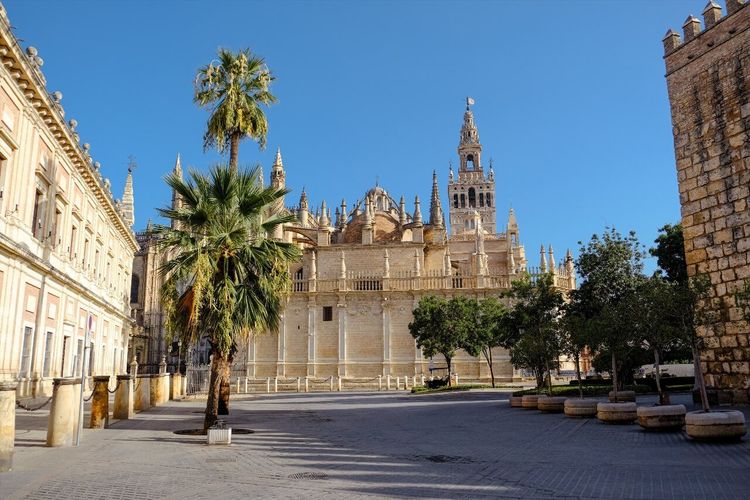
Seville Cathedral is the third largest cathedral in the world, after St Peter's in Rome and St Paul's in London. It was built between 1401 and 1506 on the site of a 12th-century Almohad mosque; the builders preserved the courtyard of orange trees and the minaret, which was converted into a bell tower. That bell tower, the Giralda, stands 104 metres tall and is today the city's visual landmark.
The interior impresses by its proportions: 76 metres wide, 42 metres to the main vault, 80 side chapels. The main altarpiece is the largest Gothic altarpiece in the world — 27 metres high and 26 metres wide — entirely in gilded carved wood, worked over several decades from 1482.
The tomb of Christopher Columbus deserves particular attention. The navigator is borne by four crowned kings representing the kingdoms of Castile, León, Aragón and Navarre. DNA analyses carried out in 2006 confirmed that the remains held here are indeed those of the navigator, putting an end to a dispute between Spain and Cuba that had lasted since the 19th century.
Free entry: every Sunday (except public holidays) from 4:30 pm to 6 pm, free access with an online booking via the door on Calle Alemanes. The slot is short and fills up fast — book several days in advance and arrive at least 30 minutes early. The paid visit (around €13 online, Giralda included) includes access to the tower via a spiral ramp, originally designed so that horsemen could ride up on horseback. Miss the free slot and our Seville audio walking tour keeps you busy just below, around the Santa Cruz courtyards and the Alcázar.
6. Triana, the Neighbourhood That Shaped Flamenco
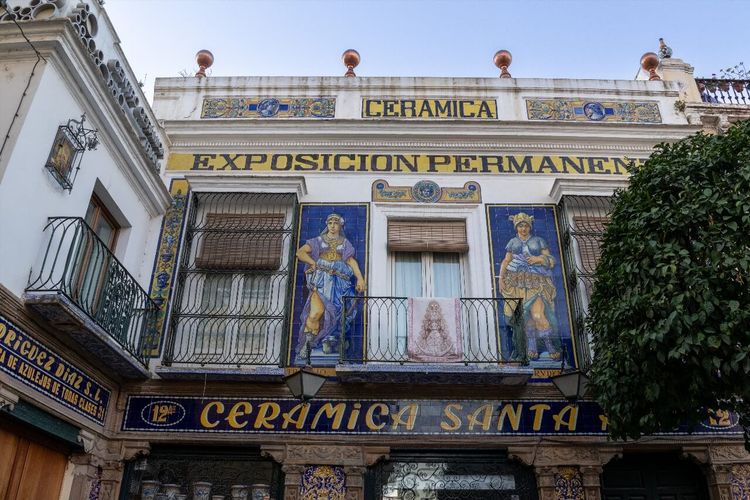
On the other side of the Guadalquivir, Triana is neither a tourist neighbourhood nor an ordinary residential one: it is a city within a city, with its own traditions, its own accent and a local pride that Sevillians recognise immediately. Residents of Triana do not call themselves 'Sevillians' — they are 'trianeros'.
Flamenco in its current form was codified here in the 19th century, in the corrales de vecinos (shared courtyards) where Sevillian gypsy families lived. The artistic dynasties that shaped the genre — the Ortegas, the Flores, the Peñas and the Vargas — were all from Triana. Today, several peñas flamencas (flamenco clubs) host weekly evenings for a predominantly local audience, at prices well below the tourist shows in the city centre.
The Calle Betis, running alongside the Guadalquivir, offers one of the most photographed views of Seville: the Torre del Oro and the old rooftops of the historic centre are reflected in the river at dusk. The Mercado de Triana (covered market) is a great place for lunch — tapas counters set up in the former castle of the Inquisition, whose foundations are visible beneath the market floor.
7. Free Museums for European Nationals
Seville operates a fairly generous cultural policy for travellers holding a European passport. Several major museums are entirely free upon presentation of an EU or EEA identity document.
The Museo de Bellas Artes de Sevilla (Plaza del Museo, 9, 41001 Sevilla, rated 4.7/5 on Google across 16,513 reviews) is one of the most important in Spain after the Prado. Its collections cover 17th-century Andalusian painting — Murillo, Zurbarán — and are housed in a 16th-century Franciscan convent whose architecture alone is worth the visit. Free entry for European citizens; €1.50 for others.
The Museo Arqueológico de Sevilla, housed in Parc María Luisa, presents collections spanning from Prehistory to the Visigothic period. The most remarkable section covers the Carambolo Treasure, gold jewellery discovered in Seville in 1958 and dating from the 9th century BC. Free entry for Europeans.
Finally, the Museo de Artes y Costumbres Populares of Andalusia documents traditional crafts and Sevillian artisanship with a level of detail that classic tourist itineraries often lack. The Ryo audio guide integrates these museums into its itineraries to help you prioritise based on your available time. Among the Seville activities accessible without spending a euro, these museums hold a prime place.
8. The Torre del Oro and Its Naval Museum
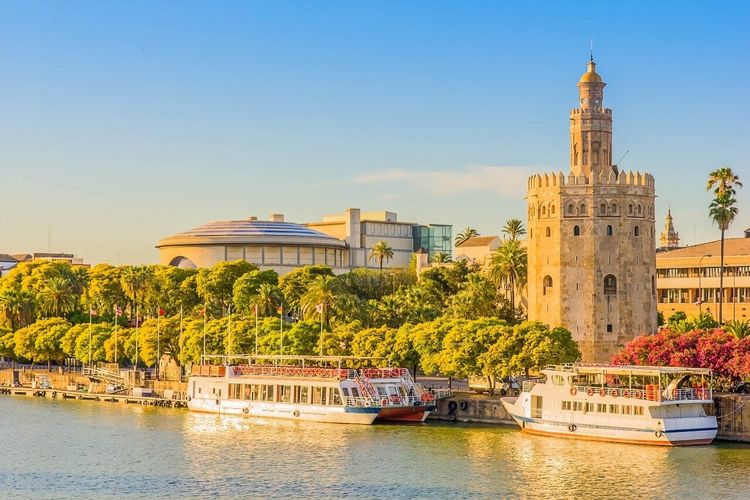
The Torre del Oro (Tower of Gold) is one of the most photographed monuments in Seville, and one of the least well understood. This Almohad dodecagonal tower was built around 1220 to control access to the river using a chain stretched to the opposite bank. It has served successively as a prison, a munitions store and a depot for colonial riches.
Its name most likely comes from the golden azulejos that originally covered its exterior surface — not from gold stored inside, contrary to popular legend. It now houses a naval museum dedicated to Seville's maritime history and the great expeditions of the Conquista. Admission costs €3, but is free on Mondays for everyone (not just Europeans).
The riverside walk along the Guadalquivir from the Torre del Oro to the Triana Bridge is one of the most pleasant in the city, particularly in the evening.
9. The Triana Ceramics Centre
The Triana Ceramics Centre stands on the site of the former Castillo de San Jorge, headquarters of the Seville Inquisition for more than three centuries. Archaeological excavations carried out during construction uncovered the castle's foundations and the remains of prisoners' cells, now visible in the basement.
The museum traces the history of Triana ceramics from the 14th century to the great workshops that supplied the tiles for the Plaza de España. Entry is free. The coexistence of restored ceramic kilns and medieval ruins creates a singular atmosphere that few Andalusian museums can match.
10. The Maestranza Bullring, Baroque and Sand
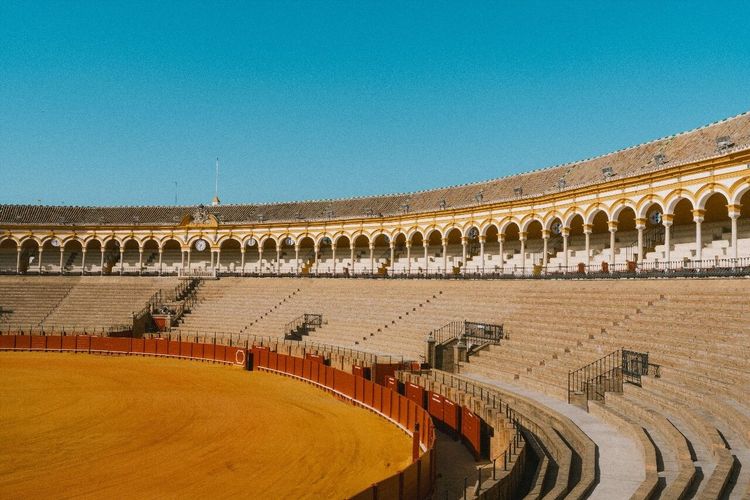
The Real Maestranza de Caballería de Sevilla is one of the two most important bullrings in Spain alongside Las Ventas in Madrid, and probably the most beautiful architecturally. Construction began in 1749 and stretched over more than a century, which explains the slight irregularity of its circular shape.
The baroque façade faces the Paseo de Cristóbal Colón — a composition of white limestone and ochre with a monumental gateway topped by a coat of arms. The interior museum visit costs around €10 and includes access to the palcos (boxes), the ruedo (sand arena) and the stables. A good tip: entry is free on Wednesdays from 3:30 pm to 7:30 pm, as the bullring is listed as a Site of Cultural Interest. The bullfighting season runs from April to October, with a concentration of events during the Feria de Abril. Outside the season, guided tours are offered daily.
11. The Andalusian Centre for Contemporary Art
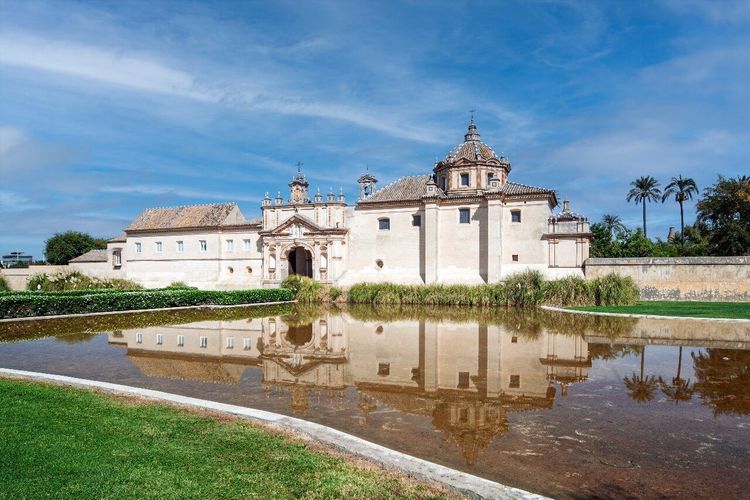
The Andalusian Centre for Contemporary Art (CAAC) is housed in a former monastery on the Isla de la Cartuja, on the western bank of the Guadalquivir, in the neighbourhood that hosted the 1992 World Exposition. The collections cover Spanish and international art from the 1980s to the present, with particular attention to Andalusian artists.
Free entry Tuesday to Friday (9 am to 9 pm) and on Saturday mornings until 3 pm. Closed on Mondays. The monastery cloister, dating from the 15th century, is remarkable in its own right. The venue is less crowded than the monuments of the historic centre, making it a pleasant refuge for those looking to escape the tourist circuit.
12. The Alameda de Hércules, Europe's Oldest Public Promenade
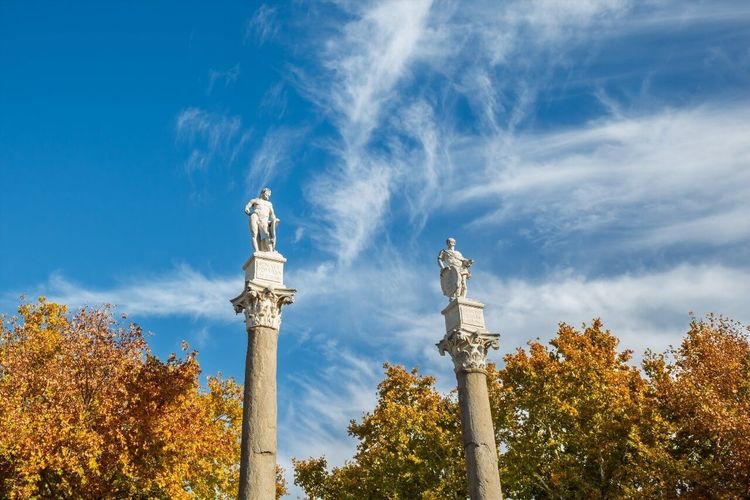
The Alameda de Hércules (Alameda de Hércules, s/n, 41002 Sevilla, rated 4.4/5 on Google across 21,730 reviews) is a straight promenade 300 metres long laid out in 1574 — making it the oldest purpose-built public promenade in Europe. Two Roman columns salvaged from the ruins of the ancient city of Hispalis mark its northern entrance, topped by statues of Hercules and Julius Caesar, mythical founders of Seville.
The Alameda has a well-established bohemian reputation: alternative bars, terraces buzzing until very late, a flea market on Sunday mornings. This is the neighbourhood where artists, students and permanently settled expatriates live. Come on a Sunday morning for the market, or on a weekday evening for the neighbourhood atmosphere.
13. The Metropol Parasol, a Wooden Giant Over the Square
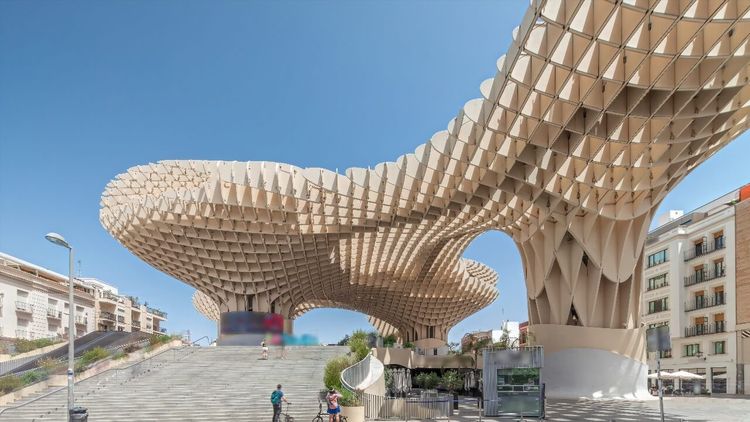
The Metropol Parasol (Plaza de la Encarnación, s/n, 41003 Sevilla, rated 4.4/5 on Google across 109,430 reviews), nicknamed 'Las Setas' (the mushrooms) by Sevillians, is the largest wooden structure in the world. Designed by German architect Jürgen Mayer H. and inaugurated in 2011, it stretches 150 metres long and 28 metres high above the Plaza de la Encarnación.
The elevated walkway (paid access, around €5 including a drink) offers a 360° view over Seville's rooftops. But the essentials are free: strolling beneath the wooden canopies, watching the interplay of light and shadow, and discovering the Antiquarium, an underground archaeological museum set in the Roman ruins uncovered during construction. The Antiquarium is free for European citizens.
The Sevillians' reception of this building illustrates the city's character well: at its inauguration in 2011, most residents detested the intrusion of this futuristic form into the historic fabric. Fifteen years on, Las Setas has become a symbol of Seville that its people would defend fiercely against any detractor.
14. Calle Sierpes, the Living Artery of the Centre
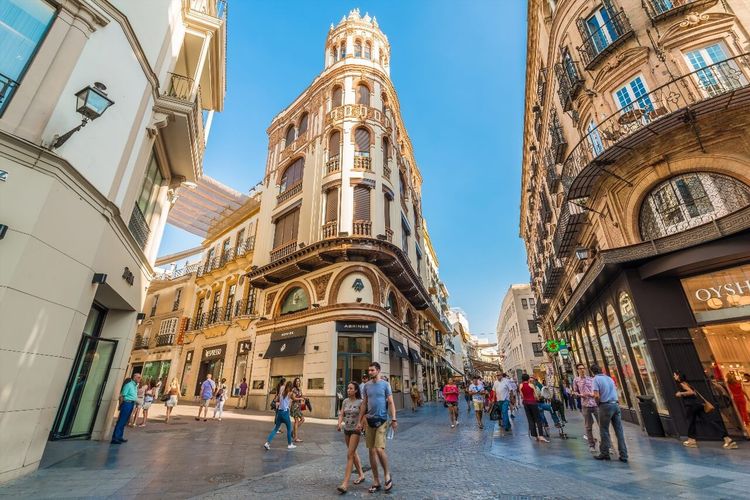
The Calle Sierpes (Calle Sierpes, s/n, 41004 Sevilla, rated 4.6/5 on Google across 848 reviews) is Seville's main pedestrian street, car-free since the early 20th century. It runs approximately 400 metres from north to south through the historic centre, parallel to Calle Tetuan, and is lined with independent shops, Sevillian pastry makers and a handful of artisan boutiques.
Cervantes is said to have written the first drafts of Don Quixote while imprisoned in the nearby royal jail. A plaque on a side wall discreetly marks the spot. The mantecados (lard shortbreads) and polvorones (almond shortbreads) found in the shops here come from local recipes unchanged since the 16th century, and bear no resemblance to the industrialised versions found elsewhere.
15. The Basílica de la Macarena and the Medieval Walls
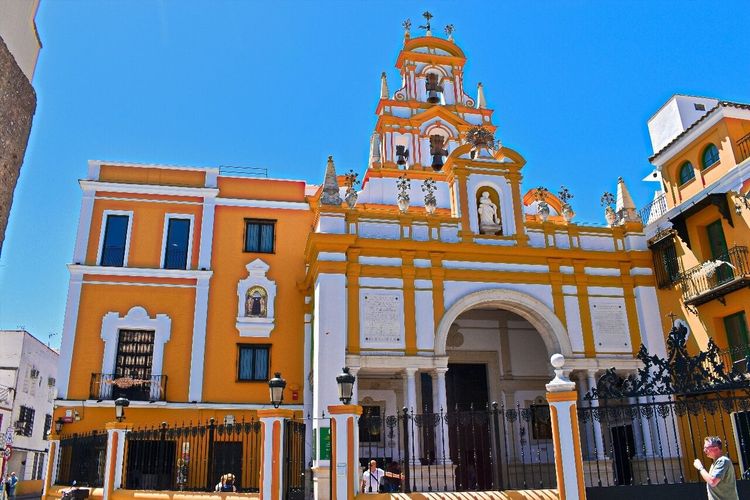
The Basílica de la Macarena (Calle Bécquer, 1, 41009 Sevilla, rated 4.7/5 on Google across 15,703 reviews) houses the Virgin of Macarena, Seville's most venerated statue. Her Good Friday procession is broadcast live on national television and can draw up to 500,000 spectators into the streets. Entry to the basilica is free; the museum (treasury and liturgical vestments) costs €5.
Just behind the basilica, a long section of the medieval walls (12th–13th century) runs along the park: the Almohad towers and battlements are among the best preserved in Andalusia. Regular users of the Ryo audio-guided tour know this stretch well — it is one of the systematic stopping points for anyone wanting to understand how Seville developed from its medieval ramparts.
The Macarena neighbourhood surrounding the basilica is one of the most authentic in Seville — little touched by tourism and living at its own pace. The whole area — basilica, walls and local bars — can be covered on foot in an hour from the city centre. Avoid Holy Week if you dislike crowds: Macarena becomes the emotional epicentre of the entire city during that time.
FAQ
What are the free sites to visit in Seville?
Santa Cruz, the Plaza de España, Parc María Luisa and the Alameda de Hércules are free and permanently open to all. The Alcazar opens free of charge every Monday evening (online booking required); the cathedral on Sunday afternoons from 4:30 pm to 6 pm (online booking required). The Fine Arts and Archaeology museums are free for EU nationals upon presentation of an identity document.
What time is the Alcazar of Seville free?
Every Monday (except public holidays), the Alcazar is free from 6 pm to 7 pm in summer (April–September) and from 4 pm to 5 pm in winter (October–March). Slots must be booked in advance on the official Alcazar website; they often sell out within days of going live. Plan at least a week ahead.
How many days do you need to visit Seville?
Three days are enough to cover the essentials: the Alcazar, the cathedral and Santa Cruz on day one; the museums, the Torre del Oro and Triana on day two; Macarena, Las Setas and an evening at the Alameda on day three. With five days, you can explore Italica, the Roman city founded in the 2nd century BC, 9 km from Seville.
What is the best season to visit Seville?
Spring (March to May) is ideal: temperatures between 18°C and 28°C, parks in bloom, and Holy Week followed by the Feria de Abril if you want to experience Seville at its most festive. Autumn (September–November) is also very pleasant. Summer is not recommended for those sensitive to heat, as temperatures of 40°C are common from June to August.
Is Seville Cathedral free?
Not entirely. The standard ticket is around €13 online, including access to the Giralda. However, every Sunday (except public holidays) from 4:30 pm to 6 pm, entry is free for everyone with an online booking, via the door on Calle Alemanes. Slots go quickly; book in advance and arrive 30 minutes early.
Are there unusual activities in Seville?
Yes. The Triana Ceramics Centre is built on the ruins of the Sevillian Inquisition; the Antiquarium of the Metropol Parasol reveals a Roman city buried beneath an ordinary square; the columns of the Alameda de Hércules date from a Roman temple of the 2nd century discovered in that very neighbourhood. The Ryo audio-guided tour passes through several of these lesser-known sites and puts them in their historical context.
Seville rewards those who slow down. Between the freely accessible sites and the many free activities reserved for European visitors, this selection of Seville activities proves you can enjoy the city without breaking the bank. The Alcazar, the cathedral and the Archivo de Indias — three UNESCO World Heritage sites — are less than 500 metres apart, yet the city retains an intimacy that major capitals have lost. With Ryo's Seville audio-guided tour, you explore at your own pace, from the Plaza de España to the Santa Cruz quarter, discover the story behind a closed courtyard or an unnamed alleyway, and leave with a knowledge of Seville activities that group guided tours simply cannot convey.
À lire également