
Créé par Romane, le 3 juin 2026
Votre guide Ryo
© Shutterstock
Stockholm doesn't announce itself with a single landmark. It unfolds across fourteen islands connected by bridges, water, and an archipelago that stretches 60 kilometres into the Baltic. The city manages to feel both ancient and relentlessly forward-thinking, medieval lanes in Gamla Stan running thirty seconds from some of Europe's sharpest contemporary design. If you're planning your visit and want to understand how Stockholm is laid out island by island, the Ryo audiowalk discovering Stockholm island by island is one of the most efficient ways to orient yourself before diving into specific attractions.
Among the things to do in Stockholm, a handful stand out for reasons competitors rarely mention: the Vasa Museum houses a warship that sank on its maiden voyage in 1628 and was raised intact 333 years later; the T-Centralen metro station was decorated by 150 artists and spans nearly 110 kilometres of tunnel walls; Birka, a UNESCO-listed Viking trading post reachable by boat in under two hours, receives a fraction of the visitors that comparable sites in Denmark draw; and Skansen, the world's oldest open-air museum, contains 160 historical buildings relocated from across Sweden, including a working 19th-century bakery that still sells bread on weekends. Stockholm rewards the curious traveller who looks slightly past the obvious, and this list of 25 experiences is organised to help you do exactly that.
1. Walk Through Gamla Stan, Stockholm's Medieval Island
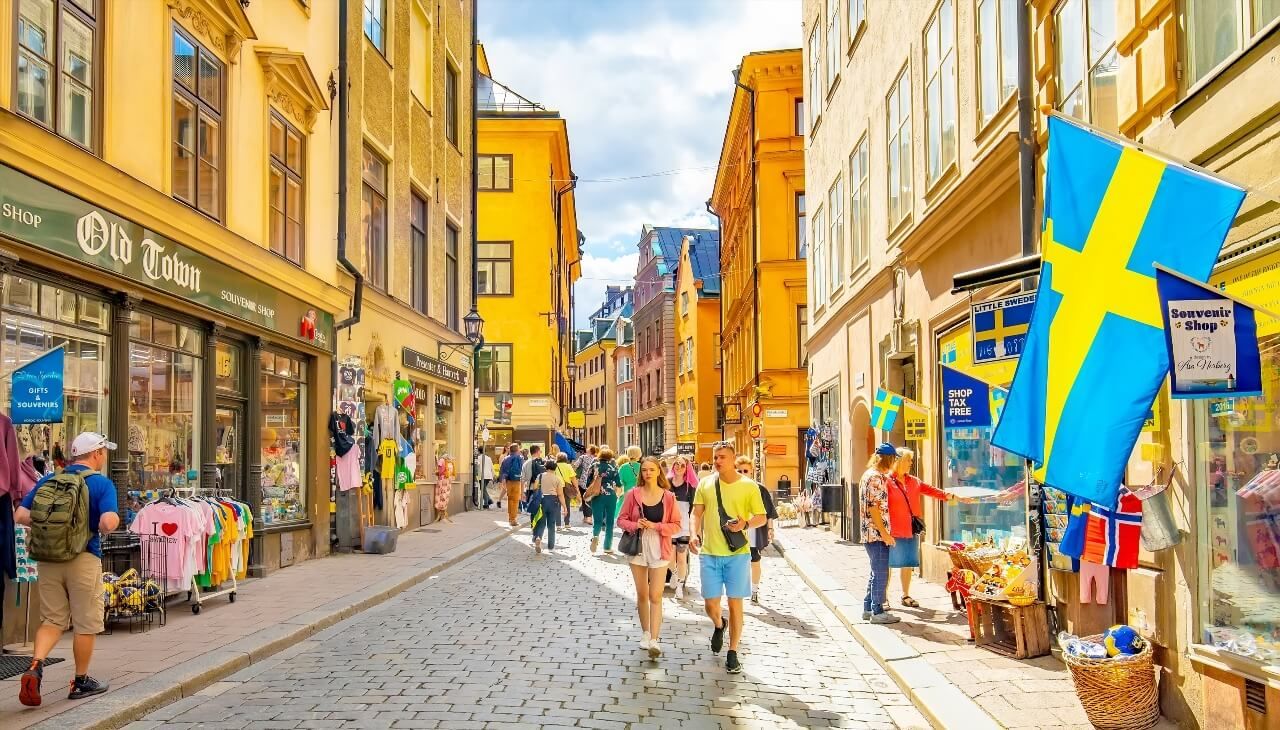
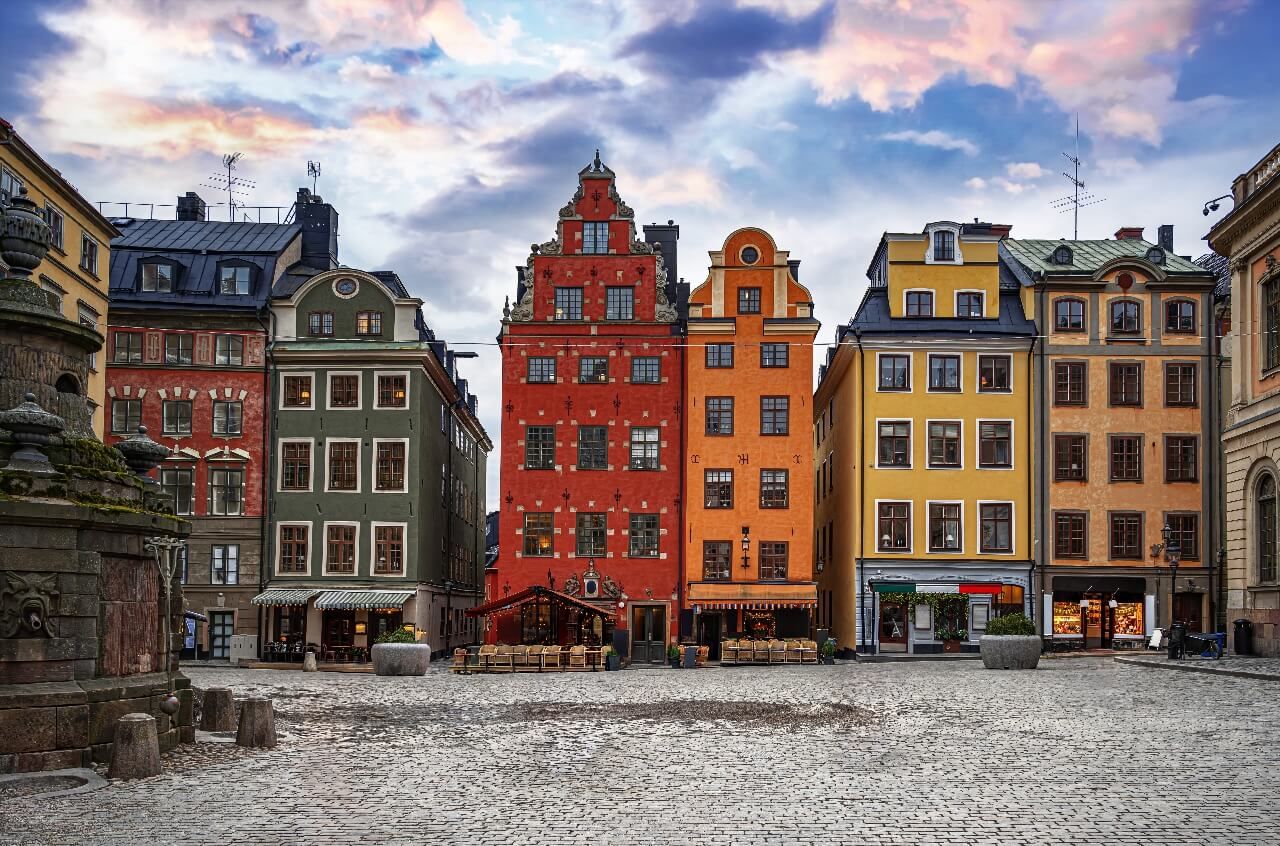
Gamla Stan (Old Town) sits on Stadsholmen, the island where Stockholm was founded in 1252. The street grid hasn't changed much since the 13th century: narrow lanes of ochre and terracotta facades, cobblestones worn smooth by seven centuries of foot traffic, and alleys barely wide enough for two people to pass. The longest and most photographed stretch is Stortorget, the main square, which is lined with merchant houses dating to the 15th and 16th centuries.
The neighbourhood rewards wandering without a map. That said, arriving before 9 am or after 5 pm on weekdays eliminates much of the cruise-ship crowd that floods the main arteries between those hours. The narrowest street in Gamla Stan, Mårten Trotzigs Gränd, just 90 centimetres wide at its tightest point, is easy to miss on a first visit but worth finding. The church of Storkyrkan, Stockholm's oldest, dates to the 13th century and contains a medieval wooden sculpture of Saint George slaying the dragon that is remarkably well-preserved for its age. Budget at minimum two hours if you want to explore beyond the primary shopping street.
2. The Vasa Museum, a 17th-Century Warship Raised from the Deep
The Vasa Museum on Djurgården is, by most measures, the most extraordinary museum in Scandinavia, a claim that sounds like marketing until you actually walk through the doors and find yourself standing beside a 69-metre warship that was built in 1626, sank on its maiden voyage in August 1628 after sailing less than 1,300 metres, and was lifted from the mud of Stockholm Harbour in 1961.
The preservation story is genuinely implausible. Stockholm Harbour's low-salinity water meant the shipworm that destroys wooden vessels in saltwater never established itself. The Vasa sat undisturbed for 333 years, then emerged with roughly 95% of its original timber intact, along with 13,000 artefacts including sailors' personal belongings, clothing, tools, and even a backgammon board. After recovery, the ship was injected with polyethylene glycol for 17 years to prevent the wood from collapsing as it dried.
The museum is designed around the ship rather than beside it: you approach from multiple levels, cycling through galleries that explain the construction process, the political pressures on the Swedish king Gustav II Adolf that may have made the ship dangerously top-heavy, and the recovery operation. The ground-floor view, standing at the level of the keel, looking up at a wall of carved and gilded oak, is among the more vertiginous experiences Stockholm offers. Plan 2 to 3 hours here, more if you engage the audio guide. The museum is open year-round, and entry costs SEK 190 for adults. Book tickets online, particularly between June and August when queues at the door can run 45 minutes.
One practical note: the on-site café is adequate but the tables fill fast at lunchtime. The nearby waterfront has several better alternatives within a five-minute walk.
3. The Royal Palace and the Changing of the Guard
The Royal Palace (Kungliga Slottet (Slottsbacken 1, 111 30 Stockholm, rated 4.5/5 on Google (44 120 avis))) in Gamla Stan is one of the largest palaces in the world still used as an official royal residence, 608 rooms across a baroque structure completed in 1754. The interior houses five separate museums, including the Treasury (Skattkammaren), which displays the Swedish crown jewels, and the Apartments of State, where royal ceremonies still take place.
The Changing of the Guard happens daily between May and August (Monday to Saturday at 12:15 pm, Sunday at 1:15 pm) and on limited days the rest of the year. It draws a significant crowd, so arrive twenty minutes early if you want an unobstructed view. The ceremony lasts roughly 40 minutes and includes the Royal Swedish Army Band. The palace exterior and the courtyard are free to visit; museum entry is charged separately, with a combined ticket running SEK 200 for adults. The view from the riverside terrace below the palace toward Riddarfjärden bay is one of Stockholm's better free vantage points.
4. Stockholm's Metro System: 110 Kilometres of Underground Art
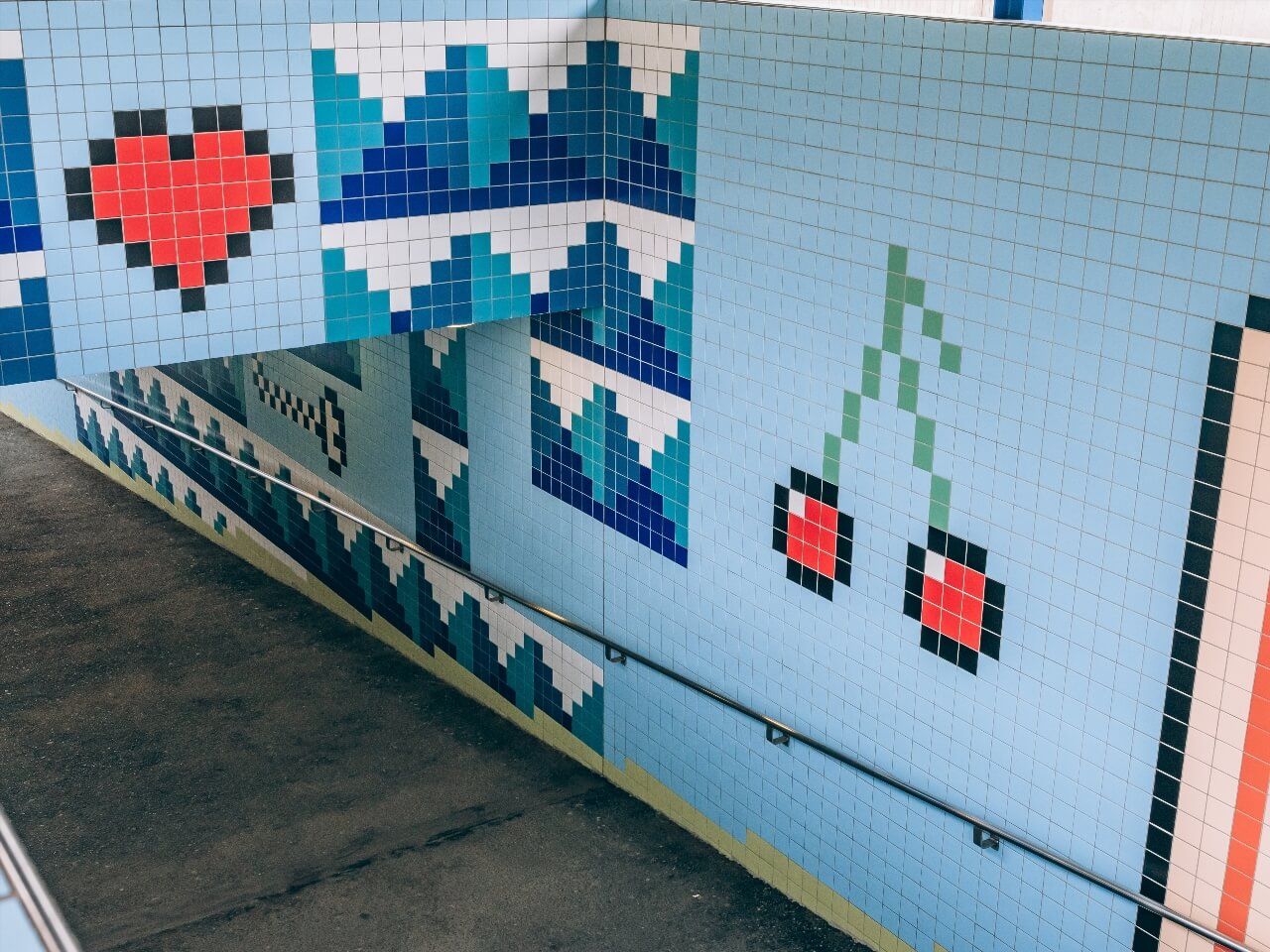
Stockholm's tunnelbana is frequently described as the world's longest art gallery, and the claim holds up: since 1957, the metro authority has commissioned artists to work on station interiors, resulting in over 90 decorated stations across 110 kilometres of line. The cumulative effect is unlike any other metro system in the world.
T-Centralen (Vasagatan 1, 101 20 Stockholm, rated 4.1/5 on Google (5 080 avis)) (the central hub) is the obvious starting point, its blue-line platform was painted by Per Olof Ultvedt in 1975 with a pattern of vines and flowers in cobalt blue on exposed rock. Solna Centrum, on the blue line to the northwest, is probably the most dramatic single station: the artist duo Andersson and Åse painted the ceiling and upper walls of the cavern a deep, glowing red, with a dark green forest silhouette below it. Kungsträdgården, the eastern terminus of the blue line, contains fragments of real 18th-century garden architecture embedded in the walls.
A single SL metro ticket costs SEK 38, or you can purchase a 24-hour card for SEK 175 to ride without restriction. The T-bana is fully operational until around 1 am on weekdays and runs overnight on weekends. Dedicated metro art tours depart from T-Centralen on certain weekends, worth checking the SL website before your visit.
5. Skansen: The Open-Air Museum That Invented a Genre
Skansen (Djurgårdsslätten 49-51, 115 21 Stockholm, rated 4.5/5 on Google (34 649 avis)), which opened in 1891 on the island of Djurgården, was the world's first open-air museum, a concept so influential that it was subsequently replicated across Scandinavia, the United States, and eventually every continent. The original idea was simple but ambitious: preserve Sweden's rural architectural heritage not as static objects behind glass but as living, working structures populated by craftspeople and animals.
Today the site covers 30 hectares (75 acres) and contains 160 historical buildings relocated from every region of Sweden: farmhouses from Lapland, a complete 19th-century town quarter with working pharmacy and schoolhouse, the glass-blowing workshop of a master glassmith, a bakery that produces traditional knäckebröd (crispbread) on-site. The zoo section holds Nordic animals, elk, wolverines, brown bears, lynx, in environments that make most urban zoos look cramped by comparison. Skansen runs a year-round events calendar: Midsummer here on 21-22 June is one of the most authentic celebrations in Sweden, with maypole raising and folk dancing that has occurred on this site without interruption since 1893.
Entry is SEK 250 for adults in summer, lower in winter when part of the site closes. The zoo is included in the entry price. Allow at least four hours; the site is large enough that visitors who rush through leave feeling they missed most of it. The hill at the centre offers one of the best elevated views over Stockholm Harbour and the cluster of islands around Djurgården. Bring comfortable walking shoes, cobblestone paths between buildings are atmospheric but uneven.
One element that frequently surprises visitors: Skansen's traditional bakery sells freshly baked bread and pastries made with recipes from the 1800s. The queue for the crispbread on Saturday mornings is a reliable indicator of quality.
6. The Stockholm Archipelago
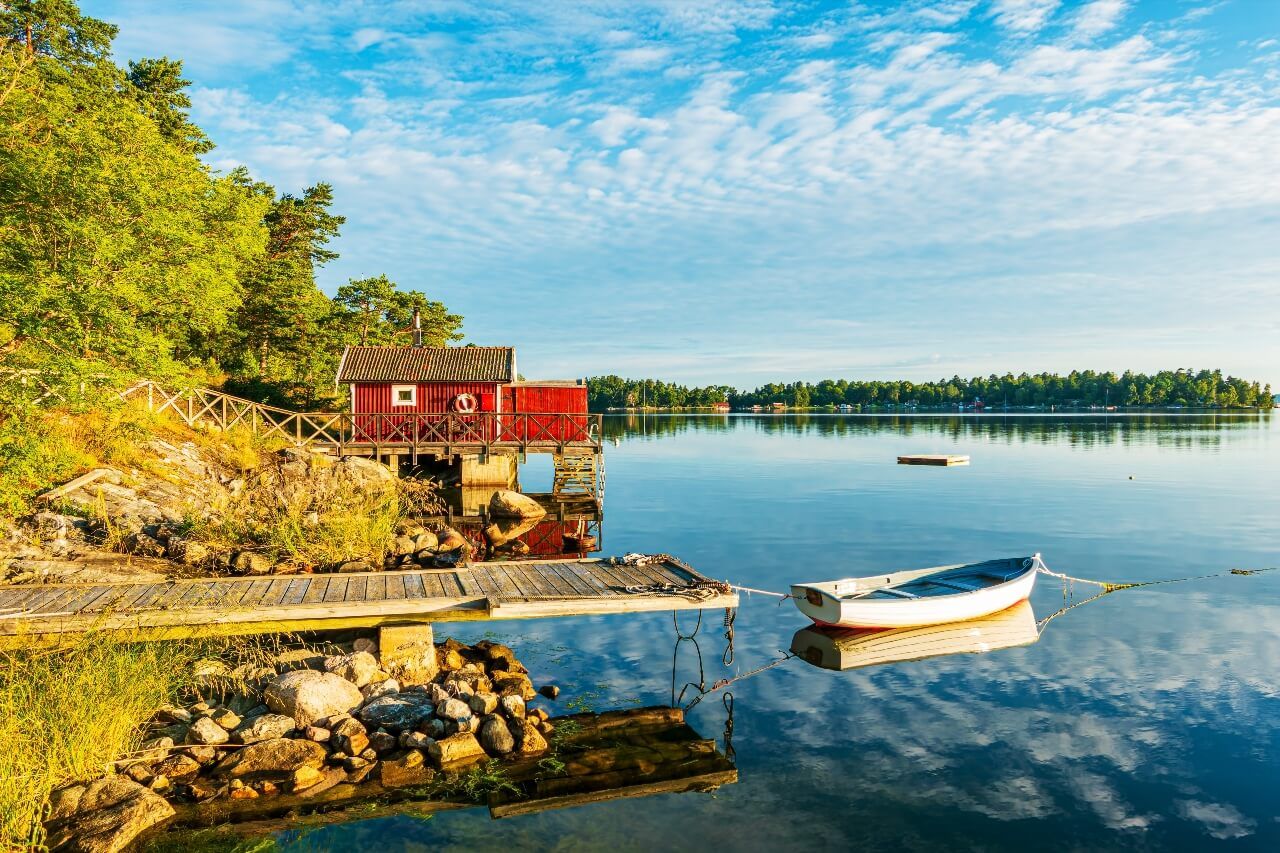
The Stockholm Archipelago, 30,000 islands, islets and skerries stretching 60 kilometres east into the Baltic, is one of the most unusual natural environments within reach of a European capital. In practical terms, it means that forty minutes by Waxholmsbolaget ferry from central Stockholm, you can be in a landscape of granite, pine forest, and open water that feels genuinely remote.
The ferry network is extensive and operates year-round, though services are significantly reduced in winter. The most popular day-trip islands from central Stockholm include Vaxholm (the archipelago's main town, with a 16th-century fortress reachable in 75 minutes), Fjäderholmarna (the closest inhabited island group, 25 minutes from Strömkajen, with a summer smokehouse and craft brewery), and Sandhamn (three hours out, the sailing destination at the outer edge of the archipelago, with sandy beaches unusual for Swedish coastal geography).
Archipelago boat passes can be purchased through SL (Stockholm's transport authority), which means island-hopping can be included in a multi-day transport card. A single adult return to Fjäderholmarna costs approximately SEK 170; the pass to Sandhamn is around SEK 440 return. Accommodation on the outer islands runs from rustic STF hostels to boutique hotels; booking four to six weeks ahead in July is advisable.
Beyond day trips, the archipelago is the primary kayaking destination in the greater Stockholm region. Guided half-day kayak tours depart from Djurgården and are available between May and September. The experience of paddling between skerries at dawn, with nothing but birdsong and the distant sound of a ferry, is something that Stockholm's urban visitors frequently describe as the most memorable element of their trip. Sea temperatures rarely permit comfortable swimming before mid-July, but waterproof paddling gear makes the shoulder seasons workable.
One practical note that the standard guidebooks tend to skip: the archipelago divides loosely into three zones, the inner ring (reachable in 25-45 minutes, forested and inhabited year-round), the middle ring (1-2 hours, mostly seasonal cottages and a handful of restaurants), and the outer ring (2-3 hours, sparsely populated rocky skerries that feel like the edge of the world). If your time is limited to a single day, the inner and middle zones cover what most visitors imagine when they hear the word "archipelago"; the outer ring is a different commitment entirely and rewards an overnight stay. Bring a windproof layer regardless of season, the open water between islands is consistently cooler than central Stockholm by 5-8°C.
If you want to understand the archipelago's geography before you go, the Ryo island-by-island Stockholm audiowalk provides useful context on which parts of the city connect to which sections of the outer islands.
7. Fotografiska, Photography Museum on the Waterfront
Fotografiska opened in 2010 in a converted 1906 customs house on Södermalm's waterfront and has since become one of the most visited photography museums in the world, drawing over 550,000 visitors annually before expanding to New York, London, and Berlin. The Stockholm original remains the reference: four floors of rotating major exhibitions, with a permanent commitment to long-form documentary and fine-art photography.
Past exhibitions have included Annie Leibovitz, Sebastião Salgado, and David LaChapelle, the programming tilts toward names with genuine cultural weight rather than emerging artists. The rooftop bar and restaurant offer arguably the best view over Gamla Stan and the Riddarfjärden from the Södermalm side. Entry is SEK 195 for adults; evening openings (Fotografiska stays open until midnight most nights, until 1 am on Fridays and Saturdays) tend to be less crowded than afternoon slots. The bookshop is well-stocked and worth half an hour even if you skip the exhibitions.
8. Monteliusvägen, Stockholm's Best Free Viewpoint
Monteliusvägen (Monteliusvägen, 118 26 Stockholm, rated 4.7/5 on Google (6K avis)) is a 500-metre walking path along the northern edge of Södermalm, running along the cliff face above Riddarfjärden bay. The view north from the path takes in Gamla Stan, the City Hall tower, the water, and Kungsholmen, one of the cleanest panoramas of central Stockholm without a single admission fee or queue.
The path is accessible year-round and at any hour. Sunset in summer turns the water between the islands a deep copper, and the light on the ochre facades of Gamla Stan becomes reliably photogenic between 7 and 9 pm from June through August. Arrive 20 minutes before sunset and you'll have the better benches. The path connects to several staircases leading down to Södermalm's main streets.
9. Nordiska Museet, 150 Years of Swedish Cultural Life
The Nordiska Museet (Djurgårdsvägen 6-16, 115 93 Stockholm, rated 4.3/5 on Google (11 144 avis)) (Nordic Museum) on Djurgården occupies a building that looks like it was designed to intimidate, a Renaissance Revival castle that dominates the eastern end of the island, and the scale is matched by the content inside. Founded in 1873 by Artur Hazelius (who also founded Skansen), it holds over 1.5 million objects documenting Swedish cultural life from the 16th century to the present.
The collection spans fashion, textiles, furniture, and everyday domestic objects with an emphasis on making the full range of Swedish society visible, not just the aristocracy and merchant class, but rural and working-class life in equal measure. The Sami gallery is the largest permanent exhibition of Sami culture in Sweden. A monumental carved wooden statue of Gustav Vasa, the king who unified Sweden in the 16th century, dominates the entrance hall at 5.1 metres tall, an unexpectedly powerful thing to encounter before you've had time to adjust to the building's scale.
Temporary exhibitions are consistently strong, often exploring aspects of contemporary Swedish identity (the museum's exhibition on Swedish design thinking from the 1950s to the present is worth the visit alone). Entry costs SEK 150 for adults. Combined tickets with the Vasa Museum are available and represent decent value if you're spending a full day on Djurgården. Allow 2 to 3 hours for a serious visit; the fashion and textile collection alone could occupy an afternoon.
One practical note: the café on the ground floor serves traditional Swedish lunch (husmanskost) at prices that are reasonable by Stockholm standards. It fills up fast between 12 and 1:30 pm.
10. Djurgården Island on Foot or by Bicycle
Djurgården (Djurgårdsvägen, 115 21 Stockholm, rated 4.7/5 on Google (15K avis)) is the island that concentrates more of Stockholm's major attractions than any other single landmass: the Vasa Museum, Skansen, Nordiska Museet, Fotografiska (on the adjacent waterfront), and the ABBA Museum are all within a 20-minute walk of each other. But the island itself, a former royal hunting ground, now a national urban park, rewards exploration at a pace slower than museum-hopping.
Bicycles are available from multiple rental points near the bridge connecting Djurgården to Östermalm, with rates around SEK 150 for 3 hours. The eastern half of the island, beyond the main cluster of museums, contains meadows, oak woodland, and a shoreline path that loops around to Blockhusudden, a promontory with a lighthouse and views toward the outer archipelago. The section between Blockhusuddden and the Rose Garden (Rosendals Trädgård) has the quality of a countryside walk. Rosendals Trädgård itself is a biodynamic garden and café that sells produce grown on-site; the almond cake is exceptional.
11. Södermalm: Stockholm's Most Liveable Neighbourhood
Södermalm (Södermalm, 118 20 Stockholm, rated 4.6/5 on Google (12K avis)), known to locals as simply Söder, is the large island south of Gamla Stan that contains some of Stockholm's most interesting street life, food, independent retail, and residential architecture. Unlike the more manicured districts of Östermalm or the tourist compression of Gamla Stan, Söder has kept a rough edge alongside its gentrification: vintage shops next to Michelin-starred restaurants, record stores beside natural wine bars, street art on walls adjacent to 17th-century churches.
The neighbourhood divides broadly into several micro-areas. SoFo (south of Folkungagatan) is the densest concentration of independent shops and cafés, the streets around Bondegatan and Skånegatan are the core. Hornstull in the western part has a waterfront market in summer (the Hornstull Marknad runs on weekends between May and September) and several of Stockholm's better cocktail bars. Nytorget, a small square midway through the island, functions as an informal social hub on warm evenings, ringed by restaurant terraces.
Architecturally, the hillside streets around Fjällgatan and Katarinavägen contain some of Stockholm's oldest surviving wooden residential buildings, small, coloured houses that feel improbably rural for a capital city. The view from Fjällgatan over the harbour below is comparable to Monteliusvägen and less visited. Allow a full half-day to walk Söder properly, more if you plan to eat and browse. The neighbourhood is best entered at Slussen metro station and exited at Hornstull, or vice versa.
For a deeper orientation before exploring on foot, the Stockholm island-by-island audiowalk on Ryo covers Södermalm's history and geography in its island-by-island structure.
12. Gröna Lund, Amusement Park on the Water's Edge
Gröna Lund (Lilla Allmänna Gränd 9, 115 21 Stockholm, rated 4.2/5 on Google (23 357 avis)), Stockholm's classic amusement park on the eastern shore of Djurgården, has operated in various forms since 1883. It sits at the water's edge with a view over Djurgårdsbrunnsviken bay, which gives it an unusual setting for a fairground: rollercoasters running alongside an active boat channel, with the sound of music from the outdoor concert venue mixing with the noise of the rides.
The park has 30 rides including a handful of genuinely stomach-testing options (the Free Fall tower reaches 80 metres) alongside more sedate alternatives for younger visitors. The concert calendar is strong, Gröna Lund has historically attracted internationally recognised acts during the summer season. Entry starts at SEK 195 for adults; rides are included in higher-tier tickets. The park operates from April to October, with a separate Christmas market in December. Avoid Saturday afternoons in July, when queue times for the major rides exceed 45 minutes.
13. The ABBA Museum
The ABBA Museum on Djurgården opened in 2013 and has survived the critical test that most pop-culture museums fail: it remains genuinely engaging whether or not you arrive as a dedicated fan. The collection covers the band's decade of peak activity from 1972 to 1982 with original costumes, instruments, handwritten lyrics, recording equipment, and personal artefacts donated by the four members.
The hook that distinguishes it from a standard exhibit is interactive: a hologram concert system allows visitors to appear alongside digital versions of the band members performing live; a separate studio lets you record vocals over ABBA tracks. The staging is slicker than it sounds. Entry is SEK 250 for adults; booking in advance is advisable in peak season, when afternoon slots frequently sell out by mid-morning. The museum shares a building with Swedish Music Hall of Fame, which is included in the same ticket and covers Swedish popular music more broadly, a better exhibition than its billing suggests.

14. Kungsträdgården, The City's Living Room
Kungsträdgården (Kungsträdgårdsgatan, 111 47 Stockholm, rated 4.5/5 on Google (29 362 avis)) (the King's Garden) is a long, formal park in central Stockholm running from the waterfront near the Grand Hotel up to Hamngatan. It functions as the city's most-used public gathering space: free concerts in summer, an ice-skating rink in winter, cherry blossom trees along the central avenue that make it Sweden's most photographed park in late April.
The cherry blossoms, approximately 60 Japanese cherry trees planted in the 1970s, draw thousands of visitors during peak bloom, typically in the last ten days of April or first week of May. The free open-air concerts run throughout June and July. The adjacent Kungsträdgården metro station is worth visiting for its underground art installation even if you're approaching the park on foot.
15. Östermalms Saluhall, a 19th-Century Market Hall
Östermalms Saluhall (Östermalmstorg 14, 114 39 Stockholm, rated 4.4/5 on Google (6 297 avis)) is one of Europe's finest surviving 19th-century market halls, a red-brick building from 1888 on Östermalmstorg that was extensively restored between 2016 and 2020. The interior contains roughly 18 permanent stalls selling Swedish and Nordic specialities: reindeer, elk, cloudberries, gravlax cured in-house, hand-dried moose sausage, an exceptional cheese counter, and one of Stockholm's best wine merchants.
The market is primarily a food destination rather than a tourist attraction, most of the regular clientele are residents of Östermalm buying their weekly provisions. Prices are high by any measure. But the building itself is worth entering regardless: the cast-iron pillars, arched windows, and tiled floor make it one of Stockholm's more beautiful interiors. Arrive between 10 and 11 am on a weekday for the best atmosphere and shorter queues at the popular counters. The prepared food stalls (husmanskost, seafood) are reasonable for a Stockholm lunch.
16. Stockholm City Hall, the Tower That Defines the Skyline
Stockholm City Hall (Stadshuset) on Kungsholmen is the building whose tower appears in virtually every photograph of Stockholm from across the water, a square brick tower topped by a golden spire bearing three crowns. Completed in 1923 after twelve years of construction, it is a piece of National Romantic architecture that deliberately borrowed from Venetian palazzos, Byzantine church interiors, and medieval Nordic craftsmanship simultaneously.
The building is the site of the Nobel Prize Banquet every December 10th, the Blue Hall, which is actually brick-red (the plan to paint it blue was abandoned mid-construction but the name stuck), seats 1,300 guests for the annual dinner. The Golden Hall above it contains 18 million mosaic tiles applied by hand over a decade, depicting Swedish historical scenes. Guided tours of the interior run daily and are the only way to access both halls; they cost SEK 130 for adults and last 45 minutes. The tower is open for climbing from May to September, with a narrow staircase leading to a platform at 106 metres with a 360-degree view over the water. Tower entry is SEK 80 separate from the interior tour.
One detail that surprises visitors: the building faces away from the land and toward the water, because the architect Ragnar Östberg designed it from the perspective of arriving by boat, which was how most Stockholmers approached the city when planning began in 1908.
If you're approaching City Hall from the water, the Ryo Stockholm audiowalk contextualises the Kungsholmen area within the broader island geography of the city.
17. Skinnarviksberget, A Viewpoint the Guidebooks Skip
Skinnarviksberget (Skinnarviksberget, 117 27 Stockholm, rated 4.7/5 on Google (4 397 avis)), the highest natural point in central Stockholm at 54 metres, is a rocky hilltop in western Södermalm with a 360-degree view over Riddarfjärden bay, Kungsholmen, and Gamla Stan. No entrance fee, no queues.
Arrive around 9 pm in June or July for the long northern light. Rocky terrain unsuitable for wheelchairs or pushchairs.
18. Moderna Museet, Nordic Contemporary Art
Moderna Museet (Exercisplan 4, 111 49 Stockholm, rated 4.3/5 on Google (2 257 avis)) on Skeppsholmen, a small island between Gamla Stan and Djurgården, holds one of Europe's more significant collections of modern and contemporary art. The permanent collection includes works by Picasso, Dalí, Matisse, and Duchamp alongside a strong Nordic representation, the Swedish sculptor Robert Rauschenberg's work is well-represented, as is the output of the 1960s and 1970s Scandinavian art scene.
The permanent collection is free to enter (a rarity for a collection of this calibre); temporary exhibitions are charged separately, typically SEK 150 : 180 for adults. The building, designed by Rafael Moneo and opened in 1998, is worth attention in its own right, the roof lighting system was specifically engineered to provide the quality of Nordic natural light that works best with contemporary painting. The island setting means the walk between Moderna Museet and the Architecture Museum (in the same building) and the National Museum (a ten-minute walk) can be done in a single morning.
19. Kayaking the Archipelago
Kayaking from central Stockholm into the archipelago is more accessible than it appears. Sea kayak rental is available from several operators along Djurgårdsbrunnsviken (Djurgårdsbrunnsviken, 115 27 Stockholm, rated 4.8/5 on Google (13 avis)), with half-day rentals running approximately SEK 500 : 700 per person including a basic safety briefing. No prior kayak experience is required for the inner archipelago; the sheltered waterways between islands have minimal swell and are navigable in calm conditions by beginners.
Guided half-day tours (typically 4 hours, departing at 9 am) follow routes between Djurgården, Lidingö, and the first cluster of outer islands, passing under several of Stockholm's bridges and through channels only accessible by small craft. The water quality in the inner archipelago is high enough to drink, and sea-swimming from the kayak is common in July and August when surface temperatures reach 18 : 21°C. Evening sunset paddles are available between June and August and are typically the most sought-after timeslot, book at least two weeks in advance in peak summer.
20. Riddarholmen, the Island of Royal Tombs
Riddarholmen, separated from Gamla Stan by a narrow channel, is the smallest of Stockholm's central islands and one of the quietest. The dominant building is Riddarholmskyrkan (Birger Jarls Torg 1, 111 28 Stockholm, rated 4.4/5 on Google (2 666 avis)), a 13th-century church that has served as the burial place of Swedish monarchs since the 17th century, most Swedish kings and queens from Gustaf II Adolf (died 1632) to Gustaf VI Adolf (died 1973) are interred here in sarcophagi organised by dynasty in side chapels.
The church is open to visitors from May to September (entry SEK 80) and the island itself is free to access year-round. The western quayside offers a direct view across Riddarfjärden bay toward City Hall, a composition that appears on postcards across the city. The island takes about 20 minutes to walk around completely.
21. The Nobel Prize Museum in Gamla Stan
The Nobel Prize Museum (Stortorget 2, 103 16 Stockholm, rated 4.1/5 on Google (8 799 avis)) occupies the old Stockholm Stock Exchange building on Stortorget, the main square of Gamla Stan. The collection documents the history of the prize from Alfred Nobel's founding bequest in 1895 to the present laureates, with particular depth on the science prizes.
The format is more interactive than expected for an institution of this age: a ceiling installation uses hanging panels to display information about all 965+ Nobel laureates since 1901, rotating slowly through the space. The chair installation (every laureate's chair from the Nobel Banquet is suspended from the ceiling of the bistro) is the detail visitors remember longest. Entry is SEK 130 for adults. The Nobel Bistro serves good coffee and Swedish pastries and is accessible without a museum ticket, a reasonable spot for a break in Gamla Stan without paying for a tourist café on Stortorget.
22. Birka, the Viking Trading Post on Lake Mälaren
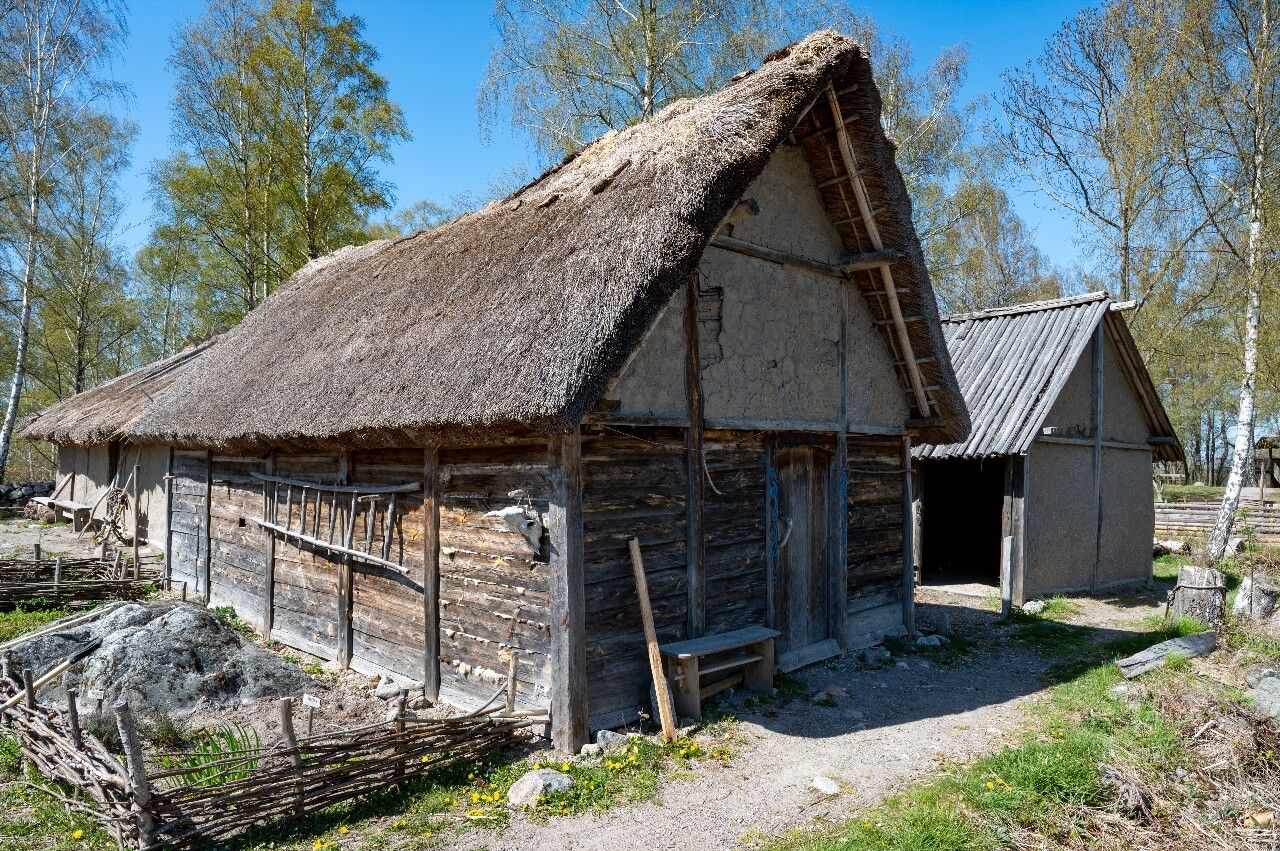
Birka is a UNESCO World Heritage Site on the island of Björkö in Lake Mälaren, approximately 30 kilometres west of central Stockholm, accessible by a 2-hour boat journey from Stadshuskajen (the pier beside City Hall). It was Sweden's first town, a Viking-age trading post that operated from the 8th to the 10th century before being abandoned and never rebuilt, which is precisely why it is so significant to archaeologists.
Birka's importance comes from its preservation through non-use. Because no city was built over it, the original settlement mounds, harbour defences, and over 3,000 burial mounds remain visible and partially excavated. The site museum opened in 2018 and presents finds from the ongoing excavations with unusual frankness about what is still unknown, the debate over whether a burial interpreted as a Viking warrior commander was male or female became international news in 2017 and is addressed directly in the exhibits.
Boat trips to Birka are operated by Strömma between May and September, departing at 10 am from Stadshuskajen and returning at approximately 5 pm. The combined ticket (boat + museum + guided tour of the burial field) costs SEK 565 for adults. The guided tour of the burial field is the most valuable element, the mounds are visible from the path but their context requires explanation. The island has no road connection, which contributes to its atmosphere of genuine remoteness despite being within metropolitan Stockholm. Bring a picnic; the island café is small and fills up quickly.
The day trip to Birka is best combined with an interest in the broader Lake Mälaren geography. The boat journey itself, passing through the narrowing lake channels with forest to either side, is part of the experience. Dress for cooler temperatures on the water, even in July, the lake crossing can be brisk in the morning.
23. Drottningholm Palace, Sweden's Versailles
Drottningholm Palace on Lovön island in Lake Mälaren is the most complete baroque royal palace in Scandinavia and a UNESCO World Heritage Site since 1991. It is the permanent residence of the Swedish royal family (they occupy one wing while the rest is open to visitors) and is accessible by a 1-hour boat trip from Stadshuskajen or by metro and bus in roughly the same time.
The palace dates from 1662, built under Queen Hedvig Eleonora. The State Apartments contain Baroque and Rococo interiors that have been largely preserved in their 17th and 18th-century state, with painted ceilings, tapestry collections, and a Chinese Pavilion in the gardens that was gifted by King Adolf Fredrik to Queen Lovisa Ulrika on her birthday in 1753. The palace theatre, Drottningholm Court Theatre, is the best-preserved 18th-century theatre in Europe, still using original wooden stage machinery from 1766. Opera performances are staged here in summer using the original machinery; tickets sell out months in advance.
Entry to the State Apartments is SEK 150 for adults. The gardens (formal baroque section and English park) are free to enter and extend for several kilometres behind the palace. The garden walk in late May, when the lime tree allées are in full leaf, is among the quieter pleasures of a Stockholm visit. The boat service from central Stockholm takes approximately 50 minutes each way and costs SEK 210 return, offering a river-level perspective on the Lake Mälaren islands that is quite different from the road or metro approach.
24. Day Trip to Uppsala
Uppsala, Sweden's fourth-largest city and the site of its oldest university (founded 1477), sits 70 kilometres north of Stockholm and is reachable in 38 minutes by direct SJ regional train from Stockholm Central Station. Trains run roughly every 20 minutes from early morning; return tickets cost approximately SEK 180 : 240.
The main reasons to make the trip: Uppsala Cathedral, the largest church in Scandinavia at 118.7 metres tall, which houses the tombs of Saint Erik, Gustav Vasa, and Carl Linnaeus; Uppsala University with its Baroque main building and the Gustavianum museum containing an anatomical theatre from 1663 that is one of the most peculiar rooms in Sweden; and the Viking-era burial mounds at Gamla Uppsala (4 km north of the city centre), where three enormous burial mounds dating to the 5th : 6th centuries are among the most significant prehistoric monuments in Scandinavia. Uppsala rewards a full day, most Stockholm visitors who come for half a day leave wishing they had more time.
25. Swedish Fika: Cafés and the Art of the Coffee Break
Fika, the Swedish tradition of a coffee break with something sweet, taken at least once (often twice) daily, is not a tourist attraction. It is a genuine cultural institution that structures the working day across Sweden. But engaging with it deliberately while in Stockholm gives access to some of the city's best neighbourhood cafés and to a social ritual that tells you something real about how the city functions.
A few Stockholm cafés that do fika particularly well: Vete-Katten (Kungsgatan 55, 111 22 Stockholm, rated 4.4/5 on Google (7 832 avis)) on Kungsgatan (open since 1928, with a series of intimate back rooms and one of Stockholm's best selections of traditional Swedish pastries including the semla, a cream-filled cardamom bun available in winter); Rosendals Trädgård Café on Djurgården (biodynamic garden setting, almond cake, works entirely on seasonal produce); and Robert's Coffee in Gamla Stan (a Finnish chain that produces exceptionally consistent espresso, which is harder to find in Stockholm than you might expect). The kanelbulle (cinnamon bun) and kardemummabulle (cardamom bun) are the benchmark pastries, Swedish bakeries produce noticeably better versions of both than their international imitators. A fika break typically costs SEK 60 : 100 for coffee and a pastry at a decent café.
FAQ
How many days do you need in Stockholm?
Three full days allows you to cover the major attractions comfortably: one day for Gamla Stan, the Royal Palace, and the City Hall; one day for the Djurgården island museums (Vasa, Skansen, Nordiska Museet); and one day for Södermalm, Fotografiska, and the metro art. Add a fourth day if you want a serious archipelago excursion or a day trip to Uppsala or Birka. Five days gives you time to slow down and explore neighbourhoods rather than ticking sites.
What is the best time of year to visit Stockholm?
June to August offers the longest days (Stockholm gets over 18 hours of daylight at the summer solstice), the most open attractions, and the archipelago at its best for swimming and kayaking. July is the peak month, prices are highest and accommodation books up fast. Late May and early September have significantly fewer tourists, cooler but pleasant weather, and full access to attractions. Winter (December to February) is cold and dark but brings exceptional Christmas markets, a working ice rink in Kungsträdgården, and lower accommodation rates.
Is Stockholm expensive to visit?
Yes, Stockholm consistently ranks among Europe's more costly capitals. Budget approximately SEK 200 : 350 per museum entry, SEK 150 : 250 for a restaurant lunch, and SEK 400 : 700 for a mid-range dinner. The metro system is extensive but not cheap; a 72-hour SL card (SEK 430) makes sense if you plan to move around frequently. Several major attractions are free or low-cost: the Moderna Museet's permanent collection, Monteliusvägen and Skinnarviksberget viewpoints, and the metro art all cost nothing.
How do you get around Stockholm?
The metro (tunnelbana), bus, tram, and ferry network run by SL covers the entire city. Single tickets cost SEK 38; a 24-hour card is SEK 175 and a 72-hour card is SEK 430. Djurgården is best reached by tram (line 7 from Norrmälarstrand) or ferry from Slussen. Gamla Stan is walkable from most central hotels. Cycling is practical for Djurgården and Södermalm; bike-share stations (Stockholm City Bikes) operate from April to October for SEK 165 for a seasonal pass.
What neighbourhood should I stay in for a first visit?
Gamla Stan puts you within walking distance of the Royal Palace and a 10-minute metro ride from Djurgården, atmospheric but expensive and crowded in summer. Östermalm is quieter, well-connected, and close to Djurgården on foot. Södermalm offers the best balance of price, character, and transport links, with direct metro access to both the city centre and outer neighbourhoods. Norrmalm (around T-Centralen) is the most practical for transport but less interesting as a base.
Is Stockholm walkable between major attractions?
Partly. Gamla Stan, the City Hall, and the waterfront around Strömkajen are all walkable from each other in 15 : 20 minutes. Djurgården is a 25-minute walk from Gamla Stan, or 10 minutes by tram or ferry. Södermalm requires crossing a bridge from Gamla Stan (10 : 15 minutes on foot). Östermalm is approximately 20 minutes from Gamla Stan by foot. The metro is faster for cross-city movement, particularly to Södermalm's western end (Hornstull) or Kungsholmen.
Plan Your Stockholm Visit With Ryo
Stockholm is one of those cities where the planning repays effort: an itinerary that groups Djurgården attractions on one day, Gamla Stan and its islands on another, and Södermalm on a third will cover far more ground than a map-based wander. The city's geography, fourteen islands held together by bridges, ferries and a metro network that doubles as a public art gallery, rewards a framework rather than a checklist, and few frameworks make as much sense as following the islands themselves in order.
That is the logic behind the Ryo audiowalk for Stockholm, our Ryocity guide that organises the capital island by island and lets you stitch the 25 experiences above into a coherent walk through the city's medieval core, its royal residence, its open-air museum and its waterfront viewpoints. Stockholm's mix of Viking-age sites, 17th-century baroque palaces, world-class modern art and one of Europe's most unusual natural environments within city limits makes it difficult to exhaust, the archipelago alone could occupy a week of exploration without repetition. Start with the islands you can reach on foot, let the Ryocity audio guide fill in the historical context as you walk, and save the outer archipelago for your second visit. There will be one.