
Créé par Emilie, le 15 mai 2026
Votre guide Ryo
© Shutterstock
Zurich has a reputation problem, one it absolutely does not deserve. Most travellers assume it is a city of banks, expensive coffee and grey suits, a stopover before the mountains rather than a destination in its own right. Spend a few days here and that idea dissolves completely. The things to do in Zurich range from medieval alleyways and world-class art collections to open-air lakeshore baths where locals swim until October and an entire museum dedicated to the history of chocolate. The city sits at the northern tip of Lake Zurich, framed by wooded hills, and packs more sensory variety into a relatively small area than most European capitals manage across a dozen arrondissements. If you want a structured starting point before diving into individual sights, the Ryo audio guide for Zurich, part of the Ryocity collection, walks you through the historic core with commentary from a local expert that goes well beyond the usual brochure facts.
This list covers 30 genuine experiences, not a recycled top ten. You will find a Dada birthplace, a 960-metre peak reachable by suburban train, a Roman-era hill with a view over six church spires, an industrial neighbourhood that reinvented itself as Zurich's most creative quarter, and a thermal spa built into a 1960s water reservoir. A few entries are half-day trips that belong on any itinerary because they are simply too close and too spectacular to skip. Budget a minimum of three full days to do the list justice.
1. Explore the Altstadt (Old Town)
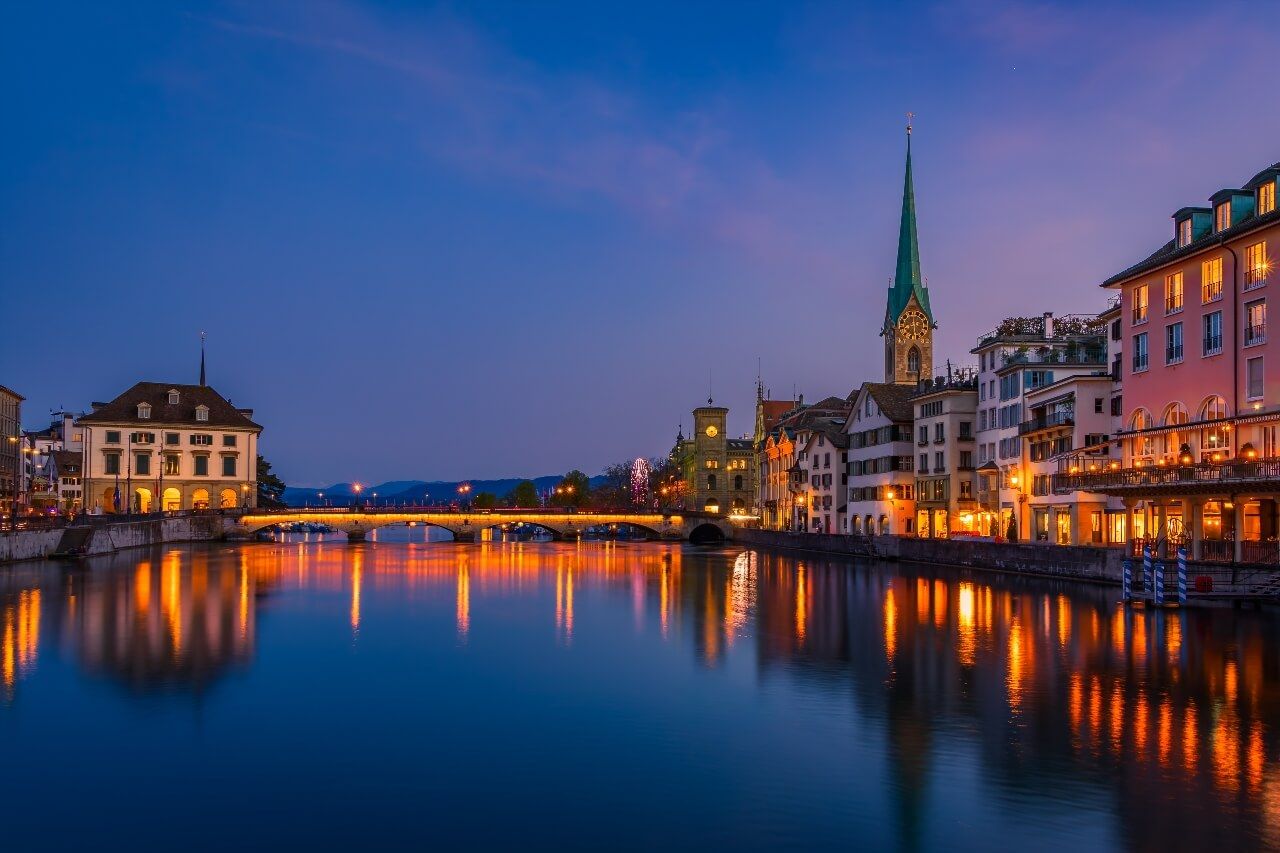
Zurich's Altstadt divides into two halves: the left bank (Lindenhügel and the streets climbing towards the Grossmünster) and the right bank (Niederdorf, covered separately in entry 17). Together they form one of the most intact medieval city centres in central Europe, not a reconstruction, but a working neighbourhood where butchers, bookshops and watchmakers still operate in buildings from the 13th and 14th centuries. The Limmat river splits the two banks, and the network of bridges crossing it (Münsterbrücke, Rathausbrücke, Rudolf-Brun-Brücke) gives the Altstadt its rhythm: you cross, you wander, you cross back.
Start from Münsterbrücke, the bridge connecting the two banks directly in front of the Grossmünster, and simply let yourself wander. The streets are narrow enough that you will stumble upon a Romanesque portal or a guild-house facade every two or three minutes. Look up at the corbelled upper floors: Zurich passed strict laws in the medieval period limiting how far buildings could encroach on the street at ground level, which forced owners to cantilever their upper storeys outward instead. The effect is a series of shaded covered walkways that feel vaguely theatrical, particularly during summer afternoons when the contrast between hot square and cool alley is most pronounced.
The left-bank Altstadt is anchored by Augustinergasse, arguably the most photographed alley in the city. The street is narrow enough that you could nearly reach both walls simultaneously, and it bends just enough that you can never see the end from the beginning, an architect's gift to photographers. Look up here too: the painted oriel windows that project over the street were added by guild members in the 16th and 17th centuries as discreet declarations of status, each one a slightly different colour, a slightly different curve. At the top, you emerge onto Lindenhof hill without warning, with a view that opens onto the Limmat, the Grossmünster towers and the right-bank rooftops in a single unbroken sweep.
Pause at the guild houses around Münsterhof square, particularly the Zunfthaus zur Waag, before continuing south to the Weinplatz, Zurich's oldest market square. The Altstadt's smallest details, like the brass plaques marking medieval water troughs or the wrought-iron signs of long-closed apothecaries, reward slow walking more than guidebook checklists.
Allow at least two hours for a proper wander; pair the route with the Ryocity audio guide for the historic district if you want layered commentary. Go on a weekday morning if you want the streets to yourself; by early afternoon on weekends the central lanes are busy.
2. Climb Grossmünster Cathedral
Grossmünster (Grossmünsterplatz, 8001 Zürich, rated 4.5/5 on Google (9 962 avis)) is the defining silhouette of Zurich's skyline, its twin Romanesque towers visible from almost every elevated point in the city. The cathedral dates to the 12th century, built on a site where Charlemagne supposedly discovered the graves of the city's patron saints, Felix and Regula. Whether or not you put stock in the legend, the building itself is striking: austere grey stone, very little decoration, and a nave that feels deliberately imposing.
Climb the Karlsturm (the southern tower) for a panoramic view over the Limmat river, the lake, and the snow-capped Alps on clear days. The climb involves 187 narrow stone steps, so comfortable shoes matter. Admission to the tower costs a few Swiss francs. The stained-glass windows in the crypt were designed by Alberto Giacometti's cousin, Augusto Giacometti, in 1932, a detail most visitors walk straight past.
Aim to visit between 10 and 11 in the morning on weekdays, before the tour groups arrive from the main train station.
3. Visit Fraumünster and Its Chagall Windows
Across the river from Grossmünster stands Fraumünster (Münsterhof 2, 8001 Zürich, rated 4.5/5 on Google (4 307 avis)), a church founded in 853 by King Louis the German as a convent for aristocratic women. The building is older than its twin-towered neighbour, and for most of its history it was the more politically powerful of the two, the abbesses of Fraumünster held the rights to collect market tolls and coin money in medieval Zurich.
Today, the reason most people visit is the five stained-glass windows designed by Marc Chagall between 1970 and 1978. Chagall was in his eighties when he completed the commission, and the windows are extraordinary: intensely blue, filled with biblical scenes rendered in his signature floating, dreamlike style. The fifth window, the Rose Window in the south transept, was added by Augusto Giacometti in 1945 and holds its own beautifully next to Chagall's work.
The church charges a small entrance fee. Photography without flash is permitted. Spend at least twenty minutes just sitting and watching how the light shifts through the Chagall windows as the sun moves.
4. Walk Along Lake Zurich
Lake Zurich (Zürichsee) stretches roughly 40 kilometres south from the city in a curving sweep, ringed by vineyards, small villages and, on clear days, a backdrop of the Swiss Alps that looks almost implausibly perfect. The lakefront within the city is genuinely one of the great urban waterfronts in Europe, wide, well-maintained, car-free in the central stretches, and consistently lively from spring through autumn. The water quality is among the highest of any major European lake, the result of decades of strict regulation: you can drink it straight in an emergency, and many locals do swim with their mouths open.
The best entry point is Bürkliplatz (Bürkliplatz, 8001 Zürich, rated 4.5/5 on Google (4.1K avis)), the square at the southern end of Bahnhofstrasse where the trams terminate and the lake begins. From here, the eastern promenade (Utoquai, then Seefeldquai) runs for several kilometres through the upscale Seefeld district, passing a succession of open-air swimming areas called Badis. The western promenade (General-Guisan-Quai) is quieter, lined with chestnut trees, and leads toward the Rietberg Museum park. Both promenades have benches positioned to catch the late-afternoon light, and both are punctuated by drinking fountains drawing on the same Alpine sources that supply the city's taps.
On summer evenings the entire lakefront becomes Zurich's living room: people swim directly from the stone quays, barbecue on the grass, or simply sit on the low walls watching the paddle-steamers make their way back from Rapperswil. The light on the water around 7 pm, with the Alps turning pink, is the kind of thing that makes you extend your stay by a day. Bring a bottle of wine, find a bench, and watch the swans drift past, this is one of the rare urban experiences that genuinely earns the cliché of timelessness.
For a longer walk, continue past the Zürichhorn park to the Chinese Garden (free on most days), a gift from Zurich's sister city Kunming, and then loop back through the Seefeld neighbourhood's excellent café culture. In winter, the same promenade takes on a different character: fewer people, the lake half-veiled in mist, the distant Alps sharper against a colder sky. Bundle up and walk anyway, you will have one of the city's most beautiful spaces almost entirely to yourself.
5. Ride Up to Uetliberg Mountain
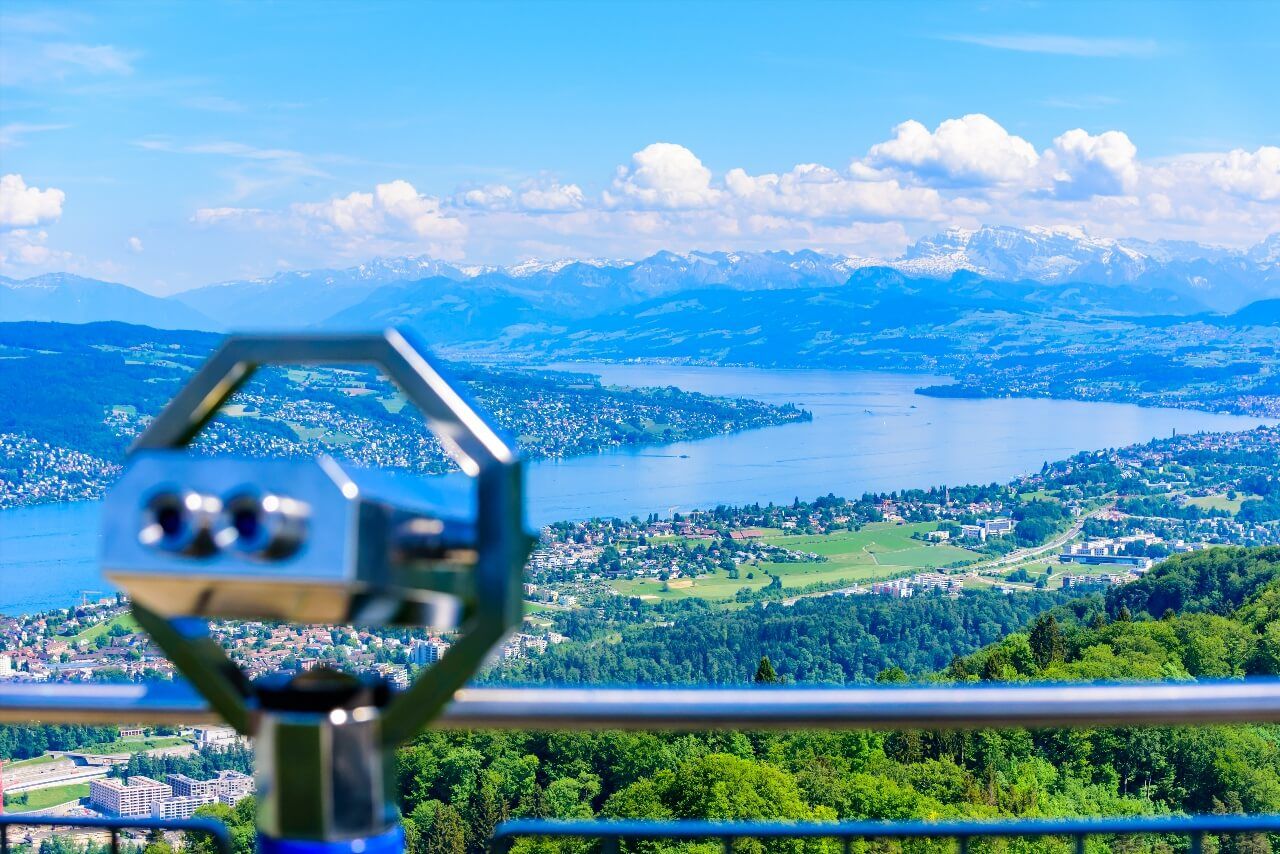
Uetliberg (Uetlibergstrasse, 8143 Stallikon, rated 4.6/5 on Google (9.3K avis)) is Zurich's home mountain, 871 metres at its summit, reachable from the city centre by suburban train (line S10) in 20 minutes from Zürich HB. The summit station sits just below the peak, and a ten-minute walk through forest brings you to the top, where a steel observation tower adds another 17 metres to the view. On a clear winter morning, with fresh snow on the ground and the Alps stretching from Säntis to Mont Blanc on the horizon, it is one of the best free viewpoints in Switzerland.
From the summit, a well-marked ridge trail (the Planetenweg, or Planet Path) runs north along the Albiskette for roughly an hour, passing scale models of each planet in the solar system spaced according to their actual astronomical distances. The trail ends at Felsenegg, where a cable car descends to the town of Adliswil and connects back to the city by tram. This circuit, train up, ridge walk, cable car down, takes about three hours and costs nothing beyond the transport ticket.
In summer, two mountain restaurants at the summit serve Rösti, raclette and cold Swiss beer. In winter, bring layers: even on a calm day, the ridge catches wind.
6. Stroll Bahnhofstrasse
Bahnhofstrasse runs 1.4 kilometres in a straight line from the main railway station to Bürkliplatz on the lake. It is consistently ranked among the most expensive shopping streets in the world, on a par with Fifth Avenue and the Champs-Élysées, and it delivers on that billing with an almost theatrical seriousness: Rolex, Cartier, Chanel, Hermès and a dozen Swiss watchmakers line the wide boulevard, their window displays competing in studied understatement.
You do not need to buy anything to enjoy the street. The trams run silently down the centre, the plane trees provide shade in summer, and the people-watching is exceptional. If you want to understand the visual grammar of Swiss wealth, precise, restrained, never flashy, thirty minutes on Bahnhofstrasse will teach you more than any museum.
For contrast, duck into the Jelmoli department store at number 10, Zurich's oldest, which opened in 1833 and still manages a certain grandeur despite the competition.
7. Kunsthaus Zürich Art Museum
The Kunsthaus Zürich (Heimplatz 1, 8001 Zürich, rated 4.7/5 on Google (9 013 avis)) is Switzerland's largest art museum and one of the finest collections in the German-speaking world. It received a major extension in 2021, the Chipperfield Wing, designed by David Chipperfield Architects, which more than doubled its gallery space and shifted the museum from excellent to genuinely world-class.
The permanent collection spans five centuries, with particular strengths in Swiss and German Expressionism (the Giacometti Foundation has deposited significant works here permanently), French Impressionism, and a 20th-century collection that runs from Monet and Munch through Kandinsky, Rothko and Warhol. The Bührle Collection, one of Europe's great private Impressionist collections, is now displayed in a dedicated gallery within the Chipperfield Wing, controversial in its acquisition history but visually breathtaking, with works by Manet, Monet, Van Gogh and Renoir.
Allow three to four hours for a serious visit. The museum closes on Mondays; admission runs around CHF 26 for adults, with free entry on Wednesday evenings after 5 pm. Buy tickets online to avoid queues, particularly on weekends. The Chipperfield building's atrium café is worth a stop even if you are not visiting the galleries, it is one of the more beautiful public spaces built in Switzerland in recent years.
8. Swiss National Museum
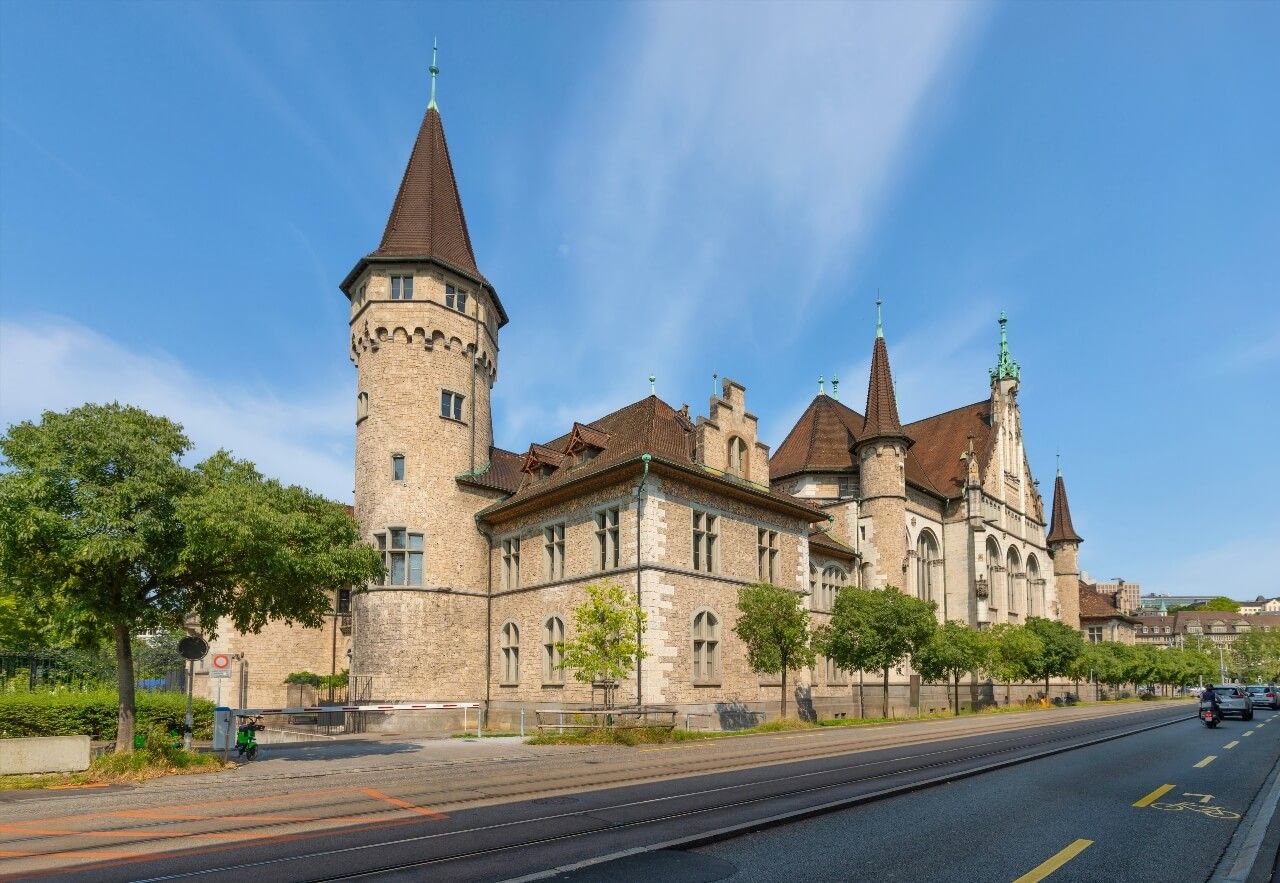
The Swiss National Museum (Museumstrasse 2, 8001 Zürich, rated 4.6/5 on Google (9 858 avis)) sits immediately behind the main railway station in a building that looks like a Romantic fantasy of a Swiss castle, all turrets, steep roofs and dormer windows, built in 1898. The interior is more coherent than the exterior suggests.
The permanent collection traces Swiss cultural history from prehistoric times to the 20th century, with particularly strong holdings in medieval religious art, traditional costumes, guild silver, and the history of Swiss watchmaking. The knightly hall on the upper floor contains a series of painted ceiling decorations from a 16th-century canton house, the kind of thing you would normally need to visit a remote Alpine village to see.
A modern extension was added in 2016, housing changing exhibitions and a sleek inner courtyard. Admission is around CHF 10 for adults, free on the first Sunday of every month. Budget an unhurried two hours.
9. Zurich-West: The Former Industrial Quarter
Zurich-West is what happens when a city decides to be honest about its industrial heritage rather than flatten it. The district, centred on Hardbrücke and the streets around Langstrasse to the north, was Zurich's factory and slaughterhouse zone until the late 1980s. The warehouses, cooling towers and rail infrastructure were not demolished when the industries left, they were repurposed, and the result is the most architecturally interesting neighbourhood in the city.
The anchor of the district is the Prime Tower (126 metres, opened 2011), for a brief period the tallest building in Switzerland, which now anchors a cluster of mixed-use buildings including the widely praised Im Viadukt shopping arcade, a series of arched brick vaults underneath a 19th-century railway viaduct converted into boutiques, food stalls and a weekend farmers' market. Run your hand along the original brick as you walk through: you can still feel the grime of a century of train smoke worked into the mortar.
Nearby, Schiffbau (Schiffbauplatz 1) is a former shipbuilding hall converted into a performing arts venue, the Schauspielhaus theatre uses it for large productions, and the volume of the industrial space gives even experimental drama a spectacular setting. The hall itself, with its original overhead cranes still in place, is worth a quick look even if you are not catching a show.
The neighbourhood's café and bar scene is concentrated along Geroldstrasse, a street of converted shipping containers and pop-up structures that is quieter by day and lively by night. Come at lunch on a Saturday, when the farmers' market under the viaduct is in full swing and the smell of grilling sausages drifts through the arches. If you are walking the area without local context, the Ryocity audio guide for Zurich layers in the industrial history that the buildings themselves no longer announce.
10. Swim at a Zurich Badi (Lakeshore Baths)
Zurich's Badis are the city's most democratic institution: open-air swimming areas attached directly to the lake or the Limmat river, operating from May through September and charging a nominal entrance fee of around CHF 8. There are more than fifteen of them within the city limits, ranging from historic Victorian structures to modernist floating pontoons.
The most celebrated is the Frauenbadi (Stadthausquai 14, 8001 Zürich), built in 1888 on the Limmat and reserved for women during the day, open to all in the evenings. The building itself is a wooden Victorian pavilion that barely seems structurally possible; the dressing rooms hang directly over the water. In the evenings from June onwards, the Frauenbadi transforms into one of Zurich's best outdoor bars, candles on the tables, locals of all ages, wine in plastic cups, the Grossmünster towers lit up across the river.
For lake swimming, head to Seebad Enge or Seebad Utoquai on the eastern lakeshore. These are larger, calmer, with grass areas for sunbathing and direct access to the clear, cold lake water. Zurich's lake water quality is among the best of any major European city, it passes drinking-water standards.
11. Lindt Home of Chocolate
The Lindt Home of Chocolate (Schokoladenplatz 1, 8802 Kilchberg, rated 4.6/5 on Google (24 310 avis)) opened in 2020 on the shores of Lake Zurich, 12 kilometres south of the city centre in Kilchberg, the village where Lindt has had its factory since 1899. The museum is dedicated unambiguously to chocolate, its history, its science and, importantly, its consumption, and it manages to avoid the cloying theme-park quality that afflicts many food museums.
The centrepiece of the entrance hall is a 9.3-metre-tall chocolate fountain, the largest in the world, circulating several hundred kilograms of liquid chocolate at any given moment. It is theatrical in the best sense. The permanent exhibition covers the full history of chocolate from Mesoamerican cacao cultivation through European colonial trade routes to the industrialisation of confectionery in the 19th century, with enough depth to engage adults who already think they know the story.
Every ticket includes a tasting package, you work your way through a selection of Lindt products matched to the chocolate-making stages explained in the exhibition. The on-site Lindt shop is predictably comprehensive; the Maître Chocolatier workshops, bookable separately, let you make and take home your own pralines. Admission costs around CHF 15 for adults.
To get there from central Zurich: take the S8 or S24 suburban train from Zürich HB to Kilchberg, a 12-minute ride. The museum entrance is a short walk from the station.
12. Lindenhügel (Lindenhof Hill)
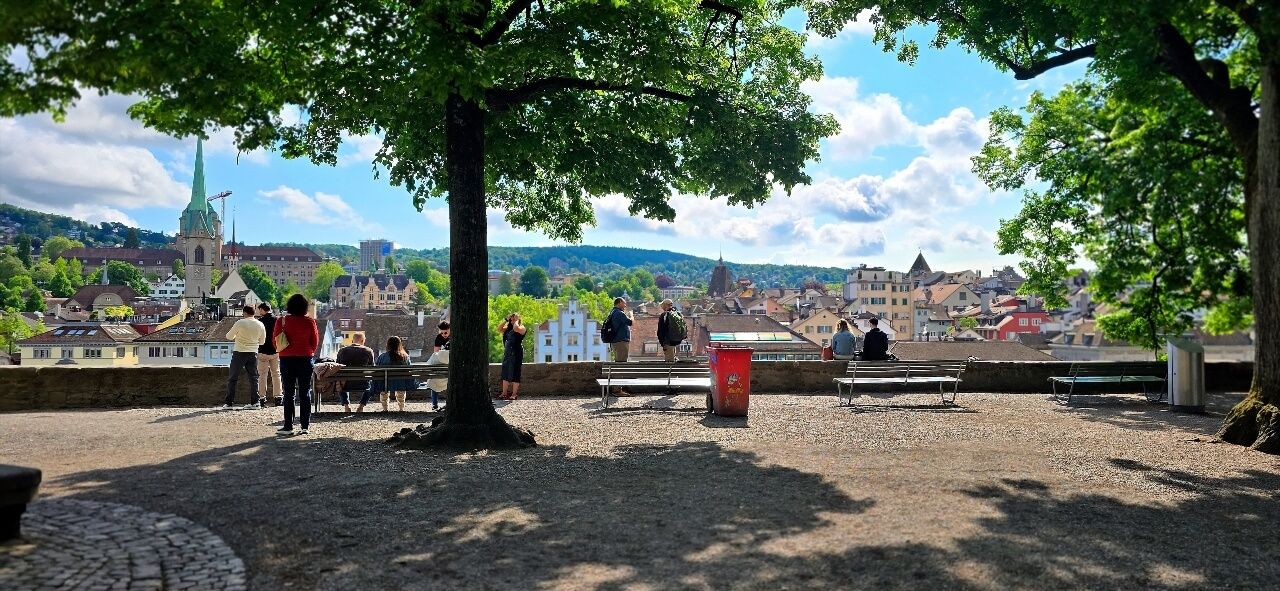
Lindenhof is a small raised plateau in the middle of the left-bank Altstadt, shaded by lime trees and occupied by a handful of chess boards where old men play in companionable silence on weekday afternoons. It was the site of a Roman customs post and later a Carolingian imperial palace, nothing remains of either except the elevated ground itself and a view that takes in the Limmat, the Grossmünster, and the right-bank rooftops.
Sit on one of the stone benches for ten minutes. Admission is free. There are no cafes, no ticket kiosks, no audio tours. It is simply a quiet hill in the middle of a city, and it is one of the better things Zurich does.
13. Rietberg Museum
The Museum Rietberg (Gablerstrasse 15, 8002 Zürich, rated 4.7/5 on Google (1 857 avis)) is unlike any other art museum in Switzerland. Its collection focuses exclusively on non-European art: South Asian sculpture, East Asian ceramics and painting, Sub-Saharan African ritual objects, Mesoamerican ceramics, and Pacific material culture. The holdings are genuinely deep, not the superficial sampling many ethnographic collections settle for.
The museum occupies two 19th-century villas set in a lakeside park, connected by a contemporary underground extension (the Emerald, an award-winning subterranean pavilion) that opens directly into the landscape. The park setting matters: walking between galleries through mature chestnut trees and across stone bridges is part of the experience, particularly in autumn.
The South Asian galleries are exceptional, the Gandharan sculpture collection is among the best outside South Asia itself. Allow two hours for a proper visit. Admission costs around CHF 14; free entry on Wednesday evenings after 5 pm.
14. Zurich Zoo
Zurich Zoo (Zürichbergstrasse 221, 8044 Zürich, rated 4.6/5 on Google (30 083 avis)) has been operating continuously since 1929 and consistently ranks among Europe's best, not for its size (it is mid-scale by international standards) but for the quality of its habitat design and its serious commitment to conservation science. The zoo participates in breeding programmes for more than 40 endangered species and maintains active research partnerships with institutions in Central Asia, Madagascar and South America.
The most impressive enclosure is the Masoala Rainforest, a 11,000-square-metre greenhouse built in 2003 to replicate a section of Madagascar's Masoala Peninsula. Inside, you walk through a tropical forest at full canopy height, with free-flying birds, chameleons, and lemurs moving entirely without barriers. The temperature and humidity are maintained year-round, which makes it an unexpectedly pleasant visit on a grey Zurich November day.
A newer addition is the Lewa Savanna enclosure, housing giraffes, zebras, rhinos and marabou storks in a habitat designed to replicate East African savanna conditions. The giraffe house, where animals can be observed feeding at eye level from a raised platform, is particularly popular with children. Admission is around CHF 29 for adults; the zoo is open every day of the year including Christmas.
15. Polyterrasse Viewpoint
The Polyterrasse is the terrace of ETH Zürich, the Swiss Federal Institute of Technology, consistently ranked among the world's top five universities, and it offers what many consider the single best free view in the city. You stand at mid-slope on the Zürichberg hill, looking directly down the axis of the Limmat towards the lake, with the two cathedral towers framing the view on either side and the Alps visible beyond the water on clear days.
The ETH is a short walk or a quick ride on the Polybahn funicular (running since 1889) from Central square. The terrace itself is open to the public at all hours. Five minutes maximum to get there; the view will stop you longer.
16. The Landesmuseum Courtyard Garden
Adjacent to the Swiss National Museum, the Landesmuseum Courtyard garden is one of Zurich's more low-key pleasures, a formal garden enclosed between the museum's neo-Gothic wings and the 2016 modern extension, accessible without paying museum admission. The contrast between the Victorian turrets and the angular concrete of the new building creates an odd but satisfying visual tension. Benches, mature trees, and a café make it a genuine rest stop between the train station and the Altstadt.
Five to ten minutes here, purely for the architectural counterpoint, costs nothing.
17. Explore Niederdorf Quarter
Niederdorf is the right-bank half of the Altstadt, narrower, livelier, slightly scruffier than its left-bank counterpart, and correspondingly more enjoyable at street level. The main axis is Niederdorfstrasse (Niederdorfstrasse, 8001 Zürich, rated 4.5/5 on Google (4.8K avis)), a pedestrian lane running north from the Grossmünster to Central square, lined with restaurants, bars and second-hand bookshops.
The detail that hits hardest is Spiegelgasse: at number 14, Lenin lived in 1916-17, steps from Cabaret Voltaire at number 1 where Dada was being invented at the same moment. Two intellectual ruptures on one short street, one short year. Come in the evening for the restaurant density.
18. Boat Tour on Lake Zurich
The Zürichsee-Schifffahrtsgesellschaft (ZSG) operates regular ferry services and dedicated cruise boats on Lake Zurich year-round. The classic option is a round-trip cruise to Rapperswil, about 90 minutes each way, which takes you the full length of the lake through vineyards, small lakeside towns and the narrowing of the lake at the Seedamm causeway. The panorama of the Alps from the water on a clear day is qualitatively different from any land-based viewpoint.
For a shorter experience, take any of the local ferries between the eastern and western lakeshores (the cross-lake connection between Thalwil and Meilen, for example), these operate as public transport and are covered by standard Swiss Travel Passes. The larger cruise boats have open upper decks, a restaurant below, and a deck bar in summer.
Book in advance for the Rapperswil cruise on summer weekends. Departure from Bürkliplatz.
19. Thermalbad & Spa Zürich
Thermalbad & Spa Zürich (Brandschenkestrasse 150, 8002 Zürich) is one of those places that rewards a moment of explanation before you visit, because the building is genuinely extraordinary. The spa occupies a converted 1960s municipal water reservoir, a circular underground chamber originally built to store drinking water for the city. The architects kept the raw concrete of the original structure, added thermal pools at multiple levels, and opened a rooftop pool that sits above the surrounding Wiedikon neighbourhood with views of the city and the church towers.
The experience is deliberately quiet. No music in the main bathing areas, no waterslides, no children. You move between an indoor thermal pool, a cold plunge, a variety of sauna cabins at different temperatures, and the rooftop pool, which is heated to 34°C even in January, so that you can lie in warm water while light snow falls. The Victorian bath house next door (the former Stadtbad Enge, built in 1889) is connected to the modern spa complex and still has its original mosaic floors and arched ceiling; it now houses changing rooms and a hammam.
Admission for the main spa package (3 hours) runs around CHF 39 on weekday afternoons. Book online in advance, as capacity is limited and weekend slots fill up fast.
20. FIFA World Football Museum
The FIFA World Football Museum (Seestrasse 27, 8002 Zürich, rated 4.4/5 on Google (6 695 avis)) is the official global museum of football, opened in 2016 in Enge on the western lakeshore. FIFA is headquartered in Zurich (a fact that occasionally surprises visitors unfamiliar with Swiss institutional geography), so the museum's location makes a kind of logic even if the city itself is not particularly associated with the sport.
The permanent exhibition covers the history of association football from its codification in England in the 1860s through every FIFA World Cup to the present, with a heavy emphasis on interactive and digital displays, you can practise penalty kicks, test your tactical decisions against World Cup scenarios, and examine original match balls and shirts from tournaments back to 1930. The Golden Shoe collection and original World Cup trophies are the headline exhibits.
Admission costs around CHF 24 for adults. Even if you are only a moderate football fan, the design quality of the exhibition makes it worth two hours.
21. Eat at Zurich's Street Food Markets
Zurich's market scene has matured rapidly. Im Viadukt Farmers' Market (Viaduktstrasse, 8005 Zürich) runs Saturday mornings under the railway arches of Zurich-West with predominantly local producers. Helvetiaplatz Market (Helvetiaplatz, 8004 Zürich) operates Tuesdays and Fridays in Aussersihl, where Swiss farmers share the square with Turkish bakers and a long-running Tamil food stand.
For a festival format, keep an eye on the Zurich Street Food Festival, usually held at Turbinenplatz in late August.
22. Day Trip to Rhine Falls
The Rhine Falls are the largest waterfall in Europe by volume: 150 metres wide, up to 23 metres high, and carrying an average flow of 600 cubic metres per second, and up to 1,250 cubic metres during summer snowmelt, when the volume of water is genuinely startling. They sit 30 kilometres north of Zurich near the town of Schaffhausen, easily reachable by direct train from Zürich HB in 45 minutes.
From the southern bank (accessible via Schloss Laufen castle, entry charged), a series of viewing platforms descend towards the water, ending on a narrow ledge a few metres from the main falls. The spray is constant and considerable, bring a waterproof layer in summer or accept that you will get wet, which most visitors consider part of the experience. A boat service operates between the banks and, seasonally, to a small rock in the middle of the falls themselves.
The best time to visit is May through July, when snowmelt pushes the water volume to its peak. Even in winter, the falls are dramatic, with ice forming along the margins while the main channel thunders through. Arrive by 10 am on summer weekends to avoid the worst of the crowds, which build quickly by late morning.
Combine the Rhine Falls with a two-hour walk into Schaffhausen's old town, one of the best-preserved medieval town centres in Switzerland, with an elaborate system of oriel windows (Erker) projecting from guild-house facades and a hilltop fortress (Munot) with free access and views across the Rhine into Germany.
23. Visit Rapperswil by Train
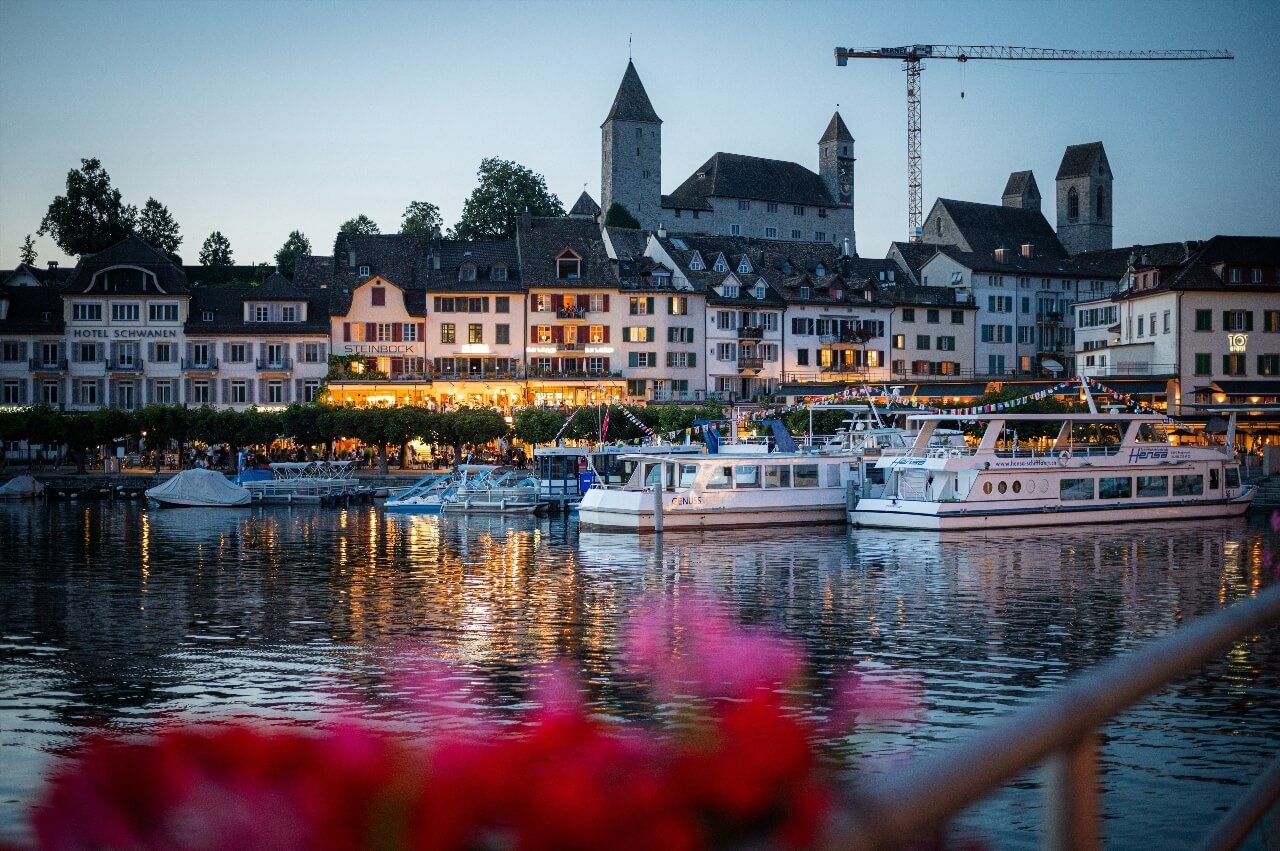
Rapperswil sits at the far end of Lake Zurich, 40 kilometres from the city, and the train journey from Zürich HB takes 40 minutes on the S5 line. It is one of those small Swiss towns that appears to have been assembled from a list of aesthetic requirements: a medieval castle on a rose-covered hill above the old town, a long causeway walkable across the lake, cobblestone streets with half-timbered facades, and a view back towards Zurich framed by mountains.
The Rapperswil Castle (Lindenhügel, Rapperswil) dates to the 13th century and now houses a small Polish History Museum (an unexpected but historically coherent collection given Rapperswil's long role as a sanctuary for Polish exiles). The rose garden below the castle, which gives the town its unofficial title of «City of Roses,» peaks in June with several thousand varieties in bloom.
Combine Rapperswil with the boat back to Zurich for a view of the lake you cannot replicate any other way, the ZSG cruise to Zürich HB takes 90 minutes and passes the vineyard villages of the western shore.
24. Zurich's Christmas Market (Christkindlimarkt)
Zurich runs one of the largest Christmas markets in Europe, and unusually for the genre, it manages to be two distinct things at once. Christkindlimarkt at Hauptbahnhof (the main railway station, Bahnhofplatz 15, 8001 Zürich) is an entirely indoor market occupying the main hall of the station, opened in 1981 and now spanning 160 stalls under the station's Victorian iron roof. The Christmas tree at the centre, decorated with 7,000 Swarovski crystals, has become one of the city's most photographed seasonal icons.
The outdoor Wienachtsdorf at Bellevue (Bellevueplatz, 8001 Zürich) operates on a different register, a village of wooden chalets on the square above the lake, with mulled wine, grilled raclette and a skating rink. The combination of both markets in a single evening, station first, then the lakefront by tram, is the standard Zurich December itinerary.
Both markets run from late November through December 24. The station market is open until 10 pm on most nights.
25. Cabaret Voltaire and the Birthplace of Dada
At Spiegelgasse 1, 8001 Zürich, in a former wine bar in the Niederdorf quarter, Hugo Ball, Emmy Hennings, Tristan Tzara, Jean Arp and Hans Richter launched the Dada movement on February 5, 1916. The founding event was a single evening of readings, music and deliberate nonsense in the back room of a hired cabaret space; what it triggered over the following years, a fundamental challenge to the categories of art, meaning and rational thought, had consequences that ran through Surrealism, Abstract Expressionism and conceptual art for the rest of the century.
Cabaret Voltaire now operates as a cultural centre and small museum dedicated to Dada's history and ongoing legacy. The ground floor bar is open to the public; the exhibition upstairs traces the movement through documents, reproductions and explanatory material. The original room is surprisingly small, it holds perhaps forty people standing, which makes the historical imagination required to picture it as the origin point of a movement that unsettled Western culture feel both easier and stranger.
Admission to the exhibition costs around CHF 10. The bar serves good coffee and the programming of readings, performances and openings is consistently interesting.
26. Zurich Botanical Garden
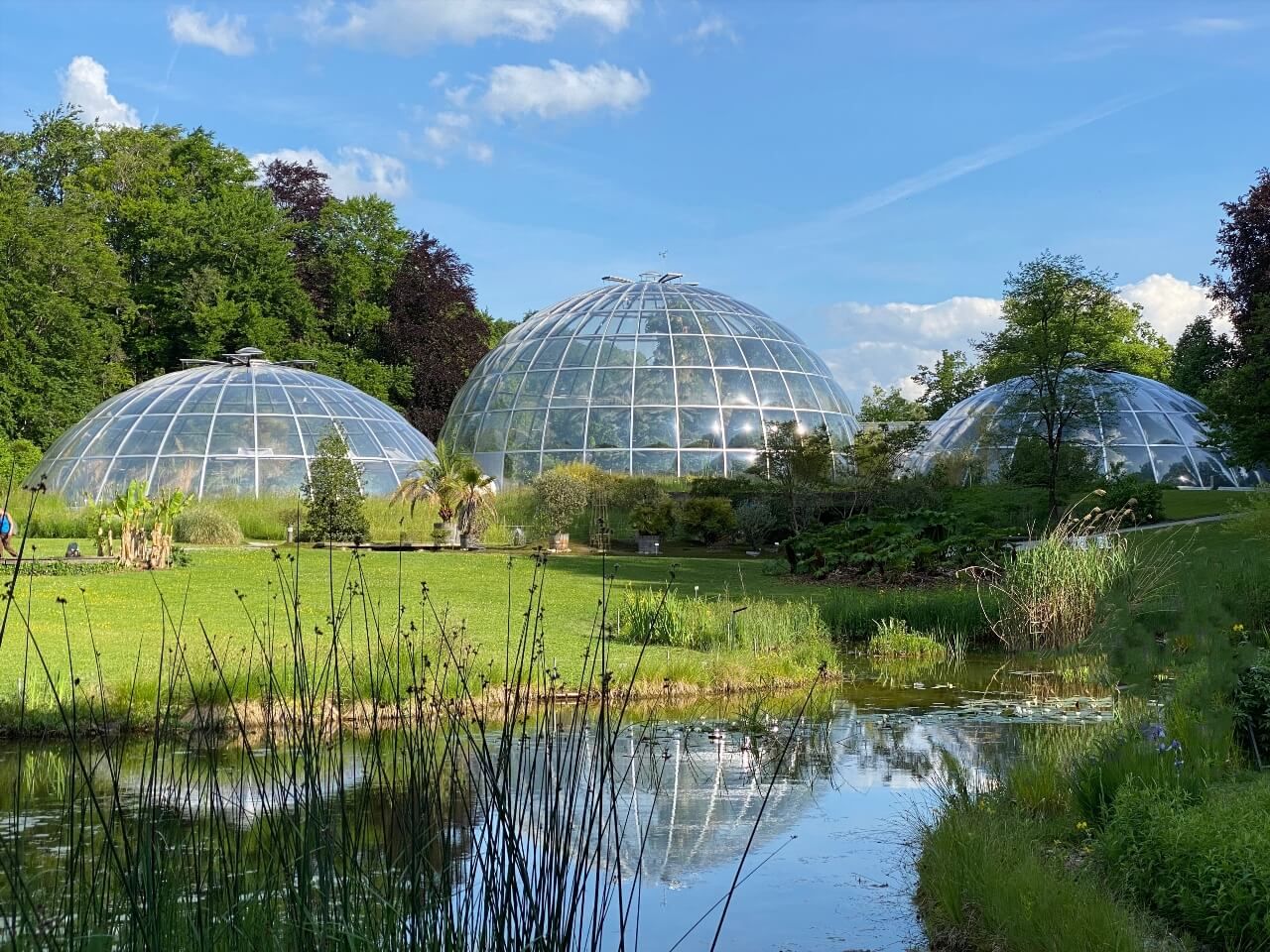
The Zurich Botanical Garden (Zollikerstrasse 107, 8008 Zürich) is a research facility of the University of Zurich, open to the public free of charge, with 9,000 plant species across outdoor gardens and three glass pavilions housing tropical, subtropical and succulent collections. The outdoor gardens are at their best in late April and May, when the alpine rock garden, plants from the Swiss Alps and other mountain ranges, is in full colour.
Allow an hour, ideally in the morning before the school groups arrive. Free entry.
27. Predigerkirche and Zähringerplatz
Predigerkirche (Zähringerplatz 1, 8001 Zürich) is a Gothic Dominican church from the 13th century, now deconsecrated and used as the Zurich Central Library's reading room, one of the more compelling repurposings of ecclesiastical architecture in the city. The tall nave, stripped of pews and furnished with library shelves and study tables, creates an odd atmosphere of secular contemplation that works surprisingly well.
The square outside, Zähringerplatz, has a cluster of neighbourhood cafés and is less tourist-dense than the nearby Niederdorfstrasse. A good ten-minute detour.
28. Go Ice Skating at Dolder Ice Rink
Dolder Eisbahn (Adliswilstrasse 46, 8044 Zürich, rated 4.4/5 on Google (2 570 avis)) is an outdoor ice rink on the wooded hillside above the Zürichberg district, operating from October through March. At 6,000 square metres it is one of the largest outdoor rinks in Europe, and on a cold clear night with the city lights below and the smell of pine trees from the adjacent forest, it is an experience that distances itself from the standard urban-centre rink setup.
Skate hire is available on-site. The adjacent Dolder Grand hotel, a grande dame property rebuilt in 2008, has a terrace bar where post-skating hot chocolate or vin chaud is a sensible conclusion. Admission around CHF 8. Accessible by tram (line 3 to Römerhof, then a short uphill walk) or by the small Dolderbahn funicular from Römerhof.
29. Eat Züri-Geschnetzeltes: The Dish Zurich Invented
Zurich has one unambiguous culinary invention: Züri-Geschnetzeltes, a dish of sliced veal in a cream and white wine sauce, always served with Rösti (grated potato, pan-fried) rather than pasta or rice. It appeared on Zurich restaurant menus in the early 20th century and has remained the city's signature dish ever since, ordered so consistently by visitors that some restaurants joke it accounts for a quarter of their annual revenue.
The preparation is specific: the veal must be sliced thin and cooked fast over high heat so it remains tender; the sauce is finished with a reduction of white wine and cream, sometimes with a small amount of Marsala. It should not be a stew. The Rösti alongside it should have a crispy exterior and a soft interior, the two textures working against each other on the plate.
Where to order it: Kronenhalle (Rämistrasse 4, 8001 Zürich) is the classic answer, a grand brasserie operating since 1924, with original works by Chagall, Miró and Braque on the walls. The Geschnetzeltes here is excellent and the atmosphere is legitimately historic. Zeughauskeller (Bahnhofstrasse 28a, 8001 Zürich) is the more accessible alternative, a former arsenal from 1487, now a cavernous beer hall serving Swiss food at lower prices with no loss of architectural quality.
30. Night Out in Langstrasse
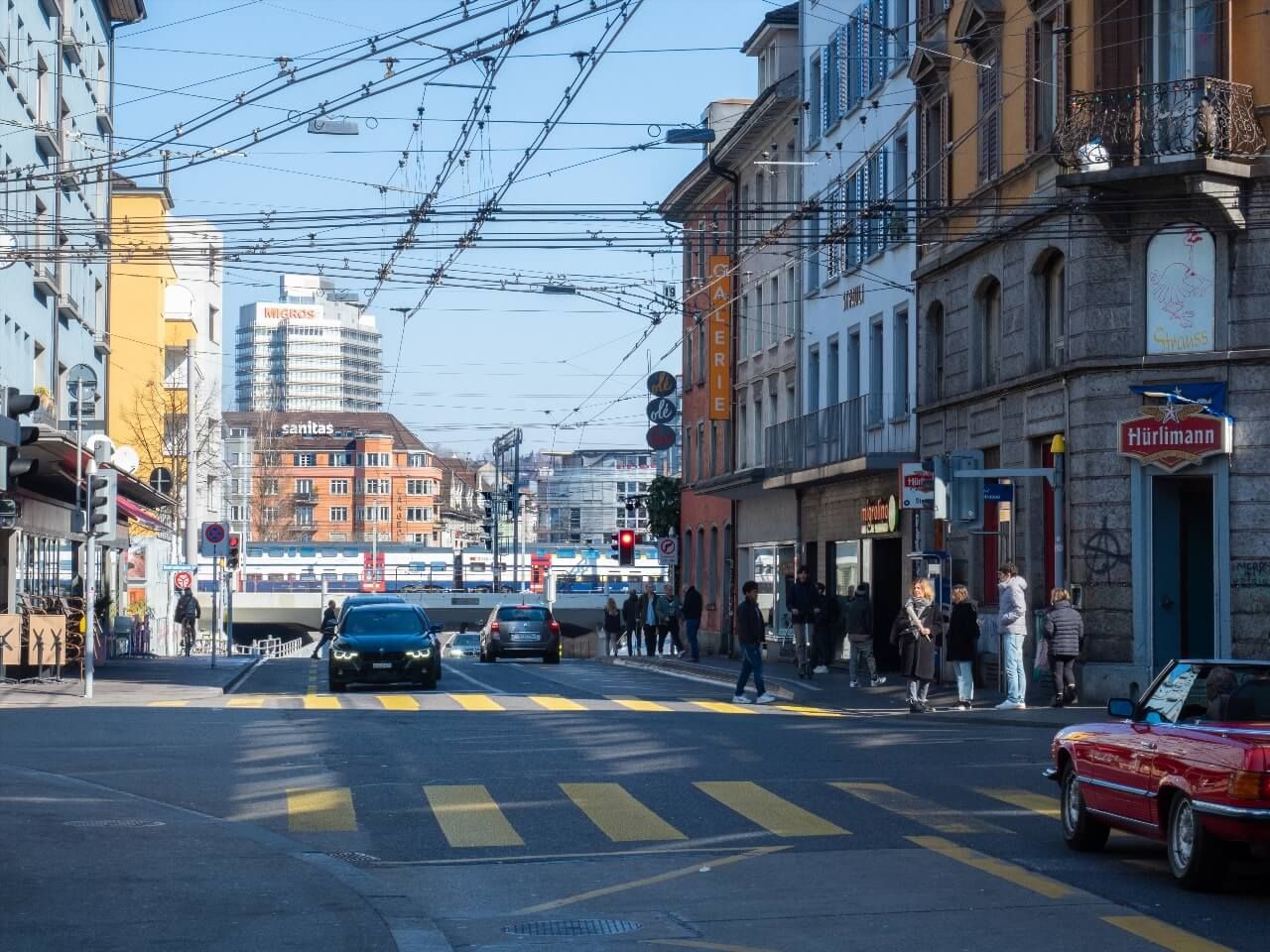
Langstrasse (Langstrasse, 8004 Zürich, rated 4.2/5 on Google (317 avis)) runs through the Aussersihl district (postcode 8004), historically Zurich's red-light district and immigration quarter, now the most genuinely mixed neighbourhood in a city that can sometimes feel aggressively homogeneous. The street itself is not beautiful, it is slightly scruffy, lined with convenience stores, döner shops and the occasional pawnbroker, and that is precisely what makes it interesting at 10 pm on a Friday.
The bar scene concentrates on and around Langstrasse and the parallel streets running towards Helvetiaplatz. Longstreet Bar is one of the anchors, a dark, deliberately low-fi space with good cocktails and a door policy that is inclusive rather than selective. Helsinki Club on Geroldstrasse (technically Zurich-West, a ten-minute walk) is one of the city's better electronic music venues, housed in a converted tram depot. The Rote Fabrik arts centre on the lake (Seestrasse 395) does live music and club nights in a converted factory on the water's edge.
Zurich's nightlife does not pretend to be Berlin, it is smaller, more expensive, and closes earlier (most bars by 3 am, clubs by 5 am on weekends). What it offers instead is density of quality: within a fifteen-minute walk of Langstrasse you have access to jazz bars, experimental music spaces, club nights from serious touring DJs, and more varieties of late-night food than most Swiss cities see in a year.
FAQ
How many days do you need in Zurich?
Three full days is the practical minimum to cover the main sights without rushing. A first day covers the Altstadt, Grossmünster, Fraumünster and a walk along the lake. Day two works well for Kunsthaus, Zurich-West, and the lakeshore Badis. Day three allows for a day trip to Rhine Falls or Rapperswil. Add a fourth day if you want to explore Uetliberg, Rietberg Museum and the Thermalbad properly. Five days gives you genuine leisure rather than a checklist.
Is Zurich expensive for tourists?
Yes, Zurich consistently ranks among the world's most expensive cities. Budget around CHF 80-120 per day for food, transport and entry fees if you are travelling moderately. Zurich does offer real value in specific areas: Swiss public transport is fast, punctual and relatively priced for what you get; the Badis and public parks are very cheap or free; and many of the city's best viewpoints (Lindenhof, Polyterrasse, Uetliberg summit trail) cost nothing. Eating at market stalls and neighbourhood restaurants rather than tourist-zone establishments helps significantly.
What is the best time of year to visit Zurich?
Late spring (May-June) and early autumn (September-October) offer the best combination of good weather, manageable visitor numbers and active cultural programming. Summer (July-August) is peak season, warm enough for Badi swimming, lake cruises and outdoor concerts, but accommodation prices rise sharply. Winter from late November through January has its own appeal: the Christmas markets, ice skating, and the ability to combine city sightseeing with Alpine day trips to ski areas within an hour's train ride.
What are the best day trips from Zurich?
Rhine Falls (30 km, 45 min by train) is the most spectacular. Rapperswil (40 km, 40 min, the lake trip back by boat is excellent). Lucerne (50 km, 45 min, arguably Switzerland's most photogenic city centre). Stein am Rhein (60 km, 1h10, one of the most intact medieval small towns in central Europe). For Alpine scenery: Mount Rigi (accessible via Arth-Goldau, 1.5 hrs from Zürich) or Zugerberg above Zug are both achievable as half-day trips without requiring a full Alpine excursion budget.
Is Zurich safe for tourists?
Zurich is one of the safest major cities in the world. Petty crime exists, as it does everywhere, and Langstrasse at night requires normal urban awareness, but violent crime affecting tourists is extremely rare. The public transport system is efficient enough that there is rarely a need to walk long distances at night. Tap water is safe to drink everywhere in the city.
How do I get around Zurich?
Zurich has one of Europe's best urban transit networks. Trams, buses, suburban trains (S-Bahn) and lake ferries all run on the same fare system. A day pass (Tageskarte) for zones 110 (city) costs around CHF 8.80 and covers unlimited journeys on all modes within the city. The ZVV app allows mobile ticketing and real-time routing. Most central attractions are within a 15-minute tram ride of Zürich HB. For day trips to Rhine Falls or Rapperswil, standard Swiss Transport passes cover all connections.
Zurich rewards walking more than almost any city its size, the Altstadt, lake promenade and Zurich-West are all compact enough to cover on foot without needing transit at all for a full day's sightseeing.
Final thoughts: building your Zurich itinerary
Thirty entries is more than any three-day trip can absorb, and the trick to a good Zurich visit is not to attempt them all. Pick one anchor per day, the Altstadt and Grossmünster on day one, Kunsthaus and Zurich-West on day two, a Rhine Falls or Rapperswil trip on day three, and let the rest happen by walking. The city is small enough that detours are cheap; a wrong turn off Niederdorfstrasse or a missed tram at Bürkliplatz often leads to the best moment of the day.
Planning your time gets easier when you have local context beyond the standard lists. The Ryocity audio guide for the Zurich historic district, a city worth its weight in gold, layers history, architecture and neighbourhood stories across the central sights, and works as a walking companion for your first day in the Altstadt or along the lake. The Ryo guide is built for self-paced exploration, you start, pause and resume as you go, with each track tied to a specific spot on the map.
Whatever brings you here, the art, the lake, the food, the architecture, or simply the fact that it is Switzerland's most accessible city, Zurich tends to revise expectations upward. Three days in, you will probably be checking train schedules for a fourth.