
Créé par Romane, le 16 mai 2026
Votre guide Ryo
© Shutterstock
New York doesn't ease you in, it hits you with a skyline, a subway rumble, and the smell of hot pretzels all at once. You could visit three times and still leave with a list of things you hadn't got around to. The city has over 8 million residents across five distinct boroughs, each with its own personality, its own food, its own reason to stay another hour. Hunting down the most fun things to do in New York is less a question of finding options and more a question of narrowing them down.
This list covers 35 experiences worth your time: a ferry ride that gives you the Statue of Liberty view for free, a medieval art collection perched above the Hudson that most tourists skip entirely, a summer beach boardwalk that has been running since the 1880s, and a food market that draws tens of thousands of visitors every Saturday from spring through autumn. Whether you're here for a long weekend or a full week, Ryo's audio guide for New York makes a solid companion, it covers the city's iconic streets with walking commentary you can follow at your own pace. Read on for the full breakdown.
1. Walk the High Line
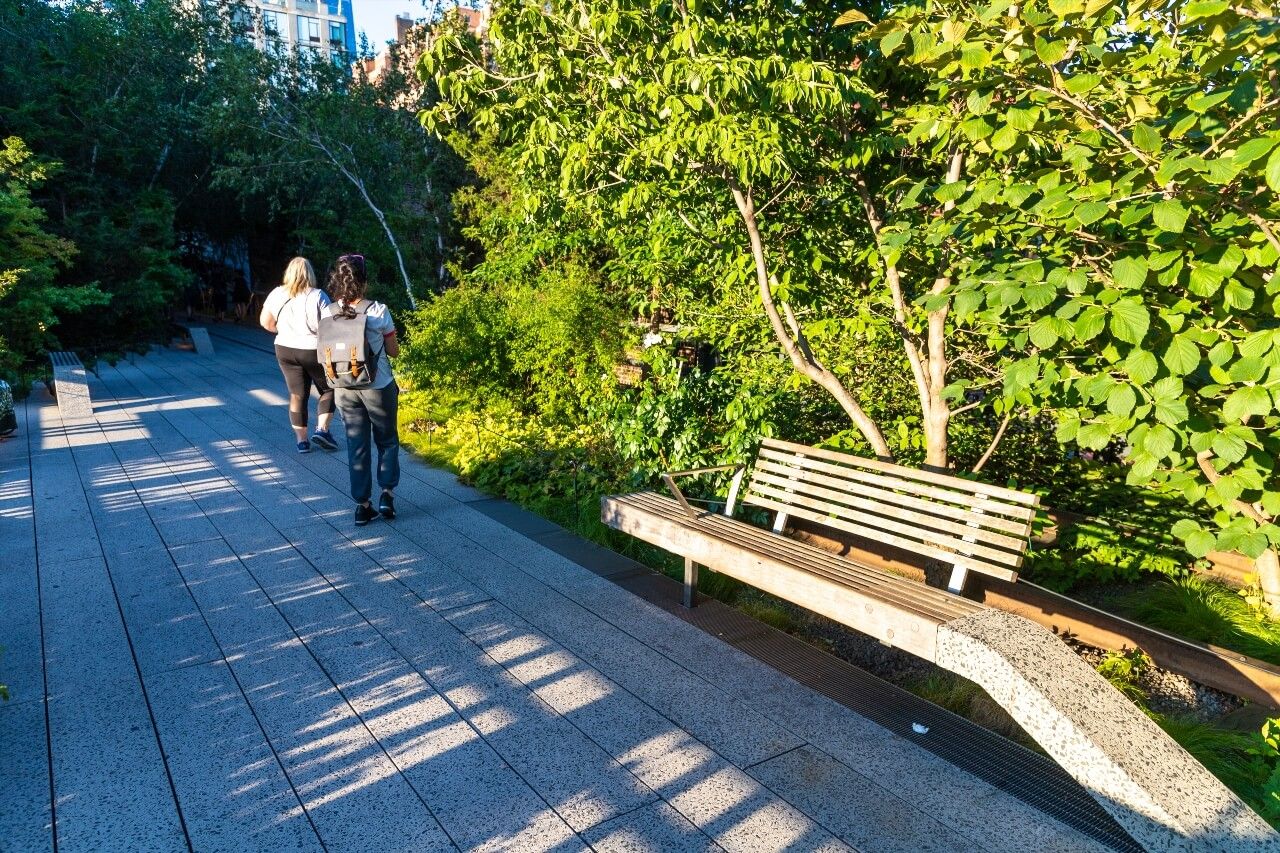
The High Line is a 1.45-mile elevated park built on a disused freight railway line that once served the meatpacking district. The park opened in 2009 and has become one of the city's most visited outdoor spaces, roughly 8 million people walk it every year.
What makes it genuinely worth your time is the mix: art installations, wild plantings, Hudson River views, and a front-row seat to the evolution of West Manhattan's architecture. Go on a weekday morning to move freely and actually stop at the viewpoints without jostling.
2. Explore Central Park
At 843 acres, Central Park is one of the most visited urban parks in the world, around 42 million visits per year. That scale means you can keep coming back and discover new corners each time: a quiet pond in the north section, a Victorian-era boathouse, a Shakespearean garden that almost nobody photographs, a castle built purely as a decorative folly that now serves as a weather observation station.
The park's layout rewards aimless walking. You might stumble into an outdoor concert near the Bandshell, catch a free Shakespeare in the Park performance at the Delacorte Theater in summer (they give out free tickets on the morning of each show, arrive early), or simply find a bench near the Bethesda Fountain and watch the city slow down.
Birdwatchers have their own relationship with Central Park: during spring and autumn migration, over 200 species pass through. The Ramble, a 36-acre woodland in the middle of the park, is their gathering point and one of the best-kept secrets in Manhattan. Bring binoculars if you have them.
For a more structured experience, Ryo's Central Park audio walk takes you through the park's most significant landmarks with historical commentary, a good option for a first visit or when you're with someone who wants context.
3. Visit the Metropolitan Museum of Art
The Metropolitan Museum of Art (1000 Fifth Avenue, Upper East Side) is the largest art museum in the Western Hemisphere. Its permanent collection runs to over 1.5 million objects spanning 5,000 years of human history, Egyptian artifacts, European Old Masters, Japanese armor, a reconstructed Roman villa, an entire Temple of Dendur from 15 BCE.
Admission is pay-what-you-wish for New York State residents; for everyone else, the suggested fee is $30 for adults. Even if you only spend three hours here, that's remarkable value. Skip the main European galleries on your first visit (they're stunning but overwhelming) and go straight to whichever department you're most curious about, the Arms and Armor hall is perennially underrated, and the rooftop sculpture garden offers skyline views that no observation deck can match.
4. Ride the Staten Island Ferry
The Staten Island Ferry runs 24 hours a day, 365 days a year, and it is completely free. The 25-minute crossing between Whitehall Terminal in Lower Manhattan and St. George Terminal on Staten Island gives you an unobstructed view of the Statue of Liberty, the lower Manhattan skyline, and New York Harbor. Most tourists don't bother riding to Staten Island itself; they simply take the ferry out and back.
This is the best free thing in New York. Go at dusk when the light catches the skyline on the return crossing.
5. See the View from Top of the Rock
Top of the Rock (30 Rockefeller Plaza, New York, NY 10112, rated 4.7/5 on Google (81 961 avis)) at 30 Rockefeller Plaza sits on the 70th floor of 30 Rock and offers something One World Observatory cannot: a clear view of the Empire State Building. The 70th-floor observation deck is open-air on two sides, which matters more than you'd think, glass panels reduce the drama of a skyline photo considerably.
Tickets run around $40 per adult. The deck is open until midnight on most nights, making this a strong option for evening visits when the grid of lights below is at its most theatrical. Book tickets online to skip the line at street level.
6. Wander Through Brooklyn Bridge Park
Brooklyn Bridge Park stretches for 1.3 miles along the Brooklyn waterfront between the Manhattan and Brooklyn Bridges. It opened progressively between 2010 and 2018, transforming a derelict industrial shoreline into one of the city's most photographed public spaces.
The view from Pebble Beach, the small rocky shoreline near Pier 1, is the one you've seen on a hundred Instagram posts: Brooklyn Bridge in the foreground, the Manhattan skyline rising behind it. That shot is best at sunrise, when the light comes from the right direction and before the joggers and photographers arrive in numbers. Pier 6 has a waterfront playground that is genuinely spectacular if you're visiting with kids, and the Jane's Carousel (a restored 1922 merry-go-round inside a glass pavilion) operates seasonally nearby.
7. Discover the 9/11 Memorial & Museum
The 9/11 Memorial & Museum (180 Greenwich St, New York, NY 10007, rated 4.8/5 on Google (93 591 avis)) occupies the footprints of the Twin Towers in Lower Manhattan. Two reflecting pools, each roughly an acre in size, sit where the towers once stood. Their edges are inscribed with the names of all 2,977 people killed in the September 11 attacks and the 1993 World Trade Center bombing. Water falls continuously into the pools' centers, disappearing into a void, a deliberate design choice by architects Michael Arad and Peter Walker, meant to evoke both presence and absence.
The outdoor memorial plaza is free to visit. The museum beneath it requires a ticket ($29 for adults) and goes several stories underground into what remains of the original foundation. Inside: recovered steel from the towers, oral histories from survivors and first responders, a memorial room with photographs of every victim, and exhibition spaces that document the attacks, the response, and the aftermath with care and specificity. Set aside at least two hours. It is heavy and necessary.
The surrounding area has transformed completely since 2001, the rebuilt World Trade Center complex includes the Oculus transit hub (an extraordinary piece of Santiago Calatrava architecture, free to enter), the Westfield World Trade Center mall, and several restaurants.
8. Explore the American Museum of Natural History
The American Museum of Natural History (200 Central Park West, New York, NY 10024, rated 4.6/5 on Google (24 491 avis)) (Central Park West at 79th Street) is one of the largest natural history museums in the world, with over 33 million specimens in its collection, though only a fraction are on display at any time. The building itself, a grand Romanesque structure dating from 1874, is worth the visit.
Standout exhibits: the Hall of Ocean Life with its 94-foot blue whale model suspended from the ceiling; the Hall of the Universe in the Rose Center for Earth and Space; and the fourth-floor halls of vertebrate evolution, where the dinosaur fossil displays include one of the best T-rex skeletons you'll find anywhere. Admission is pay-what-you-wish for New York State residents; suggested price for adults is $28.
9. Stroll Through Greenwich Village
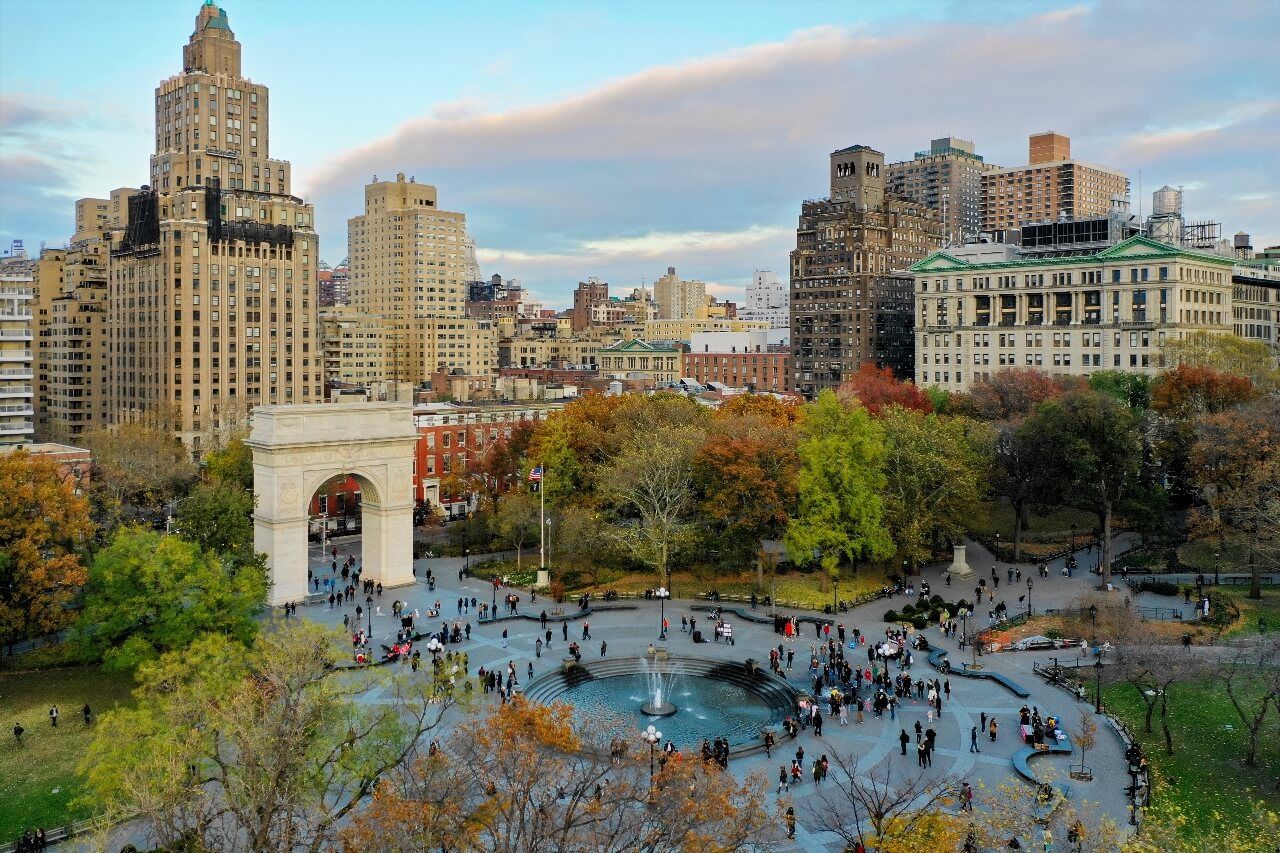
Few neighborhoods in New York reward slow walking more than Greenwich Village. The street grid goes off-script here, West 10th Street crosses West 4th Street, creating a confusion of angles that seems deliberately designed to disorient visitors. It was, in fact, just organically grown from colonial-era farm paths.
The neighborhood shaped American bohemian culture for much of the 20th century: Dylan busked here, the Beats hung around the White Horse Tavern (still open at 567 Hudson Street), and the Stonewall Inn on Christopher Street was the site of the 1969 uprising that catalyzed the modern LGBTQ+ rights movement. Today it's expensive and residential, but the architecture remains: federal townhouses, cast-iron stoops, the Washington Square Arch at the north end of Washington Square Park (Washington Square, New York, NY 10012, rated 4.6/5 on Google (32 683 avis)). The park on a warm afternoon is New York at its most sociable, chess players, NYU students, street performers, dog owners, and tourists all sharing the same stretch of pavement.
10. Climb to the Top of One World Observatory
One World Observatory (285 Fulton St, New York, NY 10007, rated 4.7/5 on Google (44K reviews)) sits on floors 100 : 102 of One World Trade Center, the tallest building in the Western Hemisphere at 1,776 feet, the height a deliberate reference to 1776. The elevator ride up takes 47 seconds, during which time-lapse projections show Manhattan's development from Dutch settlement to the present day.
The observation deck provides 360-degree views of Manhattan, the harbor, New Jersey, and on clear days, Long Island and beyond. Tickets are around $44 for adults and need to be booked in advance. The SkyPod experience (a separate add-on) projects the view in virtual reality, which is either impressive or unnecessary depending on your tolerance for that sort of thing.
11. Spend a Day at Coney Island
Coney Island has been a New York institution since the 1880s, when it became the country's first mass-entertainment destination. Today it's a mix of nostalgia and genuine beachside activity, a 2.7-mile boardwalk, a public beach that gets extremely crowded on hot summer weekends, several amusement parks, and a collection of food vendors that still sells Nathan's Famous hot dogs from the original 1916 location.
The Luna Park amusement complex is the main draw for thrill-seekers. Its signature ride, the Cyclone, a wooden roller coaster that opened in 1927, is a New York City landmark. The ride lasts about 105 seconds, reaches speeds of 60 mph, and has survived numerous proposals for demolition. Riders have described it as terrifying, historic, and deeply uncomfortable in equal measure. It is wonderful.
If you're more inclined toward the quieter end of Coney Island, the New York Aquarium sits at the western edge of the boardwalk and houses sea lions, sharks, and the only walruses on public display in New York City. The aquarium charges $28 for adult admission.
Coney Island is accessible by subway on the D, F, N, and Q trains, the journey from Midtown Manhattan takes about an hour. Go on a weekday if you want elbow room on the beach.
12. Browse Chelsea Market
Chelsea Market (75 9th Ave, New York, NY 10011, rated 4.6/5 on Google (51 702 avis)) (75 Ninth Avenue, between 15th and 16th Streets) occupies a full city block in a converted National Biscuit Company factory, the building where the Oreo cookie was invented in 1912. The interior still shows its industrial bones: exposed brick, raw pipes, vaulted ceilings, a stream that runs along one corridor.
Today it's a food hall with around 35 vendors: fresh lobster rolls, tacos, artisan cheese, Japanese knives, Chelsea vintage goods, and a fish market. Budget at least 90 minutes. The High Line entrance is steps away, making this a natural pairing for a half-day in West Chelsea, you can spend an hour drifting between vendors, pick up a portable lunch, and then climb the stairs to walk the park southbound.
13. Walk Across the Brooklyn Bridge
Walking the Brooklyn Bridge is a New York rite of passage. The bridge opened in 1883 after 14 years of construction, and for decades it was the longest suspension bridge in the world. The elevated wooden walkway runs above the traffic lanes, giving pedestrians a clear view in both directions: Lower Manhattan on one side, Brooklyn Heights on the other.
The walk takes about 30-40 minutes at a comfortable pace. Start from the Manhattan side (at the foot of Centre Street near City Hall) and walk toward Brooklyn, this direction gives you the better views. The Brooklyn end drops you into DUMBO, one of the city's most photographed neighborhoods, where you can continue to Brooklyn Bridge Park. Go in the early morning if you want the walk relatively to yourself; midday on summer weekends, the pedestrian path becomes extremely busy.
14. Visit the Whitney Museum of American Art
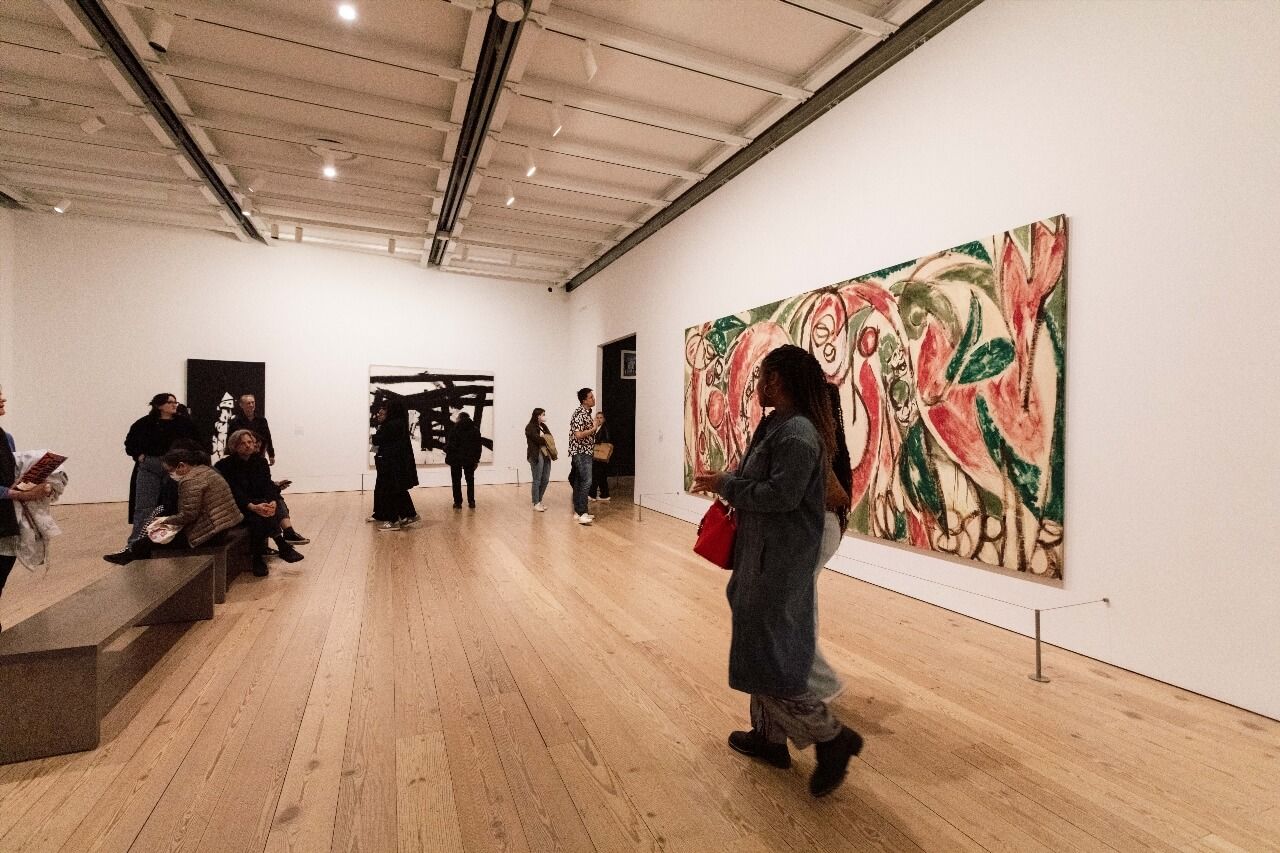
The Whitney Museum of American Art (99 Gansevoort St, New York, NY 10014, rated 4.5/5 on Google (14 806 avis)) sits at the southern end of the High Line, which makes it easy to combine both in a single afternoon. The building, designed by Renzo Piano and opened in 2015, is one of the more architecturally interesting museums in the city, terraced outdoor spaces, raw concrete, steel balconies that extend over the Hudson River.
The collection focuses entirely on American art from the 20th and 21st centuries, with particular depth in Edward Hopper (the museum holds the largest collection of his work in the world), Abstract Expressionism, and contemporary work. Admission is $30 for adults. The Whitney Biennial, held in even-numbered years, is one of the most debated events in the American art world.
15. Go Kayaking on the Hudson River
Between June and October, free kayaking sessions are offered through the Downtown Boathouse program at Pier 26 and Pier 96, no booking required, show up and paddle. Sessions last about 20 minutes and take place in a protected cove, supervised by instructors. It is genuinely one of the most surprising fun things to do in New York if you only know the city from above ground.
For a longer experience, paid tours from Manhattan Kayak + SUP at Pier 84 (West 44th Street) take you further along the Hudson, past the aircraft carrier deck of the Intrepid and toward the George Washington Bridge. Booking ahead is strongly recommended for weekend sessions.
16. Explore the Bronx Zoo
The Bronx Zoo (2300 Southern Blvd, Bronx, NY 10460, rated 4.6/5 on Google (39 134 avis)) is the largest urban zoo in the United States, covering 265 acres of land in Bronx Park. It was founded in 1899 and currently houses around 6,000 animals representing more than 700 species, including snow leopards, okapis, Amur tigers, and the last group of eastern black rhinoceroses in North America.
The zoo is genuinely massive and requires a full day. Highlights include Congo Gorilla Forest (the largest indoor gorilla habitat in the world), Tiger Mountain (where Bengal and Amur tigers roam an open habitat with minimal barriers between visitor and animal), and the Wild Asia Monorail, a 25-minute ride over the zoo's large Asian section, running from May through October.
General admission is $39.95 for adults, and discounted admission days are available through the Wildlife Conservation Society, check the zoo's website for the latest schedule before you go. The zoo is accessible by subway on the 2 and 5 trains, getting off at Pelham Parkway station. Add Ryo's Wall Street audio route to your New York agenda for when you head back to Manhattan afterward.
17. See a Show on Broadway
New York's Broadway theater district runs roughly from 40th to 54th Street between Sixth and Ninth Avenues, comprising 41 theaters with a minimum of 500 seats each. The neighborhood actually contains relatively few of them, most Broadway theaters sit slightly off Broadway itself, on side streets.
Tickets for popular shows can run $150, $300 at full price. The TKTS booth in Duffy Square (47th Street and Broadway) sells same-day tickets at up to 50% discount, the line is long but moves quickly, and the selection on any given day typically covers a dozen shows. Alternatively, many theaters release rush tickets online on the morning of a performance, often under $50.
If you're new to Broadway, current long-running shows offer the most reliable experience. If you'd rather see something newer and more experimental, Off-Broadway has excellent work at significantly lower prices, the same evening, in many cases, with the same star wattage attached.
18. Visit the Tenement Museum on the Lower East Side
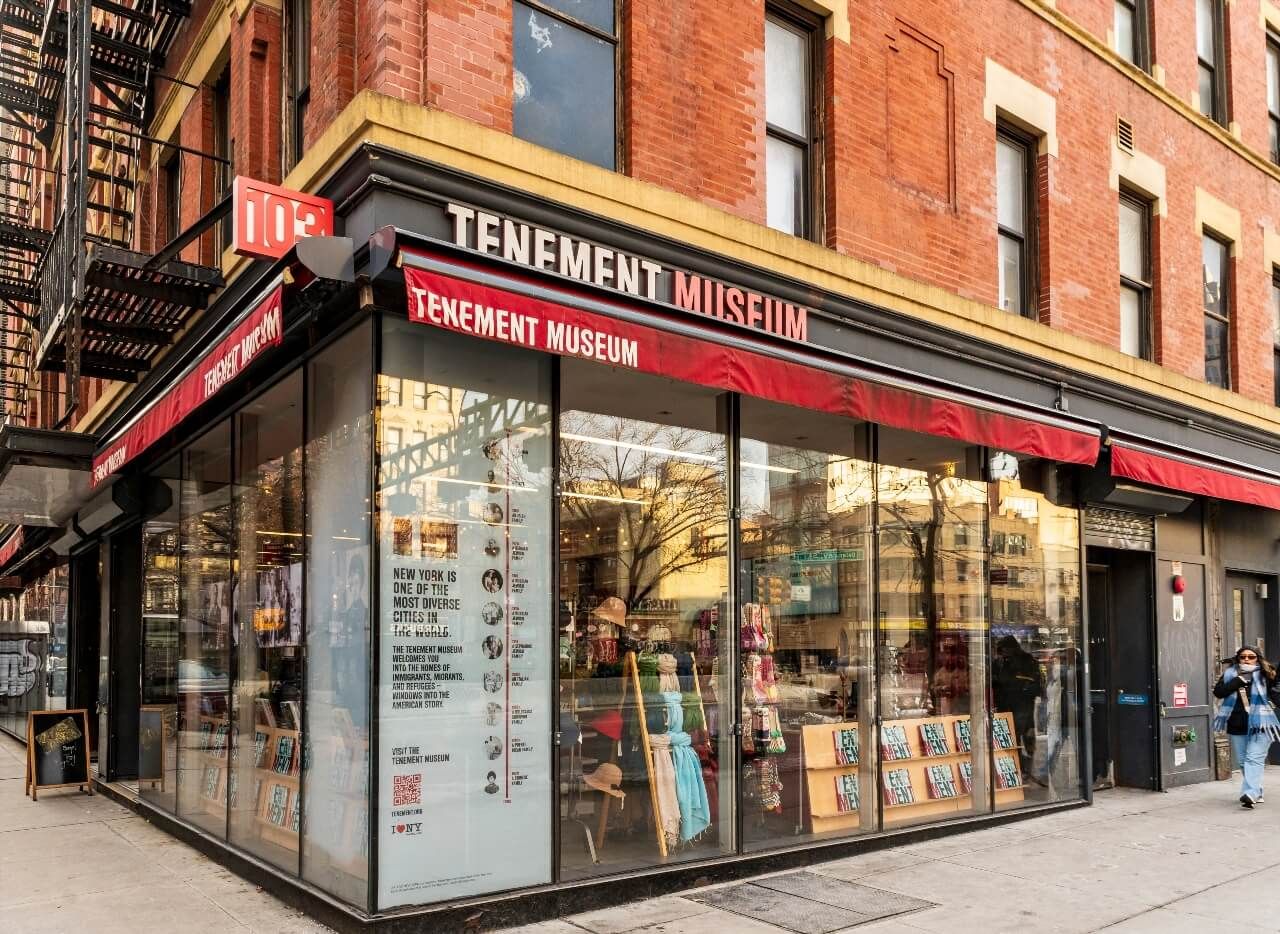
The Tenement Museum (103 Orchard St, New York, NY 10002, rated 4.6/5 on Google (5 904 avis)) is one of the most unusual, and one of the best, museums in New York. It preserves two tenement buildings at 97 and 103 Orchard Street that together housed over 7,000 people from more than 20 nations between 1863 and 2011. The tours take you inside actual apartments, restored to different periods, where guides bring to life the stories of specific immigrant families who lived there.
This is not a museum of general history. Every room represents a documented real person: an Italian immigrant family during Prohibition, a Jewish garment worker in the 1890s, a Puerto Rican family in the 1960s. Tours are timed and small-group (maximum 15 people), and you need to book well in advance. Admission is $30 per adult for most tours. It's the kind of experience that changes how you see the rest of the city.
19. Explore Smorgasburg Food Market
Smorgasburg is an open-air food market that runs every Saturday from spring through autumn in Williamsburg (East River State Park, Bedford Avenue and North 7th Street) and on Sundays in Prospect Park. It draws around 20,000 to 30,000 visitors per weekend, which makes it the largest weekly open-air food market in America. Around 100 vendors each week, all local. The range is broad: lobster rolls, Korean fried chicken, inventive ice cream sandwiches, fresh ceviche, Japanese curry, wood-fired pizza. The crowds are real but manageable if you arrive when it opens at 11am.
20. Catch a Performance at Lincoln Center
Lincoln Center for the Performing Arts (10 Lincoln Center Plaza, New York, NY 10023, rated 4.8/5 on Google (21 648 avis)) is a 16-acre campus housing the Metropolitan Opera, the New York Philharmonic, the New York City Ballet, the Juilliard School, and several other major institutions. The complex opened in the early 1960s as part of an urban renewal project, one whose social consequences were the subject of Robert Caro's early journalism and remain contested to this day.
For visitors, the options range from a full evening at the Met Opera (seats from around $25 in the upper balcony to $300+ for center orchestra) to the free Midsummer Night Swing outdoor dance series in July and August. The plaza itself, with its central fountain, is pleasant on summer evenings. If you're staying nearby on the Upper West Side, the walk from Columbus Circle north along Broadway to the plaza is one of the more pleasant 15-minute strolls in Midtown, especially around sunset when the glass-fronted Met Opera House lights up.
21. Explore the Cloisters
The Cloisters is the branch of the Metropolitan Museum of Art dedicated to medieval European art. It sits at the northern tip of Manhattan in Fort Tryon Park, surrounded by gardens overlooking the Hudson River and the New Jersey Palisades. The building itself is a composite of five actual medieval cloisters brought over from France and reassembled here in the 1930s, funded by John D. Rockefeller Jr.
This is the most overlooked major museum in New York, and it's genuinely extraordinary. The collection includes the Unicorn Tapestries, seven tapestries woven in the Southern Netherlands around 1500, among the finest surviving examples of medieval textile art in the world. The Cloisters also holds illuminated manuscripts, Romanesque chapels, and a recreated herb garden planted with species documented in medieval texts.
Admission is included with a same-day Metropolitan Museum ticket. The Cloisters is accessible by the M4 bus from Madison Avenue, or by the A train to 190th Street. The ride north through Upper Manhattan, Fort Washington Avenue past sugar-maple trees and brownstone apartment blocks, is itself a detour worth making. Allow two hours minimum. If you're visiting in autumn, the surrounding park hits peak foliage around mid-October, and the Hudson views from the unicorn garden are something else entirely.
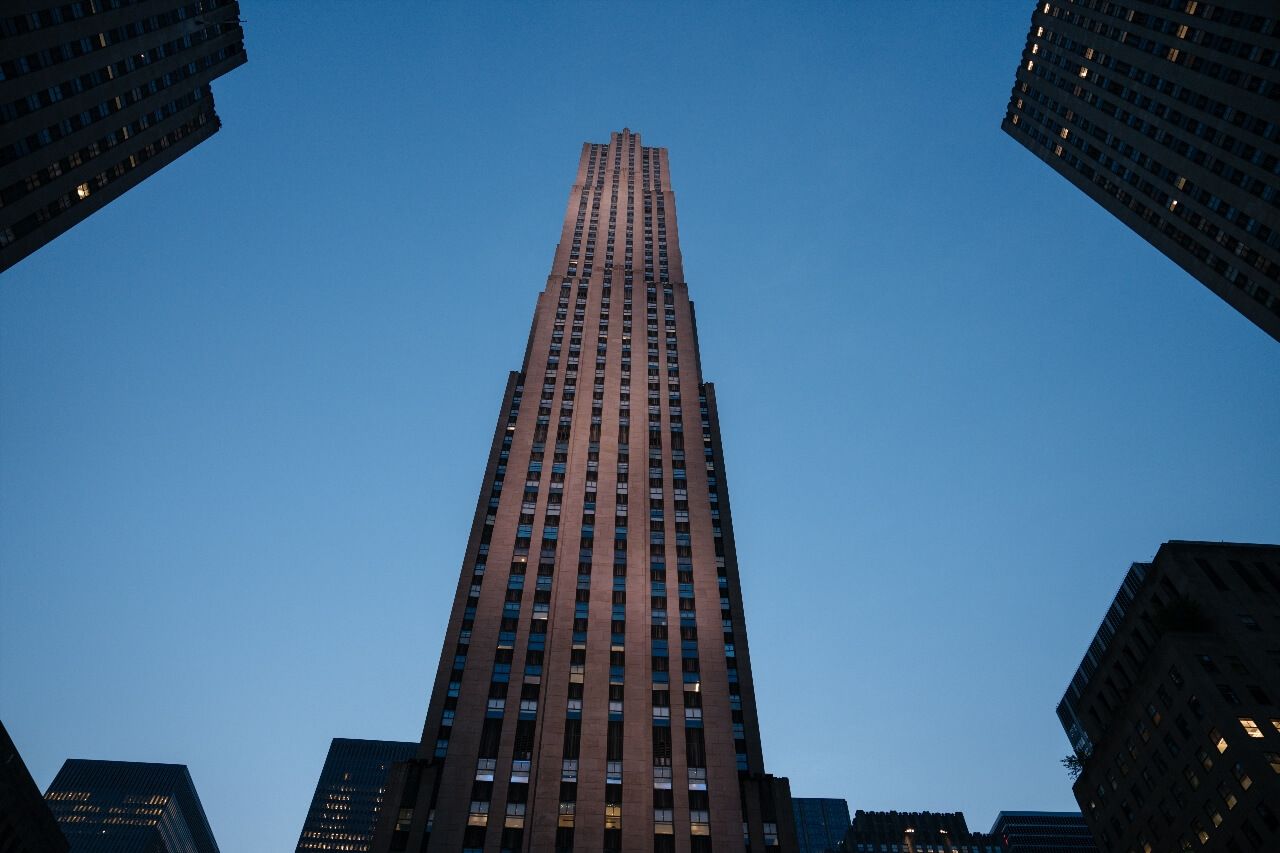
22. Skate or Stroll at Rockefeller Center
Rockefeller Center is a complex of 19 commercial buildings built between 1930 and 1940 in Midtown Manhattan. The Art Deco architecture is among the best-preserved of its era in New York, and the central plaza contains the famous ice rink that becomes the focal point of the city's Christmas season every year, the rink opens in October and closes in April.
Skating sessions are $20 per adult (skate rental extra). Even if you don't skate, the plaza is worth walking through for the architecture and the Channel Gardens, a pedestrian promenade flanked by plantings that change with the seasons.
23. Visit the New York Botanical Garden
The New York Botanical Garden (2900 Southern Blvd, Bronx, NY 10458, rated 4.7/5 on Google (12 846 avis)) covers 250 acres in the Bronx, adjacent to the Bronx Zoo, making a natural pairing if you're spending a day in the borough. The garden was founded in 1891 and contains 50 distinct garden areas, a 50-acre old-growth forest (one of the last remnants of the forest that originally covered New York City), and one of the world's largest Victorian-era glasshouses, the Enid A. Haupt Conservatory, which opened in 1902.
Special exhibitions change seasonally, the Holiday Train Show (November through January) sends model trains through landscapes of New York's landmark buildings recreated in bark, leaves, and twigs. General admission is $35 for adults. A combined ticket with the Bronx Zoo is available.
24. Take a Night Cruise Around Manhattan
A night cruise around the island of Manhattan puts the skyline in perspective in a way that no ground-level view can match. Several operators run these routes from Pier 83 (West 42nd Street) or from Brooklyn Bridge Park; the full circumnavigation takes around two hours and goes under or past all the bridges connecting Manhattan to its surrounding boroughs.
Circle Line Cruises offers a 2-hour night cruise for around $47 per adult. The East River section, passing under the Williamsburg, Manhattan, and Brooklyn Bridges, is the visual highlight, the bridge lights reflect on the water and the density of the skyline to the west is most apparent from the river.
25. Explore DUMBO and the Brooklyn Waterfront
DUMBO, Down Under the Manhattan Bridge Overpass, is a neighborhood in Brooklyn that takes its name from its location beneath the arch of the Manhattan Bridge. It was a warehousing and manufacturing district until the 1970s; today it's a mix of tech offices, galleries, upscale restaurants, and tourist activity, with cobblestone streets that survive from the 19th century.
The intersection of Washington and Water Streets frames the Manhattan Bridge in a way that photographers have made famous, the bridge fills the gap between two brick warehouses with precise symmetry. From here, it's a short walk to Brooklyn Bridge Park and the East River waterfront. The Time Out Market at 55 Water Street has a rooftop terrace with unobstructed skyline views.
26. Visit the Intrepid Sea, Air & Space Museum
The Intrepid Sea, Air & Space Museum (Air & Space Museum, Pier 86, W 46th St, New York, NY 10036, rated 4.7/5 on Google (46 200 avis)) is built around the USS Intrepid, an Essex-class aircraft carrier that served in World War II, was hit by kamikazes twice, and served later as a NASA recovery ship for the Mercury and Gemini space capsules. The carrier is docked at Pier 86 on the Hudson River and is open for self-guided tours of its flight deck, hangar bay, and bridge.
On the flight deck: a British Airways Concorde (one of only 20 built), a Lockheed A-12 spy plane, and a collection of military aircraft from several decades of US aviation history. Adult admission is $36. The submarine USS Growler, a nuclear-capable Cold War submarine from 1958, is docked alongside and included in the ticket price.
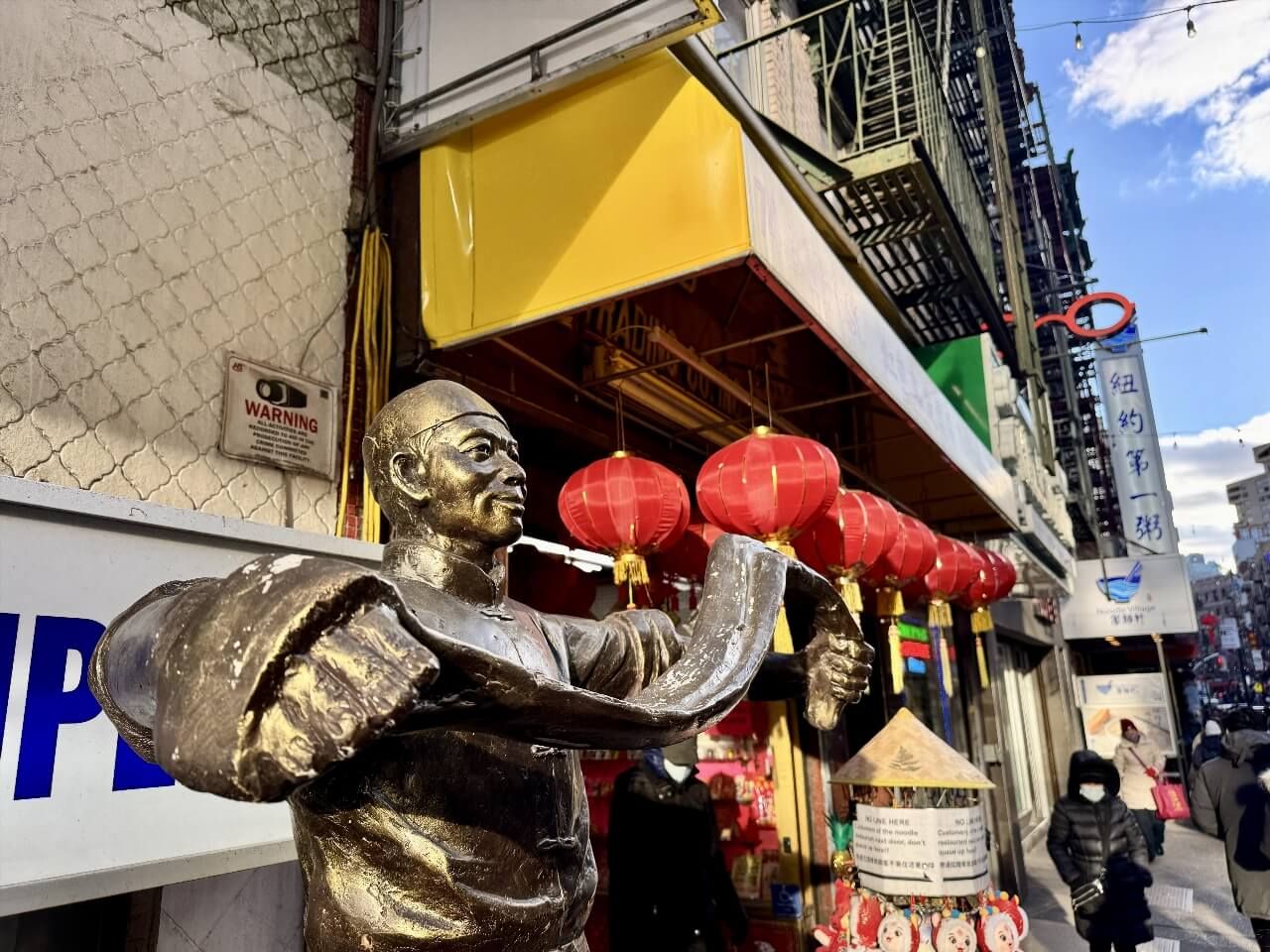
27. Wander Through Chinatown and Little Italy
New York's Chinatown in Lower Manhattan is one of the most densely populated Chinese-American communities in the Western Hemisphere, and one of the few in New York that has held its ground against gentrification, largely because it's organized around economic rather than aesthetic identity. Canal Street is its main artery: seafood markets with live fish, medicinal herb shops, dumpling restaurants where $5 buys a full meal, and wholesale goods vendors side by side.
Little Italy is now a few blocks of Mulberry Street between Canal and Broome, much reduced from its mid-20th century peak. What remains is largely tourist-facing, but the restaurants are solid and the buildings retain their red-brick tenement character. The two neighborhoods together make an easy 90-minute walk.
28. Experience Jazz in Harlem
Harlem has been central to American jazz history since the 1920s, when the Harlem Renaissance made it the cultural capital of Black America. The neighborhood's music venues still reflect that legacy, several of the original clubs have survived or been revived, and Sunday Gospel brunch services at neighborhood churches draw visitors from around the world.
Ginny's Supper Club in the basement of the Red Rooster restaurant (310 Lenox Avenue) has live jazz most nights. Minton's Playhouse (206 W 118th St, New York, NY 10026, rated 4.5/5 on Google (809 avis)) (206 West 118th Street) is the club where bebop was essentially invented in the early 1940s, with jam sessions hosted by Thelonious Monk and Charlie Parker. It closed in 1974 and reopened in 2013, it still hosts live jazz Thursday through Sunday. Getting there is straightforward on the 2, 3, A, B, C, or D subway lines.
29. Visit the Brooklyn Museum
The Brooklyn Museum (200 Eastern Pkwy, Brooklyn, NY 11238, rated 4.7/5 on Google (10 174 avis)) (200 Eastern Parkway, Crown Heights) is the second-largest art museum in New York and the third-largest in the United States, with a collection of over 1.5 million objects. Unlike the Met, it rarely feels crowded, the galleries are spacious and visitor numbers much lower, which makes for a more relaxed experience.
The collection's strongest areas: one of the finest Egyptian art collections outside Cairo (over 1,600 objects), the Judy Chicago installation The Dinner Party (a permanent installation that is among the most significant feminist artworks of the 20th century), and a collection of American paintings with real depth. Suggested admission is $20 for adults.
30. Discover the Highbridge Water Tower and Pool
The High Bridge (High Bridge, New York, NY 10040, rated 4.7/5 on Google (3.8K reviews)) connects Manhattan and the Bronx above the Harlem River and is the oldest bridge in New York City, completed in 1848. Originally built as an aqueduct to carry water from Westchester to Manhattan, it was converted to a pedestrian bridge and reopened in 2015 after a 45-year closure.
Walking it takes about 10 minutes each way. The view over the Harlem River is quiet and unglamorous by Manhattan standards, which is precisely why it's worth going. The adjacent Highbridge Pool (Amsterdam Avenue and 173rd Street), a 1936 WPA-era public pool, opens for free swimming in summer. Few people outside the neighborhood know it exists.
31. Hang Out at Governors Island
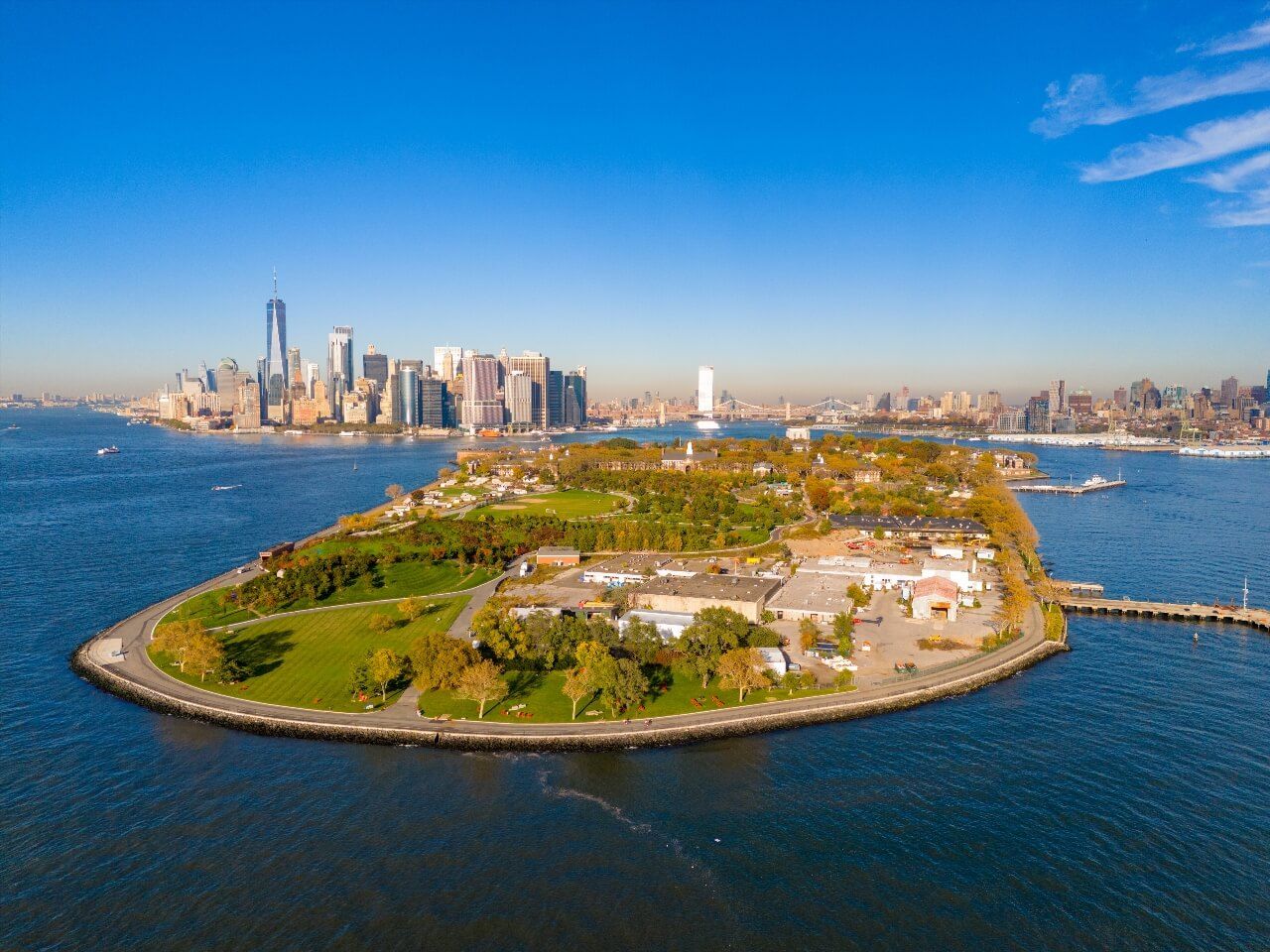
Governors Island (Governors Island, New York, NY 10004, rated 4.7/5 on Google (1 405 avis)) sits in New York Harbor, a 172-acre island accessible only by ferry from Lower Manhattan (Pier 6, Battery Park) or from Brooklyn Bridge Park. The island was a US Army post for 200 years before being transferred to the public in 2003. Since then, its historic forts, wide lawns, and car-free paths have made it one of the city's most distinctive outdoor spaces, and one of the most underrated fun things to do in New York with a free Saturday morning.
The ferry ride takes 7 minutes from Manhattan and runs on weekends from late May, then daily from late June through September. The round trip is free on weekdays; $4 on weekends.
What's on the island: Fort Jay (a star-shaped fortification from 1794, the oldest surviving military structure in New York) and Castle Williams (a circular sandstone fort from 1811, a National Monument) anchor the northern end. The southern portion, former officer housing converted to public use, has a giant hammock grove, a hill built from landfill that offers views back to Manhattan, mini-golf, several food vendors, and a growing number of arts venues.
The Hills area at the south end, built between 2016 and 2018 by landscape architects West 8, is the place most people gravitate toward, four sculpted mounds covered in grass and flowers, with the Manhattan skyline visible across the water. Bring a picnic. The island doesn't sell alcohol, so bring your own if you want wine with your view.
32. Go Roller Skating in Riverside Park
Riverside Park (Riverside Dr, New York, NY 10024, rated 4.6/5 on Google (10 893 avis)) runs for 4 miles along the Hudson River from 72nd Street to 158th Street on the Upper West Side. Designed by Frederick Law Olmsted (the same landscape architect responsible for Central Park), it opened in the 1870s and remains one of the less-visited major parks in Manhattan. The skate circle near 110th Street operates from spring through autumn, skaters bring their own music on portable speakers, and the vibe is communal and welcoming. Rental skates are available from nearby vendors.
33. Explore Times Square at Night
Times Square by day is chaotic, crowded, and loud. Times Square at night, specifically after 10pm, when the tourist tide has ebbed and the advertising displays are at their most intense, is something else: an overloaded sensory environment that feels genuinely unreal. The LED billboards covering the surrounding buildings together produce more light than a small stadium; the effect on the wet pavement after rain is remarkable.
The pedestrian plazas on Broadway between 42nd and 47th Streets were created in 2010, replacing two lanes of vehicle traffic. Street performers, vendors, and the occasional costumed character cluster here. You don't need to spend any money in Times Square to have an experience; just show up and pay attention.
34. Visit the Museum of Modern Art (MoMA)
MoMA (11 West 53rd Street, Midtown) is the museum that defined modern art as a category worth taking seriously, it opened in 1929, just weeks after the stock market crash, and has never really stopped being relevant. The permanent collection includes Van Gogh's The Starry Night, Picasso's Les Demoiselles d'Avignon, Monet's Water Lilies, Warhol's Campbell's Soup Cans, and several thousand other works that shaped or reflected how people understood visual culture across the 20th century.
Admission is $30 for adults. The building was expanded significantly in 2019, adding gallery space designed by Diller Scofidio + Renfro. Friday evenings (5 : 9pm) are particularly recommended, the crowds thin somewhat and the galleries feel more contemplative.
35. Take the Roosevelt Island Tramway
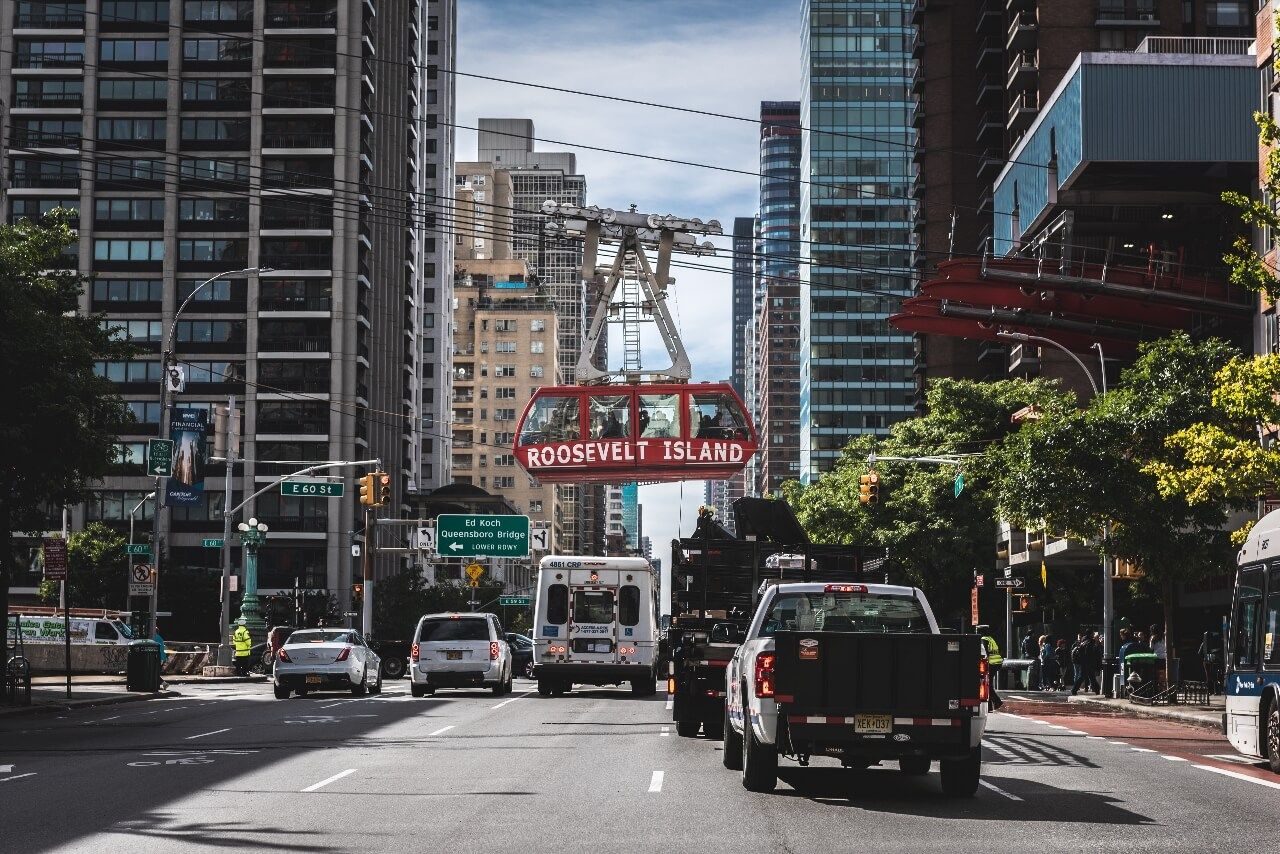
The Roosevelt Island Tramway (591 Main St, New York, NY 10044, rated 4.7/5 on Google (604 avis)) is the only commuter aerial tramway in North America. It connects a station at Second Avenue and 59th Street in Manhattan to Roosevelt Island, a long, narrow strip of land in the East River. The ride takes about 3 minutes, runs on a cable suspended 250 feet above the river, and offers a view of the Queensboro Bridge and the Midtown skyline that no other mode of transport can match.
The fare is one MetroCard swipe each way, the same as any subway trip. Roosevelt Island itself has a small park at its northern tip (Lighthouse Park, with a 19th-century lighthouse and unobstructed views up the East River) and the ruins of an 1840s smallpox hospital at the southern end, which is one of the more unexpected architectural relics in the city. The tram operates daily; allow an hour round trip including a walk along the island.
FAQ
What are the best free things to do in New York?
Several top experiences cost nothing: the Staten Island Ferry gives you the best view of the Statue of Liberty and Lower Manhattan skyline at no charge. The High Line is free to walk at all times. Central Park and Brooklyn Bridge Park are both free. The Metropolitan Museum of Art operates on a pay-what-you-wish basis for New York State residents. Free kayaking is available on the Hudson River through the Downtown Boathouse program from June through October.
When is the best time to visit New York City?
Spring (April : June) and early autumn (September : October) offer the most comfortable temperatures and the least extreme visitor volumes. Summer brings the most events, outdoor concerts, food markets, Governors Island, and rooftop bars, but also the heaviest crowds and high humidity. Winter has its attractions: holiday lighting in Midtown, ice skating at Rockefeller Center and Bryant Park, and generally lower hotel prices outside the December holiday period.
How many days do you need to see New York City?
Four days is the practical minimum to cover Manhattan's main attractions without feeling rushed. A week allows you to explore Brooklyn and Queens properly, and add day trips to the Bronx for the zoo or botanical garden. Most people who spend a week in New York agree afterward that they needed more time. That's the nature of the city.
Is New York City safe for tourists?
New York is safe for tourists by any standard international comparison. Manhattan, Brooklyn Heights, DUMBO, and most of the tourist-facing areas of all five boroughs see minimal serious crime. Standard urban precautions apply: keep your phone in your pocket on the subway, be aware of your surroundings in quieter areas at night. The city's public transport is extensive and generally safe to use.
What neighborhoods should first-time visitors prioritize?
Lower Manhattan for the 9/11 Memorial, the Financial District, and the ferry terminal. Midtown for the observation decks, MoMA, and Broadway. The Upper West Side for Central Park and the American Museum of Natural History. Greenwich Village and the Meatpacking District for the High Line and Whitney Museum. And at least a half-day in Brooklyn, the bridge walk, DUMBO, and Smorgasburg cover the main highlights efficiently.
How do you get around New York efficiently?
The subway covers all five boroughs and runs 24 hours a day. A single ride costs $2.90 with a MetroCard, and an unlimited 7-day card costs $34. For distances under 15 minutes, walking is often faster than waiting for a train. Taxis and rideshares are fine for late-night travel or when carrying bags; avoid them during peak hours when Midtown traffic can make a 10-block trip take 30 minutes.
Conclusion
New York rewards persistence. The first day in the city is often overwhelming; by the third or fourth, you start to develop a feel for the boroughs, the subway lines, the rhythms of the neighborhoods. The 35 entries above represent a starting point, not an exhaustive inventory, every block in this city has its own history, and the best experiences often come from following a recommendation from someone you met at a food market or a jazz club.
If you want to explore the city with audio commentary that brings New York's history to life as you walk, the stories behind the financial district's towers, the evolution of the waterfront, the people who built it all, Ryo's audio guide for New York City is built exactly for that. Download it before your next walk and see how much more the city reveals when someone explains what you're looking at.