
Créé par Romane, le 17 juin 2026
Votre guide Ryo
35 Best Things to Do in New York City in 2026
© Shutterstock
New York City doesn't ease you in. From the moment you step out of a subway station into the roar of midtown traffic, the city is already asking something of you, a decision, a direction, a pace. With over 8 million residents packed into five boroughs, and roughly 60 million visitors arriving each year, NYC remains one of the most visited and most written-about destinations on earth. Yet most travel guides still skim the surface, handing you the same ten landmarks without telling you what makes them genuinely worth your time.
This guide covers 35 of the best things to do in New York City in 2026, from the non-negotiable icons to the places that will surprise you even if you've been before. You'll find a 19th-century park larger than Monaco, a ferry ride that gives you the Statue of Liberty for free, a market hall under a former elevated railway, and a Victorian-era train terminal where the main concourse ceiling is painted with constellations drawn in reverse. Whether you have two days or two weeks, this list will help you spend your time well.
1. Central Park
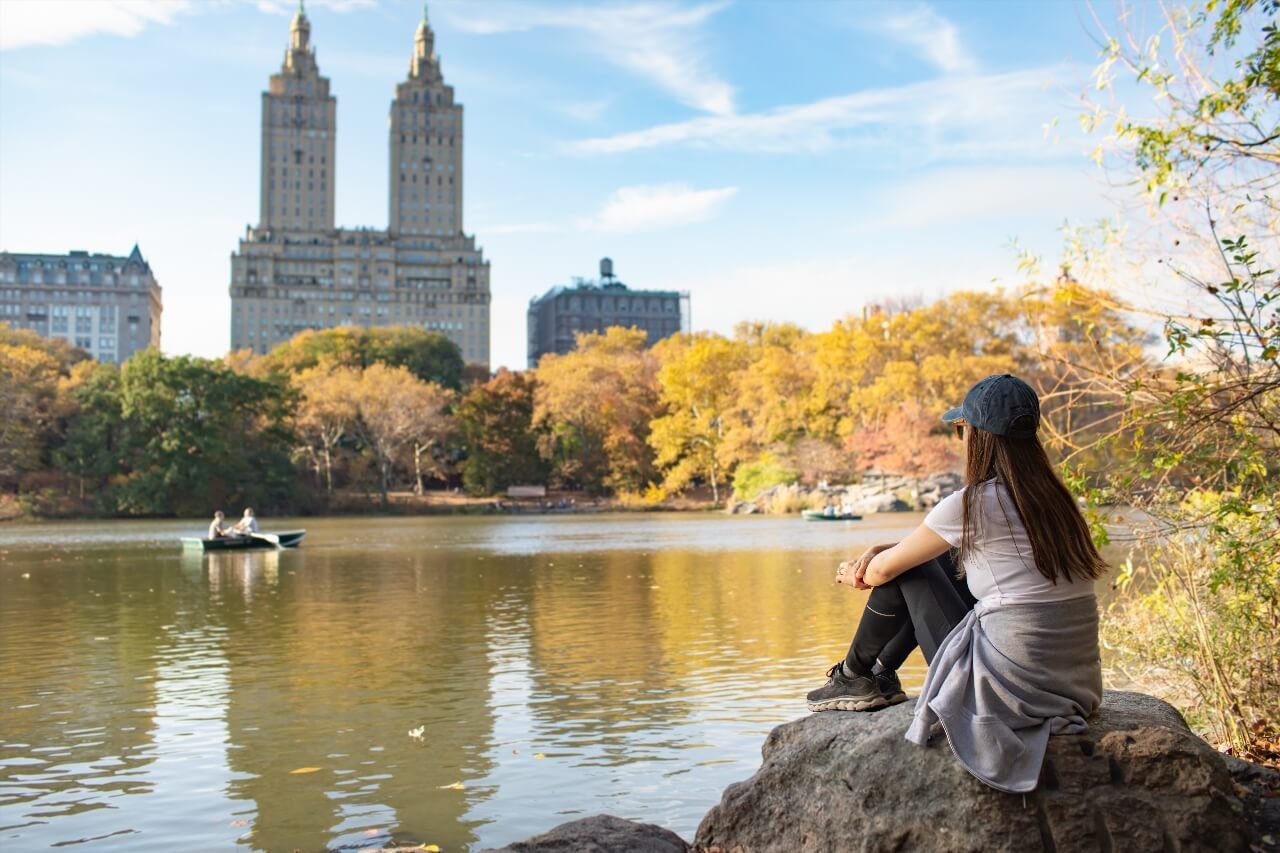
Central Park (Central Park, 10024 New York, rated 4.8/5 on Google (297 699 avis)) is the geographical and emotional anchor of Manhattan. Stretching 843 acres between 59th and 110th Streets, it sits at the centre of an island otherwise entirely committed to density and verticality. The park opened in 1858, designed by Frederick Law Olmsted and Calvert Vaux, and has since become one of the most visited urban parks in the world, recording around 42 million visits annually.
The scale of it surprises first-time visitors. You can spend a full day here without covering the whole thing. The Ramble, a 36-acre woodland in the middle of the park, feels genuinely wild, birders come from across the Northeast for its spring migrations, recording over 200 species. The Bethesda Fountain at the southern end of the Mall is one of the city's great architectural set pieces, its terrace looking out over the lake where rowboats drift in summer.
For a concentrated experience, walk the Central Park Loop (6 miles of road closed to cars on weekends), rent a bike at one of the entrances on Central Park West, or head directly to Strawberry Fields near the 72nd Street West entrance, the mosaic memorial to John Lennon installed in 1985. The Conservatory Garden at 105th Street is among the most undervisited corners of the park, formal, quiet, and free to enter.
Practically: the park is open every day. The Loeb Boathouse rents rowboats from April to October ($20 for the first hour). The Tisch Children's Zoo and the Central Park Zoo are separate ticketed attractions. Avoid the main south entrances on Saturday afternoons, the crowds around the Plaza Hotel and the Pond area become difficult to navigate between noon and 3 pm.
2. Statue of Liberty & Ellis Island
Every major city has its icon. New York's happens to stand 305 feet tall in the middle of a harbour, holding a torch she has not let go of since 1886. Lady Liberty, designed by French sculptor Frédéric Auguste Bartholdi with an iron framework engineered by Gustave Eiffel, was a diplomatic gift from France, assembled in Paris, shipped in 214 crates, and reassembled on her pedestal over two years.
Ferry access from Battery Park in Lower Manhattan and Liberty State Park in New Jersey is handled exclusively by Statue Cruises (the concession operator). The ferry itself is the non-optional part, there's no other way to reach the island. Book tickets weeks in advance, especially between June and September. The basic ferry ticket includes access to Liberty Island and Ellis Island but not the pedestal or crown. Crown access (168 steps above the pedestal, no elevator) requires a separate reservation often sold out six months ahead.
Ellis Island deserves equal time. Between 1892 and 1957, more than 12 million immigrants passed through its registry halls. The Ellis Island National Museum of Immigration tells that story through original processing ledgers, personal photographs, and reconstructed dormitories. The audio tour (included with admission) is one of the better museum audio guides in the city.
If budget is a concern: the Staten Island Ferry (completely free, see entry #28) passes within half a mile of the Statue at both departures and returns, giving a clear and unhurried view of the statue from the water. It doesn't get you on the island, but for the photograph and the sense of scale, it's a legitimate alternative.
Entry to both islands is covered in the ferry ticket price ($24.50 for adults, $12 for children 4 : 12 as of 2025). The museum exhibitions are included. Only the pedestal and crown require additional fees.
3. The Metropolitan Museum of Art
The Metropolitan Museum of Art (1000 5th Ave, 10028 New York, rated 4.8/5 on Google (92 354 avis)), universally called the Met, is the largest art museum in the Western Hemisphere, and one of those institutions that makes you genuinely reconsider the scale of human creative output. Its permanent collection spans 5,000 years of history across two million objects: Egyptian antiquities, Greek and Roman sculpture, European old masters, American decorative arts, arms and armour, musical instruments, and one of the most comprehensive collections of medieval art outside of France.
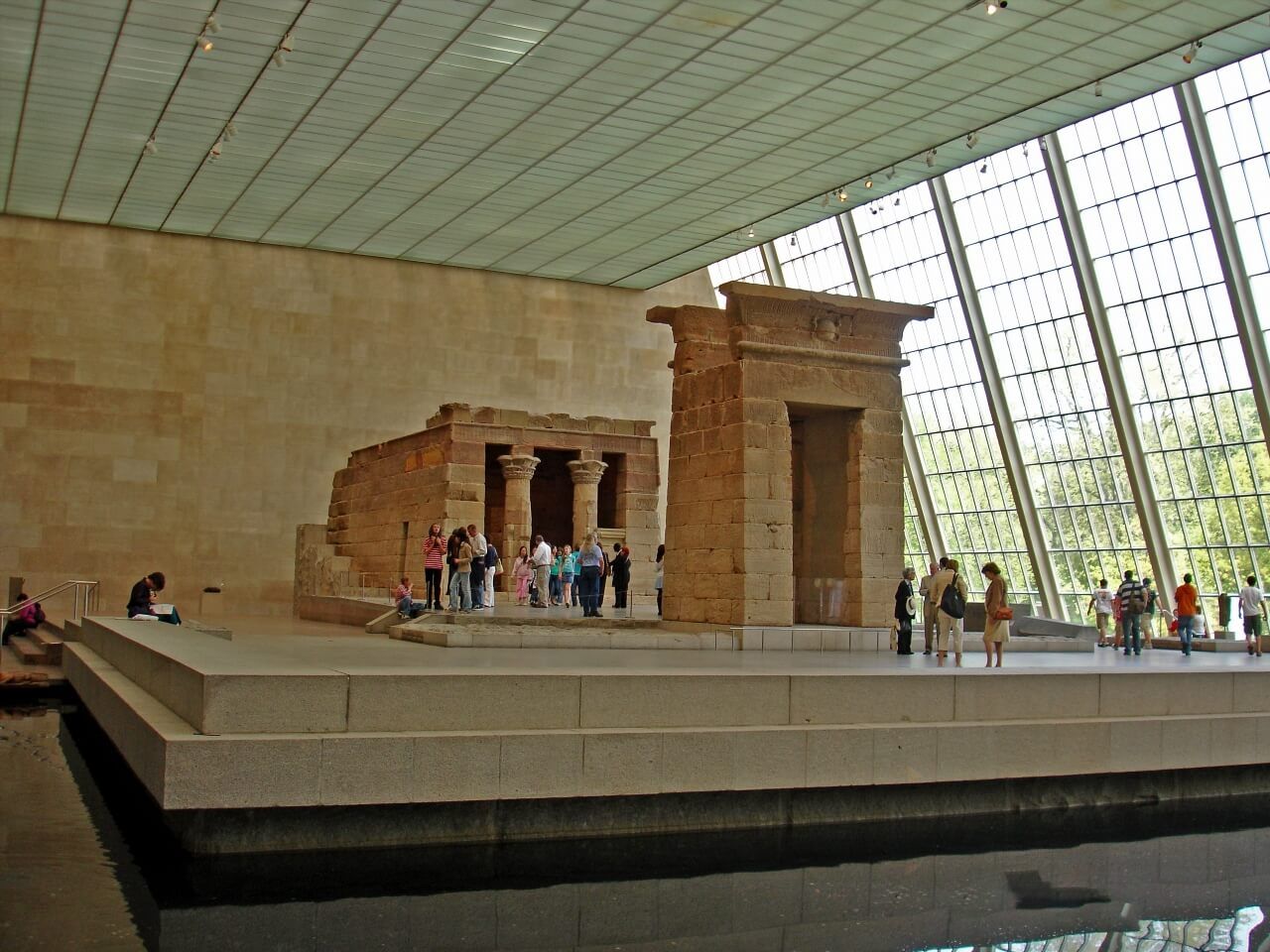
The Fifth Avenue building on the edge of Central Park opened in 1880 and has expanded continuously since. The Egyptian wing alone contains 36,000 objects, including the complete Temple of Dendur, a sandstone structure dating to 15 BC, reassembled inside a purpose-built glass-enclosed gallery. It is not a reproduction. The temple was a gift from Egypt to the United States in 1965, in thanks for American help preserving Nubian monuments during the Aswan Dam construction.
Planning your visit requires some strategy. The Met is enormous, the main building covers two million square feet, and most visitors only cover a fraction of it in a single day. A useful approach: pick two or three departments and go deep rather than attempting a full sweep. The Arms and Armour galleries on the ground floor are consistently overlooked and consistently spectacular. The American Wing courtyard, with its Tiffany glass and period rooms, rewards slow looking.
Admission is $30 for adults, pay-what-you-wish for New York State residents and students. The suggested donation model ended in 2018 for out-of-state visitors. The museum is closed on Tuesdays. The rooftop sculpture garden is open from spring through autumn and offers a panorama of Central Park's tree canopy from the fifth floor.
4. Times Square
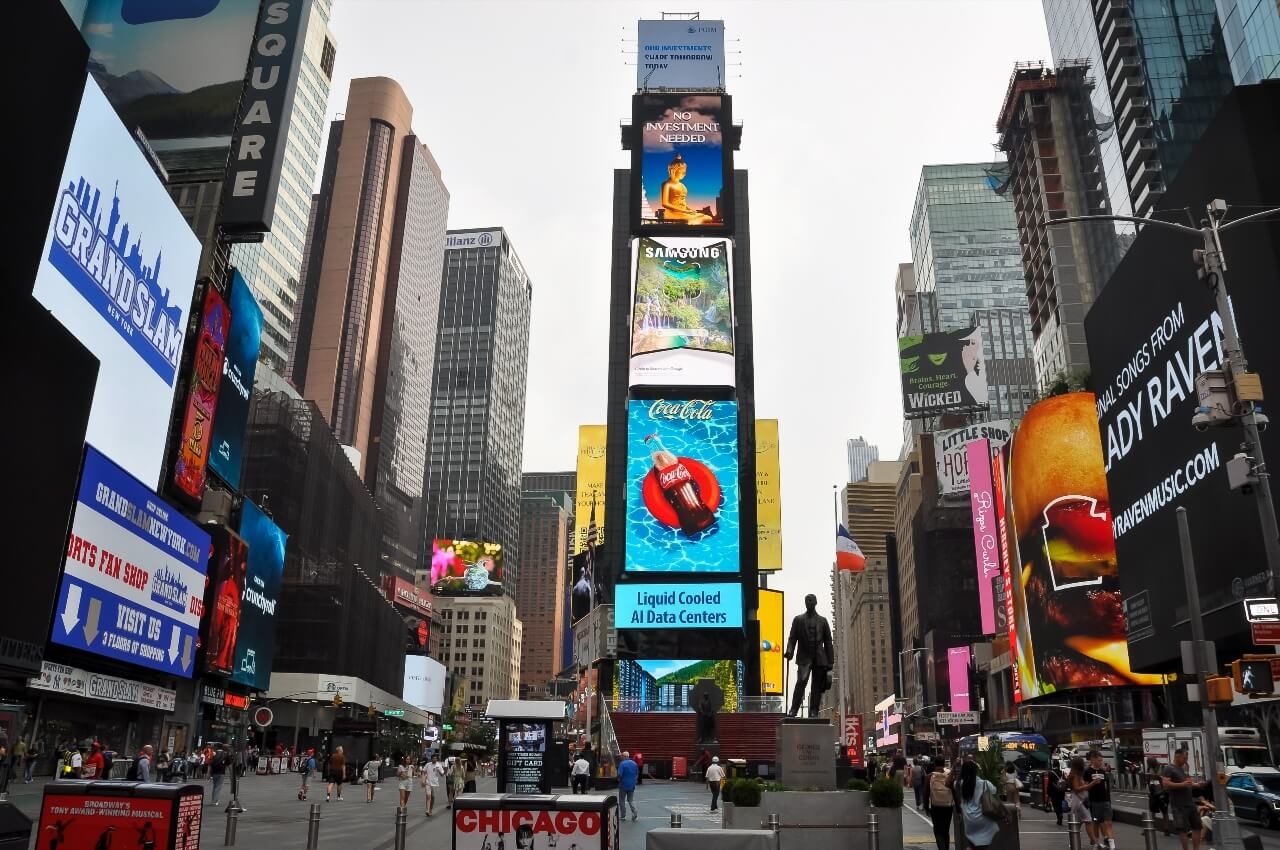
Times Square (Times Square, 10036 New York, rated 4.7/5 on Google (241 171 avis)) divides visitors sharply: it's either the most electrifying stretch of pavement in the world or the most overwhelming. Both reactions are reasonable. The intersection of Broadway and Seventh Avenue between 42nd and 47th Streets is lit by over 300,000 LED lights that make it brighter at midnight than most European cities are at noon. The TKTS booth at the northern end of the red steps sells same-day theatre tickets at up to 50% off face value, a genuinely useful resource if you're planning to catch a Broadway show.
Beyond the lights: the stretch along 42nd Street between Seventh and Eighth Avenues was gutted and rebuilt in the 1990s and early 2000s. What replaced the old Times Square is shinier but less eccentric. Still, the energy is undeniable. Walk through after 10 pm to see it at full brightness, spend no more than 45 minutes if sensory overload is a concern, and keep a firm grip on your belongings near the crosswalks. The pedestrian plazas between 42nd and 47th Streets were installed in 2009 by the Bloomberg administration, an experiment that permanently closed stretches of Broadway to traffic and worked.
5. Brooklyn Bridge
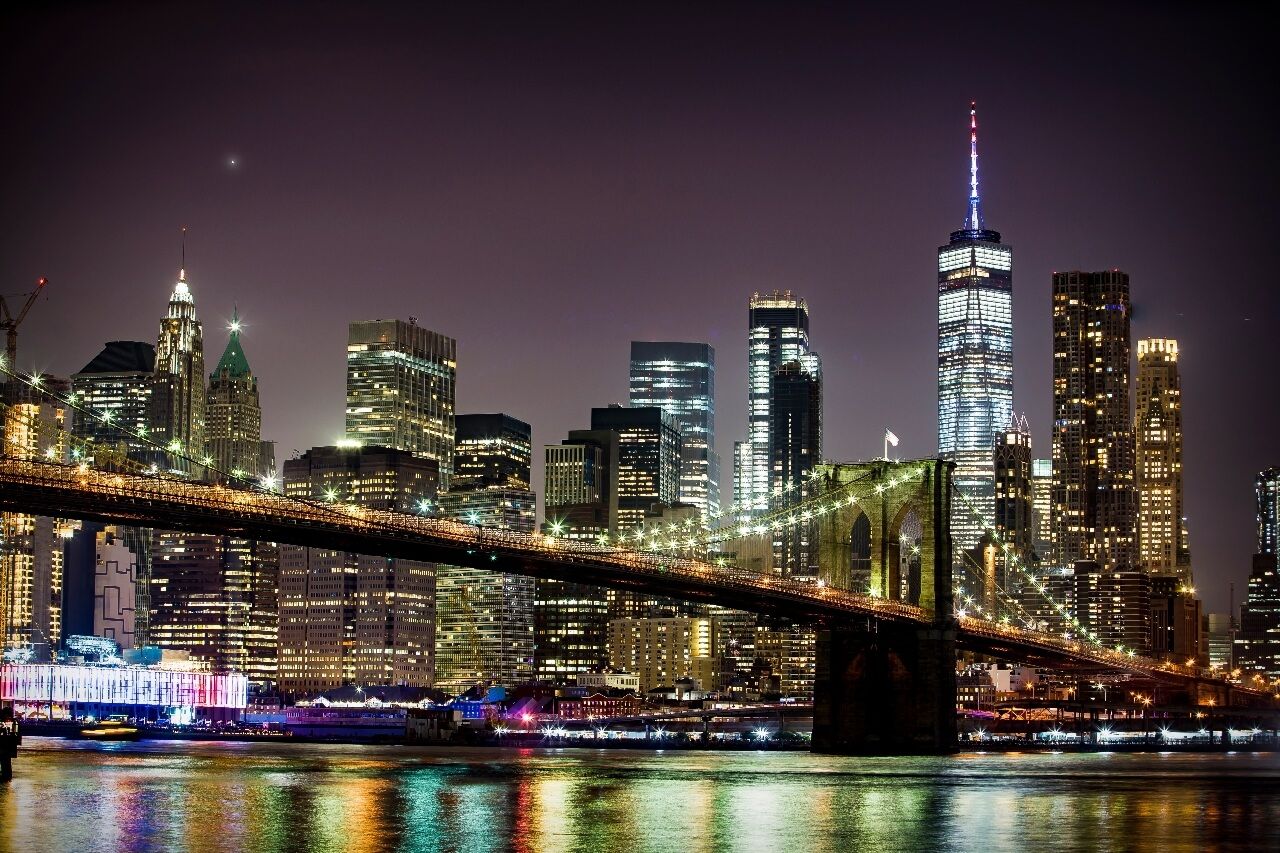
The Brooklyn Bridge (Brooklyn Bridge, 10038 New York, rated 4.8/5 on Google (91 199 avis)) was the longest suspension bridge in the world when it opened in 1883, and its construction cost the lives of 27 workers, including its chief engineer, John Roebling, who was struck by a ferry while surveying the site and died of tetanus before ground was broken. His son Washington took over, was incapacitated by decompression sickness from working in the underwater caissons, and directed the remaining construction from his apartment in Brooklyn Heights through a telescope, with his wife Emily relaying instructions.
The pedestrian walkway runs along the upper deck of the bridge, elevated above the traffic lanes below. The walk from the Manhattan side (Park Row entrance near City Hall) to DUMBO in Brooklyn takes roughly 30 to 40 minutes at a casual pace. The views of Lower Manhattan's skyline and the East River are exceptional, particularly in the early morning before the walking lane fills with tourists and cyclists. Stick to the pedestrian side of the white line, the bike lane runs alongside and cycling traffic moves faster than it looks.
On the Brooklyn side, the neighbourhood of DUMBO (Down Under the Manhattan Bridge Overpass) offers the photograph everyone takes: Manhattan Bridge framed between warehouses on Washington Street, with the Brooklyn Bridge visible behind it. From there, Brooklyn Bridge Park is a ten-minute walk south along the waterfront.
6. Empire State Building
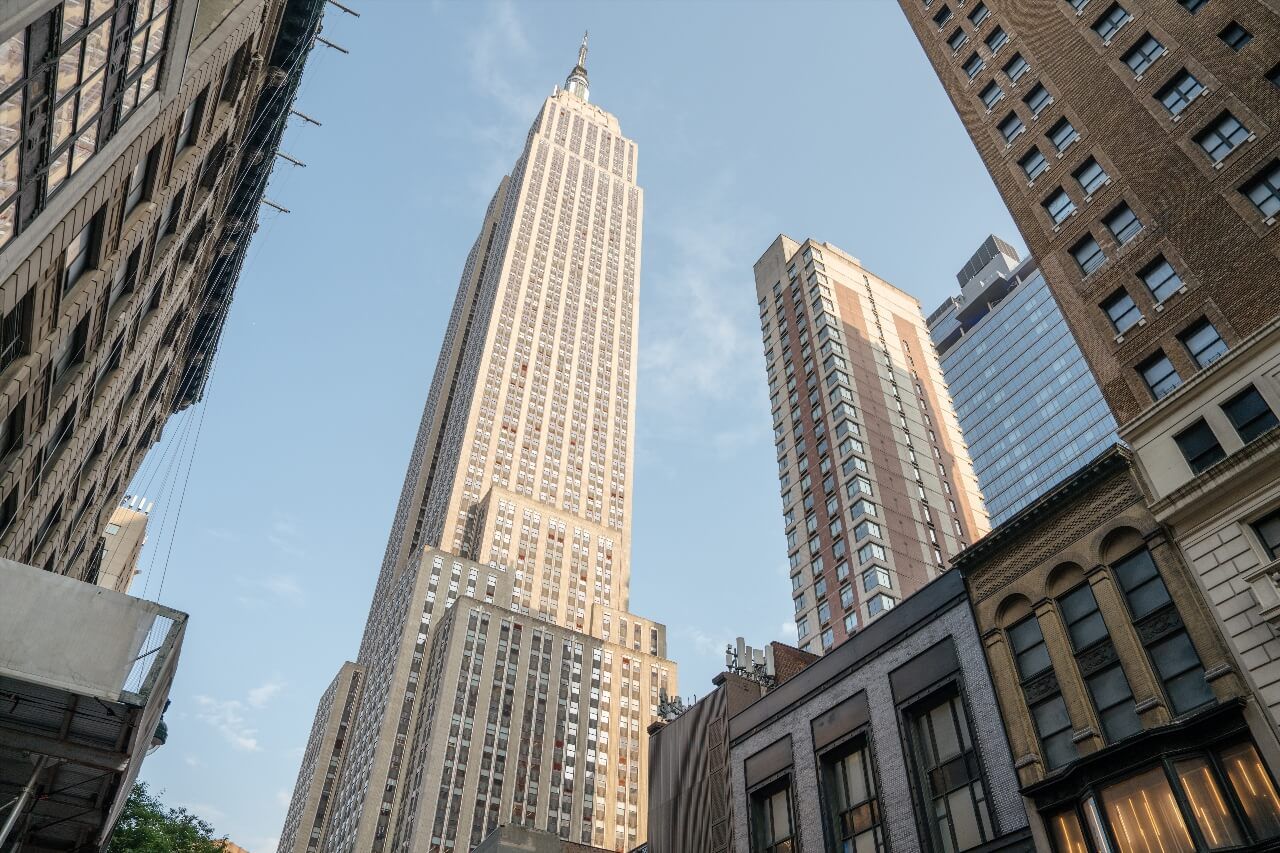
At 1,454 feet to the top of its broadcast antenna, the Empire State Building (20 W 34th St, 10001 New York, rated 4.7/5 on Google (125 551 avis)) is no longer the tallest building in New York, One World Trade Center holds that title at 1,776 feet. But the Empire State remains the city's most recognisable silhouette, and its observation deck experience is among the best in Manhattan for one specific reason: you can see the Empire State Building from everywhere else in the city, but from the Empire State Building, you look out at everything else.
The 86th Floor Observation Deck is the classic choice, open-air, at 1,050 feet, with 360-degree views that extend on clear days to 80 miles into New Jersey, Connecticut, and Long Island. The 102nd Floor Observatory is enclosed and adds another 204 feet of elevation, but the premium ticket costs $60 more. For most visitors, the 86th floor delivers everything. Book tickets online to skip the lobby queue, walk-up tickets exist but the line can run 90 minutes on peak days. The building is illuminated at night in colours that change with events and causes, a tradition begun in 1964.
7. 9/11 Memorial & Museum
The National September 11 Memorial & Museum occupies the footprint of the original World Trade Center towers in Lower Manhattan, and it is one of the most carefully designed memorial spaces built anywhere in the world in the last 25 years. The twin reflecting pools, each nearly an acre in size, set within the exact outlines of the towers' foundations, are ringed by bronze parapets engraved with the names of all 2,983 victims of both the 2001 attacks and the 1993 World Trade Center bombing. The water falls 30 feet into a square pool, then drops again into a smaller central void, disappearing without a sound.
The memorial plaza is free to visit and open daily. The museum below is a separate, ticketed experience. Entering it requires some emotional preparation: the descent into the original foundation bedrock, past the survivor stairs and the last column, is not passive. The museum holds 10,000 artefacts, personal belongings recovered from the site, structural steel from the towers, recorded testimonies from first responders and survivors, and a section dedicated to the 19 hijackers that has generated significant debate about how to represent perpetrators in a memorial context. That debate is itself part of the exhibition.
The Survivors' Staircase, the concrete stairway used by hundreds of people to evacuate Tower One, is preserved and displayed at its original scale. The steel column known as the Last Column, extracted in May 2002 after eight months of recovery work, stands 36 feet tall inside the museum and is covered in photographs, mementos, and inscriptions left by workers during the recovery operation.
Museum admission is $30 for adults, free for 9/11 family members and first responders. Tuesday evenings from 5 to 8 pm are offered on a pay-what-you-wish basis. Allow at least two hours; many visitors spend three. The Oculus transit hub and its surrounding plaza are steps away, see entry #18.
8. The High Line
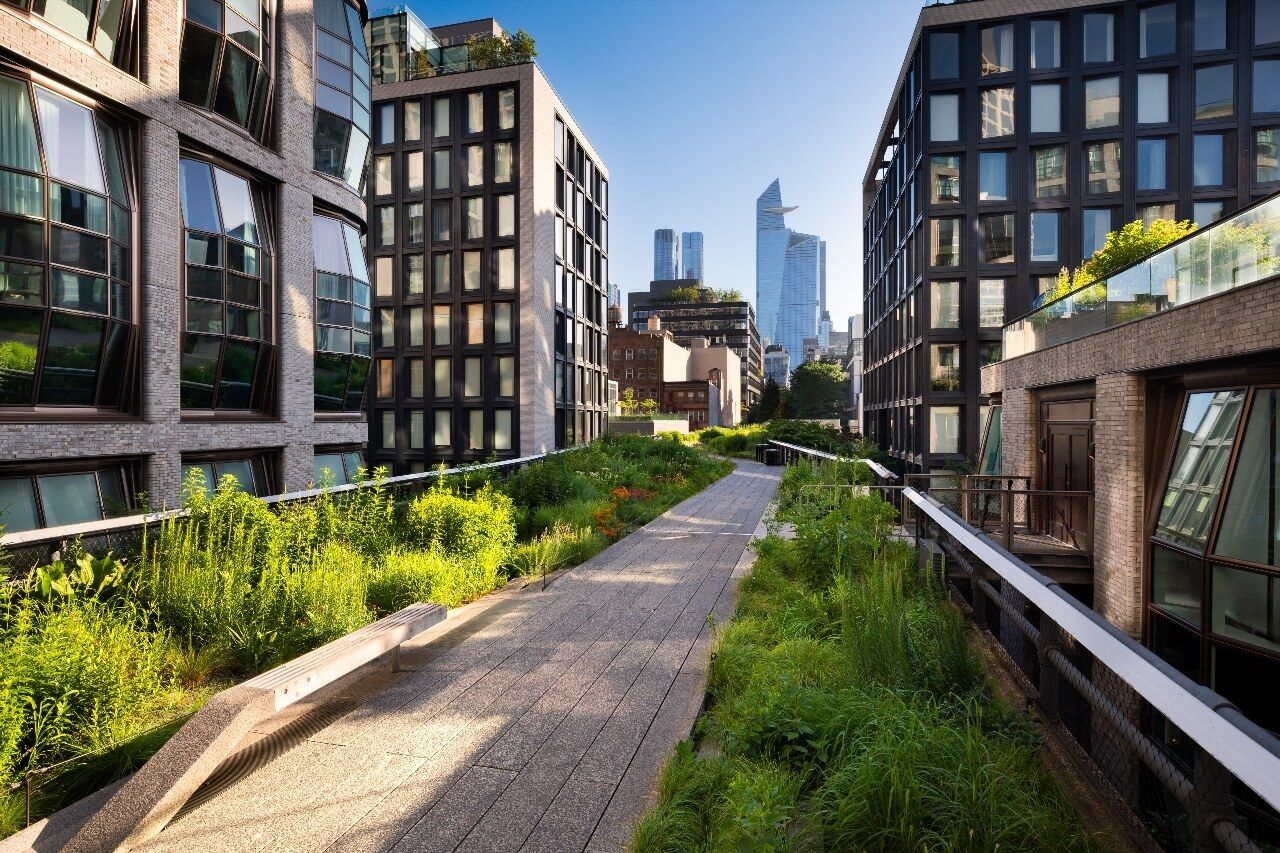
The High Line is a 1.45-mile elevated park built on a disused freight railway that last carried cargo in 1980. When the city announced plans to demolish the structure in the early 2000s, two neighbours, Joshua David and Robert Hammond, formed the Friends of the High Line (The High Line, 10011 New York, rated 4.7/5 on Google (66 742 avis)) and lobbied for its conversion into a park. It opened in sections between 2009 and 2014 and has since become one of the most influential pieces of urban infrastructure reimagined anywhere, inspiring similar projects in cities from Chicago to Rotterdam.
The park runs from Gansevoort Street in the Meatpacking District north to 34th Street at Hudson Yards. Walking the full length takes about 45 minutes at a slow pace; most people spend longer. What makes it distinctive is the layered planting design by landscape firm James Corner Field Operations, grasses, perennials, and shrubs selected for how they look across all four seasons, mixed with sections of the original railway tracks left in place. In late October, the seed heads and dried stems give the High Line its most atmospheric appearance.
Along the route: the 10th Avenue Square at 17th Street has stadium-style seating looking out over the avenue below (a particular spot for watching traffic). The Sundeck at 14th Street is a summer gathering place. At the northern terminus, the Vessel and the Hudson Yards Shops are a five-minute walk from the 34th Street exit. The High Line is free to enter at all access points, open daily from 7 am to 10 pm (until 11 pm in summer).
9. Museum of Modern Art (MoMA)
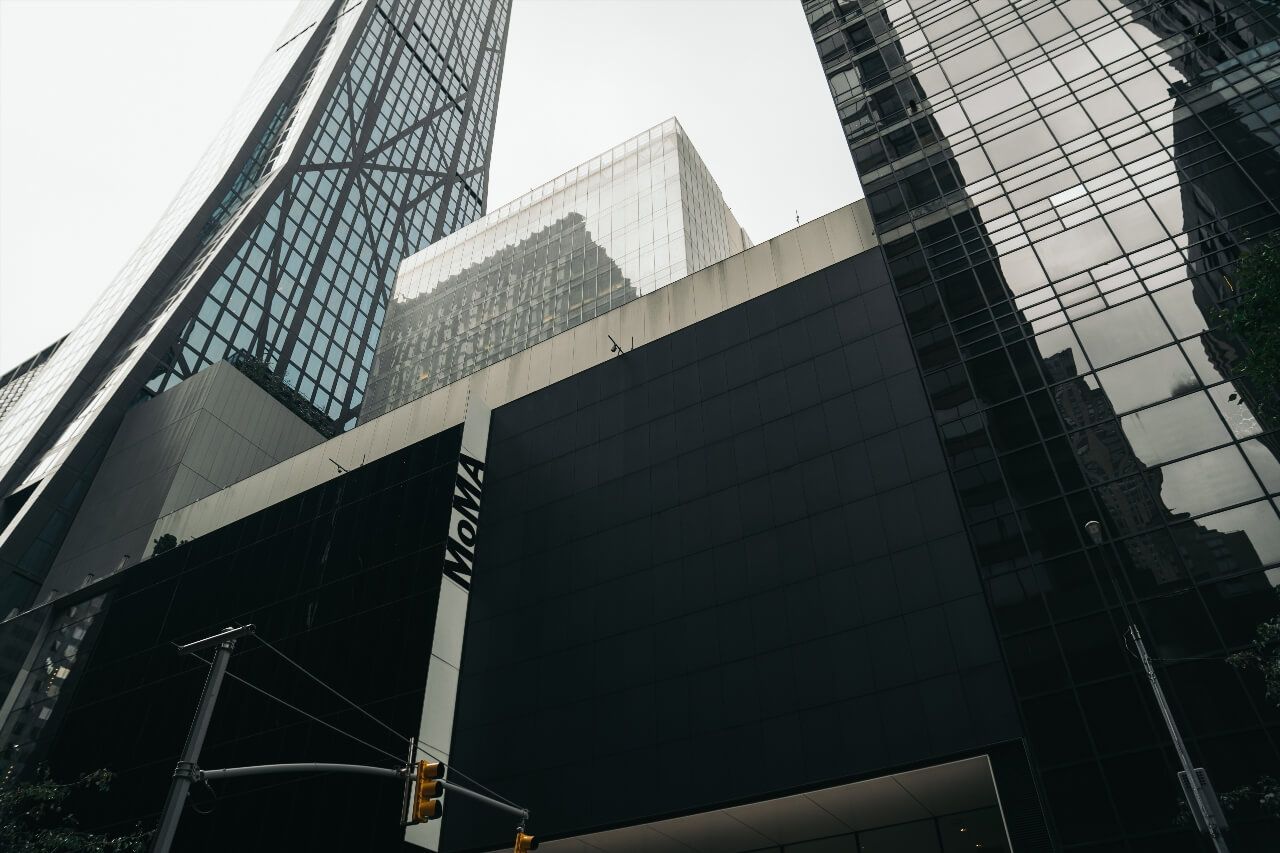
The Museum of Modern Art holds what is almost certainly the strongest collection of modern and contemporary art assembled under one roof anywhere. Its permanent collection spans 200,000 works across painting, sculpture, photography, film, design, and architecture, and its list of holdings reads like a survey of the 20th century: Picasso's Les Demoiselles d'Avignon, Van Gogh's The Starry Night, Monet's Water Lilies triptych, Frida Kahlo's self-portraits, Warhol's Campbell's Soup Cans.
The building at 11 West 53rd Street was last comprehensively renovated and expanded in 2019, when architect Diller Scofidio + Renfro added 40,000 square feet of new gallery space. The renovation reorganised the permanent collection thematically rather than chronologically, a decision that has been contested by some critics but makes for a less predictable walkthrough. Works from different eras and media are hung in dialogue with each other; a Cézanne may be adjacent to a contemporary photograph.
Practical notes: admission is $30 for adults, free for visitors under 16. Friday evenings from 5:30 to 9 pm are free to all, supported by a corporate sponsor, these evenings are busy but manageable. The MoMA Design Store on the ground floor is worth a visit even if you don't buy anything: it stocks an unusually well-curated range of product design, books, and objects. The museum is closed on Tuesdays. Audioguides are available via the free MoMA app; download it before you arrive.
10. Top of the Rock
Top of the Rock at 30 Rockefeller Plaza offers the one view of New York City that no other observation deck can replicate: the Empire State Building centred in the frame, flanked by the Manhattan grid stretching north. Because you are standing at Rockefeller Center, you are looking at the Empire State rather than from it, and that difference matters enormously for the quality of photographs and for the sense of the city's scale.
The observation deck occupies the 67th, 69th, and 70th floors at 850 feet. The top level is open-air; the middle levels are partially enclosed. Sunset is the most sought-after slot, book the 6:30 pm or 7 pm entry in summer for a visit that transitions from golden-hour light to the full illumination of the cityscape. Tickets are $40 for adults (standard). The Sun & Stars ticket allows re-entry on the same calendar day, once during daylight and once after dark, a good value if you can schedule around it.
11. Grand Central Terminal
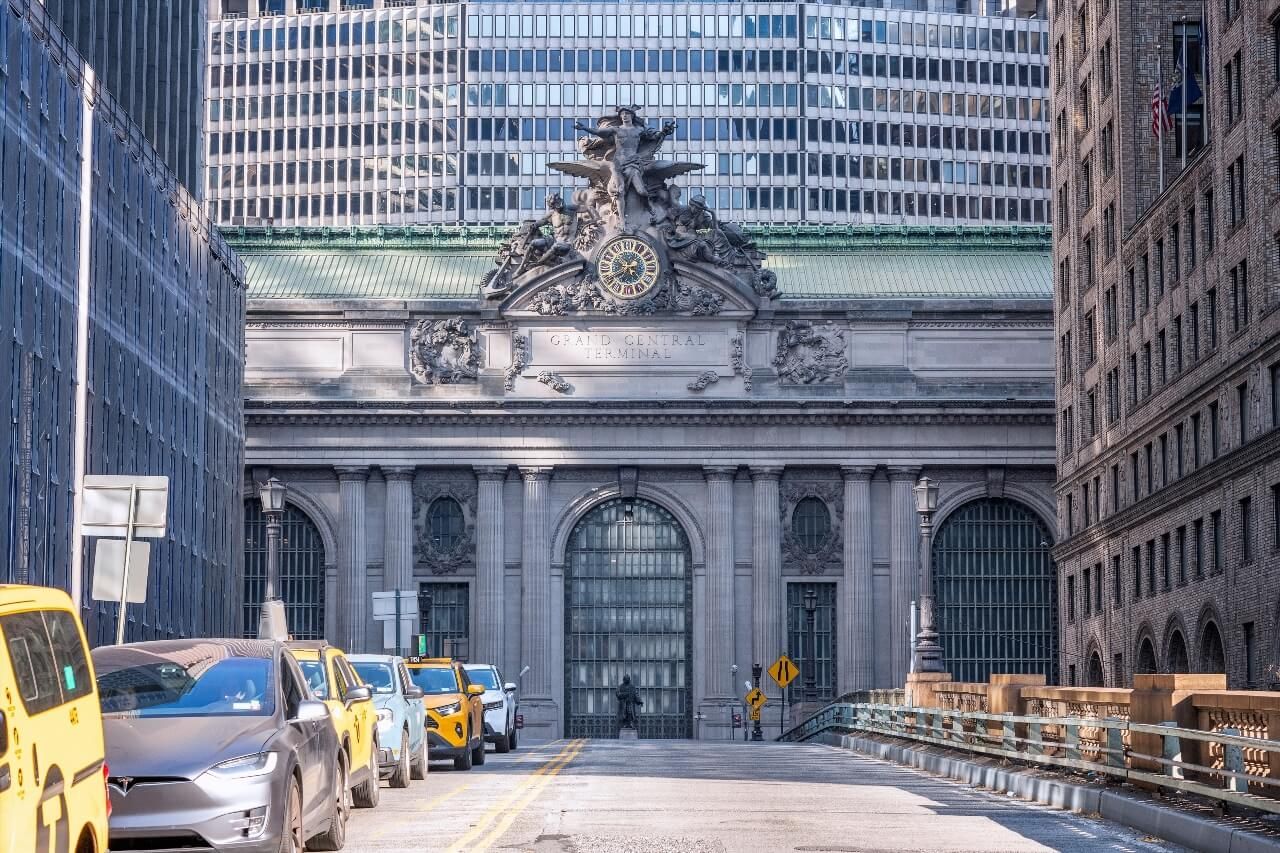
Grand Central Terminal (89 E 42nd St, 10017 New York, rated 4.7/5 on Google (7 304 avis)) at 89 East 42nd Street is the most visited train station in the United States, handling 750,000 commuters and visitors daily, more foot traffic than any airport in the country. It is also, by a considerable margin, one of the most beautiful public interiors in North America.
The Main Concourse, completed in 1913, spans 275 feet in length and 120 feet in width, with a vaulted ceiling rising 125 feet overhead. That ceiling is painted in aquamarine with constellations of the Mediterranean winter sky outlined in gold leaf, but the figures are rendered in mirror image, the stars positioned as they would appear from outside the celestial sphere looking inward, not as they appear from earth looking out. The error (or intentional design choice, depending on whom you ask) has never been corrected. At its peak the ceiling held real light bulbs illuminating the brightest stars; they were removed during a renovation but the positions remain visible.
The Oyster Bar in the lower level has been serving seafood since 1913. The whispering gallery alcoves just outside the restaurant entrance have distinctive acoustic properties, stand in opposite corners and speak into the wall; your companion in the far corner will hear you clearly despite the distance.
12. The Vessel & Hudson Yards
Hudson Yards is the largest private real estate development in American history, built on a platform over an active rail yard on the far west side of Midtown Manhattan. The centrepiece is the Vessel, a 150-foot-tall climbable sculpture by British designer Thomas Heatherwick: 154 interconnected staircases, 2,500 steps, and 80 landings, all wrapped in copper-coloured steel. It opened in 2019 and became one of the most photographed structures in the city almost immediately.
Access to the Vessel was temporarily suspended following a series of suicides between 2020 and 2021; it reopened in 2023 under new safety measures requiring visitors to be accompanied by other adults. Tickets are $10 and must be booked in advance. The surrounding Hudson Yards Shops and the Shed cultural space (a retractable building designed to cover the adjacent plaza for large-scale events) are both worth a look even without climbing the Vessel. Access from the High Line's northern terminus is direct.
13. Brooklyn Bridge Park
Brooklyn Bridge Park (Brooklyn Bridge Park, 11201 Brooklyn, rated 4.8/5 on Google (42 747 avis)) is an 85-acre waterfront park stretching along the East River from the Manhattan Bridge in DUMBO south to Atlantic Avenue in Brooklyn. It occupies what were formerly working industrial piers and offers what many consider the definitive view of the Lower Manhattan skyline, wide-angle, unobstructed, and at a distance that makes the skyline legible as a composition rather than an overwhelming wall of glass.
Pier 1 has the most photographed lawn and the clearest sightline to the Brooklyn Bridge from below. Pier 6 has a beach volleyball court, a sandy play area for children, and kayak launches in summer. Jane's Carousel, a beautifully restored 1922 merry-go-round housed in a glass pavilion by Jean Nouvel, operates in the park year-round (entry $4). The park is free to enter and open daily; weekend afternoons between May and September draw significant crowds at Pier 1 and the DUMBO entry points.
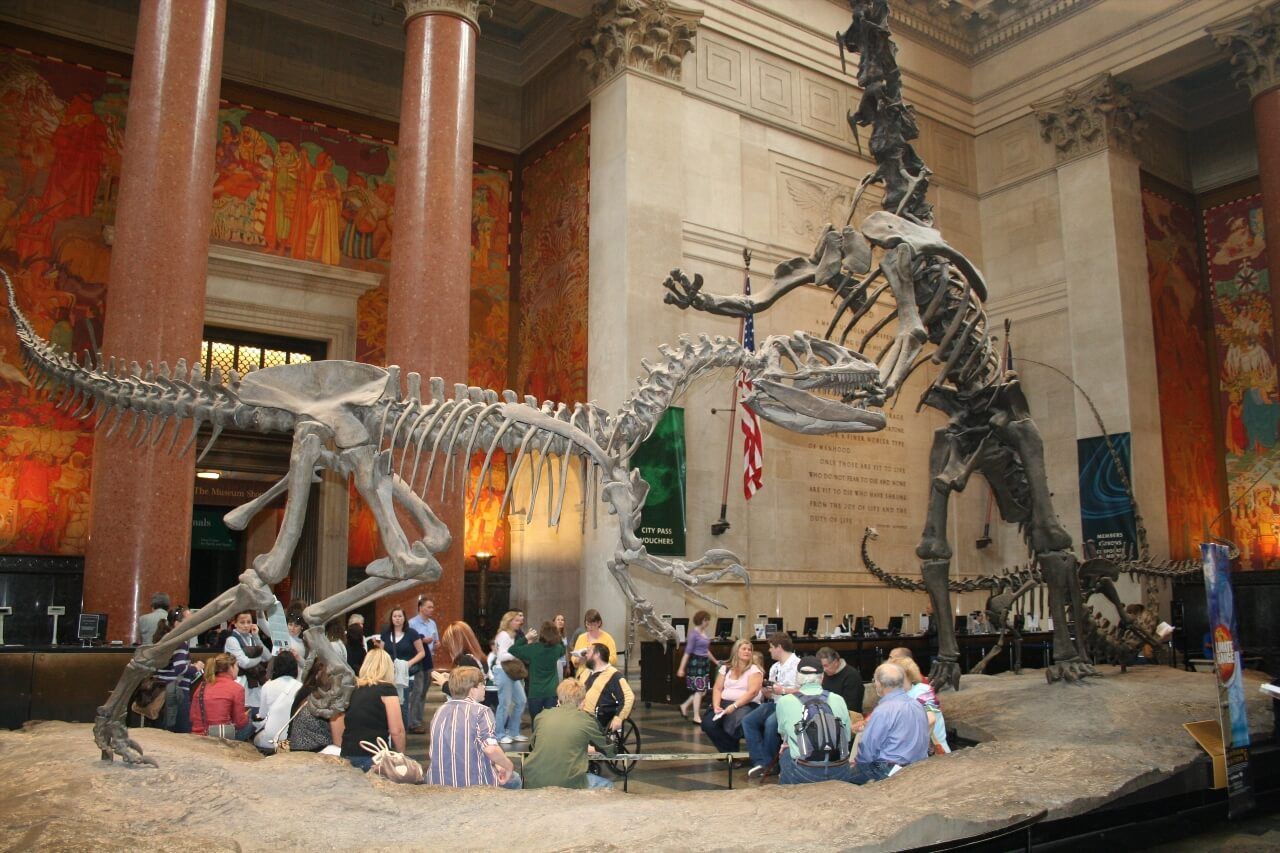
14. American Museum of Natural History
The American Museum of Natural History (200 Central Park West, 10024 New York, rated 4.6/5 on Google (23 956 avis)) on Central Park West has been operating continuously since 1869, and its 45 permanent exhibition halls cover everything from ocean life to human origins to the formation of the universe. The institution holds 34 million specimens and artefacts, though only a fraction are on display at any time.
The most iconic space is the Hall of Ocean Life, a four-story room dominated by a 94-foot-long blue whale model suspended from the ceiling, a replica based on an actual whale found stranded in 1925. The Rose Center for Earth and Space (the glass cube addition built in 2000) contains the Hayden Planetarium, where the 25-minute Space Show narrated by Meryl Streep (among rotating presenters) is genuinely worth seeing for its visualisation of cosmic scale. The Hall of Biodiversity and the Hall of Human Origins are both consistently underestimated by visitors who make a beeline for the dinosaurs.
Admission is $28 for adults, $16.50 for children (ages 3 : 12), with an additional fee for the Space Show and special exhibitions.
15. One World Observatory
One World Trade Center stands at 1,776 feet, a height chosen deliberately to match the year of American independence. The One World Observatory (285 Fulton St, 10007 New York, rated 4.6/5 on Google (38K avis)), occupying floors 100 through 102, is currently the highest observation point in the Western Hemisphere. The ride up takes 47 seconds in a Sky Pod elevator that projects a time-lapse of Manhattan's development from 1500 to the present on the elevator walls.
The views at the top are genuinely panoramic, on clear days, 50 miles in every direction, with the full extent of New York Harbor visible to the south and New Jersey's industrial waterfront visible to the west. The See Forever Theater at the top uses floor-to-ceiling screens to show an orientation film before you move to the outdoor-facing windows. Tickets are $46 for adults (2025 pricing), and the online reservation system allows you to select entry times. Early morning slots on weekdays, before 10 am, offer the least crowded experience.
16. Rockefeller Center
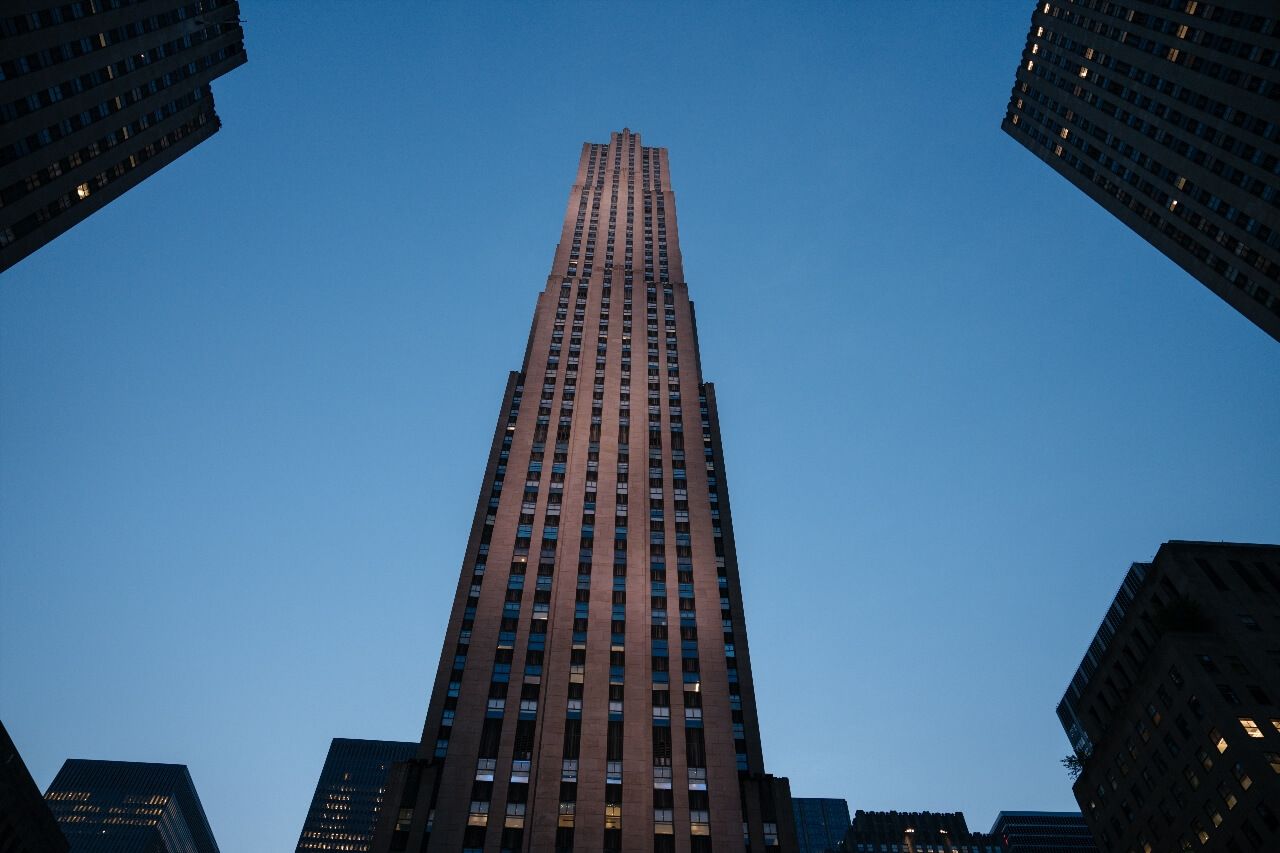
Rockefeller Center (45 Rockefeller Plaza, 10111 New York, rated 4.7/5 on Google (199 971 avis)) is a complex of 19 commercial buildings occupying 22 acres of Midtown Manhattan, built between 1930 and 1939 as a Depression-era project financed entirely by John D. Rockefeller Jr. when a planned opera house fell through. The result is one of the most coherent examples of Art Deco urban planning in the United States.
The Lower Plaza, the sunken courtyard at the centre of the complex, functions as an outdoor café in summer and becomes the famous Rockefeller Center Ice Rink from October through April, accompanied by the 75-foot Christmas tree erected each year in late November. The 30 Rock building (formally 30 Rockefeller Plaza) houses NBC Studios, where you can take a behind-the-scenes studio tour that includes the sets of Saturday Night Live and The Tonight Show. The Channel Gardens leading from Fifth Avenue to the plaza are replanted seasonally. Entry to the grounds is free; the ice rink ($15, $28 depending on the session) and studio tours ($43 for adults) are ticketed separately.
17. Chelsea Market
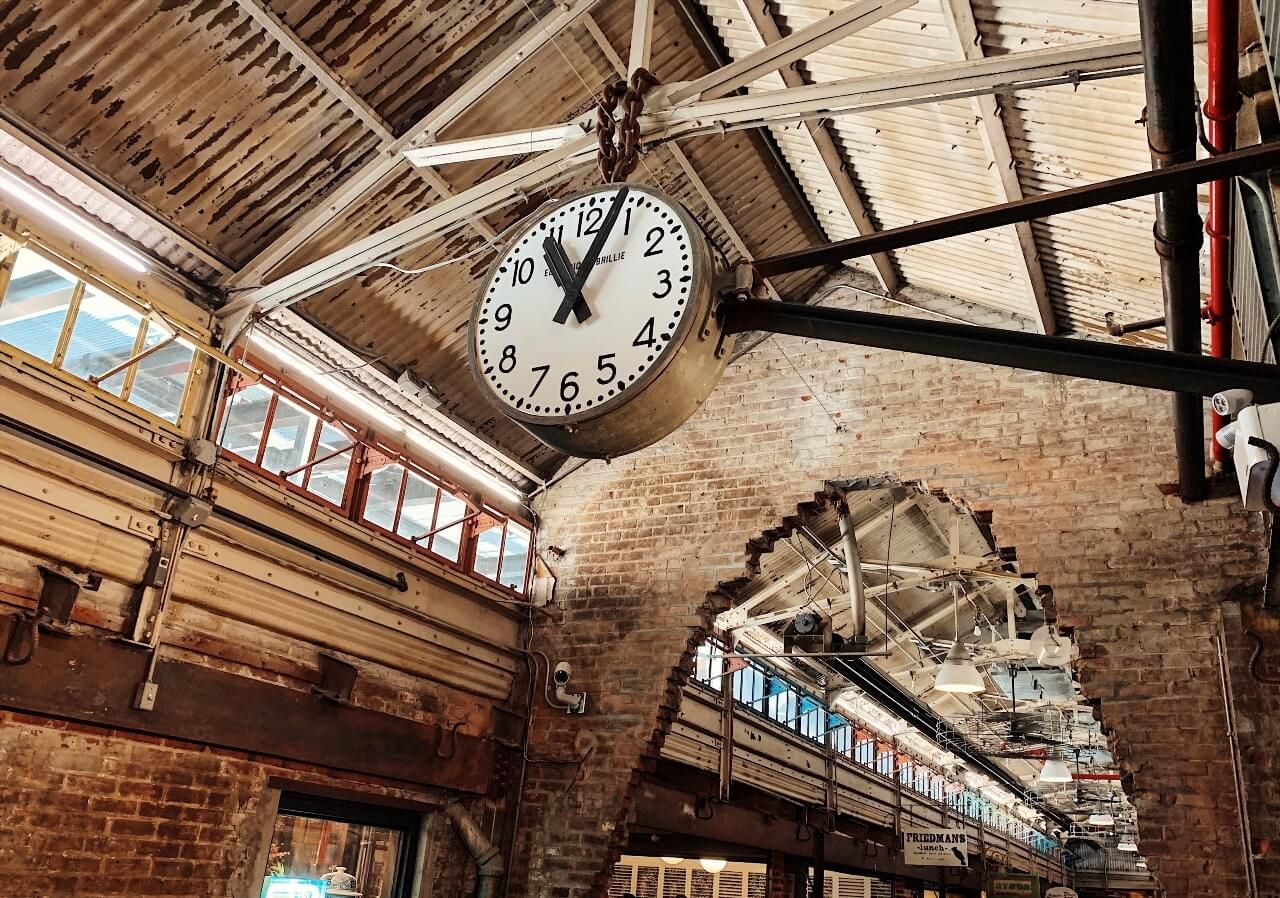
Chelsea Market (75 9th Ave, 10011 New York, rated 4.6/5 on Google (51 445 avis)) on 75 Ninth Avenue occupies a full city block in the Chelsea neighbourhood, built into the former Nabisco factory complex where the Oreo cookie was first manufactured in 1912. The conversion preserved the industrial bones of the building, exposed brick, steel girders, water towers, original pipes, while installing a ground-floor food hall that has become one of the more genuinely varied eating destinations in the city.
The vendors inside lean toward specialty and independent: a New England-style lobster roll counter, Japanese ramen, artisan bread, a location of Los Tacos No. 1 (widely regarded as the best taco in Manhattan), and the Lobster Place, a fish market that sells prepared seafood to eat standing at a counter. The building also houses office tenants, Google's New York headquarters occupy the upper floors, but the ground level is public. Plan to arrive hungry, and avoid the peak lunch rush between noon and 1:30 pm on weekdays. It's a ten-minute walk from the High Line's southern terminus at Gansevoort Street.
18. The Oculus (World Trade Center Transportation Hub)
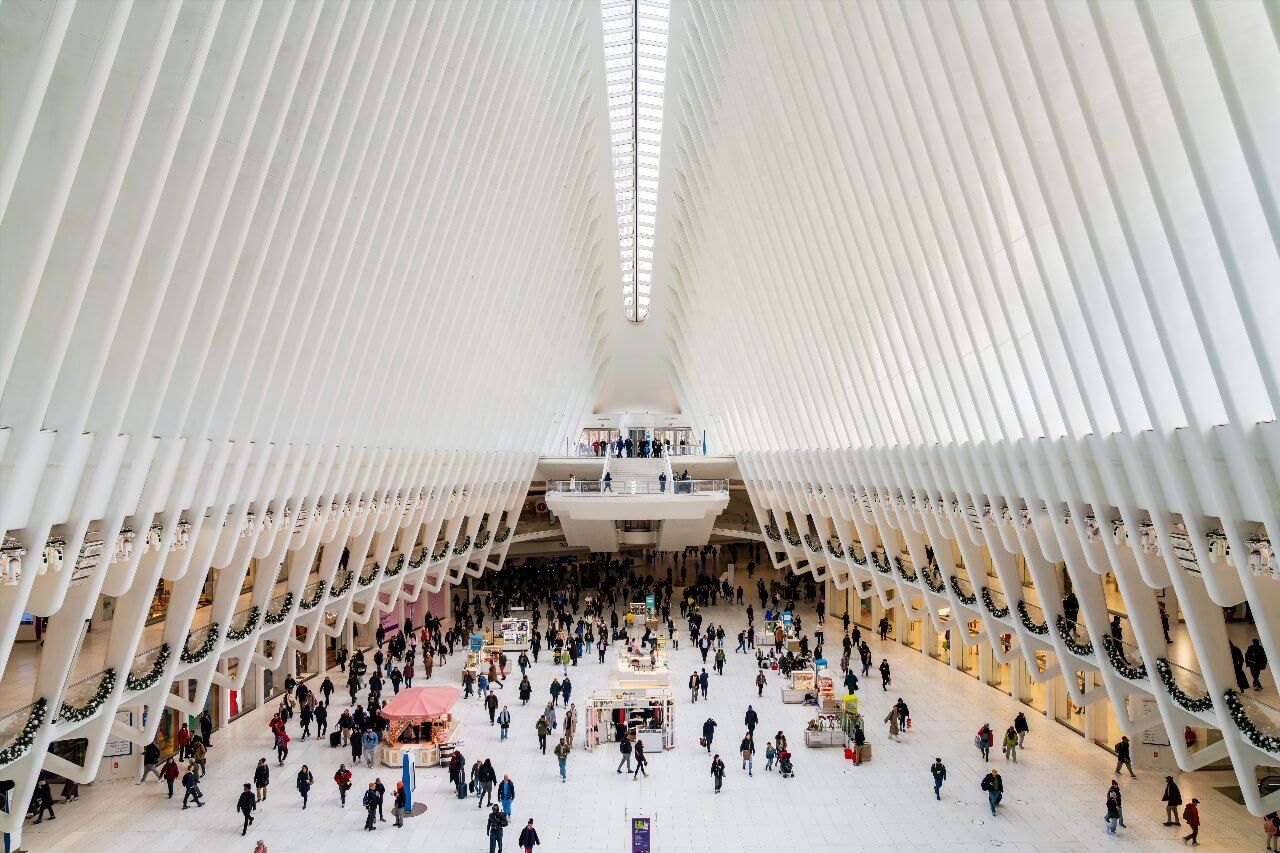
The Oculus, the transit hub and shopping complex at the heart of the World Trade Center site, is a piece of architecture worth seeing even if you have no intention of catching a train. Designed by Santiago Calatrava and opened in 2016 after a budget of $4 billion, the structure is simultaneously the most expensive train station ever built and one of the most dramatic public interiors in New York. Its ribbed white steel form, resembling a bird in flight, opens along a central skylight on September 11 each year to allow sunlight to reach the main hall floor at the exact moment the first plane struck in 2001. Entry is free.
19. Coney Island
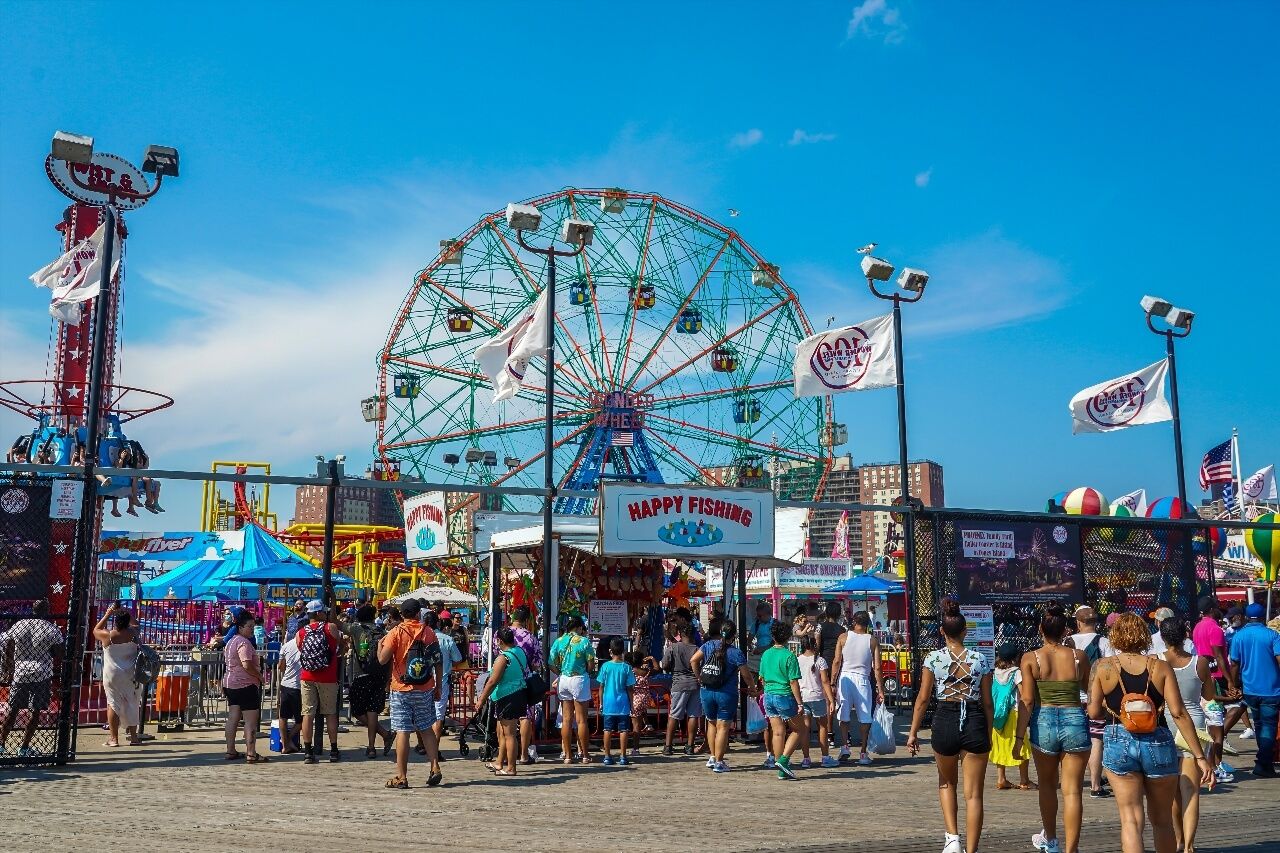
Coney Island (Coney Island, 11224 Brooklyn, rated 4.4/5 on Google (18K avis)) sits at the southern tip of Brooklyn, roughly 50 minutes from Midtown Manhattan by the D, F, N, or Q train. What was once the most-visited amusement destination in the United States, drawing 1 million visitors on a single summer day in the 1940s, is now something quieter and considerably more interesting: a mix of genuine fairground rides, a working boardwalk, a beach, a minor league baseball stadium, and the Coney Island Museum, which keeps the history of the area's three original amusement parks.
Luna Park operates from April through October and still runs the Cyclone, a wooden roller coaster built in 1927 and a New York City landmark. The New York Aquarium is adjacent, the oldest aquarium in the United States. The boardwalk hot dog at Nathan's Famous, founded on the same site in 1916, is a legitimate experience, the restaurant holds the annual hot-dog-eating contest each July 4th. For $3.25 (a MetroCard subway fare), Coney Island remains one of the most cost-effective half-days in New York.
20. New York Public Library
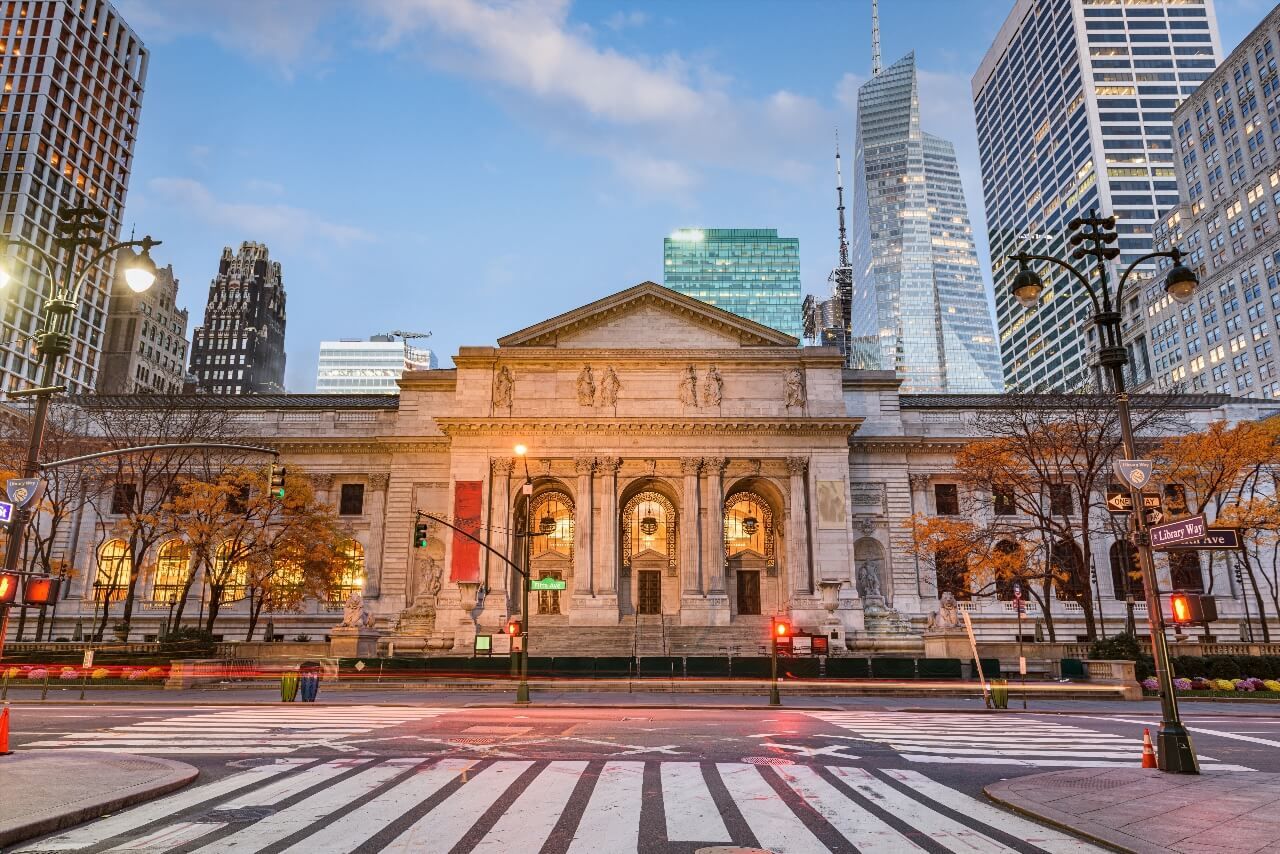
The New York Public Library's Stephen A. Schwarzman Building (476 5th Ave, 10018 New York, rated 4.7/5 on Google (7 137 avis)) at Fifth Avenue and 42nd Street is one of the finest examples of Beaux-Arts architecture in the United States, but it is also, less commonly acknowledged, a functioning research library open to the public, free of charge. The Rose Main Reading Room on the third floor, measuring 297 feet long and 78 feet wide, is among the most beautiful public interiors in the city, with ornate plasterwork ceilings restored in 1998 after a large section fell in 1992.
Two marble lions flank the front steps, named Patience and Fortitude by Mayor Fiorello La Guardia during the Depression, after the qualities he believed New Yorkers would need. The library's exhibitions (drawn from its 55 million items) are free to visit and change several times a year. Bryant Park, directly behind the building, has a free reading room, a carousel, and, in winter, a free ice rink, one of the few in the city that doesn't charge an admission or skate rental fee.
21. Little Island
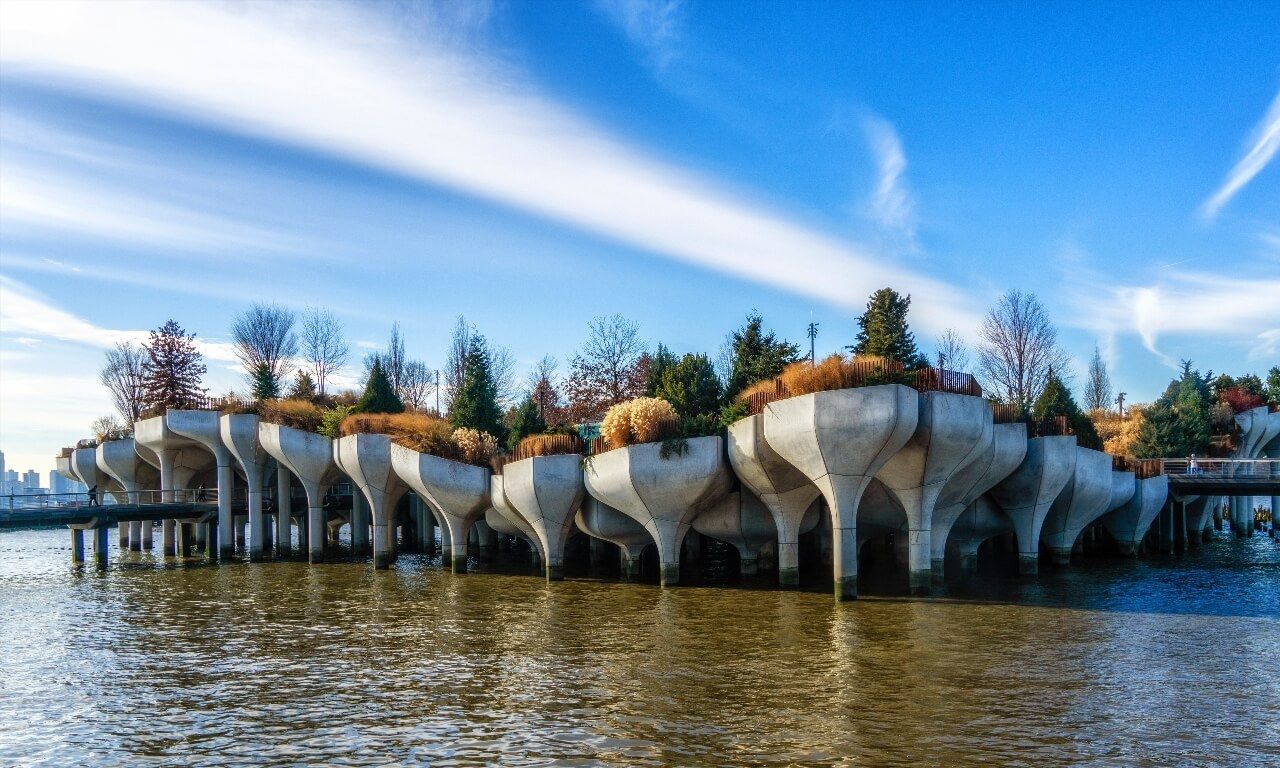
Little Island (Pier 55, Hudson River Park, 10014 New York, rated 4.7/5 on Google (17 143 avis)) is a public park built on 132 concrete tulip-shaped columns rising from the Hudson River at Pier 55 in the West Village, opened in 2021 and funded by a $260 million donation from media mogul Barry Diller. The columns are all different heights, creating an undulating landscape of hills and dells on a platform over the water. It is a peculiar and delightful place, small enough to walk entirely in 20 minutes, but designed with enough seating, planting variety, and water views to sustain a longer visit. The Amph, a 700-seat outdoor amphitheatre on the park's upper level, hosts free performances throughout summer. Entry is free, though during peak summer weekends, timed entry tickets (free) are required. Reservations open Tuesday mornings for the following weekend.
22. Washington Square Park
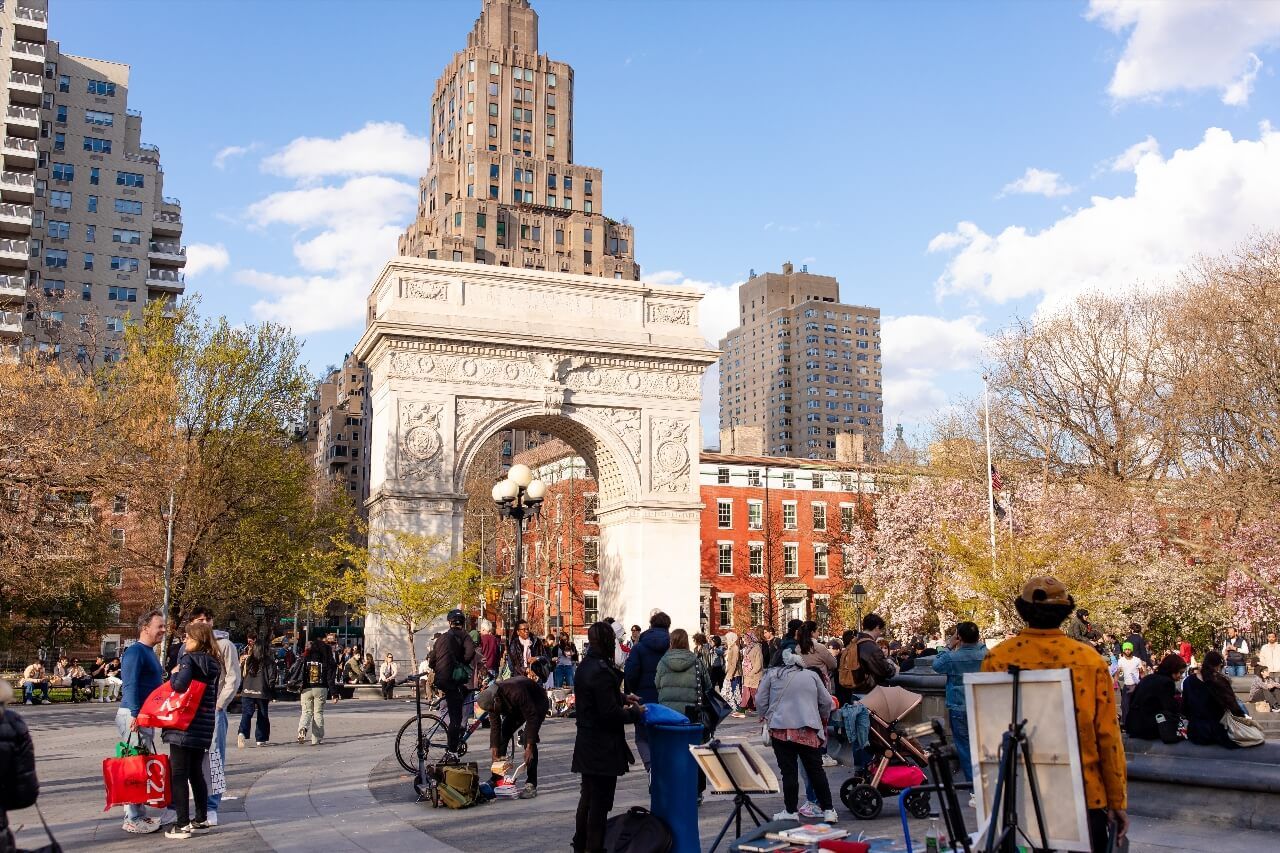
Washington Square Park (Washington Square Park, 10012 New York, rated 4.6/5 on Google (32 383 avis)) functions as the central plaza and gathering point of Greenwich Village, anchored at its northern edge by the Washington Arch, a marble triumphal arch built in 1892 to commemorate the centennial of George Washington's inauguration. NYU's campus surrounds the park on three sides, and its benches and lawns are consistently occupied, students, chess players at the permanent outdoor boards in the southwest corner, dog owners at the off-leash area, and weekend performers ranging from jazz musicians to street magicians.
The park was built on the site of a potter's field where an estimated 20,000 people are buried, mostly plague and cholera victims from the 18th and 19th centuries. That fact is not widely advertised. The fountain at the park's centre is one of the few spots in Manhattan where you can sit at water level with open sky above you and the surrounding buildings at a manageable remove. Free to visit at all times.
23. Governors Island
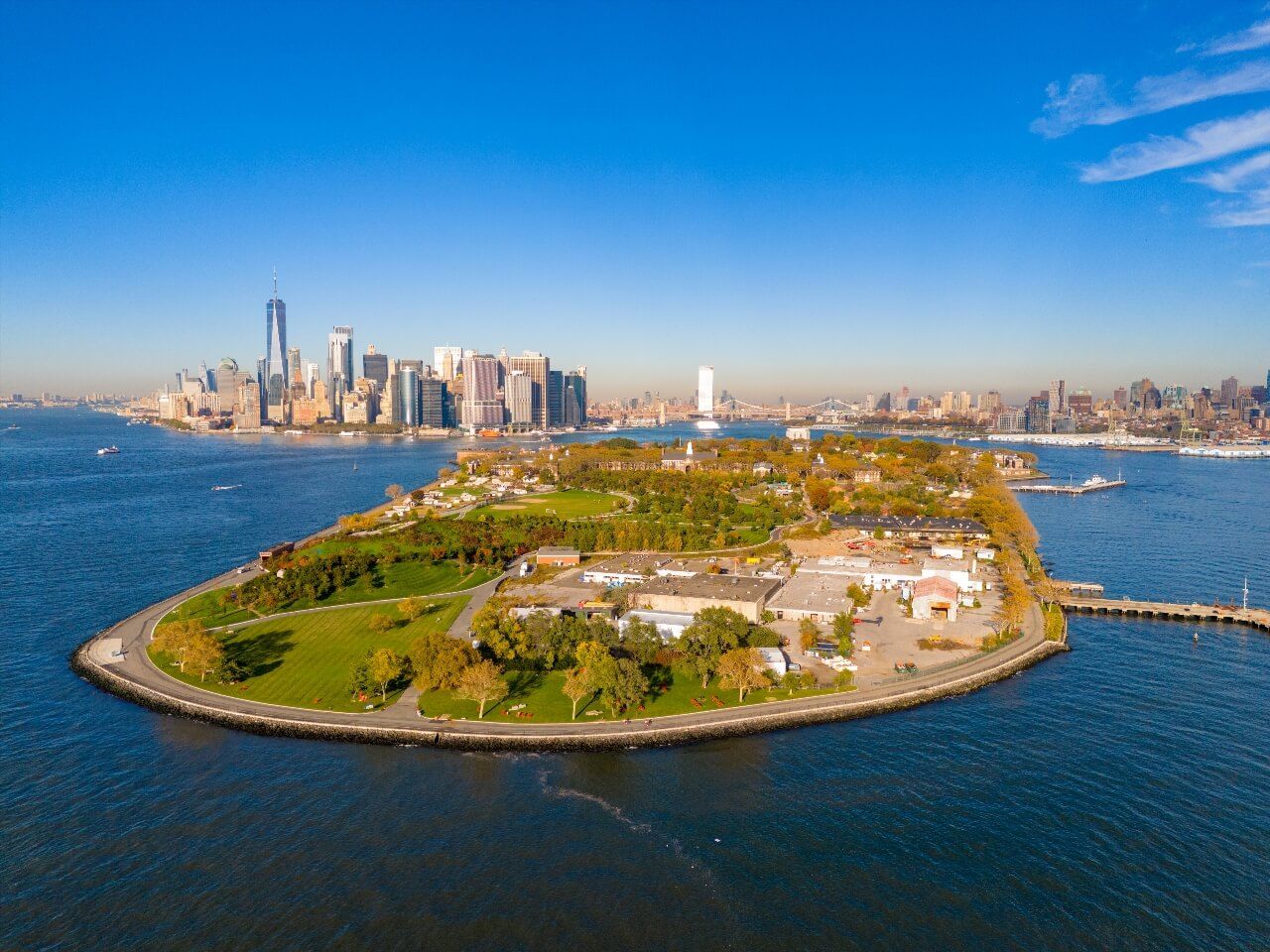
Governors Island (Governors Island, 10004 New York, rated 4.7/5 on Google (1 398 avis)) is a 172-acre island in New York Harbor, 800 metres south of Lower Manhattan, accessible only by ferry. It was a military installation for nearly two centuries, first a Continental Army post during the Revolutionary War, then a U.S. Army base until 1966, then a Coast Guard base until 1996. The National Park Service manages the northern third, which includes Fort Jay (1794) and Castle Williams (1811), a circular fortification built to defend the harbour.
The southern portion of the island has been developed as a public park, with hills constructed from 260,000 tons of landfill generated during the excavation of the Second Avenue Subway. Hammock Grove, a network of hanging hammocks between transplanted trees, is one of the stranger and more pleasant places to spend an afternoon in New York. The Hills offer panoramic views of the Statue of Liberty), lower Manhattan, and Brooklyn. The island is car-free; bicycles can be rented on-site. Ferry runs from Battery Maritime Building in Manhattan and from Brooklyn Bridge Park. Open late May through October; ferry tickets from $4 round trip.
24. Whitney Museum of American Art
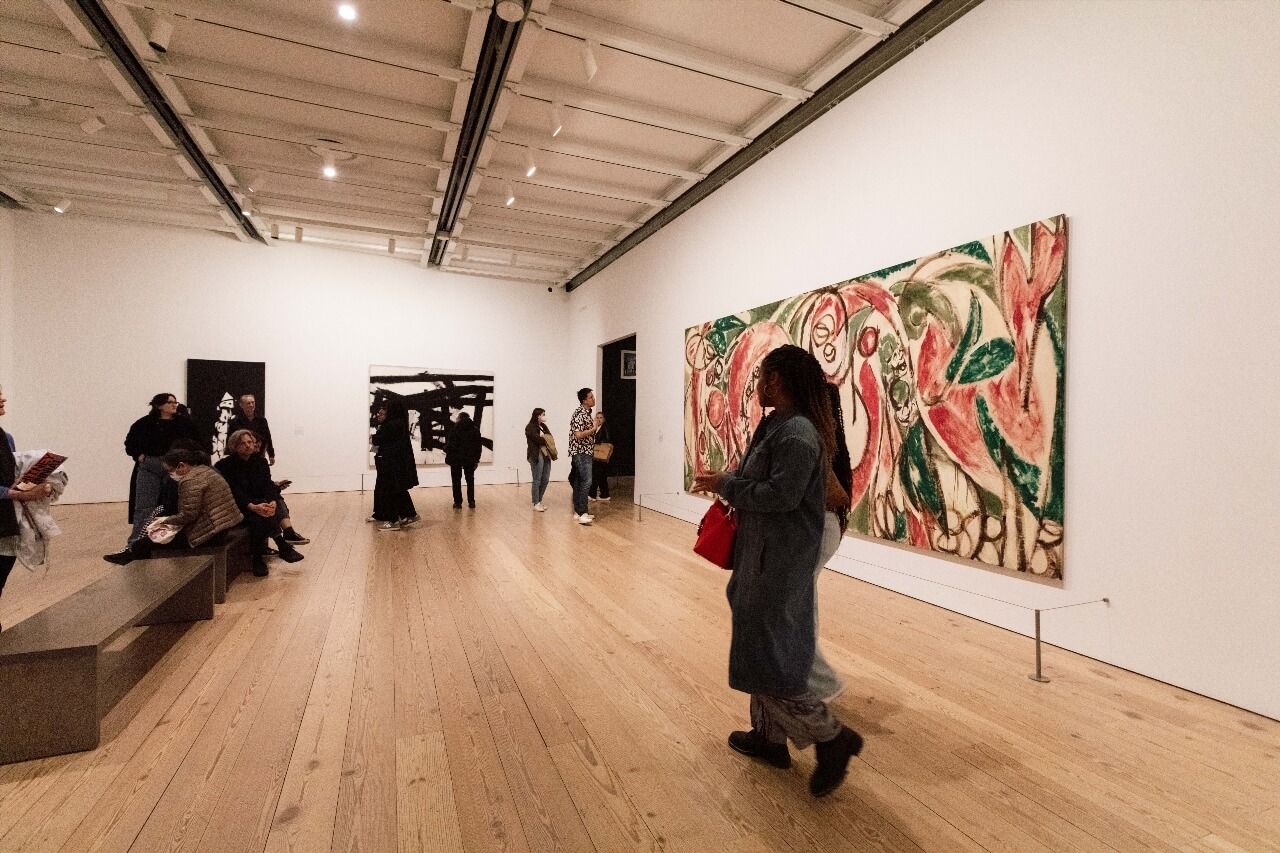
The Whitney Museum of American Art (99 Gansevoort St, 10014 New York, rated 4.5/5 on Google (14 696 avis)) sits at the southern end of the High Line in the Meatpacking District, in a building by architect Renzo Piano opened in 2015. The move from its previous Upper East Side location doubled the Whitney's gallery space and transformed its context, from a neighbourhood of old money to one of the most commercially active parts of lower Manhattan.
The Whitney's permanent collection focuses exclusively on 20th and 21st-century American art, with particular depth in paintings from the 1930s and 1940s: Edward Hopper, Georgia O'Keeffe, Reginald Marsh, Stuart Davis. The Hopper collection is the strongest anywhere, including Early Sunday Morning (1930) and A Woman in the Sun (1961). The museum's outdoor terraces on the upper floors offer layered views of the Hudson River, the Meatpacking District rooftops, and the High Line below. Admission is $25 for adults, free for visitors under 18. Friday evenings from 5 to 10 pm are offered on a pay-what-you-wish basis.
25. Broadway Show
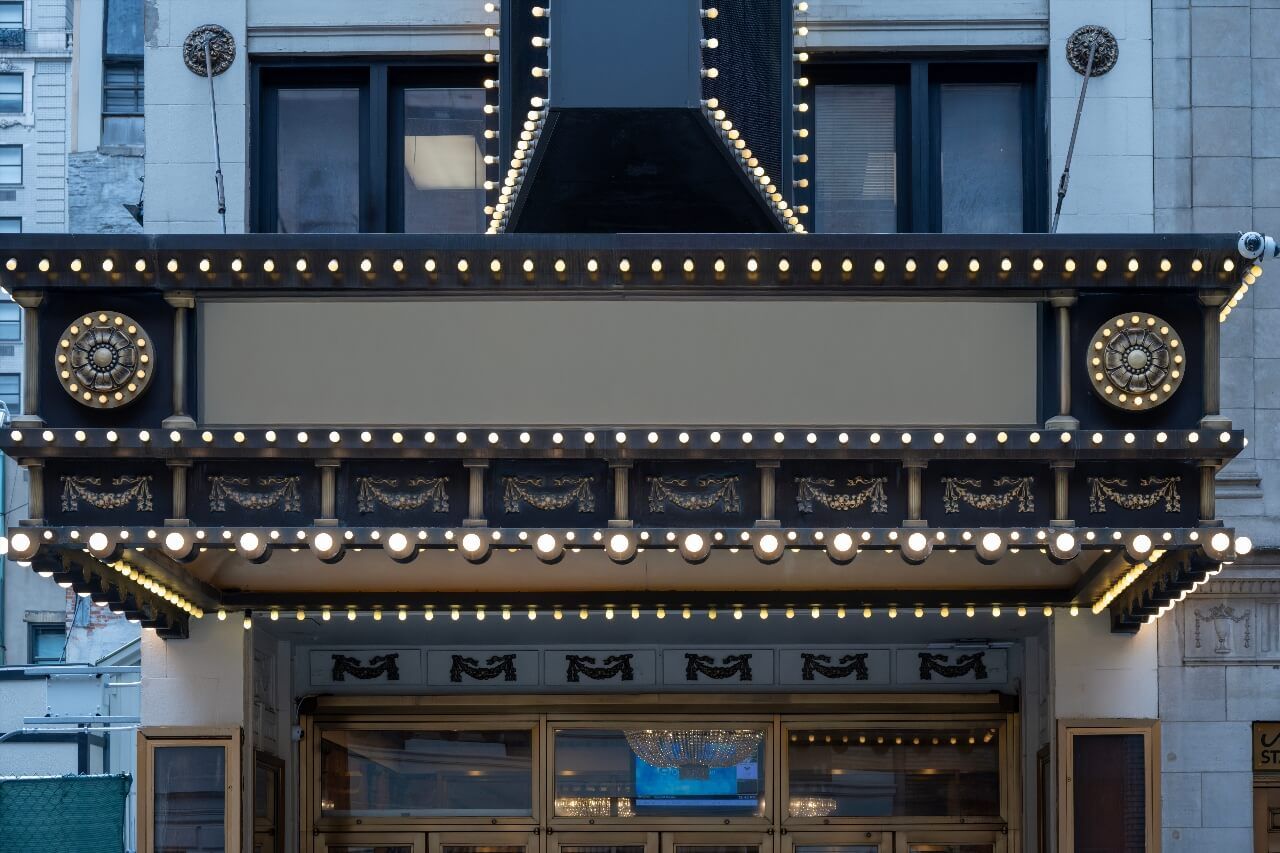
Seeing a Broadway show is not quite the same thing as visiting a landmark, but it is, for many visitors, the single most memorable experience they have in New York, and the one most likely to be cited years later. Broadway technically refers to the 41 theatres within a specific geographical boundary of Midtown Manhattan (roughly 40th to 54th Streets, between Sixth and Ninth Avenues), all seating 500 or more. As of 2025 : 2026, the season typically has 30 to 40 productions running simultaneously.
For tickets: the TKTS booth in Times Square sells same-day and next-day tickets at 20 : 50% off face value from 3 pm for evening shows and 10 am for matinees. The line is worth it. The TKTS app shows current availability and discounts before you commit to the queue. For advance booking, TodayTix and the box office directly are the most reliable routes. Avoid third-party resellers listing tickets above face value, primary ticket availability is generally better than reseller listings suggest, especially for midweek performances. Matinee tickets (typically Wednesday and Saturday afternoons, and Sunday afternoons) are usually $10, $30 cheaper than evening equivalents.
26. Tenement Museum
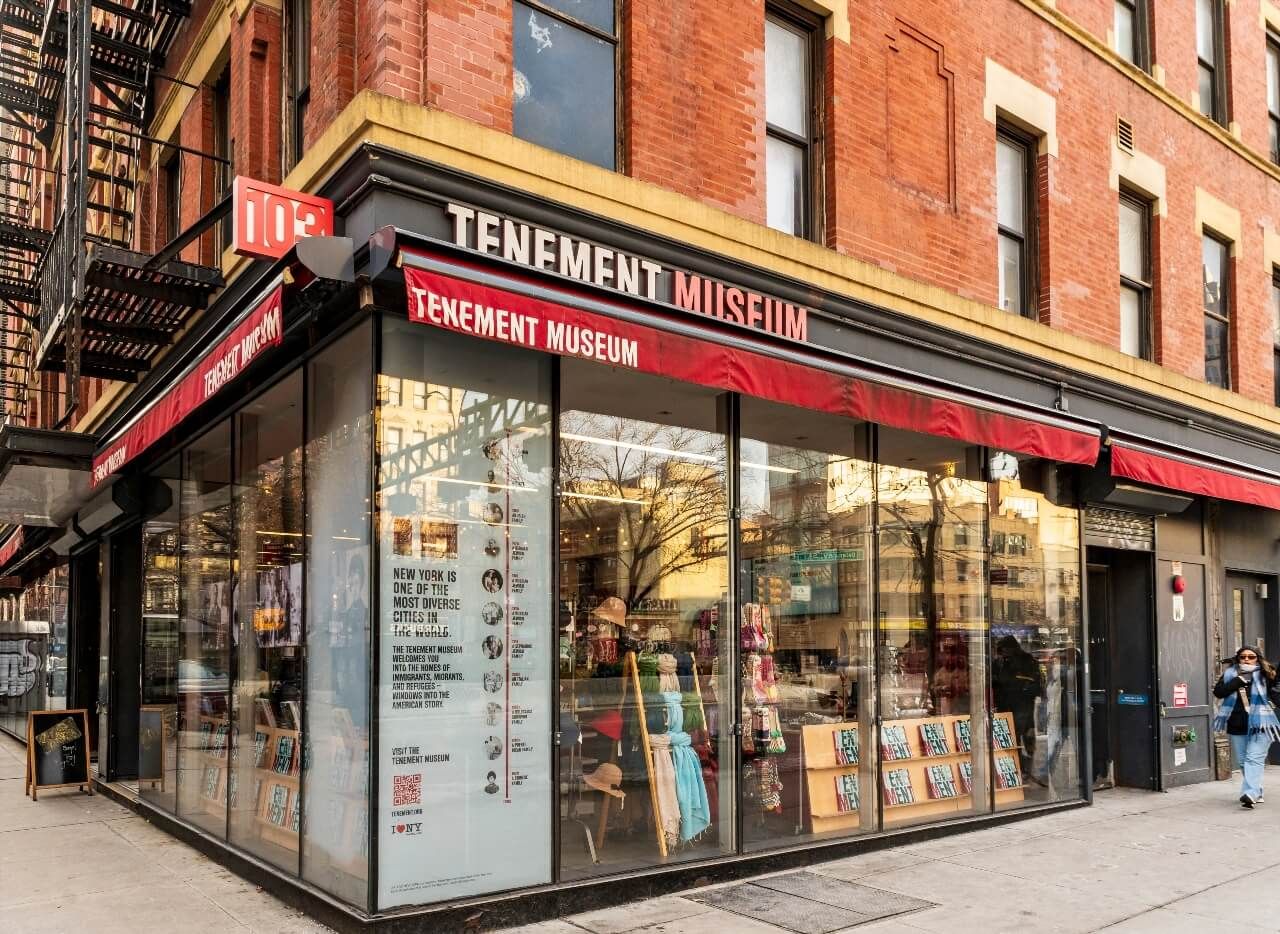
The Tenement Museum (103 Orchard St, 10002 New York, rated 4.6/5 on Google (5 846 avis)) on 103 Orchard Street in the Lower East Side is one of the most unusual museums in the United States. Rather than exhibiting objects in cases, it preserves the actual apartments of immigrant families who lived in a tenement building at this address between 1863 and 1935, and guides visitors through those spaces in small group tours.
The apartments have been partially restored based on archaeological and documentary evidence, original wallpaper layers uncovered, original plumbing fixtures preserved, furniture sourced from period sources. The building was occupied continuously by immigrant families from Germany, Ireland, Eastern Europe, Italy, and China across seven decades of the city's history. Different tour routes cover different families: the Moores (Irish Catholics, 1869), the Gumpertzes (German Jews, 1878), the Rogarshevsky family (Eastern European Jews, 1918). Each tour takes about 75 minutes and is limited to 15 people. Advance booking is strongly recommended, walk-up availability is limited, and weekend tours sell out weeks ahead. Admission is $30 for adults.
27. Flatiron Building
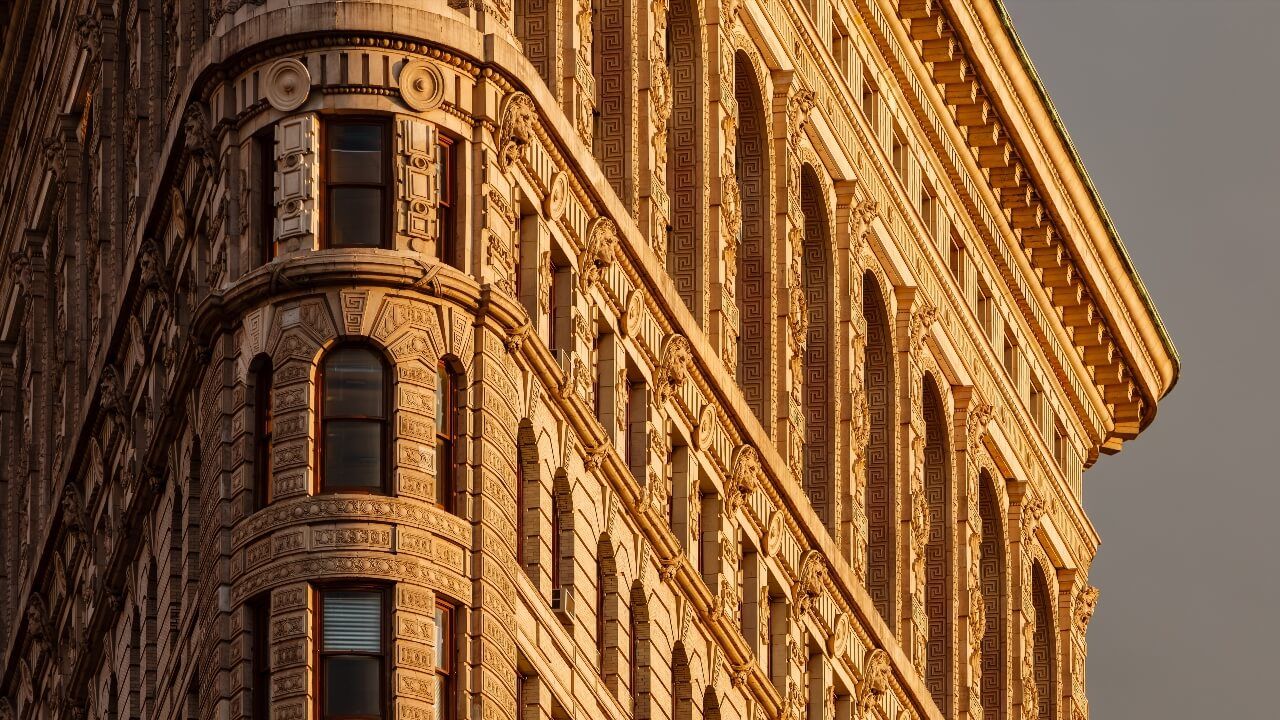
The Flatiron Building (175 5th Ave, 10010 New York, rated 4.5/5 on Google (15 104 avis)) at 175 Fifth Avenue is one of New York City's most immediately recognisable structures, a 22-story wedge-shaped steel-frame skyscraper built in 1902 on the triangular plot where Broadway crosses Fifth Avenue at 23rd Street. At its narrowest point, the building is just 6 feet wide. It was designed by Chicago architect Daniel Burnham and, at 285 feet, was among the tallest buildings in the world at the time of its construction.
The surrounding Flatiron District is pleasant to walk: the block of Broadway between 23rd and 26th Streets has several bookstores and independent restaurants, and Madison Square Park (one block north) has a free outdoor art programme and a permanent Shake Shack, the original location of the chain, opened in 2004 as a hot dog cart. The Flatiron Building itself was closed for renovation in 2023 and is being converted to residential use; the exterior can be photographed from Madison Square Park or from the corner of Fifth Avenue and 22nd Street.
28. Staten Island Ferry
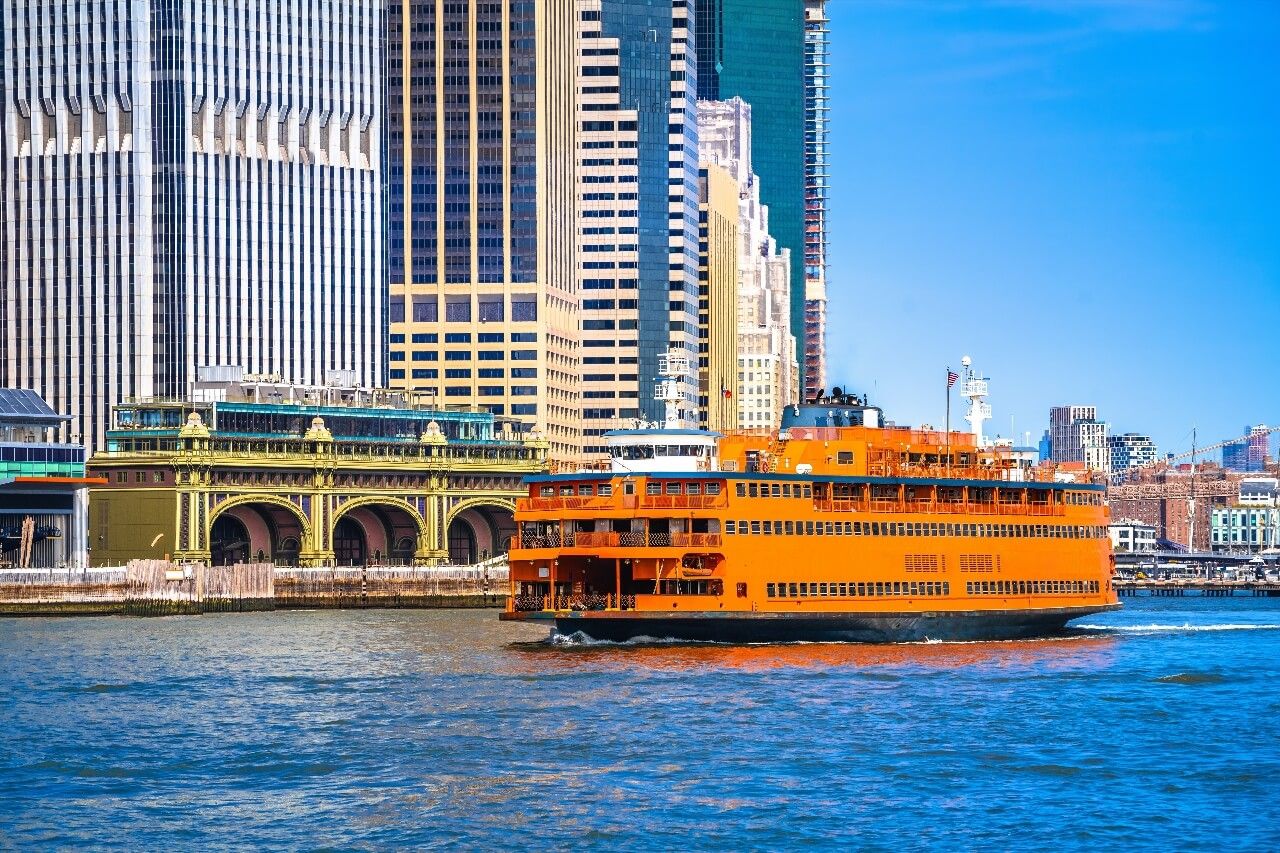
The Staten Island Ferry is free, operates 24 hours a day, 7 days a week, and crosses New York Harbor between Whitehall Terminal in Lower Manhattan and St. George Terminal on Staten Island. The 25-minute crossing passes within roughly 0.5 miles of the Statue of Liberty, close enough for clear photographs, and offers a continuous panorama of the Lower Manhattan skyline from the water.
For visitors primarily interested in the harbour views, the sensible move is to board, stand on the outer deck, take photographs, and return on the next boat without disembarking on Staten Island. Nothing about this is officially discouraged. The ferry runs every 20 to 30 minutes during peak hours and every 30 minutes at night. Whitehall Terminal is a 10-minute walk from the 9/11 Memorial (180 Greenwich St, 10007 New York, rated 4.8/5 on Google (92 958 avis)). There is no cheaper way to see New York from the water.
29. Intrepid Sea, Air & Space Museum
The Intrepid Sea, Air & Space Museum at Pier 86 on the Hudson River is built around the USS Intrepid, an Essex-class aircraft carrier commissioned in 1943 that served in both World War II and the Cold War and later recovered two NASA space capsules after splashdown. The ship's flight deck currently holds 28 aircraft, including a Lockheed A-12 Mach-3 spy plane, a British Airways Concorde (one of only 20 built, retired in 2003), and various Cold War-era fighter jets.
Below the flight deck: the ship's original combat information centre, the captain's bridge, and crew quarters have been preserved. The adjacent Space Shuttle Pavilion houses the Enterprise, the prototype space shuttle orbiter that was used for atmospheric test flights in 1977 but never flew in space. Admission is $36 for adults, $26 for children (ages 5 : 12). On clear days, the flight deck panorama of the Hudson River and the Jersey City skyline is worth the ticket price alone.
30. The Frick Collection
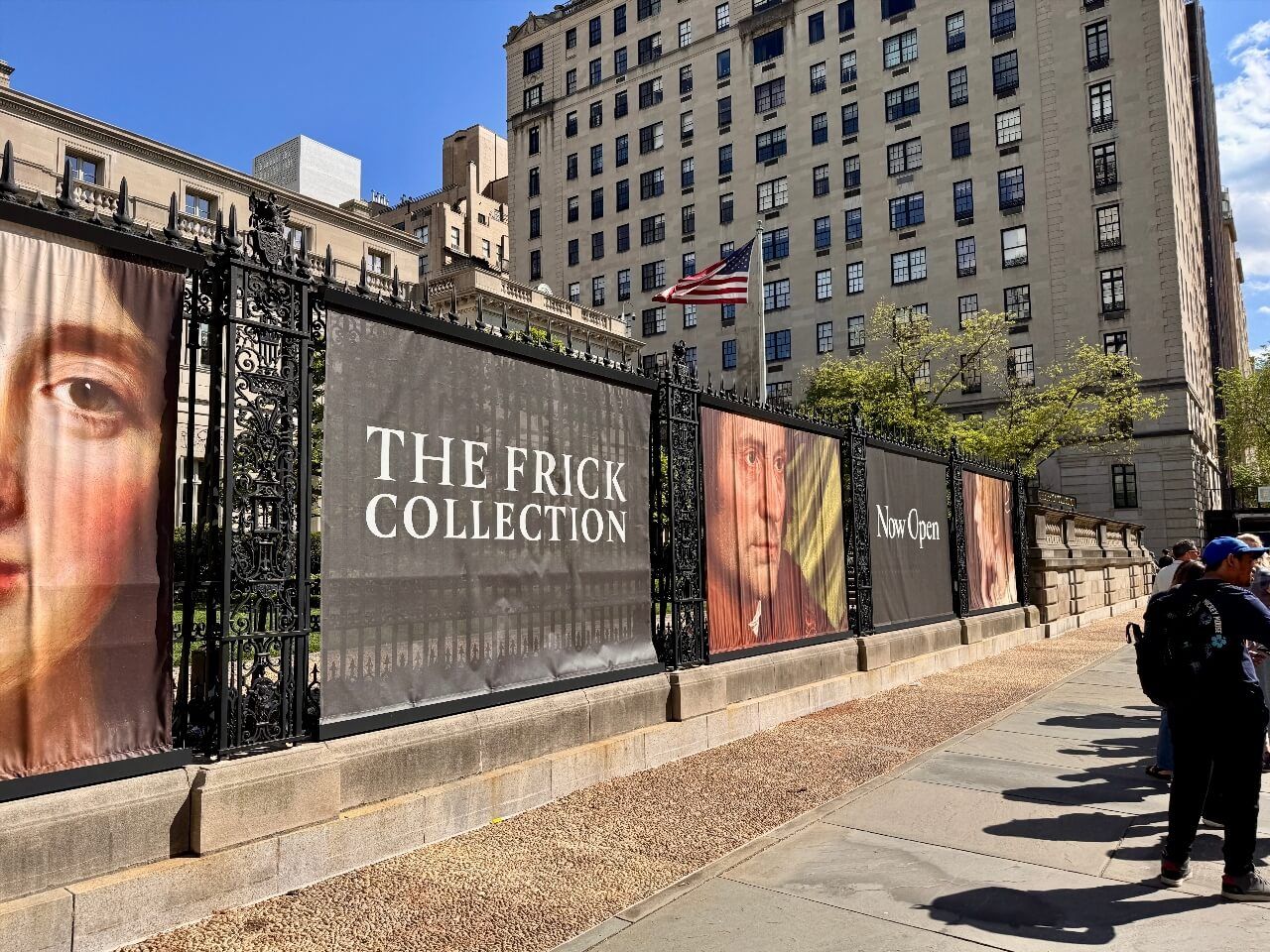
The Frick Collection (1 E 70th St, 10021 New York, rated 4.6/5 on Google (4 590 avis)) at 1 East 70th Street occupies the former residence of industrialist Henry Clay Frick, a Gilded Age mansion built in 1914 on the Upper East Side. Frick's bequest converted the house into a museum upon his death in 1919, and it has operated largely unchanged since, the paintings hang in the rooms they occupied in Frick's lifetime, with furniture, bronzes, and decorative objects in place.
The collection is small by major museum standards but precise: Vermeer'sOfficer and Laughing Girl and Girl Interrupted at Her Music, Rembrandt's Self-Portrait (1658), Titian's Portrait of a Man in a Red Cap, El Greco's St. Jerome, and Holbein's full-length portrait of Sir Thomas More. The Garden Court, a glass-roofed interior courtyard with a central fountain, is one of the most serene spaces in Manhattan. Admission is $22 for adults, free for visitors under 10.
31. Brooklyn Museum
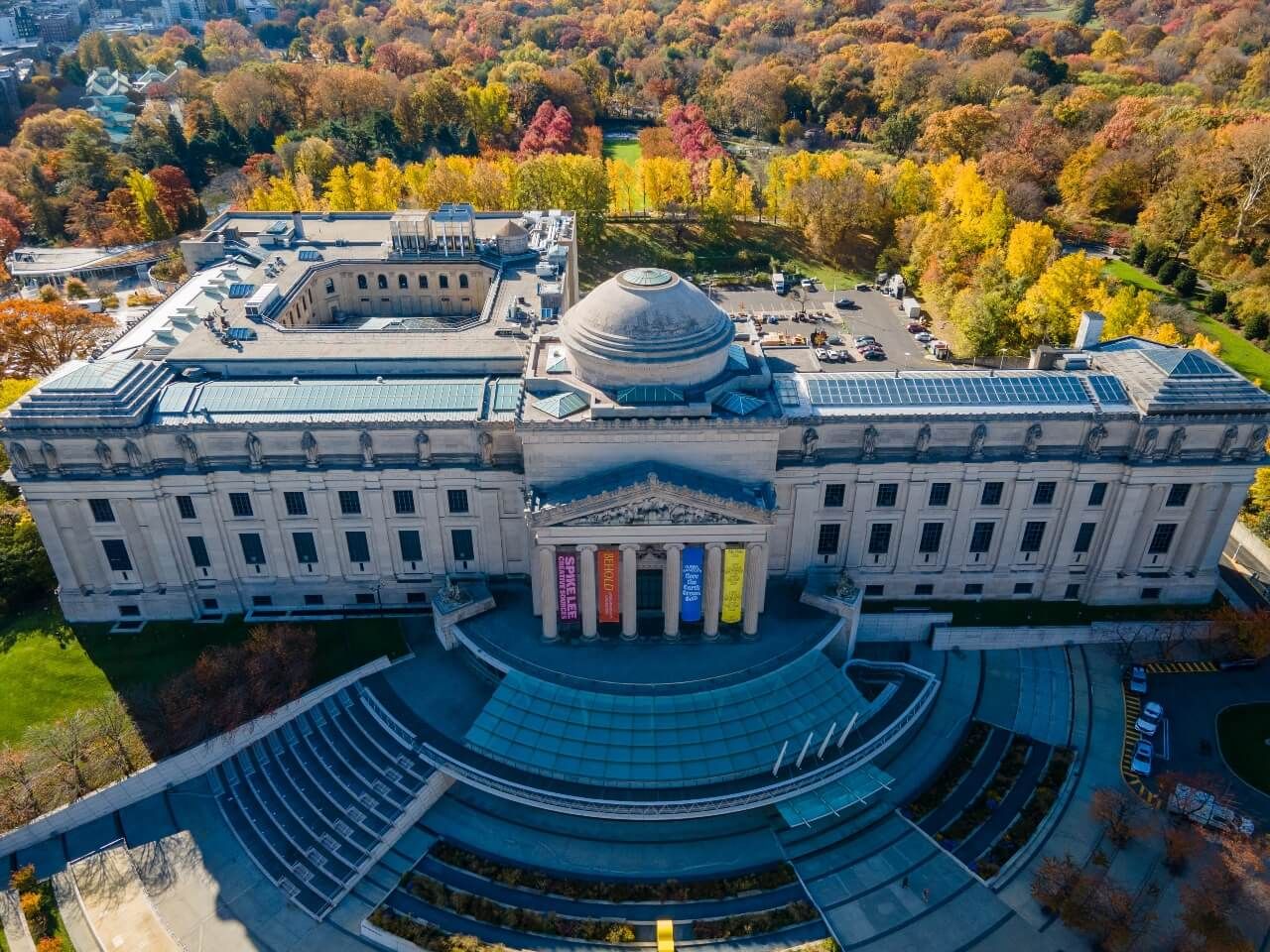
The Brooklyn Museum (200 Eastern Pkwy, 11238 Brooklyn, rated 4.7/5 on Google (10 117 avis)) at 200 Eastern Parkway is the second-largest art museum in New York City and one of the largest in the United States, yet it operates under the shadow of the Met in a way that means its collections are consistently less crowded and more accessible. The building, designed by McKim, Mead & White and opened in 1897, was originally planned to be the largest museum in the world; budget constraints and changing priorities meant only a portion was built.
The permanent collection is 1.5 million objects, with particular strength in ancient Egyptian art (the Egyptian galleries on the third floor include one of the best collections outside Cairo), American art from the colonial period through the mid-20th century, and an extensive collection of African and African-American art. The Elizabeth A. Sackler Center for Feminist Art on the fourth floor houses Judy Chicago's The Dinner Party (1979) permanently. Admission is $20 for adults (suggested donation). First Saturdays, the museum's free monthly evening event on the first Saturday of each month, draws large crowds but is lively and free.
32. Prospect Park
Prospect Park (Prospect Park, 11215 Brooklyn, rated 4.7/5 on Google (28 293 avis)) in central Brooklyn is the other great Olmsted and Vaux park in New York City, designed by the same team, opened in 1867, and considered by both designers to be a more successful execution of their landscape ideas than Central Park. At 585 acres, it is smaller than its Manhattan counterpart but contains the only remaining forest in Brooklyn: the Ravine, a 40-acre woodland in the northeastern section of the park, dense enough that the surrounding city becomes inaudible.
The Prospect Park Audubon Center at the Boathouse (free entry) runs birdwatching programmes and kayak launches on the lake in summer. The Long Meadow, a 90-acre open lawn, hosts free concerts and summer films. The park is free and open daily; the adjacent Brooklyn Botanic Garden (entry $18 for adults) is a separate, ticketed institution.
33. Chelsea Galleries
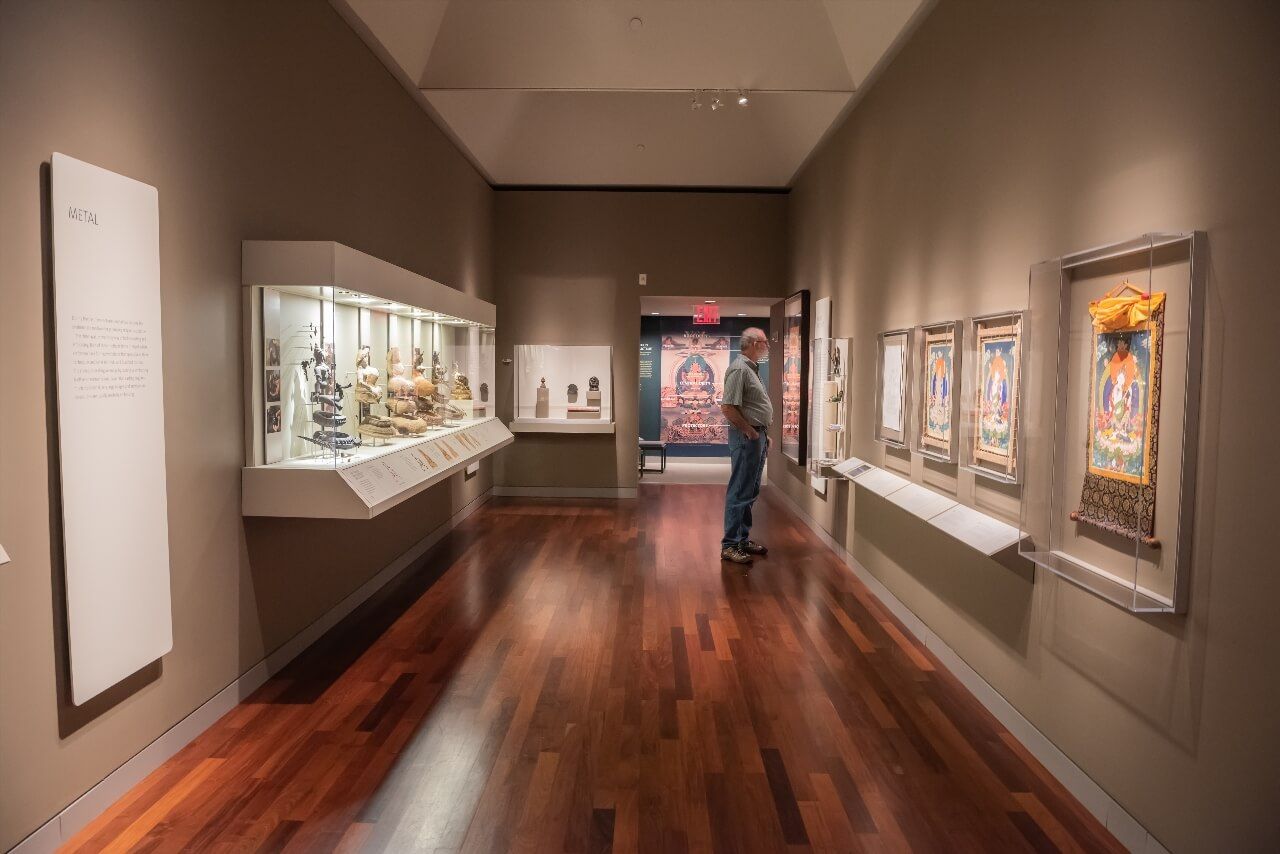
The cluster of contemporary art galleries concentrated on West 24th, 25th, and 26th Streets between Tenth and Eleventh Avenues constitutes one of the densest concentrations of gallery space in the world. The neighbourhood became New York's primary gallery district in the mid-1990s when Soho's rents forced dealers north and west; it currently holds over 200 galleries, ranging from globally significant institutions (Gagosian, David Zwirner, Hauser & Wirth, Pace) to smaller specialist spaces.
All galleries are free to enter. The standard format is white walls, minimal identification of works, and staff who are happy to explain what you're looking at if asked. The galleries are typically closed on Sundays and Mondays; Thursday evening openings (usually from 6 to 8 pm) are when new shows launch and when the neighbourhood is most active. The High Line entrance at 23rd Street deposits you directly into the gallery district's heart.
34. Smorgasburg
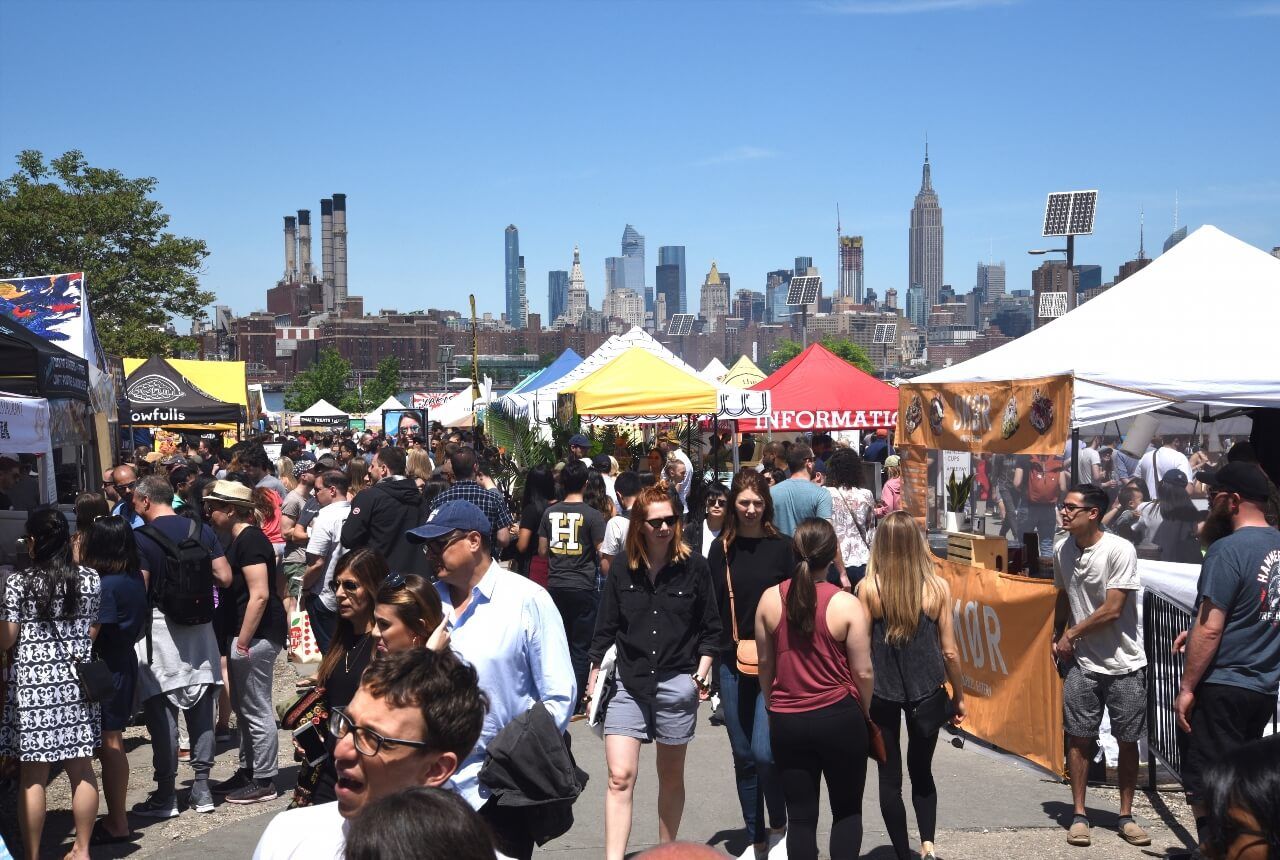
Smorgasburg is an open-air food market that operates every weekend from April through October, running Saturdays in Williamsburg (East River State Park, Brooklyn) and Sundays in Prospect Park (at the Breeze Hill Lawn). It began in 2011 as a food-only offshoot of the Brooklyn Flea and now hosts around 100 vendors each weekend, most of them small-batch and independent producers.
The market functions as a reliable index of New York's street food scene at a given moment, new concepts tested here, established vendors refining formats before opening brick-and-mortar locations. The Williamsburg location on Saturday has the added advantage of views across the East River to the Manhattan skyline. Arrive between 11 am and 1 pm for the best selection before popular vendors sell out. Free to enter.
35. Harlem
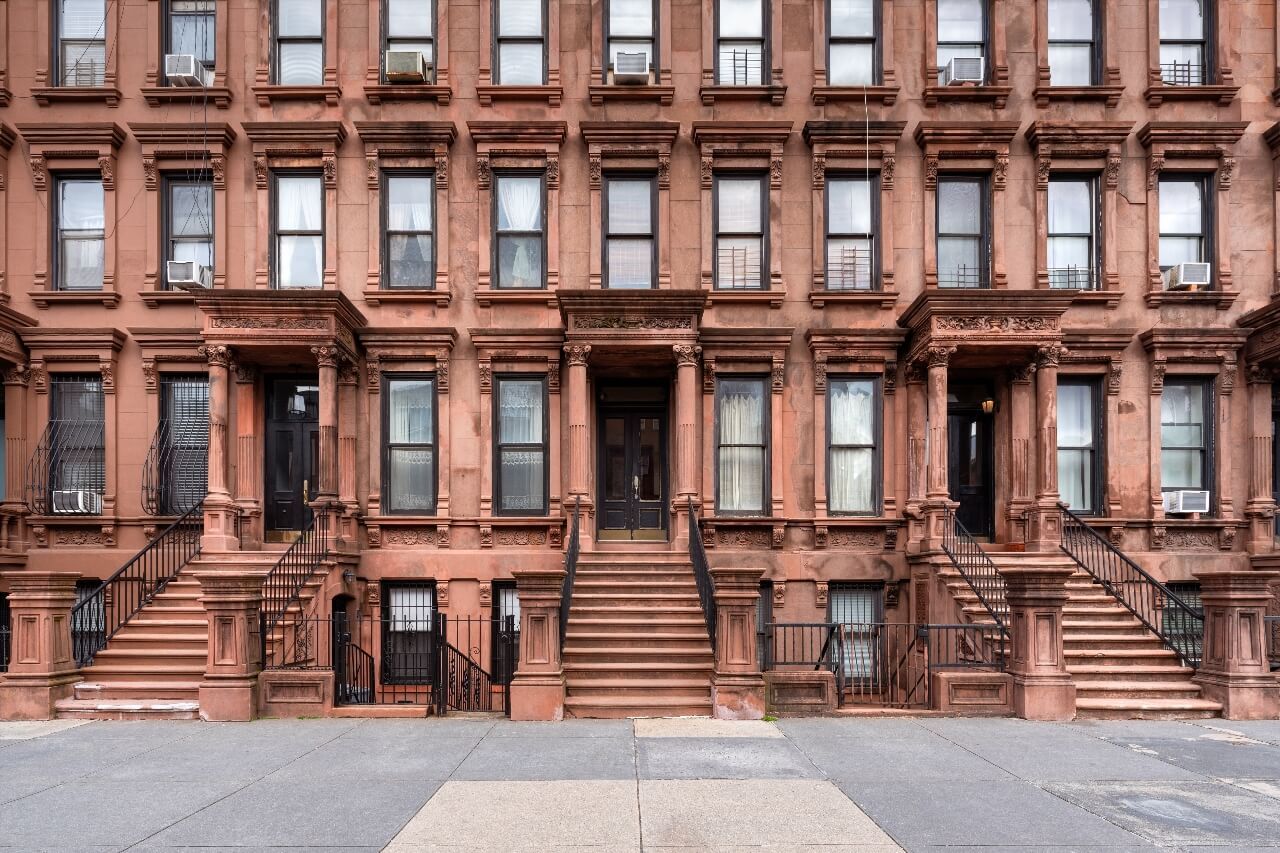
Harlem begins at 110th Street at the northern edge of Central Park and extends up through West and East Harlem to roughly 155th Street. Its cultural significance to African-American history, music, and political life in the 20th century is without parallel in any other American neighbourhood, the Harlem Renaissance of the 1920s produced or hosted Langston Hughes, Zora Neale Hurston, Duke Ellington, Louis Armstrong, and dozens of others who defined American literary and musical culture for the following century.
Key stops for a half-day visit: the Apollo Theater (253 W 125th St, 10027 New York, rated 4.6/5 on Google (8 282 avis)) at 253 West 125th Street, still operating as a performance venue and offering tours; the Abyssinian Baptist Church at 132 West 138th Street, one of the oldest and most architecturally significant Black churches in America (free Sunday services are open to respectful visitors); the strip of Marcus Garvey Park running up Mount Morris hill for a view over rooftops; and Sylvia's Restaurant on Lenox Avenue, open since 1962 and the best-known soul food restaurant in the city. Take the 2 or 3 train to 125th Street from Midtown, roughly 20 minutes.
FAQ
How many days do you need to see New York City?
Five to seven days gives you enough time to cover the major sights without rushing. With three days, you can comfortably see Manhattan's highlights, Central Park, the High Line, a museum or two, the Brooklyn Bridge, but you'll leave significant things undone. Two weeks allows you to explore outer boroughs, catch a Broadway show, visit Ellis Island, and build in time to simply walk neighbourhoods without a specific destination.
What is the best neighbourhood to stay in for first-time visitors?
Midtown Manhattan (roughly 34th to 59th Streets) puts you within walking distance of Times Square, the Empire State Building, MoMA, and Central Park, with the most direct access to the subway grid. The Lower East Side and Greenwich Village offer better food and nightlife options but require more subway travel to reach the major uptown and downtown sights. Brooklyn's Williamsburg is increasingly popular with visitors who prioritise independent restaurants and a less hectic pace.
Is New York City safe for tourists?
New York City is considerably safer than its international reputation suggests. Violent crime rates have declined dramatically since the early 1990s, and most tourist areas, Midtown, the Lower East Side, Brooklyn Bridge Park, the High Line, are well-patrolled and heavily trafficked at all hours. Standard precautions apply: keep your phone in your pocket in crowded subway stations, be aware of your surroundings near Times Square, and don't leave bags unattended. The subway runs 24 hours a day; late-night travel is generally safe on major lines (the 1, 2, 3, A, C) but can feel emptier on branch lines after 1 am.
What is the cheapest way to get around New York City?
The subway is the standard answer: a single ride costs $2.90 with an OMNY contactless payment (credit card or phone), with no surcharge for transfers between lines within two hours. The 7-day unlimited MetroCard at $34 is worth buying if you plan more than 12 rides. The Staten Island Ferry is free. Citi Bike (the city's bike-share system) charges $4.49 for a 30-minute single ride or $19/month for a subscription, useful for crosstown trips in Midtown, where the subway grid runs north-south and lateral trips require multiple transfers.
What is the best time of year to visit New York City?
September and October offer the best combination of mild weather (60 : 75°F), lower hotel rates than summer, and a full cultural calendar, Broadway's season peaks in autumn, the museums run major autumn exhibitions, and the city is not in tourist high season. May and June are also excellent: the parks are in full bloom, the outdoor markets and markets have reopened, and temperatures are comfortable. July and August can be oppressively hot and humid (90°F+), with higher hotel prices. December is cold but spectacular, the Rockefeller Center tree, holiday window displays on Fifth Avenue, and the ice rinks are all operational.
Is the New York City Pass worth buying?
The New York CityPASS (currently $149 for adults) includes admission to the Empire State Building, American Museum of Natural History, the Metropolitan Museum of Art, a Statue of Liberty ferry ticket, and a choice of two additional attractions. If you plan to visit all five within a week, the pass represents savings of roughly $70 over individual admission prices. The NYC Explorer Pass works differently, you choose a set number of attractions from a larger list, and may be better value if your itinerary skips one or two CityPASS venues. Both passes are sold at official websites and bypass standard ticket queues, which alone can be worth the price in peak season.
Conclusion
New York City rewards the visitor who goes looking for specificity rather than spectacle. The Temple of Dendur is more interesting once you know it was rescued from a rising reservoir. The Grand Central ceiling constellations are more interesting once you know they face the wrong way. Harlem is more interesting when you know that the same block hosted the jazz sessions that changed American music. This list gives you 35 starting points, the rest is up to your own curiosity, and a subway grid that will take you almost anywhere for $2.90.
New York is not a city you finish. But you can make a serious start.