
Créé par Romane, le 3 juin 2026
Votre guide Ryo
© Shutterstock
Philadelphia has a habit of surprising visitors who think they already know it. Yes, the Liberty Bell is here. So is a museum where you pay to see preserved human skulls and a still-active prison that opened before the French Revolution ended. The city gave the world the first American daily newspaper, the first public library, and cheesesteak, roughly in that order of historical significance, depending on who you ask. These are the best things to do in Philadelphia if you want to go deeper than the postcard.
Plan to climb the steps of the Philadelphia Museum of Art at sunrise, before the tour groups arrive. Wander Elfreth's Alley, the oldest continuously inhabited residential street in the country, where 18th-century brick rowhouses are still lived in today. Browse the Reading Terminal Market for an Amish soft pretzel on a Tuesday morning when the stalls are calm. Or let the Ryo audio guide for Philadelphia carry you through Old City at your own pace, unpacking two centuries of revolution, art and memory along the way. Twenty-five experiences follow, ranked loosely, entirely skippable in order.
1. Liberty Bell
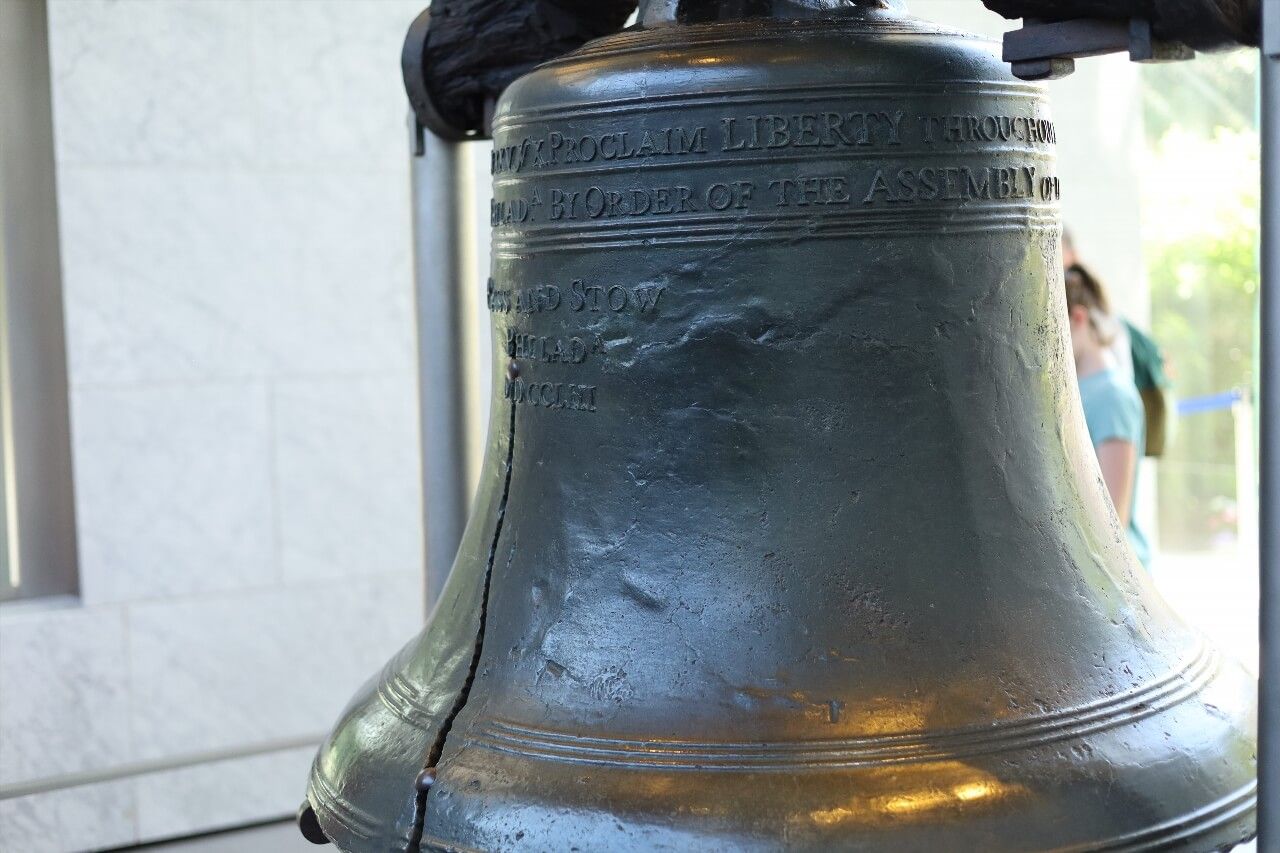
The Liberty Bell (526 Market Street, Philadelphia, PA 19106) stands inside a purpose-built pavilion that is open year-round, free of charge, with no ticket required. That last detail surprises more visitors than it should. You walk in, present yourself to security screening, and within minutes you are standing roughly three feet from one of the most reproduced symbols in American history.
The bell itself is smaller than most people expect, 12 feet in circumference at the lip, cast in London in 1752 and recast twice after cracking. The famous crack running up the side is the second fracture, not the first; the original repair is visible as a wider section on the opposing side if you look carefully. Rangers from the National Park Service give talks every 30 minutes; the 11am slot is usually the least crowded on weekdays.
Give yourself about 45 minutes total, including the short interpretive exhibits tracing the bell's use by abolitionists in the 19th century, a history that the bell's colonial origins don't immediately suggest. The building faces Independence Hall across a pedestrian plaza, which means you can do both in the same morning without moving your car.
2. Independence Hall
Independence Hall (520 Chestnut Street, Philadelphia PA 19106, rated 4.7/5 on Google (7 784 avis)) is where the Declaration of Independence was adopted in 1776 and the U.S. Constitution was drafted in 1787. Those are the facts in textbooks. What the textbooks skip is the physical experience of standing in the Assembly Room, a modest Georgian space with Windsor chairs arranged around plain tables, and understanding that the people who wrote those documents were arguing, sweating through Philadelphia summers, and occasionally walking out in fury.
Entry is free, but timed tickets are required from March through December (a $1 processing fee applies) and are available at the visitor center at 6th and Market Streets or online through the National Park Service. Without a timed ticket during peak season, you may wait two hours or more. The guided tour lasts around 35 minutes and takes you through the Assembly Room and the courtroom below, both spaces retaining much of their original 18th-century character.
The surrounding Independence National Historical Park extends several blocks and includes Congress Hall (where the first U.S. Congress met), Old City Hall, and Carpenters' Hall, where the First Continental Congress convened in 1774. A full morning is the right allocation. Arrive before 9am in summer if you want to avoid the largest groups; tour buses tend to arrive around 10:30am. The whole complex is within easy walking distance of the Liberty Bell, Old City, and Elfreth's Alley. Note that during summer extended hours (5pm to 7pm) and on July 1-4 plus July 14, no tickets are required at all.
For anyone who wants historical context before arriving, Ryo's audio experience for Philadelphia covers the political geography of this district and the lives of the figures who worked inside these buildings, not just the founding myths but the contradictions that surrounded them.
3. Philadelphia Museum of Art
The Philadelphia Museum of Art (2600 Benjamin Franklin Parkway, Philadelphia PA 19130, rated 4.8/5 on Google (23 045 avis)) ranks among the largest art museums in the United States by collection size, with over 240,000 works spanning 4,000 years. That number is almost meaningless until you spend four hours inside and realize you've covered perhaps fifteen percent of the permanent galleries.
The permanent collection includes a Duchamp room housing the largest single collection of his work anywhere in the world, a remarkable South Asian art wing, Japanese teahouse, a Georgian manor interior transplanted from England, and several major Impressionist and Post-Impressionist holdings, including Cézanne's The Large Bathers, which occupies an entire wall. Plan for at least half a day; the building itself, modeled on a Greek temple and completed in 1928, is as much the attraction as what's inside.
General admission runs $30 for adults as of 2026, free for visitors 18 and under, and $15 on Friday evenings under the museum's pay-what-you-wish program. The first Sunday of every month offers pay-what-you-wish admission, which fills the museum considerably, a trade-off worth knowing about. The famous exterior steps, which Rocky Balboa ran up in the 1976 film, are free to climb any time. A LOVE sculpture at the base of the steps is technically in a separate plaza (LOVE Park is a short walk east along the Parkway), but the Rocky bronze stands just to the right of the museum entrance and remains one of the most photographed spots in the city.
If you are visiting Philadelphia for the first time, the museum's permanent collection alone justifies a full day. On the second or third visit, the special exhibitions on the lower level, which regularly bring major touring shows, reward returning.
4. Reading Terminal Market
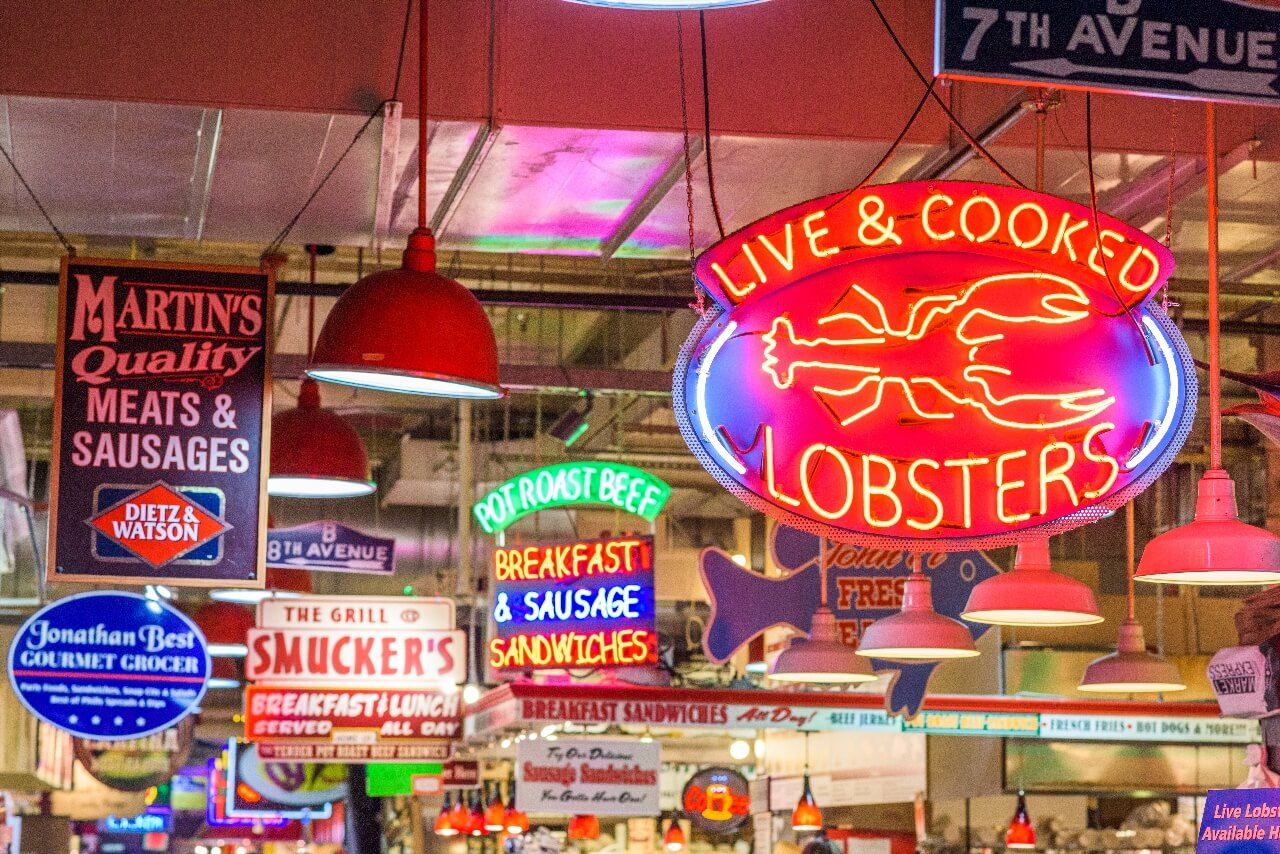
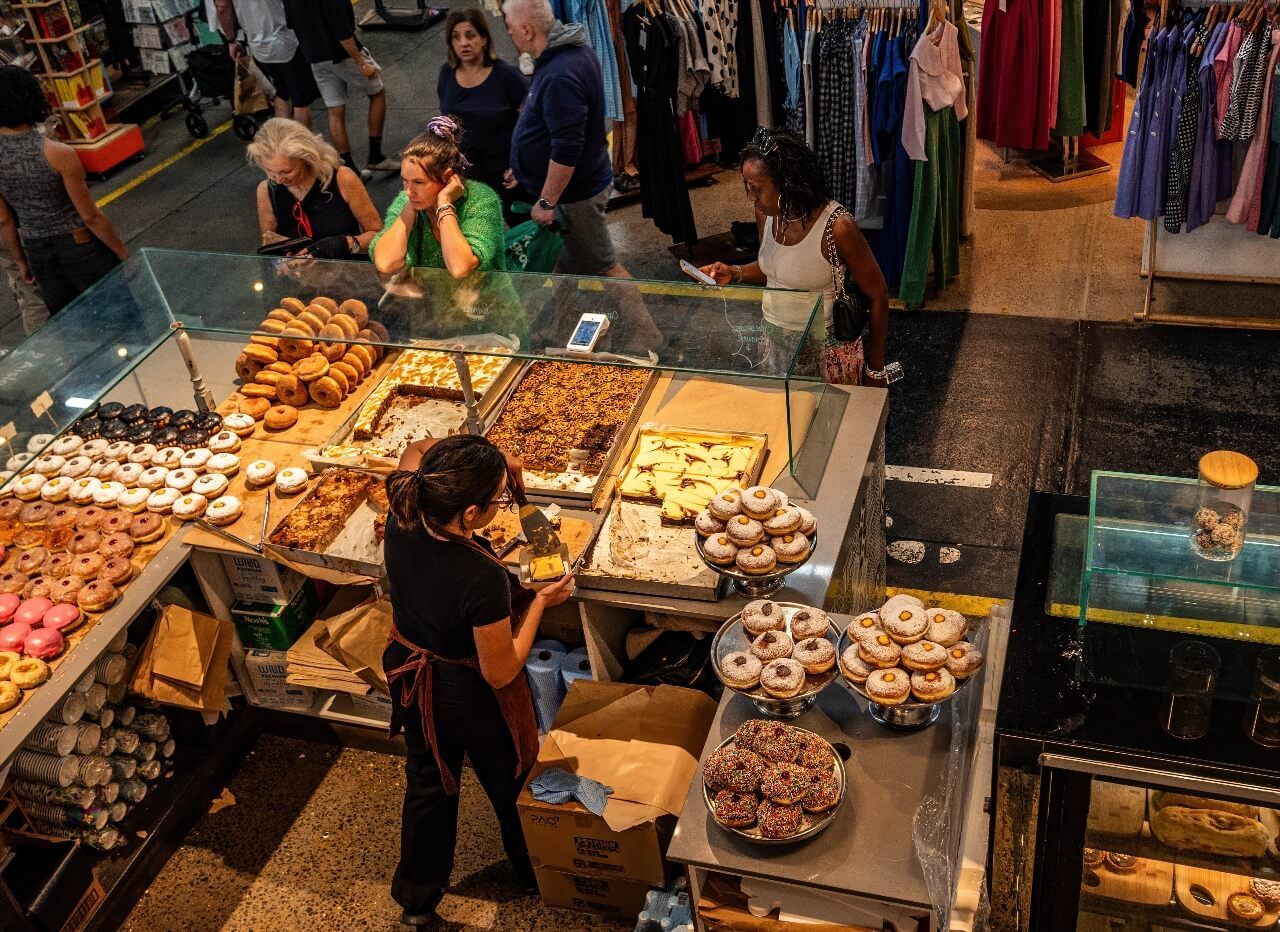
Reading Terminal Market (51 N 12th Street, Philadelphia PA 19107, rated 4.7/5 on Google (45 690 avis)) has operated continuously since 1893, making it one of the oldest and largest public markets in the country. It occupies the ground floor of the old Reading Railroad terminal, and on a busy weekday morning it feels like a concentrated version of Philadelphia itself: loud, warm, various, and entirely serious about food.
The market runs roughly 80 vendors, including Amish farmers and bakers from Lancaster County who set up Wednesday through Saturday, making the 70-mile drive in to staff their stalls those four days. DiNic's roast pork sandwich, pulled pork with sharp provolone and broccoli rabe on an Italian roll, was voted the best sandwich in America by the Travel Channel in 2012, and the line at the counter still reflects that. Bassetts Ice Cream has been operating here since 1893, the very first stall reserved when the market opened. The Dutch Eating Place serves scrapple and pancakes to people who arrived at 7am specifically for that reason.
Go on a weekday before noon if possible. Weekend crowds, especially on Saturday between 11am and 2pm, turn the narrow aisles into a slow shuffle. The market is also connected to the Pennsylvania Convention Center, which means it can be exceptionally packed during large events. Budget $15 : 20 per person for a proper meal and something sweet, more if the cheese and charcuterie vendors catch your attention, which they will.
This is one of the few places in the city where you can buy a Pennsylvania Dutch shoofly pie, hand-rolled soft pretzels from Amish bakers, and a Vietnamese banh mi within about forty feet of each other. It is also a legitimately useful grocery market if you happen to be staying nearby.
5. Eastern State Penitentiary
Eastern State Penitentiary (2027 Fairmount Avenue, Philadelphia PA 19130, rated 4.7/5 on Google (2 298 avis)) opened in 1829, held Al Capone, Willie Sutton, and several of Prohibition's more colourful figures, and closed in 1971. Since 1994 it has operated as a historic site, leaving the ruins largely intact, vaulted cellblocks, crumbling plaster, rusted doors and the original skylit solitary cells that Charles Dickens visited in 1842 and called a form of torture.
The penitentiary was designed on the Pennsylvania System of punishment: total solitary confinement, intended to produce penitence through isolation. Each prisoner was hooded when moved so they could not see other inmates or learn the prison's layout. The cells were large by contemporary standards, roughly 11.5 feet by 7.5 feet, and included a private outdoor exercise yard and a small skylight called the Eye of God. The architecture was meant to be contemplative. It became internationally influential; dozens of prisons across Europe and South America were modeled on it.
Self-guided audio tours are included in general admission, which runs $21 online for adults (or $23 at the door, with discounts for seniors, students and youth). The tour covers about two hours at a comfortable pace. The site is particularly atmospheric in autumn when fog settles in; the Halloween events (Terror Behind the Walls) run from late September through November 1st and are genuinely unsettling, they sell out weeks in advance. Photography is encouraged throughout, and the decayed Gothic architecture photographs well in almost any light.
Give it a full morning or afternoon. It pairs naturally with the nearby Philadelphia Museum of Art and Fairmount Park, all within walking distance along Fairmount Avenue.
6. Old City Neighborhood
Old City is Philadelphia's most densely historical neighborhood, stretching roughly between Front and 6th Streets and Market and Vine, a compact rectangle that contains Independence Hall, Elfreth's Alley, Christ Church, Betsy Ross House, and more plaques per block than anywhere else in America.
The neighborhood functions simultaneously as a living district and a walking history museum. Galleries, restaurants, and boutique hotels occupy 18th-century buildings alongside the sites where the American republic was designed. First Fridays, the first Friday evening of every month, draw crowds to gallery openings across the neighborhood; it's worth timing a visit around this if contemporary art interests you alongside the colonial history.
The best way to move through Old City is on foot, slowly, without a fixed agenda. Street-level details reward attention: the ironwork on Christ Church's fence, the way the 18th-century brickwork of Carpenters' Hall is different in color from the 19th-century additions around it, the unexpectedly narrow passage of Elfreth's Alley when you turn in from 2nd Street. Plan two to three hours minimum, more if you stop for lunch at one of the restaurants along 3rd or 2nd Street.
7. South Street
South Street (South Street and 4th Street, Philadelphia PA 19147, rated 4.3/5 on Google (5K reviews)) runs along the southern edge of Center City and has served as Philadelphia's alternative commercial strip for decades. The corridor between Front Street and about 11th Street concentrates record shops, tattoo studios, vintage clothing, comic book stores, independent restaurants, and the occasional institution that has been operating for forty years and shows no signs of changing.
Jim's Steaks at 400 South Street remains one of the city's most argued-about cheesesteak destinations. Lorenzo's Pizza serves slices from pans the size of parking spaces. Repo Records and some of the other independent music shops have survived years of commercial pressure and remain genuine cultural resources. The Mütter Museum is a short walk north from here, and Philadelphia's Magic Gardens, one of the most singular art installations in the country, is right on the street at 1020 South Street.
Evening is the right time for South Street, particularly Thursday through Saturday when the street fills and the bars and restaurants come alive. Daytime visits are quieter and better for the vintage shops. The whole strip is walkable in under an hour; most people spend two to three hours grazing.
8. Philadelphia's Magic Gardens
Philadelphia's Magic Gardens (1020 South Street, Philadelphia PA 19147, rated 4.6/5 on Google (5 620 avis)) is one of the most genuinely unusual public art installations in the United States. Artist Isaiah Zagar spent roughly 14 years covering not just the facade of the building at 1020 South Street but the entire interior courtyard, walls, floors, pathways, alcoves, with a continuous mosaic of mirror, bicycle wheels, tile fragments, glass bottles, and found objects pressed into cement.
Zagar began the project in 1994, working outward from his studio into adjacent lots, and spent years in legal dispute over his right to continue. The gardens now cover about half a block of indoor and outdoor space. The effect is overwhelming in the best sense: every surface fractures light differently, every passage opens onto a new visual field, and the density of embedded objects rewards close looking, you keep finding things you missed.
Admission is around $10 for adults. Photography is unrestricted and the space photographs exceptionally well. Go on a weekday afternoon for the best experience; weekends can crowd the narrow passages. The Magic Gardens also organize regular artist talks and special events. Budget 45 minutes to an hour, more if you want to examine particular sections slowly. Isaiah Zagar's original studio and adjacent mosaic-covered buildings extend further along South Street and are visible from the sidewalk at no charge.
9. Franklin Institute
The Franklin Institute (222 N 20th Street, Philadelphia PA 19103, rated 4.6/5 on Google (13 705 avis)) is Philadelphia's science museum, named for Benjamin Franklin, whose original electrostatic machine is among the permanent collection, and operates on a scale that makes a four-hour visit feel rushed. The Fels Planetarium, the Giant Heart (a walk-through model of a human heart that has been part of the museum since 1954), the electricity gallery, and the regular visiting exhibitions across multiple floors sustain serious attention.
General admission is around $25 for adults. The IMAX theater and planetarium shows cost extra. This is an excellent option for a rainy day and runs particularly well with families, though the Franklin as an institution is intellectually serious enough that adults without children get plenty out of it. The electricity demonstration shows, which run several times daily and involve Tesla coils and staff who are genuinely enthusiastic about high-voltage physics, are worth scheduling around.
The museum is located at the Parkway end of Benjamin Franklin Parkway, close to the Philadelphia Museum of Art, Barnes Foundation, and Rodin Museum, a concentration of major cultural institutions along one boulevard that makes the Parkway one of the most remarkable museum corridors in the country.
10. Mütter Museum
The Mütter Museum (19 S 22nd Street, Philadelphia PA 19103, rated 4.6/5 on Google (6 494 avis)) belongs to the College of Physicians of Philadelphia, which was founded in 1787, and it shows. The collection was assembled primarily in the 19th century as a medical teaching resource and includes 20,000 objects, preserved anatomical specimens, pathological preparations, antique medical instruments, and a library of historical case studies. It is not for everyone. For the right visitor, it is extraordinary.
The highlights in the permanent collection include a cast of the conjoined liver of the original Siamese twins Chang and Eng Bunker, a section of Albert Einstein's brain (preserved in slides), a collection of objects swallowed and retrieved by patients over two centuries, a seven-foot human colon, and the Hyrtl Skull Collection, 139 human skulls assembled by Viennese anatomist Joseph Hyrtl to disprove racial theories of cranial measurement. Each skull has a label with the person's name, age, occupation, and cause of death.
Admission is $25 for adults. Photography is permitted in most areas. The museum takes approximately two hours to see properly. People who find it fascinating tend to find it deeply so; people who find it unsettling know within the first ten minutes. The museum has also undergone significant renovations in recent years and some exhibits may have shifted, so check the current gallery layout on their website before visiting.
11. Fairmount Park
Fairmount Park (Fairmount Park, Philadelphia PA 19130, rated 4.6/5 on Google (12K reviews)) is often cited as one of the largest urban park systems in the United States, though the number varies depending on how the connected parkland is counted. The core along the Schuylkill River, roughly 3,000 acres of trails, meadows, historic houses, and woodlands, runs from the Philadelphia Museum of Art north toward Manayunk and provides an escape from the urban grid that feels disproportionately complete for a city park.
The park contains eight 18th-century country houses that were once summer retreats for Philadelphia's wealthy merchant families, now operated as historic house museums: Lemon Hill, Mount Pleasant, Strawberry Mansion, and others. The Horticulture Center and Japanese House (Shofuso) are also within the park boundaries. Cycling along the Schuylkill River Trail is a reliable way to cover significant ground, the trail runs from Center City north into the park and connects to a regional trail network extending far beyond the city.
Entry to the park itself is free. The historic houses have modest admission fees, typically $5 : 10. Boathouse Row, a stretch of Victorian boathouses along the east bank of the Schuylkill, is technically at the edge of Fairmount Park and is especially worth seeing at dusk, when the buildings are lit from within.
12. Philadelphia Zoo
The Philadelphia Zoo (3400 W Girard Avenue, Philadelphia PA 19104, rated 4.5/5 on Google (22 459 avis)) opened in 1874 as the first zoo in the United States, and it remains one of the most historically interesting as well as one of the more compact major urban zoos in the country. The 42-acre grounds are walkable in a single visit without the exhaustion that larger facilities can produce.
The zoo houses around 1,300 animals across more than 200 species, including great apes, big cats, white rhinos, polar bears, and one of the better primate collections on the East Coast. The Zoo360 trail system, a network of mesh pathways suspended above the grounds that allows big cats and great apes to move freely through the airspace above visitor pathways, was genuinely innovative when installed and remains one of the most memorable features. Watching a tiger walk twenty feet overhead on a transparent bridge is the kind of experience that doesn't translate well to description.
Admission runs around $28 for adults. The zoo is open 365 days a year. Peak crowds arrive on weekend afternoons between May and September; weekday mornings from late September through October offer good weather and noticeably smaller crowds. Allow a full half-day. The zoo is close to Drexel University and the University of Pennsylvania, so the surrounding Spruce Hill and Powelton Village neighborhoods offer good lunch options before or after.
Ryo's audio guide for Philadelphia connects the zoo's location within West Philadelphia to the broader story of how the city grew beyond its original colonial grid, context that gives the geography more meaning.
13. Penn Museum
The Penn Museum (3260 South Street, Philadelphia PA 19104, rated 4.7/5 on Google (2 876 avis)), formally the University of Pennsylvania Museum of Archaeology and Anthropology, holds one of the largest archaeological and anthropological collections in the world, much of it assembled during major excavations in Egypt, Iraq, and the Mediterranean between 1880 and 1940. The scale of the holdings is genuinely hard to process.
The Egyptian galleries contain a sarcophagus weighing 12 tons, moved into the museum before the roof was built because there was no other way to get it in. The Mesopotamian collections from the royal cemetery at Ur include extraordinary gold objects and a reconstructed palace interior. The museum also holds significant collections from ancient Greece, the Americas, Asia, and Africa, spread across three floors and several wings that were added over more than a century.
Admission is around $18 for adults. The museum is significantly less crowded than the Philadelphia Museum of Art, which makes extended engagement with specific galleries more practical. If ancient Near Eastern or Egyptian archaeology interests you particularly, plan two to three hours in those wings alone. The Renée and Avery Fisher Gallery, which houses the museum's most spectacular Egyptian objects, was renovated and reinstalled in recent years and is among the strongest permanent galleries in any American museum.
14. Elfreth's Alley
Elfreth's Alley (Elfreth's Alley, Philadelphia PA 19106, rated 4.7/5 on Google (10K reviews)) is the oldest continuously inhabited residential street in the United States, with 32 brick rowhouses dating from roughly 1703 to 1836 that are still occupied as private residences today. The alley is a narrow cobblestone passage that most visitors walk through in under ten minutes, and that ten minutes can be oddly affecting.
The street is free to walk and accessible at all hours. The Elfreth's Alley Museum at numbers 124 and 126 opens Thursday through Sunday and offers guided tours of two of the historic houses for a modest admission fee, typically around $5. Plaques on several houses identify the original occupants by trade, blacksmiths, glaziers, pewter workers, and the density of these trades in a single block gives a clear picture of how an 18th-century urban neighborhood actually functioned.
Photography is welcome from the alley itself, and the proportions of the street, the low rooflines, the shallow front stoops, the iron boot scrapers still fixed beside the doors, make for interesting compositional work. Come early in the morning before the tour groups arrive from Independence Hall. The alley connects directly to 2nd Street, where several of Old City's better coffee shops and breakfast spots operate.
15. Barnes Foundation
The Barnes Foundation (2025 Benjamin Franklin Parkway, Philadelphia PA 19130, rated 4.7/5 on Google (4 566 avis)) houses what many art historians consider the most important private art collection ever assembled in the United States. Albert C. Barnes, a Philadelphia doctor who made his fortune from an antiseptic he developed in 1902, spent the next three decades systematically acquiring Impressionist, Post-Impressionist, and early Modernist works with a focus and financial commitment that has few parallels in collecting history.
The collection includes 181 works by Renoir, the largest concentration anywhere, 69 Cézannes, 59 Matisses, and 46 Picassos, along with African sculpture, American decorative arts, and ironwork that Barnes hung alongside the paintings according to an installation logic he called the Barnes Method. The arrangement groups works by formal relationships, line, color, light, space, rather than chronology or attribution, and was considered eccentric when Barnes devised it. The current Parkway building, opened in 2012 after decades of legal battles over whether the collection could be moved from its original Merion location, recreates the original gallery layouts room by room.
Admission is around $30 for adults. Timed entry slots are strongly recommended and can be booked online. The galleries are deliberately intimate, each room is small enough that you can stand in the center and see every work clearly, and the lighting is natural, supplemented by carefully designed artificial light that approximates the conditions of the original building. Allow two to three hours minimum. The Barnes is one of the places in Philadelphia that rewards multiple visits; the collection is dense enough that repeat visitors continue to find works they missed.
For art lovers visiting Philadelphia for the first time, the Barnes and the Philadelphia Museum of Art together constitute an argument that this city's art holdings rival those of any American city outside New York.
16. Rittenhouse Square
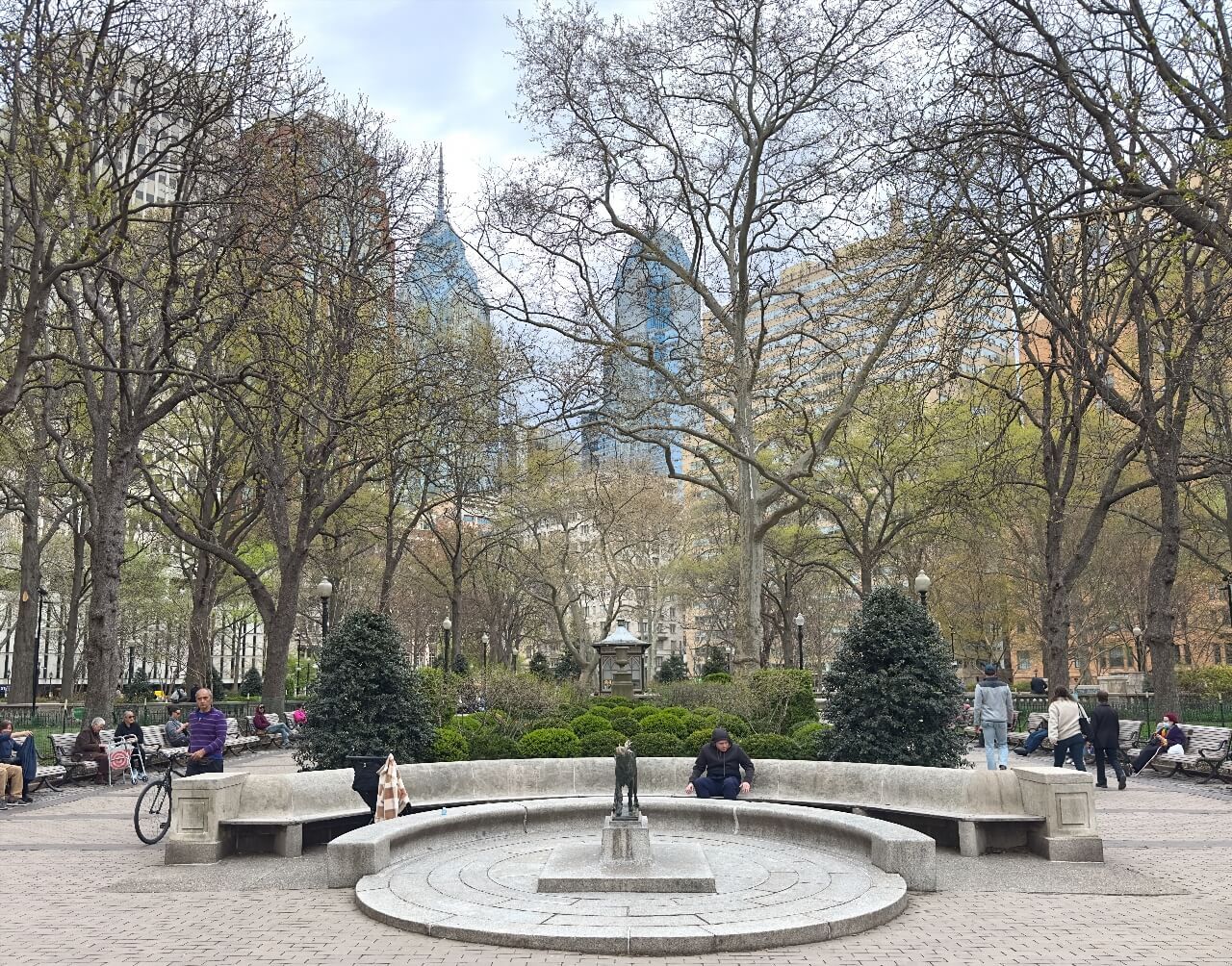
Rittenhouse Square (Rittenhouse Square, Philadelphia PA 19103, rated 4.7/5 on Google (16K reviews)) is one of the five original squares William Penn designated in his 1682 plan for Philadelphia, and it remains the most active of the five as a daily public space. The park itself covers about two acres at the corner of 18th and Walnut Streets, surrounded by some of the city's most expensive real estate. On a warm afternoon it functions as an informal gathering point for an improbable cross-section of the city, while the side streets off Walnut and Locust between 17th and 20th host independent restaurants, wine bars, and the kind of bakeries that sustain a genuinely residential urban district.
The Rittenhouse Farmers Market runs Saturday mornings and draws local producers from across southeastern Pennsylvania. Entry to the park is free; eating around the square is substantially less so.
17. Italian Market
The Italian Market (9th Street and Washington Avenue, Philadelphia PA 19147, rated 4.6/5 on Google (1 618 avis)) (9th Street between Christian and Washington Streets, Philadelphia, PA 19147) is North America's oldest and largest outdoor urban market, operating continuously since the 1880s along a stretch of South 9th Street that has been a commercial corridor for successive waves of immigrant communities, Italian, Vietnamese, Mexican, without losing its essential outdoor-market character.
The market operates Tuesday through Sunday, with vendors arriving as early as 7am. The street is lined with open-air stalls and storefronts selling fresh produce, live poultry, fish, imported Italian groceries, and some of the city's most competitive cheesesteak at DiPasquale's and Claudio's. The Fante's Kitchen Shop at 1006 S 9th Street has been selling cookware since 1906 and carries equipment you will not find in most kitchen stores. Sarcone's Bakery, a few blocks north, produces the seeded Italian rolls used by many of the city's best sandwich shops.
Saturday morning is the most atmospheric time to visit, when the full market is operating and the street smells like coffee, fish, and bread simultaneously. Budget two hours minimum; the market is dense and rewards slow walking. Take cash, many of the vendors are cash-only.
18. National Constitution Center
The National Constitution Center (525 Arch Street, Philadelphia PA 19106, rated 4.6/5 on Google (2 648 avis)) is the only institution in the world that is congressionally chartered to "disseminate information about the United States Constitution." That legislative mandate has produced something more interesting than you might expect: a museum that treats the Constitution as a living, contested document rather than a sacred text.
The permanent exhibition covers the entire arc of constitutional history, from the original debates in 1787 through the Civil War amendments, women's suffrage, the New Deal, civil rights legislation, and contemporary controversies about presidential power and free speech. Signers' Hall, a room-sized installation of 42 bronze statues of the men who signed the Constitution at life-scale, is unexpectedly compelling: you can walk among them, read their biographies, and note the six delegates who refused to sign. The theater presentation, which runs every 45 minutes, frames the constitutional story effectively before you enter the galleries.
Admission runs around $22 for adults. The center is located on Independence Mall between the Liberty Bell and Elfreth's Alley, making it a natural addition to a morning spent in Old City. Allow two hours for a comfortable visit. The center also hosts temporary exhibitions on specific constitutional themes; check the current offerings online before visiting.
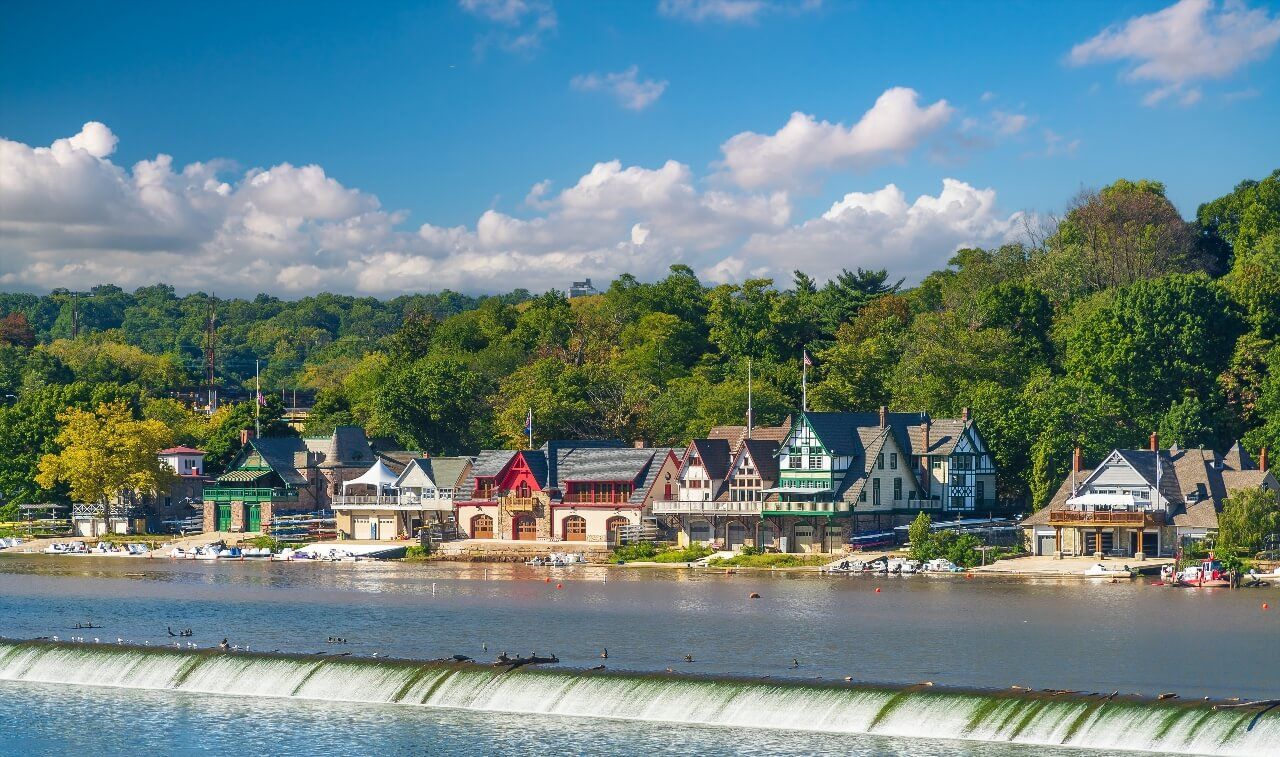
19. Boathouse Row
Boathouse Row (1 Boathouse Row, Kelly Drive, Philadelphia, PA 19130) is a line of 15 Victorian boathouses along the east bank of the Schuylkill River, each belonging to a different rowing club, each outlined in white lights that reflect off the water after dark. Come after 7pm when the outline lights are on; the reflection in the Schuylkill on a calm evening is the standard postcard. The walkway along Kelly Drive runs the full length of the row and access is completely free.
20. LOVE Park
LOVE Park (1599 John F. Kennedy Blvd, Philadelphia, PA 19102), formally John F. Kennedy Plaza, takes its name from the LOVE sculpture by Robert Indiana, installed here in 1976 for the American Bicentennial, removed, returned, and made permanent in 2016 after the 2018 redesign. The park sits at the foot of the Benjamin Franklin Parkway, ten minutes on foot from City Hall, and works as a logical starting point if you are walking the Parkway toward the Philadelphia Museum of Art. Free to photograph at any hour.
21. Philadelphia's Waterfront
The Delaware River Waterfront along Penn's Landing (101 S Columbus Blvd, Philadelphia PA 19106, rated 4.3/5 on Google (8K reviews)) has been undergoing gradual but genuine transformation for the past decade. The stretch between Market Street and Washington Avenue now includes a riverfront park, several piers, seasonal programming, and the Independence Seaport Museum, making it worth a visit in a way that was harder to argue ten years ago.
The Independence Seaport Museum anchors the cultural offer at the waterfront. Its collection covers the maritime history of the Delaware Valley and includes two historic vessels moored alongside: the USS Olympia, Admiral Dewey's flagship from the Spanish-American War of 1898 and the oldest steel warship still afloat in the world, and the WWII submarine USS Becuna. Both are open for self-guided tours included in museum admission (around $21). The Olympia alone, a 340-foot cruiser preserved largely in its 1898 configuration, is one of the more historically significant ships accessible to the public anywhere on the East Coast.
The surrounding waterfront is free to walk and particularly pleasant on warm evenings. The Race Street Pier, just north of the Benjamin Franklin Bridge, is a well-designed linear park with unobstructed views of the bridge and the New Jersey shore. Spruce Street Harbor Park, a seasonal installation of hammocks, floating gardens and food vendors, operates on the waterfront between spring and autumn.
22. Spruce Street Harbor Park
Spruce Street Harbor Park (301 S Christopher Columbus Blvd, Philadelphia, PA 19106) operates seasonally, roughly May through September, as a waterfront activation along the Delaware: a string of hanging lights, floating gardens, hammocks over the water, food trucks, lawn games, and a generally festive atmosphere that makes it one of the more enjoyable outdoor spaces in the city during warm months. Entrance is free. Evenings during July and August, when the lights are reflected in the river and the city skyline fills the background, are among the most pleasant warm-weather experiences the city offers. Arrive around 6pm to get a hammock before the evening crowd takes them all.
23. The Philadelphia Flower Show
The Philadelphia Flower Show, presented by the Pennsylvania Horticultural Society, has run almost continuously since 1829, making it the oldest and largest indoor flower show in the world. It runs for nine days in early March at the Pennsylvania Convention Center (1101 Arch Street, Philadelphia PA 19107, rated 4.5/5 on Google (8 192 avis)), covering nearly 300,000 square feet of exhibition space with elaborate garden installations built by landscape designers, nurseries, and florists from across the country.
Tickets run around $40 on peak weekend days. The event attracts close to 250,000 visitors during its nine-day run, and the scale of the installations, some of which take months to build and cannot be moved without destroying them, genuinely exceeds anything described in photographs. If you are visiting Philadelphia in early March, this is worth scheduling around.
24. Betsy Ross House
Betsy Ross House (239 Arch Street, Philadelphia PA 19106, rated 4.5/5 on Google (3 918 avis)) sits in Old City and is one of the most visited historic sites in Philadelphia, in part because the story attached to it, that seamstress Betsy Ross sewed the first American flag here on George Washington's personal request in 1776, is far more complicated than the exhibit suggests.
The house itself is a well-preserved Georgian urban dwelling from approximately 1740, and the interpretation now honestly acknowledges the uncertainties around the flag story, which first appeared in an 1870 account by Betsy Ross's grandson and has no documentary support from the 18th century. What is not in dispute is that Ross was a skilled professional upholsterer and seamstress who ran her own business in this house after being widowed, which was itself unusual for the period.
Admission is around $7 for adults. The guided tour takes about 45 minutes and moves through all five floors of the narrow rowhouse, including the kitchen and workroom. It is worth combining with Elfreth's Alley and Independence Hall, all within easy walking distance. The house also runs a flag-making program where visitors can stitch a small version of the first flag design, genuinely popular with children and surprisingly meditative for adults.
25. Wissahickon Valley Park
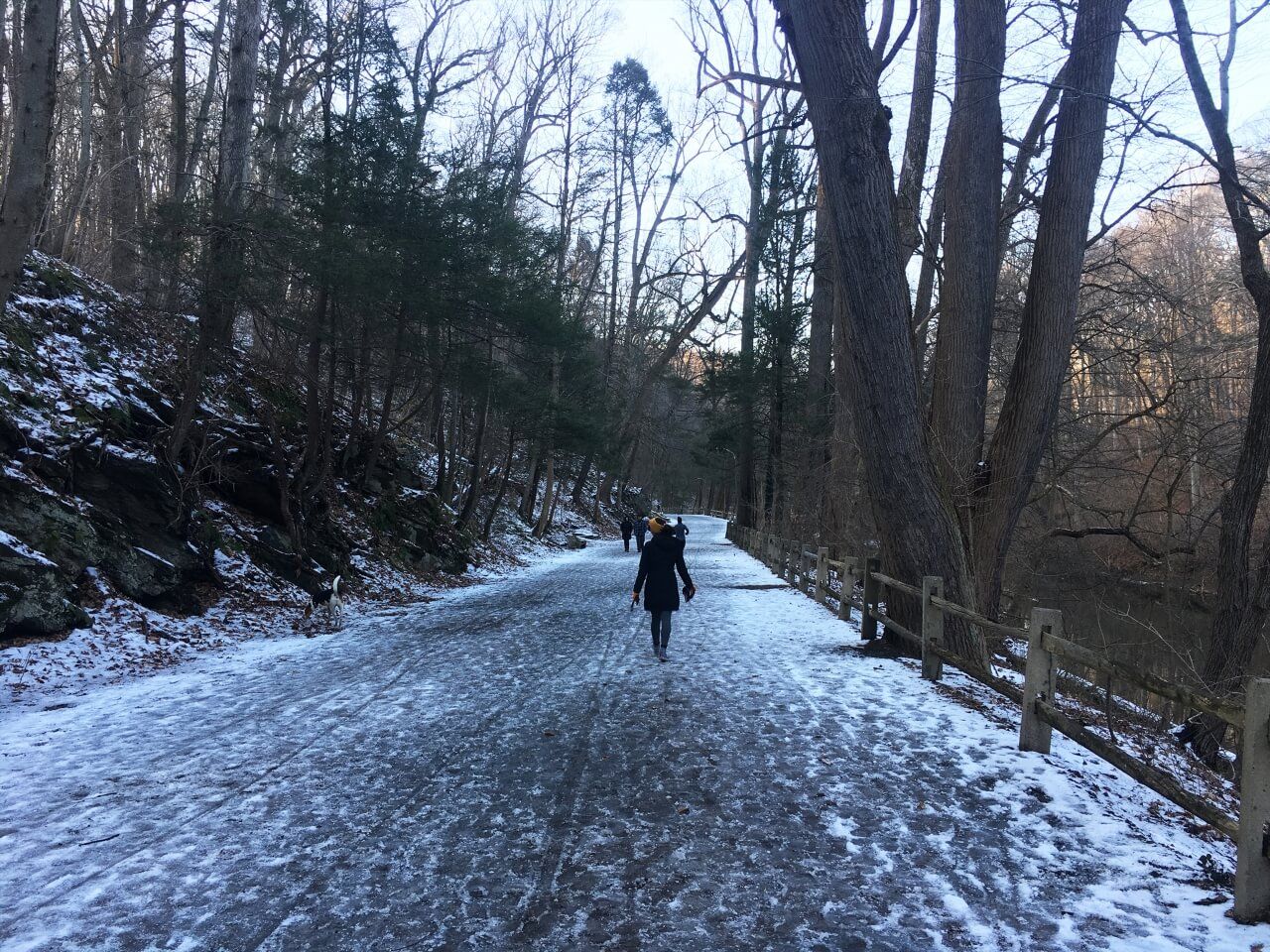
Wissahickon Valley Park (Northwestern Avenue, Philadelphia PA 19118, rated 4.8/5 on Google (6 858 avis)) is one of Philadelphia's most remarkable open spaces and one of its least-visited by out-of-town visitors. The park follows the Wissahickon Creek through a narrow gorge for about 7 miles within city limits, with trails running along both banks through mature woodland that feels more Appalachian than urban. Forbidden Drive, a wide unpaved carriage road along the creek, is closed to motor vehicles and open to walkers, runners, and equestrians; side trails climb the slopes above the creek and offer views down into the gorge.
The Valley Green Inn, a restaurant operating in the park since the mid-19th century, serves lunch and dinner in a setting that makes it easy to forget you are inside a city of 1.5 million people. The park is entirely free to enter, and trails are accessible from multiple trailheads in the Chestnut Hill, Mt. Airy, and Roxborough neighborhoods. Spring brings wildflowers along the creek banks; autumn lights the hillsides; weekday afternoons are notably quieter than weekend mornings. From Center City, the SEPTA Chestnut Hill West or East lines reach the park in about 25 minutes from Jefferson Station, a useful detail if you are travelling without a car.
FAQ
How many days do you need in Philadelphia?
Three days is a workable minimum to cover the main historical sites, one or two museums, and a proper meal at Reading Terminal Market. Five days gives you enough time to include the Barnes Foundation, a walk through Wissahickon Valley Park, and evenings on the waterfront without feeling rushed. A week allows for the neighbourhood-by-neighbourhood exploration the city genuinely rewards.
Is Philadelphia safe for tourists?
Philadelphia, like most large American cities, has significant variation between neighbourhoods. Center City, Old City, South Street, Rittenhouse Square, Fairmount, and the Museum District are safe for standard tourist activity during day and evening hours. Exercise the same awareness you would in any major city: stay on well-lit streets at night, be aware of your surroundings, and check current advice if you are venturing into unfamiliar areas. The areas covered in this guide are all considered tourist-safe.
What is the Philadelphia Phlash and is it worth it?
The Philadelphia Phlash is a seasonal loop bus that runs between Penn's Landing and the Philadelphia Zoo along Benjamin Franklin Parkway, stopping at most major attractions. It operates from May through early September. A day pass costs around $10 and provides unlimited rides. If you are visiting the Parkway museums, the waterfront, and the zoo in the same day, it saves a significant amount of walking. For a one-neighbourhood focus, SEPTA's regular transit network is more flexible.
When is the best time to visit Philadelphia?
Late September through November and April through June offer the most comfortable weather, mild temperatures, manageable humidity, and enough daylight for full days of walking. Summer is hot and humid; the Mummer's Parade on January 1st and the Flower Show in early March are compelling reasons to visit in winter or early spring. The city is noticeably less expensive in January and February.
What is the most affordable way to visit Philadelphia's museums?
The Liberty Bell, Independence Hall, and the surrounding Independence National Historical Park are entirely free. The first Sunday of each month, the Philadelphia Museum of Art offers pay-what-you-wish admission, and Friday evenings now run at $15 under a permanent pay-what-you-wish program. The Mütter Museum, Penn Museum, and the Barnes Foundation do not offer free days but have lower admission than comparable institutions in New York. A Philadelphia Museum Pass covering select venues is occasionally offered; check visitphilly.com for current packages.
Is there a good audio guide for exploring Philadelphia independently?
The Ryo app includes an audio guide for Philadelphia that covers Old City, the historical district, and the cultural landscape of the city in depth. The Philadelphia Ryocity experience on Ryo works particularly well for first-time visitors who want to understand the city's urban geography before committing to specific sites, it contextualises the relationship between the colonial street grid, the parkway, and the river corridors in ways that make a day on foot considerably more legible.
Planning your Philadelphia trip
Philadelphia has no single best day or single best route. The city is dense with history and singular in the particular combination of things it contains, a constitutional archive, a prison built on Enlightenment principles, the world's most concentrated collection of Renoir, and a sandwich everyone argues about. Start where you want and build outward from one neighbourhood at a time. Old City rewards an unhurried morning; the Parkway is best in late-afternoon light; the Italian Market wants a Saturday before the heat builds.
For first-time visitors, pairing the Ryo audio guide for Philadelphia with two or three days on foot is the most efficient way to make sense of how the city actually fits together. The Ryocity parcours connects the colonial grid, the parkway museums, and the riverfront into a single narrative rather than a collection of stops, which is what most guidebooks miss. The rest is best navigated by curiosity and a decent pair of shoes.
Philadelphia in 2026 carries an additional layer of significance: the city is one of the central sites of the American Semiquincentennial, the 250th anniversary of the signing of the Declaration of Independence, with major commemorations planned throughout the year. If you have been considering the city for a while, this is the year to go.