Walk
Between Ocean and Andes
Santiago, Chile
Walk
Between Ocean and Andes
Santiago, Chile
8 km
Distance
3h15
Durée
27
Audios
Loop
Parcours
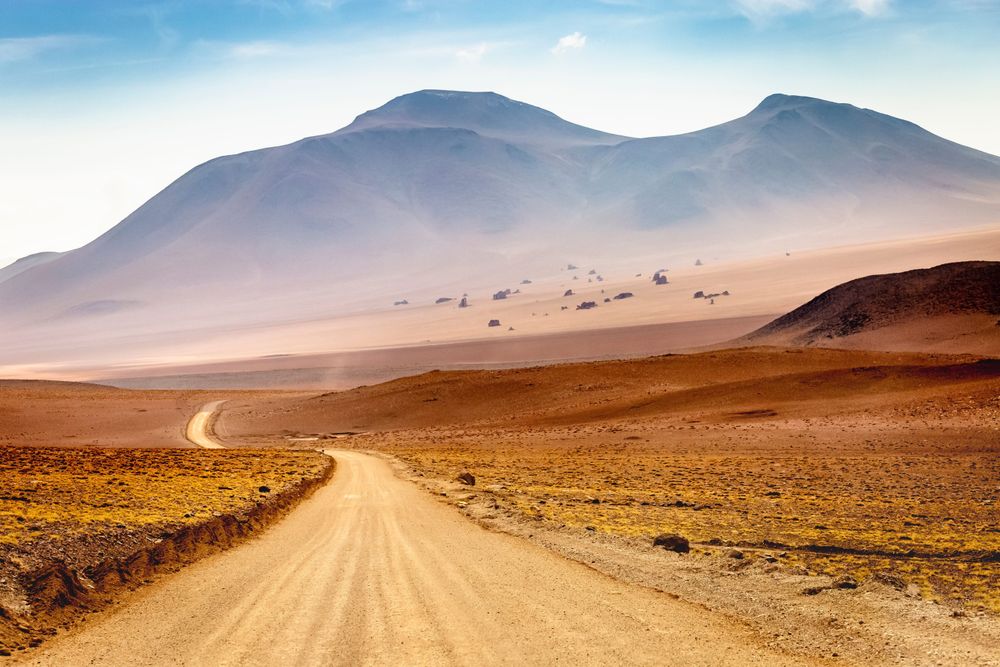
Visiting Chile means venturing into one of the most breathtaking territories on the planet: a narrow ribbon of land stretched between the Pacific Ocean and the Andes mountain range, where each day of travel offers a landscape radically different from the last. From the world's driest desert to the glaciers of Patagonia, through active volcanoes and sun-drenched wine valleys, the country unfolds a geography that feels almost unreal. It is precisely this rhythm of discovery — between sweeping grandeur and intimate detail — that Ryo's audio-guided tours seek to capture, starting with the beating heart of the country: Santiago, Chile.
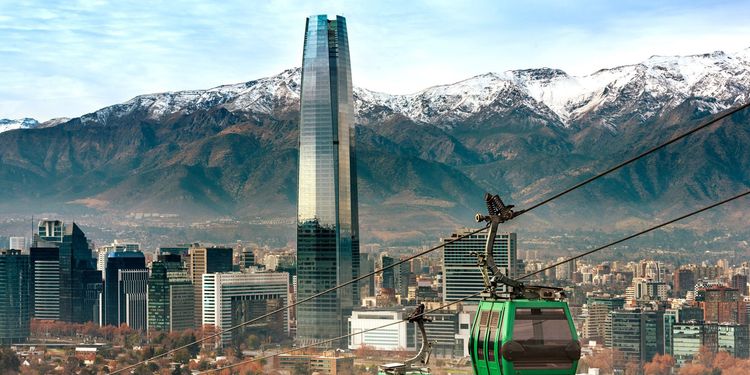
Nestled in a basin framed by the snow-capped peaks of the Andes and just a few hours from the Pacific, Santiago, Chile is a capital city experienced at many different rhythms. Along Ryo's audio-guided tour "Between Sea and Mountain Range", the traveler wanders through neighborhoods with contrasting personalities: the solemnity of the historic center, the creative energy of Bellavista, the colorful stalls of the Vega Central market. The city thus reveals its layers, from the vestiges of the colonial era to the most contemporary expressions of Chilean culture, always set against the majestic silhouette of the Andes.
Beyond Santiago, Chile invites you on a journey across the world. In the north, the Atacama Desert spreads its mineral expanses around San Pedro de Atacama: high-altitude geysers, flamingo-pink lagoons, and one of the most star-filled night skies on the planet. Further north still, the Iquique coastline blends the history of saltpeter with surf-worthy waves.
In the center, Valparaíso climbs across its forty-two hills in a maze of painted alleyways and century-old funiculars, listed as a UNESCO World Heritage Site. At the far south, Patagonia and Torres del Paine National Park offer the traveler end-of-the-world panoramas: granite towers, moving glaciers, and windswept forests. The island of Chiloé, with its listed wooden churches and palafitos perched over the water, adds a uniquely architectural and cultural note. Finally, lost in the vastness of the Pacific, Easter Island and its moai form one of humanity's most fascinating archaeological enigmas.
Chile stretches across such a great length that the best time to visit depends above all on the region in question. For the desert north, the sky is generally clear year-round. For Patagonia and Torres del Paine, the most favorable window falls between the austral spring and the beginning of austral autumn, when the days are long and the trails are passable. Santiago and the central part of the country enjoy a pleasant Mediterranean climate from late spring through the beginning of autumn. It is advisable to tailor your itinerary according to the season and your priority regions.
The country's exceptional length makes flying essential for moving quickly between north and south. Between major cities and nearby regions, long-distance coaches offer a comfortable and well-developed option. Car rental provides invaluable freedom for exploring national parks and secondary roads, particularly in Patagonia or the Colchagua Valley. In Santiago, the metro and bus network make getting around on a daily basis straightforward.
The answer varies by region. The desert north can be visited year-round. The center, including Santiago, is particularly pleasant between austral spring and autumn. Patagonia is ideally explored in the austral summer, when weather conditions are milder and access is easier.
A trip combining Santiago, the Atacama Desert, and Patagonia generally requires at least two to three weeks to avoid rushing through each stop. To explore a single region in depth, one week to ten days allows you to go beyond the must-sees and truly soak up the local atmosphere.
Travelers who have explored the country most often place San Pedro de Atacama and its lunar landscapes, Torres del Paine National Park in Patagonia, and Easter Island and its mysterious moai at the top of their lists. Santiago and Valparaíso typically round out this itinerary for their rich cultural and urban offerings.
Given the country's elongated shape, flying is often the most practical way to connect the north and south. Long-distance coaches are a comfortable and affordable alternative between nearby cities. For national parks and secondary roads, a rental car offers a level of freedom that public transport does not always allow.
Chilean cuisine is rooted in its local produce: exceptional seafood all along the Pacific coast, oven-baked golden empanadas, slow-simmered cazuela, and wines from the wine valleys of the central region. The asado, a convivial barbecue inherited from gaucho traditions, punctuates family meals and gatherings with friends. Local markets, such as the Vega Central in Santiago, remain the best place to experience the richness and generosity of this everyday cuisine.