
Créé par Emilie, le 4 oct. 2026
Votre guide Ryo
Santiago, Chile
Between Ocean and Andes
Parcours audioguidé pour visiter Santiago en 1 jour
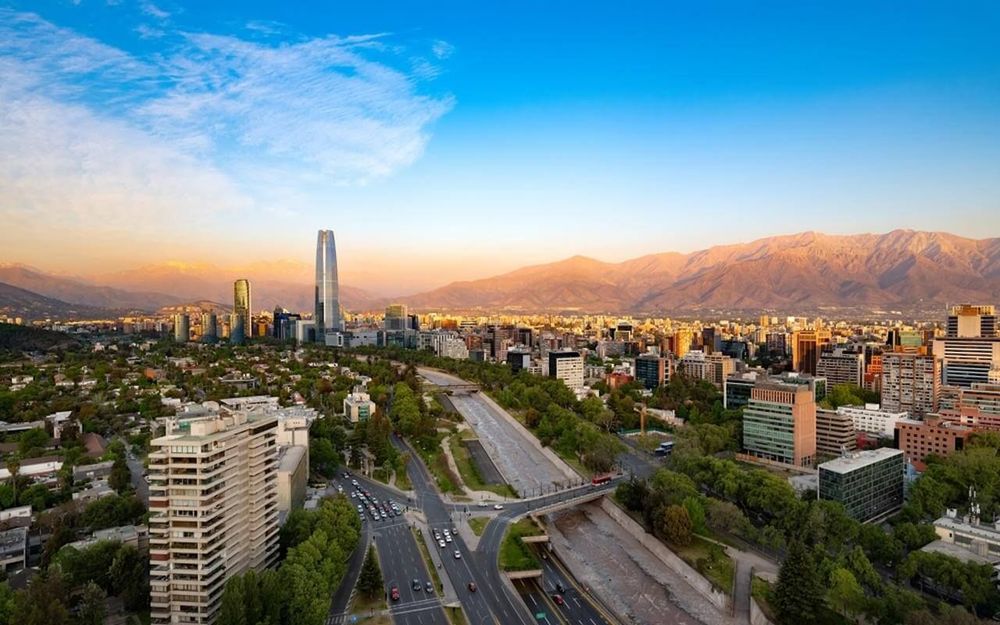
At the foot of the Andes, Santiago combines colonial history with contemporary dynamism. With its contrasting neighborhoods, rich culture, and spectacular setting, the capital offers a complete immersion in modern-day Chile.
Quand partir à Santiago ?
Jan.
29°
1
Feb.
28°
1
March
26°
2
April
22°
4
May
18°
6
June
15°
8
July
14°
9
Aug.
16°
7
Sept.
19°
5
Oct.
22°
3
Nov.
25°
2
Dec.
28°
1
Santiago has an almost Mediterranean climate. Winters (from June to August) are mild and wet, while summers (from December to February) are hot and dry. The rainiest months are June and July. For the rest of the year, you won't regret stopping in Santiago. Snow is rare in winter, even though the ski resorts are nearby, and both spring and autumn are very pleasant. Just a heads-up: in the peak of summer, it can get very (very) hot — though nights tend to stay cool.
Départ conseillé
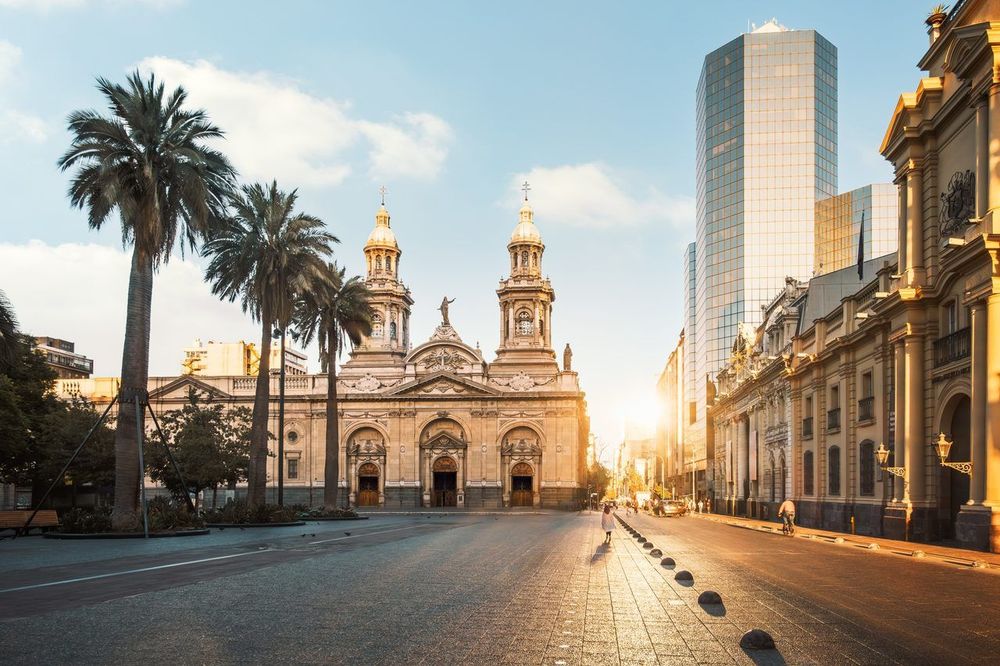
No need to worry about where to begin! Our tours are designed as a loop, so you can jump in wherever you are. The navigation system and audioguide will automatically adjust to your location. However, if you happen to be nearby, we do have a preferred starting point: Plaza de Armas
Parking à proximité
Estacionamiento Catedral 1268
You're unlikely to have a car in Santiago. But if you do, avoid the city center as much as possible. Traffic is extremely heavy and can be unbearable. However, if you're driving and can't leave your car at your accommodation, you'll find covered, supervised parking lots — called estacionamientos — scattered throughout the city.
À savoir
Santiago is very walkable. If you'd like to venture beyond the city center, you can use the well-developed public transportation network known as Transantiago. There are six metro lines and numerous buses. The Moovit app will be a great help in finding the quickest route. One tip though — avoid rush hour! You can also use the city’s bike-sharing system, which works just like Vélib, Vélov, and similar services. Lastly, taxis and Ubers are common and affordable options for getting around the city.
Chile uses the Chilean peso (CLP).
The exchange rate is low, so don’t be surprised if you have to pay 1,500 pesos for a coffee! In everyday speech, Chileans often say una luka for 1,000 CLP. You’ll also hear things like doce lukas for 12,000 CLP. Don’t worry — you’ll get used to it quickly! Coins come in 10, 50, 100, and 500 pesos, and banknotes in 1,000, 2,000, 5,000, 10,000, and 20,000 pesos. Another interesting fact — especially if you're heading to Argentina afterward, where cash is essential — is that you can withdraw US dollars from ATMs in Chile. Credit and debit cards are widely accepted, but make sure to notify your bank before you travel to avoid any issues. Also, check the fees your bank charges for transactions outside the eurozone. Note that a few euros are usually deducted with each ATM withdrawal, and the exact amount will be shown on the screen.
Découvrez 27 lieux d'intérêt pour visiter Santiago










Le plein d'inspirations
Explorez le monde en totale liberté, à pied au cœur des villes ou au fil des routes. Nos guides audios transforment chaque destination en une découverte culturelle immersive et unique.
FAQ for visiting Santiago
When is the best time to visit Santiago?
The best time to visit Santiago runs from September to May, when the weather is at its mildest. Spring and autumn offer ideal temperatures for exploring the city on foot. If you love the heat, summer is perfect, but be prepared for very hot days, offset by cool evenings. Winter stays mild despite some rain in June and July, and you can even enjoy the nearby ski resorts. Just avoid the rainiest months if you prefer clear skies to admire the Andes mountain range in the background.
How many days do you need to visit Santiago?
Three to four days are generally enough to discover the essentials of Santiago. That time lets you explore the different neighbourhoods, visit the main museums and monuments, and soak up the unique atmosphere of the Chilean capital. If you also want to take excursions in the surrounding area, such as to the vineyards or the mountains, plan on five to six days instead. Santiago is a city easily discovered on foot, neighbourhood by neighbourhood, and the Ryo audioguide is there to make sure you don't miss any of the highlights while enjoying enriching local anecdotes.
Which neighbourhoods are must-visits in Santiago?
The historic centre with the Plaza de Armas is the colonial heart of Santiago, where you'll discover traditional architecture and the main monuments. Bellavista, the bohemian district, charms visitors with its colourful streets, art galleries and lively nightlife. Providencia offers a modern, cosmopolitan atmosphere with its trendy cafés and green spaces. Lastarria draws culture lovers with its museums and charming terraces. The Las Condes district represents contemporary Santiago with its skyscrapers and shopping centres. The Ryo app guides you through these different neighbourhoods, revealing their histories and little-known secrets.
How do you get around Santiago?
Santiago has an excellent metro network, clean and efficient, serving the main tourist areas. Buses perfectly complement the network for reaching less central zones. Taxis and ride-hailing apps are plentiful and generally affordable. For short distances, walking remains ideal for soaking up the local atmosphere. The city is also developing its cycle-path network if you prefer to ride a bike. The transport system is generally safe and well organised, with convenient rechargeable cards for the metro and buses. Just avoid rush hour to travel more comfortably.
What can you visit around Santiago?
The area around Santiago is full of fascinating excursions. Wine lovers will appreciate the Maipo Valley or the Casablanca Valley, renowned for their exceptional vineyards. Valparaíso, a port city listed as a World Heritage Site, is about two hours away and charms visitors with its colourful hills and street art. In winter, ski resorts such as Valle Nevado or La Parva are less than an hour away. The Cajón del Maipo offers spectacular mountain scenery and natural hot springs. These getaways perfectly round out your stay in Santiago by showing you the diversity of Chile's landscapes.
Where can you eat in Santiago?
Santiago offers a lively culinary scene blending Chilean traditions with international influences. Markets such as La Vega Central or the Mercado Central will introduce you to local produce and typical dishes in an authentic setting. Bellavista and Lastarria are packed with restaurants ranging from traditional to contemporary. To try empanadas, pastel de choclo or cazuela, head to the picadas, those small family-run eateries. The Providencia and Las Condes districts offer more international and sophisticated cuisine. Don't forget to enjoy a pisco sour, the national cocktail, on a terrace to make the most of the pleasant climate.
Is Santiago a safe city for tourists?
Santiago is generally regarded as one of the safest capitals in South America for tourists. Tourist areas such as Providencia, Las Condes and the historic centre during the day are well monitored and quiet. As in any large city, stay alert with your personal belongings, avoid displaying valuables and opt for official taxis or trusted apps in the evening. Some outlying neighbourhoods are best avoided, especially at night. Chileans are generally welcoming and helpful towards visitors. By following the usual precautions of the urban traveller, you'll enjoy your stay in Santiago with peace of mind.
What are the finest viewpoints over Santiago and the Andes?
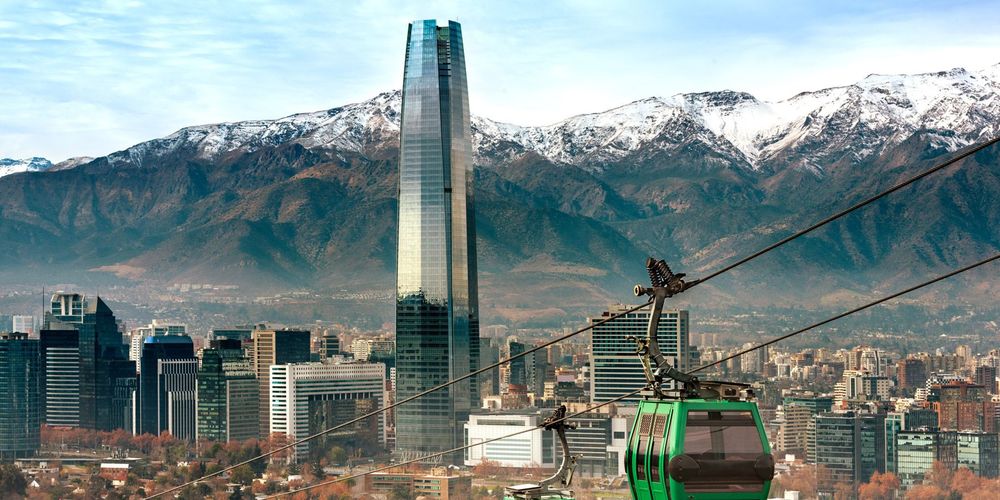
Cerro San Cristóbal, inside the vast metropolitan park, offers the most complete panorama: on a clear day the city spreads all the way to the still-snowy Andean peaks. You can walk up, cycle up or take the funicular from Bellavista, and the statue of the Virgin crowning the hill serves as a landmark from almost anywhere.
More central and more modest, Cerro Santa Lucía is climbed by stairways and flowered terraces right in the historic centre. The Costanera tower, in the business district, has a glazed observation deck from which you grasp the sheer scale of the metropolis. Visibility depends heavily on pollution, so favour the days that follow rain or a windy spell. The Ryo audio guide offers a dedicated route through Santiago linking the highlights of the centre.
Which museums are worth visiting in Santiago?
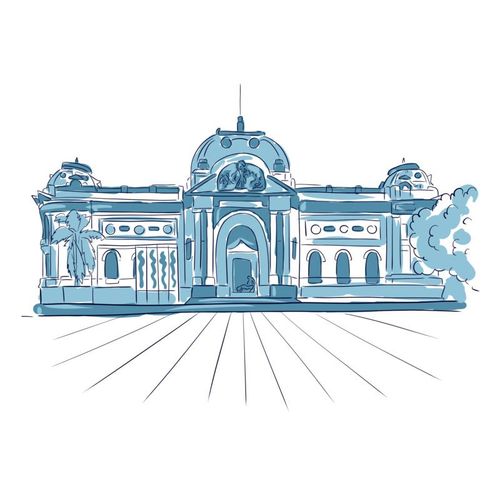
The Chilean Museum of Pre-Columbian Art, housed in a former colonial customs building near the Plaza de Armas, displays a remarkable collection of ceramics, textiles and goldwork from across the continent, and is often the finest surprise of a stay. The Museum of Fine Arts, under its glass roof in the Parque Forestal, shows Chilean painting alongside contemporary work.
The Museum of Memory and Human Rights, over towards Quinta Normal, retraces the dictatorship and its consequences with a restrained and deeply moving display: the visit leaves a mark, but it sheds light on a great deal about Chile today. Several of these institutions close on Mondays and some open free of charge on certain days, so check before you set out.
Where can you explore Pablo Neruda's legacy in Santiago?
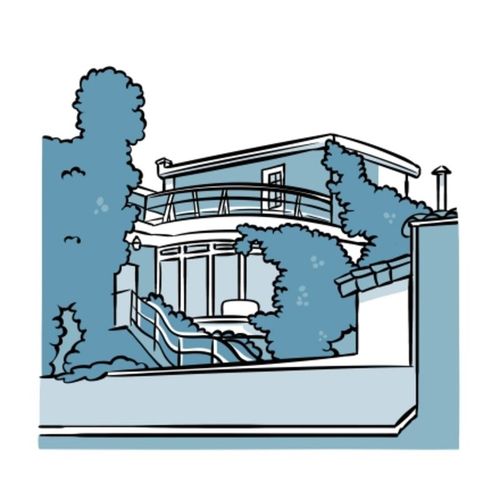
La Chascona, at the foot of Cerro San Cristóbal in the Bellavista district, is the house the poet had built for Matilde Urrutia. Made of separate volumes clinging to the slope, it looks like a stranded ship, with its porthole windows, tiny rooms, jumbled collections of objects and vivid colours, very much in the image of its owner.
The house still bears the marks of the ransacking that followed the coup, shortly after Neruda's death, and the visit says a great deal about the country's political history. If the figure intrigues you, his two other homes, in Valparaíso and on the coast at Isla Negra, can also be visited and make a good day trip from the capital.
Vos commentaires, idées et suggestions
Aucun avis pour le moment