© Shutterstock
 Votre guide Ryo
14 Free Things to Do in Santiago, Chile in 2026
The best free things to do in Santiago tend to surprise first-time visitors, because the Chilean capital has a reputation as a transit city, the place travelers pass through on their way to Patagonia or the Atacama Desert. Spend even one unhurried morning in the historic center and that reputation falls apart fast. Within a ten-minute walk of Plaza de Armas, you can step into a cathedral built from quake-resistant stone, climb a volcanic hill plug for a skyline view of the Andes, and wander into a contemporary art museum, all without opening your wallet. That first stretch alone sets the tone for everything below, and Ryo's audio-guided tour of Santiago threads through most of it stop by stop, so you can listen to the stories while you walk instead of hunting for a guidebook.
What follows are 14 ways to fill a Santiago itinerary without spending a peso: a Bahá'í temple with the silhouette of a folded lotus, a metro station that doubles as an open-air gallery, eight museums that never charge admission, and two residential neighborhoods most guidebooks skip entirely. Some of these spots take ten minutes to see properly; others, like the city's free museum circuit, can swallow an entire rainy afternoon. We've grouped them roughly by location, from the historic core outward to the hills, the riverside neighborhoods, and the residential districts further east, so you can string several together on foot without doubling back.
1. Plaza de Armas and the Metropolitan Cathedral
Every visit to Santiago starts, whether planned or not, at Plaza de Armas). The square has functioned as the city's civic heart since Pedro de Valdivia laid out the new town around it in 1541, and it still hosts the kind of unscripted street life that makes a plaza worth lingering in: chess players hunched over boards carved from wood, street performers working the crowd near the fountain, and vendors selling roasted chestnuts in winter. Shoe-shiners have set up in the same corner for generations, and on weekends the square fills with portrait painters offering quick caricatures for a tip.
On the north side of the square stands the Metropolitan Cathedral of Santiago (Plaza de Armas, Santiago, Chile, rated 4.7/5 on Google (6 042 avis)), built from 1748 onward and largely shaped by the Italian architect Joaquín Toesca, after earlier churches on the same site were lost to earthquakes. Step inside and the contrast with the noisy plaza is immediate: vaulted neoclassical ceilings, an ornate main altar, and side chapels where locals light candles on an ordinary Tuesday morning as often as a Sunday. Entry costs nothing and the cathedral stays open daily outside of mass times, though you should dress modestly and keep your voice down once inside.
If you only have an hour in Santiago, this is where to spend it. Arrive before 10am on a weekday if you want photos of the cathedral facade without a crowd of tour groups in the frame, and circle the square itself before going inside, since the surrounding colonial buildings (the Central Post Office, the Royal Court Palace) are themselves worth a slow look. The square also sits a few steps from the Mapocho River, and locals treat it less as a monument than a living room: office workers eating lunch on the benches, retirees feeding pigeons, students cutting through on their way to class.
This is also exactly where Ryo's Santiago audio tour begins, narrating the cathedral's facade and the colonial buildings around the square one stop at a time so you're not guessing what you're looking at. It's a useful starting point precisely because so much of what matters here, the carved stone details, the history behind each surrounding facade, isn't labeled with a single plaque.
2. Templo Bahá'í de Sudamérica
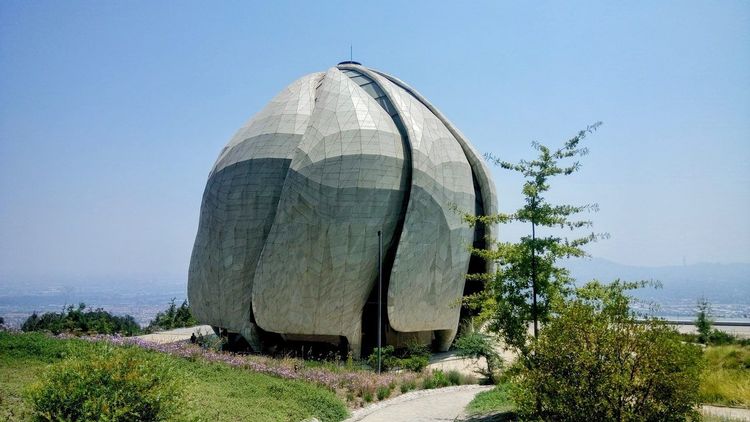
Far from the colonial core, in the foothills district of Peñalolén, sits one of the more unusual free attractions in Santiago: the Templo Bahá'í de Sudamérica (Diagonal Las Torres 2000, Peñalolén, Santiago, rated 4.8/5 on Google (10 902 avis)). Inaugurated in 2016 after more than a decade of design and construction, the temple takes the shape of nine curved petals of cast glass and translucent Portuguese marble folding upward around a central dome, a design meant to evoke a flower opening toward the Andes behind it. It is one of only eight Bahá'í continental temples in the world, and the only one in South America.
Entry is completely free, and so is parking if you arrive by car, but getting there takes some planning since it sits roughly 15 kilometers east of downtown, right against the Andean foothills. The surrounding gardens, landscaped with native Chilean plants, are reason enough to budget an extra hour: paths wind past reflecting pools up to a viewpoint where the whole temple catches the afternoon light differently depending on the time of day. Visitors of any faith, or none, are welcome to sit inside in silence; there is no proselytizing and no donation box pushed on you at the door.
The Bahá'í faith has no clergy and no fixed liturgy, which is part of why the temple's interior feels so unusually quiet compared to most religious buildings open to tourists: no services running on a schedule, no guided groups moving through on a timer. A small visitor center near the entrance explains the faith's history and the temple's design in several languages, and volunteers are generally happy to answer questions in English without pushing further than what you ask.
Plan this as a half-day trip rather than squeezing it between other stops. A taxi or rideshare from the center runs about 30-40 minutes each way depending on traffic, and visiting hours are shorter than at a city museum and vary by season, so check the temple's website the day before you go. Go in the late afternoon if you can: the marble petals turn a warm gold as the sun drops, and the site is noticeably quieter than during the midday tour-bus rush.
3. Santa Lucía Hill for a free panoramic view
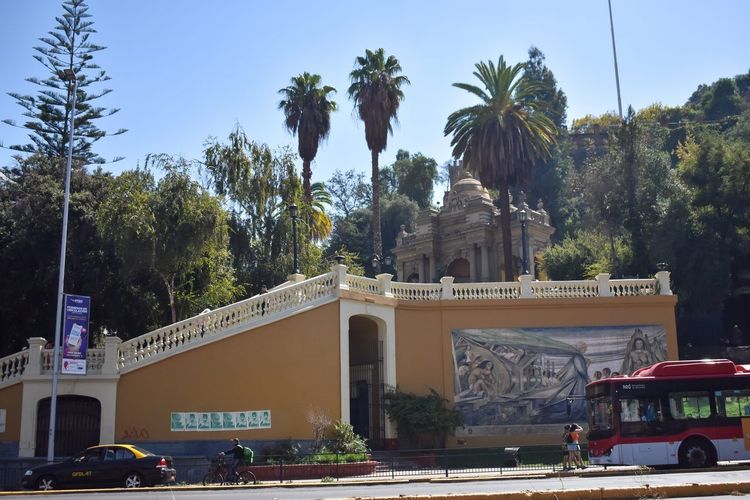
Santa Lucía Hill (Cerro Santa Lucía, Santiago, Chile, rated 4.6/5 on Google (3 790 avis)) is the kind of landmark that photographs don't quite prepare you for. It's a small volcanic outcrop rising abruptly out of the flat grid of downtown Santiago, terraced in the 19th century with stone staircases, fountains, and miniature castles that now look almost theatrical against the modern skyline around them. Valdivia founded Santiago at the foot of this hill, then called Huelén, on 12 February 1541, which gives the climb a bit of historical weight beyond the view at the top.
The park is free to enter, though you may be asked to sign in with an ID at the main gate on Avenida Libertador Bernardo O'Higgins, and the gates close in the early evening, so plan an afternoon visit rather than arriving at dusk expecting to linger. Paths spiral up through gardens planted with jacaranda and palm trees, past a small chapel, to a lookout point where, on a clear day, you can see the Andes forming a jagged white wall behind the city. Winter mornings after rain tend to give the clearest views, since Santiago's smog thins out considerably once the rainy season arrives.
At the very top, past the main lookout, a second smaller terrace is where most tour groups don't bother climbing to, and it tends to be nearly empty even when the lower levels are crowded. The landscaping here dates largely to the 1870s, when the hill was transformed from a bare rock outcrop into the ornamental park it is today, complete with cannons left over from its earlier use as a fort.
Bring water and wear shoes you don't mind climbing stone steps in; there's no elevator, and the walk up takes about 15-20 minutes depending on how many photo stops you make along the way. The Ryo audio-guided tour of Santiago climbs these same paths and points out exactly where to pause for the best skyline shot of the Andes, which is useful here since the hill has more side staircases and dead ends than it looks like from street level.
4. Cerro San Cristóbal's free walking trails
Santiago's other hill, Cerro San Cristóbal (Pío Nono 450, Recoleta, Santiago, rated 4.8/5 on Google (10 809 avis)), is often treated as a paid attraction because of the funicular and cable car that run to its summit. What tends to get left out of that framing is that the funicular is optional: the walking trails that wind up through Parque Metropolitano, Santiago's largest urban park, are entirely free, and so is most of the park itself, with its picnic areas, viewpoints, and the Japanese Garden on the Providencia side. The two hilltop swimming pools, Tupahue and Antilén, charge admission in summer.
The main walking trail starts near the Pío Nono entrance in the Bellavista neighborhood and climbs roughly 300 meters over about 5 kilometers of switchbacks, past eucalyptus groves and occasional viewpoints over the Mapocho River valley. It's a genuine hike rather than a stroll, closer to 90 minutes to the summit at a moderate pace, which makes it a natural pairing with the Santa Lucía climb above if you want to turn a single day into Santiago's two free hilltop views.
The park at the base, separate from the summit itself, charges no entrance fee either, and is large enough that locals use it the way other cities use a weekend running track: joggers doing laps before work, cyclists on the access roads, families with strollers sticking to the flatter paths near the entrance. The zoo built into the hillside is the one paid attraction in the complex, easy to skip if the free trails and viewpoints are what you're after.
Start early, ideally before 9am in summer, since the trail has little shade and midday heat on exposed sections can be rough going. If you'd rather pay for the cable car up and walk down for free, that's a common compromise locals use, and it still gets you the summit statue of the Virgin Mary and the 360-degree view without the full climb both ways.
5. Barrio Lastarria and Bellavista's bohemian streets
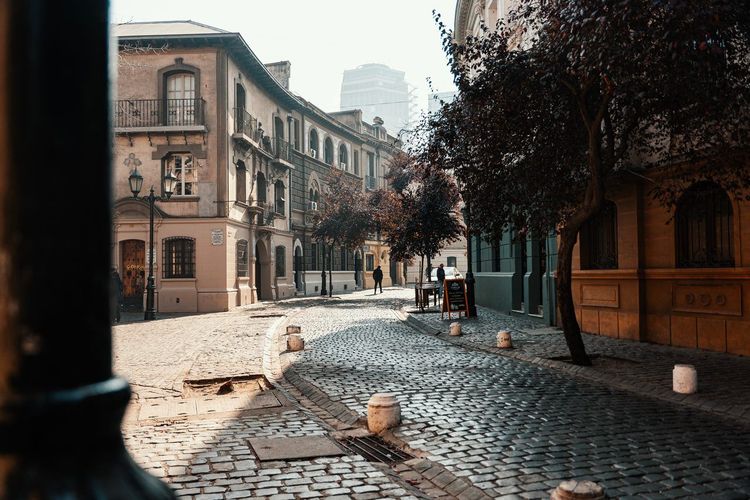
Two of Santiago's most walkable neighborhoods sit on either side of the Mapocho River, each with its own free-to-wander character that rewards slow exploration more than any single paid attraction would.
Barrio Lastarria: cafés, theaters and Centro Gabriela Mistral
Barrio Lastarria is a compact grid of narrow streets just south of the river, where French-style apartment buildings from the early 20th century now house independent bookshops, arthouse cinemas, and restaurant terraces spilling onto cobblestone. None of it costs anything to browse, and the neighborhood rewards wandering without a fixed destination more than most parts of the city. Weekend antique fairs pop up along a few of the side streets, and even if you're not buying, the stalls of vintage cameras, vinyl records, and old postcards are worth a slow pass.
At the edge of Lastarria sits Centro Gabriela Mistral (GAM)), a cultural center housed in a building first raised in 1972 for a United Nations conference, later used as the seat of the military junta after the 1973 coup, and reopened in 2010 as one of Chile's leading venues for contemporary art, theater, and dance. The building's brutalist concrete exterior houses rotating free exhibitions in its ground-floor galleries, and the plaza out front hosts free concerts and markets on weekends throughout the year.
Look for the Parque Forestal side of Lastarria too, where the Palacio de Bellas Artes building (home to the fine arts museum) forms a beautiful backdrop even if you don't go inside, with its glass-and-iron dome visible from several blocks away. Street musicians often set up on the steps here in the late afternoon, which makes it a good spot to simply sit for ten minutes rather than keep moving.
Bellavista: colorful houses and Neruda's neighborhood
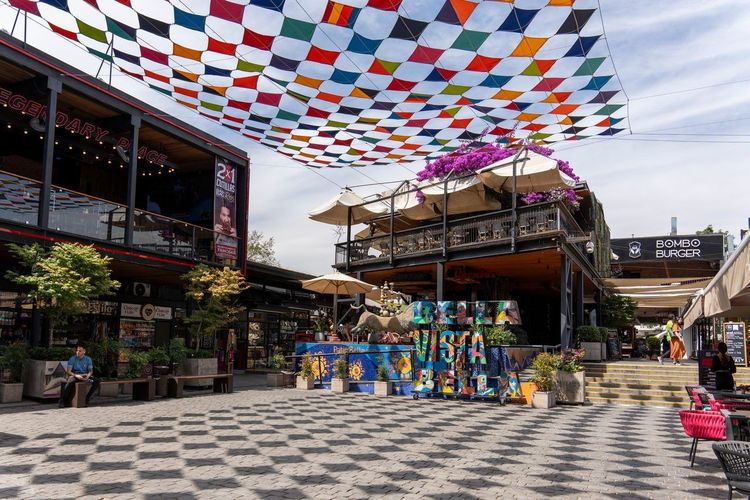
Cross the Pío Nono bridge north and the mood shifts into Bellavista, Santiago's bohemian quarter, known for facades painted in clashing colors, murals covering nearly every blank wall, and a density of bars and restaurants that gets genuinely loud after dark. During the day it's a different experience entirely: quiet enough to actually look at the street art and architecture rather than dodge nightlife crowds.
The neighborhood's most famous resident was the poet Pablo Neruda, whose house La Chascona (Fernando Márquez de la Plata 0192, Providencia, Santiago, rated 4.6/5 on Google (5 424 avis)) sits tucked into a hillside street here. The interior requires a paid ticket, but the exterior, with its ship-like windows and eclectic garden visible from the street, costs nothing to admire, and the surrounding streets Neruda walked daily are free to wander at any hour.
Side streets off the main Pío Nono strip tend to reward the most patient walkers: craft workshops with doors propped open, small galleries with no sign out front, and courtyards you'd otherwise walk past without noticing. If you're building a single free afternoon around this part of the city, the Ryo audio guide for Santiago weaves through Lastarria's side streets and past GAM before crossing into Bellavista, with an anecdote about Neruda's house dropped in right as you pass it, rather than you having to look it up separately.
6. Santiago's thriving street art scene
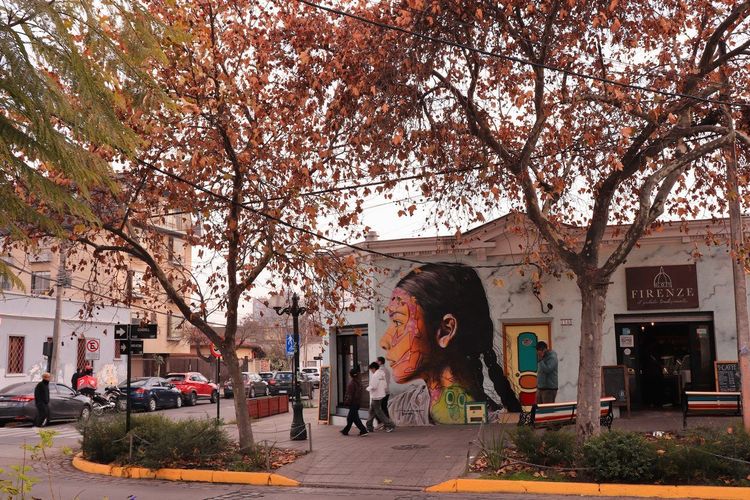
Santiago has quietly built one of South America's strongest street art scenes, and almost none of it requires a ticket to see.
Barrio Yungay's historic murals
Barrio Yungay (Santiago, Chile), protected as a Zona Típica since 2009 and one of the largest heritage districts in the city, pairs 19th-century facades with murals that read almost like a running commentary on Chilean history and politics. Many pieces draw on the tradition of the brigade muralists of the late 1960s and early 1970s, and walls get repainted regularly, giving the neighborhood a layered quality where new work sits beside decades-old political statements.
Walk the streets around Plaza Yungay slowly rather than following a fixed route; some of the best pieces are tucked down side streets that don't show up on typical tourist maps, and local organizations run occasional free weekend walking tours that are worth timing your visit around if the schedule lines up. The neighborhood association here has pushed hard to keep developers out, which is part of why so many of the original low-rise facades, and the murals painted across them, have survived.
Open-air galleries around Bellavista and San Diego
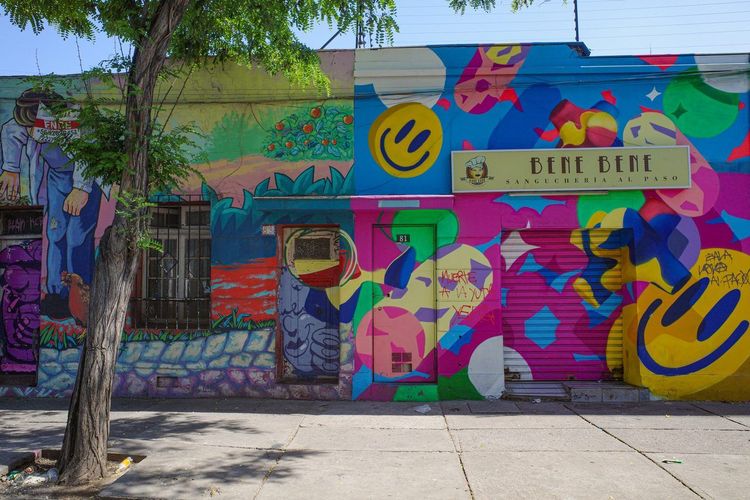
Back across the river, Bellavista's murals tend toward the playful and psychedelic, covering entire building facades in sprawling, colorful scenes that change often enough that a return visit a year later can look like a different neighborhood. Local artist collectives repaint sanctioned walls on a rolling basis, so what you photograph this month may be replaced by something else entirely next year. The Barrio San Diego area south of the historic center offers a grittier counterpart, with murals mixed in among auto parts shops and antique dealers.
Bring a phone with a decent camera and don't rush; good street art photography in Santiago usually means catching a wall at the right angle with the right light, which takes a bit of patience and backtracking. Weekday mornings tend to be quieter for photos than weekend afternoons, when both neighborhoods fill with locals out for lunch.
7. Go underground: art in the Santiago Metro
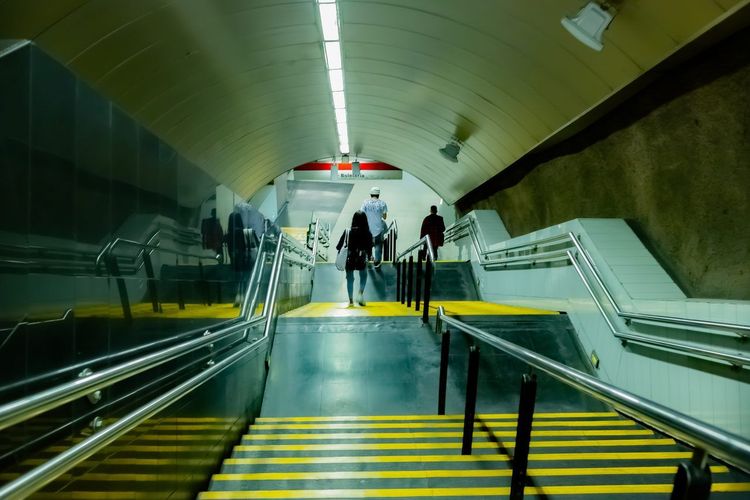
One of the more overlooked free attractions in Santiago isn't above ground at all. The Santiago Metro has, since its opening in 1975, commissioned permanent art installations, murals, and sculpture for several of its stations, turning a daily commute into something closer to a rotating gallery.
Universidad de Chile station, on Línea 1, is the standout: Mario Toral's huge mural Memoria Visual de una Nación covers the station's walls with scenes spanning Chile's history, from the conquest to the 20th century. A single metro fare, which costs very little, gets you in, and nobody will mind if you stand on the platform taking photos rather than boarding the next train. The program behind this started as a modest public art initiative decades ago and has since grown into one of the more ambitious transit-art collections in Latin America, expanding with nearly every new line the system has opened.
Under the MetroArte banner, dozens of other stations now carry murals, mosaics, or sculpture, so keep an eye on the walls whenever you change lines. None of this requires a special ticket or detour from a normal day of getting around; it simply rewards paying attention instead of staring at your phone while you wait for the next train.
8. Santiago's free museums
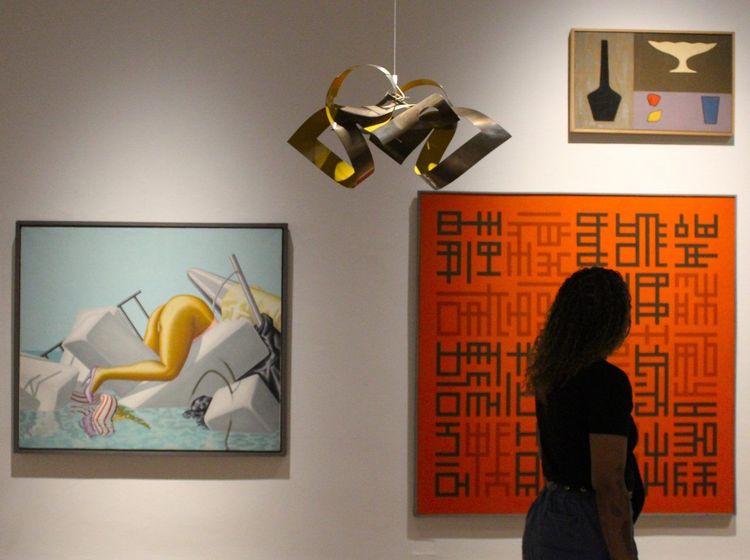
Santiago has an unusually deep bench of museums that charge no admission at all, enough to fill two or three full days on their own.
History and human rights: Museum of Memory, National History Museum, Panteón Nacional
The Museum of Memory and Human Rights) is the most emotionally demanding stop on this list, and arguably the most important. Opened in 2010, the building documents the human rights violations committed during Augusto Pinochet's 1973-1990 dictatorship through photographs, personal testimonies, and recovered objects from clandestine detention centers. It is heavy material, deliberately presented without euphemism, but it's also essential context for understanding modern Chile, and entry has always been free. Give it at least an hour; rushing through tends to leave visitors with less than the material deserves.
Back in the historic center, the National History Museum of Chile) occupies the former Royal Court Palace on Plaza de Armas itself, tracing the country's story from pre-Hispanic civilizations through independence and into the 20th century, with free entry Tuesday to Sunday. One important caveat: in July 2026 the museum announced a temporary closure for a major expansion and restoration of its building, so check its website before you plan around it. When it is open, budget at least ninety minutes if you want more than a surface pass through the collection, and don't skip the building's inner courtyard, a quiet colonial space that most visitors walk straight past.
Less visited but worth the detour is the Panteón Nacional) inside Santiago's General Cemetery, a monumental mausoleum honoring the country's independence heroes and several former presidents. The cemetery itself, one of the largest in Latin America, is free to walk through and doubles as an open-air museum of funerary architecture spanning nearly two centuries, with mausoleums ranging from austere to genuinely ornate depending on the era.
Art and heritage: Precolombian Art, Contemporary Art, Violeta Parra, Salvador Allende Solidarity Museum
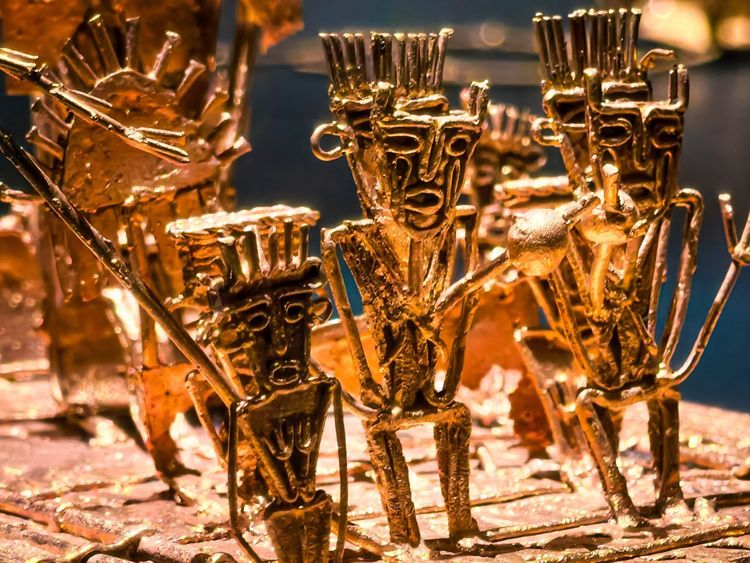
The Museum of Pre-Columbian Art), housed in a restored colonial customs building near Plaza de Armas, holds one of the finest collections of indigenous American art outside the countries of origin, spanning Mesoamerica, the Andes, and the Caribbean. Be aware that this one is not a zero-cost stop for most visitors: admission is ticketed, with free entry on the first Sunday of each month reserved for Chilean residents and nationals. It is closed on Mondays.
In Parque Forestal, the Museo de Arte Contemporáneo de Santiago (MAC) shares a building with the fine arts museum and focuses on Chilean and Latin American contemporary work, with admission free year-round. A few blocks away, the Violeta Parra Museum) celebrates the folk singer and visual artist whose work shaped Chilean cultural identity well beyond music, displaying her embroidered tapestries, paintings, and recordings across a handful of compact rooms, and admission has traditionally been free (it opens Tuesday to Saturday, 10am to 5:30pm).
The Museo de la Solidaridad Salvador Allende) rounds out this cluster with a smaller but striking collection: works donated by international artists in solidarity with Allende's government, assembled before and after the 1973 coup, now displayed at low cost in a former family mansion on Avenida República that rarely sees the crowds its collection deserves; check the museum's site for current ticket prices and free-entry days.
Nature and science: National Museum of Natural History
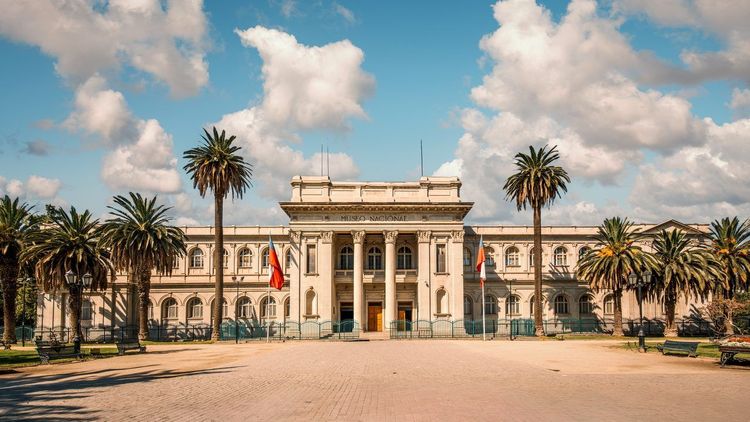
Inside leafy Quinta Normal Park, the National Museum of Natural History (Quinta Normal Park, Santiago, rated 4.7/5 on Google (12 626 avis)) has operated since 1830, making it one of the oldest museums in the Americas. Its halls cover Chilean geology, taxidermied wildlife from the Atacama to Patagonia, and a skeleton collection that includes several whale specimens suspended from the ceiling of the main hall.
Entry is free, and the surrounding park is worth the trip on its own, with rowboats for rent on a small lake and several other free museums clustered within walking distance, including the railway museum, the science and technology museum, and the Artequin art museum for kids. Go on a weekday if you want the galleries to yourself; weekends bring school groups and families in large numbers, and the park's paths fill with picnicking families by early afternoon.
9. Parks and green spaces to enjoy for free
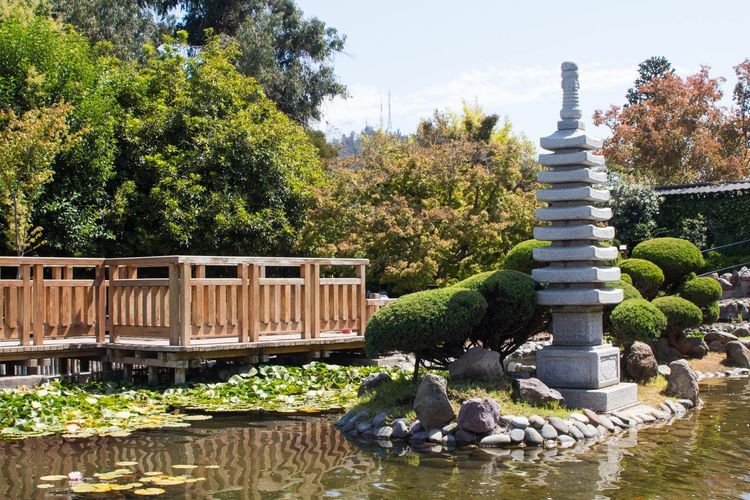
After a museum-heavy stretch of this list, Santiago's parks offer a lighter, slower pace, and every one of them is free to enter.
Parque Forestal and the riverside promenade
Parque Forestal) runs for roughly two kilometers along the old bed of the Mapocho River, shaded by plane trees planted more than a century ago. It connects several of the free museums already mentioned, which makes it a natural spine to walk rather than a destination in its own right, though its fountains and sculpture gardens are worth slowing down for.
On weekends, the park fills with families on bikes, impromptu football games, and street performers, giving it a different rhythm than the quieter weekday version where joggers and dog walkers dominate. A paved cycling path runs the length of it, part of a longer riverside route that continues well beyond the tourist core if you've rented a bike for the day. Either version costs nothing to enjoy.
Parque Bustamante and neighborhood plazas
Further east, Parque Bustamante (Santiago, Chile, rated 4.4/5 on Google (10 825 avis)) feels distinctly more local, a long narrow park dotted with outdoor gym equipment, skate ramps, and shaded benches that fill up with neighborhood residents rather than tourists. It's a useful stop if you want a sense of how Santiaguinos actually use public space on an ordinary day, particularly in the early evening when office workers cut through on their way home and stop to use the outdoor gym machines.
Smaller neighborhood plazas scattered through Providencia and Ñuñoa, often just a block of grass and a few benches, serve the same purpose on a miniature scale. None of them appear in guidebooks, and that's partly the point: they're free, quiet, and give a view of the city that the main tourist circuit doesn't.
10. Free culture: concerts, markets and public events
Beyond fixed landmarks, Santiago runs a near-constant calendar of free cultural programming that rarely makes it into trip-planning articles.
Outdoor concerts pop up regularly at GAM, Parque Forestal, and the Bustamante park mentioned above, ranging from classical ensembles to folk and indie acts, usually announced only a week or two in advance on each venue's social media. Larger municipal festivals, often tied to national holidays like Chile's September Fiestas Patrias, turn entire parks into free, day-long celebrations with food stalls, folk dancing, and live cueca bands, though these run on their own calendar and are worth checking before you plan travel dates around them.
Weekend ferias, open-air markets selling produce, secondhand clothing, and household goods, operate in nearly every neighborhood and cost nothing to browse even if you don't buy anything; La Vega Central market near the Mapocho is the largest and most atmospheric, though it's a working produce market rather than a tourist-oriented crafts fair. Persa Bío Bío, a sprawling flea market further south, runs on weekends and rewards an hour of aimless wandering more than a shopping list.
Cultural centers across the city, including GAM and several municipal libraries, run free film screenings, talks, and workshops open to visitors as well as residents, often requiring nothing more than showing up fifteen minutes early to claim a seat. If food is more your interest than murals or museums, our article on what to do in Santiago, Chile and our rundown of Santiago's top culinary specialties cover where the markets above connect to what you'll actually want to eat once you're there.
Timing matters more here than anywhere else on this list: check listings for the week you're visiting rather than assuming a recurring event will line up with your dates, since schedules shift seasonally and around public holidays.
11. Providencia and Ñuñoa: Santiago's residential gems
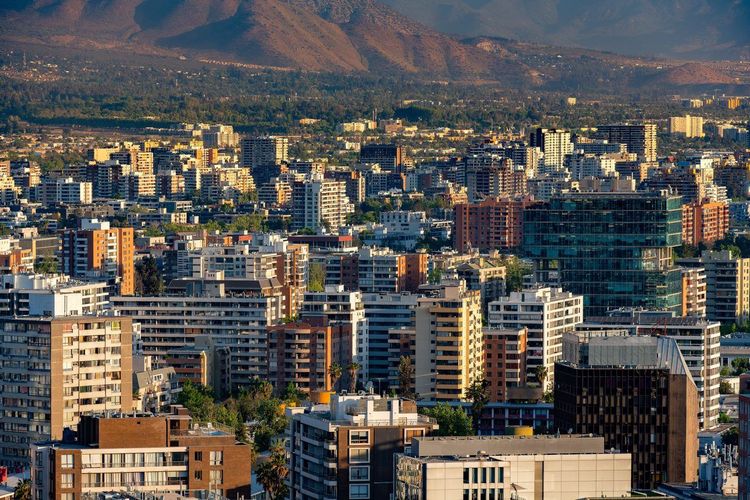
Most free-things-to-do lists stop at the historic center and barely mention Providencia and Ñuñoa, the two residential districts where a large share of Santiago actually lives, works, and spends its weekends.
Providencia mixes mid-rise apartment blocks with tree-lined streets and a long pedestrian stretch along Avenida Providencia, lined with cafés, bookstores, and small plazas that cost nothing to sit in. It's a useful contrast to the historic center: less dramatic architecturally, but a more honest look at how middle-class Santiago actually lives day to day. Parque Bustamante's eastern edge blends directly into this district, so the two are easy to combine in a single walk.
Ñuñoa, just east, centers on Plaza Ñuñoa, a square ringed by bars and restaurants that fills with students and young families in roughly equal measure depending on the hour. University life nearby, home to several of Santiago's main campuses, keeps the area animated without tipping into the nightlife intensity of Bellavista, and the plaza itself, with its church and surrounding benches, is a pleasant free stop even for twenty minutes. Smaller streets fanning out from the plaza hold neighborhood bakeries and corner cafés where prices run noticeably lower than the tourist-heavy center, useful to know even if you're not stopping to eat.
If you have already done the downtown stretch with the Ryo audio guide in your ears, these two districts make a good unscripted follow-up: no narration needed, just plazas and cafés that locals actually use. They are worth factoring in if your schedule allows an extra half-day beyond the usual downtown circuit. Getting here from the center takes about 20-25 minutes by metro, making it an easy afternoon add-on rather than a dedicated day trip.
12. Take a free self-guided walking tour of the historic center
Everything covered so far in the historic core, Plaza de Armas (Plaza de Armas, Santiago, Chile, rated 4.2/5 on Google (84 958 avis)), the cathedral, Santa Lucía, Lastarria, can realistically be strung into a single free walking route covering roughly 4-5 kilometers, depending on how many detours you make.
Start at Plaza de Armas in the morning while the light is good for photos, move through the cathedral and surrounding colonial buildings, then head south toward Santa Lucía Hill for the climb and the view. From there, Lastarria and GAM sit within easy walking distance, making for a natural afternoon stretch before crossing the river into Bellavista if energy allows. A reasonable pace puts you at the cathedral by 9:30am, Santa Lucía's summit by late morning, lunch somewhere in Lastarria, and Bellavista's murals by mid-afternoon, with enough daylight left to climb partway up San Cristóbal if your legs still have it in them.
Walking the whole thing costs nothing beyond whatever food or coffee you buy along the way, and it's the single most efficient way to see this list's downtown highlights without backtracking. Bringing the whole route together into one afternoon, exactly in this order, from the cathedral to Santa Lucía to Lastarria to Bellavista, is essentially what the Ryo audio-guided walk through Santiago does with its stop-by-stop audio, so you're not stopping every few minutes to check a map.
13. Getting around Santiago without spending much
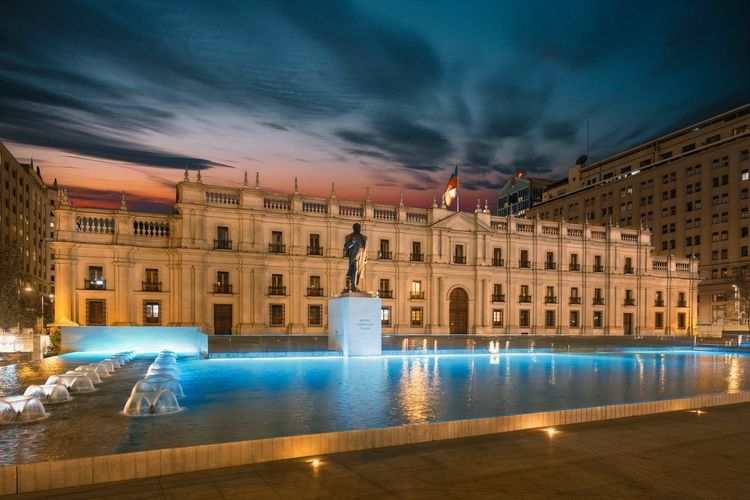
Most of the sights on this list cluster within walking distance of each other in the historic center, which keeps transport costs close to zero for a typical day of sightseeing.
For longer hops, Santiago's metro system is clean, fast, and inexpensive by international standards; a reloadable bip! card, available at any station, covers both metro and bus fares and works out considerably cheaper than single tickets bought individually, with small discounts built in during off-peak hours. The farther-flung stops on this list, the Templo Bahá'í in Peñalolén and Ñuñoa's Plaza Ñuñoa, are both reachable by metro or bus combined with a short walk, though the temple's last stretch usually means a taxi or rideshare from the nearest station.
Buses cover routes the metro doesn't reach, though the network can be confusing for first-time visitors since route numbers and stop names aren't always intuitive. Download a transit app before you arrive; real-time arrival data for both metro and buses makes a meaningful difference in a city where buses don't always run to a visible schedule. Rideshare apps operate widely and are a reasonable backup for the Bahá'í temple trip or a late return from Bellavista, generally cheaper than a metered taxi hailed on the street.
Walking remains the cheapest option of all and, in the flat historic center, often the fastest too once you account for station entrances and transfers. Save the metro for crossing the river to Bellavista, heading out to Ñuñoa or Providencia, or making the longer trip toward Peñalolén.
14. Best time to visit and budget tips for a free trip
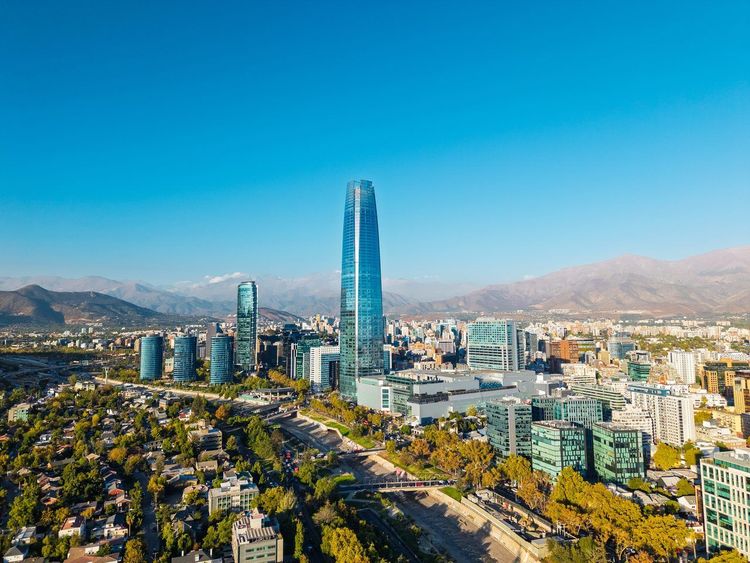
Santiago sits in the Southern Hemisphere, so its seasons run opposite to North America and Europe: summer (December-February) brings hot, dry days well suited to hilltop climbs early in the morning before the heat sets in, while winter (June-August) is cooler, wetter, and gives the clearest Andes views once the rain clears the city's notorious smog.
Shoulder seasons, spring (September-November) and fall (March-May), tend to offer the best balance: mild temperatures, thinner crowds at the free museums, and enough daylight to fit in a hilltop climb and a neighborhood walk in the same day. Pack layers regardless of season; mornings can start cool even in summer, with the heat building only once the sun clears the Andes.
A genuinely important budget tip: many of Santiago's free museums close on Mondays, including the Museum of Memory, the National History Museum, the Pre-Columbian Art museum, and the Museum of Natural History, so don't plan a museum-heavy day at the start of the week. Most reopen Tuesday through Sunday with reduced hours on weekends, and a few extend hours on national holidays rather than closing, so it's worth double-checking rather than assuming.
Safety-wise, the areas covered in this list, the historic center, Lastarria, Bellavista, Providencia, and Ñuñoa, are generally well-trafficked and safe during daylight hours, though standard city precautions apply: keep valuables out of sight on the metro, stay alert around Plaza de Armas and Plaza Italia after dark, and avoid flashing phones or cameras unnecessarily in crowded areas.



FAQ
What are the best free things to do in Santiago, Chile?
The standout free attractions are Plaza de Armas and the Metropolitan Cathedral, the climb up Santa Lucía Hill, the walking trails on Cerro San Cristóbal, and Santiago's cluster of free museums, including the Museum of Memory and Human Rights and the National History Museum. Wandering Lastarria, Bellavista, and the street art scattered through Barrio Yungay costs nothing either, and the Templo Bahá'í makes a worthwhile half-day trip outside the center.
Is the Metropolitan Cathedral free to visit?
Yes, entry to the Metropolitan Cathedral on Plaza de Armas is free every day it's open. Visitors should dress modestly and keep noise to a minimum, especially during mass times, when tourist access to parts of the nave may be limited. Outside of services, you're free to walk the side chapels and main nave at your own pace.
Are Santiago's museums really free, every day?
Most of them, yes, including the Museum of Memory, MAC, the Violeta Parra Museum, and the National Museum of Natural History; the National History Museum is free too but announced a temporary closure for renovation in 2026. The Museum of Pre-Columbian Art is the main exception: it sells tickets, with free entry on the first Sunday of the month for Chilean residents only. Nearly all of these museums close on Mondays, and some trim their hours on Sundays.
Is it safe to walk around Santiago's free attractions?
Generally yes during daylight hours. The historic center, Lastarria, Bellavista, Providencia, and Ñuñoa are well-trafficked areas with regular police presence. Standard precautions apply: avoid displaying valuables on public transit, stay alert near Plaza Italia after dark, and keep to busier streets once the sun goes down rather than cutting through quiet side alleys.
How do you get around Santiago without spending much money?
Walking covers most of the historic center for free, and a reloadable bip! card makes the metro and bus network cheap for longer distances, like reaching Ñuñoa, Providencia, or the Templo Bahá'í in Peñalolén. Download a transit app for real-time arrivals before you arrive, since schedules aren't always posted clearly at bus stops.
How many days do you need to see Santiago's main free attractions?
Two to three days covers the core list comfortably: one day for the historic center and hills, one for Lastarria, Bellavista, and the street art scene, and a half-day each for the museum cluster and the Templo Bahá'í trip to Peñalolén. Add a fourth day if Providencia and Ñuñoa are on your list too.
Santiago rewards exactly the kind of unhurried, on-foot exploring this list is built around, a cathedral facade here, a mural-covered wall there, a free museum when the afternoon turns rainy. None of it requires a ticket, and almost all of it sits within walking distance of the historic center where most visitors already start, with the hill climbs, residential neighborhoods, and the Bahá'í temple rounding things out once you're ready to range a little further.
If you'd rather have the stories narrated as you walk instead of piecing them together from a list, Ryo's audio-guided tour of Santiago covers most of the stops above in order, cathedral facade, hilltop views, neighborhood backstreets, so you can just put your phone in your pocket and look up.