Créé par Emilie, le 17 nov. 2026
Votre guide Ryo
Oxford, England
The city of the dreaming spires
Parcours audioguidé pour visiter Oxford en 1 jour
Famous for its prestigious university, Oxford captivates with its Gothic architecture and unique academic atmosphere. With its historic colleges, libraries, and elegant streets, the city offers a true journey through time.
Quand partir à Oxford ?
Jan.
5°
12
Feb.
6°
10
March
8°
11
April
11°
10
May
15°
10
June
18°
9
July
20°
8
Aug.
20°
8
Sept.
17°
9
Oct.
13°
10
Nov.
8°
11
Dec.
6°
11
As you already know, it rains a lot in England! But Oxford is actually the warmest part of the country! Its oceanic climate means that winters are cold and rainy, so you might want to avoid coming between October and March, to avoid low temperatures and rain. But during summertime, Oxford gets quite hot, with temperatures averaging around 25°C in July/August.
Départ conseillé
No need to worry about where to begin! Our tours are designed as a loop, so you can jump in wherever you are. The navigation system and audio-guide will automatically adjust to your location. However, if you happen to be nearby, we do have a preferred starting point: in front of the Oxford's martyrs's Memorial, on Magdalen Street
Parking à proximité
St Giles' Car Park, St Giles' street
Parking in Oxford city centre is very limited and quite expensive. The Pear Tree Park & Ride in the north of the city is an excellent alternative. You can easily park here, and then take the shuttle bus to the city center. The center itself is compact and you can get around it easily by foot or by bike.
À savoir
If you're in London and want to spend the day or weekend in Oxford, you can take the bus or the train. Oxford is only 90 km, or around 60 miles, north of the English capital and has excellent transport links. Its a 1-hour train ride from London Paddington station (if you book in advance you can get really cheap tickets) or a 2-hour bus ride via the Oxford Tube or X90 or Megabus.
Oxford is a city with beautiful academic architecture that almost makes you want to go study. But its outside beauty doesn't even compare to what awaits you inside these century-old colleges. However, entry is not free. The most famous, Christ Church College, is also the most expensive. The equally splendid Magadalen College, however, will cost you half as much, as you can visit it without an audioguide. Although, the city's spectacular museums are free. Either way, if you'd like to visit more than one paying site, be sure to ask at the tourist office about combined tickets and skip-the-line tickets.
England uses the pound sterling (£ ). You can, of course, pay by card, but remember to check any exchange charges to avoid unpleasant surprises. You can also exchange your native currency for pounds - it's cheaper to do this once you're in the country, and to avoid airport exchange offices!
Découvrez 27 lieux d'intérêt pour visiter Oxford





17. Alice's Shop


What to see in Oxford on your 2h tour?
This 5 km loop links 26 sights in about 2 hours. From Broad Street and its historic colleges, it reaches the Bodleian Library and Radcliffe Square, follows the High Street to Magdalen College by the river Cherwell, drops through Christ Church Meadow to St Aldate's, then crosses Carfax, the Covered Market and Cornmarket Street before skirting the castle and reaching Gloucester Green and the Ashmolean Museum. With the Ryo app in your ears, every college and cobbled lane tells its own story.
Information checked in November 2026 and subject to change.
1 - Oxford Martyrs Memorial
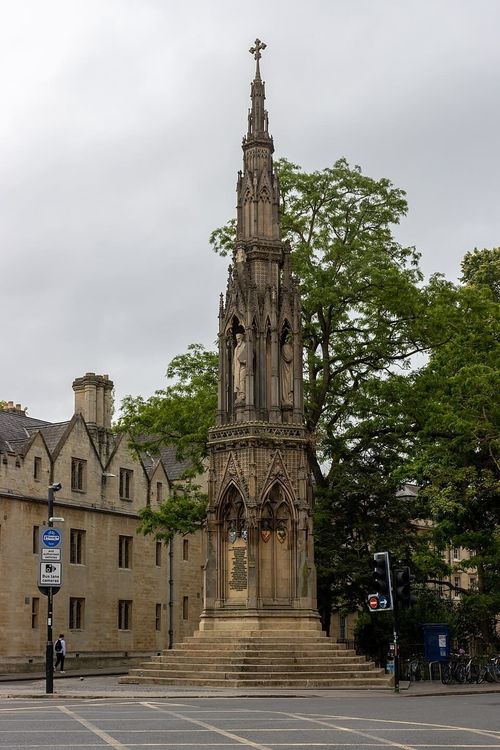
This slender stone monument honours three church leaders executed on this spot in the 16th century, during the upheaval that pulled England away from Rome. Put up as a Victorian Gothic Revival tribute, it keeps the memory of that episode alive. Look further along the pavement for a small metal cross marking the exact site of the burning. A students' old joke, once played on gullible tourists, claimed a secret passage lay beneath the monument.
Free entry
Everything you need to know about the Oxford Martyrs Memorial
2 - View on Exeter College
Glance up at the Exeter College bell tower and you may spot a naked human figure perched on the roof: a contemporary work by a sculptor once trained at a nearby college. The contrast is startling, old stone against modern art. Exeter also remembers a far quieter student of its own, who later wrote The Hobbit and The Lord of the Rings after moving to a college close by to teach Old English.
Free entry
3 - Trinity College
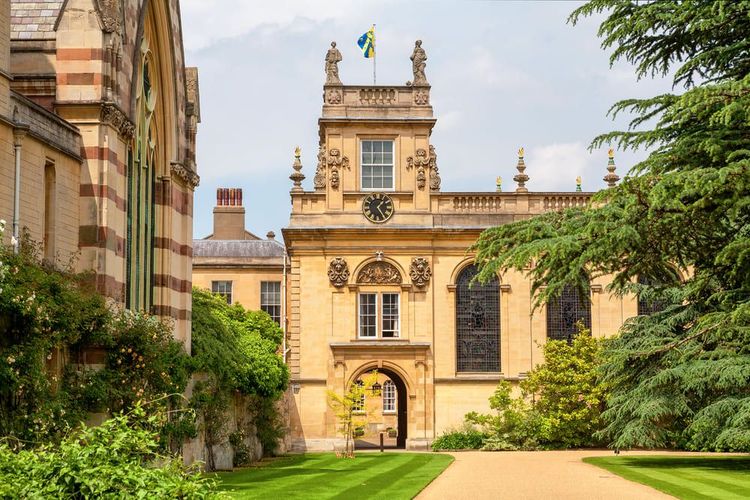
Even without stepping through the gate, you can already glimpse the neat lawns of this college, founded in the 16th century on former monastic ground by a man with no heir, who hoped to be remembered through his students' prayers; he still rests in its chapel. Next door, a historic bookshop launched a future fantasy author by publishing his very first verses, and the pub beside it has poured pints since the late 16th century.
Paid entry (about £7)
4 - Sheldonian Theatre
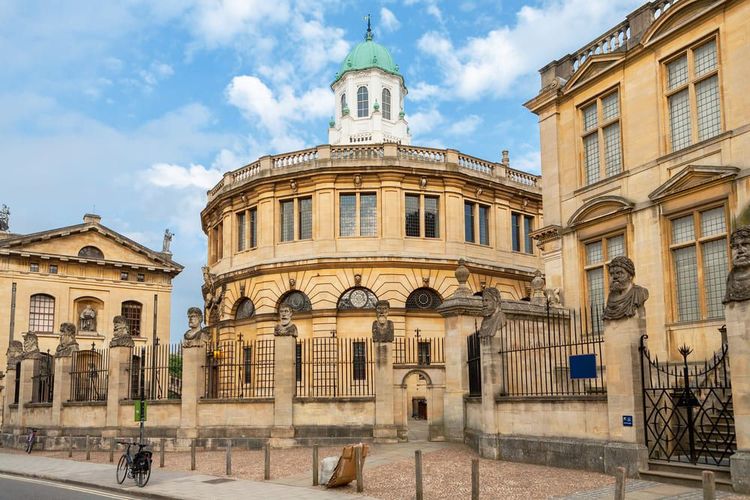
Watched over by a row of stone heads with an imperial air, this 17th-century building was designed by the same architect who later built St Paul's Cathedral in London, drawing on an ancient Roman theatre for inspiration. Its octagonal dome hosts degree ceremonies and the odd concert, but almost never a play: the very first was staged only in 2015. For a small fee, you can admire the painted ceiling and climb to the top.
5 - Clarendon Building
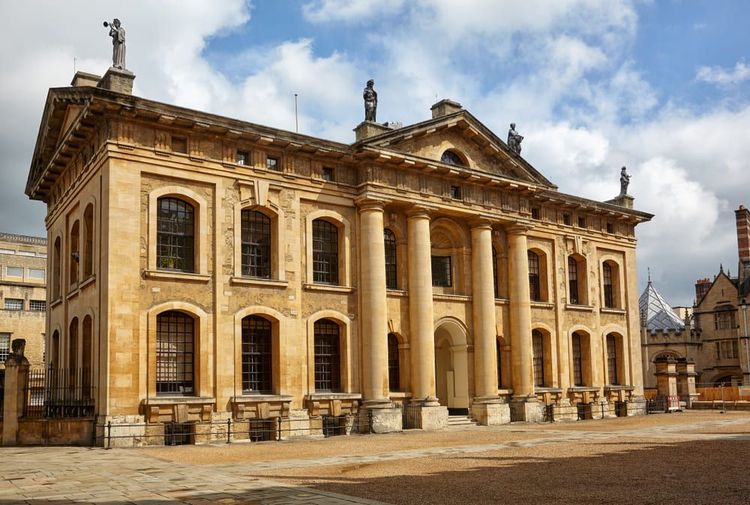
This early 18th-century neoclassical building first housed the printing presses of a university publisher founded much earlier, too noisy to share space with ceremonies next door. Nine statues of muses, long disputed, still watch from its roof, some replaced over time by modern copies. It owes its current name to a historical book whose royalties partly funded its construction. Owned by the library, it now holds offices closed to the public.
Free to see from outside
6 - Bridge of Sighs
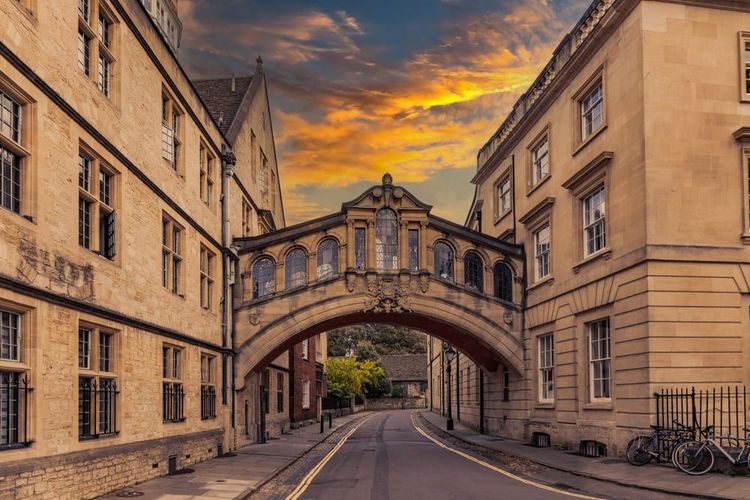
Despite its Venetian nickname, this covered bridge actually owes more to the Rialto's architecture. Built in the early 20th century, it links two wings of the same college above a cobbled lane. Only students of that college may cross it; a stubborn legend claims it was once banned to force them up the stairs instead, when in fact the opposite is true. Lit up at night, it makes one of the city's prettiest pictures.
Free entry
7 - Bodleian Library
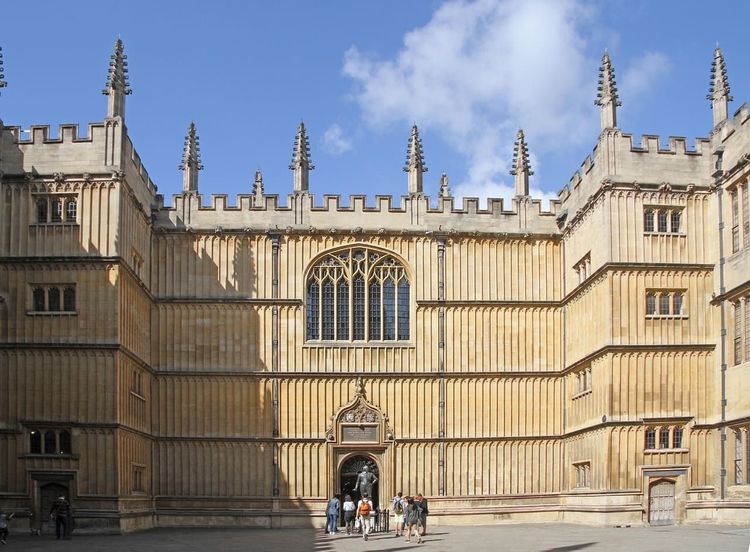
England's second-largest library by its holdings, it keeps millions of volumes and manuscripts of rare value, the fruit of a 17th-century agreement guaranteeing it a copy of every book published in the country. Joining is not like elsewhere: you must prove a research need and promise never to damage or remove a single volume. Its vaulted rooms, finished in the early 17th century, have inspired film and television, from wizarding sagas to more recent series.
Paid entry (about £12)
8 - Radcliffe Camera
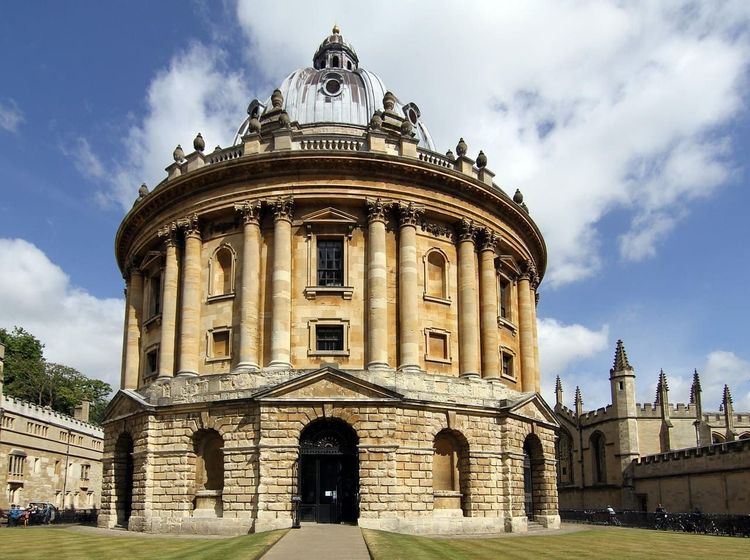
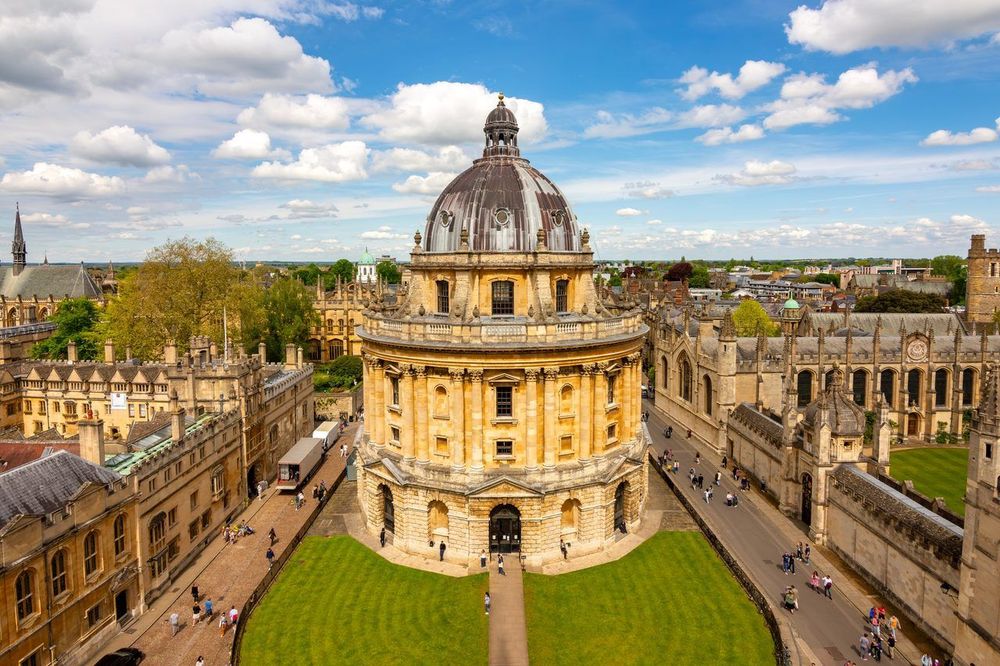
With a circular shape unlike any other building in the city, this 18th-century rotunda was funded by a doctor's bequest to house the university's science library, one of Britain's very first libraries built on this round plan. Long independent and poorly kept, it merged in the mid-19th century with the great library next door, which it now serves as a reading room for students. A guided tour lets you take the tunnel linking it to the older building.
Free to see from outside
9 - University Church of St Mary the Virgin
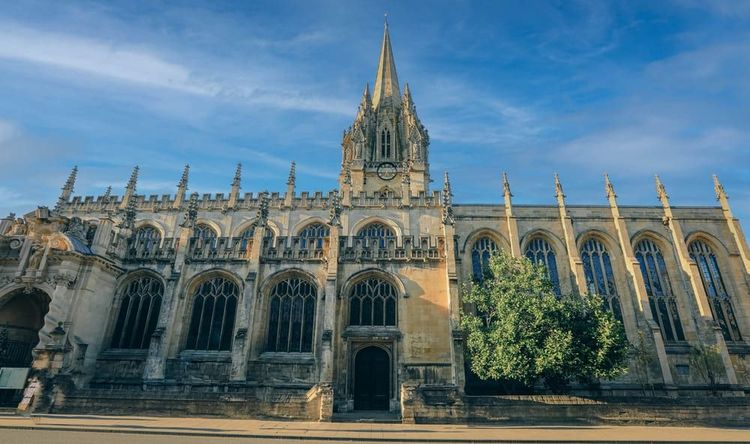
Long before the university existed, a parish already stood here in Anglo-Saxon times. It became the very first academic building, hosting in the Middle Ages the young university's governing body and books left by a bishop, the seed of the great library nearby. The site was also the scene, in the 16th century, of the trial of the martyrs remembered earlier on this walk. Its tower can be climbed for a view over Oxford's rooftops.
Free entry
Everything you need to know about the University Church of St Mary the Virgin
10 - Brasenose College
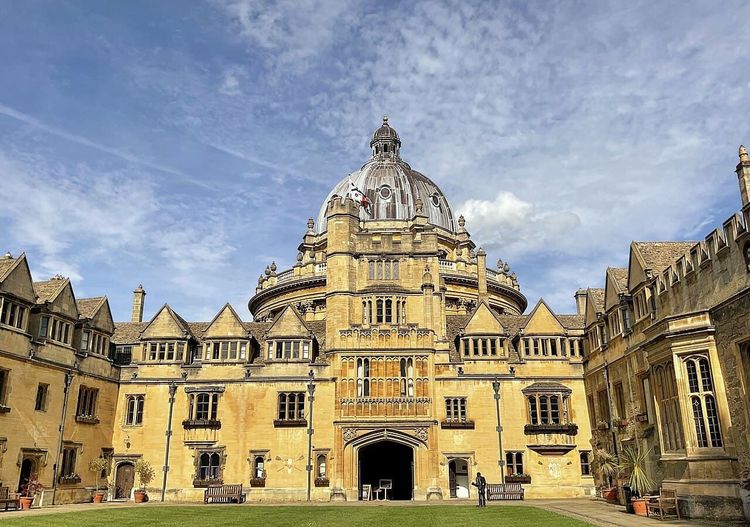
This college's odd name is said to come from a bronze knocker shaped like a nose, carried off by students in the 14th century and found again centuries later on the door of a house up for sale, which the college bought back to recover it. A darker tradition recalls an old student brawl: a young man is said to have died outside a neighbouring college's locked gate. As amends, the colleges once shared a round of beer each spring, dropped since the 19th century.
Free entry
11 - Merton street
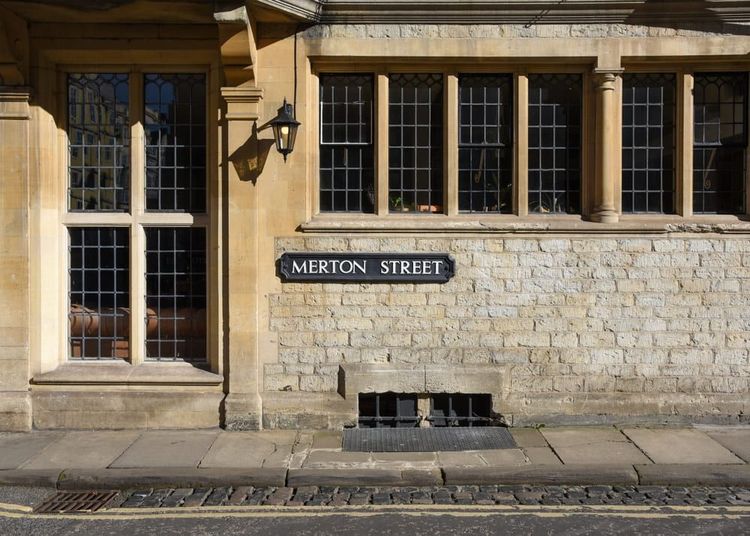
This lane has kept its original paving stones, a rare privilege in Oxford. It runs beside one of the university's oldest colleges, founded by a bishop in the 13th century, which took an unusual side during the English civil war the following century: Parliament's, rather than the king's, who was later beheaded. Nearby stands another college, founded a century earlier by an English king. Strolling here, between high stone walls and old façades, feels like stepping back in time.
Free entry
12 - University College and Logic Lane
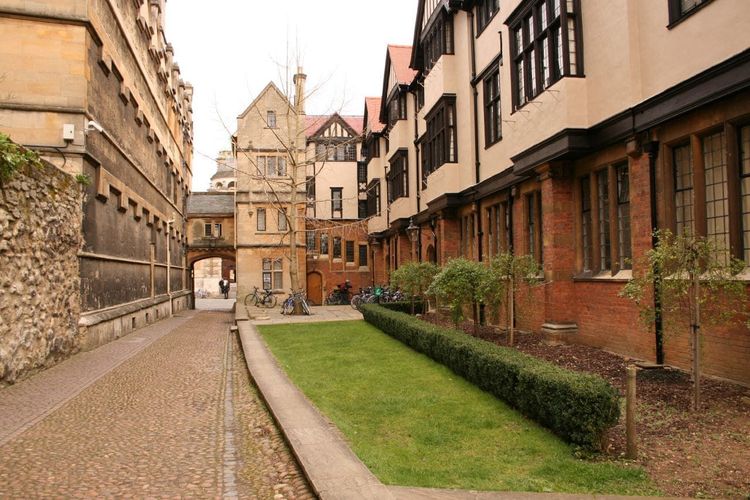
This lane has changed its name over time, first tied to a horse-powered mill before becoming the lane of logic. It runs beside the college that legend, probably stretching the truth, traces back to a 9th-century king, though its real founding came later in the Middle Ages. At the end of the lane, a covered bridge joins two wings of the college: built only in the early 20th century, after a long dispute with the city council.
Free to see from outside
13 - High Street
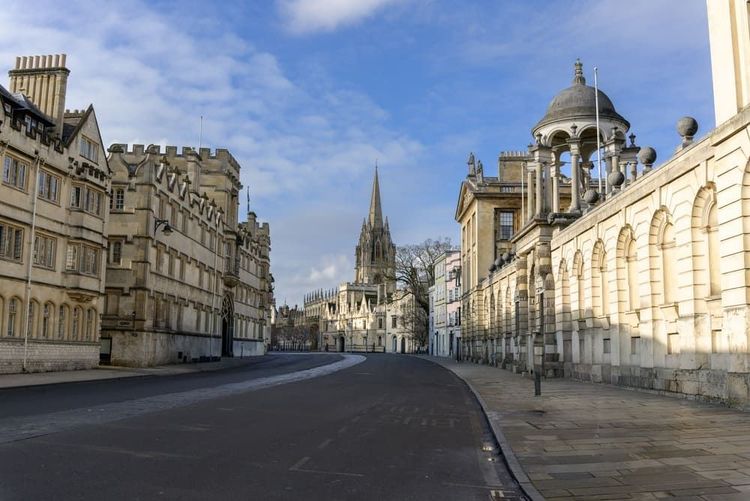
This elegant avenue, among the most admired in the country, lines up grand colleges and institutions steeped in history. One nearby college honours a medieval queen; across the street, England's very first coffee house keeps alive the ritual of afternoon tea with scones and thick clotted cream. Further on, an imposing 19th-century building built for university examinations served as a military hospital during the First World War before becoming the city centre's largest lecture hall, now a listed landmark.
Free entry
14 - Magdalen College
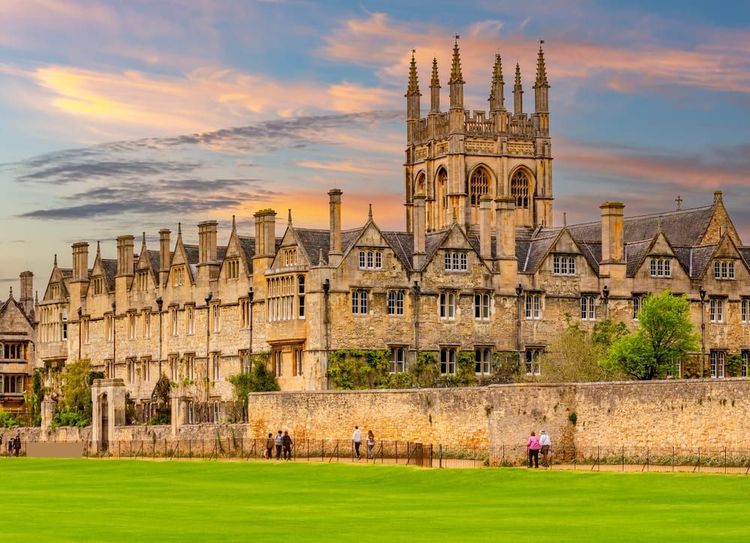
Its name is spelled one way and said quite another, partly to set it apart from its rival at Cambridge, against which Oxford has rowed a famous boat race for two centuries. Founded in the 15th century, this college ranks among the university's wealthiest: its grounds stretch to the river and even hold a deer park where the animals roam free. Every May Day morning, a crowd still gathers below its tower for the first choral hymn at dawn. A famous Irish writer studied here.
Paid entry (about £10)
15 - Deadman’s walk
This quiet path runs beside a stretch of medieval wall and one of its defensive bastions. Its grim name is said to come from the funeral processions of a religious community that, in the Middle Ages, carried its dead this way to a cemetery long since gone, shortly before being expelled from the kingdom. A later legend places here the ghost of an officer executed during the civil war, visible, it is said, only from the knees up, since ground level has risen over time.
Free entry
16 - Alice's Shop
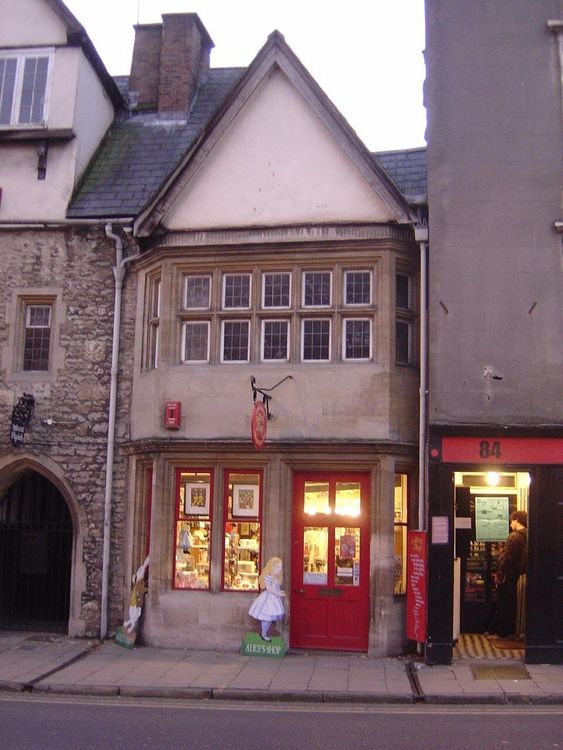
Behind this red door, a 15th-century stone house holds a direct link to a classic of English literature. The little girl who used to buy sweets here lent her name to the heroine dreamed up by a family friend, a mathematics don at the college across the street, better known by his pen name. In the sequel, published some years later, it is precisely this shop that inspired the magical store the heroine passes through on the other side of the mirror.
Free entry
17 - Christ Church College
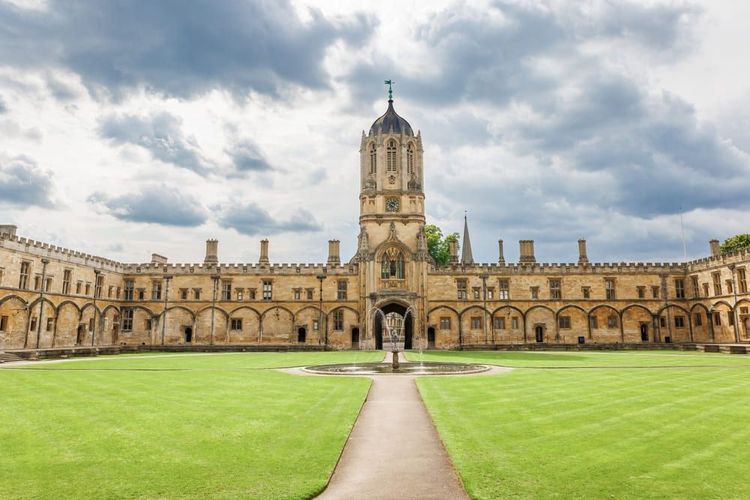
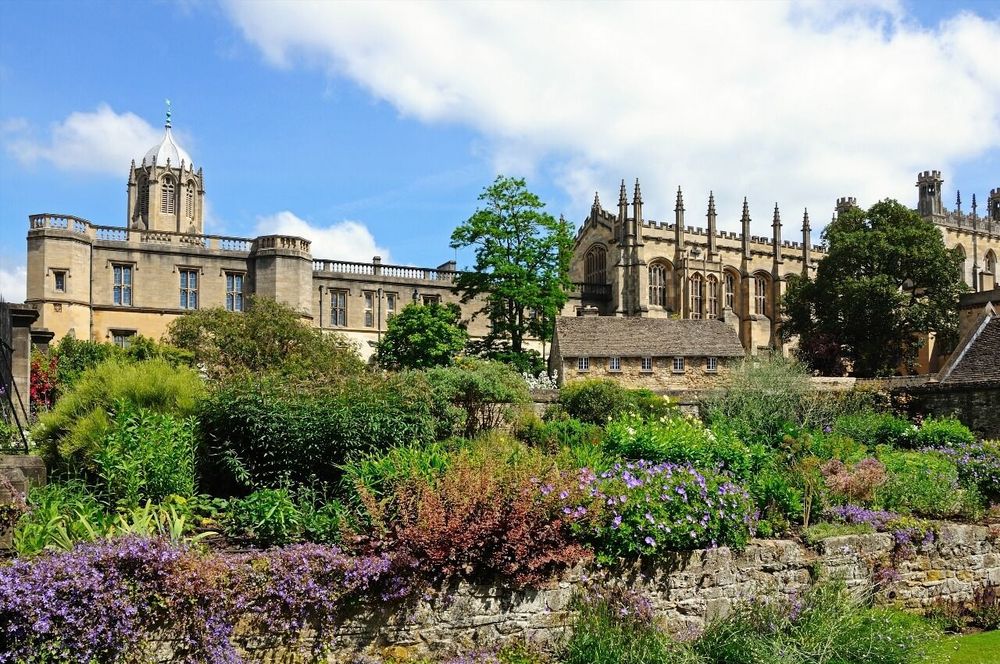
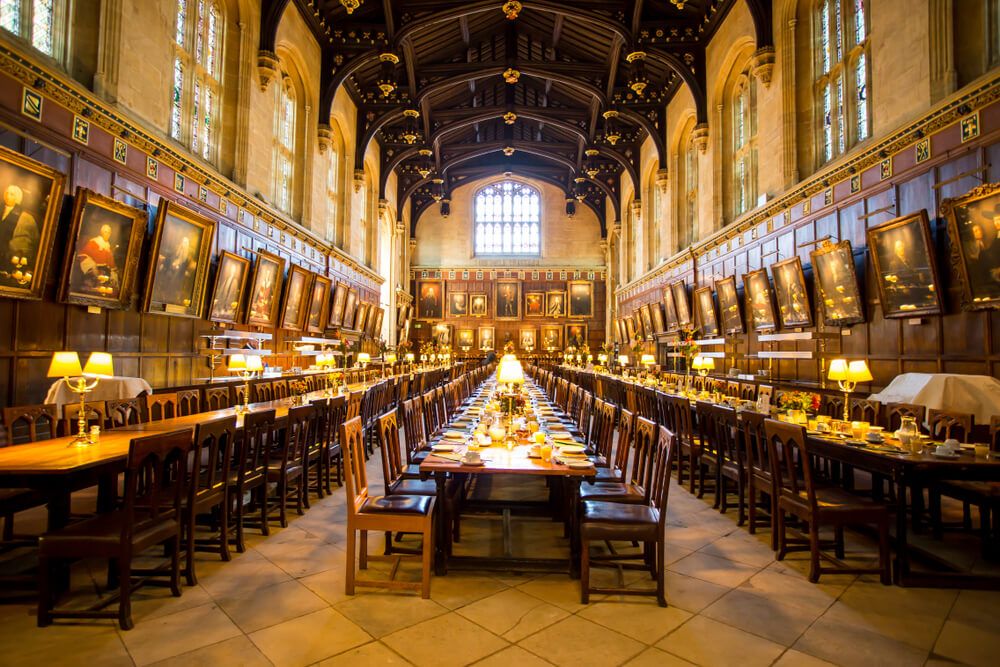
The largest and grandest of Oxford's colleges is also the only one in the world whose chapel doubles as a cathedral, the result of a turbulent history involving a cardinal stripped of power before his work was finished and a king at odds with Rome, who gave the college its final name. Thirteen British prime ministers trained here. Its vast dining hall, used almost without a break since its founding, inspired the great hall of a famous wizarding saga, and its tower remains a visual symbol of the city.
Paid entry (about £23)
18 - Oxford Town Hall
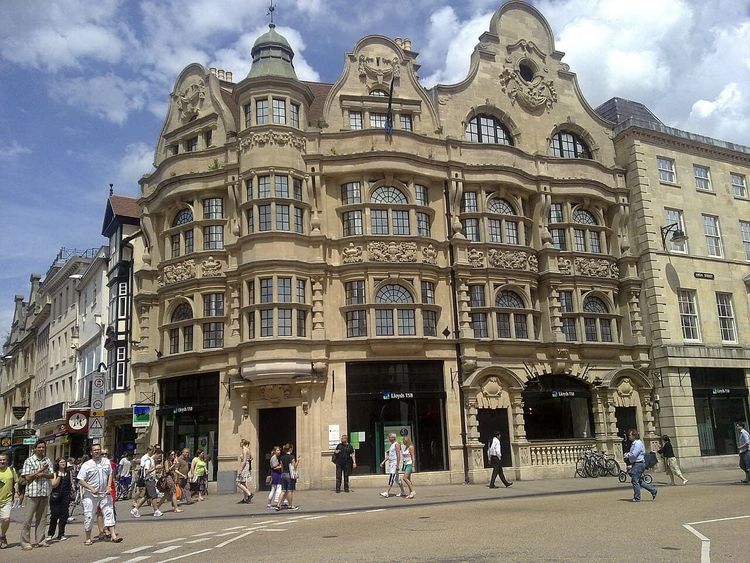
The current building is only the third raised on this spot since the late 13th century to house the city administration. Opened in the late 19th century in a style blending Jacobean and Elizabethan touches, it served as a military hospital during the First World War, treating cases of malaria. Its great hall has since hosted rock concerts as well as a visit from Nelson Mandela. Its free museum tells this civic story, set apart from the university.
Paid entry (about £10)
19 - Carfax Tower
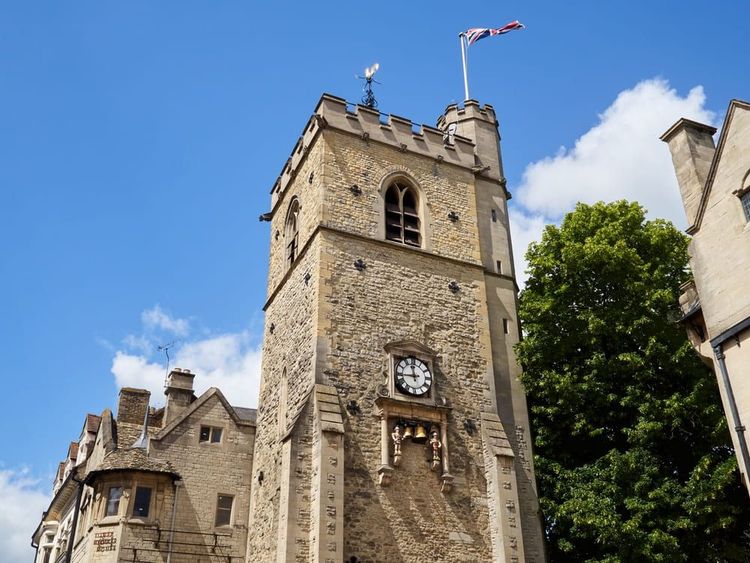
The sole remnant of a parish church that served the city from the early 12th century, this tower has, since its partial demolition, fixed the maximum height allowed for any new building in the centre. Its name is thought to echo the crossing of the four main roads meeting at its foot. On its clock, two small mechanical figures strike every quarter hour. For a small fee, you can climb to the top for a sweeping view over Oxford's roofs and spires.
20 - Covered Market
This permanent covered market, trading since the late 18th century, grew out of a city ruling that all meat be sold under cover from then on, in new halls designed by the architect behind the bridge spanning the Cherwell. Over the decades, butchers' stalls gave way to a mix of trades: greengrocers, cheesemongers, florists and cafés still fill its aisles. A fine spot to taste the region's produce, it offers a welcome, tasty break in the middle of the walk.
Free entry
21 - Saxon Tower
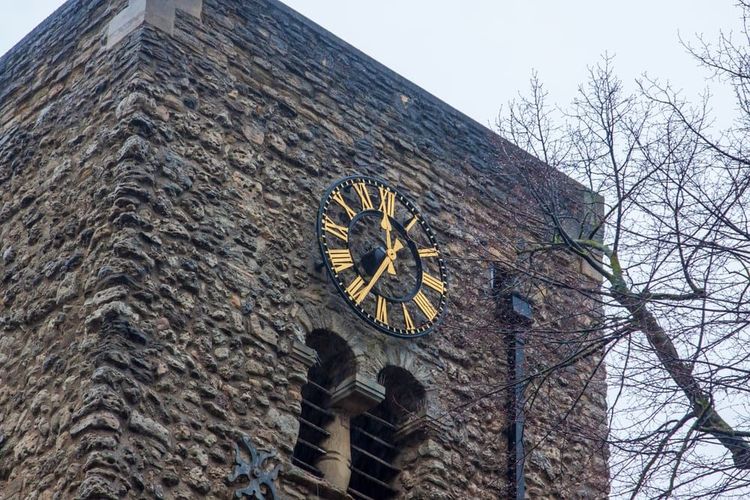
Built around the year 1050, this sturdy tower has survived a thousand years even as the church around it was rebuilt several times over: it is the oldest structure in the city. It takes its name from its spot near an old gate in the city walls. The building remains tied to the city's authorities, since the Anglican Church is the kingdom's official faith. For a small fee, you can see a prison door that once held the martyrs recalled earlier on this walk.
Paid entry (about £5)
22 - Wesley Memorial Methodist Church
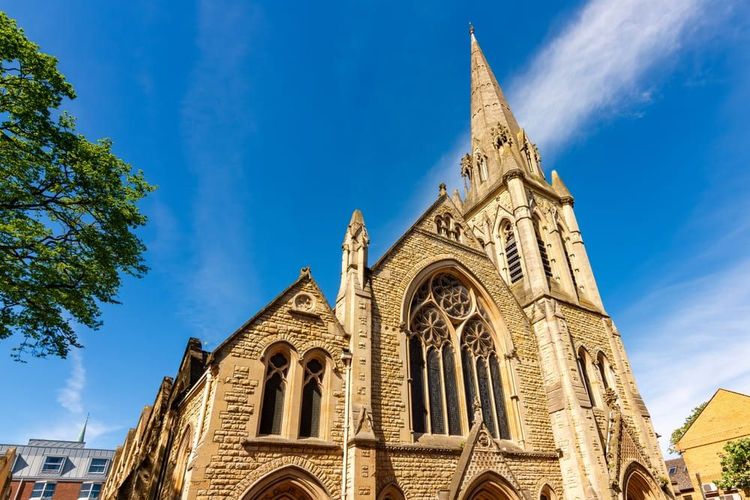
It was within the university itself, in 1729, that a handful of students who gathered to pray and act with discipline gave rise to a religious movement now followed by tens of millions worldwide. Their very first meetings were held in a simple rented room at a nearby college, long before this church was built in the early 19th century. The building is open to all and tells, through an exhibition, the story of this Protestant movement born in Oxford.
23 - Oxford Castle and Prison
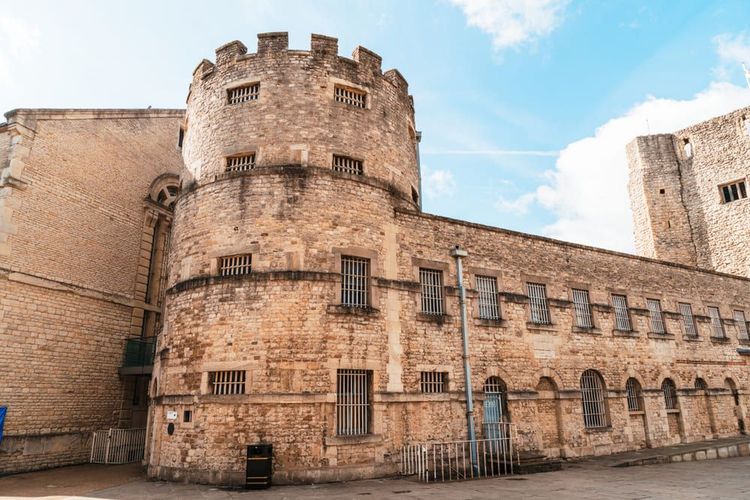
Raised after the Norman conquest of 1066, this castle was meant to secure the kingdom's new lords in power. It holds a motte and a chapel from the 11th century, claimed as the distant seed of the university next door: a Welsh monk who studied there put into writing an early version of the tale of King Arthur. Turned into a prison after a 13th-century civil war, the site stayed in use until the late 20th century and recalls a condemned woman hanged who survived her own execution.
Paid entry (about £16)
24 - Punting
Along this quiet backwater of the Thames, which leads, for the curious, on to a bohemian district nearby, visitors enjoy one of the city's most distinctive pastimes: gliding across the water in a long flat-bottomed boat, steered not by oar but by pole. Originally built for hunting and fishing, the craft became, in the 19th century, a pure leisure pursuit. You can take the pole yourself or let an experienced boatman do the work.
Paid entry (about £35)
25 - Gloucester Green Market
From Wednesday to Saturday, this square comes alive with a colourful market mixing bric-a-brac, crafts and street food from every corner of the world. Wednesday draws the largest number of stallholders, Thursday leans toward antiques, while the end of the week brings extra entertainment. Far from the grand colleges seen earlier, this reveals a more everyday, more multicultural side of Oxford, between bargains and a welcome bite after hours of walking.
Free entry
26 - Ashmolean Museum
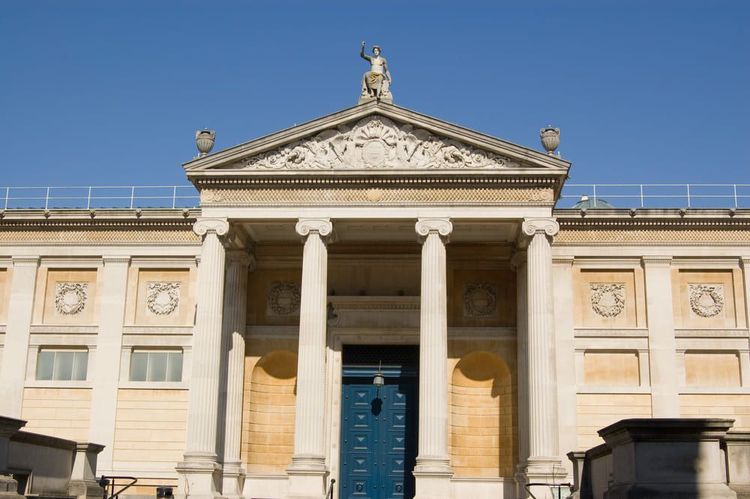
The final stop on this walk, this stately neoclassical building houses the oldest public museum in the United Kingdom, born in the late 17th century from the bequest of a passionate collector to the university. Its collections, among the richest in the academic world after those of the Swiss city of Basel, span every civilisation: Egyptian mummies, English silverware, drawings by old masters or Viking treasure sit side by side. Entry, usually free, lets you close the walk gently.
Free entry
What to do in Oxford in 2 or 3 days?
A 5 km loop covers the essentials of the university quarter in half a day: 26 stops and about 2 hours of walking, from Broad Street to the Ashmolean Museum. With 2 or 3 days to spare, Oxford rewards a slower pace, museum by museum and college by college.
The next day, give the morning to the Victorian natural history museum, with a 40-million-piece ethnographic collection tucked behind it, then seek out the meadow where Lewis Carroll told young Alice her tale for the very first time. In the afternoon, follow the old Roman road that turned into a bohemian art strip, then pad out your list with our pick of the best things to do in Oxford.
On the third day, push open the doors of the colleges the loop skips: the university counts 38 of them, each with its own architecture, quads and gardens, and many open their doors to curious visitors.
Which neighbourhoods does the tour cross?
In one loop, the walk links the quarters that built Oxford's academic reputation, from Broad Street to the banks of the Cherwell.
It starts on Broad Street, where Trinity College and the Sheldonian Theatre stand next to the Bridge of Sighs, then enters the scholarly heart of the city, around the Bodleian Library, the Radcliffe Camera and the University Church of St Mary the Virgin, before the small quad of Brasenose College (stops 1 to 10).
It then reaches the High Street, one of the finest streets in England, as far as Magdalen College on the Cherwell, before dropping through the quiet Deadman's Walk to St Aldate's, where Alice's Shop sits before the grand Christ Church College, whose dining hall inspired the Hogwarts great hall (our article on Oxford's Harry Potter filming locations tells the full story), on the way to the town hall (stops 11 to 18).
The last stretch crosses Carfax, the city's historic crossroads, then the Covered Market and Cornmarket Street, skirts the castle before dropping to the river for punting, and closes the loop through Gloucester Green and the Ashmolean Museum (stops 19 to 26).
How much does it cost to visit Oxford?
Of the 26 stops on the loop, fifteen can be enjoyed without a ticket, either inside or from the street. Among the rest, seven paid entries are worth budgeting for:
- Trinity College, about £7;
- the guided tour of the Bodleian Library, from £12.50;
- Magdalen College, about £10;
- Christ Church College, from £22.95 on weekdays, more at weekends and over the Christmas break;
- climbing the Saxon Tower, about £5;
- Oxford Castle and Prison, guided tour only, from £16.20;
- renting a punt, about £35 an hour for the whole boat, up to 5 people.
As for climbing the Carfax Tower, it is not open continuously but organised occasionally by the Oxford Preservation Trust, so check the calendar before counting on it.
Information checked in November 2026 and subject to change.
Where to stop for a bite along the tour?
The loop passes three food stops, just a few streets apart.
On the High Street (stop 13), the Grand Café, billed as the very first coffee house in England, is the place for afternoon tea: scones topped with clotted cream, a thick and very British cream, in opulent surroundings.
The Covered Market, an 18th-century covered market, gathers butchers, cheesemongers and bakers alongside cafés and small restaurants. A few streets on, the Gloucester Green market, held Wednesday to Saturday, adds fruit and vegetables, cheese and street food from around the world, in a livelier, more everyday mood.
What should you know before visiting Oxford?
A few practical things to know before setting off on the loop.
Two stops do not simply open at a knock: the Bodleian Library's historic rooms are only seen on a guided tour, and Oxford Castle and Prison works the same way, with no free walk-in access to the site.
It is also worth reckoning with the weather: Oxford may sit in the warmest part of the country, but October to March is cold and rainy there, while July and August hover around 25°C. If you come by car, parking in the centre is hard and expensive; the Pear Tree Park & Ride, north of the city, and its shuttle buses spare you the trouble.
What to see around Oxford?
Oxford makes a good base for extending the trip, between a countryside escape and a capital city within easy reach by train.
Blenheim Palace, in Woodstock, is about 20 minutes away by car, or reachable on the Stagecoach S3 or S7 bus from the city centre, followed by a 10 to 15-minute walk through the park.
At 82 km, London makes for another escape: its audio tour links the banks of the Thames, Big Ben and Westminster Abbey to the Crown's palaces, before the buzz of the West End, between theatres and Piccadilly.
What's on in Oxford right now?
As the year winds down, several festive, family-friendly events bring Oxford and its surroundings to life:
- from 13 November to 3 January, Blenheim Palace lights up for Christmas, with its market running until 20 December, a skating rink and a big wheel;
- from 18 November to 4 January, the Westgate shopping centre runs the free, family trail Stick Man Trail;
- from 9 November to 31 December, also at Westgate, the free treasure hunt Hatter's Hunt is aimed at families too;
- from 20 November to 3 January, the Oxford Playhouse stages the Christmas pantomime Snow White, with tickets from £26 to £46.
Information checked in November 2026 and subject to change.
Le plein d'inspirations
Explorez le monde en totale liberté, à pied au cœur des villes ou au fil des routes. Nos guides audios transforment chaque destination en une découverte culturelle immersive et unique.










FAQ for visiting Oxford
When is the best time to visit Oxford?
The ideal time to discover Oxford runs from April to September, when the weather is at its most pleasant. July and August bring comfortable temperatures around 25°C, perfect for wandering the picturesque lanes and admiring the Gothic architecture. Spring is equally charming, with the college gardens in bloom. If possible, avoid the months from October to March, when temperatures can drop below zero and rain is frequent. Bear in mind, though, that Oxford enjoys the mildest climate in the United Kingdom, which makes the city visitable all year round with the right gear.
How many days do you need to visit Oxford?
Two to three days is the ideal length to explore Oxford without rushing. In two days, you will have time to visit the main colleges, the Bodleian Library and stroll through the historic centre. A third day lets you deepen your discovery by visiting museums such as the Ashmolean or exploring the less touristy neighbourhoods. If you only have a single day, focus on the historic heart and a few iconic colleges. The Ryo audioguide can help you make the most of your time with routes tailored to the length of your stay, guiding you efficiently between the must-sees of this university city.
How can you get around Oxford without a car?
Oxford is a city perfectly suited to getting around without a car. The historic centre is compact and best explored on foot, letting you fully appreciate the architecture and unique atmosphere. For longer distances, the local bus network is very well developed and serves every neighbourhood. Cycling is also an excellent option, very popular among students and residents alike. Many shops offer day rentals. Taxis and ride-hailing services are available but rarely necessary for sightseeing. Most major attractions are less than a twenty-minute walk from one another in the city centre.
Which Oxford colleges are an absolute must-visit?
Among Oxford's thirty-nine colleges, some stand out particularly for visitors. Christ Church impresses with its majestic scale and its cathedral, while All Souls College fascinates with its perfectly preserved Gothic architecture. New College is worth the detour for its gardens and medieval cloister. Merton College, one of the oldest, offers an authentic atmosphere with its historic library. Trinity College charms with its manicured gardens and Balliol College with its prestigious history. The Ryo audioguide accompanies you as you discover these architectural gems, revealing anecdotes and secrets while guiding you efficiently between the different sites according to your interests.
How do you book a tour of the Bodleian Library?
The Bodleian Library, one of the oldest libraries in Europe, offers several types of guided tours that are strongly recommended to book in advance, especially in high season. Bookings are usually made online on the library's official website or directly at the ticket office located in the Great Gate. Several routes are on offer, ranging from a thirty-minute express tour to more in-depth tours including the medieval Duke Humfrey's Library. Tours are generally available in English several times a day, sometimes with options in other languages. Remember to check availability a few weeks before your visit, particularly during term time when access may be more restricted.
Where can you see the Harry Potter filming locations in Oxford?
Oxford served as the backdrop for several iconic scenes in the Harry Potter saga. Christ Church is a must, with its Great Hall that inspired the Great Hall of Hogwarts and its majestic staircase. The Bodleian Library lent several of its rooms, notably the Duke Humfrey's Library used as the Hogwarts library and the Divinity School that served as the infirmary. New College and its cloister also appear in some scenes. For the best way to discover these magical places, the Ryo audioguide offers a themed route that takes you in the footsteps of the famous wizard while telling you the filming anecdotes and the fascinating history of these historic buildings.
How do you get to Oxford from London?
Several options are available to reach Oxford from London. The train remains the most convenient way, with frequent departures from Paddington and Marylebone stations. The journey usually takes between one hour and one hour thirty depending on the service chosen. Direct buses, notably those leaving from Victoria Coach Station, are an economical alternative with a journey time of around two hours. If you prefer to drive, allow about an hour and a half via the M40, but beware of the limited and expensive parking in the centre of Oxford. Organised coach excursions are also available from London, sometimes including other destinations such as Stratford-upon-Avon or the Cotswolds.
Do you need to book tours in advance in Oxford?
Booking in advance is strongly advised for several Oxford attractions, particularly during the high tourist season and at weekends. The most popular colleges such as Christ Church often limit the number of daily visitors and can sell out quickly. The Bodleian Library generally requires a booking for its guided tours. Museums such as the Ashmolean or the Museum of Natural History usually accept visitors without a booking, but can be crowded at peak times. For the best experience, plan your visits to the colleges and major sites by booking a few weeks ahead, while keeping some flexibility for spontaneous discoveries in this city that lends itself wonderfully to wandering.
Which museums should you visit in Oxford?
The Ashmolean, one of the oldest public museums in the country, leads you from the ancient world to European painting inside a bright building in the centre. A few steps away, the University Museum of Natural History displays its skeletons and fossils beneath a superb iron and glass nave, and opens straight onto the Pitt Rivers, an extraordinary ethnographic cabinet where objects from around the world are packed into cases arranged by use rather than by country.
Anyone drawn to early instruments can round off the tour at the History of Science Museum, housed in an elegant building on Broad Street, while contemporary art is shown at Modern Art Oxford. Many of these university institutions can be entered without a ticket, on a voluntary donation basis; it is still worth checking opening days before setting out.
Where can you enjoy green spaces and the river in Oxford?
Oxford is a very green city, set between the Thames and the Cherwell. The Botanic Garden, the oldest in the country, lines up its beds and glasshouses opposite Magdalen College; just behind it opens Christ Church Meadow, a broad pasture where you meet grazing cattle minutes from the spires. The University Parks and Addison's Walk offer other shaded loops, while Port Meadow, upstream, unrolls a wilder landscape along the river.
The most local way to enjoy the water is still punting, either pushing the pole yourself or leaving it to a chauffeur, on the Cherwell. The Ryo audio guide offers a dedicated Oxford route linking the university heart to these green escapes.
Which Harry Potter scenes can you recognise in Oxford's colleges and libraries?
At Christ Church, the Bodley stairs served as the Hogwarts entrance hall, the cloister appears in The Chamber of Secrets and the Great Hall echoes the dining hall. At the Bodleian, the Divinity School becomes the infirmary and hosts Ron's dance with Professor McGonagall in The Goblet of Fire, while Duke Humfrey's Library, open only on guided tours, is where the trio research Nicolas Flamel. At New College, the cloister and the ancient tree see Draco turned into a ferret. Blenheim Palace, a UNESCO site, rounds off the trail.
Follow the full route in our guide to Oxford in Harry Potter's footsteps.
What are the best experiences in Oxford, from punting on the Cherwell to the Radcliffe Camera?
Christ Church, founded in 1524, opens its 36-metre Great Hall for around £19, and its meadow is free to wander. The Bodleian, opened in 1602 and holding more than 13 million items, is seen on guided tours costing £8 to £14, as is the Radcliffe Camera, completed in 1749. The Ashmolean, Britain's oldest public museum since 1683, is free: allow at least two hours. To slow down, hire a punt at Magdalen Bridge Boathouse, around £25 to £35 an hour for up to six people.
Find all 35 ideas in our list of the best things to do in Oxford.
What should I know before visiting Oxford for the first time?
Oxford has 39 colleges, and not all of them are open every day: some close for services or during exam term in May and June. Fortunately, the centre is compact, with most sights within a ten-minute walk of Radcliffe Square.
One day covers two or three colleges, a museum and the Covered Market; two days let you add the Ashmolean or the Pitt Rivers. Trains from London Paddington take as little as 55 minutes, and booking ahead is much cheaper than buying on the day.
To plan your first trip, read our complete guide to Oxford for first-time visitors.
Vos commentaires, idées et suggestions
Aucun avis pour le moment