
Créé par Romane, le 17 nov. 2026
Votre guide Ryo
Béziers, France
On the heights of the French South
Parcours audioguidé pour visiter Béziers en 1 jour
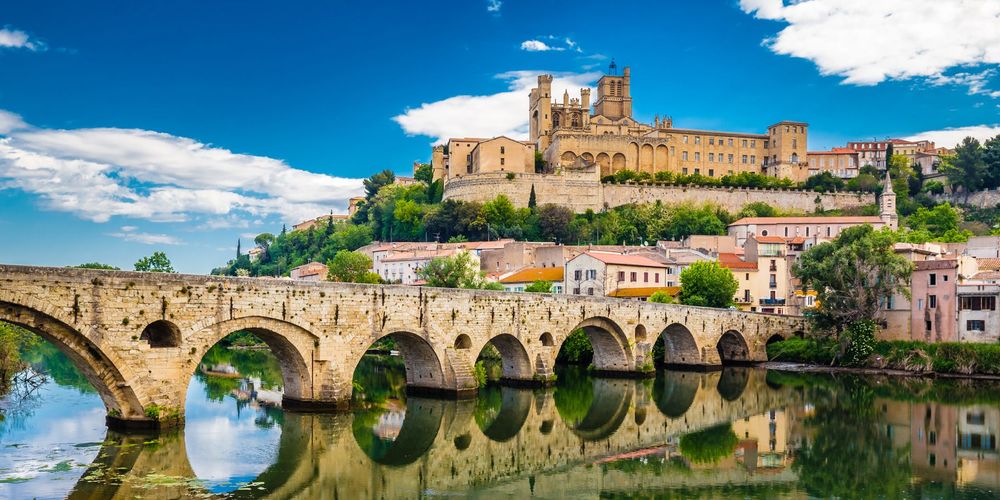
Perched above the Orb River, Béziers is one of the oldest cities in France. With its Roman heritage, lively historic center, and wine culture, it reveals a strong identity shaped by the southern sun.
Quand partir à Béziers ?
Jan.
10°
6
Feb.
11°
5
March
13°
6
April
15°
7
May
19°
6
June
24°
4
July
27°
2
Aug.
27°
3
Sept.
24°
5
Oct.
20°
7
Nov.
14°
7
Dec.
11°
6
The climate in Béziers is Mediterranean, with mild winters, generally between 8 and 15°C, and hot, dry summers, most often ranging from 28 to 34°C, with possible peaks during heatwaves; the best times to visit are typically from April to June and then from September to October, when temperatures are very pleasant, the heat is more moderate than at the height of summer, and conditions are ideal for enjoying the historic center, the Canal du Midi, and the nearby coastline without the crowds of peak season.
Départ conseillé
No need to worry about where to begin! Our tours are designed as a loop, so you can jump in wherever you are. The navigation system and audio-guide will automatically adjust to your location. However, if you happen to be nearby, we do have a preferred starting point: in front of the Municipal Theatre, on the Paul-Riquet Allées
Parking à proximité
Parking Charles de Gaulle : Place Charles de Gaulle
In Béziers, several options make parking easy depending on the type of visit. The city centre offers convenient underground car parks such as Jean-Jaurès, Les Halles and Charles-de-Gaulle, all close to major sites and ideal for exploring on foot. Around the historic core, you’ll also find on-street parking zones, paid on weekdays but often free at weekends and on public holidays. For those who prefer to avoid the centre, there are larger, free car parks near access points to the Canal du Midi paths or the Fonseranes Locks. Depending on the time of day, how long you plan to stay and the neighbourhood you want to explore, it’s fairly easy to choose a suitable option.
À savoir
Béziers also offers the Béziers Méditerranée City Card, a tourist pass valid for 24, 48 or 72 hours that gives access to more than thirty sites and activities across the region. It provides either free entry or reduced rates at partner locations and can be purchased online or at the Tourist Office. It’s a practical way to discover several sites while saving on admission fees.
Découvrez 25 lieux d'intérêt pour visiter Béziers








What to see in Béziers on your 1h30 tour?
This 3.3 km loop takes about an hour and a half and links 24 sights. From the municipal theatre, at the end of the Allées Paul-Riquet, it passes Victoire square, the old town around Sainte-Madeleine and the market hall, climbs to the cathedral, drops back past Saint-Jude to the Pont Vieux, crosses Saint-Jacques, then climbs towards the Plateau des Poètes and the Citadel. With the Ryo app in your ears, every stop tells its story at your own pace.
Information checked in November 2026 and subject to change.
1 - Municipal Theatre
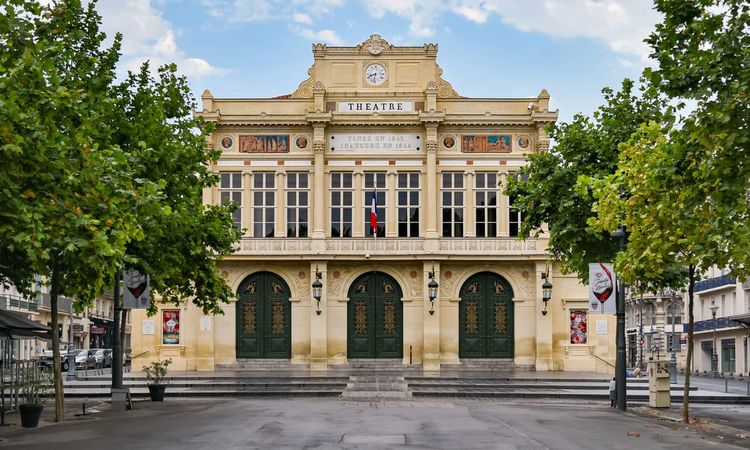
Between 1842 and 1844, architect Charles Isabelle designed this small Italian-style playhouse, locally nicknamed the jewel box for its intimacy. Two bas-reliefs by David d'Angers decorate its neoclassical facade, which shelters an interior unchanged since opening and listed as a historic monument in 1975. More than thirty shows fill each season, from opera to dance. The venue also broke new ground as the first French theatre honoured for its environmental commitment, even printing its programmes in braille.
Free to see from outside
2 - Place de la Victoire
This junction linking the allées to the cathedral once stood on the site of the Carmes gate, in the former city walls. Reshaped in the 19th century into a space lined with Haussmann-style buildings, it carried several names before taking its own, in 1924, to mark the 1918 victory. Above its fountain hides a trompe-l'oeil tribute to the engineer who brought water from the Orb into town. Cafes and shops now enliven this crossing point towards the Plateau des Poetes.
Free entry
3 - Sainte-Madeleine Church
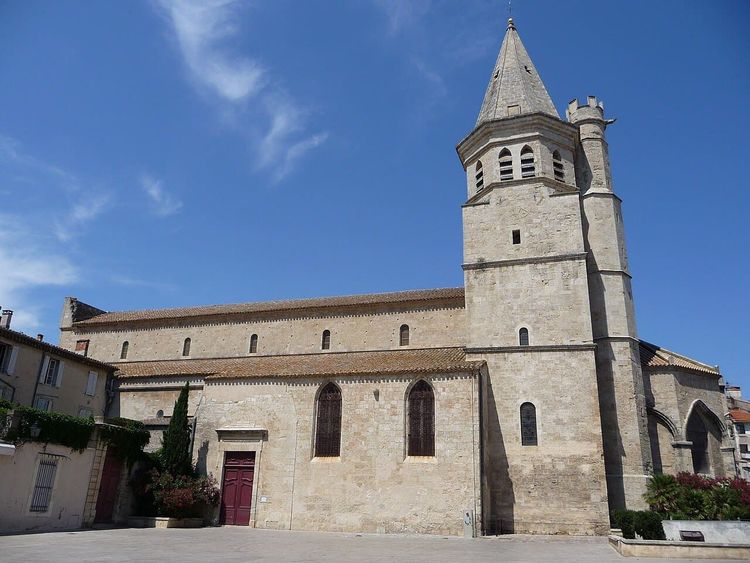
First recorded in 1092, this three-naved church with a pentagonal apse is topped by a sturdy bell tower crowned with an octagonal spire. Its name is forever tied to tragedy: in 1209, townspeople sheltering inside were slaughtered by troops sent to crush the revolt against the Cathars, and the lord Raimond Trencavel had already been murdered here decades earlier. Works carried out in 1999 returned the building to a sobriety close to its original Romanesque state. The peaceful square around it now contrasts sharply with that tragic past.
Free entry
4 - Béziers Market Hall
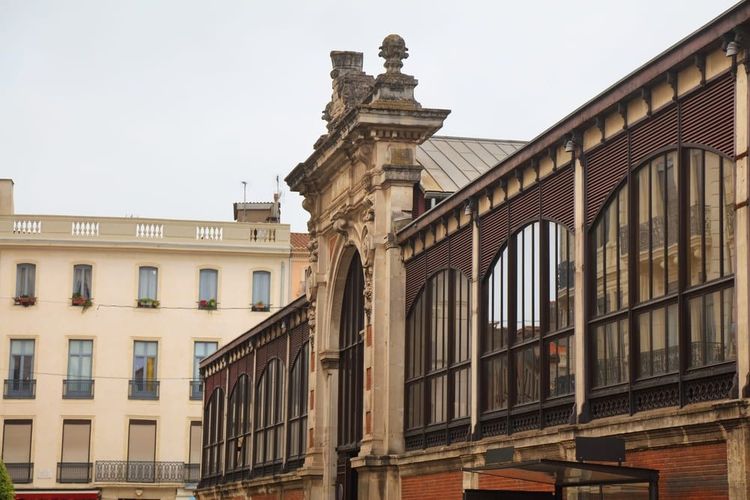
Built in the Baltard style, with an iron frame and bright glass roofs, this market hall stands on the site of the former Romanesque church of Saint-Felix, torn down in 1815. Listed as a historic monument since 1984, it was recently crowned the most beautiful market in France after a major renovation. Some twenty traders sell fruit, fish, cheese and regional charcuterie here. Visitors happily try a tielle, a macaronade or Bouzigues oysters, washed down with a Languedoc wine, in a warm, lively setting.
Free entry
5 - Museum of Fine Arts
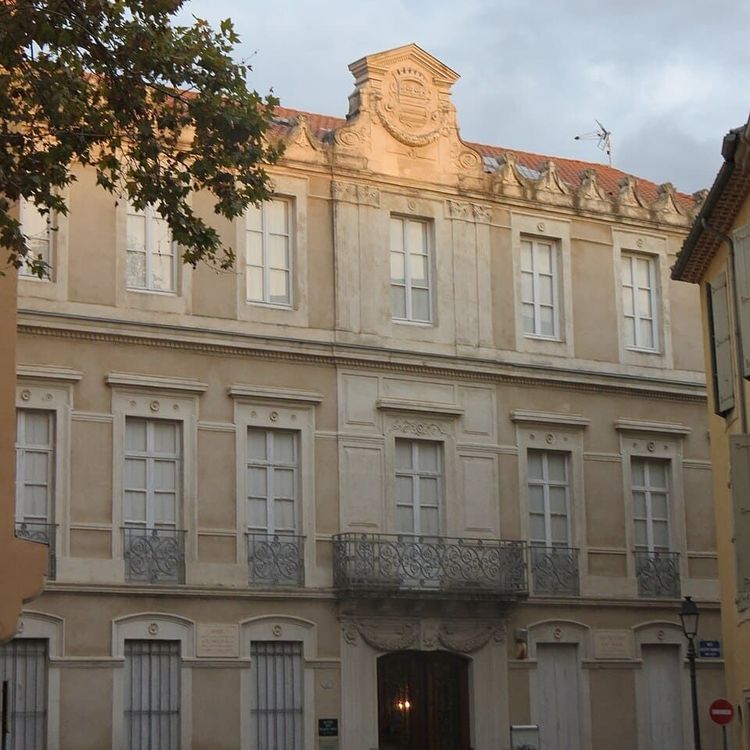
Awarded the Maison des Illustres label, this genteel residence built in the 18th century devotes a permanent display to Beziers-born sculptor Jean-Antoine Injalbert, whose work can be spotted across town, notably along the allees and in the Plateau des Poetes. Its rooms also hold pieces from the modern-art holdings once assembled by Jean Moulin, including works by Soutine, De Chirico and Valadon. The original decor, preserved, adds the charm of a family home to the visit, that of the painter and patron Gustave Fayet.
Paid entry (about €4)
6 - Viewpoint from the Cathedral
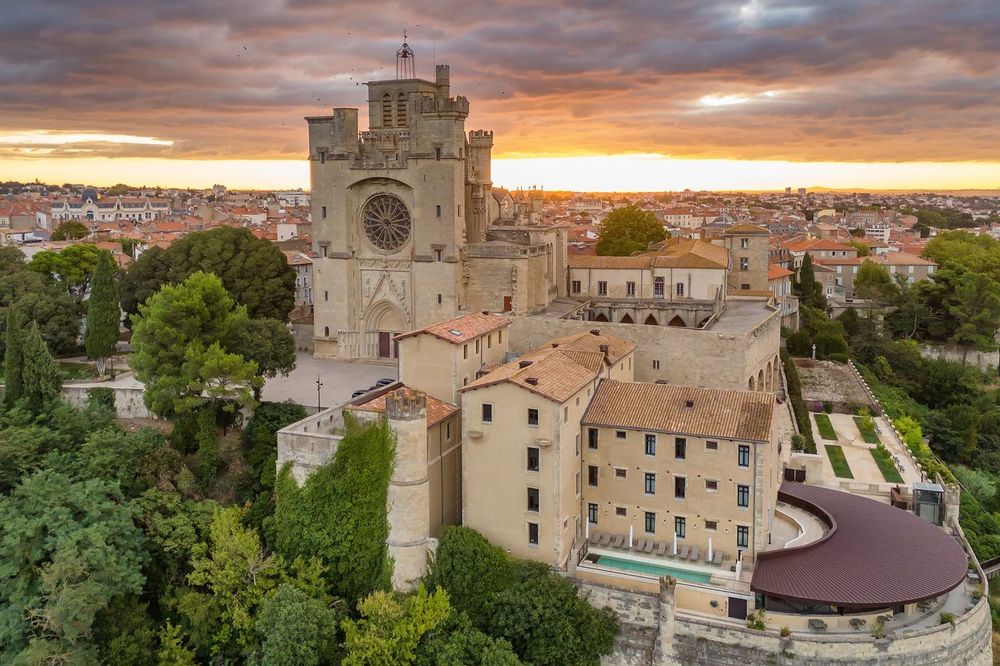
From this perched terrace, the eye follows the wide meander of the Orb to the Pont Vieux, standing there for nearly a thousand years, before drifting towards the Fonseranes locks, the countryside and the ridges of the Haut-Languedoc. This sweeping view alone explains why a promontory was chosen to watch over the land. It is especially striking at sunset, when the light skims the vineyards and the rooftops of the lower town.
Free entry
7 - Saint-Nazaire Cathedral
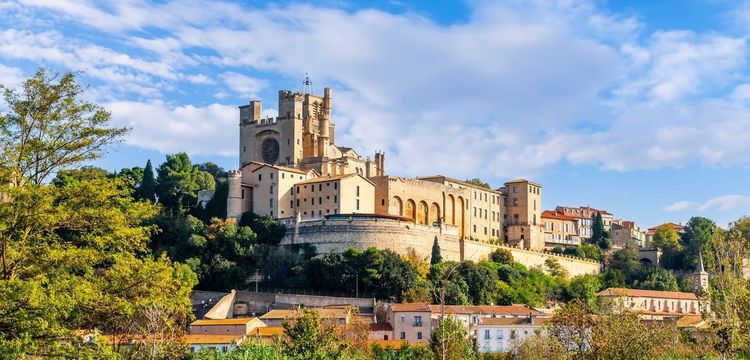
Rebuilt from the 13th century after the fire that followed the 1209 sack, on a site once occupied by a temple dedicated to Augustus, the cathedral is as much a stronghold as a sanctuary, with battlements, towers and a 10-metre rose window. Its square tower rises to 48 metres. Inside, the 18th-century baroque choir sits near medieval frescoes hidden for centuries, an organ built up over several hundred years, and an early 13th-century crypt beneath the left aisle.
Free entry
8 - Saint-Jude Church
This sanctuary grew out of a purely local initiative: in 1865, residents of the Faubourg district bought up an old coaching inn themselves, once used by carriages crossing the Pont Vieux, to build their own place of worship. Tanners, craftsmen and neighbourhood families jointly funded the bell tower and ten chapels decorated by local painters. Vandalised and then shut for several years, the church has been restored since 2013 by local volunteers, who are gradually bringing back its marble altar and 19th-century stained glass.
Free entry
9 - Pont Vieux
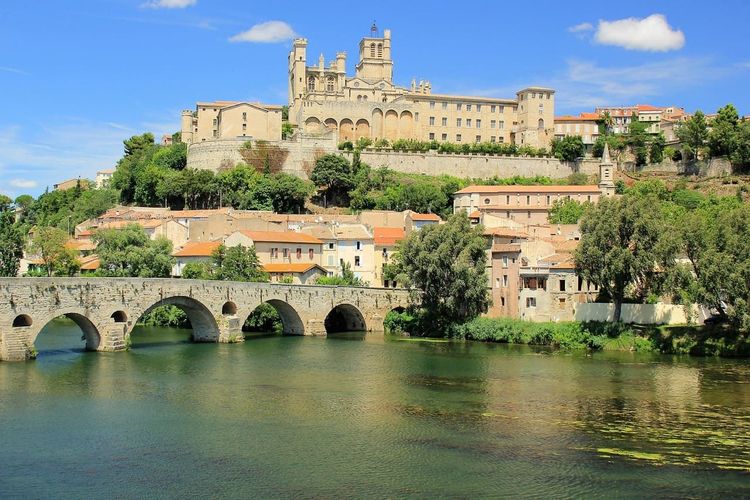
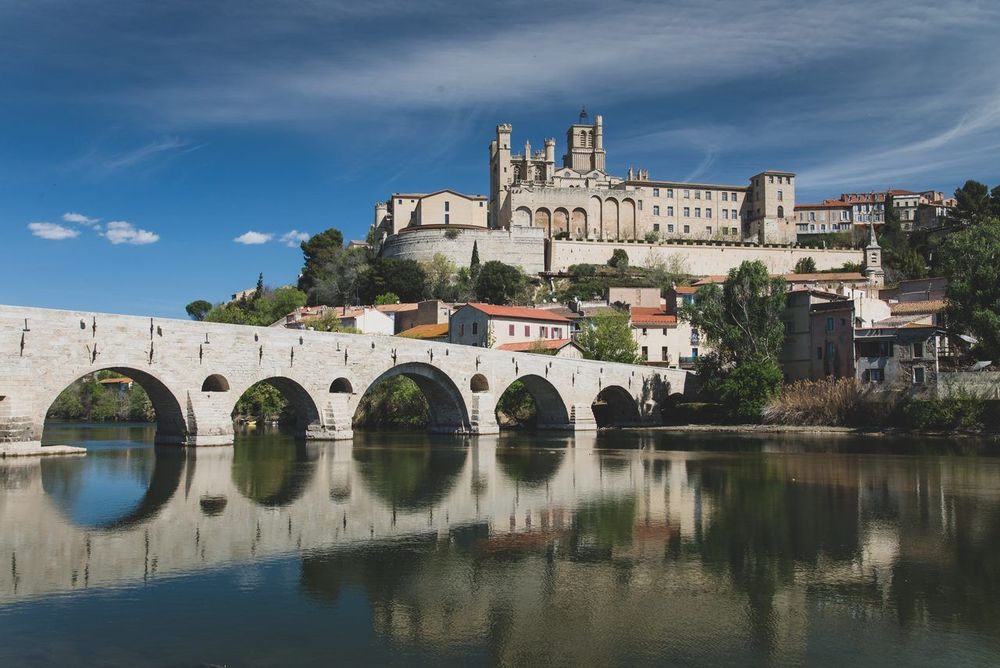
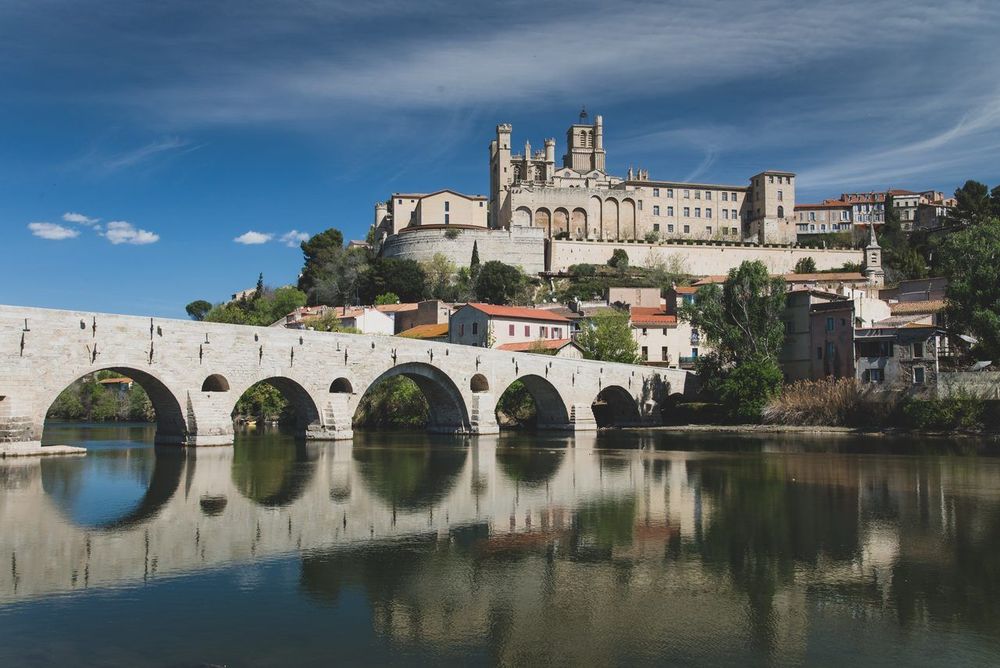
Resting on Roman foundations and first mentioned in 1134, this bridge was for centuries the sole way to reach Toulouse from Provence, and the only route into Beziers over the Orb. Its fifteen uneven arches, not all of which span the river in dry weather, follow the stream's whims rather than any regular plan. Widened in the 15th century, listed as a historic monument in 1963 and now reserved for pedestrians, it above all offers the most famous view of the cathedral standing above the river.
Free entry
10 - Bullfighting Museum
Housed in a former Dominican convent, this museum tells how 19th-century wine wealth turned Beziers into a major bullfighting town of the Midi. The bullring, opened in 1897 in Neo-Moorish style, soon drew the biggest names in the sport, from Mazzantini to Sebastien Castella, a native son. Matador costumes, vintage posters and portraits of bullfighters trace that story, as does the August feria, which since the 1960s has grown into one of the largest popular gatherings in the South of France.
Paid entry
11 - Winegrowers’ Revolt Mural
Painted in 2016 in trompe-l'oeil, this facade depicts the winegrowers' uprising of 1907, born of hardship caused by fraud and overproduction. From an initial gathering of roughly a hundred protesters at Argeliers, the movement swelled until 160,000 people filled the streets of Beziers on 21 June. The mural above all captures a now-famous gesture: soldiers of the 17th regiment, sons of winegrowers, turning their rifles instead of firing on the crowd, which hastened new laws against fraud a few weeks later.
Free entry
12 - Place des Casernes
The buildings framing this square were once the wings of the Saint-Jacques barracks, built towards the close of the 17th century to house troops by royal order. Architect Charles d'Avilier arranged it around two courtyards, one for cavalry, one for infantry, including the regiment that would refuse to fire in 1907. Vacated by the army in the 20th century, it now holds the municipal archives and, for many years, the Musee du Biterrois.
Free entry
13 - The Ways of Compostela Mural
Painted in 2016 by Patrick Commecy's workshop, walkers seem to step straight out of this wall, staff, hat and scallop shell in hand, beside a map of the Via Tolosana that linked Arles to Compostela through Beziers and Toulouse. The nearby Saint-Jacques district still has a church of the same name and a hostel still open to today's walkers; bronze scallop markers still dot the pavements of the town. More than 300,000 pilgrims, mostly women since 2018, reach the apostle's tomb every year.
Free entry
14 - Musée du Biterrois
Also housed in the former Saint-Jacques barracks, this museum once gathered fossils, Roman remains from ancient Baeterrae and objects tied to the vine, until it closed in 2020. It notably recalled Saint Aphrodise, said by legend to have arrived from Egypt on a camel, then beheaded yet reputedly walked through town carrying his own head: his camel supposedly stayed behind, becoming the totem animal that gives residents the affectionate nickname camelous. The collections will move into a new museum in the former episcopal palace from 2030.
Paid entry
15 - Garibaldi Square
Long known as Place du Chemin-Neuf and later Place d'Orleans, this crossroads square took its current name in tribute to the hero of Italian unification, admired in the 19th century as a champion of popular freedom. A tramway still ran through it in the early 20th century, between the railway station developing from 1857 and the historic centre. Since 1938, a bust has honoured Alphonse Mas, a mayor known for modernising the town, while cafes and shops now line the surrounding facades.
Free entry
16 - Rampe des Poilus
This long climb linking the lower town to the Citadel plateau was once called the Rampe de la Citadelle, a simple access route to the fortified heights. Once the Great War ended, in 1918 it was renamed in tribute to the trench fighters, whose affectionate nickname evokes both hardship and courage. Climbing it, you follow the same path once used by carts and soldiers who, for centuries, moved between the working-class quarters below and the grand squares above.
Free entry
17 - Plateau des Poètes Garden
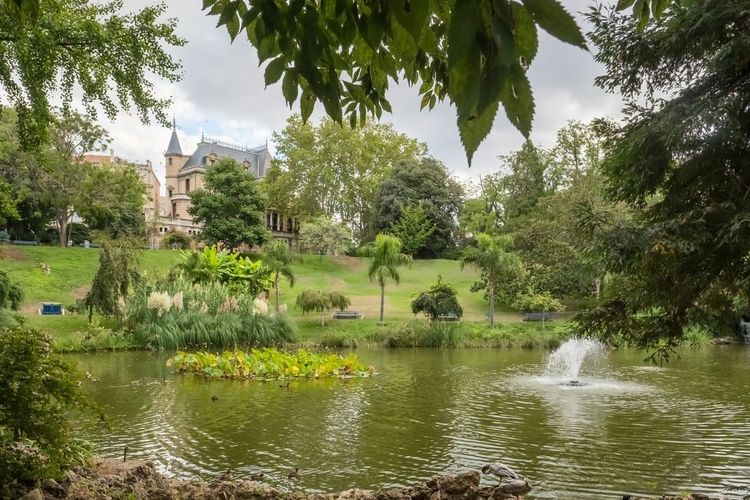
A bare, overgrown mound in the Middle Ages, this ground was landscaped from 1850 by the Buhler brothers to link the allees with the brand-new railway station. The 1867 opening became famous for Madame Poitevin's hot-air balloon ascent. Across its 5 hectares now grow species gathered from around the world, from a centuries-old Japanese pagoda tree to Arizona cypresses, while the Titan fountain, busts of Occitan poets and a swan lake form an open-air museum, officially labelled a remarkable garden.
Free entry
18 - Paul-Riquet Allées
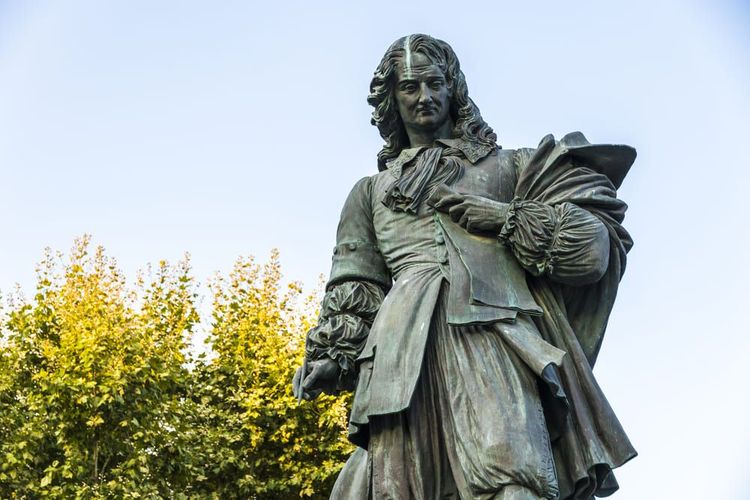
Laid out on the town's former eastern rampart as early as the 17th century, this tree-lined promenade took its present form the following century, modelled on the grand urban boulevards of the kingdom. It owes its name to the engineer who designed the Canal du Midi, whose statue, unveiled in 1851, still faces west, towards the lands that made his fortune. Long bordered by the great flower market, it remains the town's beating heart, amid cafes, terraces and major events such as the feria.
Free entry
19 - Jean Jaurès square
Locals still call this broad plateau the Citadel, a memory of the stronghold Henri de Montmorency had built here at the end of the 16th century, on a site already strategic in Roman and medieval times. Dismantled in the 19th century, the fortifications gave way to a public space, named in 1924 after the great orator assassinated on the eve of the Great War, a staunch defender of the Languedoc winegrowers. Recent digs have brought to light traces of the ramparts and a vanished tower.
Free entry
20 - Raimond-Roger Trencavel Mural
This Patrick Commecy trompe-l'oeil almost lifts off the wall the young lord of these lands, a Catholic yet tolerant towards the Cathars settled under his rule. When the pope launched the crusade against them, Beziers was the first major town targeted and fell on 22 July 1209, in a massacre that remains infamous. Having fled to Carcassonne, he tried to negotiate before being captured after a two-week siege; he died in captivity at just 24, now remembered as the symbol of a broken resistance.
Free entry
21 - Place du Forum
Its name evokes Rome, even though the actual Roman forum stood a little way off, towards the market hall. Beneath the paving stones still runs the Embroucadou, a stream already channelled by the Gauls in the 4th century BC. The square changed names many times according to its uses, from the Encan to the Boucherie, before a large Art Deco post office was built there and later demolished in 2012. Redesigned and reopened in 2013, it now hosts the tourist office beneath 17th and 18th-century facades.
Free entry
22 - City Hall
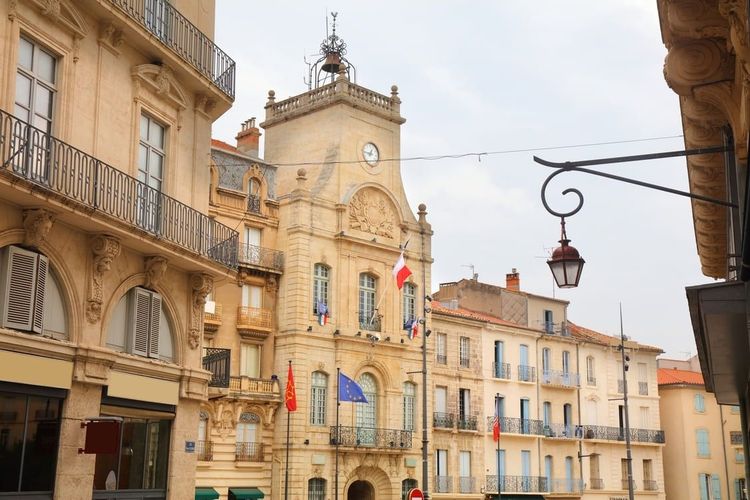
For centuries, the public life of Beziers has been decided on this very spot: former Roman forum, then the Consuls' house, and since 1746 this classical building designed by architect Cadas, whose belfry replaced the old medieval tower. The Council chamber keeps nine frescoes painted in 1937 by Raoul Guiraud, tracing local history down to the bloody episode of the salt-tax officers killed in the Clock Tower in 1790. The inner courtyard also holds the camel statue, the town's emblem.
Free to see from outside
23 - Statue of Pépézuc
An open-air copy of a nearly 2000-year-old Roman statue, whose beheaded, armless original is kept at the Musee du Biterrois, this figure lost its original identity long ago, whether it once portrayed an emperor or simply a local dignitary. Townspeople invented a new one for it as early as the Middle Ages, claiming a namesake held off English soldiers in 1355, right at the entrance to Rue Francaise. Painted and celebrated during the Caritats festivities, it remains a popular hero still cheered today.
Free entry
24 - Pierre-Lavabre Square
This small, unassuming square bears the name of a local resistance fighter deported during the Second World War, but it is above all the large mural of Jean Moulin, born nearby in 1899, that leaves a mark. He became France's youngest prefect before uniting the resistance movements for General de Gaulle, then was arrested, tortured and died in deportation in 1943. The painting shows him at his window, above a trompe-l'oeil picturing his Nice art gallery, which covered his secret activities.
Free entry
What to do in Béziers in 2 or 3 days?
The audio-guided walk loops round the historic centre in about an hour and a half; with two or three days, Béziers opens up far more widely, between the Canal du Midi, vineyards and the seaside.
The next day belongs to the Canal du Midi: head for the Fonseranes locks, a string of basins designed by Pierre-Paul Riquet and opened to boats in 1697, which climbs a drop of 21.5 metres over 312 metres. Right next to it, the canal bridge lets the canal cross the Orb river at height, and guided boat trips run in season from the area.
A third day leaves time to get out of town: walk in the footsteps of the Gauls at the Ensérune hillfort, head for a wine estate around Faugères or spend the afternoon on the sand at Valras-Plage. Our guide to visiting Béziers in 3 days organises these outings day by day.
Which neighbourhoods does the tour cross?
As a loop, the route links the main landmarks of central Béziers, from the theatre up to the hill that carries the cathedral.
It starts from the municipal theatre, crosses Place de la Victoire, passes Sainte-Madeleine church and reaches the market hall, in the heart of the old town (stops 1 to 4).
The route then climbs past the Fayet museum of fine arts and a viewpoint, up to St. Nazaire's cathedral perched on its rocky spur, before dropping back past Saint-Jude's church to the Pont Vieux and the Orb river (stops 5 to 9).
It then sets off along Rue Saint-Jacques, from where a short detour leads to the Bullfighting museum, and passes two wall murals and the former Musée du Biterrois, around Place des Casernes and Garibaldi square (stops 10 to 16). It finally heads back past the Plateau des Poètes garden and the Paul-Riquet avenue to the city hall, the statue of Pépézuc and Pierre-Lavabre square, close to the starting point (stops 17 to 24).
How much does it cost to visit Béziers?
Of the 24 stops on the route, 19 are freely open and 2, the municipal theatre and the city hall, are seen from the street. Among the rest, the Fayet museum of fine arts charges €4 for its sculpture collection, including works by local sculptor Jean-Antoine Injalbert, and the Bullfighting museum requires an entrance ticket. The former Musée du Biterrois closed in 2020: its collections are waiting for a new art and history museum, planned for 2030.
To visit several sites, the City Card Béziers Méditerranée, valid for 24, 48 or 72 hours, unlocks free entry or a discount across dozens of partner sites and activities in the area; it can be bought online or at the tourist office.
Information checked in November 2026 and subject to change.
Where to stop for a bite along the tour?
The market hall (stop 4), in the heart of the old town, makes the natural food stop on the route.
Under its metal Baltard-style frame, opened in 1891, the stalls sell Bouzigues oysters, local cold cuts and cheeses from the Hérault, and some let you sit and eat on the spot for a quick lunch. The market opens every morning except Monday, busiest on Sunday.
What to do in Béziers with children?
The route has a few stops children enjoy, and the nearby Canal du Midi extends the outing.
At the Plateau des Poètes (stop 17), an English-style garden dotted with ponds and poets' busts, children have room to run while parents catch their breath in the shade. The paths are fine for a pushchair, apart from a few steps near the ponds.
About 2 kilometres from the centre, the 9 Fonseranes locks round out the outing: younger visitors love timing how long a barge takes to pass from one basin to the next, on this water staircase designed by Pierre-Paul Riquet and opened in 1697. Our guide to visiting Béziers with family offers more ideas, from tree climbing to nearby beaches.
What should you know before visiting Béziers?
A few practical pointers help avoid surprises on a route that crosses a covered market and several places of worship.
The market hall (stop 4) is closed on Mondays and busiest on Sunday mornings, worth keeping in mind for a quieter visit. St. Nazaire's cathedral (stop 7), for its part, is freely open outside religious services, which can interrupt a visit depending on the time.
What to see around Béziers?
Béziers is well placed for branching out to other towns in the south of France that also have their own audio-guided walk.
24 km away, Narbonne shows off its cathedral and the Canal de la Robine, while 61 km away, Montpellier plays on golden stone and medieval lanes. To the west and south, Carcassonne, 71 km away, and Perpignan, 76 km away, add a fortified medieval city and a Catalan way of life.
The coast is not left out, with Collioure, 91 km away, the small Catalan port that inspired Matisse, while Nîmes, 107 km away, and Albi, 108 km away, build respectively on Roman heritage and red brick. Arles, 120 km away, pairs its ancient arena with the Rhône light that inspired painters.
Le plein d'inspirations
Explorez le monde en totale liberté, à pied au cœur des villes ou au fil des routes. Nos guides audios transforment chaque destination en une découverte culturelle immersive et unique.
FAQ for visiting Béziers
When is the best time to visit Béziers?
The best times to discover Béziers run from April to June and then from September to October. During these months, you will enjoy an ideal Mediterranean climate with pleasant temperatures and generous sunshine, perfect for exploring the town on foot. Summer remains possible, but be prepared for high temperatures, often between 28 and 34°C. Winters are mild, generally between 8 and 15°C, which also allows for comfortable visits. Spring and autumn offer the added advantage of avoiding the tourist crowds of July and August while still enjoying optimal conditions to appreciate the historic heritage and the sunny terraces.
How many days do you need to visit Béziers?
Two full days are enough to get a good sense of Béziers and its main attractions. In one day, you can explore the historic centre, the Saint-Nazaire Cathedral and the Allées Paul Riquet. An additional day gives you time to delve deeper into your visit, stroll along the Canal du Midi, discover the museums and perhaps even venture into the surrounding vineyards. If you have three days or more, you can combine discovering the town with excursions to the nearby Mediterranean beaches or explore the region's wine heritage further. The essentials of the town can be comfortably visited over a long weekend.
How do you get around Béziers and where can you park?
The historic centre of Béziers is ideally explored on foot, as the main attractions are grouped within a relatively compact area. For parking, several paid car parks are available around the town centre, notably near the Allées Paul Riquet and the media library. Free parking zones exist on the outskirts, from where you can reach the centre in a few minutes on foot. Public transport serves the town well with an efficient bus network. For more distant sites such as the Fonseranes locks or certain wine estates, a car remains practical. Cycling is also an excellent option, particularly enjoyable along the Canal du Midi.
What is there to do in Béziers when it rains?
On rainy days, Béziers offers several captivating cultural options. The Fine Arts Museum, housed in two private mansions, presents remarkable collections of art and local history. The Musée du Biterrois retraces the town's history from antiquity onwards. The Saint-Nazaire Cathedral is also well worth an in-depth visit for its impressive Gothic architecture. The covered market lets you discover local produce under cover. You can also enjoy the historic cafés of the town centre for a relaxing moment or explore the shops on the covered shopping streets. The cinema and the André Malraux media library round off the cultural options for an enriching rainy day.
Where should you stay in Béziers?
The historic centre is the most sought-after area to stay in Béziers, placing you at the heart of the action and close to the main sites. The Allées Paul Riquet and their surroundings offer a wide choice of accommodation, from charming hotels set in former private mansions to more modern establishments. The cathedral district offers a quieter atmosphere while remaining central. For a tighter budget, the outlying areas have well-connected budget hotels. The guesthouses in the old centre often let you stay in renovated historic buildings full of character. In summer, remember to book in advance, as the proximity of the coast attracts many visitors.
Where can you eat in Béziers and what are the local specialities?
Béziers is full of gourmet addresses where you can savour Mediterranean cuisine. The restaurants in the historic centre, particularly around the Place de la Madeleine and the Allées Paul Riquet, offer lively terraces. Local specialities include the tielle sétoise, the small pâtés of Pézenas and, of course, the Languedoc wines that pair perfectly with regional dishes. Fresh seafood arrives daily from the neighbouring ports. Don't miss the markets, notably the Friday one on the Allées Paul Riquet, to taste the local produce. Mussel brasucades and Camargue bull grills are also among the gastronomic must-tries of the Béziers region.
How do you get to Béziers?
Béziers enjoys excellent accessibility. By train, the SNCF station is on the Bordeaux-Marseille line with direct connections to Paris, Lyon, Toulouse and Montpellier. Béziers Cap d'Agde Airport, located about fifteen kilometres away, offers direct flights from several European cities, mainly in season. By car, the A9 motorway places the town less than an hour from Montpellier and two hours from Toulouse. The A75 motorway from Clermont-Ferrand offers direct access from the north. Regional bus lines complete the transport options, linking Béziers to the neighbouring towns. The proximity of Montpellier Airport is an additional alternative for international travellers.
What are the must-see sites to visit in Béziers?
The Saint-Nazaire Cathedral, majestically dominating the town from its hill, is the emblematic monument of Béziers with its panoramic view over the Orb and the vineyards. The Fonseranes locks, a masterpiece of the Canal du Midi, impress with their ingenuity. The historic centre holds many treasures with its medieval lanes, the Pont Vieux and the Allées Paul Riquet lined with plane trees. The Roman arenas bear witness to the town's ancient past. The bishops' garden offers a green break with remarkable views. The Ryo audioguide accompanies you in discovering these must-sees with enriching commentary on the history and anecdotes of each place, allowing you to fully appreciate the heritage of Béziers.
Is Béziers worth the detour?
Long driven past rather than visited, the town is best discovered from above: perched on a hill over the Orb, it is dominated by Saint-Nazaire cathedral, a former bishops' fortress whose terrace takes in the plain, the vineyards and, on a clear day, the line of the Pyrenees. Seen from the Pont Vieux below, that silhouette makes one of the finest views in Languedoc.
The centre deserves your time too, between the plane-shaded Allées Paul Riquet, the 19th-century covered market, the Plateau des Poètes laid out like an English garden and the arena, still in use. Add the nine locks of Fonseranes, the Occitan culture and the closeness of the sea, and you have an endearing stop, more lived-in than touristy. The Ryo audio guide offers a dedicated Béziers route linking these places.
How can you discover the Canal du Midi from Béziers?
The canal, a World Heritage site, runs at the foot of the town and owes much to Pierre-Paul Riquet, born in Béziers, whose statue stands on the avenue that bears his name. The nine locks of Fonseranes, a water staircase built to make up a steep drop, are its centrepiece: you can watch the boats work their way through from the banks, and the visitor space on site tells the story of the works.
Right beside it, the canal bridge carries the waterway over the Orb, a feat that makes more sense once you have walked across it. The shaded towpaths then lend themselves to walking and cycling towards the neighbouring villages, and boat trips are offered in the warmer months, when the plane trees close their canopy over the water.
What can you do in Béziers with family, from the Fonséranes locks to the flamingos of Les Orpellières?
The Fonséranes locks, opened in 1697, form a free water staircase where children watch barges climb 21.5 metres; avoid 1pm to 4pm in high summer. Right next door, the 1858 Orb aqueduct carries the canal over the river. In town, Saint-Nazaire cathedral, the Pont Vieux and the Allées Paul-Riquet, with their Friday flower market, can be explored on foot in an afternoon, before a break in the Plateau des Poètes garden. About twenty minutes away, the Orpellières nature reserve is home to flamingos.
Every idea is in our guide to visiting Béziers with family.
What to see and do in Béziers in 3 days, from the cathedral to the Canal du Midi?
Spend the first day in the historic centre: Saint-Nazaire Cathedral, the Bishops' Garden, the covered market (Halles), the Allées Paul Riquet, the bullring and the Roman amphitheatre. An audio-guided route links these stops without needless backtracking.
Day two follows the Canal du Midi, with the UNESCO-listed Fonseranes locks, the Pont-Vieux, the Pont-Canal and water activities (electric boat, paddleboard, kayak, barge cruise). Day three offers excursions within forty minutes: the Ensérune oppidum, the Mrac in Sérignan and the Faugères and Saint-Chinian vineyards.
Find the detailed day-by-day itinerary in our guide to visiting Béziers in 3 days.
Vos commentaires, idées et suggestions
Aucun avis pour le moment