
Créé par Romane, le 17 nov. 2026
Votre guide Ryo
Nîmes, France
The French Rome
Parcours audioguidé pour visiter Nîmes en 1 jour
This getaway to Nîmes transports you to the heart of a thousand-year-old city, where white stone glows under the midday sun. Let your steps lead you from the intact majesty of its Amphitheatre to the elegant columns of the Maison Carrée, before losing yourself in the cooling narrow streets of the historic center. Between the strength of its Roman heritage and the whisper of the waters in the Jardins de la Fontaine, the city reveals a proud character, nourished by Gard traditions and Mediterranean elegance. A luminous and timeless exploration to capture the full fervor of a city that has crossed the centuries with passion.
Quand partir à Nîmes ?
Jan.
7°
6
Feb.
8°
5
March
11°
6
April
14°
8
May
18°
8
June
22°
5
July
25°
3
Aug.
25°
4
Sept.
21°
7
Oct.
16°
9
Nov.
11°
8
Dec.
8°
6
Nîmes enjoys a Mediterranean climate marked by very hot, dry summers, where temperatures regularly exceed 32°C, and mild winters with daytime averages around 10°C. To enjoy its Roman gems, such as the Arena, without suffering from the scorching heat, the best times to visit are spring (April to June) and early autumn (September and October), months during which the weather is ideal for strolling through the Jardins de la Fontaine. The Pentecost weekend also remains an unmissable time to experience the excitement of its famous Feria under what is generally a radiant sun.
Départ conseillé
No need to worry about where to begin! Our tours are designed as a loop, so you can jump in wherever you are. The navigation system and audioguide will automatically adjust to your location. However, if you happen to be nearby, we do have a preferred starting point : in front of Saint-Baudile Church.
Parking à proximité
Porte Auguste Parking Lot : at no.12 Boulevard Etienne Saintenac
If you're looking for parking in downtown Nîmes, I'd recommend underground parking lots, which are easier to access. Alternatively, you can try your luck in on-street parking, which is divided into 2 zones: the red zone in the hypercentre, which is more expensive than the green zone. You can also opt for one of the park-and-ride facilities on the periphery and reach the center of Nîmes via public transport.
À savoir
This tour takes you through the Fontaine gardens : access is free, but restricted by opening hours. Don't forget to check the opening times before your visit, so you can get in. If the gardens are closed when you arrive, go around them via Agrippa Street and Magne Tower Street, to make a right turn into Stéphane Mallarmé Street and follow the itinerary.
Découvrez 27 lieux d'intérêt pour visiter Nîmes






What to see in Nîmes on your 2h45 tour?
This 6 kilometre loop takes about 2 h 45 and links 26 sights. From Saint-Baudile church it reaches the Roman walls and Protestant temples, passes the arena and the Ecusson, between the cathedral and the covered market, then the Maison Carree and the Carre d'Art, before climbing towards the Fontaine gardens, the Magne tower and the city's street art. With the Ryo app in your ears, every stone or mural reveals its story, at your own pace.
Information checked in November 2026 and subject to change.
1 - Saint-Baudile Church
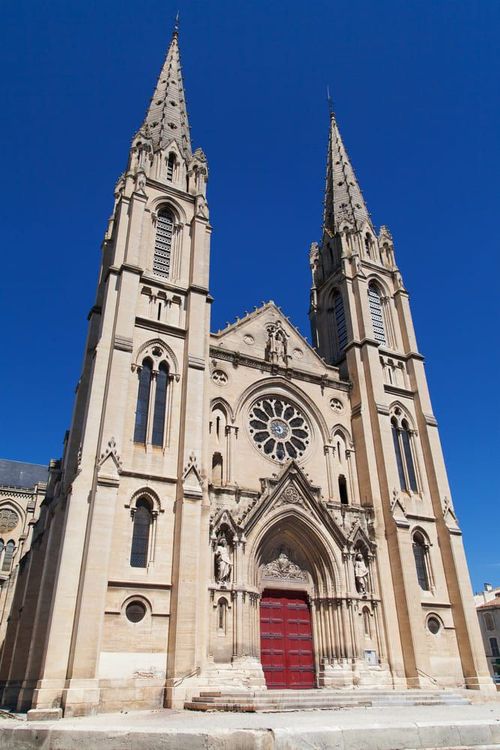
Far from the oldest monument in town, this church still impresses with its twin spires piercing the Nimes skyline. Its architect, who came from Bordeaux in the 19th century, had already made a name for himself with a basilica back home, and the family likeness shows. Inside, mosaics, an organ and stained glass by a local master reward attentive visitors, under the gaze of a statue of the saint, sword and martyr's palm in hand.
Free entry
2 - Gate of Augustus
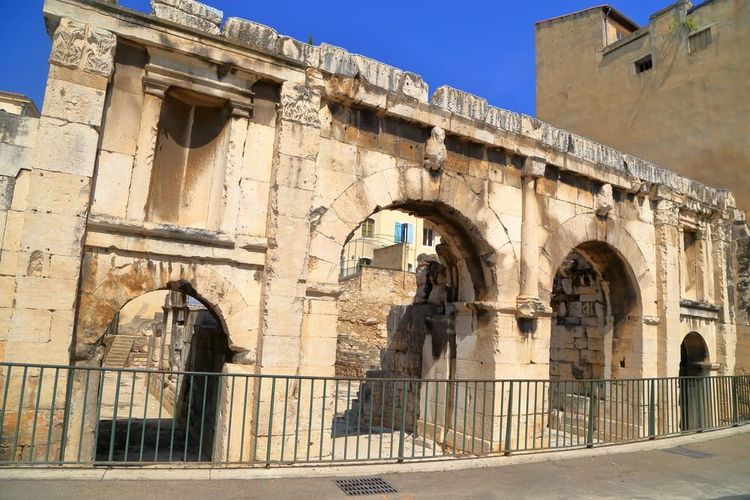
This vaulted passage, among the last traces of the wall that once ringed the ancient city, already opened onto the wider world over two thousand years ago. Four arches, the widest for carts and the narrower ones for pedestrians, let people cross ramparts running for several kilometres and dotted with dozens of towers. The great road linking Italy to Spain passed straight through it, and an imperial statue still watches over the threshold.
Free entry
3 - Grand Dominican Temple
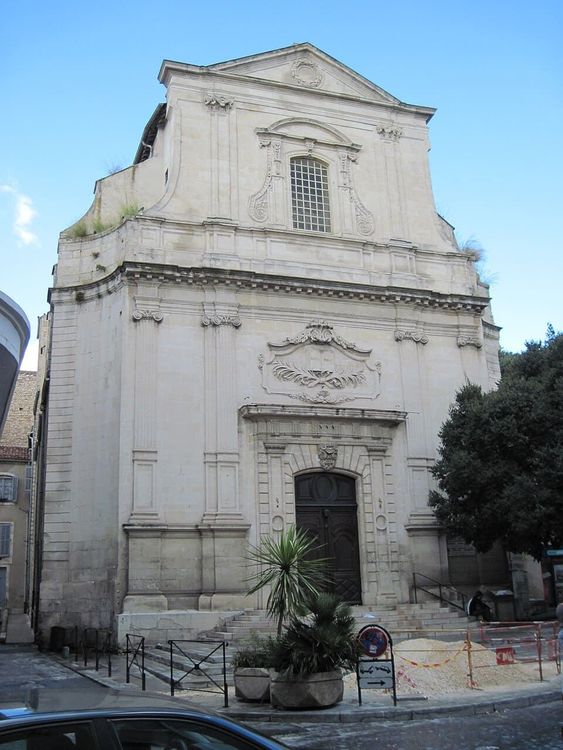
This grand baroque facade once belonged to preaching friars, before the Revolution scattered their community and handed the building to the city's Reformed faithful. Turned into a Protestant temple, it gained an organ in the early 19th century and has kept the plain style typical of Huguenot places of worship ever since, despite later alterations. It only opens to visitors once a year, during heritage days, though its stones already tell much about Reformed Nimes.
Free to see from outside
Everything you need to know about the Grand Dominican Temple
4 - Chapel of the Jesuits
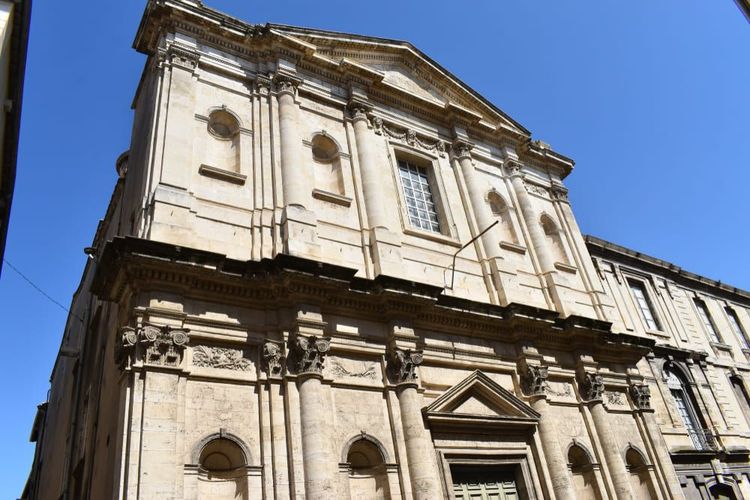
Raised for the followers of Ignatius of Loyola at the very end of the 17th century, this chapel has led several lives since its founding order was expelled the following century. Turned into a municipal library, then fully restored a few decades ago, it now hosts exhibitions and concerts, its vast nave quietly echoing the decor of the nearby Roman monuments. A fine example of successful reuse, far removed today from any religious purpose.
5 - Saint Perpetua and Saint Felicity Church
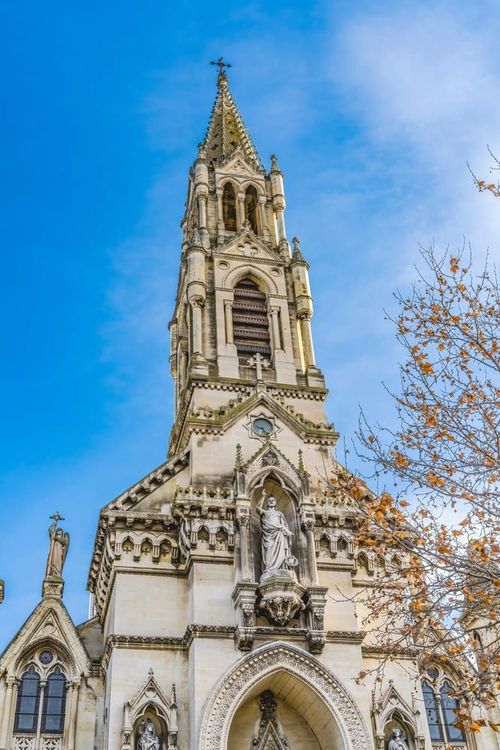
Ahead of you stands a single-towered church that has, since the mid 19th century, replaced a far older sanctuary dedicated to a young martyr of early Christian times. Works overseen by Napoleon III himself stretched over about a dozen years to produce this richly decorated building, as tall as the one you passed earlier. Its silhouette proudly dominates the nearby esplanade, just steps from the great Roman amphitheatre.
Free entry
Everything you need to know about Saint Perpetua and Saint Felicity Church
6 - Charles de Gaulle Esplanade
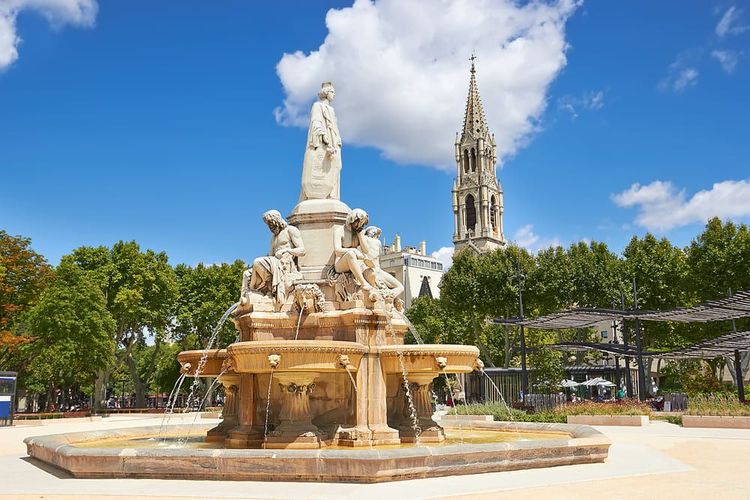
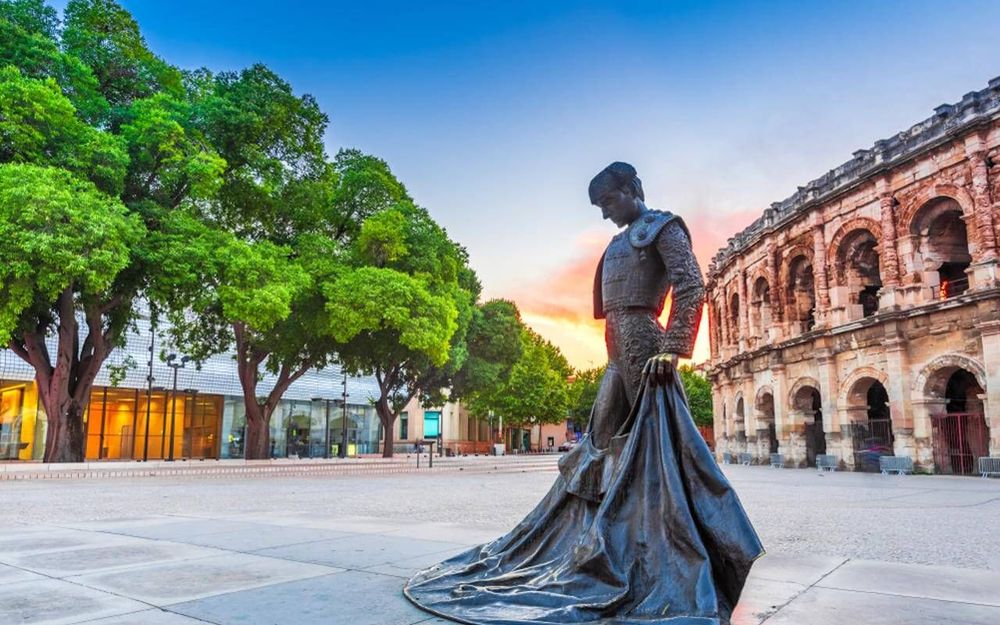
Originally meant for artillery drills, this broad plane-tree-lined esplanade only became a promenade the following century, gaining flowerbeds and balustrades along the way. Its monumental fountain, added in the mid 19th century, shows a female figure crowned with the city's famous square temple, surrounded by figures representing the region's rivers. Further towards the arena, a bronze bull, installed more recently, recalls the city's deep attachment to bullfighting.
Free entry
Everything you need to know about the Charles de Gaulle Esplanade
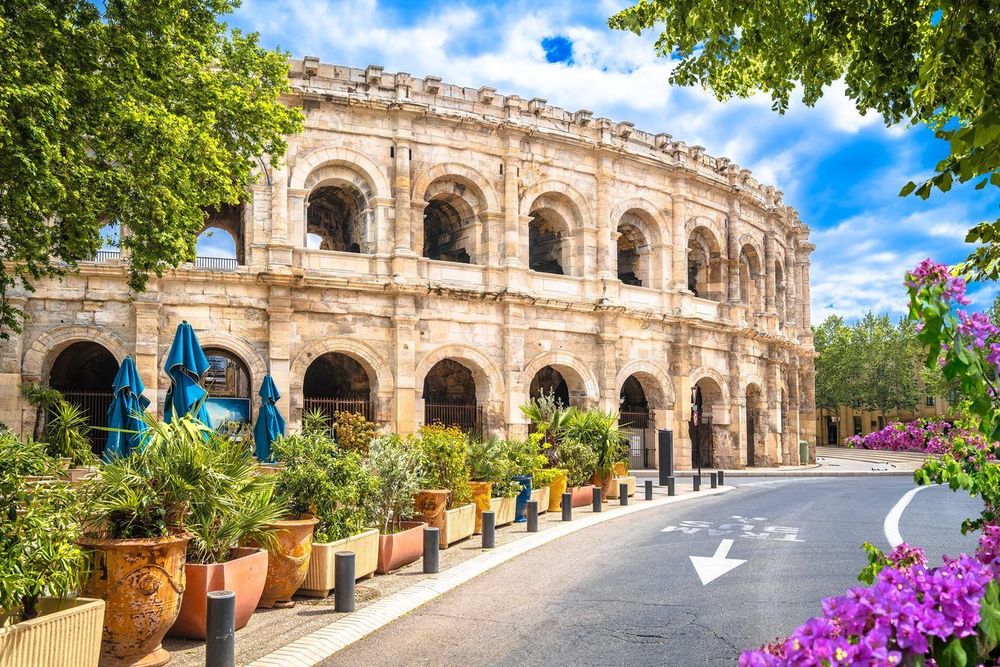
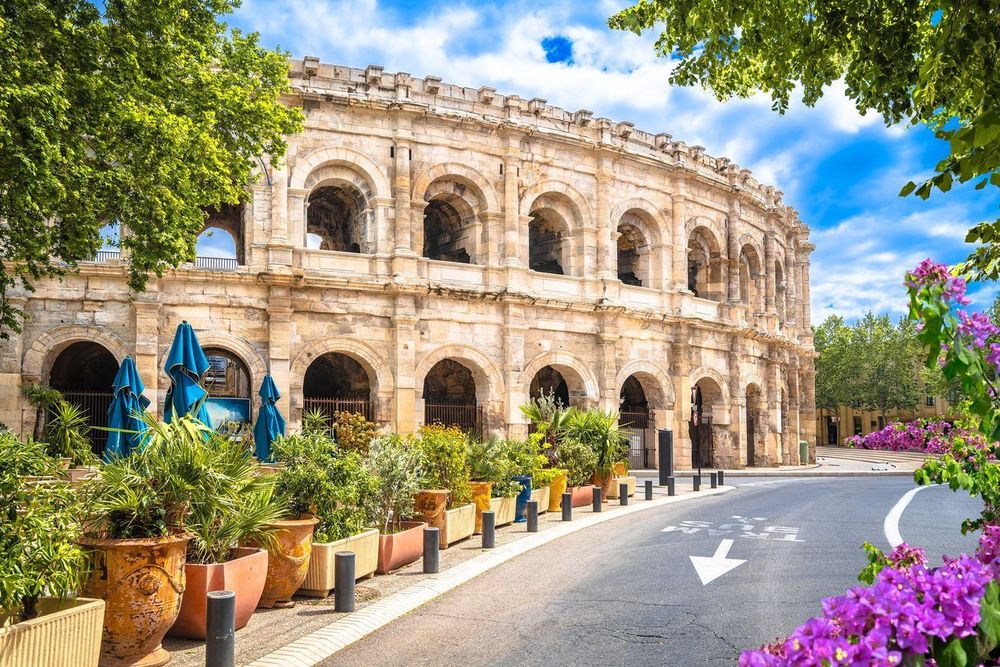
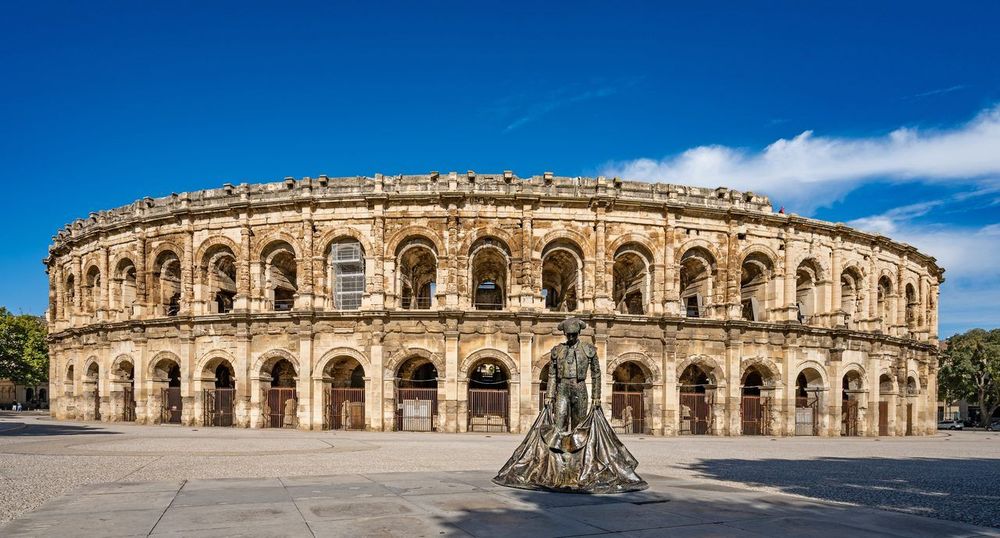
7 - Nîmes Arena
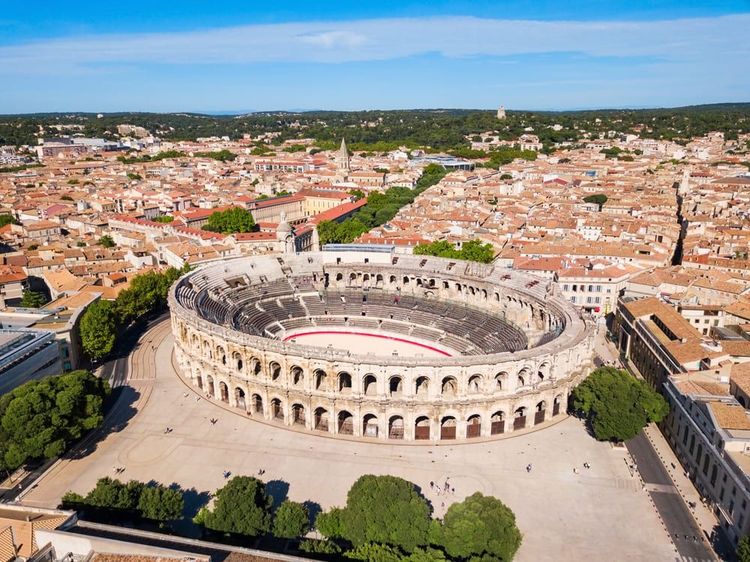
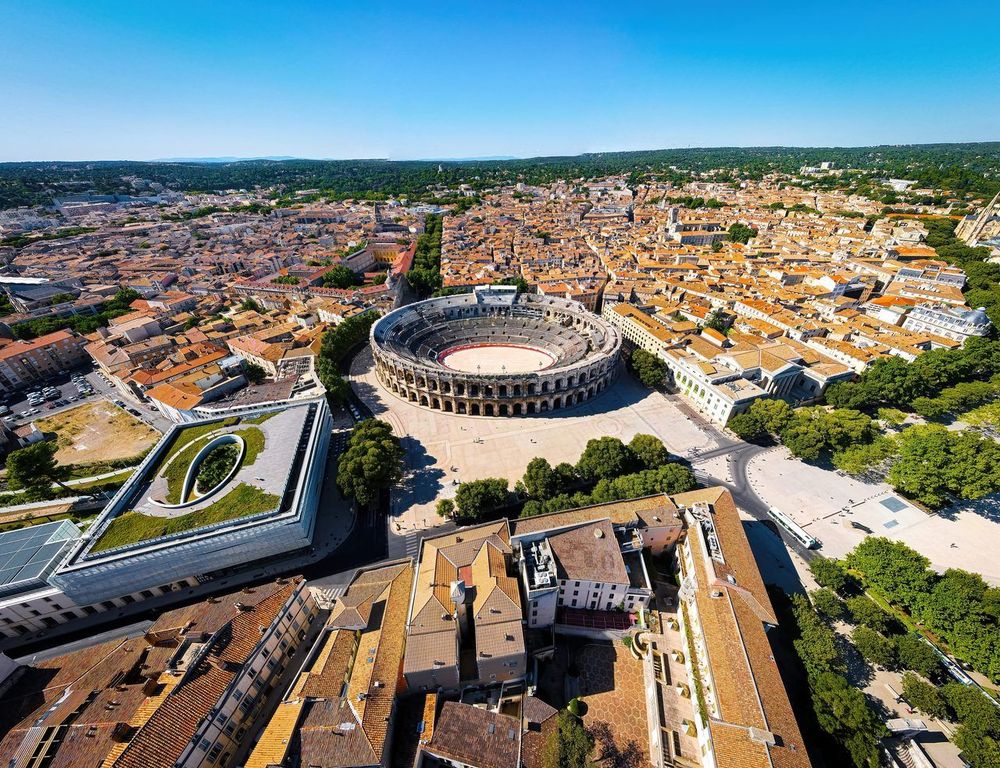
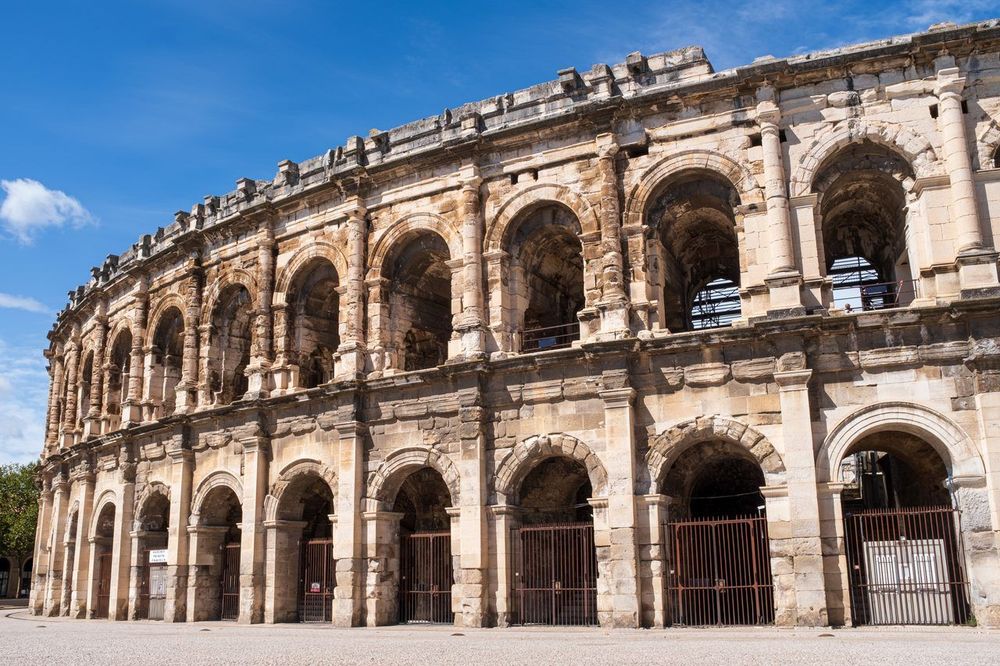
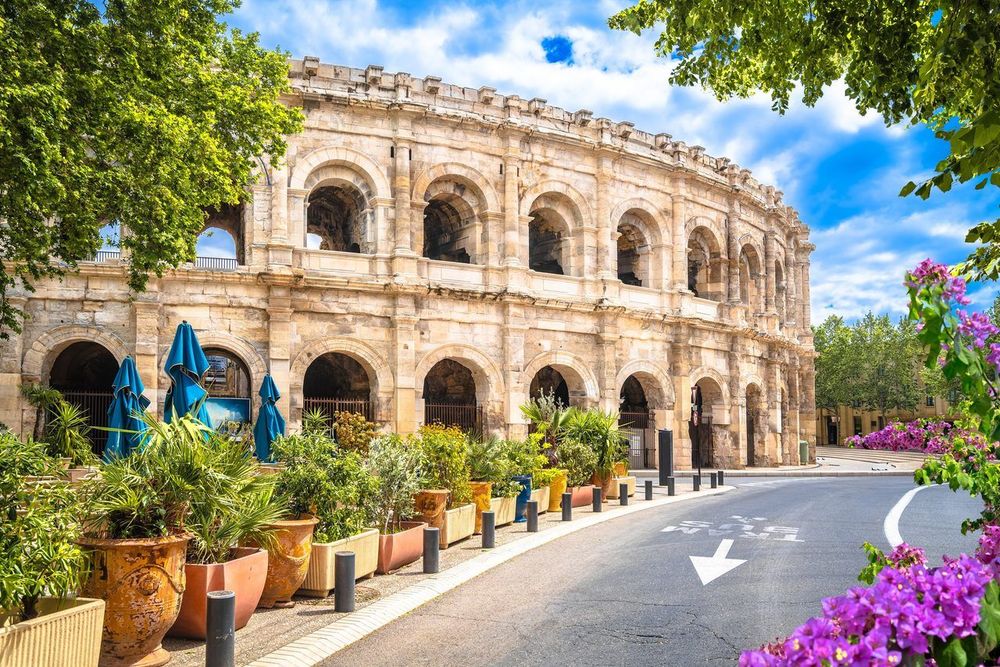
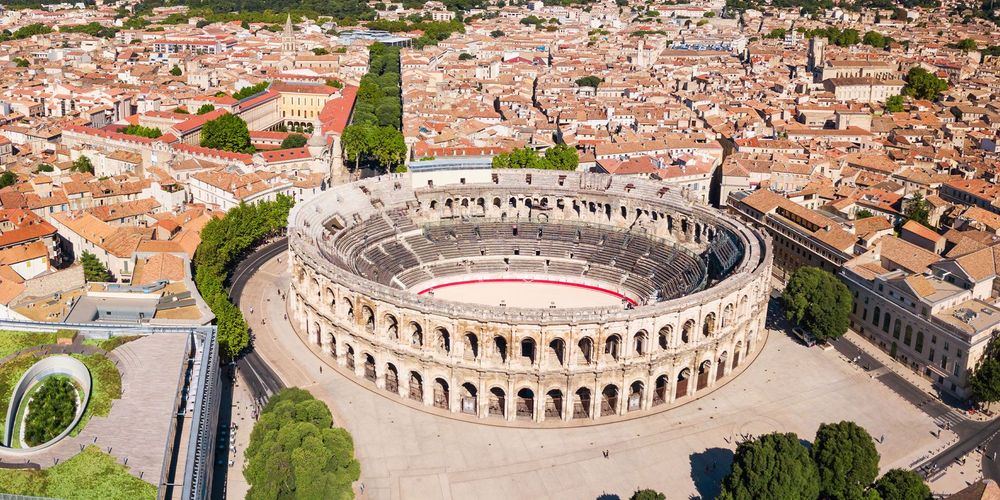
Before you stands one of the best-preserved amphitheatres in the whole Roman world, once able to hold thousands of spectators watching gladiators and wild beasts clash. Turned into a fortress and later a true fortified village during the Middle Ages, it has never stopped being used, which explains its remarkable state today. Ferias, concerts and major music names now draw huge crowds here, carrying on a festive calling two thousand years old.
Paid entry (about €11)
8 - Roman Museum
Right across from the ancient tiers stands this contemporary glass building, its rippling facade deliberately echoing mosaic patterns. Designed by a renowned architect after an exceptional pavement was found nearby, it now gathers several thousand archaeological pieces spanning nearly 25 centuries of local history, displayed in rooms built for an immersive visit. On the neighbouring square, a bronze statue honours a local matador whose tragic fate left its mark on the city.
Paid entry (about €9)
9 - Market Square
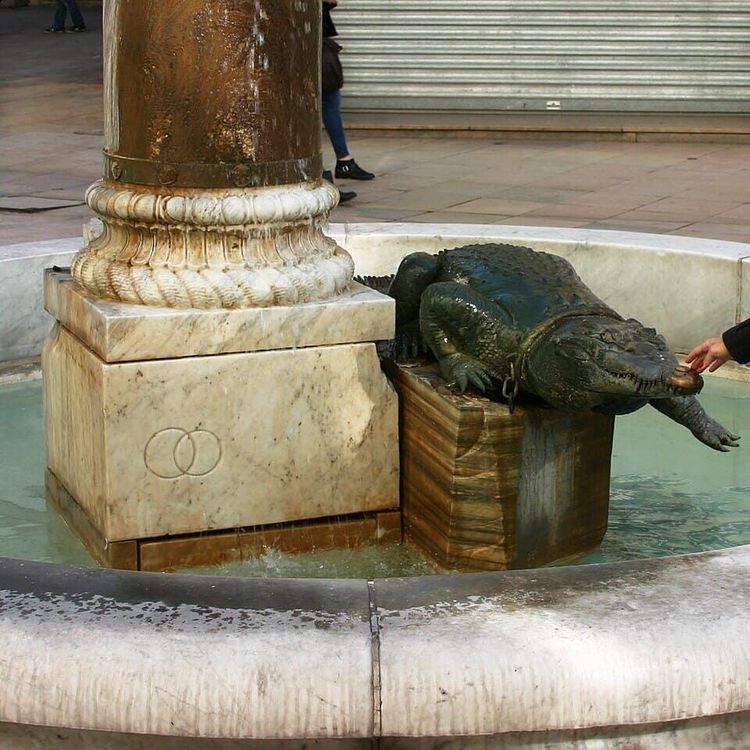
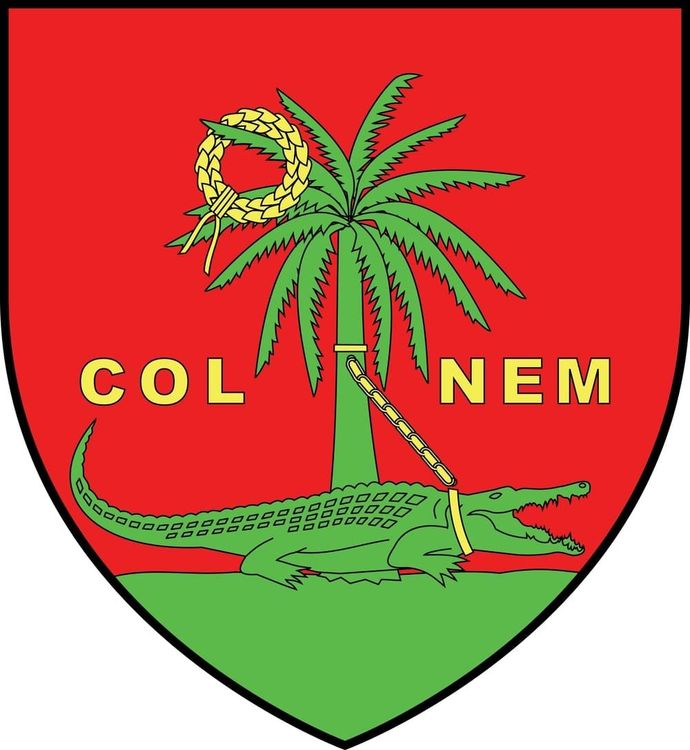
Two emblems share this square, lined with lively terraces: a palm tree planted at its centre and, further along, a fountain where a reptile rests with its chain seemingly broken. This creature chained to a tree recalls an ancient coin celebrating Egypt's submission to Rome, after the future emperor's victory over Antony and Cleopatra. Long home to a covered market, the square now mostly draws food lovers enjoying its spot just steps from the amphitheatre.
Free entry
10 - Town Hall
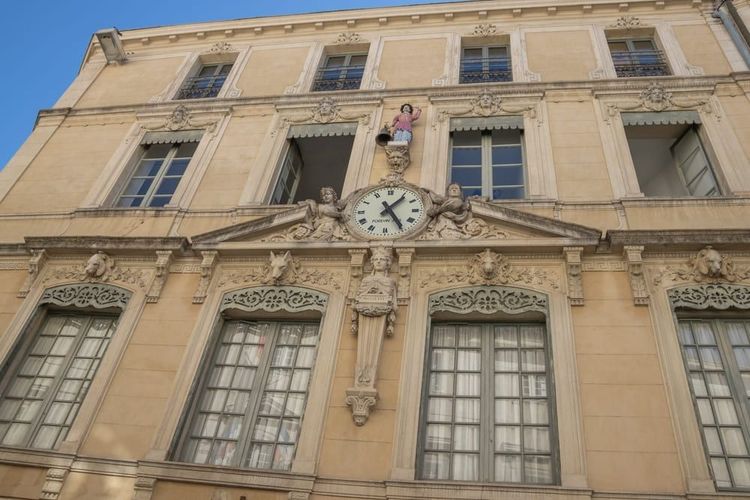
Once the seat of a royal treasury dating back to the Middle Ages, this building was enlarged in the early 18th century by a local architect to become the seat of municipal power. Inside, four stuffed reptiles hanging above the grand staircase playfully recall the city's emblem, while the Latin motto on display urges moderation in all things. It still overlooks one of the most famous squares in the old town.
Free to see from outside
11 - Écusson
You are now wandering through the historic heart of the city, nicknamed after its shape, which traces the outline of a coat of arms on a map. Its narrow lanes and small shaded squares still follow the line of the old fortified wall, long since replaced by wide boulevards laid out in the 19th century on the model of major Paris works. Townhouses, hidden courtyards and busy shops mix here, making this the most visited quarter in the whole prefecture.
Free entry
12 - Notre Dame and Saint Castor Cathedral
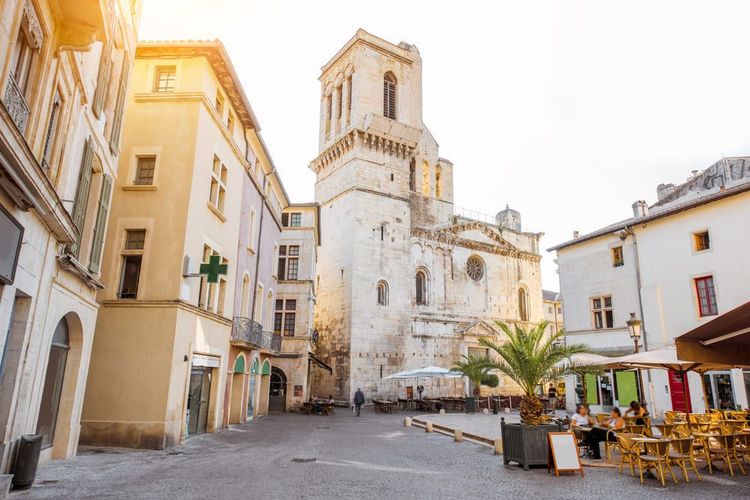
Consecrated at the very end of the 11th century by a pope who came in person, the first sanctuary raised here likely followed an even older Roman temple. Damaged twice during the Wars of Religion, it was rebuilt in a plainer style and renamed, before gaining its current triangular-pedimented doorway the following century. Inside, a remarkable medieval carved frieze survives, along with an interior reworked across several periods, from Romanesque to Byzantine.
Free entry
Everything you need to know about Notre Dame and Saint Castor Cathedral
13 - Romanesque House
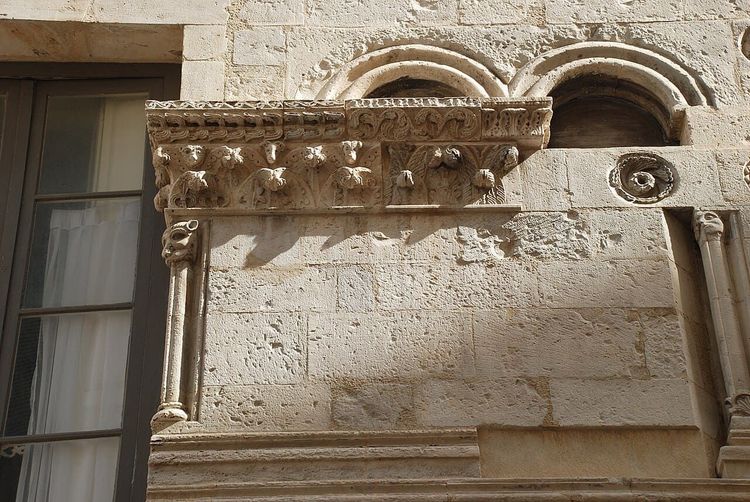
Tucked away at number one of a small street, this single-storey house was raised twice during the Middle Ages to reach its current height. Look up at the facade: plant motifs, fantastical creatures, human faces and carved foliage form a decor rare for this kind of civil building. Nobody knows for sure who once lived here, perhaps a local notable, but it remains one of the finest private witnesses of that period still standing in the city.
Free to see from outside
14 - Horloge Square
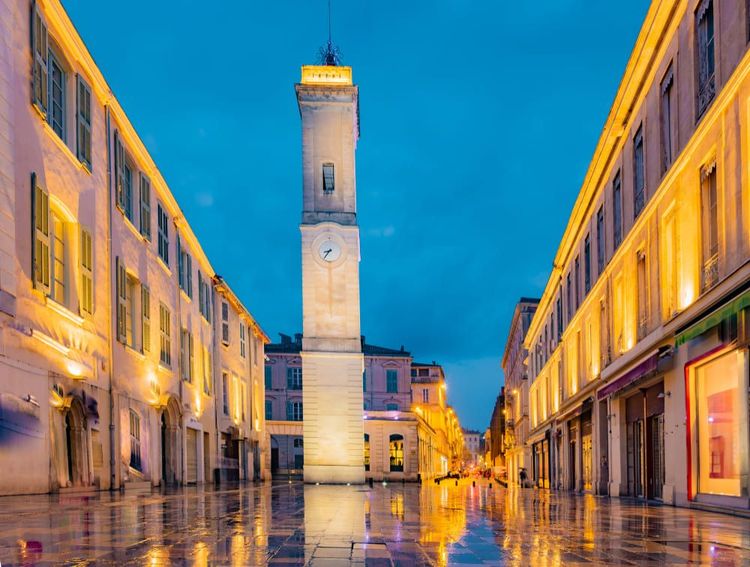
A belfry already stood here in the 15th century, well before residents won royal permission, the following century, to have the hours rung for everyone. The current tower, raised in the mid 18th century, carries a bell cast in wrought iron at its top and has since overlooked one of the liveliest crossroads in the old town. Terraces, shops and passers-by mingle here at every hour, far from the hushed calm of the nearby sanctuaries.
Free entry
15 - Nîmes Covered Market
This covered market, reshaped a few decades ago by an architect famed for his futuristic designs, has gathered close to a hundred stalls under one roof for almost a century and a half. Between Provence, the Camargue and the Cevennes, the produce on offer tells of a generous land: bull stew, salt-cod brandade, stuffed pastries, goat cheese, or almond-and-honey biscuits. It gets busiest in the morning, in a warm atmosphere typical of the south.
Free entry
16 - Small temple of Nîmes (Ursulines Temple)
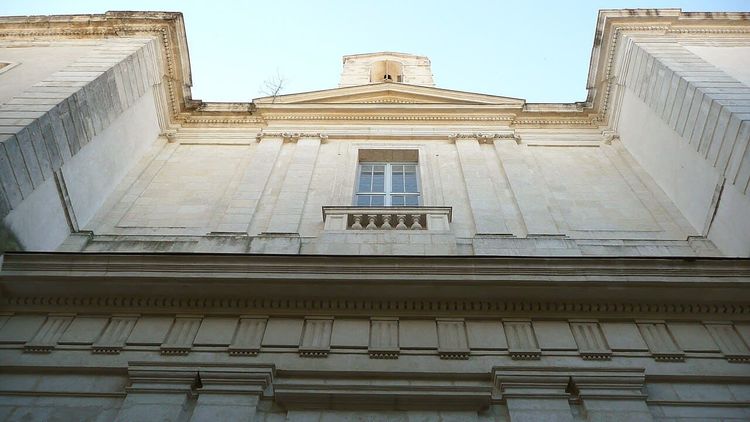
Not to be confused with its larger Reformed neighbour, this sanctuary first served as the church of a convent of nuns settled in the city in the 17th century, before itself joining the Protestant faith during the Revolution. Its baroque facade with Provencal touches and its bell, cast in the early 19th century, earned it heritage protection. Inside hides a remarkable carved wooden organ case, several centuries old.
Free entry
17 - Square House
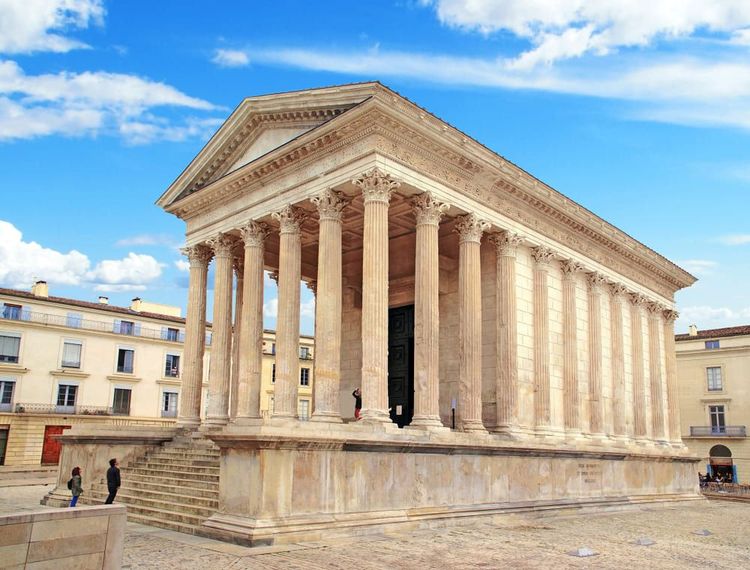
The only antique sanctuary fully preserved anywhere in the world, this temple owes its odd name to a vocabulary gap: when it was named, the word for its rectangular shape simply did not yet exist. First dedicated to an emperor and his grandsons, it served in turn as a council house, a private home and an administrative office before becoming, in the early 19th century, a museum. Its Corinthian columns and raised platform make it a model of balance, now recognised by Unesco.
Paid entry (about €6)
18 - Art Square

Built of glass, steel and concrete, this building by a famous British architect has stood in dialogue with the ancient temple facing it since the early 1990s. It occupies the site of a former theatre largely destroyed by fire in the mid 20th century, itself raised on what was once the forum of the Roman city. It now holds several hundred works of contemporary art, a media library and, from its terrace, a clear view over the ancient heart of town.
Paid entry (about €8)
19 - The Fountain Quay
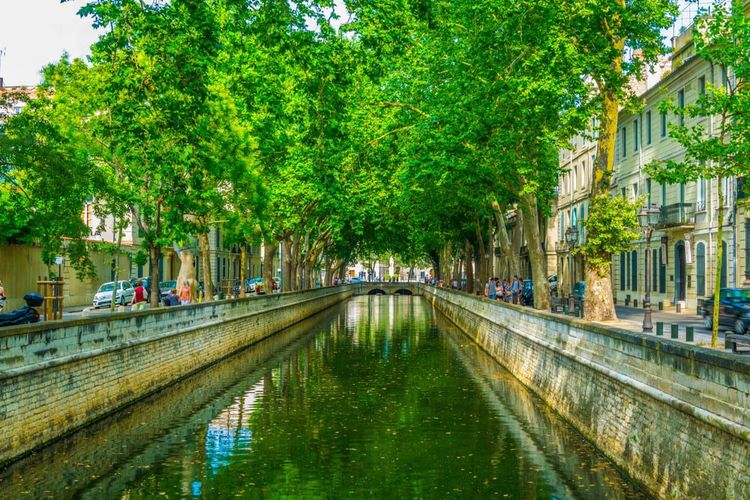
Along this canal, which has carried water from a nearby spring into the city centre for centuries, the urban bustle gradually fades. Laid out at the same time as the grand gardens it leads to, this walkway lined with handsome classical mansions and tall trees offers an elegant vista, quite different from the livelier squares crossed so far. It is an ideal spot to slow down before the greener stretch of the walk that follows.
Free entry
20 - Fountain Gardens
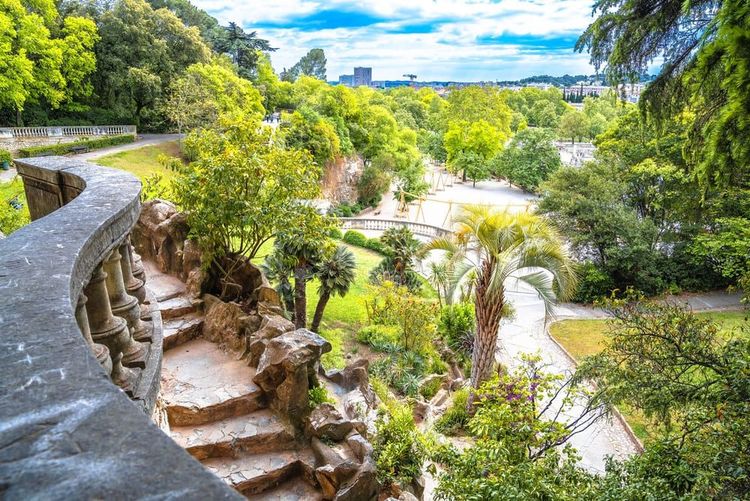
Ranked among the most beautiful gardens in the world, this green space, laid out in the mid 18th century on royal order, also counts among the very first public parks in Europe. Designed in a highly formal style, with symmetrical paths, urns and statues, it covers some 15 hectares planted with pines, lime trees and Mediterranean species. Its listed status also owes much to the ancient remains it still shelters, which the walk is about to reveal up close.
Free entry
21 - Temple of Diana
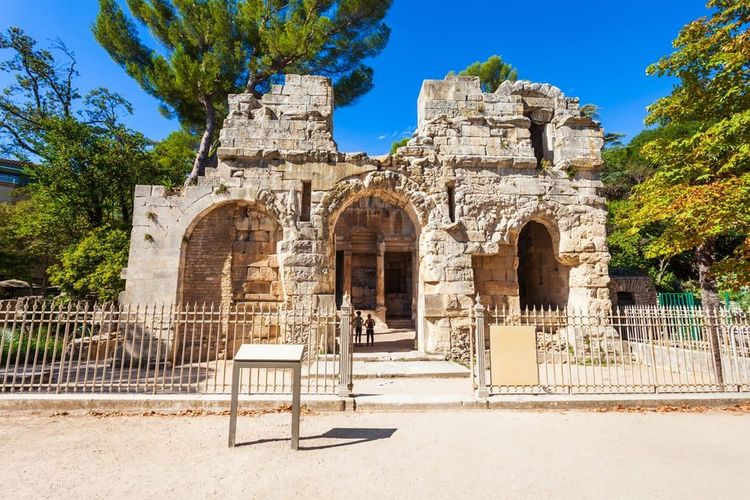
Far less intact than the great monuments passed so far, this remnant keeps all of its mystery nonetheless: nobody knows exactly what it was originally for, only that it belonged to a vast sanctuary dedicated to imperial glory, raised before our era. Turned into an abbey towards the end of the first millennium, then partly destroyed by fire in the 16th century, it was deliberately kept as a ruin when the garden was laid out, for its elegant and enigmatic charm.
Free entry
22 - Fountain Sanctuary
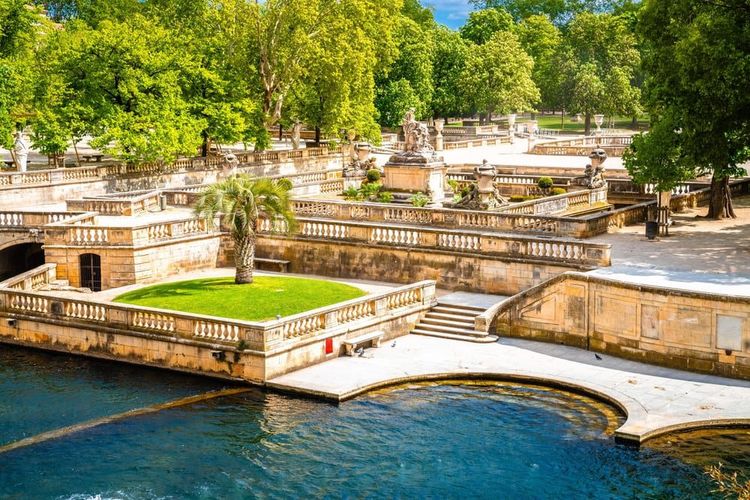
You now stand between the two pools marking the site of the city's very first human settlement, long before Roman legions ever arrived. A spring here was already worshipped as the home of a protective deity, a cult that the new rulers of the city later adopted in honour of their own sovereign. Abandoned when the empire fell and buried for centuries afterwards, the site was only rediscovered and turned into a promenade in the 18th century.
Free entry
23 - Magne Tower
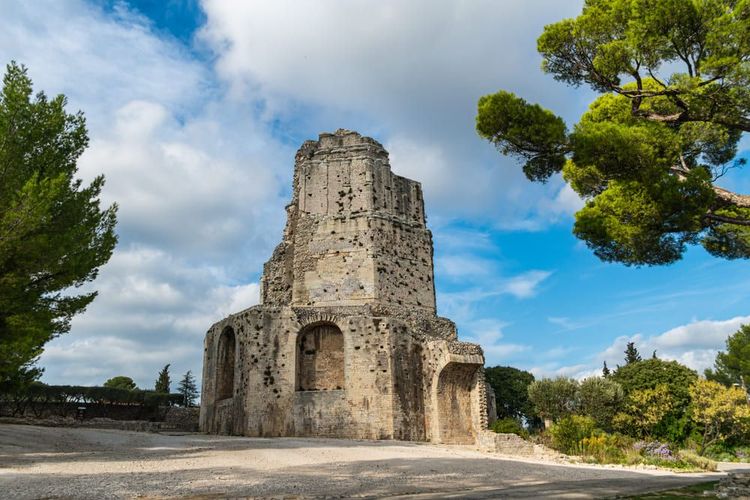
Perched atop a hill overlooking the whole garden, this tall stone silhouette already stood, in a more modest form, well before conquerors from Italy ever arrived. They raised it considerably higher to serve both as a lookout post and as a symbol of their power over the region. The sole survivor of a whole line of towers that once studded the city wall, it rewards, after many steps, with a sweeping view over the city and the scrubland beyond.
Paid entry (about €4)
24 - Castellum
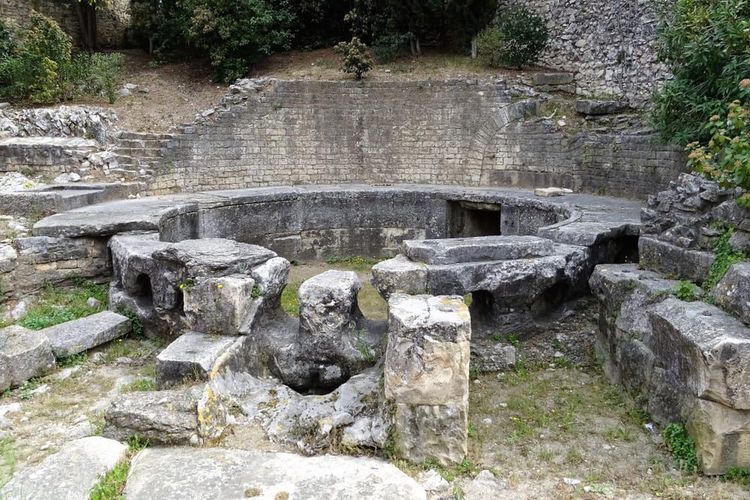
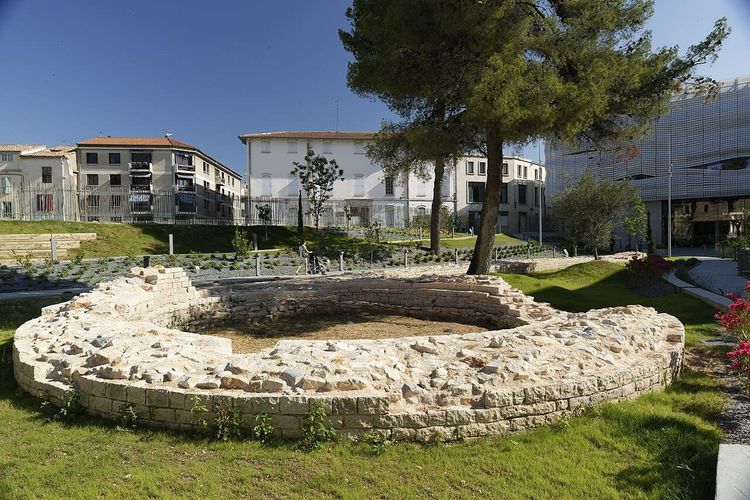
Right in the middle of the street, near the university, stand the modest remains of a Roman tank once tasked with distributing water carried by a long aqueduct from a spring some fifty kilometres away, near Uzes. That route crossed, along the way, a far more famous structure, itself now listed too. Rediscovered in the mid 19th century, this circular basin remains one of the very few examples of this kind of monument still visible anywhere in Europe.
Free entry
25 - Street art
On your left opens a small square turned, thanks to a local association and an annual event born about a dozen years ago, into one of the showcases of the city's mural scene. The works, first displayed indoors, have since spread across several neighbourhoods with the council's blessing, now numbering well past eighty catalogued pieces. A dedicated trail and guided tours let visitors take it all in, between tributes to great painters and original creations.
Free entry
26 - Le Spot
This building has housed, since the early 2010s, a hybrid space mixing entrepreneurship, culture and social causes. Inside you will find a bar, a microbrewery, a skate shop, a hall seating around a hundred and fifty, and shared offices open to freelancers from very different backgrounds. The facade itself plays with an old law on wild bill-posting, cheerfully flouted by the street artists who decorated it.
What to do in Nîmes in 2 or 3 days?
The audio-guided route takes a single day: 6 kilometres and 26 sights in about 2 hours 45 minutes, from Saint-Baudile Church to the Fountain Gardens. With 2 or 3 days on hand, Nîmes rewards a deeper look, between open-air museums and getaways into the Gard countryside.
The next day, step inside the two museums the route skirts: the Roman Museum (stop 8), with its augmented reality, then Norman Foster's Art Square (stop 18), whose top-floor terrace, free to reach, overlooks the Square House. In the afternoon, the Pont du Gard is only half an hour away by road. For a different split, our guide to visiting Nîmes in 2 days gives the first day to antiquity and the second to the lively districts.
On the third day, push on to Uzès, France's first duchy, 25 minutes away by road: its arcaded Place aux Herbes and Saturday morning market round off the stay nicely. For more options, our pick of the loveliest villages around Nîmes lists further stops in the Gard.
Which neighbourhoods does the tour cross?
In a loop, the route crosses districts that each tell a chapter of Nîmes's history, from 19th-century places of worship to the remains of ancient Rome.
It sets off from Saint-Baudile Church, passes the Gate of Augustus, a relic of the Roman walls, then within a few hundred metres runs past the Grand Dominican Temple, later a Protestant church, and the Chapel of the Jesuits, now given over to exhibitions, before reaching the Charles de Gaulle Esplanade (stops 1 to 6).
The Arena and the Roman Museum mark the entrance to the Écusson, the walled old town: Market Square, the Town Hall, Notre Dame and Saint Castor Cathedral and the Romanesque House follow one another through this medieval maze, up to Horloge Square and the covered market (stops 7 to 16).
The Square House, then the Art Square, open next onto the Fountain district: the gardens and the Temple of Diana follow in turn before the climb to the Magne Tower, atop Mont Cavalier, then the way back past the Roman Castellum and the street-art murals that lead back to the start (stops 17 to 26).
What to see in Nîmes in 2 hours?
If time is short, focus on the route's monumental heart: stops 14 to 18 link Horloge Square to the Square House in a few minutes on foot.
Start at Horloge Square, topped by its 18th-century clock tower, then step into the Nîmes Covered Market for a quick look at local produce. Carry on to the Small Temple of Nîmes, once the church of the Ursuline convent, before reaching the Square House, the only Roman temple preserved whole. Finish facing it, at the Art Square, whose top-floor terrace, free to reach, overlooks the square.
How much does it cost to visit Nîmes?
Of the route's 26 stops, most are free to visit or can be seen from the street. Only five charge admission:
- Nîmes Arena, €11;
- the Roman Museum, €9;
- the Square House, €6.50;
- the Art Square, €8;
- the Magne Tower, €4.
Combine several of these monuments with the 3 Monuments Pass, €14.50, covering the Arena, the Square House and the Magne Tower. The Romanité Pass, €20.50 for 3 days, adds the Roman Museum and skip-the-line entry.
Information checked in November 2026 and subject to change.
Where to stop for a bite along the tour?
The route stops right at the Nîmes Covered Market, stop 15, the best spot to taste Gard specialities without leaving the trail.
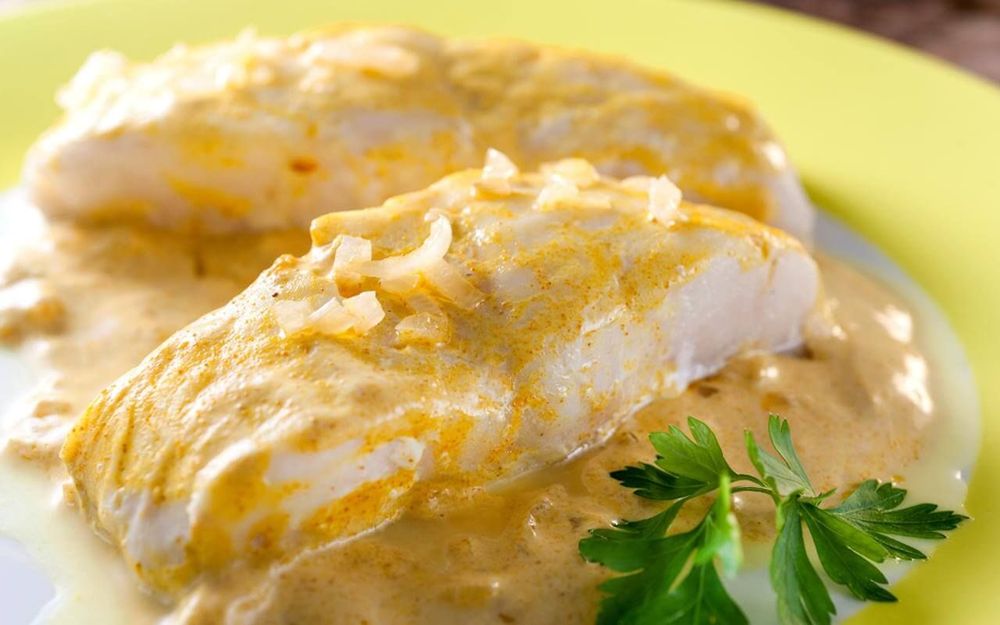
Look out for the Nîmes petit pâté, a puff-pastry pie filled with marinated beef and pork, brandade, a creamy blend of soaked salt cod loosened with olive oil and milk, and Camargue bull, served as a gardiane stewed in red wine. For something sweet, croquants Villaret, dry almond biscuits, have been sold since 1775 on Rue de la Madeleine, the street of the Romanesque House (stop 13), by the same family.
The terraces on Market Square, stop 9, shaded by plane trees, extend the break just steps from the market. Our pick of Nîmes's culinary specialities details more dishes worth seeking out around town, from tapenade to Cévennes pélardon cheese.
What to do in Nîmes with children?
Nîmes with children works well thanks to the digital reconstructions that make antiquity feel less abstract.
The Roman Museum, stop 8, appeals especially to kids with its augmented-reality reconstructions that bring a vanished Roman district back to life. The Fountain Gardens, stop 20, where locals themselves come to picnic at weekends, then offer a wide shaded space to rest between stops, before the climb to the Magne Tower: bring water, since the climb is in full sun with nowhere to buy a drink on site.
What should you know before visiting Nîmes?
Three points are worth planning around before setting off on the route.
The Fountain Gardens, crossed by the trail, are free to enter but keep their own opening hours: check them before you set off. If they are closed on arrival, a detour is needed: follow Rue Agrippa, continue along Rue de la Tour Magne, then turn right into Rue Stéphane-Mallarmé to rejoin the trail.
The Grand Dominican Temple, stop 3, a former church turned Protestant temple, opens only for the European Heritage Days; the rest of the year it is seen from the street. The Arena, meanwhile, sometimes shortens its visiting hours during the Pentecost Feria or the Grape Harvest Feria, when Camargue-style bull races and bullfights take over the venue.
What to see around Nîmes?
Nîmes makes a good base for exploring Provençal Gard and the routes nearby.
The Pont du Gard, 25 minutes away by road, remains the region's must-see. Uzès, France's first duchy, is the same distance away, around its Place aux Herbes and Saturday morning market.
Aigues-Mortes, further south, has kept intact the ramparts Saint Louis sailed from in 1248 for the seventh crusade, while the nearby Camargue, half an hour by road, lines up semi-wild horses and pink flamingos. Our pick of the loveliest villages around Nîmes covers Uzès and other villages in the Gard.
Two neighbouring audio-guided routes round out the visit: Arles, 28 km away, packs 2,000 years of history between its arena and the Roquette district, and Avignon, 38 km away, hides palaces behind golden ramparts that recall its past as a Christian capital.
What's on in Nîmes right now?
This late in 2026, several events are keeping Nîmes busy.
- Expo de Ouf! 14, until 18 December: new street-art murals scattered across several districts, free and on permanent display;
- the exhibition “Bois et Vent”, from 9 to 30 November, part of the “Japan in Occitanie” cultural season, free entry;
- the Marie-Ange Guilleminot exhibition, until 14 March 2027 at the Art Square, €8 full price for the temporary show and permanent collection;
- the Nîmes en filature self-guided sound walk, running daily until 31 December from 9 am to 6 pm, €8 or €5 at the reduced rate, tracing the history of the city's textile industry.
Information checked in November 2026 and subject to change.
Le plein d'inspirations
Explorez le monde en totale liberté, à pied au cœur des villes ou au fil des routes. Nos guides audios transforment chaque destination en une découverte culturelle immersive et unique.










FAQ for visiting Nîmes
When is the best time to visit Nîmes?
Spring and early autumn are ideal for discovering Nîmes in the best conditions. From April to June and then in September and October, you will enjoy pleasant temperatures for comfortably exploring the Roman monuments and strolling through the lanes of the historic centre. Summers are very hot, with temperatures often exceeding 32°C, which can make visits trying, especially in the arena under full sun. Winters remain mild, with days around 10°C. The Pentecost weekend deserves a special mention for experiencing the unique atmosphere of the Féria, even if the crowds are large. These favoured periods will allow you to fully appreciate the Mediterranean charm of the Roman city.
How many days do you need to visit Nîmes?
Two full days is the ideal length to savour the essence of Nîmes. In one well-organised day, you can visit the major Roman monuments such as the Arena and the Maison Carrée, explore the historic centre and relax in the Jardins de la Fontaine. A second day allows you to deepen your discovery by visiting the museums, wandering through the local markets and exploring the less touristy neighbourhoods. If you have three days, you can adopt a more leisurely pace and even slip away to the surrounding area. Visitors in a hurry can nonetheless see the essentials in one intensive day, but it would be a shame not to take the time to sample the Nîmes art of living.
How do you get to Nîmes by public transport?
Nîmes benefits from excellent connections that make it easily accessible. The SNCF station, located right in the town centre, welcomes direct TGV trains from Paris in less than three hours, as well as regular links with Lyon, Marseille, Montpellier and Barcelona. Nîmes-Garons airport offers seasonal flights, but you can also arrive via Montpellier or Marseille-Provence, respectively half an hour and an hour away by road. By car, the A9 motorway crosses the region and several exits serve the city. Regional bus lines connect Nîmes to the neighbouring towns. Once there, the compact historic centre is easily explored on foot, and a trambus network makes it easy to reach the outlying neighbourhoods.
What are the must-see monuments in Nîmes?
The Arena of Nîmes, one of the best-preserved Roman amphitheatres in the world, stands out as the city's flagship visit. The Maison Carrée, a Roman temple of rare elegance, fascinates with its exceptional preservation and today houses a modern interpretation centre. The Jardins de la Fontaine, created in the 18th century around ancient remains, offer a romantic stroll up to the Tour Magne, which dominates the city. The Temple of Diana and the Porte Auguste complete this exceptional Roman heritage. For a complete and enriching discovery of these wonders, the Ryo audioguide offers a commented route that reveals the secrets of each monument while guiding you through the historic lanes of this French Rome.
Where to park in Nîmes and how much does it cost?
Parking in Nîmes is organised around several underground car parks strategically located near the historic centre. The Arena, Maison Carrée and station car parks offer direct access to the main tourist sites. Rates generally vary according to duration and location, with day packages often offered for visitors. On the surface, parking is paid in the town centre from Monday to Saturday, with time-limited zones. The outlying neighbourhoods offer free spaces, but require a longer walk. On Sunday, parking generally becomes free in many areas. Remember to check the signs, which clearly indicate the parking conditions to avoid unpleasant surprises.
What is the Nîmes City Pass and what are its benefits?
The Nîmes City Pass is a practical open sesame for exploring the city with complete peace of mind. This tourist card gives access to the main monuments and museums of the city, including the must-see Arena, the Maison Carrée, the Tour Magne and the Musée de la Romanité. Available in several formats depending on the length of your stay, it allows you to make substantial savings compared to individual admissions. Beyond the priority access that saves you from the queues in high season, the pass often offers discounts at certain partner shops and sometimes access to public transport. Its main advantage remains the freedom to organise your visits at your own pace without worrying about ticket offices. Ask at the tourist office to choose the format suited to your programme.
What can you do around Nîmes within a 30 km radius?
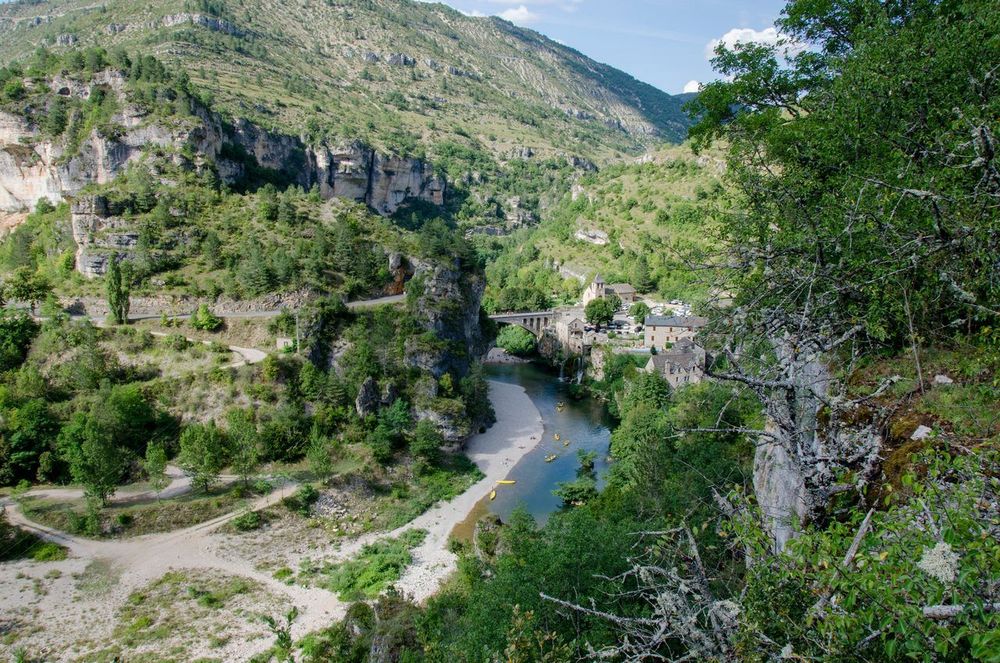
The surroundings of Nîmes are full of wonders worth the detour. The Pont du Gard, a masterpiece of Roman engineering listed by UNESCO, stands out as an essential excursion just some twenty kilometres away. The medieval town of Uzès, the first duchy of France, charms with its cobbled lanes and its renowned Provençal market. Aigues-Mortes and its perfectly preserved ramparts transport you back to the time of the Crusades, while the vineyards of the Costières de Nîmes invite you to a tasting. Closer by, the village of Collias offers nature walks and the chance to canoe under the arches of the Pont du Gard. The nearby Camargue reveals its wild landscapes populated by pink flamingos and white horses. These getaways perfectly enrich a stay in Nîmes.
Is Nîmes suitable for a family visit with children?
Nîmes proves to be a particularly welcoming family destination. Children are generally fascinated by the immersion in Roman times, notably during the visit of the impressive Arena where they can imagine the gladiators. The Musée de la Romanité offers fun and interactive activities specially designed for young audiences. The Jardins de la Fontaine offer vast green spaces perfect for relaxing and picnicking, with well-appointed play areas. The short distances of the historic centre make it easy to get around with pushchairs. Many restaurants offer children's menus and the sunny terraces let you keep an eye on the little ones while enjoying the local cuisine. The summer entertainment and the historical re-enactments particularly captivate families, making Nîmes a memorable stop for all ages.
What is there to see in Nîmes beyond the Roman monuments?
The old town, which locals call the Écusson, is best explored at random through narrow lanes lined with Renaissance mansions whose gateways you have to push open to discover the staircases and inner courtyards. Facing the Maison Carrée, the Carré d'Art designed by Norman Foster answers the ancient temple with its glass columns and houses a contemporary art museum as well as a library open to all.
Add the covered market halls, where you can feel the pulse of the city every morning, the Musée du Vieux Nîmes set in the former bishop's palace, the cathedral with its Romanesque frieze, and the Jardins de la Fontaine, laid out in the eighteenth century over the springs that gave birth to the city. Painted walls and contemporary murals complete the walk. The Ryo audio guide offers a dedicated Nîmes route linking these different layers.
What is the Feria de Nîmes?
The feria is the city's great festive gathering, inherited from the bull-raising traditions of the Camargue and of Spain. It is held twice a year, at Whitsun in the spring and then at grape harvest time, at the end of summer. For a few days the centre changes face completely: bodegas take over courtyards and squares, brass bands parade through the streets, and the city stays lively well into the night.
The arena then hosts bullfights, which are part of local tradition but are far from unanimously accepted, while the rest of the programme mixes concerts, abrivados and street entertainment open to all. If you come during those days, book your accommodation a long way ahead, leave the car outside the centre and expect a crowded, joyful and noisy city.
What are the most beautiful villages to discover within an hour of Nîmes?
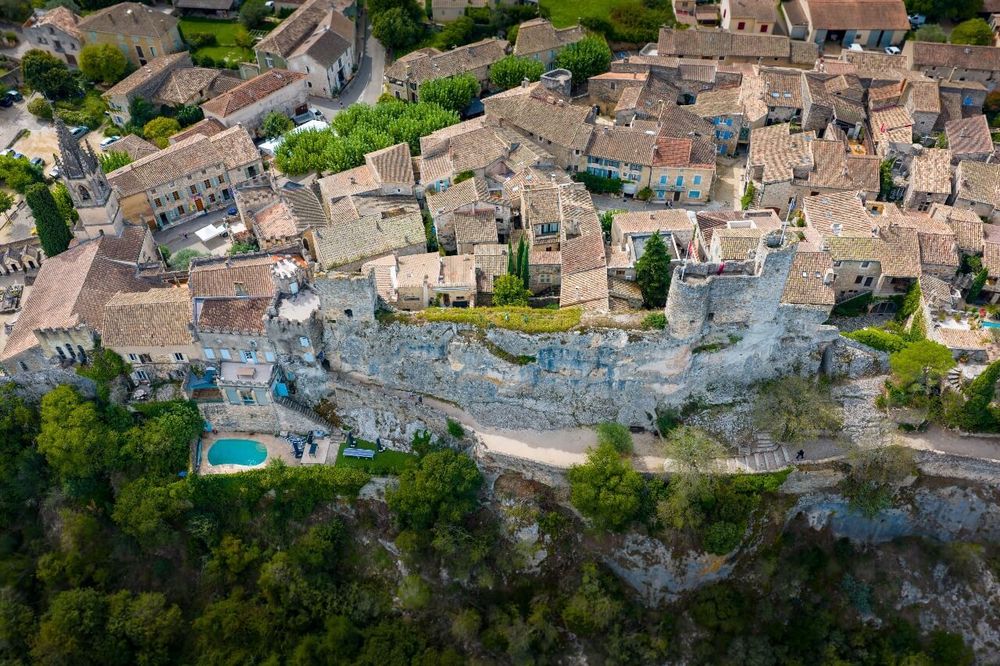
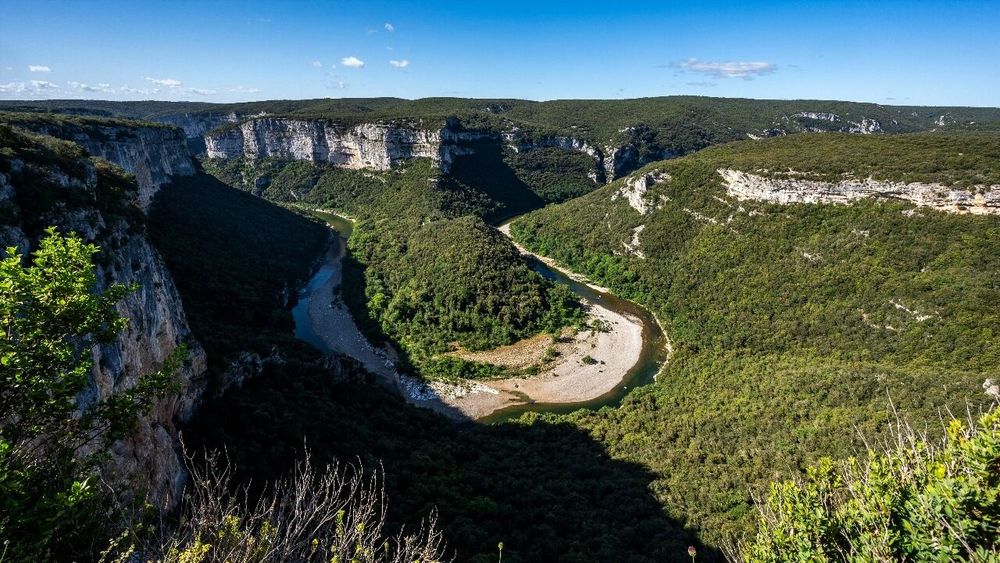
Four villages in the Gard carry the Most Beautiful Villages of France label. Aiguèze, 45 minutes away, overlooks the Ardèche gorges from a cliff over 100 metres high, crowned by its 14th-century keep. La Roque-sur-Cèze, 40 minutes away, pairs perfectly with the Sautadet waterfalls, but take care when the river is high. Uzès, 25 minutes away and France's premier duchy, livens up place aux Herbes with its Saturday market. Lussan, perched at 300 metres on the garrigue, leads to the Concluses, a canyon with 60-metre walls, about 2.5 hours there and back.
Discover all nine stops in our selection of the most beautiful villages around Nîmes.
Which food fairs and gastronomy festivals take place in and around Nîmes?
In late September, the Fest'in Med festival celebrates Mediterranean cuisine: every year ten Nîmes chefs reinvent a featured ingredient in their restaurants, alongside a culinary book fair at the Hôtel Boudon, jazz concerts and a Sunday lunch banquet. The OXITANIA fair, at the Parc Expo, showcases wines and produce from Occitanie, while the MIAM fair in nearby Alès gathers more than 250 exhibitors in November. All year round, Les Halles de Nîmes act as a permanent food show: Cévennes pélardon cheese, salt cod brandade, picholine olives and Costières de Nîmes wines.
Plan your foodie trip with our overview of gastronomy fairs in Nîmes.
Which local specialities should you taste in Nîmes, from brandade to croquants Villaret?
Salt cod brandade, whose Nîmes recipe reportedly dates back to 1786, blends desalted fish, milk and olive oil; its name comes from the dialect word "brandar", to stir. The petit pâté de Nîmes, easy to spot with its mushroom shape, holds a veal and pork filling. From the Camargue, gardiane de taureau is a bull stew marinated in Costières de Nîmes, the local wine appellation. For something sweet, try croquants Villaret, a 200-year-old biscuit recipe with honey, orange blossom and almonds, or the fougasse saint-gilloise. Add tapenade, olives, pélardon cheese and monkfish bourride.
Discover all ten in our guide to the culinary specialities of Nîmes.
What should I see and which ticket should I buy on a first visit to Nimes?
On a first visit, the essentials of Nimes can be covered on foot in half a day: the Arena (€11), the Maison Carrée, the Museum of Romanity facing the arena, then the Écusson old town, the covered market and the Jardins de la Fontaine with the Tour Magne. Two days are enough, including a trip to the Pont du Gard, about 25 km away.
As for tickets, the Pass Nîmes la Romaine (€14.50, valid for three days) covers the Arena, the Maison Carrée and the Tour Magne, but not the museum; the Pass Romanité (€20.50) includes it.
Find the detailed itinerary in our complete guide to visiting Nimes for the first time and in our selection of activities for a first stay.
When should you visit the Arena of Nîmes to avoid the crowds, and what can you see inside?
Completed at the end of the 1st century, the arena measures 133 by 101 metres and once held 23,000 to 24,000 spectators on 34 rows of seats. It owes its preservation to a second life as a fortress, then as a living quarter until the 18th century. Inside, you explore vaulted galleries, the tiers and an exhibition on gladiators. In summer it often opens from 8am to 9pm, and roughly 9.30am to 5pm in winter; the ticket office closes half an hour earlier. Arrive at opening time or late in the day, avoid 11am to 2pm, and check the calendar, as visits are suspended on Feria days.
Plan your visit with our guide to visiting the Arena of Nîmes.
Which unusual visits can you enjoy in Nîmes, off the beaten track?
The arena can also be explored at night, under floodlights with an audio narration, and its service galleries open on special days. At the Maison Carrée, a UNESCO World Heritage Site since September 2023, an immersive film tells the city's story, while the terrace of Norman Foster's Carré d'Art offers a free view of the temple. At the back of the Jardins de la Fontaine, the Nymphaeum grotto shelters the sacred spring of Nemausus, near the remains of the Temple of Diana and free-roaming peacocks. Keep an eye out, too, for the cast-iron crocodile hidden against a façade.
Discover all 15 experiences in our guide to unusual visits in Nîmes.
Which walking route should you follow through the historic centre of Nîmes?
Allow about three hours for four flat kilometres, from the Arena to old Nîmes. Start with the amphitheatre, 45 minutes to an hour with the included audio guide, then head up to the free rooftop terrace of the Musée de la Romanité, facing the tiers. Boulevard Victor Hugo leads 400 metres to the Maison Carrée, the temple Thomas Jefferson copied for the Virginia State Capitol. The route then reaches the Jardins de la Fontaine and the 32-metre Tour Magne. Go in April to June or September to October; in summer, set off between 8am and 11am, before the heat.
Follow the full route in our walking itinerary through Nîmes.
Why is Nîmes called the French Rome, and what is its story?
Before Rome, the Volcae Arecomici already worshipped the spring of the god Nemausus, which gave the city its name. After the Battle of Actium in 31 BC, Augustus settled veterans of the Egyptian campaign here: Colonia Augusta Nemausus was born, and its coin showing a chained crocodile became the city's emblem. A 6 km rampart, the Maison Carrée around AD 2, the Arena around AD 90 and an aqueduct of nearly 50 km crossing the Gardon via the Pont du Gard bear witness to this golden age. Then came the Wars of Religion, serge de Nîmes, the ancestor of denim, and the 1988 flood.
Dive into two thousand years of history with our account of the history of Nîmes.
How should you plan a 2-day weekend in Nîmes, between Roman monuments and day trips?
On day one, visit the Arena at opening time, with the audio guide included in a ticket of about €10, then the Musée de la Romanité and its mosaic of the wedding of Admetus. Have lunch at Les Halles, built in 1884, to taste petit pâté nîmois and brandade, before the Maison Carrée and the Carré d'Art.
Day two leads to the Tour Magne, the lively districts and street art, or to the Pont du Gard for half a day. The Pass Nîmes Romaine, €13 to €15, covers the Arena, Maison Carrée and Tour Magne. During the Ferias, visiting hours are reduced.
Follow our hour-by-hour plans: visiting Nîmes in 2 days and our weekend itinerary in Nîmes.
Vos commentaires, idées et suggestions
Aucun avis pour le moment