© Shutterstock
 Votre guide Ryo
History of Nîmes: From a Gaulish City to the French Rome in 2026
On the manhole covers of Nîmes, a crocodile chained to a palm tree still watches over passersby: this is a symbol older than the history of Nîmes as told in textbooks, a Roman coin minted to celebrate Augustus's victory over Egypt more than two thousand years ago. Few French cities carry their past so visibly in their streets. The Arènes still host performances, the Maison Carrée serves as a temple to contemporary art, and the Jardins de la Fontaine stretch across the remains of an ancient sanctuary. The Ryo audio-guided tour of Nîmes lets you walk literally through these layers, stop by stop.
This article traces the major stages of this long history: the legend of the Nemausus spring and the settlement of veterans from the Battle of Actium, the Wars of Religion that made Nîmes a besieged Protestant stronghold, the rise of a fabric called serge de Nîmes that would become the blue jeans worn everywhere in the world, and the devastating flood of October 1988 that shook the city before its architectural reinvention around the Carré d'Art. Between Gaulish legends, religious rivalries and the textile industry, the trajectory of Nîmes explains why it is nicknamed the French Rome today.
Origins: The Gaulish Village and the Sacred Spring
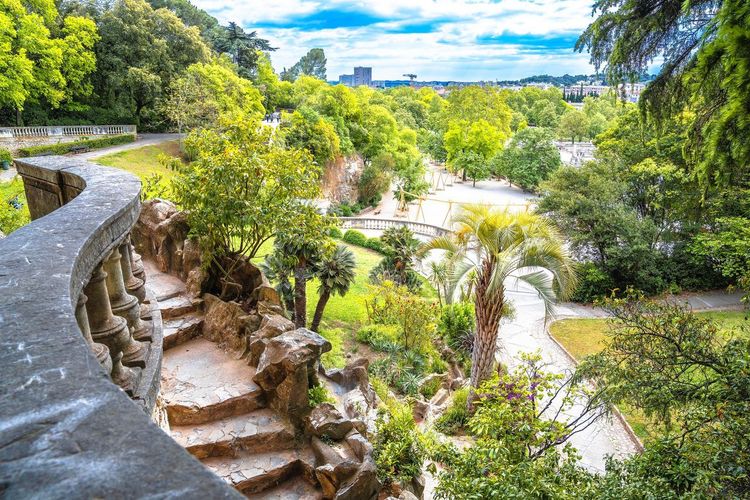
Before it was Roman, Nîmes was already a place of worship. The Volcae Arecomici, a Gaulish people settled in the plain of the Gard from the 6th century BCE, venerated a sacred spring they associated with the deity Nemausus. This spring, still visible today at the heart of the Jardins de la Fontaine, gave the city its name: Nemausus would become Nîmes over the centuries. On the nearby hill of Mont Cavalier, the Gauls built a first dry-stone rampart, the direct ancestor of the Tour Magne that visitors can still see today.
The Gaulish oppidum benefited from a strategic position between the Mediterranean Sea and the foothills of the Cévennes, on a trade route used for centuries by merchants. Coins minted locally, decorated with a horse or a local deity, attest to already active exchanges with the Greek colonies on the coast, in particular Marseille, founded long before the arrival of the Roman legions.
You will find little trace of this Gaulish village with the naked eye: the Romans largely covered its remains by building their own city on top. Archaeologists nonetheless locate the heart of this protohistoric settlement at the foot of Mont Cavalier, where the spring flowed naturally, which explains why the entire history of Nîmes subsequently unfolded around this water source. The sanctuary of the spring would moreover remain a major place of worship throughout the Roman period, proof of a rare religious continuity between the Gaulish and Latin worlds. But every time you come across the word Nemausus on a plaque or a pediment in Nîmes, remember that it refers first and foremost to a spring and a god who predate the Roman presence by several centuries.
Nemausus, the Roman Colony and Its Golden Age
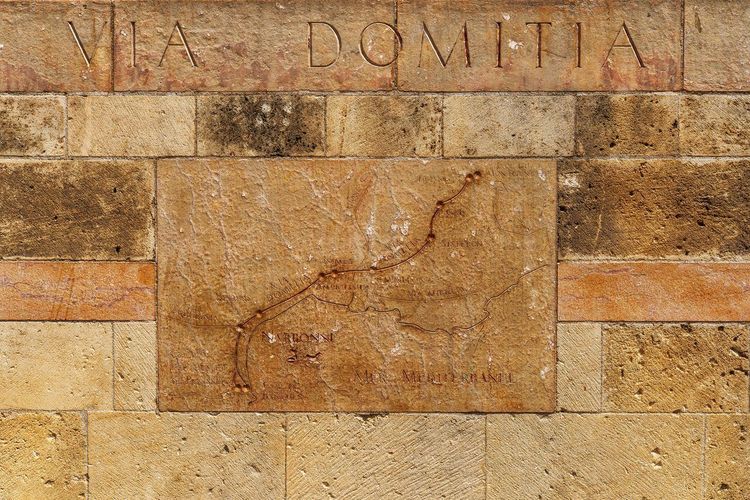
The Roman conquest changed everything from 121 BCE, when the region became the province of Gallia Narbonensis. The Via Domitia, the first great Roman road laid out in Gaul, crossed the territory of Nîmes and connected the city to Italy as well as to Spain. Nîmes immediately benefited from this status as a commercial crossroads, well before the city became a monumental capital.
The decisive turning point came after the Battle of Actium in 31 BCE, when Octavian, the future Emperor Augustus, defeated Mark Antony and Cleopatra in Egypt. He settled veterans of the Egyptian campaign in Nîmes, and the city took the name Colonia Augusta Nemausus. It is this Egyptian victory that the famous coin bearing the chained crocodile celebrated, which has since become the city's emblem.
The colony grew quickly. A rampart of around 6 kilometres, pierced by about ten gates, enclosed a city whose population, according to historians' estimates, reached several tens of thousands of inhabitants at the height of its power, making it one of the most important cities in Roman Gaul. Only fragments of this enclosure remain today, notably around the Porte Auguste, one of the few ancient gates still legible, through which the Via Domitia entered the city. You can still make out the two central passages reserved for chariots and the two lateral passages for pedestrians, a layout typical of the great Roman monumental entrances.
It was at the height of this prosperity, around the year 2 CE, that the Maison Carrée was built, a temple dedicated to Gaius and Lucius Caesar, the adopted grandsons of Augustus. Its virtually intact state of preservation makes it one of the best-preserved Roman temples in the world, a rarity that even Rome cannot claim for its own monuments of this scale.
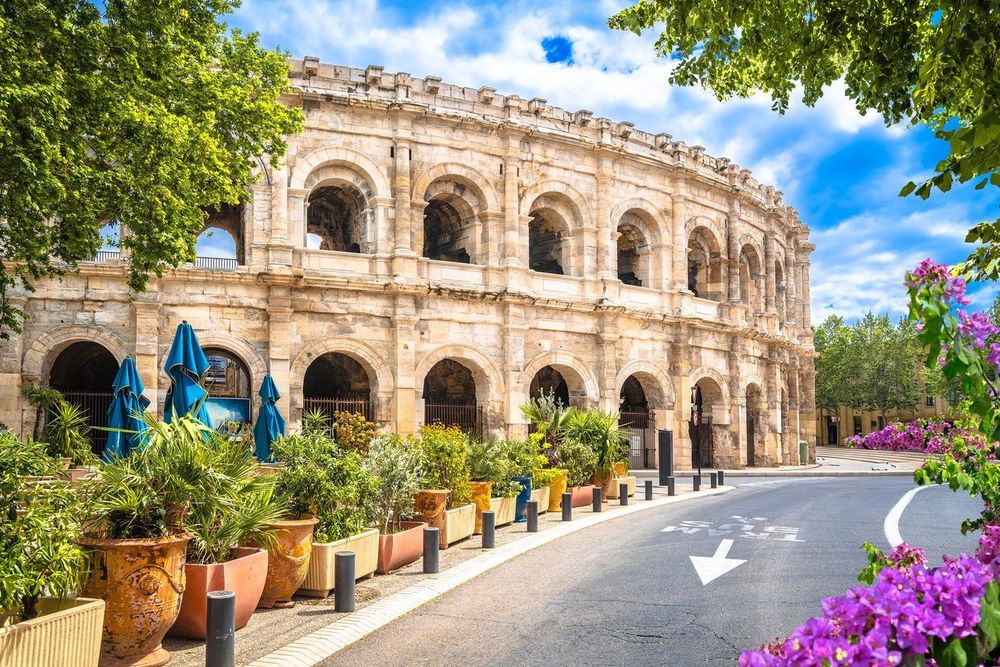
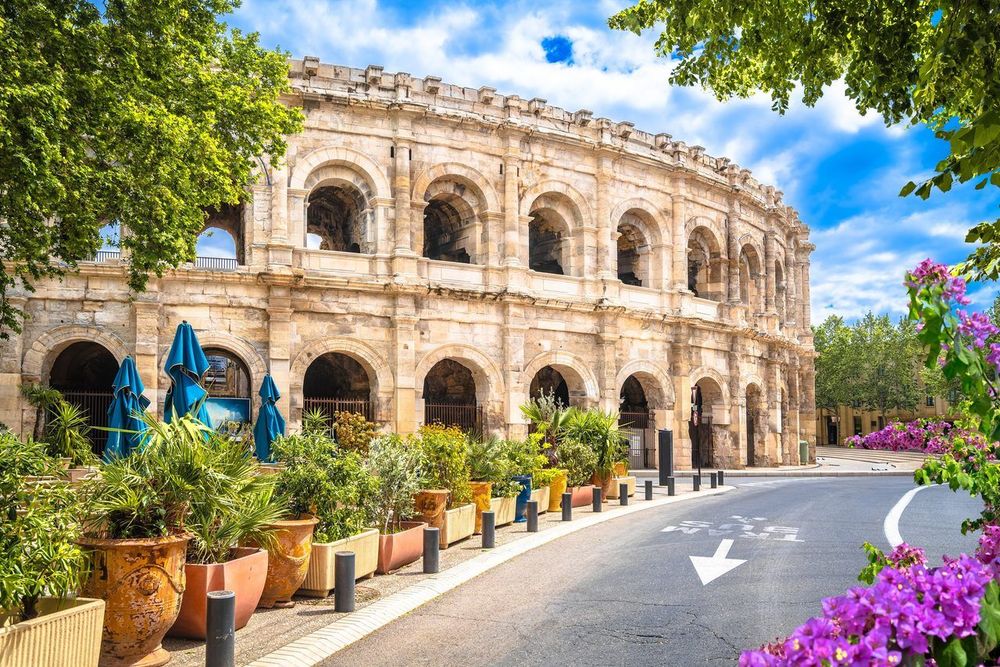
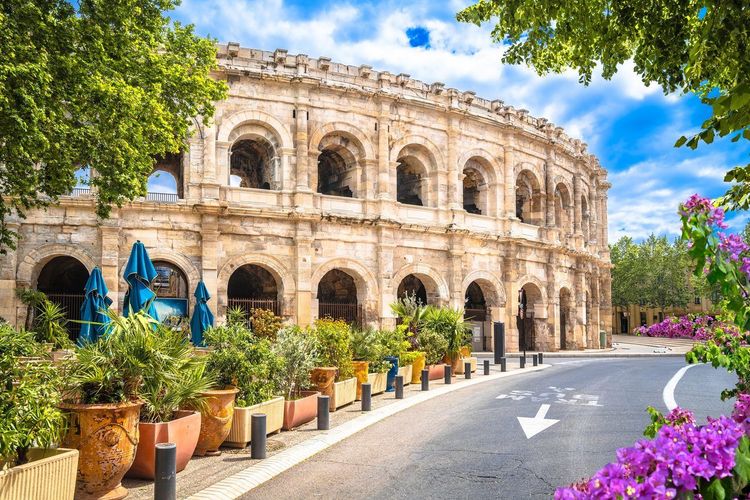
A few hundred metres away, the Arènes de Nîmes rose towards the end of the 1st century CE, with construction beginning around 90 CE. Measuring 133 metres long and 101 metres wide, with a two-storey arcade façade standing 21 metres high, the amphitheatre could accommodate nearly 24,000 spectators who came to watch gladiatorial combat or hunts. Its sixty bays and circulation system allowed the stands to be filled and emptied with an efficiency that contemporary engineers still admire. If you visit the monument today, you are walking on the same tiers as a Nîmois of antiquity, something that is true of virtually no other amphitheatre so well preserved. Our article details how to visit the Arènes de Nîmes to get the most out of it.
On Mont Cavalier, the Romans rebuilt and raised the pre-existing Gaulish tower: the Tour Magne then reached around thirty metres and dominated the entire surrounding plain, integrated into the Augustan rampart as a watchtower and symbol of power.
Finally, to supply the city with water, Roman engineers built an aqueduct of nearly 50 kilometres from the springs of Uzès, crossing the valley of the Gardon by means of the famous Pont du Gard. The water then arrived in Nîmes via a Castellum divisorium (Rue de la Lampèze, 30000 Nîmes, rated 4.3/5 on Google with 558 reviews), a distribution basin that redistributed the flow to the city's fountains and baths via a network of lead pipes. If the subject interests you, our guide to visiting the Pont du Gard complements this reading well.
This Roman splendour would not last indefinitely. From the 3rd century onwards, the political and economic crises gripping the Empire began to weaken Nemausus, setting in motion a slow decline that would continue for centuries.
The Chained Crocodile: A Legend Turned Coat of Arms
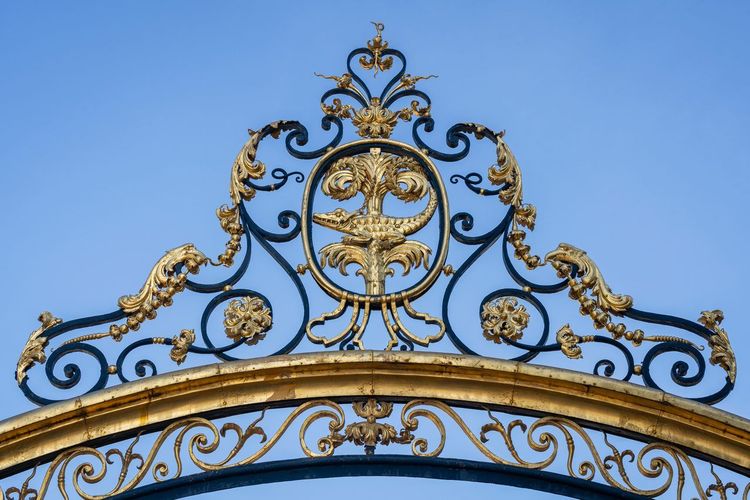
Let us pause for a moment on this crocodile, so deeply does it still structure the city's visual identity. The original coin, a bronze as minted under Augustus, depicts a crocodile tied to a palm tree by a chain, accompanied by the legend COL NEM, for Colonia Nemausus. The message was clear to contemporaries: Egypt, symbolised by the Nile crocodile, was subjugated by Rome.
Over the centuries, this ancient symbol repeatedly resurfaced in the city's history. It has adorned the official coat of arms of Nîmes since the Middle Ages, reappeared on municipal coins, and then on cast-iron manhole covers produced in the 19th century — the very ones you encounter today while strolling through the Écusson.
It can now be found almost everywhere: on shop fronts, labels of local wine, the town hall's stamps, and even on the famous bronze studs that dot the paving of the city centre. In 1986, the artist Philippe Starck even redesigned the crocodile and its palm tree to make it the city's official logo, proof that this ancient emblem continues to reinvent itself. Few cities maintain such a direct, almost playful link between a two-thousand-year-old symbol and their contemporary image, and it is also through this detail that the history of Nîmes remains readable at every street corner.
Visigoths, Saracens and the Long Medieval Slumber
From the 5th century onwards, the collapse of Roman authority in Gaul left the region exposed to successive invasions. The Visigoths seized Nîmes and incorporated it into their Kingdom of Toulouse, before the Ostrogoths briefly took over at the beginning of the 6th century.
The defeat of the Visigoths by the Franks at Vouillé in 507 brought the region under Frankish domination, but instability persisted. At the beginning of the 8th century, Umayyad troops from Spain occupied Nîmes for nearly two decades, an episode that remains poorly documented but very real.
In 737, Charles Martel retook the city by force. According to local tradition, the Arènes, which had been converted into a fortress, were set on fire during the siege to drive out the defenders, an episode that partly explains the state of the remains found inside the monument. Archaeological excavations carried out since the 19th century have confirmed traces of continuous occupation of the amphitheatre throughout the early Middle Ages, a sign that the Roman monument was never entirely abandoned, even in the darkest hours of the city's history. The city then entered the Carolingian orbit, but its ancient prestige faded durably: medieval archives describe a city turned in on itself, far from the metropolis it had been under Augustus.
Medieval Nîmes: Viscounts, Monks and Ramparts
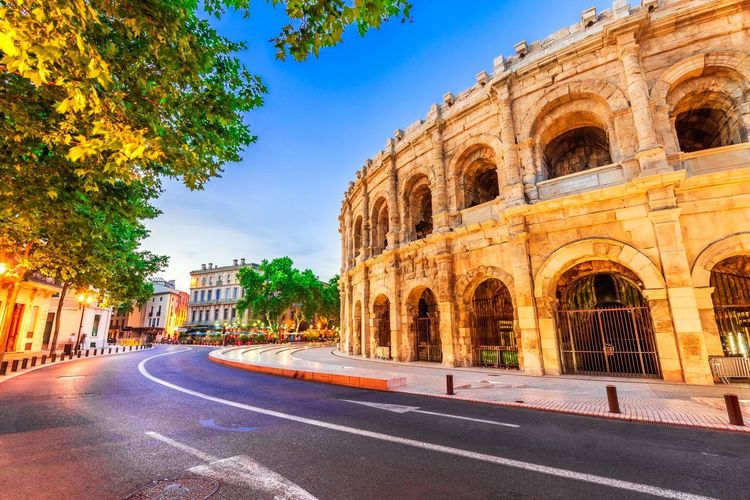
From the 9th to the 12th century, Nîmes was administered by local viscounts, under the more or less effective suzerainty of the Counts of Toulouse. This period saw the city slowly rebuild itself around new focal points: the Arènes became a fortified quarter in their own right, occupied by dwellings that would remain there until the 19th century.
Religious life also shaped this medieval Nîmes. The cathedral of Notre-Dame-et-Saint-Castor, consecrated in 1096, became the spiritual heart of the city, altered many times after sieges and fires. Around it grew a dense urban fabric, with its narrow lanes that you can still walk through today in the historic centre.
The major political turning point came at the beginning of the 13th century with the Crusade against the Cathars. Nîmes, where Cathar ideas had found a degree of resonance, was brought back under French royal control at the end of the conflict. The Treaty of Paris of 1229 definitively attached the city, until then torn between Toulousain and Aragonese influences, to the French crown.
Municipal governance then organised itself around elected consuls, a system of urban administration fairly common in the medieval Midi. Reinforced ramparts protected the city, while trade in wool and early cloth began timidly to take shape, foreshadowing the textile boom of the following centuries. This period also saw Nîmes welcome an active Jewish community, settled around what is now the Rue de l'Étoile, until its expulsion from the Kingdom of France at the end of the 14th century. The city remained a modest but well-connected trading hub within the fairs of Languedoc, a role that explains the persistence of its cloth-making expertise across the generations.
The Reformation and the Wars of Religion: A Huguenot City
In the 16th century, the ideas of the Protestant Reformation spread at a remarkable pace among the craftsmen and merchants of Nîmes. Within a few decades, Nîmes became one of the most important Protestant strongholds in Languedoc, alongside cities such as Montauban and Montpellier.
This religious shift did not happen without violence. In 1567, an episode that has since remained in local memory under the name of the Michelade saw Protestant rioters execute several dozen members of the Catholic clergy during the feast of Michaelmas. The following decades brought a succession of sieges, changes of control and sporadic clashes between Catholic and Protestant factions, against the backdrop of the Wars of Religion that ravaged much of the kingdom.
The Edict of Nantes, signed in 1598, brought a lasting respite. It guaranteed the Protestants of Nîmes freedom of worship and a recognised place in local economic life, allowing the city to prosper for nearly a century through the textile trade and commerce.
This respite came to an abrupt end in 1685, when Louis XIV revoked the Edict of Nantes. Nîmes then lost a significant share of its Huguenot population, forced into exile in England, the Dutch Republic or Germany, taking with it precious artisanal expertise vital to the local economy.
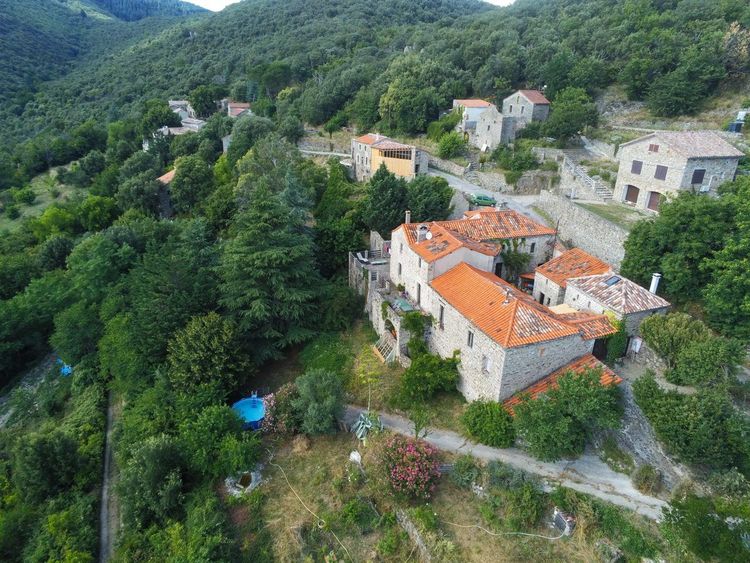
This repression in turn fuelled the Camisard revolt, which broke out in 1702, a Protestant uprising organised in the neighbouring valleys of the Cévennes, where the insurgents found refuge in rugged terrain well suited to guerrilla warfare. Led by charismatic leaders such as Jean Cavalier, these peasants in their shirts — from which their Occitan name of camisards derived — held out for several years against the royal troops, far more numerous and better armed, before the uprising ran out of steam around 1704. If you want to understand this landscape of resistance, these Cévenol villages still recount, through their architecture and their unassuming temples, this turbulent chapter of regional history.
Silk, Indigo and Trade: The Golden Age of Commerce in Nîmes
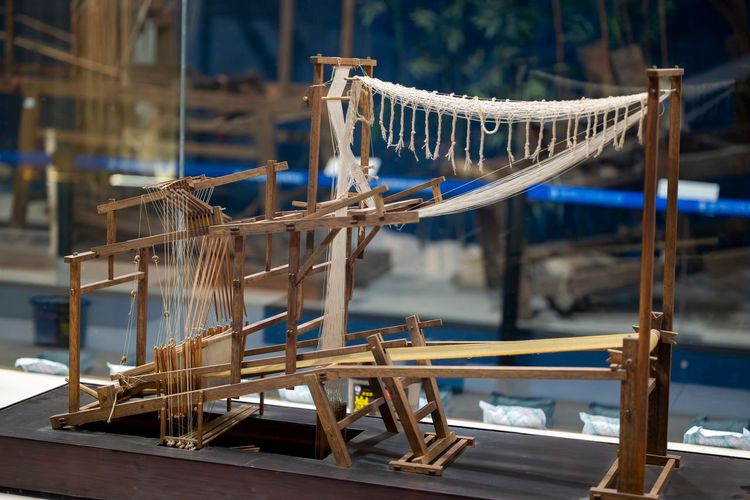
Despite the religious tensions, the 17th and 18th centuries marked a remarkable economic boom for Nîmes. The city specialised in the manufacture of silks and woollen cloths, before developing a particular expertise in indigo dyeing — that deep blue that would become its hallmark.
Nîmes merchants exported their fabrics throughout the Mediterranean basin, as far as Italy and the Levant, as well as to northern Europe. The city has, in fact, never ceased to produce remarkable figures: it was in Nîmes that the diplomat Jean Nicot was born around 1530, the very man who introduced tobacco to the French court and left his name in the word nicotine. This commercial prosperity visibly transformed the city: numerous private mansions with elegant 18th-century façades rose up in the neighbourhood now known as the Écusson.
It was also during this period, in 1745, that the engineer Jacques Philippe Mareschal transformed the site of the ancient spring into a formal French garden: the Jardins de la Fontaine, considered one of the first public gardens in Europe, well before the wave of urban park creation that swept through the 19th century.
You can still stroll today along these orderly paths, between basins and statues, without immediately realising that they cover a Roman sanctuary two thousand years old. Few cities offer such a tranquil superimposition of Enlightenment urbanism and ancient remains.
From Serge de Nîmes to Global Denim

Among the fabrics produced locally was a sturdy twill-woven cloth dyed with indigo, known as serge de Nîmes. Exported through Mediterranean ports, it circulated to Genoa, among other places, where sailors wore a similar blue fabric that would later give rise to the English word jean, a contraction of Genoa.
The contraction of the name from Nîmes followed a comparable path: from serge de Nîmes, the expression gradually shifted to denim in Anglo-Saxon commercial usage. The fabric then crossed the Atlantic, where its durability won over workers and gold prospectors alike.
In 1853, the merchant Levi Strauss, based in San Francisco, used a canvas of this type to make work trousers for the miners of the California Gold Rush. Twenty years later, in 1873, he partnered with the tailor Jacob Davis to patent the process of metal rivets reinforcing pockets subjected to heavy wear: this date is considered the official birth of the modern blue jean. The industry born of this fabric from Nîmes is today worth tens of billions of dollars worldwide. The irony is lost on no one: the city that gave its name to jeans saw its own textile industry decline long before the garment became a global symbol worn far from its origins in the Gard. Ryo's short audio-guided tour of Nîmes, The French Rome, threads past several of these landmarks if you'd rather see them for yourself.
The 19th Century: Railways, Factories and the Rediscovery of Antiquity
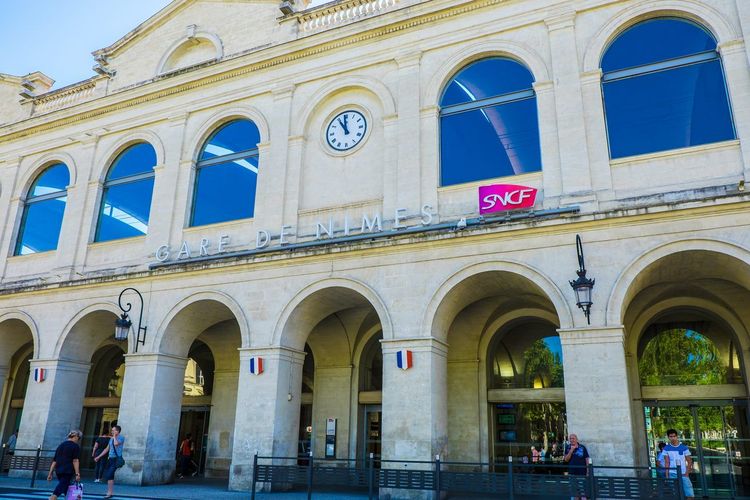
The Industrial Revolution profoundly transformed Nîmes in the 19th century. Textile factories became mechanised, the urban population grew rapidly, and new working-class districts developed on the outskirts of the historic Écusson. The arrival of the railway, with the line linking Nîmes to Montpellier as early as 1839 and connections to Paris in the following decades, considerably accelerated commercial exchanges and the arrival of the first visitors curious about the ancient heritage. It was also in this Nîmes in full transformation that the writer Alphonse Daudet was born in 1840, whose work, steeped in the light of the Midi, helped to popularise the Provençal imagination far beyond the Gard.
It was precisely at this time that the way people looked at the Roman remains changed completely. The Romantic movement valued ancient ruins as national symbols, and figures such as Prosper Mérimée, appointed Inspector General of Historic Monuments in 1834, helped to have the monuments of Nîmes listed and restored rather than left to deteriorate further.
The Arènes benefited directly from this. The medieval dwellings that had accumulated there over the centuries were progressively demolished, a clearance project carried out over several decades to uncover the full extent of the ancient amphitheatre. The monument then found a new purpose: from 1863 onwards, it hosted the first bullfights, inaugurating a bullfighting tradition that continues to this day.
The Second Empire also modernised the urban layout of Nîmes, with the opening of wide boulevards inspired by the Haussmannian transformations in Paris. You can still recognise this urban grid today by walking along the boulevards that encircle the historic centre, laid out directly on the site of the demolished medieval ramparts.
Wars, the 1988 Flood and Architectural Renaissance
The 20th century brought its share of hardships. The First World War took a heavy toll on the young men of the Gard, while the interwar period saw the local textile industry struggle against international competition. During the Occupation, the region became a hotbed of active resistance, particularly in the maquis of the nearby Cévennes, before the Liberation of 1944.
The post-war period continued the gradual decline of the traditional textile sector, as the city sought new economic drivers. But the event that left the most lasting mark on the collective memory of Nîmes remains the flood of 3 October 1988. Torrential rain caused the cadereaux — those normally dry watercourses running through the city — to overflow, triggering devastating floods that cost several residents their lives and submerged part of the historic centre, right up to the edges of the ancient monuments.
This disaster acted as a catalyst. Under the impetus of mayor Jean Bousquet, also the founder of the fashion brand Cacharel, Nîmes embarked from the late 1980s on a vast urban renewal programme entrusted to renowned architects. Jean Nouvel designed the Nemausus social housing complex in 1987, a bold architectural statement for public housing.
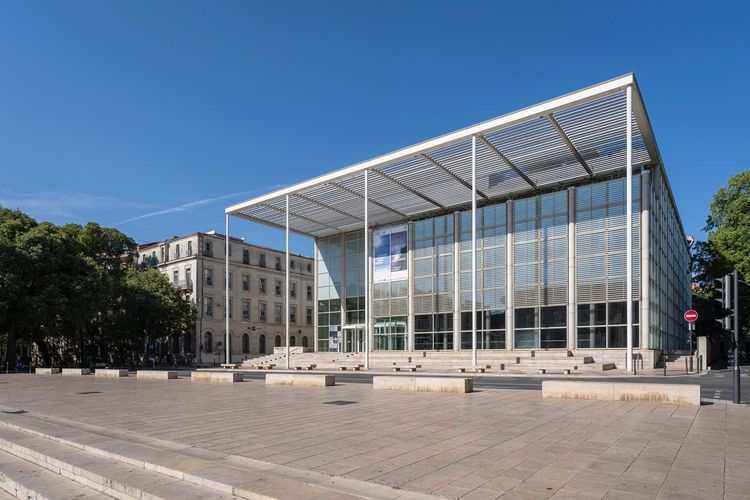
In 1993, Norman Foster delivered the Carré d'Art (Place de la Maison Carrée, 30000 Nîmes, rated 4.2/5 on Google with 1,435 reviews), a contemporary art museum and media library built opposite the Maison Carrée. The dialogue between the Roman temple and this glass-and-steel structure has become one of the most frequently cited examples in contemporary architecture of a conversation between ancient heritage and modern creation.
Nîmes Today: The Contemporary French Rome
The nickname French Rome, frequently heard today, is not merely a tourist marketing argument. It reflects the genuine density of Roman heritage preserved in the city, often regarded as unrivalled outside Italy itself for an urban centre of this size.
This recognition reached a decisive milestone on 18 September 2023, when the Maison Carrée was officially inscribed on the UNESCO World Heritage List, becoming France's 51st listed site and the 9th in Occitania. The organisation praised the exceptional state of preservation of the Augustan temple and its intact Corinthian decoration, considered unique in the world. The city now draws on this designation to promote its entire Roman heritage, from the Arènes to the Tour Magne. At the same time, contemporary cultural life revolves largely around this legacy: férias, exhibitions at the Carré d'Art, and the Musée de la Romanité, dedicated entirely to local archaeology, which attracts hundreds of thousands of curious visitors each year to read the history of Nîmes through its collections.
Nîmes's economy has today diversified considerably, spanning services, logistics and a steadily growing heritage tourism sector. You feel this dual identity as soon as you walk through the Écusson: 18th-century façades stand alongside Roman columns, and lively terraces sit next to remains two thousand years old, without either register seeming to overshadow the other.
The Monuments That Tell Two Thousand Years of History
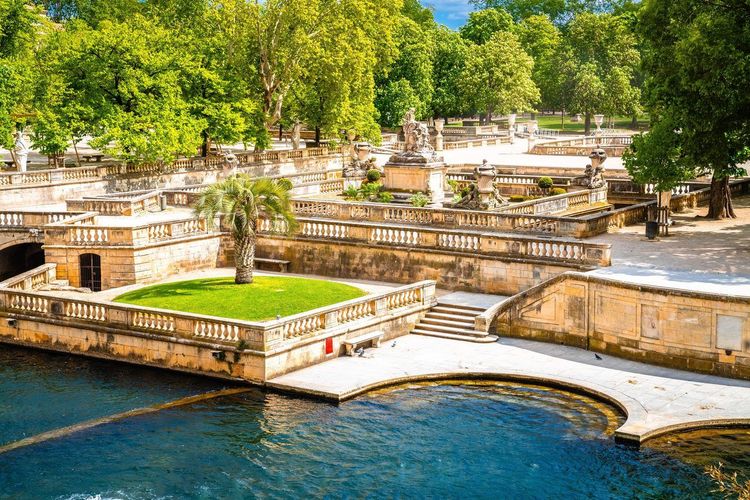
If you want to see for yourself the layers this article has just traversed, a few stops are essential beyond the Maison Carrée and the Arènes already mentioned. The Jardins de la Fontaine, with their 18th-century basins built over a Roman sanctuary, offer a striking shortcut between two eras separated by nearly eighteen centuries.
The cathedral of Notre-Dame-et-Saint-Castor, consecrated at the end of the 11th century and rebuilt several times after successive sieges, is also worth a visit for its sculpted Romanesque frieze, one of the few original sections still visible on the façade.
About thirty minutes away by road, the Pont du Gard remains the most spectacular element of the Roman aqueduct that once supplied Nemausus. Its three tiers of arches, rising to nearly 50 metres above the Gardon, rank among the best-preserved examples of ancient engineering prowess in Europe. You will find all the practical details in our article on visiting the site.
Finally, do not overlook the Musée de la Romanité (16 Boulevard des Arènes, 30000 Nîmes, rated 4.6/5 on Google with 5,634 reviews), opened in 2018 directly opposite the Arènes. Designed by architect Elizabeth de Portzamparc, its building clad in an undulating glass mesh engages in dialogue with the neighbouring amphitheatre much as the Carré d'Art does with the Maison Carrée. Its collection traces precisely the entire narrative we have just unfolded, from Gaulish origins to late antiquity, through more than twenty-five thousand archaeological pieces, including the superb Pentheus mosaic discovered during recent excavations. Saving this visit for the end of your itinerary allows you to put in order, room by room, all the layers of the history of Nîmes evoked up to this point.
Living Traditions: Férias, Bulls and Roman Identity
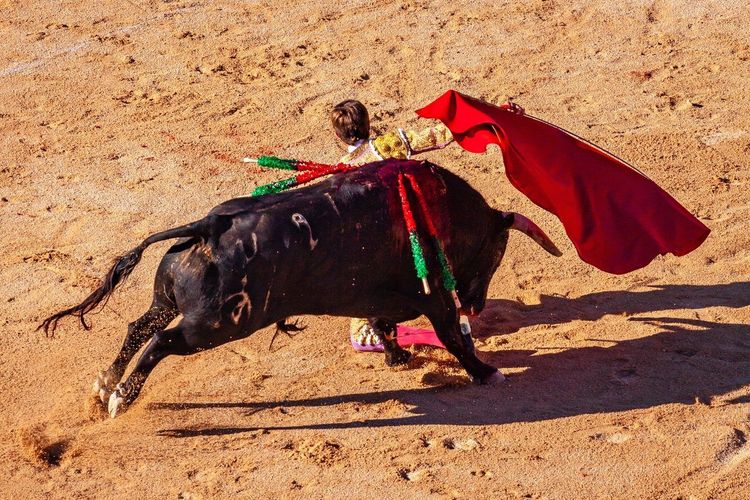
The history of Nîmes is not limited to stones. It lives on each year in very much alive traditions. The Feria de Pentecôte, held since 1952, and the Feria des Vendanges in September transform the city into a vast festive space for several days, punctuated by bullfights and Camargue races in the very Arènes where ancient games were once held. The Feria de Pentecôte alone attracts nearly a million visitors in under a week, making it one of the largest popular gatherings in the south of France and extending, in its own way, the vocation for crowds and spectacle that the amphitheatre already fulfilled under the Empire.
This bullfighting culture, deeply rooted in local identity, maintains a direct link with the city's Roman heritage: the spectacle organised in an amphitheatre almost intact for two thousand years creates a continuity that few cities can claim so literally.
On the gastronomic side, brandade de morue from Nîmes and croquants Villaret bear witness to a culinary identity shaped by the Mediterranean trade exchanges mentioned earlier. Our selection of culinary specialities in Nîmes allows you to explore this more flavourful chapter of local history in greater depth.
Finally, denim, long overlooked as a local heritage, has been enjoying renewed recognition in recent years, with municipal and artisanal initiatives proudly asserting Nîmes's claim to the parentage of the most widely worn fabric in the world.
Experiencing This History Today
The best way to understand this rich history remains to walk through it physically, in order or out of order as you please. Ryo's audio-guided tour of Nîmes offers a route specifically designed to connect these different eras, from the Nemausus spring to the façades of the Carré d'Art, without you having to reconstruct the chronology yourself. At each stop, the Ryo audio guide tells the anecdote or contextual reference that gives meaning to the stone before your eyes, whether it is a fragment of an Augustan rampart or a 17th-century Huguenot façade. It is a vivid way to retain the history of Nîmes without ever opening a textbook.
If you are planning a longer stay, our selection of things to do in Nîmes usefully complements this historical immersion with practical suggestions, from visits to gourmet breaks.
Simply bear in mind that the city is best discovered on foot: most of the monuments mentioned in this article are within less than twenty minutes' walk of one another, a compactness that greatly facilitates a rapid immersion into two thousand years of history.



FAQ
Why is Nîmes nicknamed the French Rome?
The nickname comes from the exceptional density and state of preservation of its Roman monuments. Few cities outside Italy retain both a temple as intact as the Maison Carrée and an amphitheatre still used for performances, like the Arènes.
What is the origin of the name Nîmes?
The name comes from Nemausus, the Gaulish deity associated with the sacred spring still visible in the Jardins de la Fontaine. The Romans kept this name for their colony, Colonia Augusta Nemausus, which eventually evolved into Nîmes.
What does the crocodile on the coat of arms of Nîmes mean?
It refers to a Roman coin minted under Augustus to celebrate the victory over Egypt at the Battle of Actium. The crocodile chained to a palm tree symbolises the submission of Egypt to Rome, a motif that Nîmes has retained as its emblem since the Middle Ages.
Why is it said that jeans come from Nîmes?
In the 17th and 18th centuries, Nîmes produced a sturdy indigo-dyed fabric called serge de Nîmes. This name is said to have given rise to the word denim, a fabric later used by Levi Strauss from 1853 to make work trousers during the Gold Rush.
What are the Roman monuments you absolutely must see in Nîmes?
The Maison Carrée, the Arènes, the Tour Magne and the Castellum divisorium form the heart of Nîmes's ancient heritage. The Pont du Gard, about thirty minutes away by road, ideally completes this visit by illustrating the aqueduct that supplied the city.
What happened during the 1988 flood in Nîmes?
Torrential rain caused the cadereaux — normally dry watercourses running through the city — to overflow on 3 October 1988. The flooding caused several deaths and damaged part of the historic centre, an event that subsequently accelerated the major urban renewal projects carried out in the following decades.
Has Nîmes always been a Protestant city?
No. The city swung massively towards the Reformation in the 16th century, becoming one of the main Protestant strongholds in Languedoc, before experiencing severe repression following the revocation of the Edict of Nantes in 1685, which drove a large part of its Huguenot population into exile.
From the Gaulish spring to the arches of the Carré d'Art, the history of Nîmes reads like a succession of reconstructions rather than a straight line. Each period — Roman, Huguenot, industrial or contemporary — has left a layer still visible today, making the city particularly legible for those who take the time to stroll through it without rushing.
If this article has made you want to see these places for yourself, the Ryo audio-guided tour of Nîmes remains the simplest way to connect two thousand years of history in a single walk, without missing the details that only an in-person visit can truly reveal.
À lire également