© Shutterstock
 Votre guide Ryo
Visiting the Nîmes Arena in 2026: History, Prices, and Practical Tips
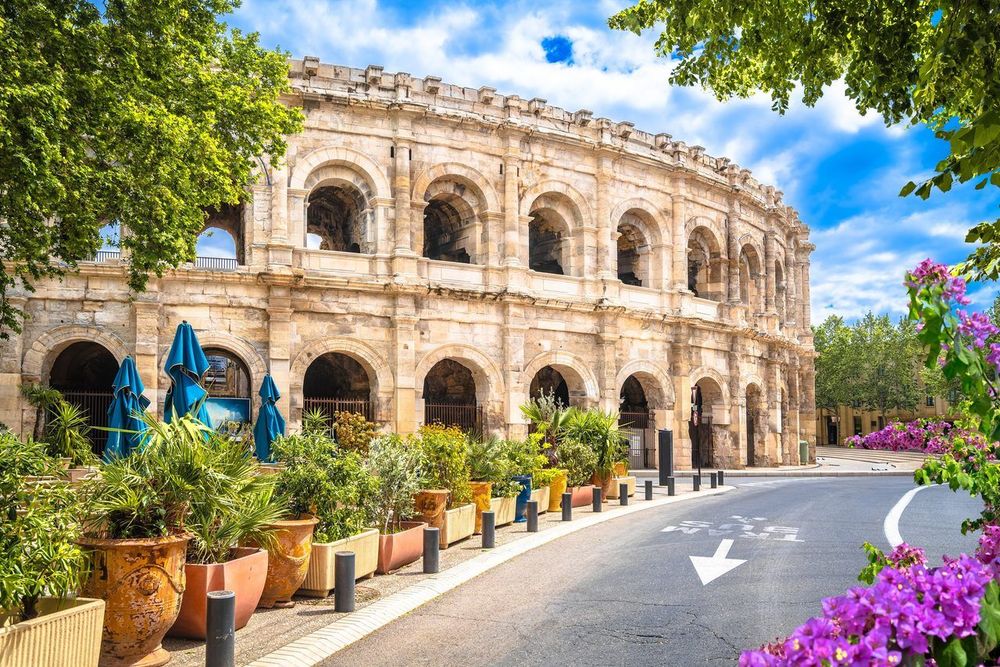
In Nîmes, it's not uncommon to come across a wedding photo being taken under the arcades of a two-thousand-year-old monument, while just a few meters away technicians are assembling temporary seating for an evening concert. Visiting the Nîmes Arena, the Maison Carrée and the Tour Magne in the same day remains the most popular itinerary for passing visitors, as all three ruins are just a few minutes' walk from one another. This continuity — a Roman amphitheatre that has remained in almost uninterrupted use since the end of the first century — makes the visit very different from a simple tour of ruins. Unlike the Colosseum in Rome, largely gutted by looting and earthquakes, the Nîmes structure has retained its form almost entirely intact, making it the best-preserved Roman amphitheatre in the world today. The Ryo audio-guided tour of Nîmes takes you from the foot of the arena all the way to the other ancient ruins in the city centre.
Before heading inside, a few key facts are worth knowing. In Roman times, estimates suggest that 23,000 to 24,000 spectators could take their seats across the 34 tiers of seating, compared to around 13,000 today during summer concerts. A canvas velum already protected the audience from the sun two thousand years ago — the direct ancestor of the retractable roof installed in the late 1980s. Twice a year, the Féria transforms the monument into a bullfighting arena, while theatrical guided tours bring gladiators and freedmen back to life for weekend visitors. From ticket prices and opening hours to combined passes with the Pont du Gard or the Maison Carrée, and tips for avoiding the crowds, this guide covers everything you need to know before your visit.
The Nîmes Arena: the Best-Preserved Roman Amphitheatre in the World
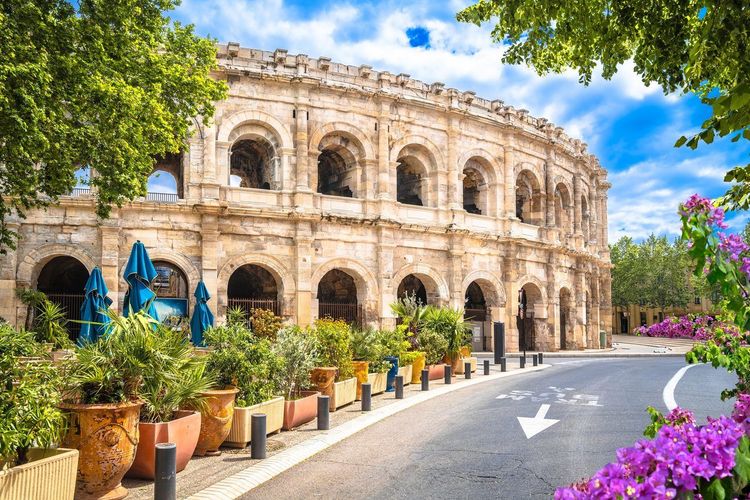
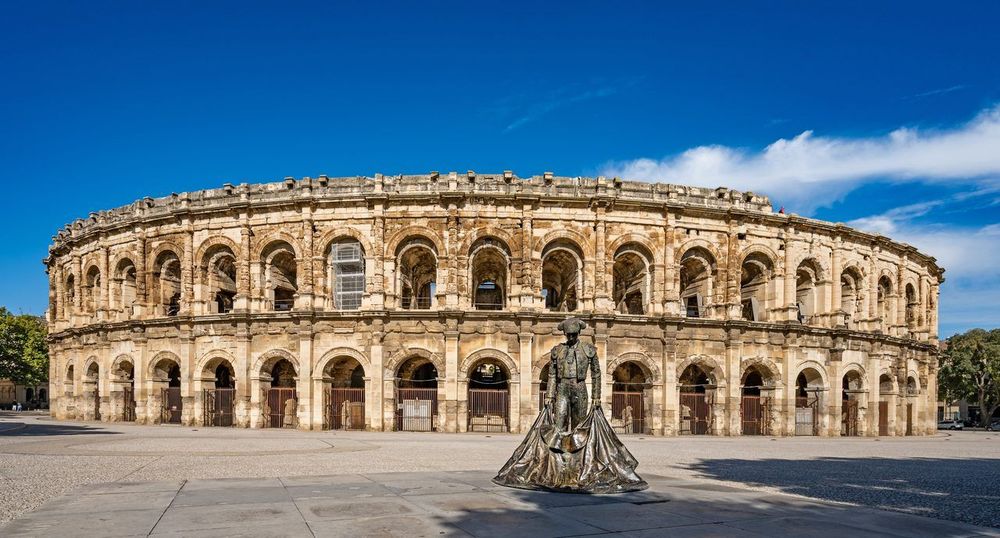
The Nîmes Arena (Boulevard des Arènes, 30000 Nîmes, rated 4.6/5 on Google based on 39,562 reviews) was built at the end of the first century AD, modelled on a smaller scale after the Colosseum. The structure measures 133 metres long by 101 metres wide, standing 21 metres tall across two levels of arcades (60 per floor) topped by an attic storey. Its elliptical shape and the regularity of its layout make it one of the best-documented Roman amphitheatres in Europe, alongside Verona and Arles.
The Arena Floor, Seating Tiers, and Galleries
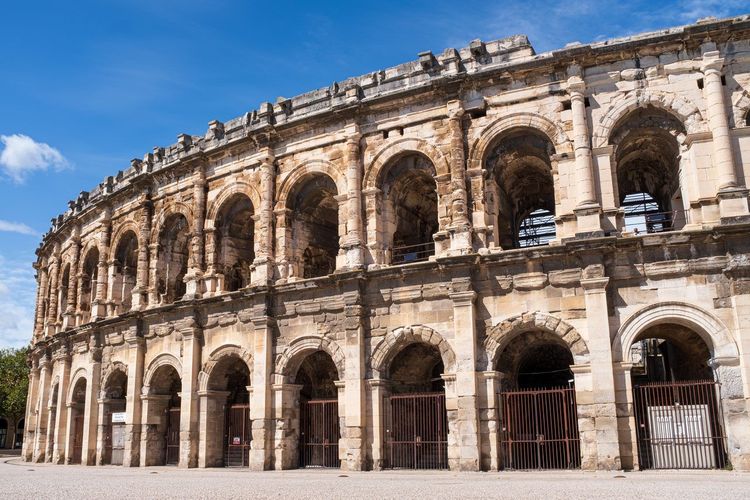
The arena floor, an ellipse measuring 69 metres by 38 at the heart of the monument, takes its name from the sand (harena in Latin) that covered it to absorb the blood of combat and ease the movement of gladiators. The French word « arène » derives directly from this term.
The seating tiers obeyed a strict social hierarchy: dignitaries and senators occupied the rows closest to the arena floor, while women and enslaved people were relegated to the very top, beneath the arcades of the upper level. A network of galleries and staircases reportedly allowed the entire audience to be evacuated within minutes — a feat of urban logistics that inspired modern stadiums long after the fall of the Empire. These vaulted galleries, cool even in the height of summer, are one of the most pleasantly surprising aspects of the visit: you walk through a stone corridor that has remained virtually unchanged since antiquity.
Exhibition Spaces and Ancient Remains
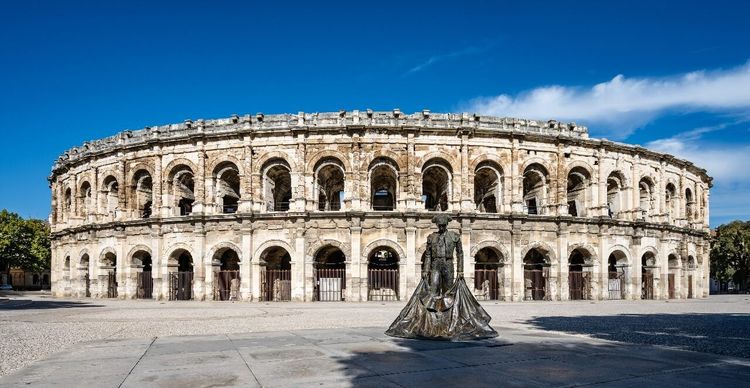
Part of the lower galleries now houses a permanent exhibition on the circus games and the lives of gladiators. Visitors can discover reconstructions of armour, helmets, and training weapons, as well as panels detailing the different categories of ancient combatants (murmillo, thraex, retiarius) and the rituals that preceded bouts.
These exhibition spaces regularly change their scenography in line with the city's cultural seasons, which gives regular visitors to Nîmes a reason to return.
From Fortified Village to Restored Monument
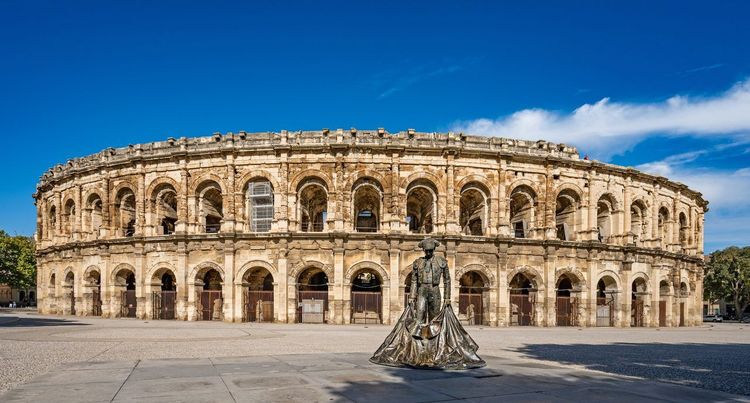
The amphitheatre owes its exceptional state of preservation to a rather unexpected second life. From the end of antiquity onwards, its arcades were walled up and the monument became a fortress, then a veritable neighbourhood: houses, alleyways, chapels, and even churches took root inside the enclosure, where several hundred residents were still living in the eighteenth century. Paradoxically, this continuous occupation protected the stone from the quarrymen who, elsewhere in Roman Gaul, had dismantled amphitheatres to build houses.
The clearing of the monument began in the early nineteenth century, when the municipality undertook to rehouse its inhabitants and restore the building to its ancient form. Restorations continued throughout the nineteenth century, and have been carried out on an almost permanent basis since the 2000s, arcade by arcade. If you spot scaffolding on part of the façade, there is no cause for concern: the work proceeds in phases and does not prevent visits. We explore this eventful history in more detail in our article on the history of Nîmes.
A Masterpiece of Roman Engineering
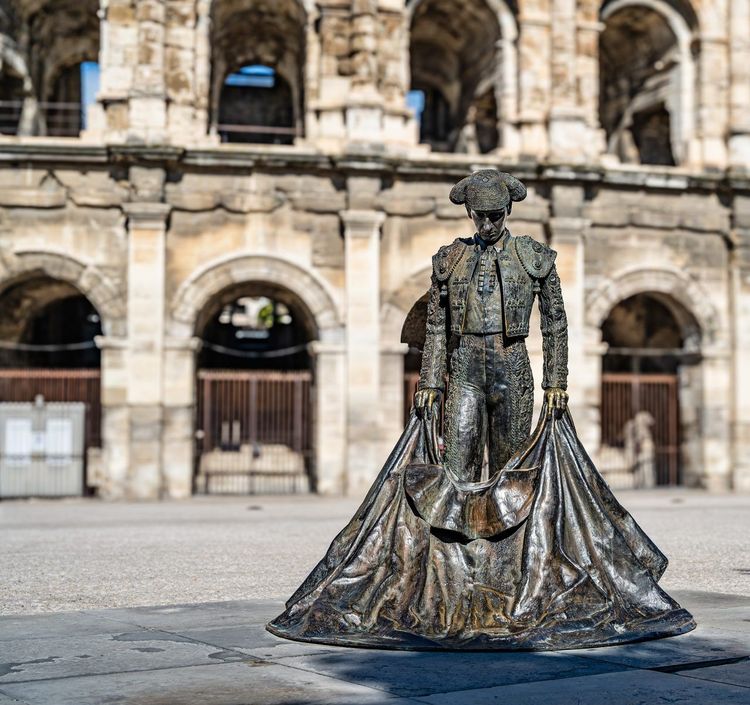
The arena was built from limestone quarried just a few kilometres from the city, with blocks so precisely assembled that mortar was often unnecessary. The ancient drainage system, designed to channel rainwater through calibrated conduits, still partially functions today. You are literally walking on an infrastructure built to last for centuries — and one that has largely kept its promise.
Opening Hours and the Best Time to Visit
Opening hours follow four seasonal patterns. In winter (January–February and November–December), the monument opens around 9:30 am and closes at approximately 5 pm. In spring, from March to May, the hours extend to roughly 9 am–6:30 pm, a schedule that also applies in autumn. In July and August, the opening hours are considerably wider, often from 8 am to 9 pm, allowing for an evening visit when the heat of the day subsides. One practical note: the ticket office closes half an hour before the monument itself, which leaves little time to complete the full circuit.
The monument is open every day of the year, with rare exceptions: a few public holidays (1 January, 1 May, and 25 December in particular) and periods when concert stages are being erected or dismantled, during which the arena floor may be closed to the public. On Féria days, tourist access is also suspended in favour of the events. Check the online calendar the day before your visit, especially between May and July.
To avoid the crowds, try to arrive at opening time or within the last hour before closing. Between 11 am and 2 pm, tour groups and coaches tend to converge on the entrance, particularly in July and August. A Tuesday or Thursday morning outside of school holidays remains the quietest time slot for photographing the arena floor without anyone in the frame.
Tickets, Online Booking, and Payment Methods
The full-price admission to the monument is around €11, with a reduced rate of approximately €9 for students, job seekers, and teachers, and about €5.50 for children aged 7 to 17. A family pass of around €23 covers two adults accompanied by one or two children, making it the best-value option for a group of four. These prices change slightly each year, so check the price displayed at the time of booking.
The list of free admissions is longer than you might expect: children under 7, residents of Nîmes, people with disabilities and their companions, journalists, and other categories on presentation of supporting documentation. School group packages and special conditions for licensed guides round out the pricing structure. An audio guide is available at the entrance desk to enhance your visit; check with the ticket office about how it is provided, as this varies by season.
Online booking is strongly recommended during peak season. It allows you to select a time slot and avoid queuing at the ticket office, which can be particularly long on July and August afternoons. On the busiest days — especially around the férias — entry may be available only for pre-booked time slots.
On site, accepted payment methods include bank card, cash, and holiday vouchers (chèques-vacances). Online, only card payment is available. Groups of more than 20 people can benefit from negotiated rates by contacting the monument's booking service in advance.
Combined Tickets and Passes: Pass Romanité, Pass 3 Monuments, and Nearby Sites
If you plan to visit several Roman monuments in Nîmes, the combined offers can make a significant difference to your overall travel budget.
The Pass Romanité and the Pass 3 Monuments
The Pass Romanité grants entry to the Nîmes Arena, the Maison Carrée, the Tour Magne, and the Musée de la Romanité with a single ticket, valid for several consecutive days and usable once per site. The Pass 3 Monuments covers the same three ancient sites without museum access, at a notably lower price. As soon as you plan to visit two monuments, the price difference compared to individual tickets makes the pass the better value: for a family wanting to see the highlights of Nîmes' Roman heritage, it is the most straightforward choice.
The Combined Ticket with the Pont du Gard
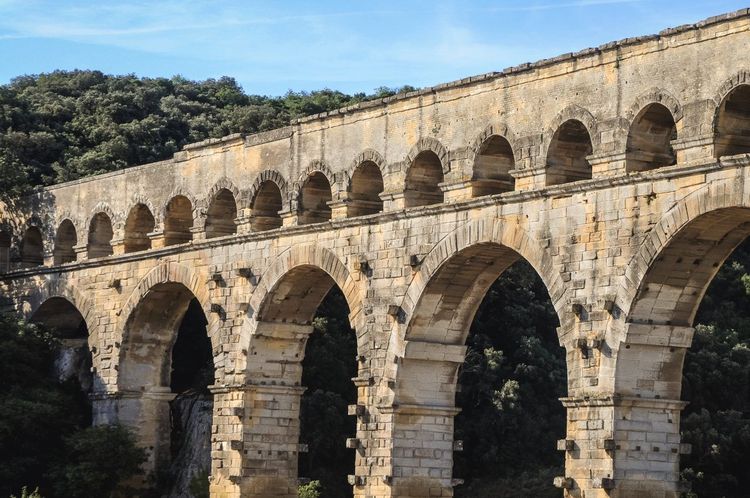
A combined ticket for the Nîmes Arena and the Pont du Gard is also available, offering a noticeable saving compared to purchasing the two entries separately. Allow an extra half-day for the ancient aqueduct, located about twenty minutes by road. We detail the opening hours and the best viewpoints in our Ryo guide to visiting the Pont du Gard.
Combined Tickets with Avignon and the Carrières des Lumières
For travellers heading towards Provence, combined tickets are available pairing the arena with the Palais des Papes and the pontifical gardens in Avignon, or with the Palais des Papes and the Pont d'Avignon. Another combined option exists with the Carrières des Lumières, the immersive light show installed at Les Baux-de-Provence, about an hour's drive from Nîmes. These packages are primarily aimed at those planning a multi-day circuit between the Gard and Vaucluse departments, and can be booked online, with each site retaining its own access hours.
What to Expect on Your Visit: Duration, Languages, and Audio Guide
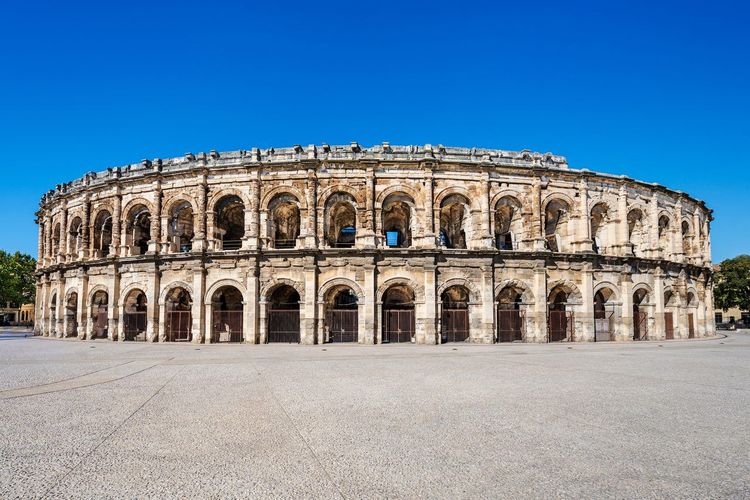
Allow between one hour and one and a half hours for a complete self-guided visit, including access to the galleries, upper levels, and exhibition spaces. The visit is self-paced with no fixed route, allowing you to linger on the arena floor or head straight up to the top tiers for a panoramic view.
In practice, the most logical flow is to start by descending to the arena floor, then make your way through the lower galleries and their exhibition spaces, before climbing to the upper tiers for a bird's-eye view of the ellipse and the city's rooftops. This route avoids having to retrace your steps on the stone staircases, whose steps are tall and uneven.
Individual Visits, Group Visits, and Special Audiences
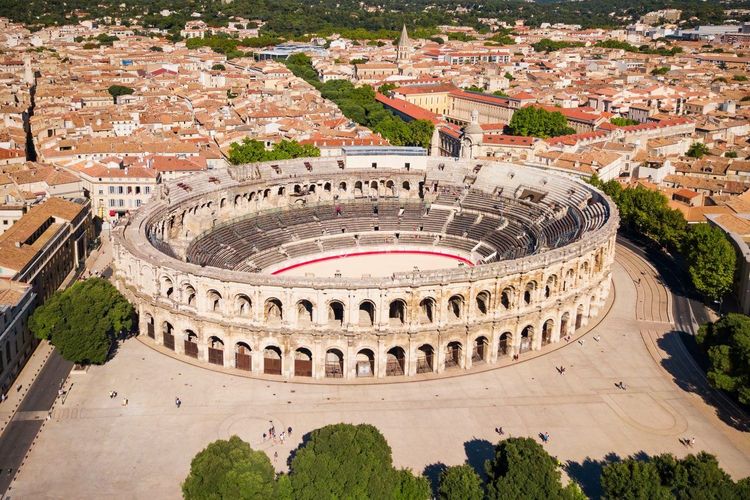
Individual visitors move freely, with timed entry slots during peak season to manage visitor flow. Groups of 20 or more must book in advance and can arrange a guided tour in French or other languages on request. School groups benefit from dedicated pricing and educational workshops focused on Roman daily life, particularly suited to primary and secondary classes studying antiquity.
Available Languages and Audio Guide
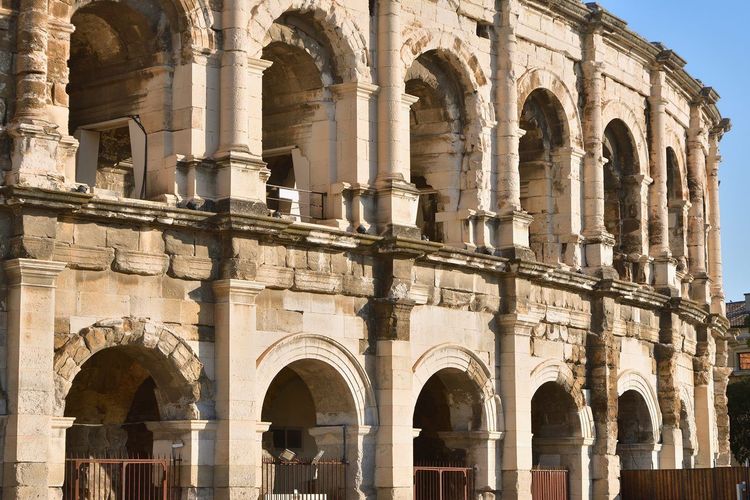
The monument's audio guide is available in several languages, including French, English, Spanish, German, and Italian, with a child-friendly version on certain devices. It covers the history of the building, the staging of ancient games, and the key phases of its restoration. Guided tours are conducted mainly in French, with English available on request for groups. If you want to extend your exploration beyond the arena itself, the Ryo audio guide covers the entire Roman historic centre of the city and makes a useful complement to the monument visit with a walking tour through the surrounding streets.
Facilities and On-Site Services
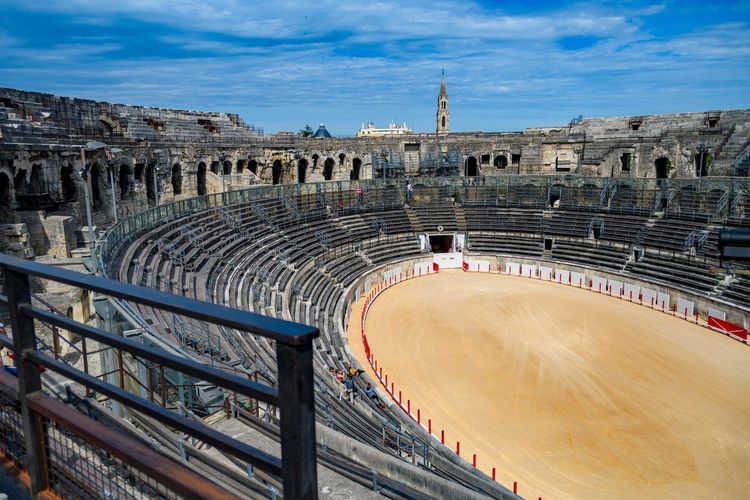
The arena has a cloakroom for large bags and pushchairs, a gift shop at the exit, and toilets accessible from the main entrance. The site also offers Wi-Fi access, and several pay car parks surround the Boulevard des Arènes, as the city centre is largely pedestrianised. There is no catering inside the monument itself, but the cafés and brasseries on the surrounding esplanade are right on hand as soon as you step outside.
On a practical note, photography is freely permitted for personal use, without tripods or drones, and the vaulted galleries require a camera comfortable in low light. Pushchairs navigate the arena floor and lower galleries without difficulty, but are far less practical on the staircases leading to the upper tiers — the cloakroom is a genuine help here. The bookshop stocks works on ancient Rome, replica coins, and games for children, a nice way to extend the experience at home.
Picnicking is not permitted on the arena floor or in the seating tiers, in order to protect the ancient stonework. Leashed animals are in principle tolerated within the enclosure, and guide dogs accompanying visually impaired visitors are admitted at all times; however, the rules may change during event periods, so it is worth checking with the ticket office on the day if you are bringing a four-legged companion. Once you leave the arena, our audio-guided tour of Nîmes carries the Roman thread on through the city centre, at your own pace.
Accessibility: the Arena Open to All Visitors
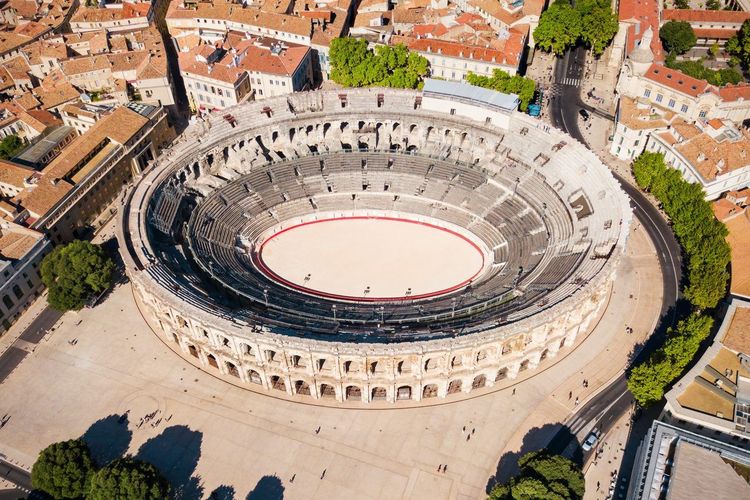
The monument has undergone gradual adaptations to welcome visitors with disabilities, though some limitations remain due to the age of the structure.
Motor and Visual Impairments
Ramps provide wheelchair access to the arena floor and the first gallery, but the original stone staircases make the upper tiers difficult to reach for visitors with reduced mobility: an adapted, shorter circuit is available for them. For visually impaired visitors, tactile models and relief maps are available at the entrance desk, and tactile tours on request allow visitors to touch certain reconstructed architectural elements. Admission is free for the visitor with a disability as well as their companion.
Hearing and Cognitive Impairments
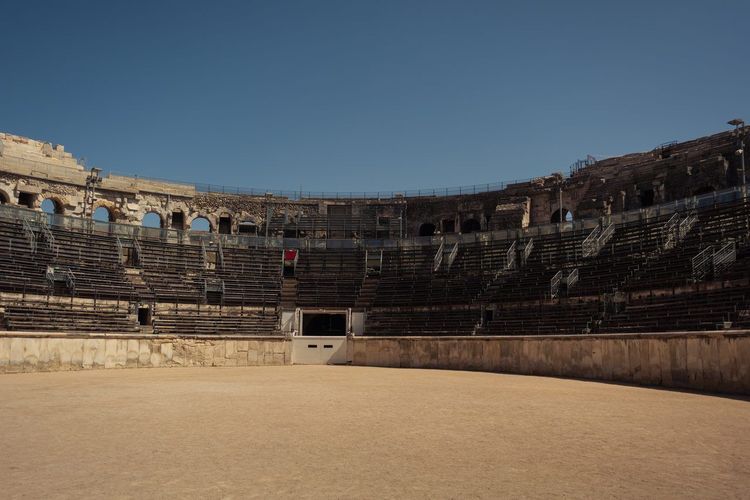
Guided tours in French Sign Language are organised on certain dates throughout the year, generally announced on the monument's calendar. An induction loop is installed in part of the reception area for compatible hearing aids. For visitors with cognitive impairments, easy-read materials (FALC format) are available, and adapted small-group tours can be arranged on request through the welcome desk.
Shows, Concerts, and Féria: a Living Arena All Year Round
What truly sets the Nîmes Arena apart from most Roman monuments is that it has never stopped welcoming audiences. Twice a year, the Féria transforms the site: the Féria de Pentecôte, the largest, draws several hundred thousand visitors over five days of bullfights, novilladas, and bandas in the streets, while the Féria des Vendanges in September offers a more compact format.
In summer, the monument reinvents itself as an open-air concert venue for around 13,000 spectators, with a programme combining international artists and major French headliners. The retractable structure installed in the late 1980s also makes it possible to host events in winter, with the arena floor and tiers sheltered from the elements.
The annual calendar follows a predictable rhythm, which makes planning your stay easier: the Féria de Pentecôte in late May or early June, a concert season running from June to July, and the Féria des Vendanges in mid-September. If your priority is visiting the monument rather than attending an event, avoid these three windows; if it's the opposite, book several months in advance, as Nîmes accommodation fills up from spring onwards for the Pentecôte weekend.
Outside the major events, theatrical tours regularly animate weekends: costumed actors playing gladiators and Roman freedmen bring the backstage of the ancient games to life, with fencing demonstrations for children. These performances, often included in the standard admission ticket, remain one of the best ways to introduce the monument to a younger audience.
Our Tips for a Great Visit
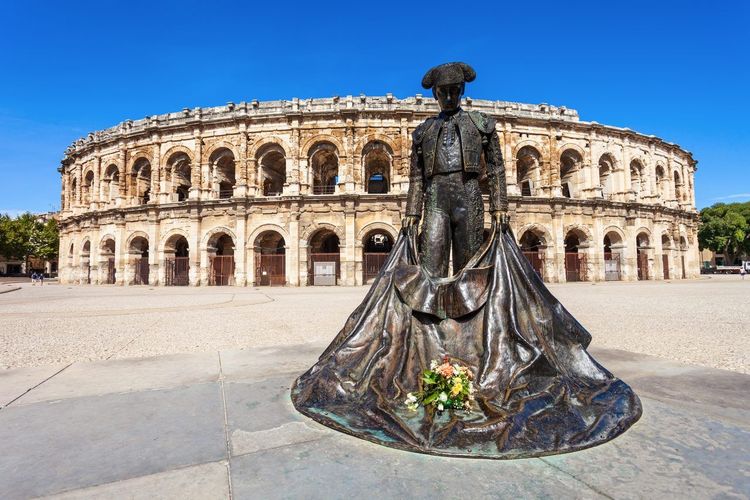
Come early in the morning or in the late afternoon: the raking light on the limestone gives the best photographs, and the crowds thin out considerably outside the 11 am–2 pm window.
The arena floor and seating tiers are made of irregular stone that can be slippery after rain. Opt for closed-toe shoes rather than sandals, especially if you plan to climb to the upper levels. Summer in Nîmes regularly exceeds 30°C and the monument offers little shade: bring water, a hat, and sunscreen, even for a one-hour visit.
Our suggestion for an ideal day: the arena at opening time, when the floor is still empty and cool, followed by a coffee on the Boulevard Victor-Hugo. Continue to the Maison Carrée late morning, have lunch in the lanes of the Écusson, and keep the early afternoon for the climb to the Tour Magne through the Jardins de la Fontaine, where the shaded paths make the ascent bearable. Finish at the Musée de la Romanité, just opposite the arena, whose terrace offers one of the finest overhead views of the amphitheatre.
One last tip: book your ticket online the evening before in summer to avoid the morning queue, which can exceed 30 minutes at peak season. In July and August, the extended opening until 9 pm is largely underused by visitors, yet it offers the best light and the most comfortable temperatures of the day.
What to See and Do Near the Nîmes Arena
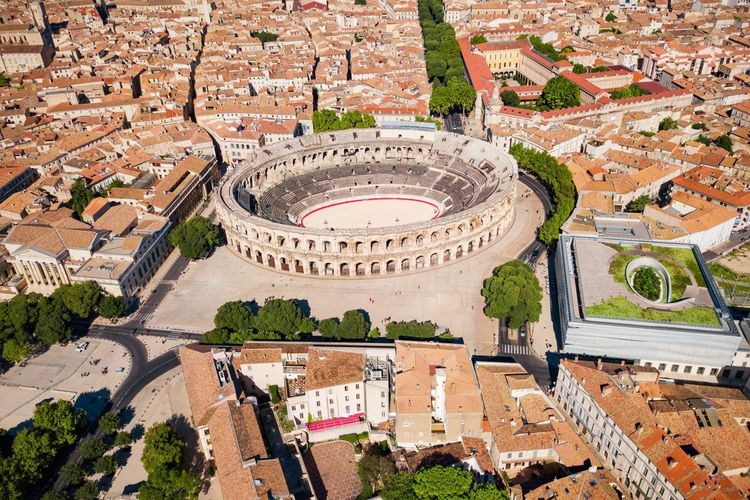
Once you leave the arena, Nîmes' Roman historic centre is easy to explore on foot, with several ancient remains within less than fifteen minutes' walk.
The Maison Carrée and the Tour Magne
The Maison Carrée is considered the best-preserved Roman temple in the world, with its Corinthian columns intact for nearly two thousand years. It stands about five minutes' walk from the arena, in the heart of the city centre, and has been inscribed on the UNESCO World Heritage List since 2023.
The Tour Magne crowns the summit of Mont Cavalier, at the heart of the Jardins de la Fontaine, about fifteen minutes' uphill walk from the city centre. It is the oldest visible remnant of Nîmes' Roman city walls, and its summit offers an unobstructed view across the entire city, stretching as far as the Cévennes on a clear day.
Extending Your Exploration of the Historic Centre
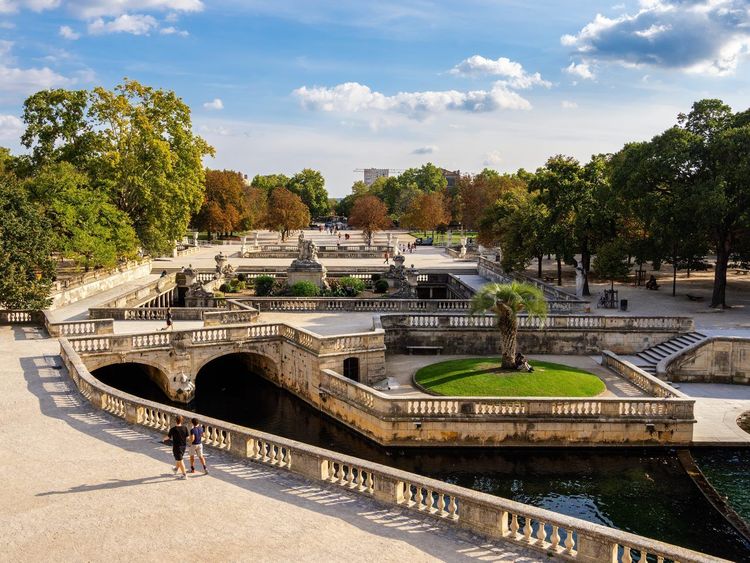
Directly opposite the arena, the Musée de la Romanité complements the visit with the city's archaeological collections and a chronological overview of ancient Nîmes. A little further north, the Jardins de la Fontaine — landscaped in the eighteenth century around a sacred spring — and the Castellum divisorium, a rare water distribution basin fed by the Pont du Gard aqueduct, complete the picture for anyone wishing to understand how the Roman city functioned.
Beyond these sites, the narrow lanes of the Écusson, the old medieval centre built on the Roman street grid, reward an aimless wander: shaded squares, historic façades, and small shops follow one another naturally. For a more structured stroll, the Ryo audio-guided tour of Nîmes links the arena, the Maison Carrée, and the Jardins de la Fontaine in a single commented walking route, and our Ryo article on a walking tour of Nîmes suggests additional stops in the surrounding neighbourhoods. If you are staying several days in the Gard, our selection of what to see around Nîmes extends the radius even further.




FAQ
How much time should I allow to visit the Nîmes Arena?
Allow between one hour and one and a half hours for a complete self-guided visit, including access to the galleries and upper tiers. Add thirty minutes if you follow the audio guide in its entirety.
What is the entrance fee for the Nîmes Arena?
The full-price ticket is around €11, with a reduced rate of approximately €9 for students, job seekers, and teachers, and about €5.50 for ages 7–17. A family pass of around €23 covers two adults and one or two children; entry is free for children under 7.
Is the Nîmes Arena accessible to people with reduced mobility?
An adapted circuit with ramps provides wheelchair access to the arena floor and the first gallery. The upper tiers remain difficult to access due to the original stone staircases, and entry is free for the visitor with a disability as well as their companion.
Can you visit the Nîmes Arena with a dog?
Leashed animals are in principle tolerated inside the monument, and guide dogs are admitted without restriction. As rules may vary depending on events taking place, a quick call to the ticket office before your visit will help you avoid any unpleasant surprises.
Do I need to book in advance to visit the Nîmes Arena?
It is not mandatory in low season, but strongly recommended in summer and during school holidays, when timed entry slots help reduce waiting times at the ticket office.
What is the difference between the Pass Romanité and the Pass 3 Monuments?
The Pass Romanité includes the arena, the Maison Carrée, the Tour Magne, and the Musée de la Romanité. The Pass 3 Monuments covers the same three ancient sites without museum access, at a lower price.
What are the opening hours of the Nîmes Arena?
Expect approximately 9:30 am–5 pm in winter, 9 am–6:30 pm in spring and autumn, and up to 8 am–9 pm in July and August, with the ticket office closing half an hour before the monument. A few public holidays and event periods may alter these hours.
Visiting the Nîmes Arena is ultimately less a museum tour than an immersion into a monument that has never retired: the arena floor that once hosted gladiatorial combat today welcomes concerts and bullfights, beneath the same limestone vaults. Between explanations of Roman engineering, the féria calendar, and combined tickets with the Pont du Gard or the Maison Carrée, you now have everything you need to plan a complete visit at your own pace.
To extend your discovery of Nîmes' Roman heritage beyond the arena, the Ryo audio-guided tour of Nîmes is the simplest complement: it connects the city's main ancient ruins on foot, with historical commentary, without having to improvise an itinerary on the spot.
À lire également