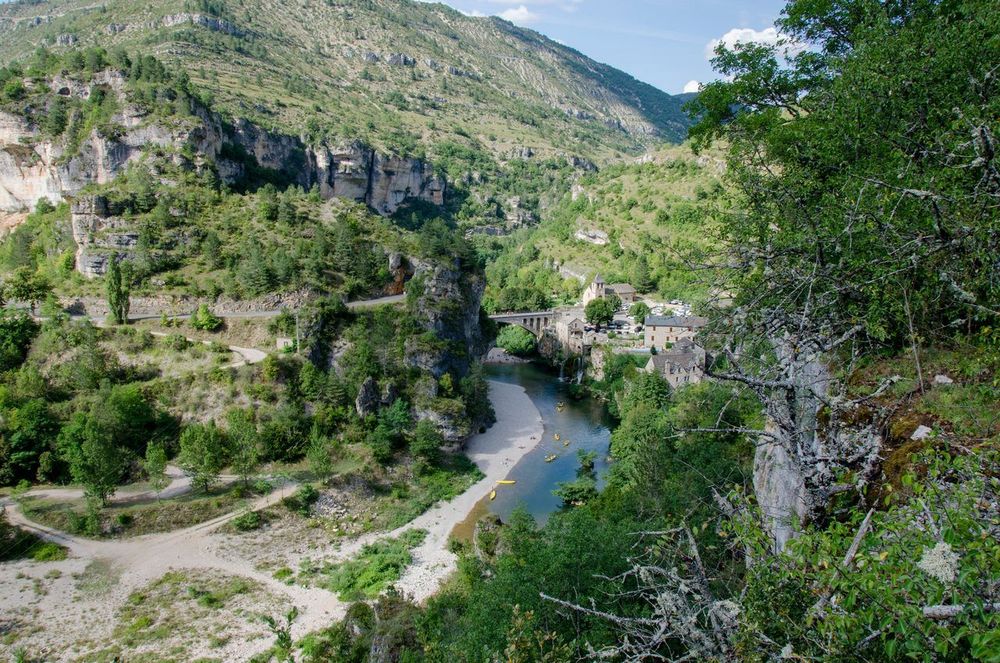
© Shutterstock
 Votre guide Ryo
The 9 Most Beautiful Villages to Discover in the Cévennes in 2026
There is something irreducible about the Cévennes. A land of granite and chestnut trees where villages have stood firm against wars of religion, rural exodus, and mass tourism. Here, schist-paved lanes descend towards rivers that no one treads on a Monday in September. The most beautiful villages in the Cévennes do not announce themselves: they appear at the bend of a ridge road or at the bottom of a canyon carved by millennia of the Tarn.
This selection covers nine villages spread between Gard and Lozère, from the causse to the foothills. Among them: a medieval town suspended above the Chassezac at 400 metres of elevation, a village at the confluence of four rivers, and a former capital of Cévenol silk-making that travellers have been passing through since the 18th century. Two of them hold the national 'Most Beautiful Village in France' label. Several feature in our Ryo selection of the most beautiful villages in France among the most remarkable destinations in the country.
Florac-Trois-Rivières, at the Heart of the Cévennes National Park
Florac-Trois-Rivières (Place du Soubeyran, 48400 Florac-Trois-Rivières) is the convergence point of everything that makes the Cévennes. The Tarn, the Mimente, the Tapoul and the Tarnon all meet in this town of around 2,000 inhabitants that serves as the informal capital of the Cévennes National Park, established in 1970. The château, partly rebuilt in the 17th century on medieval foundations, has housed the headquarters of the National Park since its creation: a symbol of a conservation commitment that changed the destiny of the entire region.
What strikes you first in Florac is the water. It is everywhere: in the constant background noise of the rivers running through the town, in the coolness you feel even in the middle of July at noon, in the stone wash-houses that still line the main street. It is sometimes called the 'Venice of the Cévennes' and, while the comparison is a little generous, it says something true about this village's relationship with its waterways.
The old town deserves at least two hours of leisurely wandering. The lanes climb towards the château following an almost intact medieval layout. La Coufouleux, a spring of crystal-clear water that bursts from the cliff just behind the town, has supplied the inhabitants with water for centuries. Directly opposite, the Capéludre rock dominates the landscape from its height of 600 metres and offers a striking view over the convergence of valleys below.
Florac is also an excellent base from which to explore the region. The Col de Jalcreste, about twenty kilometres away, opens onto the Gard, and the D907 follows the Mimente valley up towards the high plateaux of the Bougès: a mountain route well known to cyclists and hikers. If you stay here for a few days, the town has enough bed-and-breakfasts and hotels to serve as a base for a full tour of Lozère.
Don't leave without visiting the Saturday morning market. This is where local producers — Lozère cheesemakers, valley market gardeners and chestnut harvesters — have been gathering for generations in a pleasantly noisy bustle. Aged pélardon and local tome cheese are negotiated directly with the producers, with no middleman.
Natural history enthusiasts will note that the Cévennes National Park is the only permanently inhabited national park in France: 54 communes are entirely or partially included within its central perimeter, giving it a unique character in France. The Centre for the Discovery of Pastoral Societies, located in town, offers permanent exhibitions on Cévenol agro-pastoral life and the transhumance practices that have shaped these landscapes.
La Garde-Guérin, the Sentinel of the Causses
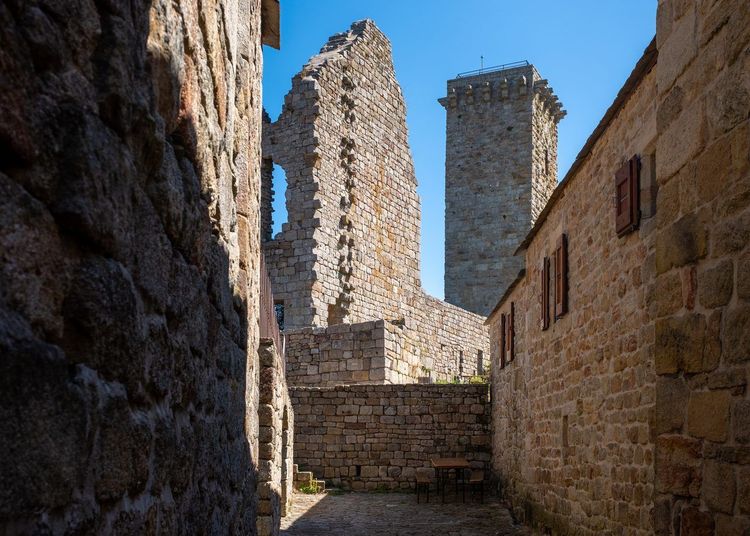
La Garde-Guérin (La Garde-Guérin, 48800 Prévenchères) is inhabited by only a handful of permanent residents, and it is precisely this that preserves it. This 12th-century fortified village, perched on the Causse de la Garde at an altitude of 900 metres, overlooks the Chassezac gorges with an almost intimidating verticality. Listed among the 'Most Beautiful Villages of France', it owes its reputation as much to this vertiginous setting as to its intact medieval heritage.
Built by a community of knight-pariers tasked with securing the Régordane route (forerunner of the road linking Languedoc to Auvergne), the village has preserved its watchtowers, winding lanes and Romanesque church in remarkable condition. The viewpoint at the edge of the plateau drops 400 metres to the floor of the Chassezac gorges: a view that alone justifies the detour from Villefort, 10 kilometres away.
Sainte-Énimie, Medieval Jewel of the Tarn Gorges
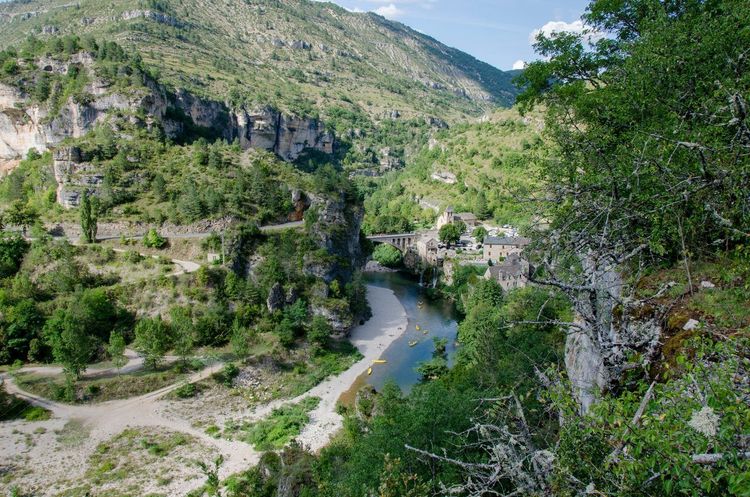
Sainte-Énimie (Rue du Barry, 48210 Sainte-Énimie) holds the 'Most Beautiful Village in France' label, and the Tarn gorges that frame it fully justify this recognition. Built into a limestone cliff face, the village descends towards the river in successive tiers of cobbled lanes, fountains and terraced gardens carved out of the rock.
The village's legend dates back to the 7th century. Énimie, sister of King Dagobert, suffered from a leprosy deemed incurable. An angel revealed to her in a dream the location of a healing spring in the Tarn gorges. She made the journey from Paris, was cured after bathing there, and decided to stay to found a Benedictine monastery. This story, part historical and part hagiographic, still shapes the identity of the village and draws pilgrims as much as curious tourists.
The architecture of Sainte-Énimie owes much to local limestone: the façades are a slightly yellowish white that blazes in the late afternoon sun. Take the time to climb up to the old town and the former Benedictine abbey, whose archaeological excavations have revealed successive occupation since Roman times. It is one of the most ancient continuously inhabited sites in the Cévennes.
The Tarn river runs alongside the village and offers a very popular natural beach in summer. Canoe hire companies offer trips down the gorges: allow half a day to cover the 12 kilometres of the most spectacular stretch between Sainte-Énimie and La Malène. But if you come in May or October, you will enjoy the same scenery without the summer crowds, with the chance to stop at the ruined mills and wash-houses that dot the right bank in complete peace and quiet.
The weekly market (Wednesday mornings in season) brings together producers and craftspeople in the main street. It is a good moment to buy garrigue honey, chestnut jams and handmade pottery for which the region has been renowned for several centuries.
Le Pont-de-Montvert, on the Stevenson Trail
Le Pont-de-Montvert (Place du Mercadial, 48220 Pont-de-Montvert-Sud-Mont-Lozère, rated 4.6/5 on Google from 40 reviews) owes its fame to two distinct events. In 1702, it was here that the Abbé du Chaila, inspector of Catholic missions in the Cévennes, was assassinated: this act triggered the Camisard War, a Protestant uprising that would drench the region in blood for two years. In 1878, the Scottish writer Robert Louis Stevenson passed through the town during the hike he would recount in his Travels with a Donkey in the Cévennes.
Today, the town is a key stop on the GR70, the Stevenson Trail stretching 272 kilometres. The 17th-century bridge with its toll tower spans the nascent Tarn: at this point, the river is still little more than a mountain torrent. The village is also the starting point for climbing Mont Lozère (1,699 m), the highest peak in the Cévennes, reachable in 3 to 4 hours on foot from the centre.
Anduze, the Southern Gateway to the Cévennes
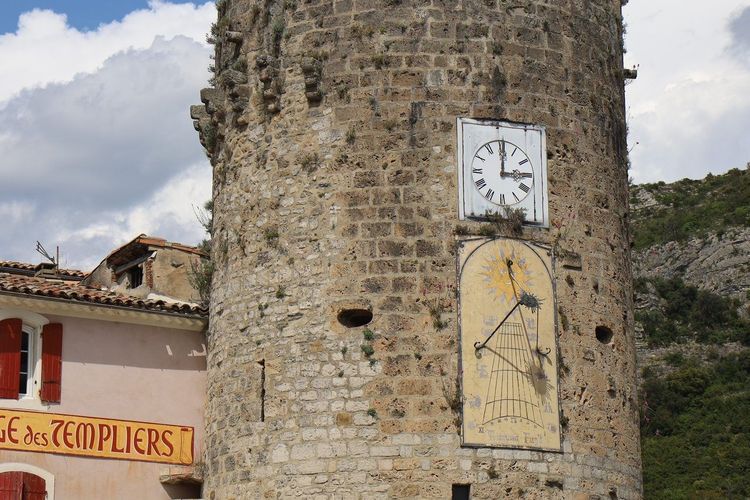
Anduze (Place Couverte, 30140 Anduze) is the liveliest town in this selection, with around 13,000 inhabitants in the urban area, but it earns its place for reasons that have nothing to do with its size. The first thing you notice arriving from Nîmes is the 16th-century Clock Tower that dominates the central square, and the remnants of the medieval ramparts, several sections of which are well preserved.
The Bambouseraie de Prafrance (3012 Route de Générargues, 30140 Générargues, rated 4.7/5 on Google from 16,926 reviews), 3 kilometres from the centre towards Générargues, is the most singular attraction in the Gard Cévennes. Created in 1856 by Eugène Mazel following a botanical passion brought back from the Far East, this giant bamboo forest now covers 10 hectares: some culms reach 25 metres in height. The understorey is crossed by irrigation canals and dotted with exotic species that give the impression of having left the garrigue for Japan or southern China. The bamboo grove is open all year round.
The Cévennes Steam Train connects Anduze to Saint-Jean-du-Gard on a 13-kilometre line built in 1909. It is one of the few steam-powered tourist railways in France to pass through a mountain landscape: gorges, tunnels and stone viaducts. The journey lasts around 40 minutes each way and operates from April to November.
Another speciality not to be missed: the Anduze pots, those large glazed ceramic planters made here since the 17th century. Two workshops still maintain the tradition in town. The blue-green-honey striped motifs have become so iconic that they have decorated the gardens of the Palace of Versailles since the reign of Louis XIV.
Saint-Jean-du-Gard, the Cévenol Soul in the Heart of Town
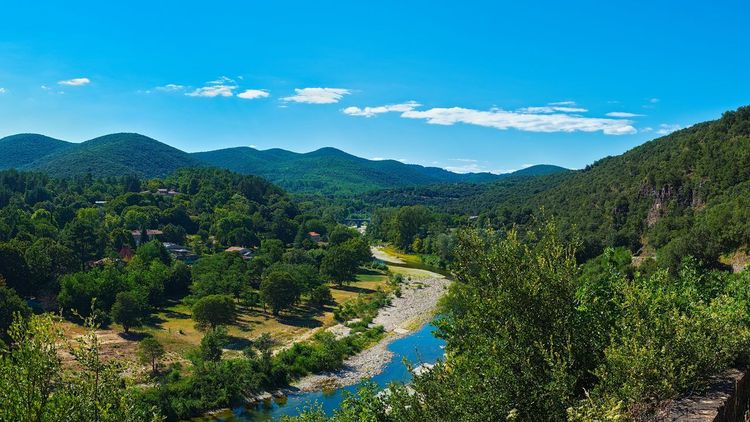
Saint-Jean-du-Gard (Grand-Rue, 30270 Saint-Jean-du-Gard) was for two centuries the capital of Cévenol silk-making. The cultivation of silkworms reached its peak in the 19th century, before silkworm disease and Asian competition put an end to an industry that had shaped the architecture, economy and daily practices of the entire town.
The Musée des Vallées Cévenoles (95 Grand-Rue, 30270 Saint-Jean-du-Gard, rated 4.6/5 on Google from 1,103 reviews), housed in a 17th-century inn right in the centre, is one of the best ethnographic museums in the region. It traces the history of silk from caterpillar to spinning, as well as the story of the chestnut groves, the vine and the Protestant traditions that marked this rural society for generations. Allow at least two hours to visit.
Saint-Jean is the Gard-side terminus of the Cévennes Steam Train. If you have made the journey from Anduze, you arrive at the historic 1909 station right in the heart of town. The Grand-Rue concentrates shops, restaurants and craftspeople in a row of 17th- and 18th-century façades that give a clear idea of what a prosperous Cévenol market town must have looked like.
Every Tuesday morning market (mainly in summer) brings together around a hundred producers on the central square. It is the right moment to buy chestnut flour, which locals still use to make traditional pancakes and breads. If your trip continues on to Nîmes, the Ryo app unfolds the Roman city in twenty commented stops, to be listened to in whatever order suits you.
Meyrueis, at the Confluence of the Gorges
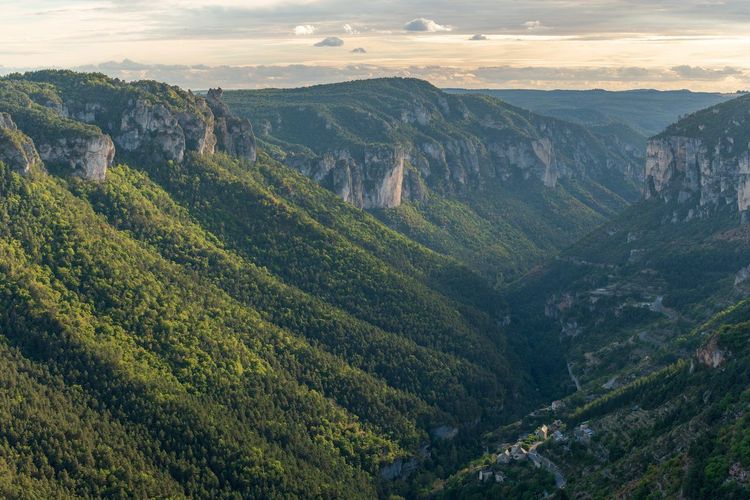
Meyrueis is perhaps the village that combines the greatest number of natural spectacles accessible from a single point. This Lozère town, set at the confluence of the Jonte, the Brèze and the Béthuzon, is surrounded by three of the most impressive landscapes in the Massif central: the Gorges de la Jonte to the west, the Causse Méjean to the north and the Aven Armand 10 kilometres away.
The Grotte de Dargilan (D986, 48150 Meyrueis, rated 4.7/5 on Google from 1,749 reviews), 5 kilometres to the north-east, is nicknamed the 'pink cave' due to the rosy tint that iron oxide gives to its formations. Discovered in 1880 by a shepherd chasing a fox, it was explored in 1888 by the speleologist Édouard-Alfred Martel, then opened to the public at the end of the 19th century, making it one of the oldest tourist caves in France. The guided tour lasts approximately 1h15 and covers 700 metres of galleries across several levels.
The Aven Armand, for its part, is a vertical cavity approximately 75 metres deep, whose single chamber houses a forest of stalagmites, some reaching 30 metres in height, among the tallest known in the world. Open to the public since 1927 thanks to a purpose-built tunnel, the aven is today visited by descending a funicular installed in 1963.
The village itself deserves half a day. The 11th-century Château d'Ayres, partly converted into a hotel, overlooks the town from a wooded hill to the east. The Friday morning market (in summer) brings together Lozère producers and craftspeople in a wonderfully remote atmosphere. In high season, Meyrueis welcomes many hikers following the Stevenson Trail or the paths of the Causse Méjean: book your accommodation several weeks in advance if you come in July or August.
Génolhac, Between Chestnut Trees and Protestant Memory
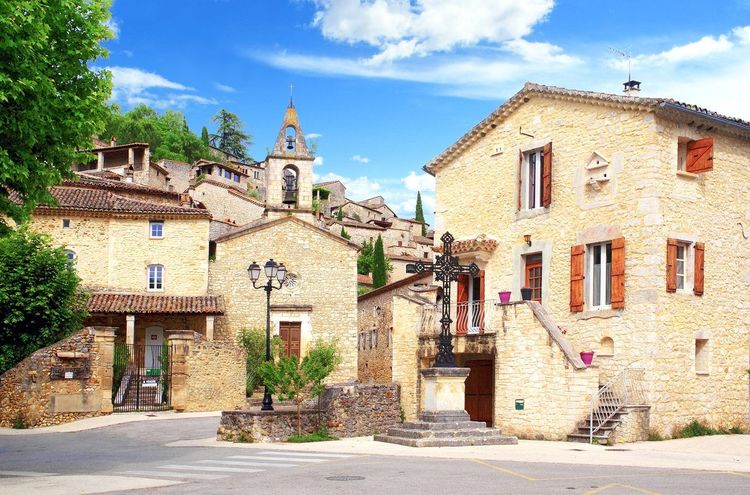
Génolhac (Place du Portalet, 30450 Génolhac) belongs to the category of villages that make little fuss but deserve a two-hour stop. This Gard town, wedged between the foothills of Mont Lozère and the Cévenol forest, was long a centre of Protestant resistance during the 16th-century wars of religion.
The village preserves several 16th- and 17th-century houses around the central square, with round-arched doorways characteristic of the Cévenol architecture of that period. The Génolhac railway station, on the Nîmes–Clermont-Ferrand railway line known as the 'Cévennes line', makes it accessible by train from Nîmes in 2 hours or from Alès in 45 minutes, making it one of the few mountain villages reachable without a car. The surrounding chestnut trees produce chestnuts of recognised quality, harvested each autumn during a local festival.
Sauve, Cliffs and Hackberry Trees
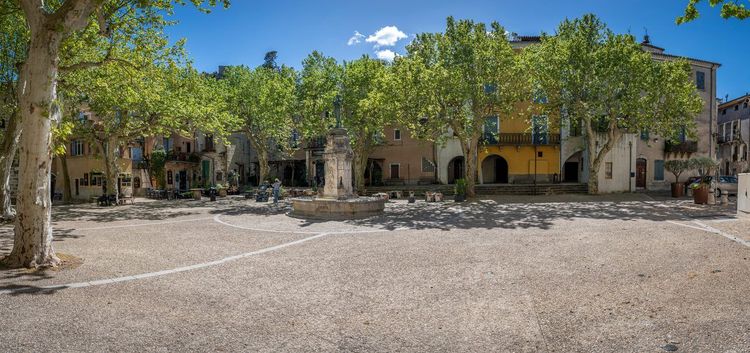
Sauve holds the 'Village de Caractère' label from the Gard department, and a visit confirms it deserves it. This village built on a limestone outcrop above the Vidourle spreads its medieval lanes between vertical cliffs and dense garrigue, in an almost mineral setting.
The most unexpected local tradition is that of hackberry wood forks. This Mediterranean tree, abundant in the surrounding area, produces a light and flexible wood from which inhabitants have made for centuries agricultural forks of a sturdiness renowned throughout the region. An annual festival perpetuates this artisan tradition. For those using the Ryo audio guide during their village explorations, Sauve is one of the places where local history is densest relative to its area: ramparts, feudal castle, troglodyte caves and traces of medieval occupation are concentrated within less than one square kilometre.
Mialet, Between a Bamboo Forest and Camisard Memory

Mialet (Place de l'Église, 30140 Mialet) is 10 kilometres from Anduze, but its character is radically different. This Gard village, buried in a forest of oaks and pines, is above all a site of remembrance for Cévenol Protestantism.
The Musée du Désert (Mas Soubeyran, 30140 Mialet, rated 4.7/5 on Google from 951 reviews), housed at the Mas Soubeyran, traces the history of Cévenol Protestants between the Revocation of the Edict of Nantes in 1685 and the Edict of Tolerance in 1787. The term 'Desert' does not refer to an arid landscape but to the practice of Protestant worship in secret, in forests and on the causses, during a century of repression. The museum preserves Bibles hidden in false bottoms, letters from prisoners and everyday objects that reconstruct a religious resistance unparalleled in France.
The Assemblée du Désert, held at the Mas Soubeyran on the first Sunday of September since 1911, brings together several thousand Protestants from across Europe each year to commemorate this period of resistance. It is one of the oldest religious gatherings in the country, taking place in a field amid the chestnut trees. If you cannot come on that precise date, the museum is open from March to November and is worth the detour from Anduze in its own right.

FAQ
Which villages in the Cévennes hold the 'Most Beautiful Village in France' label?
Two villages in this selection hold the official label: Sainte-Énimie, in the Tarn gorges, and La Garde-Guérin, a sentinel perched above the Chassezac gorges. Other Cévenol villages not covered in this guide also hold the label, notably Saint-Guilhem-le-Désert on the edge of the Park, ranked among the most visited in France. The label is awarded by the national association of Most Beautiful Villages of France, which brings together more than 180 communes meeting strict criteria for built heritage and architectural quality. Not to be confused with the 'Village de Caractère' label from the Gard department, held for example by Sauve.
When is the best time to visit the Cévennes?
May–June and September–October offer the best compromise. Temperatures are pleasant (18–25°C), rivers are at a suitable level for water activities, and the villages are not overcrowded. July–August is peak season: the Tarn gorges and Sainte-Énimie in particular are very busy, and accommodation in Florac or Meyrueis must be booked weeks in advance. In winter, the calm is total but some mountain passes may be snow-covered between December and March.
Are the Cévennes listed as a UNESCO World Heritage Site?
Yes, since 2011, the Causses and the Cévennes have been inscribed on the UNESCO World Heritage List as a 'cultural landscape of Mediterranean agro-pastoralism.' The site covers 302,319 hectares spread across Aveyron, Gard, Hérault and Lozère, and recognises in particular the drailles (transhumance paths), the cazelles (dry-stone shelters) and the landscapes shaped by millennia of sheep farming.
What is the best base for exploring the region?
It depends on which part you want to cover. For Lozère (Florac, Sainte-Énimie, Le Pont-de-Montvert, Meyrueis), Florac-Trois-Rivières is ideally located at the centre of the National Park. For the Gard (Anduze, Saint-Jean-du-Gard, Mialet, Sauve), Anduze or Alès 25 kilometres away offer a more extensive accommodation infrastructure. To cover the whole area in a week, Florac remains the best-positioned central base.
How do you get around the Cévennes?
A car is almost essential for the majority of villages. Public transport does exist (departmental coaches for Lozère and Gard) but frequencies are very limited outside the season. The Cévennes railway line (Nîmes–Clermont-Ferrand) serves Génolhac, Alès and a few intermediate towns. Cycling is feasible in the lower valleys, but the mountain roads between Florac and Le Pont-de-Montvert (30 km, significant elevation gain) are reserved for experienced cyclists.
Can you visit the Cévennes in a single day from Montpellier?
With difficulty, and without truly discovering them. A day trip from Montpellier allows you to see Anduze and Saint-Jean-du-Gard, but the Lozère villages require an additional 90-minute journey from Nîmes. The reasonable minimum to cover the essentials is three days: one in the Tarn gorges (Sainte-Énimie, Florac), one in the Anduze area, and one for the natural sites around Meyrueis.
The Cévennes resist the postcard image. Each village on this list has its own character, shaped by a particular history: Protestant revolt in Mialet and Le Pont-de-Montvert, the silk trade in Saint-Jean-du-Gard, imported botany in Anduze, hydraulic tradition in Florac. This is not a uniform territory you are travelling through but a mosaic of small local capitals, each with its builders, its stories, its building materials.
To plan your itinerary, the Ryo app offers routes through several towns in Languedoc and the Massif central — a way to explore the historical detail of each building and each square without relying on a physical guide. If the villages of southern France draw you beyond the Cévennes, you will find other selections in our Ryo guide to the most beautiful villages in Dordogne or our Ryo guide to the most beautiful villages in Calvados, two regions that share with the Cévennes this taste for well-preserved rural heritage.
À lire également