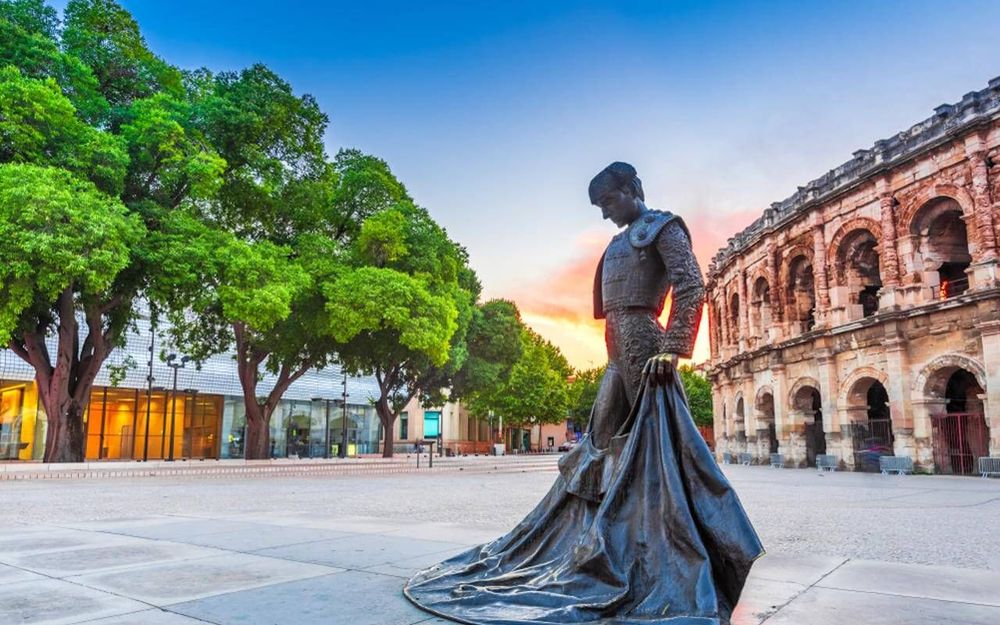
© Shutterstock
 Votre guide Ryo
Visiting Nîmes for the First Time: The Complete Guide 2026
The cooing of pigeons on the ancient stands of the Arena mingles with the smell of brandade drifting from the covered Halles, just a few streets away. Nîmes has this knack: effortlessly blending Antiquity with the daily life of a Southern city that still lives within its Roman stones. For anyone visiting Nîmes for the first time, the good news fits in one sentence: the essentials are concentrated in an area you can cover on foot in half a day. An amphitheater still standing, a 2,000-year-old temple without a single ruin, a monumental 18th-century fountain and, twenty minutes away by road, the most photographed aqueduct in France. Between the shaded lanes of the Écusson and an excursion to the Pont du Gard, two days are enough to understand why Nîmes is called the French Rome. And to miss none of the details that escape a hurried glance, the Ryo audio guide tour of Nîmes tells the story of the city step by step, from the stands of the amphitheater to the gates of the gardens.
Nîmes, the French Rome: An Ideal Destination for a First Visit
No other French city has preserved as many standing Roman monuments, visible from the street, without having to imagine them under a protective shelter. This is what earns Nîmes its nickname of the French Rome, deserved ever since 19th-century archaeologists compared its ancient heritage to that of the great Italian cities.
Founded under the name Nemausus, the city became a Roman colony under Augustus and benefited from its position on the Via Domitia, the route that linked Italy to Spain. You will encounter this history at every street corner: a collapsed arch here, a fortified gate there, a temple left intact for two millennia. For a first visit, this is a rare quality: the city can be understood in a single day, without any effort of mental reconstruction.
The Arènes de Nîmes, the Unmissable Roman Amphitheater
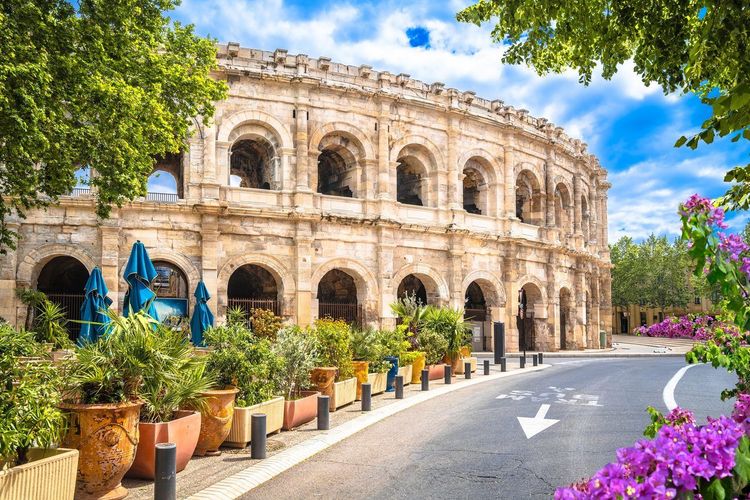
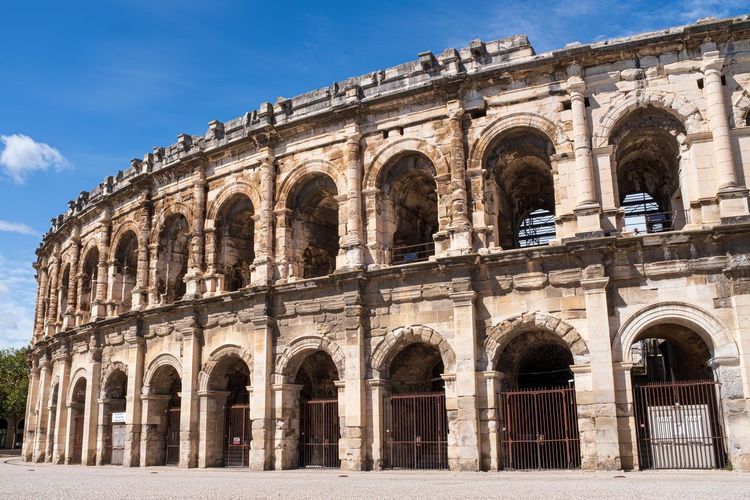
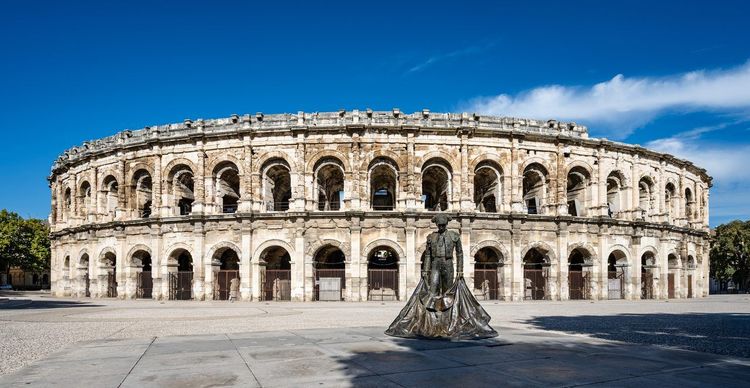
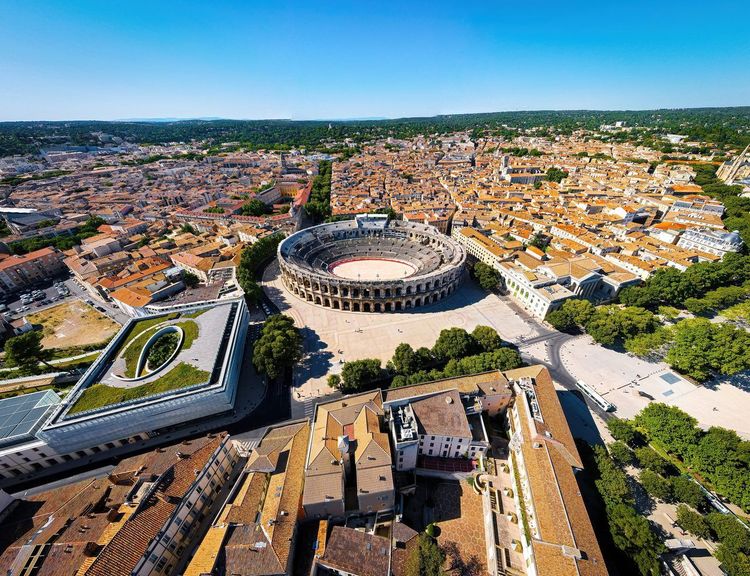
Built around 70 AD, on the same model as the Colosseum in Rome but on a smaller scale, the Arènes de Nîmes (Boulevard des Arènes, 30000 Nîmes, rated 4.6/5 on Google from 40,139 reviews) is the best-preserved Roman amphitheater in the world. You enter through the same vomitoria as the ancient spectators, those vaulted corridors designed to evacuate 24,000 people in a few minutes, a system that modern stadiums adopted almost identically two thousand years later.
The entrance ticket costs 11 euros at full price in 2026 (5.50 euros for children), with an audio guide included that traces the history of the monument on a self-guided route of about 45 minutes. The Arena is open every day, with hours that vary by season (later closing in summer) and occasional closures on event days, Camargue bullfighting events or concerts, which still enliven the stands today.
Sit for a moment on the upper stands, on the sunset side. That is where you best perceive the perfect ellipse of the building and where you can imagine, without much effort, the uproar of a gladiator fight or a wild beast hunt, the two spectacles that filled the amphitheater in Roman times.
Preferably come in late morning on a weekday: school groups and afternoon crowds leave the stands, and the limestone takes on a golden hue under the sun that makes photos noticeably better.
It is also here, at the Arena, that the Ryo audio guide of Nîmes begins: from the very first stop, it tells of the gladiator fights and the history of the monument before guiding you, at your own pace, to the next sites.
The Maison Carrée, the Best-Preserved Roman Temple in the World

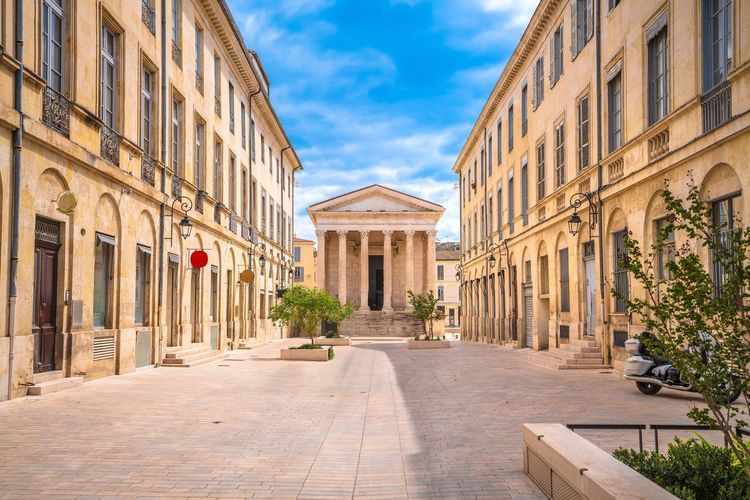
Ten minutes on foot from the Arena, the Maison Carrée (Place de la Maison Carrée, 30000 Nîmes, rated 4.4/5 on Google from 16,419 reviews) is a Roman temple completed around the year 2, dedicated to Gaius and Lucius Caesar, the grandsons of Emperor Augustus. Its state of preservation is such that it served as an architectural model for centuries: Thomas Jefferson drew inspiration from it for the Virginia State Capitol in Richmond. A recent honor: the Maison Carrée has been a UNESCO World Heritage Site since 2023.
Admission costs about 6 euros and includes an immersive film shown inside the temple, which traces the history of Nîmes since its founding. Allow 30 minutes for the full visit, screening included.
Just opposite, the Carré d'Art, a contemporary art museum designed by British architect Norman Foster, plays on contrast: a glass and steel façade that answers, column for column, the ancient temple. It is one of the rare squares in France where two thousand years of architecture face each other without friction.
If you keep only one photo from your time in Nîmes, take it from the steps of the Carré d'Art late in the day, when the low light illuminates the Corinthian columns of the temple.
The Musée de la Romanité, to Understand 2,000 Years of Nîmes History
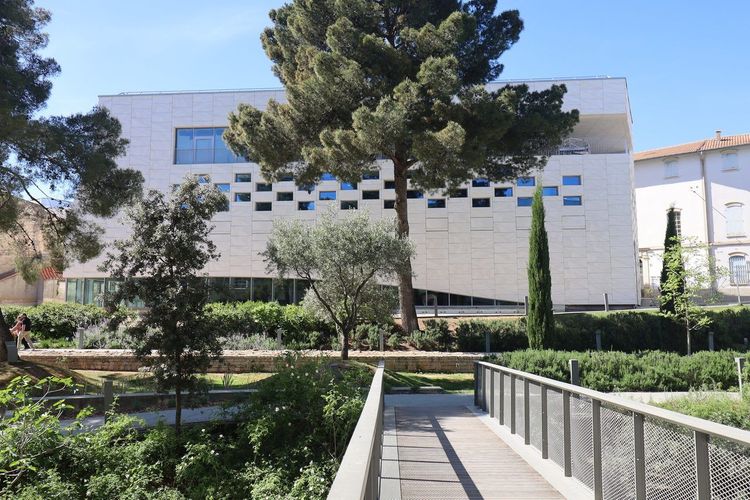
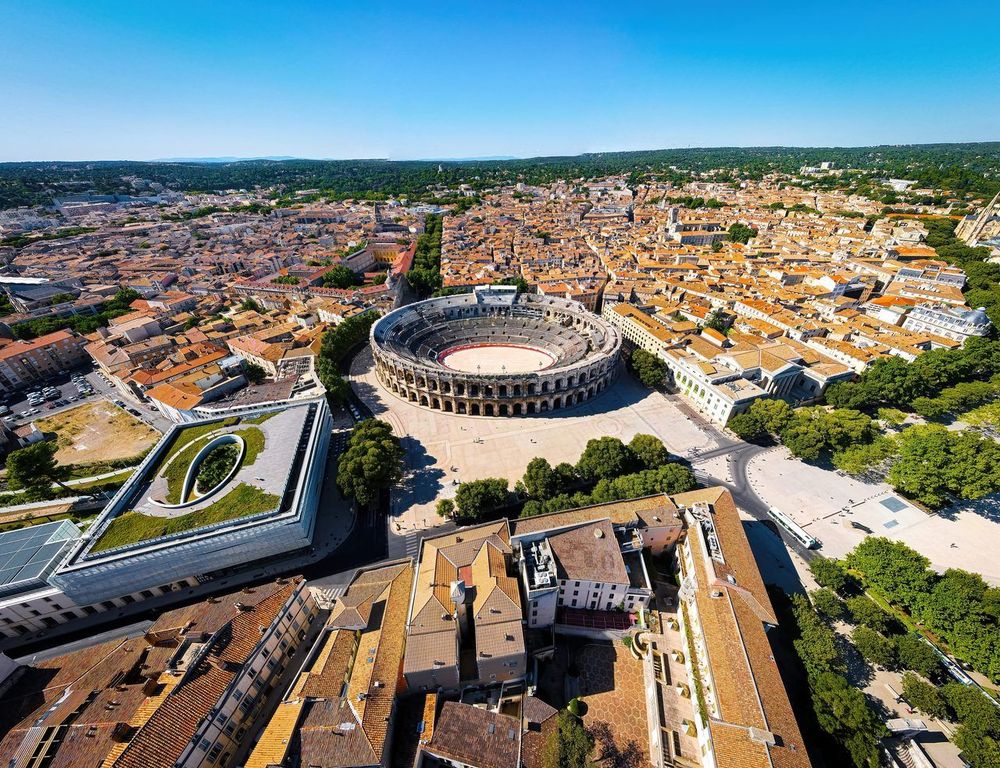
Opened in 2018 opposite the Arena, the Musée de la Romanité (16 Boulevard des Arènes, 30000 Nîmes, rated 4.6/5 on Google from 5,741 reviews) occupies a building designed by Elizabeth de Portzamparc whose rippling glass façade deliberately evokes the drape of a Roman toga. The architecture alone justifies the detour even before entering the collections.
Allow 10 euros for admission and an hour and a half to go through the collections: whole Roman mosaics, jewelry, everyday Gallo-Roman objects, and a model that restores the arena to its original state, intact stands and canvas awning included.
Go up to the rooftop terrace, freely accessible: the view plunges directly onto the Arena, at the level of its top floors, an angle you will find nowhere else in the city. On the way down, the archaeological garden at the foot of the building traces the city's great periods through plants.
The Pass Nîmes la Romaine: Which Ticket to Choose to Visit the Monuments
Beware of a common trap: the Pass Nîmes la Romaine does not include the museum. It bundles the three jointly managed monuments, the Arena, the Maison Carrée and the Tour Magne, for 14.50 euros at full price, valid for three days from the first entry. Admission remains free for children under 7.
If you also want the Musée de la Romanité, take the Pass Romanité instead, at 20.50 euros, which adds the museum to the three monuments. Do the math: the Arena alone costs 11 euros and the Maison Carrée 6 euros, or 17 euros for two sites. As soon as you visit two, the pass pays off, and the Tour Magne becomes a bonus.
Passes can be purchased at the ticket offices of the sites or online on the monuments' official website.
Be sure to check the summer and winter hours before planning your route: the three sites do not all close at the same time, and the museum generally stays open later than the Arena in high season.
The Historic Heart of Nîmes: The Écusson and Its Lanes
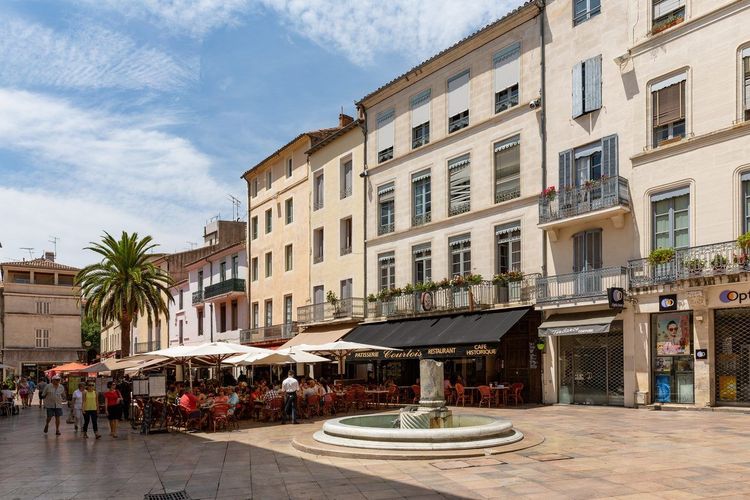
Between the great Roman monuments, Nîmes hides a historic center shaped like a shield (écusson), tightly packed around medieval lanes that you discover without a precise itinerary, wandering among the façades. It is the best place to slow down after the density of the ancient sites.
In the heart of the Écusson, the Cathédrale Notre-Dame-et-Saint-Castor overlooks the Place aux Herbes (Place aux Herbes, 30000 Nîmes), one of the liveliest squares in the city with its café terraces set at the foot of the façade. The cathedral, rebuilt several times since the 11th century, keeps a Romanesque frieze on its façade that tells biblical scenes, visible directly from the street.
As you venture into the perpendicular lanes, Rue de la Madeleine or Rue du Chapitre, you pass private mansions from the 17th century, often anonymous behind a simple wooden door, before emerging onto Rue de l'Horloge and its medieval tower that gave the street its name.
Stroll preferably in the late afternoon, when the heat subsides and the terraces fill up: this is when the Écusson shows its real neighborhood life, far from the tourist rhythm of the Arena.
To avoid getting lost in this maze of lanes while still capturing the essentials, the short version of the Ryo audio guide tour guides you step by step through the Écusson, square after square, with the historical context of each stop.
The Halles de Nîmes, Immersion in the Flavors of the South
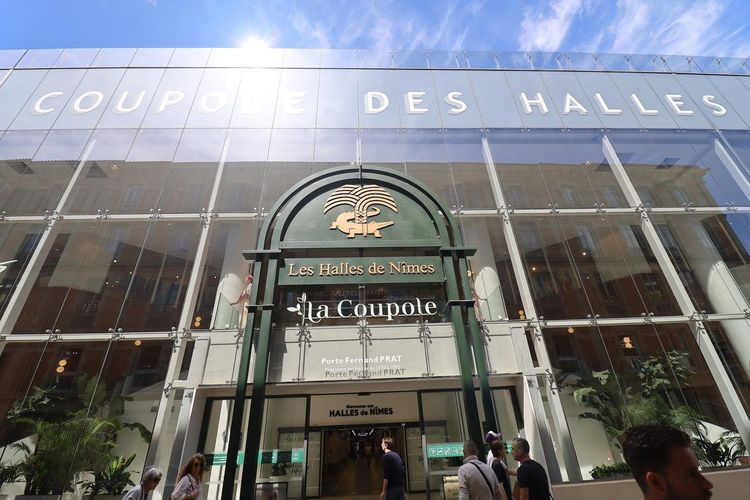
A stone's throw from the Place aux Herbes, the Halles de Nîmes (5 Rue Guizot, 30000 Nîmes, rated 4.5/5 on Google from 4,642 reviews) form a covered market inaugurated in 1884, modeled on the Baltard halles of Paris, where nearly 90 stallholders sell, every morning, the products that make up Nîmes cuisine: picholine olives, goat cheeses from the Cévennes, cured meats and fresh fish arrived from the coast.
The halles open every day from 7 a.m. and close in early afternoon, with a few oyster bars and tapas counters open until late morning for those who want a quick lunch there.
Come on a Saturday if possible: it is the liveliest day, and local producers join the usual merchants at the outdoor stalls, right in front of the building.
It is also the ideal place to understand, even before sitting down to eat, why Nîmes gastronomy relies so much on products from the sea and the garrigue, two terroirs that meet here in a particularly clear way.
The Gambetta and Richelieu District, Nîmes Away from the Crowds
Beyond the tourist perimeter, the Gambetta and Richelieu districts offer a different face of Nîmes: wide plane-tree-lined boulevards, Haussmann-style façades and a neighborhood life that revolves around its own shops rather than monuments.
On the edge of the district, on Boulevard Amiral-Courbet, stands the Porte Auguste (Boulevard Amiral Courbet, 30000 Nîmes, rated 4.4/5 on Google from 1,408 reviews), one of the two gates still visible from the ramparts donated by the emperor around 16 BC, through which the Via Domitia entered the city. It stands today a stone's throw from traffic, almost ignored by hurried passersby, even though it predates the Arena by nearly a century.
Settle on a terrace on Rue de la République or Boulevard Gambetta to observe Nîmes life without tourists around you: it is one of the rare corners of the center where locals far outnumber visitors, even in high season.
After the 6 km of the Ryo audio guide tour through the center, these shaded boulevards make an ideal stop to digest everything you have just heard, drink in hand.
The Jardins de la Fontaine and the Tour Magne
West of the Écusson, the Jardins de la Fontaine are among the first public gardens in Europe, laid out in the 18th century around a sacred spring that the Romans attributed to the local deity Nemausus, the one who gave the city its name.
The octagonal basin and the ruins of the Temple of Diana, inside the garden, testify to an ancient sanctuary whose exact use is still debated by archaeologists, somewhere between a place of worship and a monumental library.
Then climb up to the Tour Magne (Rue du Stade Vieux Antonin, 30000 Nîmes, rated 4.4/5 on Google from 5,368 reviews), a remnant of the Roman ramparts perched on Mont Cavalier. The 140 steps leading up are steep, but the view rewards the effort: the whole city spreads out at your feet, and on a clear day your gaze reaches all the way to Mont Ventoux. Entry to the tower is included in the Pass Nîmes la Romaine.
In the gardens, a stop on the Ryo audio guide tells the legend of this sacred spring: listening to it before starting the climb gives the effort its full meaning.
The Pont du Gard, the Unmissable Roman Excursion near Nîmes
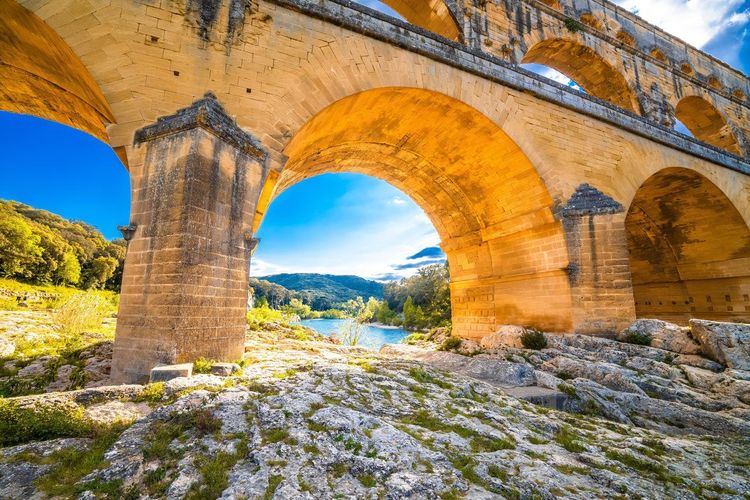
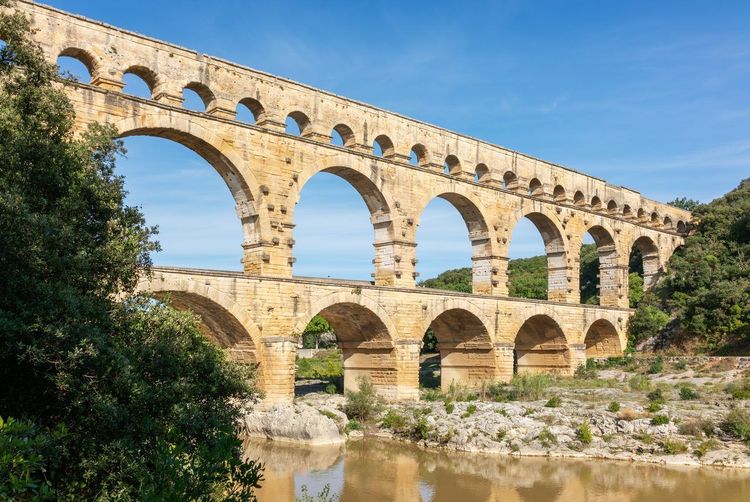
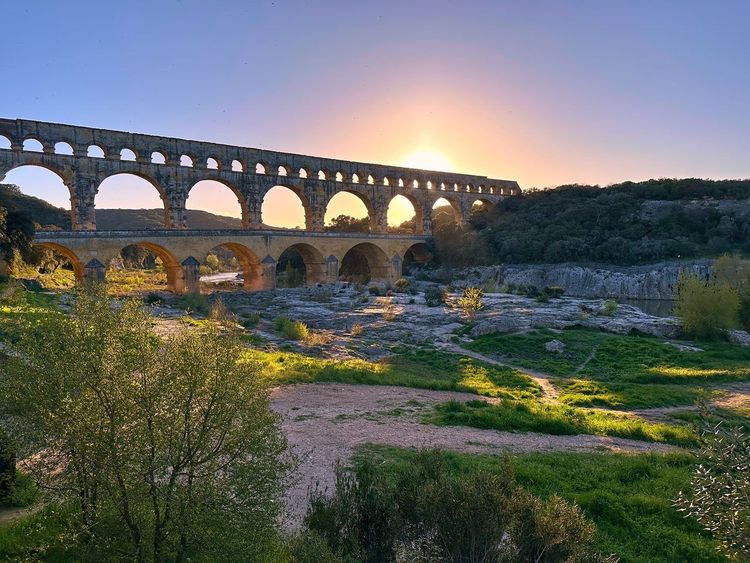
About 25 kilometers from Nîmes, or 25 to 30 minutes by road, the Pont du Gard (400 Route du Pont du Gard, 30210 Vers-Pont-du-Gard, rated 4.5/5 on Google from 4,799 reviews) is the most spectacular section of the Roman aqueduct that supplied the city with water from the springs of Uzès, 50 kilometers away. With its 49 meters in height and its three levels of superimposed arches, it is one of the best-preserved Roman engineering works in the world, a UNESCO World Heritage Site since 1985.
Parking costs 9 euros per vehicle and gives access to the discovery areas; the bridge itself can be crossed freely on foot. The museum on the site, included in this fee, explains the construction of the aqueduct and the Roman engineering techniques that made it possible to carry water with a gradient of only 25 centimeters per kilometer along its entire length.
In summer, the Gardon river flowing under the bridge becomes a natural beach where you can swim in the shade of the arches, canoe or float in hand. Bring water shoes: the pebbles are slippery and the current can be surprising after a storm.
Without a car, a bus line connects Nîmes to the Pont du Gard in season, but schedules remain limited outside summer: check them before leaving if you plan a half-day round trip. A morning is more than enough for the site and its museum, leaving the afternoon to return and stroll around Nîmes.
The Tourist Office and Guided Tours to Get Started
The Office de Tourisme de Nîmes (6 Boulevard des Arènes, 30000 Nîmes, rated 4.3/5 on Google from 2,925 reviews) is located a stone's throw from the Arena, a convenient spot to pick up a map, buy the combined pass or book a guided tour before starting the rest of your program.
Guided walking tours, in French and English, depart several times a week depending on the season, with varied themes: Roman Nîmes, medieval Nîmes, or street art routes in some outlying neighborhoods. Allow 1.5 to 2 hours for the tour at 8 to 10 euros per person.
In high season, book at least the day before: small-group slots fill up quickly, especially for tours in English, which are fewer than those in French.
How Much Time to Plan for Visiting Nîmes
One full day is enough for the essentials: the Arena, the Maison Carrée, the Musée de la Romanité and a walk through the Écusson can be wrapped up between 9 a.m. and 6 p.m., as long as you don't linger more than an hour at each site.
Two days allow you to breathe more: add the Jardins de la Fontaine, the Tour Magne, the Gambetta and Richelieu districts, and half a day at the Pont du Gard. This is the format best suited for a first discovery, without rushing from one monument to the next.
A concrete benchmark: the Ryo audio guide tour links the major sites in 2 hours 45 minutes, over 6 km and 26 audio stops. A morning of guided walking, and you have an overview of the city before going deeper into the indoor visits.
If you stay three days, include an excursion to Uzès or the Cévennes, less than an hour away by road, to step outside the strictly Roman perimeter.
How to Get to and Around Nîmes
If you are visiting Nîmes for the first time by train, note that the Nîmes Pont du Gard station and the Nîmes Centre station are served by the TGV from Paris (about 3 hours direct) and by frequent regional trains from Montpellier (30 minutes) and Avignon (30 minutes). Nîmes-Alès-Camargue-Cévennes airport, for its part, welcomes a few low-cost flights, notably from the United Kingdom.
Once there, Nîmes is best visited on foot: the Écusson and the major Roman sites are all grouped within a radius of 1.5 kilometers, or 20 minutes of walking from end to end. The TanGo bus network usefully fills in to reach more distant neighborhoods or the train station.
If you come by car, park in a park-and-ride on the outskirts rather than in the city center: traffic in the Écusson is restricted and spaces are scarce, especially on market or Féria days.
Where to Eat in Nîmes: Specialties and Good Addresses

Nîmes cuisine blends products from the sea and the garrigue, a meeting found in two local specialties: the brandade de Nîmes, an emulsion of desalted salt cod and olive oil popularized in the 18th century, and the petit pâté nîmois, a small round pie filled with minced meat and spices, found in all good bakeries.
For heartier dishes, the gardianne de taureau, a bull stew simmered in red wine and olives, comes directly from the neighboring Camargue traditions. For dessert or an afternoon snack, caladons, dry biscuits with whole almonds, are nibbled with a coffee on the Place aux Herbes.
Avoid the terraces right next to the Arena, often pricier for average quality: the best tables are hidden instead in the lanes of the Écusson or around the Halles, where the locals eat too.
For a more complete selection of tested addresses, the Ryo article on restaurants in Nîmes details the best tables by neighborhood and budget.
Where to Stay in Nîmes by Budget
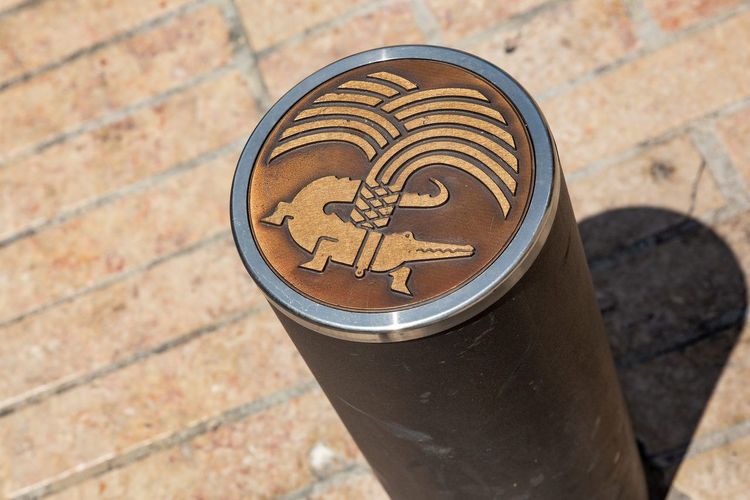
Staying in the Écusson puts everything within walking distance, in townhouses or small boutique hotels often set in old buildings. Allow 100 to 180 euros a night in high season for this type of address.
Tighter budgets will find better rates around the central train station, 10 minutes on foot from the center, with standard hotel chains at 60 to 90 euros a night.
If your priority is peace and quiet and an excursion to the Pont du Gard, some mas (farmhouses) and guesthouses set in the countryside between Nîmes and Uzès offer a real change of scenery, provided you have a car for all your travel.
Book several weeks ahead if your stay falls during a Féria, at Pentecost or in September: prices rise sharply and availability drops across the city center.
When to Go: The Best Time to Visit Nîmes
Spring and autumn offer the best conditions for a first discovery of Nîmes: mild temperatures, pleasant light for photos, and more reasonable crowds than in midsummer.
The festive calendar matters too: the Féria de Pentecôte in spring and the Féria des Vendanges in September turn the Arena and the streets into a permanent stage for several days. Summer, for its part, stays hot, sometimes above 35 degrees: visit early in the morning and keep the afternoon for the shade of the Jardins de la Fontaine.
Winter, calmer, keeps a mild climate for the region but exposes you to the mistral, that north wind that can blow hard on the city's open boulevards.



FAQ
How many days do you need to visit Nîmes?
One day covers the Roman essentials: the Arena, the Maison Carrée and the Musée de la Romanité. Allow two days to add the Jardins de la Fontaine, the Gambetta and Richelieu districts, and half a day at the Pont du Gard.
What is the best time to visit Nîmes?
Spring and autumn offer the best compromise between mild weather and moderate crowds. The Pentecost and September Férias bring the city to life, but push prices up.
Should you book tickets for the Arènes de Nîmes in advance?
It is not mandatory in low season, but it is recommended in summer and on event days, such as concerts or Camargue bullfighting events, when the Arena may close earlier or sell out.
Is the Pass Nîmes la Romaine worth it for a first stay?
Yes, as soon as you visit at least two of its three sites: the Arena, the Maison Carrée and the Tour Magne. It costs 14.50 euros versus 17 euros for the Arena and the Maison Carrée alone. To include the Musée de la Romanité, opt for the Pass Romanité at 20.50 euros.
How do you get around Nîmes without a car?
The historic center can be crossed entirely on foot in 20 minutes from end to end. The TanGo bus network fills in for more distant neighborhoods, and a seasonal line connects Nîmes to the Pont du Gard.
Can you visit the Pont du Gard in half a day from Nîmes?
Yes. It takes 25 to 30 minutes by road to get there, and a morning is enough to see the site and its museum area before coming back to Nîmes for lunch.
What culinary specialties should you try in Nîmes?
Brandade de Nîmes, a purée of salt cod and olive oil, the petit pâté nîmois and the gardianne de taureau remain the classics of the local table, to be followed by caladons for dessert.
Nîmes lends itself particularly well to a first visit: a compact city, Roman monuments concentrated in a small area, and just enough side trips, the Écusson, Gambetta, the Pont du Gard, to fill two days without ever rushing. Whether you spend a few hours or a full weekend there, the essentials follow the same logic: start with the Arena, move on to the Maison Carrée and the Musée de la Romanité, then deliberately get lost in the lanes of the Écusson.
Want to turn this list of monuments into a true narrated walk? The Ryo audio guide tour of Nîmes remains the simplest way to visit at your own pace, without booking a guided tour slot or depending on a group's schedule.