





Walk
The French Rome
Nîmes, France
Walk
The French Rome
Nîmes, France
6 km
Distance
2h45
Durée
27
Audios
Loop
Parcours
Shutterstock
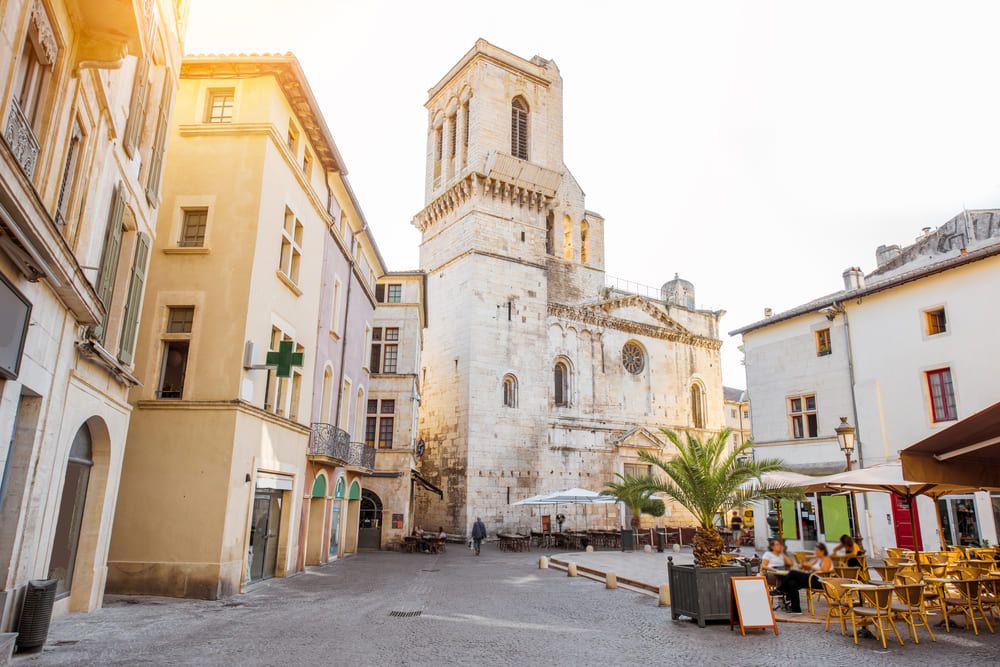
Notre-Dame-et-Saint-Castor Cathedral is the main religious building of Nîmes, in the heart of the Écusson. The Nîmes audio-guided tour stops here, with respect, to evoke this sanctuary of Romanesque origin, a witness of the long Christian history of the city.
The cathedral of Nîmes, dedicated to Our Lady and Saint Castor, was founded in the Middle Ages on an ancient site. Remodelled and rebuilt over the centuries, after the destructions of the Wars of Religion that deeply marked the city, it keeps a remarkable Romanesque frieze sculpted on its façade, illustrating biblical scenes. Inside, its decor testifies to the different eras. It remains the religious heart of Nîmes and a precious witness of its history.
You admire the remarkable Romanesque frieze sculpted on the façade, illustrating biblical scenes, and the interior with decorations from different eras, in an atmosphere of contemplation. The cathedral is the religious heart of Nîmes. It is a major stop to be discovered with respect, in the heart of the Écusson.
Notre-Dame-et-Saint-Castor Cathedral lies in the heart of the Écusson, in Nîmes, reachable on foot. A working place of worship, it can be visited with respect for services; entry is generally free, but hours vary with celebrations. It is best to check them before coming and to respect the sacred character of the place.
Its Romanesque frieze sculpted on the façade, illustrating biblical scenes; founded in the Middle Ages, it was remodelled after the Wars of Religion.
In the heart of the Écusson, in Nîmes, in the Gard.
Aucun avis pour le moment
