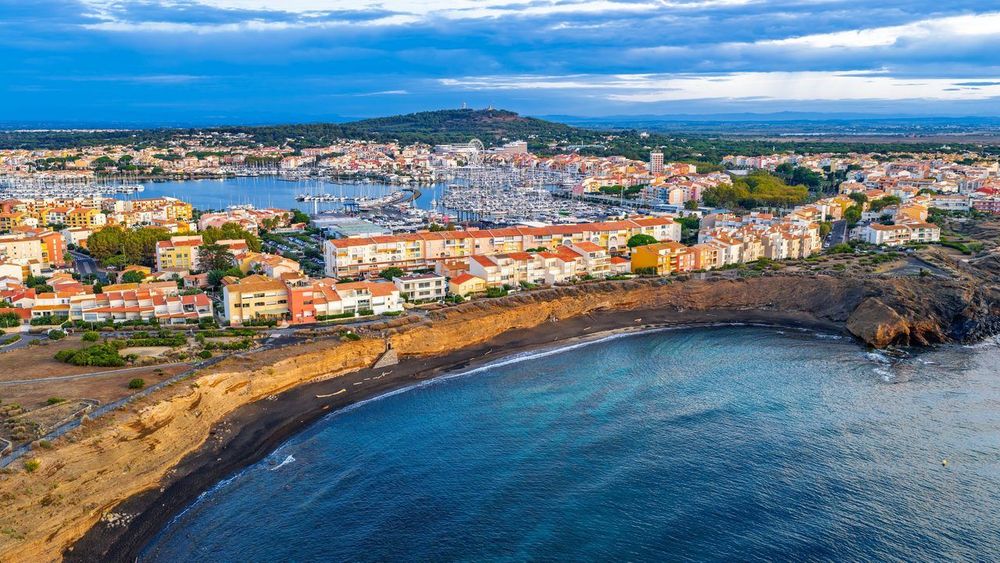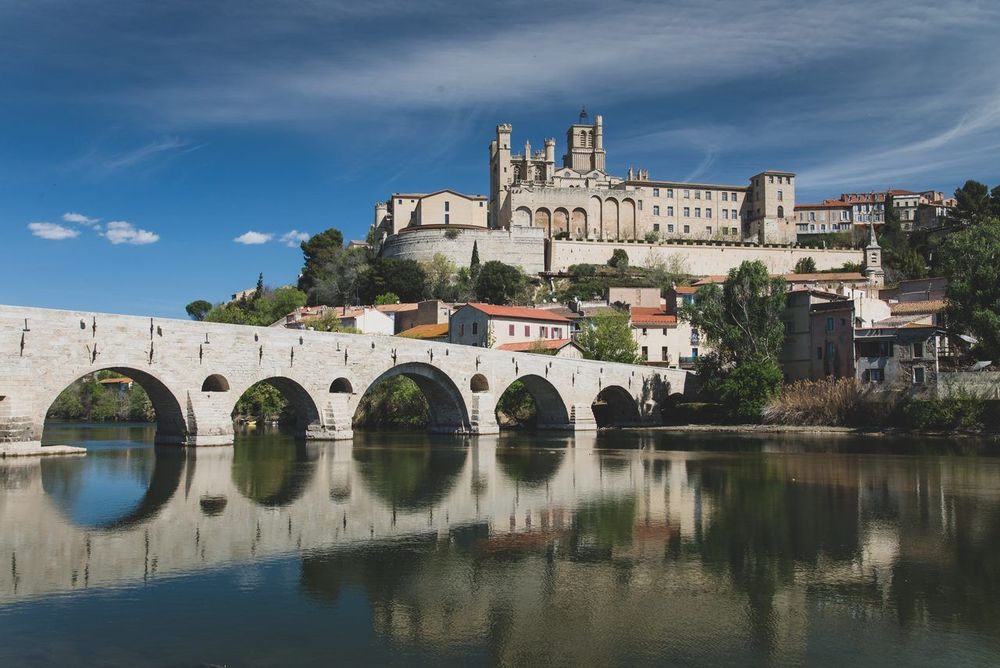
© Shutterstock
 Votre guide Ryo
Free Béziers: 15 Activities and Hidden Gems to Discover in 2026
Béziers never needed a big budget to tell its story. Free activities in Béziers go far beyond a few public benches: the city perched on its promontory above the Orb boasts a 17th-century lock staircase listed by UNESCO, a cathedral that watched the city burn in 1209 and an Occitan heritage that mainstream guidebooks barely skim. Add bullrings among the largest in France, a 600-metre esplanade shaded by plane trees and a coastline just twenty minutes away. To get your bearings before you set off, the Ryo audio-guided tour of Béziers traces the history of these places at your own pace, earphones in.
In the pages that follow, you will climb the basins of Fonseranes without stopping at a ticket booth, hunt down a medieval garden that many locals don't even know about, and trace the story of a vanished medieval Jewish quarter. You'll also find wooded estates on the outskirts, a cycle path running along the canal all the way to the sea and two beaches less than half an hour away. Fifteen stops, zero obligatory spending.
1. The Nine Fonseranes Locks, the Grand Spectacle of the Canal du Midi
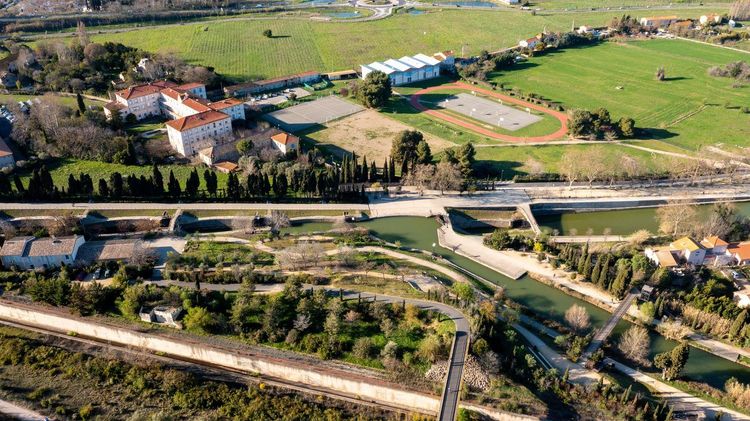
Even before entering Béziers, the canal du Midi sets the pace. The nine Fonseranes locks (Chemin de Fonseranes, 34500 Béziers, rated 4.5/5 on Google from 15,510 reviews) are slightly misnamed: the staircase actually comprises eight oval basins and nine gates, raising boats 21.5 metres over barely 312 metres. Commissioned in 1697 and conceived in the tradition of Pierre-Paul Riquet, the structure remains one of the most spectacular hydraulic feats in Europe. Since the construction of the Orb aqueduct in 1858, the last two basins have fallen out of use: only six locks remain in operation.
The site attracts around 320,000 visitors a year, making it one of the most visited spots in the former Languedoc-Roussillon region, yet nobody will ask you for a ticket to walk alongside the basins. Position yourself at the top of the staircase for a good half-hour and watch the barges negotiate their descent, basin by basin: the spectacle renews itself with every passage, between the lock-keepers' manoeuvres and the boat crews improvising as rope handlers.
A few hundred metres downstream, the Orb aqueduct offers another rare sight: a canal bridging a river. You will also notice, below, the water slope built in the 1980s to speed up boat passage, since abandoned as uneconomical. Renovated between 2016 and 2017, the site has visitor facilities and a panoramic restaurant.
Come in late morning or late afternoon: the low-angled light on the pale stone makes the site far more photogenic than at midday. This is also one of the stops on the Ryo audio-guided tour of Béziers, where the story of this titanic construction project and the engineers behind it is told on the spot.
2. The Old Bridge and the Cathédrale Saint-Nazaire, the View that Dominates the Orb
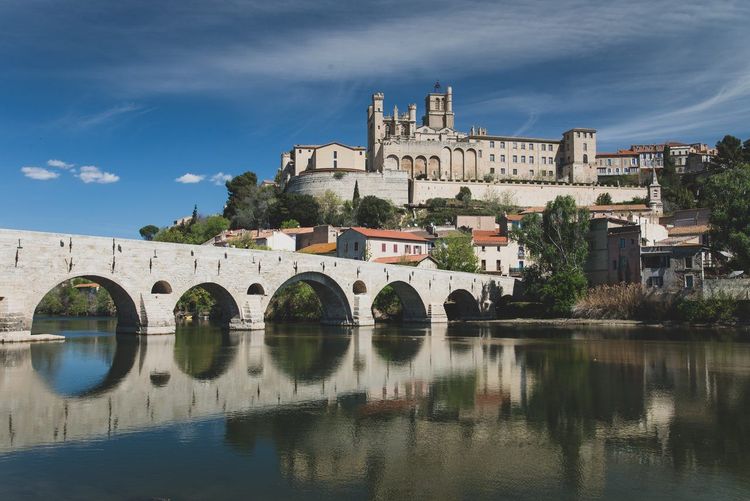
Two neighbouring monuments, one single climb. The Old Bridge of Béziers has spanned the Orb since the 13th century. Rebuilt several times after violent floods, it offers one of the city's most photographed vantage points, with the cathedral towering above the river in the background. Cross it at the end of the day, when the setting sun sets the façade of Saint-Nazaire ablaze.
The cathédrale Saint-Nazaire (Place Saint-Nazaire, 34500 Béziers, rated 4.6/5 on Google from 5,970 reviews) occupies the highest point of the historic centre. The building still bears the scars of the city's sack in 1209: rebuilt after the fire that followed the massacre of the Albigensian Crusade, it blends fortified Romanesque with southern Gothic. Entry to the nave is free outside of services, and the esplanade offers a sweeping panorama over the Orb valley, the vineyards and, on a clear day, the foothills of the Caroux.
Climb up on foot from the centre if possible, cutting through the cobbled alleyways: it's slower than by car, but arriving on the forecourt with the city suddenly revealed all at once is well worth the effort. Once up there, put in your earphones: the Ryo audio-guided tour stop dedicated to the cathedral recounts the 1209 siege and the famous phrase attributed to the pope's legate, best listened to while facing the landscape.
3. Allées Paul Riquet and the Plateau des Poètes
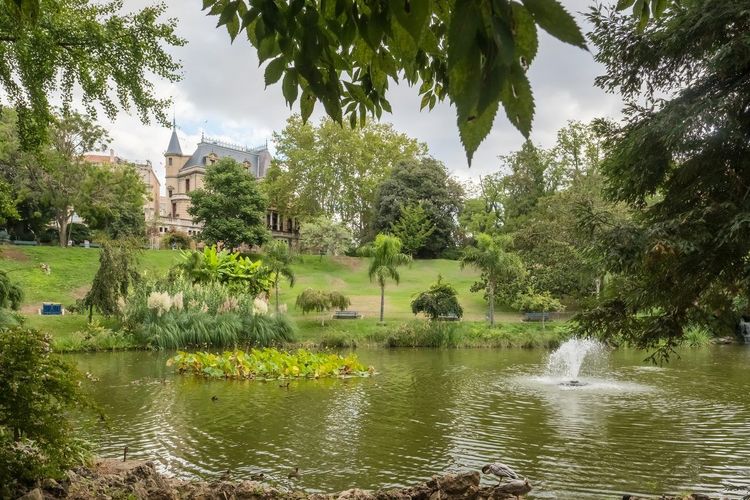
If Béziers had an outdoor living room, this would be it. Allées Paul Riquet, a 600-metre esplanade lined with plane trees, runs from the municipal theatre to the Plateau des Poètes (Plateau des Poètes, 34500 Béziers, rated 4.6/5 on Google from 3,648 reviews). A bandstand, café terraces, a statue of Riquet by David d'Angers: this is the gathering point for the people of Béziers, summer and winter alike, with no obligation to spend money to linger. On Friday mornings, a flower market brings the esplanade to life.
The Plateau des Poètes, at the end of the esplanade, extends the walk into an English-style garden designed in the 19th century by the Bühler brothers, with ponds, rare tree species and busts of writers scattered beneath the canopy. Seek out the Fontaine du Titan, monumental and faintly theatrical, then find a shaded bench for a rest after a morning of sightseeing.
4. Strolling through Old Béziers, from the Halles to the Surrounding Markets
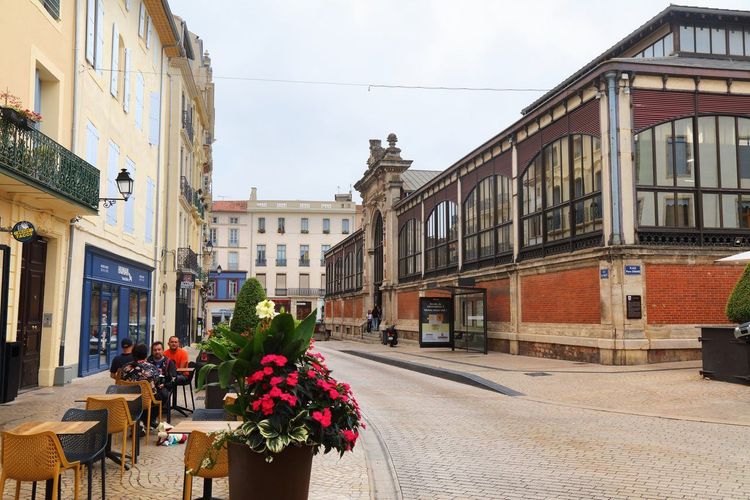
Old Béziers is best discovered on foot, without a fixed route. The alleyways climbing from the Orb to the cathedral retain medieval façades, vaulted passageways and inner courtyards glimpsed by looking up. Getting lost in this maze costs nothing but a little time. If you prefer a guiding thread, the Ryo audio-guided tour winds through these lanes all the way to the Halles, and you follow it at your own pace, pausing the audio whenever a terrace calls.
At the heart of the quarter, near the église de la Madeleine, the Halles de Béziers are worth a stop even with no intention of buying. Their Baltard-style iron framework, restored in 1986, shelters colourful stalls through which visitors can wander freely. The soundscape, between vendors' calls and the clinking of scales, gives a vivid glimpse into everyday life in Béziers.
On the immediate outskirts, open-air markets in nearby villages extend the experience. The Sauvian market (Place du village, 34410 Sauvian, rated 3.5/5 on Google from 2 reviews), about ten minutes' drive away, and the one in Lignan-sur-Orb, near the riverbank, bring together local producers, seasonal fruit and craftspeople every week. Our Ryo article on a walk through old Béziers details a precise itinerary for moving through these neighbourhoods without retracing your steps.
5. The CIRDOC, the Occitan Cultural Institute
Béziers still proudly carries the Occitan language, and the CIRDOC - Institut occitan de cultura, founded in 1998, is its showcase. This institution preserves manuscripts, scores, posters and recordings tracing nine centuries of literature and song in the langue d'oc.
You can browse part of the collections and visit the exhibitions without spending a penny, which remains rare for a cultural institution of this scope. Families will appreciate the Occitan children's section, designed to pass on the language in ways that go beyond textbooks. For anyone interested in the linguistic heritage of the Midi, it's hard to find a better entry point. And if you listen carefully in the streets, you'll notice that many signs carry a double name, in French and in Occitan: a fun linguistic treasure hunt to play as a family on the way to the cathedral.
6. Jean Moulin's Birthplace
At 6 rue d'Alsace, a plaque marks the birthplace of Jean Moulin (6 Rue d'Alsace, 34500 Béziers, rated 4.2/5 on Google from 44 reviews), a towering figure of the French Resistance, born in Béziers on 20 June 1899. His childhood friend Marcel Bernard, the artist behind the famous portrait with the hat and scarf, lived at number 4 on the same street — a detail that adds an extra layer to a photograph everyone recognises.
The façade can be viewed from the street, with no reservation required. During national commemorations, exhibitions devoted to his life and the Béziers Resistance sometimes open around the city: check with the tourist office at the place du Forum before you visit.
7. The Musée Fayet and the MRAC Exhibitions in Sérignan
The musée Fayet (Rue du Capus, 34500 Béziers, rated 4.5/5 on Google from 171 reviews), housed in a townhouse on rue du Capus, holds a fine sculpture collection, including a notable body of work by Jean-Antoine Injalbert, a 19th-century sculptor from Béziers. Marbles, bronzes and plaster casts are displayed through rooms arranged around an inner courtyard. Keep an eye on the European Heritage Days and the city's occasional special events: they are the best opportunity to walk through the door without paying.
If contemporary art appeals to you more, head to Sérignan, a quarter of an hour by road: the MRAC Occitanie, the regional museum of contemporary art, presents temporary exhibitions in a former cooperative wine cellar. Check its calendar before you go — certain days and events offer free admission.
8. The Medieval Garden of Saint-Jean-des-Anneaux
Few visitors know about the medieval garden of Saint-Jean-des-Anneaux (34500 Béziers, rated 4.1/5 on Google from 14 reviews). It recreates a garden of simples — the aromatic and medicinal plants cultivated in the Middle Ages — between low stone walls and neatly delineated plots.
The place is something of a well-kept secret: near-total silence and an atmosphere that stands in sharp contrast to the bustle of allées Paul Riquet. Check opening times with the tourist office before you go. In spring, when the aromatic plants are in flower, the garden is fragrant with sage and lavender. Take time to read the labels: each plant is linked to the use medieval apothecaries made of it, from chamomile for stomach complaints to rue, reputed to ward off evil spirits.
9. The Jewish Heritage of Béziers, in the Footsteps of the Bédersi
In the Middle Ages, Béziers was home to one of the most active Jewish communities in the Languedoc. The very name Bédersi, meaning 'the one from Béziers', was borne by celebrated scholars: the poet Abraham Bedersi in the 13th century, and then his son Yedaya, a philosopher and poet whose work circulated throughout the Mediterranean Jewish world.
In the old town, traces of this presence are read mainly in the street layout and the presumed site of the former synagogue, now absorbed into the urban fabric. This is a chapter of history that very few articles on Béziers address. To avoid walking past it unaware, let yourself be guided: the story of the Bédersi is one of the most surprising tales told along the Ryo audio-guided tour, and it changes the way you look at these alleyways.
10. Parks and Estates around Béziers: Bayssan, Libouriac and Île de Tabarka
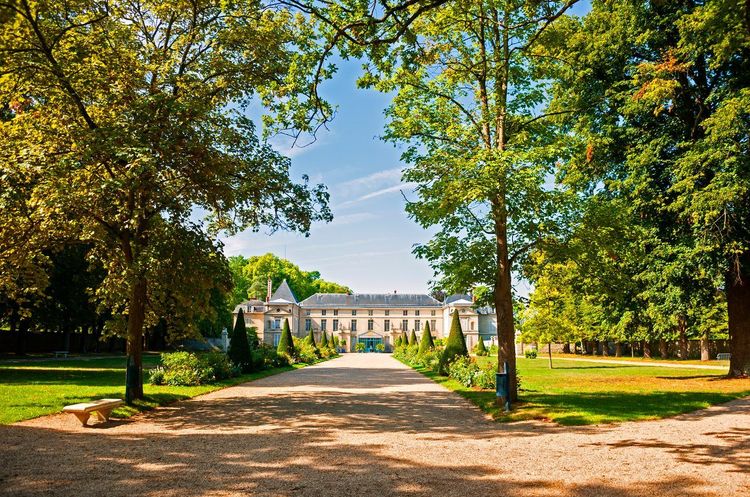
A few minutes by car from the centre, three green spaces offer a breath of fresh air with no admission charge. The domaine de Bayssan, a departmental estate on the route de Vendres, unfolds shaded paths, picnic tables under the pines and an open-air stage, the Scène de Bayssan, which hosts shows and events for part of the year.
The château de Libouriac (Route de Libouriac, 34500 Béziers, rated 5/5 on Google from 1 review), to the west of the urban area, can be admired from its tree-filled park, laid out for family walks. By the river, the île de Tabarka on the Orb lends itself to a nature walk where, with a little patience, you can spot herons and kingfishers.
These three sites combine well into a half-day outing. Bring water and your picnic: shade is plentiful, but food and drink points are scarce once you're there.
11. Béziers, City of Bullfighting and the Feria
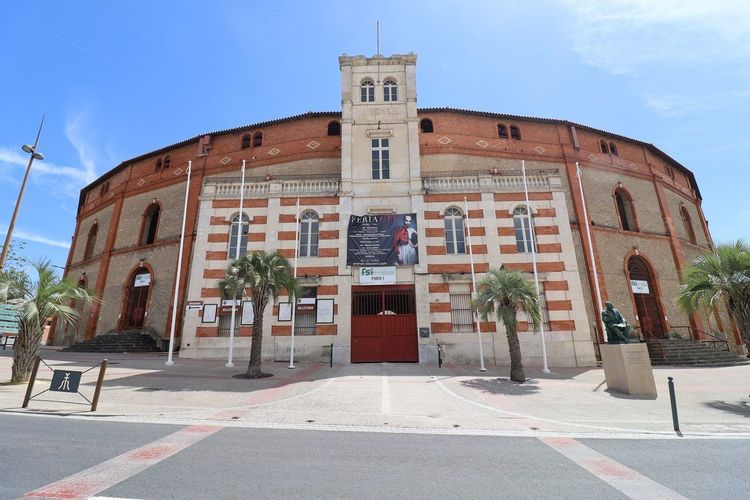
It is impossible to talk about Béziers without mentioning bullfighting. The arènes de Béziers (Avenue Émile Claparède, 34500 Béziers, rated 4.4/5 on Google from 1,775 reviews), inaugurated on 11 July 1897 at the height of the wine-growing boom, hold around 13,000 spectators, making them the largest bullring of their kind in France. Listed as a historic monument in 2015, they remain a powerful symbol of local identity, even for those who don't follow the corridas. Their Spanish-style façade can be admired freely from the street.
Every August, around the 15th, the city is swept up in the atmosphere of the Feria: brass bands in the streets, pop-up bodegas, open-air concerts. The tourist office presents it as a free-access event; only the corridas and certain shows in the bullring are ticketed. Simply standing on allées Paul Riquet on a Feria evening is enough to feel the energy of this extraordinary week.
12. A Bike Ride along the Canal du Midi
The path running alongside the canal du Midi from Béziers remains one of the most pleasant ways to explore the surroundings at no transport cost. The towpath, still shaded in places despite the canker that has decimated many of the plane trees, runs flat for kilometres, towards Capestang and the Étang de Montady in one direction, and towards Portiragnes and the sea in the other.
No bike? The association Paulette, which rents bikes in Béziers, offers solidarity pricing during certain periods: check current conditions before you go. Along the way, stop at the XXL Selfie point, a large photo frame that has become a regular stop for passing cyclists, before heading back towards Fonseranes or downstream along the canal.
One practical tip: bring water and a lock — water points are scarce along the towpath — and ride in the morning in summer. The more ambitious can push on to the oppidum d'Ensérune, whose silhouette overlooks the drained étang de Montady and its striking star-shaped pattern, visible from the viewpoint: an unforgettable sight, and a fine goal for a half-day on two wheels.
13. Beaches near Béziers: Valras-Plage and Cap d'Agde
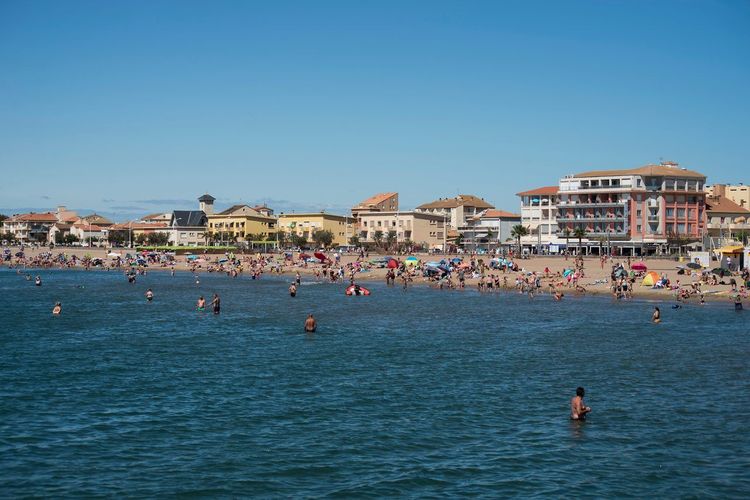
Béziers is only about twenty minutes from the Hérault coast, making it an ideal base for combining heritage and swimming. Valras-Plage, the nearest resort, offers several kilometres of fine sand with free access and lifeguard posts in season. Between Valras and Sérignan, the Orpellières nature reserve provides a wilder beach between dunes and lagoons.
A little further along, Cap d'Agde alternates volcanic coves and long sandy beaches, most of which remain freely accessible apart from a few privately conceded sections. Our Ryo article on the best things to do at Cap d'Agde details the least-crowded coves and the best viewpoints, to make the most of your outing beyond the swim.
Leave early in high season: parking spaces without a meter disappear fast as midday approaches, and shaded spots go first.
14. Playgrounds and Family Outings
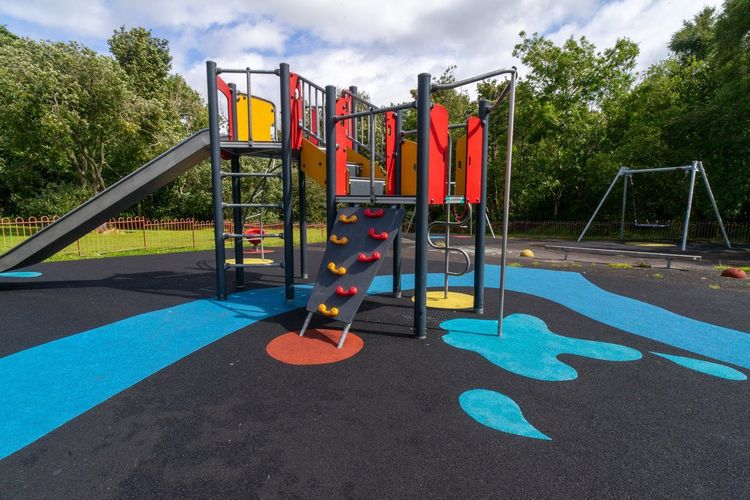
With children, Béziers is very easy to enjoy without opening your wallet. Several free children's playgrounds are dotted throughout the city's parks and across the urban area: climbing frames, slides, spring riders and impact-absorbing surfaces. Most sit alongside larger green spaces, making it easy to combine free play with a picnic.
A typical day? Morning at the Plateau des Poètes, where children run between the ponds and shaded lawns, a picnic at the domaine de Bayssan, then a late afternoon at Fonseranes to watch the boats go through: the little ones love following the water rising in the basins. And in summer, a day at Valras-Plage settles the question of what to do.
15. When to Come and Enjoy Events and Exhibitions
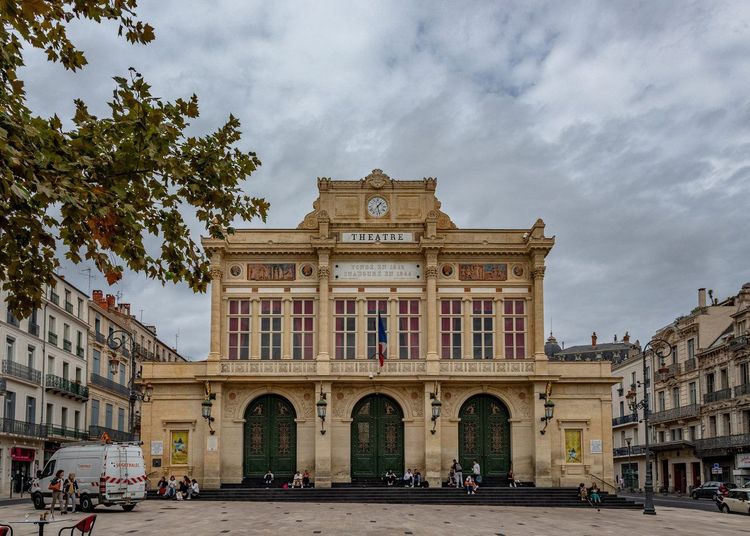
Béziers' calendar is lively all year round. Fine weather brings farmers' markets and neighbourhood festivals, August belongs to the Feria, and mid-September concentrates the European Heritage Days, when usually ticketed or closed venues open their doors. It is often the best opportunity to visit the municipal theatre of Béziers (Allées Paul Riquet, 34500 Béziers, rated 4.5/5 on Google from 574 reviews), an Italian-style auditorium inaugurated in 1844 at the northern end of allées Paul Riquet.
Outside these highlights, the Béziers Méditerranée tourist office publishes a calendar listing temporary exhibitions, open-air concerts and neighbourhood events. Check it before you leave rather than relying on a fixed list: it's the most reliable way to time your stay around what is actually happening when you visit.

FAQ
How much time should I allow to visit Béziers without spending money?
Allow a full day for the historic heart (Fonseranes, the Old Bridge, the cathedral, allées Paul Riquet, old Béziers) and an extra half-day if you add the outlying estates or a bike ride along the canal.
What are the must-see free activities in Béziers?
The Fonseranes locks, the cathédrale Saint-Nazaire and allées Paul Riquet form the most iconic trio. The CIRDOC, Jean Moulin's birthplace and the medieval garden round out this foundation if you stay for several days.
Where can I park for free in Béziers?
Parking is available near the Fonseranes locks and on the outskirts of the historic centre. In the city centre, aim for off-peak hours: parking there is often paid or regulated with a blue zone disc.
What events are currently taking place in Béziers?
The calendar varies by season: farmers' markets, shows at the domaine de Bayssan, exhibitions at the musée Fayet or the MRAC in Sérignan, the Feria in August and Heritage Days in September. The tourist office keeps the calendar up to date.
Is Béziers suitable for budget-friendly family outings?
Yes: playgrounds, the shaded Plateau des Poètes, a flat cycle path along the canal and the nearby beach at Valras make for a solid combination with no admission fees.
Which beaches should I visit near Béziers?
Valras-Plage, about twenty minutes away, the Orpellières beach in Sérignan and Cap d'Agde, a little further on, all offer free public access to the coast, with supervised swimming areas in summer.
Béziers proves that a rich stay is not measured by what you spend. Between a lock staircase over three centuries old, century-old bullrings, an institute devoted to the Occitan language and the traces of a vanished Jewish quarter, the city boasts a heritage that few destinations of its size can claim, without ever reaching for a bank card.
To connect all these places without getting lost in the alleyways, the Ryo audio-guided tour of Béziers weaves a coherent narrative thread, from the canal du Midi to the cathedral and through the Bédersi quarter. The perfect way to leave with the city's stories as well as your photos.
À lire également