
Créé par Emilie, le 17 nov. 2026
Votre guide Ryo
Montpellier, France
The Gifted City
Parcours audioguidé pour visiter Montpellier en 1 jour
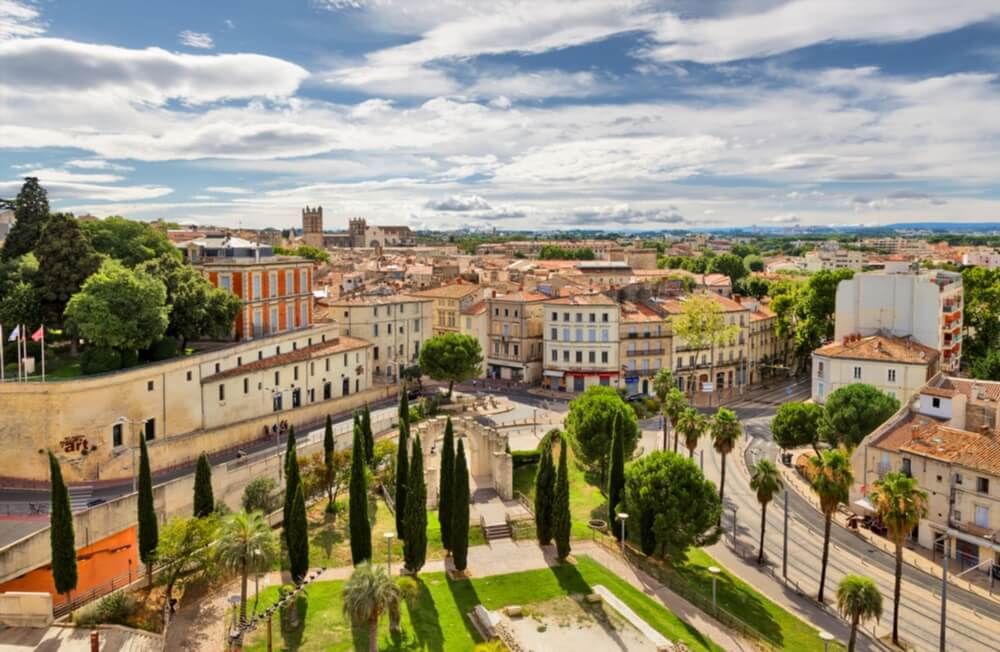
This visit invites you to an immersion in the heart of a radiant city, where the golden stone of past centuries illuminates under a near-eternal azure sky. Let yourself be charmed by the elegance of its royal vistas and the maze of its medieval alleys, before enjoying a contemplative stopover in front of the feats of modern architecture. Between the nobility of its centuries-old faculties and the energy of its lively squares, the city reveals a character that is at once scholarly, festive, and Mediterranean. An exploration on foot, balancing botanical gardens and sun-drenched terraces, to capture the full vitality of a metropolis that cultivates the art of living with constant audacity.
Quand partir à Montpellier ?
Jan.
12°
6
Feb.
13°
5
March
16°
6
April
18°
7
May
22°
7
June
26°
5
July
29°
2
Aug.
29°
3
Sept.
25°
6
Oct.
20°
9
Nov.
15°
9
Dec.
12°
7
Montpellier enjoys a Mediterranean climate, characterized by hot, dry summers climbing to 30°C and very mild winters fluctuating between 5°C and 13°C. The ideal period runs from May to October to enjoy the Place de la Comédie and the beaches of Carnon. The month of June is perfect for strolling through the narrow streets of the Écusson (the historic center) before the summer heatwaves, while September offers water that is still warm and a golden light ideal for exploring the Jardin des Plantes or the Antigone district.
Départ conseillé
No need to worry about where to begin! Our tours are designed as a loop, so you can jump in wherever you are. The navigation system and audio-guide will automatically adjust to your location. However, if you happen to be nearby, we do have a preferred starting point: in front of the Arc de Triomphe
Parking à proximité
Parking Montpellier Arc de Triomphe - EFFIA : 2 Rue Foch.
Parking options in Montpellier are plentiful: street parking, surface car parks, underground parking garages, Park and Ride facilities... Unsurprisingly, if you choose to park a bit further out in the periphery, the likelihood of finding a free parking spot for your vehicle increases. This would, of course, involve using public transport to reach the tourist area. But if you're determined to park right in the city center, you'll need to reach for your wallet. Underground parking garages are a secure alternative, but sometimes more costly compared to street parking where the hourly rate varies between 0.80 cents and 2 euros depending on the zone (green, orange, or yellow).
À savoir
During our tour, you will be passing through the Peyrou Promenade. To avoid any last-minute inconvenience, please note that this site has specific opening and closing hours. If the location is already closed when you arrive, you will need to take the following alternative route: Rue Clapiès -> Rue Hilaire Ricard -> Rue Pitot -> Boulevard Professeur Louis Vialleton Franque.
Like any tourist destination, Montpellier offers a combination of discounts and reductions on transportation and activities through the Montpellier City Card. This is a good option for exploring the city at your own pace while taking advantage of the various offers.
Découvrez 21 lieux d'intérêt pour visiter Montpellier





7. Tower of the Pines







19. The Ecusson district


What to see in Montpellier on your 1h30 tour?
This 3.5 km loop takes about 1 hour 30 minutes and links 18 sights. It starts from the royal Peyrou and its triumphal arch, follows the Saint-Clement Aqueduct, crosses the Botanical Garden, then the medieval remains of the Babote, before diving into the Ecusson: the cathedral, Canourgue, Sainte-Foy. It reaches the Comedie and its Opera, then the food markets and Saint-Roch church. With the app in your ears, every square tells its story, at your own pace.
Information checked in November 2026 and subject to change.
1 - Montpellier’s Arc de Triomphe
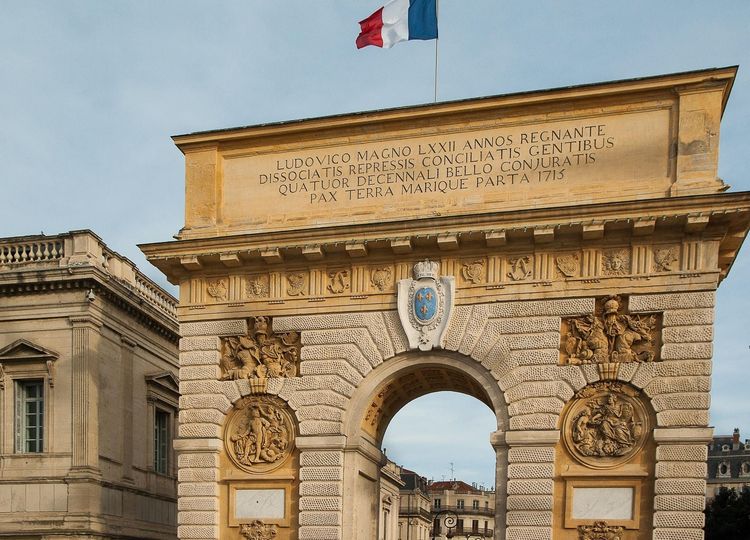
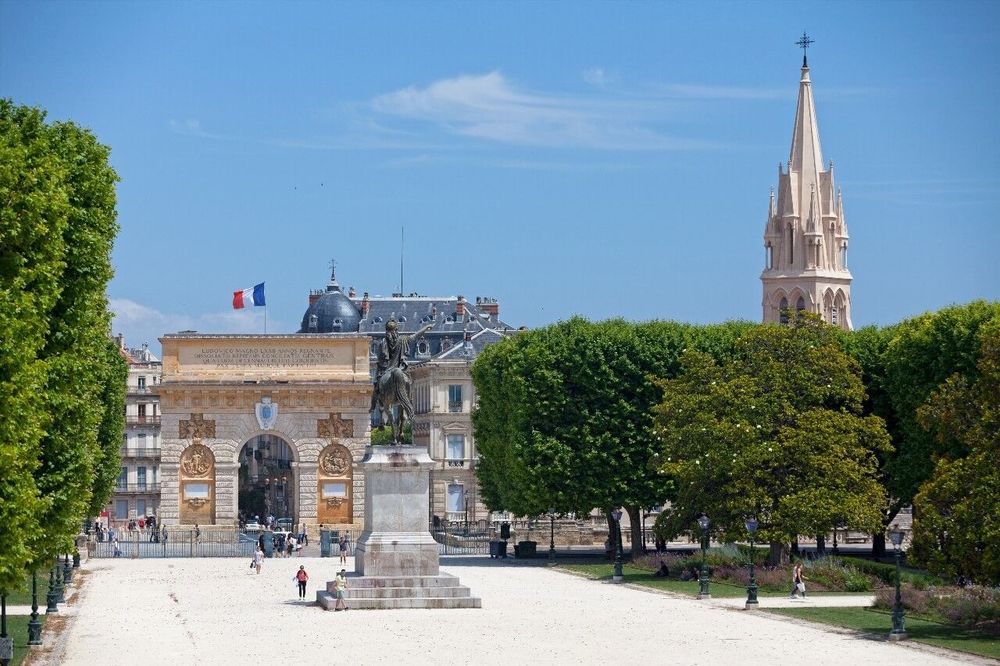
The walk opens on this arch raised in the late 17th century to glorify Louis XIV, right where an old fortified gate once stood. Designed by a pupil of Mansart and built by a local architect in barely a year, it announces the promenade it extends. Medallions, a royal coat of arms and a Latin inscription sing the Sun King's reign. If you have the stamina, the dozens of steps to the top reward you with a full panorama of the city.
Free to see from outside
2 - The Peyrou Promenade
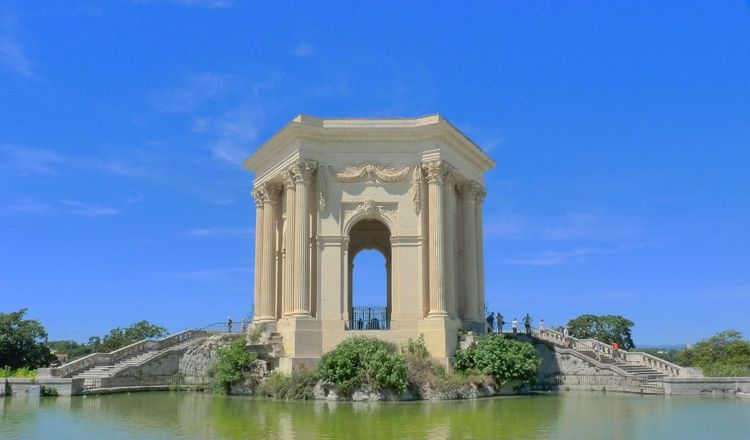
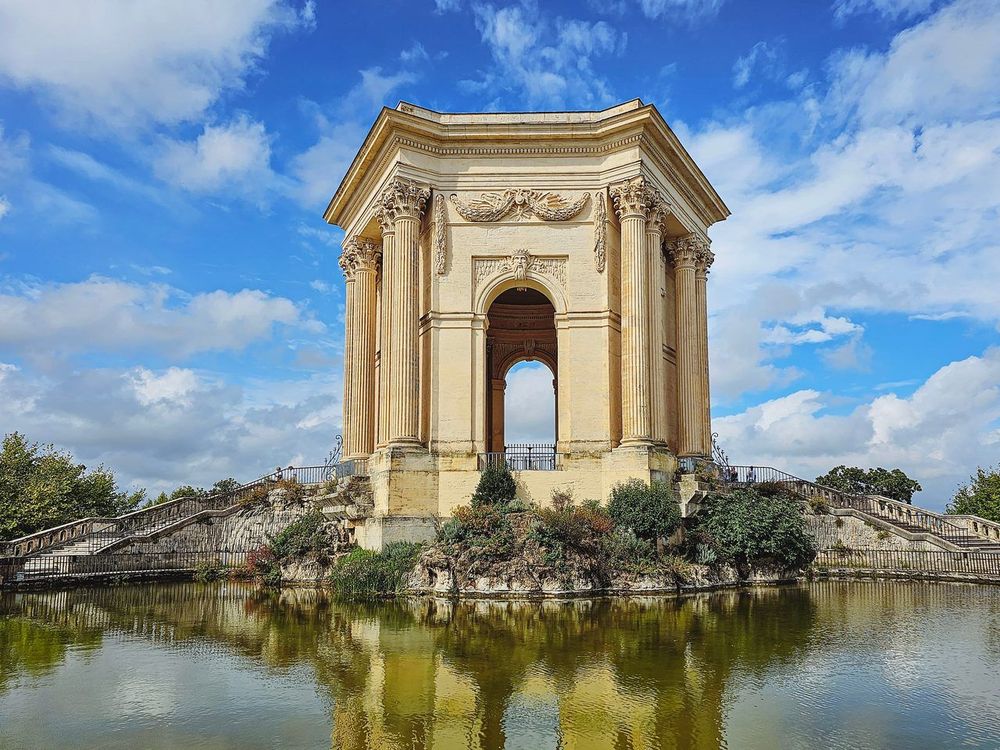
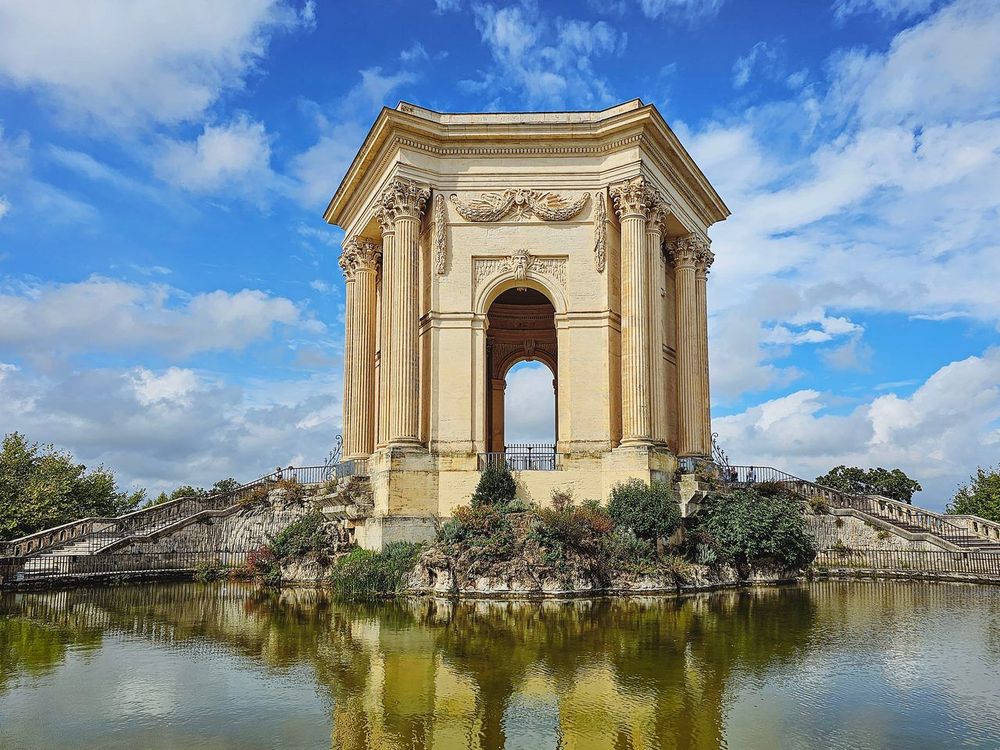
At the top of this once stony promontory, the Estates of Languedoc wanted to raise a statue worthy of the king's prestige. The esplanade was levelled, walled in, then dressed with terraced gardens. A neoclassical water tower, fed by an aqueduct from nearby springs, completed the scene the following century. Today the view sweeps across the plain and, on a clear day, as far as the Cevennes foothills: one of the finest viewpoints in the city.
Free entry · Best late in the day
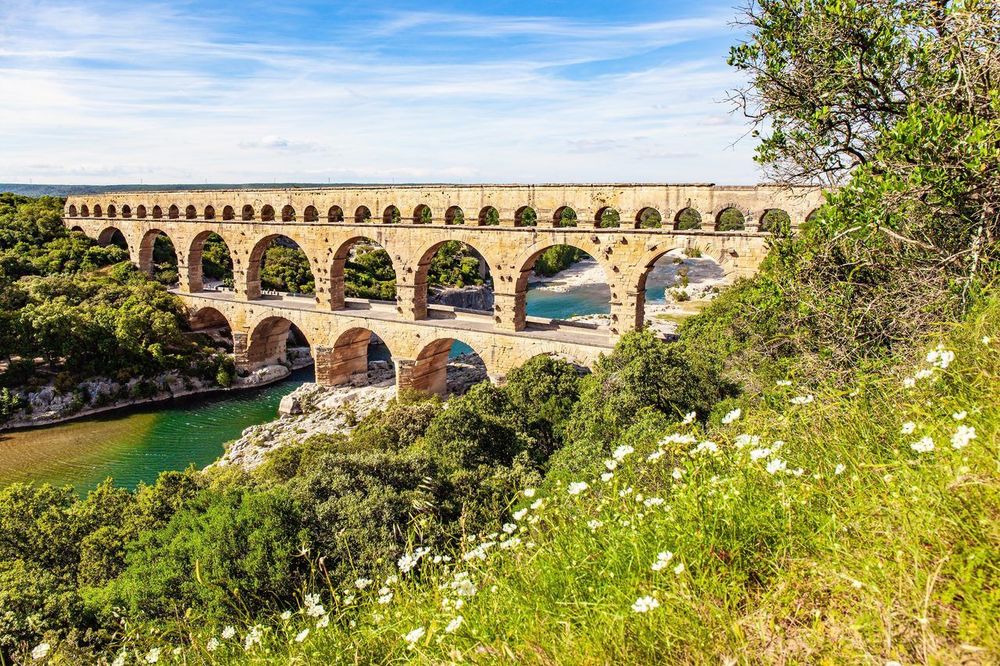
3 - Saint-Clément Aqueduct
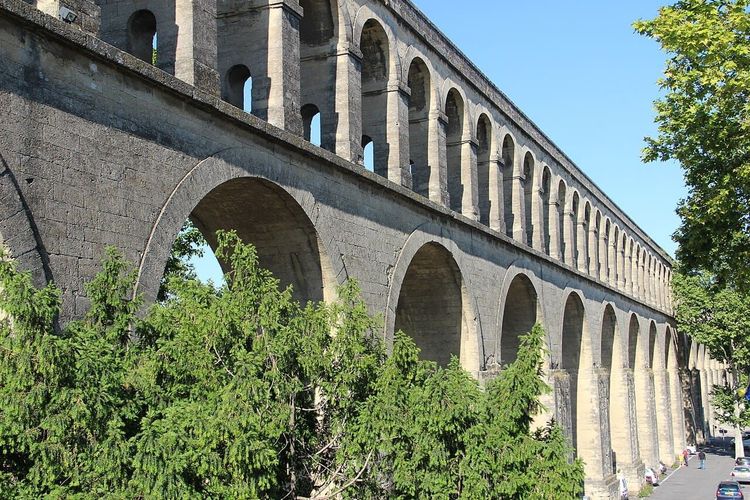
Montpellier long lacked drinking water, despite a handful of scattered wells. In the mid-18th century, an engineer was tasked with bringing water from nearby springs into the heart of the city: more than twelve years of work produced a double row of arches modelled on ancient works. The district that borrows its nickname now hosts a lively market beneath its vaults. Near one of its pillars was taken the famous photo of a Resistance hero, wrapped in his coat.
Free entry
4 - Botanical Garden (Part 1)
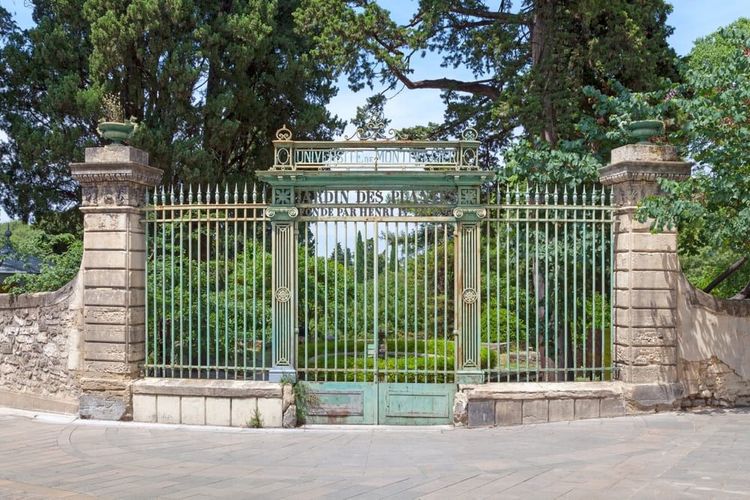
You won't find an older botanical garden in the country: this one was born in the late 16th century, by royal order, to grow the plants studied by future doctors. Forever linked to the famous school next door, it has kept its teaching role across the centuries. Greenhouses, ponds and an orangery now shelter thousands of species, some extremely rare, beneath canopies sometimes several hundred years old.
Free entry
5 - Botanical Garden (Part 2)
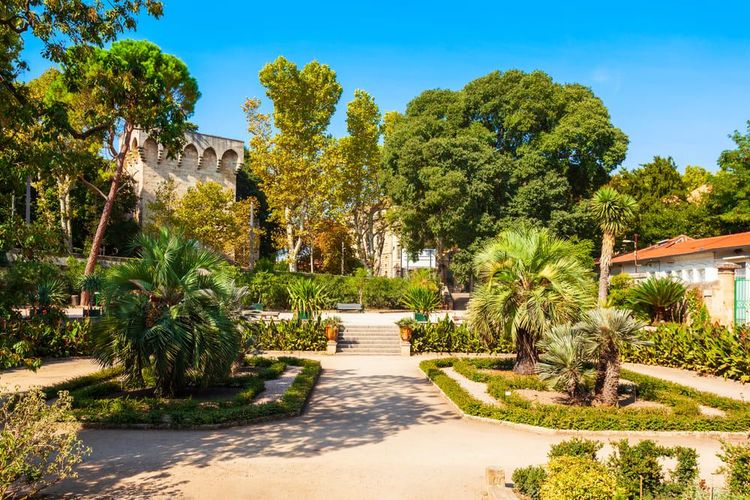
Wander these paths and you'll meet an extraordinary Asian tree, made able to reproduce thanks to an old graft: most of its French relatives descend from it. Further on, an ancient Mediterranean tree has long gathered wishes slipped into its bark. A monument honours a humanist writer trained here, while legend tells of a secret grave for a young Englishwoman, near a very real tomb, that of a former dean of medicine.
Free entry
6 - Tower of the Pines
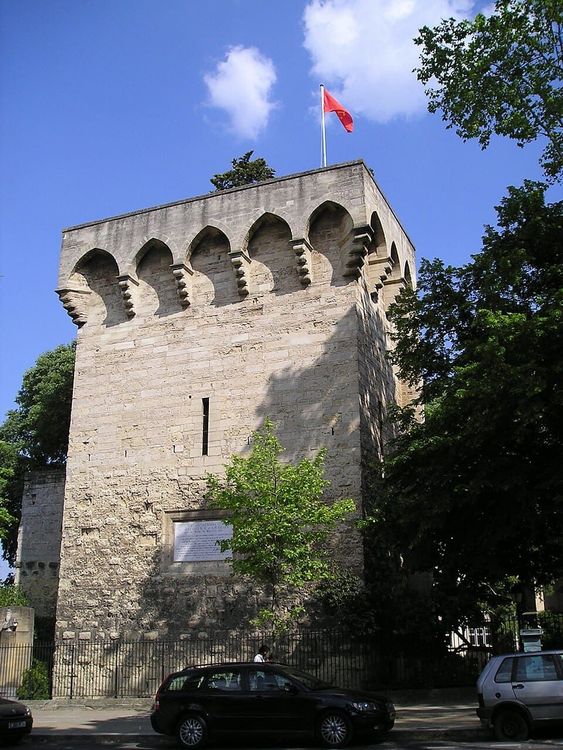
A few steps away, another witness to fortified Montpellier has survived the centuries: of the twenty or so towers that once guarded the city, only two remain, and this is one of them. Prison, then shelter for wayward girls, then archive annex, it kept changing purpose before housing a local brotherhood today. A stubborn legend, tied to a student who later became a famous astrologer, links its survival to the trees planted on its roof.
Free to see from outside
7 - Faculty of Medicine of Montpellier
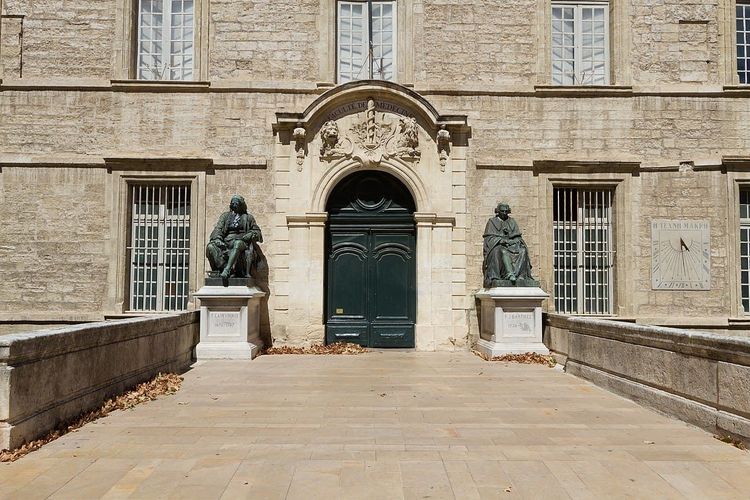
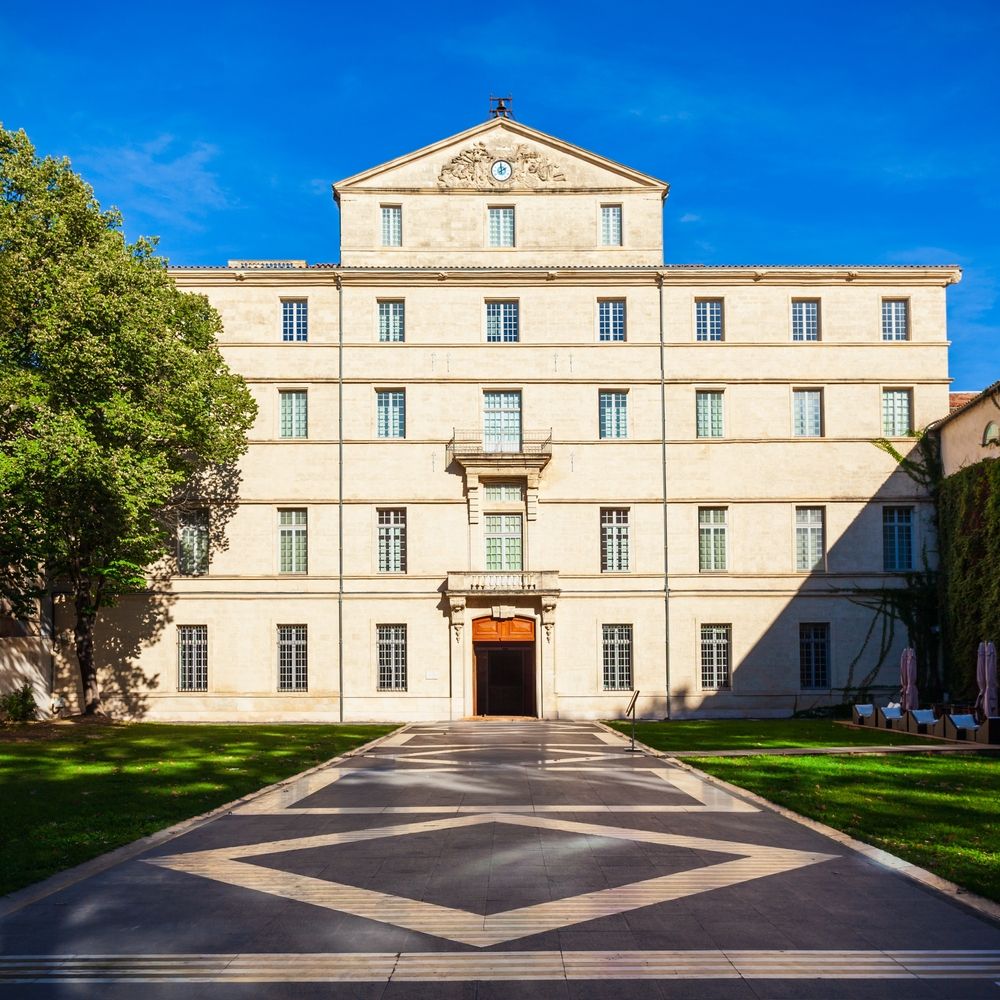
Few institutions are more venerable: founded in the early 13th century by a papal envoy who united earlier teachings of physicians, it is still active eight centuries on. Pioneers of surgery and physiology taught here, as did a humanist writer and a student expelled who would become a famous astrologer. Housed since the Revolution in a former bishop's residence, it keeps anatomical pieces, manuscripts and drawings by great masters.
Free to see from outside
8 - Saint Peter's Cathedral
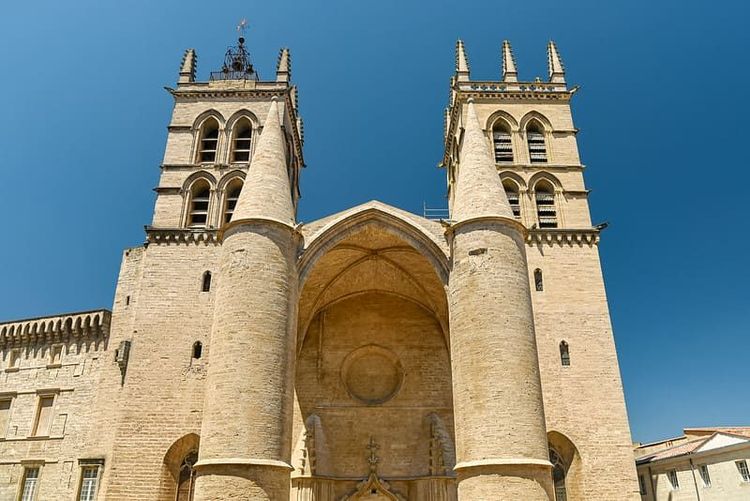
Massive, austere, almost warlike: this gothic building became the bishop's seat in the mid-16th century, when the neighbouring diocese moved into town. The religious strife that followed forced it to don towers, a watch path and battlements, earning it a military nickname. Bullet marks still visible around one window recall the sieges it endured. Inside, a monumental painting and an 18th-century organ reward the visit.
Free entry
9 - Place de la Canourgue
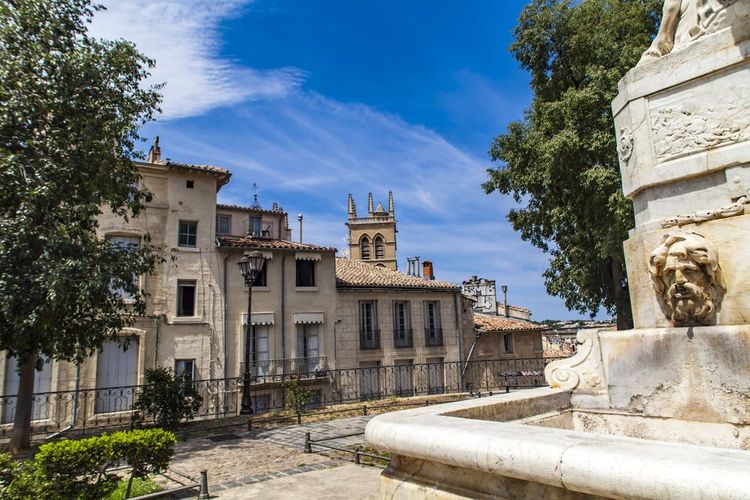
Long regarded as the city's oldest square, it occupies the site of a 12th-century lordly residence. A sanctuary was destroyed and rebuilt here more than once amid religious turmoil, before a cathedral project, halted on the order of a powerful cardinal, left unfinished foundations still visible today. Grand townhouses and a fountain adorned with legendary creatures now form a peaceful haven, away from the bustle.
Free entry
10 - Saint-Foy Chapel
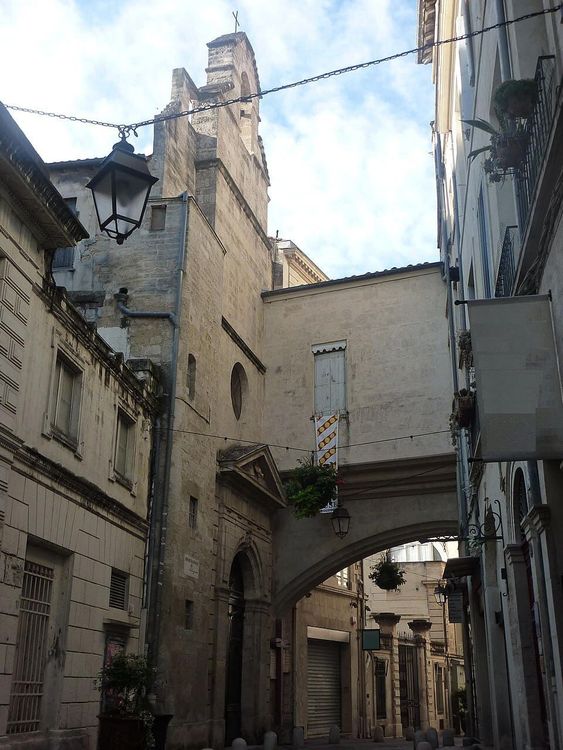
An old footbridge hanging over the lane marks out this discreet sanctuary, one of the oldest still used for worship in the city. Mentioned as early as the 13th century near a road to Compostela, it was ravaged and then left derelict for over half a century before a lay brotherhood revived it in the 17th century. Its plain facade hides a baroque coffered ceiling, rightly nicknamed the Sistine Chapel of Languedoc.
Free entry
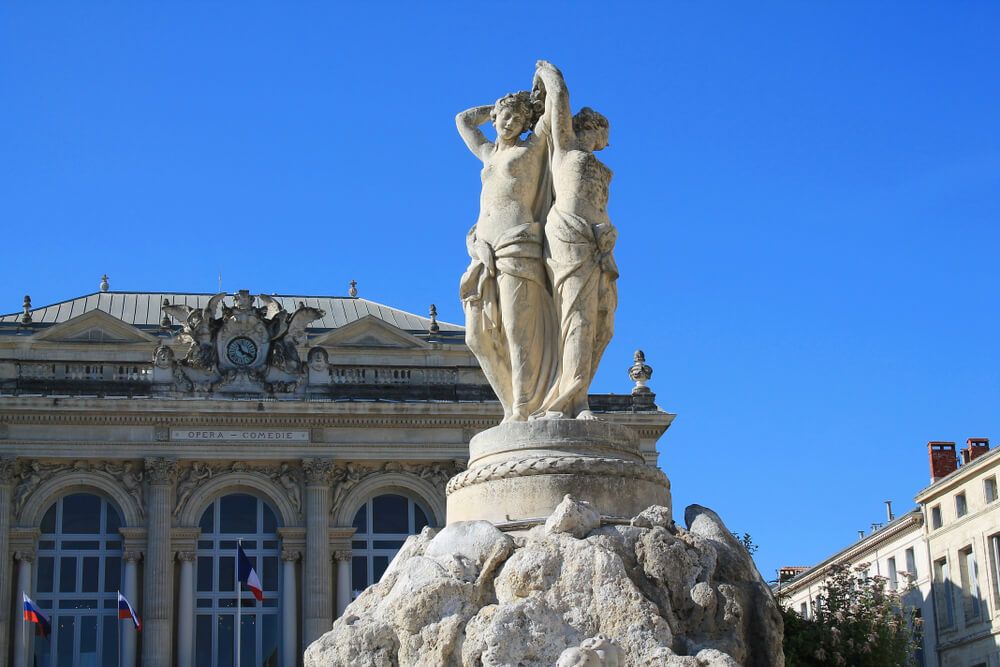
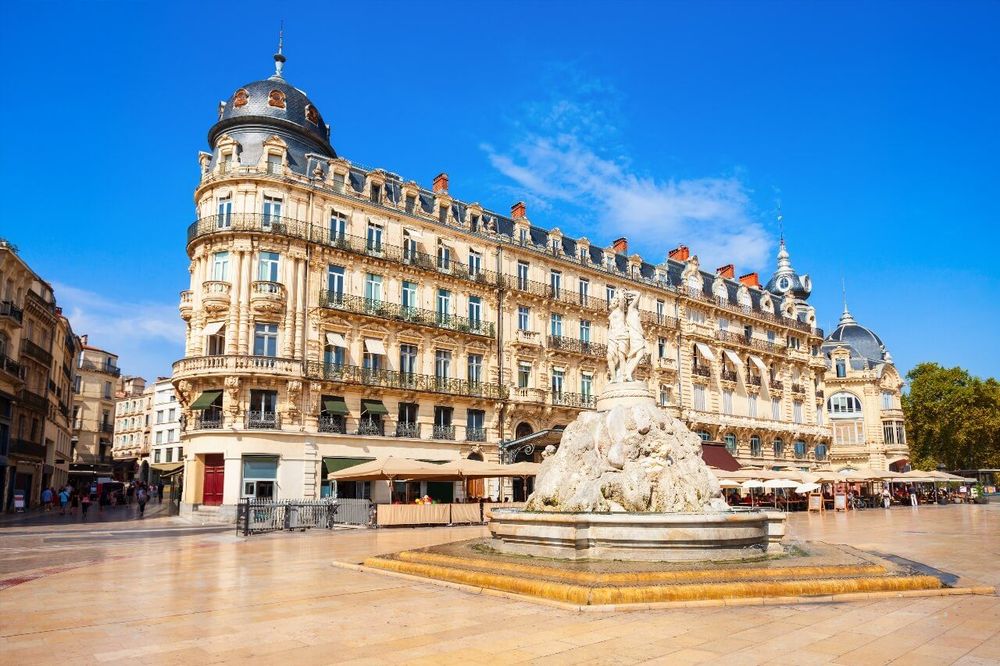
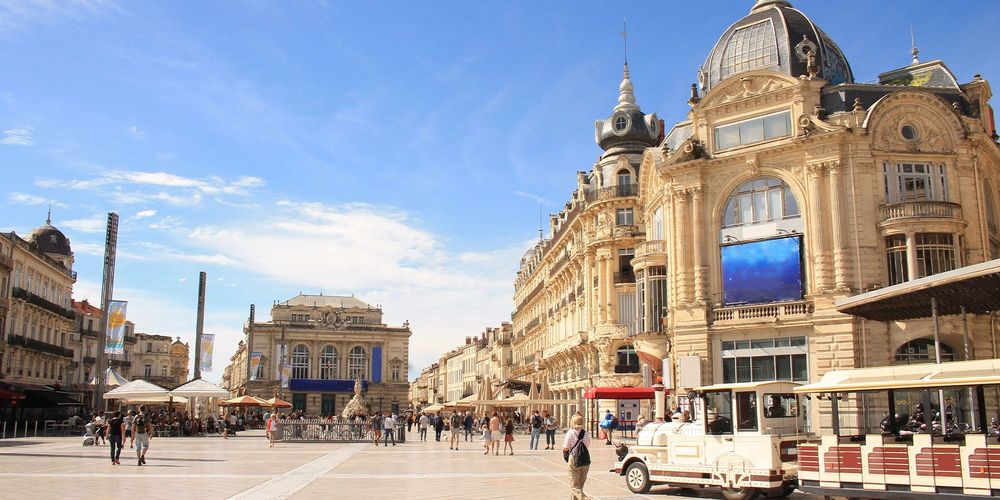
11 - Place de la Comédie
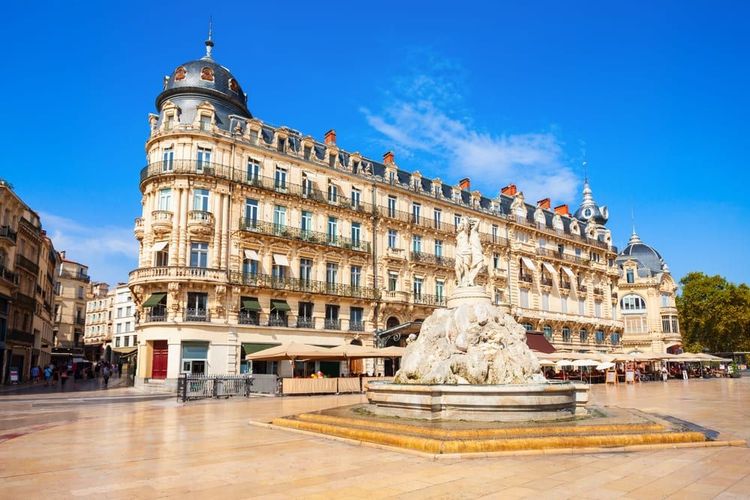
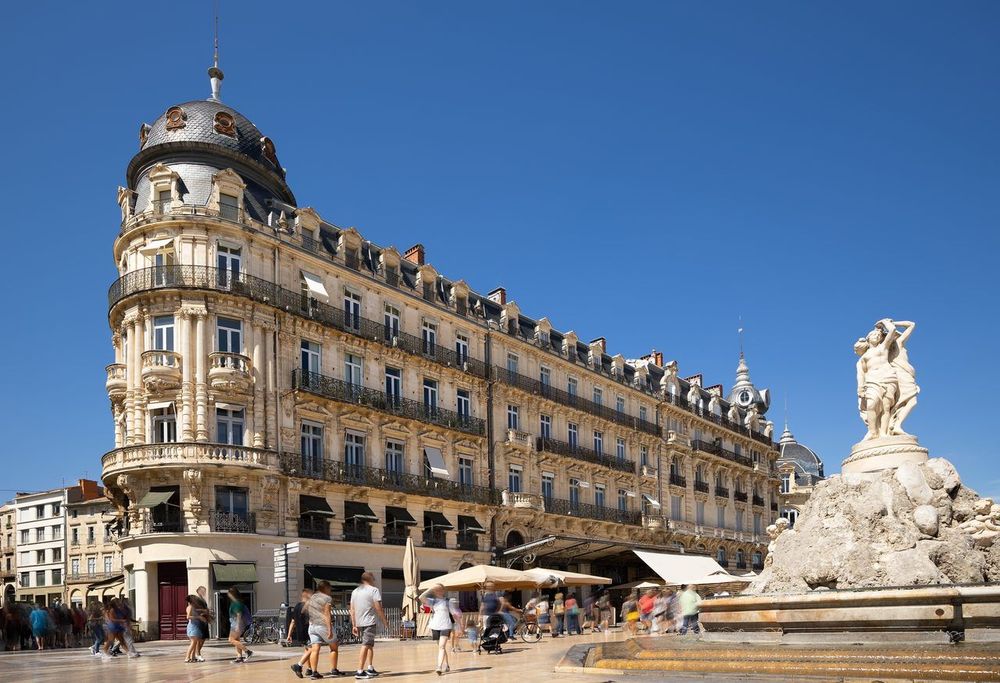
Born in the mid-18th century on former military land, this vast esplanade takes its name from the theatre standing on one side. A fountain adorned with three Greek goddesses holds pride of place, a copy of a work now kept in the lobby next door. Balconied 19th-century buildings, grand cafes and shopping streets have made it, together with the adjoining esplanade, one of Europe's largest pedestrian spaces, and locals' favourite meeting point.
Free entry
12 - Opéra Comédie
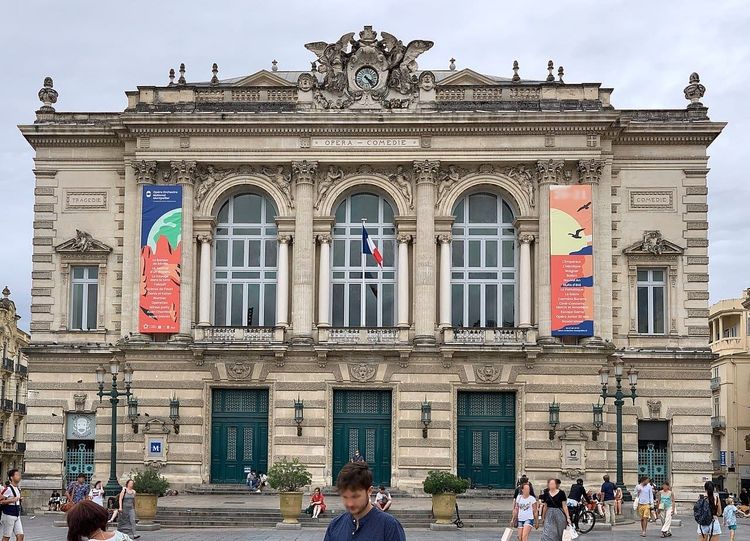
This square and its opera house were named together, their fates entwined since the esplanade was born in the mid-18th century. Burned down twice, today's stage was rebuilt in the late 19th century by a pupil of the architect behind the Paris Opera, whose painted curtain directly inspired this one. Marble, gilding and a huge crystal chandelier compose a lavish interior, inside one of the country's largest Italian-style theatres.
Free to see from outside
13 - Tower of la Babote
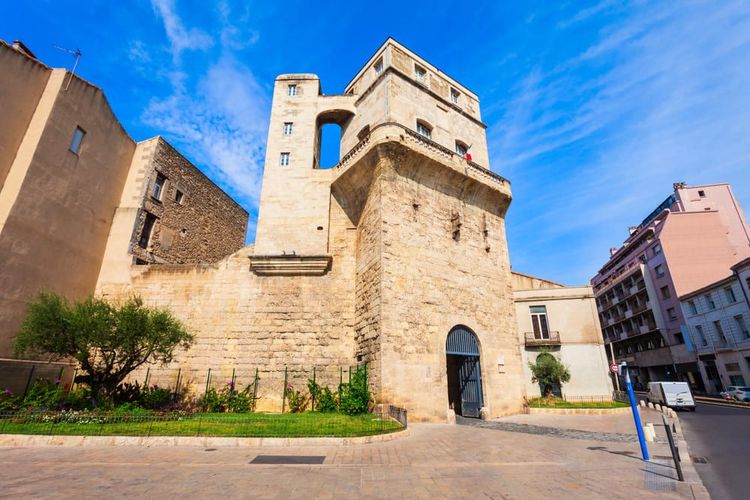
Standing in the middle of a boulevard, this tower looks almost out of place amid the modern traffic, yet it was there long before. A relic of early 13th-century fortifications, raised higher in two stages during the 18th century to reach its current height, it housed in turn an astronomical observatory and then a telegraph post. A physicist leapt from its top at the very end of the 18th century in one of history's earliest parachute jumps.
Free to see from outside
14 - Laissac Market Hall
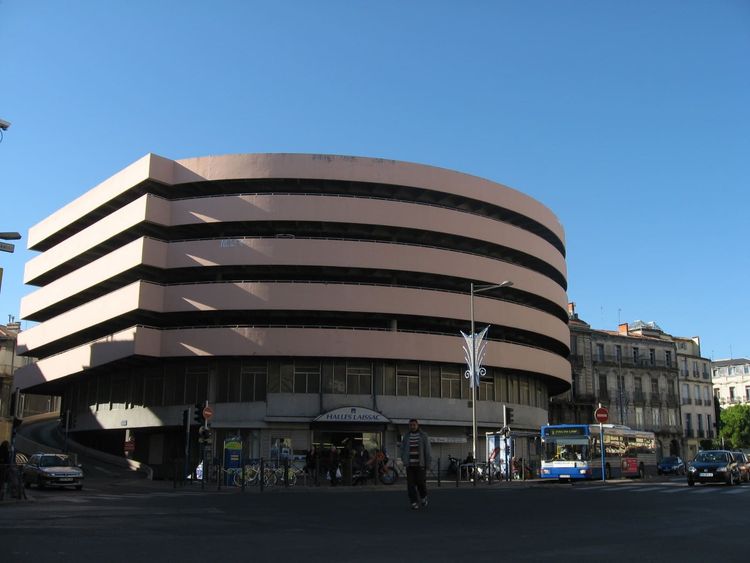
A city's markets tell its flavours as much as its monuments do. Requested by residents in the mid-19th century, this covered hall was opened by the mayor who gave it his name, in a polygonal iron structure fashionable at the time. Replaced a century later by a building few people loved, it has recently regained glass and light, beneath a striking suspended canvas shaped like a slice of fruit.
Free entry · Best in the morning
15 - Saint-Roch Church
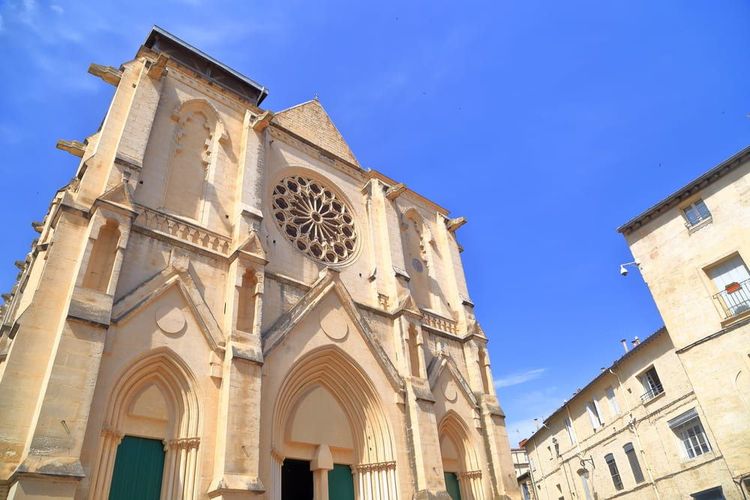
This whole district bears the name of a local son who became the patron saint of pilgrims and healer of plague victims, venerated the world over. The church built in his honour in the 19th century, for lack of funds, was left without spires or statues on its facade. Furniture from a vanished sanctuary was even reused inside. It still keeps canvases by a famous local painter and a relic fragment brought back from Venice.
Free entry
16 - The Ecusson district
Locals happily use another name for the old centre, after its shape seen from above, close to a small medieval shield. Enclosed by walls extended in the 13th century to house a growing population, this maze of narrow, winding lanes largely escaped the wide boulevards unsuccessfully cut through in the 19th century. Terraces, museums, buried remains and grand townhouses hidden behind heavy doors reveal themselves along the way.
Free entry
17 - Castellane Market Hall
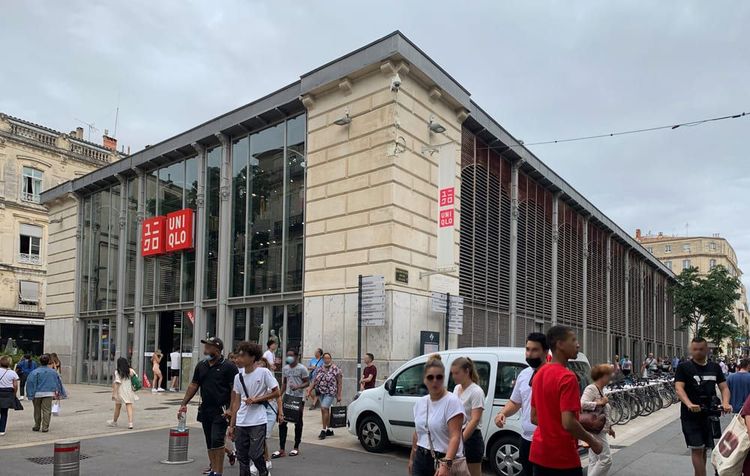
A market has stood on this spot since the Middle Ages, once gathering grain, fruit, vegetables, fish and meat all together. In the mid-19th century, an enterprising mayor modernised the whole district and commissioned this iron and zinc hall, inspired by the famous Paris pavilions, its first stone laid by a marshal who left it his name. Reworked more than once since, it still welcomes about twenty traders every day.
Free entry · Best in the morning
18 - Carré Sainte-Anne
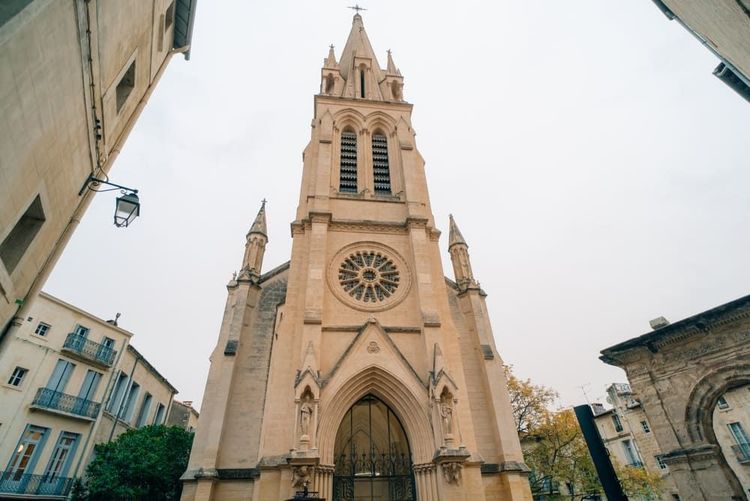
Its slender spire, visible from much of the city, crowns a building that has changed purpose twice. Rebuilt in neo-gothic style in the late 19th century after an earlier, fragile church was demolished, it lost its religious role a century later and was deconsecrated. Restored after several years of work on its weakened spire, it now hosts major contemporary art exhibitions inside its recovered nave.
Free entry
What to do in Montpellier in 2 or 3 days?
One day is enough to cover the essentials of the city: this 3.5 km loop of 18 stops is walked in about 1.5 hours, from the royal Peyrou to the food halls of the Écusson. With two or three days, Montpellier reveals itself more fully, between art and coastline.
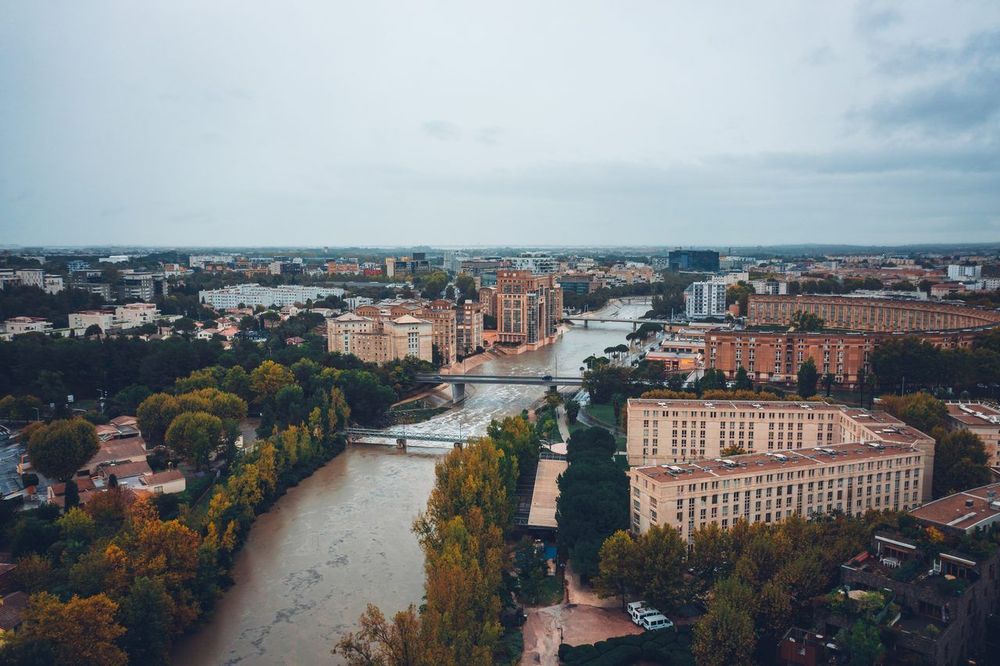
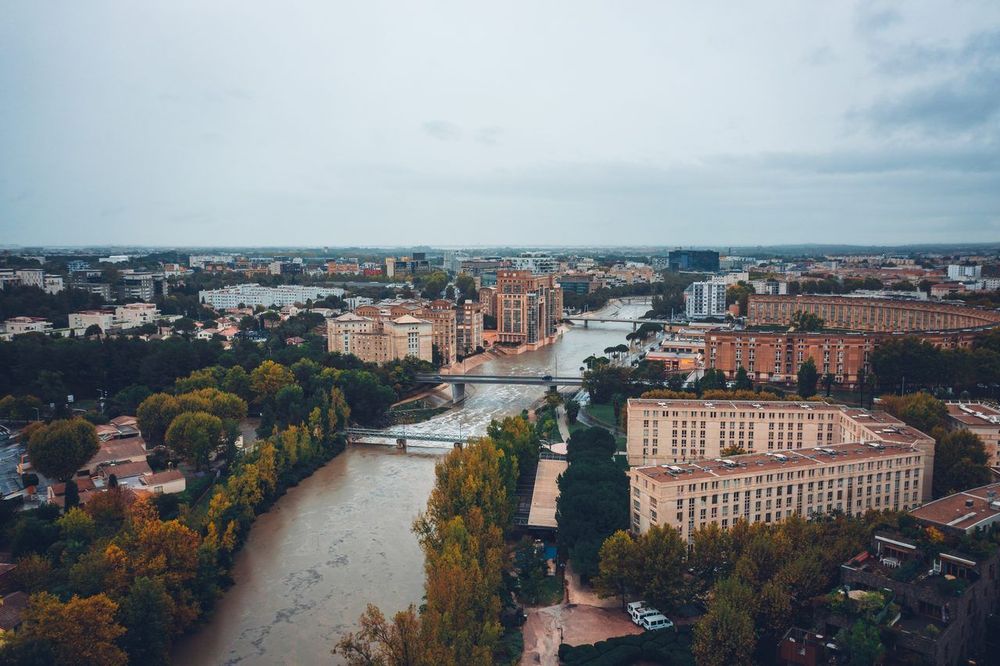
The next day, head east to discover contemporary Montpellier: the Antigone district, designed by Catalan architect Ricardo Bofill in colonnaded, tinted-concrete blocks, then the Fabre museum, whose collections, from Courbet to Bazille, rank among the richest in France outside Paris. To plan these two days, our itinerary for visiting Montpellier in 2 days sets out the order of the visits.
On the third day, head for the coast: allow about 30 minutes by tram and bus to reach the Maguelone peninsula, where a Romanesque cathedral stands isolated between a lagoon and the Mediterranean, also reachable on foot or by bike from Palavas-les-Flots. Our guide to visiting Montpellier in 3 days rounds out this three-day plan.
Which neighbourhoods does the tour cross?
In a loop, the route crosses the districts that shaped Montpellier, from the royal splendour of the Peyrou to the market lanes of the Écusson.
It starts at the Arc de Triomphe, at the entrance to the Peyrou promenade, the royal esplanade laid out in the late 17th century to hold an equestrian statue of Louis XIV, then goes down to the foot of the Saint-Clément aqueduct, built in the 18th century, which gave its name to the Arceaux district (stops 1 to 3).
It then reaches the Botanical Garden, the oldest in France, and the Tower of the Pines, a remnant of the medieval ramparts, before entering the Écusson: the Faculty of Medicine founded in 1220, the fortress-like Saint-Pierre cathedral, the quiet Place de la Canourgue, the Saint-Foy chapel, the Place de la Comédie and its Opéra, as far as the Tower of la Babote, on the southern edge of the district (stops 4 to 13).
The route then heads back north past the Laissac market hall, the Saint-Roch church and the lanes of the Écusson, before closing the loop via the Castellane market hall and the Carré Sainte-Anne, close to the starting point (stops 14 to 18).
How much does it cost to visit Montpellier?
Of the 18 stops on the route, none requires a ticket to be admired. Thirteen are freely open to visit, and the other five are only seen from the street:
- the Arc de Triomphe, whose 90-step climb is only offered during guided tours run by the tourist office;
- the Tower of the Pines, seen from its small square, as the interior may be reserved for special occasions;
- the Faculty of Medicine, whose façade is freely admired while the historic rooms are only seen on a tourist office guided tour;
- the Opéra Comédie, whose Italian-style hall mainly opens for the season's performances;
- and the Tower of la Babote, a rampart remnant standing in the middle of the boulevard, admired from the public street.
To go further, the Montpellier City Card costs from €17 for 24 hours without transport: it includes guided tours, some of them at the Arc de Triomphe and the Faculty of Medicine, reduced or free entry to a selection of museums and discounts of up to 60% on activities. The version with public transport starts at €22 for 24 hours.
Information checked in November 2026 and subject to change.
Where to stop for a bite along the tour?
The route stops at two covered markets, turning the walk into a food-filled break.
The Laissac market hall (stop 14), rebuilt in glass and metal at the end of 2018 after the previous building was demolished, brings together twenty-four stallholders selling produce from the Languedoc, busiest in the morning. A little further on, the Castellane market hall (stop 17), whose first stone was laid in 1858 by Marshal Castellane, keeps its original purpose with about twenty traders, also livelier in the morning.
For something sweet, the Grisettes de Montpellier, small honey-and-liquorice sweets dating back to the Middle Ages, sum up local indulgence on their own. Our top 10 culinary specialties of Montpellier and our pick of the best brunch spots round out the list for heartier cravings.
What to do in Montpellier with children?
The Écusson works well for a family outing, between lanes to explore and large squares where children can run free.
In small streets such as rue de l'Aiguillerie or rue du Bras de Fer, spotting the carved façades of the old mansions quickly turns into a treasure hunt for younger visitors. The Peyrou promenade, meanwhile, offers all the room needed to run around away from traffic, with a view over the Cévennes on a clear day as a bonus.
On Tuesday and Saturday mornings, an organic market sets up at the foot of the Saint-Clément aqueduct, a chance to taste a pélardon cheese along the way. For more ideas, our guide to Montpellier with family completes the visit.
What should you know before visiting Montpellier?
Several stops on the route keep their own hours, which can change the best time to set off.
The Peyrou promenade, which the route crosses, opens and closes at set times. If it is closed when you pass, a detour exists: rue Clapiès, rue Hilaire Ricard, rue Pitot, then boulevard Professeur-Louis-Vialleton-Franque.
The Botanical Garden (stops 4 and 5), free to enter, is closed on Mondays and only opens in late morning: it is best to plan the walk for the afternoon, Tuesday to Sunday. The Carré Sainte-Anne (stop 18), also free, likewise closes on Mondays and between exhibitions.
What to see around Montpellier?
Montpellier is a good base for ranging further out, between the gorges of the Hérault hinterland and neighbouring towns to explore on foot.
In the hinterland, Saint-Guilhem-le-Désert, listed among the most beautiful villages in France, is tucked into the Hérault gorges around its Gellone abbey; the sea, meanwhile, is only 30 minutes off. Our pick of excursions around Montpellier digs up other ideas nearby.
Several neighbouring towns also have their own audio-guided route: Nîmes, the French Rome, 46 km away, Arles and its ancient arena, 61 km away, or Béziers, perched above the Orb river, the same distance off.
Further out, Avignon, whose golden ramparts shelter the palaces of a former Christian capital, sits 84 km away; Narbonne, the city of wind and sun, 85 km away; and Orange, the city of Princes, 95 km away.
Le plein d'inspirations
Explorez le monde en totale liberté, à pied au cœur des villes ou au fil des routes. Nos guides audios transforment chaque destination en une découverte culturelle immersive et unique.
FAQ for visiting Montpellier
When is the best time to visit Montpellier?
The ideal time to discover Montpellier runs from May to October, when the Mediterranean climate reveals all its splendour. Summer temperatures can climb up to 30°C, perfect for enjoying the sunny terraces and getaways to the beaches of Carnon. June is particularly pleasant for exploring the lanes of the Écusson before the intense heat. September offers magnificent golden light and sea water that is still warm, ideal for combining cultural visits with moments of relaxation. Winters stay mild, with temperatures ranging between 5°C and 13°C, allowing you to visit the city comfortably all year round, even if the Mediterranean charm truly comes into its own in fine weather.
How many days do you need to visit Montpellier?
Two to three days is an ideal length of time to appreciate the essentials of Montpellier. Over a weekend, you can explore the historic heart of the Écusson, stroll across the famous Place de la Comédie, discover the Antigone district with its bold architectural lines, and wander through the Jardin des Plantes. With an extra day, you will have time to deepen your discovery by visiting the museums, exploring the less touristy neighbourhoods, or treating yourself to a getaway to the nearby sea. The Ryo audioguides accompany you on this discovery with optimised routes that save you time while revealing the city's secrets at your own pace.
How do you get around Montpellier?
Montpellier has an excellent public transport network, with its four tramway lines efficiently serving the main neighbourhoods and tourist sites. The historic centre is best explored on foot, as its medieval lanes are largely pedestrianised. For the more active, the public bike system lets you pleasantly criss-cross the city thanks to the many cycle paths. Buses complete the network to reach the outlying areas. The car remains impractical in the hyper-centre, where parking is limited and paid. For the best experience, favour walking in the Écusson and the tram for longer distances, notably towards Antigone or the beaches.
What are the must-see neighbourhoods in Montpellier?
The Écusson, the medieval historic heart, is the essential starting point with its winding lanes, private mansions, and the majestic Place de la Comédie. The Antigone district, designed by Ricardo Bofill, impresses with its monumental neoclassical architecture and grandiose perspectives. Port Marianne embodies Montpellier's modernity with its contemporary buildings signed by great architects. The Beaux-Arts district charms with its bohemian atmosphere and art galleries. The Ryo audio tours guide you through these different faces of the city, revealing the history and anecdotes that bring each neighbourhood to life. Do not forget Les Arceaux for its lively market and Saint-Roch for its authentic atmosphere.
What can you visit for free in Montpellier?
Montpellier is full of treasures you can enjoy without spending a euro. The Jardin des Plantes, the oldest botanical garden in France, offers an exceptional green interlude. The Promenade du Peyrou, with its water tower and panoramic views, is a must. The lanes of the Écusson invite you to wander for free among secret squares and historic facades. Saint-Pierre Cathedral impresses with its Gothic architecture, while the Arc de Triomphe celebrates the glory of Louis XIV. On Sundays, several museums open their doors free of charge. The markets, notably the one at Les Arceaux, let you soak up the local atmosphere. The Ryo audioguide enriches these free discoveries with historical and cultural commentary that turns your stroll into a real journey through time.
Where can you taste the local specialities of Montpellier?
The Halles Laissac are the temple of Montpellier gastronomy, where you will discover local produce in a convivial atmosphere. The small restaurants of the historic centre offer regional specialities such as tielle sétoise, the little pâtés of Pézenas, or salt cod brandade. Do not miss tasting the oysters of Bouzigues paired with a glass of Picpoul de Pinet. The neighbourhood markets, particularly the one at Les Arceaux, overflow with local produce to enjoy on the spot or take away. For an authentic experience, settle onto a terrace on a little square in the Écusson and order a pastis while savouring Lucques olives from the Languedoc. The wine cellars will introduce you to the regional grape varieties in a warm atmosphere.
How do you get from the airport to Montpellier city centre?
Montpellier-Méditerranée Airport is located about eight kilometres from the city centre. The airport shuttle is the most convenient option, linking the airport directly to Saint-Roch station and the city centre in around twenty minutes. Departures generally run every hour, with frequencies adapted to the arrival of the main flights. Taxis and private hire vehicles offer a more flexible but more expensive alternative, the trip lasting around fifteen minutes depending on traffic. For the more budget-conscious, combining a city bus and then the tram is possible but requires at least one connection and considerably lengthens the travel time. Renting a car can be worthwhile if you plan to explore the surroundings of Montpellier.
Is Montpellier a good destination for families with children?
Montpellier proves particularly welcoming for families. The Lunaret Zoo, free and accessible by tram, delights young and old alike with its semi-free-roaming animals. The Mare Nostrum aquarium immerses children in the Mediterranean marine world. The Champ de Mars garden offers playgrounds and green spaces to let off steam. The nearby beaches let you combine urban discovery with seaside pleasures. The pedestrian historic centre guarantees safe walks, and many restaurants offer children's menus. The museums regularly organise fun workshops suited to young visitors. The tram makes getting around with pushchairs easy. The mild climate means you can enjoy outdoor activities for much of the year, making Montpellier an ideal family destination.
What are the absolute must-sees in Montpellier?
It all starts on the Place de la Comédie, a vast esplanade dominated by the opera house, where the medieval lanes of the centre begin. They lead to Saint-Pierre Cathedral, recognisable by its façade flanked by two canopy-shaped towers, and then to the botanical garden, the oldest in France. To the west, the Promenade du Peyrou unrolls its terrace as far as the triumphal arch and the Saint-Clément aqueduct, with the Cévennes on the horizon on a clear day.
The nearby Musée Fabre holds a painting collection among the richest outside Paris. For a change of era, the contemporary neoclassical ensemble of Antigone, sloping down towards the banks of the Lez, provides a striking contrast with the old town. The Ryo audio guide offers a dedicated Montpellier route that links these stops in the order of a walk.
Can you reach the beach from Montpellier?
Yes, the Mediterranean lies about ten kilometres away and can be reached without a car. Tram lines extended by buses serve the coast, usually with extra services in summer, and a continuous cycle path follows the Lez and then the lagoons all the way to the sea, a flat ride that gets very busy as soon as the fine weather arrives.
Palavas-les-Flots is the closest and most family-friendly resort, Carnon lines up a marina and long sandy beaches, while La Grande-Motte is recognisable from afar by its pyramid architecture. Further west, the beach at Villeneuve-lès-Maguelone, separated from the town by the lagoons and watched over by its isolated cathedral, keeps a far more natural feel. It is best to set off early in summer, as the crowds build quickly through the morning.
Which activities can you combine in Montpellier and the surrounding area?
From the city centre, the Mediterranean is 11 kilometres away, the Pic Saint-Loup 20 and Saint-Guilhem-le-Désert 35. In town, you can wander the medieval lanes of the Écusson, the Place de la Comédie and the Promenade du Peyrou, then reach Antigone, the neoclassical district designed by Ricardo Bofill.
For culture, the Musée Fabre spans 700 years of European painting, the Jardin des Plantes, founded in 1593, is free, and MoCo showcases contemporary art. Further out, the beaches of Palavas, the Hérault gorges, Lake Salagou and the oysters of Bouzigues round off the programme.
Find the full programme in our guide to activities in and around Montpellier.
What are the best bike rides around Montpellier?
Montpellier has more than 600 kilometres of cycle paths and lanes. The classic route is the Lez greenway, roughly 18 almost flat kilometres down to Palavas-les-Flots, with a possible stop at the Henri Prades archaeological museum in Lattes. Avoid July Sundays between 10am and 2pm, when the path gets crowded.
Another lovely ride covers about 25 kilometres to the Romanesque abbey of Maguelone, set on a spit between sea and lagoon, followed by the wild Pilou beach. Bring a picnic, as food options there are very limited.
All 12 routes are described in our guide to bike rides around Montpellier.
Which annual events should you not miss in Montpellier?
In late May, the Comédie du livre brings together booksellers and publishers from Occitanie for ten free days of readings, music, cinema and even video games. In June, the Festival des architectures vives opens the hidden courtyards of private mansions to contemporary art, free of charge.
Around 16 August, the Fête de la Saint-Roch fills the Écusson with a parade, guided tours and concerts honouring the city's patron saint. In November, the paid Rencontres vigneronnes take you into wine cellars for tastings and walks through the vineyards.
Dates and details are in our selection of the best events in Montpellier.
What day trips can you take within an hour of Montpellier?
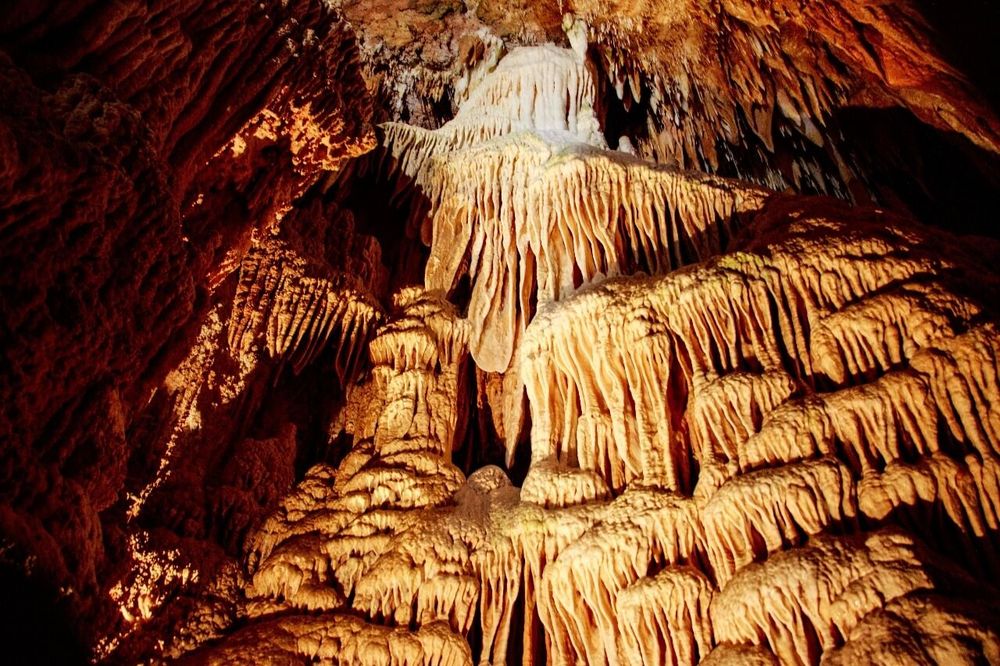
Some 45 kilometres away, Saint-Guilhem-le-Désert and its Gellone Abbey, founded in 804 and UNESCO-listed, are best visited early in the morning or on a weekday. Two kilometres further, the Clamouse cave and its aragonite crystals stay at 17 °C all year, perfect in a heatwave.
The 658-metre Pic Saint-Loup offers views over the Cévennes and the sea, followed by tastings at the local AOC estates. Aigues-Mortes, with its 13th-century ramparts and Tour de Constance, is 45 minutes away, as is Sète and its tielles.
Pick your outing with our guides to 15 day trips around Montpellier and 12 getaway ideas near Montpellier.
Which parks and gardens are best for unwinding in Montpellier?
The Promenade du Peyrou, laid out from 1689, offers free views of the Cévennes and, on clear days, the sea, along with the triumphal arch and the Saint-Clément aqueduct. The Jardin des Plantes, founded in 1593, is France's oldest botanical garden: nearly 5 hectares, a ginkgo planted in 1795, and free entry except on Mondays.
Montcalm Park, about 4 hectares, is perfect for a picnic with produce from the nearby Laissac market. The Domaine de la Méric, a former wine estate of around twenty hectares, is home to fallow deer, sheep and donkeys roaming outdoors.
Find every address in our guide to Montpellier's parks and gardens.
Which beach near Montpellier suits you best?
Palavas-les-Flots, 12 kilometres away, is the locals' beach, reached by tram line 3 and a shuttle; its western side, towards Maguelone, is far quieter. Families tend to choose Petit-Travers at Carnon: 3 kilometres of fine sand and calm, shallow water, as long as you arrive before 10am in summer.
La Grande-Motte stretches 7 kilometres of sand beneath Jean Balladur's pyramids, with paddleboarding and surf schools. Villeneuve-lès-Maguelone, squeezed between lagoon and sea, appeals with its wilder setting.
Compare the spots in our guide to the best beaches near Montpellier.
Where are the best beach shacks on the coast near Montpellier?
Paillotes, the wooden beach bars and restaurants of the Hérault coast, usually open from mid-April to October, so check their social media before you go. In Palavas, La Paillote de Palavas serves tellines and squid at 15 to 22 € a dish, while Banana Beach draws a younger crowd with weekend DJs.
In Carnon, La Cabane de Carnon takes no bookings, whereas the more refined Paillote du Cosy requires them for dinner from June. Sunset Carnon even serves breakfast facing the sea. La Grande-Motte offers the widest choice.
All the addresses are in our guide to the best paillotes around Montpellier.
What family outings can you plan around Montpellier?
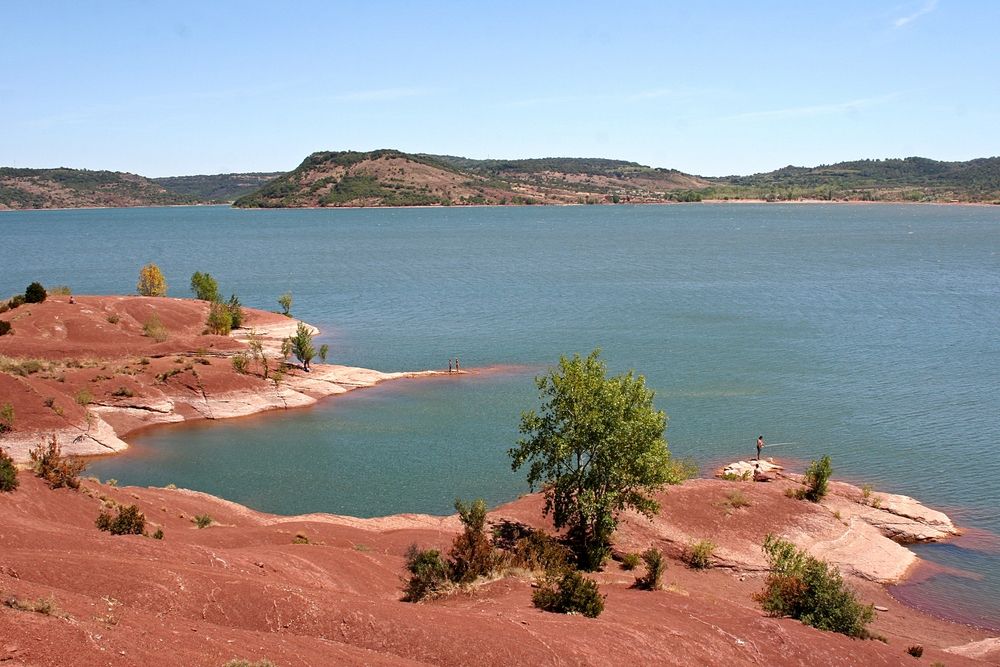
Just 15 minutes away, Palavas-les-Flots opens onto miles of sand stretching to Carnon and La Grande-Motte, and Maguelone Cathedral is a must. Within 45 minutes, medieval villages such as Saint-Martin-de-Londres, Les Matelles and Saint-Guilhem-le-Désert, plus the red earth around Lake Salagou, are well worth the trip.
With children, consider the Seaquarium in Le Grau-du-Roi, the Clamouse cave, the dinosaur museum-park in Mèze or the treasure trail at Valmagne Abbey. The Maison de la Nature in Lattes lets you spot flamingos and European pond turtles.
More ideas await in our article on family days out around Montpellier.
How do you hike the Pic Saint-Loup from Montpellier?
Some 25 kilometres north of Montpellier, the Pic Saint-Loup rises to 658 metres. The classic trail starts in Cazevieille: 5.5 kilometres return, 345 metres of ascent and 2 to 3 hours of walking. Keener hikers can take the 13-kilometre loop from Saint-Mathieu-de-Tréviers, around 5 hours.
The stony ground calls for ankle-high boots and at least 1.5 litres of water per person; set off early in summer and arrive early at the car park, which fills fast. At the top await a cross, a viewpoint indicator and a 360-degree panorama from the Cévennes to the Mediterranean.
Plan your climb with our Pic Saint-Loup hiking guide.
Which typical dishes and sweets should you try in Montpellier?
The city's emblem, the Grisette, a honey and liquorice sweet, is said to date back to around 1150 at the faculty of medicine. On the savoury side, try cagarolettes, snails in a herb vinaigrette, octopus-filled tielle from Sète, fougasse aux fritons, macaronade, mussels brasucade cooked over a wood fire and chichoumeille, the Languedoc take on ratatouille.
For dessert, there are escalettes, wafers over 700 years old, Lenten oreillettes and Clapas chocolates. Finish with a muscat from Frontignan or Lunel.
Discover them in detail in our top 10 culinary specialities of Montpellier.
Where can you enjoy a weekend brunch in Montpellier?
In Port Marianne, Groove Café makes everything in-house every morning: homemade brioche, fig and rosemary jam, a set brunch at 28 to 32 € and a 12 € children's menu, on Saturdays and Sundays from 10am to 2.30pm. Book ahead, as the wait can reach 20 to 30 minutes.
In the heart of the Écusson, on rue Saint-Guilhem, Bonobo serves brunch every day for 22 to 36 €, with good vegetarian options. Specialty coffee lovers should head to Coldrip Coffee on rue Glaize, where weekend brunch costs 25 to 30 € including a drink.
Find every address in our guide to the best brunches in Montpellier.
What can you see at the Musée Fabre in Montpellier?
Founded in 1828 thanks to a donation from the painter François-Xavier Fabre, the museum holds more than 700 works across 9,200 m², from the 14th to the 21st century. The old masters galleries feature Rubens, Veronese and Poussin; allow at least an hour for them alone.
The highlight is the Bruyas collection, with one of the world's largest groups of Courbet paintings, including Bonjour, Monsieur Courbet!, alongside Delacroix, Géricault and Ingres. Don't miss local-born Frédéric Bazille or Pierre Soulages' abstract works. The museum is five minutes from the Place de la Comédie.
Plan your visit with our guide to the Musée Fabre.
What itinerary should you follow to see Montpellier in 2 or 3 days?
Spend the first day in the Écusson: the Place de la Comédie and its Three Graces, cobbled lanes, Saint-Pierre Cathedral with its fortified porch, the faculty of medicine founded in 1220, then the Musée Fabre, which deserves at least an hour and a half. In the evening, the terraces of Place Saint-Roch and Plan Cabanes come alive.
Next comes Ricardo Bofill's architecture in Antigone, the triumphal arch, the Promenade du Peyrou and the Halles Laissac. With three days, add Port Marianne and a trip to the sea or the hinterland.
Follow our itineraries to visit Montpellier in 2 days or visit Montpellier in 3 days.
What are the best things to do in Montpellier as a couple?
Montpellier is perfect for a getaway for two. Wander through the lanes of the Écusson and its mansions, then watch the sunset from the Promenade du Peyrou, facing the Saint-Clément aqueduct. Take a break at the Jardin des Plantes or the Fabre Museum, and book an evening at the Opéra Comédie.
For a night alone together, the Domaine de Verchant offers a five-star hotel with a spa among the vineyards. And for a change of scenery, Lake Salagou is about an hour away by road.
Planning a trip for two? Find all our ideas in our guide to visiting Montpellier as a couple.
Vos commentaires, idées et suggestions
Aucun avis pour le moment