© Shutterstock
 Votre guide Ryo
Activities in Montpellier and Surroundings: the Complete Guide 2026
Montpellier surprises. The youngest city in France by average age is home to the country's oldest botanical garden, founded in 1593 — almost a paradox. In terms of things to do, activities in Montpellier and its surroundings offer remarkable variety: from the city centre, the Mediterranean is just 11 kilometres away; the Pic Saint-Loup rises at 20 kilometres; Saint-Guilhem-le-Désert, listed among the most beautiful villages in France, lies 35 kilometres away. Rarely does a major city concentrate so many different landscapes within an hour's drive.
This guide covers the essentials: the medieval lanes of the Écusson and the utopian architecture of Antigone in the city; the beaches of Palavas and the car-free île de Maguelone on the coast; the limestone gorges of the Hérault and the volcanic Lac du Salagou in the hinterland; the vineyards of the Pic Saint-Loup and the oysters of Bouzigues on the étang de Thau. To begin exploring the city on foot, the Ryo audio guide Dites bonjour à la Surdouée covers 19 stops in 1h30 and 3.5 kilometres — a solid introduction before heading out to the surrounding area.
The Écusson and Antigone: the Heart of Montpellier
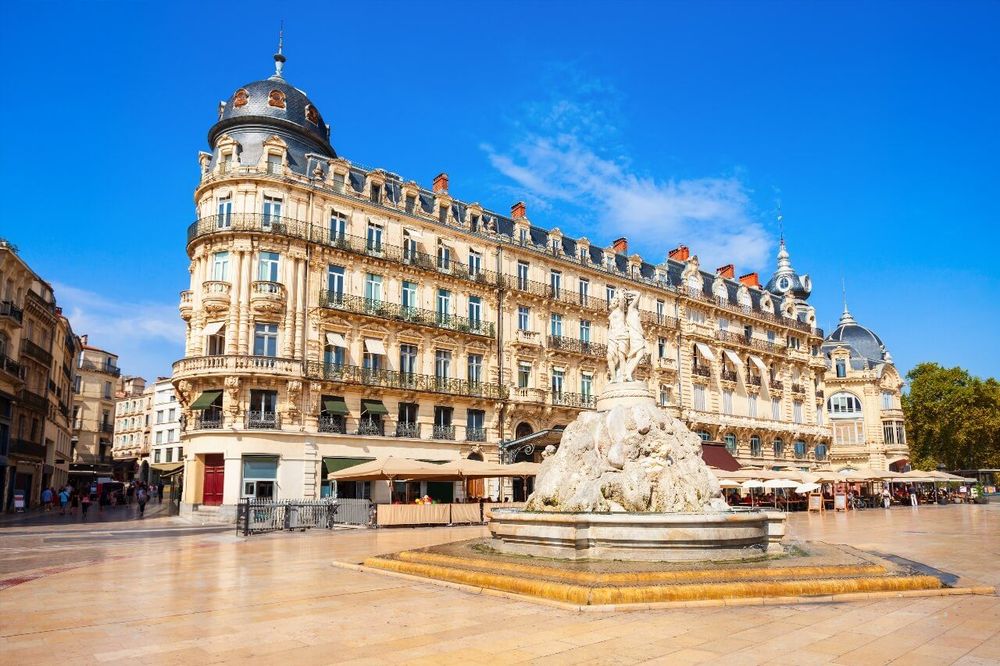
Montpellier's old town takes the name Écusson from its shield-like shape on the map: a slightly irregular triangle of medieval lanes where every turn reveals a Gothic inner courtyard, a 17th-century mansion or an artist's studio hidden behind a carriage gate. Tourism and local life coexist here without friction. Students, families, retirees and visitors all converge on the place de la Comédie, the elliptical esplanade that has served as the city's centre of gravity for three centuries.
From the Comédie, the Esplanade Charles-de-Gaulle stretches north beneath a canopy of centuries-old plane trees. Their shade is precious in summer, and the pétanque players who occupy the paths from late morning give the place a thoroughly southern atmosphere. Heading west, the Promenade du Peyrou occupies the highest point of the old town. This royal terrace built under Louis XIV features an equestrian statue of the Sun King and opens onto a view that, on a clear day, stretches across the Cévennes and the Pyrenees on the horizon. The Aqueduc des Arceaux, whose two-tiered arches still cross the neighbourhood, has supplied the water tower at the end of the promenade since the 18th century.
The Écusson itself deserves at least two hours of aimless wandering. The rue de l'Aiguillerie is lined with contemporary art galleries and independent boutiques; the rue Foch opens onto the grand neoclassical façades of the 17th and 18th centuries. The cathédrale Saint-Pierre, with its two 14th-century porch towers, is one of the few great medieval churches in France never to have been substantially altered. The adjoining cloister houses the faculty of medicine, one of the oldest in Europe and still in operation.
For a gourmet break before continuing, the halles Castellane (1 Rue de la Loge, 34000 Montpellier, rated 4.4/5 on Google from 1,119 reviews) open at 7am and bring together cheesemongers, fishmongers, market gardeners and a handful of counter-service restaurants. This is where Montpellier wakes up, before the terraces of the Comédie take over.
Heading east from the Promenade du Peyrou means stepping into a different era. The Antigone district is a city within a city, designed by Ricardo Bofill from 1979 onwards: colonnades of pale stone, geometric squares, large-scale neoclassical façades. It is far removed from the medieval quarter, but the ensemble has a rare architectural coherence for a contemporary development. The place du Nombre-d'Or leads to the place de l'Europe and the banks of the Lez, redesigned as an urban promenade with café terraces and hanging gardens. The contrast with the lanes of the Écusson, ten minutes away on foot, is striking.
Culture and Museums: What Montpellier Really Hides
Montpellier is not the first city that comes to mind for its museums. That is precisely where the surprise lies.
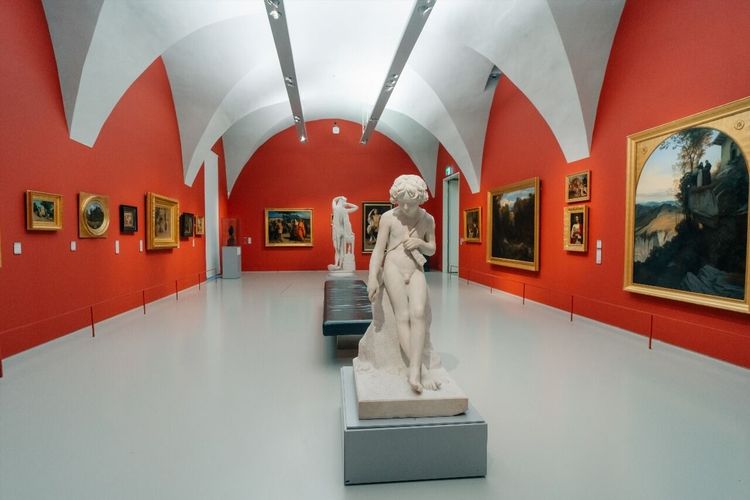
The Musée Fabre is one of France's great provincial painting museums, yet it remains little known beyond Languedoc. Its permanent collection spans 700 years of European painting: Delacroix, Courbet, Rubens, and above all an entire room devoted to Pierre Soulages, whose canvases in absolute black fill the walls with particular force. Admission is €9 (reduced rate €6), free on the first Sunday of the month. To plan your visit and make the most of the hang, consult our Ryo guide to the Musée Fabre.
The Jardin des Plantes de Montpellier (163 Rue Auguste Broussonnet, 34000 Montpellier, rated 4.4/5 on Google from 7,850 reviews), founded in 1593 by Henri IV for the faculty of medicine, is the oldest botanical garden in France. 2,700 species are catalogued here, including an ancient olive tree several centuries old and tropical species housed in glasshouses. Entry is free. The atmosphere blends researchers, neighbourhood walkers and families in a tranquillity made all the more welcome by the bustle of the nearby Comédie.
For the contemporary scene, the MoCo (Montpellier Contemporain) occupies two complementary spaces: the Hôtel des Collections, in a renovated city-centre building, and La Panacée, a former faculty of medicine converted into a venue for experimental exhibitions. Admission ranges from €5 to €7, with a programme that attracts international names without overlooking local creation. Ideally paired with the Musée Fabre for a full day dedicated to culture in Montpellier.
Parks, Gardens, and Green Breathing Spaces
Montpellier is a dense city, but it has managed to preserve open spaces within walking distance of the centre.
The Jardin du Champ-de-Mars, between the railway station and the historic centre, is the main green lung of the lower city. Its plane trees filter a Mediterranean light that evokes Impressionist paintings of the Midi. A little further east, parc Montcalm offers wide open lawns, children's play areas and a tranquillity rarely found in a city of 300,000 inhabitants.
Botany enthusiasts should not miss the parc de la Colombière (185 Avenue du Professeur Louis Vallois, 34000 Montpellier, rated 3/5 on Google from 2 reviews), to the west of the centre, where a century-old rose garden sits alongside rare Mediterranean species and a well-maintained cabinet of botanical curiosities. For a structured green itinerary covering all notable spaces, our Ryo guide to Montpellier's gardens and parks offers routes tailored to the time available and the visitor's profile.
The Mediterranean Coast: Beaches and Water Sports
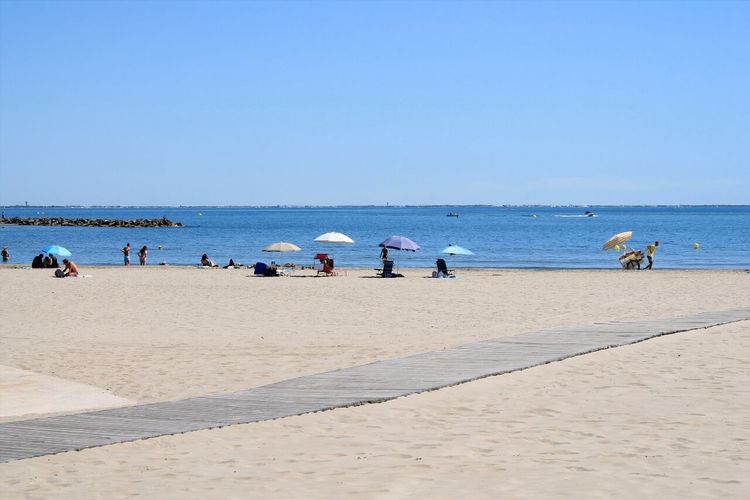
Eleven kilometres separate Montpellier city centre from the Mediterranean. By tram or by car, the sea is just twenty minutes away. This is one of the city's most tangible assets for anyone combining an urban stay with time by the water.
The first accessible beach is Carnon: take tram line 3 to the Pérols Étang de l'Or terminus, extended in summer by the beach shuttle service. Fine sandy beaches stretch for several kilometres, equipped with beach clubs, seafront restaurants and a land sailing spot popular with regulars. The seabed is shallow and the gradient very gentle, making it the top choice for families with young children.
Some 3 kilometres to the south, Palavas-les-Flots is Montpellier's historic seaside resort, frequented by artists and bourgeois families at the turn of the 20th century. The town is bisected by a canal lined with colourful boats, fish restaurants and terraces buzzing until midnight in July. The Palavas lighthouse, recently renovated, offers an open vantage point over the Languedoc coastline and the étang de Pérols. The beach bars and open-air guinguettes are a summer institution in this area; our Ryo selection of the best beach bars around Montpellier lists the top spots by atmosphere and style.
Further east, La Grande-Motte (Place de la Mairie, 34280 La Grande-Motte, rated 3.7/5 on Google from 346 reviews) shifts the tone entirely. This town built from scratch in the 1960s by architect Jean Balladur imposed white concrete pyramids that still divide opinion, yet have been designated a site of notable contemporary architecture since 2010. The marina accommodates 1,400 boats; the beaches are wide, well organised and accessible to people with reduced mobility. For sports enthusiasts, paddle board, sea kayak and catamaran rentals are available directly on the beach.
Between the beaches, the île de Maguelone deserves half a day to itself. This protected peninsula, reachable on foot or by bike from Palavas, is dominated by an 11th-century Romanesque cathedral built amid the lagoons. No cars, no shops: just the cathedral, vineyards, storks in winter and the sound of the wind. Our Ryo guide to Montpellier's beaches also covers Maguelone and all the coastal options in the surrounding area.
Lagoons and Wetlands: Discreet and Surprising Nature
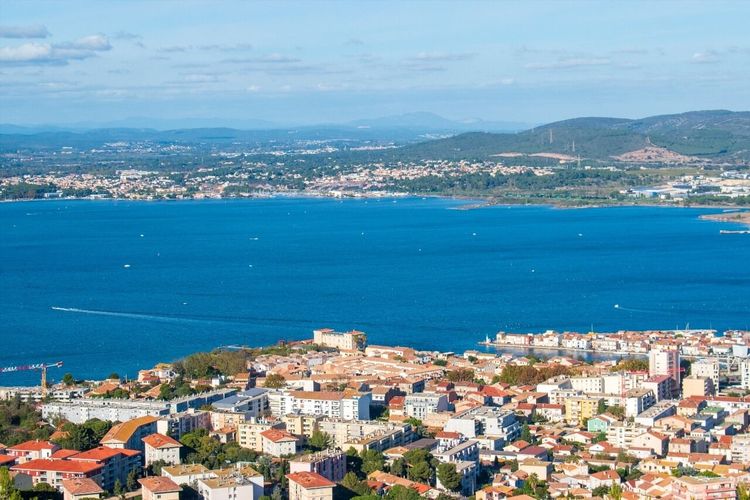
Between the sea and the vineyards, the Languedoc coastline hides a network of lagoons that visitors rushing to the beaches too often overlook.
The étang de Thau, 35 kilometres west of Montpellier, is the largest of Languedoc's coastal lagoons at 7,400 hectares. It is best known for its oyster beds: Bouzigues, on the northern shore, produces oysters and mussels whose reputation extends well beyond the region. A tasting directly from the producers, feet at the water's edge with a view over the farming tables, is one of the most accessible culinary experiences in the area. The town of Sète, at the mouth of the lagoon, rounds out the excursion with its royal canal, summer water jousting tournaments and the climb to Mont Saint-Clair for a panorama over the sea on one side and the lagoon on the other.
East of Montpellier, the lagoons of Pérols and Méjean are part of a Natura 2000 protected wetland. Flamingos, grey herons, little egrets — birdwatching is not confined to the Camargue. A cycle path connects these lagoons from Montpellier city centre via the parc Méric, a round trip of approximately 12 kilometres each way. Our Ryo cycling suggestions around Montpellier detail this coastal route and other itineraries suited to all levels.
Medieval Villages and Heritage Towns: the Gems of the Hinterland
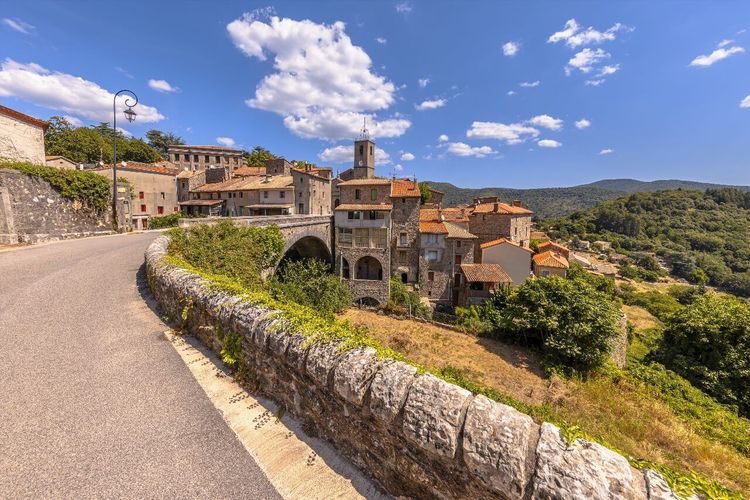
Less than an hour from Montpellier, the Hérault hinterland concentrates a density of listed villages that surprises even travellers well acquainted with the south of France.
Saint-Guilhem-le-Désert is arguably the most beautiful. Listed among the Plus Beaux Villages de France, this settlement of 200 permanent residents clings to a rocky spur in the Hérault gorges. The abbaye de Gellone, founded in 804 by Guilhem, a cousin of Charlemagne, is a masterpiece of Occitan Romanesque art whose cloister is today displayed at the Metropolitan Museum in New York. The village itself is a genuine pleasure to explore out of season; in July and August, plan to arrive before 10am or after 5pm to avoid the concentration of visitors in the narrow lanes.
Pézenas, 45 kilometres to the west, is sometimes nicknamed the 'Versailles of Languedoc'. During the 16th and 17th centuries, the town hosted the États généraux du Languedoc and a flourishing intellectual life. Molière stayed here several times with his troupe; his house is now a museum. The historic centre contains Renaissance mansions of remarkable architectural quality within a very compact perimeter. Craftsmen's workshops, concentrated in the old commercial streets, offer ceramics, glassblowing and local jewellery.
Lunel (Place des Martyrs de la Résistance, 34400 Lunel, rated 4.0/5 on Google from 950 reviews), between Montpellier and Nîmes, is worth a stop for its Saturday morning market, one of the liveliest in the Hérault, and for its ideal position as a starting point for the Camargue gardoise. Less well known than the others, it makes a useful halt on an itinerary towards Aigues-Mortes or the Saintes-Maries-de-la-Mer. To explore further afield, our Ryo guide to day trips around Montpellier suggests half-day and full-day outings according to the desired distance.
Hiking and Open Spaces: from the Pic Saint-Loup to the Lac du Salagou
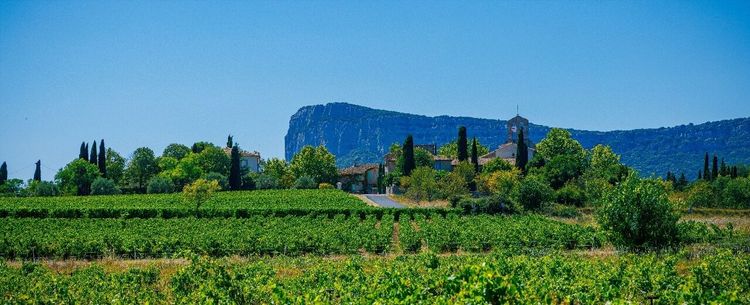
Montpellier is the only major Mediterranean city in France with a mountain peak visible from its city centre. The Pic Saint-Loup rises to 658 metres and dominates the Hérault garrigue for dozens of kilometres in every direction. From the summit, on a clear day, you can simultaneously make out the sea, the Cévennes and the Pyrenees. On some winter mornings, the Alps appear in the far distance.
The classic ascent from the village of Saint-Mathieu-de-Tréviers takes 1h30 to 2h for confident walkers, with a vertical gain of 420 metres. The final ridge delivers a 360° panorama before reaching the summit cross. Opposite the peak, the Hortus is a complementary rocky plateau that shelters remarkable cliff-dwelling wildlife: griffon vultures, peregrine falcons and Bonelli's eagles. Our Ryo guide to hiking the Pic Saint-Loup details all ascent variants according to level and time available.
The Hérault gorges offer a completely different landscape: white limestone, turquoise water, sheer cliffs rising tens of metres. The Pont du Diable, listed as a UNESCO World Heritage Site as part of the Camino de Santiago routes, is the most frequented entry point. This is where the Hérault narrows between two rock faces and where swimmers settle on flat rocks in summer. 3 kilometres upstream, the Grotte de Clamouse (Route de Saint-Guilhem-le-Désert, 34150 Saint-Jean-de-Fos, rated 4.7/5 on Google from 7,486 reviews) features crystal formations of exceptional delicacy: star-shaped aragonite, translucent stalactites, limestone columns. The guided tour lasts 1 hour and includes a sound-and-light trail.
The Lac du Salagou, 45 kilometres to the northwest, is a landscape from another world: blue waters ringed by volcanic red earth (the 'ruffes') and black basalt, abandoned villages at the water's edge, moorland bare of tall vegetation. The full circuit trail (25 kilometres) takes a full day; shorter variants of 2 to 3 hours allow you to discover the most spectacular sections without excessive physical commitment. Swimming is permitted on several unsupervised beaches. Our Ryo selection of hikes in the Hérault includes an annotated itinerary around the Salagou with highlighted viewpoints. In the city, our audio-guided tour covers the Écusson in 21 stops.
Vineyards and Wine Tourism: the Languedoc Wine Routes
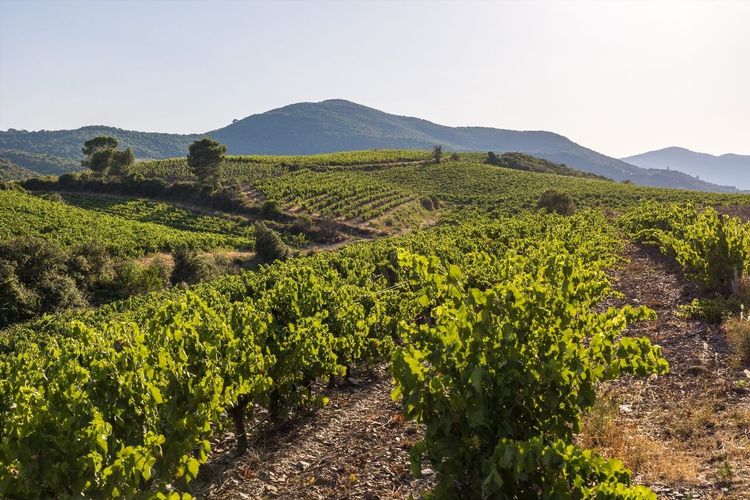
Languedoc is France's largest wine-growing region by surface area. Around Montpellier, two appellations deserve an exploration in their own right.
The Pic Saint-Loup (AOC Languedoc-Pic Saint-Loup) produces structured reds based on syrah and grenache, with a minerality typical of the garrigue's limestone soils. Around twenty estates offer visits and tastings, some with accommodation. The village of Claret, halfway between Montpellier and the peak, clusters several private cellars open without appointment from Tuesday to Saturday. The best period for visits remains September–October, when the harvest enlivens the vines and temperatures become pleasant once again.
The Muscat de Lunel, one of Languedoc's four AOC natural muscats, is produced over a small territory around Lunel. Winey, amber-hued, with aromas of honey and candied fruit, it pairs perfectly with local desserts. The Lunel cooperative cellar offers guided tours of the mutage process, the fermentation-halting technique involving the addition of alcohol that gives muscats their characteristic sweetness.
For a structured wine tourism day, the Pic Saint-Loup wine route offers a 45-kilometre circuit with 18 member estates, explanatory panels on grape varieties and local techniques, and stops in little-visited garrigue villages. Many estates sell directly at prices below those of supermarkets, making the detour quickly worthwhile.
With the Family: the Best Days Out with Children
Montpellier scores well with families: several major attractions are free or very affordable, and the sea is twenty minutes away.
The Montpellier Zoo is one of the city's great surprises: a fully free municipal zoo, one of the very few in France. 160 species are represented, including giraffes, critically endangered white rhinos from Africa and lowland gorillas in a semi-natural enclosure. The park covers 14 hectares in the Cité universitaire district, 10 minutes from the centre by tram. Free entry 365 days a year.
The Aquarium Mare Nostrum (Allée Ulysse, 34000 Montpellier, rated 4.4/5 on Google from 12,907 reviews), in the Odysseum complex to the east of the city, offers an immersive journey through Mediterranean and tropical ecosystems. Its central tank of 3 million litres is home to sharks, manta rays and giant groupers, visible from a 30-metre glazed gallery. Allow €18 for adults and €12 for children; booking online is advisable in July and August to avoid queues at the entrance.
In the hinterland, the Grotte de Clamouse works very well with children aged 6 and up: the sound-and-light trail through the rooms of crystal formations keeps younger visitors engaged for the full duration of the visit. The family ticket (2 adults + 2 children) costs approximately €50. For an outdoor sporting outing, the beaches at Carnon offer junior sailing schools and inflatable water structures from age 5.
Nightlife and Cultural Scene
The youth of its population gives Montpellier a nocturnal energy that surprises visitors expecting a sleepy southern city after dinner.
The Corum, the concert and congress hall designed by Claude Vasconi, hosts the Orchestre national de Montpellier year-round as well as jazz and opera performances. In summer, the Montpellier Danse Festival (June–July) and the Festival de Radio France (July) transform the city into a temporary cultural capital with open-air stages in the courtyards of private mansions. To follow upcoming events, the Ryo events calendar for Montpellier is updated regularly.
The bars of the Écusson, around the rue de la Loge and place Saint-Roch, come alive Thursday through Sunday. The place Jean Jaurès (Place Jean Jaurès, 34000 Montpellier, rated 4.2/5 on Google from 2.1K reviews), nicknamed 'la Pla-J' by students, is the epicentre of Montpellier's aperitif scene: around twenty terraces lined up on a large esplanade, with a relaxed atmosphere from Wednesday evening through Sunday. For live music fans, mid-sized venues such as l'Antirouille and le Secret Place host an active local rock scene several evenings a week.
Practical Information: How to Plan Your Stay
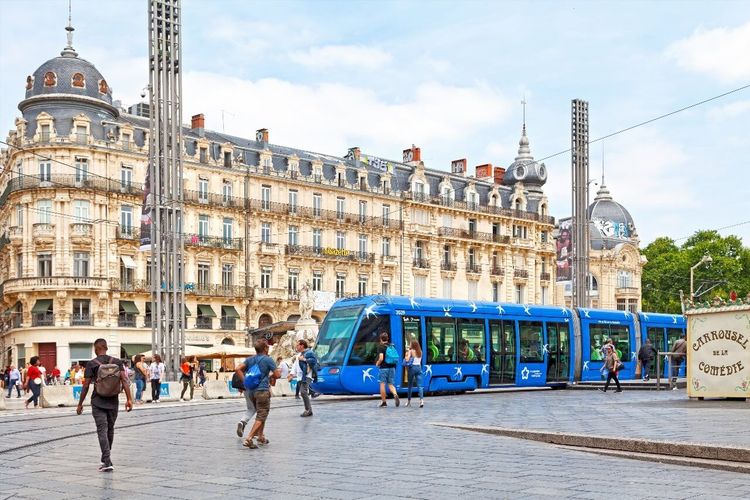
Getting around: Montpellier's tram network has 5 lines (line 5 opened at the end of 2025) serving most tourist sites and a large part of the metropolitan area. To reach the coast, take tram line 3 extended by the summer beach shuttles. For the surrounding area (Sète, Pic Saint-Loup, Saint-Guilhem, Lac du Salagou), a car remains essential. TAM Vélo bike-share bicycles are available throughout the city centre for getting around within the city.
When to come: the high season (July–August) guarantees sunshine but also crowds on beaches and in popular villages. May–June and September–October are the best windows: pleasant temperatures between 20 and 27 °C, a swimmable sea in September, and active vineyards in autumn. Winter is mild (average 7 °C in January), with occasional spells of tramontane, the northerly wind characteristic of the region.
Average budget: between €60 and €100 per person per day for accommodation, food and paid activities. The zoo, the botanical garden and several parks are entirely free; many museums offer free entry on the first Sunday of the month.
FAQ
What are the best free activities in Montpellier?
Several must-see attractions are completely free: the Montpellier Zoo (160 species, open 365 days a year), the Jardin des Plantes (the oldest in France, 2,700 species), the Promenade du Peyrou and a stroll through the Écusson. The Musée Fabre is free on the first Sunday of the month. The coastal lagoons of Pérols and Méjean are accessible by bike with no entrance fee. It is easy to fill two full days without spending a single euro on tickets.
What can you do around Montpellier in a day?
Several excursions can easily be organised as a day trip from the city centre. Saint-Guilhem-le-Désert combined with the Pont du Diable and the Grotte de Clamouse makes for a full 6-to-7-hour programme. Sète and the étang de Thau, with an oyster tasting in Bouzigues, form an excellent coastal itinerary. For hikers, the ascent of the Pic Saint-Loup takes half a day and can be combined with a visit to a wine estate in the late afternoon.
What are the most beautiful beaches near Montpellier?
Carnon, 11 kilometres away (accessible by tram), is ideal for families with young children thanks to its shallow seabed. Palavas-les-Flots offers a lively seaside atmosphere with fish restaurants and beach bars. The île de Maguelone, reachable by bike, is a protected peninsula with no cars or shops, perfect for a peaceful swim. La Grande-Motte has wide, well-equipped beaches with organised water sports activities.
Where can you hike around Montpellier?
The Pic Saint-Loup (658 m, 1h30–2h ascent) is the region's iconic hike, offering an exceptional panorama. The trails through the Hérault gorges around Saint-Guilhem-le-Désert feature spectacular routes through limestone cliffs. The Lac du Salagou offers an easy full-day hike through a landscape of volcanic red earth unique in France. The garrigue scrubland around the Pic Saint-Loup, classified as a Natura 2000 site under the name Hautes Garrigues du Montpelliérais, offers less-frequented routes lasting 2 to 5 hours.
What can you do in Montpellier with children?
The Montpellier Zoo (free, white rhinos, gorillas) is the first instinct for parents. The Aquarium Mare Nostrum at Odysseum impresses with its 3-million-litre tank and its sharks. The beaches at Carnon with their inflatable structures are suitable for children from age 3. In the hinterland, the Grotte de Clamouse with its sound-and-light tour works very well for children aged 6 and up, and the Pont du Diable with its swimming spots in the gorges is a big hit with older children.
When is the best time to visit Montpellier and its surroundings?
May–June and September–October remain the best periods: ideal temperatures between 20 and 28 °C, swimmable beaches, moderate crowds and active vineyards in autumn. July–August guarantees fine weather and major festivals (Montpellier Danse, Festival de Radio France) but beaches and popular villages are very busy at weekends. In winter, Montpellier remains pleasant with its 300 days of sunshine per year, although the tramontane wind can make some days blustery.
Conclusion
Montpellier and its surroundings make up one of the most varied areas for exploration in the south of France. A city of multi-century architecture and a rich cultural life, beaches less than twenty minutes away, listed medieval villages, limestone gorges, ornithological lagoons, garrigue vineyards and a volcanic red lake: the challenge is not finding something to do, it is choosing.
To start in the city centre, the Ryo audio guide Dites bonjour à la Surdouée takes you through the 21 essential stops of the Écusson in 1h30. This audio-guided tour of Montpellier is available on the Ryo app, downloadable before you leave. A great way to get to know the city before setting out to explore the surrounding area.
À lire également