© Shutterstock
 Votre guide Ryo
What to Do in Sète: 15 Experiences Between Canals, Mont Saint-Clair, and the Thau Lagoon (2026)
Sète is unlike any other town on the Languedoc coast. Here, fishermen still unload their crates of fish at dawn on the quays of the Canal Royal, while residents of the Quartier Haut hang their laundry from the windows of ochre and pink façades. Built on a narrow strip of land caught between the Mediterranean and the Thau lagoon, the town long lived with its back to its port before becoming, over the past twenty years, a fully-fledged cultural destination. What to do in Sète when you have a weekend or a full week? The answer lies as much in its canals and mont Saint-Clair as in its museums and seafood restaurants. If you are staying closer to Montpellier, the Ryo audio-guided tour of Montpellier makes an ideal complement to a trip to Sète, less than 45 minutes away by road.
This article details fifteen experiences, from the canals of the little Venice of Languedoc to the salt marshes of Frontignan where flamingos nest. You will discover why Paul Valéry chose to rest facing the sea in a cemetery named after his most celebrated poem, how the Languedoc water jousting tournaments transform the canals into a popular arena every summer, and where to taste the tielle, the octopus pie born in the Italian kitchens of the port in the 19th century. Between the Musée international des arts modestes, the oyster shacks of Bouzigues, and the 360-degree panorama from the chapelle Notre-Dame-de-la-Salette, Sète is best discovered at a deliberately slow pace.
1. The Old Port and Sète's Iconic Neighbourhoods
Sète did not exist before 1666. The town was born from a decision by Louis XIV, backed by his minister Colbert, who wanted to give Languedoc a maritime outlet for the Canal du Midi then under construction: the first stone of the breakwater was laid in July 1666. This history of a planned port city explains the particular geometry of the centre: straight canals that structure the neighbourhoods, a topography squeezed between mont Saint-Clair and the sea, and an identity that owes everything to water. Two neighbourhoods alone capture this dual maritime and working-class life.
The Quartier Haut and La Pointe Courte, Two Faces of Sète
The Quartier Haut climbs up the slopes of mont Saint-Clair, through a maze of steep, narrow lanes where ochre, pink, and faded blue façades press close together. You explore it on foot, often catching your breath on the steeper passages, to discover artists' studios installed in former fishermen's houses. The Décanale Saint-Louis, a collegiate church whose origins date back to the town's earliest decades, anchors the lower end of the neighbourhood, while a small chapel higher up the hill, known as the chapelle du Quartier Haut, serves as a landmark before the ascent to mont Saint-Clair itself.
At the other end of town, separated from the centre by a canal, La Pointe Courte cultivates a radically different atmosphere. This fishing neighbourhood of low, colourful houses built right on the water has retained its village-within-a-city character. Boats moored in front of doorways and laundry drying between two façades compose a familiar scene, in the silence of car-free lanes. Cinema immortalised this setting: Agnès Varda shot her first feature film here in 1954, released the following year under the neighbourhood's own name, giving La Pointe Courte (Quartier de la Pointe Courte, 34200 Sète, rated 4.7/5 on Google with 2,614 reviews) a fame that extends far beyond Sète. Even today you can walk these narrow quays without meeting more than a handful of strollers, even in high season.
Between the two, the town centre lines up its Italianate 19th-century buildings along the canals, a legacy of Sète's golden age of maritime trade. Allow a good hour and a half to walk from the Quartier Haut to La Pointe Courte via the centre, stopping regularly on the bridges to watch the comings and goings of the boats.
The Canals and the Old Port, Between Fishermen and Markets
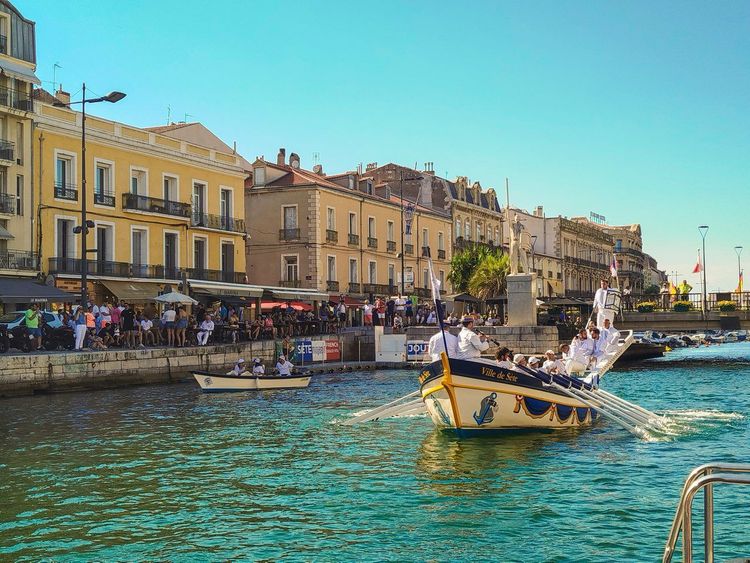
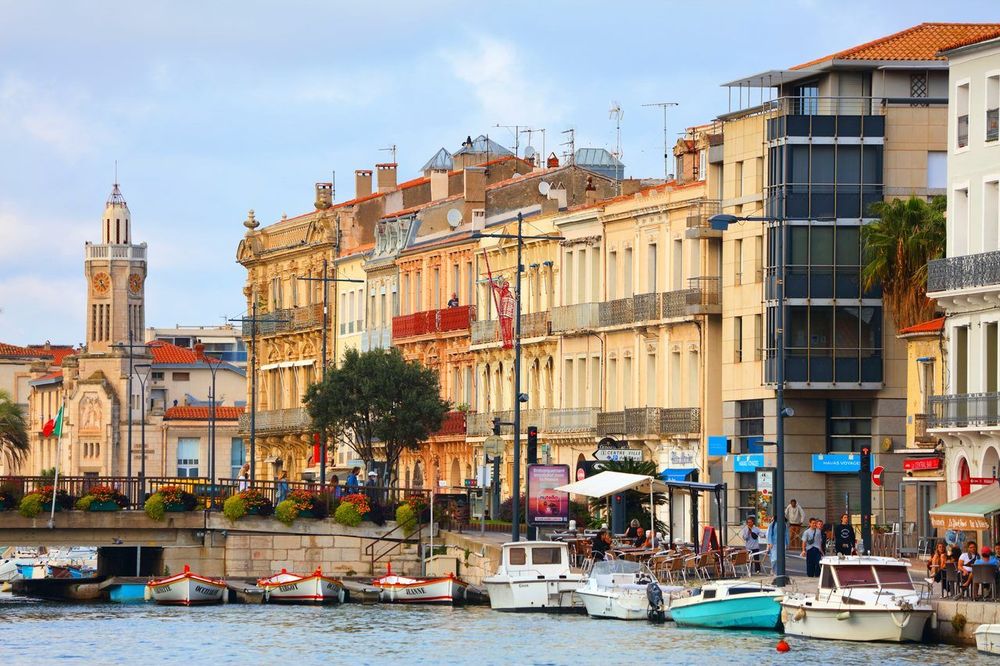
The old port of Sète beats to the rhythm of markets and fish auctions, between quays, canals, and colourful stalls, earning the town its nickname of the little Venice of Languedoc. The Canal Royal, which runs through the town to the old port, is lined with restaurant terraces and stalls selling shellfish and Bouzigues mussels directly from the producers. Early in the morning, the pointus — the small traditional boats typical of the Thau basin — return laden with their night's catch.
Strolling along the ports of Sète remains one of the simplest ways to understand the town: each quay has its speciality, from the ones where large trawlers moor to the pontoons more oriented towards pleasure craft. The Fêtes de la Saint-Louis, at the end of August, transform these same canals into the theatre of water jousting, but for the rest of the year, people come mainly to watch fishermen mend their nets or to choose a crate of oysters to take home.
The Sète fish auction, France's leading Mediterranean fishing port, perpetuates a tradition that began with the founding of the port. Sales still take place every working day among fish merchants, now via screen rather than voice, and the tourist office regularly organises guided tours that allow visitors to watch the trawlers unload. Nearby, the stalls on the Quai de la Résistance allow you to buy the day's catch directly, generally cheaper than at the Halles market in the centre.
A tip if you are discovering Sète for the first time: position yourself on one of the swing bridges of the Canal Royal when it opens to let a sailing boat through. In a few minutes, you take in at a glance the town's grid-like layout between canals and perpendicular streets, and you understand why the people of Sète still plan their journeys around bridge openings.
2. Gaining Perspective: Mont Saint-Clair and Its Panoramas
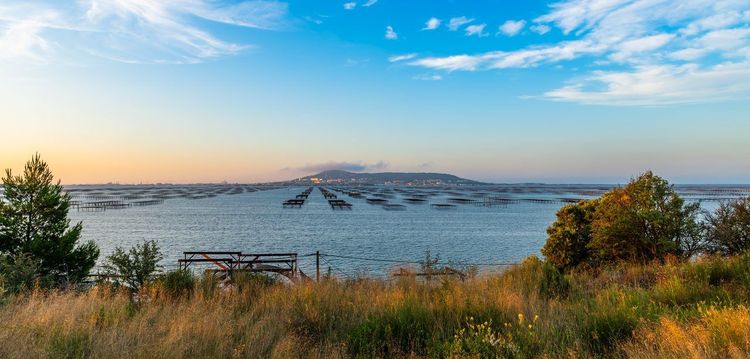
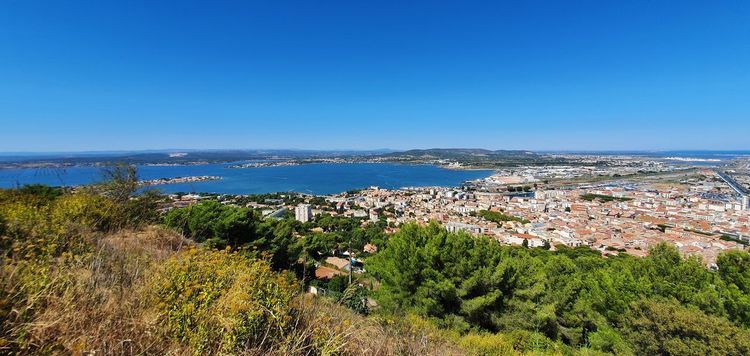
Sète is defined entirely by its mont Saint-Clair, a limestone outcrop of around 175 metres that separates the town from the Thau lagoon. Two viewpoints compete for visitors' favour, one looking inland, the other towards the open sea.
Mont Saint-Clair and the Chapelle Notre-Dame-de-la-Salette
Mont Saint-Clair serves as the town's green lung, planted with pine trees and crisscrossed by shaded paths that wind up from the Quartier Haut. At the summit, the chapelle Notre-Dame-de-la-Salette, set up in a former military redoubt and decorated in the 20th century by the painter Bringuier, opens onto a panorama that few coastal towns can claim: on one side the Mediterranean stretching to the horizon, on the other the Thau lagoon and its oyster shacks lined up like dots on the water, and in the distance, on a clear day, the foothills of the Cévennes. An orientation table helps identify every village visible from the terrace, from Marseillan to Balaruc-les-Bains and Bouzigues.
Access is on foot from the centre in 25 to 30 minutes of steady climbing, or by car to a small car park near the summit for those less keen on the walk. Shaded picnic tables wait at the foot of the chapel: many people from Sète come up at the end of the day simply to watch the sun dip behind the Thau lagoon. Several paths then lead back down to different parts of town: one rejoins the marine cemetery and the Musée Paul Valéry, another emerges in the Quartier Haut near the Décanale Saint-Louis. Enough to plan a complete loop without retracing your steps, alternating views over the sea and the lagoon depending on the path chosen.
The Lighthouse and the Môle Saint-Louis, the Town at Your Feet
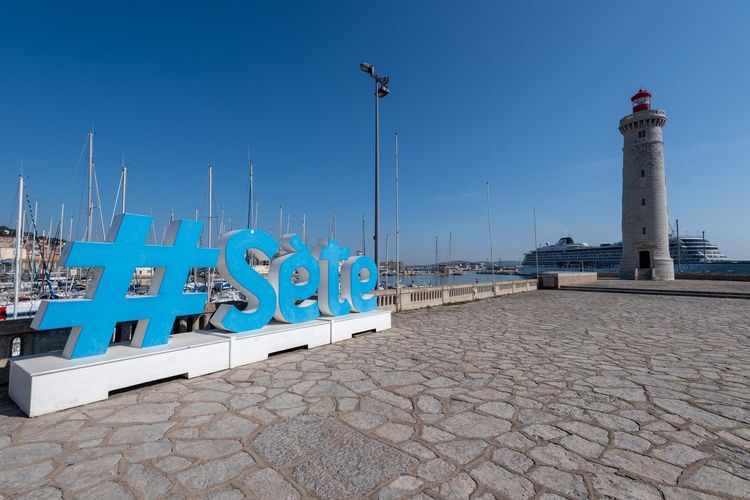
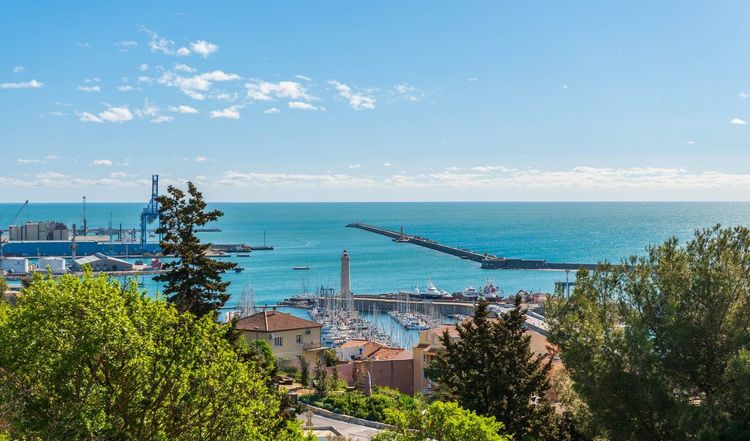
On the opposite side, on the breakwater that closes off the port, the phare Saint-Louis (Môle Saint-Louis, 34200 Sète, rated 4.5/5 on Google with 873 reviews) and the Môle Saint-Louis offer a water-level viewpoint rather than an elevated one. The lighthouse, rebuilt after the Second World War, still guides boats into the channel, and its base is accessible via a stone walkway that stretches far out into the Mediterranean. In season, it occasionally opens for visits: about a hundred steps lead up to the lantern and a bird's-eye view of the trawlers returning to port.
The môle itself is one of the favourite late-afternoon spots for the people of Sète: anglers and families out for a stroll cross paths unhurriedly, with a view of the cargo ships waiting offshore before entering the commercial port. In moderate wind, the waves breaking against the blocks of the môle almost give the impression that the sea is dancing beneath your feet. Unlike mont Saint-Clair, the spot is flat and accessible to everyone, including pushchairs, making it a practical alternative if the climb does not suit your group.
3. The Marine Cemetery, in the Footsteps of Paul Valéry
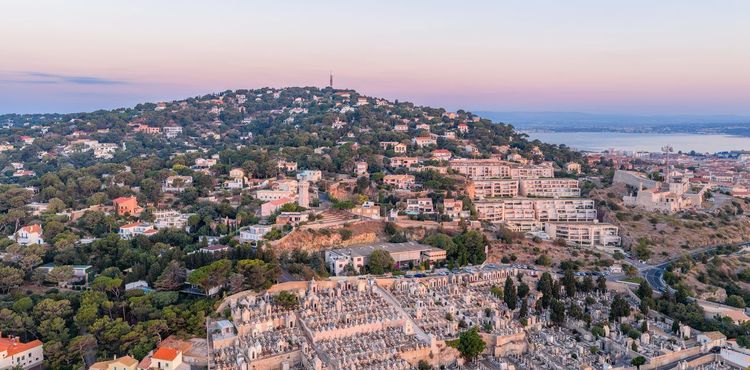
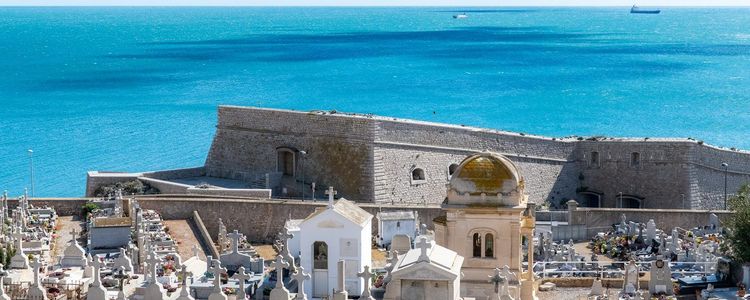
"Ce toit tranquille où marchent des colombes..." The opening line of Le Cimetière marin (Chemin du Cimetière Marin, 34200 Sète, rated 4.6/5 on Google with 103 reviews), the poem Paul Valéry wrote with this very place in mind, captures the atmosphere of the site perfectly. The marine cemetery of Sète spreads across successive terraces on the slope of mont Saint-Clair that faces the Mediterranean, between cypress trees and white marble tombs that seem to float above the water.
Paul Valéry, born in Sète in 1871, rests in the family vault, a few metres from a stele bearing the opening lines of his most celebrated poem. Georges Brassens, another son of the town, joked in his Supplique pour être enterré à la plage de Sète about the idea of being buried there, but he actually rests at the Cimetière Le Py on the other side of the mont, in a far more discreet family tomb. A visit to the marine cemetery takes about half an hour: aim for late afternoon, when the raking light sculpts the graves and the view over the Mediterranean becomes particularly photogenic.
4. Sète, Cultural Capital: Museums You Should Not Miss
Sète has five museums for a town of just over 40,000 inhabitants, a rare ratio that reflects a long-standing commitment to culture. Visiting Sète's museums allows you to understand the town from several angles at once: high art, maritime memory, popular song, and outsider art speak to one another from one building to the next, often just a few minutes' walk apart.
The Musée Paul Valéry and the Musée de la Mer, Art Facing the Mediterranean
The Musée Paul Valéry occupies a modern building set into the slope of mont Saint-Clair, just above the marine cemetery. The collections trace the history of Sète from its founding to the 20th century, with a significant body of work devoted to Paul Valéry's graphic output — a poet, but also a prolific draughtsman — alongside an ambitious programme of temporary exhibitions. The large bay windows frame the Mediterranean like an additional painting, making it arguably the most photographed museum in town.
A few hundred metres away, the Musée de la Mer traces the maritime and fishing history of Sète: models of pointus, fishing tools, archives of water jousting, and testimonies from fishermen. The deliberately sober scenography lets the objects do the talking rather than explanatory texts, making the visit accessible even to children not inclined to read display panels.
Allow an hour for each museum, or a full morning if you visit them back to back: most of Sète's museums close one day a week, so check opening times on the town's website before heading up to the Quartier Haut. A full-price ticket to one museum costs around 5 to 10 euros depending on whether a temporary exhibition is running, and combined tickets or reduced rates exist for those visiting several venues: the tourist office on Quai Aspirant Herber can advise on current packages. Under-18s get in free everywhere, and a few national events such as the Nuit des Musées in spring or the Journées Européennes du Patrimoine in September open the doors at no charge.
The Espace Georges Brassens and the MIAM, Sète's Popular Memory
Sète was the birthplace of Georges Brassens in 1921, and the town pays tribute to him through the Espace Georges Brassens, a museum installed at the foot of mont Saint-Clair, right opposite the Cimetière Le Py where the singer rests. Annotated manuscripts, guitars, sound excerpts, and a headphone tour trace his journey, from his difficult early years in Paris to national recognition. The most devoted fans will spot objects rarely shown elsewhere, such as his pipe or letters exchanged with his close friends in Sète.
At the opposite end of the artistic spectrum, the musée international des arts modestes, better known by its acronym MIAM (23 Quai Maréchal de Lattre de Tassigny, 34200 Sète, rated 4.3/5 on Google with 1,078 reviews), occupies a former wine warehouse on the quays. The concept, born in 2000 at the initiative of artists Hervé Di Rosa and Bernard Belluc, involves displaying popular art and mass-culture objects without hierarchy, in a joyful mix that bewilders as much as it amuses. Vintage toys, ex-votos, advertising figurines, and contemporary works coexist across several floors, with a programme of temporary exhibitions refreshed each year.
The MIAM remains, alongside the Musée de la Mer, the most suitable for a family visit: the playful scenography and deliberately relaxed format keep both children and adults who shy away from traditional museums engaged throughout.
5. Live Performances: Theatres and Street Art
Sète's cultural programme does not stop at its museums. Between June and September, the town multiplies its live events, from open-air concerts to monumental murals that are gradually covering the blank walls of the port.
The Théâtre de la Mer and the Théâtre Molière
Set in the old fort Saint-Pierre, a 17th-century military bastion overlooking the Mediterranean, the Théâtre de la Mer hosts an open-air programme of concerts and shows each summer, with the sea as a backdrop behind the stage. Its stone tiers, which seat several thousand spectators, attract national and international headliners throughout the summer season: few venues in France offer such a setting as night falls behind the musicians.
More traditional in form, the théâtre Molière (Boulevard Camille Blanc, 34200 Sète, rated 4.7/5 on Google with 655 reviews), a national stage for the Thau archipelago, occupies an Italian-style 19th-century building in the heart of the town centre, facing the Canal Royal. Its programme blends contemporary theatre, dance, circus, and music all year round, in a renovated auditorium that has retained its original décor.
The MaCO, Open-Air Street Art
The MaCO, short for Musée à Ciel Ouvert (Open-Air Museum), transforms the blank façades of the port neighbourhoods into an urban gallery. Born in the wake of the K-Live festival, which each spring invites artists to paint the town's walls, it now brings together several dozen monumental murals, some exceeding ten metres in height, all viewable for free simply by strolling along the quays.
The project quickly gained recognition beyond the region, to the point of attracting artists from South America and Eastern Europe to paint their wall over the course of a week. Some works disappear from one year to the next, painted over by newcomers, giving the trail a renewed character almost every season. A map of the murals, available at the tourist office and online, links the main works between the môle Saint-Louis and the port district: allow about an hour to find them all on foot.
6. Beaches and Coastline: the Lido and Its Coves
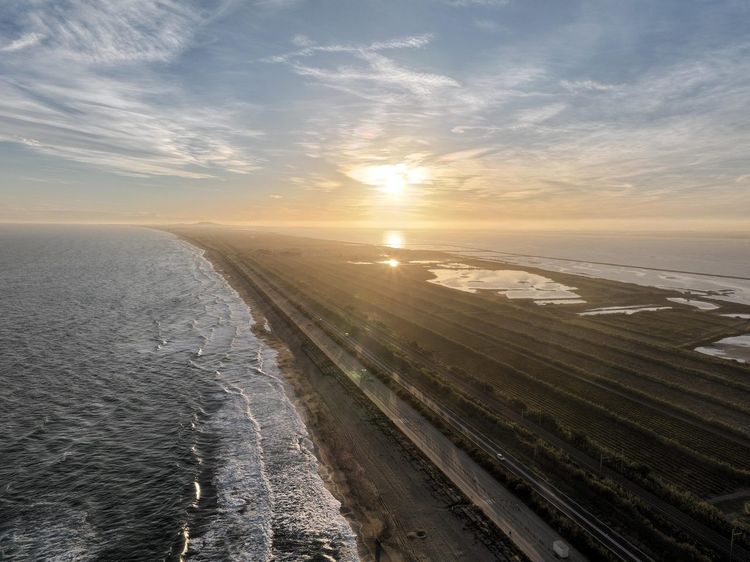
Sète has an asset that few port towns can claim: a sand spit that runs for about twelve kilometres all the way to Marseillan-Plage, with almost no construction between the road and the sea.
The Lido Beaches, from Sète to Marseillan
The Lido beaches stretch along the coastal road linking Sète to Marseillan, separating the Mediterranean from the Thau lagoon on a strip of land sometimes only a few hundred metres wide. Fine sand and low dunes, with an almost total absence of seafront buildings, create an atmosphere decidedly different from neighbouring seaside resorts. The dune ridge has also been the subject of a major restoration project: the road was moved back several hundred metres and the dunes were replenished to slow erosion, which explains the very natural appearance of the central section.
Families generally favour the first few kilometres, closer to the centre and supervised in season, while the sections further to the south-west, wilder in nature, tend to attract those who enjoy long walks on the sand. Several clubs set up directly on the beach offer paddle board, kayak, and watersports equipment hire, an easy way to fill an afternoon without any advance planning. The wind that blows regularly along this stretch of coastline also makes it a popular spot for kitesurfers and windsurfers. A continuous cycle path and, in summer, a shuttle bus serve the entire spit: you can choose your stretch of sand based on how busy it is, without a car. If you are looking for other beaches in the area, our Ryo article on the most beautiful beaches around Narbonne usefully completes this section of the Languedoc coastline.
The Crique de l'Anau, a Preserved Wild Spot
Less well known, the crique de l'Anau (Route de la Corniche, 34200 Sète, rated 4.7/5 on Google with 11 reviews) nestles on the southern slope of mont Saint-Clair, between rocks and pine trees, away from the long Lido beach. Access is on foot via a path that descends from the corniche, which puts off many visitors in a hurry.
The result: a small cove of pebbles and sand where the water stays particularly clear, prized by the people of Sète themselves as a way to escape the summer crowds at the Lido. There is no lifeguard post or shop on site, so remember to bring something to drink and sun protection, and wear shoes with a good grip for the descent.
7. The Forêt des Pierres Blanches and the Massif de la Gardiole
Between mont Saint-Clair and the Thau lagoon, the Forêt des Pierres Blanches takes its name from the limestone outcrops that break through the garrigue in places. This classified natural area, planted with Aleppo pines and holm oaks, shelters several kilometres of marked trails and viewpoints that open up views over the Thau lagoon, the Lido, and on a clear day as far as the Canigou. The main circuit can be completed in one to one and a half hours of easy walking from the car park, passing picnic tables and interpretation panels on Mediterranean flora.
A little further north, the massif de la Gardiole (D2, 34110 Frontignan, rated 4.6/5 on Google with 46 reviews) extends this same garrigue between Frontignan and Montpellier, a wild balcony overlooking the coastline and the lagoons. Hikers there often encounter more sheep than walkers, except on spring weekends when the garrigue flowers and the paths fill with runners and mountain bikers.
Both sites lend themselves to a two-to-three-hour walk, ideal at the end of the day to avoid the summer heat and enjoy softer light over the lagoon. A word of caution in summer: as throughout the Hérault, access to forested massifs may be restricted or even closed when fire risk is high. The prefecture's website publishes a daily map of permitted access.
8. Boat Trips on the Canals and the Thau Lagoon
Seeing Sète from the water completely changes your perspective on the town, and several options allow you to try the experience without a boating licence.
Electric mini boats, available for hire on the Canal Royal, can be piloted without a licence or prior experience: a brief training session of a few minutes is enough before setting off autonomously between the bridges of the town centre, level with the colourful façades and restaurants with their waterside terraces. Rates generally run around 25 to 40 euros per hour for a boat carrying four to five people, a cost that is easily shared. Allow about an hour for a complete tour of the main canals. It is advisable to book online the day before in high season, as weekend slots fill up quickly from June onwards.
For the Thau lagoon, local companies offer commentary boat trips departing from the port, heading towards the oyster beds of Bouzigues and Mèze. The excursion generally lasts one to two hours and sometimes includes an on-board oyster tasting. It is one of the most vivid ways to understand the shellfish economy of the basin: seen from the water, the forest of shellfish tables takes on a completely different scale from what you glimpse from the road. The same companies also offer trips out to sea along the corniche cliffs, more exposed to the wind: check the marine weather forecast before booking if you are taking young children.
9. The Thau Lagoon and Its Oyster Villages
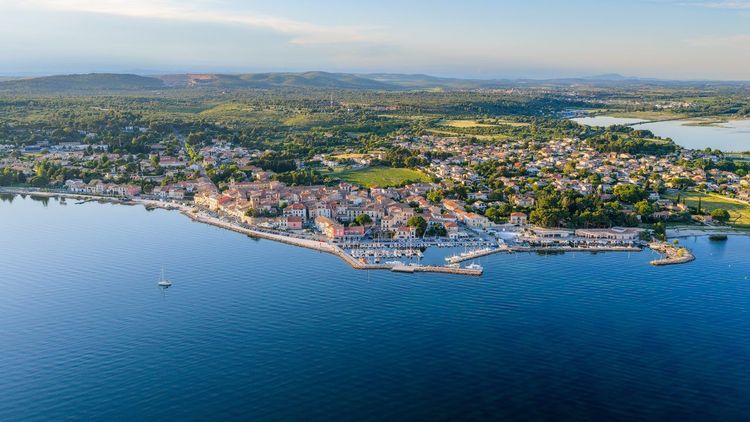
The Thau lagoon, Languedoc's largest body of water at around 7,500 hectares, closes off the horizon from Sète on the landward side. Long perceived as merely the town's hinterland, it nonetheless deserves a half-day in its own right, between oyster villages, ancient ruins, and bird reserves.
Bouzigues and the Oyster Shacks of the Thau Basin
About twenty minutes by road from Sète, Bouzigues has given its name to the oysters and mussels of the Thau basin, the leading shellfish-farming centre in the Mediterranean with several thousand tonnes produced each year. The village lines its shacks along the harbour, where producers sell their harvest directly just a few metres from tasting tables set up facing the lagoon.
The Musée de l'Étang de Thau, set on the harbour in Bouzigues, explains in about an hour the shellfish-farming techniques developed here since the early 20th century, particularly the rope-and-table cultivation method that gives Bouzigues oysters their distinctive character. Worth seeing and tasting: it is hard to leave without having sampled a dozen oysters accompanied by a glass of picpoul de Pinet, the local white wine whose vines grow just a few hundred metres from the water. A few kilometres away, the villages of Mèze and Marseillan complete the exploration of the basin with their own harbours. Marseillan also cultivates a singular tradition, upheld by the Noilly Prat house, which has been ageing its vermouth by the canal since 1813, with cellar visits open to the public for much of the year.
Balaruc-les-Bains and the Salt Marshes of Frontignan
To the west of the lagoon, Balaruc-les-Bains has cultivated a thermal tradition dating back to Antiquity: today it is one of France's leading spa resorts by visitor numbers. The jardin antique méditerranéen, laid out on an archaeological site, showcases plants cultivated and used in Antiquity, from the orchard to medicinal herbs, with views over the lagoon.
Further north, the salins de Frontignan (Route de Sète, 34110 Frontignan, rated 4.5/5 on Google with 226 reviews), former salt marshes now protected, offer a mineral landscape where flamingos, avocets, and black-winged stilts nest depending on the season. An observation path runs alongside the brackish pools without disturbing the bird colonies, provided you keep a reasonable distance and avoid the hottest hours in summer. Bring binoculars: without them, many of the wading birds remain invisible from the path. Certain sections of the site can only be explored on a guided visit, led by managers from the Conservatoire du Littoral. Back in Montpellier, the audio-guided tour offers a different pace altogether.
10. The Halles Market and Sète's Gastronomy
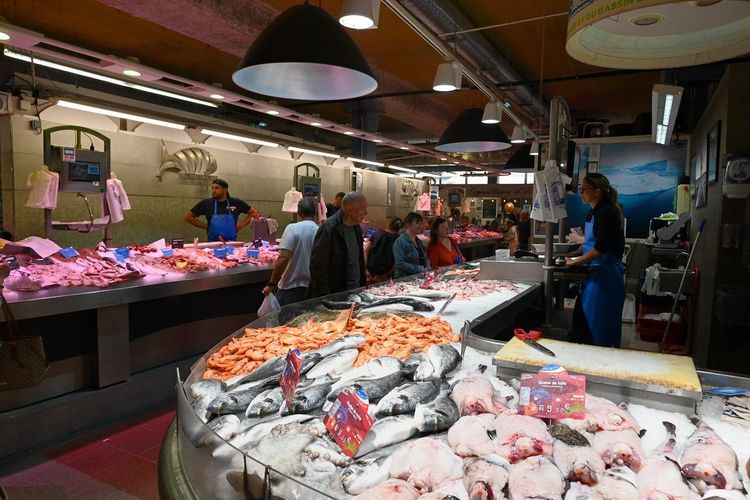
Sète's culinary heritage is worth the trip in itself, upheld by a tradition of fishermen's cooking passed down on the quays for three centuries.
The Halles de Sète, a Temple of Mediterranean Flavours
The Halles de Sète (Rue Gambetta, 34200 Sète, rated 4.5/5 on Google with 9,893 reviews), the town centre's covered market open every morning, brings together around thirty stalls where fishmongers and greengrocers stand side by side beneath a large glass roof, alongside charcuterie and cheese counters. On Saturday and Sunday mornings, the place runs at full tilt: it is hard to resist the smell of tielles fresh from the oven next door and the trays of shellfish opened to order.
Several stalls offer light food on the spot, from oysters shucked in front of you to seafood platters to enjoy standing at the counter — an affordable way to taste local produce without going to a sit-down restaurant. Arrive before noon at the weekend if you want a seat, or fall back on the Wednesday morning market, which is quieter but just as well stocked.
The Tielle Sétoise and Specialities to Try

It is impossible to leave Sète without tasting the tielle sétoise, a round golden-crusted pie filled with octopus simmered in a spiced tomato sauce. The recipe arrived with Italian fishermen from Gaeta who settled in Sète, before a local family began selling it commercially at the start of the 20th century, turning it into an institution that every bakery now prepares according to its own variation.
Treat yourself to a broader fishermen's cuisine as well: rouille de seiche, bourride de baudroie, and gratin of Bouzigues mussels appear on most menus along the port, and the macaronade sétoise, a Sunday family dish inherited from the Italians, is best found in neighbourhood restaurants. Picpoul de Pinet, a wine appellation whose vines grow along the northern shore of the Thau lagoon, traditionally accompanies these platters, its mineral freshness matching the iodine of the shellfish. The best addresses are generally found away from the most visible terraces on the Canal Royal, in the small perpendicular streets of the centre where the locals eat.
11. Traditions, Water Jousting, and Festivals
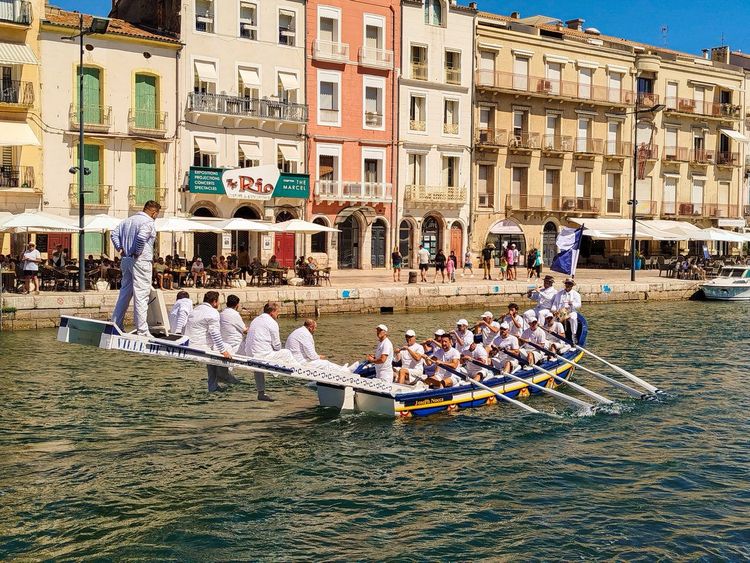
Sète in festive mood: the phrase comes up time and again among the locals, so thoroughly does the town organise its calendar around popular traditions born on the water.
The Languedoc Water Jousting Tournaments
The Languedoc water jousting tournaments pit two jousters standing on a tintaine — a platform at the stern of boats propelled by rowers — lance and shield in hand, each trying to knock the other into the water. The flagship tournament, held at the end of August for the Fête de la Saint-Louis, draws thousands of spectators packed along the quays of the Canal Royal, to the sound of oboes and drums that have accompanied each bout since the 17th century. Watching the Languedoc water jousting tournaments, even without knowing the precise rules, remains an impressive spectacle thanks to the physical commitment of the athletes, who are often trained from childhood in Sète's clubs.
The temporary stands set up along the canals fill up hours before the jousting begins in high season: arrive early or find a vantage point on the nearby bridges, which are accessible for free. Outside tournament season, Sète's jousting clubs continue to train on the canals, a free spectacle for anyone strolling along the quays at the end of the day. The Musée de la Mer usefully completes the experience, with its archives devoted to the great jousters and to the results etched in local memory.
Festivals and Major Annual Events
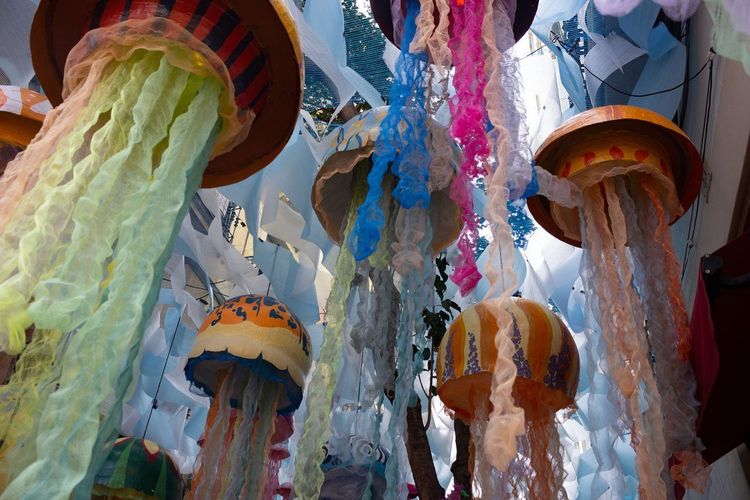
Beyond the jousting, Sète thrums all year to the beat of its festivals. Fiest'A Sète, a world music festival held at the Théâtre de la Mer, brings together international artists each summer for around ten open-air evenings, while the Worldwide Festival takes over beaches, the môle, and the theatre in early July for a week of electronic music and soul. In spring, the documentary photography festival ImageSingulières spreads its exhibitions across the whole town, often with free admission, and the street art festival K-Live adds new murals to the MaCO trail each year. Finally, Escale à Sète, a major maritime heritage festival held every other year in spring, fills the port with tall ships from across Europe: it is one of the largest gatherings of its kind in the Mediterranean.
Most of these events remain accessible at reasonable prices, or even free for street entertainment and open-air exhibitions. Check the tourist office calendar before fixing your dates: the programme changes noticeably from one year to the next, and accommodation fills up very quickly during Escale à Sète and the Saint-Louis celebrations.
12. Day Trips Around Sète: the Thau Basin and Beyond
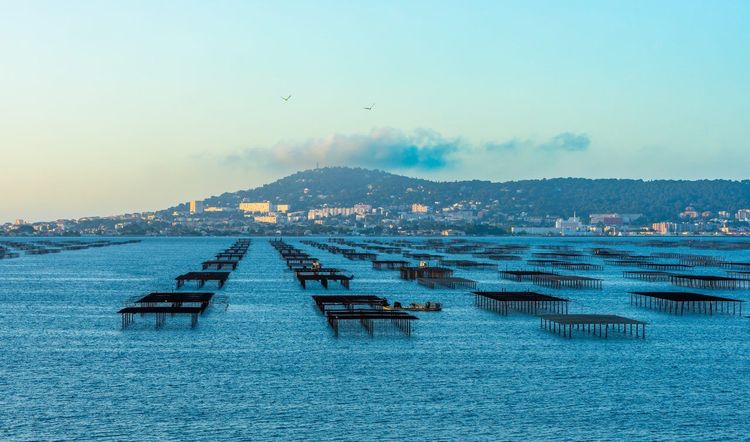
Once Sète's main sites have been ticked off, the Thau basin and its surroundings offer enough to fill an entire second day, between ancient ruins and wine-producing abbeys.
The Gallo-Roman Villa of Loupian and the Abbaye de Valmagne
About twenty minutes from Sète, the Gallo-Roman villa of Loupian preserves one of the finest collections of mosaics in Gallia Narbonensis, protected in situ beneath a building constructed specifically to house them. Occupied over several centuries throughout Antiquity, the villa bears witness to the agricultural wealth of the Thau basin in Roman times, already focused on viticulture. The site is visited with a guide, which remains the best way to decode the patterns of the mosaics.
A little further inland, the abbaye de Valmagne surprises with its architecture: founded in the 12th century by the Cistercians, this immense Gothic church was converted into a wine cellar after the Revolution, when the estate passed into private hands. As a result, enormous 19th-century oak vats still occupy the side aisles of the nave. The wine estate surrounding the abbey can be visited and tasted, one of the rare places in France where you can sample wine among the columns of a medieval religious building.
The Château Laurens in Agde and the Thau Archipelago by Bike
Near Agde, half an hour away by road, the château Laurens (21 Rue du 4 Septembre, 34300 Agde, rated 4.6/5 on Google with 1,493 reviews) reveals an exceptionally well-preserved Art Nouveau interior, built at the turn of the 20th century by a wealthy heir, Emmanuel Laurens, with a passion for Egyptology and travel. Frescoes, mosaics, ironwork, and panelling compose a unique setting in the region, reopened to the public after a lengthy restoration. Visits are on timed slots; booking is strongly recommended in season.
For a more active approach to the Thau basin, a cycling excursion allows you to link Sète, Balaruc, Bouzigues, Mèze, and Marseillan via a network of greenways and largely secure cycle paths, with views over the lagoon for much of the route. Allow a full day for the complete loop around the lagoon, or a half-day for the Sète-Bouzigues section, more suitable for occasional cyclists. Wine lovers can push on to the estates surrounding the lagoon, between Mèze and Villeveyrac, for tastings directly with picpoul de Pinet producers. If you are extending your stay towards Montpellier, our Ryo weekend ideas around Montpellier and the audio-guided tour of Narbonne usefully complete a journey through Languedoc.
13. Where to Stay in Sète: Top Picks
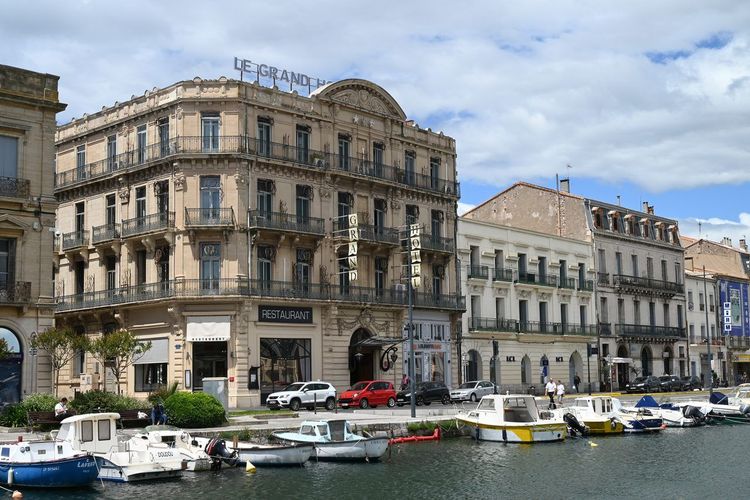
The choice of neighbourhood matters almost as much as the choice of hotel in Sète, given how different the atmospheres are from one part of town to another.
Staying in the centre, among the canals, means waking to the sound of seagulls and being five minutes' walk from the Halles or the old port. It is the most practical option for exploring on foot without a car, but also the liveliest on summer evenings, especially during the Fête de la Saint-Louis at the end of August. Youth hostels and budget hotels near the station, such as the Georges Hostel, remain the best bet for those on a tight budget, with dormitories and communal spaces that are good for meeting people.
The Quartier Haut, quieter, suits a stay focused on mont Saint-Clair and the marine cemetery better, at the cost of a longer walk — and an uphill one — to reach the canals in the evening. Other more classic addresses are concentrated along the quays, with a direct view of the moored boats for those who want an extra touch of charm. Finally, staying on the Lido side puts you right on the beach, an option appreciated by families in summer but which inevitably means being further from the historic centre: check the bus connections or plan to bring a bike.
Book early for a stay in July or August: Sète sells out several weeks in advance during the jousting season, and rates rise noticeably compared to the rest of the year. The neighbouring communes of the Thau basin — Balaruc, Frontignan, or Mèze — often offer better value for money, fifteen minutes away by road.
14. When to Go: the Best Time to Visit Sète
What to do in Sète in winter differs considerably from a summer visit. Between November and March, the town returns to its fishing port pace, museums and restaurants stay open but run at a quieter tempo, and accommodation rates drop sharply. It is the ideal time to enjoy mont Saint-Clair and the marine cemetery with no one else around, provided you accept a few days of strong wind.
Spring, from April to June, offers the best compromise: pleasant temperatures, garrigue in bloom on the Gardiole, festivals resuming, and still manageable crowds before the school holidays. Summer, from July to mid-September, concentrates most of the concerts and water jousting, at the cost of sometimes intense heat and packed Lido beaches. August remains the busiest month, driven by the Fête de la Saint-Louis, while September offers sea water that is still warm with noticeably fewer visitors — a window that regular visitors to the town often consider ideal.
What to do in Sète in the evening also changes with the season: free entertainment on the quays and open-air concerts in summer, bars in the centre and the programme at the théâtre Molière for the rest of the year. For a family stay, favour late spring or early autumn, outside the peak periods, when the sea is still swimmable and queues are non-existent.
15. How to Get to and Around Sète
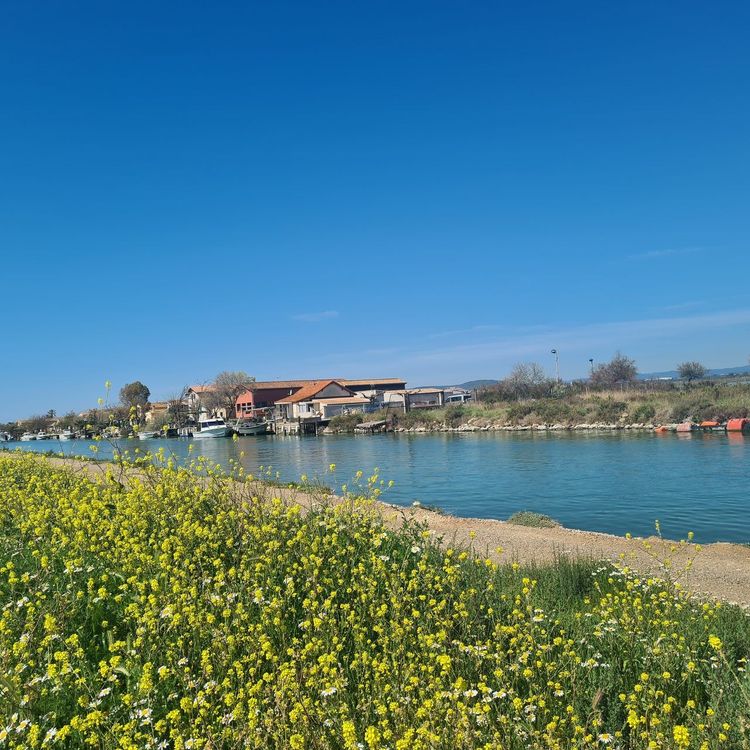
How do you get to Sète? The town is about thirty minutes by road from Montpellier and just over half an hour from Béziers, via the A9 motorway and the coastal expressway. Parking in the town centre becomes difficult in summer: it is better to aim for the large peripheral car parks, particularly on the Lido side and at the town entrances, rather than circling between the canals. In high season, shuttle services complement these car parks and save many unnecessary back-and-forth trips.
By train, Sète station is on the Bordeaux–Marseille line and serves Montpellier in around twenty minutes, Béziers in around twenty minutes too, and Perpignan in just over an hour, with direct connections from Paris. The station is about ten minutes' walk from the historic centre, making a car-free stay entirely feasible.
Once there, the town centre and the Quartier Haut are easily covered on foot, with the canals naturally serving as landmarks for orientation. Exploring Sète on foot remains the best option for everything between the port, the Halles, and the Quartier Haut. To reach the Lido, the Gardiole, or the Thau basin, the urban bus network and a continuous cycle path do the job, particularly pleasant for reaching Bouzigues or Marseillan without a car. In summer, water shuttles link certain points around the port and beaches, a refreshing alternative to the bus when temperatures climb.
FAQ
How much time should you plan for a visit to Sète?
A two-day weekend is enough to cover the essentials: the historic neighbourhoods, mont Saint-Clair, the marine cemetery, and one or two museums. To also fit in the Halles market, a boat trip, and an excursion to Bouzigues or the abbaye de Valmagne, plan for three to four days, including a half-day on the Lido beach.
What can you do in Sète for free?
Several experiences in Sète cost nothing: strolling along the quays and through the Quartier Haut, climbing mont Saint-Clair and the chapelle Notre-Dame-de-la-Salette, visiting the marine cemetery, admiring the MaCO murals along the port, walking through the Forêt des Pierres Blanches, or enjoying the Lido beaches and the crique de l'Anau. The Halles market can also be explored freely even without buying anything, and jousting society training sessions on the canals can be watched from the quays at no cost.
What can you do in Sète with kids?
Children generally enjoy the MIAM for its playful approach and the Musée de la Mer for its boat models. A licence-free mini boat ride along the canals rounds off the day nicely. The Lido beaches, supervised in season and easy to reach, as well as a boat trip to the oyster shacks of Bouzigues, are also a big hit with younger visitors.
What can you do in Sète in the evening?
In summer, the quays of the Canal Royal come alive with terraces and concerts, while the Théâtre de la Mer hosts its summer programme overlooking the Mediterranean. Out of season, the town centre stays lively around a handful of bars and the théâtre Molière, which offers a programme all year round. A night-time walk along the môle Saint-Louis also offers a lovely view over the harbour lights.
What can you do in Sète in winter?
Winter is particularly well suited to visiting mont Saint-Clair, the marine cemetery, and the museums, without the summer crowds. The Halles market remains a must-visit all year round, as do the port restaurants with their shellfish platters, which are actually at their best during the colder months. The Lido beaches, less suited to swimming, are instead perfect for long, peaceful walks.
How do you get around Sète without a car?
The town centre and the Quartier Haut are easy to explore on foot thanks to the town's compact layout. Trains connect Sète to Montpellier and Béziers in around twenty minutes, and a bus network complements a continuous cycle path leading to the Lido and the Thau basin. Water shuttles also serve certain points around the port in summer.
What is the best time to visit Sète and the Thau basin?
Spring and early autumn offer the best balance between pleasant weather and moderate crowds: the garrigue blooms in April and May, and the water stays warm until October. Summer concentrates the festivals and jousting tournaments, but also the highest prices and the busiest beaches. Winter, finally, suits those who come for the museums, markets, and oysters — the peak season for shellfish farming in the Thau basin.
Conclusion
Sète is rarely discovered in a single visit. Between the canals of the town centre, the panorama from mont Saint-Clair, the museums devoted to Paul Valéry and Georges Brassens, and the oyster villages of the Thau basin, the town packs into just a few square kilometres a diversity of experiences that few coastal destinations in Languedoc can match. Whether you come for a weekend around the water jousting or for a full week exploring the Thau basin by bike, it lends itself equally well to a quick stay and a longer immersion.
Sète does not yet have its own audio-guided tour, but its proximity to Montpellier makes it easy to extend the exploration: less than 45 minutes away by road, the Ryo audio guide to Montpellier makes an ideal complement to a trip to Sète for anyone wanting to combine both towns over a long weekend in Occitania.
À lire également