© Shutterstock
 Votre guide Ryo
The 15 Most Beautiful Beaches near Narbonne in 2026
The coastline around Narbonne is home to some of the most beautiful beaches on the French Mediterranean, just fifteen kilometres from the historic centre. This tour of the finest beaches in and around Narbonne takes you from Fleury to Cap Leucate, from the most developed stretches of sand to the wildest hidden coves. And yet Narbonne is not a seaside resort — which is precisely what makes its coastline so special. The Étang de Bages et de Sigean gives way to a string of beaches stretching over 60 kilometres between the Hérault and the Pyrénées-Orientales, some world-famous, others almost secret. Before hitting the sand, the ramparts and the archbishop's palace are worth an afternoon: the Ryo audio guide of Narbonne covers both banks of the Canal de la Robine across 20 audio commentaries.
The great surprise of this Aude coastline is its diversity. At Gruissan, wooden chalets on stilts made famous by 37°2 le matin line up their colourful facades facing the sea. At La Palme, a turquoise lagoon borders a white-sand beach you would never expect to find in the Aude. At La Franqui, the tramontane wind creates gliding conditions among the best in Europe, while the lagoon side simultaneously offers calm water for children. And at Leucate, limestone cliffs plunge into crystal-clear coves accessible only by swimming. Here are the 15 beaches worth the detour, listed from north to south, from Fleury to Cap Leucate. And Narbonne itself, from the archbishop's palace to the Canal de la Robine, unfolds across 21 audio-guided stops before you set off.
1. Plage des Chalets, Gruissan
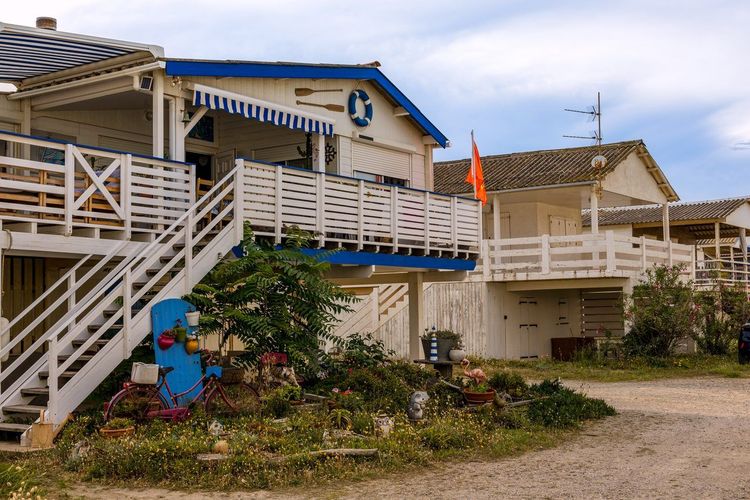
It is hard to talk about the beautiful beaches near Narbonne without starting here. The Plage des Chalets is the most iconic image of the Aude coastline: several hundred wooden houses on stilts line up facing the sea, painted white, blue and yellow, forming a floating village that looks unreal at sunset. Their origins are purely practical — built from the 1930s onwards to withstand flooding from the Aude river — yet they became, almost by accident, one of the most photographed landscapes in Languedoc.
Jean-Jacques Beineix filmed here in 1985, and the opening of 37°2 le matin turned the beach into a place of cinematic pilgrimage. Forty years on, the original chalets have largely been replaced by more recent constructions, but the atmosphere remains unique: after dark, the lights from the terraces are reflected in the dark lagoon water, and the whole scene takes on the air of a Nordic fairy-tale village washed up on the Mediterranean shore.
The beach itself stretches for around 4 kilometres of flat, fine sand, ideal for families. It is supervised from mid-June to mid-September (lifeguard posts at both ends), and services are well developed: windsurfing board hire, kayaks, stand-up paddleboards, children's play areas, showers and car parks. Outside the peak season, a handful of restaurants in the village remain open year-round; oysters from the Étang de Thau arrive by refrigerated truck every morning.
Practically speaking, from Narbonne, allow 25 minutes via the D32 towards Gruissan-Plage, then follow the signs for 'Chalets'. The Chalets car park (paid in July–August, around €5 per day) has 600 spaces; arrive before 9:30 am in peak season to avoid queuing. There is also a summer shuttle from Narbonne bus station. Note: the northern end of the beach, less crowded because it is further from the car parks, remains pleasant even in the height of August.
2. Plage de Mateille, Gruissan
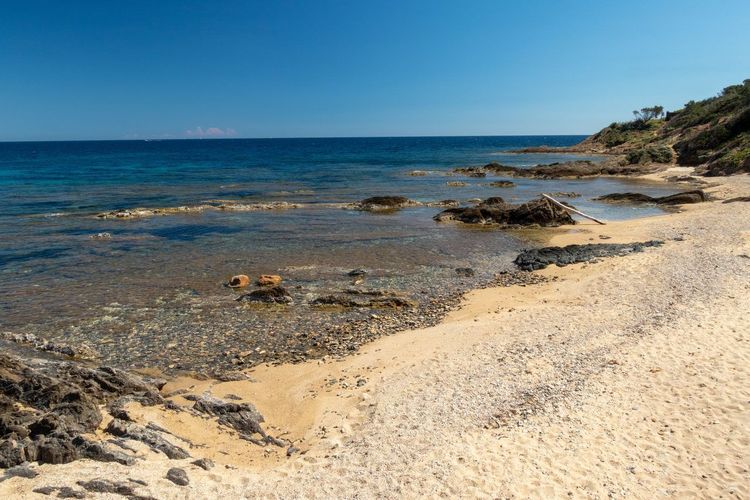
Two kilometres north of the Chalets, the Plage de Mateille (Route de Mateille, 11430 Gruissan, rated 4.1/5 on Google from 134 reviews) is the antithesis of its famous neighbour. No permanent snack bar or paddleboard hire here: a ridge of dunes, a row of tamarisk trees filtering the sea breeze, and 3 kilometres of sand you can walk in the middle of August without ever feeling crowded. This is the favourite beach of Gruissan locals for that very reason, and arguably one of the finest beaches near Narbonne for anyone wanting to escape the crowds.
In practical terms, Mateille is a semi-natural beach: part of it is classified as a sensitive natural zone, which limits the installation of permanent commercial outlets. A single snack bar opens on certain days in summer. Showers are present but toilets are scarce — come prepared. In return, the setting is understated: the sand shifts from pale beige to silver-grey depending on the time of day, and the Montagne de La Clape rises on the horizon as a limestone backdrop.
A tip that few visitors know: parking is free at the Arbousiers car park (around 300 spaces), a fifteen-minute walk from the beach. Arriving before 9 am in July avoids queuing at the car park entrance. The beach is unsupervised outside the summer season. During easterly wind episodes (levant), red flags warn of dangerous rip currents — check before swimming.
3. Plage de la Vieille-Nouvelle, Gruissan
The Plage de la Vieille-Nouvelle takes its name from a fishing hamlet that vanished in the 18th century, swallowed by successive storms. Today, this wild strip of sand marks the boundary between the territory of Gruissan and that of Narbonne, accessible via an unpaved track from the D68. That small obstacle is enough to deter most holidaymakers. The result: an almost untouched beach outside July and August, which locals jealously guard and rarely recommend.
The spot is particularly popular with photographers at dusk. The beach faces west and catches the last evening light on the Montagne de La Clape, whose limestone cliffs turn an intense orange. Expect 5 kilometres of sand, relatively compact and walkable on foot and sometimes by bike. There are no services on site — water, food and sunscreen must all be brought with you. Four-wheel-drive access is possible in the off-season.
4. Plage de la Grande Cosse, Gruissan
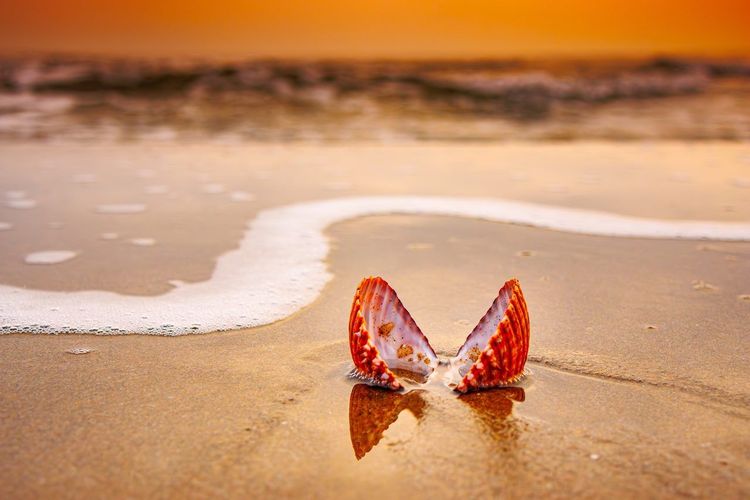
The Plage de la Grande Cosse (Boulevard du Front de Mer, 11430 Gruissan, rated 4.7/5 on Google from 120 reviews) is the central beach of the Gruissan resort, the most developed and liveliest in the area. Restaurants, bars, summer markets, water sports equipment hire — everything is here, steps from the medieval village perched on its rocky hill. If the Chalets are the romantic soul of Gruissan, the Grande Cosse is its practical heart.
It is particularly well suited to families with young children: the sea is shallow for a long distance, the sand is clean and there are numerous lifeguard posts. It is also the departure point for boat trips to the coves of the Montagne de La Clape — ask the boat hire operator at the marina.
5. Narbonne-Plage
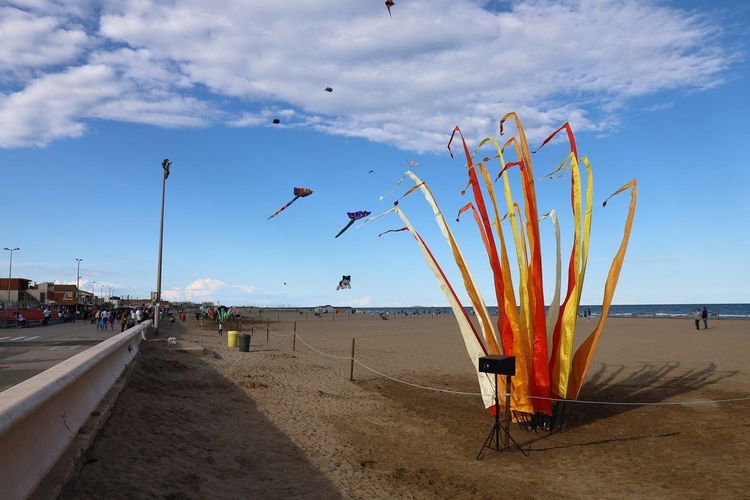
Narbonne-Plage (Boulevard de la Méditerranée, 11100 Narbonne, rated 4.6/5 on Google from 1,686 reviews) is the city's official beach, connected directly to the town centre by the D168 in 15 minutes. It is not the wildest beach in the area, but it is a well-run resort with a beach stretching 4 kilometres of fine sand and a full range of services.
Narbonne-Plage's architecture reflects the urban ambitions of the 1970s: a row of apartment blocks and hotels forms a straight seafront. Unlike its neighbours Port-Leucate and Port-Barcarès, created from scratch under the Mission Racine programme directed by architect Georges Candilis, Narbonne-Plage is an older resort, densified over the decades rather than drawn up in a single plan. This vast government programme developed the entire Languedoc coastline from the Camargue to the Roussillon, and the result still divides architecture enthusiasts, but no one remains indifferent when faced with this Trente Glorieuses seafront.
What makes Narbonne-Plage truly valuable is its logistics: pharmacy, supermarkets, doctor, bank, post office — everything is accessible on foot. For families alternating between the beach and cultural visits in Narbonne, the proximity is unbeatable. The city can also be explored with a Ryo audio guide of the Aude city covering the archbishop's palace, the market halls and the canal banks — a simple way to make the most of cloudy afternoons without getting the car out.
The beach is supervised from mid-June to mid-September. A night market is held along the boulevard on Wednesday and Friday evenings in July and August. Paid parking in peak season (around €4 per day), free the rest of the year. Bus access from Narbonne station: line 31, stop Narbonne-Plage.
6. Saint-Pierre-la-Mer
Between Narbonne-Plage and the Plage des Cabanes de Fleury, Saint-Pierre-la-Mer (Avenue du Languedoc, 11560 Fleury, rated 4.3/5 on Google from 890 reviews) is an unpretentious family resort that deserves a stop. The beach is long, the sand clean, and the commune of Fleury-d'Aude maintains its facilities carefully. The advantage over Narbonne-Plage: a less urbanised atmosphere, more green spaces, and a well-positioned municipal campsite just a few minutes' walk from the shore.
In July, the Thursday morning Provençal market draws visitors from surrounding villages. For those travelling with children, the waterplay area on the seafront and, further afield, the Aqualand water park at Cap d'Agde (around thirty kilometres to the north) are good alternatives on windy days.
7. Plage des Cabanes de Fleury
Less well known than Gruissan, the Plage des Cabanes de Fleury (Cabanes de Fleury, 11560 Fleury, rated 4.4/5 on Google from 148 reviews) is similar in spirit to the Chalets: a hamlet of colourful houses, originally built as fishermen's secondary residences, runs along the edge of the Étang de Pissevaches before meeting the sea. The atmosphere is gentle and untouristy, without the crowds of the neighbouring resorts.
The fine-sand beach stretches for 2 kilometres, framed by the Massif de La Clape to the north and the mouth of the Aude to the south. In autumn, when starlings murmur above the lagoon reeds at sunset, it is one of the finest natural spectacles in the Aude — flocks of several thousand birds moving in hypnotic formations before settling into the reeds. In summer, the beach is comfortably busy without being overcrowded: a good alternative to Narbonne-Plage for those seeking more peace and quiet.
The access road runs alongside the lagoon and is worth the journey in itself, particularly at sunrise when grey herons hunt in the reeds. Access via the D37 from Narbonne, around 20 km, 25 minutes.
8. Port-la-Nouvelle
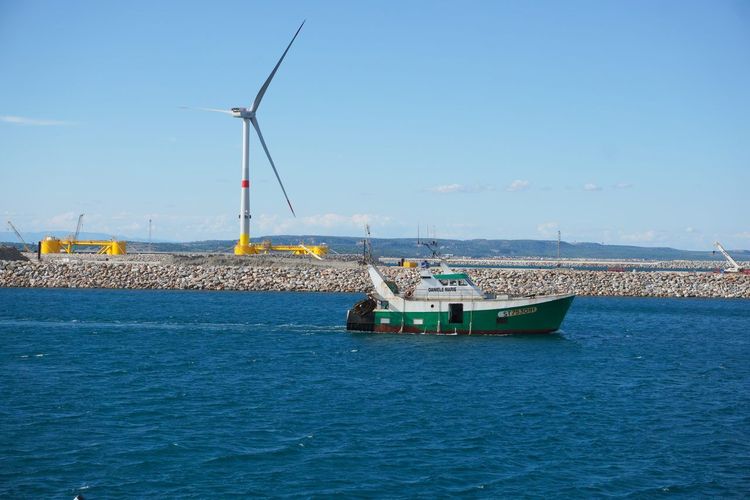
Port-la-Nouvelle is the Aude's major industrial port — oil terminals, offshore wind turbines, freight traffic. You would not come here for the scenery at first glance, yet the beach is a perfectly decent one: long, well oriented, supervised in summer, with free parking available year-round. Its main advantage is easy access even in the height of August, thanks to a predominantly local clientele. Sunsets over the offshore wind turbines create an unusual industrial silhouette against a pink sky — a subject that photographers are only just beginning to discover.
9. Plage du Rouet, La Palme
The Étang de La Palme is one of the least known lagoons on the Aude coast, and that is a shame. Listed as a Natura 2000 site, this shallow lagoon borders the Plage du Rouet on the landward side and closes off onto the Mediterranean on the other, forming a white-sand barrier of a purity quite rare along the Languedoc coastline. The water turns an intense turquoise when the sun is high — photographs you would never expect to take in the Aude.
The Plage du Rouet is accessible via a track from La Palme, a village perched inland. 3 kilometres of white sand stretch along the Mediterranean side, with no buildings, no restaurant and no lifeguard post. It is a nature beach in the strictest sense: you must bring plenty of water, food and sunscreen — the sea breeze dries everything quickly and shade is scarce.
The lagoon itself deserves attention. Several bird species nest there, including flamingos visible from mid-spring to the end of August in colonies of several hundred individuals. Kayaks can be launched from the village of La Palme to explore the channels and reed beds. Outside the summer season, it is one of the best half-day excursions available around Narbonne, and certainly one of the most beautiful natural beaches near Narbonne, 45 minutes by road from the city centre via Sigean.
10. Plage des Coussoules, La Franqui
At the entrance to Cap Leucate, between the lagoons of Leucate and La Palme, La Franqui is a kitesurfing and windsurfing village. The tramontane wind funnels through with almost mechanical regularity, and the gliding conditions are among the best in France: the Mondial du Vent — the country's largest wind sports gathering, founded in 1996 — is held here every April and hosts World Cup stages in windsurfing and wingfoil. The Plage des Coussoules itself stretches for 4 kilometres of fine sand, bordering both the open sea to the east and the lagoon to the west, making it one of the finest beaches near Narbonne for water sports enthusiasts and families alike.
What many people do not know about the Coussoules: the northern section of the beach, on the lagoon side, is one of the best family beaches in the entire area when the wind is light. The water is calm, shallow and warms up quickly from May onwards, well before the open sea. Children catch shrimps in the posidonia beds, and snorkellers discover a surprising range of wildlife at less than a metre's depth: mullet, juvenile sea bream, cuttlefish.
For those seeking authenticity, La Franqui retains a fishing-village character that tourist development has not entirely erased. A few fish restaurants operate year-round, and the Wednesday morning market offers local produce — oysters from the Étang de Leucate, fresh tellins caught the day before, Corbières cheeses. La Franqui is also a good base for exploring the Corbières villages: the most beautiful villages around Narbonne are mostly less than 40 minutes inland.
Access from Narbonne: D627 via Leucate, around 50 minutes. Paid parking in peak season (€4 per day). A summer bus service connects Narbonne to La Franqui (line 31, stop La Franqui-Plage) — useful for avoiding parking problems in August.
11. La Plagette, Port-Leucate
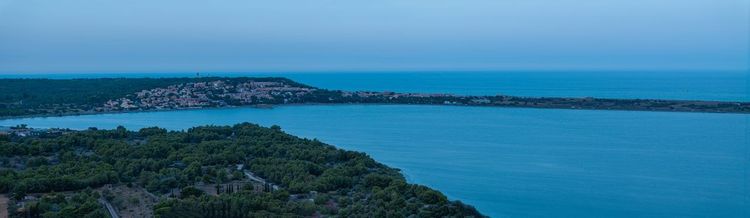
At the heart of Port-Leucate, a seaside resort built in the 1970s as part of the Mission Racine programme, La Plagette is a white-sand beach bordering the lagoon side of the peninsula. Sheltered from wind and waves, the water is flat, clear and shallow — perfect for families with young children and inexperienced swimmers.
The summer activity around the port is lively: restaurants, bars, pedalo and jet-ski hire. But La Plagette itself is less congested than the beaches on the open-sea side. Worth noting: the road running along the lagoon from Port-Leucate towards Port-Barcarès offers fine views of flamingos in the late afternoon.
12. Plage du Kyklos, Port-Leucate
The Plage du Kyklos is the main sea-facing beach at Port-Leucate, directly exposed to the Mediterranean. The sand is coarser than on the lagoon side, and the waves are more pronounced when the wind picks up — which delights kitesurfers but means young children need close supervision.
What sets the Kyklos apart from the other beaches on the peninsula is the length and quality of its facilities. The toilet blocks are clean, the lifeguard posts well positioned, and the car parks large enough even in the height of August. To the north, a naturist zone has established itself by tradition since the 1980s — unofficial but tolerated. To the south, several beach clubs offer sun loungers and cocktails. In between, a long stretch of free sand that you can walk barefoot for 3 kilometres.
The Kyklos bar-restaurant, which gives the beach its name, serves decent Mediterranean cuisine with a direct view of the sea — the moules marinières and the homemade brandade de morue are reliable choices on the menu. Outside July and August, the beach returns to complete tranquillity: it is one of the pleasant surprises of the Aude coastline in May or September, when the sun still shines strongly but the tourists have gone.
13. Leucate Plage
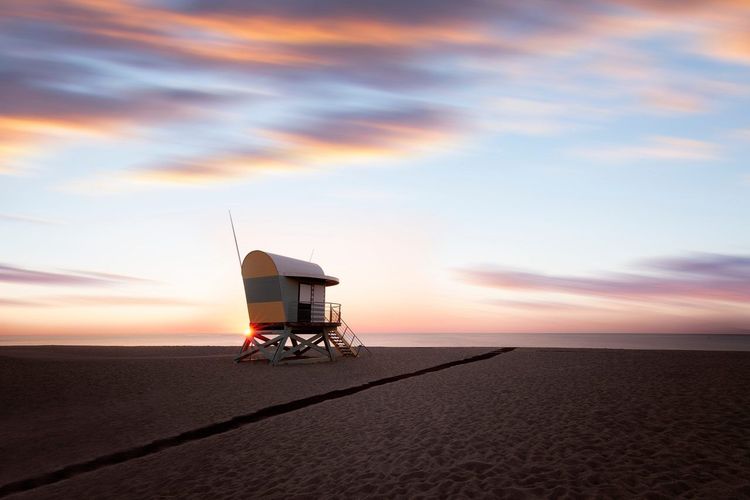
Leucate Plage (Boulevard du Soleil, 11370 Leucate, rated 4.5/5 on Google from 1,374 reviews) is the beach belonging to the hilltop village of Leucate, distinct from Port-Leucate (the modern seaside resort). Less developed, it retains a more authentic character, with fishing nets drying on the quays and colourful boats hauled ashore. Half an hour is enough to take it all in, but the village atmosphere makes it worth the visit — particularly in June and September when fishermen return with their catch before noon.
14. Plage de la Falaise, Leucate
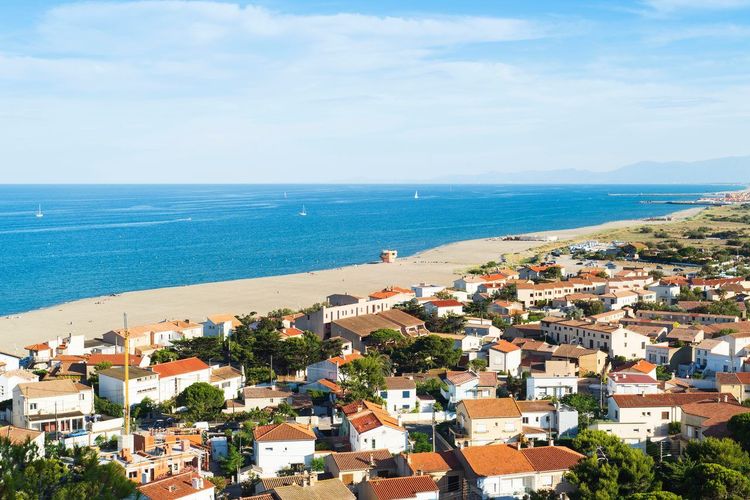
Cap Leucate is the only point on the Aude coastline where the shore presents cliffs. Over 2 kilometres, the Falaise de Leucate drops sheer into the sea, cut into rocky coves accessible on foot from the GR 009 coastal path. Some of these coves can only be reached by swimming or kayak, and that is precisely where the water is at its most beautiful: turquoise, crystal clear, sheltered from the wind by the rocks, with rocky floors covered in sea urchins, anemones and multicoloured wrasse.
The coastal path follows the cliff for its entire length from Leucate Plage. Allow 1 hour 30 minutes return on foot, with a few traversing sections that require normal care. Closed shoes are recommended — light trainers work well, flip-flops do not. At the end of the path, the cove of Calau is the goal for most walkers: a pocket of white sand between two limestone buttresses, with deep water five metres from the shore. Arrive at low tide to make the most of the sand (the beach partly disappears at mid-tide).
On a clear day, the view from the cape takes in the Pyrenees to the south and the Corbières to the north-west, with the Pic du Canigou dominating the scene at 2,784 metres above sea level. It is one of the most striking coastal panoramas in the entire Gulf of Lion, and a compelling reason to end a beach day on the heights rather than stretched out on the sand.
15. Valras-Plage
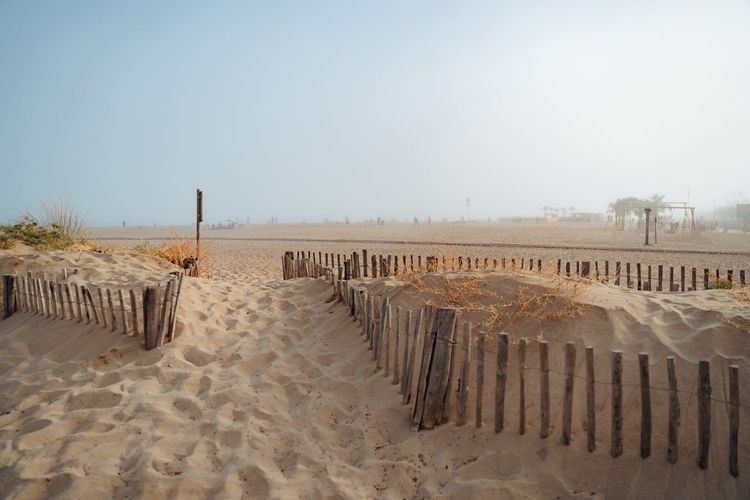
North of Narbonne, 30 kilometres away in the Hérault, Valras-Plage (Promenade du Commandant Rolland, 34350 Valras-Plage, rated 4.4/5 on Google from 2,244 reviews) marks the northern limit of the territory that beach enthusiasts around Narbonne generally cover. It is a lively seaside resort at the mouth of the Orb: a wide beach, golden sand, a full range of services, daily markets in summer, live music on the seafront and seafood restaurants at reasonable prices.
For those combining Valras with a visit to Béziers (12 km, Cathédrale Saint-Nazaire and the Jardins de l'Évêché), the day is well filled. Valras is also the departure point for sports fishing boats that offer sea trips from 6 am — enquire at the marina.



FAQ
Which is the most beautiful beach near Narbonne?
Among the most beautiful beaches near Narbonne, the Plage des Chalets de Gruissan is the most iconic, made famous by the film 37°2 le matin and its wooden houses on stilts. For a wild and uncrowded beach, the Plage de Mateille (Gruissan) and the Plage des Coussoules (La Franqui) offer long stretches of fine sand that remain pleasant even in July.
How far is the sea from Narbonne?
Narbonne city centre is approximately 15 kilometres from Narbonne-Plage and Gruissan. La Franqui and Leucate are 40–50 minutes by road via the D627. By public transport, line 31 of the Arc en Ciel network connects Narbonne station to Narbonne-Plage in 20 minutes.
Are the beaches around Narbonne supervised?
The main beaches (Narbonne-Plage, Grande Cosse and Chalets de Gruissan, Saint-Pierre-la-Mer, Port-Leucate) are supervised by lifeguards from mid-June to mid-September, generally from 10 am to 7 pm. Natural beaches such as Mateille, La Vieille-Nouvelle and the Plage du Rouet are unsupervised.
Are there nudist beaches near Narbonne?
Port-Leucate has a naturist zone to the north of the Plage du Kyklos, unofficial but tolerated since the 1980s. For a structured naturist setting, Cap d'Agde (Hérault, 40 km to the north) has a fully equipped naturist village with accommodation, shops and dedicated beaches.
Which beach is best for young children?
La Plagette at Port-Leucate (calm lagoon-side water), the Grande Cosse at Gruissan and Narbonne-Plage are all very suitable for families: shallow sea, lifeguard posts, showers and amenities within easy reach. Outside peak season, the lagoon section of the Plage des Coussoules at La Franqui is ideal — warm, still water with no current.
Can you kitesurf or windsurf near Narbonne?
La Franqui (Plage des Coussoules) is one of the best kitesurfing and windsurfing spots in France, with regular tramontane winds and favourable water conditions. Several schools offer week-long courses or half-day lessons. Port-Leucate also has an FFVoile-accredited kitesurfing school.
Narbonne is above all a city of character — an unfinished cathedral, the Canal de la Robine listed as a World Heritage Site, the Via Domitia paved into the market hall floor. But the Aude coastline surrounding it is among the best-preserved on the French Mediterranean: these beautiful beaches near Narbonne range from lively family spots to complete wilderness in under an hour's drive. The Ryo app helps you explore the historic centre with 21 audio commentaries before heading to the sand: find the Narbonne audio-guided tour to plan your stay in the city, from the archbishop's palace to the canal banks.