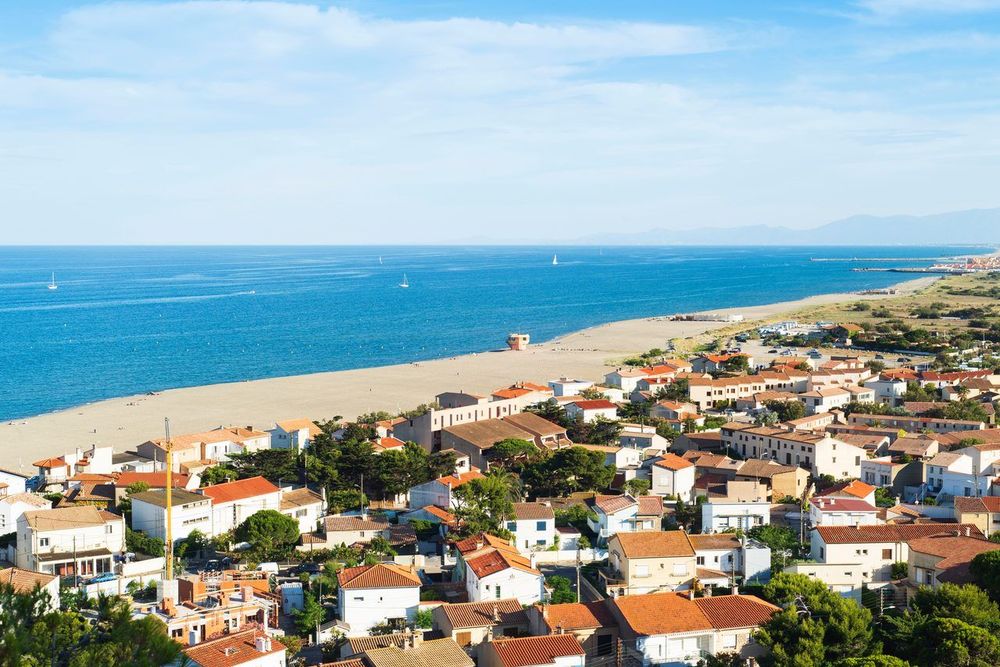
© Shutterstock
 Votre guide Ryo
The 13 Most Beautiful Villages Around Narbonne to Discover in 2026
Just twenty minutes from Narbonne, the road is enough to tip you into another Languedoc: the first foothills of the Corbières where vines grow on black schist, turquoise lagoons teeming with flamingos, and limestone gorges carved over millions of years in the Minervois. This territory, which regional guides often mention only in passing, nevertheless concentrates two of France's officially listed most beautiful villages, one of Europe's largest wildlife parks, and vineyards whose first appellation decrees predate those of most major French AOCs. If you are looking for things to do around Narbonne beyond the beaches, these thirteen villages will give you concrete answers and several reasons to return. Before setting off to discover them, the Ryo audio guide to Narbonne offers 20 audio tracks covering 4 kilometres in 1h40 of walking through the city's streets. The Ryo app works without an internet connection, which proves useful in certain Corbières valleys where mobile coverage disappears.
On one side, Lagrasse and its river-pebble lanes dating from the 13th century, at the foot of a Carolingian abbey still inhabited by a community of monks. On the other, Minerve perched on its rocky spur above two gorges, where 140 Cathar perfecti perished in 1210 rather than renounce their faith. In between: a village made famous by a Jean-Jacques Beineix film, with its stilted wooden cabins; a wildlife park covering 300 hectares where lions roam freely across a recreated savanna landscape; and a flamingo-lined lagoon shore that few outside visitors have yet discovered. Thirteen stops through a region you may have thought you already knew.
1. Lagrasse, the Medieval Jewel of the Corbières
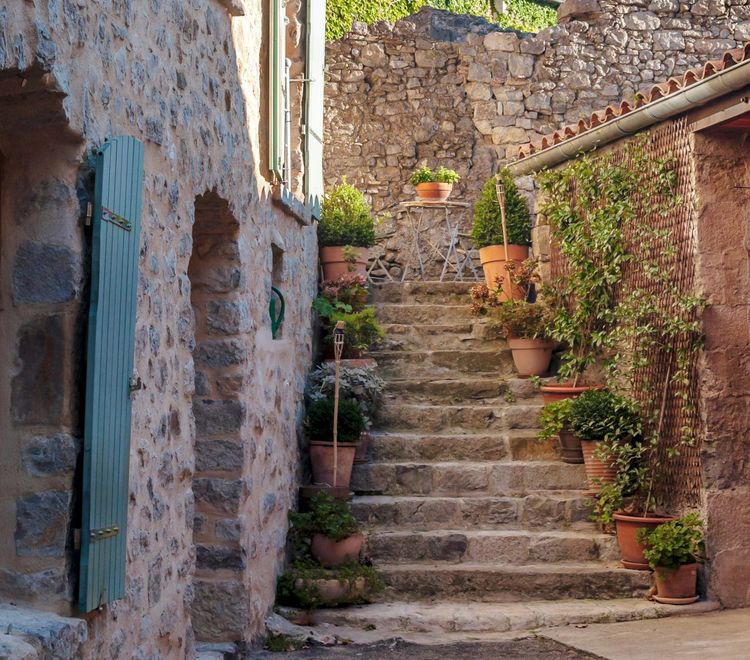
Lagrasse is the village that alone justifies the detour from Narbonne. Listed as one of the 'Most Beautiful Villages of France', it has overlooked the Orbieu from its 13th-century ramparts without losing either its river-pebble lanes or its ochre façades that catch the evening light. At 45 kilometres from Narbonne via the D212, the road crosses the Corbières vineyards before depositing the traveller in front of one of the best-preserved medieval bridges in Languedoc, just wide enough for a single car at its narrowest point.
The Abbaye de Lagrasse (Abbaye de Lagrasse, 11220 Lagrasse, rated 4.5/5 on Google from 2,429 reviews) is the historic heart of the village, visible from the northern ramparts as soon as you enter. Founded at the end of the 8th century, tradition links it to the reign of Charlemagne, although the earliest written sources date to 799; it is home today to a community of canons of the Mother of God. The complex is divided into two distinct sections: the Haute Abbaye, open to the public for guided tours, and the Basse Abbaye, reserved for private monastic spaces. The guided tour of the canonical section takes visitors through the Tour Cabrol, which offers a panoramic view over the tiled rooftops and surrounding vineyards, then into the 11th-century cloister whose sculpted capitals display geometric and vegetal motifs characteristic of Languedocian Romanesque art. The atmosphere remains alive throughout: monks go about their daily life here, giving the entire complex a particular depth very different from abbeys converted into empty museums.
The village itself can be explored on foot in under an hour, but that hour naturally stretches to two or three if you step into the artisan shops lining the 14th-century covered market hall. This covered market, supported by dressed-stone arcades, hosts a market on Saturday mornings from May to October. Dried figs from the region, Corbières wines, and sheep's cheeses from the neighbouring Pyrenees are traded here in an atmosphere that has nothing touristy about it despite the summer crowds. The vendors are often local producers selling their surplus, with no industrial trading in sight.
If you have time, continue along the rampart walk that follows the old walls towards the windmill. The view over the Orbieu gorges, hemmed in between scrubland and the first vine-covered slopes, gives a precise sense of the ruggedness of the landscape in which Lagrasse chose to settle more than twelve centuries ago. The village occupies a strategic position at the bottom of a river meander, protected on three sides by water and open only to the north via the medieval bridge. This defensive logic explains the compact form of the buildings and the density of houses leaning against one another.
Prefer a weekday visit, between April and June or in September. In July–August the village is largely overwhelmed and the lanes lose their intimate character by 10am. The abbey closes at 6pm in summer and at 5pm outside the season; allow at least 90 minutes if you want to combine the guided tour of the Haute Abbaye with a stroll through the village. The main car park is paid and fills up quickly in season; a second free parking area exists 800 metres away, at the village entrance coming from Fabrezan. The locals will gladly point you to it if you ask.
2. Minerve, Cathar City above the Gorges
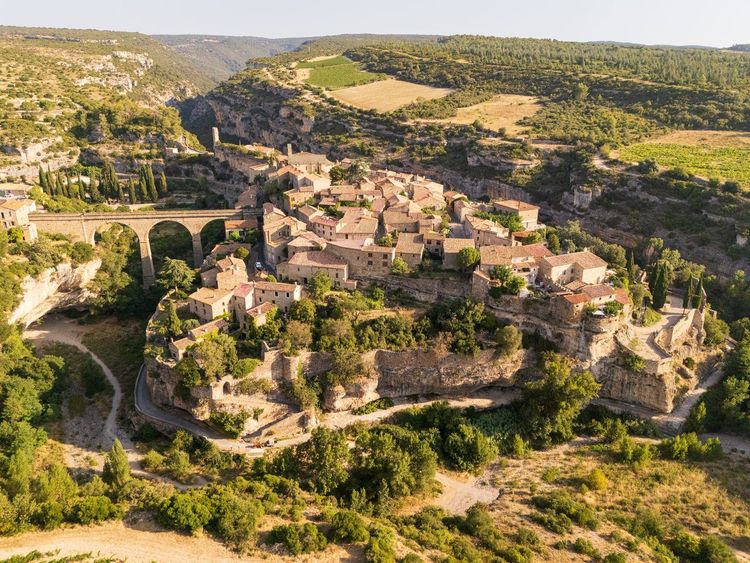
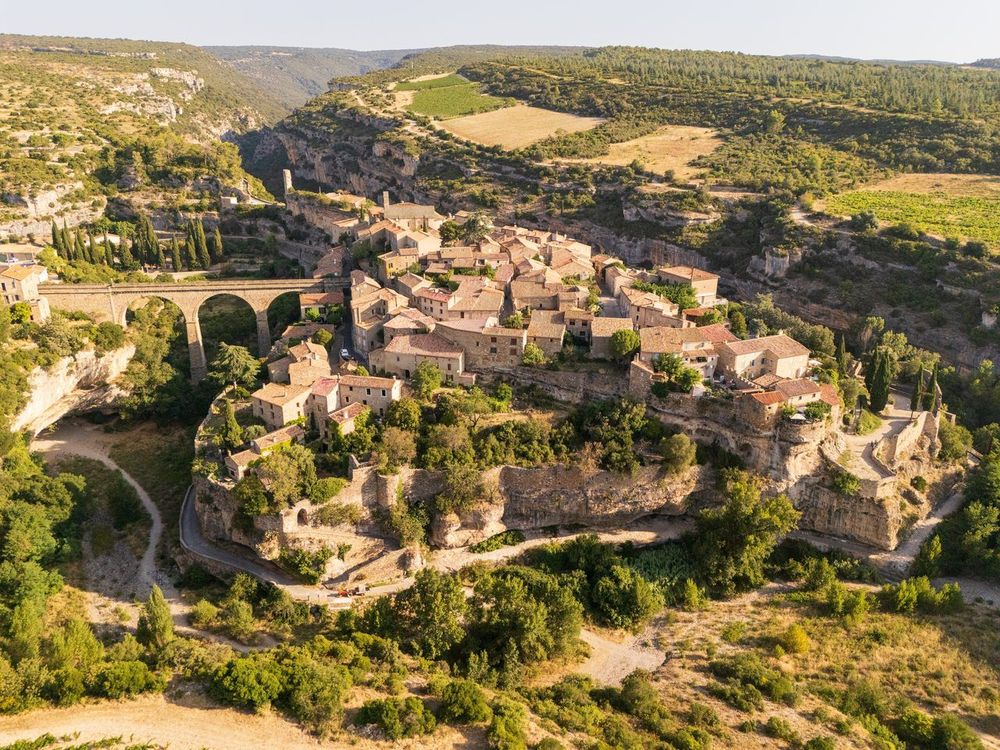
There is something unsettling about the first sight of Minerve: the village seems to emerge from thin air, clinging to a spur of white limestone that two rivers have carved over millions of years. Arriving via the D10 from Olonzac, you see the entire cluster of buildings before you realise there is no hill beneath the houses, only a vertical cliff and, far below, the gorges of the Cesse and the Brian. From Narbonne, allow 40 kilometres and about 50 minutes by the D607 then the minor departmental roads through the Minervois.
Minerve is one of the two villages in the region officially listed among the 'Most Beautiful Villages of France'. Its history weighs more heavily than its visible beauty: in June 1210, Simon de Montfort besieged the village with his crusading troops, a siege lasting seven weeks. The population, cut off from water after the destruction of the well by a catapult, could not hold out for long. The surrender came at the end of July. 140 Cathar perfecti refused to renounce their faith and walked collectively onto the pyre, one of the darkest episodes of the Albigensian Crusade. A commemorative stele in the shape of a dove marks the site of the burning. The church of Saint-Étienne, dating from the 12th century, survived these events with its white stone walls and plain nave that epitomise the restraint of Occitan Romanesque architecture.
What few guides mention is that the Cesse river has sculpted two natural bridges in the limestone, known as the Grand Pont and the Petit Pont. These natural arches, accessible on foot from the bottom of the village via a path cut into the rock, are among the most spectacular geological formations in the whole of Languedoc. In summer the river is often dry: you walk along the parched riverbed beneath these natural arches, in a white light reflected by the chalk. In winter or spring, the water returns and the natural bridges recover their hydraulic logic. The descent to the gorges takes 25 to 30 minutes one way from the village; the path is manageable but steep in the final stretch, closed shoes recommended.
Minerve is also a wine village. The Minervois appellation has borne its name since 1985, and several cellars in the area offer tastings a few minutes from the village. The Minervois reds, primarily blends of Syrah, Grenache and Carignan, have a sunny character with rounded tannins that pair particularly well with local charcuterie and dried cheeses from the garrigue. The Minervois La Livinière wines, produced over a more restricted area to the north of the appellation, display an additional concentration that brings them closer to wines for ageing over 10 to 15 years.
The real constraint of Minerve is its small size: around 100 permanent residents, which means few restaurants (two or three in season), limited accommodation and car parks that fill up quickly in July. Park in the paid car park at the village entrance and walk down. The ideal visit begins early in the morning, before 9am in summer, when the first light illuminates the limestone cliff in an almost luminous white and the previous day's visitors have not yet been replaced by the day's crowds.
3. Gruissan, the Village of Stilted Cabins and Salt
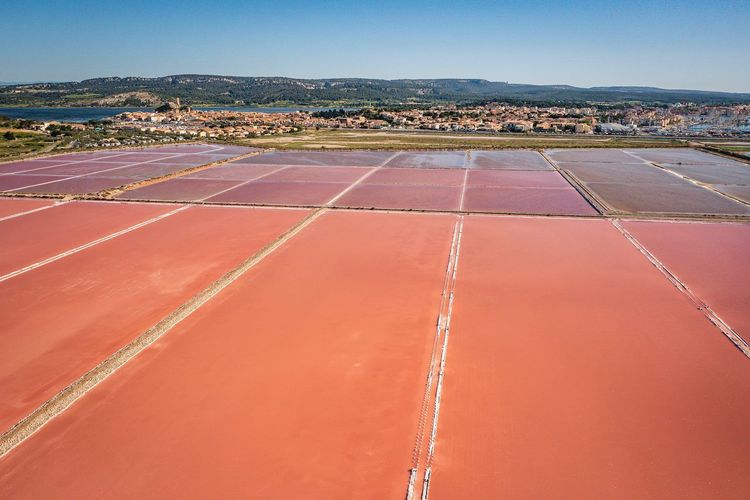
At 15 kilometres from Narbonne, Gruissan is the only village on this list that concentrates in a single place a beach, a lagoon, active salt marshes and a circular medieval village organised around a medieval tower. This compact format makes it a natural half-day stop, ideal as the opening leg of a trip to understand the diversity of Aude's landscapes without driving far.
The old village of Gruissan is an architecturally rare case in the region: its lanes spiral around the Tour Barberousse, a remnant of a 14th-century medieval castle. From the top of the tower, the panorama takes in the Étang de Gruissan to the west, the salt marshes to the north and, on a clear day, the foothills of the Corbières. The name 'Barberousse' remains shrouded in mystery; there is no proven link with the 16th-century Ottoman corsair, whose fame postdates the tower's construction. The nickname is probably local in origin, linked to a medieval lord whose written records have long since disappeared.
What made Gruissan famous beyond Languedoc is Jean-Jacques Beineix's film '37°2 le matin', released in 1986. The opening scenes take place among the beach cabins, small wooden stilted chalets perched on the sand as if to resist Mediterranean storms. Actress Béatrice Dalle and Jean-Hugues Anglade live out their explosive and self-destructive romance here in a languorous summer atmosphere that marked an entire generation. These cabins still exist, lined up along Gruissan beach, recognisable by their wood greyed by salt and wind. Some have belonged to fishing families for several generations, others have been renovated. Gruissan beach remains one of the widest on the Aude coastline, with a gently sloping sandy bottom suited to family swimming and full facilities in season.
To the east of the village, the Salins de Gruissan cover several hundred hectares. Salt production, which had declined in the 20th century, has resumed on an artisanal scale and now yields a fleur de sel appreciated by regional food enthusiasts. A road runs alongside the basins and allows you to observe the flamingos that settle there between March and September. Follow the D168 towards Narbonne-Plage then turn right towards the salt marshes; there is no official signage, but the track is passable by car.
If after Gruissan you wish to explore other coastal options in the area, the Ryo article on the most beautiful beaches around Narbonne lists the best beaches along the Aude coastline with precise details about each one. Allow a full half-day for Gruissan: two hours for the village and the tower, then an hour for the cabins and the beach, and finally a walk through the salt marshes depending on the season.
4. Cucugnan and the Cathar Castles
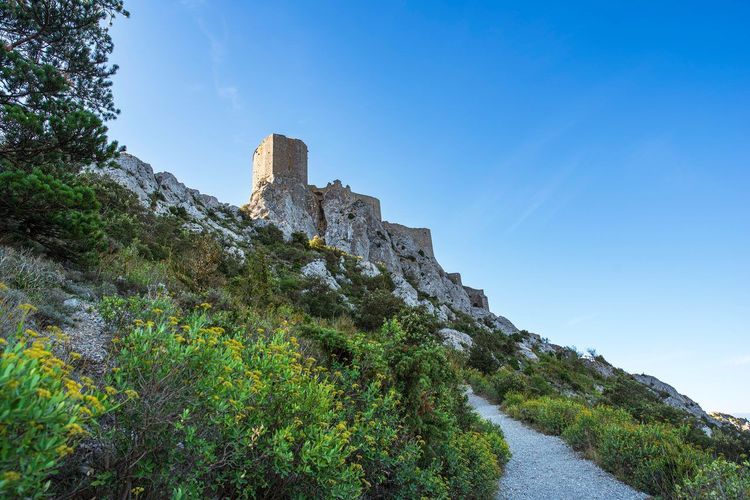
Cucugnan is not just a village, it is a preamble. Perched in the Corbières at 65 kilometres from Narbonne via the D14, this settlement of a few hundred inhabitants is the best starting point for visiting two of the most impressive Cathar fortresses in Languedoc: Quéribus at 4 kilometres and Peyrepertuse at 12 kilometres. These two castles, separated by a road winding through the garrigue, can be visited on the same day.
The Château de Quéribus (Château de Quéribus, 11350 Cucugnan, rated 4.6/5 on Google from 4,738 reviews) dominates the plain from its rocky pinnacle at 728 metres altitude, visible from the road for several kilometres before you arrive. The last refuge of the Cathars after the Albigensian Crusade, it did not fall under royal control until 1255, 45 years after the fall of Minerve, which speaks volumes about the natural impregnability of the site. The walk from the car park takes about 15 minutes one way, along a steep but well-marked path. At the top, the multi-lobed keep chamber offers a 360° panorama over the Corbières, the Maury vineyards, and on a clear day the Spanish Pyrenees and the blue line of the Mediterranean.
The Château de Peyrepertuse, 12 kilometres away along a road that crosses the garrigue, is even more striking in its sheer scale. 7 hectares of tiered fortifications along a ridge at 800 metres altitude, a complex that resembles a fortified town more than a simple defensive castle. It is less crowded than Quéribus out of season, making for a more peaceful visit. Both sites are best visited by setting off before 9am to avoid car park congestion in July–August: allow 4 to 5 hours in total; walking shoes are essential at both sites.
In the village of Cucugnan itself, a stop at the Moulin de Cucugnan is a must. Restored and visible from the main road, this windmill owes its literary fame to the Occitan legend of the curé de Cucugnan, an imaginary priest popularised by Alphonse Daudet who summons his parishioners to announce that he has seen them all in hell during a nocturnal journey. A small theatre at the foot of the mill has been staging the story in several languages for decades. It is a short visit (30 minutes), accessible to all ages, and serves as a light introduction before the starkness of the Cathar fortresses.
Practical tip: in July–August, the car parks at Quéribus and Peyrepertuse are paid and often full by 10am. A shuttle service runs some summers between Cucugnan and the two castles; check with the Pays Cathare tourist office before your visit for current timetables.
5. Sigean and Its African Reserve
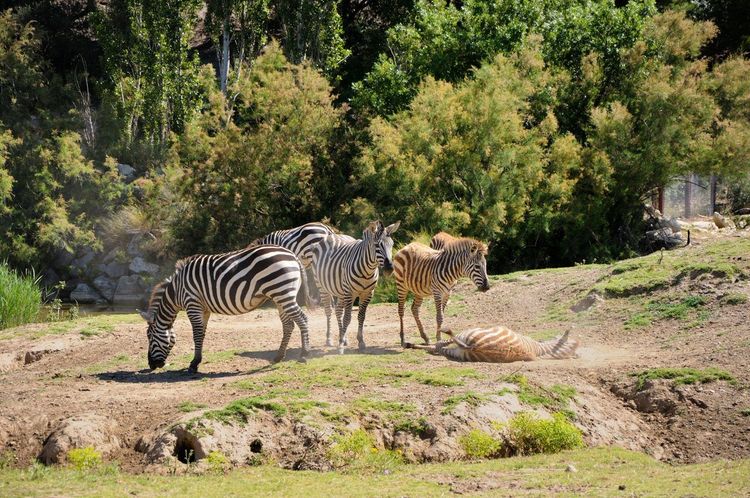
Sigean intrigues by its dual character. At 25 kilometres south of Narbonne via the D6009, the old medieval village is discreet: a few quiet lanes, a 12th-century fortified church, traces of an ancient Roman settlement beneath the cobblestones of the main square. But two kilometres further along the same road, the Réserve Africaine de Sigean (D6009, 11130 Sigean, rated 4.3/5 on Google from 24,177 reviews) radically transforms the offer for visitors.
Founded in 1974, the Réserve Africaine de Sigean is today one of Europe's largest wildlife parks by area, with 300 hectares and more than 3,800 animals representing more than 140 species. The visit takes place in two complementary ways. The drive-through tour, mandatory in certain zones, takes you among lions, brown bears, white rhinoceroses, zebras and wildebeest roaming freely across spaces that replicate the African savanna. The walking tour completes the visit through enclosures housing primates, reptiles, medium-sized felines and a collection of tropical birds remarkable for its diversity.
What many visitors do not know: the reserve occupies the site of a former lagoon, partially drained in the second half of the 20th century. The white clay soil that resembles the African savanna is in fact the geological signature of an ancient Mediterranean lake bed. The park's founders used this visual similarity to East Africa very deliberately: the topography of the dried shoreline creates natural undulations that allow animals to disappear from view and recover a degree of freedom of movement that parks built on perfectly flat terrain cannot offer.
Allow a minimum of 3 to 4 hours for the full visit, including the walking areas. Admission is expensive (around €40 for an adult, between €27 and €32 for a child depending on age in 2026; check updated prices on the reserve's website). Arrive early to observe the lions and bears between 9am and 11am, when they are most active. After 2pm, the big cats tend to stay in the shade and are less visible from the car.
The old village of Sigean deserves an extra 30 to 45 minutes after the reserve. The Église Saint-Félix-de-Gérone, a 12th-century Romanesque church, has a plain nave and a dressed-stone façade that neatly sums up the character of this Aude village with no tourist pretensions. The village square, with its century-old plane tree and arcaded houses, invites a shaded rest before getting back on the road.
6. Peyriac-de-Mer, the Lagoon Village
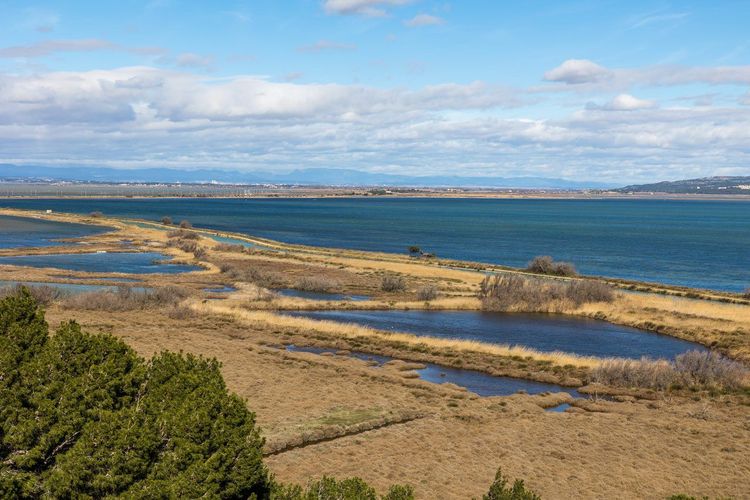
There is no fast road between Narbonne and Peyriac-de-Mer: the 20 kilometres unfold along a minor departmental road that zigzags between vineyards and lagoons. This is precisely what makes it a place apart. You arrive along a route your GPS would consider an alternative itinerary, only to emerge at a white village edged by the calm waters of the Étang de Bages-Sigean.
The Étang de Bages-Sigean is one of the largest coastal lagoons in Languedoc, covering 2,200 hectares. Its shallow depth, less than 1.5 metres on average, makes it an ideal hunting ground for flamingos, egrets, grey herons and some twenty species of wintering ducks. A marked trail follows the shore from the village towards the hamlet of Bages and allows observation without disturbance, particularly productive at dawn or at the end of the day when the raking light colours the water in shades of ochre and pink.
Peyriac-de-Mer has a small Musée de l'Étang et de la Vigne that traces the history of the village from Roman times, when the lagoon's fisheries supplied Narbonne with garum (fermented fish sauce) and murex (shellfish from which the precious purple dye was extracted). Admission is modest, around €3, but the collections are surprisingly rich for a village museum: Roman lapidary finds and traditional fishing tools from the 19th century share the same rooms.
The wine production around Peyriac-de-Mer falls under the Corbières appellation. Several estates offer tastings by appointment. The reds produced here, protected by the dual Mediterranean influence of the lagoons and sea breezes, have a fresher structure than the inland Corbières; this singular terroir is worth exploring if you want to compare the micro-regions of the Aude in a single day.
For a different activity, the lagoon lends itself to kayaking or stand-up paddleboarding from the village shore. Several local operators offer half-day rentals in summer. The shallow depth and calm waters make the outing accessible with no prior experience, even with children from age 8. Allow about 2 hours for a tour of the northern part of the lagoon from the village jetty.
7. Fitou, between Two Lagoons and the Oldest Red Wine of the Midi
Fitou is a village made singular by geography: it sits between two lagoons, the Étang de Leucate to the east and the Étang de la Palme to the west, connected to the sea by graus (natural passages between lagoon and open sea). From the D6009, you can see the village on a slightly raised mound between two shimmering surfaces of water, with the first foothills of the Corbières in the background. It is 40 kilometres from Narbonne, and it offers one of the rare views in France where the Mediterranean lagoon landscape becomes so perfectly legible.
The wine of Fitou carries an appellation history that predates most major French AOCs. The first red AOC in Languedoc, obtained in 1948, the appellation covers two geographically distinct zones: maritime Fitou (around the village, between the lagoons) and mountain Fitou (in the interior Corbières, around Tuchan). These two zones produce very different wines: the maritime wines have more saline freshness linked to the proximity of the lagoons, while the mountain wines have a more tannic structure and more pronounced garrigue aromas. The village cooperative cellars and those nearby offer free tastings almost year-round; this is the ideal spot. The village itself has retained its medieval ramparts in part along the northern flank, with a 16th-century watchtower visible from the main road. The promenade along the ramparts offers a direct view over the Étang de la Palme, often populated by flamingos whose pink colour is reflected in the calm morning water.
In practice: Fitou lies on the road between Narbonne and Perpignan. If you are returning from a day on the Catalan side, it makes a natural 45-minute stop that requires no detour.
8. Leucate, a Headland on the Mediterranean
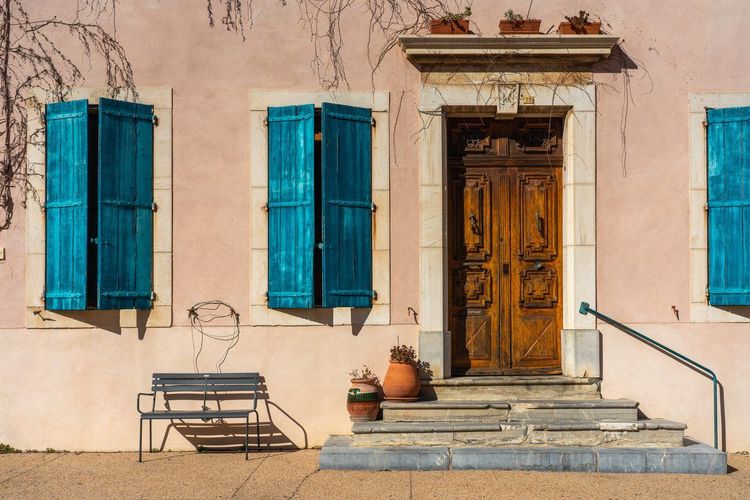
Leucate is divided into two very distinct entities that are worth distinguishing before you set off: the Village de Leucate (the historic medieval village, on a hillock about 3 kilometres from the sea) and Leucate-Plage (the modern seaside resort developed in the 1960s). It is the historic village that justifies the stop on this list.
Cap Leucate (Route du Cap, 11370 Leucate, rated 4.8/5 on Google from 123 reviews) is the southernmost point of the Aude département before the Catalan border. A white limestone cliff drops 10 to 15 metres into water that turns an almost tropical blue on calm days, very different from the brown palette of sandy beaches. The headland is well known among kitesurfers and windsurfers who come in search of the tramontane and marine winds that cross here almost year-round: Leucate ranks among the best watersports spots on the Mediterranean. But the cap is also accessible to hikers without any special equipment. The coastal path (GR du littoral) passes through here and offers a 5-kilometre walk between the cap and the village, through white-cliff scenery and coves that are rarely crowded outside July–August.
The medieval fortified village dates from the 14th century and has preserved elements of its enclosure wall. The sloping lanes converge on a restored Romanesque church and a watchtower from which the eye takes in the sea and the Étang de Leucate simultaneously. A few cellars offer wines from the Fitou-Leucate appellation, the two communes having shared the same AOC since its origins. To explore Narbonne before heading to the coast, the Narbonne audio-guided tour offers a 1h40 walk through the streets of the ancient city that provides the historical context for this entire region.
Best period: March to May and September–October to avoid the summer beach crowds without sacrificing Mediterranean weather. In the height of summer, the cap remains accessible but Leucate-Plage is very congested. In Narbonne itself, our 4 km of commentary walk just as well out of season.
9. Capestang and the Canal du Midi
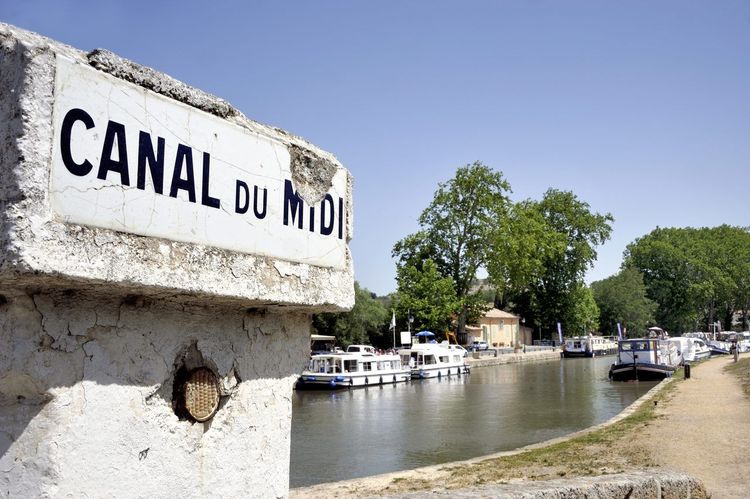
Capestang is 35 kilometres from Narbonne via the D6109, in the wine-growing plain between the Aude and Hérault rivers. The Canal du Midi runs through it, and this changes the atmosphere of the entire village: barges moored beneath century-old plane trees create a gentle, bittersweet serenity that stands in sharp contrast to the bustle of the Aude coastline.
The Collégiale Saint-Étienne is the main attraction and one of the most architecturally surprising buildings in the entire region. This 14th-century Gothic edifice was never completed. It was originally intended to rival the cathedral of Narbonne: the plans called for a transept, side aisles and a monumental bell tower. Successive wars, the Black Death of 1348 and economic crises halted construction around 1350. The result is a single nave, with no side aisles, of a height wildly disproportionate to its width, producing a striking vertical thrust that is quite unexpected for a village of this size. The interior is open in summer mornings until noon and in the afternoon from 2pm to 6pm.
Along the Canal du Midi, a shaded promenade under the plane trees runs along the banks from the town centre to the Capestang lock. In summer you will encounter hire barges stopping for the night, their occupants seated on deck with the easy nonchalance of travellers who have abandoned all sense of urgency. Capestang is also a starting point for day-long river cruises on the Canal du Midi: several operators offer licence-free boat hire from the lock, by the half-day or full day.
10. Bize-Minervois, Gorges and Vines
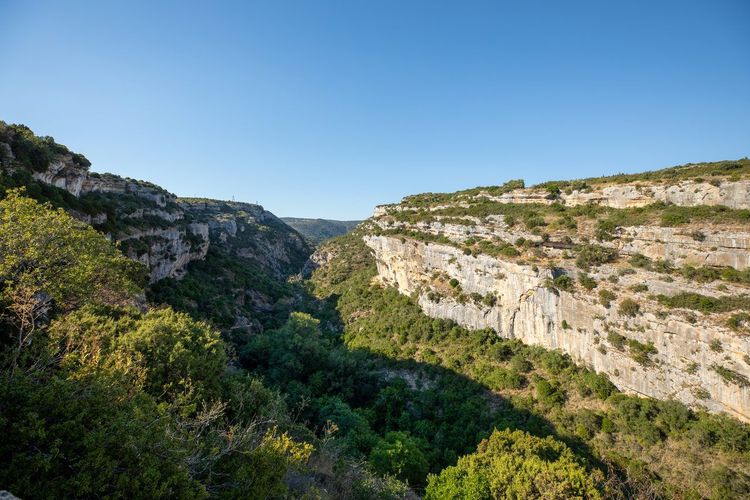
Bize-Minervois (Route des Gorges, 11120 Bize-Minervois, rated 5/5 on Google from 1 review) takes a little effort to reach: at 30 kilometres from Narbonne via the D607, the village does not feature in every regional guide. Yet the Gorges du Pont, carved by the Cesse river just downstream from the village, are among the best natural swimming spots in the entire Aude département.
The gorges are explored along a path following the right bank of the Cesse for 2 kilometres. The water, clear and cool even in the height of summer, carves natural pools between limestone rocks. Several areas allow swimming, unsupervised, so caution is needed with young children. The return walk takes about an hour and presents no particular difficulty. Arrive before 10am or after 5pm in July–August to avoid the narrow car park and crowded banks.
Bize-Minervois is also a wine-growing village rooted in the Minervois appellation. The village cooperative offers tastings without reservation on weekdays. Local production includes whites made from Grenache blanc and Bourboulenc, the least well-known signatures of the appellation, but among the most interesting for their saline profile and palate tension that recalls certain southern Rhône wines.
11. Fontjoncouse, the Three-Star Village
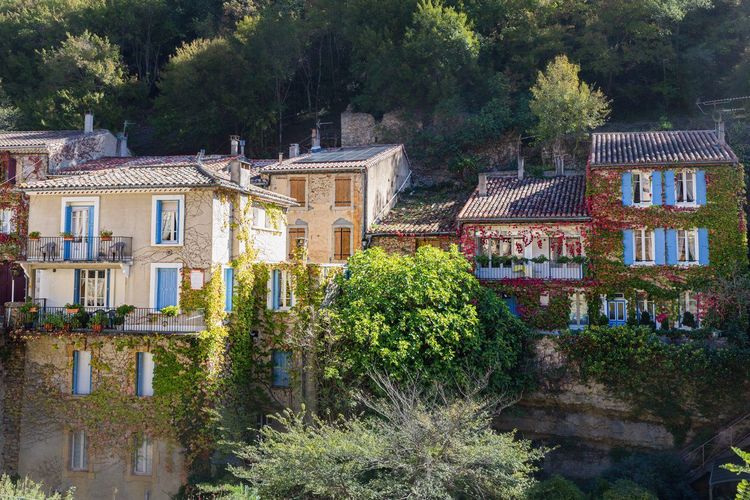
Fontjoncouse is perhaps the most under-the-radar village on this list: fewer than 100 permanent residents, a single road in and out, the Corbières stretching as far as the eye can see from every window. In this village off the D123, 35 kilometres from Narbonne, one restaurant has nonetheless changed the gastronomic standing of the entire Languedoc.
The Auberge du Vieux Puits (Route de Vignes, 11360 Fontjoncouse, rated 4.8/5 on Google from 1,140 reviews), the table of Gilles Goujon, is among the rare establishments in the South of France to hold 3 Michelin stars. What makes this place particularly remarkable is that it never sought out a city to build its reputation: it built it from a village of 80 inhabitants by working Corbières black truffles and garrigue lamb with technical precision unmatched in the region. The waiting list for a reservation runs to months. Even without dining there, Fontjoncouse is worth the detour for the raw beauty of its setting: a cirque of garrigue and limestone where the silence is broken only by the Corbières wind.
A 6-kilometre trail links Fontjoncouse to Fraïsse-des-Corbières, crossing the garrigue and kermes oaks that make up the dominant vegetation of these inner Corbières.
12. Sallèles-d'Aude, Roman Potters of the Canal
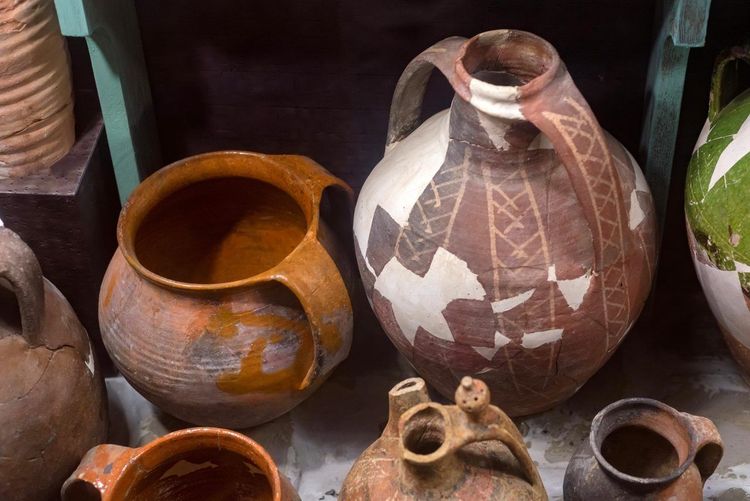
At 15 kilometres from Narbonne, Sallèles-d'Aude is the unexpected cultural stop for anyone following the Canal du Midi westward. The village itself is quiet, but it conceals an archaeological heritage that enthusiasts of ancient history frequently rank among their finest discoveries in the Aude.
The Musée Amphoralis (Route de Saint-Nazaire, 11590 Sallèles-d'Aude, rated 4.4/5 on Google from 468 reviews) is built on the remains of a Roman pottery workshop active between the 1st and 4th centuries AD. This workshop produced wine amphorae in large batches, destined to be loaded onto river vessels on the Robine towards Narbonne, then the capital of the Roman province of Gallia Narbonensis, and dispatched onward to Rome. Excavations uncovered kilns, waste pits and several thousand ceramic fragments. The guided tour (available in summer and by appointment out of season) gives a concrete understanding of how an ancient manufacturing site was organised: the division of labour between throwers and kiln workers, and the firing techniques used in natural-draught kilns.
Along the Canal du Midi, the Sallèles lock forms part of the original route designed by Pierre-Paul Riquet in the 17th century. In summer you can watch barges pass through the lock from the shaded bank beneath the plane trees, a scene unchanged in its essentials for three centuries.
13. Durban-Corbières, at the End of the Vines
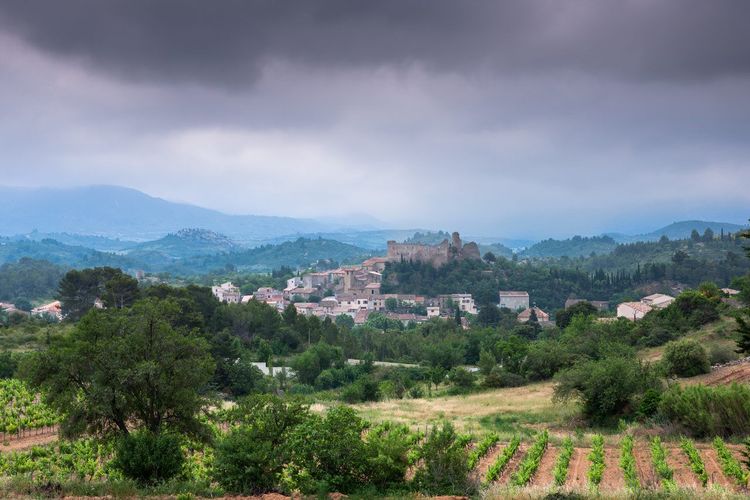
Durban-Corbières is the most unassuming of these thirteen villages, but also one of the most authentic. At 35 kilometres from Narbonne, it marks the gateway to the deep Corbières, where vines grow on schist and argilo-calcareous soils with no concession to mass tourism.
The Château de Durban (Route du Château, 11360 Durban-Corbières, rated 4.4/5 on Google from 70 reviews) overlooks the village from a wooded mound. The medieval ruins are partially accessible on foot, a 20-minute climb from the village, for a panorama over the wine-covered Corbières and, on a clear day, over the Étang de Sigean and the blue line of the sea. The castle belonged to the archbishops of Narbonne in the Middle Ages before being progressively abandoned from the 17th century onwards. It is not a museum site: no entry fee, no staff, just ruins, a dirt path and a view that rewards the twenty-minute effort.
The wine estates of Durban produce Corbières of great concentration, aided by very poor soils and naturally low yields. Several family estates welcome visitors by appointment; ask the village mayor's office for current contacts, as the information changes from season to season.
FAQ
Which is the most beautiful village to visit around Narbonne?
Lagrasse and Minerve are the two villages officially listed among the 'Most Beautiful Villages of France' in the region. Lagrasse impresses with its still-inhabited Carolingian abbey and intact medieval lanes. Minerve strikes more powerfully through its geological setting and its dramatic Cathar history. If you can only visit one, choose Lagrasse for the architecture and medieval atmosphere, or Minerve for the geology and Cathar history.
Which villages can be visited in a single day from Narbonne?
An efficient full-day itinerary: Gruissan in the morning (village and stilted cabins, 15 km away), Peyriac-de-Mer for lunch overlooking the lagoon (20 km), then Fitou in the afternoon for a wine tasting and views over the two lagoons (40 km). This 80-kilometre circuit flows easily along the departmental roads and offers three very different atmospheres in a single day.
What is there to do around Narbonne with family?
The Réserve Africaine de Sigean is the most obvious answer: 300 hectares, more than 3,800 animals, visited by car and on foot, lasting 3 to 4 hours. The Gorges du Pont de Bize-Minervois are suitable for children over 8 for freshwater swimming. Gruissan-Plage is the most accessible family beach with its car parks and gently sloping sandy bottom. The Cathar castles (Quéribus, Peyrepertuse) captivate children from around age 10.
Are there any villages with a beach near Narbonne?
Gruissan-Plage is 15 kilometres from Narbonne, with a wide sandy beach and the famous stilted cabins filmed in '37°2 le matin'. Leucate-Plage is 35 kilometres away. For coves against a rocky headland, Cap Leucate offers walking access from the historic village. Lagoon villages such as Peyriac-de-Mer and Fitou do not face the open sea but allow swimming in calm, shallow waters.
When is the best time to visit the villages around Narbonne?
April–June and September–October are the best periods: warm weather, open sites, and roads without summer congestion. In July–August, Gruissan, Leucate and the Réserve Africaine de Sigean are very busy; aim to arrive before 9am at these sites. Winter (November–March) is quiet but some sites reduce their opening hours or close on weekdays.
Do you need a car to visit the villages around Narbonne?
Yes, a car is essential for almost all of these villages. A few bus routes connect Narbonne to Gruissan and Sigean in summer, but the limited timetables and connections make it impossible to combine several villages in one day. From Narbonne, you can reasonably aim for 2 to 3 villages per day by car, depending on distances and how long you want to spend at each.
Conclusion
If you were wondering what to do around Narbonne beyond the city itself, these thirteen villages form a surprisingly coherent territory around it. Wine, sea, garrigue and Cathar history are present at every kilometre, in different guises depending on whether you head towards the Corbières, the Minervois or the Aude coastline. None of these villages resembles the last, which makes them complementary rather than competing destinations; each day trip can have a radically different character.
If you would like to prepare your stay by starting with Narbonne itself, the Ryo audio-guided tour of Narbonne will give you in 1h40 the keys to reading this territory: the Roman history, the medieval architecture and the geography that explain why Narbonne was, for centuries, the capital of Languedoc. A solid starting point before setting off towards the villages.