© Shutterstock
 Votre guide Ryo
What to Do in Narbonne in 2026: 16 Experiences between the Canal and Roman Ruins
Narbonne was long considered more Roman than Rome itself by its inhabitants: capital of Gallia Narbonensis, it rivalled Rome in population and prestige, until a simple shift in the course of the Aude river in the 14th century deprived it of its port and left it in the shadow of its neighbours Béziers and Montpellier. Today, what to do in Narbonne remains a question that surprises with the density of possible answers for a city of 55,000 inhabitants: an unfinished Gothic cathedral, a century-old covered market, a canal crossed by electric boats, and brackish lagoons stretching as far as the eye can see. The Ryo audio-guided tour of Narbonne also lets you connect several of these sites on foot, headphones on, in just over an hour and a half.
Along the way you will find an underground Horreum through which goods from across the Roman Empire once flowed, a basilica begun even before the cathedral and never quite finished, a 14th-century keep offering one of the most unobstructed views in Languedoc, and just a short distance away, an African safari park where lions and white rhinoceroses roam semi-freely across 300 hectares of garrigue. Between city and sea, between ancient ruins and flamingo-filled lagoons, Narbonne can be discovered in a rushed half-day or over a stay of several days, on foot, by bike or by electric boat.
1. Stroll through the Halles de Narbonne
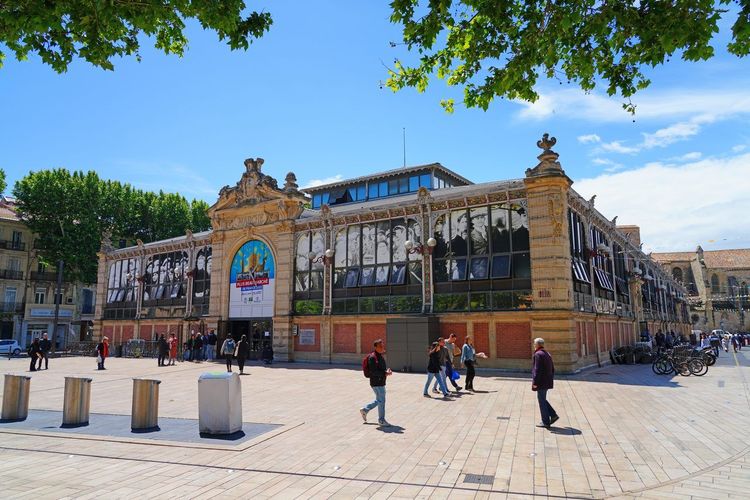
The Halles de Narbonne open their doors every day of the year, including Sundays, making them a rarity among covered markets in Languedoc. The metal market hall, inaugurated on 1 January 1901 based on designs inspired by the Baltard pavilions, houses nearly seventy traders beneath an iron and glass framework that filters a distinctive light, especially in late morning. The stalls are open from 7am to 2pm, and the Halles were named the most beautiful market in France in 2022.
Local producers sell oysters from the Bages-Sigean lagoon, anchovies processed on-site, goat's cheeses from the Corbières and wines from the Clape served by the glass from 9 in the morning. Some regulars come simply to settle at the counter of one of the indoor oyster bars and watch the market come alive, amid the calls of the fishmongers and the scent of warm bread. The market hall has also retained its original clock and part of its listed metal framework, which survived the renovation work carried out in the 1990s.
If you can only visit one market in the region, Saturday morning is the best choice, when attendance is at its peak but the selection is at its most complete, often with additional producers set up on the surrounding pavements. For a quieter experience, a Tuesday or Thursday around 8:30am allows you to browse without the crowds and chat more easily with the traders, who are happy to explain where their products come from outside of peak hours.
2. Look Up inside the Cathedral of Saint-Just-et-Saint-Pasteur
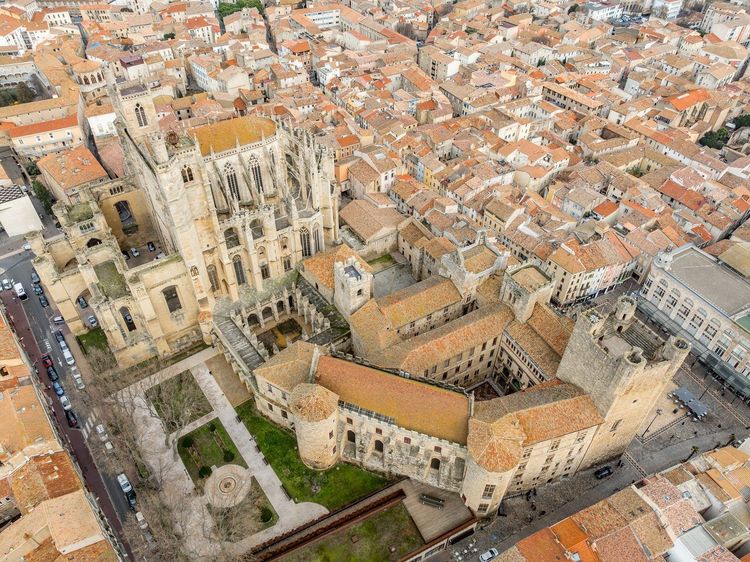
The cathedral of Saint-Just-et-Saint-Pasteur (Rue Gustave Fabre, 11100 Narbonne, rated 4.6/5 on Google based on 5,701 reviews) is a monument worth visiting as much for what it shows as for what it lacks. Construction began in 1272 according to an ambitious plan intended to rival the great cathedrals of northern France, but only the choir was ultimately completed: at 41 metres to the vault, it remains one of the highest in France, comparable to those of the cathedrals of Beauvais or Amiens.
The nave was never built. The canons and consuls of the city disagreed over the construction route: extending the building would have required demolishing a section of the medieval ramparts, something the municipal authorities stubbornly refused in the name of the city's defences. The construction work came to an abrupt halt at the end of the 14th century, leaving a monumental choir attached to a facade that looks almost like a bare wall. The contrast, once inside, surprises almost every visitor who expected a classic nave.
Inside, the treasury holds 15th-century tapestries and an exceptional goldsmithed ciborium, while the adjoining cloister, in the flamboyant Gothic style, exudes a more intimate atmosphere than the cathedral itself. The cathedral also preserves relics attributed to Saints Just and Pasteur, two young Spanish martyrs put to death in the early 4th century whose names it bears, as well as a set of carved wooden choir stalls from the 14th century that are rarely highlighted in guidebooks but visible from the choir. The bell tower, separate from the main body, still rings on the hour thanks to a mechanical mechanism maintained by the city.
The 14th-century stained glass windows, restored in stages since the 1990s, are among the oldest preserved in Languedoc; some original medallions sit alongside 19th-century additions, allowing you to directly compare glassmaking techniques seven hundred years apart. You will get the best view of the chevet from the gardens of the Archbishop's Palace rather than from the main square: the perspective on the flying buttresses is far more spectacular from there. Allow around thirty minutes for a self-guided visit, double that if you linger in the treasury and cloister.
3. Explore the Palais des Archevêques
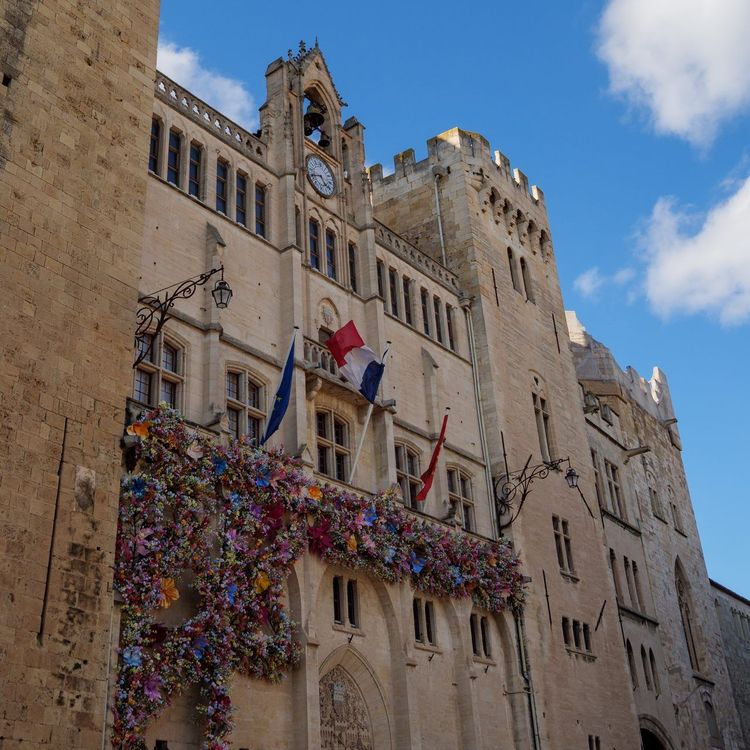
The Palais des Archevêques (Place de l'Hôtel de Ville, 11100 Narbonne, rated 4.5/5 on Google based on 1,719 reviews) occupies the heart of the historic centre and is actually made up of two adjoining complexes built up over the centuries: the Palais Vieux, a Romanesque fortified palace dating from the 12th century, and the Palais Neuf, Gothic in style and completed in the 14th century under the authority of the archbishops who then governed Narbonne with the power of a prince.
The facade facing the main square, however, dates from a very different era: it was Viollet-le-Duc himself, already known for his restorations at Carcassonne and Notre-Dame de Paris, who designed this flamboyant Neo-Gothic facade in the 19th century, now occupied by the Town Hall. The result, much photographed, gives the Place de l'Hôtel de Ville the feel of a film set.
Inside the Palais Neuf, the Art and History Museum occupies the former apartments of the archbishops and holds furniture, paintings and Hispano-Moorish ceramics discovered during local excavations. The vaulted rooms themselves are worth the visit, with their monumental fireplaces and original French-style ceilings still in place. The terraced gardens of the Archbishop's Palace also offer one of the only clear views of the cathedral's chevet from within the historic centre, a detail that few hurried visitors take the time to seek out.
The Passage de l'Ancre, a narrow alleyway running straight through the palace, connects the Place de l'Hôtel de Ville directly to the flower market and the cathedral. Take it rather than walking around the building: it is the shortcut that the people of Narbonne use every day, and it offers a rare sense of the thickness of the medieval walls.
4. Travel Back in Time at the Narbo Via Museum
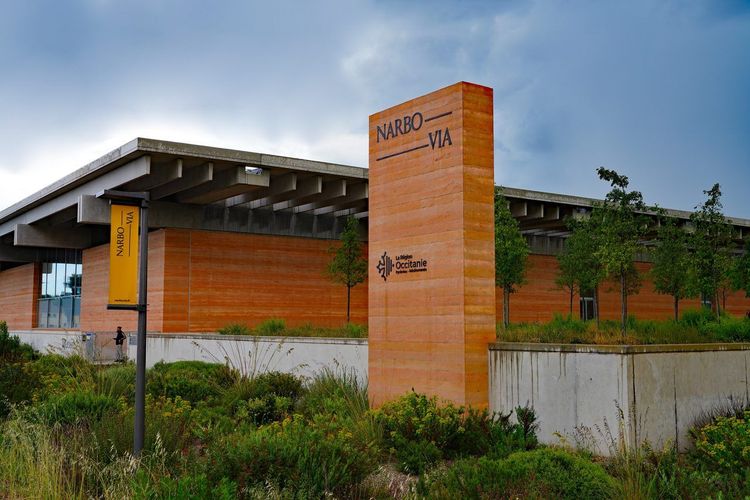
Inaugurated in May 2021, the Narbo Via museum (2 Avenue André Mècle, 11100 Narbonne, rated 4.6/5 on Google based on 1,918 reviews) has transformed the way Narbonne tells its Roman past. The building, designed by British architect Norman Foster's firm, looks from the outside like a monumental warehouse set beside the dual carriageway, but inside it houses the largest Roman lapidary collection in France: 760 sculpted and inscribed blocks, many of them sourced from the medieval ramparts where they had been reused as simple building stones for centuries.
The central lapidary wall, 76 metres long and 10 metres high, is in itself one of the most spectacular museographic installations in Languedoc. An automated handling system, unique among museums, allows the blocks to be rearranged on the wall: it therefore serves both as a stage set for visitors and as an open reserve for researchers. Take the time to pick out the funerary inscriptions, architectural decorations and mythological scenes carved two thousand years ago.
The tour also revisits Narbonne's role as the starting point of the Via Domitia, the first Roman road built in Gaul, as early as 118 BCE, to connect Italy to Spain. An entire section is devoted to Narbonne's lost port, active until the Aude changed course in the 14th century and left the city far from any navigable banks. Amphorae, anchors and models of merchant vessels illustrate this Mediterranean trade that is now invisible from the city centre.
The museum also organises temporary exhibitions renewed each year, generally devoted to a specific aspect of the provincial Roman world, from glassmaking crafts to ancient navigation techniques. This site is also highlighted by the Ryo audio-guided tour of Narbonne, which dedicates several stops to the city's Roman heritage. Allow at least an hour and a half for a complete visit; the combined ticket with the Horreum, a few hundred metres away, allows you to visit both sites on the same day at a reduced price.
5. Go Underground in the Roman Horreum
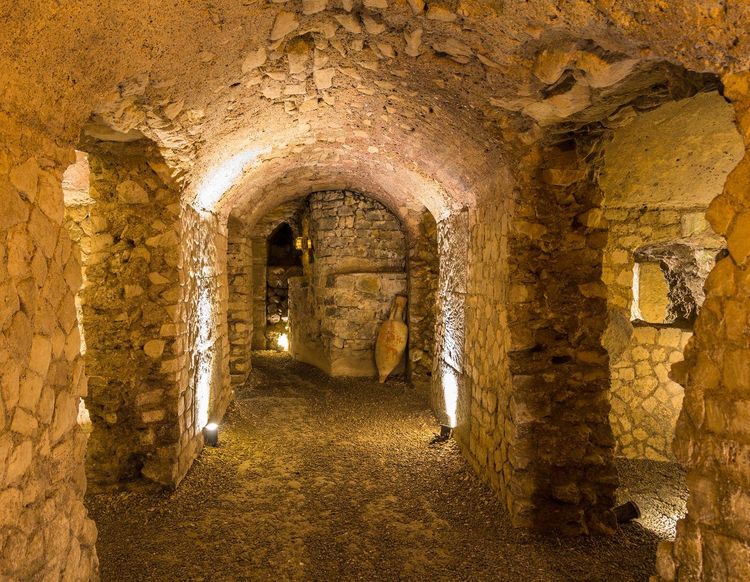
The Horreum de Narbonne (7 Rue Rouget de l'Isle, 11100 Narbonne, rated 4.2/5 on Google based on 1,541 reviews) is the only Roman monument in the city that can be visited entirely underground. This network of vaulted galleries, dug in the second half of the 1st century BCE, served as a warehouse for goods passing through the ancient port: grain, oil, wine and pottery. First recorded in 1838, the galleries were only listed as a Historic Monument in 1961, then fitted out and opened to the public in 1976.
You descend about ten steps and find yourself at the level of the Roman ground, five metres below the modern city: that difference in level alone measures the accumulation of sediment and successive construction since Antiquity. Two wings survive, measuring 37 and 50 metres in length, beneath a vault that reaches just 2.30 metres high. The galleries in Caunes-Minervois stone, still intact in places, preserve tool marks that can be felt with a finger.
The site can be visited in about twenty minutes and naturally complements the Narbo Via museum, under whose administrative umbrella it falls. If your stay is part of the Ryo audio-guided tour of Narbonne, the Horreum is also featured among the stops on the tour dedicated to the city's Roman heritage, complete with audio commentary and archaeological anecdotes.
6. Sail or Walk along the Canal de la Robine
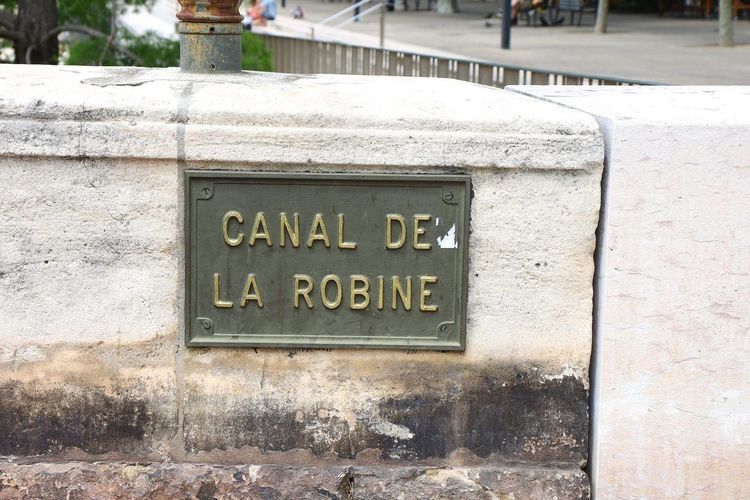
The Canal de la Robine runs through Narbonne from one end to the other and effectively divides the city into two distinct atmospheres: on one side the medieval lanes around the cathedral, on the other more residential neighbourhoods opening onto century-old plane trees lining the water. Listed as a UNESCO World Heritage Site since 1996 as a historic branch of the Canal du Midi, it remains far less frequented than its famous counterpart further west.
Laid out as early as 1686 along the former bed of the Aude at Vauban's request, then connected to the Canal du Midi by the junction canal inaugurated in 1787, it long served for the transport of wine and grain before becoming the promenade it is today; several former lock-keeper's houses, converted into homes, still punctuate its route beyond the city centre. In season, licence-free electric boats can be hired by the hour near the Pont des Marchands and allow for a leisurely upstream journey into the suburbs, beneath the leafy canopy.
On foot, the quays offer another way to discover the city: the Quais Victor Hugo and Dr Ferroul are home to most of the café terraces and restaurants that liven up summer evenings, while the neighbourhoods further north, towards the station, reveal a quieter side of Narbonne, made up of winemakers' houses and small pedestrian bridges. The organic market also sets up on certain mornings directly along the quays, a calmer alternative to the covered Halles.
For a walk without a set itinerary, simply follow the canal from the Pont des Marchands to the Pont de la Liberté: about twenty minutes on foot that passes through almost every face of the city, from the most touristic to the most everyday.
7. Cross the Pont des Marchands
The Pont des Marchands is one of the few inhabited bridges still in commercial use in Europe, alongside the Ponte Vecchio in Florence. Built on the foundations of a Roman bridge on the Via Domitia, it now carries about ten shops whose facades almost entirely conceal the water flowing beneath. Many visitors cross it without even realising it is a bridge: that is precisely what makes it a place to notice rather than to seek out.
8. Discover the Basilica of Saint-Paul-Serge
Less visited than the cathedral, the basilica of Saint-Paul-Serge (Place Saint-Paul, 11100 Narbonne, rated 4.7/5 on Google based on 40 reviews) is nonetheless well worth the detour: its construction began at the end of the 12th century, even before the cathedral, on the site of an early Christian necropolis. The crypt, accessible to visitors, preserves sarcophagi and elements dating from the 4th century, among the oldest Christian remains in the region.
The building is distinguished by its single nave without side aisles, an architectural choice that heightens the sense of height despite its more modest dimensions compared to the neighbouring cathedral. The bell tower, also left unfinished like that of the cathedral, is a reminder that Narbonne saw several major religious construction projects abandoned for lack of funds at the end of the Middle Ages. The surrounding neighbourhood, residential and little-touristed, offers the opportunity to extend the visit with a walk through streets where a few 19th-century winemakers' houses still survive.
9. Climb to the Top of the Donjon Gilles Aycelin
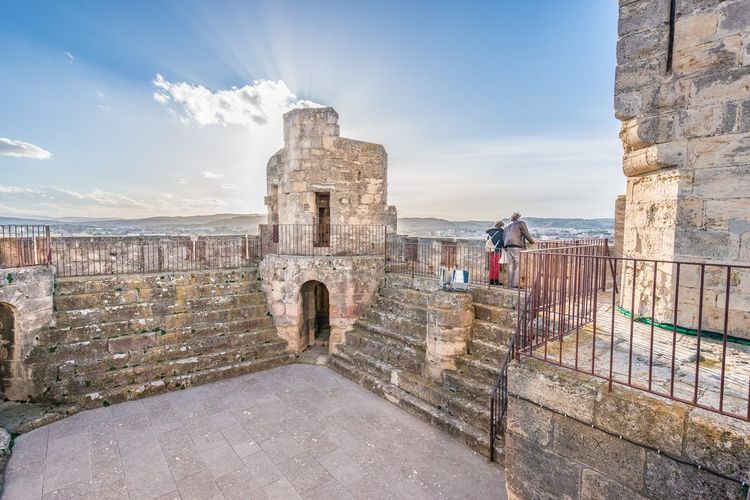
Built between 1295 and 1306 by the archbishop whose name it bears, the Donjon Gilles Aycelin (Rue Armand Gauthier, 11100 Narbonne, rated 4.5/5 on Google based on 560 reviews) rises to 42 metres, roughly the same height as the choir of the neighbouring cathedral, which is no coincidence: the two monuments have always been in visual dialogue across the lower town.
You climb 162 spiral steps, passing through the hemispherical room, the Treasury room and the King's chamber, to reach the panoramic terrace — an effort well rewarded: on a clear day, the view stretches to the coastal lagoons on one side and the first ridges of the Corbières on the other. The keep long served as a prison before becoming a simple observation post, and then a full tourist attraction following the installation of a secured staircase in the 20th century. Wear sturdy shoes, as the stone staircase is uneven and can be slippery after rain, and opt for a late-afternoon visit to enjoy a more raking light over the pink-tiled rooftops, a view that recurs throughout Narbonne's own audio-guided tour of the old town.
10. Swim, Skate or Bowl at the Espace de Liberté
The Espace de Liberté du Grand Narbonne (11 Route de Perpignan, 11100 Narbonne, rated 3/5 on Google based on 548 reviews) brings together on a single site an aquatic centre, an ice rink and a twelve-lane bowling alley, making it the most complete rainy-day plan in the city. On the pool side, an indoor area with water slides, aquatic gardens and a jacuzzi complements an outdoor Olympic pool with a large water slide.
It is a straightforward option for days of intense summer heat, when the lagoons and beach become unbearably crowded, or for the rainy days that are not entirely absent from Languedoc outside of summer. The ice rink operates even in the middle of summer: skating fifteen minutes from the Mediterranean beaches remains a local curiosity that saves many an afternoon with children. Prices remain affordable compared to aquatic centres at nearby seaside resorts, and the facility regularly offers aqua aerobics and swimming lessons for all levels outside of open swimming hours.
11. Get Close to Lions and Rhinos at the Réserve Africaine de Sigean
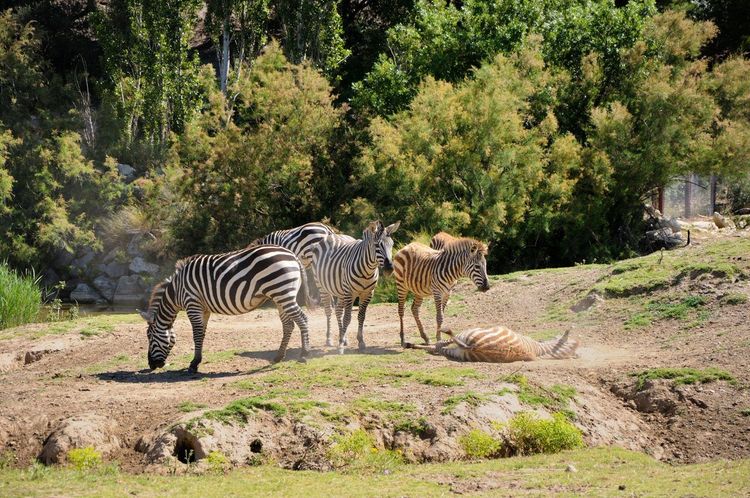
About twenty minutes south of Narbonne by car, the Réserve Africaine de Sigean (RN9, 11130 Sigean, rated 4.3/5 on Google based on 24,276 reviews) spreads across 300 hectares of Mediterranean garrigue where more than 3,800 animals from 160 different species live in semi-freedom. The driving itinerary through several successive enclosures allows you to come within metres of lions, cheetahs, white rhinoceroses and antelopes, windows closed but with no fence between you and them.
Open since 1974, the reserve is among the very first parks of this kind created in France, at a time when the concept of semi-freedom was still experimental. The circuit then continues on foot through a more traditional zoo area, where gorillas, giraffes and a large colony of flamingos roam, in direct echo of the coastal lagoons surrounding Narbonne.
Allow a full half-day to cover the entire site, combining the driving circuit and the pedestrian area: the reserve extends over several kilometres and the summer heat significantly slows the pace of the visit in the afternoon. Many families choose to arrive as soon as it opens, when the animals are most active and numbers are still moderate. The reserve also offers, in high season, a small train ride for visitors who prefer not to drive through the enclosures, an option appreciated by large families or less mobile visitors.
If you are travelling with children, note that the reserve also organises guided feeding sessions at fixed times, posted at the entrance each morning: timing your visit around these sessions transforms a simple outing into a far more lively experience.
12. Take in the Fresh Air at the Abbaye de Fontfroide
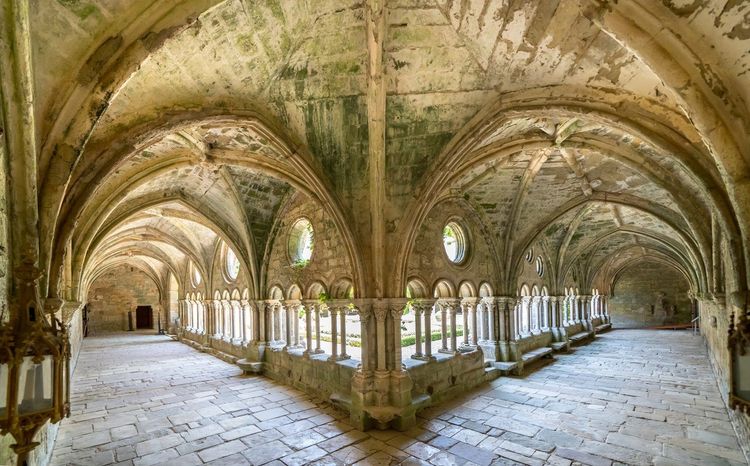
About fifteen kilometres south-west of Narbonne, the Abbaye de Fontfroide (Route de Villerouge, 11100 Narbonne, rated 4.6/5 on Google based on 6,003 reviews) is among the best-preserved Cistercian abbeys in France, and it owes this to a chain of fortunate accidents: sold as national property in 1791, it was handed over to the hospices of Narbonne, sparing it the demolitions that struck other monasteries in the region. The Cistercians returned in 1848, before painter Gustave Fayet bought it in 1908 and installed a small community of artists, including his friend Odilon Redon, whose canvases still adorn the library.
Founded in 1093, the abbey counted up to 300 monks at its peak in the 12th century, before declining and then being bought and carefully restored by successive owners, who today open it to visitors while continuing to live there. The cloister, the rose garden planted with more than 2,500 rose bushes and the abbey church, still consecrated, can be visited in about an hour, longer if you stay for lunch on-site in season. The adjoining wine estate, run by the same family of owners for more than a century, offers tastings of wines produced on the surrounding hillsides, a natural extension of the monastery visit.
The abbey also makes an excellent starting point for exploring the wine villages surrounding it, nestled between the Corbières and the Clape massif. If you plan to venture further in that direction, the Ryo article on the 13 most beautiful villages around Narbonne details several stops reachable in under an hour's drive, between hilltop vineyards and former Cathar castles.
Book your visit slot online in high season: the abbey limits the number of simultaneous visitors in certain rooms and late-morning slots tend to sell out first during spring and summer weekends.
13. Lay Your Towel Down at Narbonne-Plage
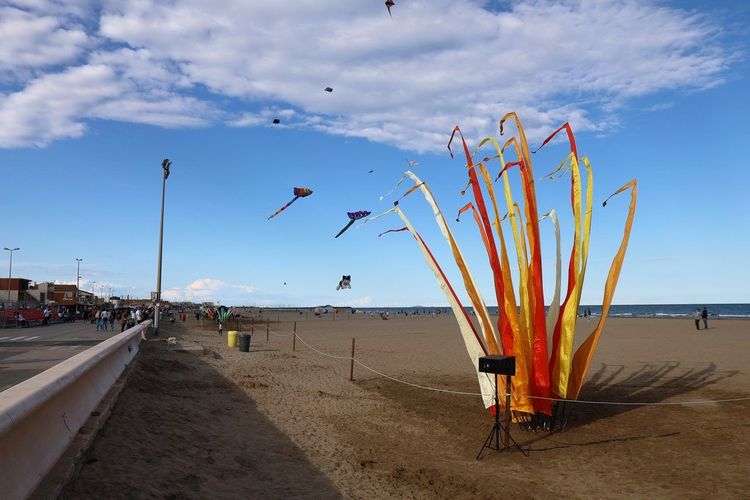
A quarter of an hour's drive from the city centre, Narbonne-Plage (11100 Narbonne, rated 4.6/5 on Google based on 1,703 reviews) stretches for nearly five kilometres of fine sand facing the Mediterranean, with a seafront lined with restaurants and family-friendly beach clubs rather than large hotel complexes.
The resort remains on a human scale compared to its neighbours along the Aude coast, which explains why it attracts more regulars than passing tourists. The water is shallow for a good distance, an advantage for families with young children, and several lifeguard posts operate from June to September. Water sports enthusiasts will also find land yachting and kitesurfing clubs, powered by the steady winds that give Narbonne its nickname as the city of wind.
Out of season, the beach takes on a completely different character: the Tramontane wind, sometimes violent, empties the seafront but turns the spot into a playground for seasoned windsurfers. The seafront, entirely pedestrianised in season, also hosts a night market on Tuesday and Friday evenings in July and August, with local craftspeople and light takeaway food. If you are looking for a wilder, less developed beach, several coves accessible on foot from the Clape massif offer an alternative just a few minutes' drive away.
14. Lose Your Bearings in Gruissan and the Clape Massif
The village of Gruissan (11430 Gruissan, rated 4.6/5 on Google based on 5,200 reviews) owes its fame to an almost unique urban layout in France: its colourful houses are arranged in concentric circles around the remains of a medieval castle, a configuration that reads perfectly from the top of the Tour Barberousse. The neighbouring Plage des Chalets also served as the backdrop for Jean-Jacques Beineix's "Betty Blue" ("37°2 le matin"), filmed here in 1985 and released the following year; the cabin from the film, built for the shoot, burned down in the final scene and no longer exists, which does not stop visitors from looking for it.
A few minutes away, Gruissan-Plage extends the village with its fishermen's cabins on stilts, lined up along the dune ridge since the 1970s, when the state banned any new permanent construction on the coastline. These colourful wooden cabins, now protected and highly sought-after, form a landscape found nowhere else on the French Mediterranean coast. The Gruissan salt flats, in operation since Antiquity, add a final touch of colour to the scenery: their evaporation basins turn pink at the end of summer, due to a microscopic alga that thrives in the high salt concentration.
Between Narbonne and Gruissan lies the Clape massif, a former limestone archipelago joined to the mainland by sediment from the Aude several thousand years ago. Its fragrant garrigue, terraced vineyards and steep sea cliffs offer a network of hiking trails accessible year-round, with views over the entire Aude coastline from summits that never exceed 214 metres.
To plan a full day between beaches and coves in the massif, the Ryo article on the most beautiful beaches around Narbonne lists several coves less busy than Narbonne-Plage, reachable on foot from the massif's car parks. Allow a full day if you want to combine village, beach and hiking without rushing.
15. Enjoy Narbonne in the Evening
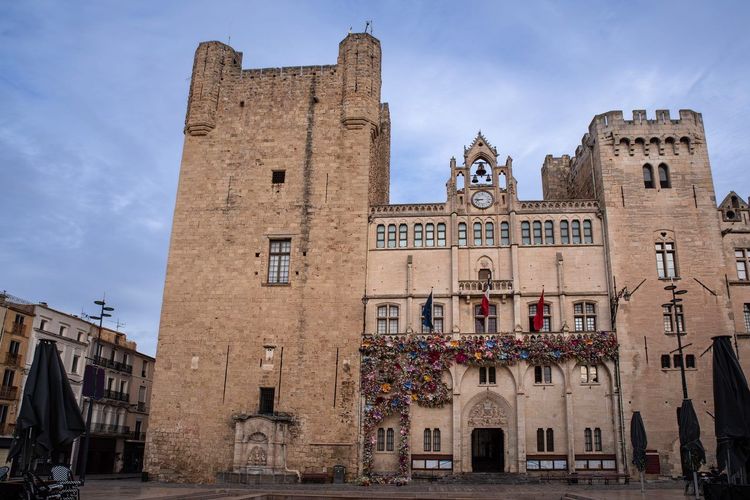
Once night falls, Narbonne's social life centres on the Place de l'Hôtel de Ville and the canal quays, where terraces remain lively until late in the summer season. The flower market, set up daily at the foot of the Palais des Archevêques, closes in the late afternoon but gives way, from 7pm onwards, to free concerts organised on certain evenings in July and August on the square itself.
The Quais Dr Ferroul and Victor Hugo concentrate most of the bars and restaurants open in the evening, with several establishments offering canal-side tables past midnight at weekends. In July, an open-air cinema sets up on certain evenings on one of the squares in the historic centre, a further opportunity to enjoy the mild Aude evenings without leaving the heart of the city. For a quieter evening, the lanes around the basilica of Saint-Paul-Serge offer a few discreet addresses, away from the bustle of the tourist centre.
16. Cycle along the Canal Greenway
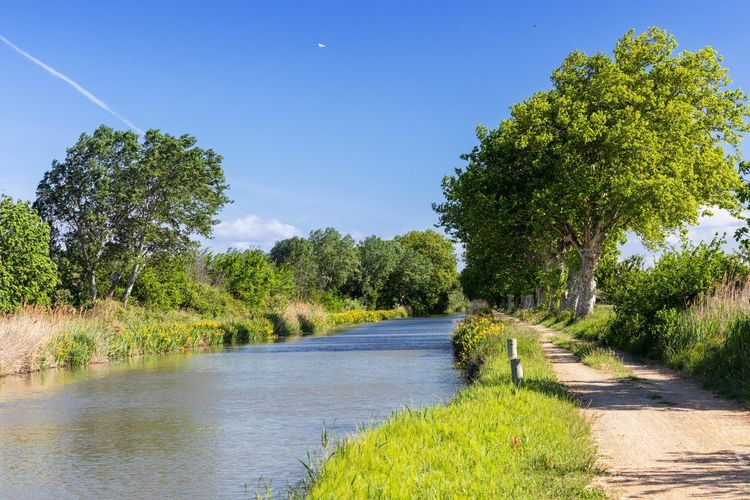
The greenway running alongside the Canal de la Robine connects Narbonne to Port-la-Nouvelle over about thirty kilometres, entirely separated from motor traffic. Several rental shops in the city centre offer standard and electric-assist bicycles for hire by the half-day or full day. The route, flat for almost its entire length, is suitable for families and more sporty cyclists alike, who can push through to the coastal lagoons in a single morning. An additional stretch also links Narbonne to Gruissan through the inland countryside, a less-frequented alternative to the coastal road for those who want to reach the beach by bike without hurrying.



FAQ
What to do in Narbonne in one day?
In one day, focus on the historic centre: the Halles de Narbonne, the cathedral of Saint-Just-et-Saint-Pasteur, the Palais des Archevêques and the Roman Horreum can all be visited on foot within a few hours. End with a stroll along the Canal de la Robine, optionally by electric boat, before dinner on the quays. The Ryo app also offers an audio-guided tour that connects several of these stops without having to plan the itinerary yourself.
What to do in Narbonne for free?
The cathedral, the basilica of Saint-Paul-Serge, the quays of the Canal de la Robine and the lanes of the historic centre can all be visited freely, without a ticket. The Halles de Narbonne can also be explored at no cost, even if tasting has a price. Narbonne-Plage and the coves of the Clape massif round out an almost entirely free day, excluding transport and meals.
What to do in Narbonne when it rains?
The Narbo Via museum, the Art and History Museum in the Palais des Archevêques and the Roman Horreum, which is largely underground, remain accessible in the rain. The Espace de Liberté, with its indoor pools, ice rink and bowling alley, offers a complete alternative for an entire rainy afternoon under cover.
What to do in Narbonne in the evening?
The Quais Dr Ferroul and Victor Hugo are home to bars and restaurants open late in season, with terraces along the canal. The Place de l'Hôtel de Ville also hosts free concerts on certain summer evenings, while the lanes around the basilica of Saint-Paul-Serge offer a quieter atmosphere to end the night.
What to do in Narbonne for young people and families?
The Réserve Africaine de Sigean, twenty minutes away by car, easily fills half a day with children, including guided feeding sessions. In town, the Horreum with its underground galleries and the Narbo Via museum with its interactive displays also appeal to younger visitors, as does a trip by electric boat along the Canal de la Robine.
What to do around Narbonne, at Narbonne-Plage or Gruissan?
Narbonne-Plage, a quarter of an hour from the centre, offers five kilometres of sandy beach and family-friendly beach clubs. Gruissan, further along, adds its circular village and fishermen's cabins on stilts, while the Clape massif connects the two via hiking trails overlooking the sea.
Narbonne ultimately tells its story in two very distinct chapters: that of a forgotten Roman capital, which the Horreum, the Narbo Via museum and the unfinished choir of the cathedral are enough to bring back to life in a day's walk, and that of a coastal town, facing the lagoons, the wind and the beaches of Gruissan or Narbonne-Plage. Few towns of this size in Languedoc concentrate such a diversity of sites within such a compact area.
To organise your visit without endless searching, the Ryo audio guide for Narbonne connects several of the stops mentioned here in a tour of just over an hour and a half, with historical commentary at each station. Whether you have a few hours between trains or a full long weekend, Narbonne can be discovered at your own pace, between ancient ruins and Mediterranean light.