© Shutterstock
 Votre guide Ryo
Visiting Montpellier in 2 Days: Complete Itinerary between Écusson, Antigone and the Sea in 2026
In Montpellier, the Place de la Comédie completely changes its face between 8am and 10pm: breakfast terraces at dawn, dense crowds and street musicians at sunset, then near-total silence past midnight under the arcades of the Opéra Comédie. It is in this kind of constant shift that the city's charm lies, between the medieval lanes of the Écusson and the postmodern architecture designed by Ricardo Bofill in Antigone. Visiting Montpellier in 2 days allows you to capture this contrast, provided you build an itinerary that balances pace and pauses. The Ryo audio guide tour of Montpellier helps you miss nothing of this balance between ochre stone and pink concrete, a guide in your pocket as you walk.
In two days, you will have time to discover a cathedral with a fortified porch unique in France, to walk through a botanical garden more than 430 years old and the oldest in the country, to climb up to a royal promenade from which you can sometimes see the sea and the Pic Saint-Loup on the same day, and to dine just steps from a vineyard in the very heart of the city, the Montpellier folly of the Château de Flaugergue. This guide details both days hour by hour, with free, family-friendly and romantic options, as well as suggestions for extending your stay towards the beaches or the Hérault hinterland. The Ryo audio-guided tour, The Gifted City, links Place de la Comédie right through to the Écusson for those who want to follow the same thread with commentary.
Day 1: The Historic Écusson, the Cathédrale Saint-Pierre and the Musée Fabre
Morning: Strolling through the Écusson and the Cathédrale Saint-Pierre
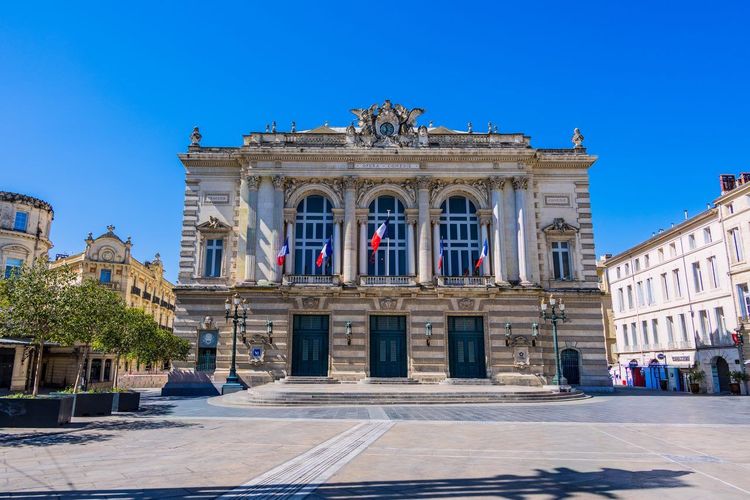
Start at the Place de la Comédie, the true nerve centre of Montpellier since the 18th century, recognisable by its Fontaine des Trois Grâces and its light and dark paving stones forming an immense oval that locals simply call the Egg. From there, head into the Écusson, the shield-shaped historic heart that gave the neighbourhood its name: cobbled lanes, 17th-century mansions and vaulted passageways that open without warning onto a shaded square. Exploring Montpellier on foot makes perfect sense here — no cars circulate through this maze and every street corner reveals a different façade.
Follow the Rue de la Loge and then the Rue Foch to the Cathédrale Saint-Pierre, unmistakable with its fortified porch flanked by two cylindrical turrets — a design unique in France, inherited from its former role as the chapel of a fortified Benedictine monastery. The interior, plainer than the façade suggests, is worth ten minutes of quiet contemplation before moving on.
Just behind it, the Faculty of Medicine occupies the former Monastery of Saint-Benoît. Founded in 1220, it is one of the oldest faculties of medicine still in operation in the world, and its Musée Atger holds a collection of master drawings open to the public on certain afternoons, outside university closure periods. Take time to look up at the façades along the Rue de l'Aiguillerie or the Rue du Bras de Fer, two of the best-preserved streets in the Écusson, before heading back down to the Place Sainte-Anne, dominated by a repurposed neo-Gothic former church, and then on to the Place du Marché aux Fleurs, an easy landmark for finding your bearings in the lanes.
Midday: Lunch Break in the Historic Centre
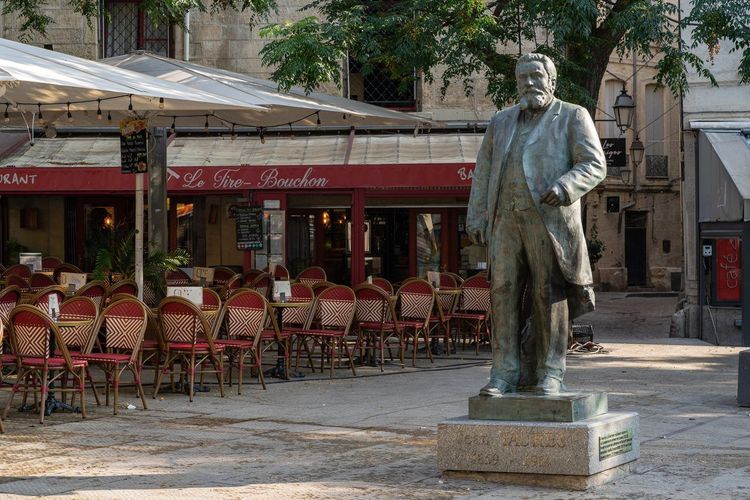
For lunch, opt for a terrace in the Écusson rather than on the Place de la Comédie, which is more touristy and often more expensive. The streets around the Place Jean-Jaurès and the Place du Marché aux Fleurs have a good concentration of bistros and wine bars where you can order a tielle sétoise, an olive fougasse or a dish of mussels cooked brasucade-style. Expect to pay 15 to 20 euros for a full lunch menu in the neighbourhood.
If you are travelling light, the covered market halls are just a few minutes' walk away — a practical option for putting together a picnic and eating it on the cathedral steps or in one of the small public gardens tucked between the buildings. Save the peaceful terrace for the evening; at midday, it is more of an on-the-go affair.
Afternoon: The Musée Fabre and the Antigone District
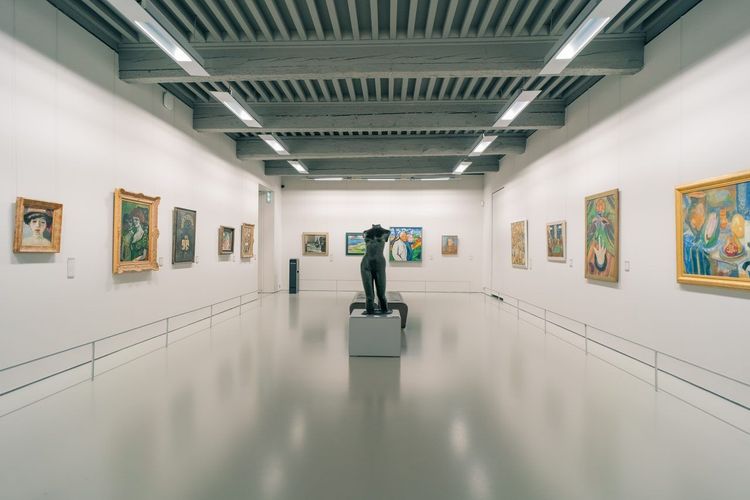
Head across to the Esplanade Charles-de-Gaulle to reach the Musée Fabre, one of the richest provincial museums in France, ranging from Italian primitives to canvases by Gustave Courbet and Frédéric Bazille, a Montpellier-born painter who died at 28 during the Franco-Prussian War of 1870.
Allow an hour and a half for a leisurely visit, or two hours if you linger in the rooms dedicated to contemporary art and the Soulages collection. Right next door, the MOCO Hôtel des Collections rounds out the experience with more cutting-edge temporary exhibitions — a good option if the first museum has whetted your appetite for contemporary art.
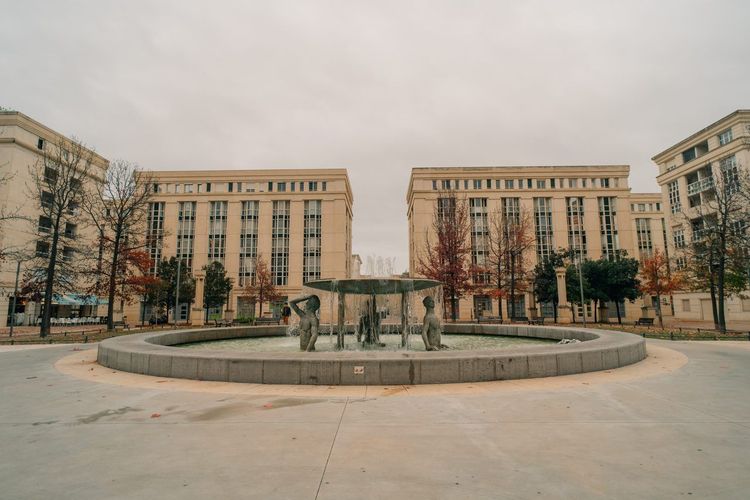
On leaving, head for the Antigone district, a fifteen-minute walk via the Polygone shopping centre. The contrast is deliberately striking: in the 1980s, Ricardo Bofill designed an entire neighbourhood in pink and ochre-tinted concrete, inspired by neoclassical architecture and conceived as a continuous axis running from the Place du Nombre d'Or (34000 Montpellier) to the banks of the Lez. The columns, pediments and sweeping arcs give the impression of walking through an ancient film set reimagined for the 20th century.
Push on to the Esplanade de l'Europe, which closes the perspective at the edge of the Lez facing the Hôtel de Région: it is a good spot to catch your breath before hopping on the tram back to the centre at the end of the afternoon, or to continue the walk to the Parc du Millénaire if the day is ending late.
Day 2: The Peyrou, the Arc de Triomphe and the Jardin des Plantes
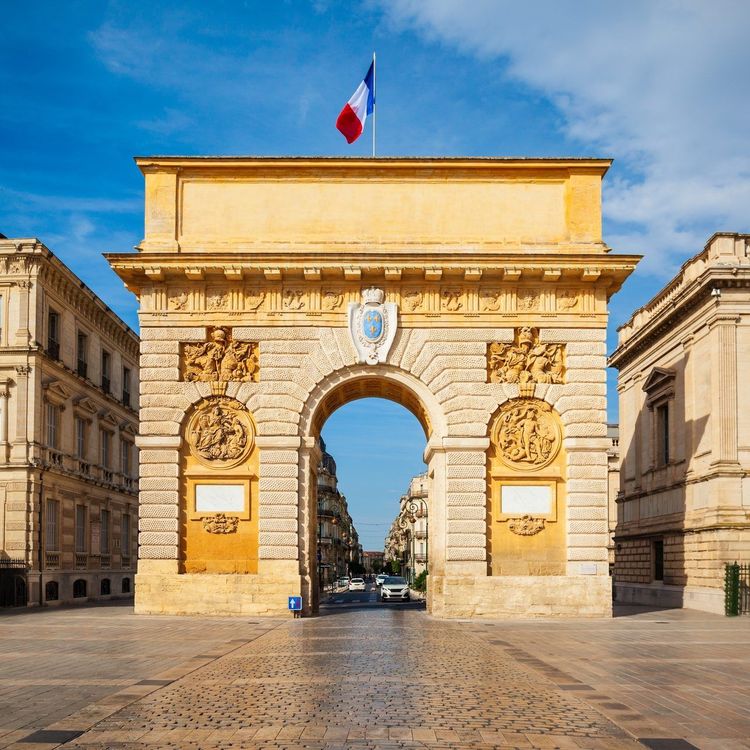
Morning: The Arc de Triomphe, the Promenade du Peyrou and the Halles Laissac
The second day starts at the opposite end of the Écusson, at the far end of the Rue Foch. The Arc de Triomphe de Montpellier, built from 1691 to celebrate the conquests of Louis XIV, marks the western entrance to the historic city. Its bas-reliefs depict, among other things, the revocation of the Edict of Nantes and the capture of Flemish towns — a concentrated piece of royal propaganda carved in stone.
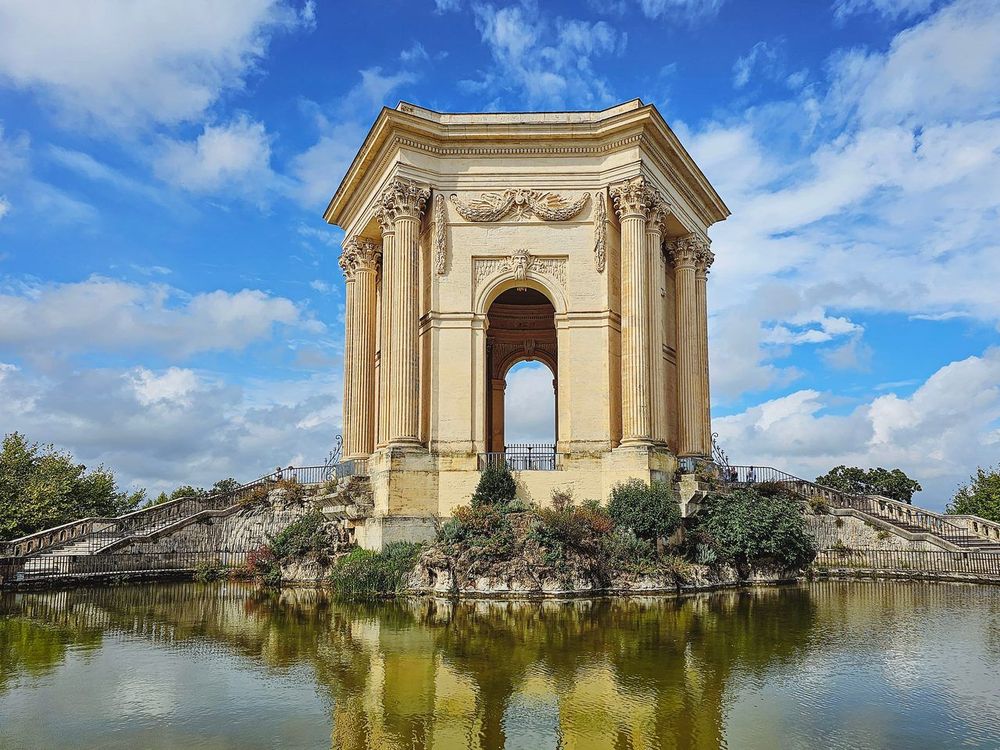
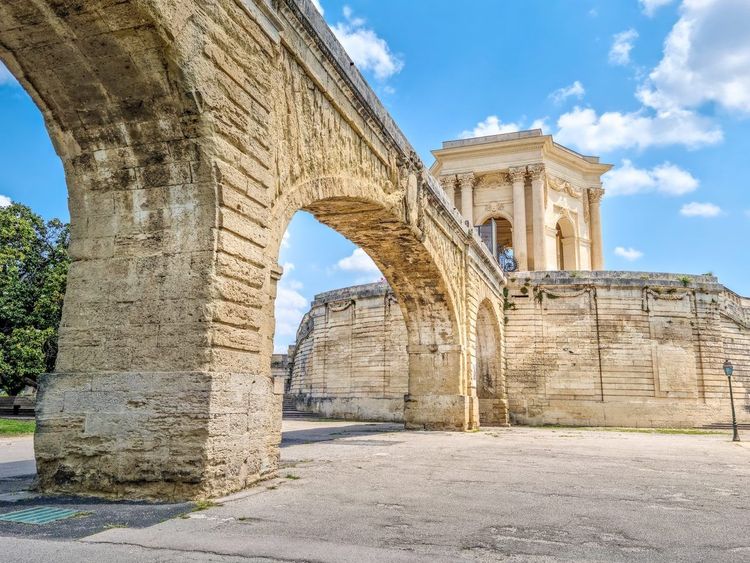
Pass under the arch to reach the Promenade du Peyrou, a terraced garden laid out in the 17th and 18th centuries around an equestrian statue of Louis XIV. Climb up to the water tower, a small neoclassical structure marking the arrival of the Saint-Clément aqueduct, whose stone arches are visible further on as they cross the Arceaux valley. On a clear day, the view extends to the Pic Saint-Loup to the north and sometimes all the way to the sea to the south — one of the rare urban terraces in France to offer this double horizon.
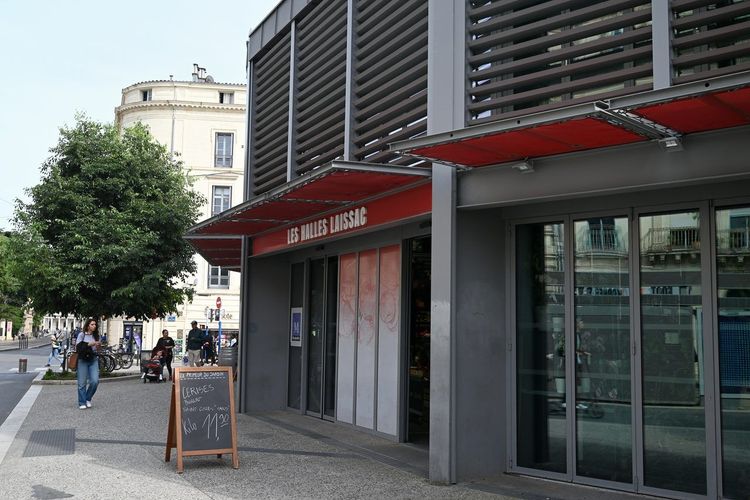
Head back down towards the centre along the Rue Foch and turn off towards the Halles Laissac, an iconic covered market that has been here since the late 19th century and was entirely rebuilt, in a circular glazed building, in the late 2010s. Stalls of fruit and vegetables from the Hérault, fishmongers, wine merchants and a handful of tapas counters make this an ideal stop for a strong coffee or a tasting of Bouzigues oysters, produced less than 30 minutes from the city.
You can head straight on to the Jardin des Plantes by cutting through the Rue de l'Université, or extend the morning in the nearby lanes if the market halls have tempted you to linger a little longer before lunch.
Afternoon: The Jardin des Plantes or a Trip to the Beach
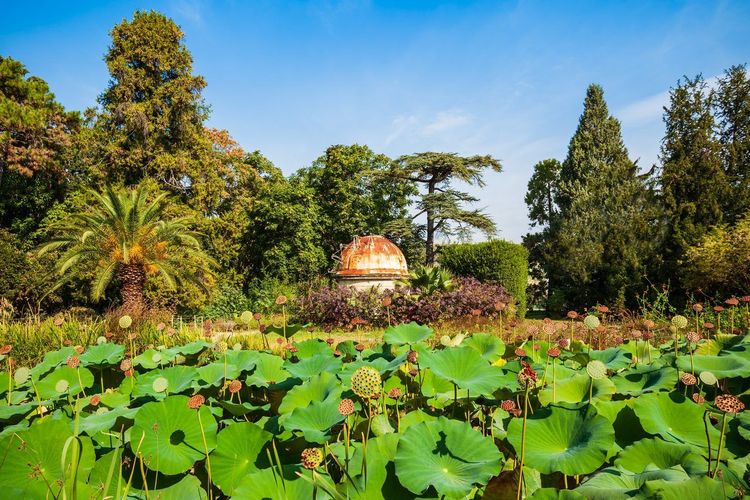
For the afternoon, two options present themselves depending on your energy levels and the weather.
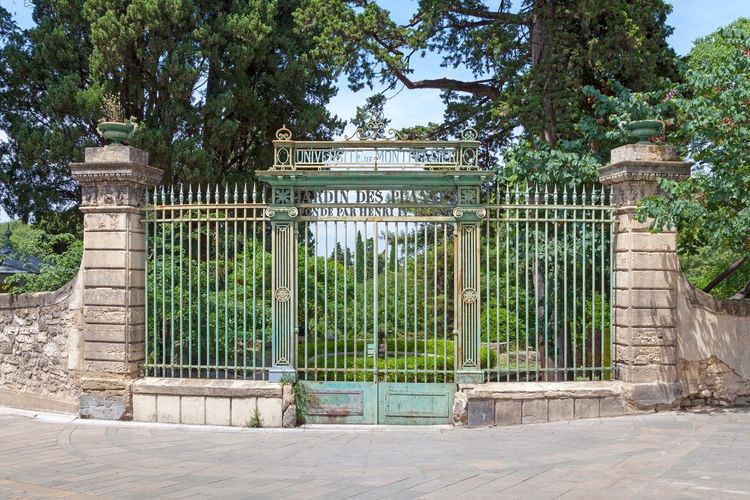
The first: the Jardin des Plantes de Montpellier (Boulevard Henri IV, 34000 Montpellier, rated 4.4/5 on Google based on 7,912 reviews), founded in 1593 on the orders of Henri IV to train future doctors in medicinal plants. It is the oldest botanical garden in France, with centuries-old species and ponds where water lilies thrive in summer. Entry is free and the atmosphere is noticeably calmer than at the Peyrou — a good option if the morning was busy. Do check the opening days and times before crossing the city: the garden closes on Mondays and some paths remain inaccessible depending on the season.
The second option, for those who want to see the sea without postponing their trip: head to the peninsula of Maguelone, about 30 minutes away by tram and bus from the centre. Its Romanesque cathedral, isolated between a lagoon and the Mediterranean amid vineyards, can be reached on foot or by bike from Palavas-les-Flots along a dedicated cycle path. The site is also accessible by tourist train in season, and the silence around the building contrasts sharply with the bustle of the Promenade du Peyrou just a few hours earlier.
If you simply want to lay out a towel, the beaches of Palavas-les-Flots and Carnon are accessible without a car in just under an hour each way, in time for the last rays of sunshine before heading back for dinner in the Écusson or Antigone.
What to Do in Montpellier for Free?
Parks, Gardens and Streets to Admire without Spending a Thing
A good portion of what makes Montpellier enjoyable costs nothing at all. The Jardin des Plantes, the Promenade du Peyrou and the lanes of the Écusson are all freely accessible. Add to that the Parc Montcalm, a quieter spot, and the banks of the Lez in Antigone, developed as a pedestrian and cycling promenade stretching to the Parc du Millénaire. For a more complete overview of the green spaces, our Ryo article on parks and gardens where you can relax in Montpellier details the best shaded spots by season and time of day.
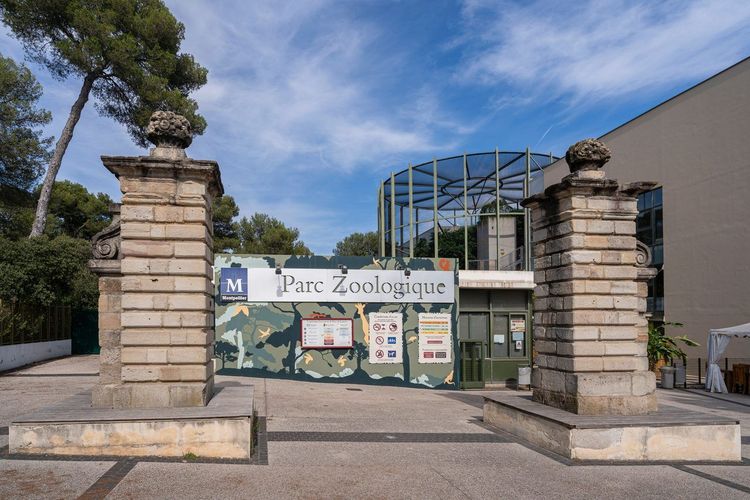
The Lunaret Zoo, to the north of the city, rounds out this list: it is one of the rare French zoos with free entry, set across a domain of more than 60 hectares where animals roam in large wooded enclosures. Only the Amazonian greenhouse, with its recreated tropical rainforest, remains paid admission and is best booked in advance. Allow two to three hours if you want to take it all in without rushing.
Free Monuments, Exhibitions and Events
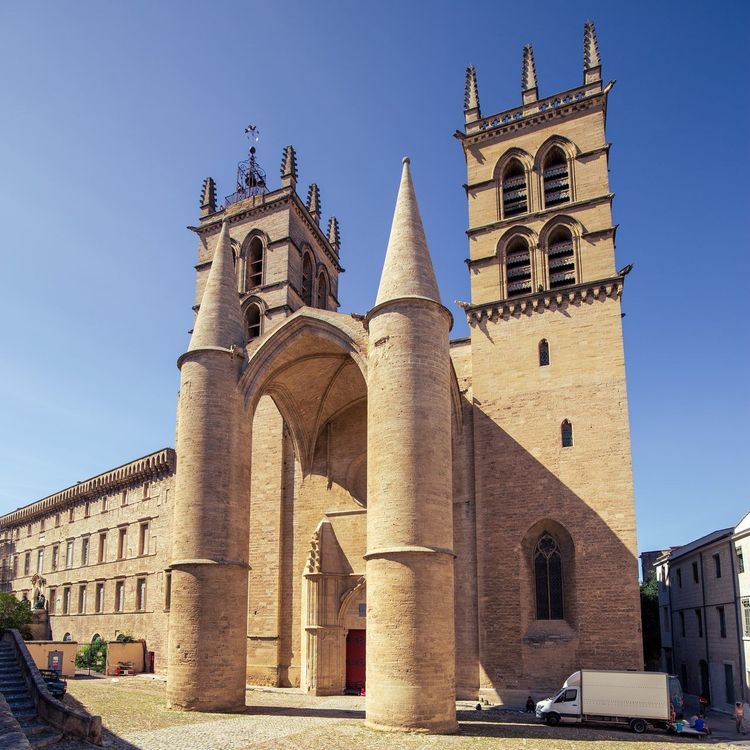
The Cathédrale Saint-Pierre can be visited free of charge outside of services, as can the exterior of the Arc de Triomphe and the entire Antigone district, which you can wander like an open-air architecture gallery. The Musée Fabre regularly offers free access to its permanent collections, particularly during major national events such as the Journées du Patrimoine or the Nuit des Musées: the schedule changes every year, so check before you set off.
On the contemporary art front, the Panacée, an art centre housed in a former 18th-century royal college in the heart of the Écusson, hosts free temporary exhibitions throughout the year. And in summer, several free events take over the central squares, from open-air concerts to outdoor cinema screenings on giant screens, not to mention the illuminations and Christmas market that settle into the centre at the end of the year.
What to Do in Montpellier with Family or as a Couple?
Activities and Must-Sees for a Family Weekend
With children, a typical day reorganises itself around three easy stops: the Lunaret Zoo in the morning, a picnic in the Jardin des Plantes or on the lawns of the Peyrou at midday, then Planet Ocean in the afternoon — an aquarium paired with a planetarium that is particularly popular with 5-to-12-year-olds, thanks to its touch pools, penguins and sharks.
The trams themselves become an attraction: the four lines of the TaM network have each been given a livery designed by a different artist — swallows and flowers by Élisabeth Garouste and Mattia Bonetti on lines 1 and 2, marine motifs and golden glitter by Christian Lacroix on lines 3 and 4. Enough to turn a simple journey into a spotting game for younger travellers. If the pace of day 1 and day 2 feels too intense for young children, it is better to spread the same visits across three half-days rather than cramming everything into 48 hours, even if it means skipping the museum in favour of a break in the park.
A Romantic Getaway for Two
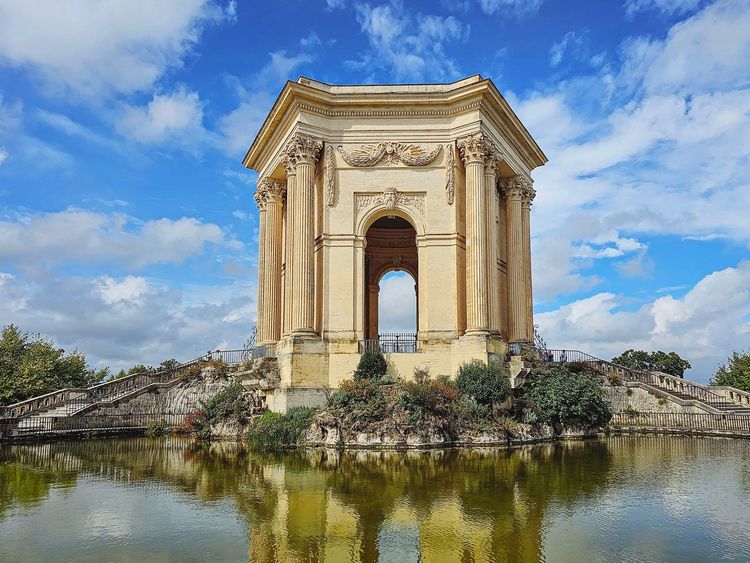
As a couple, the angle shifts entirely: make the most of the golden hours. Sunset from the Promenade du Peyrou, with the aqueduct silhouetted against the sky, remains one of the least-known highlights among hurried visitors. In the evening, the terraces of Antigone and the banks of the Lez offer an unobstructed view over the modern towers of Port Marianne, with the steeples of the Écusson as a backdrop.
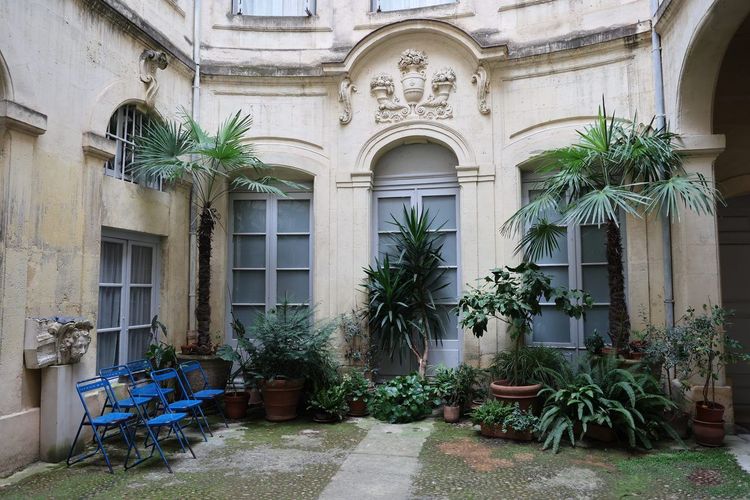
For a guided walk for two that delves into the city's history without taking up an entire day, the Ryo audio-guided tour Dites bonjour à la Surdouée offers around 1h30 of listening through the most photogenic neighbourhoods — a format that lends itself well to a free afternoon with no fixed schedule. End the evening in one of the intimate inner courtyards of the Écusson, where several restaurants have set out their tables beneath the plane trees, far from the noise of the main squares.
Street Art, Antigone at Night and Montpellier's Creative Neighbourhoods
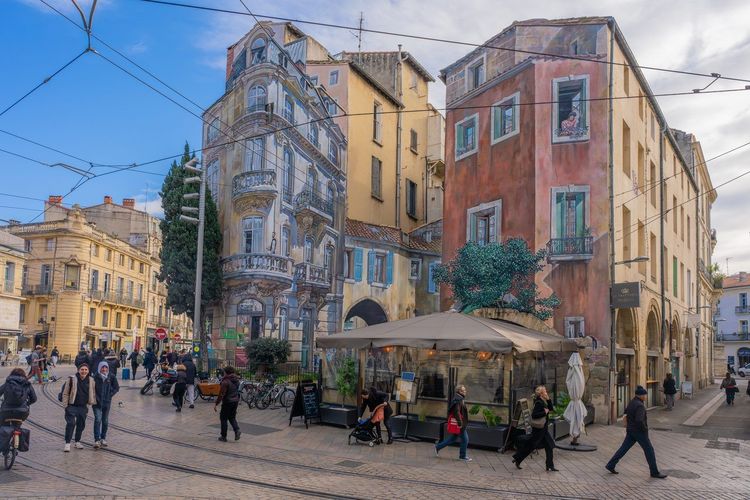
Montpellier has developed an uninhibited relationship with urban art, driven over several years by programmes of monumental murals in the Boutonnet and Beaux-Arts neighbourhoods, to the north-east of the Écusson. The blank façades of former buildings have become canvases for local and international artists, with regular turnover of works that gives a good reason to come back year after year. An original way to discover them without exhausting your two days of classic sightseeing: bike-taxi tours, bookable in advance, which criss-cross the centre and sometimes venture out to these outlying neighbourhoods.
Once night falls, two atmospheres coexist. In the Écusson, small squares like Jean-Jaurès or the Marché aux Fleurs fill with lively terraces until late. On the Port Marianne side, the Marché du Lez (1 Rue Ampère, 34000 Montpellier, rated 4.4/5 on Google based on 11,325 reviews), a former industrial wasteland converted into a waterfront village of restaurants, designer boutiques and live music, draws a younger, more local crowd far removed from the classic tourist trails.
If your stay falls on a Thursday or Friday evening, check the programme before booking dinner elsewhere: it is often fully booked, especially in summer when concerts are held outdoors.
Where to Stay in Montpellier: Recommended Neighbourhoods and Tips
Staying in the Écusson to Be at the Heart of the Action
Staying in the Écusson means doing everything on foot: the cathedral, the Musée Fabre and the best restaurants are all less than ten minutes' walk from any point in the neighbourhood. Accommodation here tends to be small independent properties or bed and breakfasts in period mansions, with plenty of character but sometimes smaller rooms than elsewhere, and a little noise on weekend evenings around the liveliest streets.
For a first 48-hour stay, this is generally the most practical option — one that minimises travel and allows you to improvise a lunch stop or an end-of-day drink without checking the time of the last tram. Book early if your visit coincides with one of the major summer festivals.
Staying in Antigone or near the Station for More Peace and Quiet
In Antigone, Ricardo Bofill's buildings house mainly residential properties and a few more recently opened chain hotels, with generally more spacious rooms and direct tram access to the Écusson in ten minutes. The area around the Gare Saint-Roch, right in the centre despite appearances, is well suited if you are planning to continue by train the next day, to Sète or Nîmes for example.
A useful tip before booking: check the walking distance to a tram stop rather than the distance to the Place de la Comédie. A hotel advertised as 3 kilometres from the centre but two minutes from a line 1 stop will get you closer to the itinerary described here than somewhere more central but off the network, especially if you are getting back late at night.
Where to Eat in Montpellier: Our Top Addresses
Local Cuisine and Gourmet Market Halls
To sample local cuisine without breaking the bank, head to the covered market halls. The Halles Laissac remain the reference for fresh produce and a few quick bites, while the Halles Sainte-Anne (Place Sainte-Anne, 34000 Montpellier, rated 4.7/5 on Google based on 6 reviews), situated opposite the deconsecrated neo-Gothic church that lends them their name, focus more on eat-in dining, with several counters and a more contemporary atmosphere.
On the specialities front, do not leave without trying the tielle sétoise, a spiced squid pie originally from Sète, the brasucade of mussels cooked over a vine-shoot fire, or the fenouillette, a local anise liqueur served as a digestif. Our Ryo article on the culinary specialities of Montpellier lists the best addresses for each of these dishes.
Trendy Terraces and Restaurants
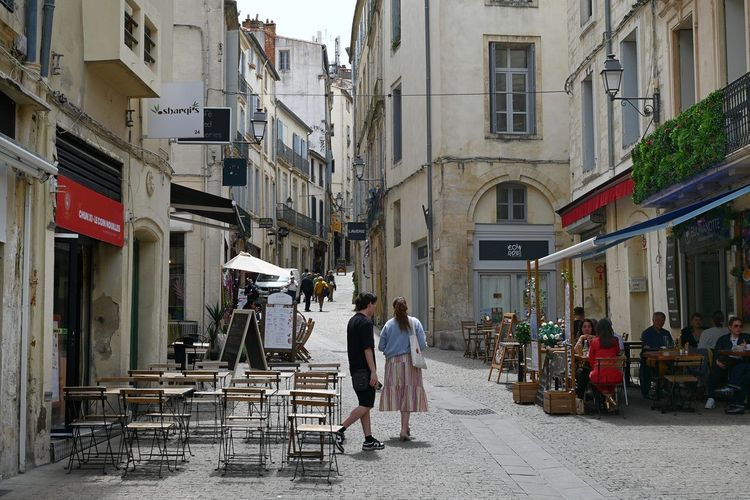
For a more refined dinner, the streets around the Place du Marché aux Fleurs and the Beaux-Arts area have seen a noticeable upturn in quality in recent years, with chef-led bistros and natural wine bars. In Antigone, the riverside terraces along the Lez enjoy a particularly pleasant light at the end of the day, ideal for an aperitif before crossing over to the Écusson for dinner.
Weekend brunch has become a local institution in its own right, driven by a scene of independent cafés in the Écusson and Boutonnet. To avoid a random gamble on a Sunday morning, our Ryo selection of the best brunches in Montpellier helps you avoid disappointment and unnecessary queues.
Getting around Montpellier without a Car: Tram, Bike and on Foot
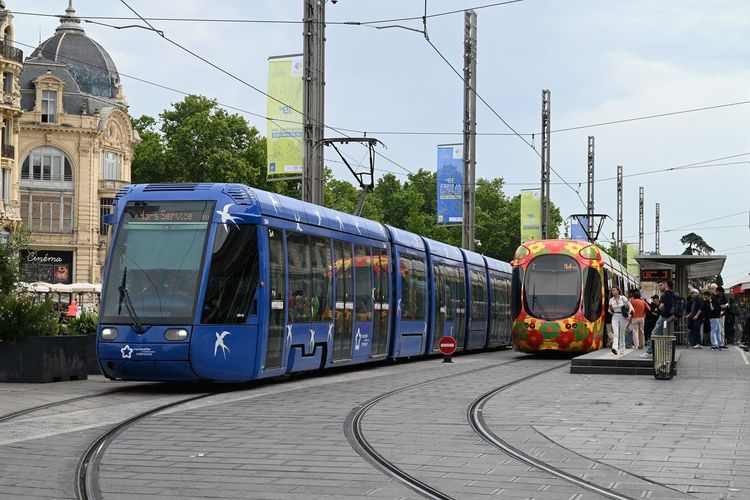
Montpellier is one of those French cities where a car is genuinely optional, even for reaching the surrounding area. The TaM network has four tram lines serving the main points of interest: line 1 links the Gare Saint-Roch to Antigone and beyond, while line 3 runs towards Pérols and the coast. Since late 2023, public transport has been free for residents of the metropolitan area; visitors pay for a single ticket or a day pass, available from the machines at each station and on the network's app.
On foot, the Écusson can be crossed from end to end in twenty minutes, and Antigone is just a quarter of an hour's walk from the Place de la Comédie. The Vélomagg' bike-sharing scheme is a great complement for longer trips, particularly along the banks of the Lez. With the Ryo app loaded on your phone, every stage of this itinerary remains geolocated without the need to pull out a paper map.
To explore Montpellier and its surroundings without a car, the logic stays the same: a bus or shuttle connects the centre to the beaches of Palavas-les-Flots and Carnon in around 40 to 50 minutes, with no need to rent a vehicle or hunt for a parking space in peak season. Our Ryo selection of the best beaches around Montpellier details the exact lines and journey times for each destination.
When to Go and What Budget to Plan for a Weekend in Montpellier
Best Season and Crowd Levels
Spring, from April to June, and early autumn, in September and October, offer the best compromise between pleasant weather and manageable crowds in the streets of the Écusson. In summer, from July to August, the city heats up considerably, often exceeding 30°C, and fills up for the Festival de Radio France Occitanie Montpellier or the Montpellier Danse festival, which can drive accommodation prices up noticeably.
Winter remains mild compared to northern France, with Christmas events set up in the centre, but a few rainy spells or episodes of wind — the famous tramontane — can limit outdoor walks for a day or two. If your goal is to complete these 48 hours without queuing everywhere, avoid July and August weekends and instead opt for a Thursday-Friday or Sunday-Monday, which are noticeably quieter.
Estimated Budget for 2 Days
For a 48-hour weekend, budget on average between 150 and 250 euros per person excluding accommodation, covering meals, public transport, entry to the Musée Fabre and one or two drinks on a terrace. Accommodation varies considerably depending on the neighbourhood and season, from 70 euros per night for a simple room in the Écusson to over 150 euros for an upscale hotel in Antigone in high season.
To keep costs down, the tourist office offers a digital pass combining public transport, site entry and discounts on certain guided tours — an option worth comparing with the cost of individual tickets depending on the number of activities you have planned. Many of the visits described in this guide, such as the Jardin des Plantes, the Lunaret Zoo and the Promenade du Peyrou, remain free in any case, which leaves real flexibility in the rest of your budget.
Extending Your Stay: Montpellier in 1, 3 or 4 Days and Excursions to the Surrounding Area
Visiting Montpellier in 1 Day or in 3–4 Days
If you only have one day, focus on the Écusson and Antigone: the Cathédrale Saint-Pierre in the morning, the Musée Fabre late morning, a quick lunch at the market halls, then Antigone and the Promenade du Peyrou before sunset. It is tight but doable, provided you leave the zoo and the Jardin des Plantes for another time.
On the other hand, over three or four days, the city lends itself well to a more relaxed pace. Add a morning at the Château de Flaugergue, one of the most celebrated of the Montpellier follies — those pleasure residences built by the local bourgeoisie in the 17th and 18th centuries amid the vineyards. The estate still produces wine and opens to visitors on a seasonal calendar, French formal gardens included: check opening days before making the trip, as they vary from one period to another.
A fourth day can also be devoted entirely to the peninsula of Maguelone or to a more far-flung excursion into the Hérault. Our Ryo guide to weekend ideas around Montpellier details several itineraries according to the number of days available.
Excursions in the Hérault: Lac du Salagou, Pic Saint-Loup and Beaches
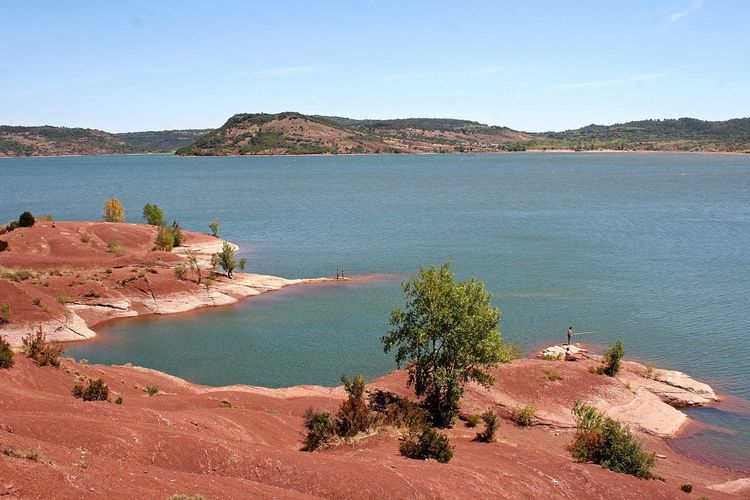
Just under an hour's drive away, the Lac du Salagou surprises with its landscapes of ruffes — that dark red earth that contrasts with the blue of the artificial lake, created in the 1960s by a dam on the Salagou, a tributary of the Lergue. Swimming, kayaking and marked hiking trails around the reservoir make it an easy nature escape to combine with an urban stay. Our Ryo guide to the Lac du Salagou details the best access points and viewpoints.
To the north of the city, the Pic Saint-Loup, at 658 metres above sea level, dominates the surrounding wine-growing landscape — the very same you can sometimes spot from the Promenade du Peyrou. Several hiking trails of varying difficulty lead to the summit in two to three hours return, with a panorama that reaches as far as the sea on clear days. Our Ryo hiking itinerary for the Pic Saint-Loup specifies the elevation gain and the best trail starting points.
For a final, more seaside chapter, the beaches of Palavas-les-Flots, Carnon and La Grande Motte — with its pyramidal 1960s–1970s architecture designed by Jean Balladur — round off a 3-to-4-day stay nicely. Our Ryo selection of excursions around Montpellier brings all these options together with journey times from the city centre.
FAQ
How much time do you need to explore Montpellier?
Two days are enough to cover the Écusson, Antigone, the Promenade du Peyrou and lunch at the market halls. To add the Château de Flaugergue, the Lunaret Zoo or a beach trip at a relaxed pace, allow 3 to 4 days, especially if you are travelling with children or want to include an excursion to Maguelone or the Pic Saint-Loup.
How do you get around Montpellier easily?
The TaM tram network, with four lines in total, combined with walking covers the bulk of the historic centre in just a few minutes. The Vélomagg' bike-sharing scheme is a great complement for longer trips along the Lez or towards outlying neighbourhoods like Boutonnet, and a simple day pass is all you need to get around without a second thought.
Can you get to the beach from Montpellier without a car?
Yes. A tram followed by a shuttle, or a direct bus, connects the city centre to the beaches of Palavas-les-Flots and Carnon in around 40 to 50 minutes, with no need to rent a car or hunt for a parking space in the middle of summer.
What is the best time for a weekend in Montpellier?
Spring, from April to June, and early autumn, in September and October, offer the best balance between pleasant weather and manageable crowds. Summer is hot and lively with several festivals, which drives up accommodation prices and fills the best terraces from midday onwards.
What can you do in Montpellier for free?
The Jardin des Plantes, the Promenade du Peyrou, the Lunaret Zoo and the interior of the Cathédrale Saint-Pierre can all be visited without spending a euro, as can the streets of Antigone, which you can wander like an open-air architecture gallery from morning to night.
Where should you stay in Montpellier for a short trip?
The Écusson is ideal if you want to do everything on foot, even if it means accepting smaller rooms and a little noise on weekend evenings. Antigone and the area around the Gare Saint-Roch offer more peace and quiet, with direct tram access to the historic centre in around ten minutes.
What budget should you plan for a weekend in Montpellier?
Budget between 150 and 250 euros per person excluding accommodation for 48 hours, including meals and public transport. Accommodation starts at around 70 euros per night in the Écusson and rises considerably in high season in Antigone, especially during the summer festivals.
Two days in the city are enough to understand why it attracts so many new residents every year: a compact historic centre where everything is walkable, a contemporary neighbourhood taken to architectural extremes, and a Mediterranean coastline less than an hour away without ever needing a car. Whether you are travelling solo, with family or as a couple, the itinerary described here is easy to adapt, even if it means skipping the zoo or the Jardin des Plantes if time is short.
To keep all these reference points handy during your visit, without having to pull out this guide at every street corner, the Ryo audio guide tour of Montpellier covers the essentials of this itinerary in audio format, with geolocation included. All that remains is to pick a date and set aside two full days, three if you can manage it.
À lire également