






Walk
The Gifted City
Montpellier, France
Walk
The Gifted City
Montpellier, France
3.5 km
Distance
1h30
Durée
21
Audios
Loop
Parcours
©Penitentsblancs- CC BY-SA 3.0.jpg https://creativecommons.org/licenses/by-sa/3.0/deed.fr
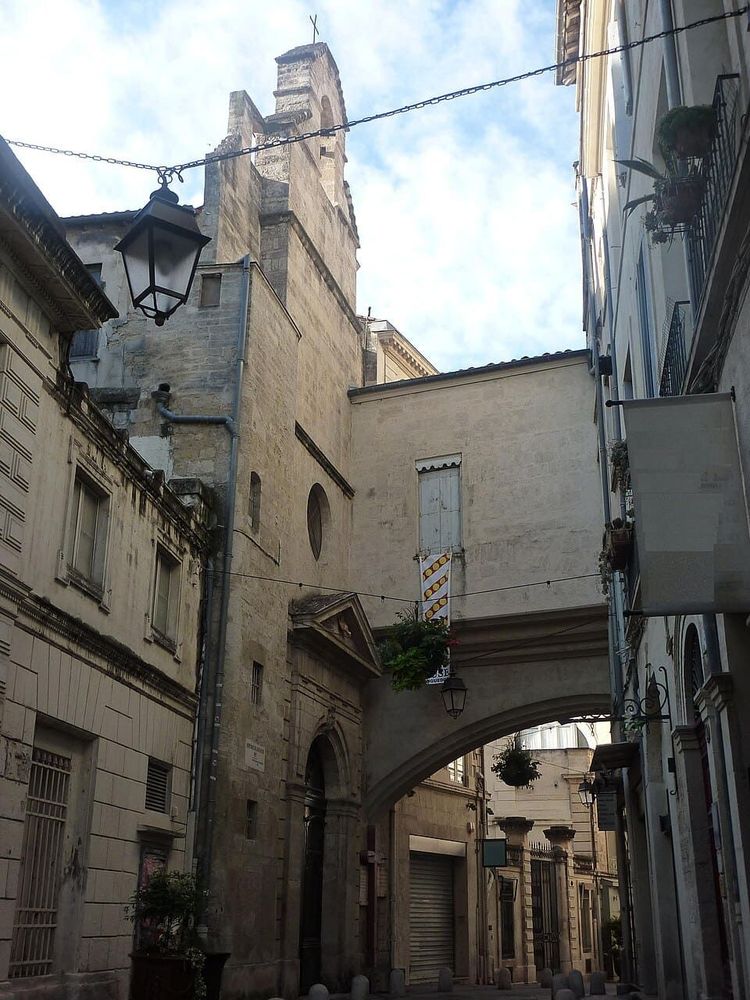
A stone's throw from Place de la Comédie, on Rue Jacques Cœur, Saint-Foy chapel, also called the chapel of the White Penitents, is one of the oldest places of worship still active in Montpellier. Recognisable by its old footbridge spanning the street, it hides a richly decorated interior. The Montpellier audio-guided tour stops here to reveal a treasure often overlooked by passers-by.
The chapel is today the property of the brotherhood of the White Penitents, heir to a long tradition of devotion. The building blends several eras and preserves a remarkable decor, notably its ceiling paintings. Its history is linked to that of the penitent brotherhoods, very present in the South, which set the rhythm of the city's religious life through their processions and charitable works.
The interior surprises by the richness of its decor, in contrast with the plainness of the street. The ceiling paintings, in particular, are among the finest surprises of the historic centre. Outside, the footbridge linking the chapel to the neighbouring buildings creates a picturesque outline, typical of the medieval lanes of the Écusson. It is a timeless stop, a stone's throw from the bustle of the Comédie.
Saint-Foy chapel lies on Rue Jacques Cœur, in the historic centre of Montpellier, a stone's throw from Place de la Comédie, reachable on foot. A place of worship held by a brotherhood, it may open occasionally, depending on celebrations and heritage events. Before visiting, it is best to enquire about opening days and hours, which are variable.
Because it belongs to the brotherhood of the White Penitents, which maintains it and perpetuates a long tradition of devotion in the heart of Montpellier.
A richly decorated interior, including remarkable ceiling paintings, contrasting with the plainness of Rue Jacques Cœur where it hides.
Aucun avis pour le moment
