
Créé par Romane, le 17 nov. 2026
Votre guide Ryo
Basel, Switzerland
The cultural soul of Switzerland
Parcours audioguidé pour visiter Basel en 1 jour
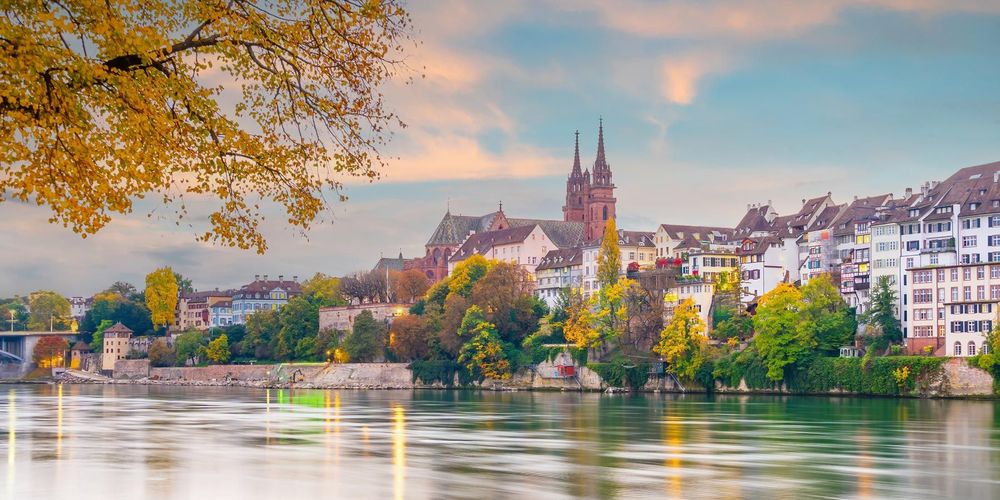
This tour of Basel takes you to the heart of a city where history and culture meet at every corner, between colorful facades, cobblestone alleys, and the peaceful banks of the Rhine. Throughout the walk, discover a preserved historic center, lively squares, and world-renowned museums that tell the city's unique identity. A pleasant and accessible way to explore Basel and let yourself be carried away by its atmosphere at your own pace.
Quand partir à Basel ?
Jan.
2°
11
Feb.
3°
8
March
6°
7
April
10°
8
May
14°
11
June
18°
12
July
20°
11
Aug.
20°
10
Sept.
16°
8
Oct.
11°
9
Nov.
6°
10
Dec.
3°
11
Basel has a temperate climate with clearly defined seasons that influence the atmosphere of the visit throughout the year. Spring and autumn are often considered the most pleasant periods, with mild temperatures, fewer visitors and ideal light for walking through the old town. Summer can be hot, sometimes exceeding 30 °C, but the atmosphere becomes very lively, especially along the Rhine where residents and visitors gather to relax. Winter is colder and often grey, but the Christmas season brings a special charm with its markets and festive lights. Overall, the city can be visited year-round, but the months from May to June and from September to October usually offer the best balance between weather, crowds and comfort for exploring.
Départ conseillé
No need to worry about where to begin! Our tours are designed as a loop, so you can jump in wherever you are. The navigation system and audioguide will automatically adjust to your location. However, if you happen to be nearby, we do have a preferred starting point: on Theaterplatz
Parking à proximité
Parkhäuser Steinen Basel : Steinenschanze 5, 4051 Basel
Parking in Basel is relatively easy thanks to the many underground parking garages located around the city center, which are usually the most practical option for a visit. The ones closest to the old town allow you to reach the main sights quickly on foot, while those near the train station provide easy access when arriving via the main roads and allow you to continue your journey by tram. Street parking is more limited, often paid and restricted to short durations, which makes it less suitable for a visit lasting several hours. For greater convenience, it is therefore recommended to use a covered parking garage, which are well signposted from the main entrances to the city.
À savoir
The city of Basel offers the BaselCard, a tourist card generally provided to visitors who spend at least one night in the city. It allows free use of public transportation and offers discounts on many activities, including museums, the zoo and certain guided tours. Easy to use, it simplifies getting around and can help you save some money during your stay.
Découvrez 25 lieux d'intérêt pour visiter Basel







What to see in Basel on your 1h30 tour?
This 3.2 km loop takes about 1 h 30 and links 23 sights. From Theaterplatz, it crosses the old town to the cathedral and Münsterplatz, follows the Rhine, then reaches Marktplatz and Barfüsserplatz, passing through lanes, fountains and quiet little squares. With the Ryo app in your ears, every fountain or facade reveals its story, at your own pace.
Information checked in November 2026 and subject to change.
1 - Theaterplatz
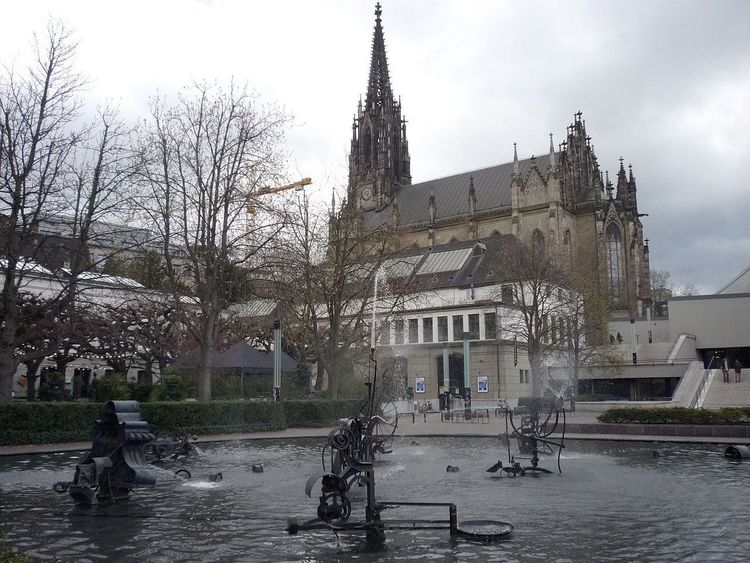
The walk opens on Theaterplatz, where Theater Basel shows off its modern front and wide suspended concrete canopy, unveiled in its current form in 1975. Right in front, the Tinguely Fountain brings the square to life with moving metal sculptures: Swiss sculptor Jean Tinguely dreamed it up in 1975, finishing it two years later. Between live performance and contemporary art, this square sets the tone for the rest of the stroll.
Free entry
2 - Melchior Berri Mailbox
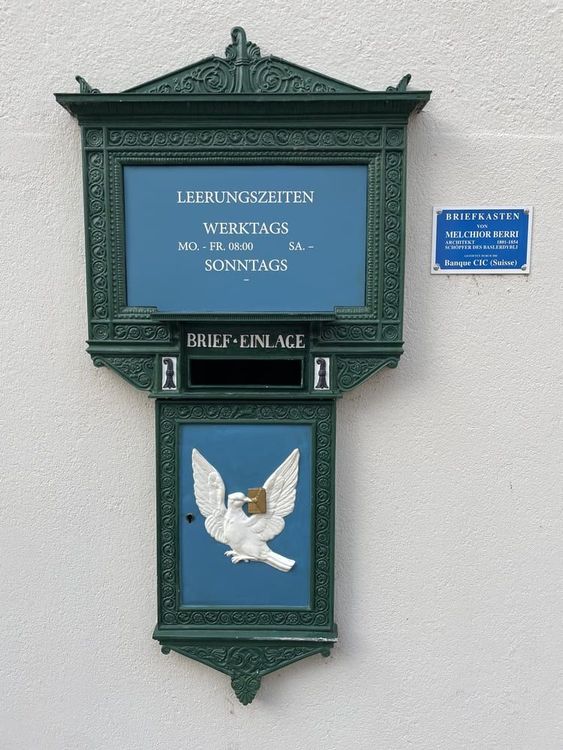
Along a street in the old town, spot on a facade an odd cast-iron mailbox decorated with a dove: locals call it, in dialect, a Basler Dybli. Drawn up by architect Melchior Berri around 1843-1844 to ease postal delivery, six of these neoclassical boxes still work today. Berri later reused that dove motif in 1845 to design what is considered the world's first three-colour postage stamp.
Free entry
3 - Basel Minster
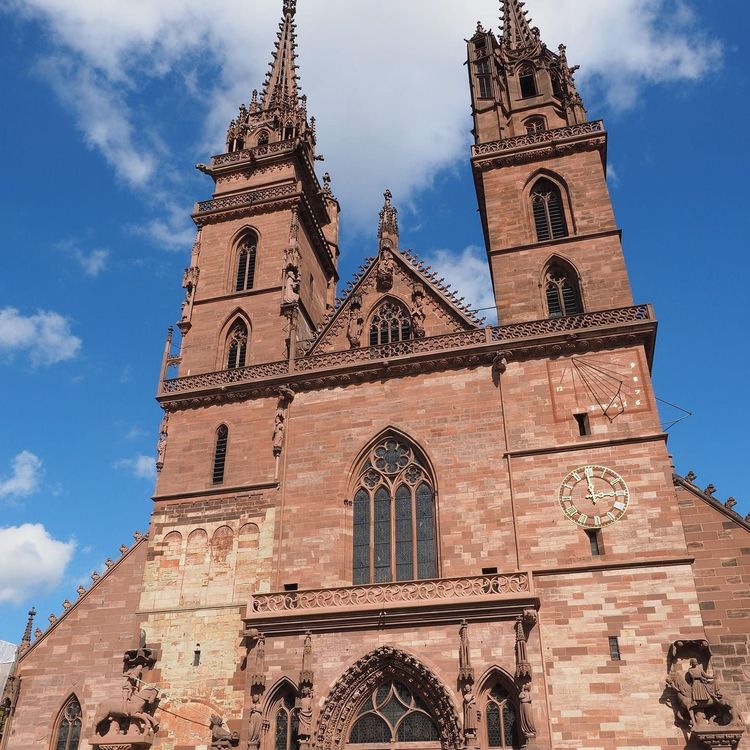
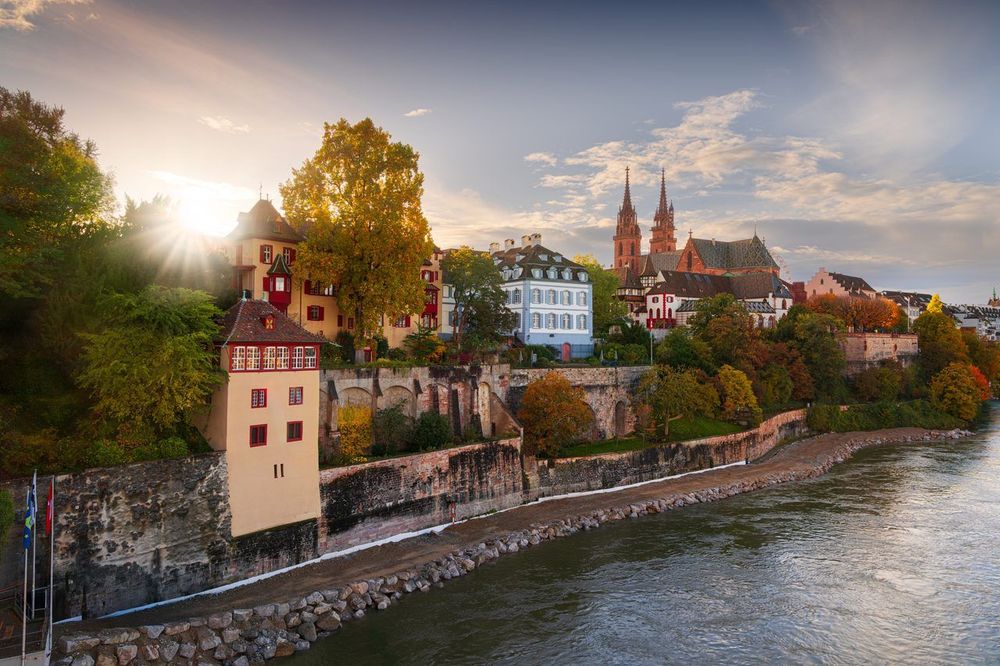
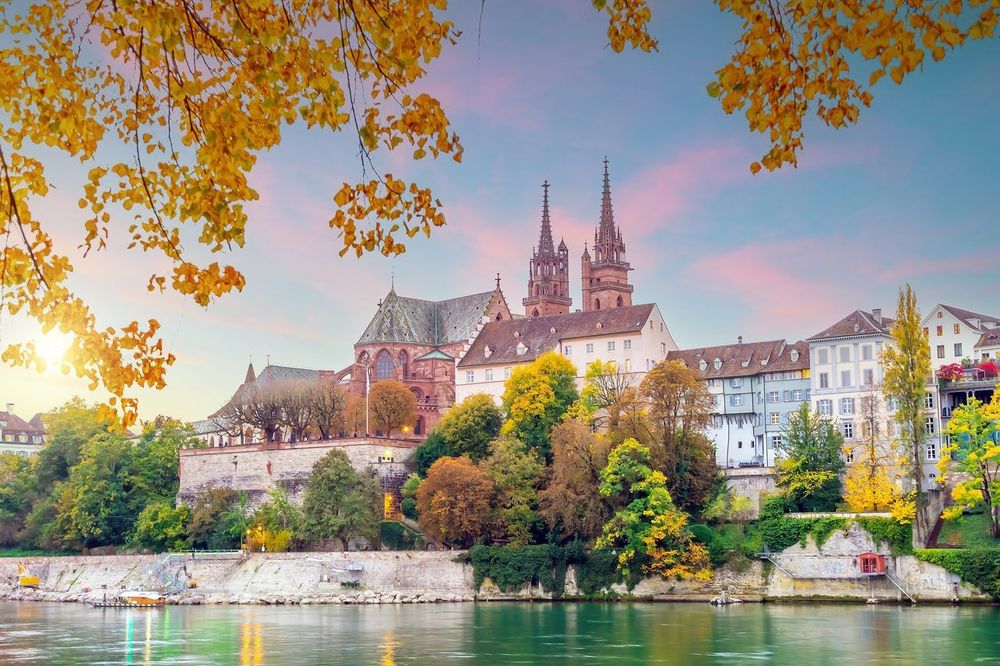
Here stands Basel Minster, carved from rosy sandstone and topped by two noticeably uneven towers above the Rhine. Begun in 1019 and reworked after the 1356 earthquake, it turned Protestant during the Reformation in 1529. Erasmus of Rotterdam is buried inside. For generations, locals have claimed that a restless former guard still wanders the cloister once night falls.
Free entry
4 - Pisoni Fountain
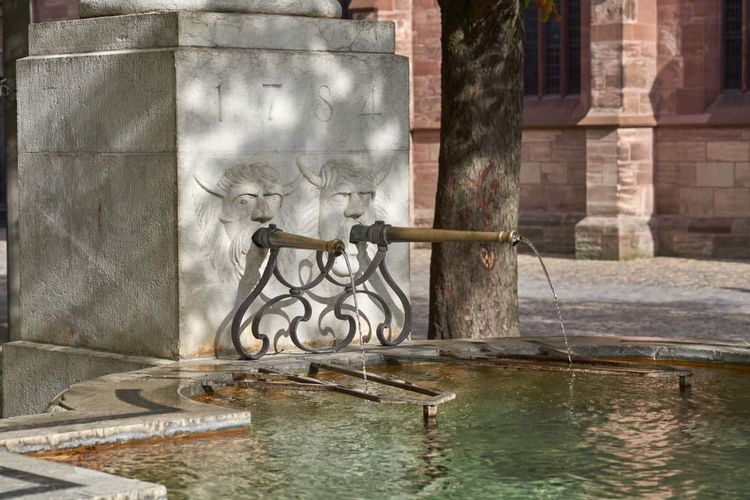
Right next door rises the elegant Pisoni Fountain. Designed by Italian architect Paolo Antonio Pisoni, it dates from 1784 and replaced an older, worn-out water point. What stands here today is in fact a careful replica, put in place in 1937, with the original kept safely elsewhere. Its so-called braided style marks the shift from rococo toward a calmer classicism, visible in its graceful lines and two carved heads.
Free entry
5 - Münsterplatz
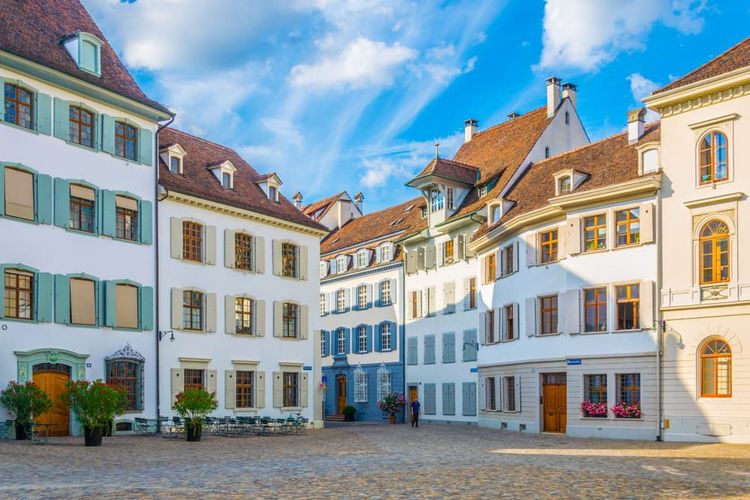
Münsterplatz, among the oldest squares in Basel, was settled by Celts and later Romans over two thousand years ago, before becoming the city's main medieval market. Flattened by the 1356 earthquake, its current paving largely dates from the 14th and 15th centuries. A puppet theatre tucked into a vaulted cellar still keeps a show tradition alive here.
Free entry
6 - Museum of Cultures of Basel
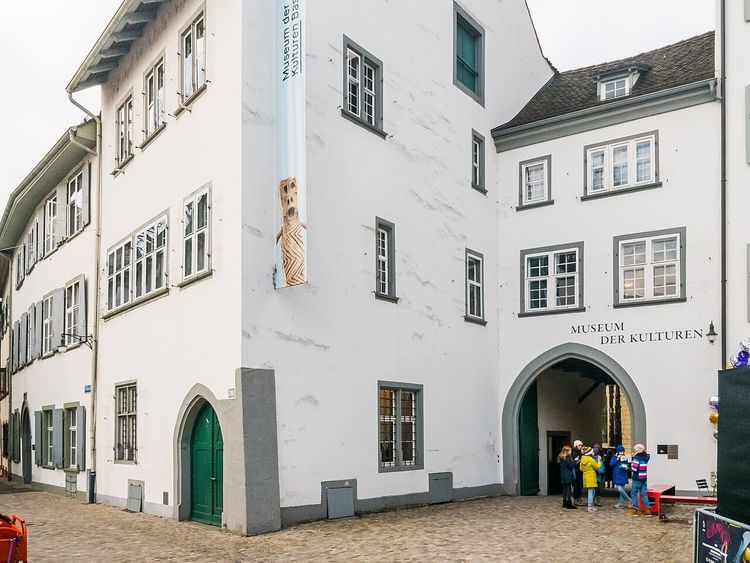
The Museum of Cultures, born in 1893 from collections gathered by travellers and scientists, now ranks as Switzerland's largest ethnographic museum. Its stores hold close to 300,000 pieces from across the globe, including the towering front of a ceremonial house hailing from Papua New Guinea, standing over sixteen metres tall. Its building, designed by Herzog and de Meuron, pairs older structures with a bold contemporary roof.
Paid entry (about 16 CHF)
7 - Natural History Museum of Basel
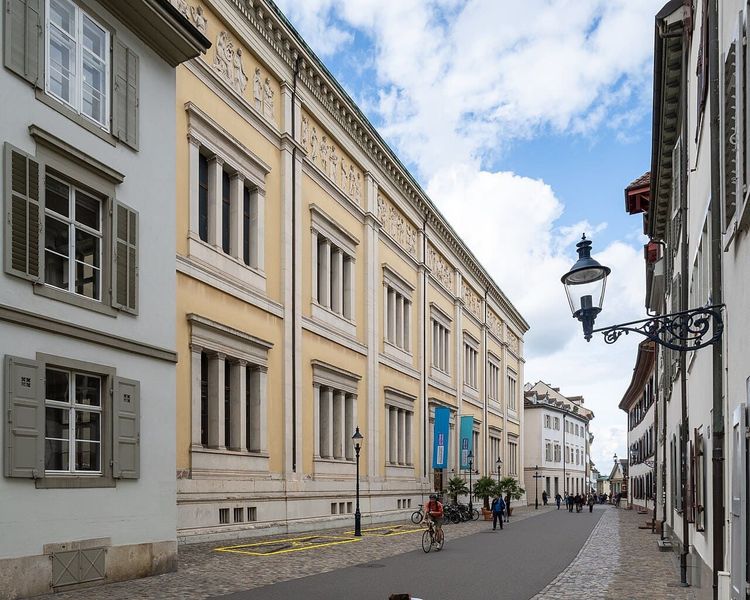
Born from a cabinet of curiosities as early as 1661 and officially founded in 1821, the Natural History Museum now holds nearly 7.7 million specimens: fossils, minerals, skeletons, Swiss wildlife and extinct species such as the dodo. Among its standout pieces is the naturally preserved body of Anna Catharina Bischoff, whose DNA has traced living descendants, among them former London mayor Boris Johnson.
Paid entry (about 7 CHF)
8 - Augustins Fountain
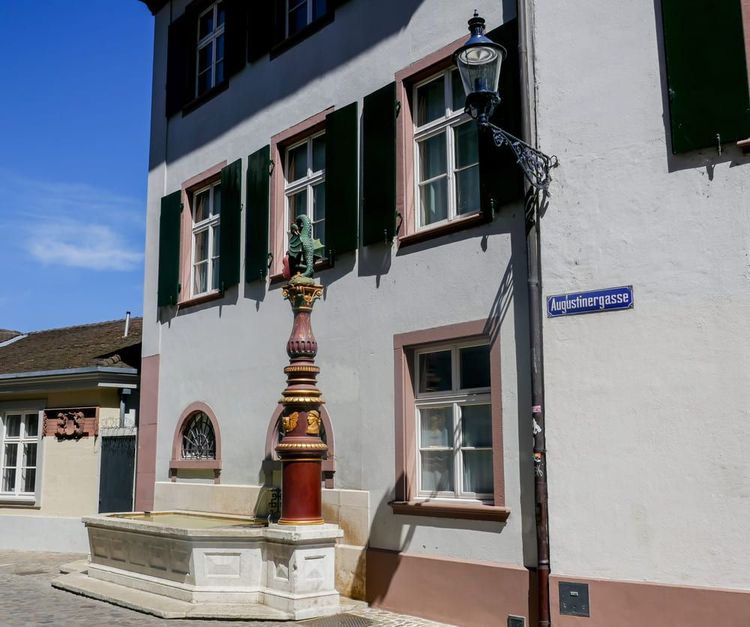
First recorded on this spot in 1468 and moved here in 1846, the Augustins Fountain carries a dark cast-iron column decorated with angel heads and crowned by a basilisk, a legendary beast part rooster, part dragon, part snake. Linked to Basel since the 15th century, it often bears the city's coat of arms. The street itself takes its name from a religious order settled nearby toward the late 13th century.
Free entry
9 - Viewpoint over the Rhine
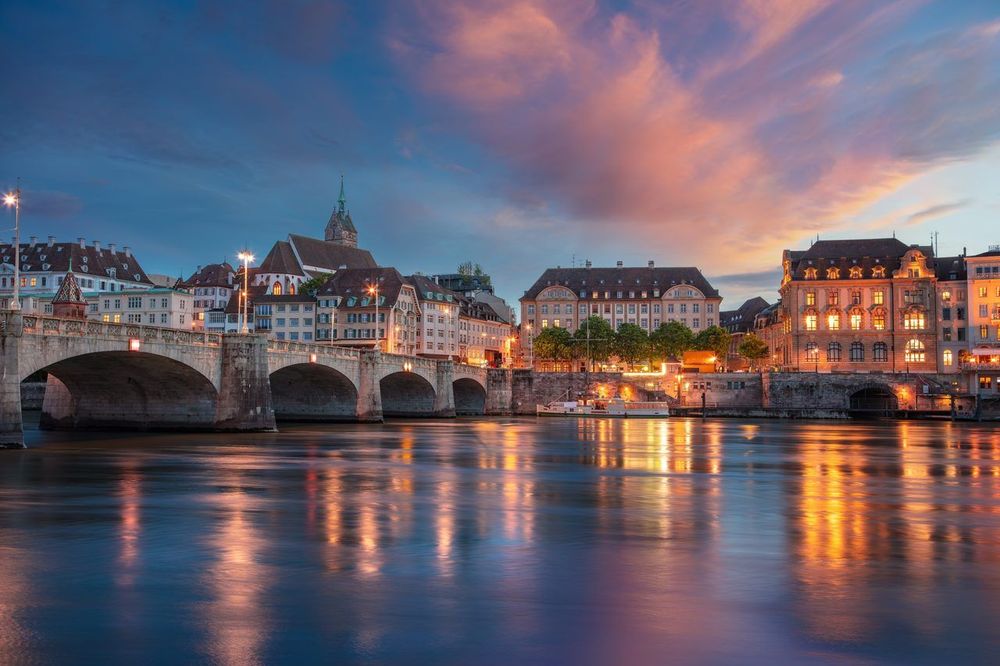
From here, the view opens onto the Rhine and the far bank of the city. For centuries the river has fed stories told at nightfall, among them one about a pale figure glimpsed through the mist close to the water. Nearby, the historic bridge carries its own legend: building it supposedly proved so hard that a deal was struck with the devil, outwitted when locals sent an animal across first.
Free entry
10 - Martinskirche
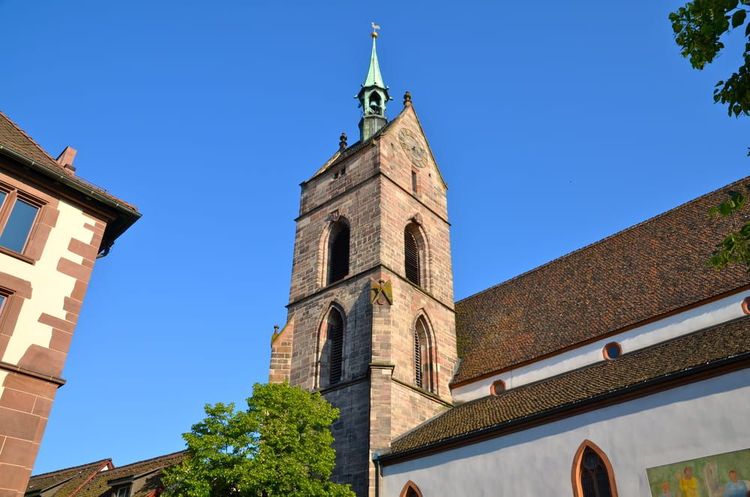
The Martinskirche, Basel's oldest parish church, is attested as early as the start of the 12th century; it looks down on the Rhine from its Münsterhügel hill. Rebuilt in Gothic style after the 1356 earthquake, it once heard reformer Johannes Oecolampadius preach in German during the 16th century, before becoming a concert venue now prized for its sound. Its bells still ring in the autumn fair and the Basel carnival.
Free to see from outside
11 - Marktplatz
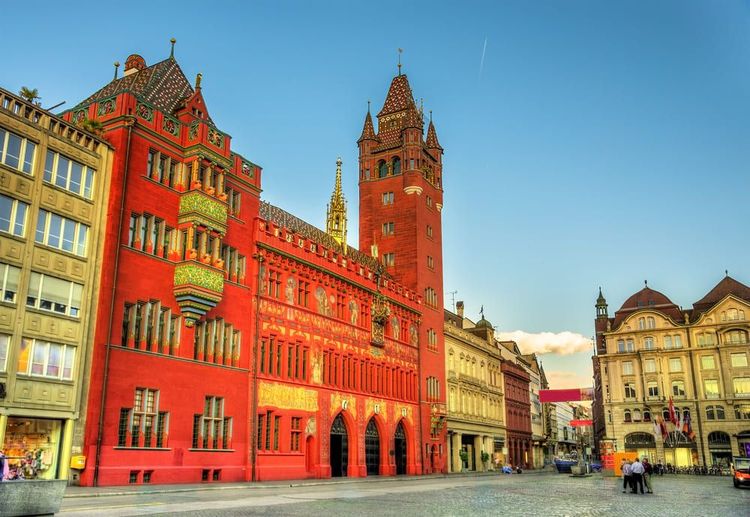
Marktplatz, Basel's trading heart since medieval times, still hosts its daily market of fruit, vegetables and local specialities. The deep-red Rathaus, rebuilt after 1356 and later enriched once Basel joined the Swiss Confederation, early in the 16th century, still houses the cantonal government. Its inner courtyard can be freely visited, and the square hosts the autumn fair every year.
Free entry
12 - Hauptpost
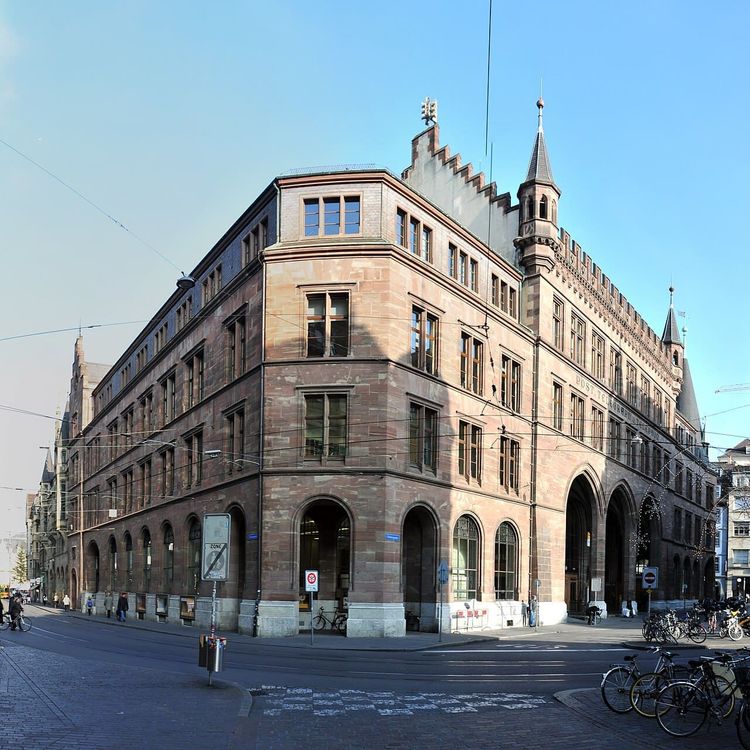
The former Hauptpost sits inside a trading warehouse raised between 1376 and 1378 above the Birsig, a small stream now channelled beneath the old town. Turned into Basel's central post office in 1853, it kept that role for close to 170 years until postal services closed in 2021. Basel architects Herzog and de Meuron are now reshaping it into shops, offices and a public passage.
Free to see from outside
13 - House of Rock Mural
This colourful wall gathers the faces of rock and pop legends: Bowie, Mercury, Lennon, Hendrix, Cobain, Winehouse and more. Painted in 2008 by local collective Art4000 for the bar standing opposite, the mural keeps growing with fresh portraits added every year. A spontaneous, lively touch tucked along an old lane.
Free entry
14 - Im Schmiedenhof
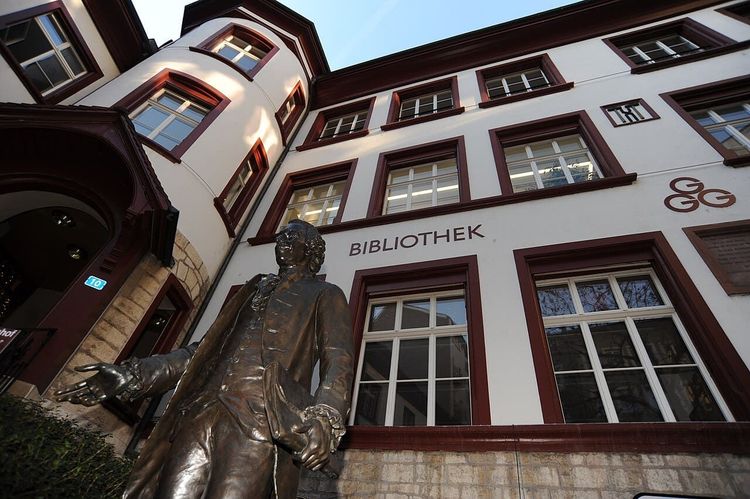
Step through the doorway of Im Schmiedenhof, a sheltered walkway opening onto a tiny shopping courtyard: its name recalls the blacksmiths who once worked in this corner during medieval times. Shops, cafes and a few specialist stores now fill the space, blending old facades with recent fittings. Away from the bustle of nearby streets, it's a quiet pause along the walk through the centre.
Free entry
15 - Andreasplatz and the Monkey Fountain
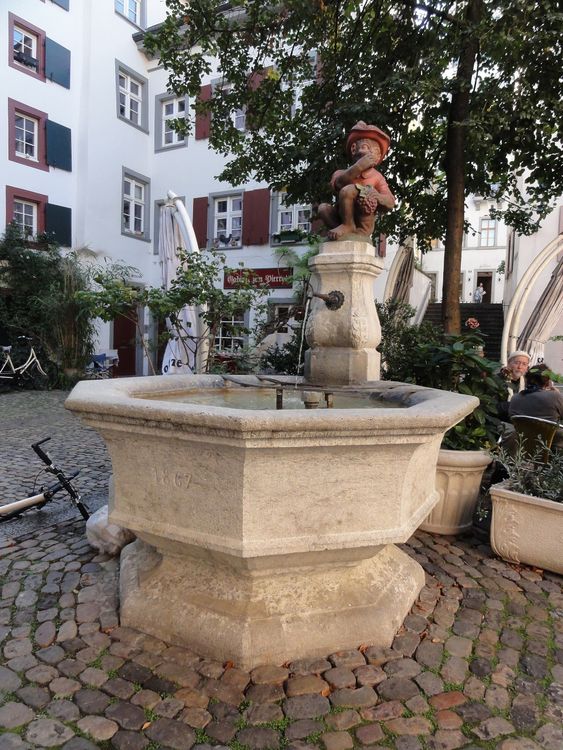
A turn down a narrow lane leads to Andreasplatz, a neighbourhood square set apart from the busy main streets, lined with old houses and tight alleys. At its centre, the Affenbrunnen, or Monkey Fountain, surprises with its unusual carving. A place out of time, perfect for a drink at an outdoor table.
Free entry
16 - Basel Carnival
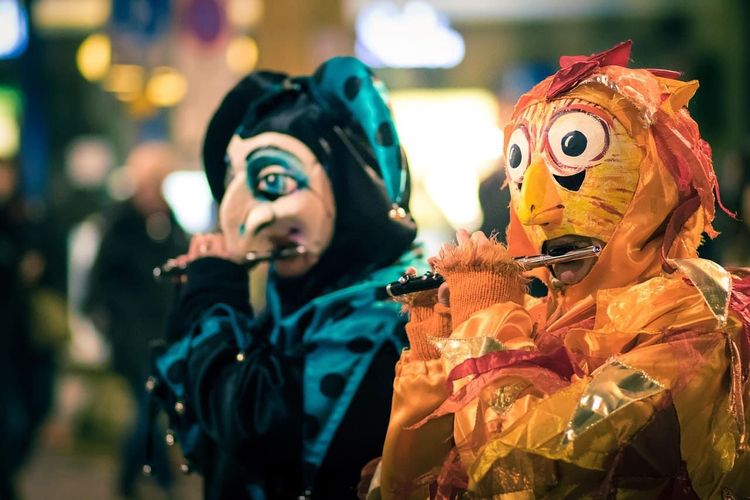
Basel comes alive every winter with its Fasnacht, a carnival listed by Unesco as intangible heritage. Born in medieval times, it has one striking quirk: it starts on the Monday right after Ash Wednesday, at exactly four in the morning, when the old town's lights go dark and thousands of costumed people pour into the streets, carrying only hand-painted lanterns, to the sound of piccolos and drums. Three days of brass bands, costumes and satirical skits then take over the city.
Free entry
17 - Holbein Fountain
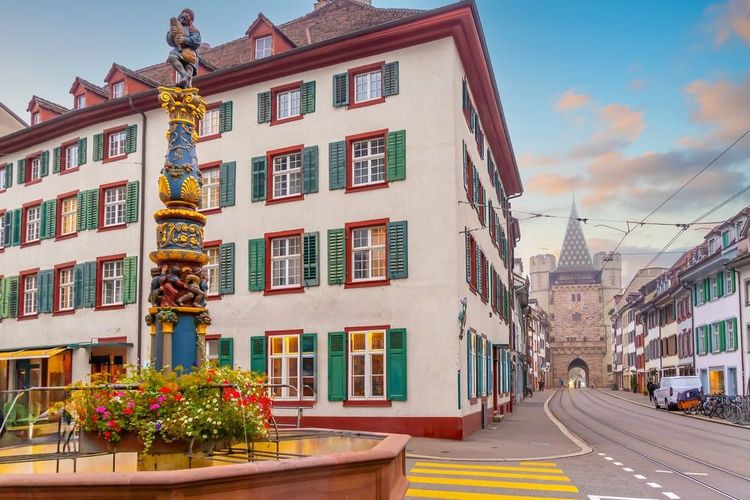
The Holbein Fountain, a 19th-century copy of a mid-16th-century original kept at the Historical Museum, owes its name to its carved figures: the dancing peasants echo a print made by Hans Holbein the Younger in 1523, while the bagpiper on top repeats a pose drawn by Albrecht Dürer. Like hundreds of others across the city, it still runs on drinkable water.
Free entry
18 - Spalentor
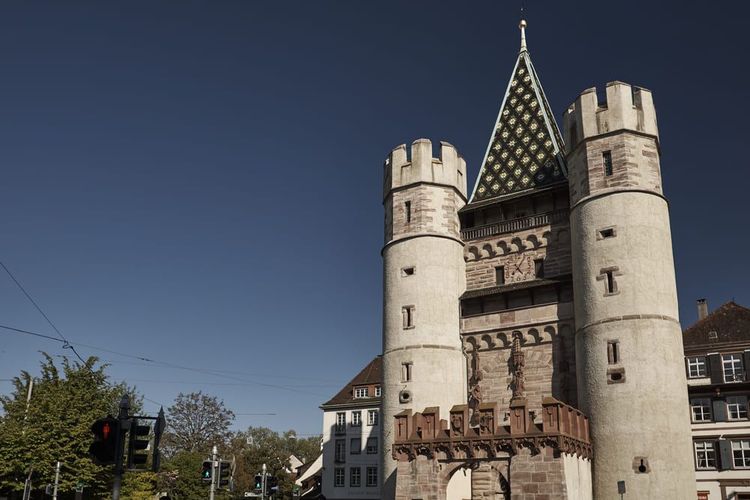
Spalentor, finished around 1398 after the 1356 earthquake to guard the city's western flank, remains one of the few medieval gates still standing in Basel. Its tall Gothic tower, rising past 40 metres and flanked by two round towers, once checked goods and travellers arriving from Alsace. Its current battlements date from the 19th century; of the three surviving gates, this is the largest.
Free entry
19 - Basel Gastronomy
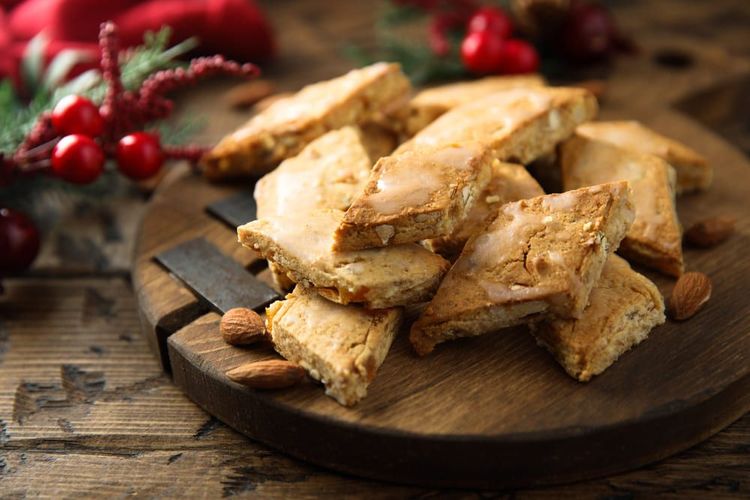
Basel is also worth tasting, sitting at the crossroads of Swiss, Alsatian and German traditions. Läckerli, a small spiced biscuit with honey and almonds, is enjoyed year round, while Mehlsuppe, a soup built on toasted flour, traditionally follows the morning after carnival festivities. Between artisan bakeries, chocolate shops and breweries, the city keeps a food scene as varied as its student population.
20 - Spiesshof
Spiesshof, a patrician house built by architect Daniel Heintz the Elder between 1585 and 1590, shows off a Renaissance front still rare in Basel back then. A late Gothic touch nonetheless survives in its grand vaulted hall. Legend has it a 16th-century religious leader lived here under a false name before being burned for heresy, feeding a local ghost story. Now private, it can only be admired from the street.
Free to see from outside
21 - Leonhardskirche
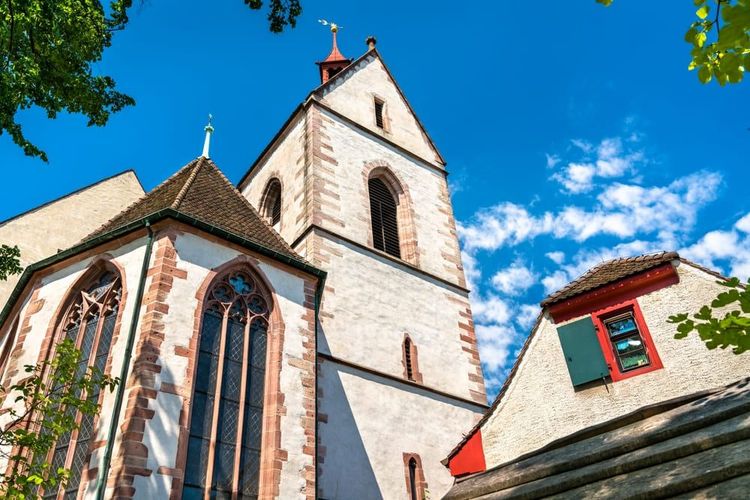
Perched above the centre, the Leonhardskirche ranks among Basel's oldest churches: its Romanesque crypt is said to date from around 1080. Flattened by the 1356 earthquake and rebuilt in Gothic style, with bright star-ribbed vaults, it joined the reformed faith at the Reformation and now serves Basel's French-speaking reformed community. An 18th-century organ, its case echoing the work of Alsatian organ builder Andreas Silbermann, still fills the nave.
Free entry
22 - Barfüsserplatz
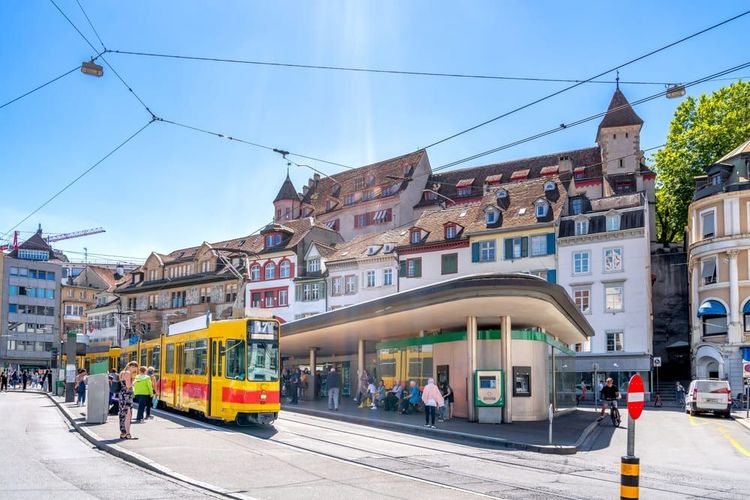
Barfüsserplatz takes its name from the barefoot Franciscan friars who settled here as early as the 13th century. Their former Gothic church, turned into Basel's Historical Museum in 1894, now traces some 2,000 years of local past. Next to it, the Stadtcasino, prized for its acoustics, regularly hosts major concerts: a lively musical and cultural crossroads in the heart of the city.
Free entry
23 - Basel Toy Worlds Museum
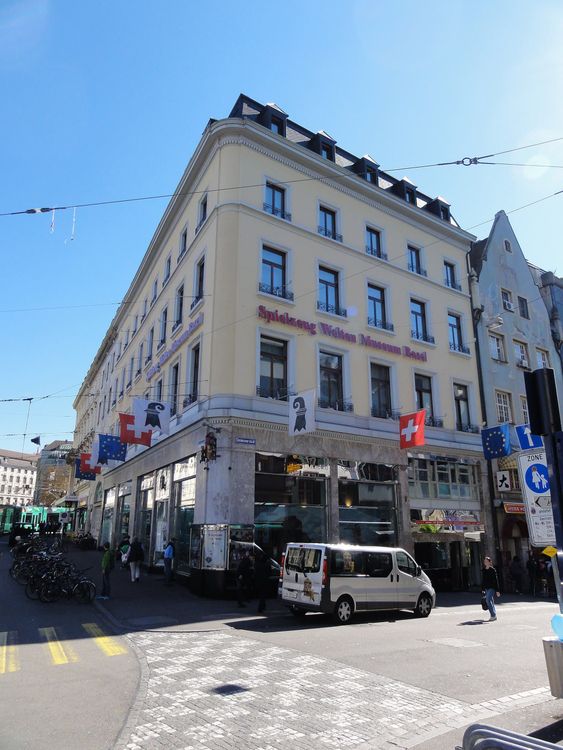
The walk ends at Basel's Toy Worlds Museum, set inside a 19th-century villa and opened in 1998 thanks to collector Gigi Oeri. Over 6,000 pieces are on display, including the world's largest teddy bear collection, some dating back to the early 20th century. Dolls, miniature houses and recreated shops round off this charming dive into childhood.
Paid entry (about 7 CHF)
What to do in Basel in 2 or 3 days?
Allow 1.5 hours for this 3.2 km loop and its 23 stops, from Theaterplatz to the cathedral and on to Spalentor. With two or three days to spare, Basel stretches beyond the walk: to the Rhine and Kleinbasel the next day, then to the neighbouring countries on day three.
The next day belongs to the Rhine: a small wooden ferry, pulled across by the current alone, with no engine at all, carries you to the opposite bank for a token fare. Over there, Kleinbasel shows a younger, livelier face, along the Unterer and Oberer Rheinweg quays where locals swim on warm days. Our weekend in Basel itinerary walks through this crossing bridge by bridge.
Day three leaves the historic centre for the neighbouring countries, just a few tram stops away: one short trip is enough to have lunch in Germany or France. Our guide to visiting Basel in 3 days lays out the full three-day plan, travel times included.
Which neighbourhoods does the tour cross?
The whole loop stays on one bank of the Rhine, climbing toward the hill that overlooks the river before dropping back down to the west, without ever crossing into Kleinbasel.
From Theaterplatz and its lively fountain, the route climbs gently toward the Münsterhügel, the hill already settled in Roman times: the pink sandstone cathedral, the Pisoni fountain and Münsterplatz follow one another within a few steps (stops 1 to 5).
Next come the cathedral's two neighbouring museums, then an open viewpoint over the Rhine, before the route drops past Martinskirche to Marktplatz, the city's commercial heart since the Middle Ages; from there it reaches the old Hauptpost and the House of Rock Mural, then slips through the covered Im Schmiedenhof passage to the quiet Andreasplatz (stops 6 to 15).
The last stretch heads west, past the Holbein fountain, to Spalentor, one of only three surviving medieval gates, before returning past Spiesshof and Leonhardskirche, perched on its small hill, and ending between Barfüsserplatz and the Basel Toy Worlds Museum (stops 16 to 23).
How much does it cost to visit Basel?
Of the 23 stops on the route, sixteen are freely accessible and three can only be seen from the street. Among the others, three charge an entry fee:
- the Museum of Cultures of Basel, for CHF 16;
- the Natural History Museum of Basel, for CHF 7;
- the Basel Toy Worlds Museum, also for CHF 7.
For the museums, the BaselCard, generally given to travellers staying at least one night in the city, makes public transport free and gives discounts on many activities, such as museums, the zoo or some guided tours.
Information checked in November 2026 and subject to change.
Where to stop for a bite along the tour?
Food is a stop on the route in its own right, dedicated to flavours shaped by Swiss, Alsatian and German traditions alike.
Läckerli, a honey-and-almond biscuit spiced and studded with candied citrus peel, has been made here for centuries and often ends up in suitcases. During carnival, very early in the morning, Mehlsuppe is served: a comforting soup of toasted flour, broth and onions. Among heartier dishes, Zwiebelwähe, a savoury onion tart owing much to neighbouring Alsace, sits alongside fondue and raclette.
The same biscuit can also be bought from the market stalls, one of the Basel pleasures listed in our roundup of 15 unmissable experiences in Basel.
What to do in Basel with children?
Two places are especially suited to a family outing, one on the route and the other away from it.
Along the loop, the Basel Toy Worlds Museum brings together more than 6,000 pieces, from teddy bears to dolls and miniature houses; its more than 2,500 teddy bears alone form the largest such collection in the world.
Off the route, the city zoo, more than a hundred years old, regularly sees births, from Indian rhinos to gorillas.
What should you know before visiting Basel?
Two stops call for a word of warning before you set off, and the season changes the feel of the visit.
The cathedral is free to enter, but climbing its towers is a separate, paid option (CHF 6 per adult), suspended between noon and 12:20 pm for the midday prayer. A little further along the route, the old Hauptpost is currently being redeveloped: only its façade can be admired from the street, as access to the future shops and offices has yet to be defined.
As for timing, the city can be visited all year round, though spring and autumn are generally milder and quieter; summer can top 30°C, when life moves to the banks of the Rhine, while winter, greyer and colder, warms up with the Christmas market lights.
What to see around Basel?
Basel isn't only where three countries meet: it is also a good base for other audio-guided walks, both Swiss and French.
At 60 km, Colmar is best explored among colourful half-timbered houses and flower-decked balconies, tracing Rhenish Renaissance style and the Petite Venise. A little further, at 69 km, Bern, the country's often-overlooked capital, nestles its UNESCO-listed old town inside a loop of the river, between arcades and medieval fountains.
At 75 km, Zurich blends the efficiency of a modern city with the cobbled lanes of its Altstadt, along the Limmat and the shores of its lake. At 78 km, Lucerne offers an Alpine backdrop, with medieval bridges and painted façades on Lake Lucerne. Finally, at 115 km, Strasbourg combines romantic canals, half-timbered houses and a Gothic cathedral, between Petite France and Alsatian flair.
What's on in Basel right now?
As the year draws to a close, Basel's cultural highlight is at the Kunstmuseum Basel, off the route.
Until 7 February 2027, the museum devotes a major temporary exhibition to Swiss collector Gertrud Dübi-Müller, featuring works by Van Gogh and Hodler among others.
Information checked in November 2026 and subject to change.
Le plein d'inspirations
Explorez le monde en totale liberté, à pied au cœur des villes ou au fil des routes. Nos guides audios transforment chaque destination en une découverte culturelle immersive et unique.
FAQ for visiting Basel
When is the best time to visit Basel?
The best time to visit Basel generally runs from May to June and from September to October. During these months, you will enjoy mild temperatures and ideal light for exploring the city on foot, without the summer crowds. Spring offers the charm of gardens in bloom and terraces reopening, while autumn cloaks the city in golden hues. Summer remains pleasant despite the heat, with a festive atmosphere along the Rhine. Winter has its own appeal, especially during the Christmas season with its traditional markets and magical illuminations that transform the historic centre.
How many days do you need to visit Basel?
Two to three days is generally the ideal length to discover Basel without rushing. In a weekend, you will have time to explore the historic centre, stroll along the Rhine and visit a few major museums. With an extra day, you can deepen your cultural discovery or venture into the less touristy neighbourhoods. The Ryo audioguide accompanies you to make the most of your time with a well-designed route that covers the city's essentials. If you have more time, you can alternate cultural visits with moments of relaxation by the river or in the many cafés of the old town.
How do you get around Basel?
Basel has an excellent public transport network with trams and buses that serve the whole city efficiently. The historic centre, however, remains largely pedestrian and is best explored on foot to appreciate all its details. Hotels generally provide a free transport card valid for the length of your stay. Cycling is also an excellent option, with numerous bike paths and rentals available almost everywhere. To reach the outlying neighbourhoods or the more distant museums, the tram remains the most practical option. As the city is relatively compact, you can easily combine walking and public transport depending on your wishes and your itinerary.
Where can you swim in Basel in summer?
In summer, the Rhine becomes the favourite bathing spot for Basel residents and visitors alike. The local tradition is to let the current carry you along for several hundred metres, a refreshing and quintessentially Basel experience. The popular entry points are generally upstream, with fitted exits further down. Colourful waterproof bags, available in local shops, let you keep your belongings dry during the drift. Several waterside kiosks create a convivial atmosphere. For a more conventional option, the city also has open-air public swimming pools. Remember that the current can be strong and that swimming calls for a degree of caution.
Which are the main museums to visit in Basel?
Basel boasts an exceptional density of museums, with more than thirty cultural institutions. The Kunstmuseum is among the must-sees, housing a remarkable art collection spanning from the Middle Ages to the present day. The Fondation Beyeler, in a building designed by Renzo Piano, presents modern masterpieces in a light-filled setting. The Museum Tinguely celebrates the Swiss artist with its fascinating mechanical sculptures. To discover local history, the Basel Historical Museum offers a captivating journey through the centuries. The Ryo audioguide includes these major cultural sites in its route, allowing you to place them within the urban context. Depending on your interests, you can also explore the Paper Museum, the Natural History Museum or the many contemporary art galleries.
Can you visit Basel for free?
Basel offers many opportunities for free discovery that will delight budget-conscious travellers. Strolling through the old town, admiring the colourful façades, crossing the Rhine on the traditional ferries or wandering across the Münsterplatz will cost you nothing. The cathedral can be visited free of charge and offers a panoramic view from its towers for a modest contribution. The banks of the Rhine make for a much-loved free relaxation spot. Some museums offer free admission at specific times, usually in the late afternoon or on certain Sundays. The markets, notably the one on Marktplatz, let you soak up the local atmosphere without spending a thing. The Ryo audioguide is a modest investment that will considerably enrich your independent visit.
Which local specialities should you try in Basel?
Basel cuisine blends Swiss, Alsatian and German influences to create a generous and flavourful fare. The Läckerli, a spiced biscuit made with honey and almonds, remains the emblematic speciality to take home as a souvenir. The Basler Mehlsuppe, a soup made from browned flour and traditionally served during carnival, is worth trying if you find it on the menu. The Mässmogge, a colourful filled sweet sold at the autumn fair, delights young and old alike. On the savoury side, try the onion tart or the rösti, golden potato patties. The winstub, traditional taverns, serve these dishes in a warm atmosphere. Do not forget to pair your meal with a local wine from the surrounding hillsides.
What are the must-see sights and things to do in Basel?
Start with the old town and the Marktplatz, dominated by the bright red town hall whose painted façades and arcaded courtyard draw every eye. A few streets away, the pink sandstone cathedral raises its two towers above the Rhine; the Pfalz terrace, just behind the choir, offers one of the finest views over the river and the Kleinbasel district. Walk back down to the Mittlere Brücke, one of the oldest bridges on the Rhine, then climb the steep lanes of the Spalenberg up to the Spalentor, a remnant of the medieval walls. Tinguely's moving fountain and the cable ferries that cross the river without an engine round off the walk. The Ryo audio guide offers a dedicated Basel route linking these stops.
What is there to discover around Basel, where three countries meet?
Basel sits at the junction of Switzerland, France and Germany, and the Dreiländereck, a spire planted on the bank of the Rhine, marks that meeting point. On the German side, at Weil am Rhein, the Vitra Campus brings together buildings signed by some of the greatest contemporary architects, an ensemble you explore in the open air. East of the city, the Roman site of Augusta Raurica preserves an ancient theatre and remains that tell the story of a colony founded on the river. Further away lie the Black Forest and its trails, Alsace and its wine route, or the first slopes of the Jura: day trips that are easy to organise from the city.
What is the Basel carnival?
The Fasnacht is the city's great popular gathering, inscribed on the list of intangible cultural heritage. It opens before dawn, on the Monday following Ash Wednesday, with the Morgestraich: the street lights go out and hundreds of painted lanterns move through the old town to the sound of piccolos and drums. For three days, the cliques parade in costumes and masks, hand out confetti, oranges and mimosa, and display satires of local news on their lanterns. The city then runs at half speed during the day and comes alive at night, in an atmosphere that is more caustic and more homemade than festive. Dress warmly: the season is still wintry and the processions are watched standing, in the street.
What should I do in Basel over a weekend or in 3 days, between the old town, the Rhine and the museums?
Three days are enough to see Basel. On day one, start at the Spalentor, follow the Spalenberg to the Marktplatz and the Town Hall, then climb to the red sandstone cathedral and the Pfalz terrace overlooking the Rhine.
Day two is devoted to art museums, including the Kunstmuseum founded in 1661, and to Kleinbasel. On day three, take the tram to Germany and France, which begin at the end of the line. Also cross the Rhine on a wooden ferry pushed only by the current.
Find the detailed itinerary in our guide to visiting Basel in 3 days, as well as in our articles on living Basel like a local and a weekend in Basel.
Vos commentaires, idées et suggestions
Aucun avis pour le moment