Créé par Emilie, le 17 nov. 2026
Votre guide Ryo
Strasbourg, France
From Petite France to Greater Europe
Parcours audioguidé pour visiter Strasbourg en 1 jour
This tour of Strasbourg draws you into the heart of history, following romantic canals, half-timbered houses, and cobbled streets that seem to echo the past at every turn. Along the way, you’ll discover the intricate beauty of Strasbourg Cathedral, the storybook charm of La Petite France, and the Alsatian way of life that still shapes the spirit of this former imperial city. It’s a simple, immersive way to explore Strasbourg at your own pace, where centuries-old traditions meet a vibrant European energy.
Quand partir à Strasbourg ?
Jan.
2°
9
Feb.
3°
7
March
7°
8
April
10°
8
May
15°
11
June
18°
10
July
20°
10
Aug.
20°
9
Sept.
16°
8
Oct.
11°
9
Nov.
6°
8
Dec.
3°
9
Strasbourg enjoys a semi-continental climate characterized by warm summers, where temperatures often rise to 25°C, and harsh winters hovering between -1°C and 5°C. To experience the city at its best, the ideal times are undoubtedly the summer season, from May to September—perfect for strolling along the canals under a generous sun—as well as the month of December, when the city transforms despite the cold to host its world-famous Christmas market.
Départ conseillé
No need to worry about where to begin! Our tours are designed as a loop, so you can jump in wherever you are. The navigation system and audio-guide will automatically adjust to your location. However, if you happen to be nearby, we do have a preferred starting point: Place du Corbeau
Parking à proximité
Parking Austerlitz - Rue des Bœufs Parking des Bateliers - 10 Rue de Zurich
If you want to save money, go for the park-and-ride facilities. They're easy to access and located all around the public transport network, offering you a day pass at a ridiculously low price, including a return trip to the city center by public transport.
Park-and-ride facility : Rotonde (450 spaces) 5 minutes from the city center, with Tram line A or Tram line D Park-and-ride facility : Ducs d'Alsace (600 spaces) 8 minutes from the city center, with Tram line A or Tram line D
À savoir
This guided tour of Strasbourg takes you to the Vauban dam for a beautiful view of Petite France. Admission is free of charge, but the dam closes at 7pm. If you arrive after closing time, you can always continue the tour across the covered bridges.
Découvrez 33 lieux d'intérêt pour visiter Strasbourg







What to see in Strasbourg on your 2h40 tour?
This 6.6 km loop takes about 2 h 40 and links 32 sights. From Place du Corbeau it crosses the Grande Île and its cathedral, climbs into the imperial Neustadt around Place de la République and Place Kléber, dips into the canals and half-timbered houses of La Petite France, follows the Vauban Dam, then returns via Saint-Thomas and the Alsatian Museum. With the Ryo app in your ears, every bridge and façade tells its share of Franco-German history.
Information checked in November 2026 and subject to change.
1 - Corbeau Square
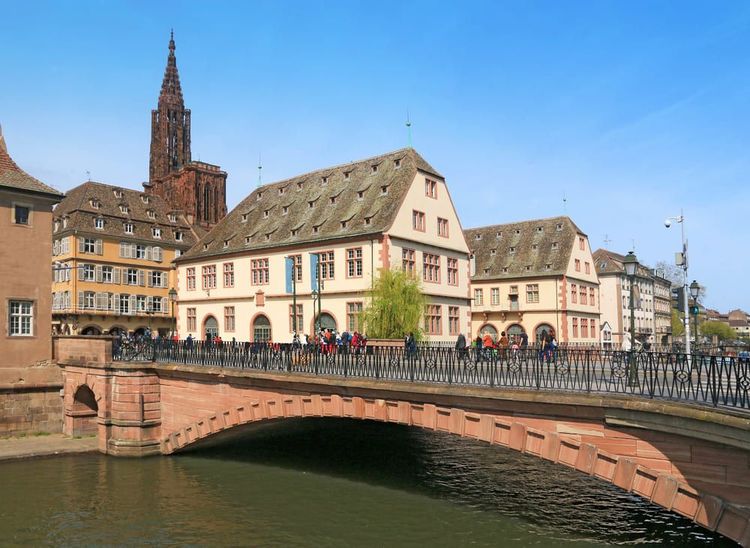
Until the 17th century, this square bore an Alsatian name meaning 'near the bridge of torment'. Ruled in turn by France and Germany, it later became known as both Place du Corbeau and Rabenplatz. The flower-decked bridge you are crossing once served as an open-air execution ground: the condemned, locked inside a suspended cage, were dunked into the foul water below by a tilting mechanism. Few could swim back then, so the outcome was rarely a happy one.
Free entry
2 - Old Customs House and Butcher's Shop
Facing you stand 2 emblematic buildings of Strasbourg's river trade: the old customs house on the left, the old butcher's shop on the right. From 1143, a salt depot stood on this bank before the boatmen's guild installed a customs post here, flanked by huge swinging cranes, to store goods and collect taxes. An inn lodged travellers on the ground floor, while the neighbouring street hosted lively food markets, something like the Rungis of its day.
Free to see from outside
3 - Place du Marché aux Cochons de Lait: Suckling Pigs Market Square
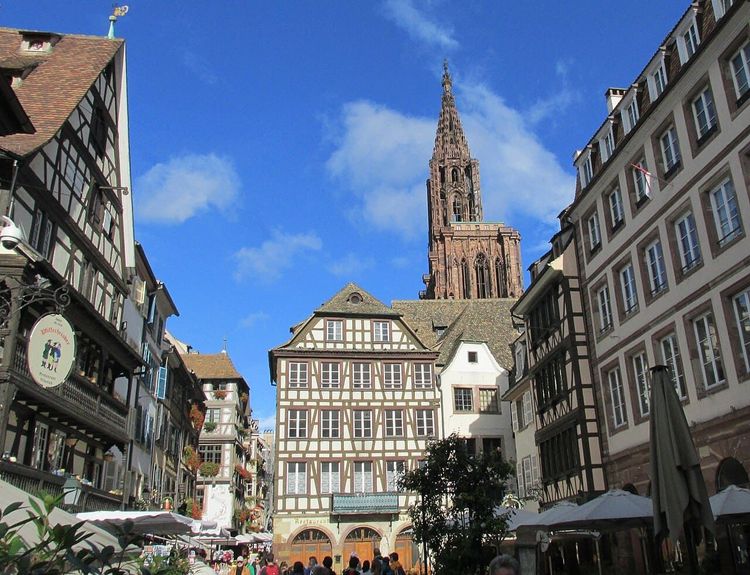
Despite its picturesque name, this tiny square once sold nothing but suckling pigs, later pork in general. Admire the half-timbered house at number one, a listed historic monument, whose clog-shaped weathervane gives away its former owner, a wealthy clog maker. Legend has it that Emperor Sigismund, visiting the city in 1414, leapt out of bed so hastily that he wandered barefoot through the streets, until the local women took pity and bought him a pair of clogs.
Free entry
4 - Notre-Dame Cathedral
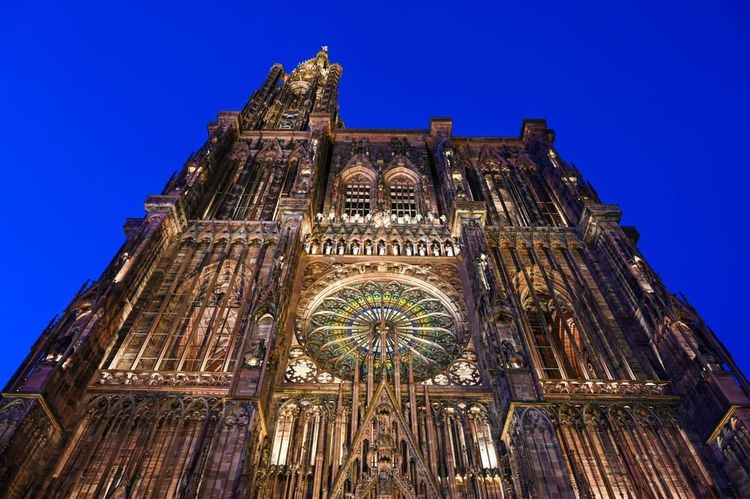
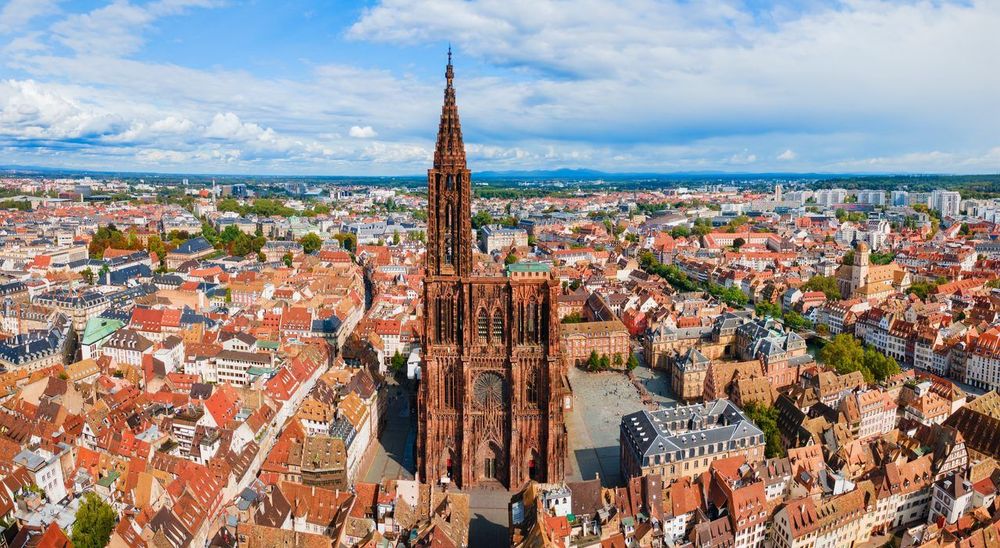
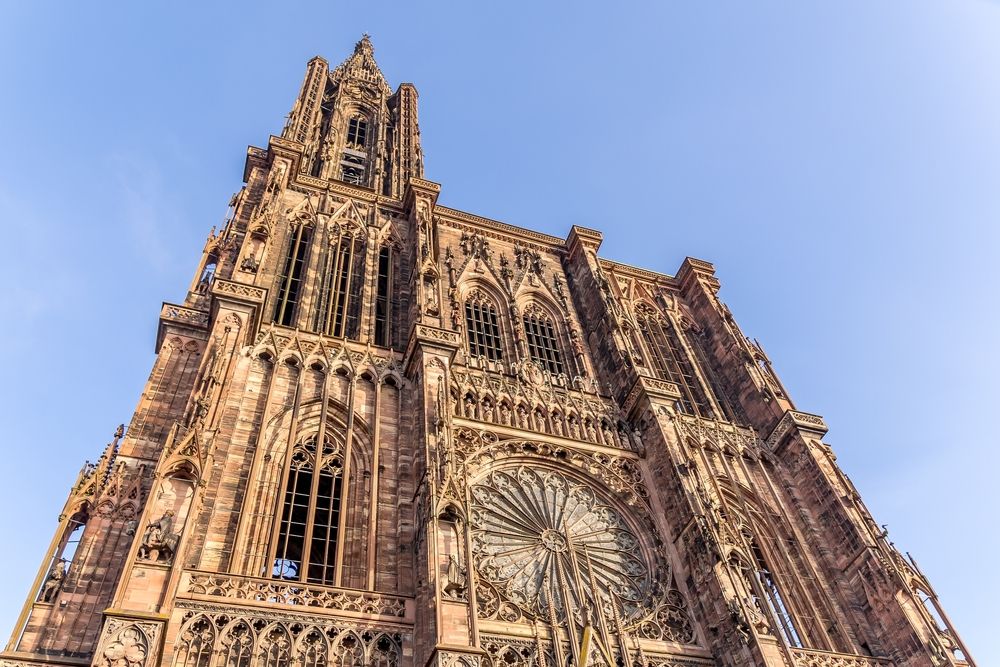
4 million visitors a year stand before this cathedral, which Victor Hugo once called a marvel of the gigantic and the delicate. Until 1874 it was the tallest religious building on earth; today, with its 142-metre spire, it still ranks as France's 2nd-highest cathedral, just behind Rouen. Take time to walk all the way around it: the pink sandstone façades conceal hundreds of carvings that tell, stone by stone, centuries of history.
Free entry
5 - Œuvre de Notre-Dame Museum and Rohan Palace
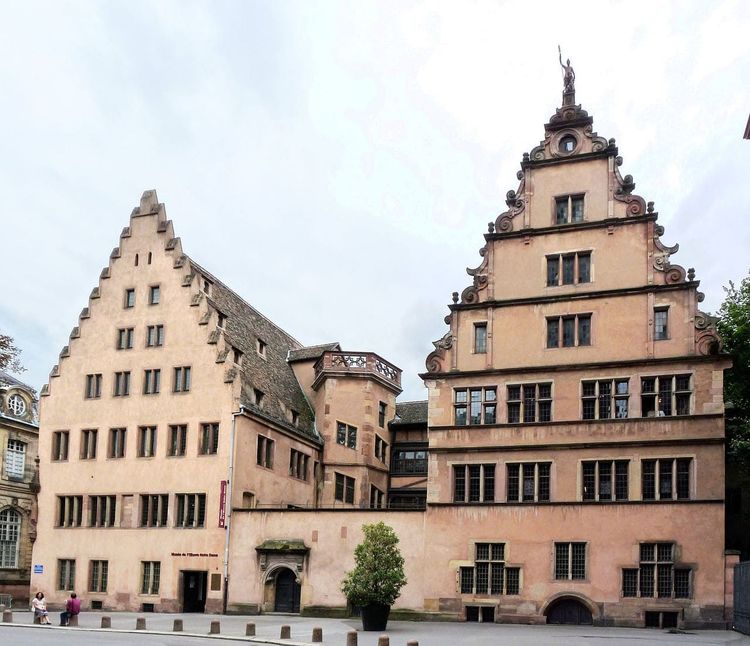
These 2 storybook half-timbered houses hold the Œuvre Notre-Dame foundation and its museum, which have funded the cathedral's upkeep for centuries. Right beside them stands Rohan Palace, its façade designed to impress: the prince-bishop behind it wanted to assert French power in a city only recently reclaimed, while celebrating the return of Catholic worship to this Protestant stronghold.
Paid entry (about €9)
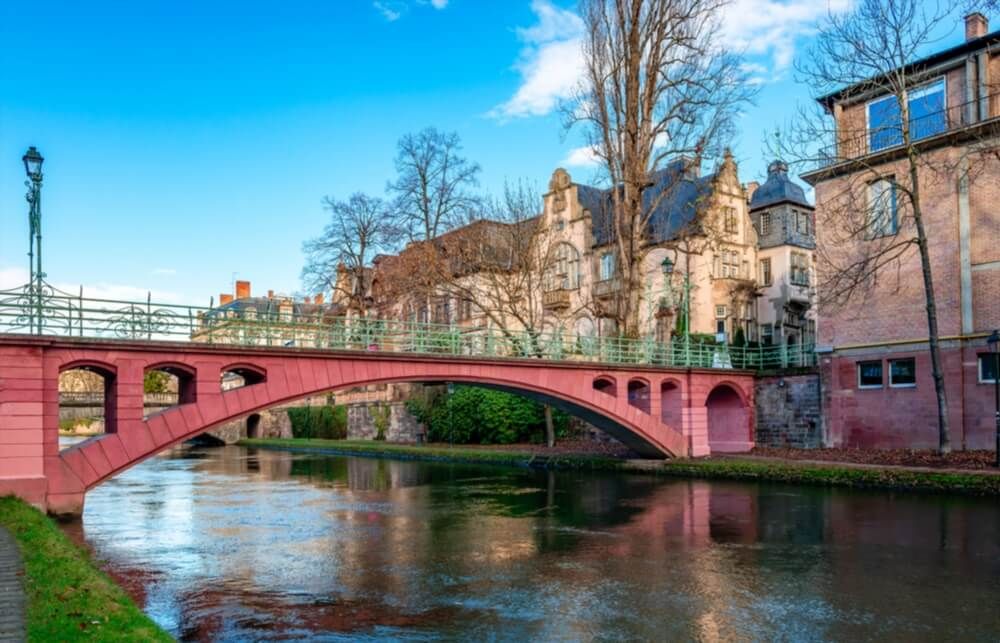
6 - Saint-Magdalene Bridge
From this bridge, the façade of Rohan Palace reveals its 17 perfectly aligned windows above the Ill. This river, rising in the foothills of the Jura before joining the Rhine north of the city, gave the whole region its name: in German, Alsace is Elsass, literally the land of the Ill. A single glance here explains why this viewpoint remains a favourite among walkers.
Free entry · Best in the morning
7 - Quais des Bateliers: The Boatmen's Quays
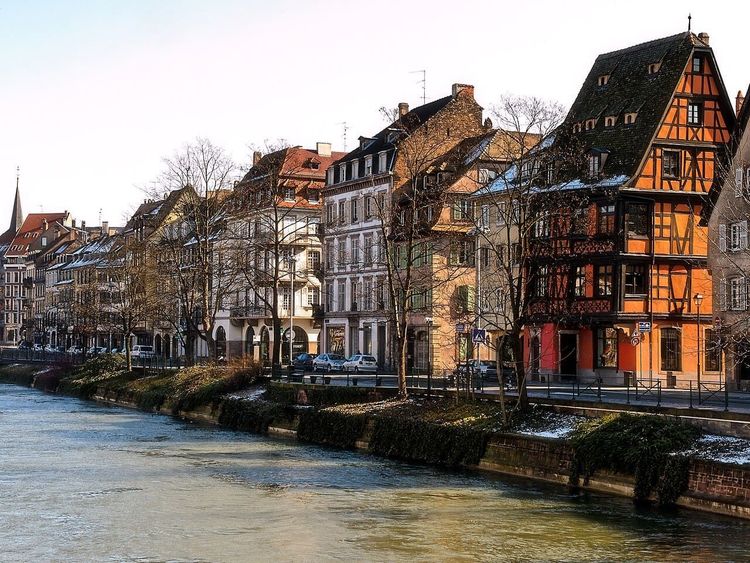
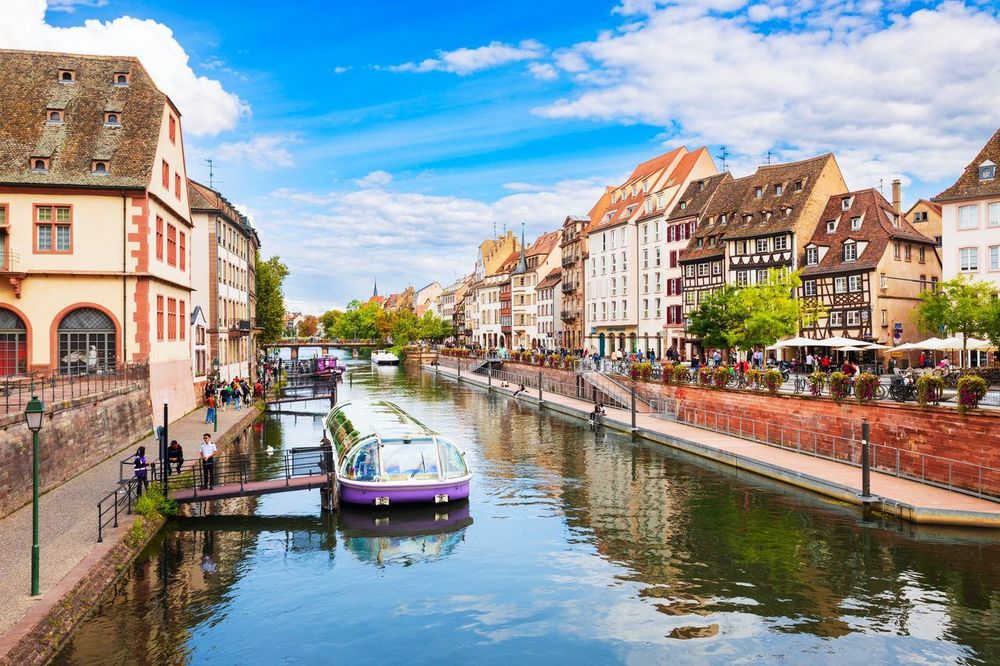
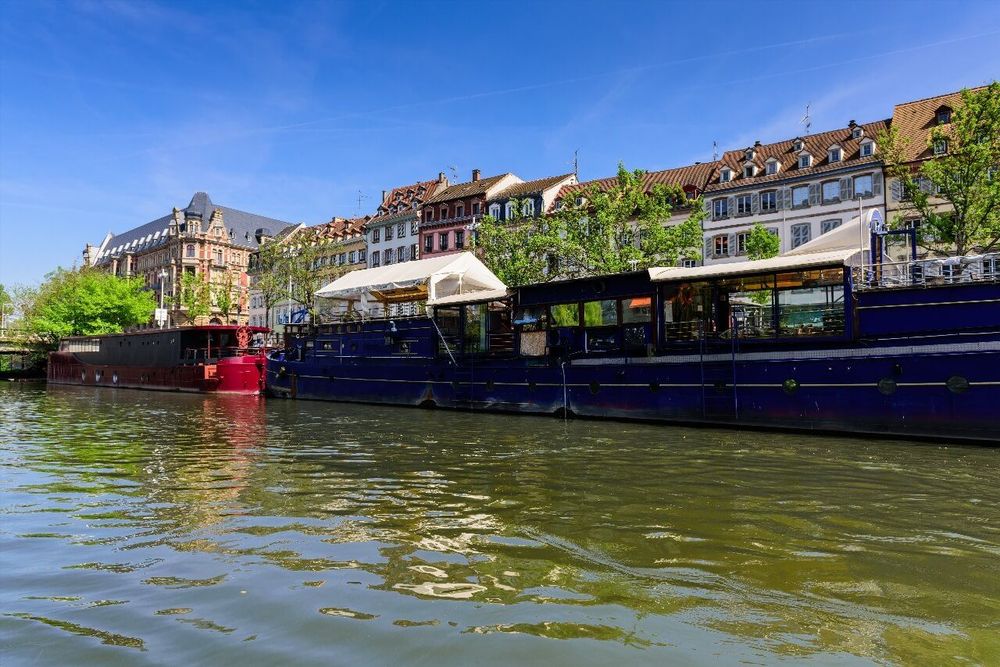
These fully pedestrianised quays take their name from the boatmen who once moored here. The houses lining them, built in the 17th and 18th centuries, rank among the city's finest, several listed as historic monuments. Nothing stops you, another time, from extending the walk past the Saint-Guillaume bridge to the Sainte-Attale quay, following the Ill towards the Neustadt.
Free entry
8 - Gayot Market Square
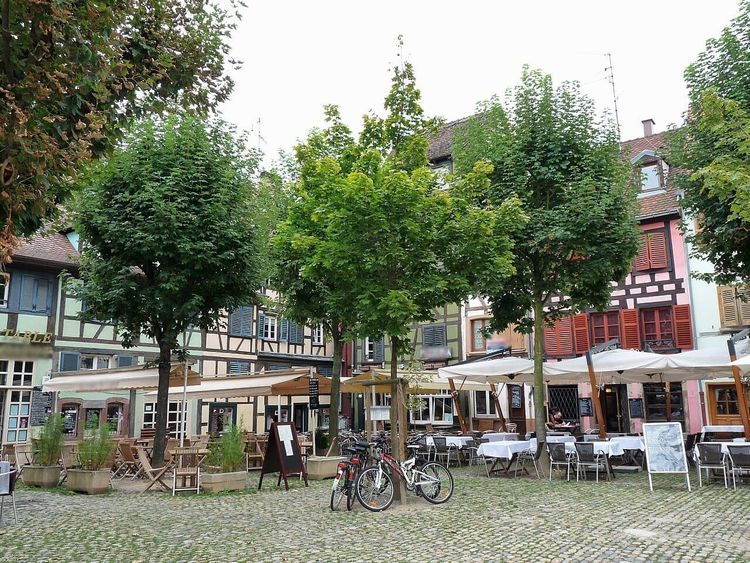
Now lined with restaurants where it is hard to resist stopping for a drink, this square once stood on the site of a canons' residence. In the early 17th century, a fire at a neighbouring inn ravaged the whole district and claimed its inhabitants' lives, leaving only the grim nickname 'Burnt Courtyard'. Decades later, the city's political centre shifted to Place Broglie, letting this one settle back into its more peaceful, convivial role.
Free entry
9 - Kammerzell House
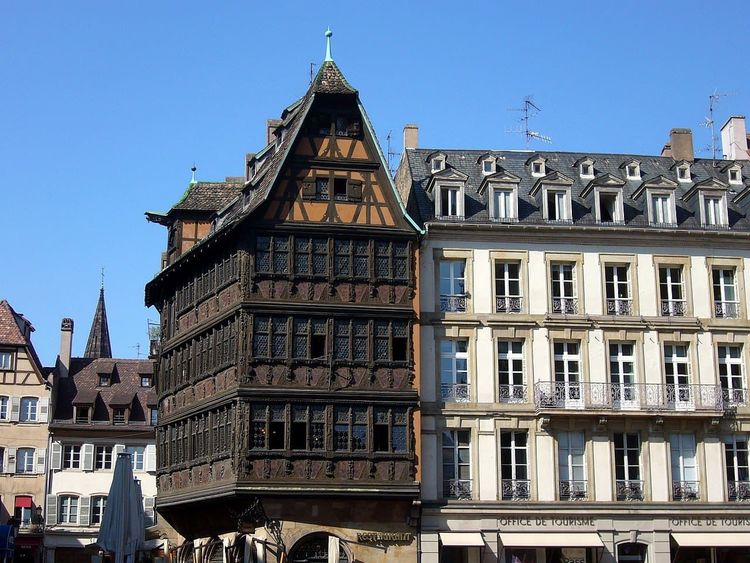
Nestled against the cathedral, this house is named after the grocer who once called it home, back in the 1800s. While the ground floor dates to the 15th century, its flamboyant upper storeys are the work of a wealthy, rather megalomaniac cheese merchant, who bought the building in 1571. With no building permits to hold him back, he had every inch of wall carved; look closely and you'll notice quantity outweighs refinement, since the Reformation had already driven the finest religious craftsmen away.
Free to see from outside
10 - Temple Neuf
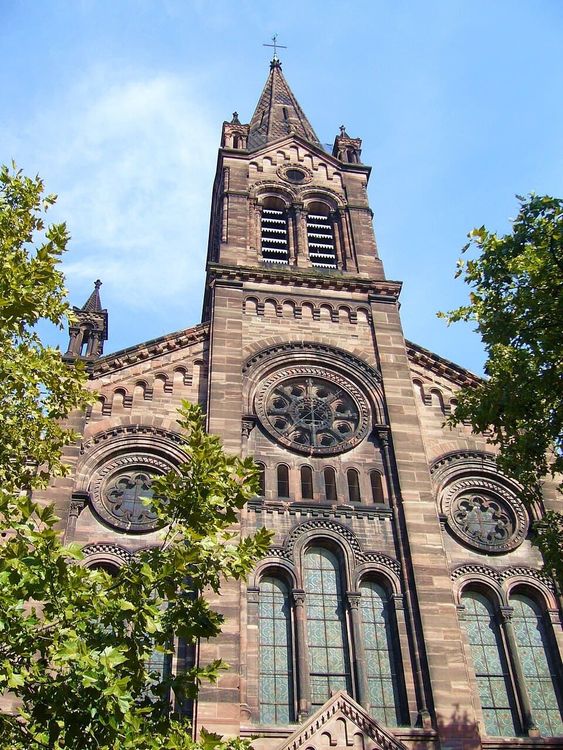
This vast church, standing on a semicircular square, occupies the site of a 13th-century Dominican convent. When Strasbourg adopted the Reformation in 1524, most convents closed; this one became a seat of learning, where the Haute-École, forerunner of the University of Strasbourg, was born. Its church sheltered Protestant refugees for a time, with Jean Calvin himself as first pastor, before being abandoned in favour of the cathedral.
Free entry
11 - Broglie Square
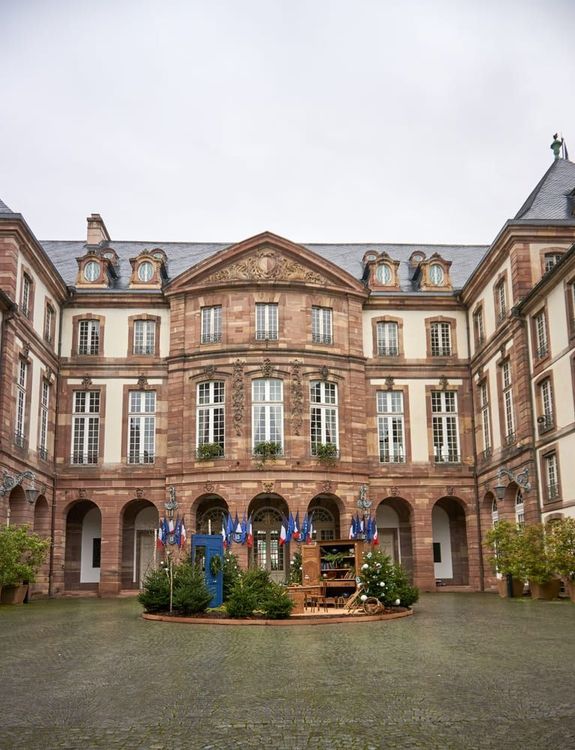
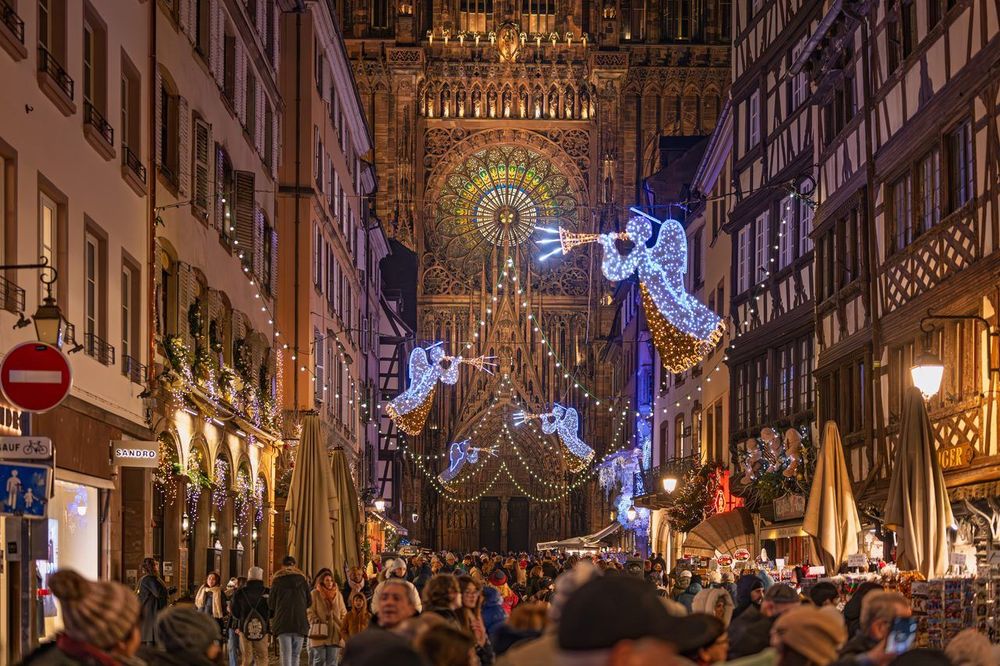
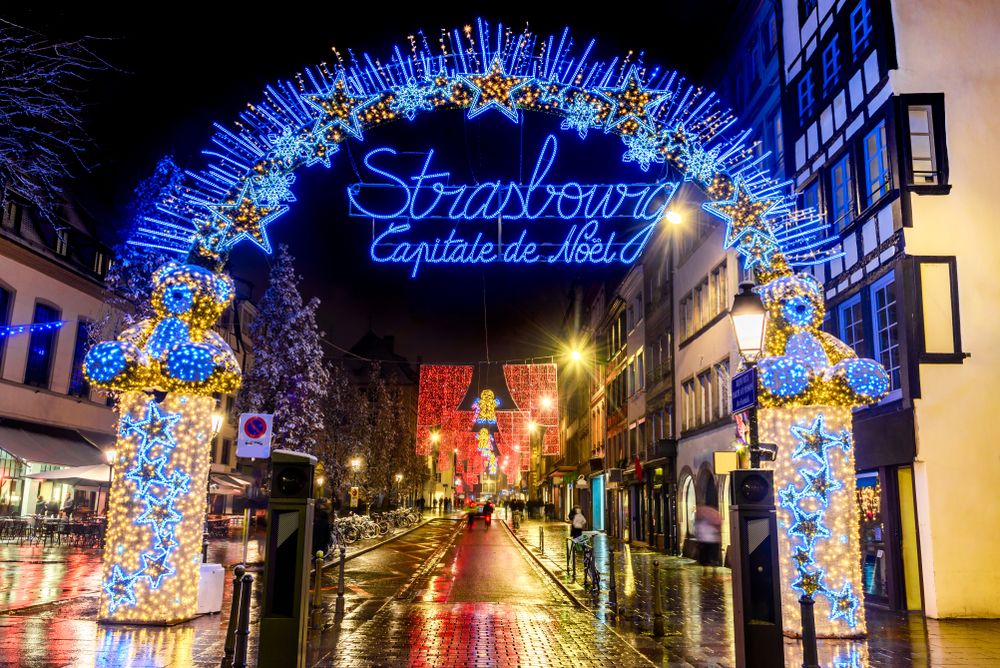
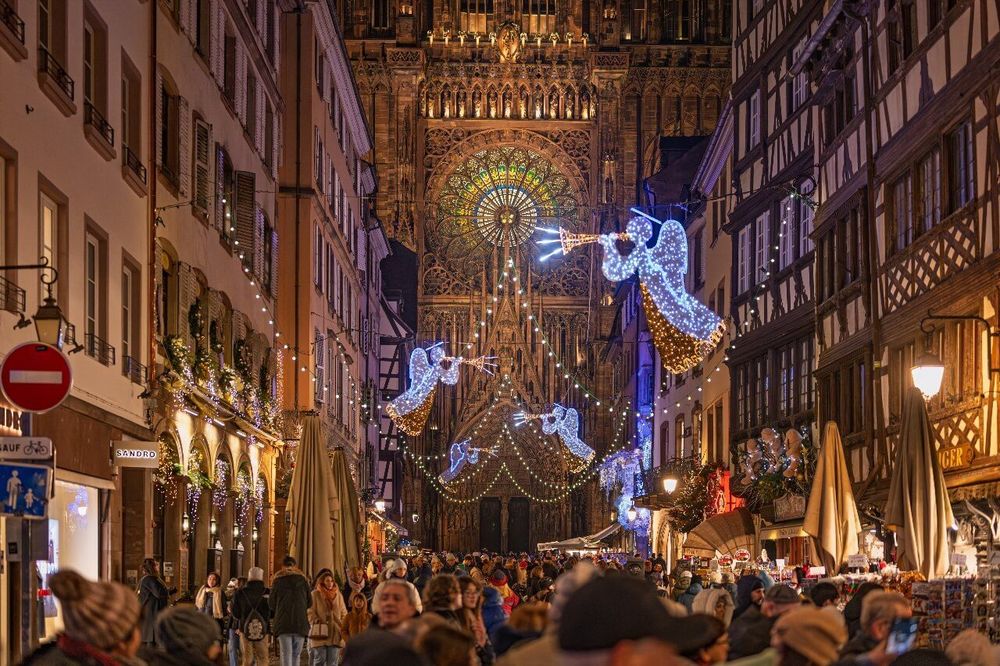
Lined with lime trees and townhouses, this elongated square hosts Strasbourg's famous Christmas market every winter, a Germanic tradition dating back to 1570 and, for a long time, unique in France. It carries on a medieval market, the Klausemärik, held ahead of Saint Nicholas's day on 6 December, when that saint was traditionally said to bring children their gifts. Out of season, it's hard to picture the lights that will soon transform it.
Free entry
12 - Strasbourg Opera House
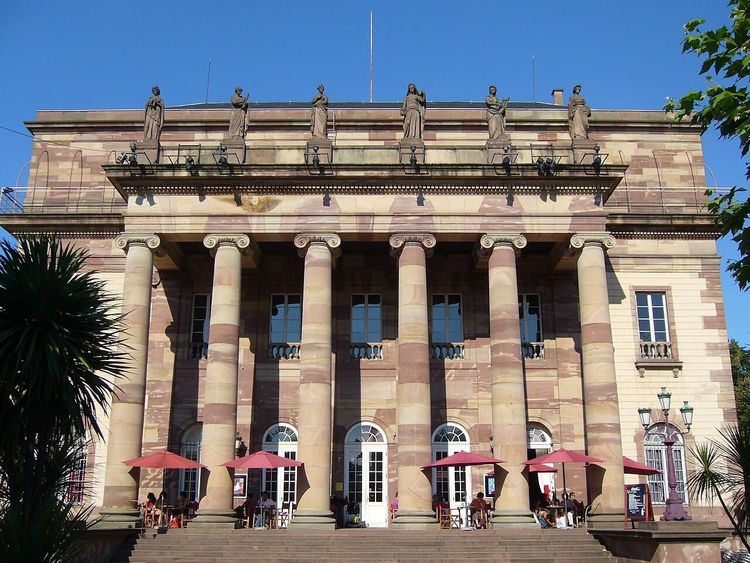
At the far end of this vista stands the Opéra du Rhin, a stage shared by Strasbourg, Colmar and Mulhouse. Its architecture follows the sober classical style of French theatres, enlivened by a columned peristyle crowned with 6 muses, completed in 1821. Before then, French performances were held in a former oat store, German ones in the drapers' house. The venue now holds the rank of national opera.
Free to see from outside
13 - Janus Fountain
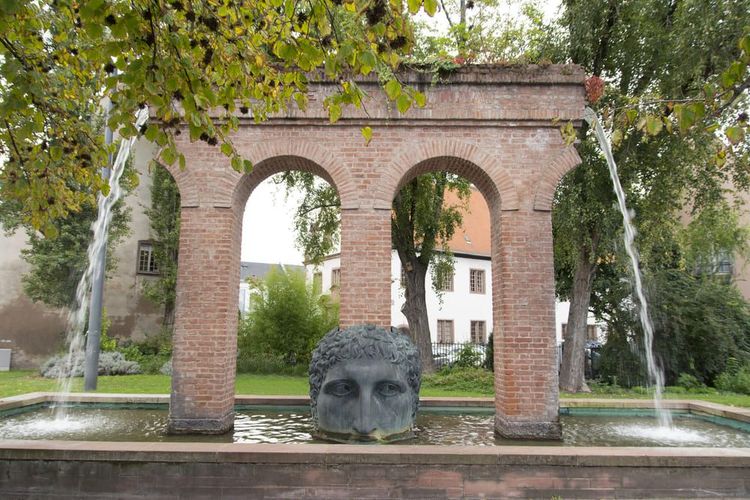
This charming fountain celebrates the city's 2000th anniversary through Janus, the Roman god of beginnings, whose name gave us the month of January. Its 2-faced head, cast in Germany, gazes in opposite directions at once, one side turned toward the old town, the other toward the newer district built by the Germans. An engraved arch, meanwhile, recalls Strasbourg's Roman origins.
Free entry
14 - Republic square
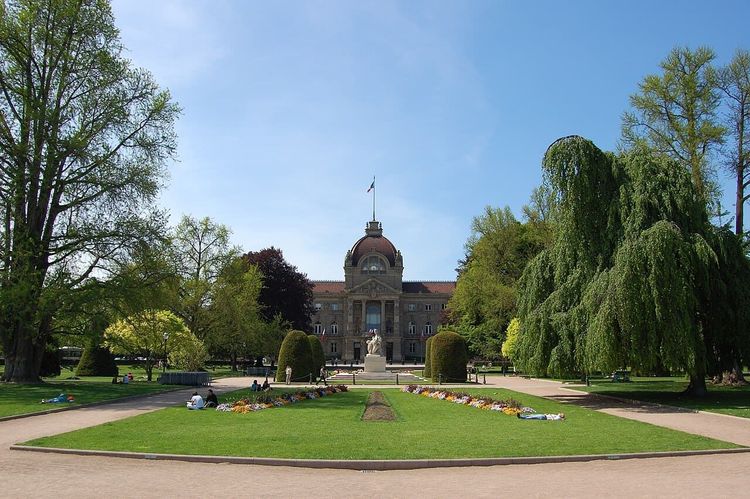
This broad, park-like space was designed as the political heart of the new city the Prussians envisioned after France's defeat in 1870. Then named Kaiserplatz, the Emperor's Square, it was meant to turn Strasbourg into the showcase capital of a freshly annexed region. The surrounding Neustadt district, with its wide avenues and grand buildings, was built entirely to display imperial power and wealth.
Free entry
15 - View from Fonderie Bridge
From this bridge, inaugurated in 1893 and crossing the water in a single elegant 24-metre arch, the view opens onto the nearby courthouse and a Catholic church close by, crowned with Alsace's largest dome in pink and red brick. Pink sandstone lions guard its ends, and have earned the bridge an amusing local nickname, the 'poodle bridge', one its residents might gladly have avoided.
Free entry
16 - Protestant Church of Saint-Pierre-le-Jeune
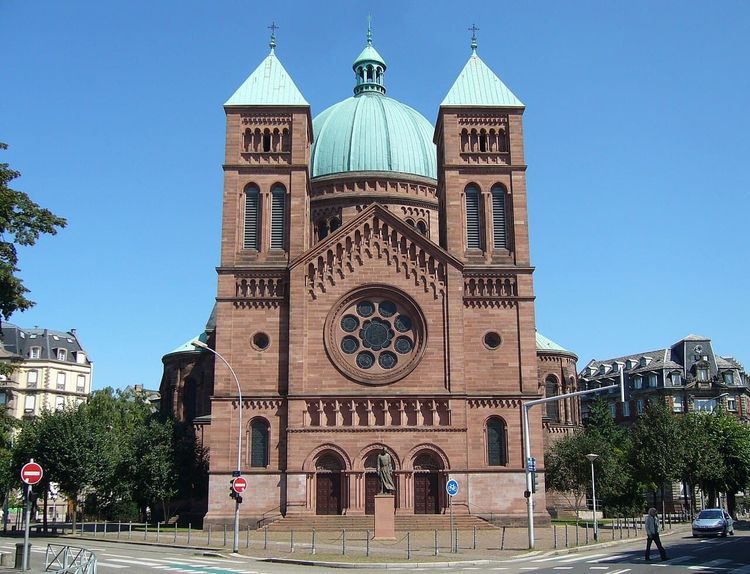
Before its Catholic namesake was built, this building served both faiths at once. Its story begins with a modest wooden Merovingian chapel, raised by Irish monks in the late 7th century outside the city walls, for the use of peasants and servants. In the 11th century, Bishop Guillaume had a Romanesque collegiate church built here, dedicated to Saint Peter and named 'the Younger', since the city already had another, later known as Saint-Pierre-le-Vieux.
Free entry
17 - Kléber Square
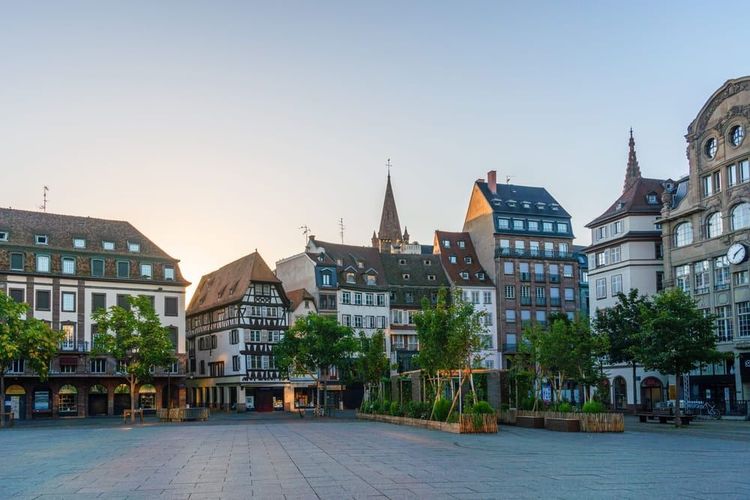
This square, stage for Strasbourg's great gatherings, from sporting celebrations to protests, honours General Kléber, assassinated during the Egyptian campaigns: a tiny sphinx even sits at the foot of his statue. Once a parade ground ringed by military buildings, it's dominated to the north by the Aubette, so named because orders were once issued there at dawn, carved from the same pink sandstone as the cathedral.
Free entry
18 - Galeries Lafayette
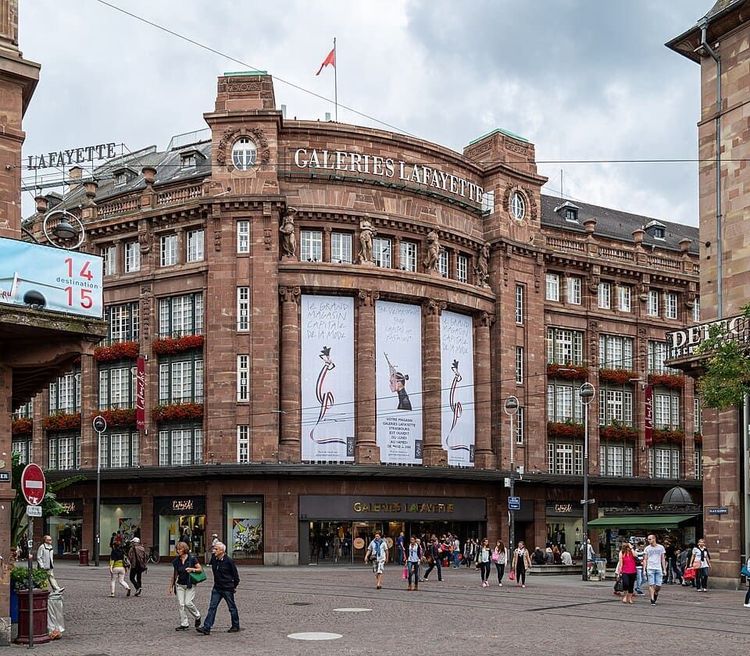
Behind this imposing façade lies a department store whose history goes well beyond shop windows. Built while Strasbourg was capital of the Reichsland, it was first named Kaufhaus Modern; construction finished as early as 1913, yet the building spent 5 years storing food supplies before truly opening for business in 1919, just after the war. In the 19th century, a store of this scale was still a novelty eagerly awaited by residents.
Free entry
19 - Grand-Rue: Strasbourg’s main shopping street
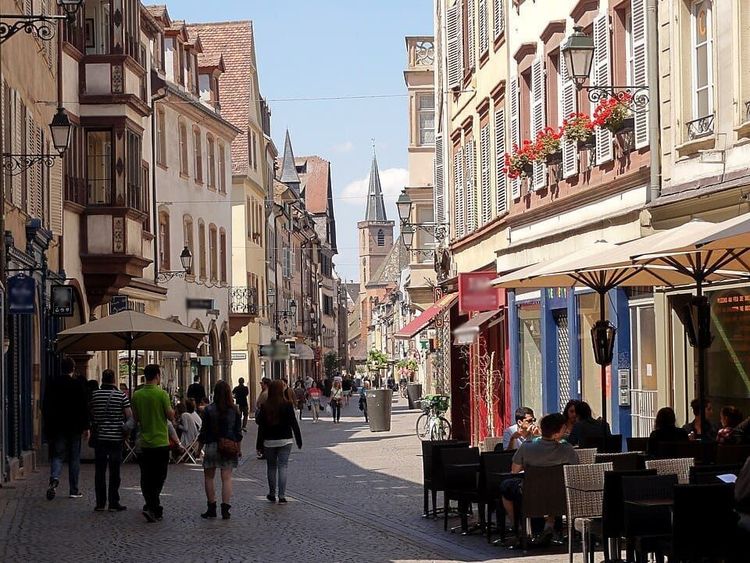
This historic thoroughfare follows the route of an old Roman road that once linked Strasbourg to Saverne. It was split in 2 during the 1920s by the Grande Percée, an urban project meant to clean up a city centre still medieval despite the town's doubling in size: narrow lanes, poverty and damp still lingered there, at a time when public hygiene finally became a pressing concern after the 1870 defeat.
Free entry
20 - Petite France: Little France
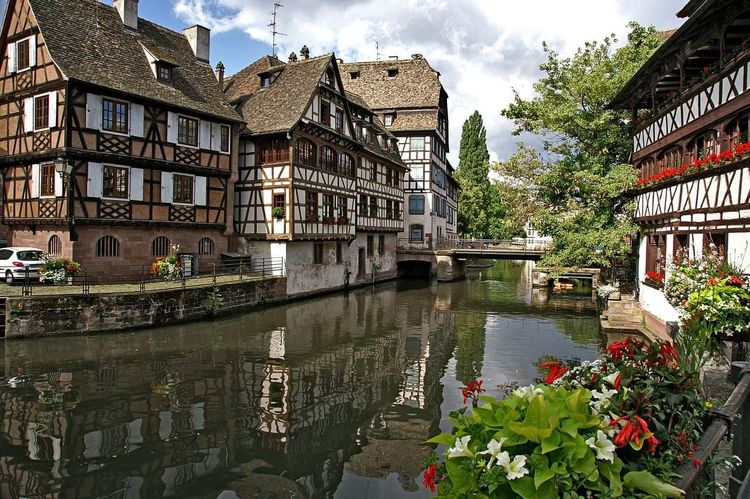
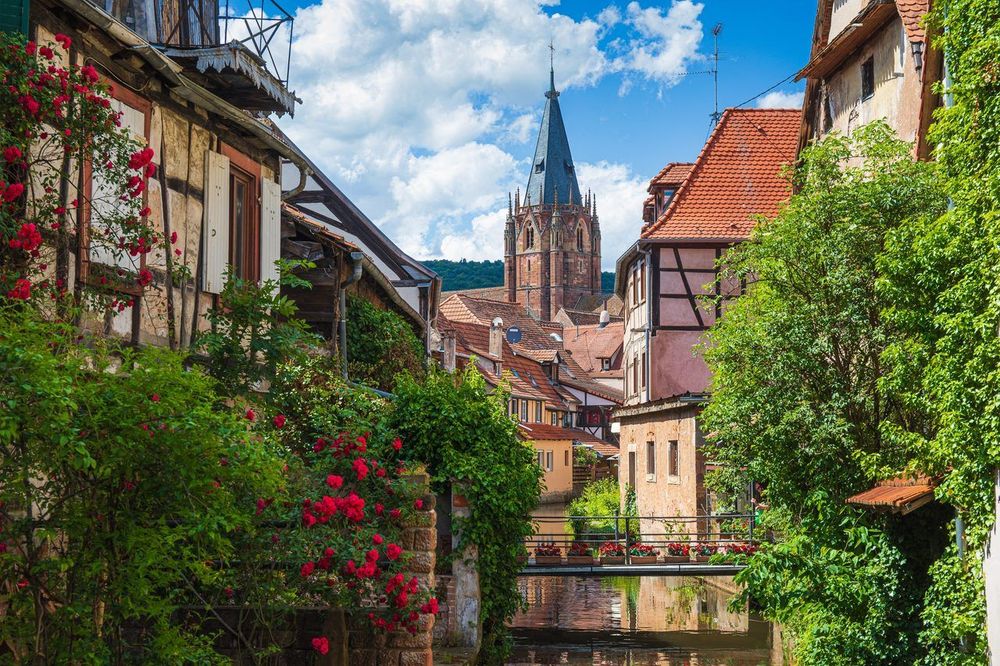
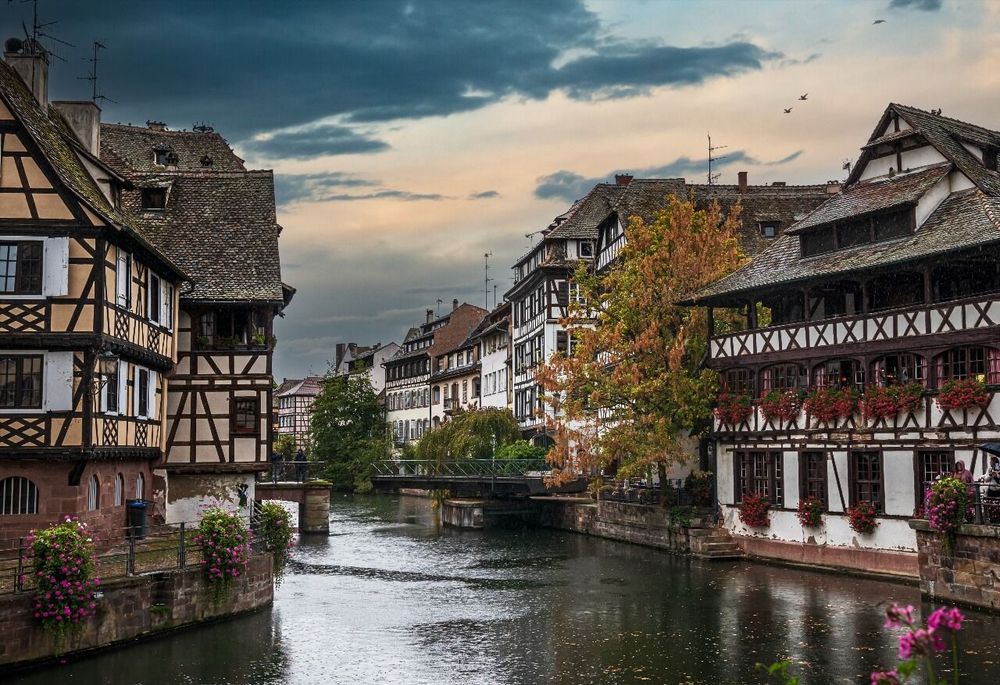
Here is the postcard image of Strasbourg, though the origin of its name is far less charming than the district itself. It dates back to 1492, the year Columbus reached the Americas: the returning colonists also brought back a terrible epidemic, syphilis, which each side blamed on the other. The French called it the Naples disease; here, in a city not yet French, it was instead nicknamed the French disease.
Free entry · Best early in the morning
21 - Maison des Tanneurs: The Tanner’s House
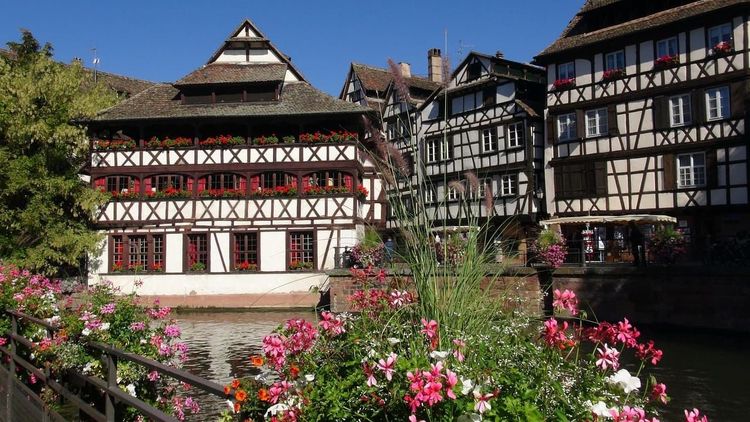
In the Middle Ages, this district was home to millers and tanners, who made good use of the many river channels here. Built in 1572, during Strasbourg's Renaissance, this listed half-timbered house still keeps its 2 floors topped by ventilated attics, once ideal for tanning leather and drying hides, despite a smell that kept the neighbourhood unpopular. Since 1949 it has housed a traditional Alsatian winstub, proof that places can always reinvent themselves.
Free to see from outside
22 - National Institute of public service
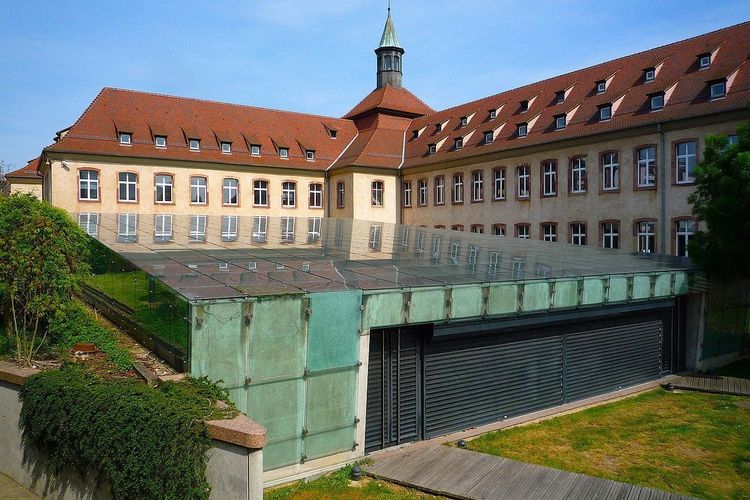
Behind you, a contemporary building faces the former Sainte-Marguerite prison: together they now house a leading school of public administration, created in 2022 to succeed the ENA. What matters most, though, is what this ground has lived through: marshland, then a convent, then a commandery run by a religious and military order, then a modest hospital specialising in treating syphilis, before taking on its current role.
Free to see from outside
23 - Panoramic views from the Dam terraces
The terraces built atop the Vauban Dam offer a striking panorama: the half-timbered rooftops below, the covered bridges standing out against the Grande Île, and the cathedral peeking above the Alsatian skyline. The walkway, freely open daily from 6 am to 9 pm, hosts temporary exhibitions and keeps several original cathedral statues on display year-round. Roof access varies with the season but generally stays open for much of the day.
Free entry
24 - Vauban Dam
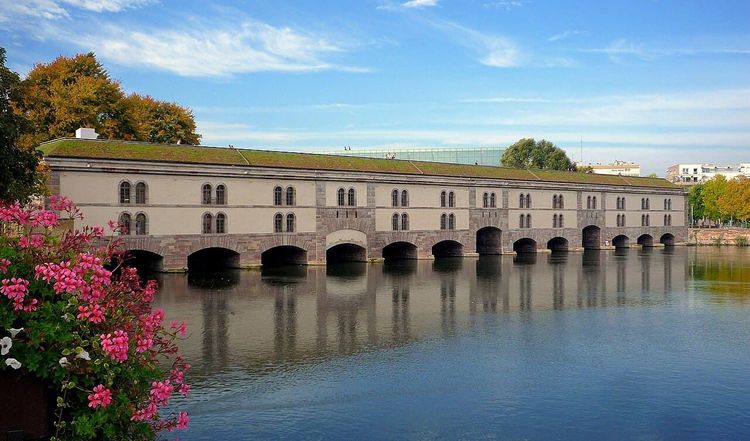
This dam takes its name from the military engineer Vauban, tasked with strengthening Strasbourg's defences as soon as the city became French. He had a vast enclosure wall built around the town, completed by this structure designed to back up the nearby covered bridges, whose original fortifications were already showing their age against new siege techniques of the era.
Free entry
25 - The Covered Bridges
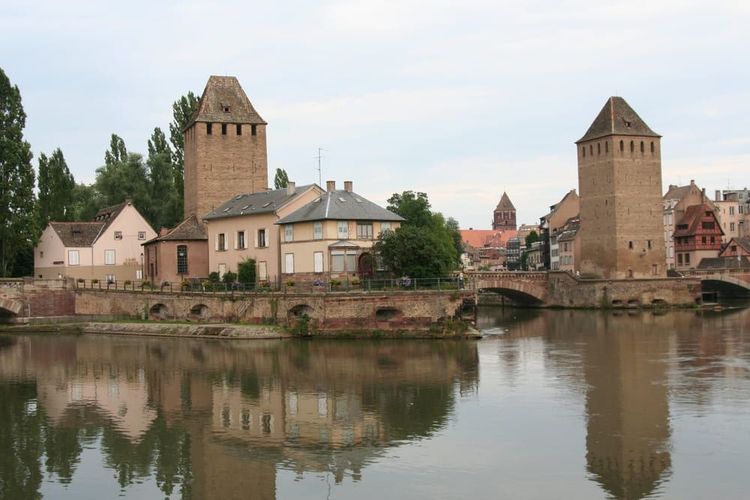
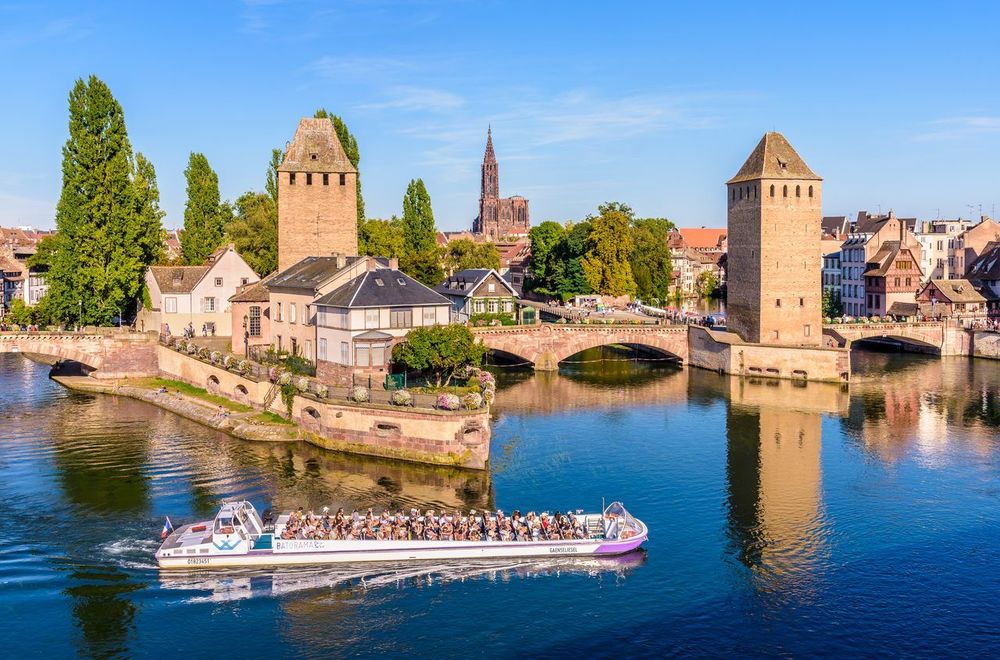
These 3 imposing towers, remnants of a city wall that once counted 90 of them, date back to the 14th century, when Strasbourg was a wealthy, independent city minting its own currency. The bridges they still watch over lost their roofing as early as 1784, yet the name 'covered bridges' stuck, proof that a good name can outlive the reality it once described.
Free entry
26 - Pheasant Bridge
Nicknamed the swing bridge, this small structure of steel and wood, built in 1888 and upgraded in 1999 with a hydraulic system, still pivots to let barges and boats pass. Along the way, it offers one of the most picturesque views over La Petite France, sharing, like the rest of the district, its listing as a UNESCO World Heritage site.
Free entry
27 - Anciennes-Glacières footbridge
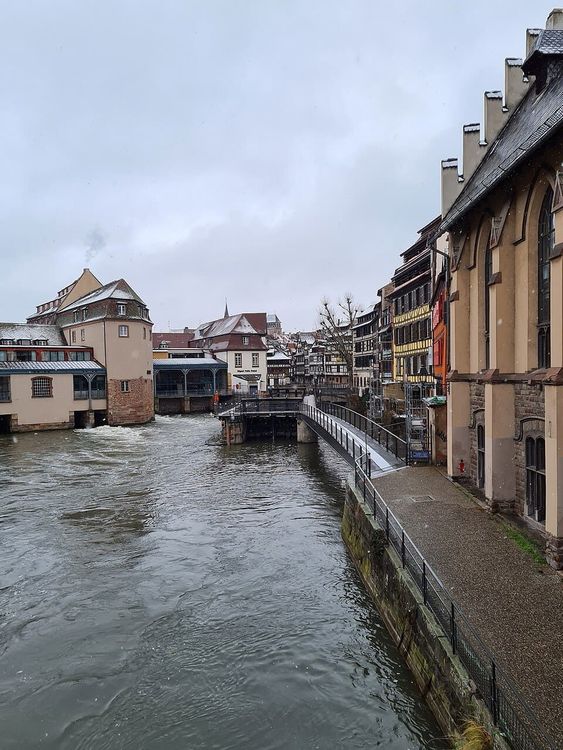
This footbridge owes its curious name to the cluster of buildings behind you, recognisable by the tower marked 'Hôtel': the city's former ice houses. They stood at a strategic spot, where the current of the Ill runs strongest, an advantage that mills had already exploited here before them to produce the ice once needed to preserve food.
Free entry
Understand the name of the Passerelle des Anciennes-Glacières
28 - Protestant Church of Saint-Thomas
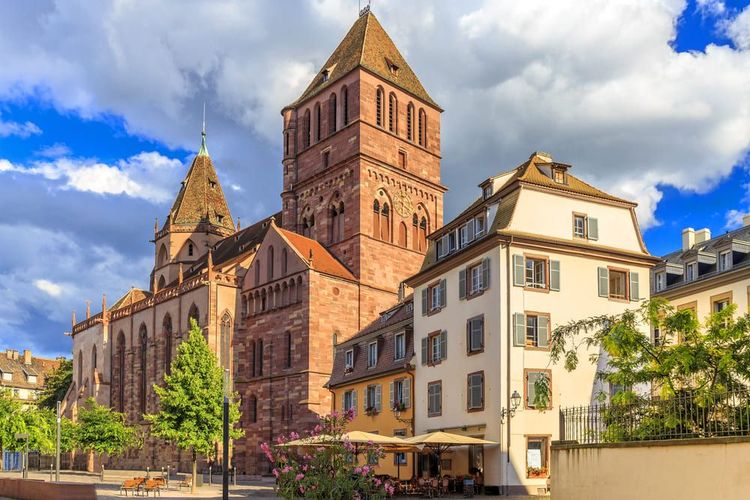
The cathedral isn't Strasbourg's only Gothic treasure: this Protestant church, whose construction began in the 11th century, beautifully showcases Alsatian know-how in the style. Rebuilt several times after the fires and conflicts that have marked its history, it holds a singular place among the city's religious buildings, for both its architecture and its age.
Free entry
29 - Gutenberg Square
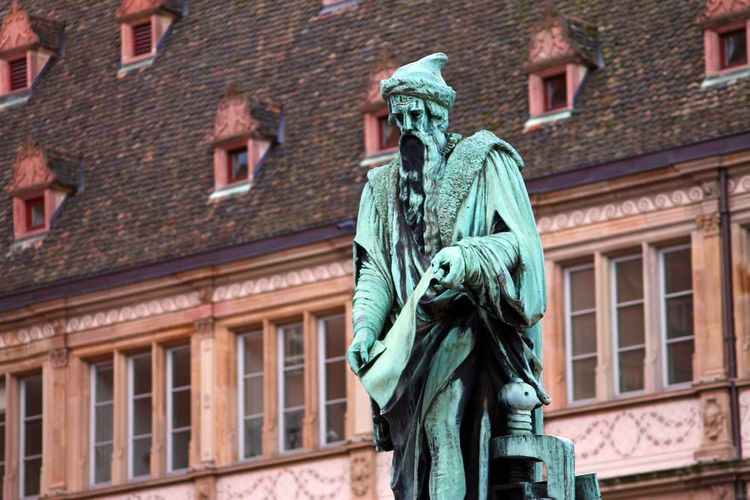
Laid out around 1100, this square ranks among the oldest in Strasbourg and served for centuries as its historic centre, until the Revolution shifted things elsewhere. It is lined by a magnificent Renaissance building, the Chamber of Commerce and Industry, easily recognised by the small dormer windows along its roofline and by the 2 flags that fly above its entrance.
Free entry
30 - View on the cathedral
The cathedral is so massive that it is hard to step back far enough to admire it as a whole. From the end of Rue Mercière, however, the angle becomes perfect: one of the rare spots from which a single photograph can capture the full scale of Strasbourg's Notre-Dame. A short detour that more than rewards the extra steps it takes.
Paid entry (about €10)
31 - Musée alsacien: Alsatian museum
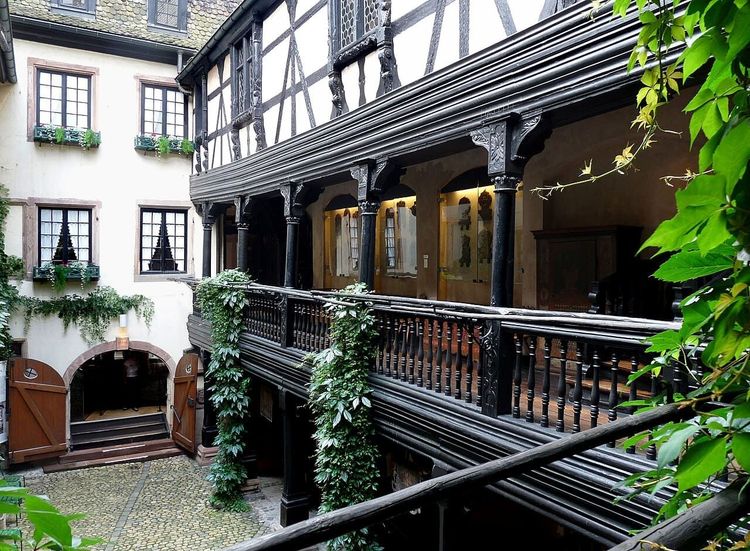
Opened in 1907 on Quai Saint-Nicolas, this museum occupies 3 houses of typically Alsatian architecture. Its vast collection traces the everyday life of the region's inhabitants across the centuries, from traditional costumes to craftsmen's tools and folk musical instruments. A moving glimpse into the daily life of a rural Alsace that has since disappeared.
Paid entry (about €9)
32 - The shells of Starsbourg
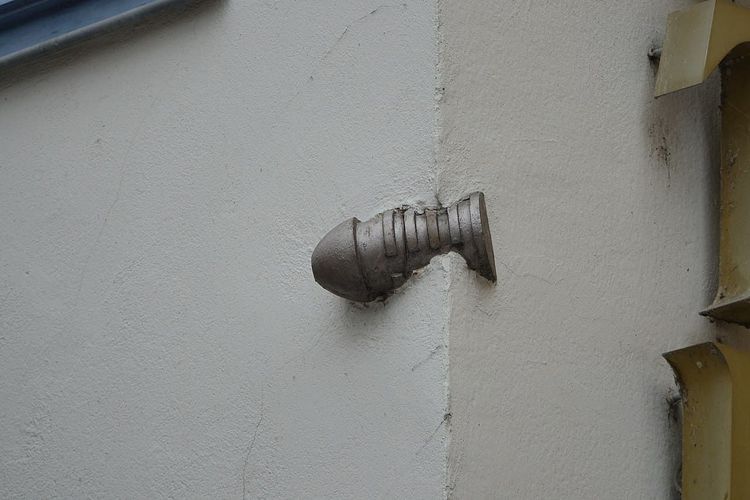
On the corner with Rue d'Austerlitz, the façade of the brasserie 'Au Canon' bears a curious shell, as if frozen mid-flight. 8 of them are scattered across the city in total: projectiles from the 1870 war against Prussia, found and defused, which Strasbourg residents chose to display on their walls as symbols of resilience rather than simply discard.
Free entry
What to do in Strasbourg in 2 or 3 days?
This 6.6 km loop links 32 sights in about 2 h 40, from Corbeau Square to the cathedral and Little France. With 2 or 3 days to spare, Strasbourg opens up further, between Franco-German history and European institutions.
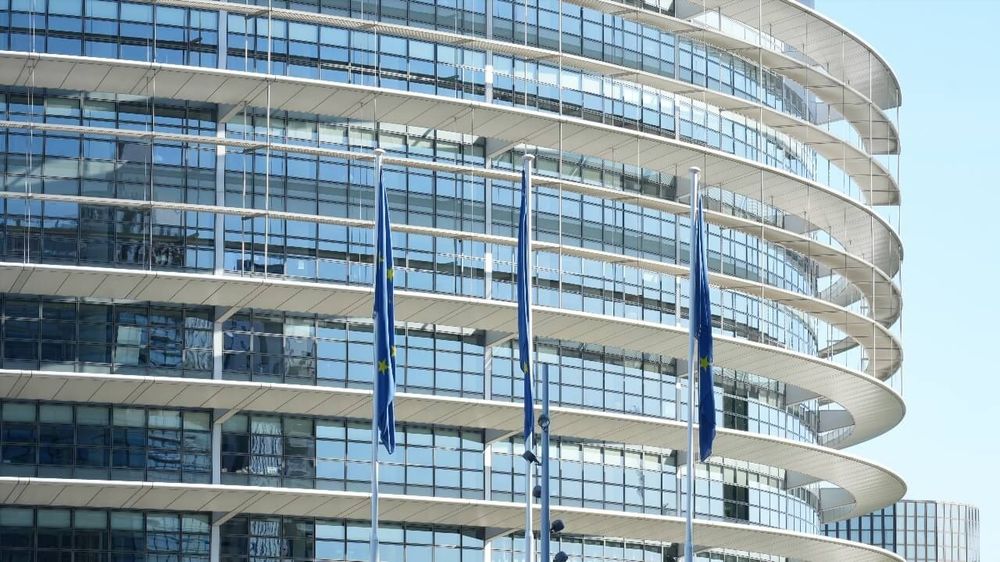
The next day, head for the European quarter, away from the loop: the European Parliament opens its doors to the public free of charge, from the Simone Veil Parlamentarium, devoted to the building of Europe, to the 750-seat chamber, where you can sometimes watch a plenary session.
A third day, the only one that calls for a short tram ride, leads to the quiet banks of the Jardin des Deux Rives, east of the city: our guide to visiting Strasbourg in 3 days covers the whole stay.
Which neighbourhoods does the tour cross?
Looped into one walk, the route crosses districts that each tell a page of Strasbourg's Franco-German history.
It starts at Corbeau Square, follows the Ill to the cathedral and the Rohan Palace, skirts the Quai des Bateliers, then reaches Kammerzell House and the Temple Neuf (stops 1 to 10).
Next comes a detour into the Neustadt, the German imperial quarter built after 1871 around Broglie Square, the Rhine Opera House and Republic Square, before heading back past Kléber Square, the Galeries Lafayette department store and the Grand'Rue (stops 11 to 19).
The last stretch dives into Little France and its canals, runs along the Vauban Dam and the covered bridges to Saint-Thomas church, then returns past Gutenberg Square and the Alsatian Museum, close to the starting point (stops 20 to 32).
What to see in Strasbourg in 2 hours?
Short on time? Keep the first five stops: all tucked between the Ill and the cathedral, a few steps apart.
Start at Corbeau Square, where a flower-decked bridge once hosted public executions, then follow the Ill to the old customs house and the Grande Boucherie, the latter now home to the history museum. A little further on, Place du Marché aux Cochons de Lait lines up its old houses, before the Notre-Dame Cathedral raises its pink sandstone spire. Right beside it, the gingerbread-shaped houses of the Œuvre de Notre-Dame Museum stand next to the Rohan Palace and its 3 museums.
How much does it cost to visit Strasbourg?
Of the 32 stops on the route, 24 are free to visit and 5 can only be admired from the street, such as Kammerzell House or the Rhine Opera House. The other 3 can also be seen for free, but each offers an optional paid visit:
- the Œuvre de Notre-Dame Museum, €9;
- climbing to the cathedral's platform, €10;
- the Alsatian Museum, €9.
To enter the Rohan Palace's three museums, the Rohan Palace Pass costs €20 for a day and also covers the Heitz Gallery. To keep going without spending anything, our guide to free activities in Strasbourg lists the other good options.
Information checked in November 2026 and subject to change.
Where to stop for a bite along the tour?
The route runs past several places to eat, from an Alsatian winstub to neighbourhood tea rooms.
At the Maison des Tanneurs (stop 21), an Alsatian winstub has served choucroute, flammekueche and coq au riesling since 1949, inside a half-timbered house dating from the 16th century. Near Kléber Square (stop 17), the streets of the Carré d'Or are packed with pastry shops and tea rooms, the place to try a kougelhopf or a still-warm pretzel.
For something sweet, the braided linzer torte hides a redcurrant or raspberry filling, and crémant d'Alsace pairs just as well with choucroute as with a round of pretzels. Our selection of Strasbourg's culinary specialities covers the rest of the local classics.
What to do in Strasbourg with children?
Strasbourg works well for a family outing, between a park, a playful museum and a boat ride.
Along the way, the Janus Fountain sits next to the Tomi Ungerer Museum, where drawings for children and mechanical toys trace the work of the Strasbourg-born illustrator.
Away from the route, the Orangerie Park is home to free-roaming storks and a lake with rowing boats, plus a playground that comes in handy once the kids are worn out. Boat trips on the Ill also suit younger visitors and people with reduced mobility well: our guide to boat trips in Strasbourg covers the different routes.
What should you know before visiting Strasbourg?
Two sets of opening hours are worth knowing if you set off late in the day.
The Vauban Dam closes at 7 pm; after that, the route continues across the covered bridges instead. Climbing to the cathedral's platform follows its own seasonal hours: last climb at 7:15 pm from April to September, 5:15 pm the rest of the year.
Little France, busy during the day, feels calmer early in the morning or late in the day.
What to see around Strasbourg?
Strasbourg makes a good base for day trips, between half-timbered Alsatian villages and neighbouring towns worth exploring on foot in turn.
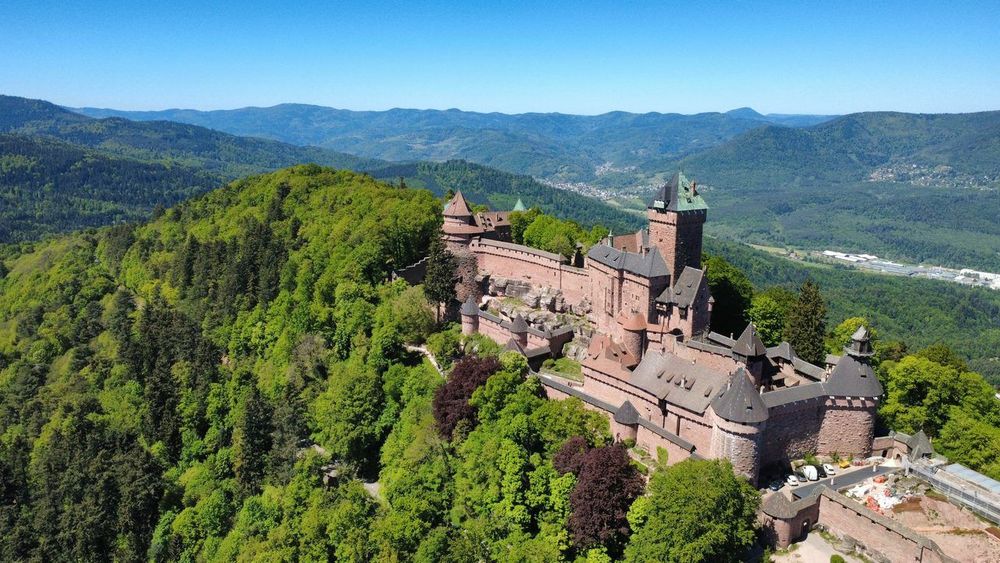
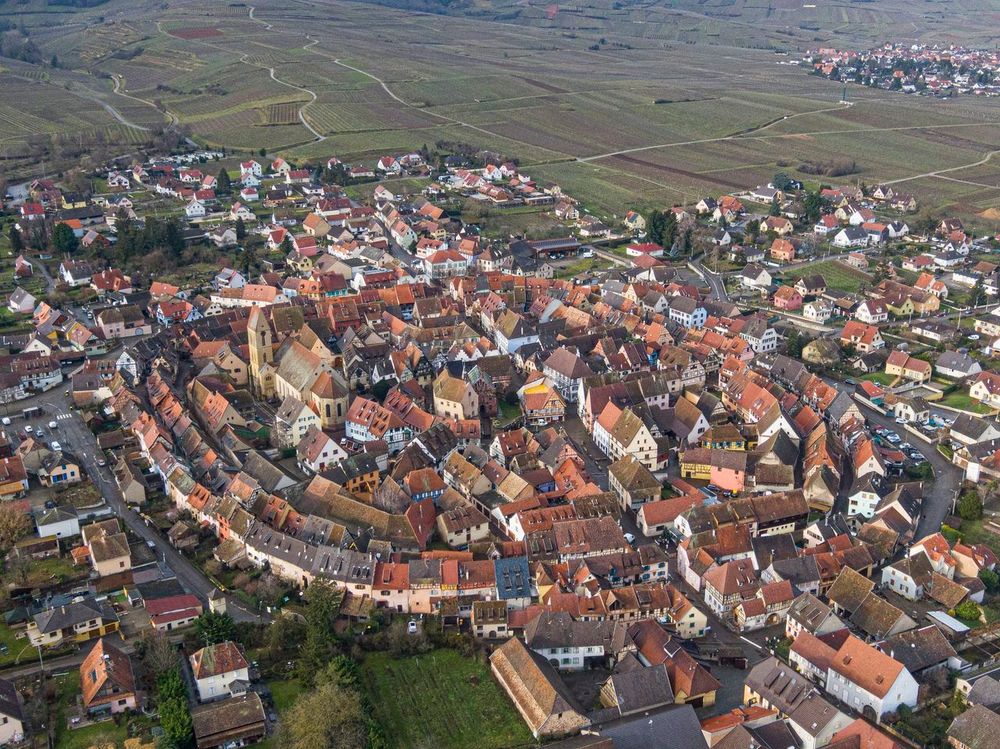
A few dozen kilometres away, the villages along the Wine Route change the scenery entirely: Riquewihr has come through the centuries almost untouched, Eguisheim's circular street wraps around the old castle where the future Pope Leo IX was born in 1002, and the ramparts of Obernai, 30 km to the south, still encircle the historic centre. Our selection of the most beautiful villages around Strasbourg covers 22 of them.
Several neighbouring towns also have their own audio-guided route: Colmar, 63 km away, unrolls its Rhenish Renaissance and its Little Venice; Basel, 115 km away, blends history and Swiss culture on the banks of the Rhine; Nancy, 116 km away, lays out its classical squares and gilded ironwork.
What's on in Strasbourg right now?
As the year winds down, one event sets the pace of life in Strasbourg.
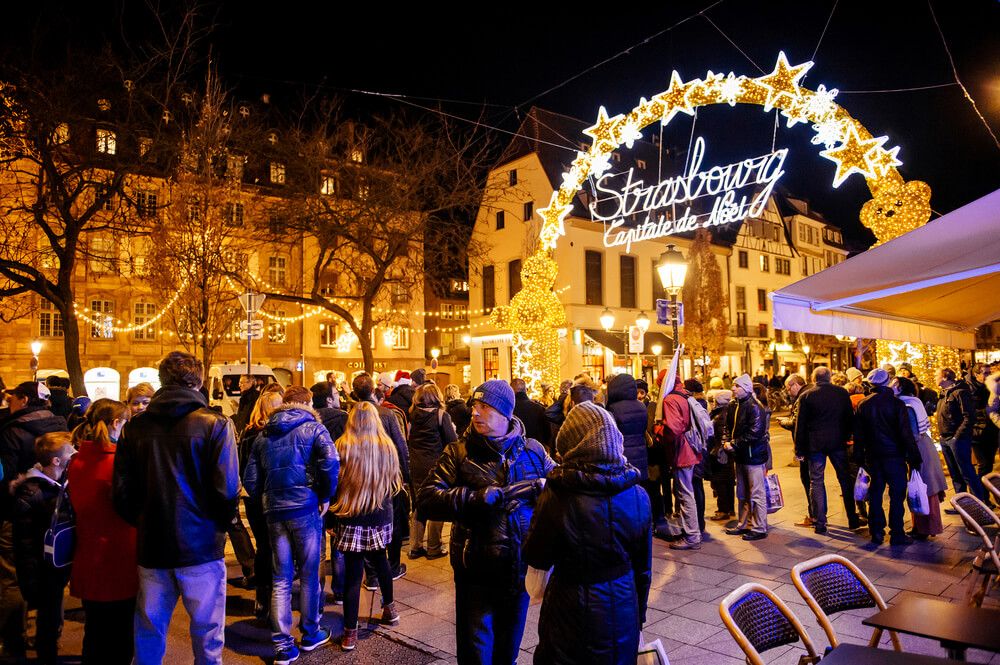
From 27 November to 24 December, the Christmas market fills about a dozen sites across the city: Broglie Square with its Christkindelsmärik, Kléber Square under its big fir tree, Cathedral Square or Little France, amid lit-up chalets, mulled wine and gingerbread. Our selection of Strasbourg's biggest events covers the rest of the year's dates.
Information checked in November 2026 and subject to change.
Le plein d'inspirations
Explorez le monde en totale liberté, à pied au cœur des villes ou au fil des routes. Nos guides audios transforment chaque destination en une découverte culturelle immersive et unique.
FAQ for visiting Strasbourg
When is the best time to visit Strasbourg?
Strasbourg is a pleasure to visit from May to September, when temperatures hover around 25°C and the sun lights up the half-timbered facades. It is the ideal moment to stroll along the canals and enjoy the outdoor terraces. December is a magical time thanks to the famous Christmas market, even though temperatures swing between -1°C and 5°C. The city's semi-continental climate brings warm summers perfect for wandering and cold but festive winters. If you can, avoid the rainy spring months and the sometimes unpredictable autumn so you can make the most of Strasbourg's charm.
How many days do you need to visit Strasbourg?
Two to three days is an ideal length of time to discover Strasbourg without rushing. Over a long weekend, you will have time to explore the Gothic cathedral, lose yourself in the picturesque lanes of La Petite France and soak up the unique atmosphere of this European city. An extra day will let you visit the European institutions or take a trip out to the surrounding Alsatian villages. For an in-depth stay including the museums and a cruise on the Ill, plan on four days. The Ryo audioguide helps you make the most of your time with a narrated route that covers all of the city's must-see sights.
How do you get to Strasbourg?
Strasbourg enjoys excellent transport links thanks to its high-speed TGV station, which connects it to Paris in under two hours and to Lyon in roughly four hours. Strasbourg-Entzheim international airport, located about fifteen kilometres from the city centre, handles both domestic and European flights. A shuttle train links the airport to the central station in just a few minutes. By car, the city is reached via the A4 motorway from Paris and the A35, which crosses Alsace from north to south. Once you arrive, the extensive tram network and the many cycle paths make it easy to get around this city firmly committed to gentle mobility.
What is there to do in Strasbourg with children?
Strasbourg delights families with its many activities suited to younger visitors. Climbing up to the cathedral platform offers a spectacular view that amazes children and adults alike. The La Petite France district, with its colourful houses and canals, looks like a fairy-tale setting. Boat cruises on the Ill captivate children while showing them the city from a different angle. The Orangerie park, with its playgrounds and its small free zoo, makes for a much-appreciated break in nature. The Ryo audioguide offers accessible commentary that lets families discover Strasbourg in a fun way while keeping younger visitors engaged.
Where should you eat in Strasbourg and which specialities should you try?
The winstubs, those typical Alsatian taverns, welcome you in a warm atmosphere to sample the local specialities. Garnished sauerkraut, baeckeoffe and flammekuche are staples of Strasbourg gastronomy. In the Cathedral district and around the Place du Marché aux Cochons de Lait, you will find many authentic addresses. The restaurants of La Petite France offer a romantic setting with a view over the canals. Be sure to try munster, the local cheese, and bredele, the traditional little cakes. To accompany your meal, Alsatian wines such as riesling or gewurztraminer perfectly enhance the regional cuisine.
How can you visit Strasbourg for free?
Strasbourg offers many ways to explore without spending a euro. Notre-Dame cathedral can be visited free of charge; only climbing to the platform requires a ticket. Strolling through La Petite France, admiring the half-timbered houses and walking along the quays costs nothing and already makes for a wonderful immersion. The Orangerie park and its gardens are free to enter, as are the traditional markets that bring the city to life. Many historic churches open their doors free of charge. The Ryo audioguide represents a minimal investment that considerably enriches your visit with historical and cultural commentary, all while keeping your freedom of movement and your budget under control.
Do you need to book in advance to visit the European institutions?
Visiting the European Parliament does indeed require a prior reservation, usually several weeks in advance depending on the period. Individual visits are possible, but the slots fill up quickly, especially during parliamentary sessions. The Council of Europe and the European Court of Human Rights also offer guided tours by registration. It is advisable to check the official websites of these institutions to find out the exact procedures and availability. Bring a valid form of identification for the security checks. These free visits offer a fascinating insight into how the institutions work and into Strasbourg's role as a European capital.
Where is the Strasbourg Christmas market and when does it take place?
The Strasbourg Christmas market, one of the oldest and most renowned in Europe, spreads across several sites in the historic centre. Place Kléber hosts the great Christmas tree and numerous chalets, while Place de la Cathédrale forms the historic heart of the market. Other squares such as Grimmeissen, Benjamin Zix or the La Petite France market each offer their own distinctive atmosphere. It generally runs from late November until late December, transforming the city into a truly magical Christmas village. The lights, the smells of mulled wine and gingerbread, and the local crafts create a magical atmosphere that draws millions of visitors every year.
What is there to see at Strasbourg Cathedral?
The pink sandstone façade, carved like lace, is best taken in first from the square, where the Kammerzell house answers it with its ornate half-timbering. Inside, the Renaissance astronomical clock remains the main attraction: its parade of automata is set off once a day before a packed room, and it is worth checking the time at the entrance. The medieval stained glass and the Pillar of Angels also deserve a pause.
Climbing to the platform, by a spiral staircase, opens onto the rooftops of the old town, the Petite France and, on a clear day, the Vosges and the Black Forest. The contrast between the single spire and the tower left unfinished makes far more sense from up there. The Ryo audio guide offers a dedicated Strasbourg route linking the cathedral, the Petite France and the European quarter.
Can you discover Strasbourg by boat?
Yes, and it is a very convenient way of taking in the city in a single trip. Boats leave from the quay at the foot of the Rohan Palace and follow the canal that rings the Grande Île, before passing through the locks and heading up towards the European quarter. The trip stays short and commentary is played on board in several languages.
From the water, the logic of Strasbourg becomes much clearer: the historic island encircled by the Ill, the half-timbered houses of the Petite France sitting right at the water's edge, the covered bridges and their medieval towers, the Vauban dam, then the contemporary buildings of the institutions. The boats are covered and run for much of the year; late-afternoon departures give the finest light.
What is there to do in and around Strasbourg, from heritage and museums to day trips?
La Petite France, listed by UNESCO along with the Grande Île in 1988, lines up its old tanners' houses down to the Ponts Couverts and the Barrage Vauban, whose panoramic terrace is free. The cathedral and its 142-metre spire house the astronomical clock, whose parade of apostles plays at 12.30 pm. The Palais Rohan holds three museums under one combined ticket, while the MAMCS, the Alsatian Museum and the History Museum complete the list. Beyond the city, half-timbered villages, the Vosges, Karlsruhe and Baden-Baden lie less than an hour away.
Sort through all the ideas in our guide to things to do in and around Strasbourg.
Which boat tour should you choose to cruise the Ill in Strasbourg?
Batorama, founded in 1948, carries almost 800,000 passengers a year on electric boats leaving from the Palais Rohan or the Ponts Couverts. Its Red Circuit, the most complete, lasts about 70 minutes: Quai des Bateliers, the cathedral, Petite France, the Barrage Vauban, then the European district up to Parliament, for €14 to €16 per adult. The Green, Orange and Blue circuits, around 45 minutes each, focus on Petite France, the Neustadt or the port. Batolove offers a romantic evening cruise, and hands-on workshops cater to families. Book online from May to September.
Compare the options in our guide to boat trips in Strasbourg.
Which major events punctuate the year in Strasbourg?
The Christkindelsmärik, held since 1570, is the oldest Christmas market in France: it runs from late November to 24 December, free to enter, and hotels fill up fast. In May, the Europe en Fête festival celebrates the ties between EU countries with exhibitions, concerts and workshops. Chinese New Year is marked in January, born of a partnership between Alsace and Jiangsu province. In February, Strasbourg Mon Amour offers ten days of romantic festivities, and Easter, in April, is the other great Alsatian celebration.
Time your trip with our pick of the best events in Strasbourg.
Which Alsatian villages are worth visiting from Strasbourg?
The selection covers 22 villages within 20 to 120 km. Riquewihr, almost untouched since the 16th century, takes 1.5 to 2 hours to explore, ideally on a weekday before 10 am. Eguisheim, the only village in Alsace with a circular layout, was the birthplace of Pope Leo IX. Kaysersberg, overlooked by its Habsburg castle, is home to Albert Schweitzer's birthplace. Obernai, just 30 km away, keeps 3 km of ramparts and a Renaissance market square. Hunspach, with its whitewashed houses, and Neuf-Brisach, a UNESCO-listed Vauban fortress, complete the picture.
Pick your stops from our selection of the most beautiful villages around Strasbourg.
What is a visit to the European Parliament in Strasbourg like, during or outside sessions?
Entry is free and individual visitors don't need to book. Head to the Louise Weiss building at 1 allée du Printemps, not to be confused with the Council of Europe's Palais de l'Europe. Outside sessions, the 750-seat chamber can be explored independently from Monday to Saturday, with free 45-minute guided tours and the Parlamentarium Simone Veil. Parliament sits only about 12 weeks a year, Monday to Thursday: public galleries are then free but limited, and Tuesdays and Wednesdays bring the busiest debates.
Plan your visit with our guide to visiting the European Parliament in Strasbourg.
How can you celebrate New Year's Eve in Strasbourg?
The Christmas atmosphere lasts until 31 December. Place Kléber is the heart of the evening: several thousand people gather around the illuminated Christmas tree to raise a glass at midnight, with street concerts and DJ sets, though there is no official municipal fireworks display. The illuminated Petite France invites you to dine in a winstub on sauerkraut, tarte flambée or bredele biscuits, while the Barrage Vauban looks out over the district and the cathedral. The cathedral, dressed in lights, can be climbed via 332 steps, right next to the Maison Kammerzell.
Plan your evening with our guide to New Year's Eve in Strasbourg.
Which traditional dishes should you try during a stay in Strasbourg?
Strasbourg's hearty cuisine, shaped by German and Austrian flavours, is best discovered dish by dish. Flammekueche, or tarte flambée, combines onions, bacon and crème fraîche on a thin base. Pretzels, made from a salted, poached dough, are sold in every bakery, while the knack sausage is eaten on the go with mustard. Choucroute garnie, baeckeoffe marinated in white wine, fleischkiechles and spätzle make up the main courses. For something sweet, there is kougelhopf with raisins and almonds, and as a snack, bibeleskäs, fromage blanc mixed with cream.
Whet your appetite with our top 10 Strasbourg culinary specialities.
What is there to see in the Neustadt, Strasbourg's German quarter?
Built after the war of 1870, when the German Empire wanted to turn Strasbourg into a showcase of its power, the Neustadt covers more than 300 hectares and nearly 12,000 buildings, listed by UNESCO. The official buildings date from 1880 to 1900. Around Place de la République stand the Palais du Rhin, a former imperial residence, the National and University Library beneath its glass dome, and the Théâtre National de Strasbourg. The 300-metre Avenue de la Liberté and Saint-Paul church round off the visit.
Explore the imperial district with our guide to visiting the Neustadt.
What is the history of Strasbourg Cathedral and which details should you not miss?
Begun in 1015 by Bishop Werner of Habsburg, of whose church only the Romanesque crypt remains, the cathedral rose in pink Vosges sandstone over more than four centuries. Its spire, completed in 1439 at 142 metres, made it the tallest building in the Christian world until 1647. The west front lines up three sculpted portals around a 13th-century rose window, which Victor Hugo hailed as a 'prodigy of the gigantic and the delicate'. Inside, the 62-metre nave, the stained glass and the astronomical clock draw nearly 4 million visitors a year.
Plan your visit with our guide to Strasbourg Cathedral.
What itinerary should you follow to visit Strasbourg in 2 or 3 days?
Spend day one on foot on the Grande Île: the cathedral and its astronomical clock at 12.30 pm, the platform 66 metres up via 332 steps, the Palais Rohan and its three museums, the Maison Kammerzell, then Petite France, the Ponts Couverts and the Barrage Vauban.
Day two crosses the Neustadt to the European district, Parliament and the Orangerie park. A third day leaves time for museums and the Jardin des Deux Rives, reached by tram. The guides also cover budget, where to stay and variations for families or travellers without a car.
Follow our itineraries to visit Strasbourg in 2 days and visit Strasbourg in 3 days.
How do you plan your route between Strasbourg's different Christmas markets?
Eight official markets are spread across the centre from late November to 24 December, open roughly 11 am to 9 pm and completely free; no stalls open after Christmas. The historic Christkindelsmärik fills Place Broglie, the 'Autour de la Cathédrale' market stretches to Place du Château, and Place Kléber hosts the 25- to 30-metre Great Tree. Petite France has its own market, the Quai des Délices focuses on food and Place Louise-Weiss on local producers. Aim for 11 am to 1 pm on weekdays to avoid the 5 to 7 pm peak.
Map out your route with our complete guide to Strasbourg's Christmas markets.
Vos commentaires, idées et suggestions
Aucun avis pour le moment