© Shutterstock
 Votre guide Ryo
Visit Strasbourg in 3 Days: 2026 Itinerary
Strasbourg is not a city to rush through. From its cathedral spire piercing the Alsatian sky for eight centuries to the canals winding through the half-timbered houses of Petite France, every neighbourhood demands that you slow your pace. Three days offer exactly that luxury: time to explore the UNESCO-listed Grande Île, cross the German imperial Neustadt all the way to the European Parliament, and finish on the peaceful banks of the Jardin des Deux Rives. This guide lays out a day-by-day itinerary, with alternatives for 1, 2 or 4 days, recommendations for sleeping and eating, and all the practical details: transport, budget, best season. To extend the walk once you are there, the Ryo audio guide for Strasbourg tells the story of eight centuries of history, neighbourhood by neighbourhood, from the Palais Rohan to the European institutions, headphones on and no map needed.
Strasbourg in 3 Days: Location and Ideal Length of Stay
Strasbourg is located in the Bas-Rhin department, at the far east of France, on the banks of the Ill just a few kilometres from the German border. This cross-border position explains everything: the half-French, half-German architecture, the cuisine that blends sauerkraut with French gastronomy, and the unique status of European capital, home to the European Parliament, the Council of Europe and the European Court of Human Rights. By high-speed train, the city is about 1h50 from Paris, making it an accessible getaway for a long weekend.
How long does it take to see the city? Three days is the ideal duration to cover, at a comfortable pace, the three main poles: the historic centre of Grande Île and Petite France, the Neustadt and the European Quarter, then the museums and the banks of the Jardin des Deux Rives. Two days are enough for the most important listed heritage sites; one day alone means choosing between the cathedral and Petite France. Beyond three days, the city lends itself well to excursions along the Alsace wine route or to the most beautiful villages to visit around Strasbourg.
One detail changes everything when it comes to planning: the historic centre fits within an island roughly 1.5 km by 800 metres. You will lose almost no time in transit during the first two days, which means you can fit three or four visits a day without rushing. The third day is the only one that requires a little tram travel, to reach the Jardin des Deux Rives to the east.
This day-by-day programme is not set in stone: each step can be shortened or extended according to your pace, and the practical sections at the end of the article will help you adjust transport, budget and accommodation to suit your trip.
Day 1: Grande Île, the Cathedral and Petite France
The first day focuses on the historic heart that most visitors come to Strasbourg to see. Everything is done on foot, within a compact area centred on Grande Île, making it the most packed day but also the easiest to organise.
Strasbourg Cathedral and Its Astronomical Clock
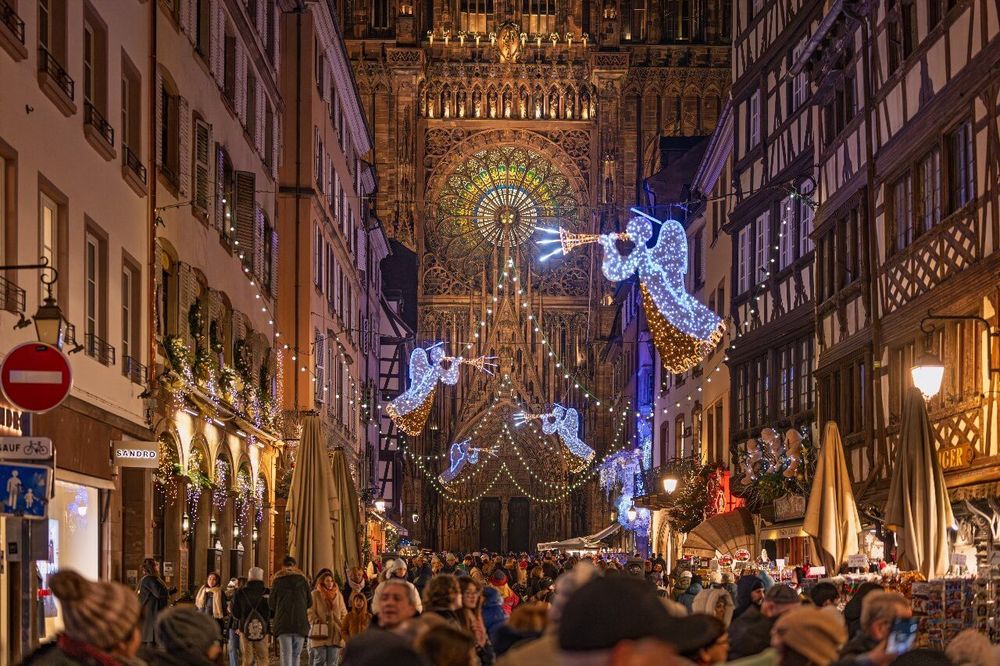
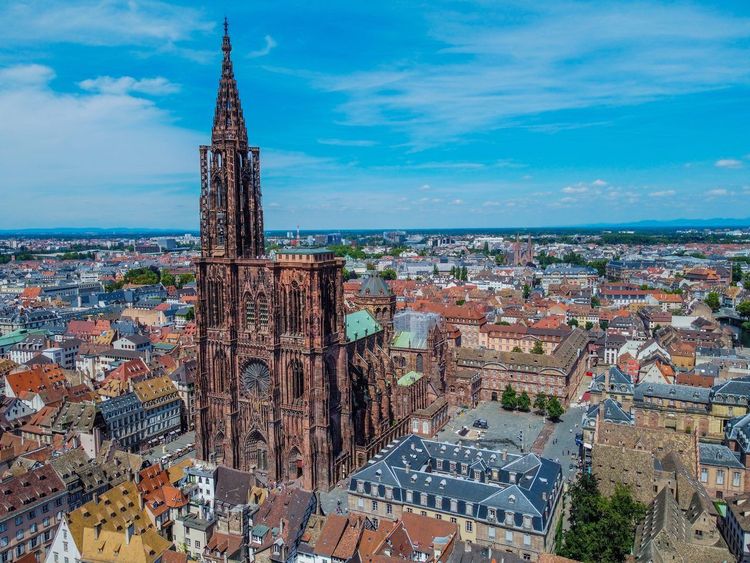
Start with Strasbourg Cathedral, whose single spire rises to 142 metres and held the title of tallest building in the world for more than two centuries, from 1647 to 1874. The Gothic façade, carved down to its finest details, deserves a long pause before you even step inside.
Inside, the astronomical clock draws crowds at exactly 12:30 pm for the mechanical procession of apostles before Christ. Built in the 16th century and fitted in the 19th century with its current mechanism by clockmaker Jean-Baptiste Schwilgué, it displays the time, date, lunar phases and even eclipses. Reserve your spot about thirty minutes before if you want a close-up view of the mechanism.
A practical tip: the nave is closed to tourists during services, and the midday slot is the busiest of the day. Arriving at opening time, around 9 am, gives you time to admire the stained glass and the Pillar of Angels in an almost monastic quiet, before heading out to join the clock queue.
If your legs are up to it, climb to the cathedral platform: 332 steps lead to a height of 66 metres, with a view that reaches the Black Forest on a clear day. It is one of the few paid viewpoints of the day, but well worth the few euros.
Palais Rohan and the Maison Kammerzell on Grande Île
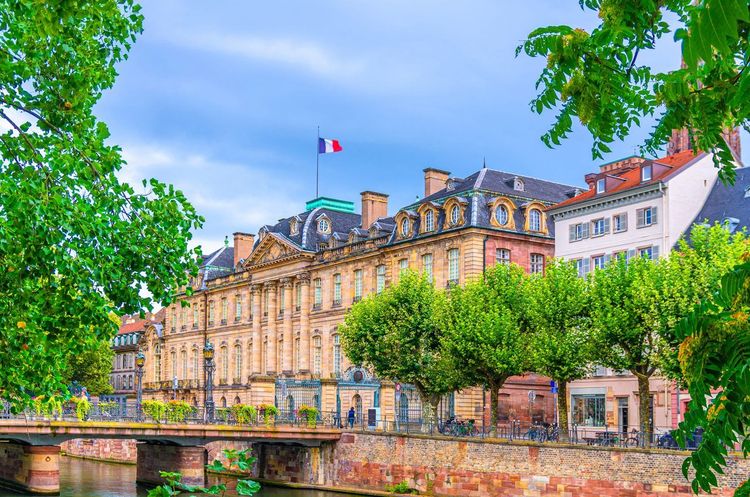
Leaving the cathedral, cross the square to the Palais Rohan, the former residence of the prince-bishops, built between 1731 and 1742. It now houses three museums (fine arts, decorative arts, archaeology) in a setting that is worth the visit in itself, with its state apartments preserved in their original condition.
Right across from the cathedral stands the Maison Kammerzell, the city's most famous half-timbered building. Its stone ground floor dates from 1467 and its three carved timber-framed upper storeys from 1589, with 75 bull's-eye windows that make the façade shimmer as soon as the sun hits it. It now houses a restaurant, but can be admired for free from the square.
Take the opportunity to stroll through the Grande Île neighbourhood, nestled between the Ill and the Faux-Rempart canal, whose ensemble was inscribed on the UNESCO World Heritage List as early as 1988 — a first for an entire city centre in France. Head over to Place Gutenberg and Place du Marché-Gayot, a tiny inner courtyard lined with café terraces that most visitors walk straight through without noticing.
Petite France and the Tanners' Quarter
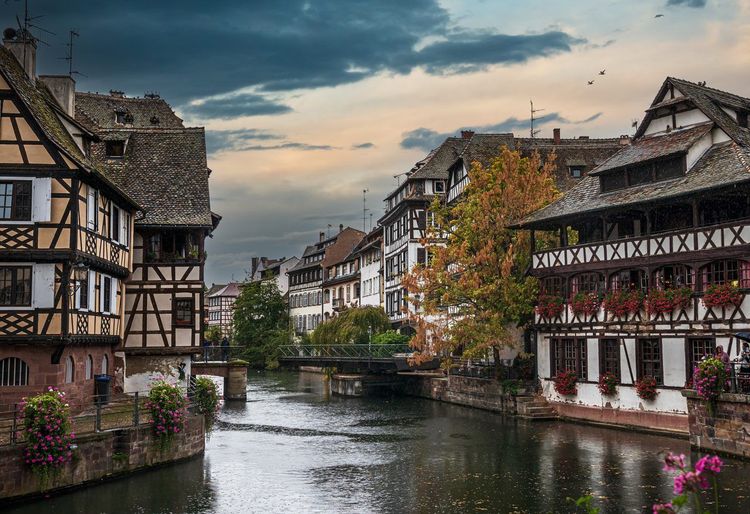
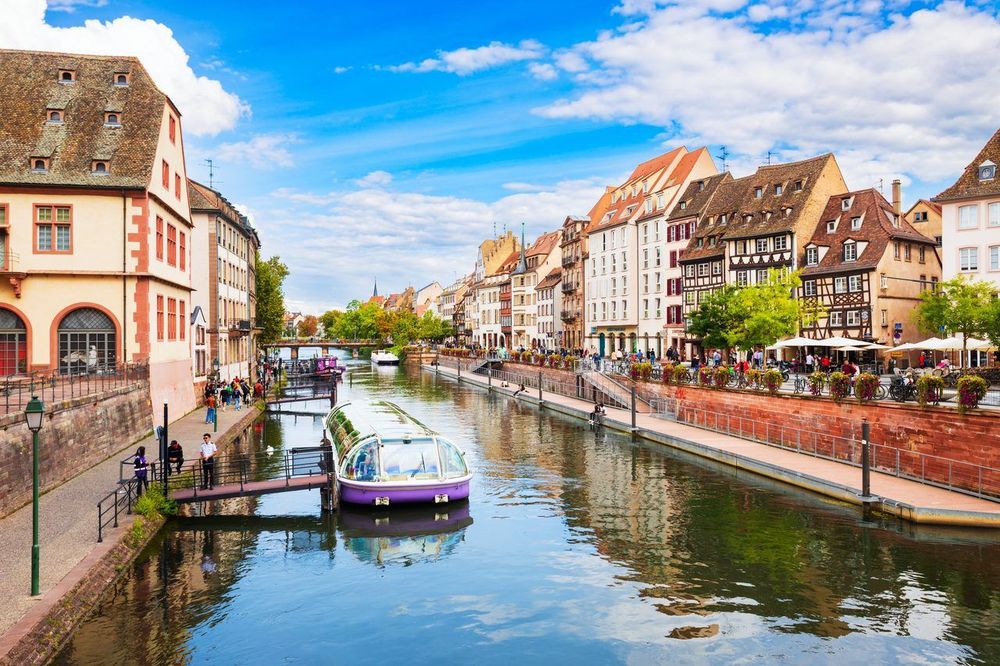
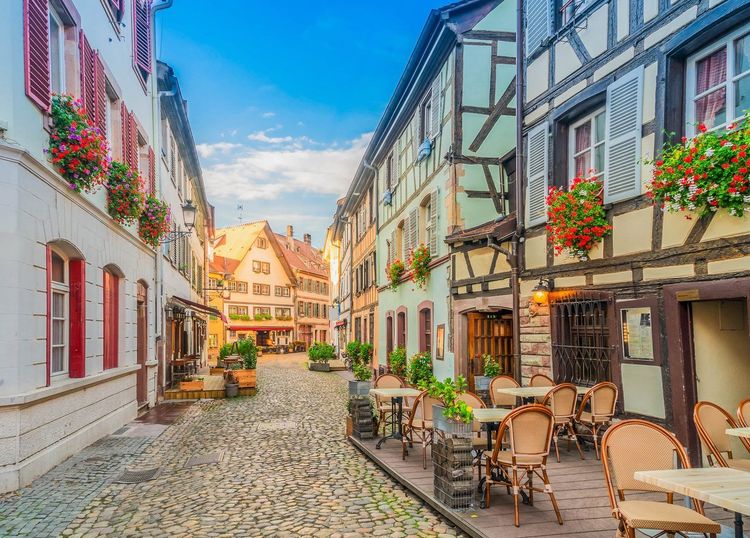
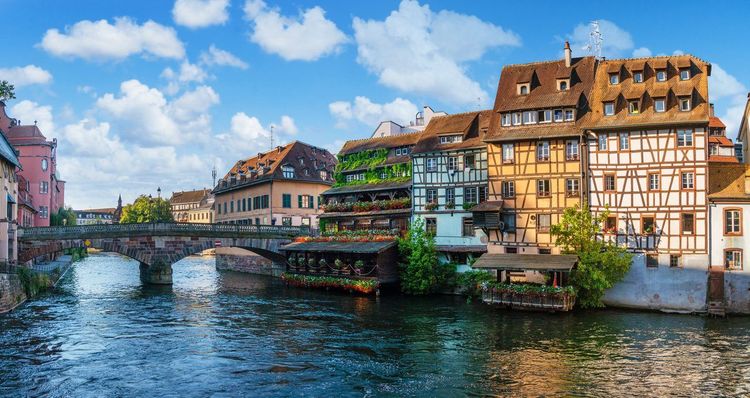
Continuing west, about ten minutes on foot brings you to Petite France, the city's most photogenic neighbourhood. Its leaning half-timbered houses, canals and flower-lined footbridges create an almost unreal setting, especially early in the morning before the tour groups arrive.
The name comes from the old hospital where 16th-century soldiers suffering from the "French disease" were treated, but the neighbourhood owes its present charm to its past as the Tanners' Quarter. Millers, tanners and fishermen lived here by the water, drying their hides beneath the wide-open attic spaces of the houses — an architectural feature still visible today in the rooflines punctuated by multiple dormer windows.
Walk along Rue du Bain-aux-Plantes, the neighbourhood's most spectacular street, then head down to the footbridge spanning the lock: this is where the classic shot of the houses reflected in the water is taken. Rue des Dentelles and Place Benjamin-Zix, slightly off the beaten track, offer the same scenery with half the crowds.
Don't miss the Ponts Couverts, four 13th-century medieval towers that once guarded access to the city, connected by walkways formerly covered by wooden roofs — long gone despite the name that remains. Just behind them, the Vauban Dam already gives a preview of the panorama you will explore in more detail on the third day.
A Batorama Boat Ride and an Evening Stroll along the Quays
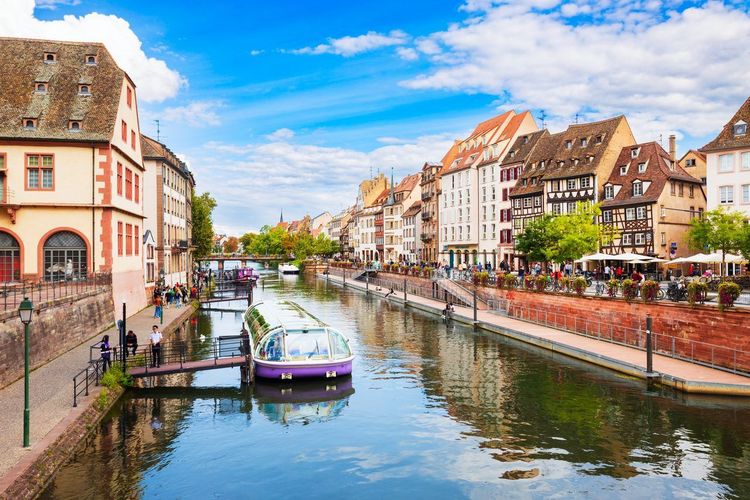
To round off the day on Grande Île, board a Batorama boat, the company that operates the river cruises from the Palais Rohan landing stage. The roughly 1h10 tour follows the Ill, passes through Petite France from a different angle, then heads towards the European Quarter, with audio commentary available in several languages.
The city seen from the water reveals perspectives invisible from the quays, including passing beneath the Ponts Couverts and through the lock that lowers the boat by several metres. The boats are glass-enclosed and heated in winter, making this one of the few comfortable activities in cold weather. If you want to know more, the article on the boat tour in Strasbourg details the various routes on offer.
If you would rather go deeper into the cathedral's history than see it from the water, the dedicated article on visiting Strasbourg Cathedral details the platform and clock opening times. End the day on Grande Île with dinner in a neighbourhood winstub, followed by an evening stroll: the illuminated cathedral and silent canals create a very different atmosphere from the daytime. To continue the discovery at your own pace the following day, the Ryo audio guide for Strasbourg, in its short version from Petite France to Greater Europe, covers much of this itinerary in audio-guided form.
Day 2: Neustadt and the European Quarter
The second day takes you into a completely different setting. Head northeast of Grande Île to discover the city's least-known face: that of the German annexation from 1871 to 1918, and then of the contemporary European capital.
Neustadt, the Former German Imperial Quarter
The Neustadt is the largest preserved Wilhelmine urban ensemble in Europe, built by the Germans between 1871 and 1918 to assert their power over the newly annexed city. Broad avenues, neo-Renaissance buildings and monumental perspectives stand in stark contrast to the medieval lanes of Grande Île.
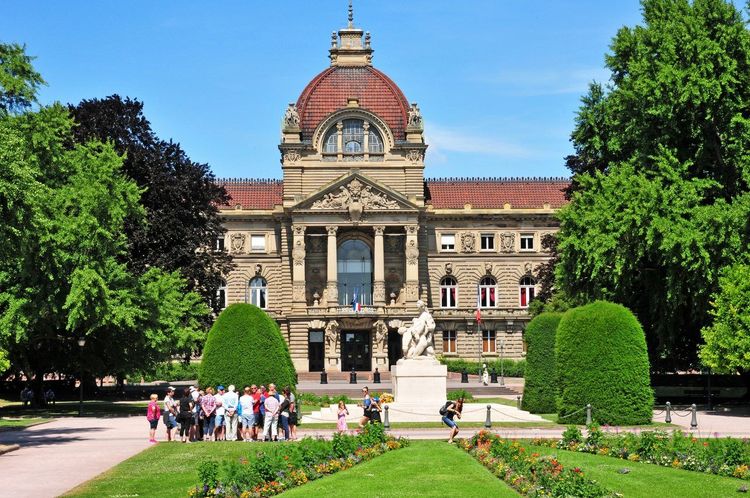
The heart of the neighbourhood beats around the Place de la République, flanked by the Palais du Rhin — the former imperial palace, now used by state services — the National University Library and the Strasbourg National Theatre. The ensemble was inscribed on the UNESCO World Heritage List in 2017 as an extension of Grande Île, a rare recognition for an architecture long regarded as an encumbrance by the people of Strasbourg themselves.
Stroll along Avenue de la Paix or Avenue des Vosges: the grand façades, private gardens and wrought-iron railings tell of a city designed to impress. Look up at the details — they are the main attraction of the neighbourhood: corbelled bay windows, mosaics, sgraffito and carved heads mixing neo-Gothic, Art Nouveau and neo-Renaissance influences on a single city block. To go deeper into this singular neighbourhood, the article on visiting the Neustadt in Strasbourg details the history of each landmark building.
The European Parliament and the European Institutions
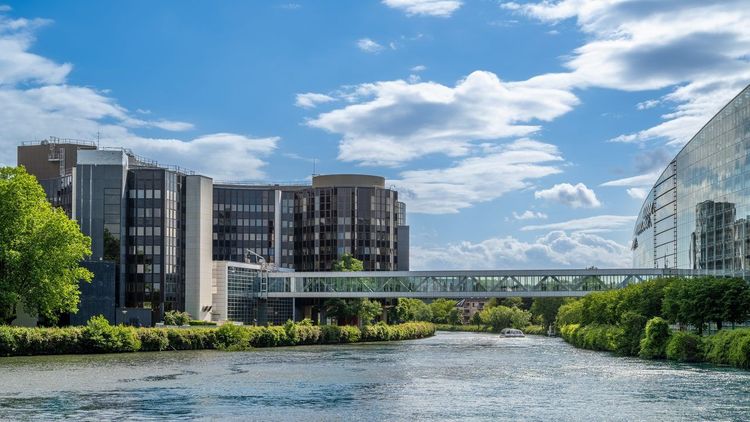
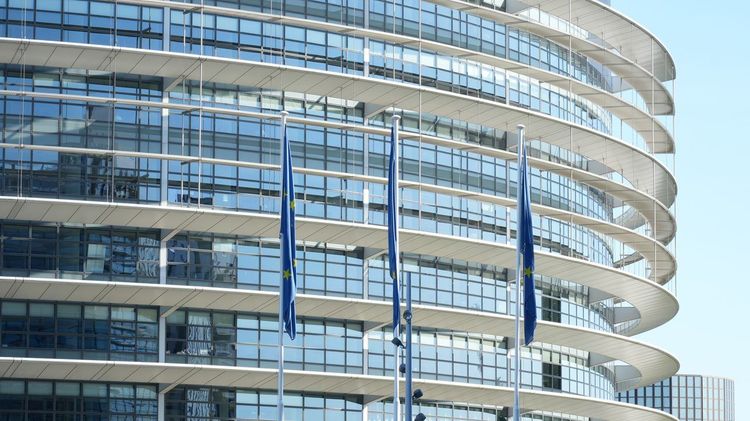
Continuing east, about twenty minutes on foot brings you to the European Quarter, home to the European Parliament, the Council of Europe and the European Court of Human Rights. It is a complete shift in scale: contemporary glass-and-steel buildings, including the European Parliament with its cylindrical tower designed to evoke an unfinished Tower of Babel.
Part of the European institutions can be visited freely: an exhibition space, the Parlamentarium Simone Veil, traces the workings of the European Union and is free and open on weekdays. Is the European Parliament free to visit during plenary sessions? Yes, with prior booking and a valid ID, though places are limited and go quickly during session periods.
Timing matters more than anything here: Parliament only sits in Strasbourg for a few days each month, generally one week of plenary session. Coming during that week lets you watch debates from the hemicycle galleries, but access to the surrounding area is more restricted. Outside sessions, the building is quieter and guided tours of the hemicycle are easier to arrange. The visit guide to the European Parliament in Strasbourg details booking procedures according to the time of year.
Right next door, the Palace of Human Rights, designed by British architect Richard Rogers, houses the European Court of Human Rights. Its two-cylinder architecture deliberately evokes the scales of justice — a symbol that few visitors notice at first glance.
The Parc de l'Orangerie, a Green Retreat
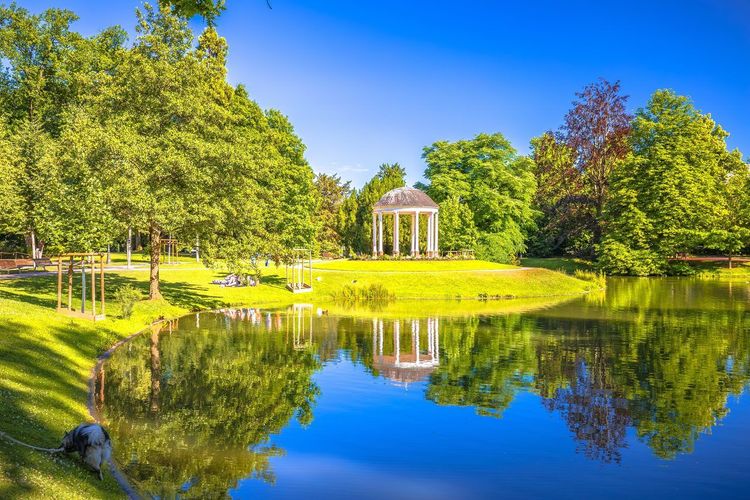
After the institutional density of the European Quarter, treat yourself to a break in the Parc de l'Orangerie (Avenue de l'Orangerie, 67000 Strasbourg, rated 4.6/5 on Google based on 19,576 reviews), the city's oldest and most prestigious park, laid out in the late 17th century and redesigned in the early 19th century for Empress Joséphine.
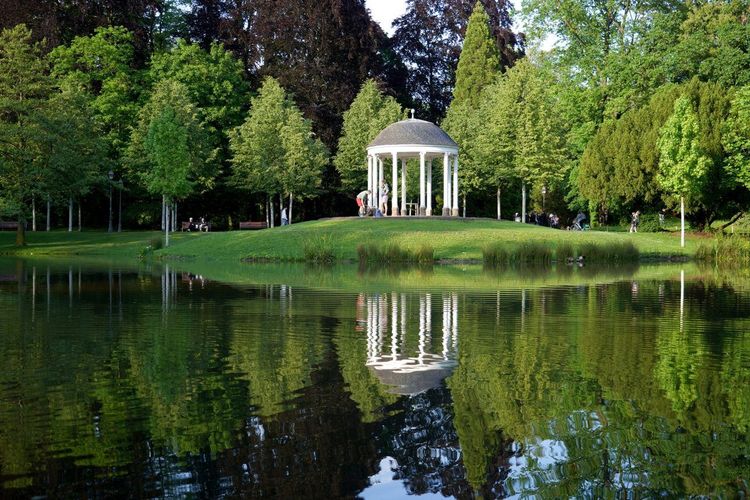
You will find storks roaming semi-freely — the living symbol of Alsace — a small lake with rowing boats for hire, and the Pavillon Joséphine, now used as a reception venue. When do the magnolias bloom in Strasbourg? The bloom generally falls between late March and mid-April, turning some of the park's paths into pink-and-white tunnels much sought after by photographers.
The park also has a small animal enclosure and a playground, making it the best stop of the day with children: after two hours of institutional architecture, watching the storks in their nests wins everyone over. Entry is free and the park is open year-round.
If time allows, extend the walk to the university botanical garden, just a short distance away, for an extra break before heading back to the city centre for dinner.
Day 3: Krutenau, the Museums and the Jardin des Deux Rives
The third day explores a more contemporary and greener side of the city, taking in a student neighbourhood, modern art museums and a vast cross-border park.
Krutenau, the Hospices civils and the Jardin des Deux Rives
Krutenau is Strasbourg's student and bohemian neighbourhood, with its narrow streets around Rue de Zurich, its wine bars and its more modest façades compared to those of Grande Île. This is where the city comes alive at night, far from the standard tourist circuits. The neighbourhood takes its name from the market gardens that occupied it in the Middle Ages, when it still lay outside the city walls.
Just nearby are the Hospices civils de Strasbourg, a hospital complex founded in the 13th century whose cellars contain a historic wine vault dug in 1395, with a barrel dating from 1472 still in place. The free, brief tour of the cellar invariably surprises visitors with its atmosphere and the age of the oak casks lined up beneath the vaulted ceilings.
Heading further east, the Jardin des Deux Rives stretches across nearly 60 hectares on both sides of the Rhine, linking Strasbourg to the German city of Kehl via the Mimram footbridge, reserved for pedestrians and cyclists. Walking along the quays to reach it means symbolically crossing the Franco-German border on foot, almost without realising it. Tram line D actually runs all the way to Kehl: you can walk one way and take the tram back, or vice versa.
The Must-See Museums of Strasbourg
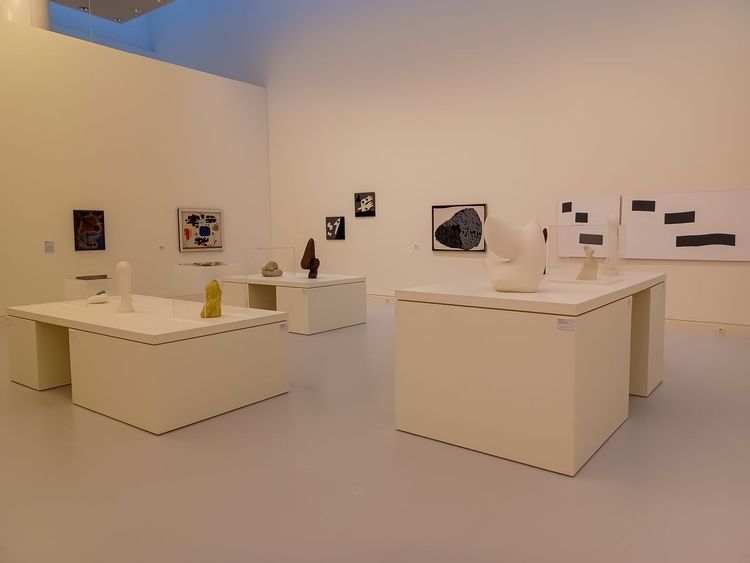
Strasbourg has about a dozen municipal museums, more than enough to fill an entire morning. The Museum of Modern and Contemporary Art (MAMCS), with its glass façade overlooking the Ill, presents a collection ranging from Impressionism to contemporary art, including a significant body of work by Gustave Doré, who was born in the city.
If you only visit one museum during your stay, make it the Musée alsacien, housed in three interconnected half-timbered buildings that recreate the interiors of an Alsatian farmhouse and a bourgeois home. It is one of the rare places where you truly understand regional culture beyond the postcard.
History enthusiasts will prefer the archaeological museum in the Palais Rohan, already visited on day one, while the city's historical museum, with its 1727 scale model recreating the fortified city in three dimensions, appeals to visitors of all ages. A useful budget tip: the city's museums share a joint ticketing system, with a single pass valid for several institutions on the same day, and free entry for everyone on the first Sunday of the month.
The Vauban Dam and Its View over Petite France
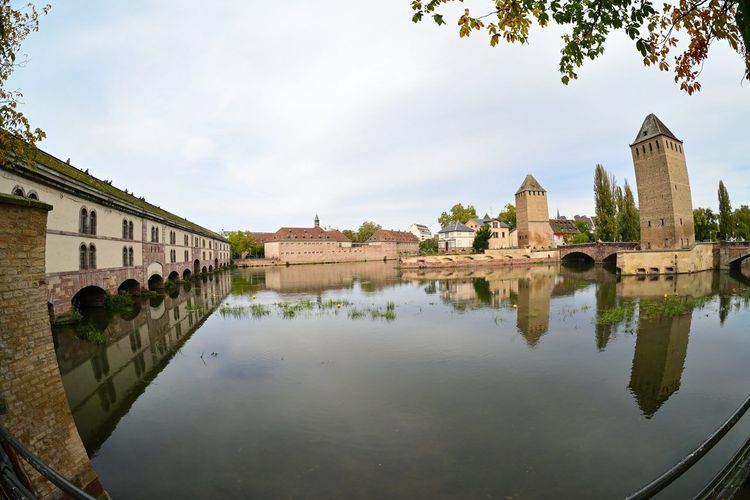
To end the stay on a high note, return to the Vauban Dam, built between 1686 and 1690 to the plans of the military engineer of the same name, designed to allow, in the event of a siege, the deliberate flooding of the land to the south of the city.
Its panoramic terrace, free to access, offers one of the finest views over Petite France, with the Ponts Couverts in the foreground and the half-timbered rooftops stretching all the way to the cathedral. The covered gallery beneath the terrace also houses a collection of sculpture casts from Strasbourg monuments — a curiosity that most visitors walk straight through without a glance. It is an excellent place to take stock of everything you have covered over three days, particularly in the late afternoon when the low light rakes across the rooftops.
What to See If You Only Have 1 or 2 Days in Strasbourg
If your stay is shorter, here is how to adapt the programme without missing the essentials.
What to see in Strasbourg in 1 day? Focus on Grande Île: the cathedral and its astronomical clock in the morning, Palais Rohan and Maison Kammerzell late morning, then Petite France and a Batorama boat ride in the afternoon. It is the most packed condensed version possible, but it covers the city's absolute must-sees. One tip: don't try to squeeze in a museum as well — you would sacrifice the wandering time that makes the historic centre so rewarding.
For a two-day stay, add Neustadt and the European Quarter on the second day: Place de la République, the European Parliament and a break in the Parc de l'Orangerie. You will miss the museums and the Jardin des Deux Rives, but you will have seen the city's two major historic faces — the medieval and the imperial.
What if you stay four days? The fourth day lends itself perfectly to an excursion beyond the city: the Alsace wine route, the village of Kaysersberg or Obernai, or simply a morning of shopping and a final visit to the covered market before heading home. Regional trains serve Obernai, Sélestat and Colmar in under an hour, so there is no need to hire a car for the day.
What is the most beautiful neighbourhood in Strasbourg for those who have to choose? The question is debated, but Petite France remains the most photogenic while Grande Île has the greatest concentration of listed monuments per square metre.
How to Get to and Get Around Strasbourg
Getting There by Train, Plane or Car
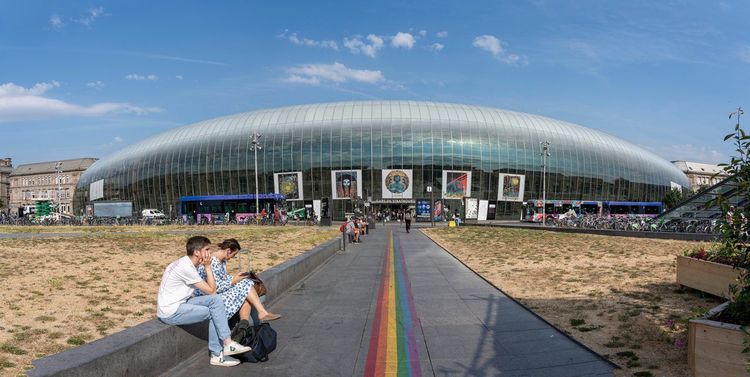
How do you get to Strasbourg? The high-speed train remains the most practical option from Paris, with a direct service in about 1h50 from Gare de l'Est and around fifteen return trips daily. From Lyon or Marseille, allow roughly 3h40 and 5h30 respectively, sometimes with a change. The central station, with its curved glass canopy added in 2007, is fifteen minutes on foot from the cathedral: you can reach your hotel without taking a single form of transport.
How do you get to Strasbourg by plane? Strasbourg-Entzheim Airport receives flights from several French and European cities, but many international travellers prefer Basel-Mulhouse-Freiburg Airport, about 1h30 away by road. How do you get from the airport to the city centre? A rail shuttle links Entzheim to the central station in under ten minutes, with a direct connection to the tram.
By car, the city is served by the A4 motorway from Paris and the A35 along the Rhine from southern Alsace. Allow about 5 hours of driving from the capital.
Getting Around the City: on Foot, by Bike or by Tram
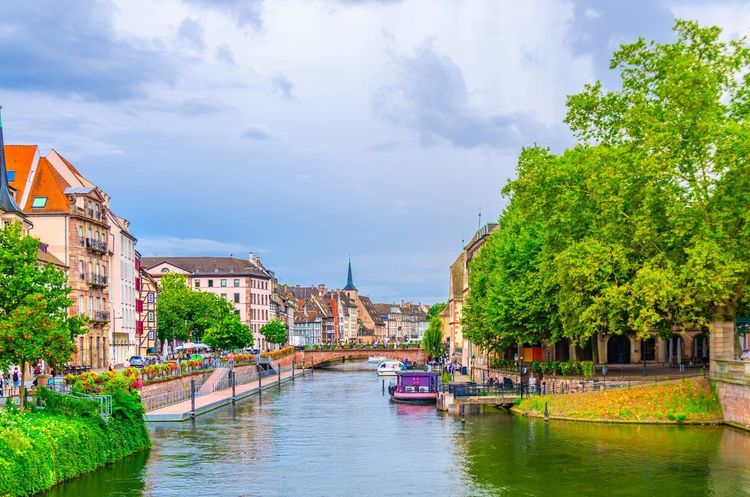
How do you get around Strasbourg once you are there? The city is particularly compact: Grande Île can be crossed from end to end in 20 minutes on foot. Can you do everything on foot? Yes, easily, for the entire first day and a good part of the following two, provided you are happy to walk several kilometres a day.
For longer distances, particularly to the European Quarter or the Jardin des Deux Rives, the tram network (6 lines, A to F) is fast and frequent. A single ticket is valid for one hour including transfers, but from three journeys in a day the 24-hour pass becomes more economical — and it comes in a group version for families.
Strasbourg is also one of France's most cycle-friendly cities, with several hundred kilometres of cycle paths across the urban area and a well-developed bike-hire scheme (Vélhop), available by the day or week. It is the most pleasant way to reach the Orangerie or the Jardin des Deux Rives, the only two slightly out-of-the-way points on this itinerary.
Where to Park in Strasbourg
Where should you park in Strasbourg to avoid the stress? Since the city centre is largely pedestrianised, it is best to use one of the park-and-ride facilities (P+R) on the outskirts, connected to the centre by tram at a flat rate that includes all-day parking and return tram journeys for all vehicle occupants. Underground car parks in the centre do exist but are expensive over several days; book your parking at a P+R instead and leave the car there until you leave. Also check the low-emission zone rules before you set off, as older vehicles are progressively being restricted in the urban area. Once you have parked, Strasbourg's compact centre is easy to explore on foot with Ryo's audio-guided tour.
Where to Stay in Strasbourg: Neighbourhoods and Good Options
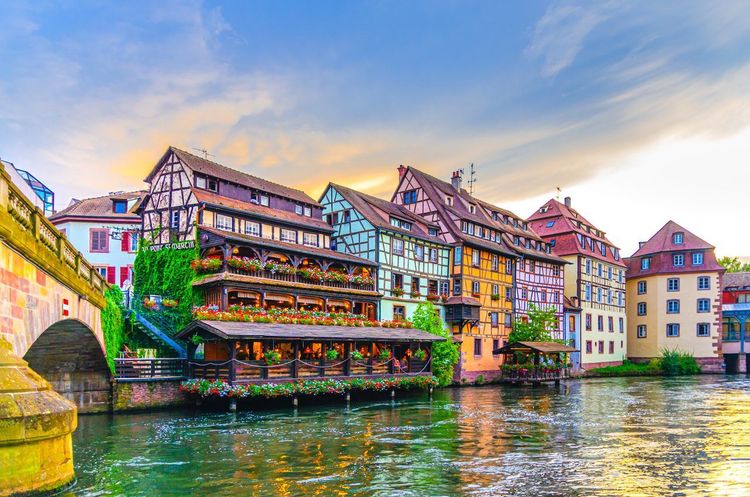
Where to stay in Strasbourg depends largely on what you are looking for during your visit. Grande Île offers maximum charm: sleeping a stone's throw from the cathedral or in a lane of Petite France feels like living inside a postcard, at the price of a generally higher budget and windows that can be lively in the evenings.
The Neustadt offers an interesting compromise: spacious bourgeois buildings, a quieter neighbourhood at night, yet still 15–20 minutes on foot from the cathedral. It is a good option for a family stay or for those who prioritise space over immediate proximity to the monuments.
Neighbourhoods around the central station suit those who prioritise convenience: easy arrivals and departures, generally lower rates, but a less picturesque setting and a slightly longer walk to Grande Île. Krutenau, finally, appeals to those who want to go out in the evening without taking the tram home, with more apartment rentals than traditional hotels.
One calendar point not to overlook: prices soar during European Parliament plenary session weeks and throughout the entire month of December, the Christmas market season. On those dates, book two to three months in advance, or shift your accommodation to Schiltigheim or Illkirch, fifteen minutes by tram from the centre at a noticeably lower rate.
Whatever neighbourhood you choose, bear in mind that the city can be explored on foot from almost any hotel in the centre. Once settled in, many visitors extend their exploration of their hotel's neighbourhood with the Ryo audio guide, which lets them head out and explore without replanning their route.
Where to Eat and Drink: Alsatian Specialities and Good Tables

Alsatian Specialities to Try
Eating well in Strasbourg starts with knowing the local specialities. Tarte flambée (or flammekueche), a thin pastry topped with crème fraîche, onions and bacon baked in a wood-fired oven, is traditionally served as a shared starter. Choucroute garnie, the emblematic dish combining fermented cabbage with a selection of cured meats, remains the unmissable classic of every winstub.
Baeckeoffe, a slow-cooked casserole of meats and potatoes marinated in white wine and sealed in a pastry-lidded earthenware dish, often requires booking the day before given the lengthy preparation. On the sweet side, kougelhopf, a moulded brioche with almonds and raisins, traditionally accompanies morning coffee, while the bretzel is a street snack enjoyed at any hour.
Don't leave without trying at least one Alsace wine by the glass: a dry riesling with sauerkraut, a rounder pinot gris with baeckeoffe, a gewurztraminer with munster at the end of the meal. Most winstubs serve them by the carafe, which costs considerably less than a bottle and lets you compare two grape varieties over a single meal.
Good Spots for a Quick Bite or a Sit-Down Meal
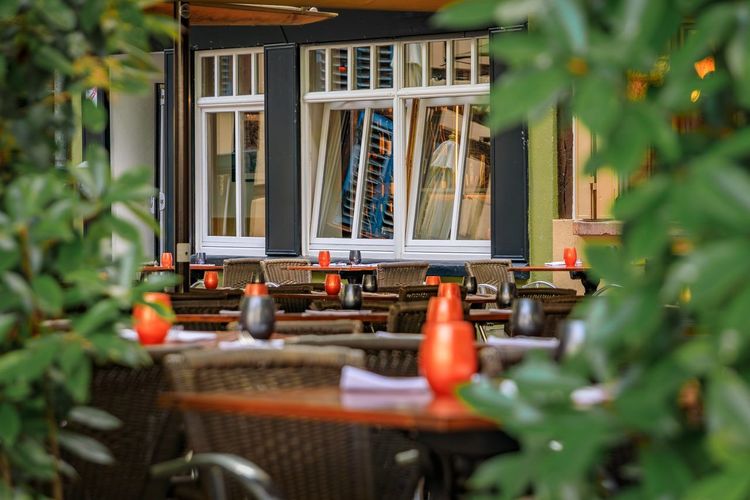
For a quick bite between visits, the covered market and the bretzel stalls around the cathedral are a reliable option without compromising on quality. For a fuller experience, the traditional winstubs of Petite France and Grande Île serve classic Alsatian dishes in a warm, wood-panelled setting, generally at reasonable prices for the region.
A useful habit: in the busiest winstubs, evening service starts early, often from 6:30 pm, and tables go fast from 7:30 pm. Booking the day before, or arriving at opening time, avoids a wait on the pavement. Many also close on Sundays and Mondays — two days when it is better to head for the brasseries in the centre.
Those looking for more contemporary dining will find their match among the starred restaurants and chef-led bistros that have multiplied in recent years, particularly around Krutenau. For a deeper dive into the subject, the article on Strasbourg's culinary specialities details the best addresses by type of cuisine and budget.
Where to Have a Coffee or a Drink on a Terrace
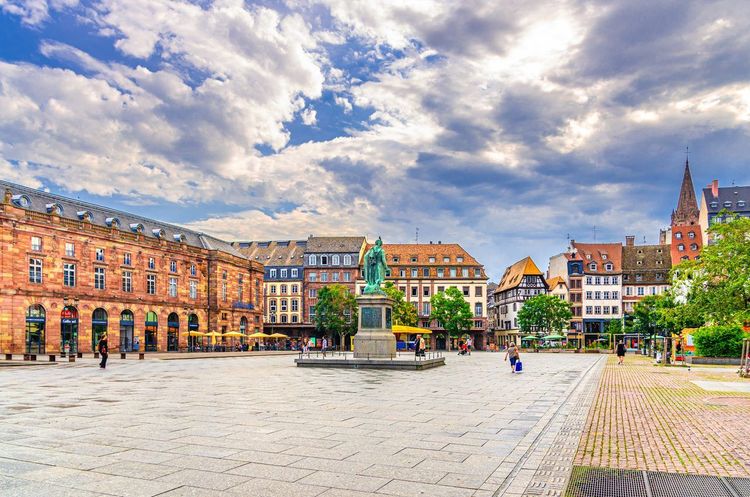
Where to find a good coffee in Strasbourg? Independent roasters have set up throughout the centre, with a marked preference for Krutenau and its student lanes. For a terrace coffee with a view of the monuments, Place Kléber (67000 Strasbourg, rated 4.6/5 on Google based on 8K reviews) and its surroundings remain a safe bet despite the tourist footfall.
Where to have a drink in Strasbourg in the evening? Krutenau concentrates most of the wine bars and pubs popular with students, with a more laid-back atmosphere than on Grande Île. The banks of the Ill, particularly near Petite France, also offer lovely terraces at sunset, when the golden light reflects off the canals.
Practical Information for Planning Your Stay
When to Go: the Best Season for Your Stay
When is the best time to visit without the crowds? Avoid December, when the famous Christmas market multiplies visitor numbers, as well as sunny spring weekends. Spring itself, roughly April to June, remains the ideal period: mild temperatures, magnolias in bloom in the Parc de l'Orangerie, and still-manageable crowds on weekdays.
Summer can bring oppressive heat and denser crowds, while autumn offers particularly photogenic light on the canals, with accommodation rates often lower than at peak season. January and February are the quietest months of the year: it is cold, but the museums are empty and the winstubs return to their local clientele.
Budget and Tourist Passes
The length of your stay directly influences the budget to plan for: allow an average daily budget covering accommodation, meals and paid admissions, with significant variations depending on the season and neighbourhood chosen. The Strasbourg Pass 3 days, sold at the tourist office, gives access to a selection of museums and monuments at reduced or no cost, including the cathedral platform and a boat tour.
For a three-day stay, this pass generally pays for itself from the third paid admission onwards, especially if you combine museum visits with a boat trip. Always compare the cumulative cost of your planned visits before buying — some monuments, including the cathedral itself, are free outside the platform.
Item by item, accommodation accounts for the largest share, followed by meals; admissions remain modest since half of the programme described here costs nothing. Two easy savings: have lunch at the covered market rather than a restaurant, and concentrate your museum visits on the first Sunday of the month if your stay falls on that date.
Strasbourg with Children or in Rainy Weather
A family trip with children works particularly well over a 3-day format: the Batorama boat ride, spotting storks in the Parc de l'Orangerie and exploring the miniature lanes of Petite France tend to delight visitors of all ages without imposing too demanding a pace.
What is there to do in Strasbourg when it rains? The city has enough museums and covered spaces to turn a grey day into a cultural one: Palais Rohan, MAMCS, the Musée alsacien, or Le Vaisseau, a hands-on science centre very popular with families, located slightly outside the centre but easily reached by tram. The covered market, the shopping arcades in the centre and the cathedral nave provide other last-minute shelters. Planning at least one indoor option per day over a 3-day family stay in Strasbourg means the weather can't spoil the trip.
Free and Off-the-Beaten-Track Activities in Strasbourg
A stay here doesn't have to be expensive, despite the city's upscale reputation. What can you do for free in Strasbourg? The list is longer than you might think.
Entry to the cathedral itself is free — only the climb to the platform is paid. Strolling through Petite France, walking along the banks of the Ill, crossing the Ponts Couverts or watching the storks in the Parc de l'Orangerie costs nothing either. The European Parliament's Parlamentarium, with its interactive exhibition on how the European Union works, is free to visit with a valid ID.
What are the free and unusual things to see in Strasbourg? The street art scattered around Krutenau and near the station rewards a keen-eyed mural hunt, as does a wander through the covered market, worth exploring even if you buy nothing. The terrace of the Vauban Dam, freely accessible, offers one of the city's finest views without spending a cent.
Two other little-known freebies: the historic wine cellar of the Hospices civils, which can be visited freely during opening hours, and the first Sunday of the month, when all municipal museums open their doors to everyone at no charge. Add to that the crossing of the Mimram footbridge to Kehl, which offers the rare pleasure of changing countries on foot between two coffees.
If the urge for a new road trip strikes after these three Alsatian days, head to the Loire Valley with Ryo: Ryo's audio guide to the Châteaux de la Loire naturally continues the heritage spirit of your Strasbourg stay.



FAQ
How much time do you need to visit Strasbourg?
Three days allow you to cover the essentials: Grande Île and Petite France, Neustadt and the European Quarter, then museums and the Jardin des Deux Rives. One day is enough for an overview of the historic centre, two days for the most important listed heritage sites.
How do you get around Strasbourg?
Most of the city centre can be explored on foot. For longer distances to the European Quarter or the Jardin des Deux Rives, the tram network is fast and covers the city well, complemented by a highly developed bike-rental system.
Where should you park in Strasbourg?
It is best to use the park-and-ride facilities on the outskirts, connected to the city centre by tram at a flat rate for all vehicle occupants, rather than the underground car parks in the centre, which are more expensive over several days.
Is the European Parliament free to visit?
Yes, access to the Parlamentarium Simone Veil and the hemicycle galleries during sessions is free, with prior booking and a valid ID required. As places are limited, it is advisable to book several weeks in advance during session periods.
When do the magnolias bloom in Strasbourg?
The magnolia bloom in the Parc de l'Orangerie generally falls between late March and mid-April, depending on how mild the spring is.
What is the most beautiful neighbourhood in Strasbourg?
Petite France is most often preferred for its visual charm, but Grande Île holds the greatest concentration of listed monuments, while Neustadt impresses with its architectural grandeur.
Can you visit Strasbourg on foot?
Yes, the majority of major sites are within 30 minutes' walk of each other, making a car largely unnecessary during your stay.
Three days always feel too short here, as every neighbourhood opens onto another. The cathedral spire, the canals of Petite France, the avenues of Neustadt and the institutions of the European Quarter together tell the story of a city that changed nationality several times without ever losing its own identity. Whether you have one day, two, or the full three described here, keep time to get deliberately lost in an unexpected alley — that is often where the city reveals itself best. To extend the experience once you are there, the Ryo audio guide for Strasbourg accompanies this itinerary step by step, neighbourhood by neighbourhood.
À lire également