© Shutterstock
 Votre guide Ryo
Visiting Strasbourg in 2 Days: Complete Itinerary 2026
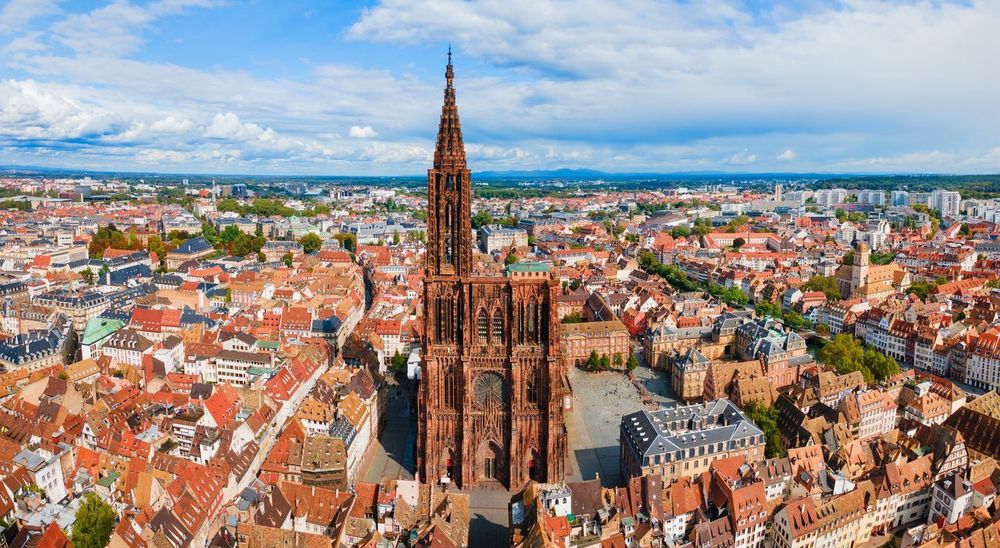
From the cathedral platform, 66 meters above the glazed-tile rooftops, you understand in seconds why visiting Strasbourg in 2 days is enough to grasp the essentials of the city — provided you plan your route well. The city fits almost entirely into a small area: the Unesco-listed Grande Île, the canals of la Petite France, the European institutions and the Wilhelminian facades of the Neustadt are all reachable within less than thirty minutes on foot. That is precisely what the Ryo audio guide tour of Strasbourg, From la Petite France to la Grande Europe, is designed to do — connecting these neighbourhoods without wasting time on transport.
This guide details an hour-by-hour itinerary: an astronomical clock whose automata only come to life at 12:30, a cellar dug in 1395 beneath a medieval hospital where a barrel filled in 1472 still rests, a European Parliament that opens its doors to the public for free with advance booking, and a tram network that covers the entire historic centre for the price of a coffee. You will also find a detailed breakdown of costs, the best neighbourhoods to stay in, the specialities to order in a winstub, and adjustments to make if you are travelling as a family, as a couple, without a car, or with an extra day to spare.
The Must-See Highlights of Strasbourg
Before detailing the two days hour by hour, here are the landmarks that come up in every conversation about the city. Some take ten minutes to see, others deserve a full hour: the itinerary below places them in the right order, but keep these names in mind before you set off. Good news for a short stay — everything fits within a three-kilometre radius of the Grande Île, which has been a Unesco World Heritage Site since 1988.
Notre-Dame Cathedral and Its Astronomical Clock
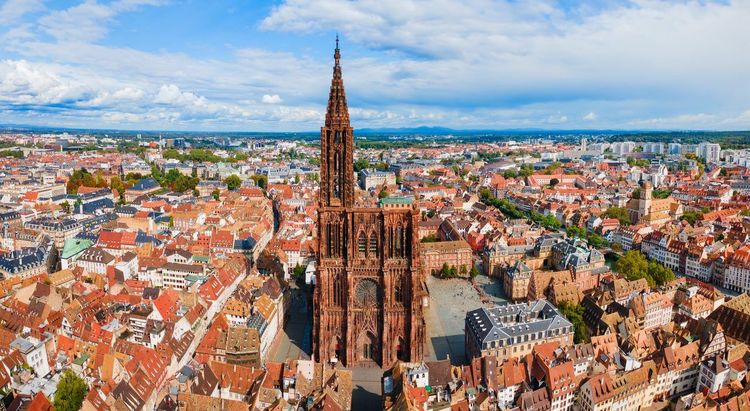
The Cathédrale Notre-Dame de Strasbourg dominates the city with its single spire of 142 metres, completed in 1439, which made it the tallest building in the world for more than two centuries. Its facade of pink Vosges sandstone literally changes colour throughout the day: orange at sunrise, almost grey under a rainy sky, and a deep red at sunset.
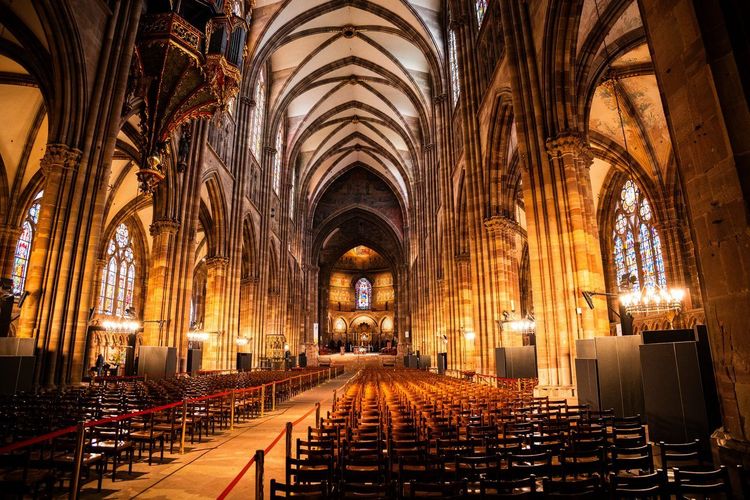
Entry into the nave is free. Take time to admire the Pillar of Angels, a masterpiece of 13th-century Gothic sculpture, and the medieval stained-glass windows that were dismantled and hidden during the Second World War before being returned to their original positions. Inside, the astronomical clock draws a packed crowd every day at 12:30, when bronze automata re-enact the stages of life before a mechanical Christ. The current mechanism, the work of clockmaker Jean-Baptiste Schwilgué, was set in motion in the mid-19th century, though a first clock had already existed here since the 14th century. Access to the display is ticketed — just a few euros — and tickets are sold on the morning itself: arrive early in high season, as standing-room spots go quickly. To climb the cathedral platform, allow for 332 spiral steps and a view that reaches, on a clear day, as far as the foothills of the German Black Forest. Our dedicated guide to visiting Strasbourg Cathedral details the various access options and the best times to avoid queues.
La Petite France and Its Canals
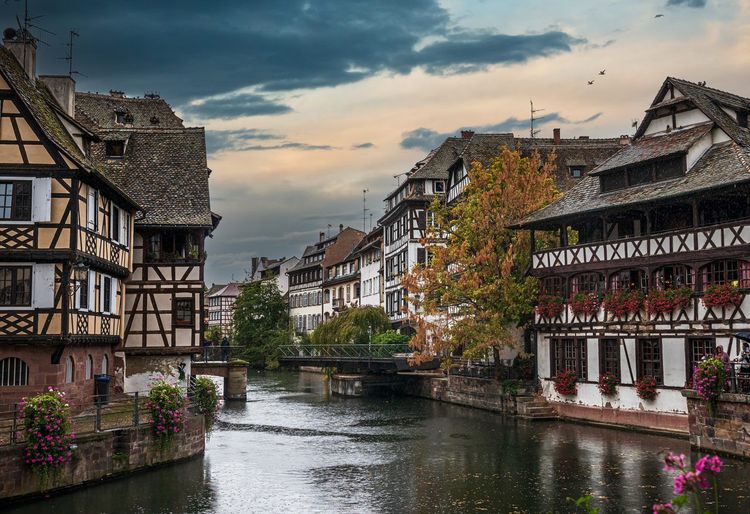
The Petite France neighbourhood is home to the most photographed half-timbered houses in Alsace, set along the branches of the Ill that once powered the mills and supplied the tanners' basins. The large open rooftops you will see on rue du Bain aux Plantes were not decorative: they were used to dry hides in the open air.
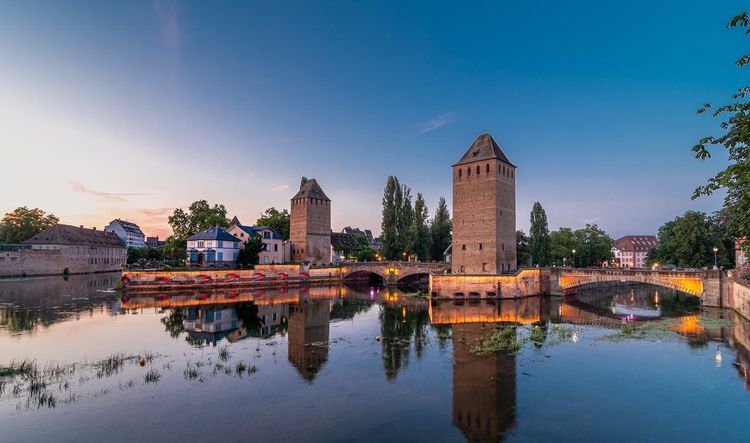
One facade in particular always stops passers-by in their tracks: the wisteria house on rue du Bain aux Plantes, whose half-timbered walls disappear every spring beneath a spectacular display of purple wisteria blooms. The Ponts Couverts, with their four square towers inherited from the medieval ramparts, and the Barrage Vauban just steps away, offer the best vantage point over the whole neighbourhood. The dam's panoramic terrace is free to access and remains, by far, the best free viewpoint in the city.
The European Quarter and the European Parliament
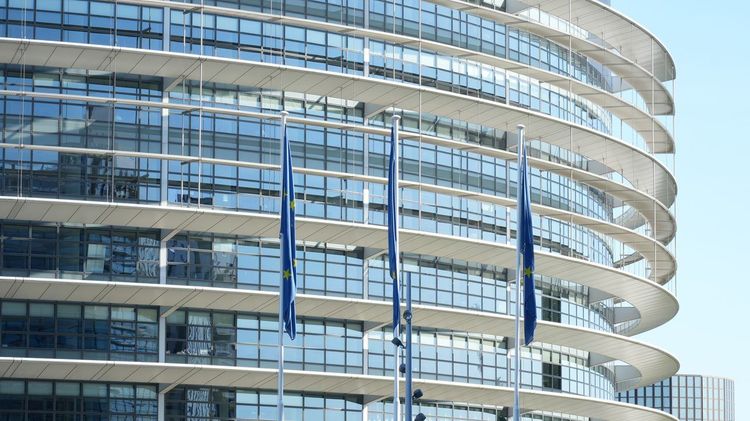
On the opposite side of the Grande Île, the European Quarter brings together the European Parliament, the Council of Europe and the European Court of Human Rights within a single square kilometre along the banks of the Ill. The European Parliament in Strasbourg opens its doors to the public free of charge, particularly during plenary sessions when MEPs gather for a handful of days each month: prior registration is mandatory and gallery seats are limited.
Nearby, the église Saint-Paul, recognisable by its twin neo-Gothic spires rising from the banks of the Ill, marks the symbolic boundary between the European Quarter and the German Neustadt. Built in the late 19th century as a garrison church for the Protestant soldiers of the Imperial Army, it encapsulates in a single building the city's German interlude.
The Parc de l'Orangerie
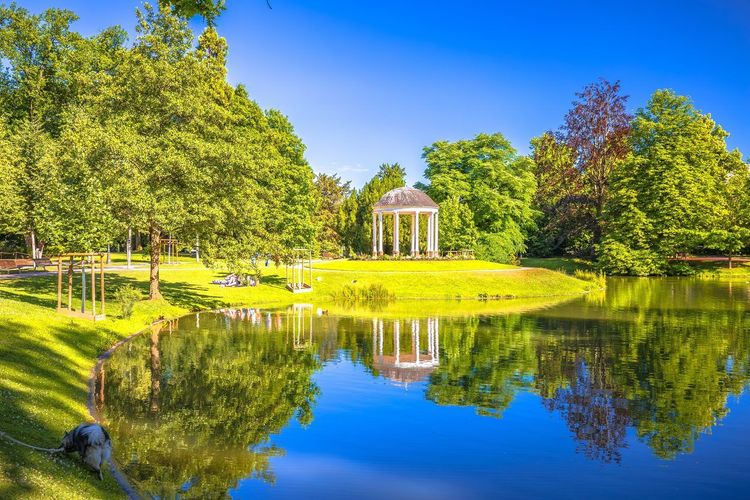
Laid out in the late 17th century and later redesigned as a landscape garden, the Parc de l'Orangerie remains the favourite green lung of Strasbourg's residents, with its semi-wild storks, a small lake where rowing boats can be hired, and the Pavillon Joséphine built for the Empress in the early 19th century. The park also has an animal enclosure and several play areas, making it the most practical stop of the trip when travelling with tired children.
The Palais Rohan and the City Museums
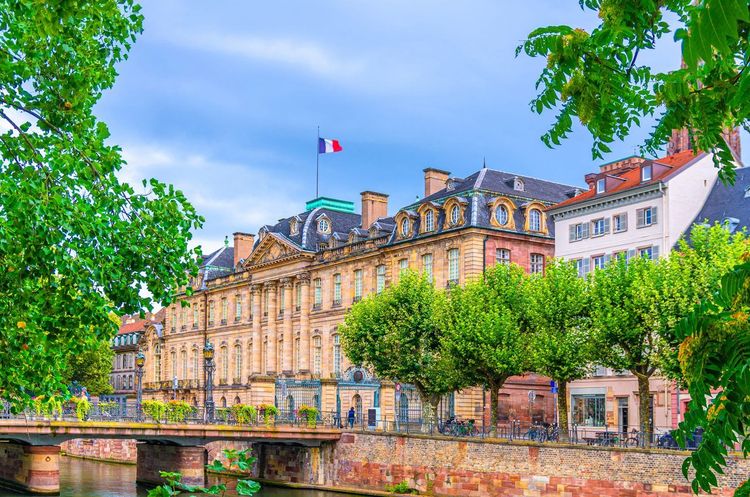
Just behind the cathedral, the Palais Rohan presents its classical 18th-century facade facing the Ill. Built for the prince-bishops of the Rohan family, it now houses three stacked museums: the Archaeological Museum in the basement, the Museum of Decorative Arts on the ground floor with its grand apartments, and the Museum of Fine Arts on the upper floor.
The city has around ten municipal museums, from the Alsatian Museum housed in half-timbered buildings to the Museum of Modern and Contemporary Art facing the Barrage Vauban. A combined ticket granting access to all city museums for one day exists and quickly pays for itself from the second visit onwards. It is also an excellent fallback option on rainy days, which are common in spring. To organise all of this in a logical order rather than rushing from one site to another, the Ryo audio-guided tour of Strasbourg links these highlights in one continuous loop.
Day 1: The Grande Île, the Cathedral and la Petite France
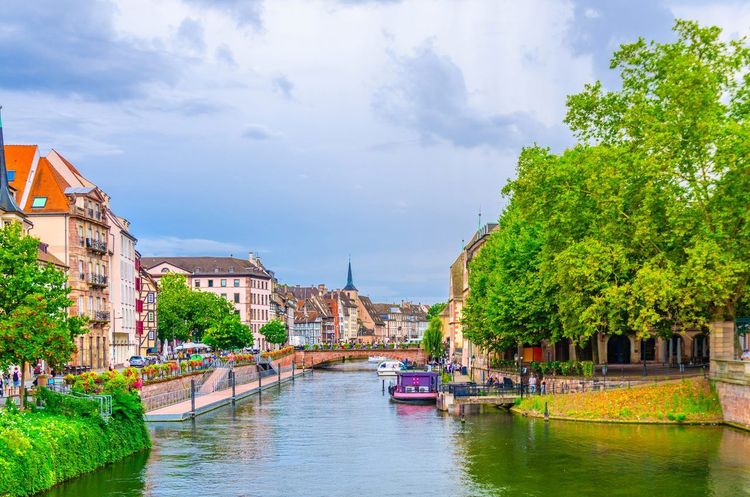
The first day stays focused on the Grande Île, that crescent of land encircled by the Ill which alone carries the bulk of the city's medieval heritage. Allow a full day of walking — around six kilometres in total — without needing to take any transport.
Morning: The Cathedral and the Historic Heart
Start early, before 9:30 if possible: the Place de la Cathédrale fills up quickly and the morning light on the pink facade is worth the effort on its own. After the nave and, if the timing works out, the climb to the platform, walk around the forecourt to find the Maison Kammerzell with its 15th-century sculpted facades, one of the finest half-timbered houses in France.
Then head towards Place Kléber, the largest square in the city centre and the traditional meeting point for Strasbourg residents.
From there, the Carré d'Or unfolds with its pedestrian streets lined with shops and classical 18th-century facades — a deliberate contrast with the medieval half-timbered houses awaiting you in the afternoon. This area also concentrates most of the city-centre patisseries and tea rooms: it is the right moment to try a kougelhopf or a still-warm bretzel before moving on. If the morning is advancing quickly, note that Place Gutenberg and Place du Marché-aux-Cochons-de-Lait are along the way, less than three minutes apart.
Midday: Lunch in a Winstub
At midday, head to a winstub — literally a wine room — that quintessential Alsatian bistro with wooden benches, red-and-white checked tablecloths and tables that are often shared. The menu changes little from one address to another: tarte flambée, choucroute garnie, baeckeoffe slow-cooked for several hours, or fleischschnacka, those meat-filled pasta rolls. Budget 20 to 30 euros per person for a main dish and a glass of riesling.
Book ahead if you have your eye on a well-known address in the heart of the Grande Île: the best tables are fully booked from 12:15 on weekends, and the pedestrian streets around the cathedral are also home to many tourist-oriented establishments of little culinary interest. A good sign: a short menu, written in Alsatian as much as in French, and a dining room where you hear languages other than English.
Afternoon: La Petite France and the Waterways
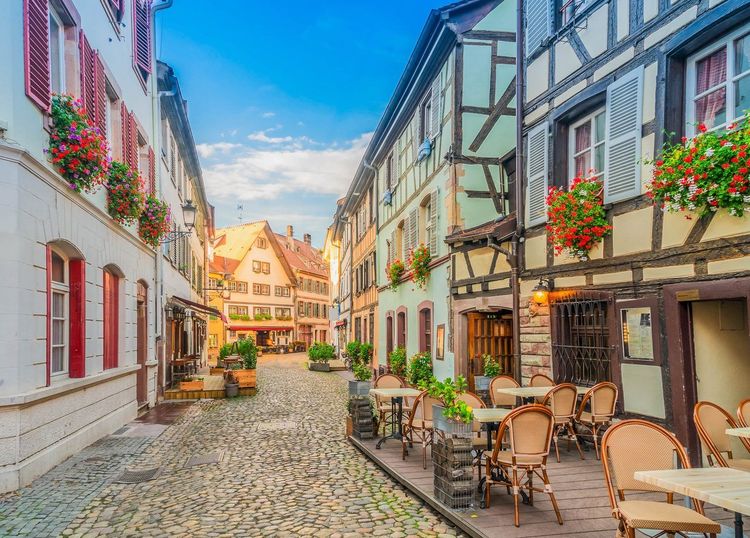
The afternoon belongs to la Petite France. Take time to walk down to the waterways, cross the wooden footbridges and stop in front of the wisteria house for the essential photograph of the trip. On the way back up towards the Ponts Couverts, a stop on the Barrage Vauban terrace — free of charge — offers a single sweeping view of the four towers, the canals and the cathedral spire in the background.
If you still have energy, extend the walk by ten minutes to the lock and watch a pleasure boat pass through: the sight of the chamber emptying fascinates children and adults alike. To catch every historical detail of this neighbourhood — tanneries, mills and hydraulic system included — the short version of the Ryo audio guide tour covers exactly this route between la Petite France and the Grande Île, with audio commentary to listen to as you walk.
Evening: Dinner and Strasbourg After Dark
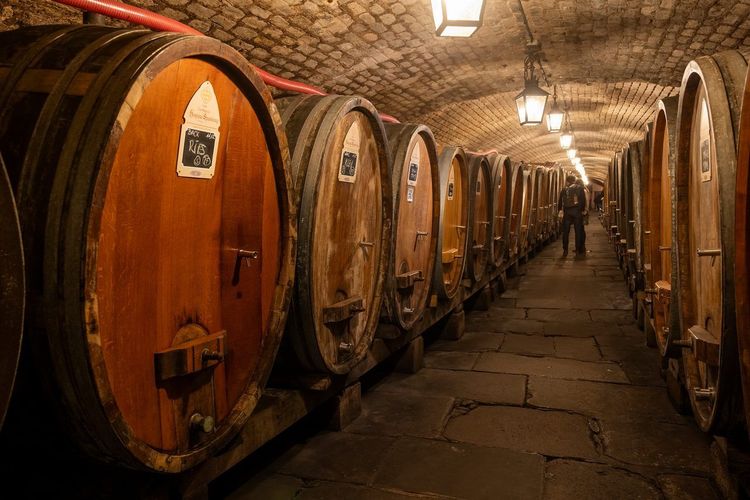
In the late afternoon, the Cave des Hospices de Strasbourg (1 Place de l'Hôpital, 67000 Strasbourg, rated 4.5/5 on Google based on 2,146 reviews), dug in 1395 beneath the civil hospital, is worth a detour — if only to see the famous barrel filled in 1472, considered the oldest white wine in the world still kept in a cask. Entry to the cellar is free during opening hours and an Alsatian wine tasting is offered amid a setting of monumental oak barrels.
In the evening, the banks of the Ill come alive: lit terraces, illuminated boats gliding across the water, half-timbered facades taking on a different character under floodlights. Dine somewhere in la Petite France or on the Grande Île for this first evening, then finish with a final stroll across the Place de la Cathédrale, almost empty after 10pm, when the illuminated facade stands alone against the darkness. It is one of the rare moments when you can photograph the central portal without anyone standing in front of it.
Day 2: The European Quarter, the Neustadt and the Orangerie
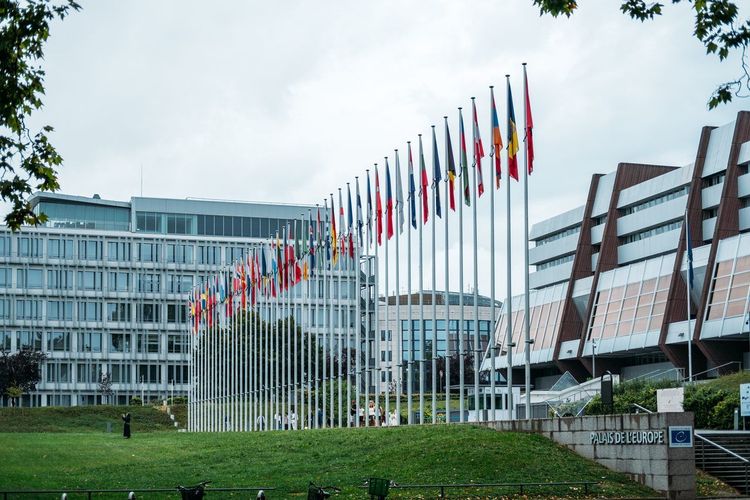
The second day shifts to a completely different setting: European institutions, late 19th-century German architecture and wide green spaces replace the medieval alleyways of the day before. The tram covers the journey in around ten minutes from the centre, or twenty-five minutes on foot along the riverbanks if the weather is kind.
Morning: The European Parliament and Its Institutions
If a plenary session is underway, access to the gallery of the European Parliament is worth it — provided you have booked in advance: entry is free but places are limited and an airport-style security check awaits at the entrance, with a valid ID required. Outside session periods, a permanent exhibition space dedicated to how the institutions work can be visited freely and takes around an hour to explore. Our article on visiting the European Parliament in Strasbourg details the booking process and opening days.
If you prefer dynastic history to institutions, swap this morning for the Palais Rohan and its 18th-century state apartments, or for the more modest but rewarding Alsatian Museum. In either case, plan to head out around midday to reach the Neustadt on foot.
Lunch in the Neustadt
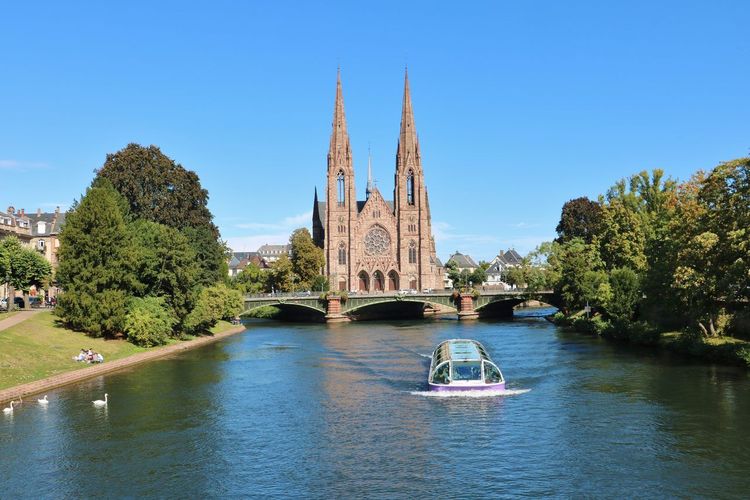
For lunch, leave the European Quarter and head towards the Neustadt, where traditional brasseries sit alongside more contemporary addresses. It is also an opportunity to try something different from the day before: the Neustadt has more restaurants influenced by German cuisine, with heartier dishes and local craft beers to wash them down. The nearby university district offers set menus for under 15 euros — useful if yesterday's spending already stretched the budget.
Afternoon: The Neustadt and the Parc de l'Orangerie
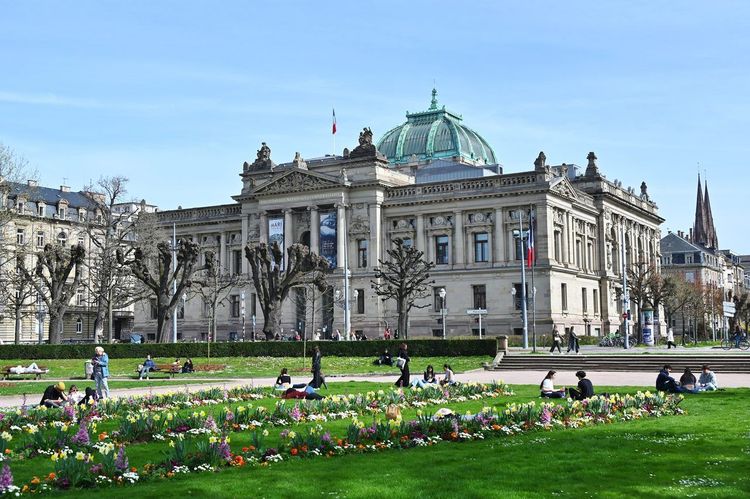
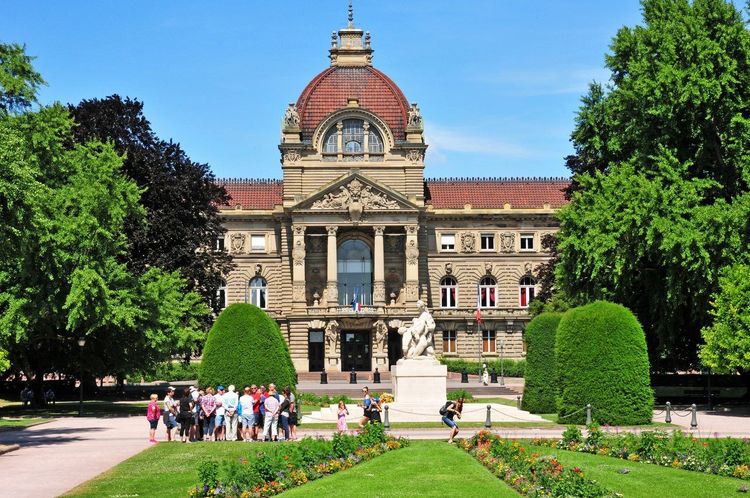
The Neustadt, literally the new city, was built between 1871 and 1918 when Strasbourg was part of the German Empire. Wide avenues, neo-Renaissance apartment buildings and monumental public edifices make up an architectural ensemble inscribed on the Unesco list since 2017, a world apart stylistically from the Grande Île explored the day before. The best starting point is the Place de la République (67000 Strasbourg), ringed by the Palais du Rhin, the National and University Library and the National Theatre.
From there, the Avenue de la Liberté and then the Avenue de l'Europe lead straight to the Parc de l'Orangerie, where a rowing boat on the small lake or a simple rest in the shade of the linden trees rounds off the day's walk pleasantly. Keep an eye out for stork nests at the top of the trees: the species had almost vanished from Alsace in the 1970s and owes its return to the reintroduction enclosures established here. To explore this neighbourhood further — often overlooked by visitors in a hurry — our article on the Neustadt, Strasbourg's German quarter details the most significant buildings street by street.
Evening: A Final Strasbourg Dinner
For this last dinner, head back towards the Grande Île or the Krutenau, the lively student neighbourhood just south of the historic centre, for a more relaxed evening before heading home. Prices are a notch lower there and the atmosphere at the microbreweries feels far more local than around the cathedral. It is also a good moment to note what would remain to see if your stay were longer: the Museum of Modern Art, the villages of the wine route, or the banks of the Rhine by bike.
Variations by Profile and Available Time
This base itinerary works for most visitors, but a few simple adjustments make it considerably more comfortable depending on your situation.
With Children
With children, replace part of the walking with more active activities: the boat trip along the Ill, the cathedral platform climb turned into a 332-step challenge, and the Parc de l'Orangerie with its animal enclosure and play areas. The astronomical clock automaton display works very well from the age of six or seven. Plan more frequent breaks and do not hesitate to spread the programme over three days rather than a tight weekend if the children are young: walking fatigue sets in quickly in a city, especially on the cobblestones of the Grande Île with a pushchair.
As a Couple for a Romantic Weekend
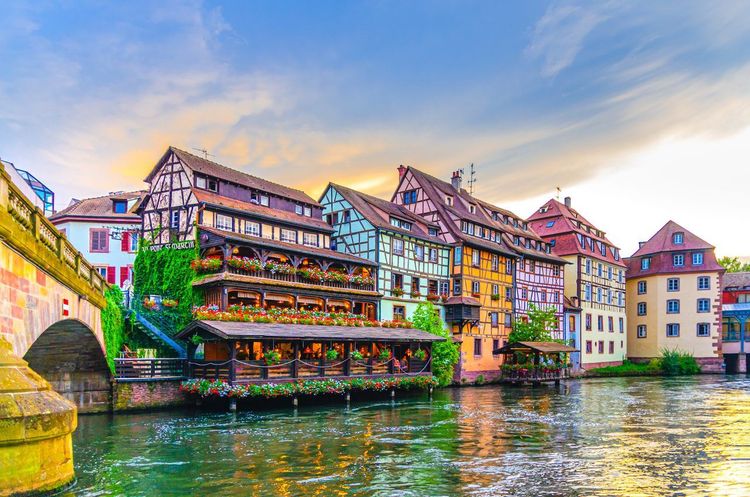
For a romantic weekend, favour the early morning and late evening slots in la Petite France, when the tour groups have left the waterways. A boat trip at sunset, a candlelit dinner in a winstub and a night in a charming canal-side hotel make for a simple but highly effective programme. Our selection of unusual romantic weekend ideas in Alsace offers further inspiration if you want to go off the beaten track. Download the Ryo app before you leave: the audio guide tour lets you stroll hand in hand without worrying about the route.
If You Have a Third Day
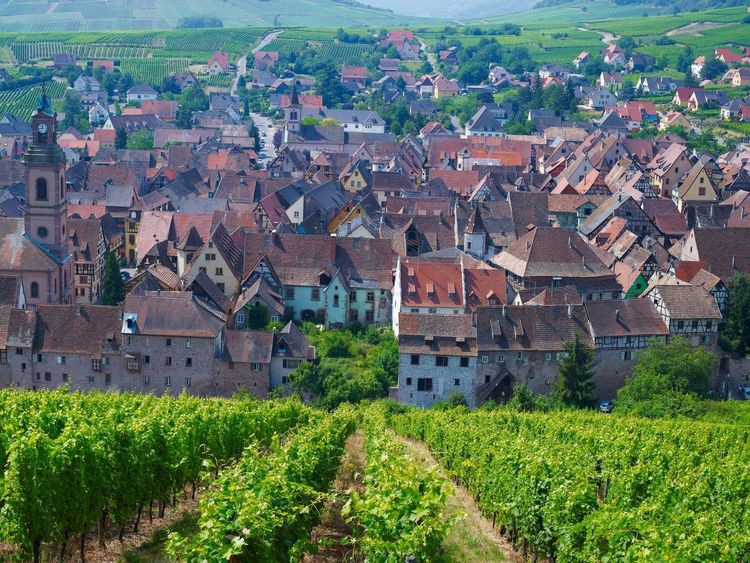
With an extra day, two options stand out. First, delving deeper into Strasbourg itself: the Palais Rohan museums, the Museum of Modern and Contemporary Art, the Krutenau and its waterways, or the Neudorf neighbourhood for an immersion away from the tourist circuits. Second, venturing out of the city to discover the half-timbered villages of the wine route, less than an hour by road or train. For this second option, the most beautiful villages around Strasbourg lists the best day-trip excursions.
Without a Car, on Foot or by Bike
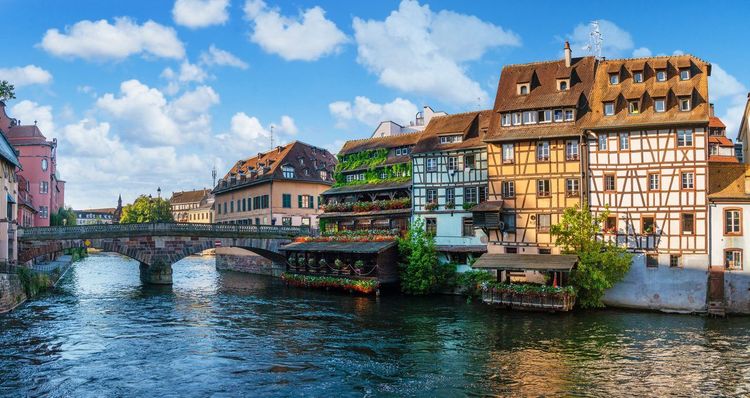
Going without a car poses no difficulty here: the Grande Île is entirely walkable and the tram connects the European Quarter and the Neustadt to the historic centre in just a few minutes. A car actually becomes a hindrance in the city centre, with extensive pedestrian zones, one-way streets and restricted parking. If you arrive by train, drop your bags at the hotel and head straight out on foot or by bike: the station is fifteen to twenty minutes from the cathedral on foot, passing through la Petite France, which turns the journey itself into a first visit.
Experiencing Strasbourg Differently: Boat, Bike and Christmas Market
Beyond the classic itinerary, three ways of seeing the city from a different angle are worth setting aside time for.
A Boat Trip along the Ill
The flat-bottomed boats that navigate the Ill offer an inverted perspective on la Petite France and the Grande Île: from the water, the half-timbered houses and medieval bridges take on a different scale. The guided tour lasts just over an hour, passes through the Petite France lock and heads up to the European Quarter, with audio commentary available in around ten languages. Budget around fifteen euros per adult, with the main boarding point behind the Palais Rohan. To slot this stop in at the right moment in your trip, our article on the boat trip in Strasbourg details the timetables and boarding points.
By Bike with Vélhop
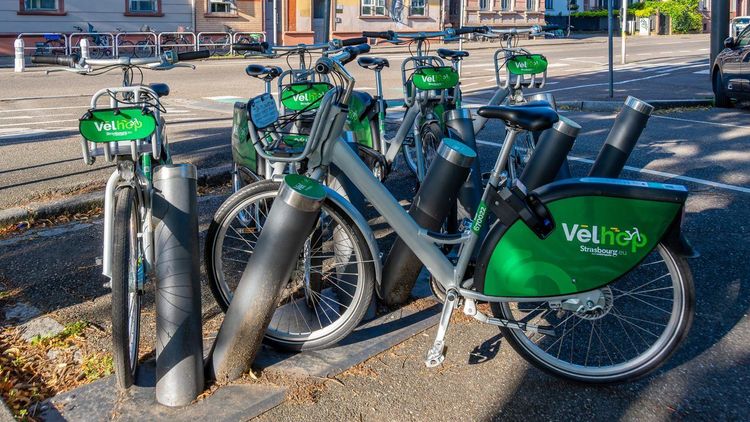
Strasbourg is considered the most cycle-friendly city in France, with several hundred kilometres of dedicated lanes across the Eurometropolis. The Vélhop service, run by the local authority, offers short- and long-term bike hire from several shops and automated stations, notably near the station and in the city centre. Renting a bike for the day costs a few euros and allows you to cover in one morning what would take an entire afternoon on foot — particularly useful for linking the European Quarter to the Orangerie, or for pushing out to the banks of the Rhine and the Deux Rives Garden, which straddles the German border.
The Christmas Market in Winter
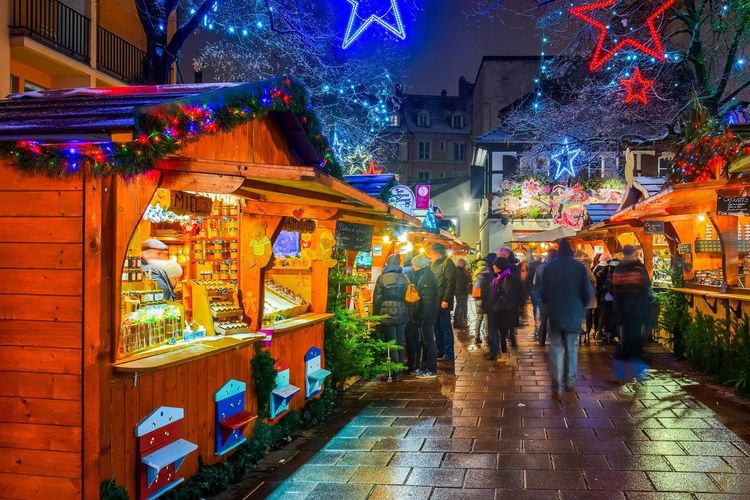
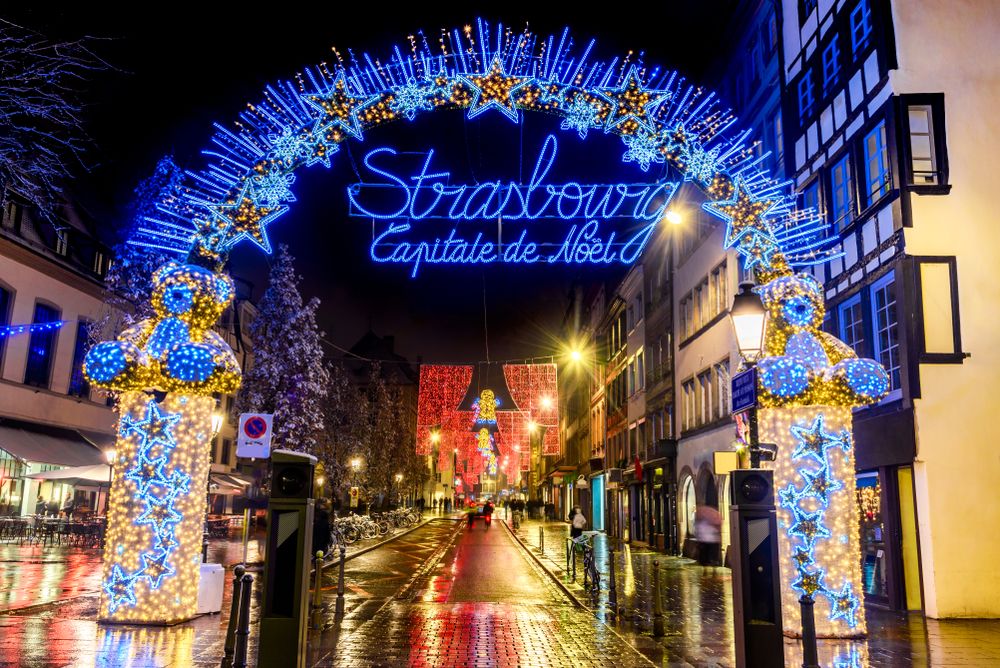
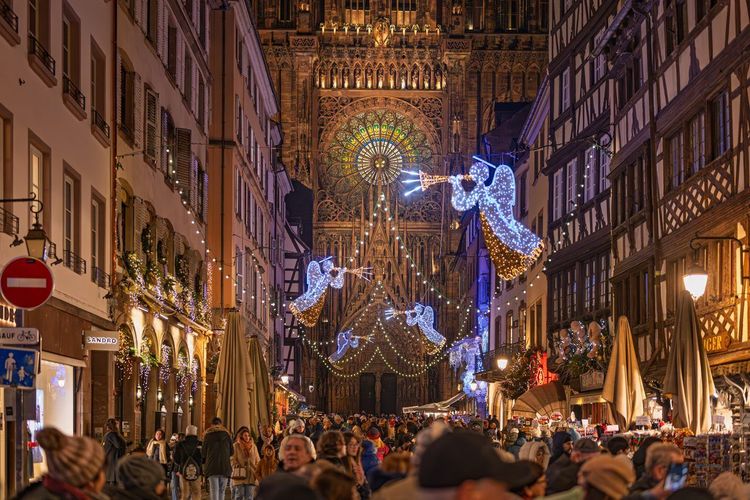
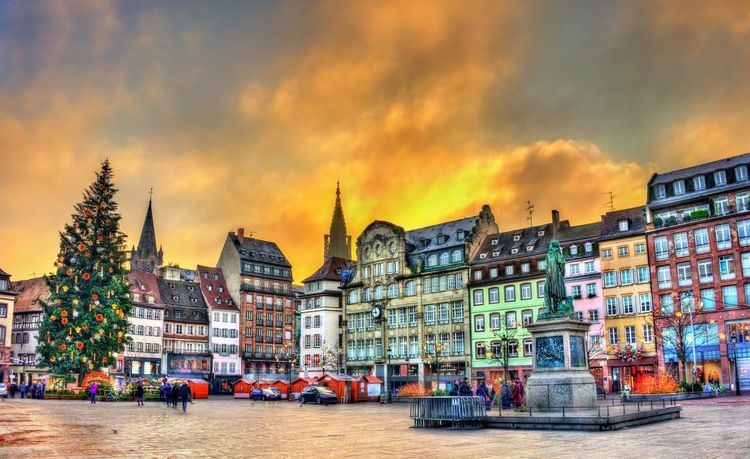
In December, the city takes on an entirely different character. The Christkindelsmärik, whose origins date back to 1570, is one of the oldest Christmas markets in Europe: it sets up across around ten squares in the centre from late November to late December, with a large Christmas tree on Place Kléber and wooden chalets selling mulled wine and bredele, those small Alsatian biscuits. Expect considerable crowds at weekends, filtered access controls at the entrances to the centre and accommodation prices that can easily double. If this is your target period, book several months in advance. Our guide to Christmas markets in Alsace compares the different villages in the region for those who want to extend the outing beyond Strasbourg.
Where to Eat in Strasbourg: Winstubs and Alsatian Specialities

Local cuisine is an integral part of the visit, and two days barely scratch the surface. One simple rule: the most traditional dishes are eaten in the evening, tarte flambée in particular, which is traditionally served later in the day when the wood-fired oven is fully heated.
Essential Alsatian Dishes
Tarte flambée, or flammekueche, a thin crispy base topped with cream, onions and lardons, is best shared and often ordered round after round. Choucroute garnie, fermented cabbage served with charcuterie and potatoes, remains the region's signature dish — filling enough to skip dessert entirely. Baeckeoffe, a slow-cooked stew of three meats and potatoes baked in a sealed terrine, often requires ordering the day before at traditional restaurants. Add presskopf, fleischschnacka and, on the sweet side, kougelhopf and Christmas bredele. For drinks, Alsatian white wines — riesling, sylvaner or gewurztraminer — are often ordered by the carafe. For a complete overview, our guide to Strasbourg's culinary specialities details the regional variations of each dish.
Our Recommended Winstubs and Restaurants
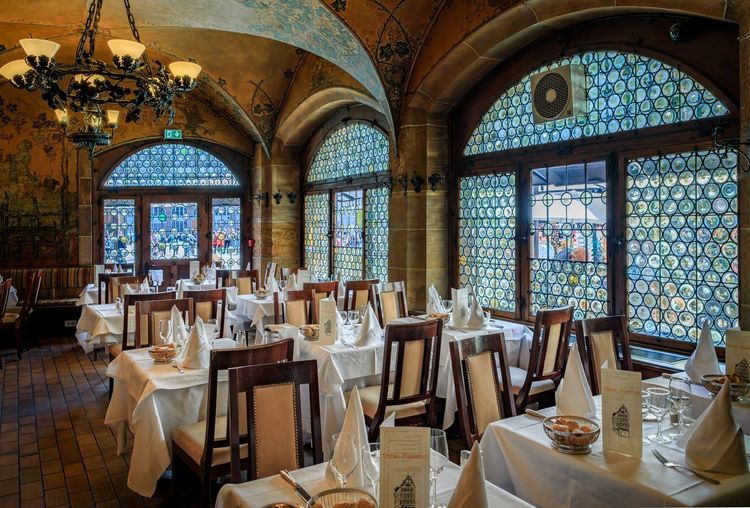
Rather than an exhaustive list, keep three distinct areas in mind. The historic winstubs of the Grande Île, around rue du Sanglier and the Marché-aux-Cochons-de-Lait, for a traditional atmosphere and recipes unchanged for fifty years. The more contemporary tables of the Krutenau, where young chefs reinvent Alsatian cuisine with short menus and reasonable prices. And finally the Neustadt brasseries, practical for a quick lunch between two visits. The Maison Kammerzell on Place de la Cathédrale is worth at least a look for its sculpted decor even if you do not dine there. Always book ahead for dinner in the city centre on spring and summer weekends — demand far outstrips the number of available tables.
Where to Have a Drink in Strasbourg
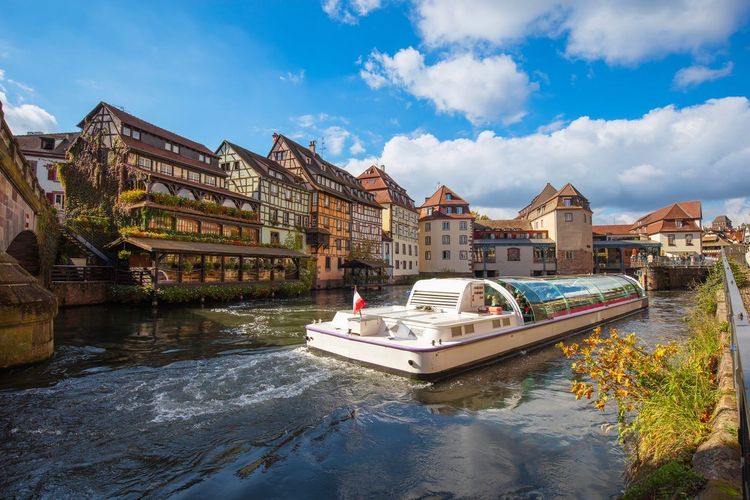
At the end of the day, the terraces along the banks of the Ill are the obvious choice, particularly on the la Petite France side where the evening light works wonders on the facades. Beer lovers will want to head to the microbreweries of the Krutenau and the streets around Place du Marché Gayot, an inner courtyard entirely given over to terraces just steps from the cathedral. The Cave des Hospices, mentioned earlier, offers an Alsatian wine tasting in a historic setting that is hard to match anywhere else in the city. Ryo's audio-guided tour threads through this same corner of town, handy if you'd rather listen than navigate between courses.
Where to Stay in Strasbourg: Choosing the Right Neighbourhood
On such a short stay, location matters more than the number of stars: every fifteen minutes saved on the morning commute translates into an extra visit. Three neighbourhoods compete for the attention of visitors.
The Grande Île, at the Heart of It All
Staying on the Grande Île puts everything within walking distance: the cathedral, la Petite France and the Carré d'Or are all ten minutes away at most. It is the most convenient choice for a weekend, but also the most expensive and the liveliest, with street noise that can disturb light sleepers in summer. Check the parking situation before booking if you are arriving by car — many establishments do not have their own car park.
La Petite France, Charm and Canals
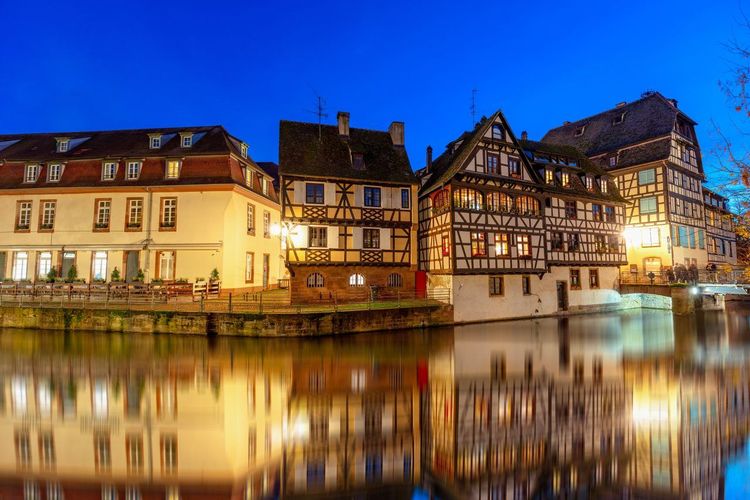
Staying in la Petite France has the advantage of enjoying the empty alleyways early in the morning and late in the evening, once the tour groups have gone. Establishments here are often housed in former tanners' buildings, full of character but sometimes with small rooms and narrow staircases — worth keeping in mind if you are travelling with large suitcases.
The Neustadt, Peace and Elegance
The Neustadt suits those who prefer quiet and space: wide avenues, grand bourgeois buildings from the German period and a reasonable distance to the historic centre on foot or by tram. It is also the best budget compromise, with prices generally lower than the Grande Île for equivalent comfort. The station area, cheaper still, works as a last-minute fallback, though the evening atmosphere there is considerably less appealing.
Getting to and around Strasbourg
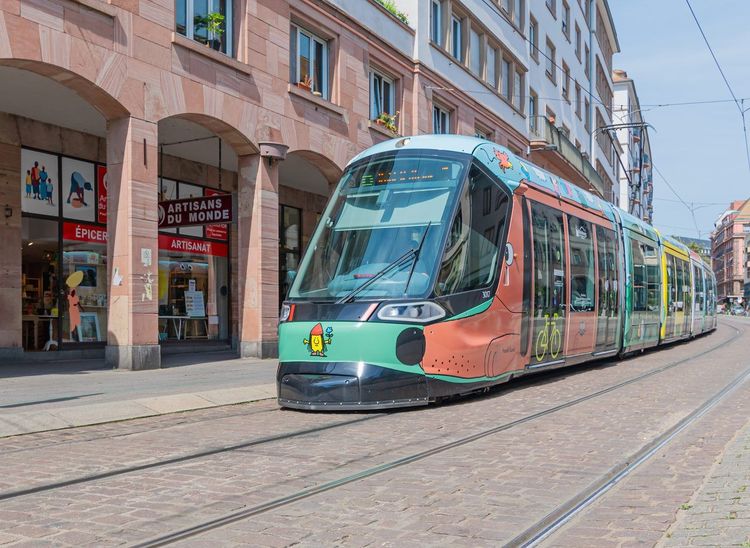
Few cities of this size are as easy to get around without a car. Here is what you need to know before you leave.
By Train, Plane or Car
By train, the central station with its contemporary glass canopy is a fifteen-minute walk from the historic centre, with direct high-speed TGV trains connecting Paris in under two hours. By plane, Strasbourg-Entzheim Airport, around ten kilometres from the centre, mainly serves regional routes and a handful of European destinations; a rail shuttle reaches the central station in under ten minutes, making it one of the fastest airport links in France. Basel-Mulhouse Airport, about an hour and a half away by road, offers a wider choice of international flights. By car, allow around five hours from Paris via the motorway, but be aware that the city centre is largely pedestrianised once you arrive.
Getting around the City Centre: Tram, Bike, on Foot
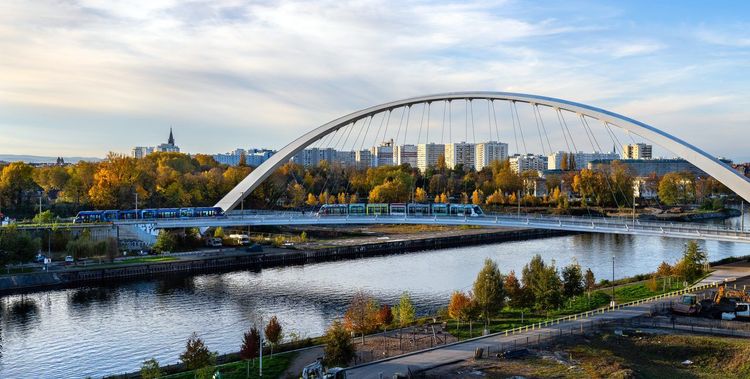
Strasbourg's tram network, one of the most extensive in France, serves virtually every point of interest mentioned in this guide, with a single ticket costing just over 2 euros and advantageous 24-hour passes from the third journey onwards. Trams run at high frequency during the day and the line running through the centre stops at the station, the Homme de Fer and Place de la République — three of the key points on the itinerary. For a short stay, however, walking remains the most efficient way to get around the city centre: the distances between the Grande Île and the European Quarter take twenty to thirty minutes on foot, barely more than by tram once waiting time is factored in.
Where to Park
If you are arriving by car, use the park-and-ride facilities at the end of the tram lines: the flat-rate fee covers both parking and return tram travel for all vehicle occupants, at a fraction of the cost of city-centre car parks. The latter, often full at weekends and during the Christmas market, charge several times that price for a full day. Note also that on-street parking in the city centre is metered and time-limited, and that the Eurometropolis low-emission zone requires a Crit'Air sticker for vehicles driving in the city.
Budget for a Weekend in Strasbourg
The budget varies considerably depending on the season and the level of comfort you are looking for, but a few benchmarks help set expectations. For accommodation, a decent double room in the city centre runs around 90 to 150 euros per night outside the Christmas period, with prices rising sharply in December and during parliamentary sessions, when hotels fill up with MEPs and their assistants.
For meals, budget 20 to 30 euros per person for a winstub lunch and 35 to 50 euros for a more complete dinner with drinks. An evening of shared tartes flambées works out considerably cheaper, around 15 euros per person. For sightseeing, most of the iconic sites are free: the cathedral nave, la Petite France, the Barrage Vauban, the Parc de l'Orangerie and the European Parliament gallery all cost nothing. Paid attractions are limited to the cathedral platform and the astronomical clock display — a few euros each — the city museums and the boat trip, which costs around fifteen euros.
Add a modest transport budget of around 10 to 15 euros per person to cover tram travel throughout the stay or a day's bike hire. In total, a couple can manage a comfortable weekend for 350 to 500 euros for two, excluding return travel, aiming for the lower end outside the Christmas season. By staying slightly outside the centre and leaning on the many free attractions, it is entirely feasible to come in under 250 euros.
When to Visit Strasbourg: The Best Season
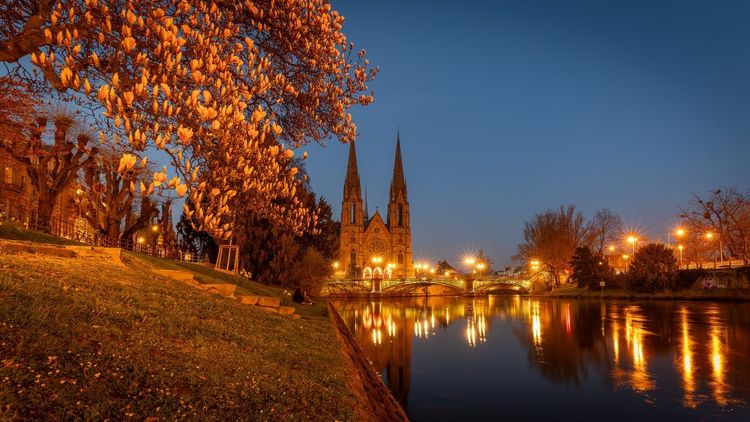
Spring, between April and June, offers the best compromise: mild temperatures, wisteria in bloom in la Petite France, reopened terraces and still-manageable crowds on weekdays. Summer attracts more visitors but guarantees long evenings on the waterways, with free outdoor events and illuminated facades after dark. Autumn is quieter and suits those who prefer to avoid the crowds while enjoying particularly photogenic light on the half-timbered houses; it is also the grape harvest season on the wine route, half an hour from the city.
The winter option, from late November to late December, coincides with the Christmas market period: the atmosphere is unique, but accommodation prices climb steeply and the city-centre streets become noticeably more crowded, especially at weekends. If this is your target period, add half a day to your itinerary to absorb the slower pace of movement. January and February, by contrast, offer rock-bottom prices and almost deserted monuments — provided you can handle the sometimes biting continental cold.
FAQ
How many days do you need to visit Strasbourg?
Two days are enough to cover the Grande Île, the European Quarter and the Neustadt at a comfortable pace. A third day allows you to explore the museums more thoroughly or venture out to the surrounding Alsatian villages, a worthwhile option if your schedule permits.
Can you explore Strasbourg in 48 hours without a car?
Yes, with no difficulty at all. The Grande Île is entirely walkable and the tram quickly connects the European Quarter and the Neustadt to the historic centre. A car offers no real advantage in the city centre, where parking is both restricted and expensive.
What is the best neighbourhood to stay in for a weekend?
The Grande Île remains the most practical choice for a short stay, with everything within walking distance. La Petite France is charming and quiet in the evenings, while the Neustadt offers better value for money just ten tram minutes from the centre.
How much does a 2-day weekend in Strasbourg cost?
Budget between 350 and 500 euros for a couple, including accommodation, meals and visits, excluding return transport. The budget rises noticeably during the Christmas market period, especially for accommodation, and can drop below 250 euros by taking advantage of the many free attractions.
Is this itinerary suitable for families with children?
Yes, as long as you alternate walking with more active activities such as the boat trip, the animal enclosure at the Parc de l'Orangerie, or the automaton display of the astronomical clock. With young children, spreading the programme over three days helps avoid excessive fatigue.
Do you need to book museums and attractions in advance?
For the European Parliament, yes: prior registration is mandatory and places are limited. Tickets for the astronomical clock are purchased on the day at the venue and sell out quickly in high season. Other sites — the cathedral, the Parc de l'Orangerie and la Petite France — can be explored freely without a ticket.
When should you visit Strasbourg to enjoy the Christmas market?
The Christkindelsmärik traditionally runs from late November to late December. Book your accommodation several months in advance during this period, as prices and visitor numbers rise sharply compared to the rest of the year.
A weekend is enough to leave with a complete picture of the city — its medieval half-timbered houses, its European institutions and its German architecture — without ever feeling rushed. The key lies in the order of the route: the Grande Île on the first day, the European Quarter and the Neustadt on the second, with enough flexibility for a boat trip or a detour to the Orangerie depending on the mood.
To plan this stay in detail, neighbourhood by neighbourhood, the Ryo audio guide tour of Strasbourg is the most comprehensive resource available: 32 audio tracks spread over 2h40 of walking, from la Petite France to la Grande Europe, exactly the itinerary described in this guide.
À lire également