© Shutterstock
 Votre guide Ryo
22 Most Beautiful Villages to Visit around Strasbourg in 2026
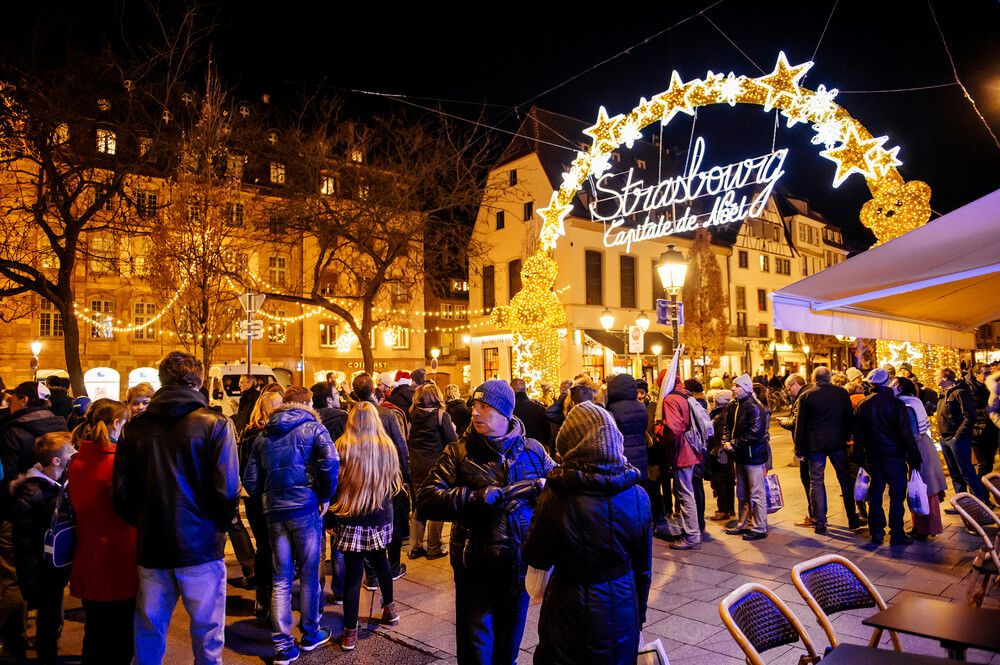
Just a few dozen kilometers from Strasbourg, Alsace takes on a different face. Half-timbered facades lean over narrow cobbled streets, storks nest on bell towers, and vines cover the Vosges hillsides like an endless carpet. But behind this shared scenery, each village has its own character: Hunspach, voted 'France's Favorite Village' in 2020, has virtually no advertising signs and its houses are entirely whitewashed; Neuf-Brisach is a Vauban fortress listed by UNESCO; Eguisheim has a circular layout unique in Alsace and was the birthplace of Pope Leo IX. Before setting out to discover these villages, the Ryo audio guide tour of Strasbourg offers 32 stops over 6.6 km, a perfect way to soak up Alsatian culture before exploring the surrounding region.
This selection covers 22 Alsatian villages within a radius of 20 to 120 km from Strasbourg: wine-growing towns on the Route des Vins, fortified medieval towns, and a village whose architecture has been entirely preserved since the 17th century. Some can be visited in 2 hours; others are worth an overnight stay. The mental map you build will serve you well beyond a simple weekend trip.
1. Riquewihr
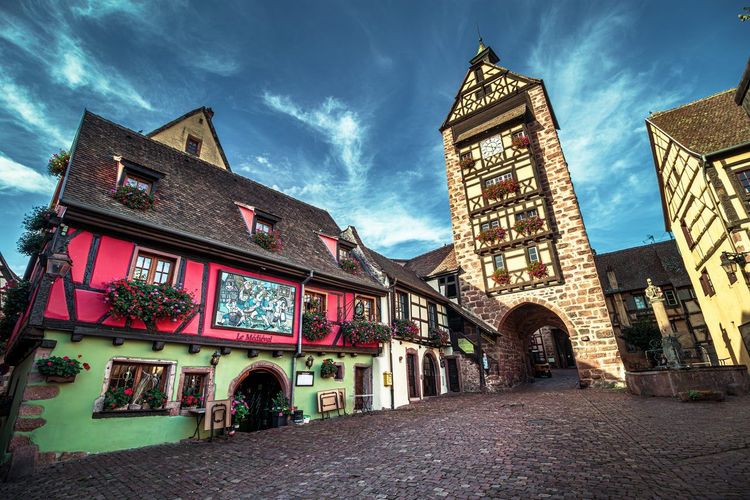
Riquewihr (2 Rue du Général de Gaulle, 68340 Riquewihr, rated 4.7/5 on Google based on 12,000 reviews) is often presented as the most visited village in Alsace, and for good reason—with a few nuances. Built between the 12th and 16th centuries, it was virtually untouched by the two World Wars. The Rue du Général de Gaulle, the main street stretching about 400 meters, lines up Renaissance houses with timber-framed overhangs, geranium pots on balconies, and hand-forged signs. This intact setting is rare on a European scale: most villages in Alsace lost their original buildings during the conflicts of 1870, 1914–1918 or 1944–1945.
The Dolder, a 13th-century defensive tower fitted with a clock, forms the symbolic entrance to the village. Its internal museum traces seven centuries of local life across some twenty rooms. Allow 1.5 to 2 hours for a complete visit of the center, longer if you explore the tasting cellars: Riquewihr is at the heart of the Riesling Grand Cru appellation, and about a dozen cellars open their doors directly onto the main street.
Visit on a weekday, before 10 am or after 5 pm. Between 11 am and 4 pm on summer weekends, the streets can be so saturated with tour groups that the visit becomes less enjoyable. Riquewihr at 8:30 am, however, with shopfronts still closed and oblique light falling on the half-timbering, is an experience in itself. In winter, during the Christmas market (mid-November to late December), the village is transformed and draws a more focused crowd, often with more authenticity than its neighbor Colmar. Note: parking is paid year-round in the outlying car parks (around 4 euros per day), and no cars are allowed inside the medieval enclosure.
2. Eguisheim
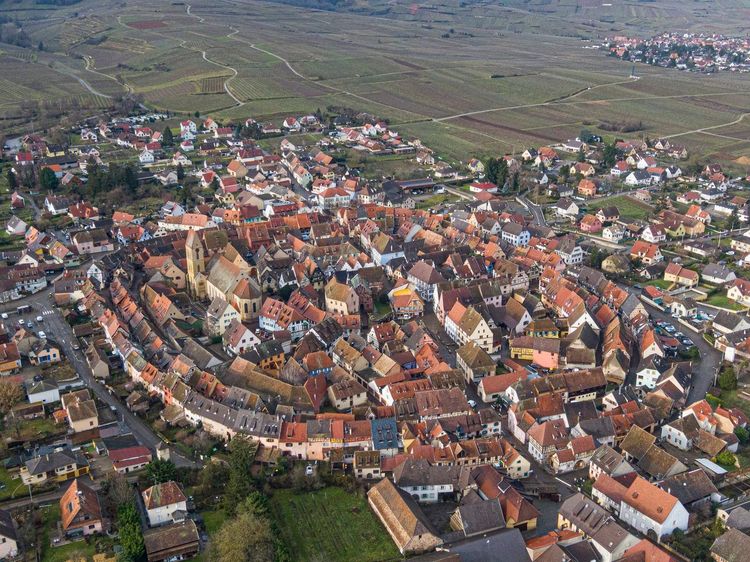
Eguisheim (Grand-Rue, 68420 Eguisheim, rated 4.8/5 on Google based on 8,000 reviews) is the only village in Alsace with a perfectly circular layout: a single spiral street encircles the former castle of the Counts of Eguisheim-Dagsburg. It was in this castle that Bruno d'Eguisheim was born in 1002, who would become Pope Leo IX. A statue of this local pope stands in the central square, surrounded by half-timbered houses, some of which date back to the 15th century.
Labeled a 'Most Beautiful Village of France', Eguisheim also produces renowned wine: the Eichberg and Pfersigberg Grand Crus flank the village on the vineyard side. The Cave d'Eguisheim cooperative, founded in 1902, offers tastings in its 19th-century cellars with no reservation required. Plan a stop for the Gewurztraminer and Pinot Gris, two grape varieties in which the village excels. Sunday morning remains the best time to visit, before tour groups arrive from Colmar 7 km away. Allow 2 to 3 hours for a complete visit.
Several houses bear explanatory plaques illustrating their history. The southern quarter, around the Rue des Remparts, is less frequented than the central spiral: it features timber-framed facades with overhangs in pastel shades (ochre, apple green, burgundy) chosen by residents according to an architectural charter dating from the 1970s. Curiosity: no house in the historic center has a visible garage. The village organized itself so that cars remain invisible from its lanes.
3. Kaysersberg
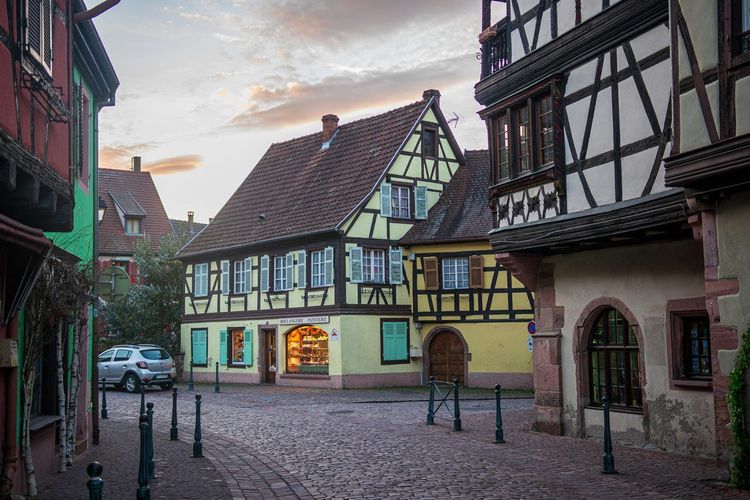
Kaysersberg (Place du Marché, 68240 Kaysersberg, rated 4.5/5 on Google based on 46 reviews) has a decisive advantage over Riquewihr: its lanes are less linear and less easily overwhelmed by tourists. The village is organized around the Habsburg castle (in ruins, free access) that dominates the valley from a rocky spur. From above, the view over the rounded-tile rooftops, bell towers and vineyards stretching to the Alsace plain is worth the detour in itself.
Kaysersberg is also the birthplace of Albert Schweitzer, physician, theologian and musician born here in 1875, Nobel Peace Prize laureate in 1952. His birthplace has become a free museum, open from April to December. The 15th-century Fortified Bridge, one of the few covered bridges in Alsace still standing, and the Sainte-Croix church with its 1518 altarpiece are the two other highlights. Since 2016, Kaysersberg has merged with Kientzheim and Sigolsheim to form the commune of Kaysersberg Vignoble: if you come by car, these two hamlets are worth an additional 30-minute detour, each featuring partial ramparts and tasting cellars accessible without an appointment.
4. Obernai
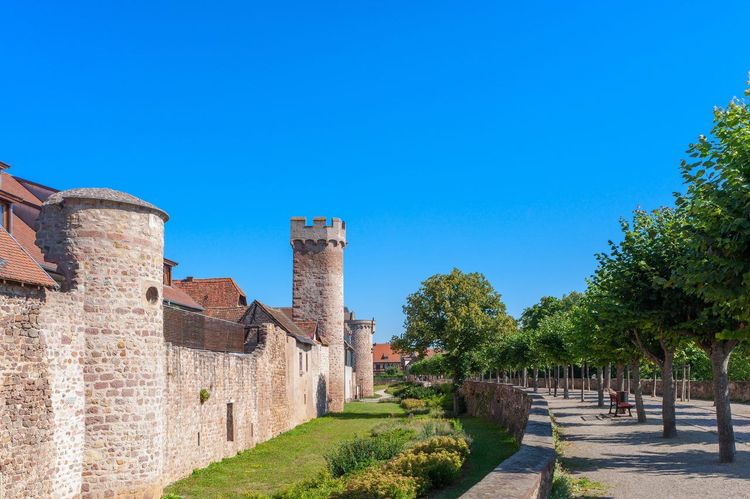
Obernai (Place du Marché, 67210 Obernai, rated 4.6/5 on Google based on 5,000 reviews) is often the first Alsatian stop for those setting out from Strasbourg, just 30 km to the south. It is also one of the few towns on the Route des Vins to have kept its ramparts almost entirely intact: 3 km of medieval fortifications still surround the historic center, with several corner towers including the 15th-century Tour de la Chapelle.
The Place du Marché concentrates several centuries of architecture in a single glance: the Renaissance Town Hall of 1523, the 16th-century arcaded Corn Market, the belfry of the Tour de la Chapelle and a six-bucket fountain dating from 1579 all stand side by side. The Tuesday, Friday and Saturday morning markets animate this square with a mix of local producers and craftspeople. Obernai is also home to the Kronenbourg brewery, not open for visits since its acquisition by Carlsberg, but whose industrial buildings at the northern entrance to the town form an unexpected contrast with the medieval center. To extend the visit with an authentic culinary experience, our Ryo guide to farm inns in Alsace lists the best dining options in this part of the Bas-Rhin.
5. Wissembourg
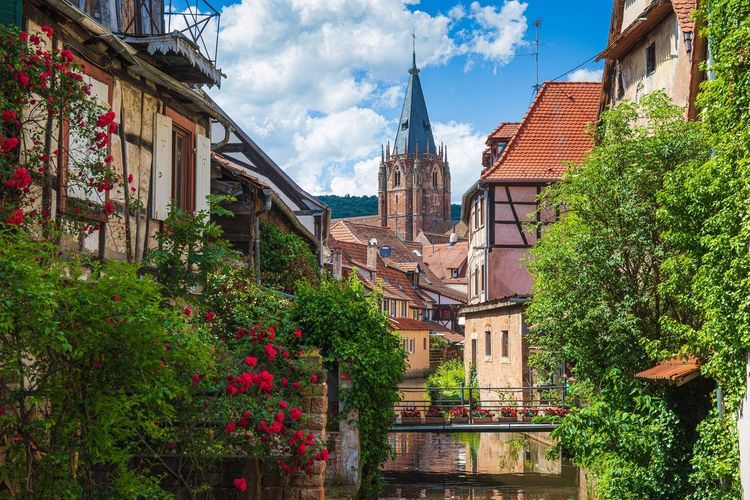
Wissembourg (Place de la République, 67160 Wissembourg, rated 4.6/5 on Google based on 3,000 reviews) is located 60 km north of Strasbourg, on the German border. It is the least known village on this list for non-Alsatian tourists, and that is precisely its appeal. The almost intact medieval center features a 13th-century Gothic abbey church, the second largest church in Alsace after Strasbourg Cathedral, and half-timbered houses whose foundations plunge into the Lauter, the border river.
The Bruch quarter, to the east of the center, is the most photogenic: timber-framed houses on stilts overhang the branches of the Lauter, creating a 'Little Venice' setting less well known than those of Colmar or Strasbourg. The Saints-Pierre-et-Paul abbey church features an 18th-century organ and medieval frescoes rediscovered during a restoration in 1968. In June, the medieval market of Wissembourg attracts several thousand visitors over two days. The Parc du Lauter, which runs alongside the river for 2 km, offers a pleasant free walk in any season.
6. Ribeauvillé
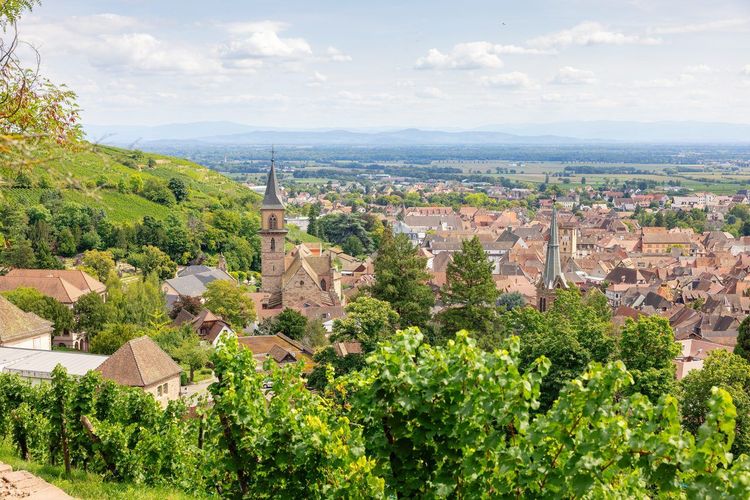
Ribeauvillé (Grand-Rue, 68150 Ribeauvillé, rated 4.6/5 on Google based on 4,000 reviews) sometimes surpasses Riquewihr in connoisseur rankings for a simple reason: the village is less centered on tourist trade. The Grand-Rue stretches for 800 meters between two partially preserved sets of ramparts. Three medieval castles overlook the village from the Vosges ridge: the castles of Saint-Ulrich, Girsberg and Haut-Ribeaupierre, accessible on foot via a 3 km trail from the center.
The old Tour des Bouchers (14th century), a guard tower converted into a belfry, separates the lower and upper parts of the village. It is also in Ribeauvillé that the 'Pfifferdaj', the minstrels' festival and one of the oldest folk festivals in Alsace, takes place every first weekend of September. The wine fair in August and the Saint-Grégoire market in July round out a dense festive calendar. Ribeauvillé produces a Grand Cru Riesling (Kirchberg de Ribeauvillé) that several cellars offer for direct tasting from their premises in the historic center.
7. Hunspach
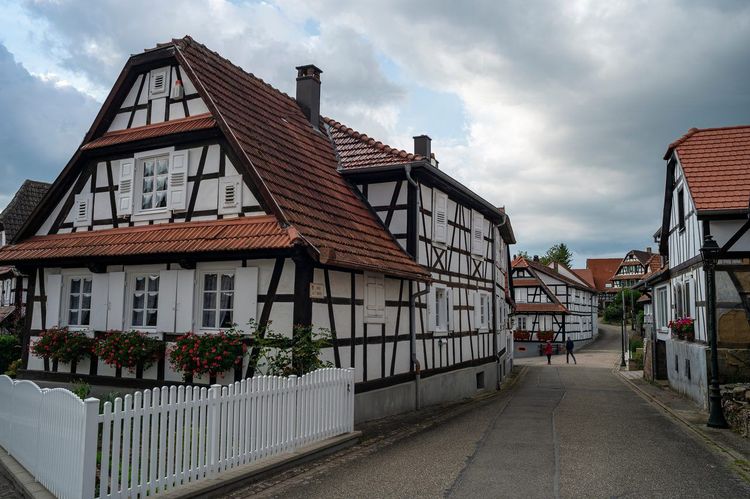
Hunspach (Rue Principale, 67250 Hunspach, rated 4.7/5 on Google based on 2,000 reviews) looks like no other village on this list. No vivid colors on the facades, no overflowing geraniums: here, the half-timbered houses are entirely whitewashed, with dark green shutters and windows with small rounded panes. This distinctive aesthetic, inherited from the Swiss settlers who rebuilt the village after the Thirty Years' War, earned it the status of a fully listed Historic Monument—a rarity in France.
Voted 'France's Favorite Village' in 2020, Hunspach has resisted the commercial transformation affecting other Alsatian towns: no advertising signs, no chain restaurant, architecture preserved across around a hundred buildings. The village is located 60 km north of Strasbourg, in the Parc Naturel Régional des Vosges du Nord. An hour is enough to walk around it, but visitors tend to linger far longer.
8. Turckheim
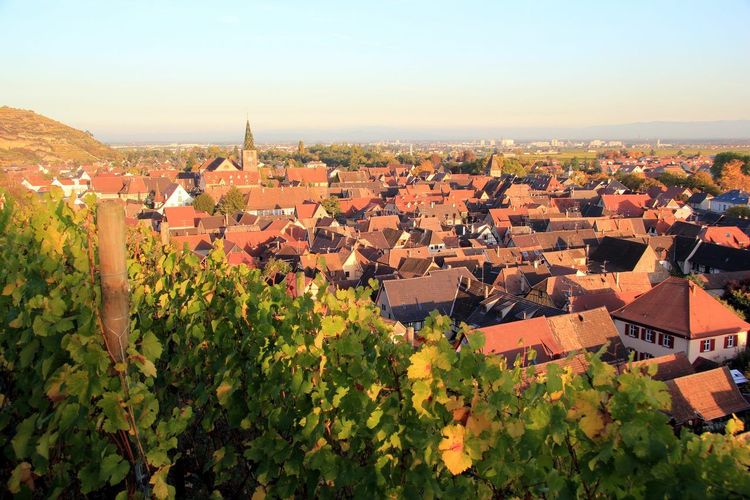
Turckheim (Place Turenne, 68230 Turckheim, rated 4.5/5 on Google based on 1,500 reviews) still retains its three medieval fortified gates: the Porte de France, the Porte de Munster and the Porte de Brand. Its historic center is walked every evening from May to October by a night watchman in period costume, at exactly 10 pm. This unique figure in Alsace walks the lanes with his lantern, reciting historical texts about past events. The show is free and lasts around 30 minutes.
The Brand vineyard, one of the most highly rated Grand Crus in Alsace, begins immediately outside the ramparts. The Cave Vinicole de Turckheim cooperative, founded in 1955, produces a Brand Riesling recognizable by its mineral notes and longevity. Turckheim combines easily with Colmar (5 km away) or Kaysersberg (10 km away) for a day on the Route des Vins.
9. Andlau
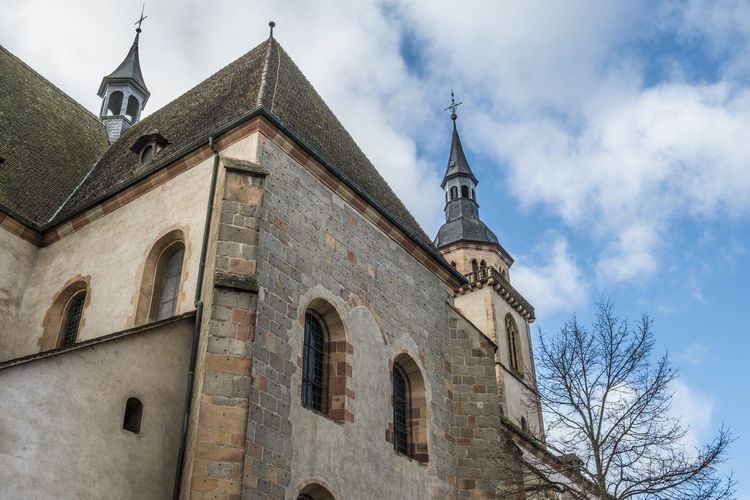
Andlau (Rue du Général Koenig, 67140 Andlau, rated 4.5/5 on Google based on 800 reviews) is known to lovers of Romanesque art for its 12th-century abbey church, whose sculpted portal features one of the best-preserved Romanesque friezes in Alsace. According to the founding legend, the abbey was built on the spot where a bear, tamed by Queen Richarde, wife of Emperor Charles the Fat, had stopped digging the ground. The bear has since become the village's symbol, and a stone bear cub has stood watch at the entrance to the porch for more than eight centuries.
The village is also a good base for hiking: the trails to the ruined castles of Spesbourg and Andlau offer panoramic views over the Alsace plain from around 500 meters altitude. Andlau has two Grand Crus, Kastelberg and Wiebelsberg, and local cellars open at weekends for tastings. At 40 km from Strasbourg, it makes for an easy half-day trip. For those wanting to extend their stay on the Vosges trails, our Ryo selection of the most beautiful hikes in Alsace lists the marked routes in this area.
10. Hunawihr
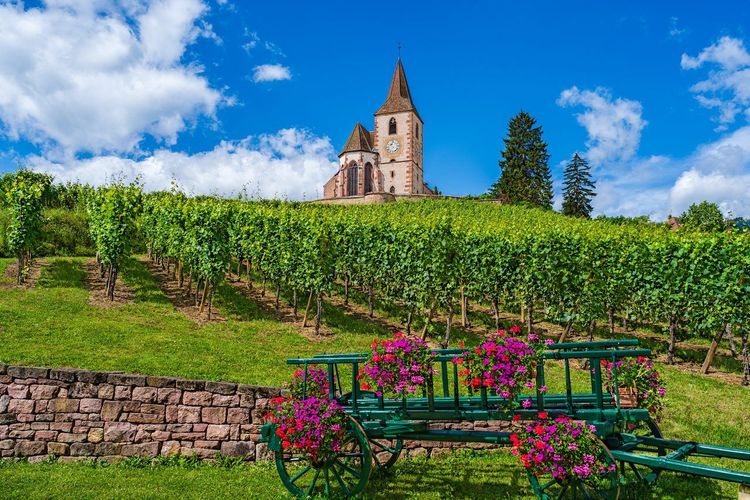
Hunawihr (Rue de l'Église, 68150 Hunawihr, rated 4.5/5 on Google based on 700 reviews) has barely 600 inhabitants but boasts two attractions unique in Alsace: its 15th-century fortified church, with a cemetery surrounded by a hexagonal rampart that served as a refuge for villagers during wartime, and its Stork Reintroduction Center, founded in 1976. This center played a decisive role in saving the Alsatian stork: the population had fallen to 9 nesting pairs in the 1970s before recovering to more than 500 today.
The village can be visited in an hour and a half by combining the fortified church and the stork center (admission around 10 euros, open April to November). The Cave Vinicole de Hunawihr produces a discreet and refreshing Sylvaner, perfect to accompany a local choucroute.
11. Bergheim
Bergheim (Grande Rue, 68750 Bergheim, rated 4.5/5 on Google based on 600 reviews) is one of the best-fortified villages in Alsace: its 14th-century medieval enclosure is preserved along almost its entire circumference, with three towers still standing and an ogival entrance gate. Unlike its neighbors on the Route des Vins, Bergheim has escaped overcrowding: its streets remain calm even in the height of summer, making it an excellent choice if you seek authenticity over bustle.
The village is also known for having held one of the last great witchcraft trials in Alsace, in 1683. A plaque on the town hall recalls this less glorious historical fact. The centuries-old lime trees on the main square, planted in the 17th century, provide welcome shade in summer, and a Sunday local producers' market sets up there from May to October.
12. Mittelbergheim
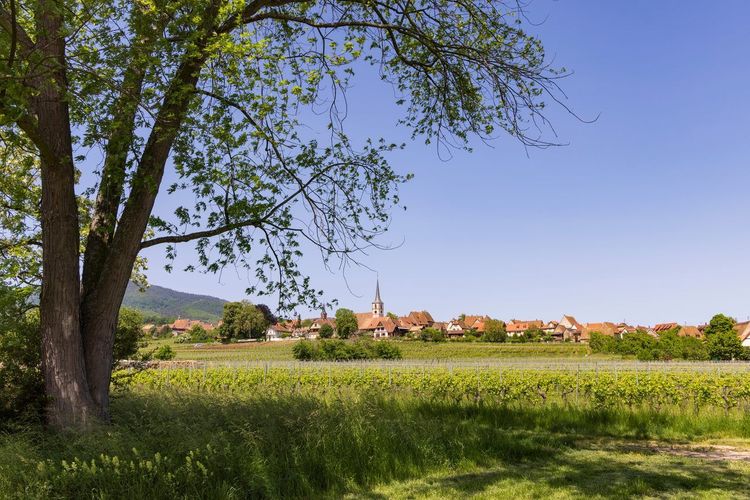
Mittelbergheim (Rue Principale, 67140 Mittelbergheim, rated 4.4/5 on Google based on 400 reviews) is listed among the 'Most Beautiful Villages of France' for its remarkable Renaissance wine-growing heritage. The Grand-Rue is lined with 16th- and 17th-century houses whose sculpted portals bearing the coat of arms of wine-growing families constitute an exceptional catalog of rural architecture. The village produces two Grand Crus: the Zotzenberg, renowned for its Sylvaner (an extremely rare grape variety in a Grand Cru appellation), and the Brandluft.
Mittelbergheim is easily visited from Andlau or Barr (4 km away). Its discretion is part of its charm: no listed-site signage announces the significance of its architecture, and visitor numbers remain in the dozens even in high season. Strasbourg provides the urban counterpoint: our audio walking tour there covers 6.6 kilometres, from the Petite France to the European institutions.
13. Dambach-la-Ville
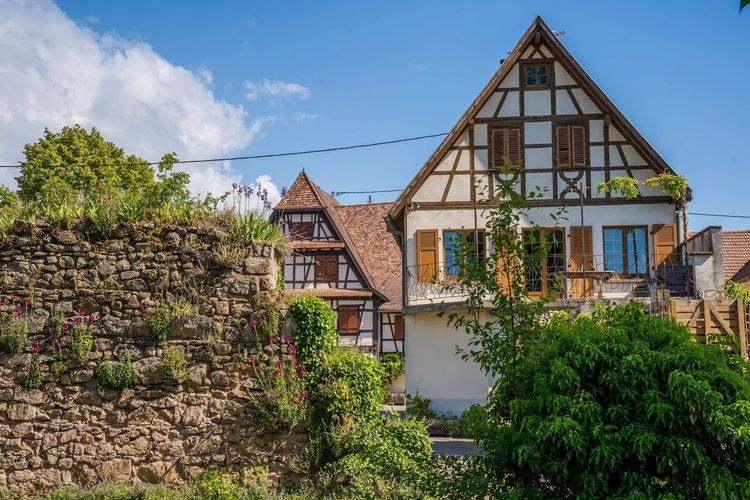
Dambach-la-Ville (Place du Marché, 67650 Dambach-la-Ville, rated 4.5/5 on Google based on 500 reviews) is often described as 'Riquewihr without the tourists', and that is a fair summary of its appeal. The medieval enclosure is almost entirely intact, with its three gates and corner towers; the Place du Marché, surrounded by 15th-century half-timbered houses, could have served as a historical film set without modification. The village produces the Frankstein Grand Cru, a pink granite terroir that yields Rieslings of a particularly distinctive minerality.
At 2 km from the center via a marked trail, the Chapelle Saint-Sébastien (17th century) offers a panoramic view over the vineyards and the plain. It is a one-hour round-trip walk with no particular difficulty. Dambach is 50 km from Strasbourg, with a station served by the TER Strasbourg–Saint-Dié line. For the Christmas markets that set up in these villages from mid-November, our Ryo guide to Christmas markets in Alsace details the dates and specialties of each town.
14. Barr
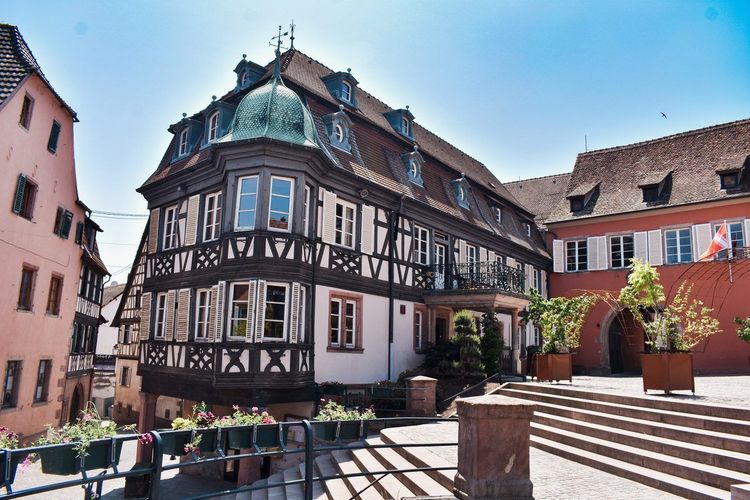
Barr is the largest town in this selection without being a true city: 7,000 inhabitants, an active commercial life, and a weekly Wednesday morning market that caters to residents as much as visitors. The Baroque Town Hall from the 17th century and the Musée de la Folie Marco, a handsome 18th-century mansion converted into a museum of Alsatian decorative arts, are the two unmissable sights.
Barr is also the capital of the Klevener de Heiligenstein, a grape variety unique in France grown only on the Heiligenstein hillside adjacent to the village. Lovers of little-known Alsatian wines will find plenty to taste in several independent cellars open without an appointment.
15. Rosheim
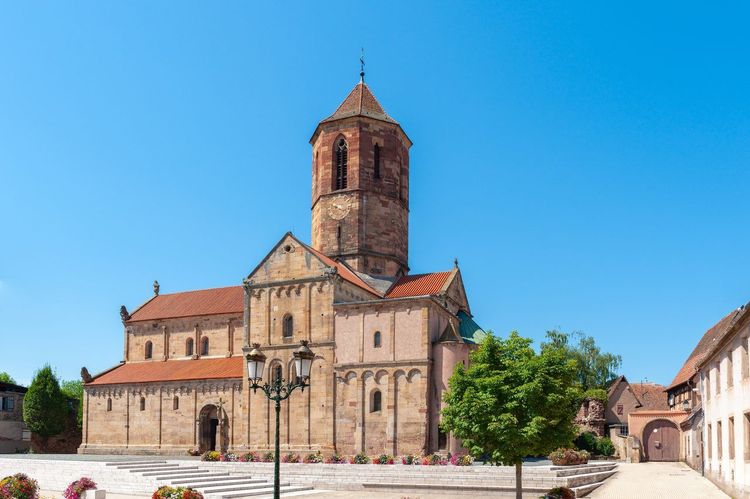
Rosheim (Place de l'Église, 67560 Rosheim, rated 4.4/5 on Google based on 700 reviews) is home to one of the oldest houses in France still standing: the Maison Romane, built in the 12th century, visible on the Rue du Général de Gaulle, which exceptionally opens for guided tours in summer. Its true gem is the Saints-Pierre-et-Paul church, a masterpiece of Alsatian Romanesque art completed around 1150, whose portal sculptures depicting Daniel in the lion's den are of striking precision.
Rosheim remains little known to mainstream tourism despite its medieval richness. Access from Strasbourg is particularly easy: 25 km via the A35 motorway, then free parking at the edge of the rampart. Allow 1.5 hours for a complete tour including the ramparts and the two Romanesque buildings.
16. Neuf-Brisach
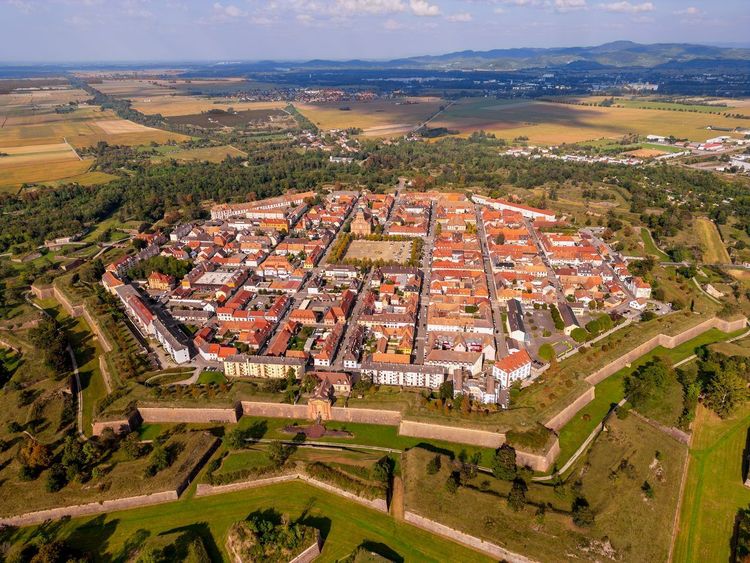
Neuf-Brisach (Place d'Armes, 68600 Neuf-Brisach, rated 4.5/5 on Google based on 191 reviews) is an anomaly on this list: no picturesque half-timbering, no geraniums. Built entirely by Vauban between 1698 and 1703 on the orders of Louis XIV, it is an octagonal fortress town listed as a UNESCO World Heritage Site in 2008. Seen from the ramparts or on the map available at the tourist office, the perfect geometry of the layout is striking. The Musée Vauban, housed in the Porte de Belfort, traces the construction of the town and its military history up to 1918 (admission 4 euros). For lovers of military architecture, it is a must-see detour 80 km from Strasbourg.
17. Zellenberg
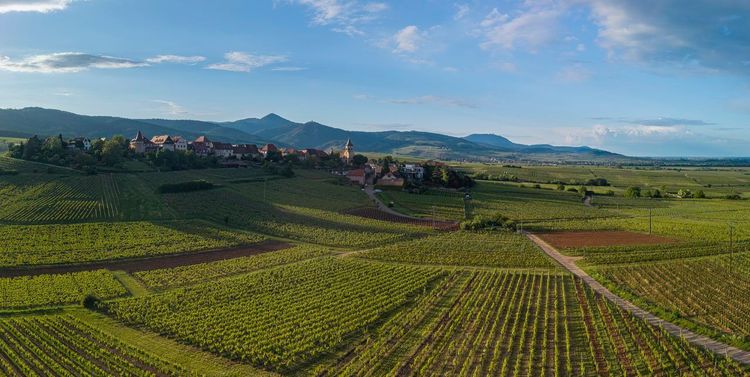
Zellenberg (Rue du Château, 68340 Zellenberg, rated 4.6/5 on Google based on 360 reviews) is perched on a hill at 300 meters altitude, 2 km from Riquewihr. The village has around a hundred houses and a single main street, but the view over the vineyards stretching to the Black Forest on a clear day makes the stop worthwhile. Combine the visit with Riquewihr and Hunawihr (3 km away) for a well-filled morning on the Route des Vins.
18. Ferrette
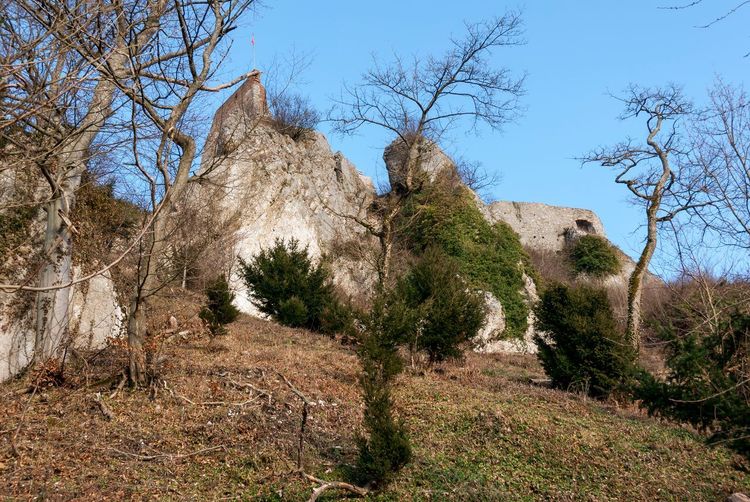
Ferrette (Place du Général de Gaulle, 68480 Ferrette, rated 4.5/5 on Google based on 952 reviews) is the southernmost town in this selection, 110 km from Strasbourg, at the gateway to the Alsatian Jura. The former capital of the County of Ferrette, which passed to the House of Habsburg in the 14th century, it retains the imposing ruins of two superimposed medieval castles on a limestone cliff. The staircase hewn into the rock leading up to the towers offers a plunging view over the wooded hills and, on a clear day, all the way to the Swiss Alps. A brief but memorable stop, especially at the end of the day.
19. Marlenheim
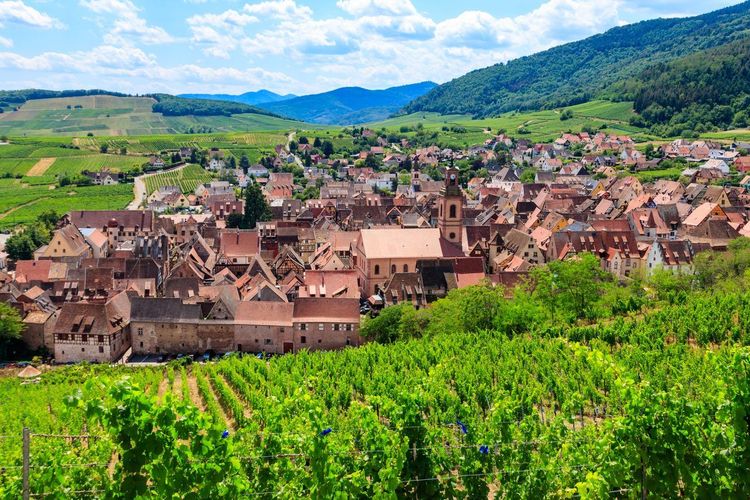
Marlenheim (Place du Général de Gaulle, 67520 Marlenheim, rated 4.3/5 on Google based on 400 reviews) is the official northern gateway to the Alsace Wine Route, 25 km from Strasbourg. A discreet wine-growing village, little visited outside of wine fairs, it produces Auxerrois and Pinot Noir, the two main Alsatian reds. The Fête de l'Ami Fritz in September, which celebrates traditional betrothals with villagers in period costume, is one of the last living folk traditions of the Bas-Rhin.
20. Molsheim
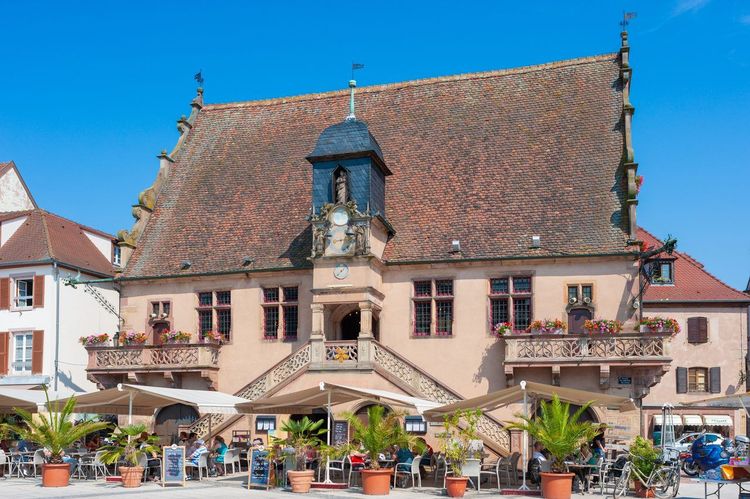
Molsheim (Place de l'Hôtel de Ville, 67120 Molsheim, rated 4.4/5 on Google based on 600 reviews) is a small medieval town 20 km from Strasbourg whose Metzig, a former 17th-century guild butcher's hall converted into a museum, is the most distinctive building in the region. Founded by the Jesuits as a stronghold of Alsatian Catholicism in the 16th century, Molsheim features a Jesuit church and partial ramparts that frame a pleasant center to explore on foot. Bugatti started here in 1909, and a museum traces this automotive saga in the former workshops.
21. Ottrott
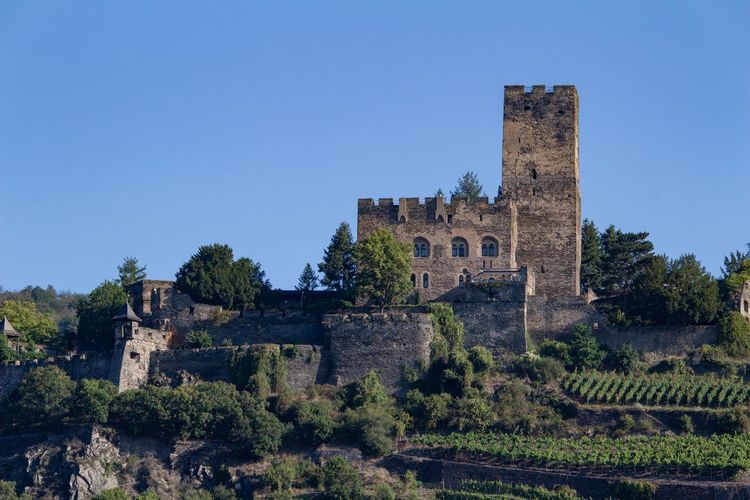
Ottrott (Rue du Général de Gaulle, 67530 Ottrott, rated 4.4/5 on Google based on 500 reviews) is best known for its red wine, a rarity in Alsace. The Ottrott Rouge, made from Pinot Noir planted on the slopes beneath the Kagenfels castle, is a light and fruity wine produced by a handful of family wine-growers. The village has two ruined medieval castles, Rathsamhausen and Kagenfels, accessible on foot in 45 minutes from the center with an open view over the plain. Combined with Obernai (5 km away), it makes for an easy half-day trip from Strasbourg.
22. Scherwiller
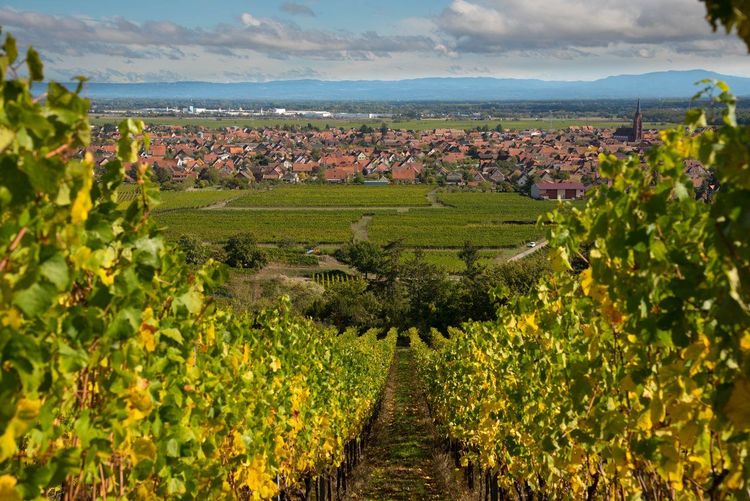
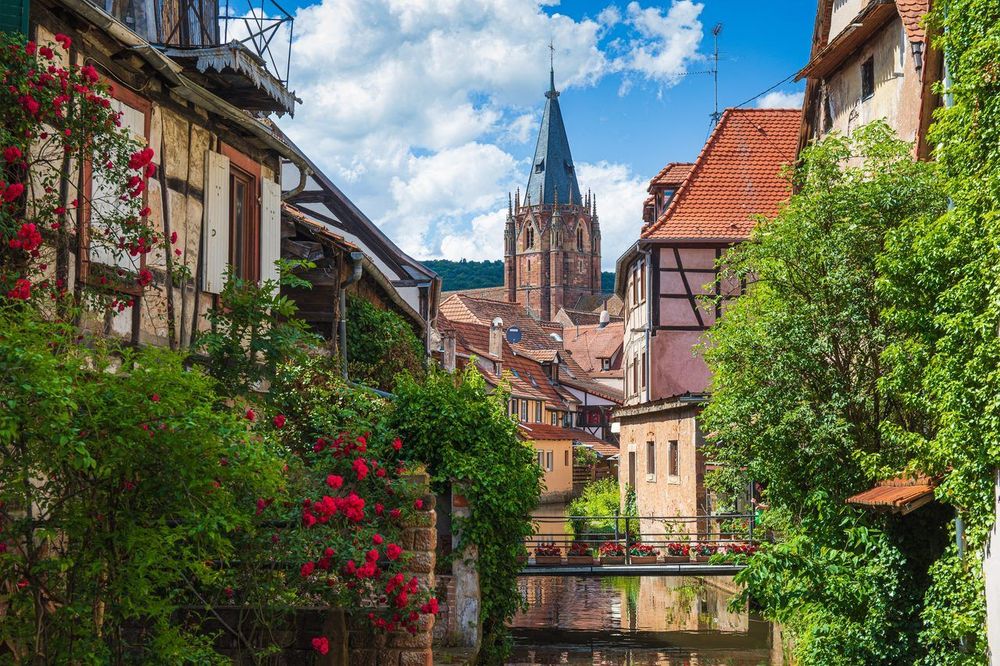
Scherwiller (Rue de la Vieille Forge, 67750 Scherwiller, rated 5/5 on Google based on 48 reviews) is undoubtedly the least known village in this selection, and perhaps the most genuinely picturesque. Crossed by the Scheer stream, the main street runs alongside a canal for around a hundred meters: half-timbered houses and small wooden footbridges create a scene that has barely changed since the 1950s. At 45 km from Strasbourg, between Sélestat and Dambach-la-Ville, it can be visited in an hour and combines easily with Dambach for a morning in the wine-growing Bas-Rhin.



FAQ
Which is the most beautiful village to visit around Strasbourg?
Riquewihr is most often cited first for its intact medieval center and 16th-century Renaissance houses. Eguisheim, labeled a 'Most Beautiful Village of France' and birthplace of Pope Leo IX, regularly disputes the title. For a crowd-free visit, Hunspach, voted 'France's Favorite Village' in 2020, offers a more authentic experience with its entirely whitewashed architecture preserved since the 17th century.
Which villages can be visited around Strasbourg in a single day?
Setting out in the morning, combine 3 to 4 nearby villages: Obernai and Ottrott (30–35 km away, around 2 hours each) in the morning, Rosheim at midday, then Molsheim (20 km from Strasbourg) in the late afternoon. For the wine villages on the Route des Vins, Riquewihr, Ribeauvillé and Kaysersberg are 70–80 km away: plan a full day or a weekend.
When is the best time to visit the Alsatian villages around Strasbourg?
From mid-November to late December, Christmas markets transform these villages: Kaysersberg and Riquewihr host some of the most renowned in Alsace. From June to September, the vineyards are lush and most wine cellars are open. Autumn (October) is ideal for the colors of the vines and the relative absence of crowds. Our Ryo guide to Christmas markets in Alsace details the dates and specialties of each village.
How do you get to the Alsatian villages from Strasbourg without a car?
The TER Strasbourg–Colmar line serves Obernai, Rosheim, Barr and Dambach-la-Ville. From Colmar (40 minutes from Strasbourg by TER), seasonal shuttles connect Riquewihr, Ribeauvillé and Eguisheim in summer. For Hunspach, Wissembourg and the villages in the northern Bas-Rhin, a car remains necessary. Cycling is feasible for Molsheim and Marlenheim via the cycle paths running alongside the Canal de la Bruche.
Which Alsatian village is the most photogenic?
Eguisheim, with its circular layout and colorful houses, offers angles that are impossible to miss whatever the season. Hunspach, with its white sobriety and timber-framed overhangs, produces more original and less-seen photos. For landscapes combining vineyards and fortresses, the viewpoint at the Habsburg castle in Kaysersberg or the ramparts of Bergheim in autumn provide remarkable wide-angle shots.
Can the Alsatian villages be visited with children?
Several villages are particularly family-friendly. The Stork Reintroduction Center in Hunawihr will delight younger visitors (admission around 10 euros, open April to November). The night watchman of Turckheim (May to October, 10 pm, free) is a unique attraction in Alsace. The castle ruins at Ferrette, Andlau or Ottrott lend themselves well to exploration. In Strasbourg itself, our Ryo guide to visiting Strasbourg Cathedral provides the keys to a family visit before heading out to the villages.
These Alsatian villages, all accessible from Strasbourg, together paint a faithful portrait of a region that has crossed the centuries without becoming uniform. Riquewihr and its Renaissance houses, Hunspach and its white sobriety, Neuf-Brisach and its military geometry: each tells a different chapter of Alsace's story, and none resembles the next.
To plan your stay from Strasbourg, the Ryo audio-guided tour of Strasbourg offers 33 commented audio stops on the main highlights of the Alsatian capital, a way to understand the region before venturing out to its villages. Our Ryo app is available without a subscription for a first discovery.
À lire également