
Créé par Romane, le 17 nov. 2026
Votre guide Ryo
Colmar, France
On the road to Alsace
Parcours audioguidé pour visiter Colmar en 1 jour
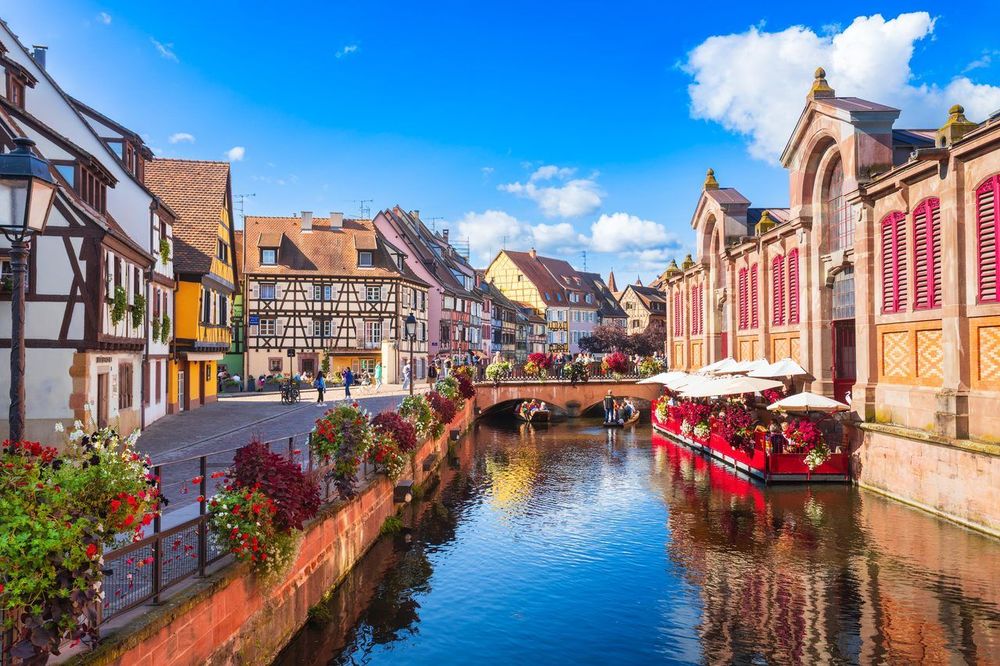
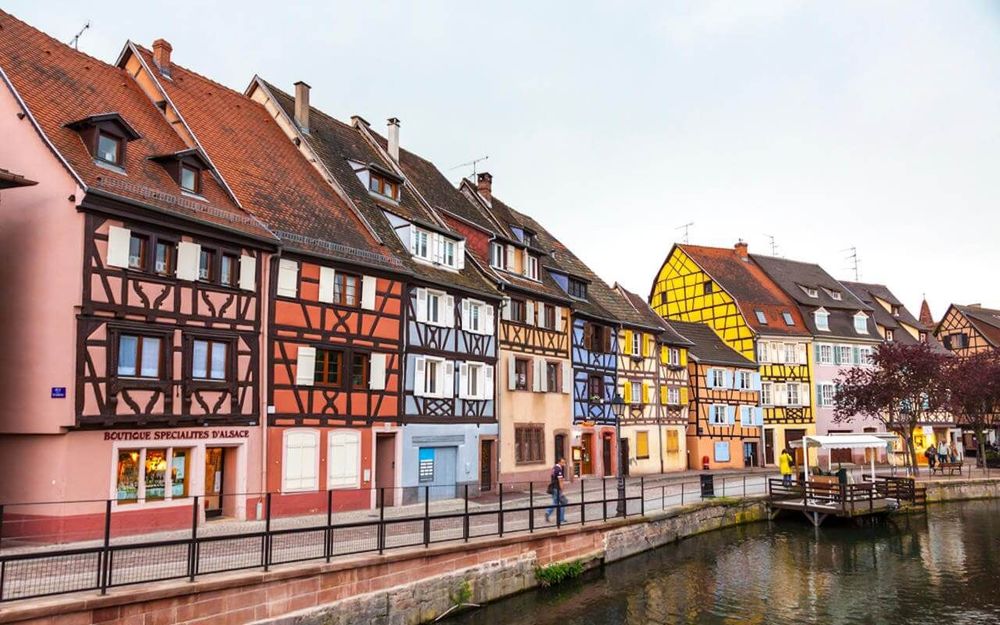
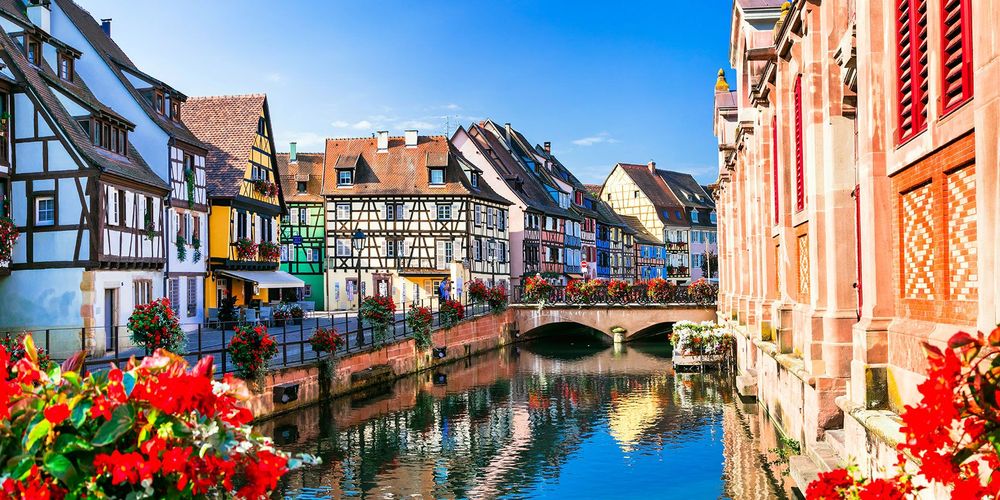
This visit to Colmar invites you on an enchanted stroll past its richly colored half-timbered houses, flower-filled balconies, and wrought-iron shop signs. It highlights the elegance of the Rhenish Renaissance, the poetry of Little Venice, and the wine-growing art de vivre that still animates the heart of the old town today. A simple and immersive way to explore Colmar at your own pace, between architectural treasures and the gentle serenity of the waterside!
Quand partir à Colmar ?
Jan.
2°
7
Feb.
3°
6
March
7°
6
April
11°
6
May
15°
9
June
19°
8
July
21°
7
Aug.
20°
7
Sept.
16°
6
Oct.
11°
7
Nov.
6°
7
Dec.
3°
7
Colmar enjoys a unique microclimate—one of the driest in France due to the protection of the Vosges Mountains—with warm summers averaging around 26°C and cold winters where the mercury often drops to around 0°C. The most favorable times to visit "Little Venice" are the summer season, from June to September, ideal for traveling the wine route under a generous sun, as well as the month of December, which is absolutely magical thanks to its Christmas markets, renowned as some of the most beautiful in Europe. Spring, particularly around Easter, also offers a special charm with its artisanal decorations and blooming gardens in the newfound springtime mildness.
Départ conseillé
No need to worry about where to begin! Our tours are designed as a loop, so you can jump in wherever you are. The navigation system and audio-guide will automatically adjust to your location. However, if you happen to be nearby, we do have a preferred starting point: On Rapp Square
Parking à proximité
"Place Rapp" underground parking lot, avenue de la République
Découvrez 23 lieux d'intérêt pour visiter Colmar



What to see in Colmar on your 1h10 tour?
This 2.7 km loop takes about 1 h 10 and links 22 sights. From Place Rapp, it crosses Rue des Marchands and the Grand Rue, drops toward the canals of Little Venice and its covered market, climbs back past the Old Customs House square to the Cathedral square and Saint Martin Collegiate Church, then reaches the Unterlinden Museum and the Municipal Theatre. With the Ryo app in your ears, every half-timbered house tells the story of Colmar.
Information checked in November 2026 and subject to change.
1 - Rapp Square
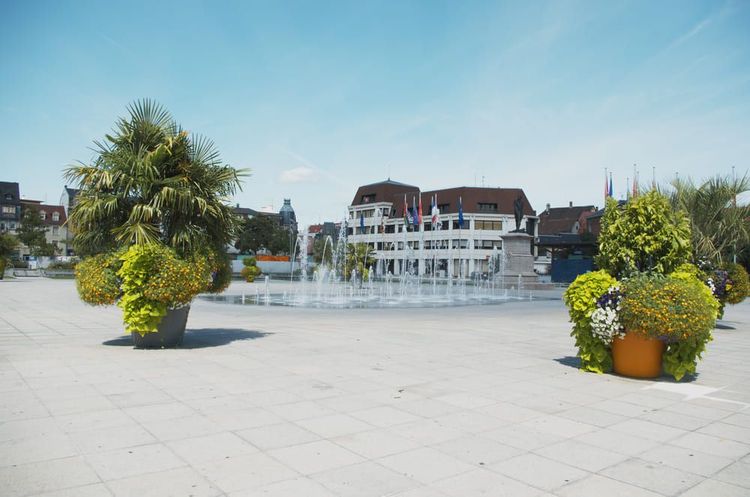
You are standing on Colmar's central square, dedicated to General Jean Rapp, Napoleon's loyal officer born in this city. His statue, unveiled in 1856, was created by fellow townsman Auguste Bartholdi, whose family kept the house where he was born, now a museum. Nearby stands a smaller replica of his most famous creation, installed to mark the centenary of his death. The square today borders the Champ de Mars, home to an antique carousel and a fountain honouring Admiral Bruat.
Free entry
2 - Rue des Marchands – Merchants' Street
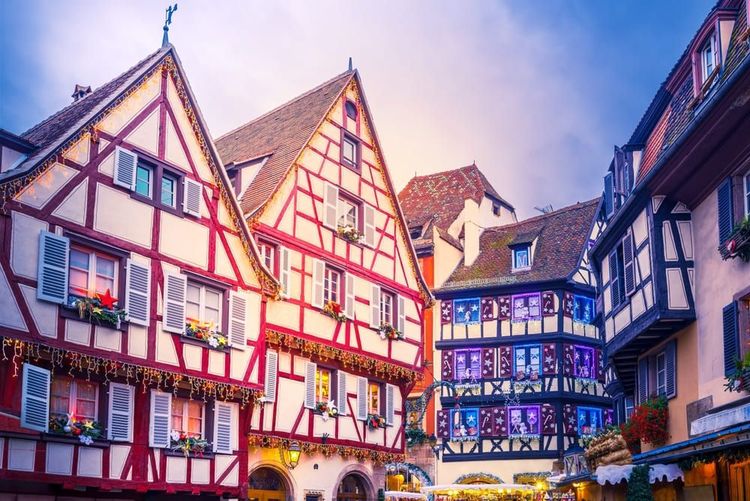
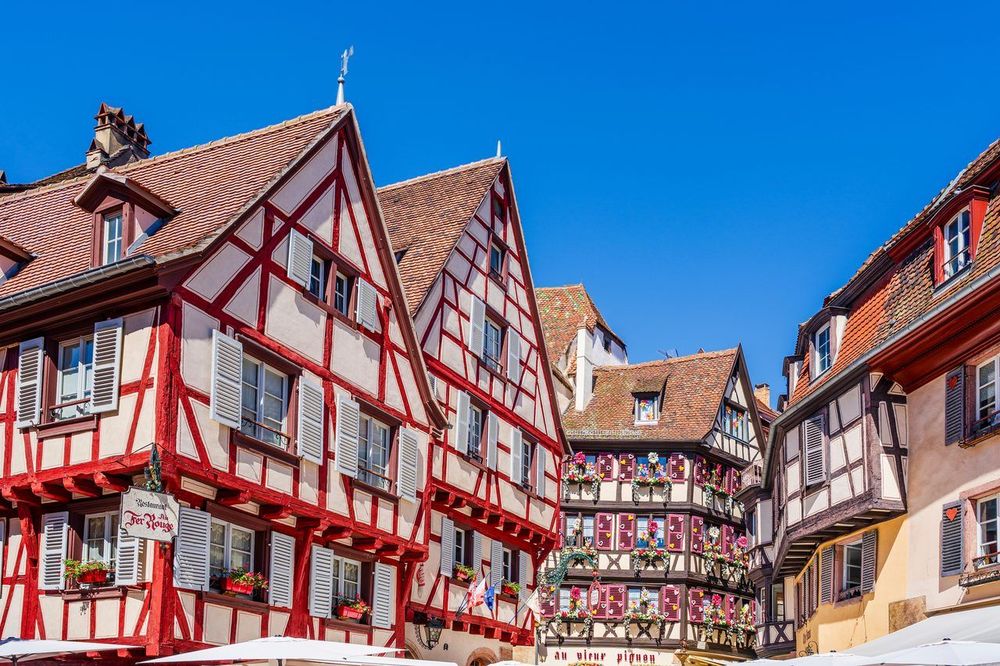
This shopping street in old Colmar invites visitors to wander among boutiques, ice-cream parlours and restaurants. Many of the buildings lining it are listed historic monuments; look up to admire their half-timbered facades, a sight that makes this one of the most photographed corners of town. The famous Pfister House hides along this very street, together with the museum devoted to sculptor Bartholdi, a native son.
Free entry
3 - Bartholdi Museum
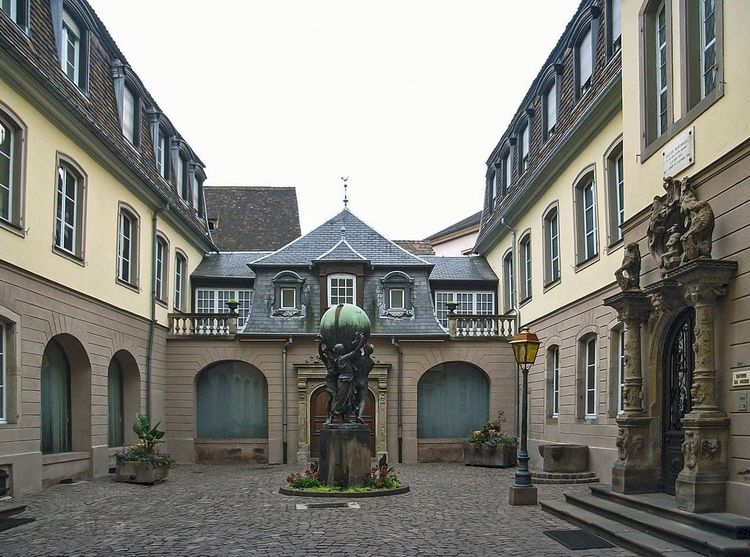
Spread across three floors, this museum occupies the sculptor's birthplace and displays paintings, sculptures, drawings, photographs and models of his work. Besides the Statue of Liberty, he created the Lion of Belfort, a monument to Vercingetorix in Clermont-Ferrand and a fountain in Lyon, along with pieces found in Paris, Switzerland and the United States. One room even recreates his final Paris apartment, complete with his own furniture and keepsakes.
Paid entry (about €5)
4 - Pfister House and Schongauer House
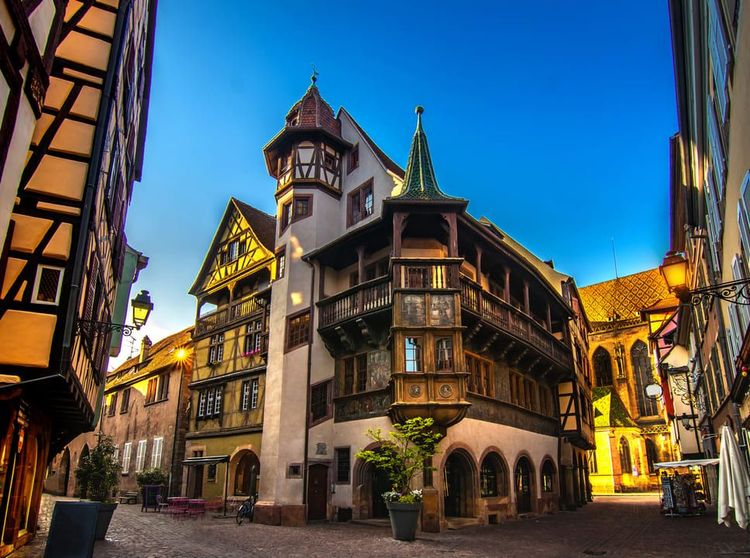
Turn around to admire two emblematic houses at this crossroads. On the right stands Pfister House, built in 1537, a Renaissance structure with medieval touches, recognisable by its two-storey corner oriel window, octagonal turret and biblical frescoes painted on yellow stone. On the left, Schongauer House, even older, takes its name from the family of painter and engraver Martin Schongauer, who created a masterpiece of German painting in 1473. Its red shutters and corbelled facade make it another listed gem.
Free to see from outside
5 - Colmar’s Manneken Pis
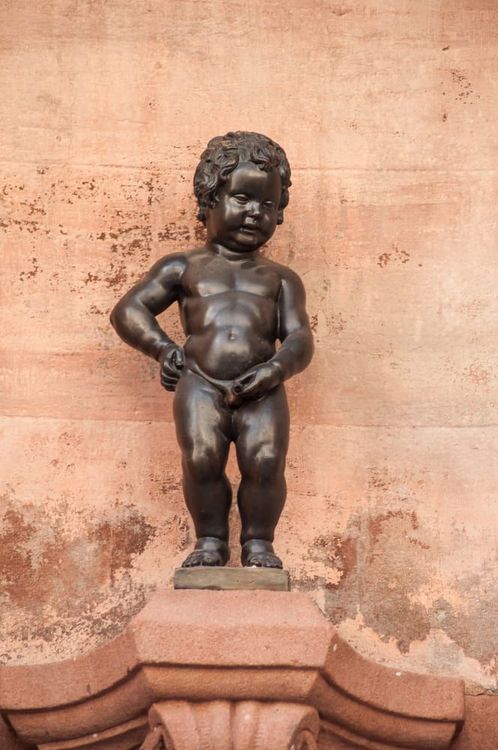
A Belgian touch surprises passers-by on the facade of the courthouse: a replica of the famous Brussels Manneken-Pis, made in 1922. It was the very first official copy of the original figure, preceding later ones in London and Japan. Given by the mayor of Brussels in tribute to the friendship between the two cities and the suffering they shared during the Great War, it was hidden in the Unterlinden Museum's storerooms during the second world conflict, before reclaiming its spot.
Free entry
6 - Grand’Rue of Colmar
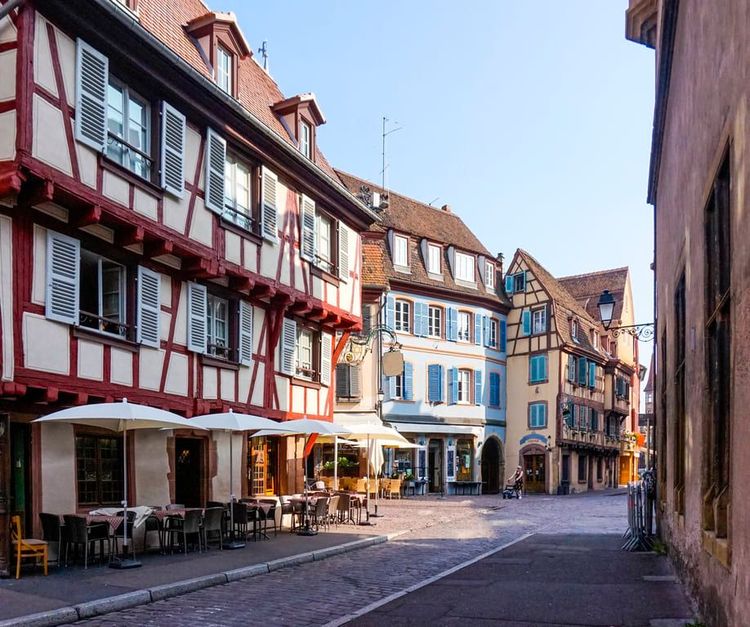
This shopping street connects the Six Black Mountains square to the one named after Joan of Arc, where public executions once took place. A young man was wrongly put to death there in the 18th century, accused of a theft he never committed, in a trial marked by intolerance toward the Jewish community; his innocence was recognised only months after his death. Today, half-timbered houses, breweries and shops bring life to this street, among the most picturesque in town.
Free entry
7 - House of the Knights of St John
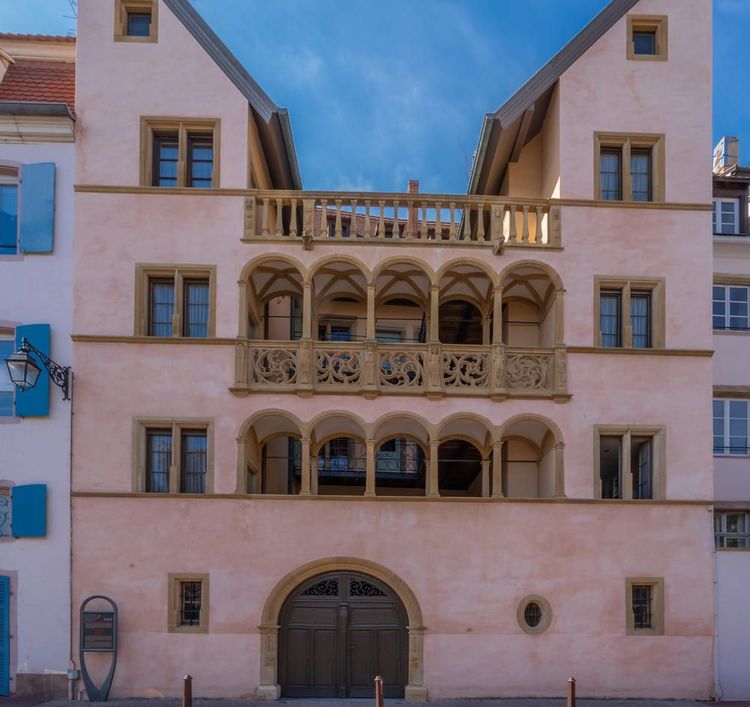
This building, modelled on Venetian palaces, owes its name to a mystery nobody has ever solved. Architect Albert Schmidt designed it in the 17th century, actually reusing the plan of an older house, demolished and rebuilt identically a century later to preserve this heritage inspired by the Italian Renaissance. Its arched arcaded gallery, running across two floors, earned it listed status as a historic monument.
Free to see from outside
8 - Six Black Mountains Square
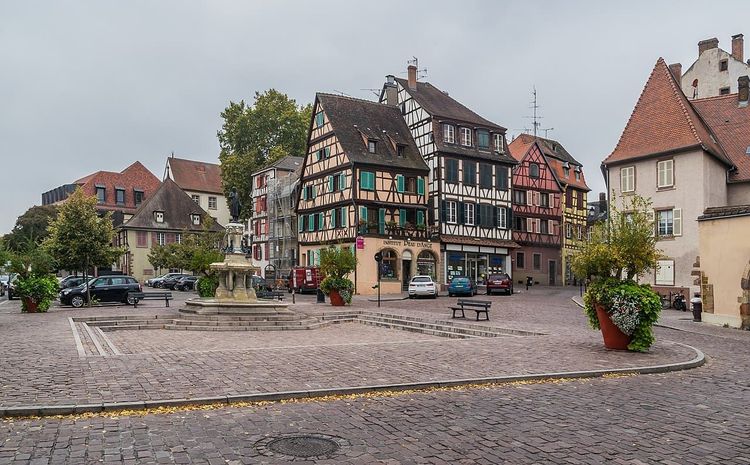
At the heart of the half-timbered houses of Little Venice stands a fountain topped by a statue signed Bartholdi in 1888. It depicts a medieval provost who, in 1262, dared to resist the Bishop of Strasbourg's attempt to conquer the city, even at the cost of his life. Some claim the face actually resembles a later mayor who opposed the annexation of Alsace. The square itself takes its name from an old inn that once stood here.
Free entry
9 - Little Venice
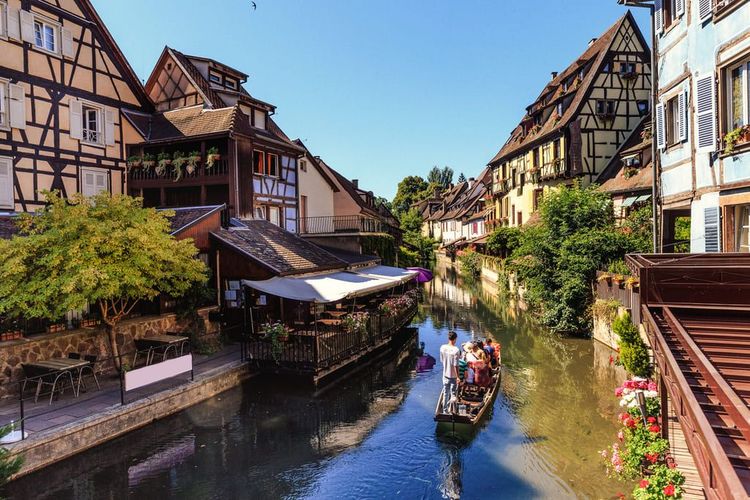
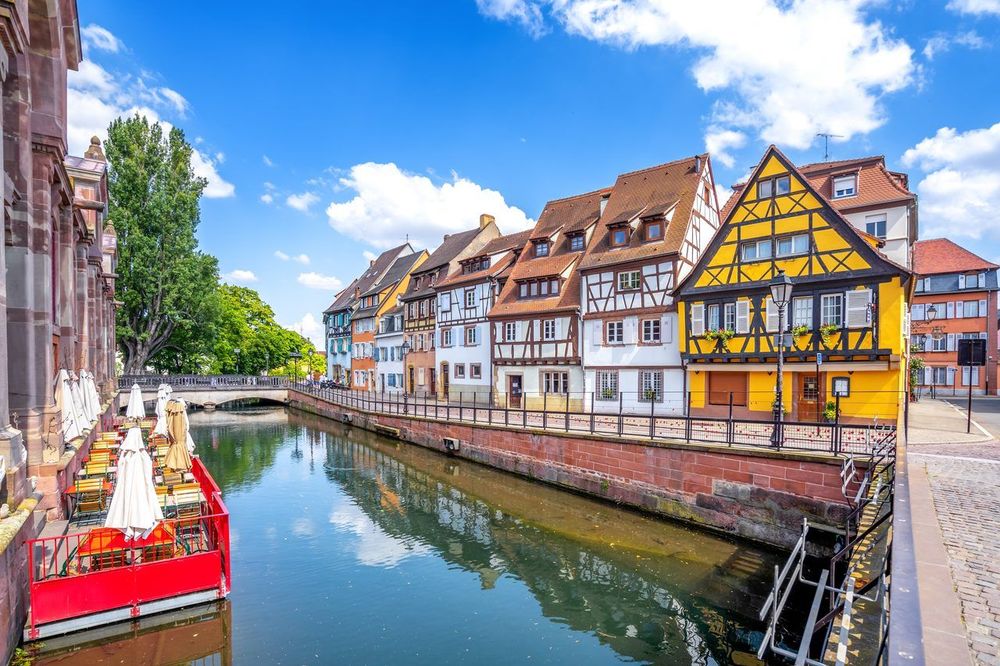
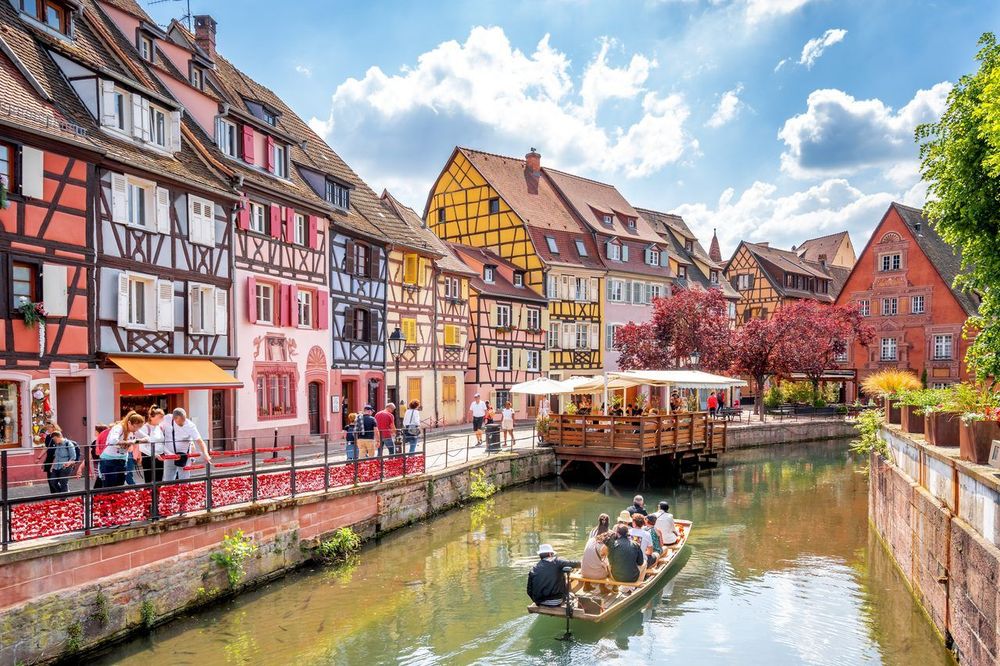
This picturesque district owes its nickname to the canals formed by the Lauch, which wind between colourful half-timbered houses, loosely recalling the Italian city. Officially called Krutenau, it grew up in the Middle Ages on marshy ground, home to winegrowers, market gardeners and boatmen. Most of the houses lining the river date from the 14th to the 18th century. Visitors happily explore it on foot, or let themselves drift along in a flat-bottomed boat.
Free entry
10 - Fish Market Quay
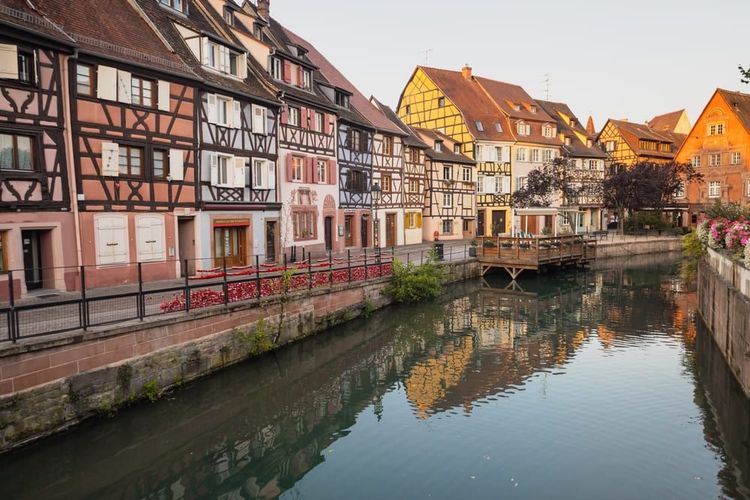
This quay takes its name from the fishermen who, from the 16th century onward, came here to sell their catch. Ravaged by fire in 1706, the district was restored in the 20th century, and the Lauch now mirrors its colourful half-timbered facades once again. Turn around to spot, on the last building, a trompe-l'oeil painted in 2002 by Edgar Mahler, an artist nicknamed the maestro of facades for his many works across Alsace and Switzerland.
Free entry
11 - Covered Market
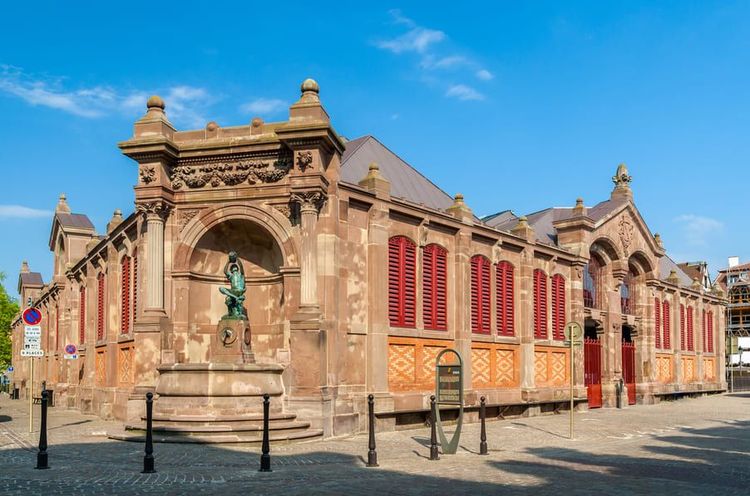
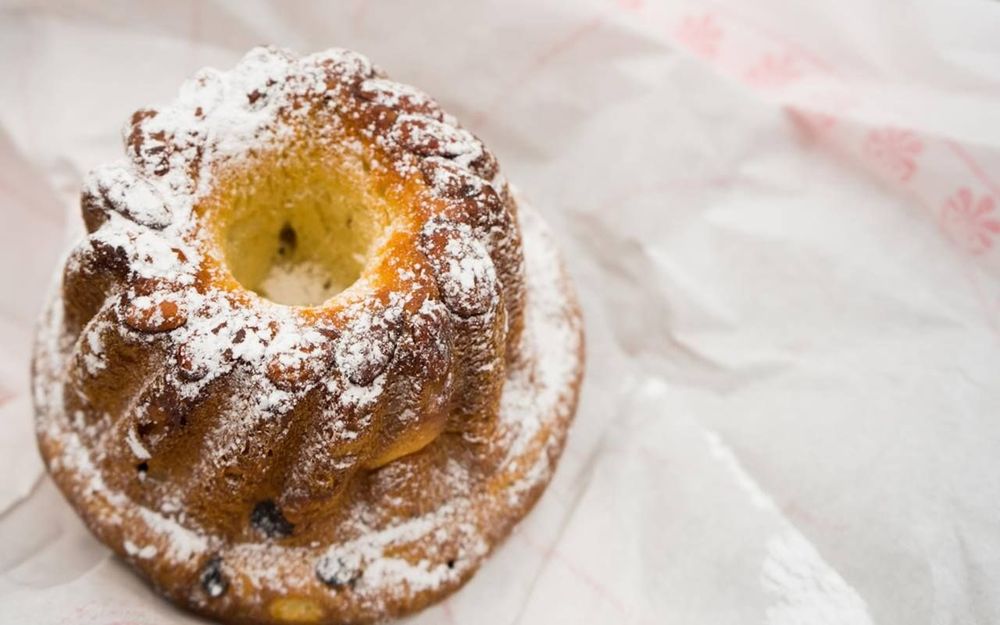
This brick-and-steel hall has housed Colmar's covered market since 1865, designed by architect Louis-Michel Boltz, the same man behind the municipal theatre a few years earlier. Once supplied by flat-bottomed boats along the river, it is now packed with the treasures of Alsatian terroir: munster cheese, pretzels, kouglof, choucroute or baeckeoffe, best paired with a glass of riesling or gewurztraminer. In winter, it also offers festive treats such as the little brioche figures called Manneles.
Free entry
12 - Rue des Tanneurs – Tanners’ Street
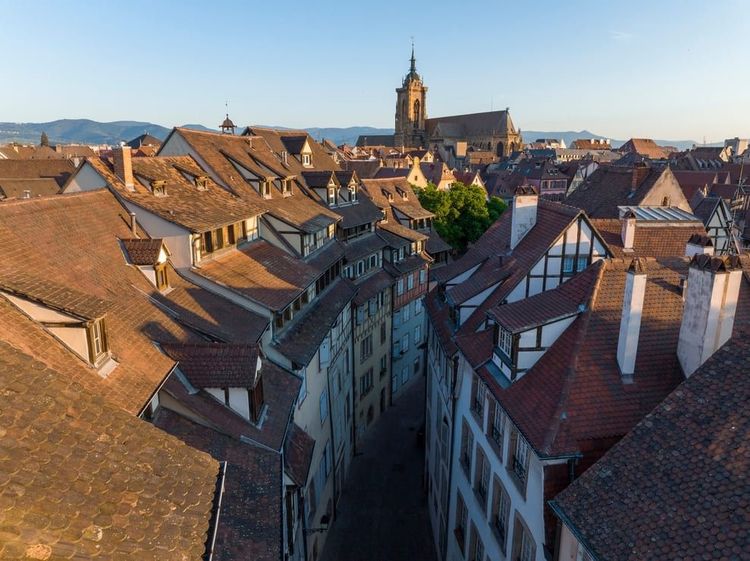
This street marks the entrance to the district once home to tanners, the only craftsmen allowed to practise their foul-smelling, water-hungry trade here, hence its closeness to the river. The tall 17th and 18th century half-timbered houses lining it are recognisable by their wide-open top floors, once used to dry hides. A genuine glimpse of past craft life, right in the heart of Little Venice.
Free entry
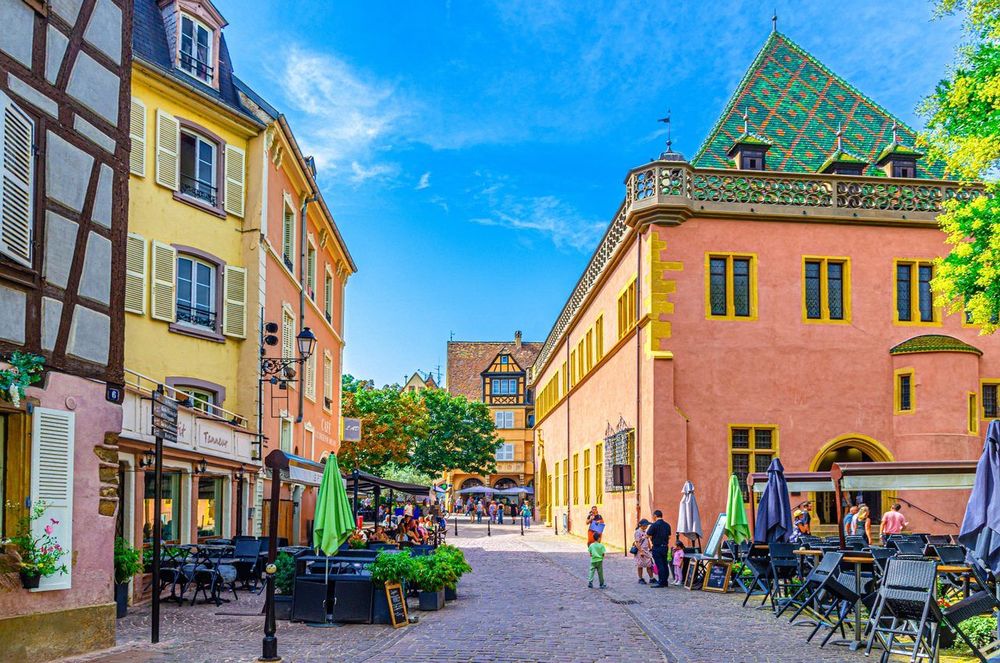
13 - Old Customs House Square
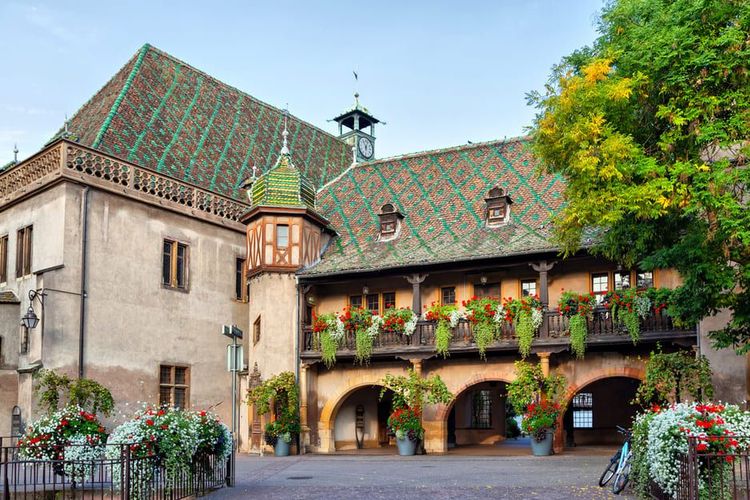
The fountain adorning this square depicts a 16th-century warlord credited by legend with bringing the Tokay grape variety to Alsace; Bartholdi carved it in 1898, and the basin had to be rebuilt after the Germans destroyed it in the Second World War. Facing it stands the Koifhus, the city's oldest public building, erected in 1480: a warehouse, a place for taxing goods and a meeting hall for Alsatian deputies, it also housed, within its right wing, the birthplace of General Rapp.
Free entry
14 - 2nd of February Square
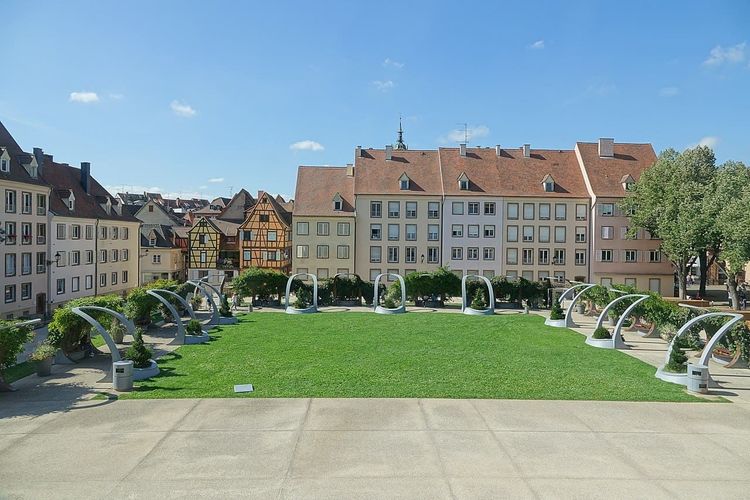
At the heart of this public square nestles a pleasant tree-lined garden, laid out where the city's old hospital once stood. Its name commemorates February 2, 1945, the day Colmar was finally freed from German occupation after three weeks of fierce fighting between the French and American armies on one side and the German army on the other. The harsh Alsatian winter and the heavy toll paid by the population made this date a powerful symbol of local history.
Free entry
15 - St Matthew's Church
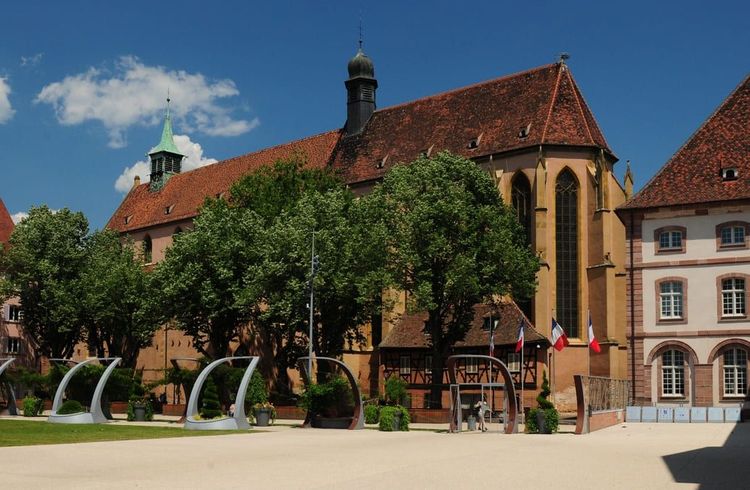
Intended for the Franciscans at the end of the 13th century, this church switched to Protestant worship after the Reformation for nearly two hundred years, before being forced back to Catholic use in 1715, then finally turning Protestant again in 1937. Only the chapel survives from the old convent. Its organ, built in 1731 by the renowned Silbermann family of organ builders from Strasbourg, benefits from remarkable acoustics, showcased every summer by the International Music Festival, founded in 1979.
Free entry
16 - Adolph House and Old Guardhouse
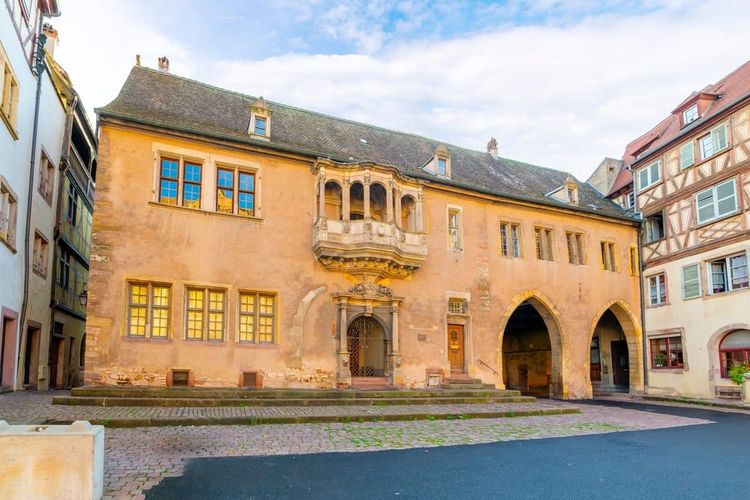
Before admiring the imposing collegiate church, turn to face the two buildings opposite it. The first, with its pinkish walls, is the old guardhouse, set up in 1575 on the site of the former town hall to lodge soldiers; its loggia served as a platform for magistrates. Next to it stands Adolph House, one of the oldest in the city, whose origins lie in the later 1300s, named after a 19th-century owner, with a well dated 1592.
Free to see from outside
17 - Collegiate Church of Saint Martin
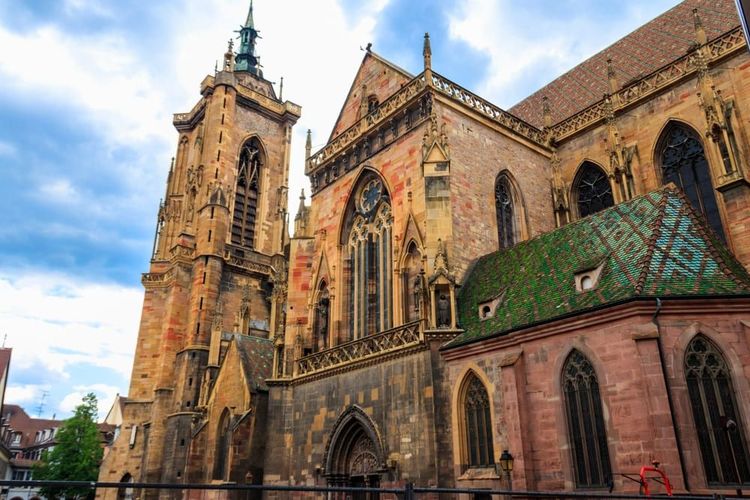
Despite the name of the square that hosts it, this building is not a cathedral, except briefly, for a decade during the Revolution. Its Gothic architecture, built in the 13th century from Vosges sandstone of varying hues depending on the quarry, is surpassed in size, across all of Alsace, only by Strasbourg Cathedral. Although the interior suffered from revolutionary unrest, it still holds sculptures and stained glass dating back to the Middle Ages, which locals happily regard as their true cathedral.
Free entry
18 - Dominican Church
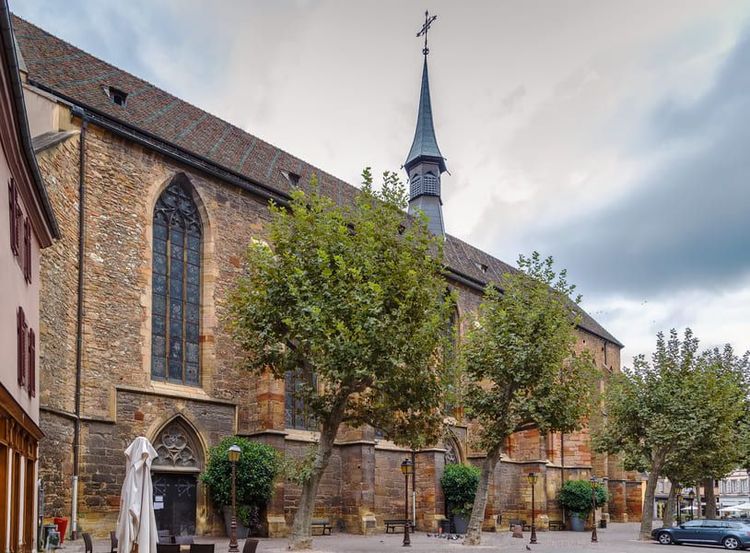
The Dominicans, who arrived in the city in 1260, soon began building this church, destined to become a masterpiece of Gothic art. Yet it did not remain a place of worship throughout its history: an artillery store during the Revolution, then later used to store grain, it only returned to religious use in 1898. Today it holds Martin Schongauer's most precious painting, made in Colmar in 1473, and regularly hosts concerts in its cloister.
19 - Hansi Museum
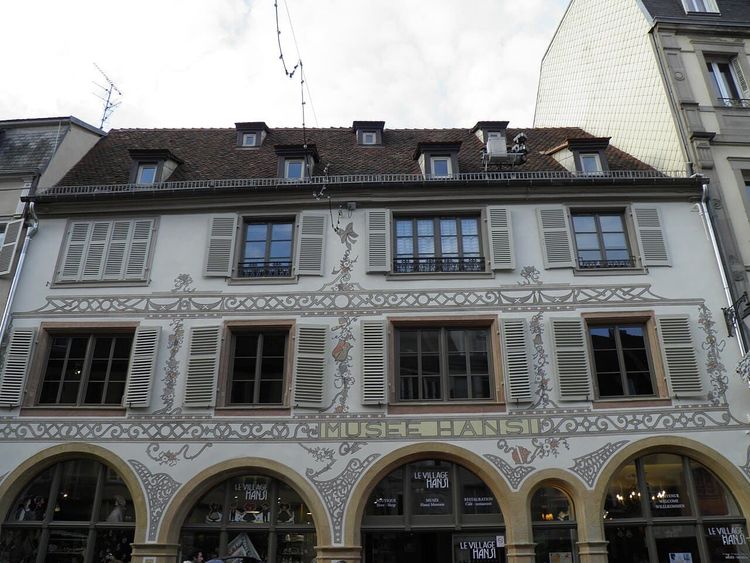
This museum honours the watercolourist Jean-Jacques Waltz, better known as Hansi, born in Colmar in 1873, whose drawings and postcards popularised an idyllic image of Alsatian life. Opposed to the German annexation of 1871, he produced countless satirical caricatures, which earned him a conviction for high treason in 1912, then, during the Great War, service as an interpreter officer and propaganda artist. Beaten by the Gestapo, he died in 1951; the museum displays his work alongside a setting evoking pre-war Alsace.
Paid entry (about €5)
20 - House of Heads
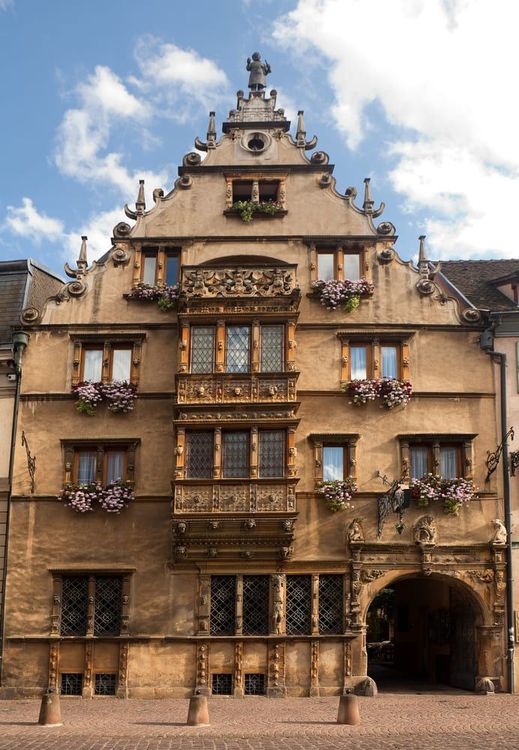
This house takes its name from the 106 carved heads covering its flamboyant facade. Built in 1609 for Anton Burger, a councillor very active in municipal life at the time, it illustrates German Renaissance style through the scrolls and finials decorating its gable. High above watches a stone cooper, carved by Bartholdi, a native son seemingly everywhere in this city.
Free to see from outside
21 - Unterlinden Museum
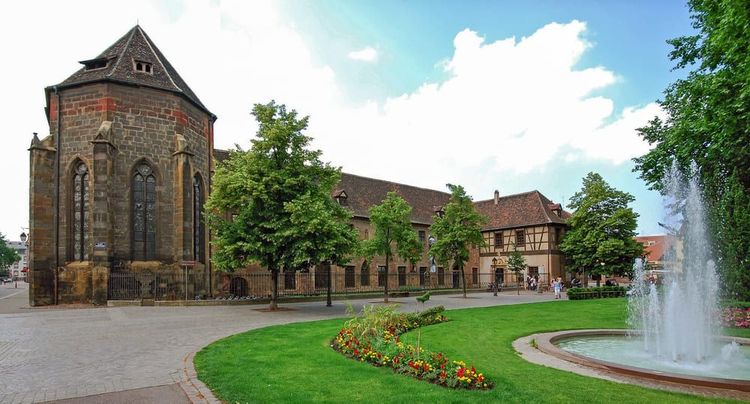
This museum occupies a former 13th-century Dominican convent, saved from demolition in the mid-19th century by an archivist from Strasbourg, who founded a society devoted to painter Martin Schongauer. Opened in 1853, it has displayed ever since the Issenheim Altarpiece, a masterpiece of Western painting signed by Matthias Grunewald and Nicolas de Haguenau, along with a Gallo-Roman mosaic unearthed close by. Expanded over the years, it now also houses the tourist office.
Paid entry (about €14)
22 - Municipal Theatre
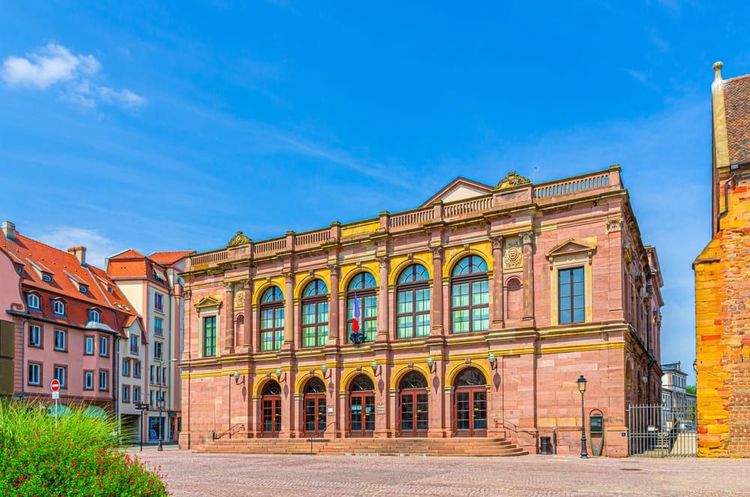
This Italian-style theatre, designed by architect Louis-Michel Boltz between 1847 and 1849, had to be enlarged as early as 1902 to cope with growing audiences, before being renovated in the 2000s. Its hall, which can now seat up to 550 people, stages more than a hundred performances a year, spanning theatre, concerts, opera and ballet. Its facade, described as French-style, now overlooks Place du 18 Novembre.
Free to see from outside
What to do in Colmar in 2 or 3 days?
The route, 2.7 km and 1 hour 10 minutes for 22 sights, is enough to cover the essentials of the historic centre. With 2 or 3 days in town, there is time to push on to the vineyard villages.
The next day, head to Eguisheim, 7 km to the south, where the lanes spiral around the counts' castle from the outer walls to the inner courtyard. A little closer still, 4 km to the west, Turckheim keeps up the tradition of its night watchman, who still calls out the hours in period costume from May to October; other stops on the wine route are gathered in our selection of Alsatian villages around Colmar.
For a third day, aim wider: Haut-Koenigsbourg Castle, Mulhouse, or even crossing into Germany for Freiburg im Breisgau, less than an hour's drive away. A day-by-day plan awaits in our guide to visiting Colmar in 3 days.
Which neighbourhoods does the tour cross?
The route links the old merchant quarter, around Rue des Marchands, to Little Venice and its canals, before climbing back toward the Collegiate Church of Saint Martin and the Unterlinden Museum.
It starts at Rapp Square and follows Rue des Marchands, where Pfister House stands near the Bartholdi Museum, on to the Grand'Rue, the small Manneken Pis statue and Six Black Mountains Square (stops 1 to 8).
It then drops down to Little Venice, along the Lauch, follows Fish Market Quay to the Covered Market, crosses the tanners' quarter with its tall houses and open attics, then climbs back past Old Customs House Square to 2nd of February Square (stops 9 to 14).
The last stretch takes in St Matthew's Church and the Collegiate Church of Saint Martin, then the Dominican Church and the Hansi Museum, before reaching the House of Heads, the Unterlinden Museum and the Municipal Theatre (stops 15 to 22).
How much does it cost to visit Colmar?
Of the 22 stops on the route, thirteen are free to visit and five, such as Pfister House or the House of Heads, are admired from the street. Add the Dominican Church, home to Martin Schongauer's Madonna of the Rose Bower, and three stops with an entry fee:
- the Bartholdi Museum, birthplace of the sculptor of the Statue of Liberty, for €5;
- the Hansi Museum, devoted to the Alsatian illustrator, for €5;
- the Unterlinden Museum, home to the Issenheim Altarpiece, for €14.
Information checked in November 2026 and subject to change.
Where to stop for a bite along the tour?
The covered market, a stop on the route, makes for an easy food break: a metal hall from 1865, it brings together a fishmonger, a cheesemonger and stalls selling Alsatian foie gras, and it is also where locals grab a proper breakfast, salted kougelhopf and coffee at the counter.
On the plate, choucroute, fermented cabbage slow-cooked with potatoes, sausage and bacon, and baeckeoffe, a mix of meat and vegetables cooked for hours in a sealed terrine, remain the classics. For a full tour of Alsatian specialities, see our selection of Colmar's culinary specialities.
What to do in Colmar with children?
With children, Colmar can also be explored from the water: flat-bottomed boats glide along the Lauch, under the bridges of Little Venice, while a boatman tells the story of the district.
During the Christmas markets, a children's market sets up along the Lauch. And if it rains, an escape game keeps the most restless busy indoors.
What should you know before visiting Colmar?
Several stops on the route keep their own hours, worth knowing before setting off.
The Bartholdi Museum closes on Mondays and opens the rest of the week from 10 am to noon and 2 pm to 6 pm. The Unterlinden Museum, for its part, closes on Tuesdays and opens on other days from 9 am to 6 pm, with last entry half an hour before closing.
The covered market also closes one day a week, on Mondays. Pfister House, whose ground-floor shop remains private property, cannot be visited inside: it can only be admired from Rue des Marchands.
What to see around Colmar?
Colmar also invites a step beyond the old town, between curiosities of the Haut-Rhin and neighbouring towns with their own audio-guided route.
Less than 40 km away, the star-shaped ramparts of Neuf-Brisach, the Route des Crêtes climbing to 1,424 metres at the Grand Ballon and the glacial lakes of the Orbey valley round out the picture, along with an open-air museum that recreates a 19th-century Alsatian village and a centre that has released storks since 1976.
Several neighbouring towns also have their own audio-guided route: Basel, 60 km away, blends colourful façades with the calm banks of the Rhine, while Strasbourg, 63 km away, combines romantic canals with a Gothic cathedral at the heart of Petite France. Further out, Nancy and its gilded ironwork, 111 km away, or Zurich and its old quarter on the Limmat, 118 km away, complete the list.
What's on in Colmar right now?
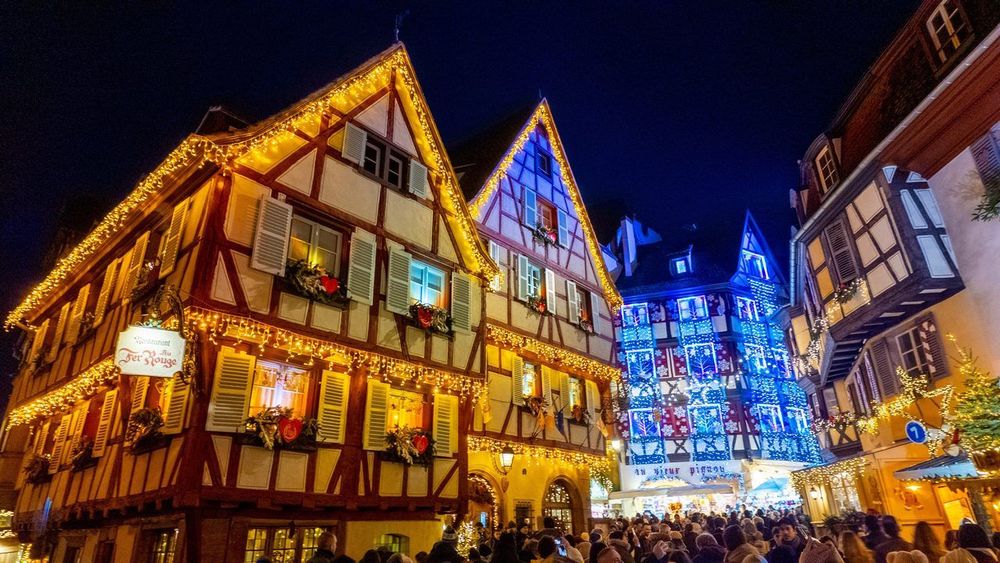
At this time of year, Colmar trades its winter quiet for Christmas lights.
From 23 November to 29 December, six markets spread across the city, notably on Place Jeanne d'Arc and in the Little Venice district, with their craft and food stalls. Full details on dates, hours and locations are in our guide to the Christmas markets in Colmar.
Information checked in November 2026 and subject to change.
Le plein d'inspirations
Explorez le monde en totale liberté, à pied au cœur des villes ou au fil des routes. Nos guides audios transforment chaque destination en une découverte culturelle immersive et unique.










FAQ for visiting Colmar
When is the best time to visit Colmar?
Colmar reveals different facets depending on the seasons, thanks to its exceptional microclimate. Summer, from June to September, offers sunny days ideal for strolling through the flower-filled lanes and following the wine route in optimal conditions. December transforms the town into a real fairy tale with its enchanting Christmas markets, among the most renowned in Europe. Spring, particularly around Easter, unveils a mild and colourful atmosphere with its traditional decorations. Autumn charms with its golden vineyards and lively grape harvests. Each season brings its own unique charm to this Alsatian gem.
How many days do you need to visit Colmar?
A full day lets you discover the essentials of Colmar's historic centre, exploring La Petite Venise, the medieval districts and the main architectural curiosities. Two days offer a more relaxed pace to appreciate the town's unique atmosphere, visit its museums and savour the local cuisine in a traditional winstub. If you wish to venture into the surrounding area, three days are ideal for combining an in-depth discovery of Colmar with a few excursions along the wine route or to the picturesque villages nearby. The Ryo audioguide helps you make the most of your time with a narrated tour of the town's must-see sights.
How do you get around Colmar?
The historic centre of Colmar is perfectly suited to exploration on foot, with its cobbled lanes and pedestrian areas that invite you to wander. The town offers an efficient urban bus network to reach the outlying districts, while self-service bikes make it easy to get around on the dedicated cycle paths. To explore the surroundings and the wine route, renting a car remains practical, although tourist shuttles regularly serve the wine-growing villages in season. The little tourist train also offers a pleasant option for a first look at the town, particularly popular with families.
What are the must-see sights in Colmar?
Colmar is full of architectural wonders that bear witness to its rich past. La Petite Venise, with its canals lined with colourful houses, is the town's romantic jewel. The Maison des Têtes impresses with its Renaissance façade adorned with grimacing masks, while the Collégiale Saint-Martin majestically dominates the Place de la Cathédrale. The Tanners' district reveals traditional half-timbered architecture, and the Koïfhus, the former customs building, tells the story of the town's merchant history. The Unterlinden museum houses the famous Isenheim altarpiece. The Ryo audioguide guides you through these treasures with fascinating commentary that enriches your discovery.
Where can you park in Colmar?
Colmar has several car parks strategically located around the historic centre. The Rapp, Lacarre and Mairie covered car parks are particularly convenient for quickly reaching the main tourist attractions. The Montagne Verte car park, further away but generally cheaper, often offers attractive rates for long-stay parking. On the surface, you will find free time-limited blue zones and paid spaces along certain thoroughfares. On weekends and public holidays, some car parks apply reduced rates. During the Christmas markets, park-and-ride car parks with shuttles are set up to make access to the town centre easier.
Is Colmar a good base for exploring Alsace?
Colmar is indeed an ideal base for venturing across Alsace. Its central position on the wine route places you within easy reach of the iconic wine-growing villages such as Riquewihr, Ribeauvillé and Eguisheim, accessible in under twenty minutes. Strasbourg and its cathedral are about an hour's drive away, while Mulhouse and its technical museums are even closer. The medieval castles of Haut-Koenigsbourg or the Three Castles of Eguisheim enrich your excursions. Colmar's well-served station also makes it easy to travel by train to the main Alsatian towns, making the capital of Alsace wines a strategic base for exploring the region.
When do the Colmar Christmas markets take place?
The Colmar Christmas markets are generally set up from late November until the final days of December, transforming the town into a truly enchanted village. Several markets liven up different historic districts, each with its own particular atmosphere. The market on Place des Dominicains glows beneath the magical illuminations, the one on Place de l'Ancienne Douane offers local crafts and gourmet specialities, while La Petite Venise hosts a more intimate market of unique charm. The wooden chalets overflow with handmade decorations, spiced mulled wine and traditional bredele. This magical time attracts visitors from all over the world who come to soak up the authentic spirit of an Alsatian Christmas.
How do you visit La Petite Venise?
La Petite Venise is best discovered on a walk along the quays of the Lauch, where the colourful houses are reflected in the calm water. A ride in a traditional flat-bottomed boat offers a unique perspective on this picturesque district, with regular departures from the Saint-Pierre bridge in season. The adjacent lanes also deserve your attention, notably the Tanners' street and its perfectly preserved half-timbered houses. The nearby covered market pleasantly rounds off the visit with its stalls of local produce. For a discovery enriched with historical commentary and anecdotes, the Ryo audioguide accompanies you step by step through this emblematic district of Colmar.
Which museums are worth visiting in Colmar?
The Unterlinden Museum, housed in a former Dominican convent, is the city's great set piece: it holds the Isenheim Altarpiece, Grünewald's masterpiece, along with medieval collections, Alsatian decorative arts and a modern wing built around an old pool. Not far away, the Bartholdi Museum occupies the birthplace of the sculptor of the Statue of Liberty and traces his career.
The curious round things off with the Toy Museum and its vintage trains, a favourite with families, or with the natural history collections. All of them stand in the old centre or just on its edge, a few minutes' walk from one another, which makes it easy to fit two into the same day. The Ryo audio guide offers a dedicated Colmar route that links these museums with the half-timbered lanes.
Which Alsatian specialities should you try in Colmar?
The winstubs of the centre, those typical wood-panelled taverns, serve most of the regional repertoire: garnished sauerkraut, baeckeoffe slowly stewed in its terrine, tarte flambée with cream and bacon, coq au riesling or bibeleskäs, a herbed fresh cheese eaten with potatoes. Cured meats and pretzels are easy to find at the covered market.
On the sweet side, kougelhopf, Christmas bredele and plum tart mark the seasons. As Colmar sits in the heart of the vineyards, wine lists give pride of place to Alsatian grape varieties, from dry riesling to the more perfumed gewurztraminer, often served by the glass so you can compare. In fine weather, the terraces along the canals make the most pleasant setting for all this.
Which Wine Route villages can you reach from Colmar?
Within 30 kilometres, often less than twenty minutes by car, ten villages line up half-timbered houses, ramparts and fountains. Eguisheim, 7 km away and voted the French people's favourite village in 2013, coils its lanes around the counts' castle; Pope Leo IX was born there in 1002. Kaysersberg, 13 km away, offers a free climb to its 13th-century castle.
Riquewihr, the pearl of the Wine Route, Turckheim, where a night watchman makes his rounds at 10pm, and a humanist library listed by UNESCO round off the itinerary.
Discover all ten stops in our selection of villages around Colmar.
Sauerkraut, baeckeoffe or tarte flambée: what should you order in a restaurant in Colmar?
Choucroute, simmered in white wine with sausage, bacon and potatoes, remains the emblematic dish of Alsace. Baeckeoffe combines lamb, pork and beef slow-cooked for about three hours in a terrine, and coq au Riesling simmers at length with mushrooms and cream. Tarte flambée, with its thin yeast-free base, comes in forestière or gratinée versions.
To finish, try Munster cheese on fresh bread, kougelhopf with almonds and raisins, or Alsatian apple tart, found on every menu.
Discover all the specialities in our guide to Colmar's food specialities.
What can you do in Colmar, from the Bartholdi museum to the wine cellars?
The Bartholdi museum, set in the birthplace of the Statue of Liberty's sculptor on Rue des Marchands, spreads paintings, sculptures, drawings and models over three floors. The Dominican Church houses Martin Schongauer's famous Madonna of the Rose Bower.
Then stroll through town or hire a bike, with a detour along the Quai de la Poissonnerie and its colourful houses. The Maison Pfister, with its painted corner oriel, is a symbol of the Renaissance in Colmar. Finally, a cellar visit in Kaysersberg introduces Riesling and the other Alsatian grape varieties.
See the selection in our top activities in Colmar.
How should you spread a stay in Colmar over two or three days?
Spend the first day exploring the historic centre on foot: Little Venice, ideally on a thirty-minute boat ride, the Tanners' Quarter, the Collégiale Saint-Martin and the Maison Pfister. The covered market is handy for a quick lunch.
Over two days, the second takes you along the Wine Route to Eguisheim and Turckheim. With three days, you have time for the Unterlinden museum, home to the Isenheim Altarpiece, and the Bartholdi museum before heading to the vineyards. Haut-Koenigsbourg, Mulhouse and Freiburg im Breisgau are all within an hour.
Follow our itineraries to visit Colmar in 2 days or in 3 days.
Which hikes can you do around Colmar, between castles and Vosges lakes?
The trails, waymarked by the Club Vosgien, start 20 to 45 minutes' drive away. Above Ribeauvillé, the three-castle loop, Saint-Ulrich, Girsberg and Haut-Ribeaupierre, takes about three hours with nearly 400 metres of ascent. Closer in, the Wintzenheim forest links the Hohlandsbourg, the Pflixbourg and the three keeps of Eguisheim.
From Saint-Hippolyte, allow around four hours there and back to Haut-Koenigsbourg. The Taennchel, at 992 metres, Lac Blanc and the Grand Ballon round off the routes, while the vineyards of Eguisheim and Riquewihr offer flat walks.
Choose your route in our guide to hiking around Colmar.
Which hidden curiosities can you uncover on an unusual tour of Colmar?
On the corner of Rue des Tanneurs and Rue de la Herse, a tiny wooden figure about thirty centimetres tall hides between two beams, missing from every tourist map. At the northern entrance to town, a replica of the Statue of Liberty pays tribute to Bartholdi, born in Colmar in 1834.
You can also visit a museum devoted to the illustrator Hansi and a chocolate museum, glide by boat along the Lauch or tour the vineyards by Segway. Two days are enough to see it all without rushing.
Discover all twelve experiences in our guide to unusual visits in Colmar.
What can you do in Colmar in the rain, between museums and foodie stops?
Museums, market halls and half-timbered houses are packed within less than a kilometre. The Unterlinden museum, closed on Tuesdays, displays the Isenheim Altarpiece, and the Bartholdi museum, closed on Mondays, takes under an hour: on a Wednesday or Thursday you can enjoy both.
With children, the Toy Museum and its model railway or the natural history museum and its Egyptian collection fill a grey afternoon. A chocolate museum, a free library in a Dominican convent, an escape game and the 1865 covered market complete a day spent indoors.
Find every idea in our guide to things to do in Colmar when it rains.
What are the six Christmas markets in Colmar, and which one should you pick?
Colmar has six free Christmas markets, each with its own atmosphere: Place Jeanne d'Arc is a natural starting point, the Old Customs House and the Koïfhus hosts the only indoor market, Place des Dominicains offers refined crafts, Little Venice is made for children, with choirs singing from boats, and the Marché Gourmand at Montagne Verte is run by chefs and open until 10pm.
The old town is compact, so one day is enough to visit them all, allowing four to five hours for walking and stops. To avoid the crowds, come on a weekday before noon.
Find the map of all six markets, a one-day itinerary and parking tips in our complete guide to Christmas markets in Colmar.
How can I visit Colmar without a car by train, shuttle, tourist train or bike?
Colmar's historic centre is largely pedestrian, so it is easy to visit without a car. The TER Fluo train reaches Strasbourg in about 30 minutes and Mulhouse in around 20, and the station is a 15 to 20 minute walk from the centre. In town, a free electric shuttle runs every 15 minutes from 9am to 7pm, Monday to Saturday.
For the villages along the Alsace Wine Route, the Kut'zig open-top bus (booking required, in season) or the bike paths towards Eguisheim let you go without a steering wheel. The tourist train offers a seated, commented tour of the town.
Schedules, fares and tips for every mode of transport: read our guide to visiting Colmar without a car.
Vos commentaires, idées et suggestions
Aucun avis pour le moment