© Shutterstock
 Votre guide Ryo
Visit Colmar in 3 Days: Complete Itinerary and Practical Tips (2026)
Visiting Colmar in 3 days means first accepting something that postcards barely conceal: the historic center covers just 2.5 km², which means the Petite Venise, the Collégiale Saint-Martin, and the covered market can all be visited on foot, without ever getting back in the car. It is this compactness that makes a three-day stay as rewarding as it is rich: time to explore the historic city, then venture out into the surrounding vineyards. To get your bearings before you leave, the Ryo audio guide for Colmar traces this very route street by street, headphones on.
In three days, you will have time to paddle a rowboat beneath the half-timbered houses of the Tanneurs quarter, compare the collections of the Unterlinden museum and the Bartholdi museum (the sculptor born in Colmar, creator of the Statue of Liberty), climb up to the fortified village of Eguisheim with its spiral of concentric lanes, and enjoy a tarte flambée in a winstub whose decor has not changed since the 1950s. We also cover below where to sleep, how to get here, and whether the Christmas market is worth planning your whole trip around. The Ryo audio-guided tour of Colmar links the Unterlinden museum and the Bartholdi museum in one easy walk.
Day 1 in Colmar: the Petite Venise and the Historic Heart
You have to go back to 823 to find the first written mention of Colmar, then a simple Carolingian agricultural estate. The city grew in step with the wine and textile trade, became a free imperial city in 1226, then shifted into the French orbit: Alsace was ceded to the Kingdom of France under the Treaty of Westphalia in 1648, but Colmar, a free city and member of the Décapole, was not definitively annexed until 1673, when Louis XIV had its ramparts demolished. This history explains the density of 15th- and 16th-century half-timbered houses that have survived the centuries: the center was largely spared during the fighting of the Colmar Pocket in the winter of 1944–1945, while Mulhouse and Strasbourg paid a heavier toll. That is why the city remains such a photogenic experience, and why it is well worth devoting an entire first day to it, on foot.
The Petite Venise and the Tanneurs Quarter
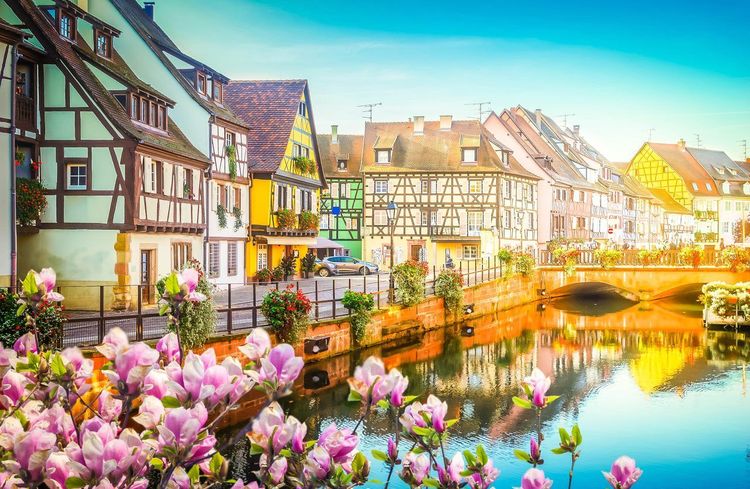
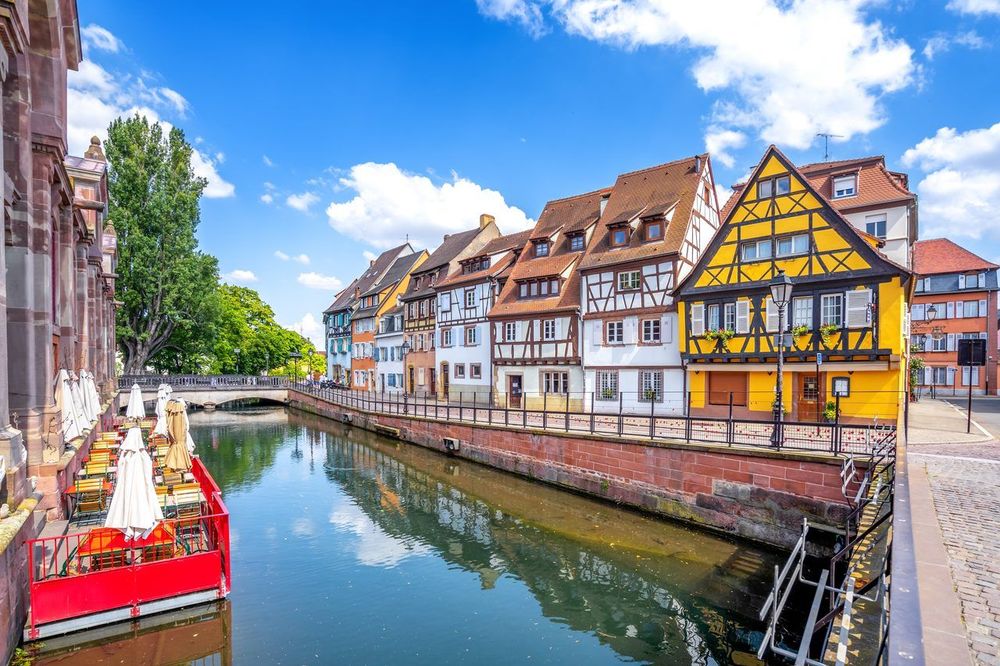
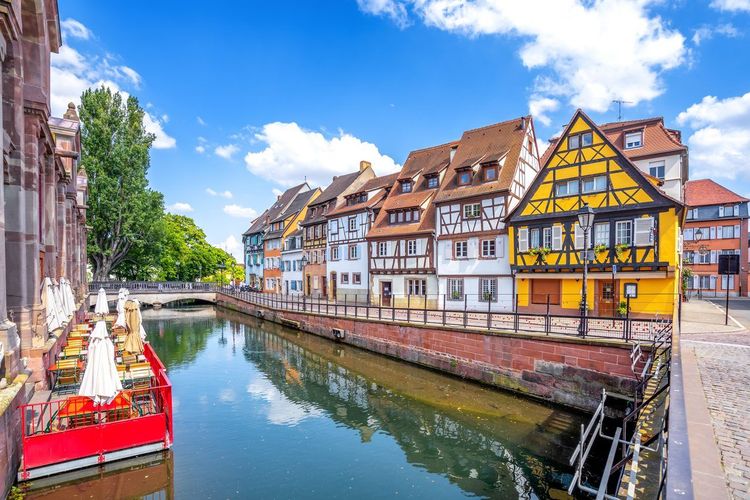
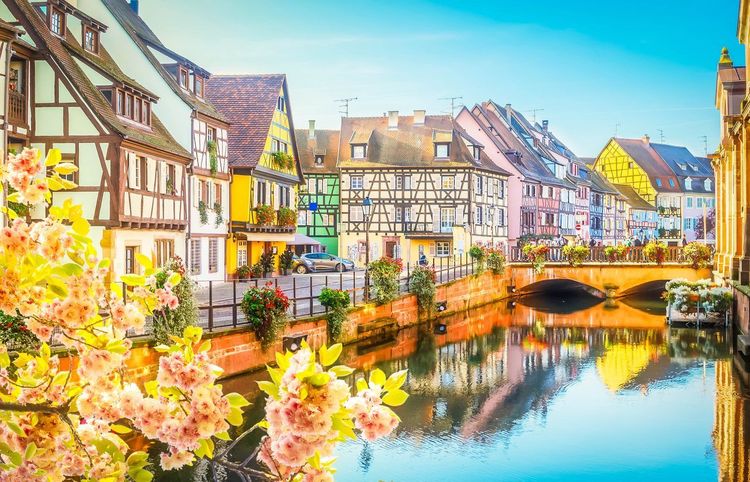
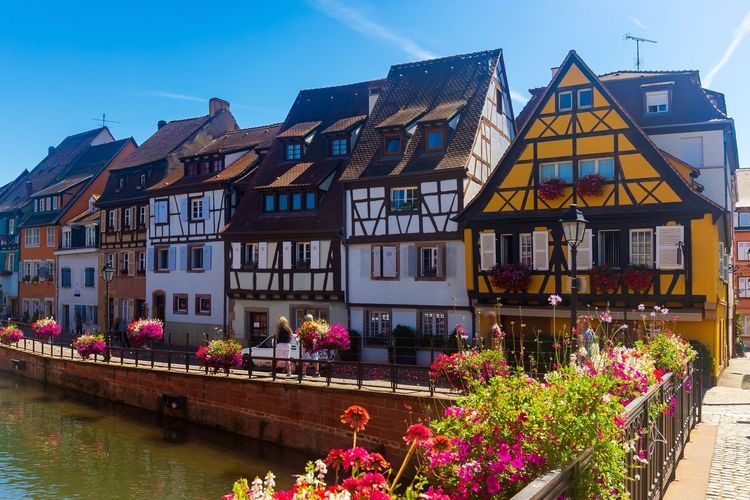
The name is a slight exaggeration, but the image holds: the Petite Venise refers to the neighborhood where the Lauch winds between fishermen's houses, their pastel facades adorned with window boxes of geraniums from May to September. The best vantage point is from the bridge on rue Turenne, early in the morning before tour groups arrive. You can also stroll along the quai de la Poissonnerie, where fishermen were still selling their catch in the early 20th century.
Heading south, the Tanneurs quarter tells a different story: that of the craftsmen who cured hides before the industrial era. The houses here are tall and narrow, with wide openings beneath the rooflines where skins were left to dry in the open air. The quarter was restored in the 1990s and remains one of the best-preserved half-timbered ensembles in Alsace. Allow half an hour of leisurely wandering to move from the place de l'Ancienne Douane to the rue des Tanneurs, zigzagging through the perpendicular lanes.
Collégiale Saint-Martin and Maison Pfister
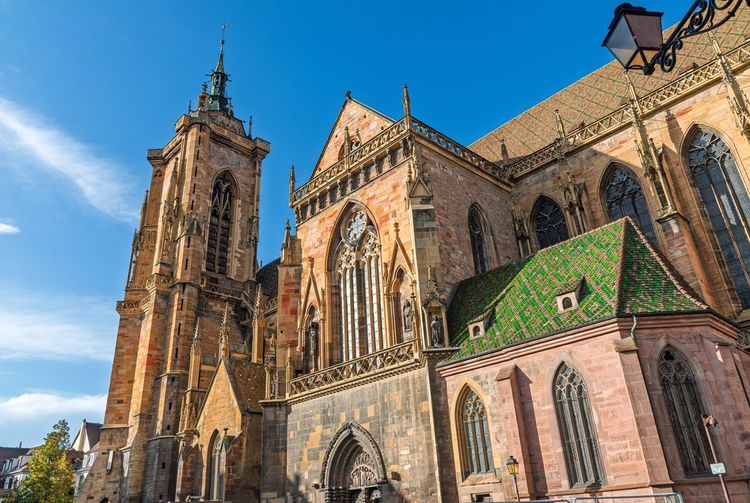
Five minutes on foot away, the Collégiale Saint-Martin dominates the place de la Cathédrale with its unfinished Gothic spire, standing 71 meters tall. Built between 1235 and 1365, it was long mistaken for a cathedral—though it never held that status: Colmar was never the seat of a bishopric and fell under the diocese of Basel. The interior is worth a pause: 14th-century stained glass, a sculpted portal depicting the Last Judgment, and acoustics that invite you to sit for a few minutes, even without religious belief.
Right next door, the Maison Pfister is arguably the most photographed facade in Colmar: a carved wooden oriel, Renaissance paintings depicting biblical scenes and Germanic emperors, and an octagonal corner turret. Built in 1537 for a wealthy merchant, it has survived five centuries without major restoration, making it a rare example of 16th-century Colmar architecture. It is not open to visitors (private ownership on the commercial ground floor), but can be admired from the rue des Marchands.
A Free Stroll Through the Most Beautiful Lanes of the Old Town
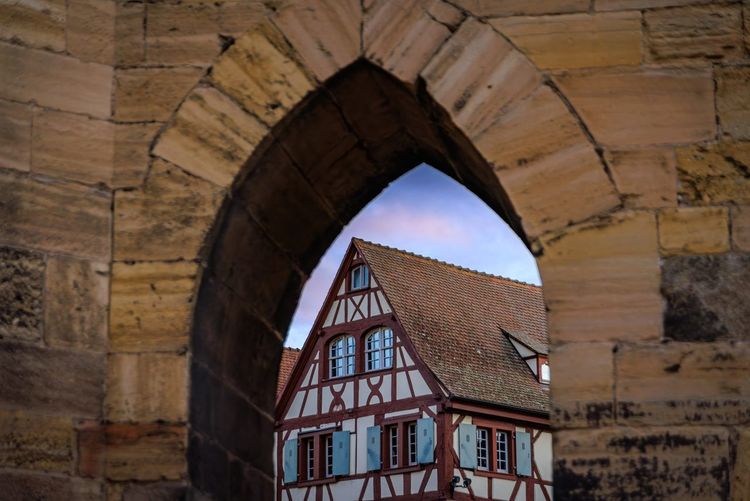
The rest of the afternoon lends itself to an unplanned stroll through the city center of Colmar, designated a protected historic area since 1966. The rue des Têtes, rue Mercière, and place de l'Ancienne Douane are home to several other notable half-timbered houses, including the Maison des Têtes (its facade decorated with 106 grotesque masks), which now houses a hotel and restaurant. If you enjoy spare Gothic interiors, push open the door of the Dominican church, a short walk from the Petite Venise: it houses Martin Schongauer's Virgin of the Rose Bower, an altarpiece painted in 1473 that many visitors miss for lack of signage. The other churches of Colmar (Saint-Matthieu, Protestant, with its modern stained glass) round out this heritage trail if time allows. End the day on a terrace at the place de l'Ancienne Douane, where the winstubs begin setting out their tables around 6 p.m.
If you would rather follow an optimized route without having to think about how to get between landmarks, the Ryo audio-guided tour of Colmar follows exactly this route in audio format, neighborhood by neighborhood.
Day 2 in Colmar: Covered Market, Museums, and a Boat Ride
The Covered Market and Its Local Delicacies
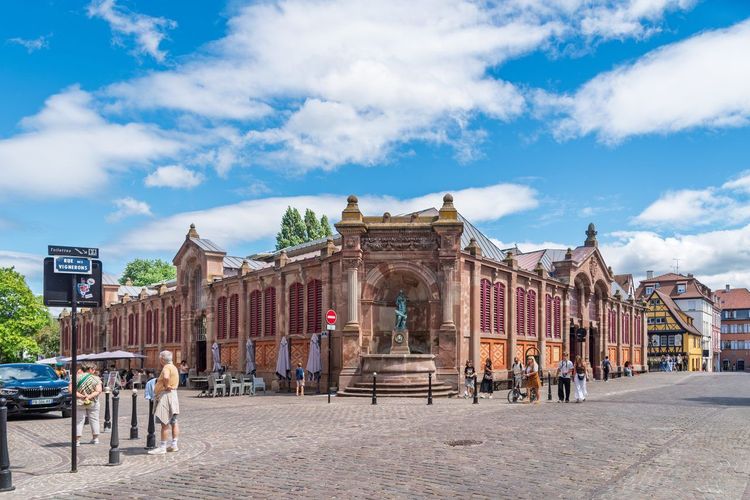
Start the second day early, before tour groups fill the aisles: the covered market of Colmar, an 1865 iron hall, opens its doors at 8 a.m. Tuesday through Saturday (until 7 p.m. on Friday) and from 10 a.m. to 2 p.m. on Sunday. Some twenty permanent stall holders can be found inside, including a fishmonger, a cheese shop that ages its own munster on site, and Alsatian foie gras stands. It is closed on Monday only—so plan your visit outside that day if you are hoping to have breakfast there. This is also the right place for a genuine local breakfast: salted kougelhopf with a coffee, standing at the counter of one of the three wine bars inside.
For purchasing products to take home, late morning is the better time, when producers from the Munster valley come to supplement the offering with their own cheeses. Allow around 15 to 20 minutes for a full tour of the stalls if you are just browsing.
Musée Unterlinden and Musée Bartholdi
A ten-minute walk away, the Unterlinden museum occupies a 13th-century Dominican convent and a contemporary extension opened in 2015. Its centerpiece, the Isenheim Altarpiece painted by Matthias Grünewald around 1512–1516, can be admired in the old convent chapel: twelve movable panels depicting the Crucifixion, the Resurrection, and the life of Saint Anthony, executed with an almost violent realism for the era. Allow at least 1h30 if you also want to see the modern art collections (Monet, Picasso, de Staël) installed in the newer wing, connected to the convent by an underground gallery designed by Herzog & de Meuron. Full-price admission is €14 (€17 with audio guide), free for children under 12, and there is a last-hour rate of €7 if you visit after 5 p.m. One detail that catches many visitors off guard: the museum is closed on Tuesdays. If your second day falls on a Tuesday, simply swap days 2 and 3 of this itinerary.
A little further along the rue des Marchands, the Bartholdi museum (30 Rue des Marchands, 68000 Colmar, rated 4.4/5 on Google from 1,241 reviews) occupies the birthplace of sculptor Frédéric Auguste Bartholdi, born in Colmar in 1834. It traces his career from early sketches to the original scale model of the Statue of Liberty, by way of the Lion de Belfort. The museum is more modest than the Unterlinden (an hour is enough), but it puts a local lens on a globally recognized monument: few visitors know that Bartholdi first conceived his statue to light the Suez Canal, before redirecting it toward New York.
A Boat Ride Through the Old Town
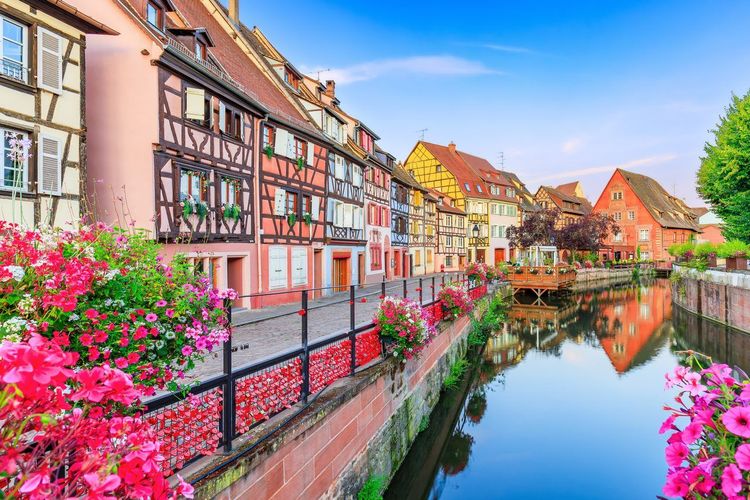
The afternoon ends ideally on the water. Discovering Colmar by boat is possible from two embarkation points—one at the covered market and one at the Petite Venise—with flat-bottomed boats poled by a guide who provides commentary along the way. The boat ride through the heart of the Old Town lasts around 25 minutes and offers a different angle on the half-timbered houses, often more photogenic than the view from the quaysides. Book at late morning for a late-afternoon slot: the slanted light between 5 and 6 p.m. makes the pastel facades glow. Expect to pay between €7 and €8 per adult, slightly less for children. In peak season (July–August), the wait can exceed 30 minutes without a reservation, so it is worth planning ahead.
Once back on dry land, hunger sets in: this is the ideal moment to head to a nearby winstub, a topic we cover further on in the section on where to eat well in Colmar. Many boatmen hand out a map of nearby restaurants within walking distance of the embarkation point. The Ryo audio-guided tour conveniently threads through the Covered Market on its way between museums.
Day 3 in Colmar: a Day Trip to the Alsatian Vineyard Villages
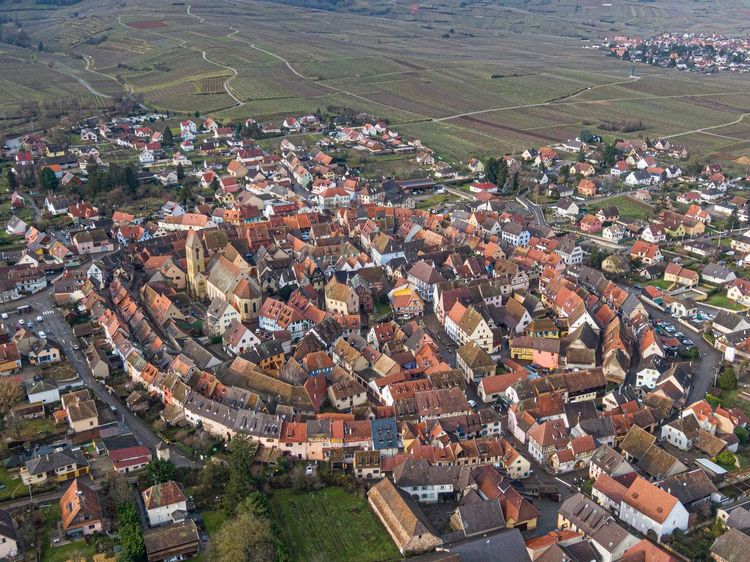
Eguisheim, One of the Most Beautiful Villages in France
Just 7 km southwest of Colmar (15 minutes by car, 30 minutes by bike along the greenway), Eguisheim was voted France's Favorite Village in 2013 and has long featured in the Les Plus Beaux Villages de France ranking. The village is laid out in concentric circles around the Château Saint-Léon, a layout inherited from the 13th century that makes for a naturally fluid stroll: you follow the lanes without ever retracing your steps. The half-timbered houses, often more brightly colored than those in Colmar (blue, pink, mustard yellow), are home to a dozen wine estates that sell direct.
The village can be explored in 1h30 to 2 hours, including a cellar tasting. Come on a weekday or early on weekend mornings: Eguisheim has become so popular that some of the main lanes are barely passable on a July or August afternoon. A paid car park is located at the entrance to the village, as internal traffic is restricted to residents.
Turckheim and the Alsatian Wine Route
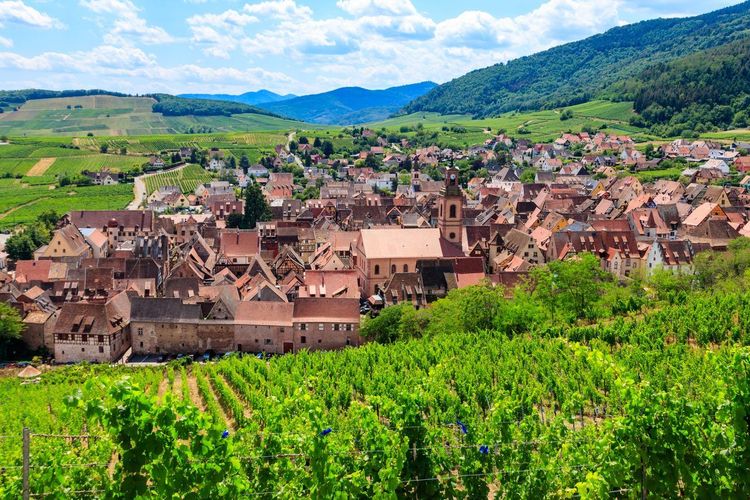
On the way back, Turckheim is worth a 30-minute detour. This fortified village of nearly 4,000 inhabitants has kept its three medieval gates and a night watchman who, every evening at 10 p.m. from May to October, still makes his rounds in traditional costume with a halberd and lantern—a tradition dating back to the 16th century. Turckheim also marks the start of the Alsatian wine route, a 170 km ribbon linking some sixty wine-producing villages all the way to Marlenheim, north of Strasbourg.
If you have rented a car for the day (see the getting around section below), two more villages north of Colmar are worth the detour: Riquewihr, often cited as the most touristic stop on the wine route for its intact ramparts, and Kaysersberg, birthplace of Nobel Peace Prize laureate Albert Schweitzer and itself voted France's Favorite Village (in 2017)—less crowded with shops and more relaxed on weekdays. Each is about 30 minutes by road from Colmar. It is difficult to fit all of them in one day alongside Eguisheim and Turckheim: better to choose one or two villages rather than rush through five and see nothing properly.
Château du Haut-Koenigsbourg (Optional)
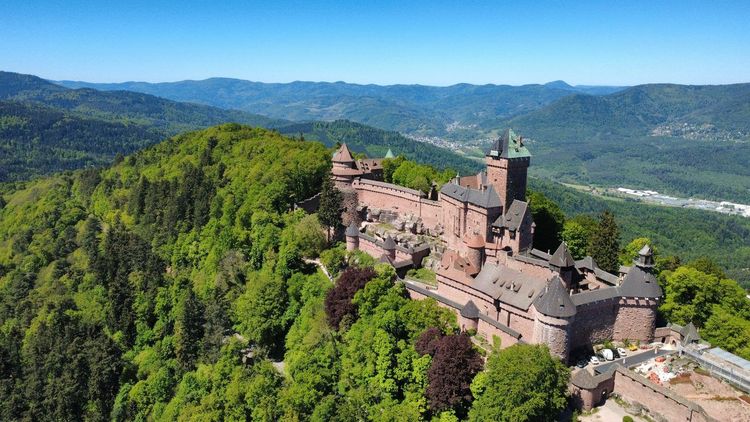
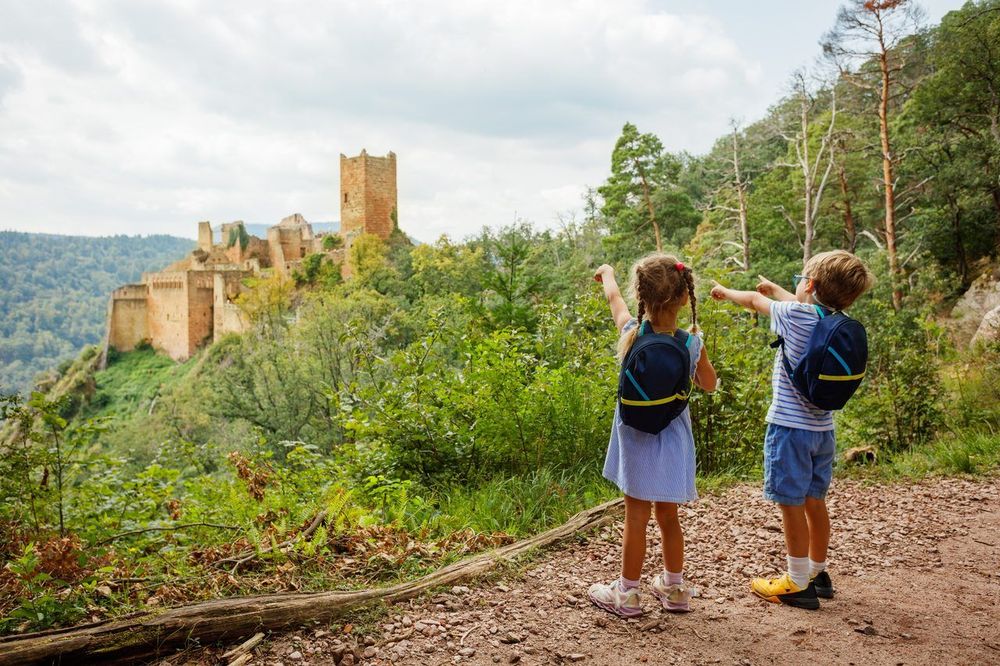
For medieval heritage enthusiasts willing to travel up to 45 minutes north by road, the Château du Haut-Koenigsbourg (67600 Orschwiller, rated 4.7/5 on Google from 43,423 reviews) overlooks the Alsatian plain from an altitude of 757 meters. Rebuilt between 1900 and 1908 on the orders of Kaiser Wilhelm II after centuries of ruin, it remains one of the most visited monuments in France outside Paris, attracting nearly 500,000 visitors a year. The visit (allow 1h30) includes the great knights' hall, the reconstructed kitchen, and a panorama that extends, on clear days, as far as the Black Forest. This is an ambitious addition to an already packed third day: if time is tight, it is better to skip the castle than to rush through Eguisheim and Turckheim, which give a far more faithful picture of everyday Alsatian life.
These three stops cover only part of what there is to see around Colmar: the wine route encompasses some sixty villages, and the Munster valley or the Vosges massif are also worth exploring if you extend your stay beyond three days. To plan a wider excursion, 10 Alsatian villages around Colmar, on the Ryo blog details further possible stops, and what to see around Colmar, on Ryo adds lesser-known ideas to combine depending on the time and mode of transport available.
Other Museums and Unusual Spots in Colmar Not to Miss
Musée Hansi and Choco Story, the Chocolate Museum
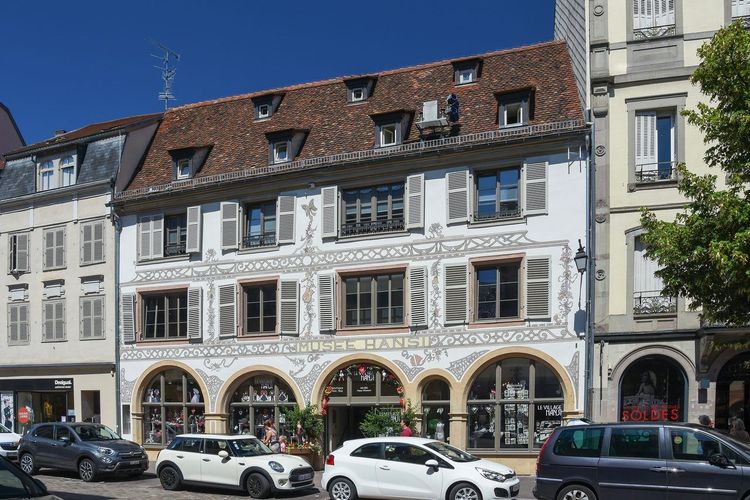
If the rain moves in or you have simply exhausted the major museums, Colmar hides a second layer of more discreet collections. The Musée Hansi, dedicated to illustrator Jean-Jacques Waltz (known as Hansi), brings together watercolors and postcards that shaped the idealized image of traditional Alsace—flower-decked houses and regional costumes included—drawn between 1900 and 1950 in a resolutely anti-Germanic spirit. The visit is brief (30 to 40 minutes) but sheds a great deal of light on the imagery you will encounter everywhere in the city, right down to restaurant signage.
Nearby, Choco Story, the chocolate museum, traces the history of cacao from pre-Columbian civilizations to modern chocolatiers' techniques, with a demonstration and tasting at the end of the tour—a format that goes down especially well with children. Allow 1 hour. A little further along the rue Vauban, the Toy Museum rounds out the family offering with electric trains, antique dolls, and automata from the 19th and 20th centuries—a modest but sufficient collection to fill 45 minutes on a rainy day.
Espace André Malraux and the Natural History Museum
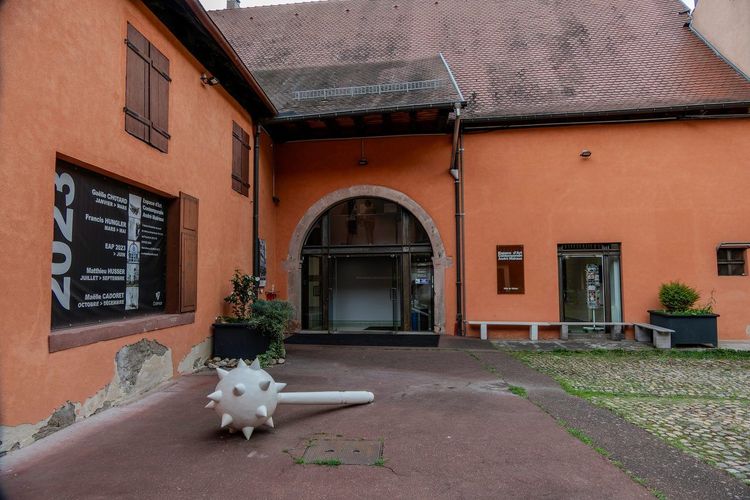
For a more contemporary counterpoint, the Espace d'Art Contemporain André Malraux hosts two to three temporary exhibitions a year, often centered on photography and contemporary art, in a converted warehouse on the rue Rapp. It is the only venue in the city dedicated to living art, a complete contrast to the half-timbered imagery that dominates elsewhere, and admission is generally lower than at the major museums (around €6).
The Natural History and Ethnography Museum (11 Rue Turenne, 68000 Colmar, rated 4.2/5 on Google from 520 reviews), housed in a former guardhouse, completes the list with mineralogy, zoology, and ethnographic objects brought back by Colmar travelers in the 19th century. It is the least-visited museum in the city, making it a good option on a day when everywhere else is overcrowded. Together, these lesser-known Colmar museums can easily fill half a day without ever returning to the queue at the Unterlinden.
What to Do in Colmar with Kids, as a Couple, or on a Rainy Day
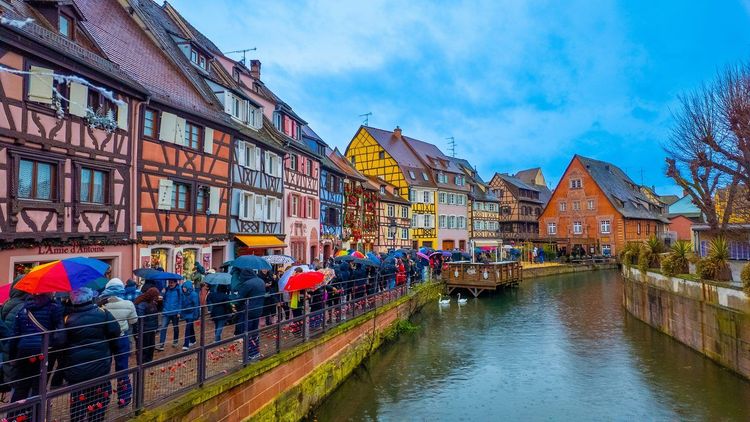
Colmar with Kids
With children, prioritize pace over the number of sites. The boat ride is almost always a hit (young children love leaning over the water), as is Choco Story for the tasting at the end. The Toy Museum and Natural History Museum offer short formats suited to children under 10, with far less reading required than at the Unterlinden. Also consider the banks of the Lauch for an outdoor break between visits: children rarely manage more than two hours of urban walking at a stretch. If you are traveling with older teenagers, cycling up to Eguisheim on electric bikes (available for hire in the city center) tends to go down better than yet another museum visit.
Colmar as a Couple
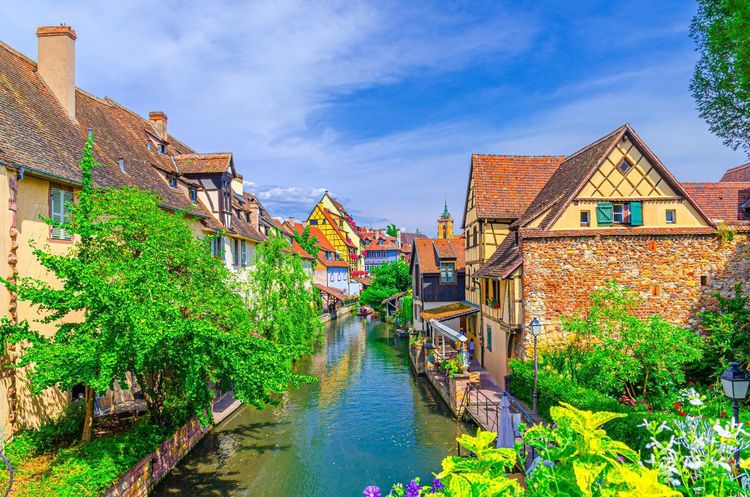
As a couple, the best time for the Petite Venise is at the end of the day, once tour groups have headed back to their coaches and the golden light filters through the facades. Book a boat ride in the late afternoon rather than midday, dine at a winstub with a canal view (several addresses exist along the quai de la Poissonnerie), and end with a digestif of marc de gewurztraminer. A trip to Eguisheim at sunset adds a more intimate dimension to the stay, away from the crowds that saturate the village between 11 a.m. and 4 p.m. Many couples also choose to stay in a guesthouse in the historic center rather than a chain hotel, to keep the atmosphere alive after nightfall.
What to Do in Colmar When It Rains
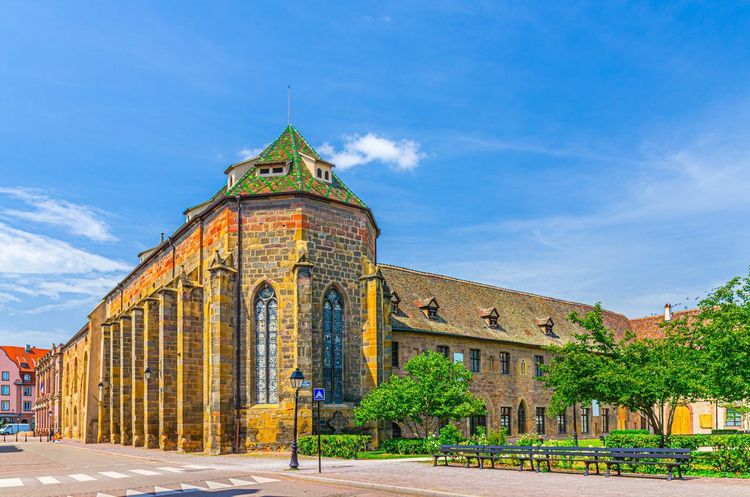
Colmar remains a pleasant destination even in the rain, provided you reverse the schedule: prioritize museums in the morning (the Unterlinden, Bartholdi, Hansi, and Choco Story are all within ten minutes' walk of each other) and save outdoor walks for a break in the clouds. A covered food stop also works well: the covered market stays open and allows you to eat under shelter, as do the many tea rooms on the rue des Têtes. If the rain sets in for the whole day, head to Choco Story or the Toy Museum—both easily fill 1h30 to 2 hours without ever stepping outside.
For more ideas organized by traveler profile, the top 5 things to do in Colmar by Ryo adds more options with addresses tested on the ground.
Visiting Colmar at Christmas: How to Plan Your Trip to the Christmas Market
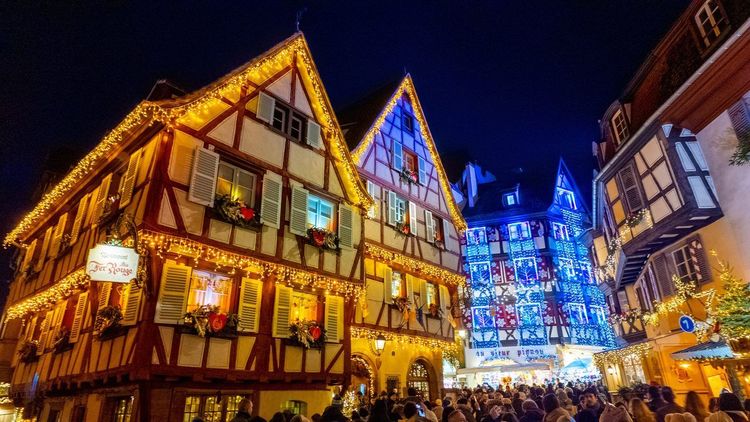
Christmas completely transforms the face of the city: from late November, six separate Christmas markets set up in different neighborhoods (place Jeanne d'Arc, place des Dominicains, Petite Venise, place de l'Ancienne Douane...), each with its own atmosphere and its own products. The illuminated Petite Venise, with its reflections on the water and garlands strung above the canals, is regularly cited as one of the most beautiful Christmas scenes in France, earning Colmar a recurring spot in rankings of the most beautiful Christmas markets in France.
To plan a visit to the Colmar Christmas market in 2026, it is best to book accommodation as early as the summer: city-center hotels sell out weeks in advance on December weekends, and prices climb sharply compared to the rest of the year. Opt for a weekday visit or arrive early in the morning (before 10 a.m.) to avoid the crowds that build up in the afternoon, especially on the first and last weekends before Christmas. Pack an extra layer: the valley is damper and windier than its latitude might suggest.
As for reviews, the experience divides opinion somewhat: regulars appreciate the artisanal authenticity of certain stalls (blown glass, pottery, weaving), while some visitors regret the density of the crowds and the growing proportion of imported products at the most central markets. The market on the place Jeanne d'Arc, further from the center, generally remains the most faithful to the original artisanal spirit. If you are looking for a less crowded atmosphere, the Christmas markets at Eguisheim and Kaysersberg, 15 to 30 minutes away by road, offer a more intimate and less frequented take on the same Alsatian spirit.
What to Eat in Colmar: Local Specialties and Good Addresses

Alsatian Specialties to Try
It is impossible to leave Colmar without having tried tarte flambée (flammekueche)—a thin, crispy base topped with crème fraîche, onions, and lardons, traditionally baked in a wood-fired oven. Next comes choucroute garnie, usually accompanied by several types of charcuterie and a beer or a riesling. On the sweet side, kougelhopf (a crown-shaped brioche with almonds and raisins) is best eaten at breakfast, while Colmar gingerbread makes a good afternoon coffee companion. Which Alsatian specialty is a must if time is short? Tarte flambée remains the best compromise: quick, inexpensive, and representative of local culinary know-how.
To extend the experience, a wine tasting can easily be arranged in one of the city-center cellars or directly in Eguisheim and Turckheim: riesling, gewurztraminer, and pinot gris are the region's signature grape varieties. For buying quality local products in Colmar, the covered market remains the safest bet (aged munster, foie gras, artisan jams), while the fine food shops on the rue des Marchands offer easy-to-carry gift boxes.
Winstubs and Restaurants Where to Eat Well
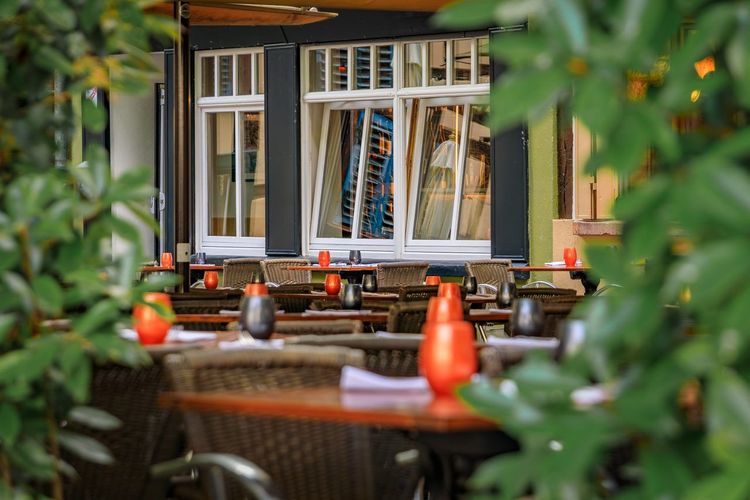
Where to eat in Colmar? Winstubs—traditional Alsatian bistros with dark wood decor and faience tiles—remain the best choice for a full, authentic meal. The Wistub Brenner, near the Petite Venise, and the Petite Venise restaurant itself play the regional card without frills, with main courses around €20–25. For something a touch more upscale, several restaurants in the center offer a contemporary take on Alsatian cuisine, with evening menus around €35–45. Eating well in Colmar's restaurants simply requires planning ahead: the best winstubs fill up by 7 p.m. on weekend evenings in high season, so booking the day before or the same morning is wise. For a more detailed list with tried-and-tested addresses, the culinary specialties to try in Colmar (Ryo article) covers the best tables and top food shops in greater depth.
Where to Stay in Colmar for 3 Days: Neighborhoods and Best Hotels
Staying in the Historic Center
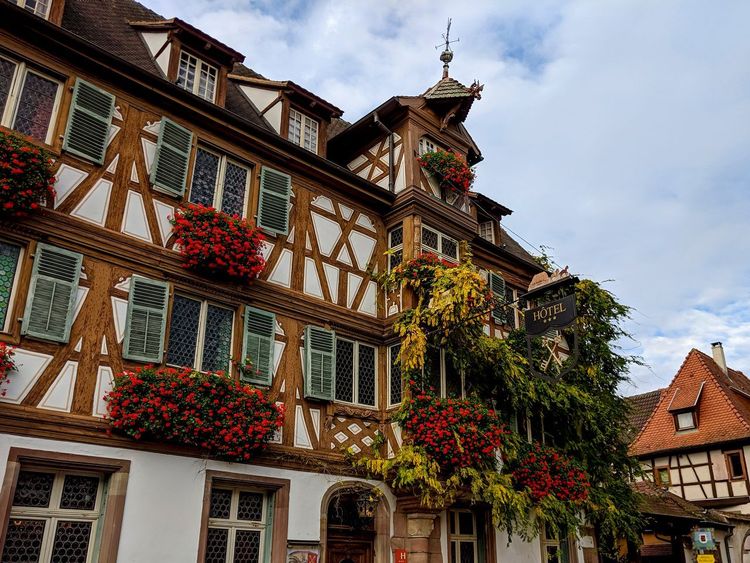
Staying in the historic center, between the Petite Venise and the Collégiale Saint-Martin, means doing everything on foot and enjoying the empty lanes early in the morning or in the evening once tour groups have left. Boutique hotels housed in restored half-timbered buildings (usually 3 or 4 stars) list double rooms at between €120 and €220 per night depending on the season, with a sharp spike on December market weekends. This is the most practical arrangement for a three-day stay if you want to minimize travel, at the cost of a higher accommodation budget than in the outlying neighborhoods.
The choice of neighborhood depends mainly on your budget: chain hotels (2–3 stars) located 10 to 15 minutes' walk from the center, near the station, typically cost €30 to €50 less per night for equivalent comfort. This remains a good compromise if you plan mainly to sleep on site and spend your days outdoors.
Guesthouses, Apartments, and Camping
Guesthouses and apartments are an interesting alternative for stays of three nights or more, often with local hosts in the suburbs or nearby villages such as Eguisheim and Turckheim, 15 to 20 minutes by road from the center. Expect €80 to €130 per night for a double room with breakfast, slightly more for a fully equipped self-catering apartment—a practical option for families.
On the camping side, several 3- and 4-star sites can be found within 15 minutes of Colmar by car, offering mobile homes and tent pitches. This is the most affordable formula for exploring the region in summer, provided you are comfortable with more car travel between the campsite and the historic center.
Whatever neighborhood you choose, bear in mind that the city can be crossed on foot in under twenty minutes: to visualize distances between your accommodation and the places detailed above, our Ryo app to discover Colmar is the simplest reference once you are on the ground.
How to Get to Colmar and Get Around Once There
By Car and Where to Park
Arriving in Colmar by car remains practical if you plan to visit several vineyard villages in succession: allow roughly 1h20 from Strasbourg via the A35, 3 hours from Paris, or 40 minutes from Basel-Mulhouse airport. Since the historic center is largely pedestrianized, it is better to park on arrival rather than searching for a space between sights. Where to park in Colmar: the Rapp car park and the Théâtre car park, both within a ten-minute walk of the Petite Venise, charge around €1.50 per hour or €12–15 for a full day. A 3-day pass is also available for visitors who leave their car on arrival and explore on foot. Avoid keeping the car to tour the center: traffic is restricted and one-way streets add unnecessary complications.
By Train from Strasbourg, Paris, or Basel-Mulhouse
Arriving in Colmar by train is often simpler than driving for the strictly urban part of the stay. Colmar station is fifteen minutes on foot from the historic center (or five minutes by bus), with direct connections from Strasbourg (35–40 minutes, TER, around €12), from Basel (45 minutes), and from Paris via a change at Strasbourg (around 3 hours each way, TGV then TER). Do you need a car to explore the surrounding area? Not necessarily: TER buses connect Eguisheim and Turckheim in 20–30 minutes, although services are less frequent on weekends. To visit several villages in the same day without depending on bus timetables, a rental car remains the most flexible solution—book a few days ahead in high season.
How Long to Allow and When to Visit Colmar
How long do you need to discover Colmar? Three days allow you to cover the city thoroughly and add two or three vineyard villages without rushing. Can you fit everything into a single day? Yes, if you focus on the Petite Venise, the Collégiale Saint-Martin, and one museum (the Unterlinden first), but you will miss the surrounding villages, which make up a large part of what makes the trip worthwhile. Two days are enough for the city alone, museums included; the third day is the one that turns a city break into a genuine Alsatian getaway.
When should you visit Colmar? Spring (April–June) offers the best conditions: geraniums in full bloom on the Petite Venise facades, mild temperatures, and still-manageable crowds on weekdays. Summer (July–August) remains pleasant but noticeably busier, with queues at the museums and in Eguisheim at midday. Autumn, less well known, offers particularly photogenic light over the vineyards during the harvest (late September–October). December completely transforms the experience with the Christmas market, at the cost of sharply higher crowds and hotel rates. To find your way around on site, a map of Colmar remains useful even with a smartphone: the historic center has many lanes where GPS sometimes loses its signal under archways.
Colmar or Strasbourg: Which to Choose, or Should You Combine Both?
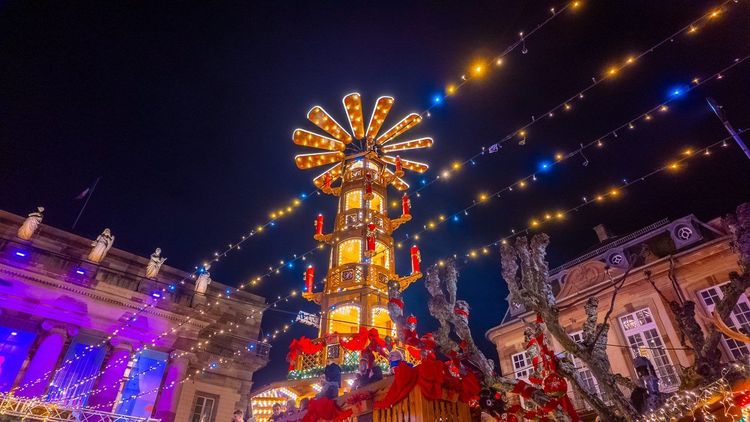
Choosing between Colmar and Strasbourg depends mainly on the time available and what you are looking for. Strasbourg, as a European capital, operates on a larger scale: a Gothic cathedral rising 142 meters, a Petite France quarter comparable in spirit to Colmar's Petite Venise, European institutions, and a cultural and gastronomic offering considerably broader owing to its size (around 290,000 inhabitants versus 70,000 in Colmar). Colmar, smaller and denser, can be explored entirely on foot in half a day more, and serves as a better base for excursions into the vineyard villages.
Which is the more beautiful city, Colmar or Strasbourg? There is no clear-cut answer: Strasbourg impresses with its architectural scope and historical status, while Colmar charms with its intimacy and near-total visual coherence. If you have to choose just one city for a short two-to-three-day stay, Colmar offers more immediate immersion and fewer internal journeys. If you have more time, combining both—with Colmar as a base for the villages and a full-day trip to Strasbourg (35–40 minutes by train)—remains the most complete formula.
To visit Alsace in 3 days starting from Colmar without sacrificing Strasbourg, one workable split is to spend two days in Colmar and its villages, then dedicate a full day to a return trip to Strasbourg by train. It is more intense than a stay concentrated on a single city, but perfectly manageable thanks to the fast TER link between the two.



FAQ
How many days do you need to visit Colmar?
Three days is the ideal length of time to explore the city thoroughly and add one or two vineyard villages such as Eguisheim or Turckheim. Two days are enough for Colmar alone, including the museums. A single day allows you to see the essentials of the historic center (Petite Venise, Collégiale Saint-Martin, one museum) but forces you to skip the surrounding area, which is a significant part of what makes a stay worthwhile.
What is the best time of year to visit Colmar?
Spring (April to June) offers the best balance between mild weather, geraniums in bloom on the facades, and still-manageable crowds. Summer remains pleasant but busier. December completely transforms the experience with the Christmas market, at the cost of significantly higher crowds and hotel rates.
Where is the Petite Venise in Colmar?
The Petite Venise is located in the southern part of the historic center, along the Lauch river, between the quai de la Poissonnerie and the Tanneurs quarter. It can be reached on foot in about ten minutes from the Collégiale Saint-Martin.
Do you need a car to explore the area around Colmar?
Not necessarily: TER buses connect Eguisheim and Turckheim in 20 to 30 minutes, though services are less frequent on weekends. To visit several villages in the same day at your own pace, a rental car remains the most convenient option.
Which Alsatian specialty is a must-try in Colmar?
Tarte flambée is the best choice if time is short: quick to serve, inexpensive, and representative of local culinary know-how. Choucroute garnie and kougelhopf round out a complete Alsatian food experience over three days.
Is it better to visit Colmar or Strasbourg?
It depends on the time available. Colmar is better suited to a short, compact, walkable stay, while Strasbourg offers a larger scale and a broader cultural offering. With three days or more, combining both via a return train journey (35–40 minutes) remains the most complete option.
Where can you park easily in Colmar?
The Rapp car park and the Théâtre car park, both within a ten-minute walk of the Petite Venise, offer the most practical options, with daily rates of around €12 to €15. It is best to park on arrival and explore on foot from there, as traffic in the historic center is restricted.
Three days are more than enough to understand why Colmar continues to attract so many visitors without ever quite resembling a stage set for tourists: the city is meant to be lived and tasted as much as photographed. Between the Petite Venise at dawn, the Unterlinden collections, and an afternoon lost in the concentric lanes of Eguisheim, the pace suggested here leaves enough room to improvise without missing anything essential.
If you want to plan your route before you leave, neighborhood by neighborhood and place by place, the Ryo audio guide for Colmar is the most practical complement to this article: simply launch the app once on site to find everything detailed here, in order. All that remains is to choose the season—between spring geraniums and the Christmas market—and to book accommodation in the historic center well in advance.
À lire également