© Shutterstock
 Votre guide Ryo
Europa-Park: The Complete Guide to the Park in 2026
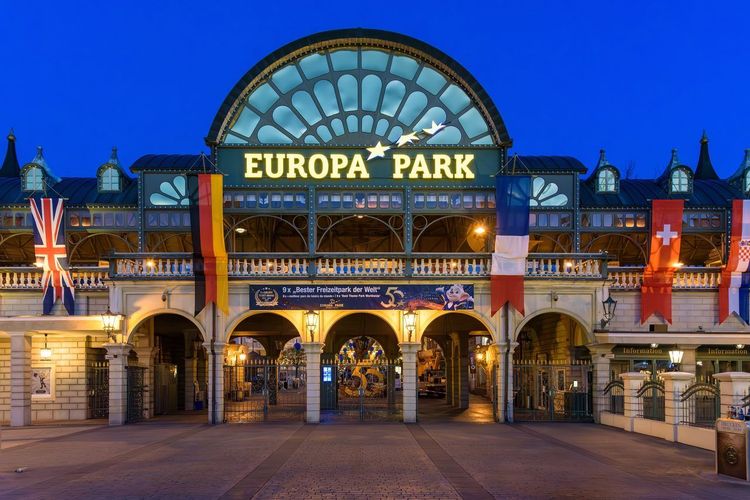
With over 5.7 million visitors each year, Europa-Park stands as the second most visited theme park in Europe, just behind Disneyland Paris. Nestled in Rust, on the border between Germany, France and Switzerland, this family resort founded in 1975 by the Mack family brings together 18 miniature themed countries, over a hundred attractions and a good dozen roller coasters, some of which exceed 100 km/h from the very first seconds. Here you will find a full-scale reconstructed Icelandic volcano at the heart of the Rulantica water park, gondolas gliding under Venetian bridges, and six 4-star hotels where you can sleep in a replica of the Roman Colosseum. This guide covers everything you need to know before booking a stay at Europa-Park: must-see attractions, prices, opening hours, accommodation and tips for keeping queue times to a minimum. Whether you are coming for a whirlwind day or a full weekend, you will find here everything you need to build a realistic itinerary, suited to thrill-seekers and families with young children alike.
Europa-Park at a Glance: Where and What
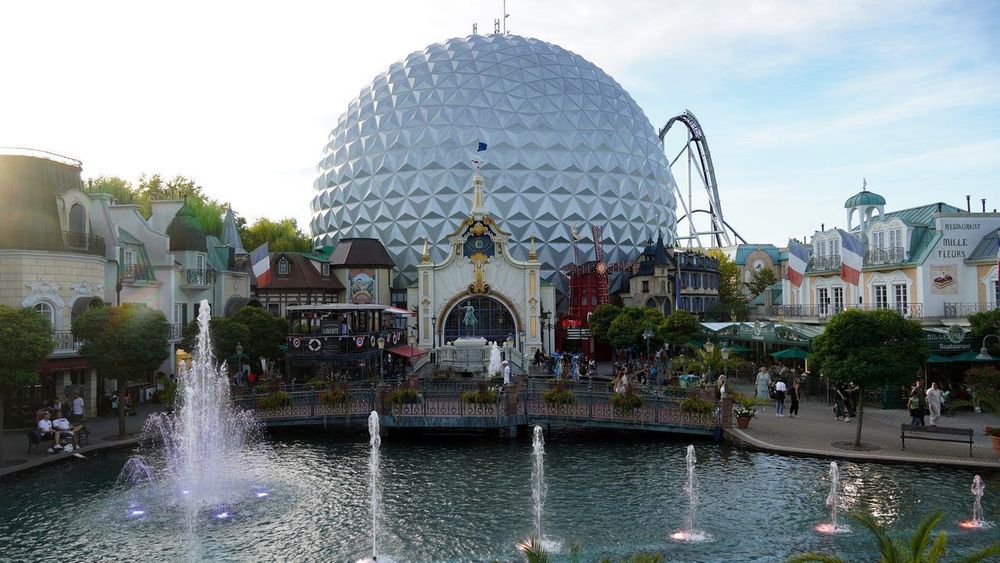
Europa-Park covers approximately 95 hectares in the village of Rust, in Baden-Württemberg, about thirty minutes from Strasbourg and less than an hour from Basel. The site combines an open-air theme park organised into 18 themed zones, an indoor and outdoor water park (Rulantica), six hotels and a vast dining area. It is one of the few European parks to function as a true resort: you can spend three or four days there without ever leaving the grounds. In practical terms, a stay at Europa-Park is better thought of as a mini city trip than a simple day out, with a pace to be managed according to your stamina and the ages of your children.
A Family Adventure Born in 1975
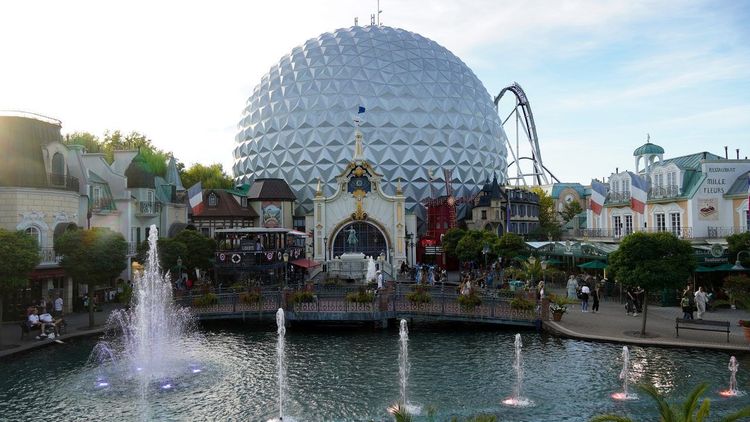
The Mack family has been manufacturing fairground attractions since the late 18th century, first as coachbuilders and then as ride manufacturers. In 1975, they opened Europa-Park (Europa-Park-Straße 2, 77977 Rust, rated 4.7/5 on Google based on 196,921 reviews) on a plot of land adjacent to their factory, with a handful of attractions and the idea of offering a miniature tour of Europe. The park has expanded almost every year since, driven by the same family, now in its fourth generation at the helm. This family continuity partly explains why the park retains a more artisanal feel than its American counterparts, even at this scale.
The 18 Themed Countries: the Heart of the Park
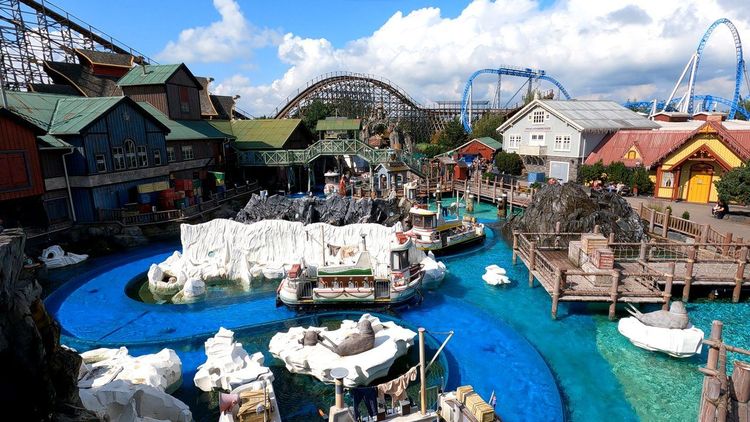
The park map resembles a compressed map of Europe: each zone reproduces the architecture, gastronomy and sometimes the language of a country, with an attention to detail that goes far beyond the usual cardboard-cutout decor of theme parks. The Germany zone, around the miniature castle, serves as the entry point. You then move on to Italy with its gondolas, Spain and its arena, Portugal, Russia with its gilded domes, Iceland, Scandinavia, Ireland, England, Switzerland and its chalets, Austria, Greece and the Netherlands.
Staff in traditional costumes, zone-specific music and local culinary specialities deepen the immersion: you eat paella in Spain, döner in Germany and Scandinavian pastries further along. Many visitors discover the park map on site and let themselves drift from one country to another rather than following a strict itinerary, which works well given the compact size of the site. Still, allow a good hour of walking to simply cross the park from one end to the other without stopping.
Thrill Attractions: the Stars of the Park
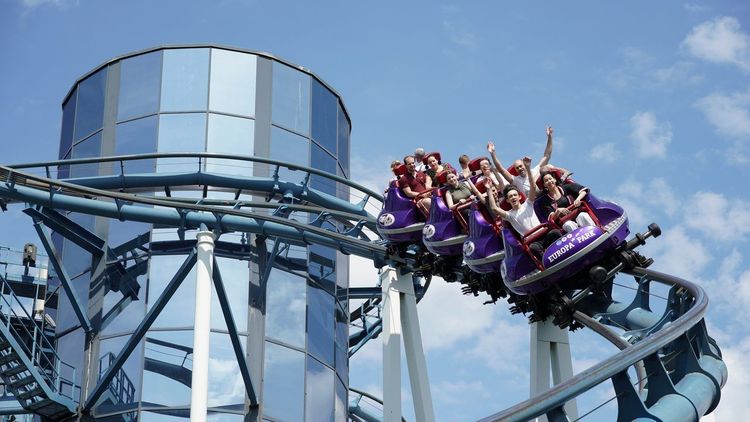
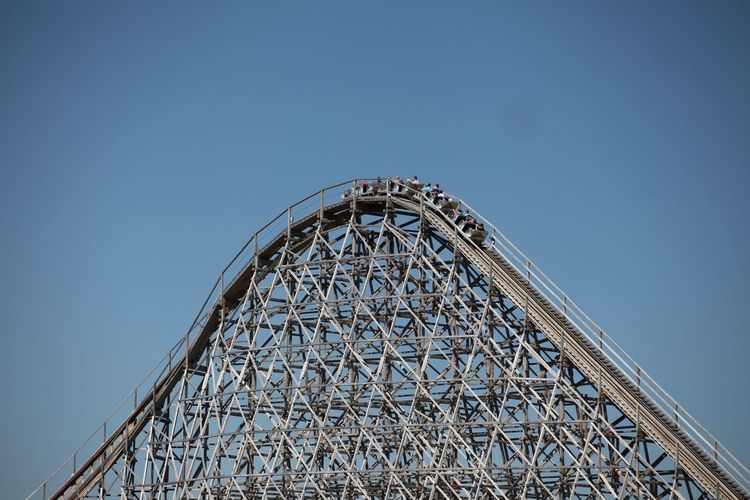
Europa-Park owes much of its reputation to its roller coasters. The Silver Star, a hypercoaster standing 73 metres tall, reaches 130 km/h on its first drop and has remained a benchmark in the genre since it opened in 2002. The blue fire Megacoaster (Europa-Park-Straße 2, 77977 Rust, rated 4.8/5 on Google based on 8,628 reviews) launches its riders from 0 to 100 km/h in 2.5 seconds using a magnetic launch system, before going into a corkscrew inversion. The Wodan Timburcoaster, built entirely of wood, relies on brutal airtime rather than pure speed.
More recently, Voltron Nevera established itself as one of the fastest multi-launch roller coasters in Europe when it opened in 2024, at the heart of a new Croatian themed zone. It is now one of Europa-Park's biggest stars, and therefore one of the longest queues at peak times. Alongside these classic roller coasters, the Eurosat CanCan Coaster, which runs indoors in the dark, and the Alpenexpress Coastiality, which combines rails and a virtual reality headset, round out the offering for thrill-seekers who do not want to experience the same thing twice. Plan to head there first thing in the morning: these are the park's longest queues from 11 a.m. onwards.
Family Attractions and Rides for Young Children
Not all of the park's attractions are reserved for thrill-seekers. Arthur, a family dark ride inspired by a medieval fantasy world, immerses young and old alike in an underground realm without too much of an adrenaline rush. The Pegasus, a junior roller coaster, often serves as a first experience for children before they dare to try the faster rides. The Viennese carousel, boat rides through the Scandinavian countries and the Josefina's Magical Journey show round out an offering designed with families and young children in mind.
The areas dedicated to younger children, often grouped near the entrance of each country zone, give parents a chance to catch their breath while the kids try out miniature versions of the bigger attractions. Many families alternate a thrill ride for the adults with a calmer break, which makes a full day at the park more manageable for everyone.
Rulantica: the Nordic Water Park
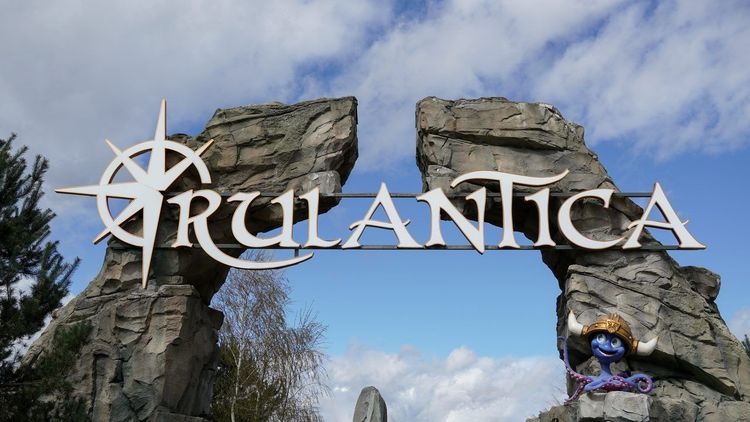
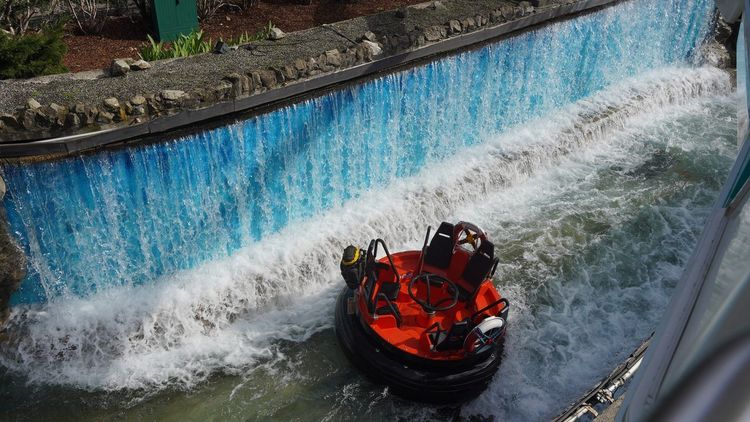
Opened in late 2019 right next to the main park, Rulantica (Rulantica-Allee 1, 77977 Rust, rated 4.4/5 on Google based on 26,130 reviews) transposes the Icelandic world into a vast indoor and outdoor water park. An artificial volcano serves as the visual centrepiece, surrounded by around twenty water slides, wave pools and quieter areas for families. The indoor water temperature is maintained at around 32°C all year round, making it a credible option even in the depths of a German winter.
Rulantica can be visited with a separate ticket or a combined one with the main park. Many visitors dedicate a full day to it rather than just an afternoon, as the space is so vast: it is better not to try to combine the park and Rulantica on the same day if you want to make the most of both without rushing.
Shows, Parades and Entertainment
The park schedules shows throughout the day: acrobatic performances, musicals in covered theatres and, on summer evenings during peak season, a fireworks display or laser show over the central lake. The park's mascot, Ed Euromaus, regularly entertains visitors along the pathways, particularly around the German zone. During the winter season, the programme shifts to ice shows and a Christmas market. Check the day's schedule at the entrance or on the official app: the timings of the main shows change depending on the season, and the best seats go quickly for end-of-day performances.
Resort Hotels: Staying on Site
Staying in one of the resort's six hotels completely transforms the experience. The Hotel Colosseo, with nearly 500 rooms spread across several floors around a reconstructed Roman arena, is one of the largest 4-star hotels in Europe. The Castillo Alcazar (Europa-Park-Straße 2, 77977 Rust, rated 4.6/5 on Google based on 1,728 reviews) reproduces a medieval Spanish castle, moat included, while El Andaluz and Santa Isabel play respectively on Andalusian and Portuguese themes, complete with patios and azulejos.
More recently opened, Bell Rock, styled after New England, and Krønasår, with its Scandinavian atmosphere and a genuine natural history museum integrated into the lobby, complete the offering. Staying on site grants access to early entry into the park before the official opening, which makes a real difference for the most popular attractions. Rates vary considerably depending on the season and the theme chosen, from the most affordable to the most premium, worth weighing against the time you'll want back in town for Ryo's Colmar audio-guided tour.
Dining in the Park
Each themed zone has its own dining offer, ranging from sit-down restaurants to street food stalls. You will find everything from an Italian trattoria to a Scandinavian buffet or a traditional German rotisserie. The Best of Europe restaurant, an all-you-can-eat buffet drawing on specialities from every zone, is often a safe bet for groups with varied tastes. Prices are broadly in line with those of a typical theme park, with a real gap between the quick-service stalls and the more refined tables in some of the resort hotels. Remember to book in advance for the gourmet restaurants in the resort hotels, which are very popular in the evenings, and keep a little budget aside for the sweet specialities from the Austrian and Scandinavian zones, often cited as some of the park's best treats.
Tickets and Prices 2026
Europa-Park's 2026 prices vary depending on the option chosen. A standard day ticket for the park alone is around 63 to 70 euros for an adult, with reductions for children and a lower per-day rate on multi-day tickets. The combined park and Rulantica ticket costs more but remains more economical than two separate tickets if you plan to enjoy both sites. A season pass, valid for the entire opening period, pays for itself from the second or third visit within the year.
Buying online in advance generally saves a few euros compared to the on-site ticket office and, above all, avoids the queue at the entrance. Families would do well to compare combined hotel and ticket packages, which are often better value than buying separately, particularly outside peak season.
Opening Hours and the Best Time to Visit
Europa-Park generally opens from mid-March or April through to early November, before moving into its winter season (Wintertraum), from late November to early January, with Christmas decorations and ice shows. The park closes for a few weeks in January and February for maintenance. Daily opening hours are most often from 9 a.m. to 6 p.m., with extended hours in summer.
To avoid the crowds, opt for a Tuesday or Wednesday outside German, French and Swiss school holidays, which rarely overlap completely. May and September often offer the best compromise between pleasant weather and moderate attendance.
How to Get to Europa-Park
The park is located directly alongside the A5 motorway, exit Ettenheim or Herbolzheim depending on your direction. By train, Ringsheim (Europa-Park) station is served by regional connections from Freiburg im Breisgau and Offenburg, with a free shuttle to the entrance. From France, taking the TGV to Strasbourg then a shuttle or car journey remains the simplest option. The nearest airport, EuroAirport Basel-Mulhouse-Freiburg, is less than an hour's drive away.
Our Tips for Making the Most of Your Visit
Arriving at opening time makes all the difference, especially if you are staying in one of the resort hotels, which offer early park entry. Download the official app before you arrive: it shows live queue times and lets you plan your route while avoiding the busiest periods.
Start with the most popular attractions (Silver Star, blue fire, Voltron Nevera) before 11 a.m., then shift to less busy zones in the afternoon such as Ireland or Switzerland. Save the shows and family attractions for the end of the day, when the queues for the big roller coasters build up again.
If your budget allows, two full days are generally enough to cover the essentials of the park without rushing, three if you plan to add Rulantica at a relaxed pace. Pack warm layers even in summer for air-conditioned indoor attractions, and bear in mind that some areas of the park close earlier than the general closing time displayed at the entrance. Finally, book your tickets and hotel several weeks in advance during school holidays: the resort hotels fill up quickly during these periods.
Extending the Adventure: Other Parks to Explore
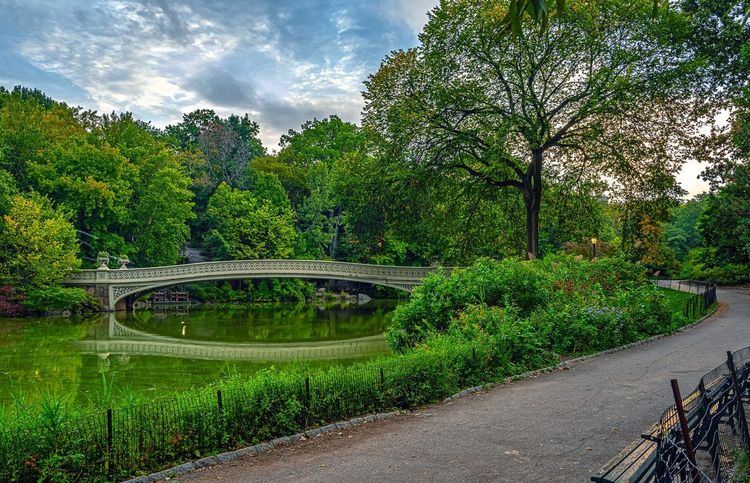
If your stay in Germany includes a city trip, Ryo also offers audio-guided tours of great urban parks, of a very different kind. In New York, the Ryo audio-guided tour of Central Park takes you from Bethesda Terrace to the Jacqueline Kennedy Onassis Reservoir, a walk that offers a complete change of pace after the roller coasters of Rust. Our Ryo article on Central Park also details the best times to explore it without the crowds, a lesson that applies just as well to Europa-Park on a Tuesday morning in May.
FAQ
What are Europa-Park's opening hours?
The park is most often open from 9 a.m. to 6 p.m. between mid-March and early November, with extended hours in summer. A shorter winter season (Wintertraum) runs from late November to early January, followed by a closure of several weeks for maintenance.
How much does a ticket to Europa-Park cost?
A standard adult day ticket for the park alone is generally between 63 and 70 euros in 2026, with reduced prices for children and multi-day or combined packages with Rulantica that offer better value.
Where is Europa-Park located (what is the address)?
The park is located in Rust, Germany, in Baden-Württemberg, right next to the A5 motorway and about 30 minutes from Strasbourg. The exact address is Europa-Park-Straße 2, 77977 Rust.
What is the best time to visit Europa-Park?
May and September offer the best balance between weather and crowd levels. On weekdays, outside French, German and Swiss school holidays, queues remain significantly shorter than at weekends.
Can you stay overnight at Europa-Park?
Yes, the resort has six themed hotels on site, from the Roman atmosphere of the Colosseo to the Scandinavian world of the Krønasår, with early park access reserved for hotel guests.
What are the must-see attractions at Europa-Park?
The Silver Star, the blue fire Megacoaster, the Wodan Timburcoaster and Voltron Nevera are among the most sought-after roller coasters, while Arthur and Josefina's Magical Journey are better suited to families with young children.
Europa-Park deserves your full attention: it is best to plan two full days to enjoy the 18 themed countries, Rulantica and the evening shows without rushing from one attraction to another all day. Between roller coasters that exceed 100 km/h from the very first second and themed hotels where the adventure continues after the gates close, this German park more than lives up to its reputation. If you feel like adding a city trip on your way back, the Ryo audio tour of London between Camden Town and Regent's Park, or our Ryo article on Hyde Park, extend the exploration into another great park — an urban one this time.
À lire également