© Shutterstock
 Votre guide Ryo
Hyde Park in London: The Complete 2026 Guide
Most visitors cut through Hyde Park diagonally, between South Kensington museums and Knightsbridge shop windows, without ever realising that this 142-hectare park is one of the few places in London where you can swim outdoors in summer, listen to fiery political speeches on a Sunday morning, or watch tropical parakeets squabble with a grey squirrel over a hazelnut. A former hunting ground of Henry VIII, the park has become over four centuries of history the open-air living room of one of the world's most densely populated capitals.
This guide takes you into every corner of the park: the Serpentine lake and its swimming lido, Speakers' Corner where Karl Marx once held forth, the adjacent Kensington Gardens with Kensington Palace and the Peter Pan statue, the Wellington Arch and its memorials, and the major seasonal events, from the Christmas Winter Wonderland to the British Summer Time concerts. To extend your exploration of the British capital beyond the park, the Ryo audio-guided tour between Camden Town and Regent's Park will lead you to other iconic green spaces in north London, from Camden Lock Market to the banks of the Regent's Canal.
A Royal History: From Henry VIII to the Present Day
Hyde Park has not always been open to the public. In 1536, Henry VIII seized these lands from Westminster Abbey to create a private hunting reserve, where deer, wild boar and pheasants roamed across several hundred hectares of dense forest. The park remained the exclusive property of the Crown for more than a century, until Charles I decided, in 1637, to open its gates to Londoners. It was the first time in British history that a royal space was made accessible to all.
From that point on, the park became an intense social stage. In the 17th century, the aristocracy gathered here for horse racing and duelling. In the 18th, a carriage ride along Rotten Row, the first artificially lit road in England, thanks to 300 oil lanterns installed in 1690 to safeguard royal journeys, was as much a display of social status as a leisure outing. Rotten Row, a corruption of 'Route du Roi', is today an ochre sand track popular with horse riders and early-morning joggers.
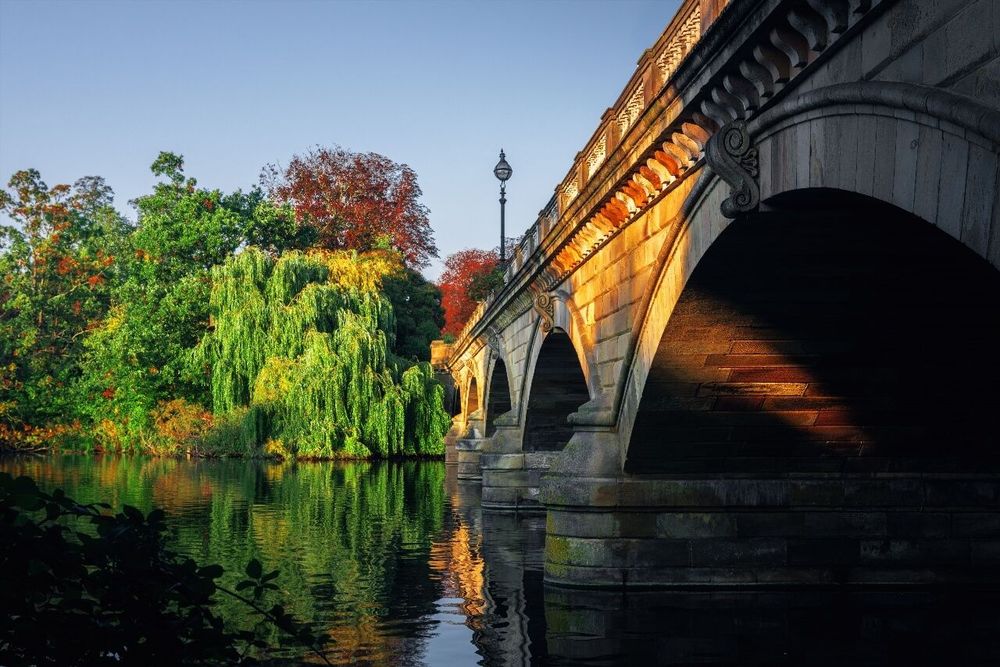
The great transformations of the 19th century gave the park its present-day character. The Serpentine Lake was dug in 1730 on the orders of Queen Caroline, wife of George II, by diverting the course of the River Westbourne. In 1851, the Great Exhibition was held here in the Crystal Palace, a glass-and-steel structure 600 metres long that welcomed more than six million visitors in six months. This symbol of British industrial triumph was dismantled after the closing, moved to Sydenham in south London, where it burned down in 1936 in a spectacular fire visible from several counties.
The Serpentine Lake and the Serpentine Gallery
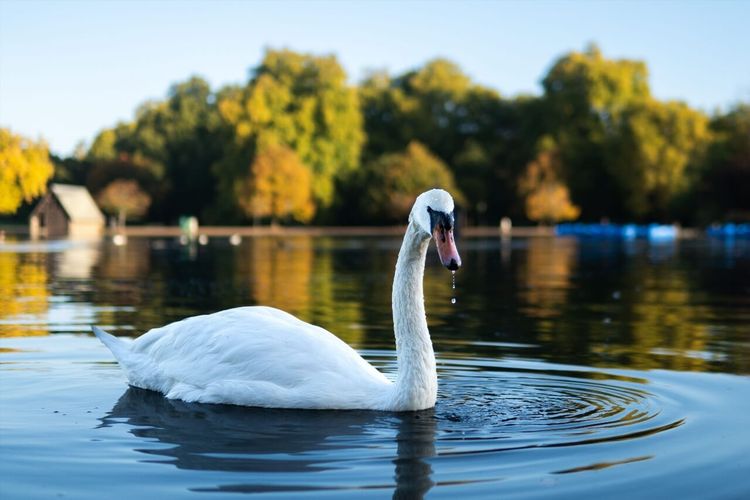
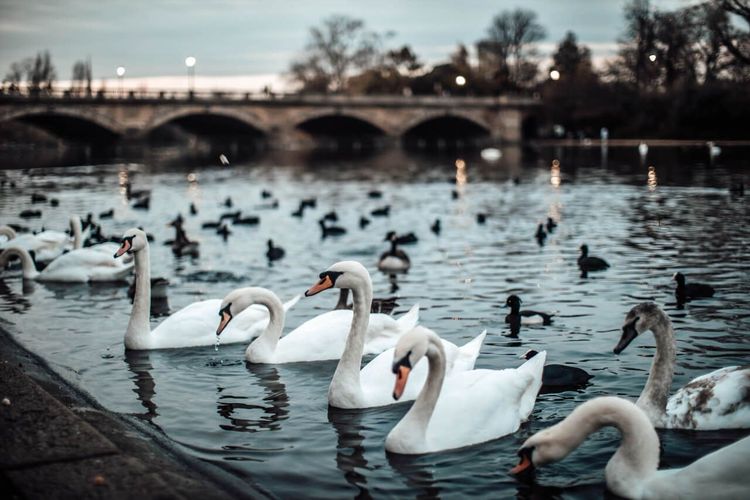
The Serpentine Lake is the centrepiece of the park. This 11-hectare body of water, whose winding shape gave it its name, stretches across both the park and the adjacent Kensington Gardens, with the western portion taking the name 'Long Water'. On its banks, mute swans, greylag geese and mallards cohabit with kayakers and strollers tossing bread despite the signs.
What many people don't know: in the height of summer, it is perfectly possible to swim in the Serpentine. The Serpentine Lido is open from June to September, with a supervised swimming area (paid entry, around £5), changing rooms and a café with a lakeside terrace. The Serpentine Swimming Club, founded in 1864, even organises a race on 25 December, the famous Peter Pan Cup, a London tradition in the finest tradition of British absurdity, in which dozens of swimmers plunge into four-degree water before a crowd of well-wrapped spectators.
Facing the lake on the north-east side, the Serpentine Gallery (Kensington Gardens, London W2 2AR, rated 4.5/5 on Google from 1,029 reviews) is a contemporary art exhibition space housed in a 1930s tea pavilion. Entry is free, and exhibitions change several times a year. The gallery is best known for its Summer Pavilion: every summer since 2000, it has invited a world-renowned architect to design a temporary ephemeral structure on its lawn — Zaha Hadid, Frank Gehry, Jean Nouvel, Bjarke Ingels and Selgas Cano have all taken part. The Serpentine Sackler Gallery, on the other side of the lake, completes the offering in a building converted by Zaha Hadid in 2013, with a translucent extension that contrasts sharply with the 18th-century brick walls.
Speakers' Corner: London's Free Speech Platform
There are few places in the world where you can step up onto a stepladder and harangue a crowd without risk of arrest. Speakers' Corner (Hyde Park, London W1J 7NT, rated 4.1/5 on Google from 3,011 reviews), at the north-east corner of the park near Marble Arch, is the most famous of them. The tradition dates back to 1872, when the Parks Regulation Act formalised the right of assembly and public speech in this space — a legal recognition of an informal practice that had existed since the 1850s, when Chartist demonstrators gathered here to protest working conditions.
Karl Marx, Vladimir Lenin, George Orwell and Marcus Garvey all spoke here at different periods. Today, Sunday morning remains the best time to visit: from 10am, several speakers set themselves up simultaneously on their stepladders or crates, holding forth on subjects as varied as Islamic theology, global conspiracy, militant veganism or electoral reform. Hecklers in the crowd don't hesitate to interrupt, question and jeer, all within an implicit set of rules that lends the scene a unique atmosphere somewhere between a philosophy café, an open mic and a people's tribunal.
Attendance varies enormously. On a fine spring Sunday, you'll find twenty speakers and several hundred people. On a rainy Sunday in January, three brave orators and ten listeners. The weather here is a programming factor.
Kensington Gardens, Right Next Door
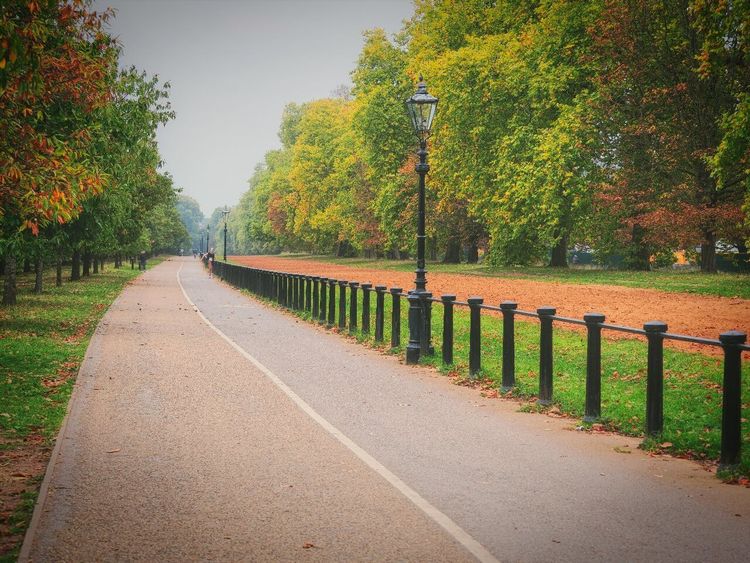
Informally merged with Hyde Park, Kensington Gardens (London W8 4PX, rated 4.7/5 on Google from 30,334 reviews) are its natural extension: the two parks open onto each other along West Carriage Drive with no visible barrier between them. Together, they form a continuous green space of more than 210 hectares in the heart of west-central London — one of the largest pedestrianised green areas of any European capital.
The main highlight of Kensington Gardens is Kensington Palace, an active royal residence that was notably the home of Princess Diana, and later of Prince William and Kate Middleton. Several apartments of the palace are open to visitors (paid entry, around £24), with exhibitions on the royal family and the history of the building since William III. The English-style gardens surrounding it are worth a visit even without going inside.
Not far away, the Peter Pan statue has stood on the bank of the Long Water since 1912. J.M. Barrie, whose publisher lived just a few streets away, personally funded and had the sculpture installed in secret, overnight, as a surprise for morning strollers. Children still climb the rabbits, fairies and gnomes that adorn its bronze plinth today.
The Albert Memorial, to the south of the gardens, is a neo-Gothic structure erected in 1872 by Queen Victoria in memory of her husband Prince Albert. Adorned with 169 sculpted figures representing the continents, the arts, the sciences and commerce, it faces the Albert Hall, one of the most legendary concert venues on the planet, where the Proms have been held every summer since 1941.
The Diana Memorial Fountain and the Bandstand
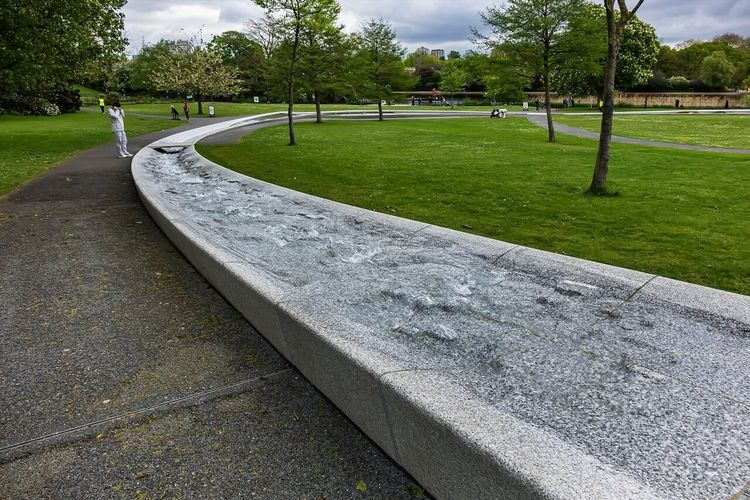
Inaugurated in 2004 by Queen Elizabeth II, the Diana Memorial Fountain (Hyde Park, London W2 2UH, rated 4.5/5 on Google from 10,896 reviews) pays tribute to the Princess of Wales who died in 1997. Contrary to what the word 'fountain' suggests, this is not a conventional water jet but a ring-shaped Cornish granite basin with a 210-metre circumference, in which water flows in a spiral from the top down to a calm pool at the bottom. The loop design represents the accessibility Diana wished to embody — open to all, with no centre and no hierarchy.
Children love to paddle in it, and the authorities explicitly permit this in summer — a rare freedom at an official British monument. The area around the fountain is also one of the most popular spots in the park for a picnic on the grass.
The Bandstand, a few minutes' walk to the north-east, is a Victorian music kiosk dating from 1869. It is one of the finest examples of this style in England, with its ornate cast-iron columns and slate roof. Free concerts are regularly organised here on summer weekends — military bands, jazz orchestras, chamber ensembles. The exact programme is published each year on the Royal Parks website; it is well worth checking the dates before your visit.
Wildlife: Grey Squirrels, Parakeets and Swans

The park is a playground for London's urban wildlife. Grey squirrels are everywhere and remarkably tame — they will often take hazelnuts or walnuts directly from the hand. Introduced from North America in the late 19th century, they have displaced the native red squirrel across almost all of England.
Look up into the trees: you may spot ring-necked parakeets, those bright green birds that have colonised London's parks since the 1990s. Their presence in a northern European capital fuels dozens of urban legends, from rock star Jimi Hendrix supposedly releasing two on Carnaby Street to an escape during a film shoot. Whatever their origin, they are now a protected species and number several thousand individuals across Greater London.
On the Serpentine, mute swans have been a fixture since the 16th century. Under British law, all unmarked swans theoretically belong to the Crown — a medieval legacy that lends the annual swan count on the Thames (the Swan Upping) a solemnity as anachronistic as it is touching.
Hyde Park Corner and the Wellington Arch
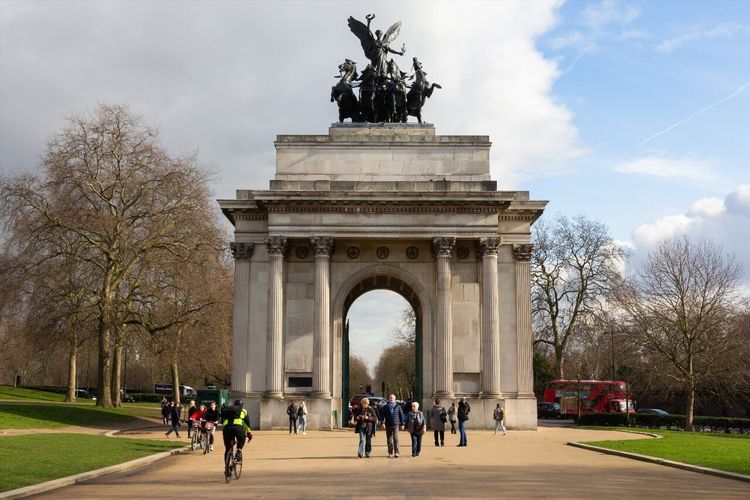
At the south-east corner of the park stands one of London's busiest junctions, dominated by the Wellington Arch (Hyde Park Corner, London W1J 7JZ, rated 4.5/5 on Google from 4,555 reviews) (also known as Constitution Arch). This neoclassical triumphal arch, built in 1830, was originally topped by a colossal equestrian statue of the Duke of Wellington — so large and so controversial that it was dismantled in 1883 during the junction's redesign, more than thirty years after the Duke's death in 1852. It was replaced in 1912 by the current bronze quadriga (a chariot drawn by four winged horses symbolising peace).
The interior of the arch houses a small museum managed by English Heritage (paid entry, around £6), with an exhibition on the history of the monument and period engravings. The terrace at the top offers an unobstructed view over the rear facade of Buckingham Palace and the park's trees. Below, the New Zealand Memorial, the Royal Artillery Memorial and the Australian Memorial form a dense commemorative ensemble — understated and rarely explored by visitors in a hurry.
Just nearby, Apsley House, the residence of the first Duke of Wellington, nicknamed 'No. 1 London' by Wellington himself, houses a collection of Old Master paintings gifted to the Duke following his victories, including works by Velázquez and Goya. Paid entry, around £14.
Winter Wonderland and Open-Air Concerts
The park transforms dramatically with the seasons, and that is precisely what makes it a place worth returning to again and again.
In winter, from mid-November to early January, Hyde Park Winter Wonderland (Hyde Park, London W2 2UH, rated 4.4/5 on Google from 9,326 reviews) takes over the northern part of the park with funfair rides, a giant outdoor ice rink, a Bavarian Christmas village with wooden chalets, artisan markets and big-top circus shows. Entry to the site is free, but rides and restaurants are paid. The outdoor ice rink, one of the largest in Great Britain at more than 1,500 square metres of ice, draws tens of thousands of skaters each year. Booking skating tickets in advance online is strongly recommended, especially for December weekends.
In summer, the park is one of the capital's great open-air concert venues. The British Summer Time (BST) series, held each July, welcomes internationally renowned artists to concerts attended by tens of thousands of spectators. Taylor Swift, Elton John, The Rolling Stones and Bruce Springsteen have all performed here in recent years. Tickets sell out within hours — book six to twelve months in advance if a particular artist appeals to you.
In spring, more low-key events bring the park to life: charity runs, street food festivals, open-air exhibitions, marathons. The park is never truly quiet.
Practical Information for Your Visit
The park is open every day from 5am to midnight, without exception and with no entry fee. The park never closes for weather-related reasons, though certain events (BST, Winter Wonderland) temporarily occupy designated areas with controlled access.
Tube access:
- Hyde Park Corner (Piccadilly line): south-east entrance, ideal for the Wellington Arch and memorials
- Knightsbridge (Piccadilly line): south entrance, a 5-minute walk from the Serpentine Lido
- Lancaster Gate (Central line): north entrance, facing the Serpentine lake
- Marble Arch (Central line): north-east entrance, immediate access to Speakers' Corner
- Queensway (Central line): access to the east side of Kensington Gardens, towards Kensington Palace
By bus: several routes run alongside the park along Bayswater Road to the north and Kensington Road/Knightsbridge to the south. Routes 9, 10, 74 and 390 serve the park's surroundings from the centre.
By bike: Santander Cycles (formerly Boris Bikes) are available at several docking stations around the park. The main paths have lanes separated from pedestrians. Cycling is permitted on designated routes and prohibited on the grass.
Recommended duration: allow 2 to 3 hours for a full visit of the park and Kensington Gardens. An hour is enough for a circuit of the Serpentine lake. A full day is easily filled if you combine museums, cafés and events.
Dogs: welcome in almost all areas of the park, on a lead in wildlife breeding zones (signposted). London dog owners make it one of their favourite walking spots.
Where to Eat and Relax in the Park
The park has several integrated dining options, meaning you don't need to leave into the surrounding streets for a break.
The Lido Café Bar (Hyde Park, London W2 2UH, rated 3.9/5 on Google from 1,009 reviews), on the lido side of the Serpentine, is the most pleasant: an open-air terrace, a direct view over the lake and a simple, honest menu (sandwiches, brunches, craft beers). It gets crowded on sunny weekends — arrive before 12pm or after 3pm to avoid the wait.
The Dell Restaurant, on the other side of the lake near the waterfall, offers more formal dining with a seasonal menu. A well-appointed lakeside setting; booking recommended at weekends.
The Magazine Restaurant (the café of the Serpentine Sackler Gallery, housed in the translucent extension designed by Zaha Hadid) offers as much of an architectural experience as a gastronomic one, at higher prices. For a quick, reasonably priced coffee, the Broadwalk Café kiosks are dotted throughout the park.
Outside the park, the streets of Bayswater to the north offer a concentration of restaurants, cafés and grocery shops. Avoid the hotel terraces of Knightsbridge to the south if you have a budget to stick to — prices there match the neighbourhood.
FAQ
Is Hyde Park free?
Yes, entry to the park is completely free, every day of the year, from 5am to midnight. Some events held within its grounds, such as Winter Wonderland or British Summer Time concerts, require a specific entry ticket, but the park itself remains open to everyone with no ticket required. Swimming at the Serpentine Lido is paid (around £5) in season.
Can you swim in Hyde Park?
Yes, at the Serpentine Lido, a supervised swimming area open from June to September (around £5 entry). The Serpentine Swimming Club, one of the oldest in Great Britain (founded in 1864), even organises the Peter Pan Cup on 25 December for its most daring members. Outside lido hours, open swimming in the lake is not permitted.
Which Tube Station Should I Use for Hyde Park?
It depends on your destination within the park. For Speakers' Corner: Marble Arch (Central line). For the Serpentine lake and Serpentine Gallery: Lancaster Gate (Central line). For the Wellington Arch and memorials: Hyde Park Corner (Piccadilly line). For Kensington Palace and the Albert Memorial: Queensway or High Street Kensington.
Is Hyde Park Suitable for Families with Children?
Absolutely. The adjacent Kensington Gardens are home to the Diana Memorial Playground, an exceptional play area featuring a life-size pirate ship. The Peter Pan statue and squirrels that can be hand-fed delight young visitors. In summer, the lido and pedal boats on the Serpentine round out the experience. In winter, Winter Wonderland offers funfair rides and an ice rink.
What Is the Difference Between Hyde Park and Kensington Gardens?
The two parks are adjacent and flow seamlessly into one another, but they are administratively distinct. Hyde Park (east) contains the Serpentine Lido, Speakers' Corner, the Bandstand and the Diana Memorial Fountain. Kensington Gardens (west) is home to Kensington Palace, the Albert Memorial, the Albert Hall, the Peter Pan statue and the Serpentine Gallery. Together, they form a continuous green space of 210 hectares.
What Is Hyde Park Winter Wonderland?
The largest Christmas market in Great Britain, set up each year in the northern part of the park from mid-November to early January. It features an outdoor ice rink (one of the largest in the country), funfair rides, a Bavarian village with wooden chalets, big-top circus shows and dozens of food stalls. Entry to the site is free; rides and attractions are paid. Book the ice rink online in advance, especially for weekends.
Conclusion
Hyde Park holds a unique place in the London imagination — at once a space of claimed freedom since Speakers' Corner, a place of collective mourning with the Diana Fountain, a stage for giant concerts and a neighbourhood garden for millions of residents. Across 142 hectares, it condenses four centuries of British history, from the royal hunting reserve of the 16th century to the music festivals of the 21st.
Whatever the length of your stay in London, a morning or a full day in the park always deserves its place in the itinerary. And to go further in exploring the capital, the Ryo audio guide between Camden Town and Regent's Park will lead you to other green and cultural corners of the north of the city, 20 stops over eight kilometres. If great urban parks fascinate you, our Ryo article on Central Park in New York or the Ryo audio-guided walk through Central Park offer a fine transatlantic perspective.
À lire également