© Shutterstock
 Votre guide Ryo
The 25 Must-See Landmarks of London in 2026
London's landmarks span over two thousand years of history within a perimeter you can cross on foot in a single day, yet each landmark tells a different story — from a Roman fort to an electricity generating station converted into a temple of design. Before diving into the greatest classics, note that some of these London landmarks are entirely free to visit: the British Museum, St. Paul's Cathedral from the outside, the Tate Modern, Hyde Park. To explore the historic neighbourhoods at your own pace, the Ryo audio-guided tour of London offers a fully narrated immersion through the streets, with no human guide or fixed schedule.
From the Tower of London founded by William the Conqueror in 1066 to the red telephone boxes dotting the cobbled streets of the City, this guide covers the 25 London landmarks you cannot miss in 2026. A few facts that may surprise you: Tower Bridge is not London Bridge (a mistake made by thousands of visitors every year); Westminster Abbey has hosted 40 coronations since William I; the Globe Theatre was rebuilt in 1997 just 230 metres from its original site. Every landmark on this list comes with access details, indicative opening hours, and practical information to help you avoid unpleasant surprises. Our City audio-guided tour links a good number of them across 6.9 km, from the Monument to the Great Fire up to the Sky Garden.
1. The Tower of London
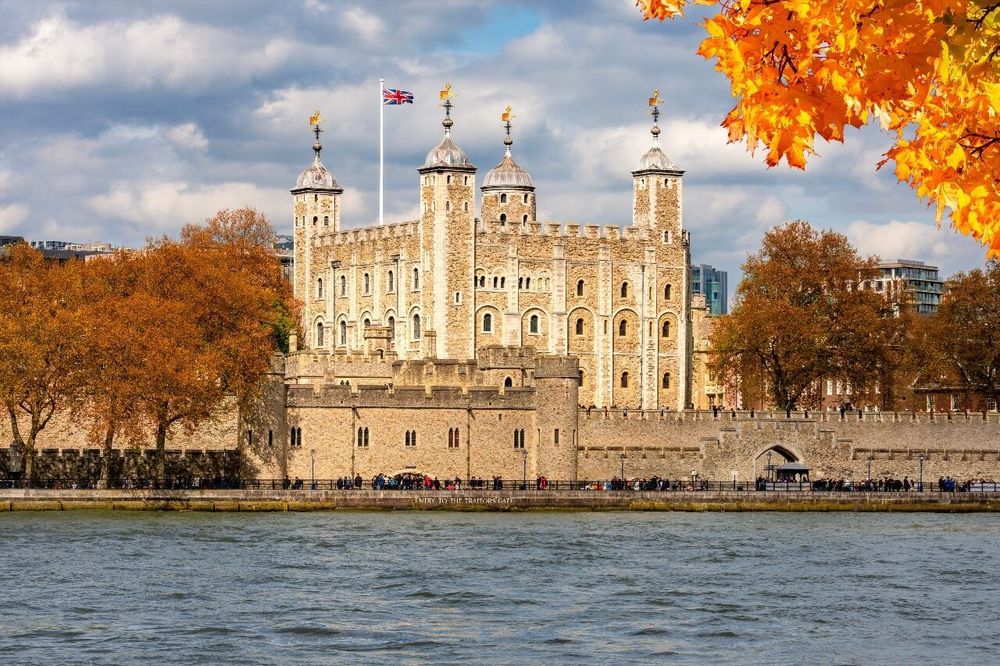
No London landmark concentrates as much tragic history and royal prestige as the Tower of London. Founded by William the Conqueror shortly after his victory at Hastings in 1066, this fortress has successively served as a royal palace, arsenal, Treasury, royal menagerie, and state prison. Anne Boleyn, Thomas More, Guy Fawkes: the names of its most famous prisoners read like a condensed manual of English history.
The visit is divided into several distinct spaces. The White Tower, built from Caen stone imported from Normandy, houses the Tudor royal arms and armour collection, including Henry VIII's tournament armour, designed for a man standing 6 ft 4 in. The Crown Jewels, protected since 1303 (after a partially successful theft), are housed in the Jewel House: the queue to admire the Cullinan II (317 carats) can exceed an hour in summer, so booking online is advisable. The Yeomen Warders, the famous Beefeaters in Tudor uniform, lead a free guided tour every thirty minutes from the main gate; their English commentary is packed with unflattering anecdotes about the tortures practised here.
One often-overlooked detail: the tower is also a protected natural habitat. Six ravens live there permanently, in keeping with a tradition that if the ravens leave the Tower, the Crown and England will fall. The Raven Master watches over them every day. Allow two to three hours to visit the entire complex. Adult tickets cost around £35 in 2026; buying online — around £35 versus nearly £40 at the gate — saves you queuing. The site is closed on 24, 25, and 26 December.
For architectural context, note that the outer walls date mainly from the reigns of Henry III and Edward I (13th century), even though the tower was expanded and modified until the 17th century. The moat, today grassed over, was filled with water until 1843. The view from the battlements onto the adjacent Tower Bridge is one of the most photographed in the city — arrive at opening time (9 am on weekdays) to beat the crowds.
2. Big Ben and the Palace of Westminster
An essential clarification before anything else: Big Ben is not the tower, but the bell that has rung at its summit since 1859. The tower has been officially known as Elizabeth Tower since 2012, renamed in honour of the Queen during her Diamond Jubilee. As for the Palace of Westminster, it forms a far larger complex than the iconic corner everyone photographs from Westminster Bridge.
The current palace is a Victorian Gothic reconstruction: the original medieval building, which dated back to the 11th century, burned down in 1834 when the uncontrolled burning of old tally sticks in the furnaces set the building ablaze. Charles Barry and Augustus Pugin designed the new building between 1840 and 1870, one of the world's masterpieces of Neo-Gothic architecture. The result, with its 1,100 rooms, 100 staircases, and 3 miles of corridors, is today the seat of the British Parliament.
Public access is broader than most people assume. Guided tours of the House of Lords and House of Commons are available at weekends throughout the year and daily during parliamentary recesses (generally July–September). Adult price: around £28. Certain parliamentary debates are accessible free of charge by submitting a request through the official website — a rare experience, best booked weeks in advance for the most high-profile sessions.
For photography, Westminster Bridge offers the classic angle including Big Ben, the Thames, and the London Eye in the background. The eastern façade along Victoria Embankment gives a different perspective on the entire palace. Note: restoration works on Elizabeth Tower, begun in 2017, are ongoing; scaffolding may partially obscure the tower depending on the time of year.
A calendar anecdote: Big Ben's bells ring every hour, and also on the quarter-hour with the famous Westminster Quarters musical motif — at least in theory. The main bell was silent for several years during restoration works and only recovered its full voice in 2022.
3. Buckingham Palace
Buckingham Palace bears no resemblance to the medieval fortress visitors sometimes imagine before they arrive. The façade is in polished Portland limestone, renovated in 1913 by Aston Webb, and conveys a neoclassical severity quite removed from the warmth of continental palaces. It is precisely this contrast that strikes visitors: the official residence of the British monarch carries an almost austere restraint.
The palace has 775 rooms, including 52 royal bedrooms, 188 staff bedrooms, 92 offices, and 78 bathrooms. The total garden area reaches 42 acres, a fact difficult to appreciate from the main gates. Between July and September, part of the 19 state rooms opens to the public: this is the only period to admire Rembrandt, Rubens, and Vermeer canvases from the Royal Collection, the Sèvres porcelain services commissioned by Napoleon, and Canova sculptures. Expect to pay around £33 for adult entry in 2026.
The Changing of the Guard remains the most accessible spectacle: free, daily in summer (on alternate days the rest of the year), it proceeds from Wellington Barracks and St. James's Palace to the palace. The ceremony lasts around 45 minutes. Arrive 30 minutes early (generally at 11 am) to secure a good spot behind the railings. The front rows are often taken over by organised tour groups.
The flag flying above the palace indicates the sovereign's presence: the Royal Standard when they are in residence, the Union Jack otherwise. This signal became the subject of public controversy at the time of Diana's death in 1997, when the palace flew no flag for several days.
4. Westminster Abbey
Westminster Abbey is not simply another Gothic church — it is the burial place of around twenty English and British sovereigns and the site of 40 coronations since that of William I in 1066. No other building in Europe has played such a continuous role in the dynastic legitimisation of a country.
The present abbey dates mainly from the 13th century, built under Henry III who wanted a sanctuary worthy of the relics of Edward the Confessor. Construction would span more than three centuries, adding the lantern tower, the two western towers (1745, after designs by Nicholas Hawksmoor), and the Henry VII Chapel, considered one of the pinnacles of English late Gothic with its breathtakingly virtuosic fan vaulting.
The visit includes Poets' Corner, where Geoffrey Chaucer, Charles Dickens, and Rudyard Kipling are buried, and where a memorial stone honours William Shakespeare (buried at Stratford). The cloister, accessed from the nave, dates from the 14th century. The Henry VII Chapel contains the tombs of Elizabeth I and her half-sister Mary I, buried side by side in a posthumous reconciliation that never occurred during their lifetimes. Allow around £30 for adult entry (2026) and at least two hours for the visit. Mondays, Tuesdays, Fridays, and Saturdays are the least crowded days.
A practical note: the abbey is still an active church. Certain areas may be closed during services or royal events. Evensong, the choral evening service sung by the choir, is free and offers an intimate musical experience very different from the standard tourist visit.
5. Tower Bridge
Contrary to a persistent misconception, Tower Bridge is not London Bridge — the latter, a more understated structure, stands 800 metres upstream. Tower Bridge, with its two Neo-Gothic towers suspended above the Thames, is one of the most photographed bridges in the world. It was inaugurated in 1894 after 8 years of construction and the employment of over 430 workers.
The bridge is still fully operational: its two bascules still rise 800 to 1,000 times a year to allow large vessels to pass. If you are lucky, you will witness a lift — the schedule is published on the official Tower Bridge website. A complete lift takes around five minutes.
On the Ryo audio-guided tour of the City of London, Tower Bridge makes an ideal starting point: the north bank connects directly to the Tower of London, while the south bank opens onto the Bermondsey neighbourhood and its markets. The Tower Bridge Experience — the permanent exhibition housed in the two towers and the glass walkway at 42 metres above the river — costs around £14. The view of the Thames through the transparent floor is either breathtaking or unnerving, depending on your head for heights.
A few structural figures: the two towers stand 65 metres tall, the bascules weigh 1,070 tonnes each, and the steel chains supporting them were originally clad in granite and Portland stone to give them the medieval appearance desired by architect Horace Jones. Engineer John Wolfe Barry designed the original steam-hydraulic mechanism, which was replaced by electric motors in 1976. Tower Bridge is one of the 19 stops on our City audio walking tour.
6. St. Paul's Cathedral
Among the most recognisable London landmarks, St. Paul's Cathedral is Christopher Wren's masterwork, built between 1675 and 1710 to replace the former medieval cathedral destroyed in the Great Fire of 1666. With its dome rising to 111 metres, it dominated the London skyline for two centuries, until the rise of modern skyscrapers in the 20th century.
The interior holds several surprises. The Whispering Gallery, reached after 259 steps, offers a fascinating acoustic phenomenon: words whispered against the wall of the dome travel 34 metres to the ear of a listener on the other side. The Golden Gallery at the very top of the dome offers a 360° panorama of London after 528 steps in total — a moderately athletic climb that excludes visitors with limited mobility.
The cathedral hosted the funerals of Nelson (1806), Wellington (1852), Churchill (1965), and the wedding of Charles and Diana (1981). The liturgical choir, active since the 12th century, perpetuates a musical tradition that far predates the current building. Entry costs around £26; Sunday services are free but tourist visits are not permitted during services. Tip: Tuesday, Wednesday, and Thursday mornings are the least busy slots. The north façade, less photographed than the main steps, reveals carved details rarely seen in press photographs.
For historical context, note that Wren submitted several designs before the one that was accepted, including a circular version that the clergy had rejected as too close to Catholic tradition. The final, compromised design was modified during construction — Wren securing the right to make "ornamental adjustments", a clause that effectively allowed him to build the dome largely as he wished.
7. The London Eye
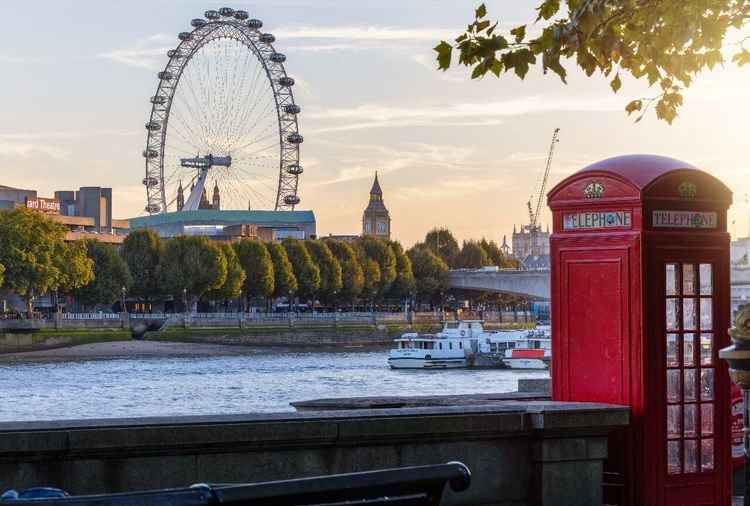
Giant wheel or modern landmark? The London Eye belongs to both categories since its inauguration in 2000 to mark the new millennium. Standing 135 metres tall with 32 glass capsules, it completes one full rotation in 30 minutes and offers views reaching up to 40 kilometres on a clear day.
Several options exist beyond the standard ticket. The Fast Track reduces waiting to a few minutes for a supplement — useful in peak season when queues easily reach 45 minutes. The Champagne Experience includes a glass on board for around £70. The best time for the view is at dusk, when the lights of Parliament, the Tower of London, and the City gradually illuminate the opposite bank. For more information on visiting options, the Ryo article on the London Eye details prices and the best time slots.
A technical curiosity: the London Eye is not, strictly speaking, a "wheel", as its axle is supported on one side only, like a bicycle leaning against a wall. This cantilevered structure is one of the engineering feats of the project, designed by architects David Marks and Julia Barfield. The wheel is so massive that it was assembled horizontally on the Thames and gradually tilted upright over the course of several days.
8. The British Museum
Founded in 1753, the British Museum is the world's first public national museum. Its free permanent collection numbers more than 8 million objects spanning the entirety of human history from prehistory to the present day. Seeing everything in a single day is not feasible — the museum's own management advises against attempting it.
The most celebrated pieces are scattered throughout the building. The Rosetta Stone (Room 4), key to Champollion's decipherment of hieroglyphics in 1822, is displayed in a case at eye level. The Elgin Marbles (Parthenon sculptures) occupy a large ground-floor gallery (Room 18) and continue to be the subject of repatriation requests from Greece. Ginger, the naturally mummified body of an Egyptian man over 5,500 years old, is housed in the Egyptian galleries. The list could go on indefinitely.
The Great Court, covered by a steel-and-glass roof designed by Norman Foster in 2000, is in itself a remarkable architectural experience. The circular reading room at its centre, where Marx worked, occupies the heart of the courtyard. To prepare your visit, the Ryo article on the British Museum offers a room-by-room itinerary to make sure you don't miss the essential pieces.
Practical information: the museum is free but temporary exhibitions are paid (£20–30). Open every day except 24, 25, and 26 December. On Fridays it closes at 8:30 pm. Avoid Wednesday and Thursday afternoons in July–August: school groups and organised tours saturate the main galleries. Online ticketing is essential for temporary exhibitions.
9. Hyde Park and Kensington Gardens
Hyde Park is the largest of the Royal Parks in central London at 142 hectares. Adjoining Kensington Gardens to form a single continuous green space of 253 hectares, it constitutes the "lung" of the West End — and much more than a simple park.
The park's history is inseparable from that of the monarchy. Henry VIII made it a private hunting ground in 1536; Charles I opened it to the public in the 17th century. The Great Exhibition of 1851 was held here in the Crystal Palace, a prefabricated cast-iron and glass structure. Speakers' Corner, at the park's north-east corner, has since 1872 been one of the few legally protected spaces where any citizen may speak freely on any subject — on Sunday mornings, speakers still take to their soapboxes there.
Kensington Gardens is home to the Albert Memorial (1872), a colossal Neo-Gothic monument honouring the Prince Consort, facing the Royal Albert Hall. The Diana Memorial Fountain, opened in 2004 near the Serpentine lake, draws hundreds of visitors on every sunny day. The walk between Camden Town and Regent's Park on the Ryo guide complements this exploration of the royal green spaces north of the city.
Free entry, open 24 hours a day. The Serpentine Café and the pedal boats on the Serpentine lake operate from April to October. In autumn, the park's trees offer a quiet but memorable palette of colours along the riding paths.
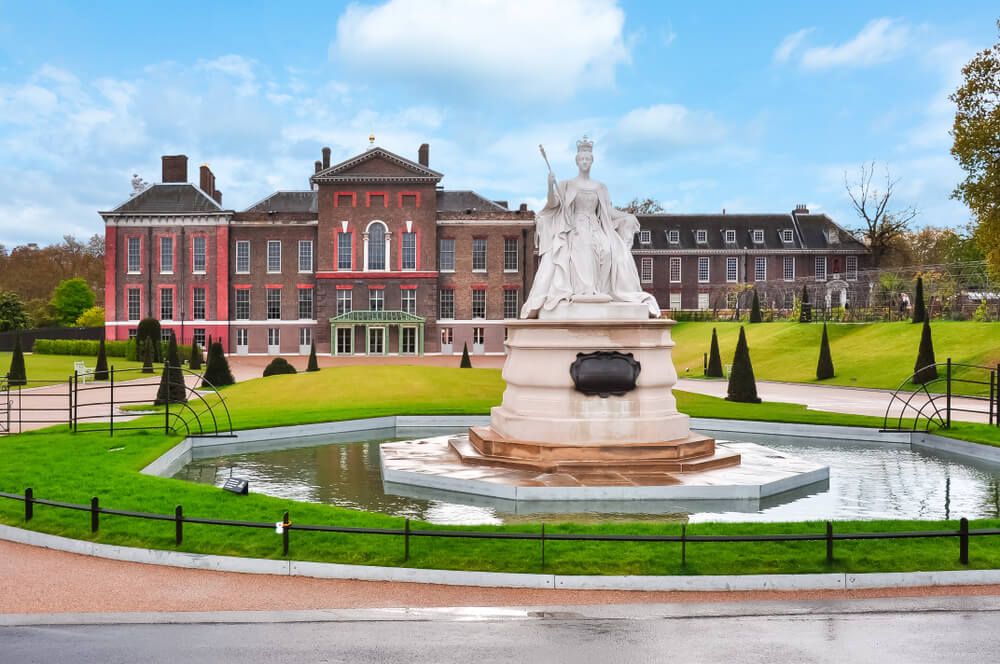
10. Kensington Palace
Kensington Palace (Kensington Gardens, London W8 4PX, rated 4.5/5 on Google across 31,960 reviews) is the most accessible royal residence in central London. Less ceremonial than Buckingham, more intimate than Windsor, it has housed royal apartments since 1689 when William III purchased it to escape the mists of Whitehall, which were bad for his asthma.
Diana, Princess of Wales, lived here from 1981 to 1997. The exhibition dedicated to her life and style traces the key moments of her public journey through her dresses, letters, and audiovisual archives. The Prince and Princess of Wales (William and Kate) also have their official apartments here. The gallery devoted to Queen Victoria features the illustrated diary the future queen kept from childhood, with drawings and watercolours of a quality remarkable for a child.
The palace is visited through themed exhibitions — the content changes regularly — centring on royal gowns and jewels, Stuart history, and Victorian life. Expect to pay £20–25. The formal gardens to the east of the palace, Kensington Gardens proper, are free to enter. The full Ryo article on Kensington Palace details the current exhibitions and visiting tips.
11. The Natural History Museum
The Natural History Museum (Cromwell Rd, London SW7 5BD, rated 4.6/5 on Google across 35,516 reviews) is architecturally as remarkable as its collections. The Romanesque-Byzantine building, designed by Alfred Waterhouse and completed in 1881, has been nicknamed "the cathedral of nature" for its arches, terracotta cladding, and stone-carved creature ornamentation. The buff and blue brick façade is a defining feature of the South Kensington streetscape.
The most photographed attraction is the 25-metre blue whale skeleton (named Hope), which replaced the diplodocus nicknamed Dippy at the entrance of Hintze Hall in 2017. The dinosaur gallery, with its articulated specimens and animatronic T. rex, remains the most visited space for families. The Darwin Centre, an ultra-modern glass tower, holds 80 million specimens in scientific storage, including some collected by Darwin himself during the Beagle voyage.
Free, open 7 days a week (except 24–26 December). Free online booking is strongly recommended in summer to manage visitor numbers. Arrive at opening time (10 am) for the dinosaur gallery before the primary school groups arrive.
12. The Shard
The Shard is the tallest tower on the London skyline: 310 metres, 95 floors, completed in 2012. Designed by Renzo Piano, its shard shape was intended to evoke a fragment of iceberg or a ship's mast on the Thames. The result divided architectural critics but has established itself as an unmissable visual reference in the London panorama.
The observation platform on the 68th floor, "The View from The Shard", offers sweeping views of London in clear weather. Adult tickets start at around £32 depending on the season, with a premium for sunset time slots. The tower is also a multi-use complex: the Shangri-La hotel (levels 34–52), fine-dining restaurants, and private apartments complement the public spaces. For a less expensive but equally spectacular alternative, the Sky Garden terrace at the top of 20 Fenchurch Street is free (advance booking essential).
An architectural tension: The Shard stands in Southwark, on the south bank of the Thames, in a neighbourhood historically working-class and set apart from the City. Its arrival accelerated a gentrification that some local residents still experience painfully.
13. The National Gallery
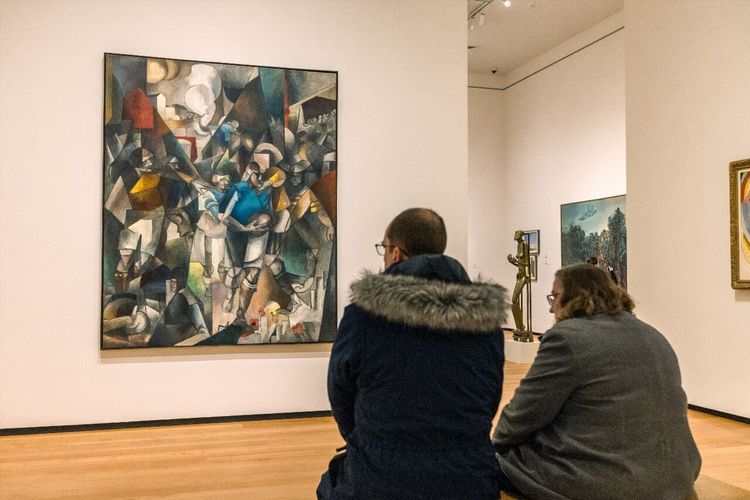
The National Gallery on Trafalgar Square houses one of the most comprehensive collections of European art in the world: more than 2,300 works spanning the years 1250 to 1900, all freely accessible. William Wilkins's neoclassical building (1838) is inseparable from the square it faces.
From Van Eyck to Turner, by way of Leonardo da Vinci, Vermeer, Velázquez, and Monet, masterpieces follow one another room after room. Must-sees include Van Eyck's The Arnolfini Portrait, Van Gogh's Sunflowers, and Leonardo's The Virgin of the Rocks. The Sainsbury Wing, the north extension added in 1991, presents the oldest paintings in particularly carefully managed natural light.
Free. Closed 24 and 25 December. The first Sundays of the month are the busiest; a Thursday or Friday morning offers the best visiting conditions.
14. The Millennium Bridge
The Millennium Bridge (London EC4V 3QH, rated 4.6/5 on Google across 17,657 reviews) is the first pedestrian bridge built across the Thames in central London for over a century, and its inauguration in 2000 was immediately memorable for all the wrong reasons. Two days after opening, the lateral oscillations induced by the synchronised footsteps of pedestrians forced its closure for nearly two years of remedial works. Now stabilised, it links Bankside to the City with minimalist elegance.
The view from the bridge is compositionally perfect: St. Paul's Cathedral to the north, the Tate Modern to the south, and the Thames in between. This is the axis that appears in Harry Potter and the Half-Blood Prince, where Death Eaters shatter the bridge. Travel photographers come at dawn to capture the cathedral in raking light. Free and open at all times.
15. St. James's Park
St. James's Park (London SW1A 2BJ, rated 4.7/5 on Google across 62,690 reviews), London's oldest Royal Park, dates from the reign of Henry VIII. Its 23 hectares occupy a remarkable position between Buckingham Palace to the west, Parliament to the east, and the government buildings of Whitehall to the north.
The central lake is home to a colony of pelicans, present since a Russian ambassador gifted them to Charles II in 1664. Their descendants are still there: they can be seen feeding in the early afternoon each day. The view from the lake's central bridge is one of the most surprising in all of London: Buckingham Palace stretching away to the west, the domes and spires of Whitehall to the east — a postcard scene that most tourists miss by walking straight along the Mall. Free entry. The lawns, open for picnics, make this park an ideal stop between Buckingham Palace and Parliament.
16. Trafalgar Square
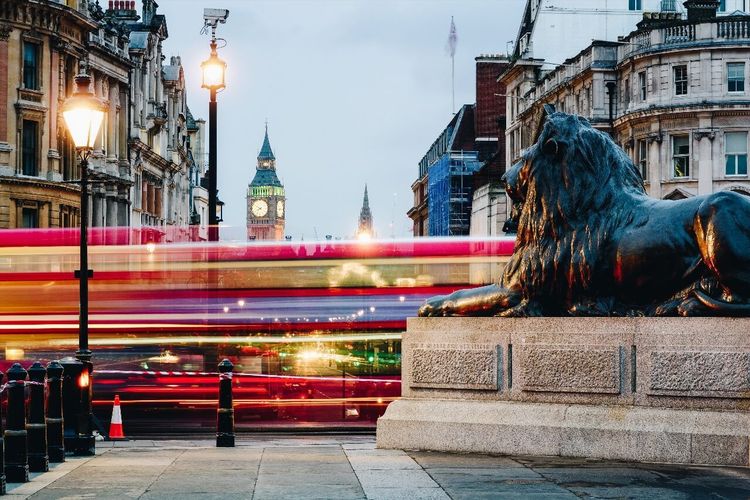
Trafalgar Square is London's geographic and symbolic reference point. Nelson's Column, erected between 1840 and 1843 to commemorate the naval victory of 1805, stands 52 metres to the top of the statue — 5.5 metres for the statue of Nelson alone. The four bronze lions at the base of the column, cast in 1867 from models by Edwin Landseer, are one of the most popular photographic subjects in the city.
The square is also a living civic space: demonstrations, New Year celebrations, free summer concerts, Christmas markets — it never quite empties. The Fourth Plinth, the north-west pedestal left empty since the square's creation for lack of funding, has since 1999 hosted temporary contemporary art installations, renewed roughly every eighteen months. Some have sparked debates as lively as the permanent monuments. To explore the neighbourhood at your own pace, the Ryo audio guide to London covers Trafalgar Square within the broader context of the historic West End.
The square's fountains were redesigned in 1939 by Edwin Lutyens. Behind the National Gallery, a small staircase leads down to the crypt of St. Martin-in-the-Fields, an 18th-century church whose candlelit classical music concerts in the evening are among the most affordable cultural experiences in London (from around £9).
17. All Hallows-by-the-Tower
All Hallows-by-the-Tower is the oldest church in the City, founded in AD 675 by Barking Abbey — 400 years before the neighbouring Tower of London. Its survival is all the more remarkable given that it weathered the Great Fire of 1666 thanks to the deliberate blowing up of surrounding houses, creating an improvised firebreak at the instigation of Admiral William Penn, then a neighbour of the church.
The crypt contains a section of 2nd-century Roman mosaic pavement, fragments of Saxon wall, and a lapidary collection spanning eighteen centuries of history. Entry is free; the visit takes 30 to 45 minutes. It is one of London's addresses where you can cover 2,000 years of history in under an hour without spending a penny.
18. Hampton Court Palace
Some 24 km from central London, Hampton Court Palace requires a train or boat journey from Westminster Pier, but the experience is well worth the trip. This Tudor palace, built from 1515 for Cardinal Wolsey and then seized by Henry VIII in 1529, is one of the best-preserved royal palaces in Europe.
Henry VIII's apartments — the Great Hall, kitchens, and presence chamber — offer an immersion into Tudor court life unlike anywhere else. The royal kitchens (the largest in Europe at the time) could feed 600 people twice a day: their gigantic proportions are striking. The gardens, laid out for William III at the end of the 17th century in the formal Dutch style, extend over 24 hectares. The hedge maze, planted around 1690, is one of the oldest still in use in England.
Adult ticket: around £28. Access by train from Waterloo in 35 minutes, or by boat (May to October) from Westminster Pier in 3–4 hours — a Thames cruise that is an experience in its own right. Allow a full day for the palace and gardens.
19. The Tate Modern
The Tate Modern is one of the most visited modern and contemporary art galleries in the world, attracting several million visitors a year. Installed since 2000 in the former Bankside Power Station (1952), its free permanent collection covers the major movements in art from 1900: Cubism, Surrealism, Abstract Expressionism, Minimalism, Conceptual Art, Arte Povera.
The Turbine Hall, the vast space where the power station's turbines once hummed, regularly hosts a free monumental installation. Since Olafur Eliasson's work in 2003 (an artificial sun that attracted around 2 million visitors), Turbine Hall installations have become an eagerly anticipated cultural event. For a deeper dive into the visit, Ryo has published a full article on the Tate Modern with a collection-by-collection itinerary and the exhibitions not to miss.
Free for the permanent collection. Temporary exhibitions: £22–28. Open until 10 pm on Fridays and Saturdays; Friday evening visits are one of the best times to go, with smaller crowds and a different atmosphere.
20. The Monument to the Great Fire
The Monument, a Doric column standing 62 metres tall, was erected by Christopher Wren and Robert Hooke between 1671 and 1677 to commemorate the Great Fire of London of 1666. Its height is not arbitrary: it corresponds exactly to the horizontal distance separating the column from the bakery on Pudding Lane where the fire broke out on 2 September 1666.
The 311 internal spiral steps lead to a viewing gallery enclosed by a metal cage (added in the 19th century after several suicides). The view over the City is closer and less spectacular than that from The Shard, but the historical context and physical effort lend it a particular flavour. Ticket: around £6. Combined with a visit to the nearby Tower of London, it makes for one of the most densely historical days in London.
21. The White Tower
The White Tower (Tower of London, London EC3N 4AB, rated 4.7/5 on Google across 119,523 reviews) is the central keep of the Tower of London and the oldest Norman building in the capital. Built from white Caen stone between 1078 and 1097 under William the Conqueror, it stands 27 metres tall on a footprint of approximately 36 × 32 metres. Its walls reach 4 metres thick at the base.
The interior houses the royal arms and armour collection from the 15th to 17th centuries, including complete equestrian armours and the imposing Line of Kings — a row of royal equestrian statues created under Charles II to legitimise the restored monarchy. Access is included in the Tower of London ticket. The Chapel of St. John the Evangelist on the second floor, with its round Romanesque columns, is one of the best-preserved sacred spaces in Norman England.
22. The Royal Observatory Greenwich
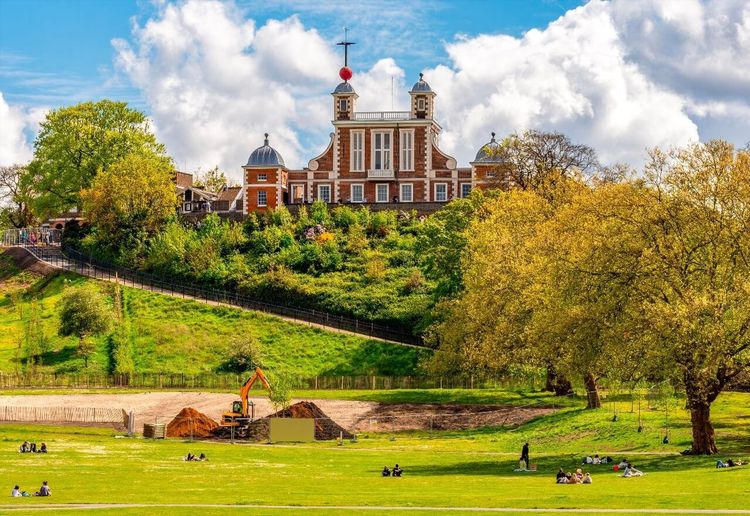
The Royal Observatory Greenwich is where world time was standardised. Founded in 1675 by Charles II to improve maritime navigation, it is the home of the Greenwich Meridian (0°), which has served as the reference for longitude since 1884.
You can literally stand with one foot on each side of the meridian: a steel line embedded in the ground marks the exact passage of longitude zero. The obligatory photograph draws queues during the day. The meridian courtyard is within the museum's paid zone (astronomy and planetarium), at around £18; the surroundings and the park remain free. The view from the hill of Greenwich Park over Canary Wharf and the City is one of the broadest and least-known in London. Greenwich is accessible by DLR from Bank (25 minutes) or by boat from Westminster Pier (45–60 minutes).
The time ball on the roof of the observatory drops every day at exactly 1 pm since 1833 — a visual signal that allowed ships' captains on the Thames to set their chronometers before putting to sea.
23. Battersea Power Station
Battersea Power Station (Circus Road West, London SW11 8DD, rated 4.6/5 on Google across 29,842 reviews) is perhaps England's most beloved industrial building. Built in two phases between 1929 and 1955, this Art Deco cathedral of electricity, with its four white chimneys, powered a significant portion of London's electricity supply for decades, and featured on the cover of a Pink Floyd album (Animals, 1977), making it a cultural icon as much as an industrial one.
After decades of abandonment and several failed development projects, the power station reopened in 2022 transformed into a commercial and residential complex. Turbine Hall A is now a retail atrium; the panoramic lift that ascends one of the chimneys (Lift 109) offers a distinctive view from around 109 metres. The surrounding neighbourhood, Nine Elms, is undergoing rapid transformation. Access by Underground (Northern line, Battersea Power Station station since 2021) or on foot from Chelsea Bridge.
24. The Museum of London Docklands
Housed in an early 19th-century red-brick warehouse on the Isle of Dogs, the Museum of London Docklands (No.1 Warehouse, West India Quay, London E14 4AL, rated 4.6/5 on Google across 8,113 reviews) traces the history of the Port of London from Roman times to the transformation of the Docklands in the 1980s.
The section dedicated to the transatlantic slave trade, opened in 2007, is one of the most courageous and thoroughly documented exhibitions on this subject in Europe. The port archives, warehouse models, and the reconstruction of Sailortown (the 19th-century dockside neighbourhood) make this a journey into a less photogenic but equally essential London. Free. Access by DLR, West India Quay station.
25. Marble Arch and Hyde Park Corner
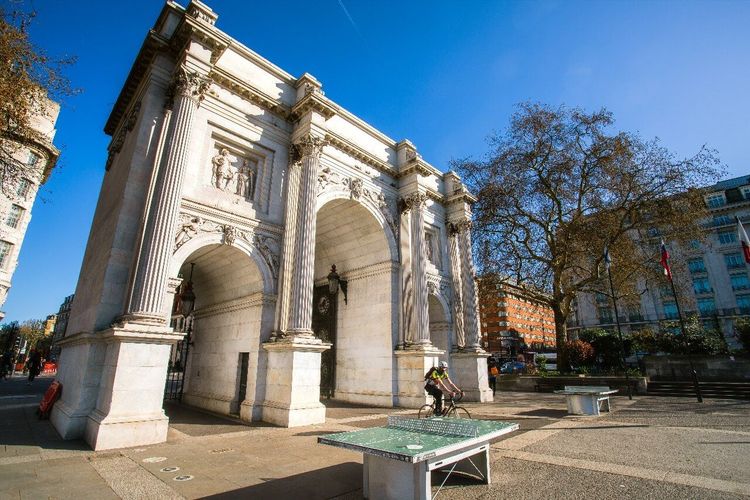
Marble Arch (London W1H 7EJ, rated 4.4/5 on Google across 14K reviews), a triumphal arch in Carrara marble designed by John Nash in 1827, was originally a ceremonial entrance to Buckingham Palace. Deemed unsuitable for royal carriages to pass through, it was relocated in 1851 to its current position at the north-east corner of Hyde Park. A little-known historical detail: by tradition, only members of the Royal Family and certain royal troops may pass through the central archway.
Hyde Park Corner, at the other end of the park, is a junction steeped in military memory: Apsley House (the former residence of the Duke of Wellington, nicknamed "No. 1 London"), the Wellington Arch, and several memorials to soldiers who fell in the two World Wars. Together they form a diffuse architectural memorial that people often pass through without stopping, yet it rewards twenty minutes of attentive wandering. Free access.
FAQ
What are the most famous landmarks in London?
London's most famous landmarks are the Tower of London, Big Ben (Elizabeth Tower) and the Palace of Westminster, Buckingham Palace, Westminster Abbey, and Tower Bridge. St. Paul's Cathedral, the British Museum, and Trafalgar Square complete the essential core. These eight sites attract the majority of visitors and cover over two thousand years of London history.
Which London landmarks are free?
Several major landmarks and sites are entirely free: the British Museum, the National Gallery, the Natural History Museum, the Tate Modern, Trafalgar Square, Hyde Park, St. James's Park, the Millennium Bridge, and the exterior views of all palaces and cathedrals. Indoor access to St. Paul's Cathedral, the Tower of London, Westminster Abbey, and Buckingham Palace is paid.
How do you visit London's landmarks in one day?
One day is not enough to see everything properly. Prioritise a single geographic area: the Westminster-City area (Tower of London, Tower Bridge, St. Paul's Cathedral, Tate Modern, Millennium Bridge, Big Ben, Westminster Abbey) can be covered on foot over 6–8 km. For an audio-guided approach that optimises movement, the Ryo audio-guided tour of London organises sites by neighbourhood with audio stories at each stop.
Should you book London landmarks in advance?
Yes, for paid sites during peak season (July–August): the Tower of London, Westminster Abbey, Buckingham Palace (in summer), Kensington Palace, and Hampton Court Palace are all bookable online, often at a slightly lower price than at the door. For free sites (British Museum, National Gallery, Natural History Museum), booking a free timed entry slot is recommended in summer to manage crowds.
What is the oldest landmark in London?
The oldest landmark still visible in London is the White Tower at the Tower of London (1078–1097), a Norman construction. However, Roman remains dating from the 2nd century AD are visible in the crypt of All Hallows-by-the-Tower (founded in 675) and along the line of the London Wall (a Roman wall from the 2nd–3rd century) around the City.
Is there a pass to visit multiple London landmarks?
There is no single pass covering all London landmarks. Historic Royal Palaces offers an annual membership including the Tower of London, Hampton Court, Kensington Palace, the Banqueting House, and others. The London Pass covers many attractions, but its value depends on the number of sites visited and current individual prices. Always compare with the cost of buying tickets separately before purchasing.
London concentrates a millennium and a half of layered landmarks within a few square kilometres, from the Norman keep to the Art Deco power station. No list exhausts the city: with every visit, a forgotten detail or overlooked alley reveals a new layer of history. To explore these layers at the right pace, the Ryo London audio-guided tour connects the landmarks in a continuous narrative, from the medieval City to the Victorian neighbourhoods, without having to switch to a separate navigation app. Its Royal Tour route takes in Westminster Abbey and St James's Park across 21 stops. Whether you have two days or two weeks, every landmark on this list rewards close attention: it is in the details — the Greenwich time ball, the Tower's ravens, the whispers of St. Paul's — that London truly reveals itself.
À lire également