© Shutterstock
 Votre guide Ryo
British Museum: The Complete Guide to Visiting in London (2026)
Some places have gathered the history of humanity under one roof. The British Museum, in the Bloomsbury district at the heart of London, is the most spectacular example. Beneath its glazed courtyard designed by Norman Foster, a 2,200-year-old Rosetta Stone stands alongside the helmet of a 7th-century Anglo-Saxon warrior and chess pieces carved by Viking craftsmen in the 12th century. Eight million objects. One address. And admission to the permanent collection: entirely free since 1759.
This guide takes you through the essential galleries of the British Museum in London: the Egyptian collection with its hundred mummies, the Parthenon sculptures and their controversial history, the Assyrian reliefs, the Sutton Hoo helmet. You will also find exact opening hours for 2026, tips for avoiding the crowds and common planning mistakes. To explore the streets of Bloomsbury and the historic neighbourhoods of London with the same depth as a museum visit, the Ryo audio guide for London is available in English directly on your phone.
History of the British Museum: From Its Origins to a World Collection
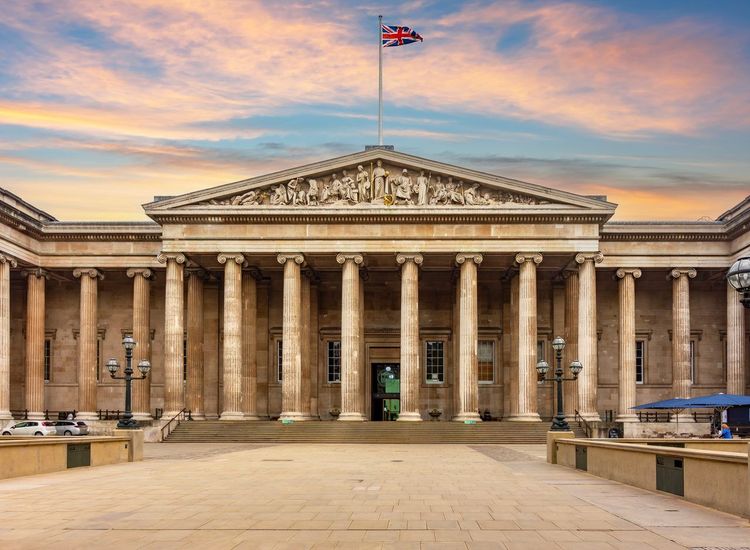
The birth of the British Museum (Great Russell St, London WC1B 3DG, England, rated 4.7/5 on Google from 173,851 reviews) came about through the generosity of an Irish physician and an Act of Parliament. In 1753, Hans Sloane, naturalist and personal physician to the royal family, died bequeathing to the British Crown a collection of 71,000 objects (rare books, dried plants, medals, antiquities, natural specimens) on one condition: that the State pay £20,000 to his heirs and open the collection to the public. Parliament passed the British Museum Act that same year, and the museum opened its doors on 15 January 1759 in Montagu House, a 17th-century townhouse in Bloomsbury.
The early days were modest. Admission was free but access was highly restricted: visitors had to submit a written application, wait several weeks, and tours were conducted in small groups overseen by a keeper. It would not be until the mid-19th century that the museum truly opened its doors to everyone, without formality. This evolution mirrored a broader shift in how Victorian England conceived of public knowledge.
The collections grew at a dizzying pace as the British Empire extended its reach across the world. Archaeological expeditions, private donations and purchases — but also seizures during military campaigns — swelled the reserves spectacularly. The Parthenon sculptures from Athens arrived in 1816, purchased from the Earl of Elgin by the British government. Egyptian antiquities flooded in after the defeat of Napoleon's expedition at Alexandria. Excavations funded by the museum at Nineveh, in Mesopotamia, between 1845 and 1851 brought up entire Assyrian reliefs that had to be dismantled stone by stone for transport to England.
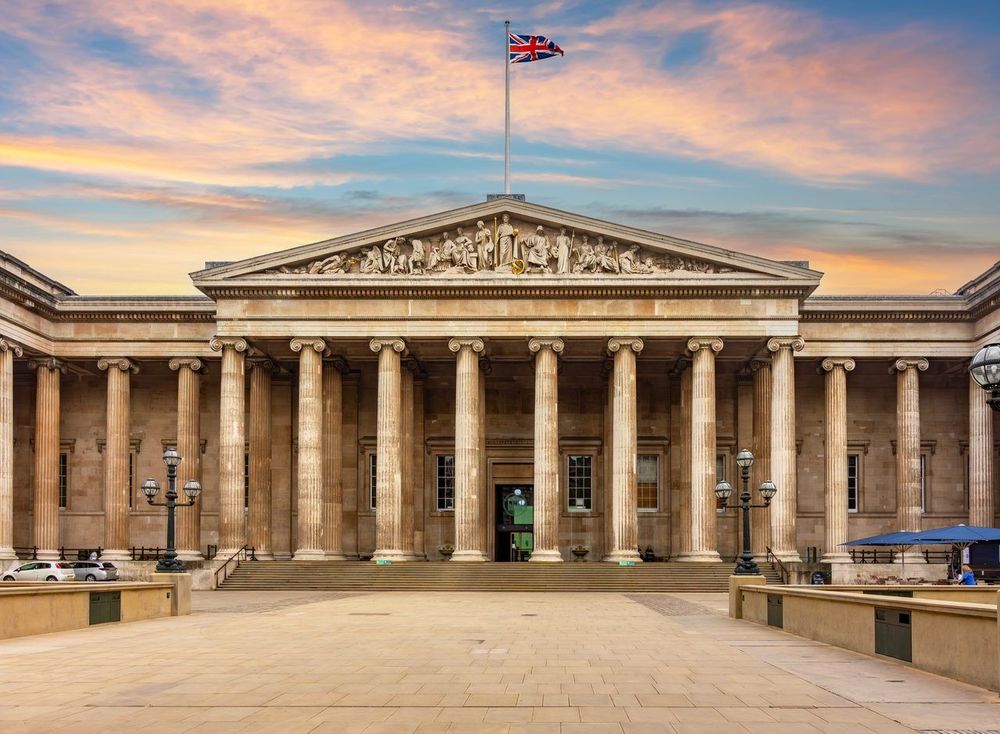
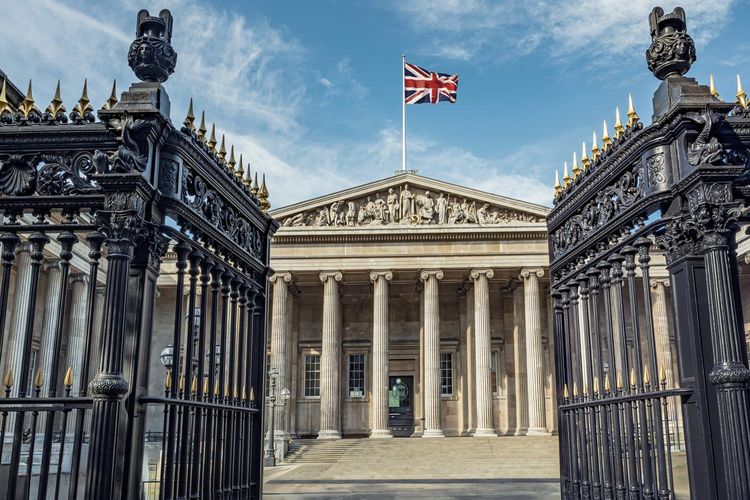
The current building is the work of architect Robert Smirke, who designed a monumental neoclassical edifice between 1823 and 1852. The Ionic-columned façade, inspired by the temples of ancient Greece, was a deliberate statement: the museum presented itself as the new guardian of the heritage of all civilisations. The circular Reading Room was added in 1857 at the centre of the inner courtyard, designed by Sydney Smirke: 300 seats, a cast-iron and blue-green glass dome 42 metres in diameter. Karl Marx wrote part of Capital here. Charles Dickens, Virginia Woolf, George Bernard Shaw and Mahatma Gandhi all worked in this room decades apart. The list of illustrious readers is so long it reads like a who's who of world intellectual history.
The 20th century saw the museum gradually separate from its scientific annexes. The natural history department moved to South Kensington in 1963, giving rise to the Natural History Museum. The British Library relocated to St Pancras in 1997, freeing up the inner courtyard space. It was this liberation that enabled the great transformation of 2000, designed by Norman Foster. Today, the British Museum welcomes between 6 and 7 million visitors a year, making it one of the ten most visited museums in the world. Its permanent collections contain 8 million objects, of which only 1% are on display at any one time.
The question of returning objects to their countries of origin has been at the forefront since the 2000s. The Parthenon Marbles (claimed by Greece), the Benin Bronzes (claimed by Nigeria) and the Rosetta Stone (claimed by Egypt) are all the subject of active diplomatic discussions. The museum maintains a position of universal "trust": that the collections are better preserved in London and accessible to a broader global audience. This debate, far from being a footnote, is an important gateway to understanding what the British Museum represents in the history of relations between the United Kingdom and the rest of the world.
The Great Court and the Reading Room
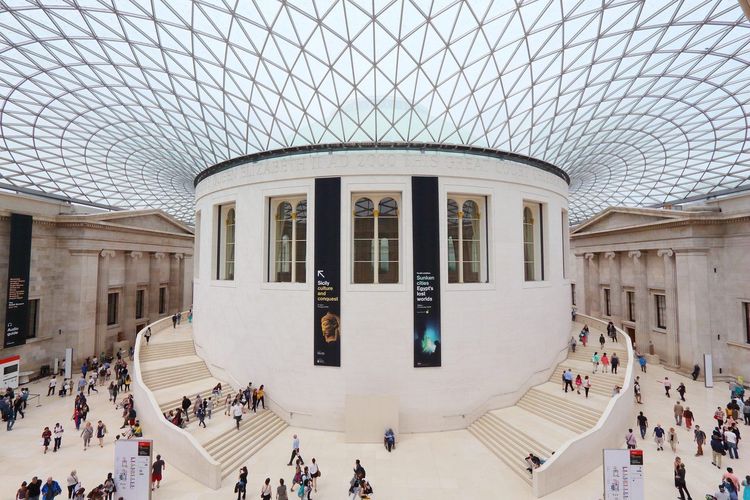
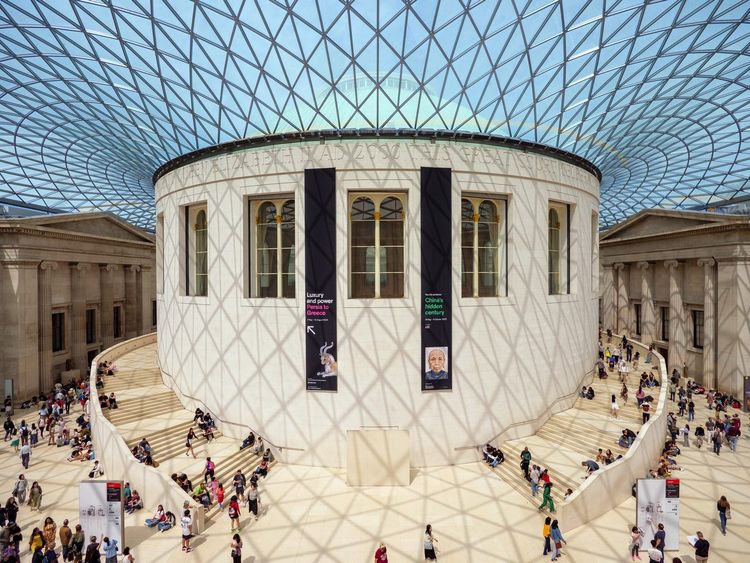
When you pass through the columned portico and enter the Great Court, the first sensation is one of luminous, structured space, organised by the geodesic glass roof that Norman Foster placed over what was, until 1997, an open courtyard cluttered with storage buildings. The 6,100 glass panels are not uniform: each was cut to measure to fit the curvature of the roof, an engineering feat that required three years of construction work and extensive computer modelling. Inaugurated in 2000 for the Queen's Jubilee, the Queen Elizabeth II Great Court is the largest covered courtyard in Europe.
At the centre of the Great Court stands the Reading Room, a cast-iron cylinder with turquoise walls topped by a dome 42 metres in diameter. It has not housed a reading room since 1997, but remains the museum's most powerful symbol. Restored to its original appearance, it is used as a space for temporary exhibitions and lectures. If you look up at the dome, you will recognise the blue and gold coffers that inspired generations of readers. The original floor mosaics have been preserved.
The Great Court also houses the shops, cafés and information desk. This is where the great decision is made: left towards ancient Egypt, right towards Greece, straight ahead towards Mesopotamia.
The Egyptian Collection: The Rosetta Stone and a Hundred Mummies
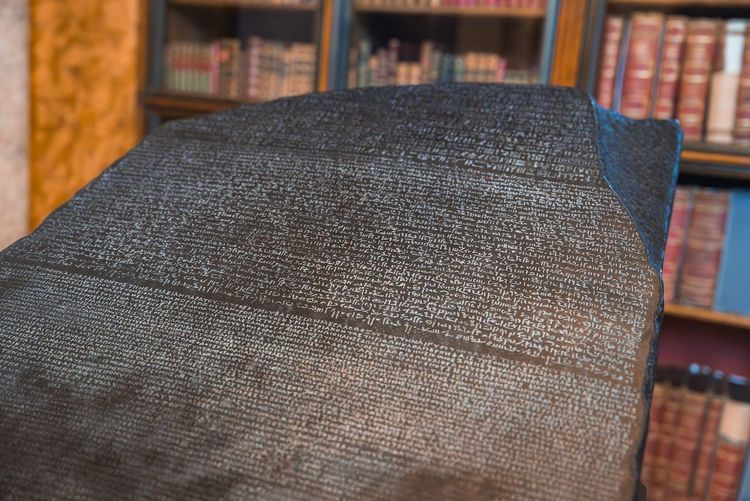
The Egypt of the British Museum is not a single room — it is an entire department. The museum holds one of the largest Egyptian collections outside Egypt: around 100,000 objects spanning 6,000 years of history, from Neolithic flint tools to Coptic papyri of the early Christian centuries. Across the two floors devoted to Egypt (ground floor for monumental sculptures, first floor for mummies and funerary objects), you could easily spend two hours without seeing the same object twice.
The undisputed star is the Rosetta Stone. This block of grey-black granodiorite, measuring 114 cm high by 72 cm wide, is the key that allowed humanity to re-read 3,000 years of Egyptian civilisation. The decree it bears, a tribute to Pharaoh Ptolemy V dating from 196 BC, is inscribed in three writing systems: Egyptian hieroglyphs at the top, Demotic script in the middle, and ancient Greek at the bottom. It was this triple inscription that enabled the Frenchman Jean-François Champollion, in 1822, to finally decipher hieroglyphs after centuries of complete obscurity.
The Rosetta Stone was discovered in 1799 at Rosetta (now Rashid), in Egypt, by soldiers of Napoleon's expedition. After the French defeat at Alexandria, it was ceded to the British under the Treaty of Alexandria in 1801 and entered the British Museum in 1802. It has not left the institution since, except for a six-month loan to the Louvre in 1972. The Egyptian government regularly calls for its return, so far without success.
The stone is protected behind glass and permanently surrounded by visitors photographing it. If you arrive at opening time (10:00am), you may be able to observe it for a few minutes almost alone. After 11am, the density around the stone increases rapidly and makes quiet contemplation difficult. Your best slot: Friday evening after 6pm.
Head up to the first floor for the mummies. The museum displays around a hundred human mummies in remarkably well-lit conditions, close enough to make out the details of the bandages and painted cartonnage. The mummy of Katebet, a priestess of Amun dating from the 11th century BC, is one of the best preserved: her original jewellery is still in place around her neck. That of Nesperennub, a Theban priest of the 9th century BC, was fully scanned in 2004, revealing — without unwrapping the bandages — a faience amulet placed directly on his face and very poor dental condition.
Everyday objects are often as fascinating as the monumental pieces. An ivory comb 5,000 years old. Leather sandals. Ostraca — those limestone fragments on which scribes jotted quick notes or sketched caricatures of their superiors. The colossi of Ramesses II preside on the ground floor, flanking a gallery of stelae, sarcophagi and temple reliefs. Allow at least 45 to 60 minutes for this department alone if you want to go beyond the Rosetta Stone and the most celebrated mummies. If Egyptian archaeology is your passion, a full two hours will not be wasted.
Ancient Greece: The Parthenon Sculptures and Their History
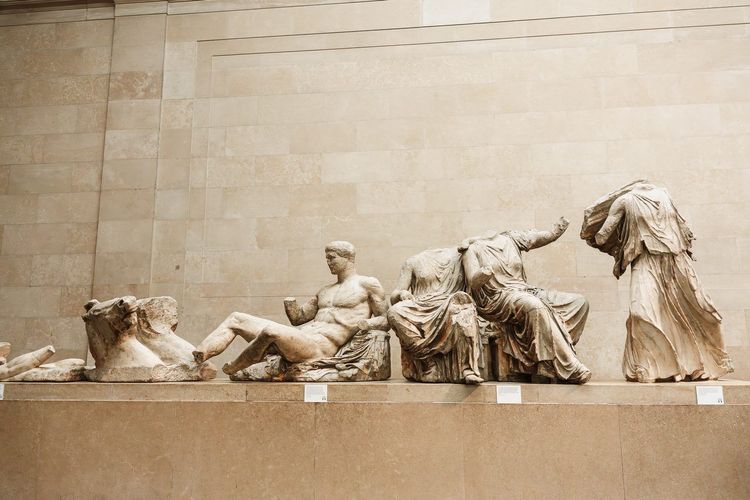
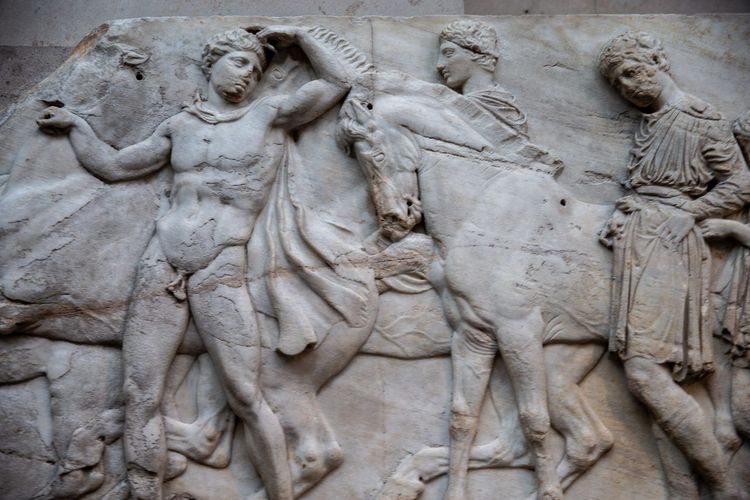
The Parthenon sculpture gallery, officially the Duveen Galleries, is one of the most impressive in Europe. High-ceilinged and flooded with natural light, it houses the sculptures from the Parthenon in Athens: friezes depicting the Panathenaic procession, metopes illustrating the battle between the Centaurs and the Lapiths, and fragments of the pediments showing the birth of Athena and the contest between Athena and Poseidon for the patronage of Athens. Works sculpted between 447 and 432 BC under the direction of Phidias, considered the greatest sculptor of ancient Greece.
The history of these sculptures in the museum is inseparable from the controversy surrounding them. Thomas Bruce, 7th Earl of Elgin, British ambassador to the Ottoman Empire, obtained in 1801 an authorisation whose legality is hotly disputed, allowing him to remove sculptures from the Parthenon and transport them to England. He sold them to the British government in 1816 for £35,000. Greece has called for their return since the country's independence in 1832. The movement intensified following the construction of the Acropolis Museum in Athens in 2009, designed precisely to house them. Negotiations are ongoing between London and Athens, renewed by discreet diplomatic discussions in recent years.
Knowing this history greatly enriches the visit. It raises the fundamental question: to whom does world heritage belong? And it takes nothing away from the aesthetic power of the sculptures. The Panathenaic frieze — 160 metres of procession in low relief depicting horsemen, chariots, musicians and offering-bearers — unfolds with a fluidity that seems impossible in marble. The figures breathe. The drapery undulates. The horses have muscles, tendons, a physical presence you find only in the finest classical sculptures.
Beyond the Parthenon sculptures, the Greek collection at the British Museum spans five millennia. The archaic Kouroi and Korai of the 6th century BC show the gradual evolution towards naturalism. The Warren Cup, a silver goblet from the 1st century AD depicting homoerotic scenes, is one of the best-preserved Roman objects from antiquity. The Portland Vase, in midnight-blue blown glass with white reliefs depicting mythological scenes, is a masterpiece of 1st-century glassmaking: smashed in 1845 by an intoxicated visitor, it was reassembled from 189 fragments.
Allow at least 45 minutes in the Greek galleries. Audio guides (paid, available in English) provide valuable context on the provenance of the Parthenon sculptures and the ongoing debates around their restitution.
Mesopotamia and the Ancient Near East: Lions, Bulls and Cuneiform Tablets
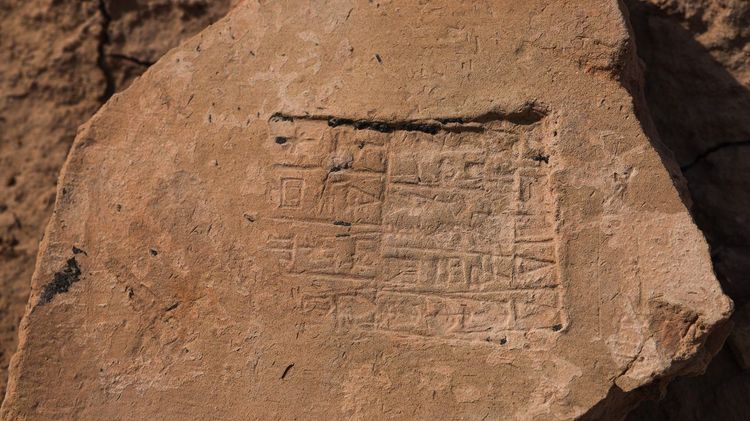
The Near East section is one of the least crowded in the museum and, paradoxically, one of the most spectacular. It brings together collections from Mesopotamia (present-day Iraq), Anatolia, Syria and Iran that cover eight millennia of human history. This is where humanity invented writing, developed the first cities and codified the first laws.
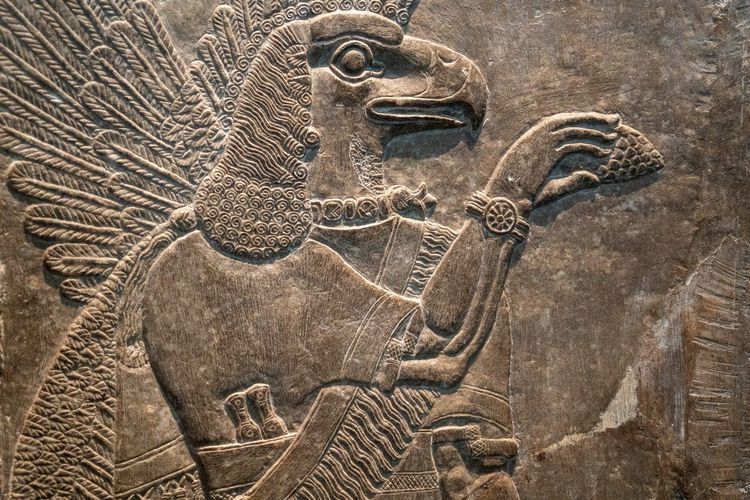
The centrepieces are the Assyrian reliefs. The Nimrud Reliefs (9th–8th century BC), discovered by archaeologist Austen Henry Layard during excavations between 1845 and 1851, depict scenes of royal hunting and military campaigns with striking precision. The Nineveh Reliefs (7th century BC) show King Ashurbanipal hunting lions: the wounded, dying or leaping animals are sculpted with a troubling empathy for scenes of royal glorification. This blend of political grandeur and sensitivity to animal suffering is one of the most fascinating enigmas of Mesopotamian art.
The Lamassu (winged, human-headed bulls) originally guarded the gates of the palace of Sargon II at Dur-Sharrukin, in what is now northern Iraq. Over four metres tall, carved in limestone, these hybrid beings with the body of a bull, the wings of an eagle and a bearded human head embodied the divine power of the Assyrian king. Look at them from the side: they have five legs so as to appear both stationary from the front and in motion from the side. A visual engineering solution invented 2,700 years ago that anticipates problems contemporary designers still solve in the same way.
The collection also covers the earliest cuneiform writing tablets. Among the most significant: Sumerian lists of goods (the earliest traces of utilitarian writing — inventories of beer and barley dating from 3400 BC) and the Flood Tablet, a fragment of the Epic of Gilgamesh describing a universal flood. Discovered in 1872, it astonished the world by revealing a version of the flood myth predating the Bible. Visitors often walk past it without stopping, unaware of its significance: this is one of the most common oversights in this section.
The Oxus Treasure (5th–4th century BC), a collection of gold and silver objects from Bactria (present-day Afghanistan), is one of the museum's best-kept secrets. Statuettes, solid-gold chariot models, torque bracelets: a display case that deserves ten minutes of quiet attention away from the crowds.
Prehistoric and Medieval Europe: Sutton Hoo, the Vikings and the Celts
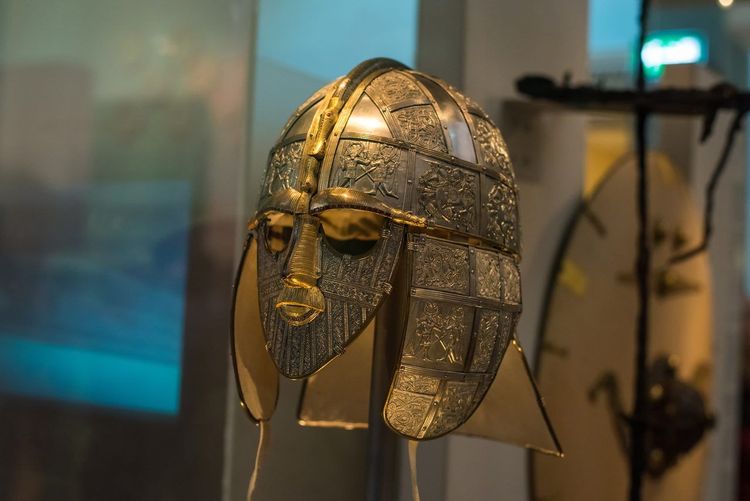
The European section explores the continent from the Palaeolithic to the Renaissance, with a particular focus on the British Isles and the peoples of the North. Less well known to international visitors than the Mediterranean collections, it contains pieces of exceptional beauty and historical significance.
The Sutton Hoo helmet is arguably the most symbolically charged object in the museum. This iron helmet from the 7th century AD, covered in bronze and adorned with engraved panels depicting warriors and combat scenes, was discovered in 1939 in a burial ship interred beneath a mound in Suffolk: the probable tomb of King Rædwald of East Anglia. The face formed by the visor, eyebrows and stylised bronze moustache creates the striking illusion of a living face gazing at you across fourteen centuries. It is the object most frequently cited as the beginning of English history as documented by archaeology.
The Lewis Chessmen delight visitors of all ages: 93 chess pieces carved from walrus ivory and whale teeth, dating from the 12th century, probably made in Norway. Discovered on the Isle of Lewis (Scotland) in 1831, their expressive faces — drowsy kings, melancholy queens, stoic knights — have inspired modern representations of chess pieces and captivated generations of filmmakers and authors.
The Lindow Man is of a different nature altogether. This body preserved by peat acids, discovered in a Cheshire bog in 1984, dates from the 1st century AD: a man in his thirties, carefully manicured, who received three blows to the head before having his throat cut and being drowned. A Celtic ritual sacrifice, according to archaeologists. His skin tanned by the peat, his features still recognisable two thousand years after his death, make him one of the most unsettling encounters in the museum.
The section also includes the Portland Vase (mentioned in the Greek collections), surprisingly sophisticated Celtic gold jewellery, and several treasures from Roman Britain, including the Mildenhall Treasure: a collection of 4th-century silver dishes discovered in Suffolk in 1942, of a quality comparable to the finest pieces of Roman imperial silverware.
Asia, Africa and the Americas: Collections from the Rest of the World
Whether you are interested in Tang pottery, Benin bronzes or Mayan codices, the British Museum offers perspectives that few institutions in the world can match. These collections are sometimes marked by their colonial history, and restitution negotiations are ongoing for several major groups of objects.
The Asian collection covers China, Japan, Korea, India and South-East Asia. Among the most remarkable pieces: Song celadons (10th–12th century), prints by Hokusai (including versions of The Great Wave), Shang bronzes (China, 2nd millennium BC) and an 11th-century lacquered wood Bodhisattva Guanyin sculpture, a 1.2-metre colossus with an expression of absolute serenity.
The Americas are represented by Aztec, Mayan and Inca pieces. The Aztec turquoise mosaic mask (15th–16th century), covered with 2,000 turquoise tesserae on a wood and leather base, is one of the few Aztec objects of this quality preserved outside Mexico. Mayan codices illustrate the astronomy and calendar of a civilisation whose mathematical sophistication continues to astonish specialists.
The African section presents objects from the Sahara to the Cape, with an emphasis on the court art of Benin (present-day Nigeria). The 16th–17th-century bronze plaques depicting the court of the Oba demonstrate a technical mastery and narrative depth comparable to Italian Renaissance painting. These objects have been the subject of active restitution negotiations between the British Museum and the Nigerian government for several years.
Temporary Exhibitions at the British Museum
Alongside the permanent collection, the British Museum organises several temporary exhibitions a year, generally ticketed (between £20 and £30 per adult in 2026). These exhibitions explore cross-cutting themes or specific periods, with loans from institutions around the world.
For 2026, the programme includes an exhibition on Minoan civilisation (Bronze Age Crete) and one on trade and cultural exchange between sub-Saharan Africa and the ancient Mediterranean world. Exhibitions change every quarter. Check the museum's official website for the exact schedule before your visit, as advance booking is strongly advised for the most popular exhibitions.
A useful tip: British Museum members (annual membership from £80) enjoy free access to all temporary exhibitions, priority entry and invitations to private views. If you plan several trips to London in the year, membership pays for itself quickly.
The Friday Lates, on selected Friday evenings with late opening until 8:30pm, include guided tours of temporary exhibitions, lectures and artistic performances. It is a very different way to experience the museum, in an atmosphere far less formal than during the day.
British Museum Opening Hours in 2026
The British Museum is open year-round, including most public holidays, with the exception of 24, 25 and 26 December. Opening hours for 2026:
- Monday, Tuesday, Wednesday, Thursday: 10:00am – 5:00pm
- Friday: 10:00am – 8:30pm (late opening)
- Saturday and Sunday: 10:00am – 5:00pm
Last admission is accepted 30 minutes before closing. The Friday late opening is the most popular slot for visitors wishing to avoid the crowds: families with children generally leave around 3:30–4:00pm, and the 6:00–8:30pm window offers a noticeably quieter atmosphere.
Some galleries may close earlier for private events or maintenance. This information is displayed at the main entrance and on the museum's official app, which flags exceptional closures in real time.
Prices and Free Admission at the British Museum
The permanent collection is entirely free, with no booking required. This has been one of the British Museum's defining characteristics since 1759: access to world heritage must be universal. You can walk in, move freely through the 300 galleries and leave without spending a penny.
What is paid in 2026:
- Temporary exhibitions: between £20 and £30 per adult (booking recommended)
- Audio guides: approximately £5–7 per person (available in English)
- Themed guided tours: from £14 per person (some are free on Friday evenings)
- Restaurant and cafés: standard London dining prices
Annual members (from £80/year) gain free access to all temporary exhibitions. For school groups, admission and educational resources are free on request.
One feature that often surprises visitors: there is no general admission ticket. You do not pay to enter the museum as such. You pay for access to specific exhibitions or services. This is a radically different concept from that of most major national museums.
How to Get to the British Museum
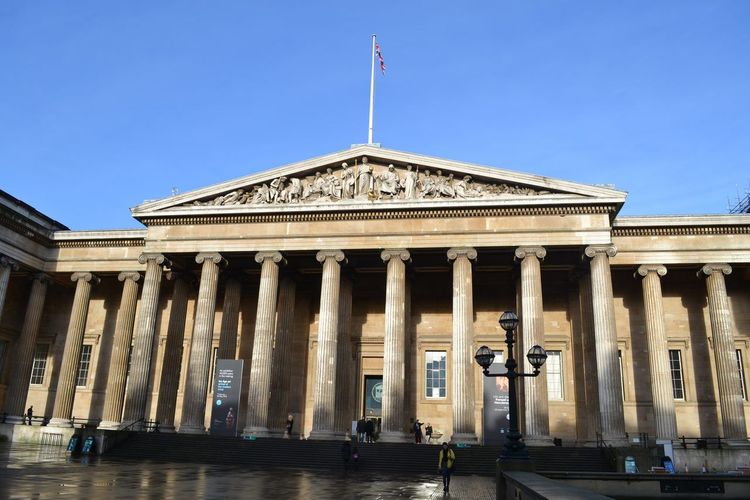
The British Museum is located at Great Russell Street, London WC1B 3DG, in the Bloomsbury district, less than 15 minutes' walk from several Underground stations.
By Underground:
- Holborn (Central and Piccadilly lines): 5 minutes' walk, the closest station
- Tottenham Court Road (Central and Northern lines): 7 minutes' walk
- Russell Square (Piccadilly line): 8 minutes' walk
By bus: routes 1, 8, 19, 25, 38, 55 and 98 stop nearby, mainly on New Oxford Street and High Holborn.
On foot: from Covent Garden (10 min), from St Pancras station (25 min), from Oxford Street (12 min). Bloomsbury is one of London's most pleasant neighbourhoods to explore on foot, with its Victorian squares and specialist bookshops.
Driving is not recommended: parking in Bloomsbury is very limited and expensive. If you are arriving with luggage or with young children, a taxi or an Uber from a central station remains the most practical option.
Practical Tips for a Successful Visit
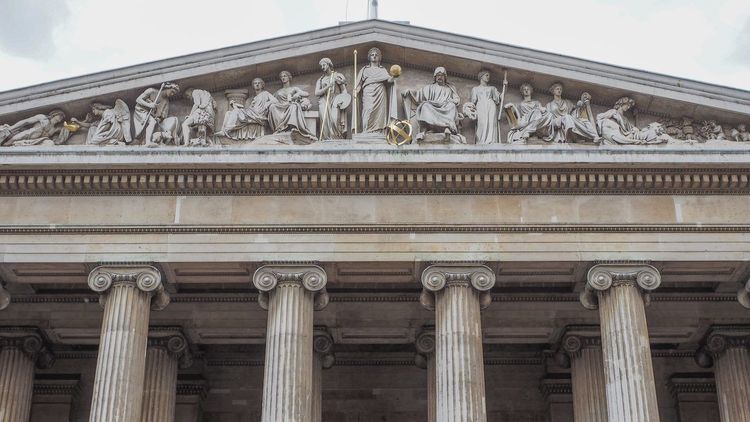
The British Museum has 300 rooms spread across several floors and two main buildings. Without preparation, it is very easy to spend two hours in the first few galleries and never reach the sections you were most interested in. A few principles to avoid this pitfall.
Arrive at opening time or opt for the Friday late opening. Saturdays and Sundays between 11am and 3pm are the busiest slots. Tuesday or Wednesday morning, outside school holidays, is the quietest time for the Rosetta Stone and the Parthenon sculptures. If you have only one day in London, the Friday late opening (6pm–8:30pm) offers an incomparably better quality of visit.
Build a thematic itinerary. A reasonable selection for one day: ancient Egypt (2h), Greece (1h), Mesopotamia (45 min) and medieval Europe (45 min) — approximately 4h30 of active visiting including movement and breaks. If you also want to see Asia and the Americas, plan a separate second visit.
Use the museum's official app (free, available in English). It offers interactive maps, audio descriptions for key objects and suggested itineraries by duration or civilisation. To continue exploring London beyond the museum, our Ryo audio guide for London accompanies you through the city's historic neighbourhoods, from the centre to Bloomsbury, at your own pace and without waiting for a group.
Eat before or after your visit. The Great Court Restaurant and the Court Café are convenient but expensive for modest quality. The restaurants in Bloomsbury or Covent Garden (10 min on foot) offer a far better selection. Several independent bakeries and cafés can be found on Museum Street, two minutes' walk from the main entrance.
With children: the museum offers free explorer backpacks to borrow at the entrance at weekends. The Lewis Chessmen, the Sutton Hoo helmet and the Egyptian mummies generally captivate children from the age of 7–8. Free lockers (with a refundable deposit) are available near the main entrance for bulky coats and large bags.
Photography: personal photography without flash or tripod is permitted in the vast majority of the permanent collection galleries. This is one of the most open policies among major European museums. Some temporary exhibitions prohibit it; signs clearly indicate this at the entrance to each affected room.
What to See Around the British Museum
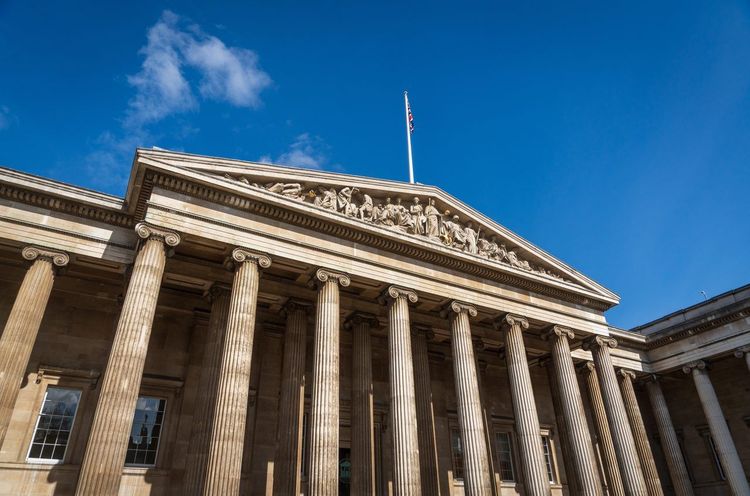
The British Museum sits at the heart of Bloomsbury, one of London's most literary neighbourhoods. A short walk from the museum, several cultural institutions naturally extend the day and are well worth a visit.
The British Library at St Pancras (20 min on foot or 2 Underground stops) displays extraordinary pieces in its free permanent gallery: Magna Carta (1215), a copy of the Gutenberg Bible, Leonardo da Vinci's notebooks and handwritten scores by Bach and Mozart. Admission is free.
Russell Square, five minutes' walk from the museum, is the largest square in Bloomsbury: century-old plane trees, benches, a fountain and a calm atmosphere that contrasts sharply with the tourist bustle of the main thoroughfares. It is the ideal spot for a break after three hours of visiting.
The Sir John Soane's Museum (13 Lincoln's Inn Fields, London WC2A 3BP, England, rated 4.7/5 on Google from 5,441 reviews) (25 min on foot, in Lincoln's Inn Fields) is one of London's least known and most fascinating museums. The house of architect John Soane, left exactly as it was at his death in 1837, is crammed with paintings and antiquities in spaces he himself ingeniously transformed. Admission is free.
To explore the neighbourhoods around Bloomsbury further, the Ryo audio guide between Camden Town and Regent's Park takes you north through streets and markets that tell another story of London. Further to the south-east, the Ryo guide to the City of London traces the history of the capital's financial and historic heart from the Romans to the contemporary skyscrapers.
If you are planning your stay, our articles on London's historic monuments and on things to do in London and the surrounding area give you everything you need to plan your time beyond the British Museum. Our audio-guided tour, meanwhile, links Camden Town to Regent's Park in a single loop.

FAQ
Is the British Museum Really Free?
Yes, access to the permanent collection is entirely free, with no booking required. This has been a founding principle of the museum since 1759, enshrined in the act that established the institution. However, temporary exhibitions are ticketed (between £20 and £30 per adult in 2026). Audio guides (£5–7) and themed guided tours are also paid. If you come solely for the permanent galleries, you will spend nothing as such, unless you give in to the gift shops and internal cafés.
How Long Does It Take to Visit the British Museum?
The museum has 300 rooms and 8 million objects, of which around 1% are on display at any one time. A visit focused on the highlights — the Rosetta Stone, the Parthenon sculptures, the Sutton Hoo helmet — takes around 3 hours. An in-depth visit of the main departments (Egypt, Greece, Mesopotamia, medieval Europe) requires a full day, including breaks and movement between floors. For the Asian, African and Americas collections, plan a separate second visit: trying to see everything in one day generally results in retaining nothing.
Do You Need to Book in Advance to Visit the British Museum?
For the permanent collection, no booking is required. You walk straight in, without a ticket or timed slot, at any point during opening hours. For temporary exhibitions, online booking is strongly recommended, especially at weekends and during school holidays. Highly popular exhibitions often sell out weeks in advance. Booking is done through the museum's official website (britishmuseum.org).
What Is the Best Time to Visit the British Museum?
The quietest slot is Tuesday or Wednesday morning, outside school holidays, between 10am and 1pm. The Friday late opening (6pm to 8:30pm) is also an excellent option: families leave in the early evening and visitor numbers drop significantly. Avoid Saturdays and Sundays between 11am and 3pm, as well as the British summer holidays (July–August) and public holidays, when crowd density makes it very difficult to contemplate the star pieces.
Can You Take Photos at the British Museum?
Yes, personal photography without flash or tripod is permitted in the vast majority of the permanent collection galleries. This is one of the most open policies among major European museums: the Rosetta Stone, the Parthenon sculptures, the Sutton Hoo helmet and the Egyptian mummies can all be photographed freely. Some temporary exhibitions prohibit photography; signs clearly indicate this at the entrance to each affected room.
Is There a Restaurant at the British Museum?
Yes. The museum has the Great Court Restaurant (lunch and dinner, international cuisine, mid-to-high price range) and the Court Café (snacks, sandwiches, simple hot dishes, often with a long queue at midday). Both are convenient but expensive for the quality on offer. For a better experience, the restaurants in Bloomsbury (Museum Street, Bury Place), Covent Garden (10 min on foot) or Fitzrovia (15 min on foot) offer far better value. Several independent bakeries are located two minutes from the main entrance.
Conclusion
The British Museum is not a museum like any other. It is an attempt — vertiginous and sometimes controversial — to gather the history of humanity under one roof. Controversial because the objects often travelled under conditions that our current standards would condemn. Vertiginous because the Rosetta Stone, the Viking Lewis Chessmen, the Assyrian reliefs and the Egyptian mummies coexist two hundred metres apart in a single building in Bloomsbury.
What is certain: you will leave different from how you arrived. An hour spent in the Duveen Galleries before the Parthenon sculptures, or face to face with the Lindow Man and his two thousand years of peat, leaves a mark that very few museums in the world are capable of making.
To extend the experience through the streets of London and discover the city with the same depth as the museum itself, our Ryo app offers audio-guided tours through the most historically rich neighbourhoods. The Ryo London guide accompanies you past the monuments, squares and stories that the British capital has carried for two thousand years, at your own pace and without waiting for a group guide.
À lire également