© Shutterstock
 Votre guide Ryo
London and Its Surroundings: The Complete Guide to Activities in 2026
Few cities in the world offer such a seemingly unbalanced density of activities: the Westminster-London Eye-Tower Bridge circuit monopolises 90% of week-long stays, yet the British capital boasts more than 170 museums, entire neighbourhoods where not a single word of tourist English is heard, and a ring of day trips reachable in under two hours by train. Activities in London and its surroundings extend far beyond what a classic itinerary can contain.
Behind the postcard façade lie less expected discoveries: Leadenhall Market, the Victorian cast-iron and glass building that served as the set for Diagon Alley in the Harry Potter films; the Cutty Sark in Greenwich, a 19th-century clipper preserved in dry dock on the Thames; and the Stonehenge plain two hours away by train, where the standing stones are 4,500 years old. Camden Town hides a market in its converted warehouses where you can eat Cambodian street food while listening to live reggae. And the Cotswolds, 1 hr 30 from Paddington, look like a film set built in honey-coloured stone. This guide covers the must-sees, the neighbourhoods Londoners actually frequent, day trips, and practical tips for keeping your budget in check. To explore the city with the right level of historical context, the Ryo audio-guided tour of London provides geolocated audio commentary on the main tourist areas — ideal for understanding what you're looking at, not just seeing it.
Westminster, Big Ben and the Changing of the Guard
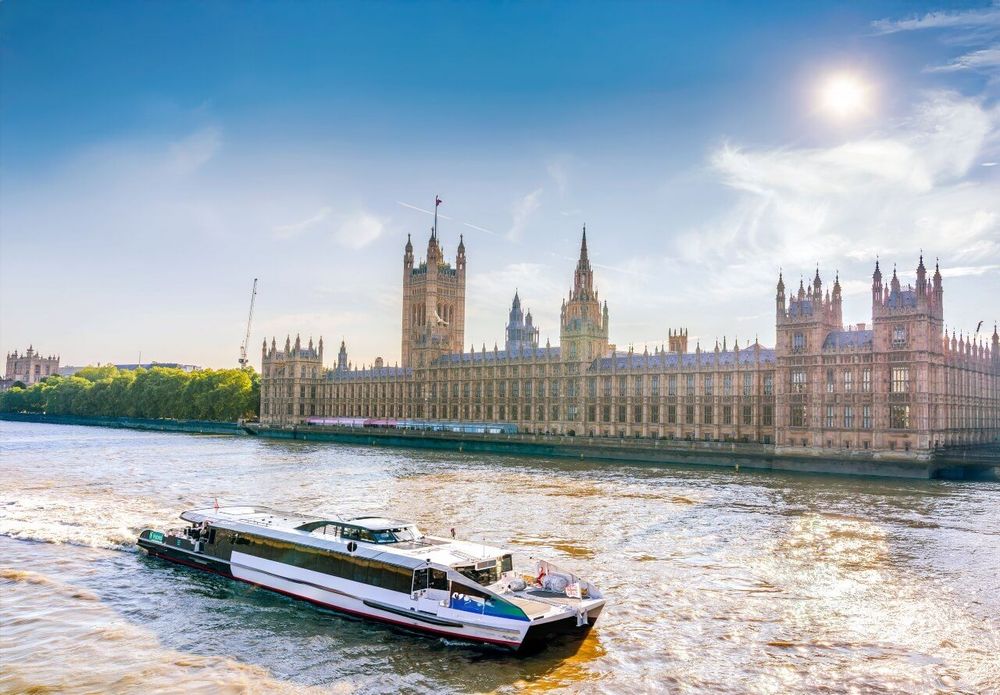
Westminster has been the political centre of England since the 11th century and is a city within a city that alone brings together three UNESCO World Heritage Sites. The natural starting point is Westminster Bridge, which offers one of the most photographed views in London: the Victorian neo-Gothic Palace of Westminster on the north bank, and the large wheel of the London Eye in the distance to the left.
Big Ben is not, strictly speaking, Big Ben: that nickname refers to the main bell of the tower, which has been officially known as the Elizabeth Tower since 2012. The tower reopened to the public in 2022 after four years of renovation works — for the first time since the 1960s, it is possible to climb the 334 steps to see the clock mechanisms up close. Visits are booked through the UK Parliament and are offered only on certain days of the week.
Westminster Abbey has stood beside Parliament for more than nine centuries. Every British monarch has been crowned here since William the Conqueror in 1066, with the exception of two kings. More than 3,600 people are buried or commemorated within its walls: Chaucer, Newton, Darwin, Dickens. Poets' Corner alone houses more creative geniuses than any other square metre in Europe. Allow an average of 1 hr 30 to 2 hrs inside; the Tudor stained-glass windows of the Lady Chapel at the far end are worth the admission price on their own.
Buckingham Palace has been the sovereign's official residence since 1837. The building itself only opens in summer (August–September), but it is the Changing of the Guard that draws crowds year-round. The ceremony takes place on Mondays, Wednesdays, Fridays and Sundays at 11:00 am. The best positions are along the Mall or in front of the palace railings — arrive 30 to 45 minutes early for an unobstructed view.
Between the palace and Parliament, St. James's Park (The Mall, London SW1A 2BJ, rated 4.7/5 on Google from 62,881 reviews) is the oldest royal park in London, laid out by Henry VIII in the 16th century. Its lake has been home to a colony of pelicans since 1664, a diplomatic gift from the Tsar of Russia — their descendants are still there. It is one of the best places to take a breather between sites, with a direct view of the rear facades of Downing Street.
Don't leave the area without taking a look at Westminster Cathedral (not to be confused with Westminster Abbey), the seat of the Roman Catholic Church in England. Its Byzantine campanile of red brick and white stone offers a panoramic view of the skyline at a price well below that of the London Eye, and with no queue in the morning. Our guide to London's historic monuments completes this overview with the practical details of each site in the area. Westminster Abbey and Buckingham Palace are both stops on our 21-stop Royal Tour audio guide.
British Museum, National Gallery and the Free Museums
London is perhaps the only major world capital where the most important museums are entirely free. This is the result of a political decision taken in 2001, which saw attendance at major British museums double within two years. Make the most of it without hesitation.
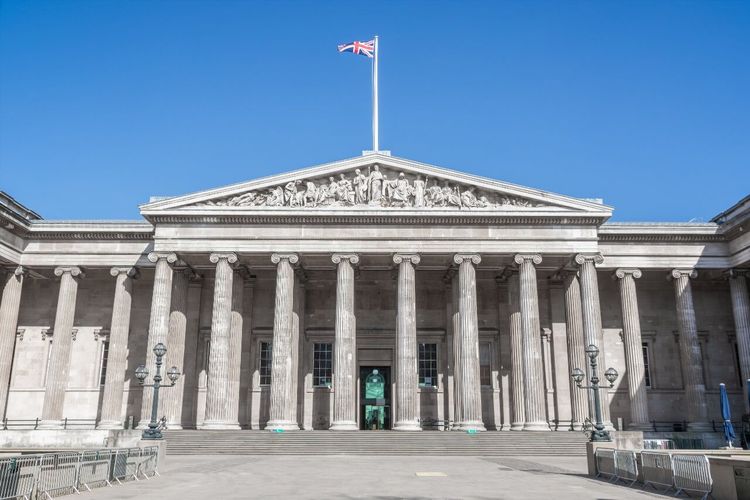
The British Museum, founded in 1753, is the oldest public museum in the world. Its collection contains 8 million objects, including the Rosetta Stone — the key to deciphering hieroglyphics — the Parthenon friezes from Athens, and an Egyptian mummy collection that remains one of the most complete outside Egypt. The Great Court covered by Norman Foster is an architectural feat in its own right: its triangulated glass lattice roof covers 6,000 m². Allow at least 2 hrs for a non-exhaustive visit, and check the temporary exhibitions accompanying the permanent collection. Our article British Museum in London details the wings not to miss based on your interests.
The National Gallery on Trafalgar Square houses 2,300 paintings spanning seven centuries of European painting, from the Italian primitives to late Impressionism. Van Gogh, Vermeer, Rembrandt, Velázquez, Turner — it's all there, for free. Room 34, dedicated to the French Impressionists, regularly sparks lively debates between Monet enthusiasts and Renoir devotees.
In Kensington, the Natural History Museum is one of the finest Victorian buildings in the city — its gilded terracotta facade is worth the visit even before stepping inside. Inside, a diplodocus skeleton greets visitors in the grand nave. The mineral gallery and the meteorite room fascinate adults and children alike. Nearby, the Victoria and Albert Museum (Cromwell Rd, London SW7 2RL, rated 4.8/5 on Google from 67,328 reviews) brings together the world's largest collections of decorative arts: Islamic ceramics, Tudor costumes, Renaissance jewellery, 19th-century photographs. Free, vast, and chronically under-visited by tourists rushing off to look at paintings elsewhere.
Practical tip: London museums generally open at 10 am and close at 5:30 or 6 pm. Most offer late-night opening on Fridays until 9 or 10 pm. Arriving at opening time allows you to explore the most popular galleries before school groups and tourist coaches arrive.
The City: Tower of London, Tower Bridge and the Medieval Heart
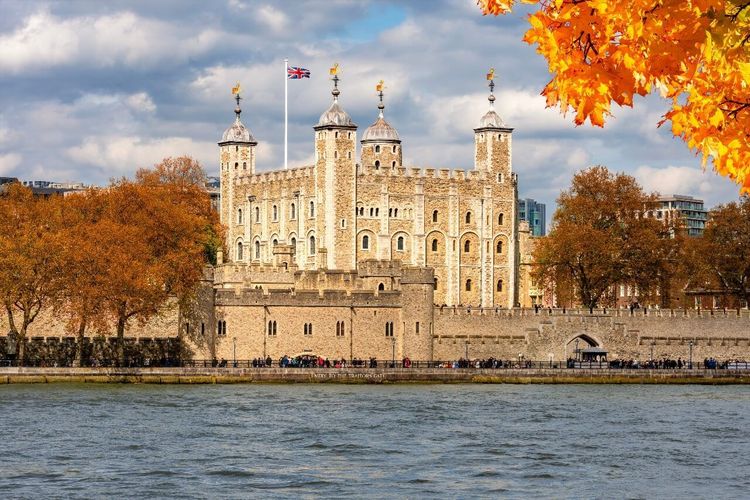
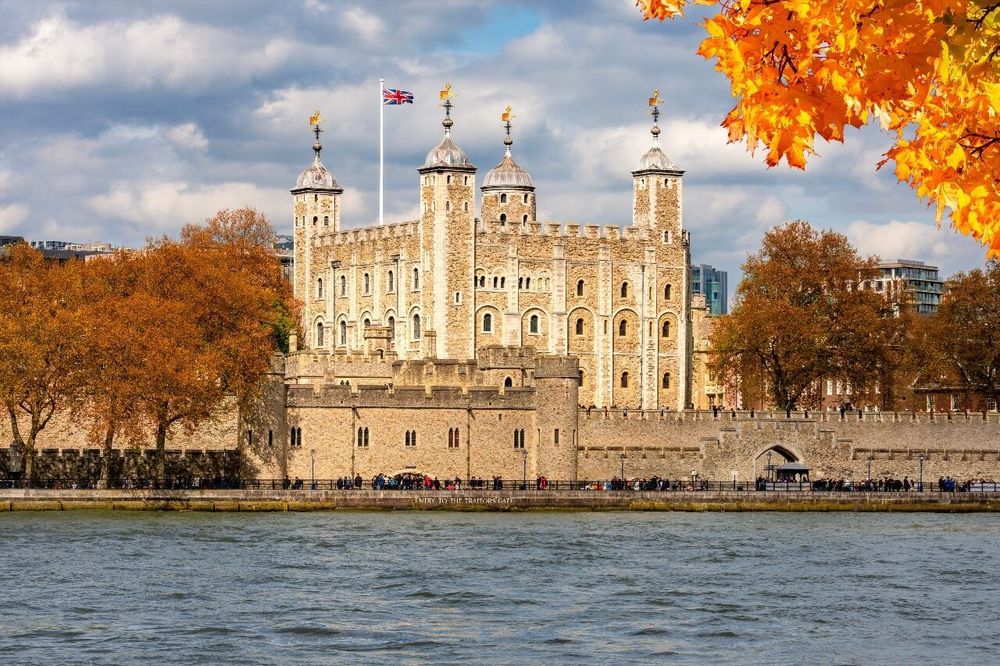
The City of London is not London — it is a financial city-state of exactly 2.9 km² that retains its own police force, its own Lord Mayor distinct from the Mayor of London, and a legal status inherited from medieval charters. On weekdays, 560,000 people work there; at weekends, it belongs to tourists and construction cranes. The Tower of London has existed since 1066: William the Conqueror had the White Tower built immediately after his victory at Hastings. For nine centuries it served successively as a royal palace, a prison, an armoury and a menagerie. Today it houses the Crown Jewels: the St Edward's Crown used for the coronation, the Great Cullinan Diamond of 530 carats — the largest cut diamond in the world, set in the royal sceptre — and some 23,000 precious stones spread across about a hundred pieces. The site traditionally keeps six ravens whose presence is said to protect the monarchy — a law has officially protected them since the 17th century. Allow 2 to 3 hrs on site to miss nothing.
Tower Bridge is often mistakenly confused with the neighbouring London Bridge, which is far more ordinary. Built between 1886 and 1894, it can be raised to allow large vessels to pass — the opening times are published in advance. Walking along the glass walkway at 42 m above the Thames is worth the admission price.
Ten minutes' walk to the west, St. Paul's Cathedral is Christopher Wren's masterpiece, rebuilt after the Great Fire of 1666. The crypt houses the tombs of Nelson, Wellington and Wren himself. The Whispering Gallery, 30 m up beneath the dome, produces a striking acoustic effect: words whispered against the wall travel all the way to the other side of the circular gallery, 34 m away.
Leadenhall Market (Gracechurch St, London EC3V 1LT, rated 4.4/5 on Google from 23,028 reviews), five minutes away, is a Victorian covered market of gilded cast iron and glass built in 1881. Film lovers will recognise it: it served as the set for the entrance to the Leaky Cauldron in the Harry Potter films. Free, lively, highly photogenic — the pubs that line it have been serving beef pies since the 1880s.
To explore the City with the historical context it deserves, our guide to things to do in London covers each building from the Tower of London to St. Paul's, with the anecdotes that commemorative plaques never tell. Tower Bridge and the Tower of London open our audio-guided tour of the City.
Camden Town and Regent's Park: The Other Face of London
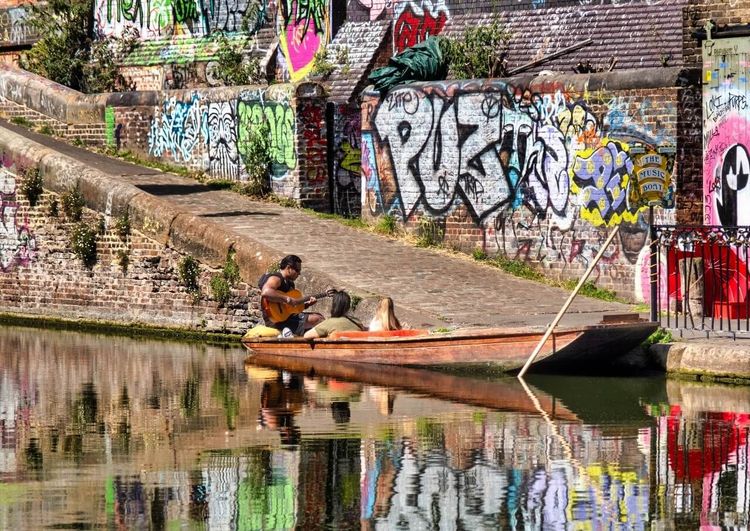
Camden is one of the neighbourhoods that has best resisted London's total gentrification. It remains loud, colourful, slightly unruly, and resolutely itself. Camden Market spreads across several sites connected along the canal: Camden Lock Market, Stables Market, Buck Street Market. You'll find street food from forty different nationalities, vinyl records, vintage clothing, tattoo artists, and independent designers. Amy Winehouse lived in the neighbourhood; a bronze statue of her stands in Stables Market, at the heart of the market.
Along the Regent's Canal, moored painted narrowboats form a permanent floating community. The walk from Camden Lock to Little Venice (3.5 km to the west) is one of the most pleasant strolls in London — flat, car-free, lined with converted warehouses and private gardens that spill over onto the towpath.
Regent's Park, ten minutes' walk from the market, is one of London's eight royal parks. Its 166 hectares are home to London Zoo, founded in 1828 — the oldest scientific zoo in the world still in operation. The Queen Mary's Rose Garden at the centre of the park brings together more than 12,000 rose bushes of 85 different varieties: the June bloom is spectacular. Climbing Primrose Hill, to the north of the park, gives you access to one of the most photogenic panoramas over London's skyline, with the Shard and the City's skyscrapers on the horizon — no queue, no ticket required.
To explore this area with audio commentary on anecdotes found in no printed guide, the Between Camden Town and Regent's Park route is the audio-guided tour designed specifically for this northern part of London.
South Bank: London Eye, Tate Modern and the South Bank of the Thames
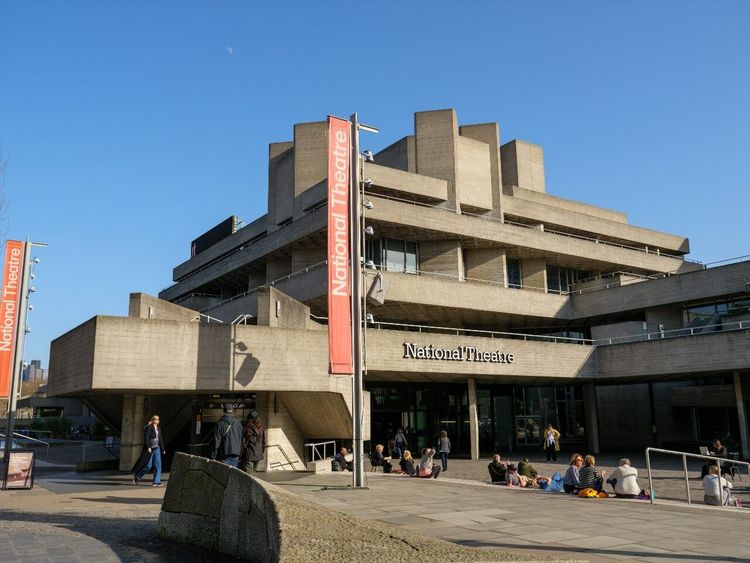
The South Bank is the most successful urban transformation London has seen in thirty years. This two-kilometre corridor between Westminster Bridge and Tower Bridge was a no-man's-land of abandoned warehouses until the early 1990s. Today, it is the most visited cultural promenade in Europe, with an unrivalled density of arts institutions, markets and restaurants.
The London Eye dominates the western entrance to the south bank: a observation wheel 135 m tall (120 m in diameter), built in 1999 for the millennium celebrations, offering a 360° view of London from its 32 air-conditioned capsules. On a clear day, you can see up to 40 km, as far as the Surrey Hills to the south-west. A full rotation takes 30 minutes. Buy your tickets in advance online to avoid queues that can exceed 1 hr 30 in peak season. Our article on visiting the London Eye details the best time slots and available combination tickets.
The Tate Modern has been housed since 2000 in the former Bankside Power Station, an industrial red-brick building converted by architects Herzog & de Meuron. The permanent collection — Picasso, Rothko, Warhol, Louise Bourgeois — is entirely free. The Turbine Hall, the central room standing 35 m high, regularly hosts monumental installations that make international art headlines in their own right. Our article visiting Tate Modern in London will prepare you for the visit.
Shakespeare's Globe is the faithful reconstruction (1997) of the Elizabethan theatre where Shakespeare had his plays performed from 1599 onwards. The open-air performances from May to October take place in period conditions: the 'groundlings' stand in the pit for £5 — the cheapest ticket in the West End. The experience is worth having for its sensory dimension: rain and wind are all part of the show.
Borough Market (8 Southwark St, London SE1 1TL, rated 4.6/5 on Google from 127,988 reviews), just steps away, is London's oldest food market, mentioned in records dating back to 1014. On Thursdays, Fridays and Saturdays, it brings together around a hundred British and continental producers: Somerset affineur cheeses, sourdough loaves from micro-bakeries, Colchester oysters, truffles in season. Allow an hour to have lunch on site.
The walk between the London Eye and Tower Bridge follows the Thames directly — 2.5 km of uninterrupted pedestrian path, with the City skyline as a constant backdrop.
Notting Hill, Kensington and Hyde Park: The Green Triangle
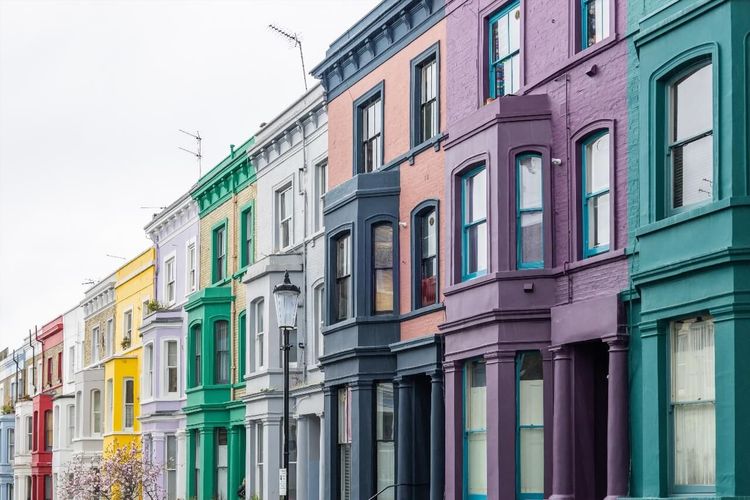
West London concentrates a sequence of neighbourhoods that read like superimposed historical layers: Notting Hill with its colourful stucco houses, Kensington with its Victorian museums, and Hyde Park binding it all together in a setting of royal greenery.
Hyde Park covers 142 hectares right in the heart of the capital. On Sunday mornings at Speakers' Corner, in the north-east corner of the park, anyone can climb on a stepladder and harangue the crowd — a tradition dating back to 1866 that Karl Marx, Lenin and Orwell all tried their hand at. The Serpentine, the artificial lake at the centre, offers open-water swimming from June to September in the Lido run by the Serpentine Swimming Club, founded in 1864. In winter, the park hosts one of the city's most popular Christmas markets. Our article on Hyde Park details the seasonal activities.
Kensington Palace has been the London residence of the royal family since 1689. Princess Diana lived here until her death in 1997, and it is where Prince William and Kate have their official apartments. The State Apartments are open to the public, with a collection of royal costumes and exhibitions on the history of the monarchy. The Orangery in the gardens serves one of the best afternoon teas in London. Find the full history of the palace in our article Kensington Palace.
Portobello Road Market (Portobello Rd, London W11 2DY, rated 4.5/5 on Google from 28,727 reviews) is London's most famous antiques market. Saturday is the main day: stalls of Victorian silverware, old postcards, vinyl records and vintage clothing stretch for over a kilometre. Arrive before 10 am for the best pieces; by midday it's mostly street food and contemporary crafts.
The Notting Hill neighbourhood itself is worth an hour of leisurely exploration: the colourful houses of Pembridge Road and Lansdowne Road are among the most photographed facades in the city. The Notting Hill Carnival, every last weekend of August, is the largest outdoor carnival in Europe — two million participants over two days, with sound systems that make the cobblestones vibrate three kilometres away.
Shoreditch, Brick Lane and East London
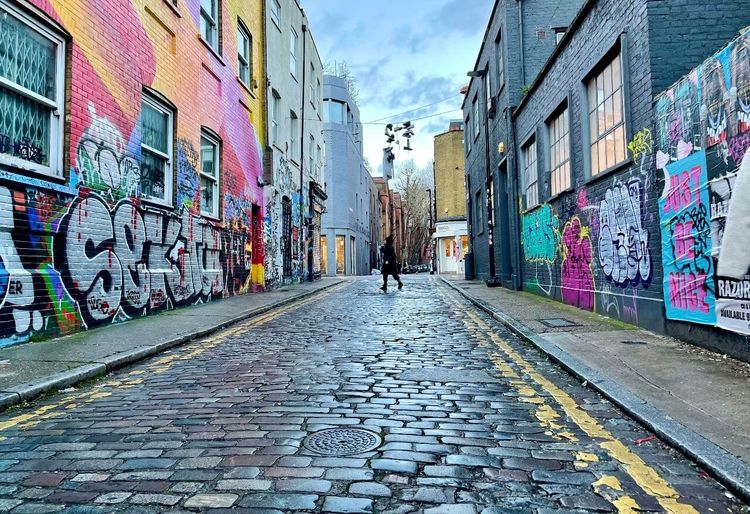
Shoreditch is living proof that gentrification doesn't necessarily erase a neighbourhood's identity — it displaces it, compresses it, makes it more intense. What was a run-down working-class area in the 1990s has become the epicentre of London's street art scene. Works by Banksy have been documented here, alongside monumental murals by artists from around the world. Old Street and its adjacent alleyways make up London's largest open-air gallery — and it is constantly being renewed.
Brick Lane runs along the border with Whitechapel, historically a neighbourhood of successive immigration — Huguenots in the 17th century, Irish in the 19th, Ashkenazi Jews in the early 20th, Bangladeshis since the 1970s. The Bangladeshi community has transformed the street into a world centre for British curry: around sixty restaurants compete for customers with undiminished energy. On Sunday mornings, the Brick Lane market spills into courtyards and car parks — vinyl, leather, fabric, reconditioned electronics.
Columbia Road Flower Market takes place on Sundays from 8 am to 2 pm, ten minutes' walk away. It is one of London's most photographed markets: a single street lined with about a hundred florists selling plants at prices well below those in the city's shops. Arrive at opening time for the best choice; come at noon for the atmosphere.
The Harry Potter Studios at Watford
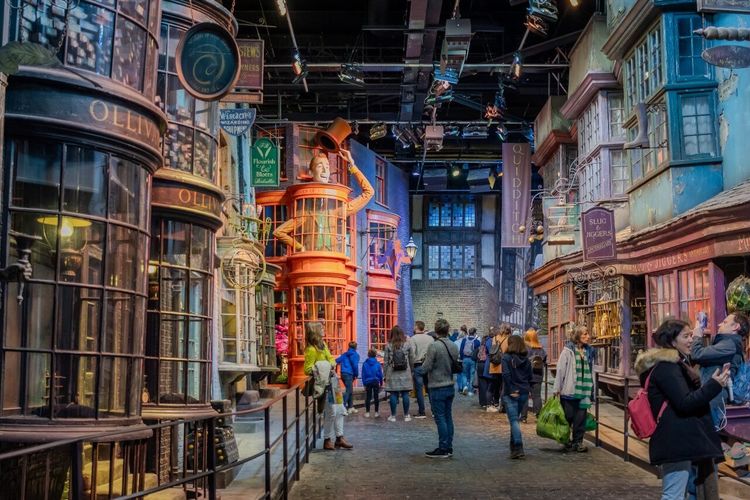
If you grew up with J.K. Rowling's books, Leavesden is a pilgrimage in its own right. The Warner Bros. Studio Tour London (Studio Tour Drive, Leavesden, Watford WD25 7LR, rated 4.8/5 on Google from 102,589 reviews) is located 32 km north of London, in the studios where all eight Harry Potter films were entirely shot between 2000 and 2011. Since opening to the public in 2012, more than 10 million visitors have come to walk through the Great Hall, see Dumbledore and Hermione's original costumes, and photograph the Hogwarts Express at the platform.
The visit covers 110,000 m² of reconstructed spaces: Diagon Alley in real sets, Hagrid's Hut, the interiors of the Ministry of Magic, and the Hogwarts scale model at 1:24. Seasonal exhibitions at Halloween and Christmas add extra sets.
Getting there: from London Euston, 20 minutes by train to Watford Junction, then a direct Warner Bros. shuttle. Allow 45 minutes door to door from central London. Online booking is mandatory; tickets sell out several weeks in advance during school holidays. Allow 3 hrs 30 to 4 hrs on site for a complete visit.
Greenwich: The Observatory, the Meridian and the Cutty Sark
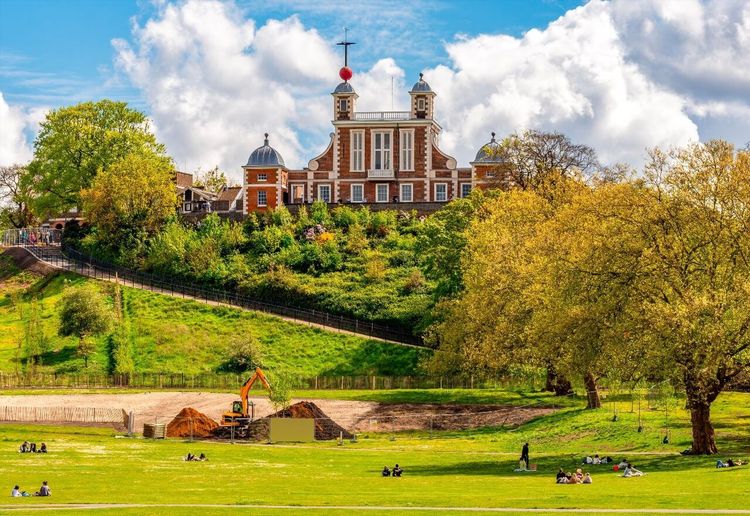
Greenwich is to London what the meridian is to universal time — an absolute reference point that has become a place to visit. The Royal Observatory Greenwich, founded in 1675 by Charles II to improve British maritime navigation, has been the origin point of universal time since 1884. The Greenwich Meridian line (longitude 0°) is marked on the ground by a green laser beam at night — you can place one foot in each hemisphere for the inevitable photo.
At the foot of the hill, the Cutty Sark (King William Walk, London SE10 9HT, rated 4.6/5 on Google from 22,911 reviews) is the only surviving large Victorian clipper in the world. Built in 1869 for the tea trade between China and England, it set several speed records on the Cape route to Australia. The ship is displayed in dry dock, and you can descend into its hold to understand the living conditions of its 28 crew members during a four-month voyage.
Getting there: from Westminster Pier, a Thames Clipper boat travels up the Thames to Greenwich in 30 minutes — the view of the City from the water more than makes up for the extra cost over the tube. By DLR from Bank Station, allow 20 minutes.
Day Trips from London: Windsor and Oxford
One of the great advantages of Britain's rail network is that two of England's most visited cities are less than an hour from the capital by train. Windsor and Oxford can be organised as half-day or full-day trips from Paddington or Waterloo, with no car and no complex planning.
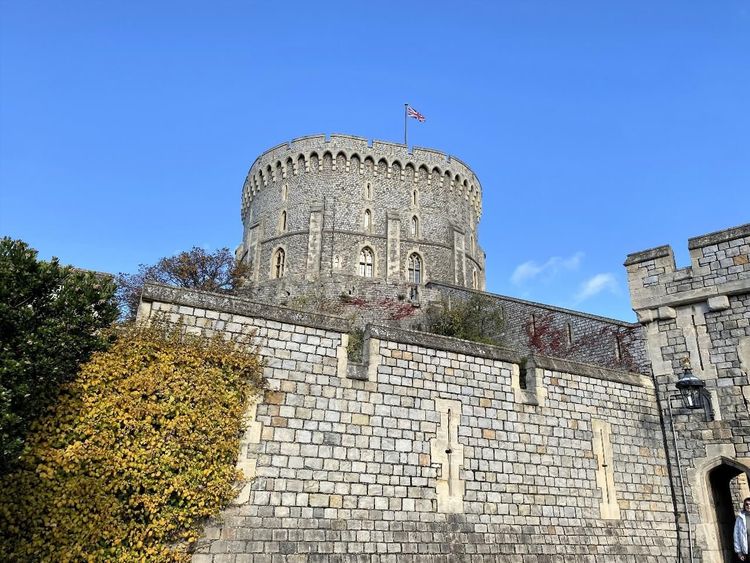
Windsor, 51 km west of London, is reachable in 40 to 55 minutes from London Waterloo (or by train from Paddington via Slough). Windsor Castle is the oldest continuously inhabited royal residence in the world — its occupants have included 40 monarchs since William the Conqueror in the 11th century. The visit covers the State Apartments, St George's Chapel (burial place of Henry VIII and ten other sovereigns), and the gardens. The Changing of the Guard takes place every morning at 11 am (subject to royal activities). The town of Windsor itself is worth an hour's walk from the Long Walk.
Eton College is just across the river, separated from Windsor by the Thames. Founded in 1440 by Henry VI, it has educated 20 British Prime Ministers, including Boris Johnson and David Cameron. The Gothic chapel and the main courtyard are accessible to the public on certain weekdays.
Oxford is 1 hour from Paddington by fast train (service every 30 minutes). The university city brings together 39 colleges operating under a collegiate system unique in the world. Christ Church, the most famous, provided the setting for the Hogwarts dining hall in the Harry Potter films. The Bodleian Library (Broad St, Oxford OX1 3BG, rated 4.6/5 on Google from 1,193 reviews), founded in 1602, holds more than 13 million volumes and has had the right to receive a copy of every book published in the United Kingdom since 1610.
Practical Oxford itinerary: from the station, walk 15 minutes to the historic centre, visit Christ Church and Merton College, follow the River Cherwell to Magdalen College (its freely accessible gardens are among the finest in England), then head to the covered market for lunch. Five hours is enough to see the essentials without rushing.
Stonehenge, Bath and the Cotswolds: A Day out of London
England beyond London often holds more surprises than you might expect. These three destinations are reachable by train from Paddington or Victoria, sometimes in combination on the same day.
Bath is the only city in England listed as a UNESCO World Heritage Site in its entirety. The Roman Baths are the main reason: built around natural hot springs gushing at 45°C and exploited by the Romans from 60 AD to the 5th century, they constitute one of the best-preserved ancient bathing complexes in Northern Europe. The Georgian city that surrounds them — Royal Crescent, the Circus, the Pump Room — was built in blonde Bath limestone between 1720 and 1820. Jane Austen lived here for five years and set two of her novels in the city. From Paddington, allow 1 hr 20 to 1 hr 30 by train.
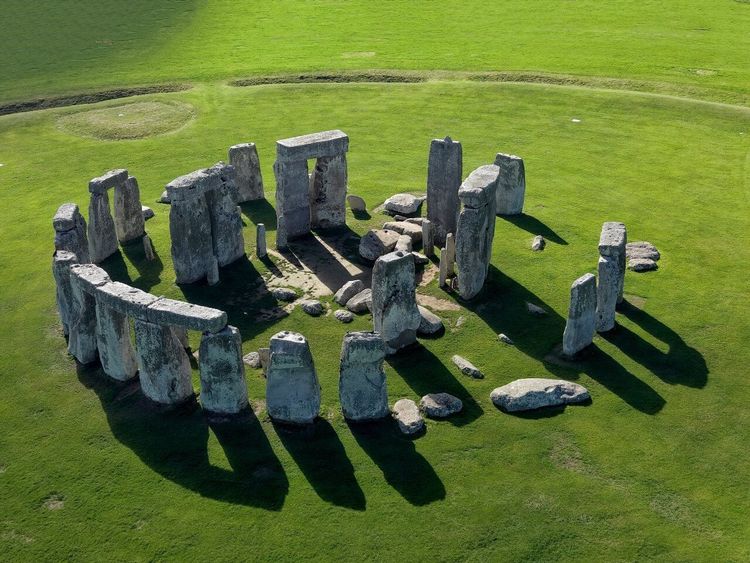
Stonehenge (Nr Amesbury, Wiltshire SP4 7DE, rated 4.5/5 on Google from 66,426 reviews) is 2 hrs from Victoria by coach, or 20 minutes by shuttle from Salisbury (1 hr 30 from Waterloo). The most massive sarsens weigh up to 25 tonnes and come from the Marlborough Downs, about thirty kilometres away; the smaller bluestones were transported from Wales, 250 km away, approximately 4,500 years ago by a means of transport still debated by archaeologists. The standard visit circles the stones; access to the interior is reserved for special slots at sunrise and sunset. Allow 1 hr 30 to 2 hrs on site.
The Cotswolds are the rural England of the collective imagination — gentle hills, dry-stone walls, hollyhocks, pubs with flowering gardens. Bourton-on-the-Water, Bibury (whose Arlington Row cottages featured inside British passports), Burford and Chipping Campden are the most visited villages. Most are reachable by coach from Oxford or Cheltenham (2 hrs from Paddington). With a car, an 80 km loop from Oxford allows you to visit several in the same day.
Tip: the combined Bath + Stonehenge in one day is doable from London — arrive in Bath in the morning, lunch on site, take the train to Salisbury in the early afternoon, shuttle to Stonehenge, return to Victoria in the evening. Check the last train times on Sunday nights.
Nightlife and Entertainment in London
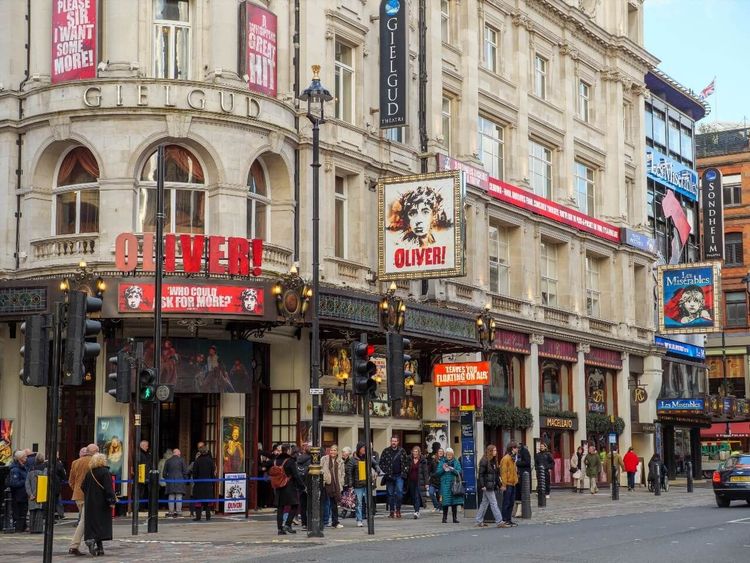
London is one of the world's capitals of live theatre. The West End runs between 40 and 50 professional productions simultaneously, from musicals to classical plays. Hamilton, Les Misérables, The Phantom of the Opera, The Lion King — some have been running for decades without interruption. For last-minute discounted tickets, the TKTS booth on Leicester Square offers up to 50% off on the day. Arrive at opening time at 10 am.
For jazz, Ronnie Scott's in Soho has been the British reference since 1959. Ray Charles, Ella Fitzgerald and Miles Davis have all played here; evening concerts start around 8:30 pm. Booking is recommended.
Historic pubs deserve an evening of their own. Ye Olde Cheshire Cheese, in an alleyway off Fleet Street rebuilt after the Great Fire of London in 1666, is one of the capital's oldest pubs — Dickens and Mark Twain both drank here. In Southwark, The George Inn is the only surviving galleried medieval pub in London, mentioned in the writings of Dickens.
For rooftop bars, the Sky Garden (level 35 of 20 Fenchurch Street) is accessible free of charge with an online reservation and offers a 360° view of the City with an integrated bar and restaurant. Morning slots are often available a few days in advance.
Markets and Shopping in London
London shopping is both one of the most expensive at first glance and one of the most accessible in practice — as long as you know where to go. Two worlds coexist without mixing: the major commercial thoroughfares and the neighbourhood markets.
Oxford Street and Regent Street represent one of the highest concentrations of retail in Europe: between Marble Arch and Oxford Circus, more than 300 stores line less than 2 km. The flagship Selfridges, founded in 1909 by an American, remains one of the world's most inventive department stores for its themed window displays and its food halls.
Carnaby Street, two minutes from Regent Street, is a pedestrianised street home to alternative fashion brands and limited-edition sneaker boutiques. For vinyl records, the area between Berwick Street and Broadwick Street in Soho clusters a dozen independent record shops that have survived there since the 1960s.
The markets alone sum up London's diversity: Portobello Road (antiques, Saturday), Borough Market (food, Thursday–Saturday), Columbia Road (flowers, Sunday), Brick Lane (second-hand clothes and vinyl, Sunday) — each has its own distinct personality, each deserves a separate morning.
Getting Around London
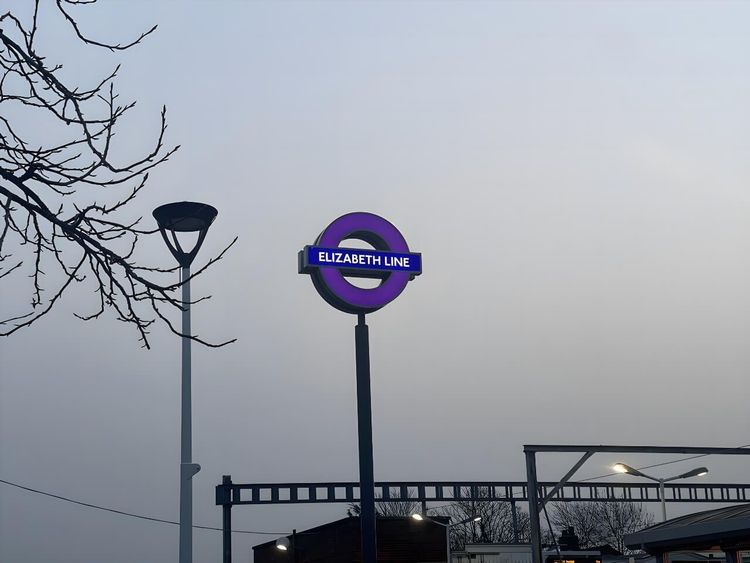
Knowing how to navigate the city makes all the difference between an exhausting visit and a smooth one. The London transport network (TfL) covers the entire capital with 11 Underground lines, 700 bus routes, 2 tram lines and the DLR (Docklands Light Railway). The payment system has been fully contactless since 2014: your European bank card works directly without needing to buy a ticket or a specific pass.
The Oyster Card is still useful if you prefer to track your credit, but contactless payment applies exactly the same automatic daily cap. In 2026, a single journey in zones 1–2 costs around £2.80 off-peak.
The iconic red double-decker buses are often faster than the tube for crossing the heart of the city when you don't need to change lines — they serve stops the Tube doesn't reach, particularly along the Thames. The network operates 24 hours a day on Friday and Saturday nights (Night Tube) on the Victoria, Central, Jubilee, Northern and Piccadilly lines.
Budget and Good to Know
London is expensive, but less so than you might think if you make the most of the free resources. The 13 major national museums — British Museum, National Gallery, Natural History Museum, Tate Modern, V&A, Science Museum, National Portrait Gallery — are all free to enter. By focusing meals on food markets and local canteens (Pret à Manger, Leon, Wahaca), a lunch budget of £10 to £12 per person is realistic.
For accommodation, a hostel dorm in the centre costs £25 to £40 per night. A 3-star hotel in zone 1 starts at £90 to £130. Zones 2–3, 20 minutes away by tube, offer accommodation 30 to 40% cheaper with the same level of comfort.
Best time to visit: May–June for parks and flowering streets, without the heat of July–August. December for the Christmas atmosphere and Oxford Street lights. Avoid Bank Holiday weekends if you don't enjoy dense crowds at tourist sites.

FAQ
How many days should you plan to visit London?
A minimum of 4 full days allows you to cover the must-see sites in the centre — Westminster, the City, South Bank, Camden, Kensington — without rushing. To add a day trip to the surroundings (Windsor, Bath or Oxford), plan for 5 to 6 days. A full week is ideal if you want to explore the eastern neighbourhoods (Shoreditch, Greenwich) and combine several day trips, such as Bath with Stonehenge, or Oxford with the Cotswolds.
Which activities are free in London?
The major national museums — British Museum, National Gallery, Natural History Museum, Tate Modern, Victoria and Albert Museum, Science Museum — are all free. The royal parks (Hyde Park, Regent's Park, St. James's Park) are freely accessible. The walk along the South Bank between the London Eye and Tower Bridge, exploring the neighbourhoods of Shoreditch and Notting Hill, Camden Market, and the climb up Primrose Hill all cost nothing. In total, several full days can be organised without spending a penny on admission.
How do you get to the Harry Potter Studios from London?
From London Euston, take a train to Watford Junction (20 minutes, every 10 to 20 minutes). A Warner Bros. shuttle runs directly from the station to the studios in just a few minutes; the shuttle ticket can be purchased at the station kiosk or in advance on the official website. Allow 45 minutes door to door from central London. Entry to the studios must be booked online in advance: during school holidays, tickets often sell out several weeks ahead.
What is the best season to visit London?
May and June are generally the best months: the days are long (sunset around 9 pm in mid-June), the parks are in bloom, temperatures remain pleasant (16–20°C), and crowds are less intense than in July–August. December is appealing for the Christmas lights atmosphere; January and February are the quietest months, with cool temperatures (5–8°C) but rarely freezing, and accommodation is often cheaper.
What day trips can you take from London?
The best served by train: Windsor (40 min from Waterloo), Oxford (1 hr from Paddington), Bath (1 hr 20 from Paddington), Cambridge (50 min from King's Cross), Canterbury (1 hr from St Pancras). Stonehenge can be reached in 2 hrs via Salisbury (shuttle from the station). The combined Bath + Stonehenge day trip is doable but packed. For garden lovers, Kew Gardens is accessible in 30 minutes by tube from the centre.
Do you need a local SIM card in England?
Since Brexit, European mobile plans often charge for use outside the European Union — check your operator's terms before you leave. A prepaid British SIM (EE, Three, Giffgaff) costs around £10 to £15 with 20 to 30 GB of data, available on arrival at St. Pancras, Gatwick or Heathrow. This is often the simplest solution for stays of more than three days. Our audio-guided tour from Camden Town to Regent's Park, for its part, downloads in advance and plays offline.
Conclusion
London is not a destination you ever finish exploring — it is a city you rediscover with every visit. Activities in London and its surroundings cover a spectrum that ranges from the Roman Baths in Bath to the contemporary art installations in Tate Modern's Turbine Hall, taking in the warehouses of Camden and the standing stones of Salisbury Plain along the way. It is also a city that lends itself to exploration on foot, neighbourhood by neighbourhood, without too rigid a schedule.
To plan your itinerary and explore the city with the context that turns a facade into living history, our audio walking tours of London cover Westminster, the City and Camden, with geolocated commentary that adapts to your own pace. The Ryo app works without an internet connection once the tour has been downloaded, which also simplifies the question of a British SIM card for the essentials of your visit.
À lire également