© Shutterstock
 Votre guide Ryo
London Eye: Everything You Need to Know Before Going Aboard (2026)
Rise 135 meters above the Thames and you'll instantly understand why the London Eye has become, in less than twenty-five years, the most visited attraction in all of Britain. More than 3.5 million people ride it every year, more than Stonehenge and the Tower of London combined. But a ferris wheel remains a ferris wheel, right? Not quite. The rotation lasts about 30 minutes, the capsule offers up to 40 kilometers of visibility on clear days, and the engineering that keeps the structure standing is a feat that most visitors completely ignore.
This guide prepares you to experience the best possible version of this attraction: the ticket types that are truly worth their price, the time slots when lines are half as long, what you'll see from the capsules (with or without London fog), and the South Bank area must-sees you'd be wrong to miss after your ride. If you're planning a broader stay in the British capital, the Ryo app offers audio-guided tours to explore London at your own pace, well beyond the major sites.
What is the London Eye?
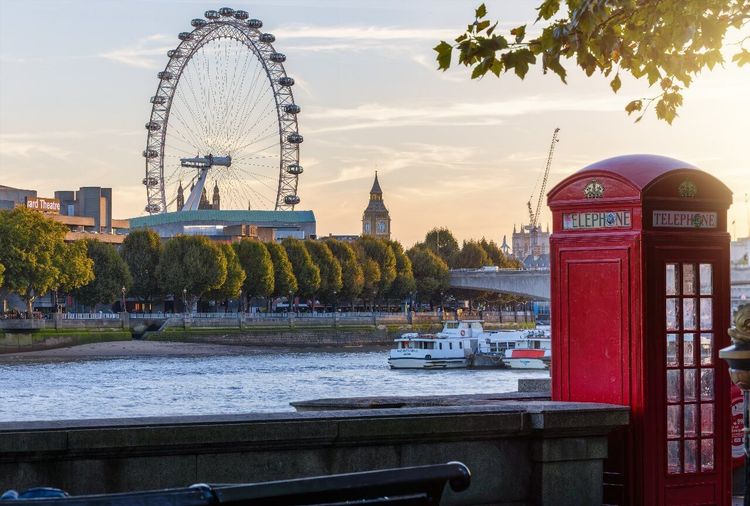
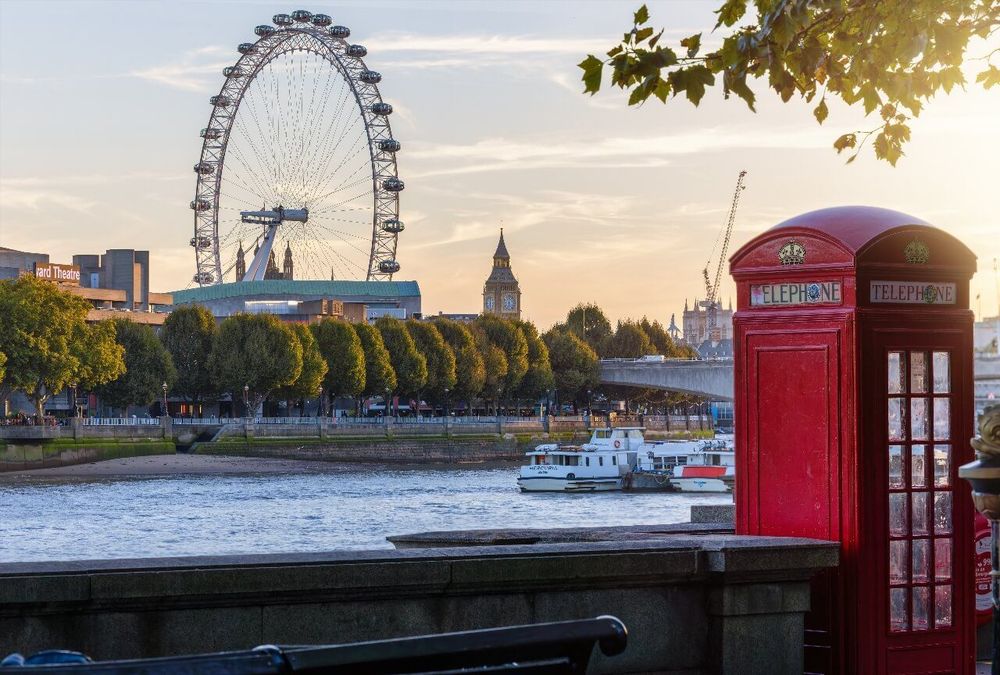
It's an observation wheel installed on the south bank of the Thames, facing the Westminster Parliament. Technically, it's a continuously rotating cantilever wheel, meaning the structure is only supported on one side, unlike a classic fairground wheel. This architectural feature partly explains its recognizable silhouette in the London panorama.
The wheel measures 120 meters in diameter and has 32 air-conditioned glass capsules, one for each of Greater London's 32 boroughs. The capsules are numbered up to 33, with number 13 traditionally omitted. Each capsule can accommodate up to 25 people and continuously pivots on itself to remain horizontal throughout the rotation. A complete tour lasts about 30 minutes.
Now managed by Merlin Entertainments, the monument has successively been called "British Airways London Eye," "EDF Energy London Eye," and "Coca-Cola London Eye" according to sponsorship periods, but Londoners continue to simply call it "the Eye."
History: From the Millennium Wheel to London Icon
The idea was born from a 1993 competition launched by The Sunday Times and the Architecture Foundation: to design a monument to celebrate the turn of the millennium. Among hundreds of submitted projects, that of architects David Marks and Julia Barfield, a couple both in life and professionally, caught attention. Their giant wheel was initially refused due to lack of public funding. No matter: the duo financed it themselves and convinced British Airways to sponsor the project.
Construction began in 1998 on the Thames banks. The technical challenge was colossal: the wheel had to be assembled flat on the river, on floating pontoons, before being slowly raised to vertical. The lifting operation, scheduled to last a few hours, turned into several days due to unfavorable winds and poorly tensioned cables. The wheel was finally put in vertical position on October 10, 1999.
The public opening was scheduled for December 31, 1999, with great fanfare. It only took place on March 9, 2000, after several months of additional safety testing. Despite this laborious start, success was immediate and massive. What was meant to be a temporary five-year installation became permanent in 2002, after London authorities refused to consider its demolition.
Since then, the wheel has weathered two economic crises, a global pandemic, and the radical evolution of London's architectural landscape, with The Shard rising to 309 meters right across, modifying the skyline that the wheel had helped define.
Architecture and Design: The Dizzying Numbers
The wheel's dimensions are dizzying, but it's putting them in context that gives them full meaning. The wheel weighs 2,100 tons, roughly equivalent to 17,000 adult passengers boarding simultaneously. The central axis, called "the hub," measures 23 meters long and weighs 330 tons alone. Construction required 1,700 tons of steel.
The 32 capsules are manufactured in Italy by Poma, a company specializing in Alpine cable cars. Each is mounted on a counterweight system that keeps it horizontal at all times, regardless of the wheel's position. The rotation is so slow, about 0.9 km/h, that the wheel doesn't stop for passengers to board under normal circumstances. Visitors get on and off while moving, and people with reduced mobility or accompanying strollers benefit from a complete stop on request.
The whole thing rests on two A-frame pylons anchored in the bank, designed to withstand winds of over 100 km/h. The foundations go down more than 30 meters below ground level, into London's clay layers.
The View From the Capsules: What You'll See
On clear days, which isn't guaranteed in London, let's be honest, visibility from the top reaches 40 kilometers in all directions. On ordinary days, count rather on 20 to 25 kilometers, which is more than enough to identify all the essential landmarks.
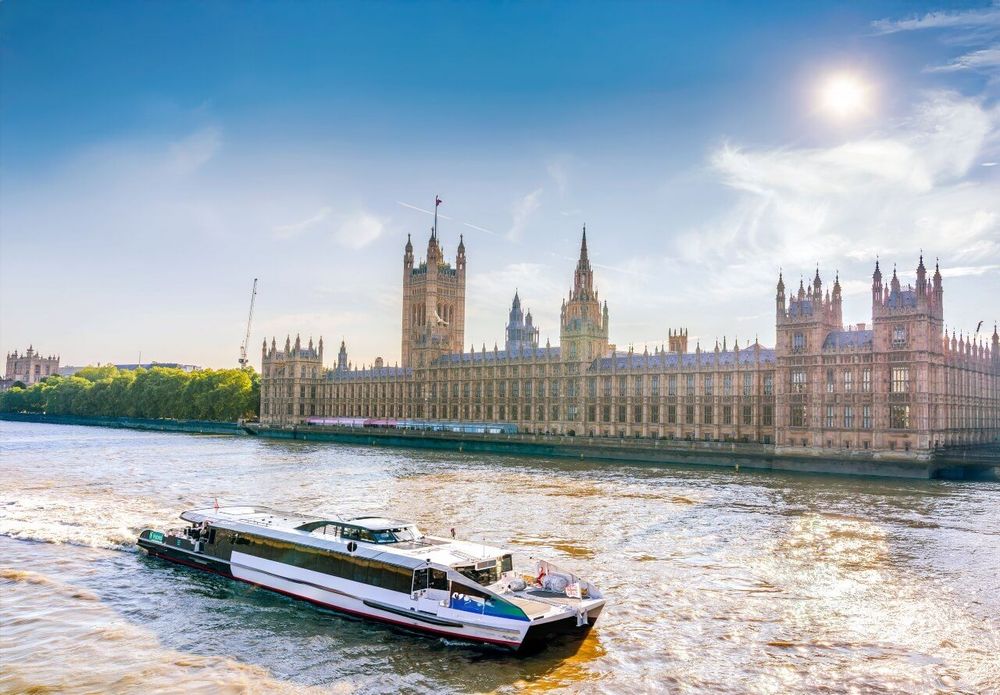
Facing you to the north, the Palace of Westminster (Big Ben and the House of Commons) is practically within reach, less than 500 meters as the crow flies. To the east, St. Paul's Cathedral by Christopher Wren stands out against the City's skyscrapers, with The Shard to your right dominating everything with its 95 floors. Further east, on clear days, you can make out the tower cluster of Canary Wharf.
To the west, Buckingham Palace is visible, surrounded by the immense green of Green Park and St James's Park. On fine days, you also glimpse Windsor Castle on the horizon, about thirty kilometers away.
The Thames serpentines beneath your feet. You count the bridges one by one: Waterloo Bridge right next to you, then Hungerford Bridge with its two illuminated pedestrian walkways in the evening, then Westminster Bridge with green arches. Below, cruise boats look like toys.
A tip: odd-numbered capsules (east side) offer a slightly clearer view of Big Ben at departure. Even-numbered capsules face more toward South Bank. In practice, the capsule rotates on itself, so everyone sees everything, but the starting angle changes the first few minutes' experience.
In the evening, the view changes nature. The Parliament lights, reflections on the Thames, the illumination of Tower Bridge in the distance: it's another city that opens beneath your feet. Many visitors consider this nighttime slot the most memorable, and it's often less crowded than afternoon periods.
Tickets: Prices, Types and Where to Buy
2026 prices vary according to ticket type and booking time. The golden rule is simple: booking online in advance consistently costs less than buying on-site, and often avoids a 30-45 minute wait in high season.
Standard ticket: from £29 for an adult online (up to £39 at the ticket office on the same day), from £26 for a child (2-15 years). Under 2s enter free. This ticket gives access to a specific time slot, plan to arrive 10 minutes before your time.
Flexi Fast Track ticket: from £49 adult online. It allows you to show up anytime during the day, without a fixed slot, while benefiting from a priority line. Ideal if your schedule is packed and you don't want to be slave to a timetable.
Fast track / skip-the-line ticket: from £44 online (£54 at the ticket office). It allows you to access a dedicated line, significantly faster in high season (July-August, spring weekends).
Champagne Experience: from £49 adult online. Includes a flute of Moët champagne during the rotation. The effect is real, there's something pleasant about holding a glass while contemplating Big Ben. This ticket also offers slightly priority boarding access.
Combination packages: the wheel is often sold in bundles with Madame Tussauds, the Dungeons, or The Shard. If you're planning several of these attractions, combinations can save 30 to 40% compared to separate purchases.
Where to buy? Directly from the attraction's official website. Avoid unofficial third-party resellers, the displayed prices seem attractive but cancellation conditions are often unfavorable.
Skip-the-Line and Priority Options
In high season (July-August and during British school holidays), waiting lines can exceed 45 minutes to an hour, even with a timed ticket. Several options help avoid this ordeal.
The fast track option integrated into the ticket is the most direct. A separate line, accessible via a dedicated gate, reduces waiting to 5-10 minutes in most cases. Outside peak periods, the difference from the standard line is less marked.
The champagne tickets also offer slightly priority access, as groups board in a separate waiting area, more comfortable than the normal line.
Important note: fast track speeds access to the boarding area, but doesn't guarantee an empty capsule. You'll always share the capsule with other visitors, unless you've booked an entire private capsule.
Private Experiences and Champagne Tasting
For special occasions, the wheel offers completely privatized experiences. A private capsule for a complete rotation costs around £700 to £900 and can accommodate up to 25 people. It's the choice for many London marriage proposals, the view lends itself to it.
There's also a "Private Dining" formula where a rotation is accompanied by onboard catering service, with customizable menus. These experiences must be booked several weeks in advance.
For something less spectacular but equally memorable, champagne tasting remains the ideal intermediate option: slightly priority line, Moët flute included, access to a separate more comfortable waiting area.
Hours and Best Time to Visit
The wheel opens every day of the year, except December 25. Hours vary by season:
- Low season (October-March): generally 11am-6pm weekdays, 10am-8pm weekends
- Mid season (April-June, September): 10am-8pm daily
- High season (July-August): 10am-9:30pm, sometimes until 10pm during summer holidays
The best time slot to avoid crowds is morning right at opening (10am-11am) on weekdays, outside school holidays. Second option: the last rotation of the day, less crowded as many visitors leave after 8pm.
Weather strongly influences the experience. Maximum view is obtained in partly cloudy but fog-free weather, uniform skies (dense gray or uniform blue) give less depth to panoramas. Days after rain, when the air is washed and contrasts are strong, are often best for photography.
Avoid July and August weekends if crowds bother you. Prefer British bank holidays outside summer: the movement is significant but more predictable.
How to Get There
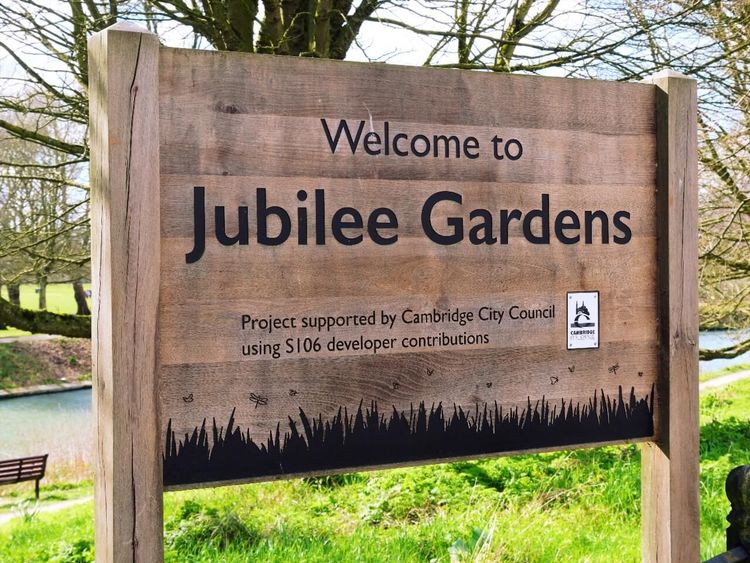
The attraction is located on the south bank of the Thames, right in central London, just next to Jubilee Gardens on Belvedere Road.
By tube: the nearest station is Waterloo (Bakerloo, Jubilee, Northern and Waterloo & City lines), about 5-7 minutes walk. Westminster station (Circle, District and Jubilee lines) is on the north bank, crossing Westminster Bridge takes 10 minutes but offers a beautiful view of the Thames and the wheel itself.
By bus: lines 77, 381 and 388 stop on Belvedere Road.
On foot from nearby monuments: from Tate Modern, count 15 minutes along the banks. From the National Gallery on Trafalgar Square, cross Hungerford Bridge (10-12 minutes). From Westminster, 10 minutes via the eponymous bridge.
By boat: Thames Clipper offers river connections that stop at Waterloo Millennium Pier, 3 minutes walk from the London Eye. It's the most spectacular way to arrive. The London Eye is also a stop on our audio-guided tour of London, as is Trafalgar Square.
What's Around the London Eye
The wheel's strength is also its neighborhood. South Bank is one of London's densest cultural areas, and a wheel visit naturally fits into a half-day or full day on the banks.
The Tate Modern is 15 minutes walk east, one of the world's most visited contemporary art museums, and entry to permanent collections is free. Its turbine hall on the ground floor permanently houses monumental installations.
Just behind the wheel, County Hall houses several attractions: SEA LIFE London Aquarium and the Salvador Dalí exhibition. The building itself, former London City Hall, is impressive, its marble corridors and converted halls are worth a look even without paying admission.
The South Bank Market (between Hungerford Bridge and Blackfriars Bridge) offers international street food stalls, secondhand books and artisanal products every weekend. It's an excellent option for lunch before or after your ride.
The National Theatre (Upper Ground, London SE1 9PX, rated 4.7/5 on Google for 9,773 reviews) is 5 minutes walk. Even if you don't have tickets for a show, its ground floor bar is open to all. Further on, the BFI (British Film Institute) regularly offers free screenings in its halls.
For walking enthusiasts, the pedestrian path along the Thames eastward, passing under Blackfriars Bridge arches, past Tate Modern, to Borough Market and Tower Bridge, is one of the capital's most beautiful. Count 45 minutes of leisurely walking. If you want to deepen your city discovery, the Ryo audio guide is available to explore London's streets and monuments with commentary on the history and architecture you encounter along the way.
London Eye With Children
The ferris wheel is generally very family-friendly. The moving boarding, as the wheel rotates continuously, may intimidate some children. Reassure them: the speed is minimal (less than 1 km/h) and you just need to take a big step. If in doubt, ask for a complete stop at entry.
Children under 2 years enter free. For 2-15 year olds, the child rate is slightly lower than the adult rate (from £26 online). An adult must accompany any child under 16.
During rotation, capsules have a central bench and large windows at children's height, no need to lift little ones for them to see. The partial glass floor (a transparent section at foot level) provokes varied reactions: some children love it, others prefer to stay away.
Bringing binoculars is an excellent idea: spotting monuments together on the panorama and naming them turns the rotation into an observation game. The Ryo app also offers family-friendly content to explore London, with anecdotes and treasure hunts around the city's historical monuments.
Practical Tips Before You Go
Always book in advance. Even in low season, preferred time slots (10am, 11am, 6pm, 7pm) fill up quickly. Buying on-site often forces you to take the next available slot, sometimes two hours later.
Check the weather the day before. If a day of dense fog is forecast, it may be worth adjusting your slot. Flex tickets allow you to choose your time on the morning itself.
Arrive 15 minutes before your slot. After missing your slot, you lose your place and will have to buy a new ticket or pay a supplement. The grace period is very limited.
No large suitcases. Bulky luggage is prohibited in the capsules. Luggage storage is available at Waterloo station.
Photography is free and encouraged. The glass capsules give sharp images without annoying reflections if you press your lens against the wall. Evening light, just before sunset, gives the best conditions.
Dress in layers. Capsules are air-conditioned in summer and heated in winter. A light jacket is recommended even in summer.
FAQ
How long does one rotation of the ferris wheel last?
A complete rotation lasts about 30 minutes. To this, you must add the waiting time at the entrance (variable according to crowds and your ticket type) and boarding itself, which takes a few seconds since the wheel doesn't stop. Count about 45 minutes to 1 hour on site from your arrival until departure.
Is the London Eye worth the ticket price?
It depends on your expectations. For the view of London, yes, the panorama from the capsules is hard to match in the city (The Shard offers a higher view but from a single fixed point). For an immersive or historical experience, it's more limited. It's primarily a visual experience and symbol. If panoramas excite you, the ticket is justified. If you're looking to understand London's history in depth, other places will be more meaningful.
Can you visit the ferris wheel in bad weather?
Yes, the capsules are fully enclosed and air-conditioned. Rain doesn't affect the visit itself. However, dense fog significantly reduces visibility, in extreme cases, you'll only see a few hundred meters. The official site doesn't refund for unfavorable weather (except closure on their part), but Flex tickets allow you to change your time slot on the day.
How high is the London Eye?
The highest point reaches 135 meters above Thames level. This is the height of the highest pod at the top of the wheel. The wheel's diameter is 120 meters, and the wheel rests on pylons that slightly elevate it above ground level.
Is there a restaurant or bar on board?
There's no restaurant integrated into the wheel itself. The champagne formula (Champagne Experience) offers a flute of Moët during the rotation, that's all. However, the adjacent County Hall houses several restaurants and bars. The South Bank area, just steps away, offers many street food options and restaurants, particularly along the banks between Hungerford Bridge and Tate Modern.
Can you cancel or modify your ticket?
The standard fixed-time slot tickets are generally non-refundable, but can be modified (time slot change) up to 24 hours before the visit according to current conditions. Flex tickets are more flexible. Champagne and private capsule tickets have their own conditions, read the terms and conditions carefully before buying. In case of attraction closure due to London Eye itself (technical problem or extreme weather), a full refund is offered.
Conclusion
The London Eye isn't simply a tourist attraction: it's one of the most striking viewpoints in a city that already has many. Thirty minutes in a capsule is enough to understand London's geography in a way that no plan or map can reproduce, the bridges, parks, cathedrals and neighborhoods that stretch to the horizon.
Book in advance, choose your time slot carefully (early morning or evening for light and crowds), and let yourself be surprised by the soothing slowness of the rotation. And if you want to extend the adventure on the ground, the Ryo audio guide is there to accompany you through London's streets and neighborhoods with the same curiosity you'll have developed up there, 135 meters above the Thames.
À lire également