© Shutterstock
 Votre guide Ryo
History of Mulhouse: From the Independent Republic to the Industrial City (2026)
For nearly three centuries, Mulhouse was neither French nor German, and barely Alsatian. Surrounded by lands belonging to the kingdom of France from 1648, the city lived as an independent Republic, allied with the Swiss cantons, until it voted for its own union in 1798. This history of Mulhouse, shaped by asserted independence and then chosen allegiances, explains why the city long bore the nickname of the French Manchester rather than that of just another Alsatian town. If the idea of tracing a city's past by walking its streets appeals to you, the Ryo audio guide tour of the historic centre of Las Vegas tells an inverse trajectory: a city born of a bet within a few decades, where Mulhouse took more than a thousand years to build itself.
Here you will discover why a border city preferred to ally itself with Switzerland rather than with the kingdom of France for two and a half centuries, how three industrialists made Mulhouse the French capital of printed fabric as early as 1746, why some streets in the city centre still bear traces of the German annexation of 1871, and what remains today of this past in the museums, painted facades and even in the university that took up the torch of local textile chemistry.
The Origins of Mulhouse: A Village Between the Rhine and the Ill
The name Mulhouse appears for the first time in a document dating from 803, in the Latinised form Mulinhusen. The etymology leaves little room for doubt: Mühle, the mill, and Hausen, the houses. At that time, the site was merely a modest agricultural hamlet settled on a marshy branch of the Ill, protected by its waters rather than by fortifications. Nothing in those early centuries foreshadowed the place the city would one day occupy in French industrial history.
The village grew slowly around a mill and a chapel, at the crossroads of paths linking the Rhine to the Vosges foothills. A weekly market was established there, then an annual fair attracted merchants from the surrounding area. In the 12th century, Mulhouse belonged to the imperial lands and depended directly on the Bishop of Strasbourg before passing under the authority of the Habsburgs, who entrusted its administration to imperial bailiffs.
The decades preceding the 14th century were not peaceful. Local lords repeatedly attempted annexation and imposed abusive tolls on the trade routes crossing Mulhouse's territory. The imperial charter of 1308 directly responded to this pressure: Emperor Henry VII of Luxembourg granted Mulhouse the status of free imperial city, with administrative autonomy, the right to mint local currency and to administer justice.
This status changed everything. The small rural town became a city in its own right, with its own ramparts, its own municipal council and the ability to negotiate directly with the emperor rather than with an intermediary lord. This autonomy initially benefited agriculture and domestic weaving, a household activity that would later become the city's industrial speciality: records from the period already mention linen weavers settled along the Ill, whose waters were used for bleaching cloth.
If you walk today on the Place de la Réunion (Place de la Réunion, 68100 Mulhouse, rated 4.5/5 on Google with 1.3K reviews), you are treading the approximate location of this first medieval town. Nothing of the original village has survived the fires and successive reconstructions, but the layout of the streets around the square retains the memory of that initial settlement, clustered around the water source and the market.
Mulhouse, a Free Imperial City in the Middle Ages
The status of free imperial city was not enough to guarantee security. To strengthen its position, Mulhouse joined the Décapole in 1354, a league of ten imperial cities in Alsace that included Strasbourg, Colmar and Sélestat. The alliance pooled military and diplomatic resources against the ambitions of the great noble houses and, later, against the raids of demobilised mercenaries who ravaged the region in the 15th century.
Within its ramparts, the city organised itself around an elected magistrate and trade guilds that carried considerable weight in municipal decisions: weavers, tanners, butchers and haberdashers each had a representative body. This organisation, closer to the model of the Swiss cities than to French feudalism, partly explains the subsequent rapprochement with the Helvetic Confederation.
At the turn of the 16th century, Mulhouse had approximately 3,500 inhabitants within its walls, protected by ramparts pierced by four main gates. The city lived primarily from the trade in grain, wine and linen cloth, exchanged at fairs that attracted merchants from Basel, Freiburg im Breisgau and the Rhône valley. This crossroads economy already shaped a mentality oriented towards exchange rather than the peasant self-sufficiency typical of the neighbouring Alsatian countryside.
Tensions with the other members of the Décapole multiplied from the 15th century onwards, however. Mulhouse, more oriented towards the Upper Rhine and the Swiss cantons than towards Strasbourg, felt less and less represented in a league dominated by Strasbourg's interests, particularly around customs rights on the Ill and the Rhine. In 1515, after more than a century and a half of cohabitation, Mulhouse officially left the Décapole — a deliberate strategic choice: to turn definitively towards Basel and the Swiss cantons rather than towards the Alsatian and French powers.
The region was not spared the upheavals of the 16th century. In 1525, the Peasants' War set Upper Alsace ablaze: columns of peasants revolting against seigneurial dues besieged several towns in the area. Mulhouse, well fortified and recently allied with the Swiss cantons, escaped sacking but took in refugees fleeing the surrounding countryside, proof that its special status was already playing a protective role. In the following section you will see how this same turning point of 1515 was accompanied by an equally decisive religious change.
The Protestant Reformation and the Turning Point of 1523
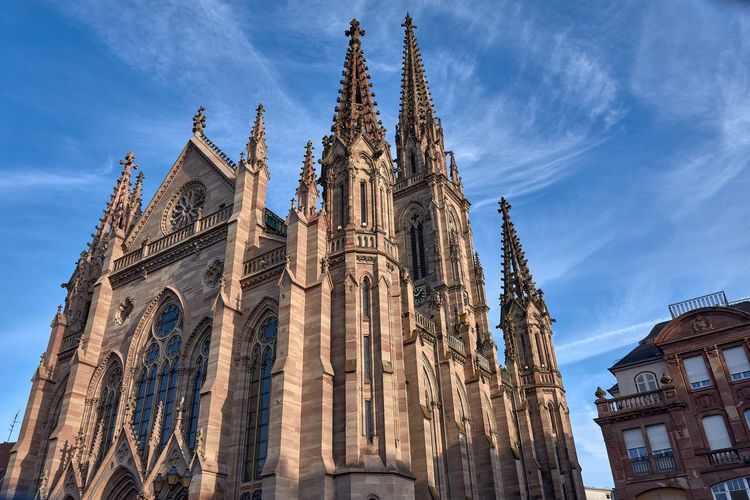
In 1523, the council of Mulhouse authorised Reformed preaching in the city's churches, barely a year after Zurich had come under the influence of Zwingli. The proximity to Basel, where Oecolampadius was leading an active Reformation, weighed heavily in the decision. The Catholic Mass was not definitively abolished until 1529, however, when the Grand Council settled the matter just a few days after Basel, and the property of the secular clergy then passed to the municipal administration.
This religious choice was by no means trivial politically. By adopting the Swiss rather than the Lutheran version of the Reformation, Mulhouse distanced itself further from the Alsatian cities that had remained Catholic or turned to German Lutheranism, and drew mechanically closer to the Reformed cantons of Basel, Zurich and Bern. The confessional shift accompanied and reinforced the diplomatic shift already begun after the departure from the Décapole.
Unlike other imperial cities, Mulhouse did not experience a major internal religious war: the conversion came about by council decision, without any notable armed conflict within the walls. This religious stability, rare in 16th-century Europe, would contribute to the reputation for neutrality and tolerance that the city would cultivate over the following two centuries, particularly towards French Huguenots and Alsatian Protestants in conflict with their Catholic lords.
The Republic of Mulhouse, Allied with the Swiss Cantons
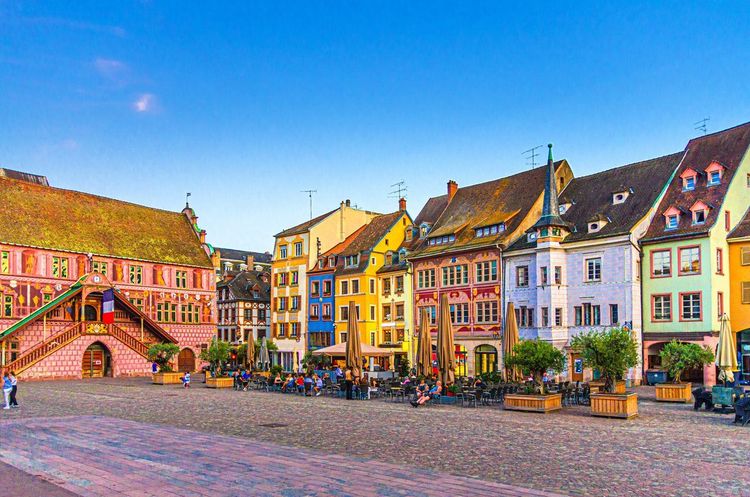
That same year, 1515, Mulhouse signed a treaty of co-citizenship with Basel and Solothurn, quickly extended to the other Swiss cantons. This was not an accession to the Helvetic Confederation — Mulhouse would never become a full member — but a defensive and commercial alliance that earned the city Swiss military protection in exchange for diplomatic support and commercial facilities. Thus was born what historians call the Republic of Mulhouse, an independent city-state at the heart of Alsace.
The timing could not have been better. In 1648, the Treaty of Westphalia, which ended the Thirty Years' War, ceded most of Alsace to the kingdom of France. Mulhouse, alone or almost so among the region's cities, retained its independence thanks to its Swiss alliance: the Republic became a neutral enclave surrounded by French territory, a diplomatically almost unique situation in Western Europe at that time.
This neutrality had considerable economic consequences. While the surrounding Alsace suffered the ravages of the Thirty Years' War and then the wars of Louis XIV, Mulhouse largely escaped passing troops and requisitions. Protestant merchants and craftsmen persecuted elsewhere, notably after the revocation of the Edict of Nantes in 1685, found refuge in a city that recognised neither the authority of the king of France nor that of the Catholic bishop of Strasbourg.
The Republic organised itself around a Grand Council and a Small Council, composed of guild representatives, who voted on laws, managed finances and administered justice. Mulhouse minted its own currency, maintained a small garrison and negotiated its own trade treaties, notably with the Rhine cities and the Swiss cantons. Some diplomatic documents of the period even referred informally to the city as a twenty-third canton, although this status never had any legal existence within the Confederation.
This quiet prosperity also attracted skills from elsewhere. Swiss, Alemannic and Huguenot merchant and craftsman families settled in Mulhouse during the 17th century, bringing with them dyeing, weaving and international trade techniques that were unknowingly preparing the ground for the industrial boom of the following century. The population of the Republic thus grew from approximately 4,000 inhabitants in 1650 to more than 6,000 on the eve of the French Revolution — modest but continuous growth, driven by skilled immigration rather than by birthrate alone.
Symbolically, the Republic maintained an ambiguous relationship with its French neighbours. Mulhouse's customs records treated the kingdom of France as a leading commercial partner — the main outlet for locally produced cloth and grain — while maintaining a strict political border. You can probably already sense the paradox: in the 18th century, deep in French territory, a city continued to live according to its own laws, its own official religion and its own alliances, just a few kilometres from the garrisons of King Louis XV. This paradox would last until 1798, nearly a century and a half after the rest of Alsace had become French.
A Border Position That Shaped Its Destiny
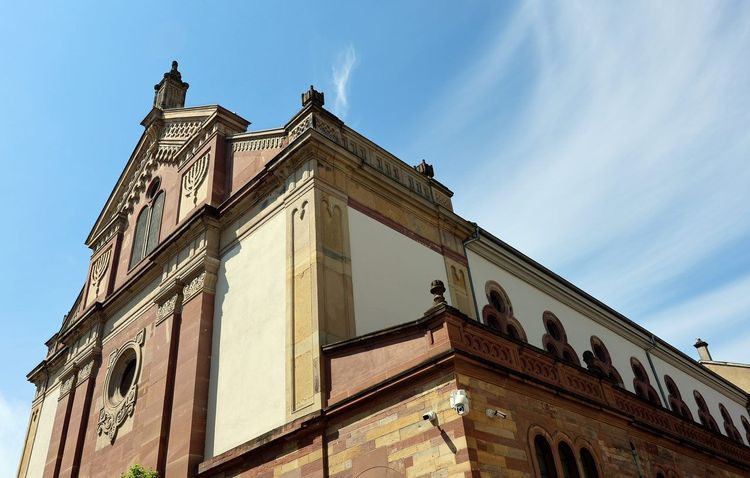
This particular history is not just a matter of treaties: it also comes down to geography. Mulhouse is located approximately 30 kilometres from Basel in Switzerland, and less than 40 kilometres from the current German border, in a zone where the Rhine has for centuries separated different political cultures without ever truly separating economic exchanges.
This proximity explains why the city was able, at different periods, to ally with the Swiss cantons, undergo German annexation, and then become French again without its daily life changing radically in rhythm. Fairs, marriages and merchant networks have always crossed these borders more easily than treaties would suggest. Even today, a resident of Mulhouse can work in Basel in the morning and come home for lunch — a cross-border reality inherited directly from this long history.
Union with France in 1798
The French Revolution upset the balance that had allowed the Republic to survive for two and a half centuries. From 1792, revolutionary France abolished enclaves and rethought its customs borders: Mulhouse's fabrics, previously exported duty-free to a neighbouring kingdom, suddenly found themselves taxed as foreign goods. For an economy already oriented towards fabric printing and the textile trade, losing easy access to the French market quickly became unsustainable.
After several years of negotiations and economic pressure, the Republic's council organised a vote. On 4 March 1798 (15 Ventôse Year VI in the revolutionary calendar), the citizens of Mulhouse chose to unite their city with France. The act was presented, then as now, as a freely consented decision rather than an annexation: it was Mulhouse that asked to join the French Republic, not the other way around.
The city's central square, until then a simple market square, took the name of Place de la Réunion to commemorate this founding event — a name it still bears today. The choice was not merely symbolic: it corresponded to an economic wager. By joining the French customs territory, Mulhouse's manufacturers finally gained unrestricted access to one of the largest internal markets in Europe, at the very moment when the industrial revolution was about to transform their activity profoundly.
The Industrial Revolution and the Rise of the Textile Industry
The industry that made Mulhouse's reputation did not date from the Revolution: the industrial history of Mulhouse began in 1746, fifty years before union with France. Three industrialists, Samuel Koechlin, Jean-Jacques Schmalzer and Jean-Henri Dollfus, founded the city's first printed calico manufactory, producing the cotton cloths printed with colourful patterns that were highly sought after throughout Europe.
The timing was no coincidence. Since 1686, the kingdom of France had flatly banned the production and import of printed cotton cloth, to protect its silk and wool manufacturers. This ban would not be lifted until 1759. For more than seventy years, the independent Republic of Mulhouse was entirely exempt from this French law: it could produce, print and sell freely what France forbade at home. This legal anomaly, directly linked to the city's independent status, explains why Mulhouse's textile industry gained such an advantage over its French competitors even before Mulhouse became French.
The union of 1798 changed the situation again, but this time for the better: Mulhouse's manufacturers, already experienced and competitive, gained duty-free access to the entire French market at the precise moment when the industrial revolution was about to transform their activity in depth. The growth that followed was spectacular. In 1826, the city's industrialists founded the Société Industrielle de Mulhouse, an association that funded technical research, vocational training and mechanical innovation — a rare model for its time. By the middle of the century, the urban area had several dozen printing mills and was exporting its cloth as far as South America and the Ottoman Empire.
Fabric printing brought an entire mechanical industry in its wake. The Koechlin family, already present in textiles, founded machine-building workshops that would become the Société Alsacienne de Constructions Mécaniques (SACM), manufacturing locomotives, textile machines and later automobiles. Within a few decades, Mulhouse ceased to be a textile city and became a complete industrial hub, comparable in its diversity to the great British manufacturing cities.
This industrial growth came with a social cost that Mulhouse's industrialists attempted, with mixed success, to mitigate. As early as 1853, the Société Mulhousienne des Cités Ouvrières built entire districts of individual houses for textile workers, complete with gardens and access to property on credit. The model, studied throughout industrial Europe at the time, prefigured the garden cities of the 20th century and still earns certain Mulhouse neighbourhoods heritage recognition today.
The city's population exploded under the effect of this industrialisation: from approximately 6,000 inhabitants in 1798, Mulhouse exceeded 60,000 inhabitants within its walls by the end of the 19th century, driven by the massive influx of workers from the Alsatian countryside and neighbouring Switzerland.
Mulhouse, the "French Manchester"
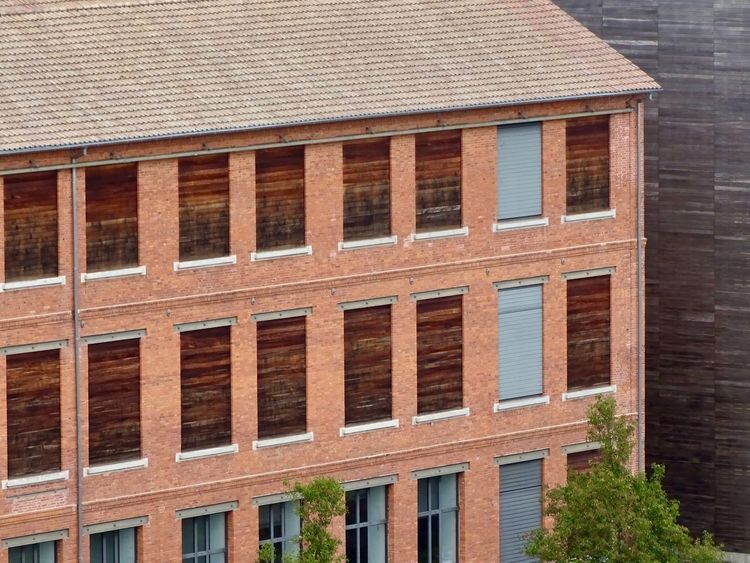
The nickname of French Manchester, attributed to Mulhouse by 19th-century travellers, is no tourist exaggeration. Like the British city, Mulhouse concentrated spinning, weaving, printing and textile mechanics in the same place, with a productivity and factory scale unrivalled in France at that time. In the 1860s, the city and its immediate surroundings ranked among the world's foremost centres for fabric printing, exporting throughout Europe and as far as the Americas.
This textile specialisation almost mechanically gave rise to a local chemical industry: dyeing and fixing colours on cotton required increasingly sophisticated dyes. As early as 1822, a School of Chemistry opened in Mulhouse to train the technicians that the manufacturers needed, several decades before industrial chemistry became a recognised discipline elsewhere in France. This school is directly at the origin of the scientific vocation that the city would retain long after the decline of the textile industry.
The social price of this success remained real. Working days in the spinning mills often exceeded twelve hours, child labour remained common until the 1840s, and cholera epidemics struck hard at the most densely populated working-class districts. The workers' housing estates mentioned above partly addressed these tensions, but initially only a minority of employees — often the most skilled — benefited from them.
You will still encounter traces of this golden age of textiles today as you stroll through the city centre: facades of former trading houses, industrialists' private mansions, converted warehouses. The Musée de l'Impression sur Étoffes (14 Rue Jean-Jacques Henner, 68100 Mulhouse, rated 4.3/5 on Google with 595 reviews), housed since 1833 in the former premises of the Société Industrielle de Mulhouse, holds one of the world's richest textile collections, with more than six million samples of printed fabrics, a cultural stop that pairs well with Ryo's Colmar audio-guided tour if the Alsace itinerary stretches across both towns.
The German Annexation, 1871–1918
France's defeat at the hands of Prussia in 1871 caught up with Mulhouse a mere seventy-three years after its voluntary union with France. The Treaty of Frankfurt, signed in May 1871, ceded Alsace and part of Lorraine to the new German Empire. Mulhouse became Mülhausen, a city of a Reichsland administered from Berlin, without its inhabitants having been consulted this time.
The German administration rapidly Germanised public space: street signs translated or renamed, German-language teaching imposed in schools, local institutions supervised by civil servants from across the Rhine. A significant portion of the population — between 10 and 15% according to estimates by local historians — chose the option provided for in the treaty and emigrated to France rather than become German subjects, an exodus known as the optants.
Paradoxically, this annexation did not break Mulhouse's industrial economy. Integrated into the vast internal market of the German Empire, the local textile and mechanical industry found new outlets, while investment in railway infrastructure benefited the region. The city continued to grow demographically and industrially throughout the period, even if cultural identity remained fiercely contested between those attached to France and those favouring more complete integration into Germany.
The outbreak of the First World War briefly brought Mulhouse back into French hands. On 7 August 1914, French troops under General Bonneau entered the city — one of the very first offensives of the conflict on the Western Front. The liberation lasted only a few days: a German counter-offensive retook the city by 10 August, and Mulhouse would remain German until the end of the war.
The definitive return to France came with the armistice of 11 November 1918. As in 1798, the transition took place without major fighting within the walls, but this time amid an atmosphere of intense popular rejoicing, widely documented by the local press of the time, which described streets bedecked with tricolour flags that had been secretly kept for nearly half a century.
If this history of shifting borders between France and Germany intrigues you, the Ryo team has also recounted, in our Ryo article on the history of the Berlin Wall, another episode where a line on a map changed the daily lives of thousands of inhabitants.
The Two World Wars
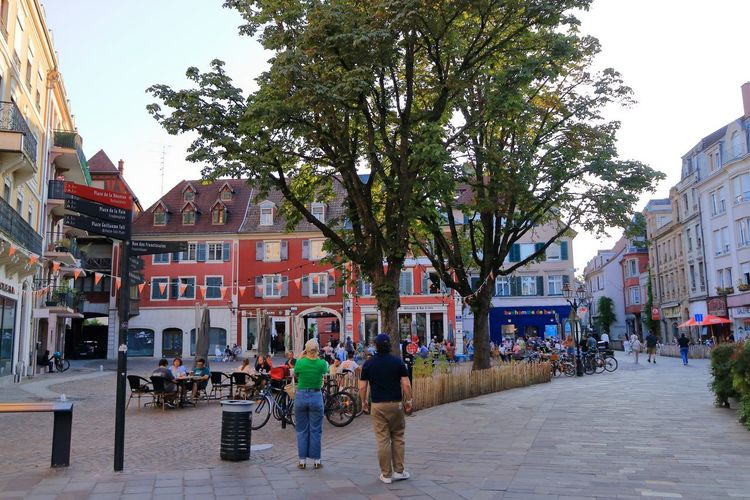
The inter-war period allowed Mulhouse to restore French as the common administrative language, without erasing a century of cultural Germanisation that left lasting traces in surnames, architecture and even certain local linguistic usages. The city regained its status as sub-prefecture of Haut-Rhin and continued its industrial development, now oriented towards mechanics and chemistry as much as pure textiles.
The Second World War reopened the same wound. After the armistice of 1940, Alsace-Moselle was de facto reannexed by Nazi Germany, outside any recognised international legal framework. Mulhouse once again became Mülhausen, French shop signs disappeared once more, and thousands of young Alsatians — among them many from Mulhouse — were forcibly conscripted into the Wehrmacht under the controversial designation of malgré-nous (against our will).
Liberation came late, in the autumn of 1944. The 1st French Army under General de Lattre de Tassigny entered Mulhouse on 21 November 1944, after fierce fighting in the region, while Belfort and Colmar held out for several more weeks. The city emerged from the war wounded but spared the massive destruction suffered by other Alsatian cities.
These two conflicts, separated by barely a generation, left a lasting imprint on local collective memory: bilingual war memorials, commemorative plaques in several languages, and a keen awareness, passed down from generation to generation, of living on a border that history has shifted more often here than almost anywhere else in France.
Reconstruction, the University and Post-War Renewal
The second half of the 20th century dealt Mulhouse an economic shock comparable, in its local scale, to that experienced by other European textile regions. Competition from cheaper imported textiles precipitated the gradual closure of spinning mills and printing workshops from the 1960s onwards. Several thousand industrial jobs disappeared within a generation, forcing the city to completely rethink its economic model.
The reinvention rested on two pillars. First, the automotive industry: in the late 1960s, the Peugeot group established an assembly plant in the immediate vicinity of Mulhouse, which would become one of the region's main industrial employers to this day. Second, higher education: in 1975, the Université de Haute-Alsace was founded in Mulhouse, independent of Strasbourg's university, with a deliberately applied-sciences focus on chemistry and textile materials — in direct lineage from the 19th-century School of Chemistry.
This University of Mulhouse, now home to several thousand students, helps to re-anchor the city in a dynamic of research and innovation rather than mere industrial nostalgia. It hosts notably recognised laboratories in materials science, directly inheriting the local textile and chemical expertise.
In parallel, the city transformed its industrial past into a tourist and heritage asset rather than disowning it. It is during this period that several major museums were born or opened to the public — museums that now define Mulhouse's cultural reputation — a movement of valorisation that the following section details at greater length.
An Industrial Heritage Transformed into Museums
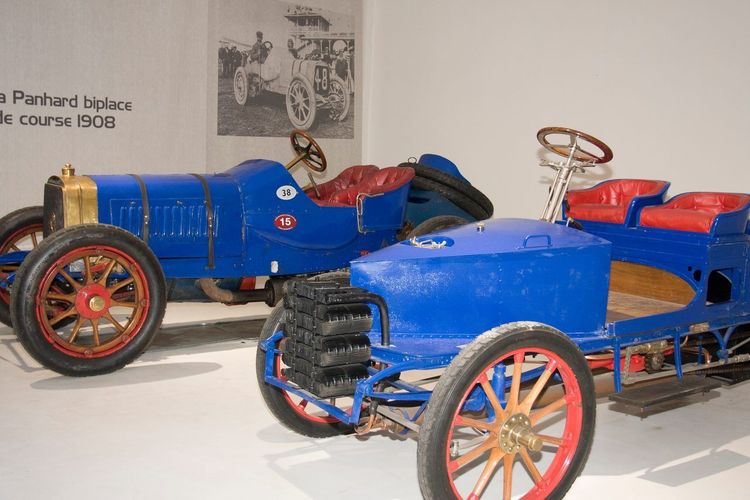
Mulhouse's industrial heritage has not been content to survive in history books: this chapter of Mulhouse's history now fills several of the most visited museums in Alsace. The Cité de l'Automobile, Collection Schlumpf, born out of a judicial seizure in 1977 following the bankruptcy of the Schlumpf brothers' last major textile factories, has since 1982 brought together several hundred automobiles, including the world's largest collection of Bugattis. The irony escapes no one: it was the collapse of one of the last great textile manufacturers that gave the city one of its finest museums.
A few streets away, the Cité du Train, housed in former railway workshops, traces the history of French railways through a hundred period locomotives and carriages — a direct reminder of the industrial and logistical role the city played in the 19th-century rail network.
Electropolis, opened in 1992, completes this triptych by telling the history of electrical energy — yet another nod to a city that has always lived to the rhythm of its machines. Transforming an industrial past into museum heritage is not unique to Mulhouse: our Ryo article on the volcanic museums of Clermont-Ferrand tells a comparable heritage story, applied this time to a geological rather than industrial legacy.
Legends and Popular Tales About Mulhouse
Not all of Mulhouse's stories are documented by charters or treaties. Popular tradition readily recounts the legend of a miller settled on the Ill, whose mill is said to have given its name to the village even before the first written mention of 803 — a tale that historians consider unverifiable but which fits neatly with the actual etymology of the place name.
Another, later legend attributes to the Temple Saint-Étienne a location chosen by the first inhabitants to escape flooding from the Ill, the church having always been built on the highest point of the medieval town. Verifiable or not, this legend of Mulhouse is a reminder of how deeply the city was built in permanent negotiation with the whims of its river, long before 19th-century engineers tamed it with canals and dykes.
What the Streets of Mulhouse Still Tell Us Today
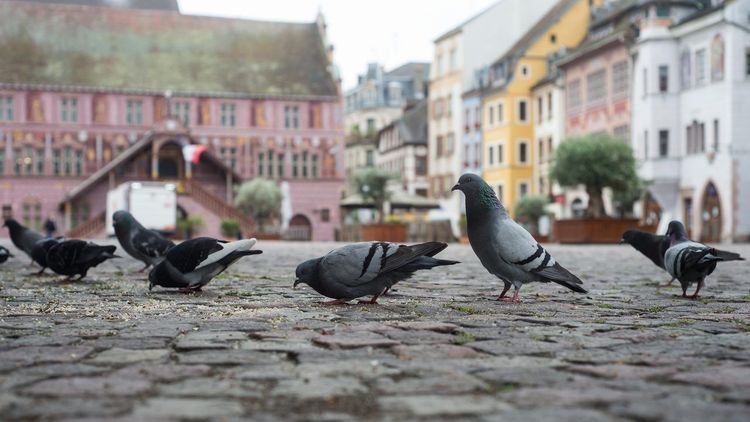
Walking through the centre of Mulhouse is, without knowing it, to read a summary of its past: here, the history of Mulhouse's streets can be read directly from the facades and signs. The Rue du Sauvage, the main commercial thoroughfare, takes its name from an old inn whose sign depicted a wild man — a common medieval motif found well beyond Alsace. Several streets in the centre, meanwhile, bear the names of the great industrial families — Koechlin, Dollfus or Schlumberger — who funded the factories, schools and workers' housing estates mentioned above.
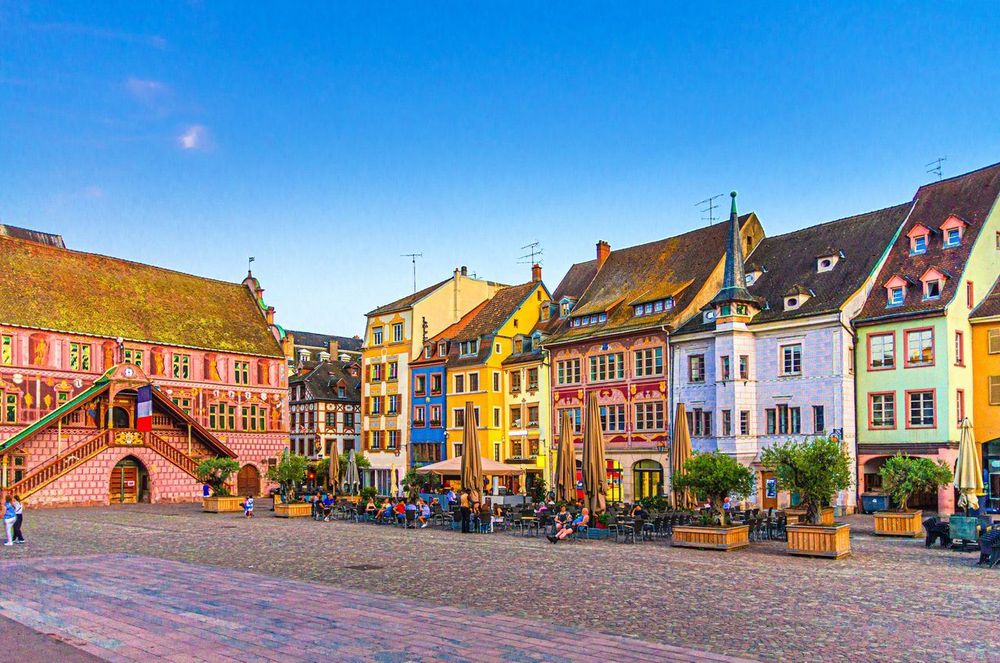
The Hôtel de Ville, with its Renaissance facade painted with allegorical scenes dating from 1552, still occupies its historic position on the Place de la Réunion, directly opposite the Temple Saint-Étienne (Place de la Réunion, 68100 Mulhouse, rated 4.4/5 on Google with 1,642 reviews). The two buildings — town hall and church — have faced each other for nearly five centuries at the heart of a square that has changed its name, its function and its political status far more often than most comparable French city squares.
Other cities have made their streets and museums a continuous narrative of their history: that is also the approach taken in our Ryo article on the history museum of Marseille, which shows how a Mediterranean city also tells its successive layers through its collections.
FAQ
What is the history of Mulhouse in summary?
Mulhouse appears as a village in 803, becomes a free imperial city in 1308, then an independent Republic allied with the Swiss cantons from 1515 to 1798. It votes for voluntary union with France in 1798, experiences a spectacular textile industrial boom in the 19th century, undergoes two German annexations (1871–1918 and 1940–1944), before reinventing itself since the 1970s around the university, the automotive industry and its industrial museums.
What is the Republic of Mulhouse?
It is the name given to the independent city-state that Mulhouse became in 1515, allied by a treaty of co-citizenship with the Swiss cantons of Basel and Solothurn. Having become a neutral enclave in the heart of French territory after 1648, it was governed by a Grand Council and a Small Council until its vote for union with France in 1798.
When and Why Was Mulhouse United with France?
The union took place on 4 March 1798, after several years of economic pressure linked to French customs barriers that penalised Mulhouse's textile trade. The citizens themselves voted for this union, commemorated ever since by the name of the Place de la Réunion, in the city centre.
Why Is Mulhouse Nicknamed the French Manchester?
The nickname comes from the exceptional concentration of textile activities — spinning, weaving, fabric printing and associated mechanical industries — that brought Mulhouse close to the British industrial model as early as the 19th century. The city then became one of the world's leading centres for cotton printing.
Is Mulhouse Close to Germany and Switzerland?
Yes: Mulhouse is located about 30 kilometres from Basel in Switzerland and less than 40 kilometres from the current German border. This tri-border position largely explains the German annexations of 1871 and 1940, as well as the cross-border economic ties that remain active today.
In Which Department Is Mulhouse Located?
Mulhouse is located in the Haut-Rhin department (68), within the Grand Est region, the former Alsace. It is today a sub-prefecture, although it long rivalled the prefecture, Colmar, in terms of population.
What Is the History of the University of Mulhouse?
It is rooted in the School of Chemistry founded in 1822 to train technicians for the local textile industry. The Université de Haute-Alsace, created in 1975 and independent of Strasbourg, continues its applied scientific focus, in chemistry as well as materials science.
Few French cities can claim to have been, in turn, a free imperial city, a Republic allied with Switzerland, a French city, a German city twice over, and then French again, without ever losing the thread of an industrial identity asserted since 1746. The history of Mulhouse, shaped by chosen rather than imposed ruptures most of the time, explains why the city continues to cultivate a singular relationship with its borders, its museums and its own streets.
Mulhouse does not yet have its own Ryo audio guide tour, but the app already allows you to explore the history of other cities shaped, like it, by shifting borders or industrial reinventions. If you feel like continuing this exploration elsewhere in Europe, our Ryo article on the Brussels marathon shows how another city has chosen to bring sport and urban memory into dialogue. In the meantime, the best way to understand Mulhouse is undoubtedly to walk between the Place de la Réunion, the former spinning mills district and the great industrial museums that tell, better than any book, how a Swiss Republic in the heart of France became one of the most industrial cities in the country. The entire history of Mulhouse lies in this persistent contrast between independence and integration.
À lire également