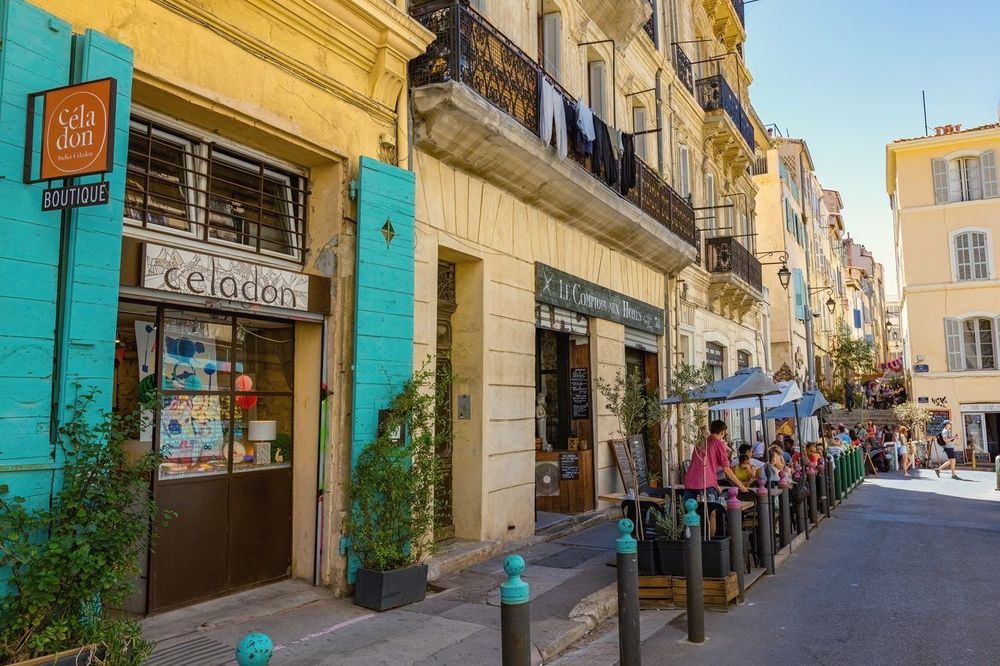
© Shutterstock
 Votre guide Ryo
Marseille History Museum: The Complete 2026 Guide
Beneath the slabs of the Centre Bourse, just metres from the trams that wind along the Canebière, lies one of the most breathtaking archaeological windows in France. The Marseille History Museum is not simply a museum: it is a dive into twenty-six centuries of a city that was, in turn, a Greek trading post, a Roman port, a medieval stronghold and a global commercial metropolis. Two and a half million years of human history in the Mediterranean are condensed here, from prehistoric flint tools to the industrial 19th century.
Whether you are visiting Marseille for the first time or have known the city for years without ever stepping through this museum's doors, prepare to be surprised. The late 2nd-century Gallo-Roman ship preserved in its own gallery — one of the best-preserved in the world — stands alongside mosaics, Greek ceramics and everyday objects that bring the inhabitants of Massalia to life. To extend your day in the Phocaean city, the Ryo audio guide for Marseille then takes you through the streets above the museum, from the Vieux-Port to le Panier. This guide tells you everything: collections, 2026 admission prices, opening hours, how to get there, and what other guides leave out.
The History of the Marseille History Museum
The history of the MHM is inseparable from a fortunate accident. In 1967, during construction work on the Centre Bourse — a large shopping complex north of the Vieux-Port — excavators unearthed Roman remains of an unexpected scale: quays, warehouses and boat hulls. Archaeologists from the Direction des Antiquités Historiques intervened as a matter of urgency. What was meant to be a few weeks of work turned into several years of excavation, revealing one of the best-preserved ancient ports in the entire Mediterranean basin.
The museum first opened its doors in 1983, built into the very basement of the shopping centre, around the in-situ remains. It was a bold concept for the time: visitors literally walked through the archaeological layers, with ancient structures visible beneath their feet. This first museum quickly attracted visitors but soon suffered from an ageing scenography and a lack of space to display the full scope of the discoveries.
The major transformation came in 2013, as part of Marseille-Provence's year as European Capital of Culture. The museum closed in 2009 for a complete four-year renovation. The budget exceeded €15 million. Architect Roland Carta designed a new museography across 3,400 m² of exhibition space — three times the size of the original. When it reopened in June 2013, the MHM took its place among France's leading museums dedicated to urban history. Since then, it has welcomed between 120,000 and 150,000 visitors per year — a respectable figure for a specialist museum, even if it falls well short of the crowds at the nearby MUCEM.
Since 2013, the permanent collections have continued to grow. Preventive excavation campaigns carried out across Marseille in connection with the metropolis's urban expansion regularly yield new pieces. The museum is today managed by the City of Marseille as part of its network of municipal museums, which allows it to maintain an accessible pricing policy.
The Marseille History Museum by the Numbers
Before diving into the details, here are a few key figures to set the scene. 26 centuries of urban history, 3,400 m² of exhibition space, a Gallo-Roman ship from the late 2nd century, more than 300,000 objects in storage and free admission to the permanent collection: that is what awaits you beneath the slabs of the Centre Bourse.
Archaeological Excavations: What Lies Beneath Marseille
Even before entering the museum itself, it is worth understanding what the site represents. The Centre Bourse is built on what archaeologists call the "butte Saint-Laurent" — a slight natural rise that has served as the city's anchor point since its very origins. The excavations carried out between 1967 and 1984 uncovered more than 45,000 m² of stratigraphic remains — that is, remains organised in successive layers corresponding to different periods.
The site's stratigraphy is exceptional. At its base lie traces of human occupation dating back to the Bronze Age (around 1800 BC), well before the arrival of the Phocaeans. Ceramic fragments, hearths and flint tools attest to a Ligurian presence on these heights. These peoples, whom the Greeks would call the Segobriges, were not mere extras in the founding of Massalia: according to the ancient account recorded by Justin, it was the daughter of their chief, Gyptis, who chose the Phocaean navigator Protis as her husband at a banquet, thereby sealing the alliance that allowed the Greeks to establish their trading post.
Above this protohistoric layer, excavations revealed archaic Greek structures dating from the 6th–5th centuries BC: wells, silos and fragments of Attic red-figure ceramics that prove commercial exchanges with Athens. Higher still in the stratigraphy, Roman structures from the 1st to the 3rd century AD dominate: a network of paved streets, peristyle houses and port warehouses directly connected to the quays.
The museum presents a portion of these remains in elevation — that is, exactly as they were uncovered by archaeologists. You can observe sections of the main Roman street, 4.5 metres wide, with its ruts worn into the stone by the incessant passage of carts. Blocks of large ashlar masonry, truncated columns and pillar bases give a sense of the density of ancient Lacydon — the port district — at its height.
An entire room is devoted to excavation techniques and archaeological methodology. Educational panels explain how archaeologists date layers, identify structures and collect and preserve artefacts. This section is often skipped by visitors in a hurry — a mistake: understanding how one "reads" an archaeological floor transforms your perception of everything you see afterwards.
The collections from these excavations now total more than 300,000 catalogued objects, of which only a tiny fraction is on permanent display. The museum's storage facilities constitute a leading scientific heritage, regularly consulted by international research teams.
Ancient Greece: The Origins of Massalia
The museum's first major thematic sequence opens with the founding of Massalia in 600 BC by settlers from Phocaea, a Greek city on the Ionian coast (in present-day Turkey). Marseille is thus one of France's oldest cities, and one of the few whose founding date is known with reasonable precision, confirmed by both literary sources and concordant archaeological data.
The display cases feature Greek ceramics of remarkable quality. Black-figure and red-figure amphorae imported from Athens and Corinth attest to an active commercial network from the 6th century onwards. Massalia was not a simple warehouse: it was a fully-fledged polis, with its own temples, agora and political institutions modelled on the Greek pattern. Massaliote coins — the first to be struck in Gaul — illustrate the colony's economic sophistication.
An entire space is dedicated to exchanges with indigenous peoples. Massalia did not develop in isolation. The Celto-Ligurian peoples of the hinterland brought metals, slaves and raw materials; the Greeks exported wine, olive oil and fine ceramics. Hybrid objects — local ceramics imitating Greek forms, Gaulish fibulae found on the site — give material form to this fascinating zone of cultural contact.
The highlight of this sequence is undoubtedly the partial reconstruction of a 5th-century Greek sanctuary, with its terracotta votive offerings, its statuettes of female deities (probably Artemis, widely venerated in Phocaea) and its engraved inscriptions. The number of votive objects suggests a highly frequented place of worship, at the crossroads of Greek devotion and local beliefs.
For enthusiasts of Mediterranean archaeology, it is worth noting that this sequence echoes the collections of the Musée d'Archéologie Méditerranéenne (or MAM), housed in the Vieille Charité a few hundred metres away. The two institutions complement each other well: the MHM focuses on Marseille itself, while the MAM opens a broader window onto Mediterranean civilisations from Egypt to Greece.
This sequence easily takes 45 minutes if you take the time to read the detailed labels. A tip: start with the wall timeline at the entrance to the room, which places Massalia in the context of Greek colonisation in the western Mediterranean. It provides a valuable interpretive framework for everything that follows.
From Rome to Byzantium: Marseille Under the Empire
After the happy interlude of the alliance with Rome in the 2nd century BC — Massalia had sided with Rome against Carthage during the Punic Wars — came defeat. In 49 BC, the city backed the wrong side in the Roman civil war by supporting Pompey against Caesar. The latter, victorious, was unforgiving: he besieged Massalia, stripped it of its territorial possessions and reduced it to the status of an ordinary city. It was a harsh blow for a city that had dominated trade in the western Mediterranean for five centuries.
Yet the museum's Roman sequence reveals a city that continued to prosper, even in diminished form. The 1st century AD saw the rise of the Roman city: a monumental forum, baths, temples and an amphitheatre, traces of which have been found. Floor mosaics displayed in this room testify to the refinement of local patrician residences. One of them, depicting dolphins and sea creatures, is of remarkable workmanship.
This room also presents the results of excavations from the Tunnel de la Major project, carried out in the 1990s during construction of the Vieux-Port tunnel. These emergency excavations yielded particularly well-preserved ancient port structures: large-ashlar quays, mooring points and deposits of amphorae. The reconstructed scale model of the Roman port of Lacydon gives a sense of the city's port activity at its imperial peak — dozens of ships loading and unloading simultaneously, grain warehouses distributed around the entire basin.
The end of the Empire and the transition to the medieval period is treated with nuance. Rather than a narrative of "decline", the panels emphasise continuity: Marseille became a bishopric as early as the 4th century, which gave it a new structuring role in a Christianised Provence. Christian funerary inscriptions from the 4th–5th centuries, some bilingual in Greek and Latin, bear witness to the persistence of a Greek-speaking community in a city that was gradually becoming Roman.
To continue exploring the history of the ancient Mediterranean above ground, the Ryo audio guide for Marseille takes you to the places where the great Roman structures once stood: the site of the forum, the baths, the early Christian necropolises that can still be traced in the city's current topography.
The Middle Ages: Marseille in Medieval Turmoil
The medieval sequence is often the least familiar to visitors, yet one of the richest. Medieval Marseille was neither a great metropolis nor a city in slumber: it was a port city that changed hands, lords and status with disconcerting regularity, while maintaining an intense commercial activity.
From the 7th to the 10th century, the city went through a period of marked instability. The Saracen raids of the 9th century, whose traces are visible in the archaeological layers as destruction levels, were long interpreted as a major rupture. More recent research nuances this picture: 9th-century domestic structures persist, proof that the city was not abandoned. The museum displays objects from this period that are difficult to date precisely, including grey-paste ceramics with lustred decoration characteristic of the Carolingian period in Provence.
The decisive turning point came in the 11th century with the rise of the Viscounts of Marseille, then the Counts of Provence. The city regained commercial momentum driven by the Crusades: Marseille became one of the main embarkation ports for the Holy Land. Thousands of crusaders passed through its quays between 1096 and 1270, generating considerable economic activity. Notarial deeds from the 12th century, among the oldest written documents preserved on Marseille, reveal the sophistication of maritime contracts of the time — precursors of modern insurance.
A remarkable display case presents medieval navigation instruments: compasses, astrolabes and portolan charts. These objects are a reminder that Marseille was also a centre of nautical knowledge, linked to the great cartography schools of the Mediterranean. The map by Jaume Ferrer (1375), though the original is held elsewhere, is reproduced here with an educational commentary on what it reveals about the geographical knowledge of the 14th century.
The incorporation into the Kingdom of France in 1481, with the annexation of Provence by Louis XI, closes this sequence. A pivotal date: Marseille retained significant municipal freedoms but now formed part of a larger political entity. The room ends with a scale model of the city at the end of the 15th century, showing its two distinct nuclei — the upper town around the cathedral and the lower town around the port — with its ramparts still intact.
Highlights of the Collection: Pieces Not to Miss
Beyond the thematic sequences, certain pieces deserve a closer look. Here are the objects that the curators themselves cite as the most representative of the collections.
The Attic red-figure kylix dating from the 5th century BC is probably the most photographed object in the museum. This drinking cup, whose interior decoration depicts an ephebe holding a lyre, is in an exceptional state of preservation. It illustrates exchanges with Athenian workshops in the age of Pericles.
The Dressel 1 amphorae from the 1st century BC, displayed in a series in the Roman room, are less spectacular but historically fascinating. These standardised containers for transporting Italian wine are found throughout Gaul; their presence in Marseille in large quantities suggests the city was a hub for redistributing Roman wine to Gaulish markets.
The bilingual Greek-Latin funerary stele from the 4th century AD is a unique piece. The deceased, whose name is Greek, received an epitaph written in both languages: an irreplaceable document on the cultural transition between the Greek and Roman worlds in late antique Marseille.
The medieval glazed ceramics produced in the region during the 13th century form a coherent ensemble rarely displayed elsewhere. Their geometric and zoomorphic decoration reveals cross-cultural influences — Arab-Andalusian via Norman Sicily, Byzantine via eastern trade — that make Marseille a cultural as much as a commercial crossroads.
Finally, the collection of Massaliote coins is one of the most complete in France. From the silver obol of the city's earliest days to the late bronzes struck after the Roman conquest, these coins allow you to follow the economic and symbolic history of the city over five centuries.
The Gallo-Roman Ship: The Museum's Absolute Star
It occupies an entire room, bathed in a subdued light that seems designed to protect the age-old wood from the intrusion of time. The Gallo-Roman ship of the Bourse, unearthed from the "horn" of the ancient port, is the centrepiece of the Marseille History Museum (2 Rue Henri Barbusse, 13001 Marseille, rated 4.5/5 on Google based on 2,083 reviews). This vessel, dated to the late 2nd century AD, measures approximately 19.20 metres in length with a width of 7.50 metres. It is one of the few ancient vessels preserved in near-entirety anywhere in the world, and the largest ancient merchant ship currently displayed in a museum.
Its discovery during the 1974 excavations caused a sensation in the international archaeological community. The wreck had sunk in the muddy bottom of the ancient port, sheltered from oxygen, which allowed the exceptional preservation of its wooden hull — Aleppo pine and oak, according to dendrochronological analyses. Archaeologists carried out a delicate salvage operation: the timber fragments were extracted one by one, then stabilised by freeze-drying (cryodesiccation) — a technique that sublimes the frozen water contained in the wood cells to prevent warping as it dries — before being progressively assembled on a supporting structure.
The result, visible today, is striking. The curve of the keel, the frames, the floor timbers, the traces of caulking in vegetable pitch: everything attests to a Greek shipbuilding technique adapted to Roman practices. The vessel was a coaster — a coastal trading ship that sailed between ports in the western Mediterranean. Its cargo, partially reconstructed from the remains found around the wreck, likely included wine, oil and manufactured goods.
An interactive screen allows you to visualise the reconstructed ship in 3D — complete with sails, crew and cargo — sailing into the port of Lacydon as it appeared in the 2nd century. This animation, dating from the 2013 renovation, has aged somewhat technically but remains pedagogically effective.
Allow at least 20 to 30 minutes in this room. The explanatory panels are particularly well written, and it is worth walking all the way around the hull to observe the different plank assembly techniques. A raised walkway allows you to view the ship from above, giving a striking sense of its proportions.
The Museography and Architecture of the Building
The Centre Bourse that houses the museum is itself a historical object. Designed in the late 1960s in a Brutalist style — shuttered concrete facades, austere geometric volumes — it represents a particular moment in post-war Marseille urbanism, that of the large-scale renovation projects that profoundly reshaped the city centre.
The 2009–2013 renovation mainly transformed the museum's underground spaces, without altering the exterior shell. Inside, architect Roland Carta worked on light and circulation. The low ceilings of the old rooms were replaced by more open volumes; zenithal skylights illuminate certain areas; the signage, entirely redesigned, guides visitors through the chronological sequences without ever forcing them into a prescribed route.
The museography plays intelligently on contrasts. The raw, stony in-situ archaeological remains, lit with raking light, contrast with the contemporary display cases of clean, minimalist design. The most fragile objects are presented under glass, in controlled humidity and temperature conditions. Larger ensembles — mosaics, sections of street — are displayed in the open air, in spaces that visitors physically walk through.
One caveat is worth mentioning: some of the labels, written in 2013, are beginning to show their age. A few interpretations are under review in light of current archaeological research, and not all panels have yet been updated. The curators are working on a gradual revision, but if you have in-depth knowledge of certain periods, be prepared to encounter some interpretations that remain contested within the scholarly community. For a fuller picture, our audio-guided tour of Marseille carries the same history out into the streets, across 25 commented stops.
Admission Prices, Opening Hours and Practical Information 2026
Planning a visit to the Marseille History Museum requires knowing a few up-to-date practical details. The museum is open Tuesday to Sunday, from 9 am to 6 pm (ticket office closes at 5:30 pm). It is closed on Mondays and on the following public holidays: January 1, May 1, July 14, November 1 and December 25. Check the calendar on the Marseille city council website before your visit, as exceptional closures may occur during events or building works.
2026 admission prices: good news for your budget — access to the permanent collection is entirely free for everyone, and has been since January 2021. The City of Marseille has made the permanent collections of all its municipal museums free to enter. You can therefore discover the Gallo-Roman ship, the in-situ remains and all the chronological sequences without spending a cent.
Only temporary exhibitions are ticketed, at a variable rate by category:
- Category 3: €6 (reduced €3)
- Category 2: €9 (reduced €5)
- Category 1: €12 (reduced €8)
A temporary exhibition ticket includes access to the permanent collection. Temporary exhibitions are also free on the first day of their run and on the first Sunday of each month, and are always free for under-18s and 18–26-year-olds who are citizens of the European Union.
The museum regularly offers guided tours led by heritage lecturers. These tours last approximately 1.5 hours and are offered at around €3 per adult (€1.50 for ages 12–18, free for under-12s). A detailed programme is available on the museum's website and posted at reception. Thematic tours — "Greek Marseille", "The Port Ship", "Marseille in the Middle Ages" — allow visitors to explore a particular sequence in depth.
Lectures and symposia are regularly held in the Centre Bourse auditorium, often linked to current Marseille archaeological research. These events, usually free or low-cost, are announced several weeks in advance on the museum's website and on the City of Marseille's networks. It is a rare opportunity to hear directly from the archaeologists excavating the city's subsoil.
For families, an activity booklet is available at reception for children aged 6 to 12. Educational workshops are offered on Wednesday afternoons and during school holidays, by reservation.
How to Get There and Where to Park
The museum is located at 2 rue Henri Barbusse, in the heart of the Centre Bourse, a two-minute walk from the Vieux-Port metro station (lines 1 and 2). This is the fastest option from anywhere in Marseille: the metro connects to Gare Saint-Charles (line 2) in under five minutes.
By tram: line T2 stops at Bourse-République, less than a minute's walk from the museum entrance.
By car: parking in Marseille's city centre is a competitive sport. The Centre Bourse underground car park is the closest, but its rates are steep (around €3.50/hour). The Prado-Castellane or Canebière car parks, a 10-minute walk away, are often cheaper. If you arrive early in the morning (before 9:30 am), a few on-street spaces are still available on rue de la République.
By bike: Le Vélo self-service bike stations are available in the immediate vicinity, including at Place de la Bourse. The terrain around the Vieux-Port is largely flat.
What to Do Around the Museum: The Vieux-Port and le Panier
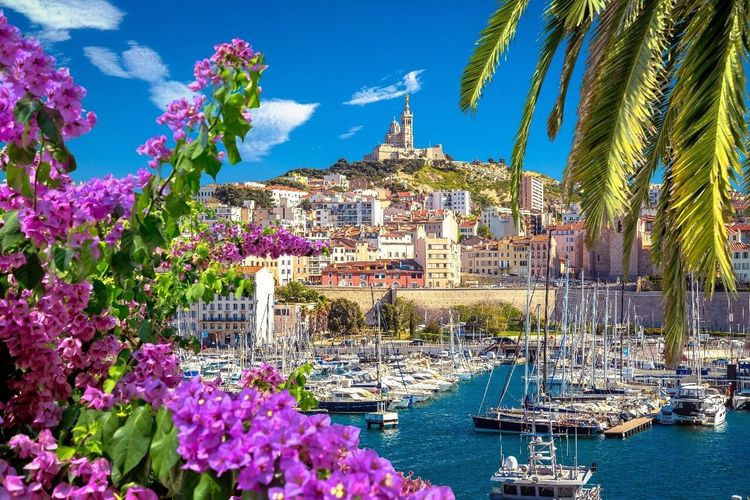
The Marseille History Museum is not an isolated institution: it sits at the heart of a neighbourhood that is particularly rich in history and architecture. Allow a full day if you want to combine the visit with the surrounding sites.
A two-minute walk away, the Vieux-Port is the original basin of Massalia. This 450-metre-long rectangle of water is today home to some 3,000 pleasure and fishing boats, but its shape is directly inherited from the ancient port. In the morning, fishermen sell their catch directly from their boats on the Quai des Belges — one of the city's most lively and authentic markets.
Just behind the Centre Bourse, the Jardin des Vestiges is too often overlooked by visitors. Yet this open-air archaeological garden, accessible from the museum, displays Greek and Roman structures in their original setting: sections of the 4th-century BC Greek rampart, garum basins (the famous Roman fish sauce), and remains of the Hellenistic port. Entry is included in the museum ticket. Do not miss it.
On the opposite side, the Belsunce quarter is well worth a stroll. This working-class neighbourhood, long neglected, has been undergoing gradual transformation since the mid-2010s. Rue d'Aix, with its textile, spice and food shops, reflects the contemporary cultural diversity of Marseille — a continuity, in its own way, with the city's commercial vocation since its founding.
A little further, less than fifteen minutes' walk up rue de la République, le Panier is Marseille's oldest neighbourhood. Its steep alleyways, colourful facades and Place des Moulins make it one of the most photographed spaces in the city. To explore these places with the historical context they deserve, the Ryo audio guide to Marseille offers a 3-hour, 25-stop audio tour connecting the Vieux-Port, le Panier, the Cathédrale de la Major and several viewpoints over the harbour.
Finally, 5 minutes away by tram from the Bourse-République stop, the MUCEM (Museum of European and Mediterranean Civilisations) makes an ideal complement to a day that started at the MHM.
MHM, MUCEM or Musée d'Archéologie Méditerranéenne: Which One to Choose?
Marseille has several museums dedicated to history and archaeology, and the question of which to choose comes up frequently. Here is a straightforward comparison to help you prioritise according to the time you have.
The Marseille History Museum is the obvious choice if you want to understand Marseille itself, from its founding to the 19th century. Its strengths: in-situ remains, the Gallo-Roman ship and a resolutely local approach. Its weakness: coverage of post-medieval periods remains thin, and the museum stops at the 19th century without really addressing contemporary Marseille.
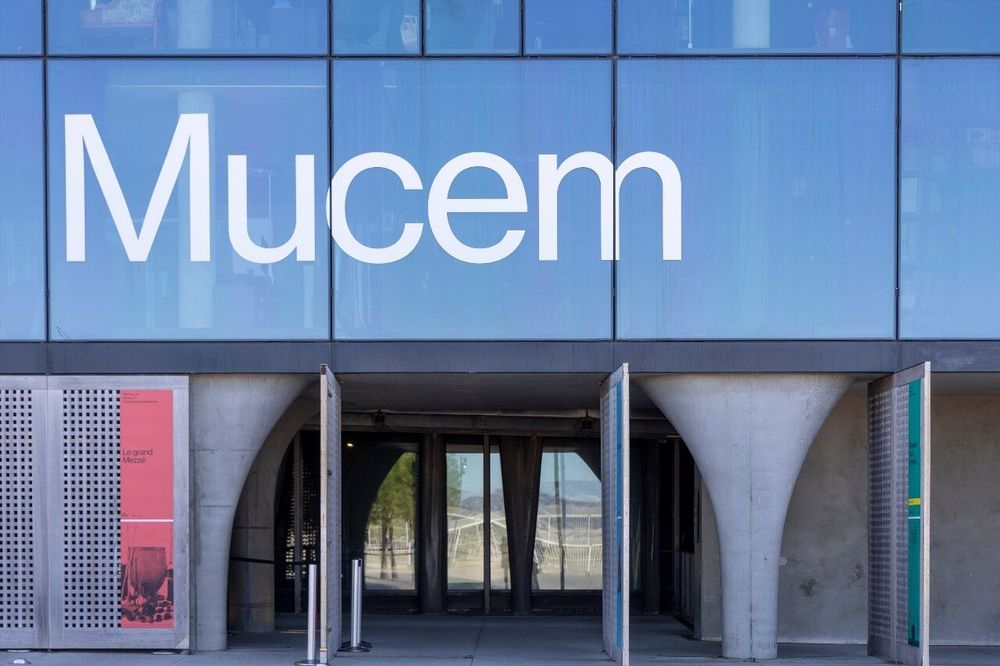
The MUCEM is a museum of society and anthropology, not strictly a local history museum. Its permanent collections explore Mediterranean cultures in their contemporary diversity — agriculture, religion, migration. It is fascinating but of a different nature. If you only have one day in Marseille, the combination of MHM in the morning and MUCEM in the afternoon is ideal. Budget around €12 to €14 for the MUCEM (2026 rate, variable depending on temporary exhibitions). Our full guide on visiting the MUCEM in Marseille covers everything you need to know before you go.
The Musée d'Archéologie Méditerranéenne (MAM), housed in the Vieille Charité in le Panier, is the most specialised of the three. Its collections cover ancient Egypt, Greece, Rome, the ancient Near East and pre-Columbian civilisations. The building itself — a masterpiece by Pierre Puget from the 17th century, with its domed chapel — is worth the visit alone. As at the MHM, access to the permanent collection is free, as it is part of the Marseille municipal museums network. If you are passionate about Mediterranean archaeology, combining the MAM and the MHM in the same day is perfectly feasible geographically (20 minutes on foot).
For families with children, the Musée d'Histoire Naturelle at the Palais Longchamp offers a very different alternative, with its zoology and geology collections. For fine arts lovers, the Musée des Beaux-Arts de Marseille, also at the Palais Longchamp, displays Impressionist collections and 19th-century sculptures in a monumental setting.
In short: if you have 2 to 3 hours, choose the MHM. If you have the whole day, MHM + MUCEM. If you have two days and an interest in archaeology, add the MAM and the gardens of le Panier.
Guided Tours, Lectures and Cultural Programming
The museum is far more than a static exhibition space. Its cultural programme, renewed each quarter, makes it a hub of intellectual life for Marseille residents and passing visitors alike.
Group guided tours are available by prior booking (minimum 48 hours in advance) for school groups, associations and tourist parties. A preferential rate applies for groups of more than 10 people. The heritage guides, all holding degrees in history or archaeology, tailor their presentation to the age and knowledge level of the group.
Thematic lectures in the "Marseille archéologique" series are generally held on the first Thursday of each month at 6:30 pm in the Centre Bourse auditorium. These lectures, free with registration, welcome researchers from the Université Aix-Marseille, the CNRS and international institutions. The 2026 programme included talks on "Ancient Shipwrecks off the Provençal Coast" and "New Excavations in the Saint-Laurent Quarter".
Educational workshops for children, offered on Wednesday afternoons and during school holidays, explore archaeology through hands-on activities: handling replicas, drawing ceramics, introduction to stratigraphy. These workshops of approximately 1.5 hours are by reservation and open from age 6. The cost is around €5 per child (in addition to the admission ticket).
The museum also takes part in Marseille's major cultural events: the Nuit des Musées in May, the European Heritage Days in September, and the Printemps des Musées, which each year gives rise to a special programme. These dates are worth noting if you are planning your visit well in advance: the Nuit des Musées in particular transforms the atmosphere of the museum, with unique scenographic lighting on the archaeological remains.
For education professionals, the museum offers an education service that develops teaching resources aligned with school curricula from primary to secondary level. Downloadable thematic dossiers and pre-visit preparation sheets are available on request from the public services department.
FAQ
What Are the Opening Hours and Admission Prices for the Marseille History Museum in 2026?
The museum is open Tuesday to Sunday, from 9 am to 6 pm (ticket office closes at 5:30 pm). It is closed on Mondays and on the main public holidays (January 1, May 1, November 1 and 11, December 25, among others). Access to the permanent collection is free for everyone since 2021. Only temporary exhibitions are ticketed (€6, €9 or €12 depending on the category, with reduced rates), and their ticket includes the permanent collection. These exhibitions are free on the first day of their run and on the first Sunday of the month. Be sure to check the official calendar before your visit, as exceptional closures may occur during works or special events.
How Do I Get to the Marseille History Museum from the City Centre?
The museum is located at 2 rue Henri Barbusse, inside the Centre Bourse. The easiest way: take the metro to the Vieux-Port station (lines 1 and 2); the museum entrance is about a 2-minute walk heading towards the Canebière. By tram, line T2 stops at Bourse-République, a 1-minute walk away. By car, parking is expensive and difficult in the city centre; the Centre Bourse underground car park is convenient but costly. Public transport is strongly recommended.
Is the Marseille History Museum Suitable for Children?
Yes, but with some caveats. A self-guided visit may feel abstract for very young children (under 7–8 years old), who may struggle to engage with the ruins and ceramic display cases. However, the educational workshops (from age 6, by reservation) are specifically designed for children and make an excellent introduction to archaeology. The free activity booklet available at reception helps 6–12-year-olds navigate the space and interact with the collections. For teenagers, the Gallo-Roman ship gallery is generally a highlight. A full visit with children takes approximately 1.5 to 2 hours.
What Is the Difference Between the MHM and the MUCEM?
These two museums complement each other but are very different in nature. The MHM is a local history museum: it tells the story of Marseille itself, from its Greek founding to the 19th century, drawing on excavations carried out within the city. Its main strength: in-situ archaeological remains and the Gallo-Roman ship. The MUCEM is a museum of Mediterranean civilisations with a far broader ambition: it explores the cultures, arts and societies of the Mediterranean as a whole and their contemporary evolution. If you only have half a day, choose the MHM to stay focused on Marseille. If you have a full day, combining the MHM and the MUCEM is ideal.
Can You Visit the Jardin des Vestiges with a Museum Ticket?
Yes. The Jardin des Vestiges, located right next to the museum's main building, is included in the standard admission ticket. This open-air archaeological garden presents Greek and Roman remains directly in their original context: Greek ramparts, pools and structures from the Hellenistic port. It is accessible during the museum's opening hours. It is often the most memorable part of the visit, especially for children, as the structures can be seen in the open air without any glass screen in between. Allow an extra 20 to 30 minutes to explore it fully.
Exploring Further in Marseille
The Marseille History Museum is a wonderful gateway into the Phocaean city, but the city does not wait behind glass: it lives in its alleyways, along its quays, in its working-class neighbourhoods that still bear the traces of the twenty-six centuries you have just travelled through in a few hours. Our Ryo audio guide for Marseille — 24 stops, 3 hours of walking, 7.3 kilometres — sets off from the Vieux-Port, climbs up through le Panier, passes the Cathédrale de la Major and follows the corniche. It is the most natural way to extend the museum visit by continuing to listen to the city's history — this time beneath your feet, in the stones and facades.
Marseille is a city that rewards patience. Its complexity, its cultural density and the interlacing of its historical strata make it a destination that hurried visitors pass through without really seeing. Take the time the museum deserves. Take the time for the ruins. And if you wish to explore the city's other facets — the château If, Notre-Dame-de-la-Garde, the calanques — our articles on the château If and Notre-Dame-de-la-Garde will give you all the practical details you need to plan your stay.
À lire également