© Shutterstock
 Votre guide Ryo
Day Trips from Marseille: Calanques, Cassis, Islands and Surroundings in 2026
Marseille is not just a city to visit—it is a city to leave, and always come back to. Choosing a day trip from Marseille as your starting point is less about escaping the city than extending what it promises: the surrounding area is extraordinarily rich for a French metropolis. Within less than two hours by road or boat, you will find a marine national park ranked among the most beautiful in Europe, an archipelago of islands inhabited since Antiquity, a fishing village turned white-wine capital, and an inland Provence that oscillates between ochre, lavender and centuries-old olive trees. To explore Marseille in depth before heading out on a day trip, the Ryo audio guide to Marseille covers 24 points of interest over 7.3 km—a good warm-up before exploring the surroundings.
This guide covers the best day trips from Marseille: the Calanques by boat from the Vieux-Port, hiking in the National Park, Cassis and its breathtaking Cap Canaille, the Frioul Islands, the Château d'If, Aix-en-Provence, the Alpilles, the Luberon, the Camargue and even the hills of Aubagne so dear to Marcel Pagnol. With practical advice for each destination, travel times, and the best times to go.
The Calanques by Boat from the Vieux-Port
The quintessential Marseille excursion—one that everyone does and no one regrets. Boat trips from Marseille to the calanques depart from the Vieux-Port (Quai des Belges, 13001 Marseille, rated 4.6/5 on Google with 32K reviews), where around twenty companies offer boat trips to the calanques of the national park. The crossing lasts between 2 hours and half a day depending on the itinerary, and the scenery justifies every minute spent on the water.
The boats follow the coastline east from the Vieux-Port, passing in front of the Corniche Kennedy and the first coves before entering the park. The most visited calanques by boat are Sormiou, Morgiou, Sugiton, En-Vau and Port-Pin, the latter with its almost unreal turquoise-green waters. The calanque of En-Vau is considered the most spectacular: sheer white cliffs rising 150 metres, transparent water, and absolute silence between the limestone massifs.
Prices vary depending on the package. A 2-hour panoramic cruise with no swimming stop costs around €20–25 per adult. A half-day trip with a swimming break costs €35–50. Full-day trips all the way to Cassis can exceed €70. In high season (July–August), it is essential to book at least 48 hours in advance, as the Vieux-Port docks are often fully booked by morning.
Several operators also offer sea kayaks from Callelongue, the small harbour at the southern tip of Marseille, accessible by bus from the city centre. This option allows access to calanques that are off-limits to motorised boats, notably Devenson and l'Oule, and lets you set your own pace. Budget €35–45 for a full-day kayak rental with or without a guide.
One important note: in summer, the Calanques National Park operates a mandatory reservation system for access to the most sensitive calanques (Sugiton and Morgiou via land trails). Quotas also apply for boat access. Check the park's website before booking your trip, as some operators include the required permits in their price while others do not.
The ideal period for a boat trip to the calanques is between April and June, then September to October. The water is still cool in spring but the light is perfect and visitor numbers are far more manageable. In the height of summer, expect packed boats and sunshine intense enough to make hiking from the boats very challenging.
Hiking in the Calanques National Park
For those who prefer their own two feet to the hull of a boat, the Calanques National Park (Maison du Parc, Rue Consolat, 13001 Marseille, rated 4.7/5 on Google with 21,071 reviews) offers a network of trails that rank among the wildest and most beautiful in Mediterranean France. The park protects around 520 km² of land and sea between Marseille, Cassis and La Ciotat, with a coastline carved over twenty kilometres and a limestone landscape shaped by erosion—ridges, cliffs, fragrant garrigue, and those calanques submerged in white rock.
The most accessible trail from Marseille starts at Luminy, at the far end of the 12th arrondissement (bus 21 from the city centre). From there, allow 1h30 of walking to reach the calanque of Sugiton, with moderate elevation gain and sweeping views from the very first switchbacks. The view over the sea from the Col de Sugiton is one of those that stays with you.
For more experienced walkers, the GR98-51 links Marseille to Cassis via the ridgeline—approximately 28 km with 1,200 m of cumulative elevation gain, making it a full day or two stages. This is the massif's great mythic trail: it passes over the summits of Puget (565 m), crosses near-desert terrain in summer and offers plunging views down into each successive calanque. Some hikers choose to return by train from Cassis rather than retrace their steps.
Be aware of summer closures. Between 1 June and 30 September, the Calanques massif is subject to prefectural closures during periods of high fire risk (strong winds, drought). These closures can be imposed from as early as 6am and may last several days. The prefect publishes orders the day before, so always check the park's website or specialist weather apps before setting out.
Recommended equipment: hiking boots with rigid soles (limestone wears through regular trainers very quickly), at least 2 litres of water per person (no water sources on the trails), high-SPF sunscreen and a hat. Even in April, the sunlight reflecting off white limestone can be deceptively harsh. And if you plan to swim, keep a dry bag for your belongings at the water's edge.
For more on the calanques, the Ryo article on the most beautiful calanques of Marseille and Cassis details each site with access routes and specific features.
Cassis and Cap Canaille: the Perfect Day Escape
Cassis is 22 km from Marseille by road, 30 minutes by car, a little longer by bus. Yet the difference in character between the two towns is striking. Where Marseille is loud and intense, Cassis is calm, well-kept, painted in white and ochre. The harbour is small, the village centre pedestrianised, and the restaurant terraces look directly out onto the bay.
Cassis produces one of the few AOC white wines of Provence, a dry white based on Marsanne and Clairette that pairs perfectly with the local bouillabaisse. The village cellars offer tastings in the afternoon. If you pass through, a stop at the Cave du Château or at one of the appellation's producers is well worth the detour.
But what makes Cassis a day trip in its own right is Cap Canaille: a sea cliff rising 394 metres, the highest sea cliff in mainland France. The Col de la Gineste road, which connects Marseille to Cassis, passes directly above it. For the full panorama, stop at the Grande Tête or La Sémaphore belvederes: on one side the bay of Cassis and its calanques, on the other the coastline stretching towards La Ciotat and Bandol.
The Route des Crêtes is also accessible on foot or by bike, making it a popular cycling excursion from Cassis. Allow 12 km round trip from the harbour, with 400 m of elevation gain—demanding but doable for an occasional cyclist. The view from the summit over the bay of La Ciotat, with the shipyards and the rock known as 'le Bec de l'Aigle', is one of the finest along the entire coastline.
From Cassis, you can also take a boat to the three calanques of Cassis: Port-Miou, Port-Pin and En-Vau, accessible only from the port of Cassis (Quai Saint-Pierre, 13260 Cassis, rated 4.6/5 on Google with 14,943 reviews) on the eastern side. The return shuttle costs approximately €15–18. If you come by car from Marseille, consider parking at the Gorguettes car park (at the entrance to the village coming from Marseille): the centre of Cassis is overrun with cars in season and parking is very limited.
By public transport: the Mobicôte line 1 bus connects Marseille Saint-Charles to Cassis in 50 minutes. In summer, a direct maritime shuttle from the Vieux-Port in Marseille makes the crossing in 1 hour.
The Frioul Islands: History, Sun and Turquoise Waters
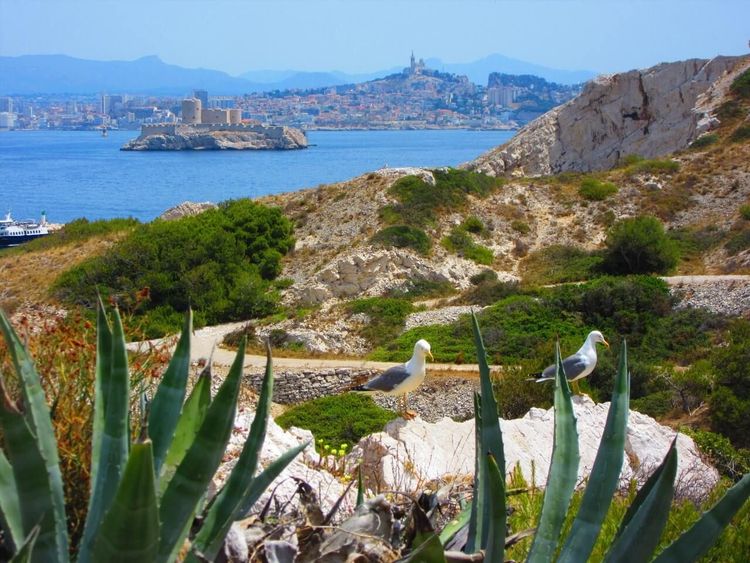
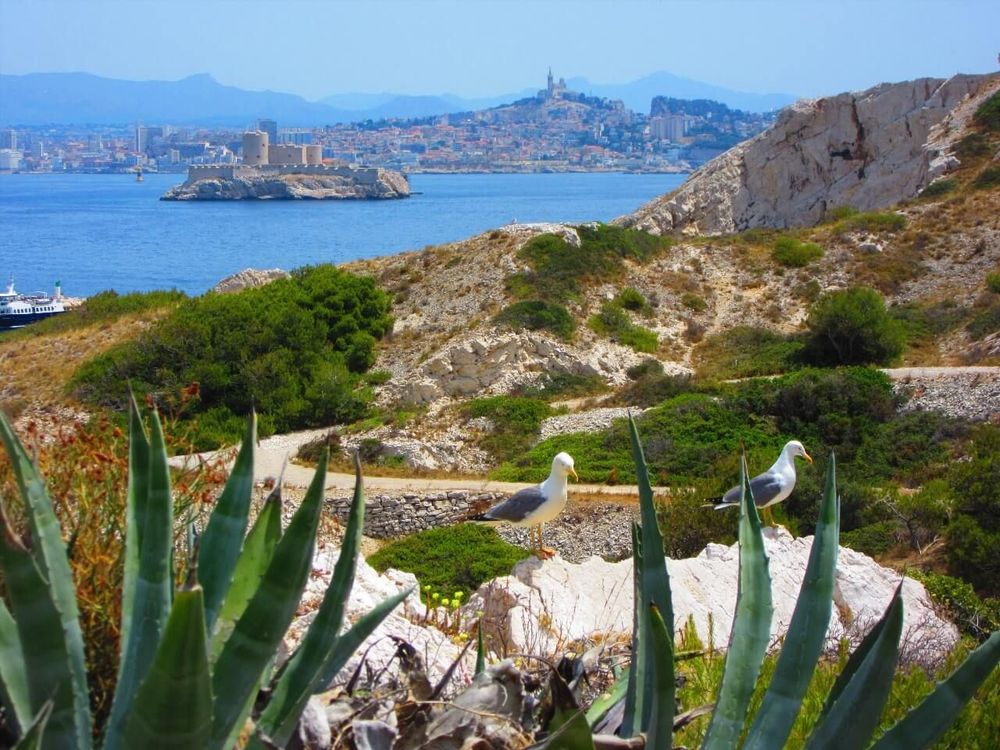
Just 3 km off the Vieux-Port, the Frioul archipelago forms a daily horizon for the people of Marseille, yet few ever set foot there. This Marseille-Frioul boat trip leads to four islands (Ratonneau, Pomègues, If and Tiboulen), reachable in 25 minutes by the Frioul If Express ferry from the Vieux-Port, several times a day year-round.
Ratonneau and Pomègues are connected by an artificial dyke built under Louis XVI and shelter the Frioul marina. The village of Port Frioul, on Ratonneau, is the only inhabited spot on the archipelago—a few hundred permanent residents, a handful of restaurants, limestone-white streets regularly swept by the mistral. The atmosphere is unique: part wild resort, part end-of-the-world village.
The beaches of the Frioul Islands are among the least crowded in the area despite their proximity to Marseille. Plage de Saint-Estève (Île de Ratonneau, 13007 Marseille, rated 4.4/5 on Google with 1,118 reviews) on Ratonneau, a 20-minute walk from the port, offers exceptionally clear water against a backdrop of white limestone. The Calanque de Morgiret on Pomègues is even less well known, and the water quality there is remarkable.
The archipelago has a long medical history. In the 17th century, the Hôpital Caroline on Ratonneau served as a lazaretto, a mandatory quarantine imposed on ships suspected of carrying epidemics. The building still stands, listed as a historic monument, and organises guided tours in summer. It is a little-known chapter of Marseille's maritime history, directly linked to the Great Plague of 1720.
For a complete guide to the Frioul Islands, see the dedicated Ryo article on the must-sees of the Frioul Islands, which details every beach, every trail and the best snorkelling spots.
Ferry fare: €10.90 round trip per adult (2026). The boat serves both the Château d'If and the Frioul archipelago, so you can combine both in a single day. Leave early: the first departure from the Vieux-Port is generally at 8:30am or 9am depending on the season.
The Château d'If: In the Footsteps of the Count of Monte Cristo
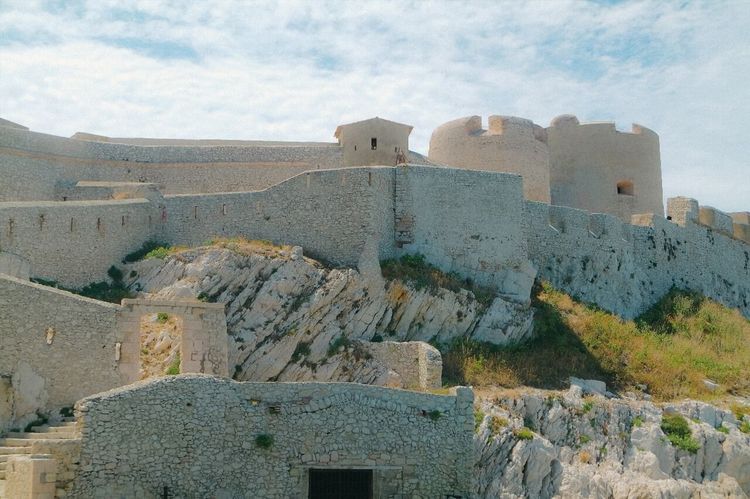
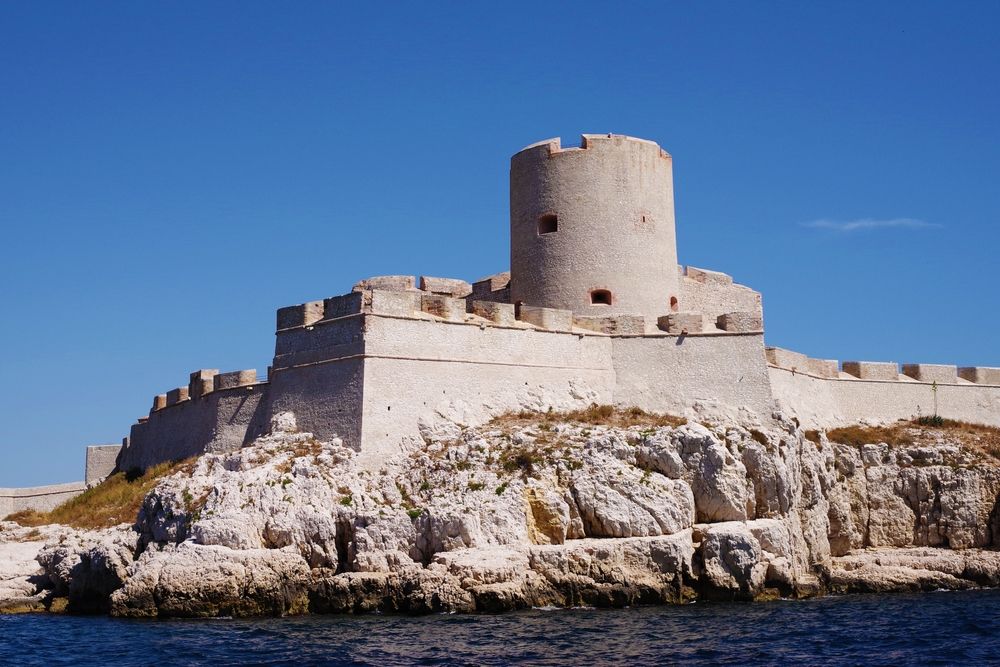
Halfway between the Vieux-Port and the Frioul Islands, the Château d'If is one of the most photographed fortresses on the French Mediterranean coast. The crossing from the Vieux-Port takes 20 minutes; the site is managed by the Centre des Monuments Nationaux and opens every day except Monday (outside of high season).
Built between 1524 and 1531 on the orders of François I, the château was first a military fortress, then very quickly a state prison. Its cells housed illustrious prisoners, from defiant Huguenots to disgraced nobles. The most famous prisoner, however, is fictional: this is where Alexandre Dumas imprisoned Edmond Dantès in The Count of Monte Cristo. The site's guides play along enthusiastically: Dantès's cell is marked and visitors flock to it.
But the château is worth a visit beyond the literary myth. The terraces offer a 360° panorama over Marseille, the Vieux-Port, the calanques to the south and the Sainte-Victoire to the north. On a clear day, you can make out the Alps on the horizon. It is also one of the rare places where you see Marseille from the sea—a radically different perspective.
Much of the château's interior is accessible: underground rooms, lower and upper cells (prices once varied according to the social rank of the prisoners), and the rampart walk. The visit lasts between 1 and 1h30. In high season, crowds are heaviest between 10am and 2pm; take the first or last boat of the day to enjoy the site in greater peace.
Admission: €7 full adult price (2026, Centre des Monuments Nationaux rate). Free for under-18s and EU nationals under 26. The Frioul If Express ferry serves the island several times a day; include the boat ticket (around €11 return) in your budget.
To make the most of your visit, the Ryo article on the Château d'If details opening hours, access and the full history of the site.
Aix-en-Provence: Cézanne's City, 30 km Away
Aix-en-Provence is 30 km from Marseille—30 minutes by car on the A51 motorway or 35 minutes by TER train from Gare Saint-Charles. It is Marseille's elegant counterpart: fountains, 17th-century mansions, cobbled streets, markets brimming with regional produce, and a concentration of cafés and bookshops that makes it a destination in its own right.
The historic heart of Aix is organised around the Cours Mirabeau, a boulevard lined with century-old plane trees and fountains at every intersection. This is the main axis: on one side the grand mansions of Aix's former nobility, on the other the lively Quartier Mazarin with its antique dealers. The Cours Mirabeau market, held on Tuesday, Thursday and Saturday mornings, is one of the best Provençal markets for calissons, tapenades and cheeses.
Aix is inseparable from Paul Cézanne, who was born here. His studio at Les Lauves, preserved intact since his death in 1906, can be visited on the Montée des Lauves, a 15-minute walk from the centre. The particular southern light that enters through the tall windows and falls on his still lifes still arranged in place—skulls, apples, drapes—is quietly arresting. Three kilometres to the south, the Musée Granet (Place Saint-Jean de Malte, 13100 Aix-en-Provence, rated 4.4/5 on Google with 4,802 reviews) holds 10 Cézanne canvases in its permanent collection along with a remarkable collection of ancient art.
For a full day in Aix: leave Marseille early, hit the market in the morning, visit the Cézanne studio late morning, lunch in the Vieil-Aix, Musée Granet in the afternoon, return in the early evening. If you have a car, extend the trip along the Sainte-Victoire road (see next section)—the mountain that meant so much to Cézanne lies just 15 km east of Aix.
The Sainte-Victoire and the Étoile Massif
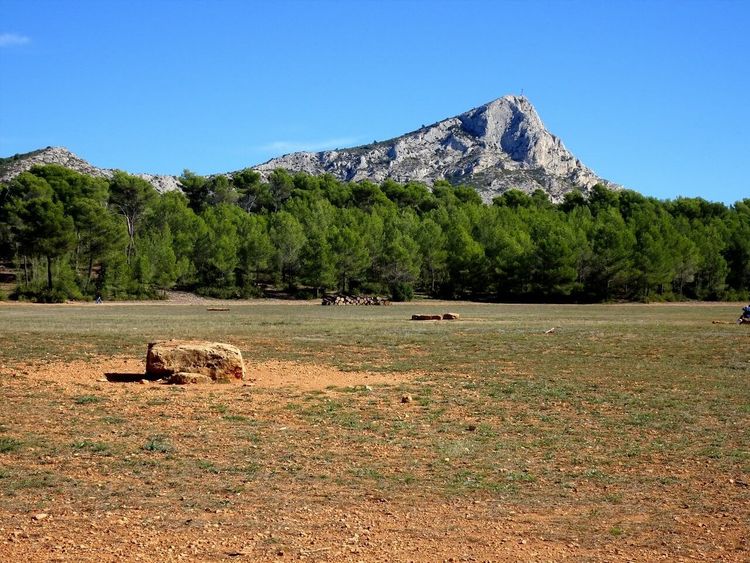
The Montagne Sainte-Victoire is one of the most painted landscapes in the history of Western art—Cézanne produced over 80 different representations of it. Up close, it reveals a more austere personality than in his paintings: an 18-km limestone ridge surrounded by oaks and pines, with a Provençal cross visible from dozens of kilometres away.
The classic ascent begins from the Prieuré de Sainte-Victoire, accessible by car from Le Tholonet (12 km east of Aix-en-Provence). From the car park, allow 2 hours to climb to the Croix de Provence (946 m). The view from the summit spans the whole of Provence, from Aix to the sea. The descent can be made via a different route to vary the scenery.
On the other side of Marseille, the Étoile massif is far less well known. This limestone plateau to the north of the city peaks at 779 m at the Pic de l'Étoile and offers a 360° view over Marseille, the Sainte-Victoire range and the Garlaban massif (GR2013, 13400 Aubagne, rated 4.8/5 on Google with 16 reviews). Trails start from the northern districts of Marseille or from Allauch (Place Pierre Bellot, 13190 Allauch, rated 4.4/5 on Google with 1.1K reviews), a Provençal village that has remained largely unchanged 15 km from the city centre. Far less crowded than the Calanques, the Étoile massif is a little-known option for a half-day hike.
Aubagne and the Provence of the Hills
Aubagne is 18 km from Marseille—20 minutes by car or 25 minutes by TER train from Gare Saint-Charles. Birthplace of Marcel Pagnol, the town wears that distinction with pride: a themed trail winds through the centre, and the surrounding hills are dotted with plaques marking locations from Pagnol's films and novels. The Musée de la Légion Étrangère—the Foreign Legion has been garrisoned in Aubagne since 1962—is one of the most comprehensive military museums in France.
But the real Aubagne lies in its Provençal earthenware. The town still has several santon and ceramics workshops, some open to visitors. The École-musée des Argiles traces the history of Provençal clays with a fine collection of pieces. It is a quieter stop than Aix, and far less crowded. Around Aubagne stretch the hills of the Garlaban—'Pagnol country' in the most literal geographical sense. The trail up to the Garlaban from Aubagne takes 3 to 4 hours return and passes through the landscapes of Souvenirs d'enfance. The fountains, the dry hills, the sleepy villages: it is all still there, barely changed since the 1920s that Pagnol so lovingly described. And to come back to Marseille at the end of the day, our audio walking tour links the Panier to the Vieux-Port in 25 stops.
The Alpilles and Les Baux-de-Provence
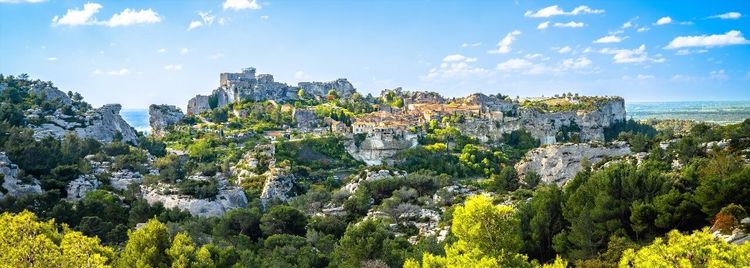
The Alpilles are 80 km from Marseille—1h10 by road—and make for a full-day excursion. This small limestone massif between the Rhône and the Durance concentrates several listed sites within a 20-km radius: Les Baux-de-Provence, Saint-Rémy-de-Provence (Place de la République, 13210 Saint-Rémy-de-Provence, rated 4.5/5 on Google with 6.3K reviews) and the Carrières de Lumières.
Les Baux-de-Provence are listed among the 'Most Beautiful Villages in France' and receive around 1.5 million visitors per year, making them one of the most visited villages in Provence. The ruined medieval castle dominates a white cliff face, the village below is entirely pedestrianised, and its alleyways alternate between art galleries, regional produce shops and restaurants. Arrive early in the morning (before 10am) or late in the day to avoid the tourist coaches.
800 metres from Les Baux, the Carrières de Lumières have transformed former limestone quarries into an immersive performance space. Each year, a new exhibition covers 7,000 m² of walls with monumental projections of paintings—Klimt, Van Gogh, Gauguin depending on the year. A genuinely surprising artistic and sensory experience, especially for children. Admission is €15–20.
Saint-Rémy-de-Provence, 10 km from Les Baux, is an elegant market town with a long pedestrian street and a remarkable Wednesday morning market. It is also where Van Gogh spent a year at the Asile Saint-Paul-de-Mausole (1889–1890), during which he painted more than 150 canvases. The asylum, still in operation, offers tours of the historic section with reconstructed cells.
The Luberon in a Day: Hilltop Villages and Ochre Landscapes
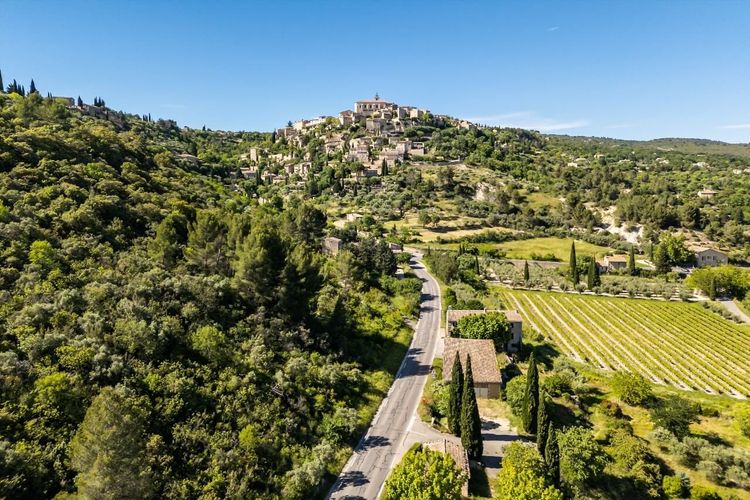
The Luberon lies 80–100 km from Marseille depending on the destination—1 to 1h20 by road. It is a 185,000-hectare regional nature park between the Durance and inland Provence, a landscape of hilltop villages, lavender fields in summer, vineyards and cedar forests.
Gordes is the most iconic village in the Luberon, and one of the most photographed in France. Built on a rocky spur, its dry-stone houses rise in tiers like an amphitheatre beneath a Renaissance château. The evening light here is particularly beautiful. Four kilometres from Gordes, the Village des Bories brings together around forty dry-stone huts dating from the 17th and 18th centuries—an intact example of rural Provençal architecture, listed as a historic monument.
Roussillon (Sentier des Ocres, 84220 Roussillon, rated 4.6/5 on Google with 20,373 reviews) and its Sentier des Ocres is another essential stop. The village is built on a deposit of ochre pigments that gives its houses hues ranging from pale yellow to deep red. The ochre trail (35 minutes to 1 hour depending on the loop) winds through eroded cliffs among the pines—spectacular after rain, when the colours are saturated.
Bonnieux, Ménerbes (where Peter Mayle wrote A Year in Provence), Lacoste with its château belonging to the Marquis de Sade—the Luberon offers one picturesque village after another. For a full day, build an itinerary between Apt (for the Saturday market, one of the best in Provence) and Gordes via Roussillon.
The Camargue and Arles: 1 Hour from Marseille
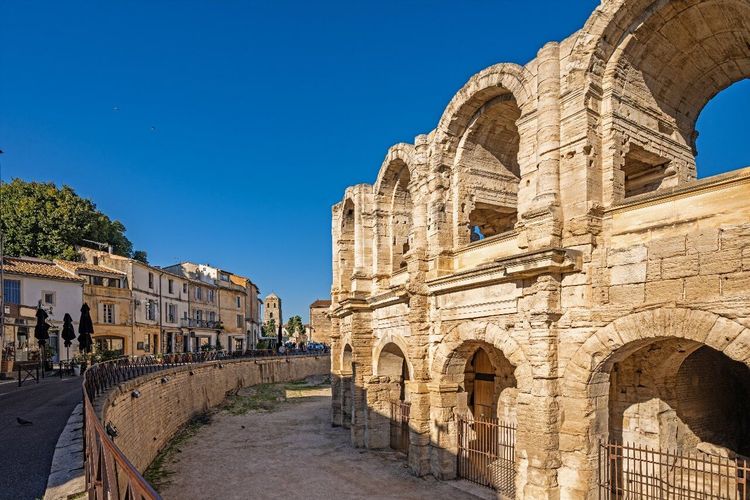
At 90 km from Marseille (1 hour via the A7 then A54 motorways), Arles and the Camargue make for a packed double excursion in a single day. Arles is a major art city with Roman monuments listed as UNESCO World Heritage Sites: the Amphitheatre (1st century AD, still used for bullfights) and the Ancient Theatre, both inscribed along with the city's other Roman and Romanesque monuments.
Arles is also the city Van Gogh painted with the greatest intensity during the 15 months he spent there (1888–1889). The LUMA Arles Foundation has transformed a former industrial site into a leading cultural complex, with a 56-metre Gehry tower that has become the city's new architectural landmark. Its permanent and temporary exhibitions blend contemporary art with historical archives.
The Camargue begins just south of Arles. This Rhône delta of 930 km² is one of the largest wetlands in Western Europe. Flamingos are the iconic image, but the Camargue is also home to semi-wild white horses, black Camargue bulls, salt lagoons where hundreds of bird species nest, and a handful of villages such as Saintes-Maries-de-la-Mer, the great Romani pilgrimage site every May.
For the best flamingo-watching, the Parc Ornithologique du Pont de Gau (Route d'Arles, 13460 Saintes-Maries-de-la-Mer, rated 4.6/5 on Google with 12,426 reviews) (5 km from Saintes-Maries) offers raised walkways over the lagoons with identification panels. The best time to visit is autumn and spring; in the height of summer, the flamingos move to lagoons further south and are less visible from accessible paths.
Practical Tips for Organising Your Day Trips from Marseille
Marseille is an ideal base for day trips. Here are the key practical points for planning your outings.
Getting There
The rail network from Gare de Marseille Saint-Charles provides quick connections to Cassis (35 min, ~€5), Aix-en-Provence (35 min, ~€8), Aubagne (20 min, ~€4) and Arles (1h10, ~€15). For destinations less well served by train—the Luberon, the Alpilles, the inland Camargue—a car remains essential. Car hire is available at Saint-Charles, with several agencies within walking distance of the platforms.
For the islands and the Calanques, the Frioul If Express ferry (Vieux-Port) covers the main maritime destinations. For boat trips from Marseille to the calanques, departures operate from several points along the Vieux-Port, or from Callelongue for kayaks.
Approximate Budget per Excursion
- Calanques by boat: €20–70 depending on the option (half-day or full day)
- Frioul Islands: €10.90 round-trip ferry
- Château d'If: approx. €11 ferry + €7 admission = approx. €18
- Cassis: free (excluding transport), water activities €15–30
- Aix-en-Provence: free (excluding museums), Musée Granet ~€8, Cézanne studio ~€7.50
- Carrières de Lumières (Alpilles): €15–20
- Camargue, ornithological park: approx. €11
General tip: always combine two geographically close destinations to make the most of the journey. Aix + Sainte-Victoire, Cassis + Calanques by boat, Arles + Saintes-Maries-de-la-Mer, Les Baux + Saint-Rémy. Marseille sits at the centre—adjust according to your interests.
When to Take a Day Trip Around Marseille
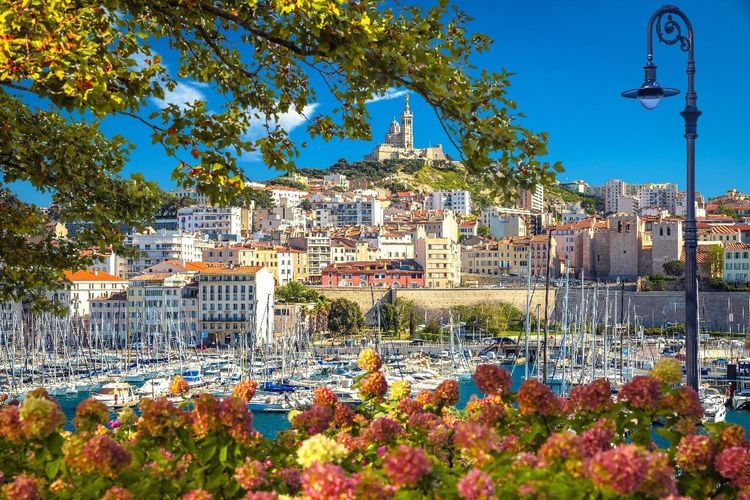
The weather in Marseille is generally mild year-round, but conditions vary depending on the destination.
Spring (April–June): the best period. The Luberon's flower fields are in full bloom, the Calanques are accessible without the summer restrictions, and the sea is still cool but swimmable from June onwards. Provençal markets overflow with local produce.
Summer (July–August): heavy crowds everywhere. The Calanques often close during the day due to fire risk. Les Baux-de-Provence are overrun before 10am. On the plus side, evening terraces are perfect and night markets add to the programme. Leave early (before 8am) for popular excursions.
Autumn (September–October): an excellent compromise. The sea reaches its maximum temperature (24–26°C in September), visitor numbers drop sharply after mid-August, and the colours of the hinterland begin to warm. The Camargue is particularly beautiful with flamingo flights over the lagoons.
Winter (November–March): Arles, Aix and the Luberon retain a quiet off-season charm. Christmas markets and truffle season (December–March) are valid reasons to brave the mistral.
FAQ
What is the best day trip from Marseille?
It depends on your interests. For nature and the sea: the Calanques by boat from the Vieux-Port are the absolute benchmark. For a mix of culture and scenery: Cassis + Cap Canaille in the morning, then a boat to the calanques in the afternoon. For art and architecture: Aix-en-Provence with the Cézanne studio and the Musée Granet. For inland Provence: Gordes and Roussillon in the Luberon. All these destinations are within 1h30 of Marseille.
Can you visit the Calanques without a car from Marseille?
Yes, easily. Boats to the calanques depart directly from the Vieux-Port—no car needed. For hiking, bus 21 serves Luminy (starting point for Sugiton) from the Castellane metro station. The calanque of Callelongue is accessible by bus 19 from Pointe-Rouge. For Cassis, the Mobicôte bus and the TER train from Saint-Charles are a good alternative to driving.
How do you get to the Frioul Islands from Marseille?
The Frioul If Express ferry departs from the Quai de la Fraternité at the Vieux-Port, several times a day year-round. The crossing takes about 25 minutes to Port Frioul. The same boat stops at the Château d'If, so you can visit both in the same day. Round-trip fare: €10.90 per adult in 2026. In summer, arrive at the dock 20–30 minutes before departure to ensure a spot.
Do you need to book in advance for boat trips to the Calanques?
In high season (July–August), yes, absolutely. Boats are often fully booked 24 to 48 hours in advance. Book online as soon as you know your dates. In low season, advance booking is not always necessary and you can show up in the morning at the Vieux-Port docks. Note also that some calanques (Sugiton, Morgiou) impose a visitor quota in summer with mandatory booking on the national park website.
What is the best day trip from Marseille with children?
The Frioul Islands work very well with children: a short boat crossing, accessible beaches, and the Hôpital Caroline for a touch of history. The Carrières de Lumières at Les Baux-de-Provence are a guaranteed hit for children aged 5 and up. The Château d'If captivates young readers of The Count of Monte Cristo. And the Parc Ornithologique de Pont de Gau in the Camargue, with flamingos close enough to admire at eye level, is consistently cited by families as one of the most memorable experiences in the region.
Marseille is an exceptional base for day trips. Its excursions form a complete circle around it: sea to the south with the Calanques, the Frioul Islands and the Château d'If; Provence villages to the east with Cassis, Aubagne and Aix; inland to the north with the Luberon and the Alpilles; wide open spaces to the west with the Camargue and Arles. Every destination deserves a visit in its own right, but they are best appreciated from Marseille—because you always return with the feeling that something is missing when you are not there. To prepare your stay in the city itself, the Ryo audio guide to Marseille takes you on a 3-hour journey through 24 points of interest in the heart of the city—the best way to understand Marseille before setting out to explore its surroundings.
À lire également