© Shutterstock
 Votre guide Ryo
What to Do in Colmar When It Rains: Museums, Food, and Cozy Spots in 2026
What to do in Colmar when it rains? The question comes up quickly: the city receives around 600 mm of rainfall per year, and a shower can catch you off guard right in the middle of la Petite Venise. Fortunately, the historic centre concentrates its treasures within a radius of less than one kilometre. Half-timbered houses, museums, and market halls stand side by side, so all it takes is stepping from one doorway to the next to keep exploring under cover. The Ryo audio tour of Colmar, designed to be followed with headphones on between façades and museum doors, is perfectly suited to chaining together covered stops without losing the thread of the walk.
On the programme for this rainy day: the Isenheim Altarpiece and its articulated panels at the Unterlinden, a chocolate museum where tasting is unlimited, a heritage library housed in a Dominican convent and free to enter, and an escape game for days when the kids simply can't sit still. Not to mention the Marché Couvert, built in 1865, where you can snack on an Alsatian speciality without ever opening your umbrella again.
1. Visit Colmar's Must-See Museums Out of the Rain
Colmar concentrates its major museums within a few minutes' walk of the Grand'Rue, enough to fill an entire half-day without getting wet. Each has its own personality: Rhenish art, sculpture, vintage toys, natural sciences, or industrial heritage. Be mindful of closing days, which do not all fall on the same day.
Musée Unterlinden and Musée Bartholdi, the City-Centre Essentials
The Musée Unterlinden occupies a 13th-century Dominican convent, connected to the former municipal baths of 1906 and a contemporary wing designed by Herzog & de Meuron, inaugurated in 2015. Its centrepiece, the Isenheim Altarpiece, brings together panels painted by Matthias Grünewald and sculptures by Nicolas de Haguenau: a polyptych with articulated shutters, originally conceived to be opened according to the liturgical calendar. The museum opens from 9am to 6pm but closes on Tuesdays. Allow an hour and a half for a full visit, or closer to two hours if the altarpiece holds your attention longer than expected.
On its main route, the Ryo audio guide for Colmar runs right along the museum's façade, with anecdotes about the Isenheim Altarpiece and the historic core. A great way to enrich the visit before you've even pushed open the door.
The Musée Bartholdi occupies the large birthplace of sculptor Auguste Bartholdi, born in Colmar in 1834 and creator of the Statue of Liberty. Across three floors and twelve rooms, you'll discover sculptures, drawings, paintings, and engravings, including the preparatory studies for the New York project. Opening hours to note: Tuesday to Sunday, from 10am to 12pm then 2pm to 6pm, closed on Mondays. About an hour is enough, making it an easy stop to combine with the Unterlinden.
Practical tip: the Unterlinden closes on Tuesdays, the Bartholdi on Mondays. If the rain falls on a Wednesday or Thursday, you have both available on the same day.
Musée du Jouet and Natural History Museum, the Family Duo
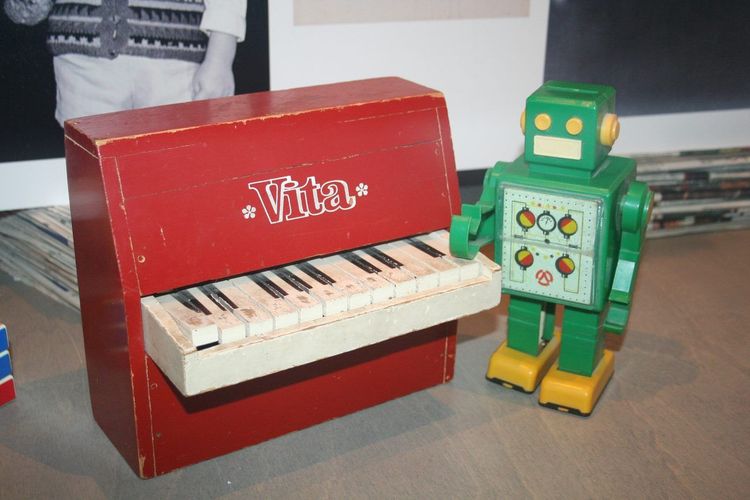
The Musée du Jouet spans two centuries of toys, from the 19th century to the present day: vintage teddy bears, first-edition Barbies, Playmobil, model kits, robots, and video games. The highlight is the miniature train network that takes up the entire second floor, in front of which children invariably stop and stare. It opens from 10am to 5pm (closed Tuesdays outside school holidays), and every day from 10am to 6pm in July, August, December, and during school holidays. Entry is free for children under 7, and the museum is pram-friendly.
A few minutes' walk away, the Natural History and Ethnography Museum blends taxidermied animals from near and far, minerals, prehistoric fossils found in the region, and ethnographic objects from the Marquesas Islands, China, Latin America, and Africa. Its ancient Egypt collection, featuring mummies and Coptic textiles, is the only one of its kind on display in Alsace. Old-fashioned display cases and a cabinet-of-curiosities atmosphere make it a genuinely good option for a grey afternoon. The museum closes on Mondays and is not pram-accessible.
More off the beaten track, the Musée des Usines Municipales (Rue du Rudenwadelweg, 68000 Colmar, rated 4.5/5 on Google based on 42 reviews) occupies an 1884 building constructed on the city's former pumping station. It traces the history of water, gas, electricity, and public transport in Colmar. Don't count on it as a last-minute plan B: it only opens to the public during the Nuit des musées and the Journées du patrimoine, with groups able to visit from May to October by appointment made at least 15 days in advance.
2. Take a Cultural Break at the Library and the Église des Dominicains
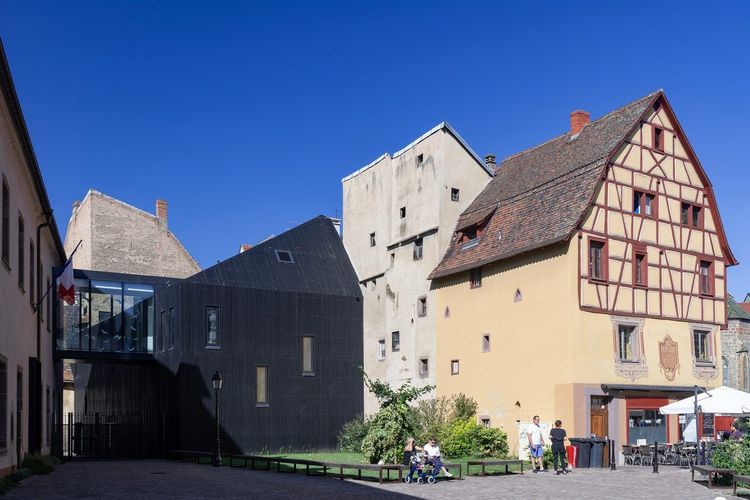
A stone's throw from the Musée Unterlinden, the Bibliothèque des Dominicains opened its museum trail in June 2022 within the former convent. The heritage collection holds around 400,000 documents, including 1,200 manuscripts (among them 400 medieval texts from Alsatian abbeys), 2,300 incunabula, and 10,000 16th-century books. Cloister, medieval garden, reading room — and admission is free. Opening hours: 1pm to 6pm on Mondays, Tuesdays, Thursdays, and Fridays; 10am to 6pm on Wednesdays and Saturdays; closed on Sundays.
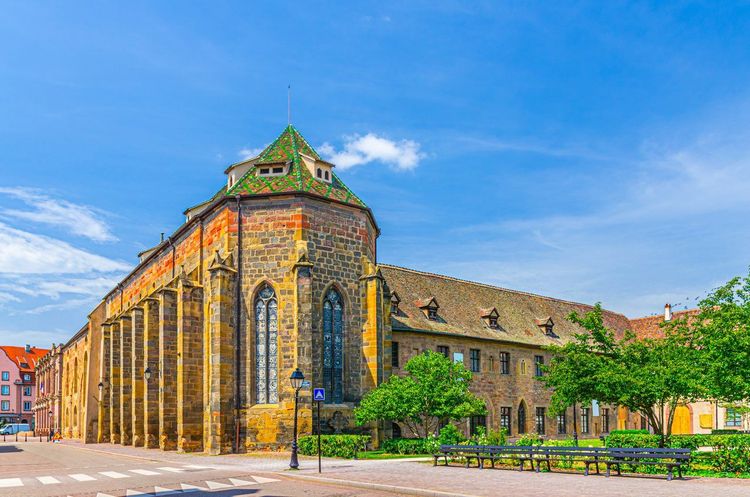
Right next door, the Église des Dominicains (Place des Dominicains, 68000 Colmar, rated 4.3/5 on Google based on 1,443 reviews) houses another of Colmar's treasures in its choir: the Virgin in the Rose Bower, painted by Martin Schongauer in 1473. Begun in 1289 and completed with the nave in 1346, the Gothic building retains stained-glass windows from the early 14th century depicting the life of Christ. On overcast days, the light inside remains soft and brings out the richness of the painting's reds. A visit takes around twenty minutes, making it easy to combine with the library in under an hour.
The church operates on a seasonal schedule: check its opening hours with the tourist office before planning your visit, especially in winter.
3. Eat Well and Browse the Marché Couvert Market Halls
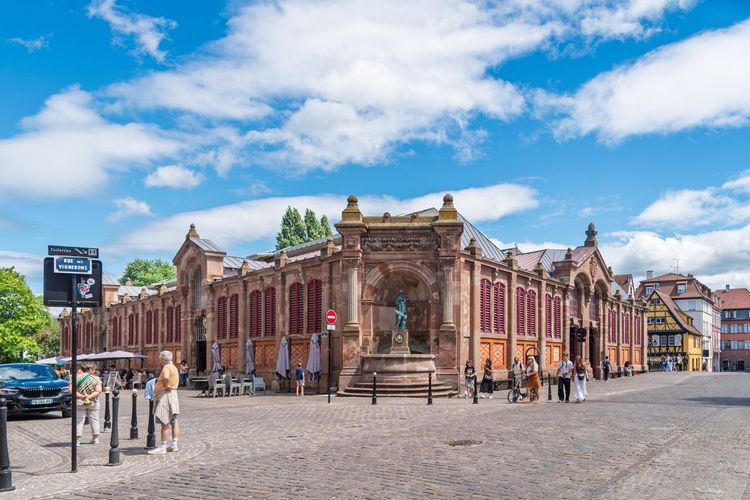
Built in 1865, the Colmar Marché Couvert (13 Rue des Écoles, 68000 Colmar, rated 4.3/5 on Google based on 5,983 reviews) blends brick and ironwork on the banks of the Lauch. After several past lives, it has returned to its original purpose as a market hall and now brings together around twenty traders: greengrocers, a butcher, a charcuterie, a cheese shop, a bakery-patisserie, a fishmonger, and local specialities. Several counters offer eat-in options, perfect for an impromptu lunch under cover. It's also where the people of Colmar do their Saturday shopping, giving the visit an authentic, local feel.
Opening hours: Tuesday to Thursday from 8am to 6pm, Friday from 8am to 7pm, Saturday from 8am to 5pm, and Sunday from 10am to 2pm. The market is closed on Mondays — worth keeping in mind at the start of the week. The best time to avoid the crowds is mid-morning, once the regulars' rush has passed. On rainy days the halls fill up quickly: expect a bit of a wait at mealtimes.
Another day, take the opportunity to continue with the Ryo audio tour: its route passes right through this shopping district before heading to the nearby la Petite Venise.
4. Indulge in a Gourmet Break at Choco-Story and the Alsace Wine Museum

Colmar readily turns rain into a gourmet excuse. Two museums at the same address, place de la Cathédrale, play the flavour card — chocolate on one side, vineyards on the other — and complement each other nicely for a warm afternoon indoors.
Choco-Story, the Gourmet Chocolate Museum, and the Alsace Wine Museum
The Choco-Story (12 Place de la Cathédrale, 68000 Colmar) traces the history of chocolate across 1,200 m² and 18 rooms, with an interactive, immersive trail and unlimited tasting along the way. Allow around 1h30 for the visit, or 2h15 if you add a 45-minute workshop. It opens every day from 10am to 6pm (last entry at 5pm) and closes in January after the school holidays. Indicative prices: €15 per adult, €13 concession, €9 for children aged 3–11, €45 with a workshop.
At the same address, Vino Storia, the Alsace Wine Museum, offers an immersive exploration of the vineyard: olfactory and taste experiences, portraits of winemakers, coopers, chefs, and sommeliers, a play area for children, and a virtual tricycle ride through the vines with an audio guide following the Wine Route. Same opening hours as the Choco-Story. You'll brush up on the seven Alsatian grape varieties — riesling, gewurztraminer, pinot gris, muscat, sylvaner, pinot blanc, and pinot noir — before moving on to a cellar tasting.
Joining an Alsace Wine Tasting
Several city-centre wine cellars organise tastings under cover, typically featuring five to seven wines accompanied by explanations of the terroirs and grape varieties. Prices vary considerably depending on the number of wines served and whether a food pairing is included, generally ranging from €10 to €30 per person. It's an activity perfectly tailored to a rainy afternoon: seated, warm, and long enough (45 minutes to an hour) to sit out a good shower.
Book ahead, especially at weekends and during the Christmas markets: time slots fill up fast and some cellars only accept bookings. On weekdays and off-season, it's often still possible to walk in directly. Stick to wine cellars in the old town rather than on the outskirts, so you don't have to get back in the car in the rain.
5. Discover the Village Hansi, the Koïfhus, and the Heritage of Old Colmar
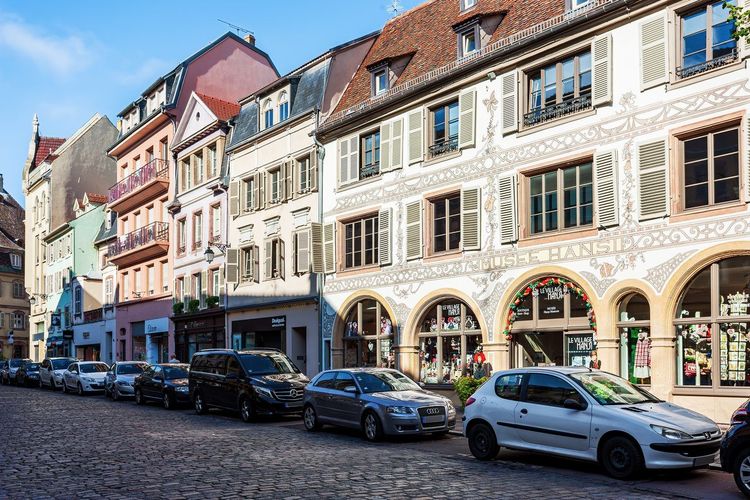
The historic heart of Colmar can also be explored sheltered under porches and arcades, between a museum dedicated to a local illustrator and an iconic medieval trading building.
Village Hansi and Its Museum, a Poetic Interlude
The Village Hansi and Its Museum pays tribute to Jean-Jacques Waltz, known as Hansi, an illustrator and caricaturist whose watercolours did much to shape the image of Alsace: flowering half-timbered houses, traditional costumes, village scenes. Across several floors, you'll see original works, childhood drawings, advertisements, and period objects, all presented in a playful setting that appeals to young and old alike. The visit ends in a boutique styled like a market square. Entry is paid (free for children under 5, reduced rate for ages 5 to 13), and the venue opens every day from 10am to 6pm, until 6.30pm during school holidays.
Koïfhus (Old Customs House) and the Façades of la Petite Venise
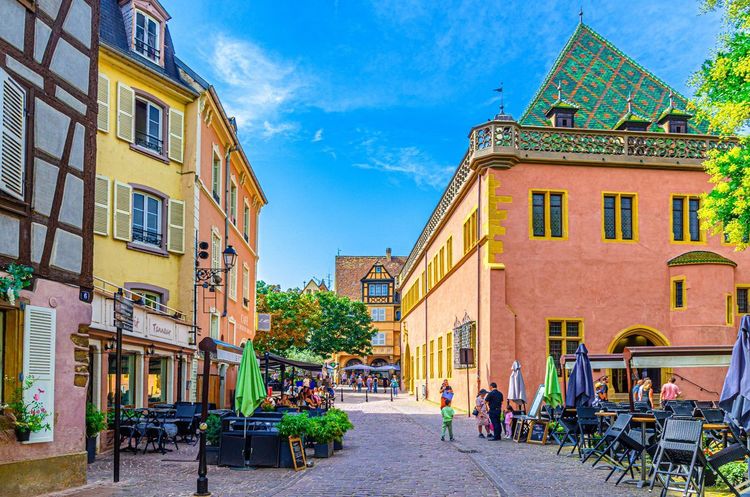
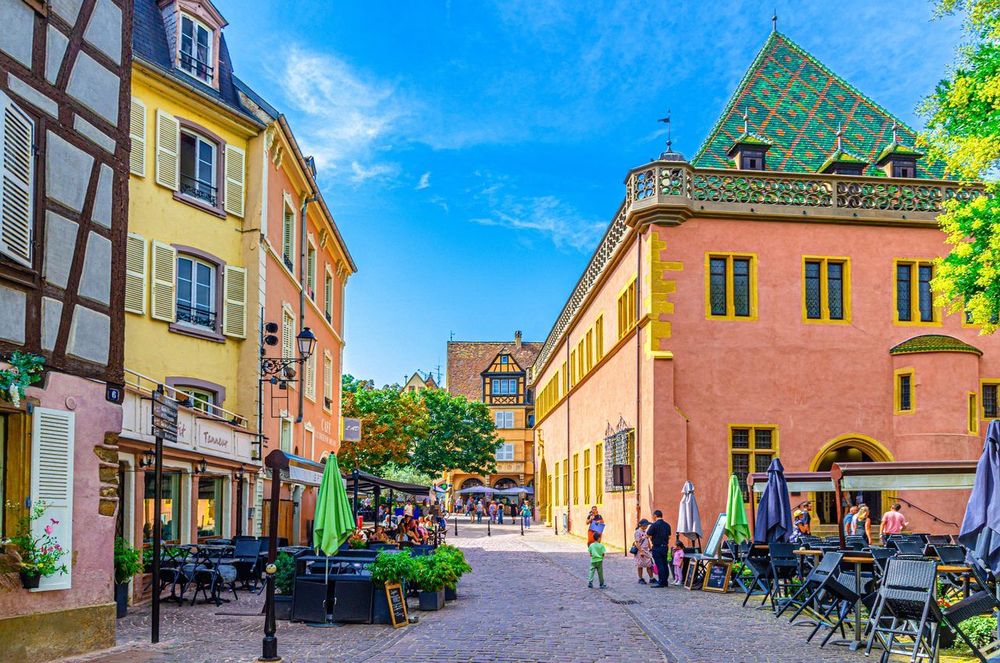
The Koïfhus, or Old Customs House (Place de l'Ancienne Douane, 68000 Colmar), dates from 1480 and once served as a warehouse for goods subject to tax. Its glazed tile roof and arcades make it one of the most photographed buildings in the city centre, even in the rain, when the wet cobblestones reflect its colours. Further along, la Petite Venise lines up its half-timbered houses along the Lauch: the quaysides remain walkable under an umbrella, as long as you watch out for slippery cobblestones.
About ten minutes' walk away, the Monument du Général Rapp (Place Rapp, 68000 Colmar, rated 4.5/5 on Google based on 55 reviews) honours Jean Rapp, an Imperial general born in Colmar. A detail few visitors know: the statue is one of Bartholdi's earliest works — a nice nod to make after visiting the museum on the rue des Marchands.
The 21 audio stops on the Ryo audio tour of Colmar cover the Koïfhus, the rue des Têtes, and the half-timbered houses of the city centre, in an order designed to minimise back-and-forth in the rain.
6. Settle Into a Winstub or an Alsatian Tea Room
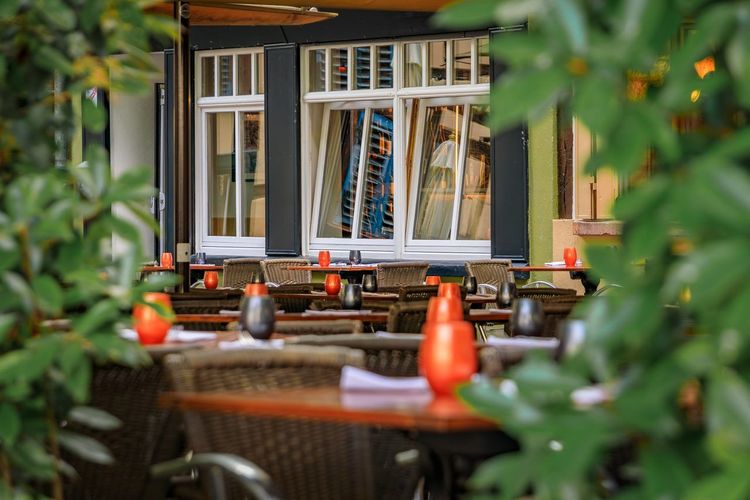
A winstub is a typically Alsatian wine tavern, recognisable by its dark wood décor, checked tablecloths, and a short menu centred on slow-cooked dishes. It's the most logical option on a grey day: you settle in for two hours, warm and comfortable, with a menu that varies little from one address to the next but whose quality depends above all on the produce and the skill in the kitchen. The old town has several, concentrated between the Grand'Rue and la Petite Venise.
The specialities to go for are the choucroute garnie, thin-crust tarte flambée, the baeckeoffe (meats and vegetables slow-cooked for several hours in a clay dish sealed with a pastry crust), and, for dessert, a kougelhopf or a plum tart depending on the season. Budget around twenty euros for a main course, a little more at the most popular spots in the historic centre.
For a lighter break, the city-centre tea rooms serve kougelhopf, bredele in season, and hot chocolate in a cosy setting, often with a window looking out onto the rain falling on the half-timbered houses. It's also the quickest option between two visits: 20 to 30 minutes is plenty.
To go further on the dishes to try, our article on the culinary specialities to try in Colmar covers the must-tries of the Alsatian table.
7. Join a Creative Workshop or an Alsatian Cooking Class
Several venues in Colmar and the surrounding area offer small-group Alsatian cooking classes, often focused on tarte flambée, baeckeoffe, or kougelhopf. Sessions generally last two to three hours, tasting included. A rainy afternoon becomes a tangible memory: you leave with a recipe you'll be able to recreate at home.
On the workshop side, the Choco-Story offers 45-minute sessions combined with the museum visit, and some craft shops run occasional introductory sessions — pottery, painting, or decorating bredele, the small Alsatian Christmas biscuits. Ideally book 48 hours in advance during high season, as weekend slots fill up fast during the Christmas markets.
8. Keep Everyone Entertained: Escape Rooms, Virtual Reality, and Indoor Activities
Colmar and its surrounding area have several escape room venues. Scenarios typically last an hour, for two to six players, with themes ranging from criminal investigations to breakouts. Book online, especially for Saturday afternoons, the most in-demand slot on rainy days.
Virtual reality venues offer shorter sessions — twenty to thirty minutes — often sold individually or as a package. An option that appeals to teenagers, less drawn to museums than to immersive experiences. Some venues combine VR with laser tag, allowing you to chain two activities without changing location.
For younger children, the Musée du Jouet and its train network remain the reliable choice, complemented by the indoor play areas around the city, which are busier during school holidays.
9. Browse the Covered Passageways and Small Boutiques in the City Centre
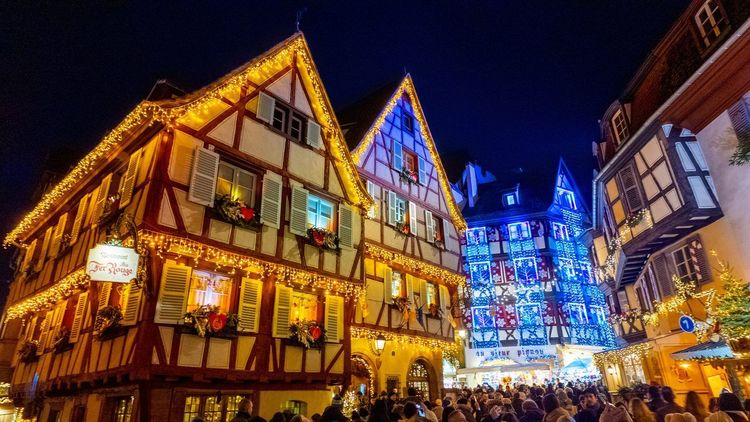
The historic centre of Colmar hides inner courtyards and porches often overlooked by visitors in a hurry. There you'll find local craft shops selling Alsatian linen, ceramics, and gingerbread, all sheltered from the rain. A way to keep exploring the old town without being exposed for more than a few metres at a time.
The arcades of the Koïfhus and the porches along the rue des Marchands offer the same kind of shelter, enough to wait out a shower. Keep your itinerary flexible rather than sticking to a fixed plan: the best finds often come from cutting through a courtyard you didn't know existed.
10. Join a Guided Walk Under an Umbrella or an Indoor Guided Tour
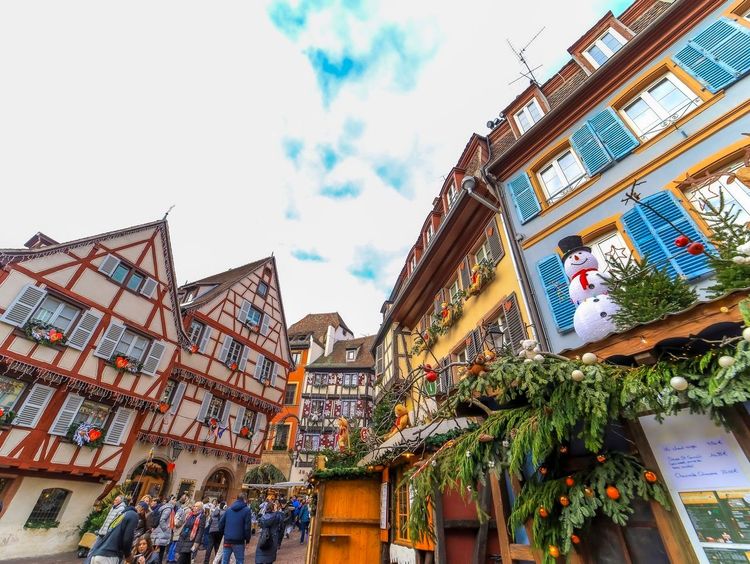
Two ways to keep exploring Colmar without giving up: one outdoors despite the rain, the other largely under cover.
Guided Walk Under an Umbrella Through the Old Town
A light drizzle needn't stop you from walking through the old town, as long as you slow down and take shelter occasionally under the porches. The cobbled streets of la Petite Venise and the Tanners' Quarter even take on a particular charm, with the reflections of the half-timbered houses in the waters of the Lauch. Wear closed-toe, non-slip shoes: wet cobblestones are more slippery than tarmac, especially near the quaysides.
Themed Indoor Guided Tours (Chocolate, Wine, History)
The tourist office and several operators offer guided tours of the old town, which can be combined with covered formats: a commented cellar tasting, an immersive trail at the Choco-Story or Vino Storia, or a visit to the Bibliothèque des Dominicains museum trail. Ask about available time slots, especially in high season.
Another option, at your own pace: with its 21 audio tracks spread over 2h10 and 4.7 km, the Ryo audio tour requires no booking and no group to follow. Headphones on, umbrella in hand, and you move as fast or as slowly as the rain allows.
11. Widen the Day Out: What to Do Elsewhere in Alsace When It Rains
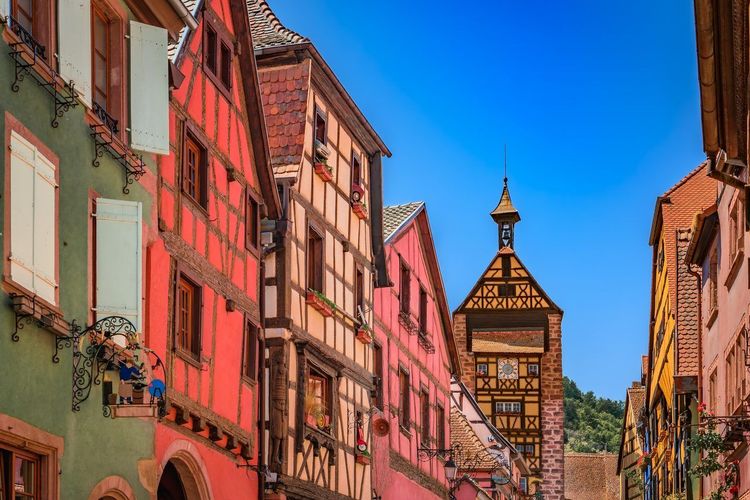
When the rain sets in for the day, several options exist around Colmar. Nearby villages such as Eguisheim, Riquewihr, or Kaysersberg-Vignoble offer the same kind of refuge — wine cellars, shops, and churches — less than twenty minutes by car. In Kaysersberg-Vignoble, the Musée du vignoble et des vins d'Alsace pairs well with a visit to Vino Storia. Our selection of 10 Alsatian villages around Colmar helps you decide which ones to prioritise.
For couples, a tasting at a village wine cellar or a spa with a sauna and Nordic bath make a pleasant alternative to a full museum day. For families, Europa-Park in Rust, Germany, is about an hour's drive away: the park has covered attractions, and its neighbour Rulantica is a fully indoor water park. Check opening dates, as the park closes for part of the winter. Our guide to Europa-Park from Colmar details how to organise a full day there.
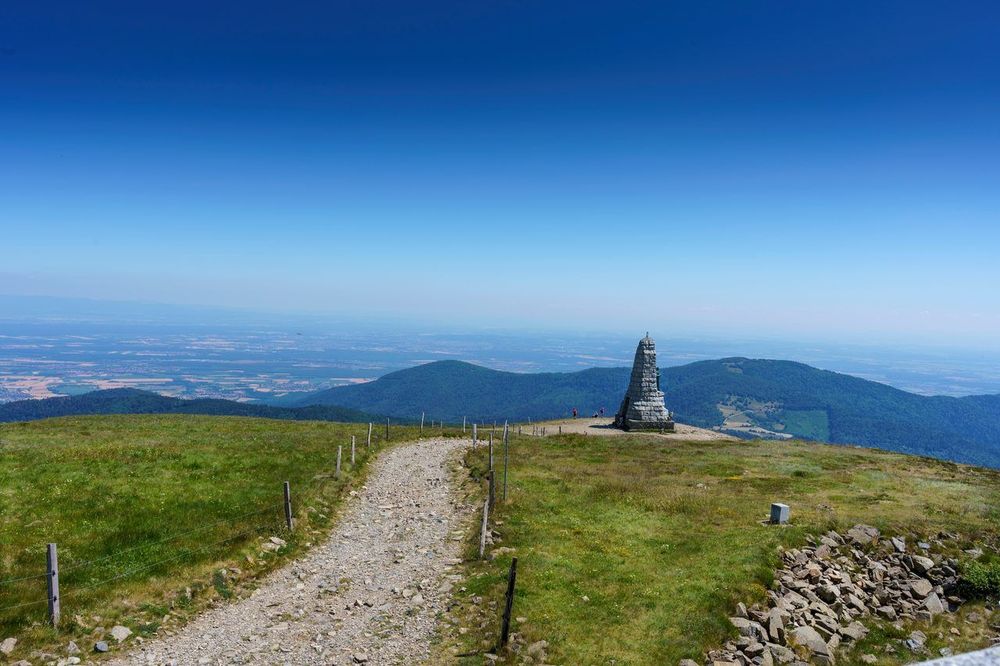
The Route des Crêtes, which follows the ridgeline of the Vosges massif, is poorly suited to rainy days: frequent fog, reduced visibility, and uninviting mountain car parks in a downpour. Save it for a clear day. Our article on the Route des Crêtes des Vosges gives the full breakdown of stops.
In any case, always have a plan B within thirty minutes of Colmar: Alsatian weather changes fast, sometimes within the space of a single afternoon.
12. Practical Information: Duration, Opening Hours, and Budget in Rainy Weather
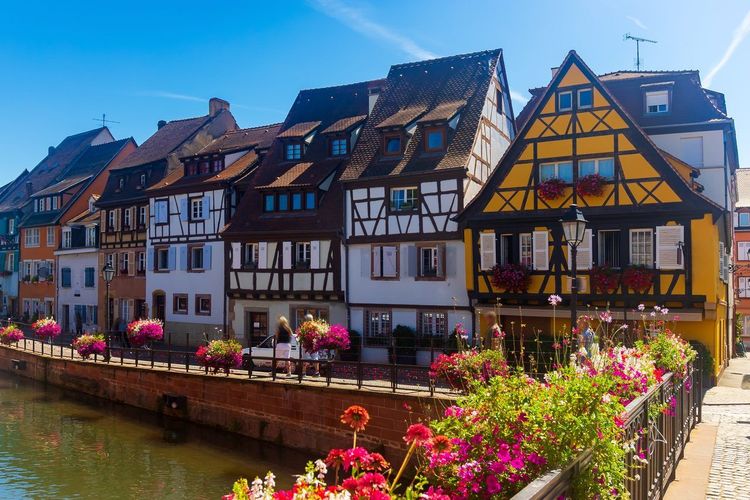
Allow a full day to visit two or three museums, enjoy a gourmet break, and stroll through the old town at a relaxed pace. With a half-day, limit yourself to one major museum and the Marché Couvert.
Colmar's museums are open year-round, but their closing days differ: Tuesdays for the Unterlinden and the Musée du Jouet (outside school holidays), Mondays for the Bartholdi and the Natural History Museum, Sundays for the Bibliothèque des Dominicains. The Choco-Story and Vino Storia open every day except in January after the school holidays. Budget between €5 and €15 per museum at full price, with the Unterlinden and the Choco-Story at the higher end of that range.


FAQ
What to do in Colmar when it rains?
Head to the city-centre museums (Unterlinden, Bartholdi, Musée du Jouet, Choco-Story), the Bibliothèque des Dominicains with free admission, the Marché Couvert, a cosy winstub, or a workshop. The old town remains walkable with an umbrella thanks to its porches and arcades, making it easy to alternate between indoors and outdoors depending on the intensity of the shower.
How much time should you allow for visiting Colmar in the rain?
A full day lets you visit two to three museums, enjoy a food break, and stroll through the historic centre at a relaxed pace. With a half-day, focus on one major museum and the Marché Couvert rather than multiplying trips in the rain.
Are Colmar's museums open year-round?
Yes, but with different closing days: Tuesday for the Unterlinden, Monday for the Bartholdi and the Natural History Museum. The Choco-Story is open every day except during its January closure. Only the Musée des Usines Municipales is reserved for a few dates per year.
Is the Colmar Marché Couvert open on Mondays?
No, the Marché Couvert is closed on Mondays. It opens Tuesday to Thursday from 8am to 6pm, Friday until 7pm, Saturday from 8am to 5pm, and Sunday from 10am to 2pm.
Do you need to book a wine tasting in Colmar in advance?
It depends on the time of year: on weekends and during the Christmas markets, it's best to book ahead as time slots fill up quickly. On weekdays and off-season, it's often still possible to walk in directly at the city-centre wine cellars.
What can you do in Alsace when it rains?
Beyond Colmar, nearby villages such as Eguisheim or Riquewihr offer wine cellars, shops, and churches, and Kaysersberg-Vignoble is home to the Musée du vignoble et des vins d'Alsace. Europa-Park, about an hour away, and the indoor water park Rulantica are ideal for families looking for a full day under cover.
Does it rain a lot in Colmar?
No, Colmar is one of the driest cities in France: the Vosges massif blocks a large share of the weather systems coming from the west. The city receives around 600 mm of rainfall per year, less than Strasbourg or Nancy.
Between neighbouring museums, gourmet market halls, winstubs, and sheltered porches, Colmar actually lends itself better than it might seem to rainy days: the compactness of the historic centre turns every trip into a five-to-ten-minute walk rather than an expedition. All it takes is accepting a slower pace, keeping a plan B on hand, and letting the weather set the order of visits.
To link all these spots without having to think about it, our Ryo audio tour of Colmar is the simplest solution: 21 stops and 2h10 of content to follow at your own pace, between two museums or sheltered under a porch during a shower. Enough to turn a grey day into one of the best visits of your trip.
À lire également