© Shutterstock
 Votre guide Ryo
Visiting Colmar Without a Car in 2026: Train, Shuttle and Bike
Visiting Colmar without a car is no hardship: it's actually the best way to discover the town. The reflections of the half-timbered houses in the canals of Petite Venise, the silence of the cobbled lanes before the tour buses arrive, the smell of tarte flambée drifting out of the winstubs at lunchtime: none of this can be savored from a car park on the outskirts. The historic center, largely pedestrianized, covers about one square kilometer, and the train station is only about a twenty-minute walk from place de l'Ancienne Douane.
Here you'll find everything you need to plan your visit: the TER Fluo trains that link Strasbourg in about thirty minutes and Mulhouse in twenty, a free electric shuttle looping around the historic core every fifteen minutes, a commented tourist train for those who prefer to stay seated, the Kut'zig open-top bus that strings together the villages of the wine route, and cycle paths that run all the way to the vineyards. Even Eguisheim, Riquewihr or Kaysersberg can be reached by regional bus without ever touching a steering wheel. For a first approach to the historic heart, the Ryo audio-guided tour of Colmar lays out a 4.7 km walking route in 21 stops, which serves as a common thread for several tips below.
Getting to Colmar by Train: Stations, TER Fluo and TGV
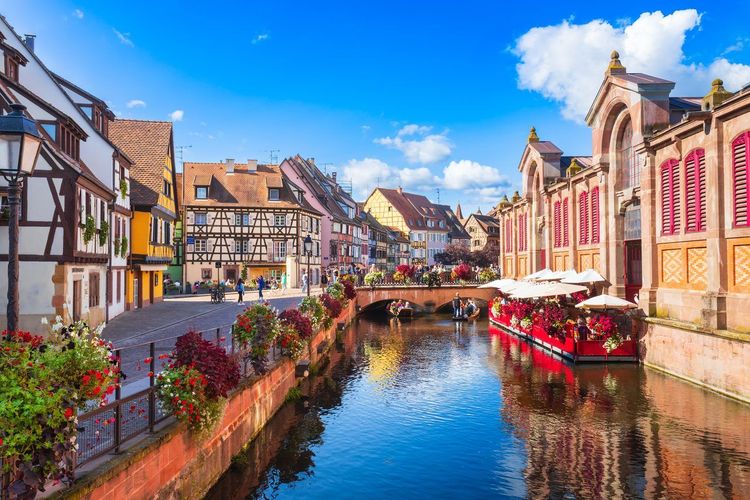
The Colmar train station (20 Avenue de la République, 68000 Colmar, rated 4.5/5 on Google from 2,300 reviews) is located west of the historic center, a fifteen- to twenty-minute walk away. It's the logical entry point if you're arriving from Strasbourg, Mulhouse or Paris, and the adjoining bus station brings together the regional buses to the wine villages.
The TER Fluo network, run by the Grand Est region, serves Colmar at high frequency. From Strasbourg, allow about 30 minutes of travel, with around forty trains a day and a departure every 20 to 30 minutes at peak times. From Mulhouse, the connection is even shorter, about twenty minutes. It's one of the simplest routes on the Fluo network, with no change and no mandatory reservation for regional journeys.
For visitors coming from Paris, two options coexist. Several direct TGV INOUI trains link Gare de l'Est to Colmar every day in about 2h20. Other departures require a change in Strasbourg or Mulhouse, which lengthens the journey to 3 or 3.5 hours but multiplies the departure slots during the day. Booking a few weeks ahead on SNCF Connect secures the lowest fares, and Avantage cards cut the bill further for those who return several times a year.
Once on the platform, you have two choices to reach the center: walking, on a flat route that goes up avenue de la République to the Champ de Mars and place Rapp, or the Trace city buses that leave from in front of the station and drop you at the gates of the historic core, where the free shuttle takes over. Families with luggage or strollers often prefer the bus, while light travelers prefer walking, which already passes the lovely villas of the station district.
One last practical point: if you're only staying one day and plan to follow up with an Alsatian village in the afternoon, check in advance for luggage storage options, as they change regularly around the station.
The City-Center Shuttle, Electric and Free
The city-center shuttle, electric and entirely free, is probably the most practical tool for anyone who wants to get around Colmar without walking every leg. Launched in 2019 and operated by the Trace network, it runs in a loop around the historic core with a service every fifteen minutes, from 9 a.m. to 7 p.m., Monday to Saturday.
The small vehicles, with eight seats, about ten standing places and a space for a wheelchair, squeeze through streets where a standard bus couldn't go. The shuttle is connected to the Trace bus lines and the main car parks: you get on and off freely at stops, without a ticket or validation, and some zones even operate on demand. It's handy for reaching a slightly off-center hotel or giving your legs a rest at the end of the day.
Beware of Sundays, when there's no service, and of evenings: after 7 p.m., you'll have to walk. During the Christmas market period, ridership climbs and the vehicles, with only about twenty places, can be full at peak times on Saturdays: allow some margin or choose walking for short trips.
The Tourist Train and the Kut'zig Open-Top Bus
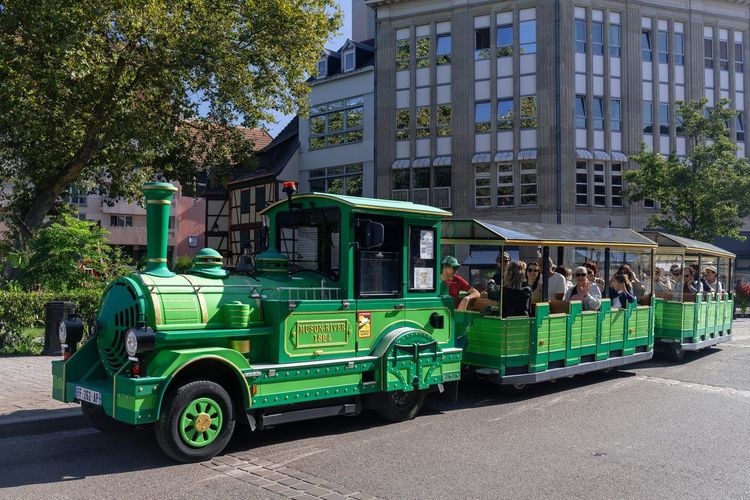
Two options let you discover the region while seated, but they aren't in the same category at all.
The tourist train departs from rue Kléber, next to the Unterlinden Museum. The electric trains run 7 days a week in season, with a departure every 30 minutes, and pass through Petite Venise, the Tanneurs district and the surroundings of the Saint-Martin Collegiate Church in about forty minutes. Each passenger receives a headset with commentary available in 16 languages. Allow 8 euros per adult and 4 euros for children under 12, free under 1 year old. Ideal if you're traveling with young children or reduced mobility.
The Kut'zig open-top bus, on the other hand, doesn't run within Colmar: it leaves the town for a continuous loop along the wine route, with stops at Ribeauvillé, Riquewihr, Kaysersberg-Vignoble, Turckheim and Eguisheim. The principle is hop-on hop-off: your ticket is valid all day and you get off wherever you like, then board again at the next pass. In 2026, it runs from April 3 to October 11, with a bus about every 1h45 and a first departure at 8:30 a.m.
As for fares, the Kut'zig costs 32 euros per adult and 22 euros per child up to 12, free for under-3s on a lap. Booking is mandatory, online, on the dedicated app or at some tourist offices: don't count on getting a seat by turning up at the last minute on a Saturday in July. It is by far the most comfortable way to string together three or four wine villages in a day without a license or a rental car.
If your goal is to understand the history of the places rather than simply watch them go by, a walking tour with an audio guide lets you stop wherever you like, without depending on a fixed departure time. That's the whole point of the next section.
Exploring the Historic Center on Foot: Petite Venise, Tanneurs District and Koïfhus
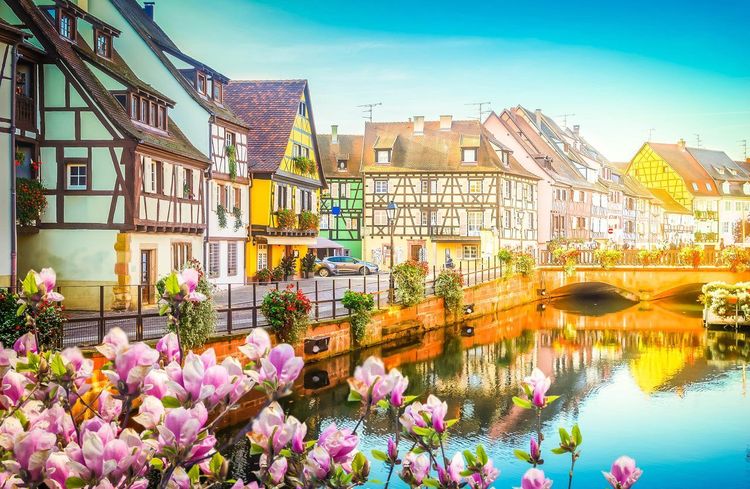
Visiting Colmar on foot remains, for the vast majority of visitors, the best option: the historic center can be covered in two to three hours without ever rushing, and most of the landmark sights are less than ten minutes' walk from one another.
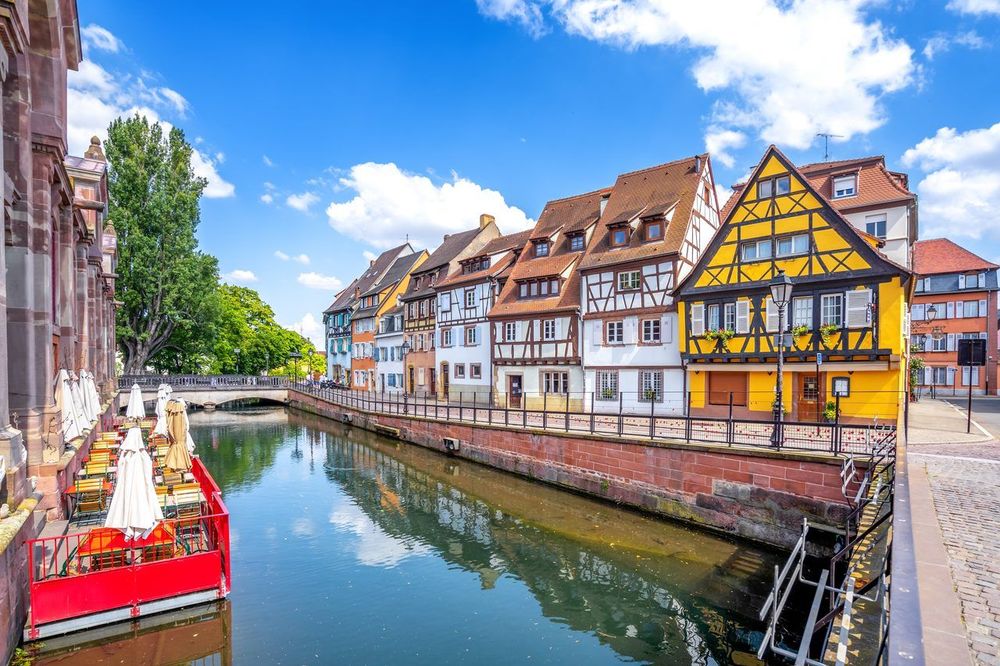
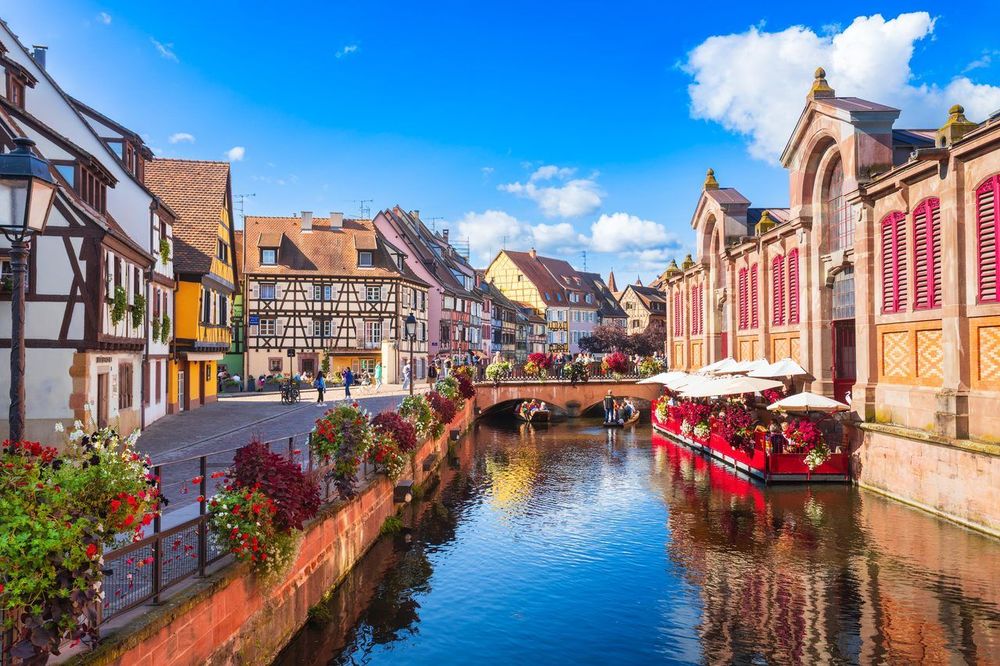
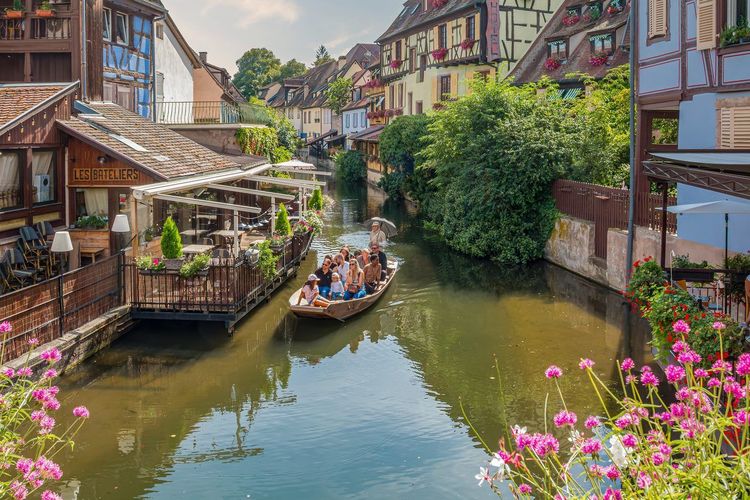
Start with Petite Venise, the district that gives Colmar's postcard its nickname. The pastel-colored half-timbered houses are reflected in the canals of the Lauch, where a few flat-bottomed boats still glide. Early in the morning, before the groups arrive, the quai de la Poissonnerie offers a nearly empty view of these old façades, ideal for photos without tourists in the frame.
Heading north, you enter the Tanneurs district. The houses here are tall and narrow, topped with open attics that once served to dry hides. The rue des Tanneurs itself keeps this distinctive, almost vertical profile, inherited from a craft long since vanished but whose architecture was saved during the district's major renovation in the 1970s.
Five minutes away, place de l'Ancienne Douane is home to the town's other great symbol: the Koïfhus (Place de l'Ancienne Douane, 68000 Colmar, rated 4.5/5 on Google from 3.2K reviews), a building with glazed tile roofs built in the late 15th century to store and tax goods passing through the town. Its arcaded façade and multicolored roofs have made it, along with Petite Venise, the most reproduced image of Colmar. The square itself regularly hosts markets and, in December, one of the Christmas market sites.
You can then continue to the Saint-Martin Collegiate Church, then the Pfister House, before heading back down to rue des Marchands, which holds a good share of the town's best-preserved half-timbered façades. This route is enough to fill an entire morning if you stop at every shop window, every half-open courtyard, every photogenic street corner.
Right next to the Tanneurs district, the covered market deserves a stop, especially late in the morning when the Alsatian produce stalls are in full swing: ripened munster, warm pretzels, cured meats. It's also a good landmark for lunch before resuming your walk northward, toward the Unterlinden Museum and its Isenheim Altarpiece.
In terms of accessibility, the old cobblestones of some lanes can make walking with a stroller or wheelchair difficult: in that case, stick to main routes like rue des Marchands, which are wider and better leveled, rather than the small alleys. At the end of the day, once the tour operator coaches have left, street lighting gives the façades a warm hue that completely changes the mood of your photos. It's often the time regulars prefer, between 6 p.m. and sunset.
For those who want a more structured framework without following a group or keeping to a departure time, the Ryo audio guide to Colmar covers precisely this route: 21 audio stops over about 2h10 and 4.7 km, linking Petite Venise, the Tanneurs district and place de l'Ancienne Douane in an order designed for walking, with anecdotes that bring each façade to life. You move at your own pace, headphones on, without waiting for anyone.
Getting Around by Bike: Cycle Paths and Rentals
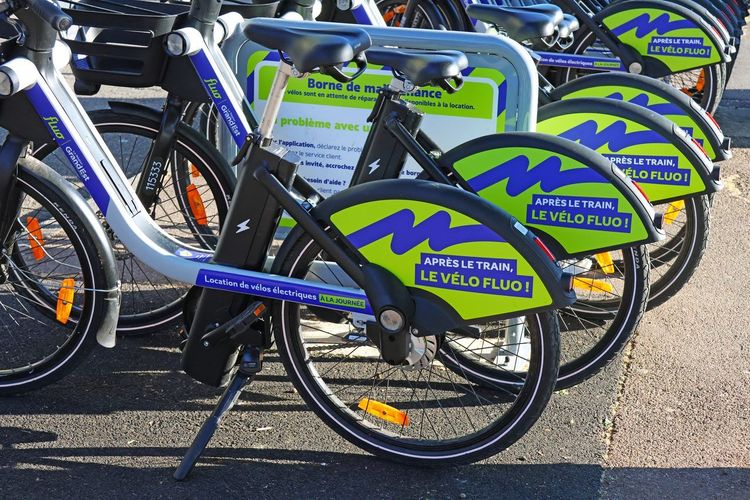
Colmar is also very well suited to cycling, especially if you plan to fit in several excursions on the same day. The town is flat, which makes getting around easy even without great fitness.
Several cycle paths link the center to neighboring towns, notably toward Ingersheim and Turckheim along the valley, as well as marked routes that reach the vineyards to the south toward Wintzenheim and Eguisheim. These routes largely avoid car traffic, a real comfort for families or occasional cyclists.
For rentals, several companies offer standard and electric-assist bikes by the day or half-day, with pick-up points near the station or on the edge of the historic center. Bikes are not welcome everywhere in the pedestrian zone at busy times: get off and walk in crowded lanes. Allow about fifteen euros for a standard half-day rental, more for an electric model.
The advantage of cycling over the bus is not depending on the sometimes sparse schedules of rural lines. Many visitors thus combine a morning on foot in Petite Venise and the Tanneurs district with an afternoon by bike to Eguisheim, about 7 km away, or half an hour of easy pedaling.
For the stops in the center, nothing prevents you from setting the bike down and starting the Ryo audio guide to listen to an anecdote about a façade before getting back on the road: the 4.7 km route lends itself as well to a bike ride with stops as to a continuous walk. If you're leaving by train, note that regional TER trains accept non-dismantled bikes subject to available space, which lets you link Colmar with another Alsatian stop.
Car-Free Excursions Around Colmar: Alsatian Villages and the Wine Route
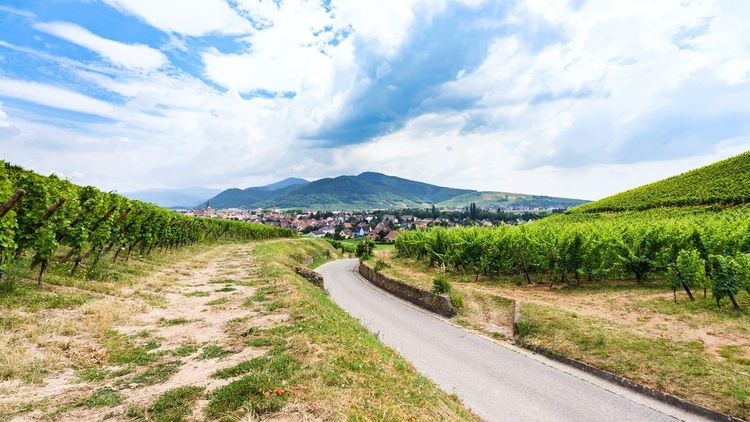
One of the best arguments for visiting Colmar without a car is that the town is not a dead end: several of the most photographed Alsatian villages in France can be reached by public transport, without renting a vehicle. The starting point is almost always the bus station, right next to the SNCF station.
Eguisheim, often cited among the most beautiful villages in France, is served by the Fluo 830 line (Colmar-Eguisheim-Rouffach) in about fifteen minutes. Departures are few, only a handful a day: note the return time before leaving, or cycle there.
Riquewihr, a little further north on the wine route, can be reached by regional Fluo bus from Colmar station in 30 to 40 minutes. The village, pedestrian at its center, has kept its ramparts and a density of historic houses that is rare in Alsace. Its compact size lets you see everything on foot in a morning.
Kaysersberg (Place Henri Albrecht, 68240 Kaysersberg-Vignoble, rated 3.9/5 on Google from 102 reviews), finally, is served by the Fluo R13 line from the bus station, for a journey of about 30 minutes and a ticket at 4 euros one way (2 euros reduced fare). The village, crossed by the Weiss and dominated by the ruins of a medieval castle, lends itself to a longer stroll if you have time to climb up to the keep overlooking the rooftops.
To link these villages together, the wine route can also be done in stages by regional bus, but connections require patience: frequencies in rural areas remain far sparser than those of trains. From April to October, the Kut'zig solves the problem by linking Ribeauvillé, Riquewihr, Kaysersberg, Turckheim and Eguisheim on a single loop. Prepare your timetables in advance on the Fluo route planner. If you only have to choose one, go for Eguisheim for its proximity, or Riquewihr if ramparted architecture interests you more.
The Ryo audio-guided tour of Colmar focuses on the town's historic heart, but once the walking loop is finished, nothing prevents you from extending the day to one of these villages: it's often the most satisfying combination for those with only one or two days to devote to the region. To plan this extension, our Ryo guide to the Alsatian villages around Colmar details ten destinations, with their specific features and their distance from the town.
Visiting Colmar Without a Car in Winter, at the Christmas Market

In winter, going without a car becomes almost a given, when the Christmas market turns the historic center into one of the busiest in France. Several sites are spread between place de l'Ancienne Douane, Petite Venise, place des Dominicains and the surroundings of the Saint-Martin Collegiate Church, each with its own chalets and decorations.
December crowds change the parking picture: car parks in the center are full by midday on weekends, and traffic slows noticeably in the adjacent streets. It's precisely in these conditions that the train and the free electric shuttle come into their own: you get off at the station, reach the center on foot or by bus, and avoid the hunt for a space that can ruin an entire afternoon.
Plan slightly wider time margins than in summer, and don't forget that the Kut'zig and some tourist services don't run in winter. Arriving in the morning, before lunchtime, remains the best way to avoid the densest crowds, which generally settle in between 3 p.m. and 7 p.m.
The audio stops of the Ryo audio-guided tour of Colmar recount, among other things, the history of the half-timbered houses that host part of the chalets every winter: a good reason for a warm break, mulled wine in hand, while you listen to an anecdote about the square you're standing on. For the full logistics of the season, dates, sites and hours, see our article on the Colmar Christmas market before you go.
How Much Time and Budget to Plan for Visiting Colmar Without a Car
For the historic center alone, half a day is enough to see the essentials: Petite Venise, the Tanneurs district and place de l'Ancienne Douane can be covered in two to three hours of leisurely walking. Allow a full day if you add the Unterlinden Museum or a long lunch break, and two days if you want to combine the center with an excursion to an Alsatian village.
As for transport budget, the good news is that the most useful part remains free: the electric city-center shuttle costs nothing, and neither does walking. Expenses are concentrated on getting there and optional excursions: a round trip by TER from Strasbourg or Mulhouse generally runs around 15 to 30 euros depending on the fare, a tourist train ride costs 8 euros per adult, and a round trip by Fluo bus to Kaysersberg comes to 8 euros. The Kut'zig, at 32 euros a day, is the biggest expense but alone replaces several bus tickets.
In total, a day in Colmar without a car, excluding accommodation and meals, comes to 25 to 40 euros per adult with a train to get there, the tourist train and walking, and around 60 euros if you add a day on the Kut'zig. Families can cut the bill further by relying on the free shuttle and walking, and reserving the paid budget for a single standout excursion.
Where to Stay to See Everything on Foot
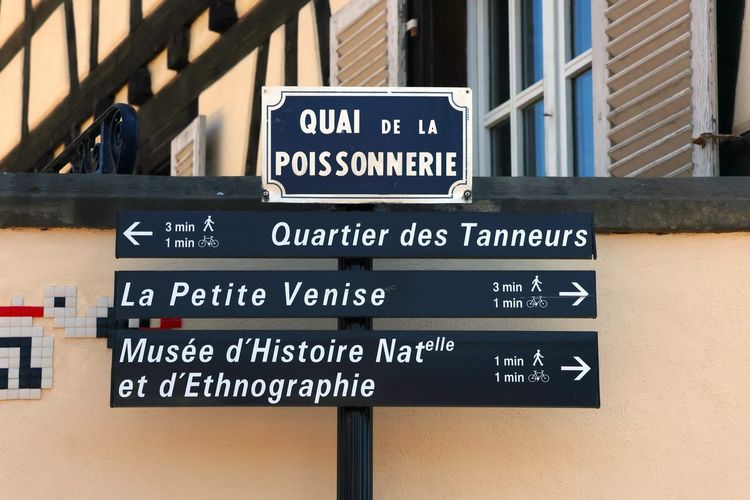
To see everything on foot, it's best to stay in the historic center or in its immediate vicinity, within a radius that the free shuttle or a ten-minute walk can cover. The areas around Petite Venise and the Tanneurs district hold most of the well-located hotels and guesthouses, often in renovated half-timbered houses that add to the charm of your stay.
If center prices exceed your budget, the area around the station remains a good alternative: you lose a bit of charm, but gain direct access to trains and regional buses, without depending on a taxi when arriving late. Avoid, however, poorly connected accommodations on the outskirts, which would force you to walk twenty minutes or more on each trip, or to plan a taxi budget that cancels out the point of visiting without a car.
Practical Tips: Tickets, Apps and Mobility Deals
A few habits make a car-free stay in Colmar much easier. On the app side, SNCF Connect remains the reference for TER Fluo and TGV tickets, the Fluo Grand Est route planner covers regional buses, and the Trace network website provides information on urban lines and the shuttle, whose hours may be adjusted on public holidays.
For train tickets, booking a few days ahead generally gets you a better fare than buying on the day, especially on weekends. During the Christmas market period, booking ahead becomes almost essential as trains to Alsace fill up quickly.
As for season, spring and early autumn offer the best compromise between moderate crowds and good weather for walking, and correspond to the Kut'zig's operating period. Summer remains pleasant but busier, especially in Petite Venise in the middle of the day. December, despite the crowds, has its own charm. One last tip: slip a pair of comfortable shoes in your bag, as the cobblestones of the historic center are less kind to the feet than they look in photos.



FAQ
Is there a free shuttle for Colmar's city center?
Yes. The electric city-center shuttle runs for free in Colmar's historic core, with a service every fifteen minutes from 9 a.m. to 7 p.m., Monday to Saturday. It connects to the Trace bus lines and the main car parks, and can be used without a ticket or validation.
Is it possible to visit Colmar on foot?
Yes, and it's actually the best option for most visitors. The historic center is largely pedestrianized and compact: Petite Venise, the Tanneurs district and place de l'Ancienne Douane can be linked in two to three hours of leisurely walking, with never more than ten minutes between two major points of interest.
How can I get around Colmar?
Several options can be combined depending on your preferences: walking for the historic center, the free electric shuttle and Trace buses for longer trips, cycling to reach neighboring towns, the tourist train for a seated, commented tour, and the Kut'zig open-top bus for the wine route.
Where can I catch the little tourist train in Colmar?
The tourist train departs from rue Kléber, next to the Unterlinden Museum, with a departure every 30 minutes in season. A ticket costs 8 euros per adult and 4 euros for children under 12, and the commentary is available in 16 languages.
How do I get to Colmar without a car from Strasbourg or Paris?
From Strasbourg, the TER Fluo network reaches Colmar in about thirty minutes with very frequent departures. From Paris, several direct TGV trains cover the journey in around 2h20 from Gare de l'Est, while other departures involve a change in Strasbourg or Mulhouse.
Do I need to book the Kut'zig open-top bus in advance?
Yes, booking is mandatory: online, through the app or at some tourist offices. The day ticket costs 32 euros per adult and 22 euros per child, and lets you hop on and off as you like along the wine route loop, from April to October.
How much time should I plan for visiting Colmar without a car?
Half a day is enough for the essentials of the historic center. Allow a full day if you add the Unterlinden Museum or a long lunch break, and two days if you add an excursion to an Alsatian village such as Eguisheim or Riquewihr.
Visiting Colmar without a car ultimately requires no sacrifice: the train covers your arrival, the free shuttle and walking cover the center, and the bike, regional bus and Kut'zig cover your excursion plans. The compact, largely pedestrian town lends itself naturally to this way of exploring, perhaps even better than a motorized visit that would force you to look for a parking space at every stop.
For a first immersion, the Ryo audio-guided tour of Colmar's historic center remains the simplest starting point: 21 stops, 2h10 of walking and 4.7 km linking Petite Venise, the Tanneurs district and place de l'Ancienne Douane, at your own pace and without depending on a bus schedule.
À lire également