© Shutterstock
 Votre guide Ryo
Christmas Markets in Colmar 2026: Dates, Hours and the 6 Squares You Can't Miss
There's that smell of mulled wine and gingerbread clinging to the cobblestones from late November, well before the first string lights come on. The Christmas markets in Colmar are among the most popular in Alsace, and the old town swaps its quiet winter calm for six illuminated markets where strolling becomes almost a local sport. To extend your walk once the chalets have closed, the Ryo audio-guided tour of Colmar retraces in 21 stops the lanes of Petite Venise and the Dominicans quarter, just as pleasant by day as by night.
From November 23 to December 29, 2026, Colmar offers a gourmet market run by chefs and open until January 3, a children's market along the Lauch, a covered market in the 15th-century old customs house, and children's choirs singing from boats gliding along the canal. Ten minutes away, a night watchman still calls out the hours in period costume. Here you'll find the dates and hours, the map of the six markets, a one-day itinerary, the best parking and transport options, and the surrounding villages to add to your plans if a weekend isn't enough.
Dates, Hours and Practical Info for Christmas in Colmar in 2026
First, mark these dates in your calendar: the Christmas markets in Colmar run from Monday, November 23 to Tuesday, December 29, 2026, more than five weeks to plan your visit without rushing. It's one of the longest schedules in the region, well beyond the three or four weeks seen in some of the more modest Alsatian villages.
Opening hours follow a schedule common to most chalets: 11am to 7pm from Monday to Thursday, then 10am to 8pm from Friday to Sunday. The only notable exception: on December 24, when all the markets close at 5pm, and December 25, when most chalets are closed.
The Marché Gourmand at the Montagne Verte sports ground follows its own rhythm: open every day from 11am to 10pm, it stays open into extra time until January 3, 2027, closing at 5pm on December 31. It's therefore the only option for dinner on site after the other chalets have closed, or for enjoying the Christmas atmosphere between the holidays.
Good news for your budget: access to all six markets is completely free, and no ticket is needed to stroll among the chalets. Only certain occasional attractions, such as the Ferris wheel or concerts, may be paid. Bring a little cash: some of the small artisans don't accept bank cards, especially at the mulled wine and bredele stands.
To avoid the crowds, aim to arrive on a weekday before noon: the Christmas market is much calmer on a Tuesday or Wednesday morning than on a Friday evening or a December weekend, when the lanes of the old town can fill up to the point of slowing your walk. Advent weekends also bring coaches from Germany and Switzerland: if you're after peace and quiet, plan your visit on a weekday, between November 30 and December 17.
The 6 Christmas Markets of Colmar: Each with Its Own Atmosphere
What sets Colmar apart from other large Alsatian cities is that the Christmas market isn't a single block but a mosaic of six markets, each with its own identity, artisans and atmosphere. You can see them all in one afternoon, since the old town is compact, or choose to focus on two or three depending on your tastes and the time you have.
Place Jeanne d'Arc, Ancienne Douane and Koïfhus: The Historic Heart
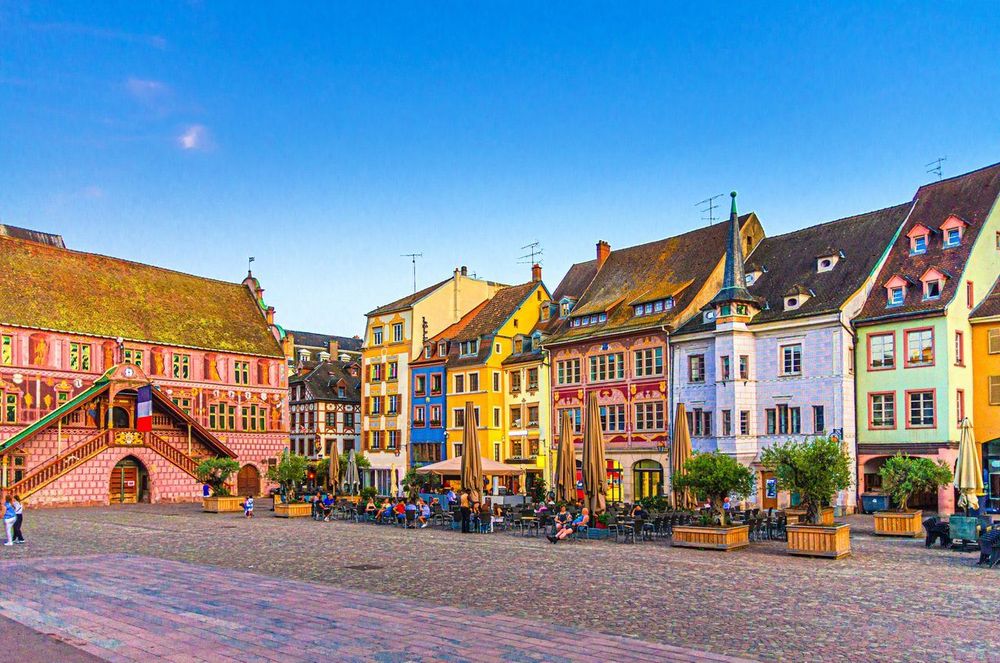
The Place Jeanne d'Arc is often the logical starting point for a visit, because it lies on the way from the train station and the main central car parks. Its chalets offer a mix of decorations, local products and light food, in a more open atmosphere than the medieval lanes.
A few minutes' walk away, the Place de l'Ancienne Douane changes register completely. Dominated by the Koïfhus, the 15th-century old customs house with its glazed tiles, it hosts a compact market focused on Alsatian crafts and local specialties. The large decorated fir tree in the middle of the square remains one of the most sought-after photo spots in the whole city, and the queues for a photo can grow long at the end of the day on weekends.
The third market in this area is tucked inside the Koïfhus itself. In the great hall of the old customs house, artisans display ceramics, glass, jewelry and wooden objects: it's the only covered market in the historic center, ideal for finding a handcrafted piece out of the weather when rain or snow shows up. You can spend half an hour there warming up before heading back out onto the square.
Place des Dominicains: Crafts Beneath the Stained Glass
A little further on, the Place des Dominicains cultivates a more hushed atmosphere. The chalets, nestled at the foot of the Dominican church, focus on a more refined selection: embroidered linens, hand-painted decorations, Alsatian delicatessen. People come here more to wander and buy a carefully chosen gift than to grab a quick bite.
Just steps away, the Saint-Martin collegiate church and its square, framed by old façades, aren't a market in their own right but serve as a link between the Dominicans and the Ancienne Douane. In the evening, the façades are bathed in an amber glow that radically changes the look of the neighborhood: the day's tourists give way to locals who come simply to have a mulled wine between appointments, a much more local atmosphere than during the day.
Fans of blown glass will also spot the Meisenthal baubles, from the Moselle village in the northern Vosges whose International Glass Art Center keeps alive the making of blown-glass Christmas baubles. An exhibition devoted to them takes place in the center some years: check the official program before making a special trip for it.
Petite Venise and the Marché Gourmand de la Montagne Verte: Kids, Flavors and Fresh Air
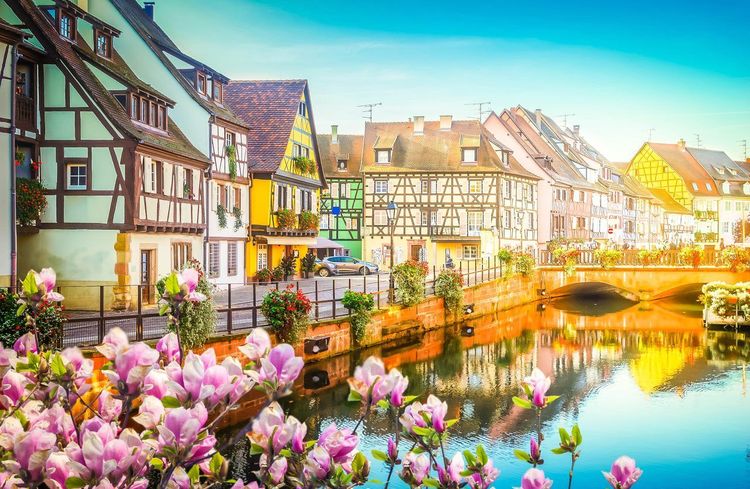
The most photogenic area is arguably Petite Venise, where the half-timbered houses are reflected in the waters of the Lauch. The market set up on place des Six-Montagnes-Noires is designed for children: a retro carousel, a giant Santa mailbox and toy chalets. It's also here that children's choirs board illuminated flat-bottomed boats and glide along the canal singing Christmas songs in the late afternoon, most often on Wednesdays and Saturdays. The show is free, but the dates change every year.
At the other end, geographically and in spirit, the Marché Gourmand is set up on the Montagne Verte sports ground (Plateau sportif de la Montagne Verte, 68000 Colmar, rated 4.4/5 on Google from 204 reviews), about ten minutes' walk from the center. Its nine chalets are run by chefs and master restaurateurs from the region, with cooking shows scheduled in the late afternoon, between 5pm and 6pm: a real gastronomic break away from the crowds in the lanes. A public car park, free or paid depending on the spaces, is less than 200 meters away and accessible day and night.
If your goal is to combine the Christmas market with heritage, plan your walk between Petite Venise and the historic center: the Ryo audio guide to Colmar covers precisely this area over 4.7 km and 2h10 of listening, enough to connect the markets while understanding what the façades you pass have to say, rather than simply photographing them.
Suggested Itinerary: A Day at the Colmar Christmas Market
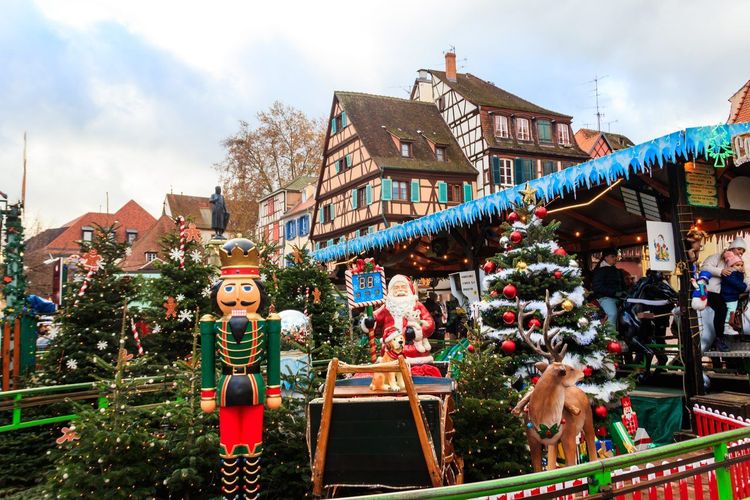
Only have one day? Here's a sequence that limits backtracking and puts each market at the right time of day.
Start around 10 or 11am at the Place Jeanne d'Arc, the closest to the train station, when the chalets open and the aisles are still easy to move through. Then head up to the Place des Dominicains for handcrafted gifts, then continue to the Ancienne Douane and the Koïfhus in late morning: it's the right time for the covered market, before the groups arrive.
Have lunch with a quick tarte flambée or in a winstub, then spend the early afternoon in Petite Venise, where the children's market and the quays remain pleasant in full daylight. Stay until nightfall, around 5pm: that's when the lights come on and, on some evenings, the choirs board the boats.
End the evening at the Marché Gourmand de la Montagne Verte, open until 10pm, for a chef-made dinner without a reservation. In total, allow four to five hours of walking and stops, breaks included. Along this same route, the 21 audio stops of the Ryo tour tell you the story of the houses you pass between markets.
Christmas Lights in Colmar in 2026
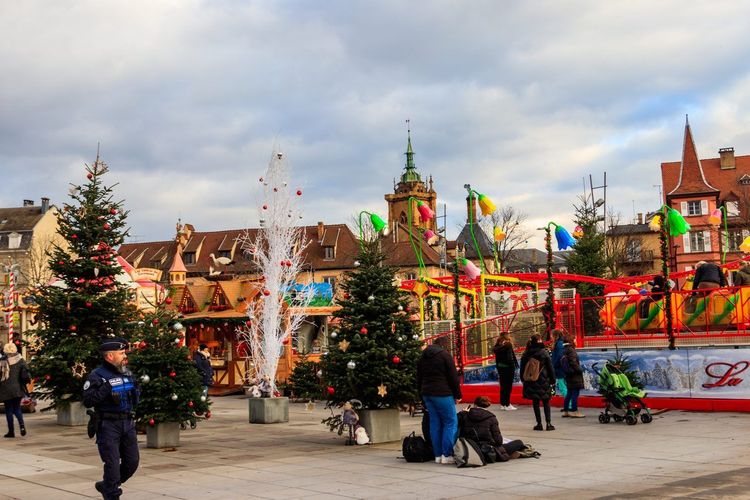
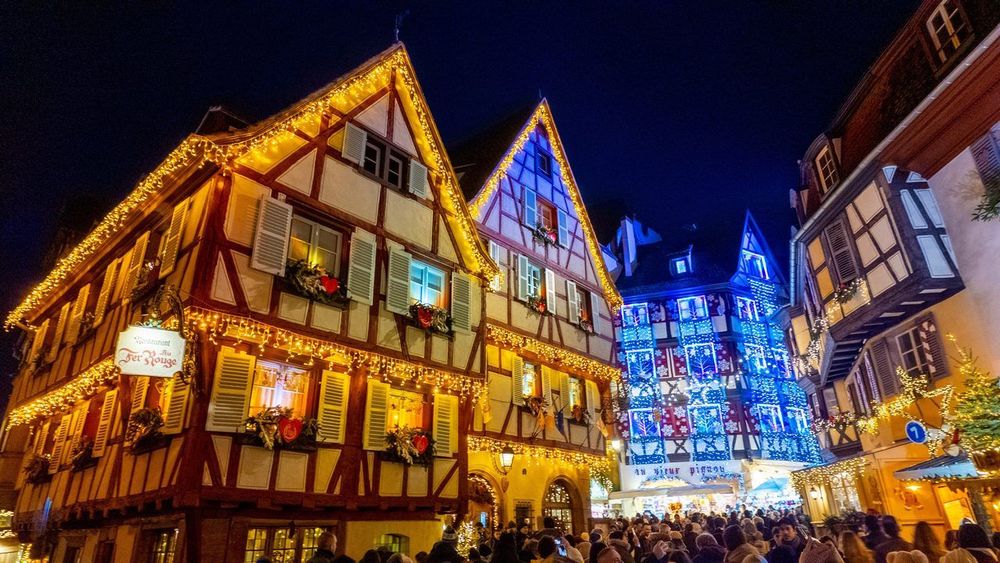
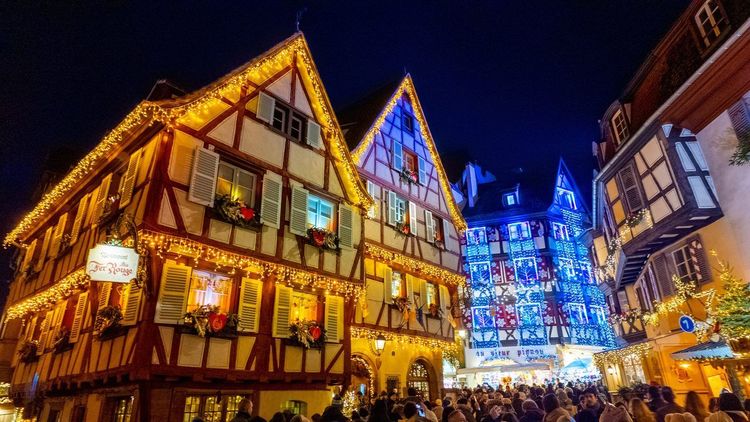
As soon as daylight fades, around 5pm in December, Colmar changes its face. The garlands strung above the lanes light up all at once, and the half-timbered façades of the Grand'Rue and the rue des Têtes are adorned with hundreds of small white lights, carefully fixed to the beams to highlight the architecture rather than hide it.
Above the Place des Dominicains, a hanging decoration serves as a visual landmark for anyone looking for the square from the neighboring lanes, while place Rapp turns into a winter wonderland with its flocked fir trees and its Ferris wheel, which offers a clear view over the city's rooftops. Children almost invariably stop beneath the decorations for a photo, and queues form without any signage to organize them.
To enjoy the lights without the weekend crowds of photographers, aim for a weekday between 6pm and 7pm: the lighting is already on, but the crowds remain reasonable, especially around Petite Venise, where the reflections in the canal water double the effect of the decorations.
The quays themselves are lit by garlands strung above the canal, a more understated choice than the big squares but remarkably effective in photos, particularly from the bridge on rue de Turenne. Allow about an hour to walk the whole illuminated route between the train station and Petite Venise, a little longer if you stop for photos in front of every decorated shop window.
Locals readily say it: Colmar's lights favor coherence over excess. No laser show or giant inflatable structure, but lighting designed street by street that showcases the medieval heritage without ever overwhelming it.
Events Program: Treasure Hunt, Exhibitions and Advent Traditions
For children, a Christmas treasure hunt is organized throughout the old town, with riddles to solve by observing the decorations and shop windows. Tale and legend trails complete the offering. It's a good way to keep a family busy for an hour without relying solely on rides, and an activity that works just as well in the rain as in dry weather.
Two exhibitions shed light on the link between Alsace and the fir tree: "The History of the Christmas Tree", on view from November 21 to December 31, 2026, and "1521, the Christmas Tree Tradition", from November 27, 2026 to January 4, 2027. The title refers to 1521, the date of one of the oldest known written mentions of a Christmas tree, found in an account register in Sélestat, about twenty kilometers to the north. A welcome cultural interlude if you're looking to escape the cold and the crowds around the chalets for a few minutes.
Depending on the year, the program also includes an Advent calendar and a nativity scene trail linking several churches and shop windows in the center. Wine lovers will watch for the Cuvée Givrée, a fair devoted to Alsace wines during the Christmas period. The details change every year: check the tourist office program before your visit.
Finally, if you're staying into the evening, head over to Turckheim (Turckheim, 68230 Turckheim), about ten minutes from Colmar: that's where the night watchman's round endures. Every evening at 9pm during Advent, except December 24 and 25, a watchman in period costume, with lantern, halberd, tricorn hat and horn in hand, walks the lanes singing in Alsatian and telling the story of the town, just like his predecessors who once kept watch against fires. The round lasts an hour and is free.
Christmas in Colmar with Family: Our Tips for Visiting with Kids
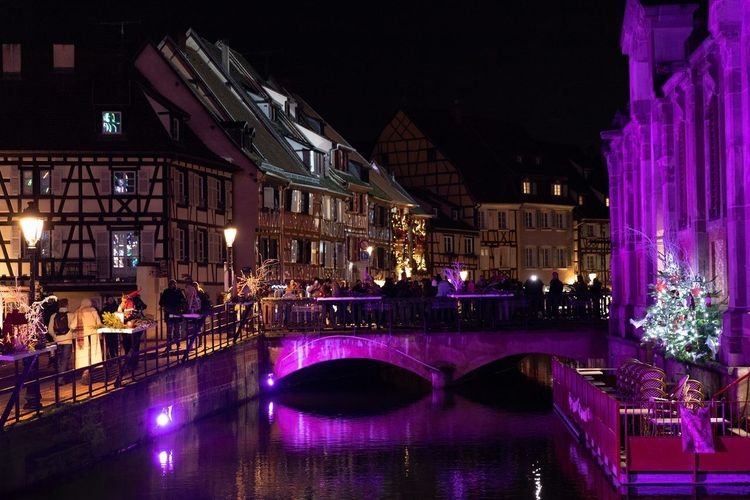
Colmar is one of the easiest Christmas markets to enjoy with children, as long as you adapt your pace. The children's market in Petite Venise is the obvious destination: a carousel, Santa's mailbox for dropping off a wish list, and toy chalets at eye level. Allow at least an hour on site, longer if the choirs are scheduled on the boats that day.
With a stroller, avoid Saturday afternoon slots, when the lanes between the Ancienne Douane and Petite Venise become hard to get through. Sunday morning, at the 10am opening, remains the most comfortable time. Also keep the covered Koïfhus in mind for a warm break when the little ones start to tire.
As for activities, the treasure hunt easily keeps 6-10 year-olds busy, and the Ferris wheel at place Rapp often serves as an end-of-day reward. For a snack, the chalets offer non-alcoholic mulled wine, hot apple juice and bredele sold by weight. If the day turns rainy, our article on what to do in Colmar when it rains gathers indoor backup ideas.
Getting There, Parking and Getting Around Colmar During the Christmas Markets
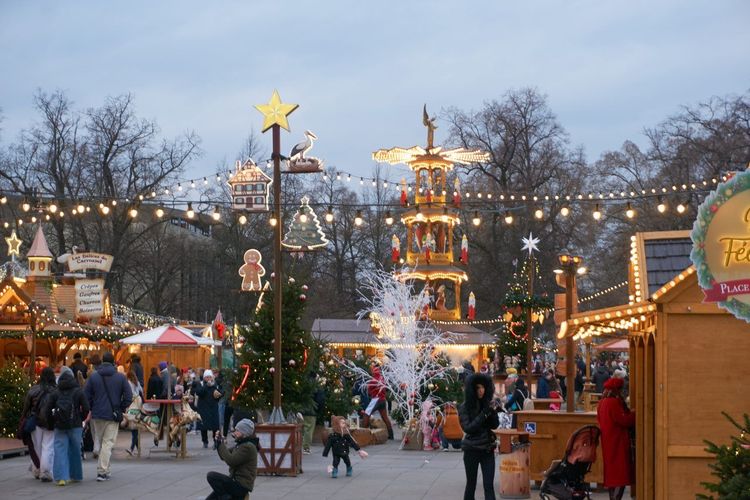
Colmar isn't a big metropolis, but during the five weeks of the Christmas market, parking becomes the main topic of conversation among regulars. The pedestrian zone in the historic center expands throughout the period, closing several streets usually open to traffic: it's better to plan your drop-off point than to hope to park on site.
By Car: Park-and-Ride and Christmas Shuttles
If you're driving on a weekend, the simplest solution remains the park-and-ride at the Parc des Expositions, avenue de la Foire aux Vins. Allow around €3 per day, round-trip shuttle included, with departures to the city center every ten minutes. These Christmas shuttles run only on Saturdays and Sundays during Advent (in 2026: November 28 and 29, then December 5, 6, 12, 13, 19 and 20).
On weekdays, several paid covered car parks in the city center, around the Théâtre, place Rapp or rue de Lacarre, remain the best option: they rarely fill up before mid-afternoon, unlike the open-air car parks, which are full by 11am on weekends. Allow between €1.50 and €2 per hour depending on location.
If you're traveling by motorhome, check in advance with the tourist office about dedicated areas: the covered car parks in the center are inaccessible to tall vehicles, and spaces near the Marché Gourmand de la Montagne Verte fill up quickly on weekend evenings. It's better to arrive in late morning and then walk to the center.
By Train and Bus: Reaching the Center Without a Car
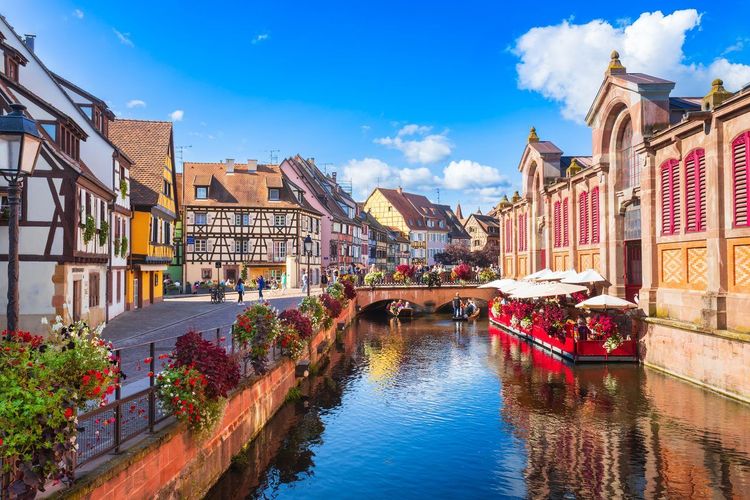
Colmar train station (Place de la Gare, 68000 Colmar, rated 4.5/5 on Google from 2,296 reviews) is about a 15-minute walk from the Place Jeanne d'Arc, heading up the avenue de la République. Colmar is served directly from Strasbourg, about 30 minutes by train, Mulhouse, about twenty minutes, and Basel, 45 minutes, making it an easy day trip for anyone already staying in Alsace or neighboring Switzerland.
On site, the Trace city bus network complements walking: several lines connect the train station, the historic center and the Montagne Verte, with a single ticket costing around €1.50. The last evening services are less frequent, so check the schedules if you're dining late at the Marché Gourmand.
One last tip if you arrive by train: use the fifteen-minute walk to the center to start the Ryo audio guide on your phone. At your own pace, with no group or set schedule, you'll understand what you're walking through even before reaching the first decorated market.
Christmas Shopping: What to Bring Back from the Colmar Christmas Market
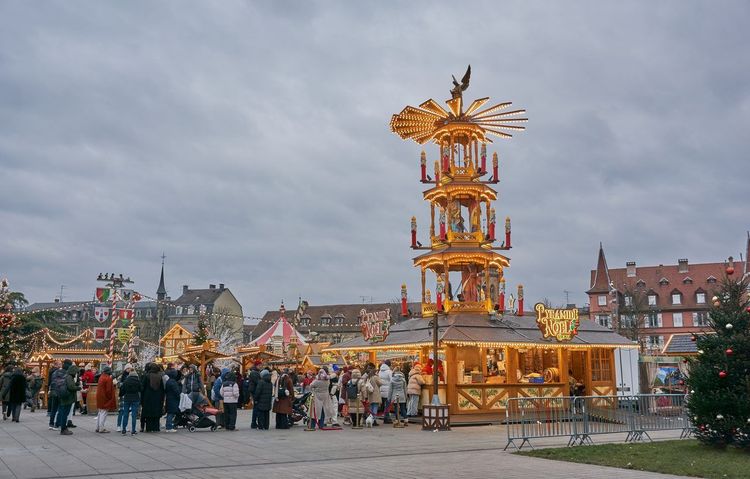
Beyond mulled wine, the chalets of Colmar are a good opportunity to bring back a real souvenir of Alsace rather than a generic fridge magnet. Blown-glass Meisenthal baubles can be found at several craft chalets, in colors and shapes that change every season.
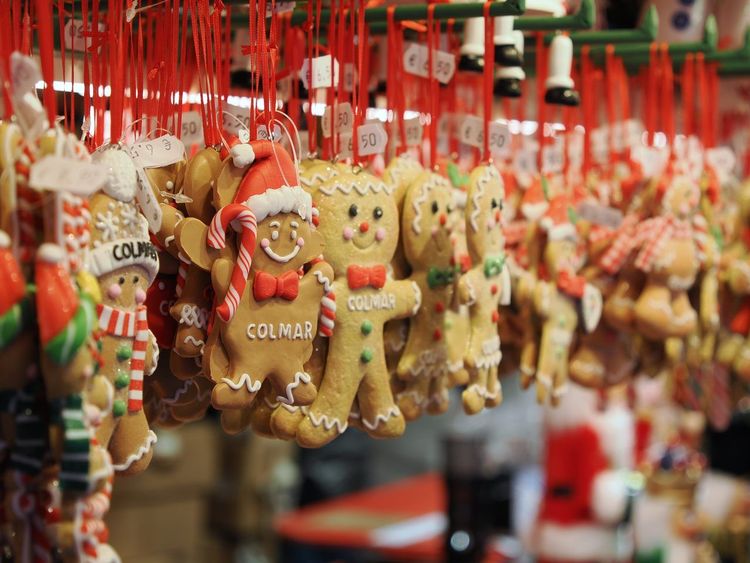
As for treats that travel well, the gingerbread from the Fortwenger house, founded in 1768 in Gertwiller and with a shop in Colmar, comes in several formats that pack well in a suitcase. Wine lovers will rather head home with a bottle of Crémant d'Alsace or Gewurztraminer, sold directly at certain stands run by winegrowers from the wine route, sometimes with a small tasting.
A small practical detail: most mulled wine chalets operate with a deposit mug, refundable or kept as a souvenir, with a design that changes from year to year. Many visitors end up collecting the mugs rather than returning them.
For a more handcrafted gift, look for traditional Soufflenheim pottery or embroidered Alsatian linens, found mostly at place des Dominicains and the Koïfhus, which are more oriented toward crafts than food. Children, for their part, are happier going home with a small bag of bredele, the traditional Advent shortbread cookies, sold by weight at several stands.
Where to Eat Alsatian Specialties During the Christmas Markets
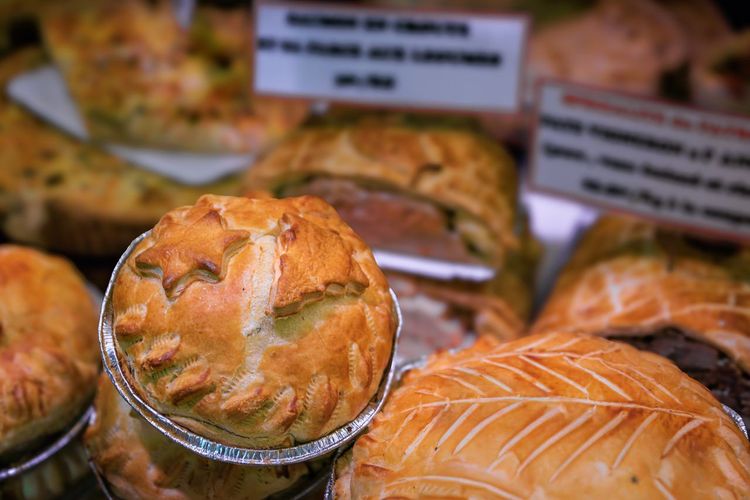
Between chalets, it's hard to resist the temptation to stop and eat. The stands set up at the markets already cover the essentials: tarte flambée, warm pretzels, grilled sausages and, of course, mulled wine in all its variations, including the non-alcoholic version for children.
For a proper sit-down meal, head to the winstubs of the historic center, those small Alsatian taverns that serve choucroute garnie, baeckeoffe, the stew of meats simmered in white wine, and liver dumplings all year round. At Christmas, many offer a special menu with a seasonal dessert, such as kouglof or bredele.
If you're looking for something quicker without sacrificing quality, the Marché Gourmand de la Montagne Verte remains the best option: its nine chef-run chalets serve until 10pm, without reservations, unlike the winstubs in the center, which fill up quickly on weekend evenings.
A tip that regulars readily share: book your table if you plan to dine on a Friday or Saturday evening during Advent. The best addresses around the Saint-Martin collegiate church are full by 7pm on some December evenings, and last-minute visitors often end up waiting on their feet, mulled wine in hand.
To go further on the specialties worth trying all year round, our Ryo article on culinary specialties to taste in Colmar details the addresses and must-try dishes.
Where to Stay in Colmar During the Christmas Markets
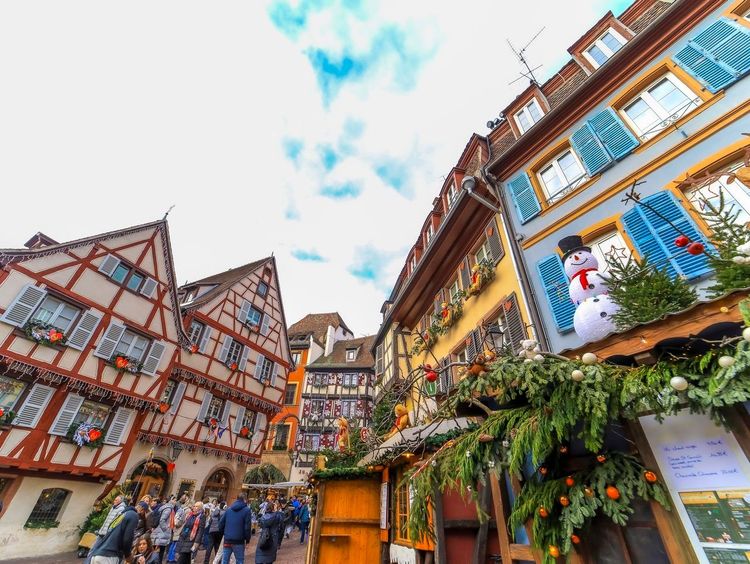
Demand soars during the five weeks of the market, especially on December weekends: book your accommodation several weeks, or even several months, in advance if you're aiming for a hotel in the historic center within ten minutes' walk of the markets.
Staying within the old town, around Petite Venise or the Saint-Martin collegiate church, lets you head back to warm up between visits and enjoy the lights once most day visitors have left. It's also the most expensive option on weekend evenings, with rates that can double compared with an ordinary week.
If your budget is tighter, hotels near the train station or along the avenue de la République offer a good compromise: a quarter of an hour's walk from the heart of the market, but often much cheaper than the old town addresses.
For a calmer stay, lodge in a neighboring village, Eguisheim or Turckheim for example, and reach Colmar by car or regional train in under twenty minutes. In Turckheim, you'll even have the night watchman's round on your doorstep. On the other hand, you lose the option of walking home after a late mulled wine. If you're staying two days or more, our article on visiting Colmar in 2 days helps you spread out your visits.
Other Christmas Markets to Discover Around Colmar
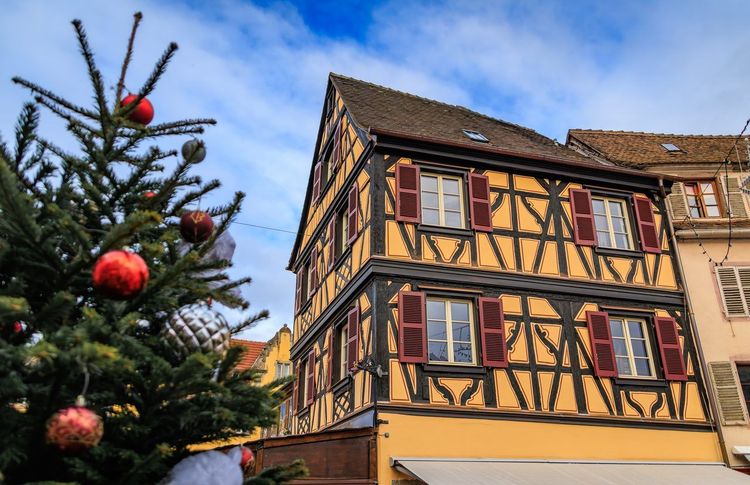
Colmar makes an excellent base for visiting other Christmas markets, some even more photogenic as the surrounding villages combine half-timbered houses and postcard scenery. If you have an extra day, here's where to spend it.
The Vineyard Villages: Riquewihr, Kaysersberg and Eguisheim
Riquewihr, about twenty minutes by road, sets up its Christmas market in lanes so narrow that the decoration alone is enough. It's probably the most atmospheric of the whole wine route, but also the most crowded on weekends: opt for a weekday visit or late afternoon.
Kaysersberg, a little further on, offers a more traditional market, spread along the Weiss, with a strong presence of local winegrowers who offer tastings of their wines at their own chalets. The view from the fortified bridge, decorated for the occasion, remains one of the most shared shots of Alsace in December.
Eguisheim (Eguisheim, 68420 Eguisheim, rated 4.6/5 on Google from 8.7K reviews), finally, stands out for its circular layout, inherited from its medieval origins: the Christmas market literally winds around the village, so you can walk the full circuit in under an hour.
To plan this excursion without recalculating everything yourself, our Ryo article on the 10 Alsace villages around Colmar details distances, travel times and the best combinations for a day or a full weekend.
Strasbourg and Mulhouse
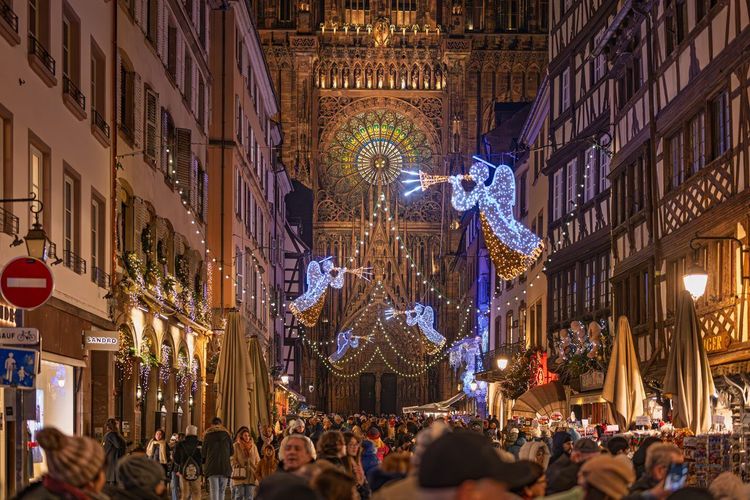
If the question of Colmar or Strasbourg comes up often, know that the two markets are complementary rather than competing: Strasbourg focuses on scale, with a dozen sites spread across the city and a monumental fir tree on place Kléber, while Colmar remains more compact and more intimate. Half an hour by train separates the two cities, making a two-day combination perfectly realistic.
Mulhouse, about twenty minutes by train, plays a different card: every year, the city creates a Christmas Fabric, an original textile that dresses the chalets and streets, a nod to its past as a textile capital. A curiosity that changes the atmosphere from one season to the next. Some visitors organize their stay around these three cities over a long weekend, staying in Colmar and making round trips by train.



FAQ
When does the Colmar Christmas market start in 2026?
The markets open on Monday, November 23, 2026 and run until Tuesday, December 29, 2026. The Marché Gourmand de la Montagne Verte stays open until January 3, 2027.
What are the opening hours of the Christmas markets in Colmar?
Monday to Thursday, 11am to 7pm; Friday to Sunday, 10am to 8pm. On December 24, the markets close at 5pm. The Marché Gourmand is open every day from 11am to 10pm.
Is the Colmar Christmas market free?
Yes, access to all six markets is completely free, with no ticket or reservation required. Only a few attractions, such as the Ferris wheel, are paid.
How long does it take to visit the Christmas markets in Colmar?
Allow four to five hours to see all six markets at a leisurely pace, including a meal break. To add a neighboring village such as Eguisheim or Riquewihr, plan for a full day, or even a weekend.
Where can you park during the Colmar Christmas market?
On weekends, the park-and-ride at the Parc des Expositions (about €3 per day, free shuttle every ten minutes) helps you avoid the congested city center. On weekdays, the covered car parks at the Théâtre, place Rapp and rue de Lacarre remain the most reliable.
What route should you follow between the markets?
Start from Place Jeanne d'Arc, close to the train station, then continue to Place des Dominicains, the Ancienne Douane and the Koïfhus. Head to Petite Venise at nightfall, before dinner at the Marché Gourmand de la Montagne Verte.
Conclusion
Between the six markets, the surrounding villages and the traditions passed down for generations, Christmas in Colmar suits an express afternoon just as well as a long weekend. The secret, as so often in Alsace, lies less in the number of chalets visited than in the pace you allow yourself: two markets well enjoyed are worth more than six gulped down on the run.
If you want to extend your discovery beyond the string lights, the Ryo audio-guided tour of Colmar remains the best way to understand what the half-timbered façades have to say between chalets: 21 audio stops, about 2h10 of listening and 4.7 km to cover at your own pace, with no group or set schedule. Enough to turn a simple stroll among the mulled wine stands into a real lesson in local history, Christmas tree included.
À lire également