© Shutterstock
 Votre guide Ryo
Free Activities in Strasbourg: the 2026 Guide to Visiting Without Spending a Cent
Strasbourg doesn't need your credit card to reveal its treasures. Finding free activities in Strasbourg is almost obvious: between the cathedral spire, the half-timbered canals of la Petite France and the imperial avenues of the Neustadt, the Alsatian capital is one of the rare major French cities where the bulk of its heritage can be discovered without a ticket. Two entire districts, the Grande Île and the Neustadt, are inscribed on the UNESCO World Heritage List, and both can be explored on foot, at any hour.
A cellar dating from the late 14th century still holds a wine from 1472, the oldest in the world kept in a cask. The European Parliament opens its chamber to the public six days a week. A former port warehouse converted into a digital workshop welcomes anyone who cares to push the door open. And every first Sunday of the month, eleven municipal museums simply lift their ticket barriers. From the cathedral to the most confidential addresses, this guide brings together thirteen categories of outings, organised by district and by theme. If you prefer a day-by-day programme, our article on visiting Strasbourg in 2 days offers a complete itinerary.
1. Historic and Religious Heritage with Free Access
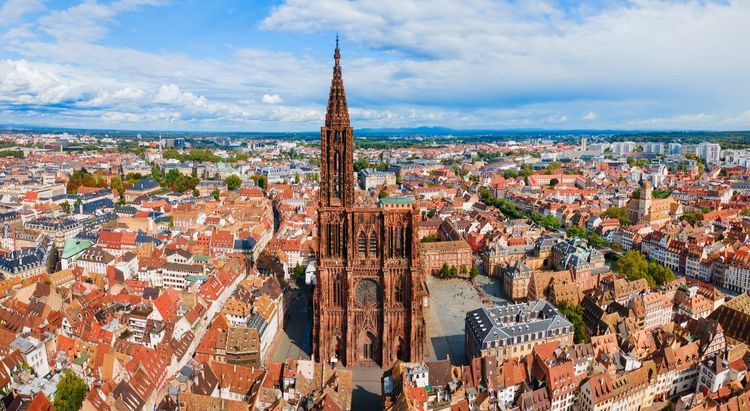
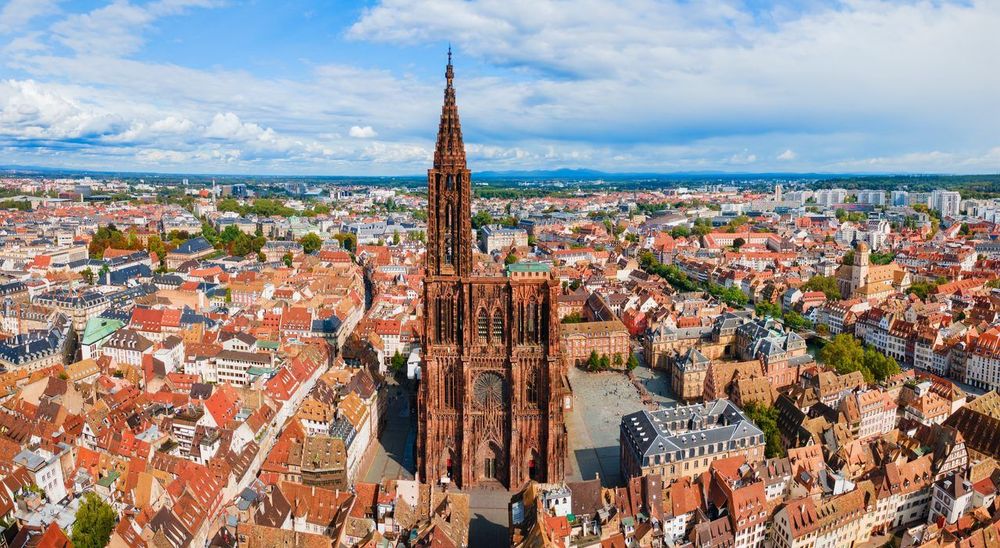
Visiting the historic city and the cathedral costs nothing structurally in Strasbourg: the major religious buildings in the centre open their doors without ticketing, a rarity among Europe's great Gothic cathedrals.
Strasbourg Cathedral and Its Panoramic View
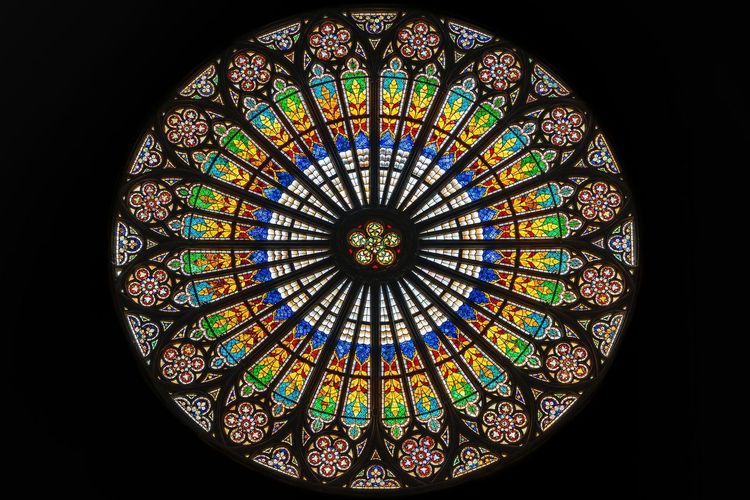
The Strasbourg Cathedral was completed in 1439 and rises to 142 metres. Between 1647 and 1874, it was even the tallest building in the world. Entry into the nave is free all year round: you can admire the medieval stained-glass windows, the Pillar of Angels and the Renaissance case of the astronomical clock, whose current mechanism dates from 1842. Only the famous procession of the apostles, every day at 12:30 pm, requires a ticket of around €3, sold on the day inside the cathedral only.
The cathedral can also be discovered from above: the panoramic platform, perched at 66 metres atop 332 steps, offers on a clear day a view stretching to the Black Forest and the Vosges. It is one of the few paid stops on this list, with a ticket costing a few euros. Our guide to visiting Strasbourg Cathedral details opening times and the best moments to climb. Before looking up at the spire, launch the Ryo audio guide tour on your phone: it starts right on the forecourt and tells the story of how this unique tower, never paired with its twin, was built.
Remarkable Churches: Saint-Pierre-le-Jeune and Saint-Paul
Ten minutes on foot from the cathedral, the Protestant church of Saint-Pierre-le-Jeune preserves an 11th-century Romanesque cloister rarely mentioned in conventional guides, as well as a Gothic rood screen and restored medieval murals. Take a few minutes to sit down: the acoustics transform the faintest footstep into an almost theatrical resonance.
The Saint-Paul Church (Place du Général-Eisenhower, 67000 Strasbourg, rated 4.7/5 on Google from 1,306 reviews) is recognisable from afar thanks to its twin spires, set on the tip of an island in the Ill at the end of the avenue de la Liberté. Built in the late 19th century for the German Protestant garrison, it offers one of the city's finest reflections at sunset, seen from the quay. Both buildings can be visited outside of services, during the opening hours posted on site.
2. Strolling Through Strasbourg's Iconic Neighbourhoods
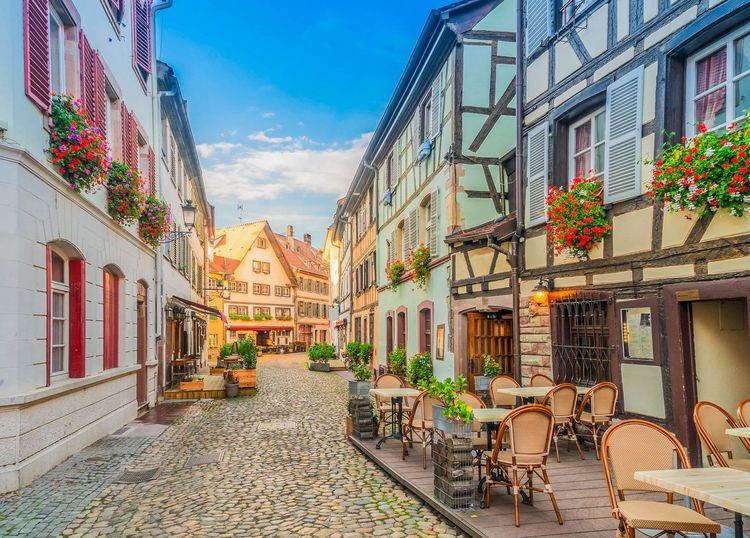
Where should you go for a walk in Strasbourg when you don't want to spend anything? Everywhere, or almost: the centre is explored on foot, and no access is ever controlled.
La Petite France and Its Half-Timbered Houses
Strolling through la Petite France remains the most photographed activity in the city. This district of tanners, millers and fishermen, crossed by the arms of the Ill, lines up half-timbered houses from the 16th and 17th centuries with leaning façades, some topped with open attic storeys where hides were once left to dry. The Ponts Couverts, with their medieval defensive towers, mark the western entrance to the district and can be crossed freely at any hour.
The best time to photograph these façades without the crowds? Early in the morning, before 9 am, when the raking light still grazes the canals. If you prefer a framework rather than wandering at random, the short version of the Ryo audio guide tour, from la Petite France to Grande Europe links this district to the Ponts Couverts in a few commented stages.
The Imperial Neustadt District
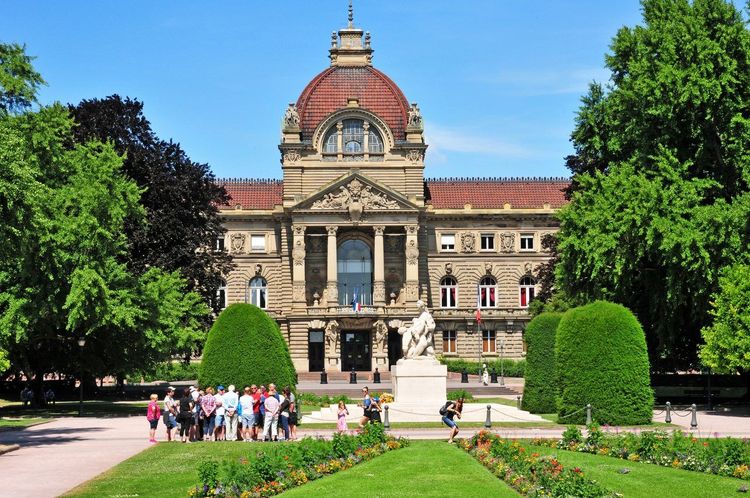
Strolling through the Neustadt offers a complete contrast with the medieval alleyways. Built after the German annexation of 1871, this imperial district unfolds wide avenues, neo-Renaissance buildings and the Palais du Rhin, the former residence of Emperor Wilhelm II. It has been inscribed on the UNESCO World Heritage List since 2017, as an extension of the Grande Île.
Allow a good hour to reach the place de la République, flanked by the Palais du Rhin, the national theatre and the National and University Library, then walk up the avenue de la Liberté to the Palais universitaire. Nothing here requires a ticket: the architecture can be read from the street, and that is all the better.
Place Kléber and the Historic Heart
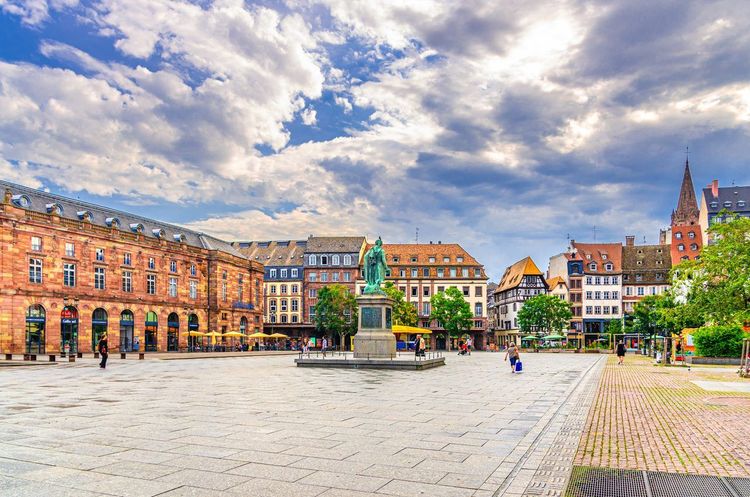
Impossible to miss place Kléber (Place Kléber, 67000 Strasbourg), the largest square in the centre, dominated by the statue of the general and by the Aubette, a neoclassical building whose interior rooms were redecorated in the late 1920s by Theo van Doesburg, Hans Arp and Sophie Taeuber-Arp. Around it, the streets of the Grande Île form a maze where timber-framed houses and 18th-century mansions alternate, perfect for wandering without a set itinerary.
The European Quarter and the Parliament
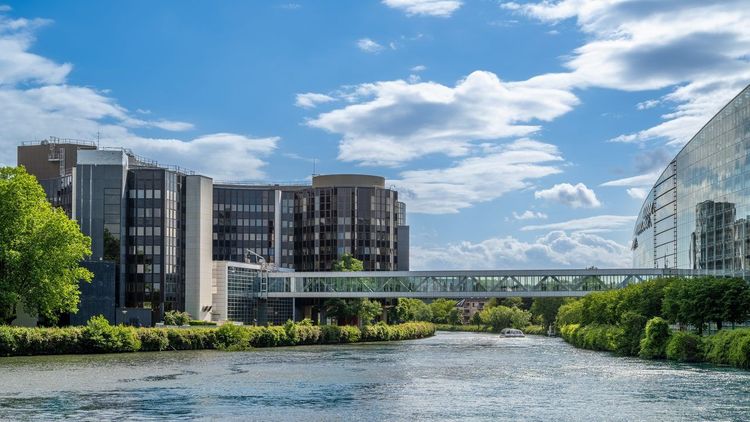
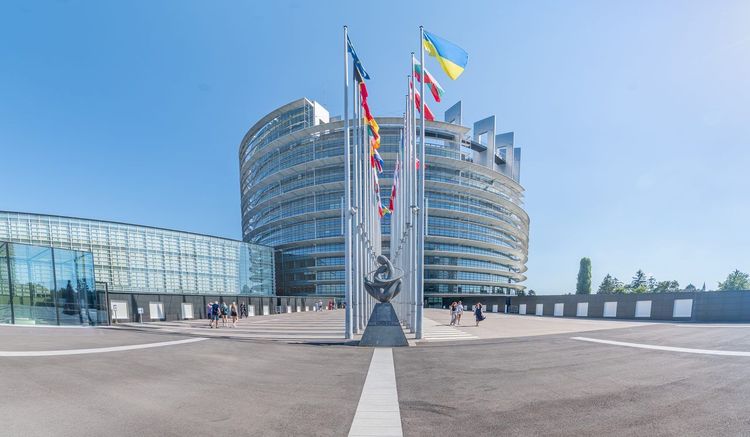
Further north, the European Parliament (1 Avenue du Président Robert Schuman, 67000 Strasbourg, rated 4.4/5 on Google from 2,448 reviews) can be visited free of charge from Monday to Saturday, with no reservation required for individual visitors. The roughly one-hour visit begins with the Parlamentarium Simone Veil, an interactive exhibition on how the Union works, then grants access to the chamber gallery outside plenary sessions. An audio guide is available in 24 languages: simply remember to bring a form of identification.
3. Enjoying Strasbourg's Parks and Green Spaces
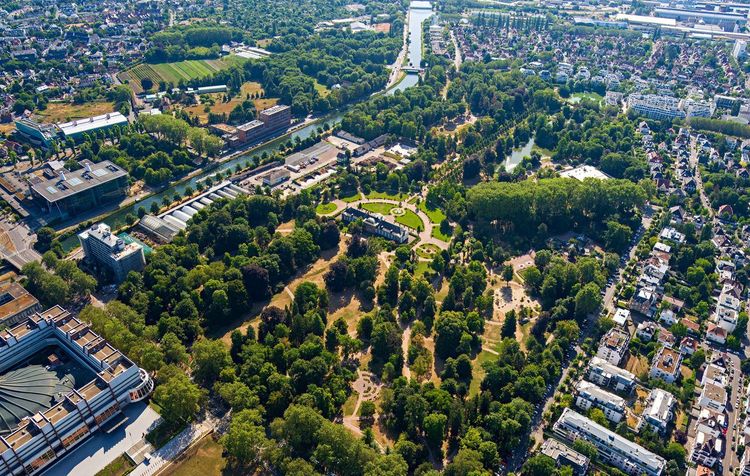
Enjoying Strasbourg's parks requires even less planning than visiting its built heritage: free access is the rule here.
The Parc de l'Orangerie
Discover the Parc de l'Orangerie, the oldest park in the city, laid out around the Joséphine Pavilion, built in honour of the empress at the beginning of the 19th century. You will encounter storks nesting freely at the tops of the trees, a lake lined with willows and wide lawns where Strasbourg residents picnic from the first fine days of the year. The European Parliament is only a few minutes' walk away: the two visits combine naturally.
The Botanical Garden
The University Botanical Garden, heir to a medicinal garden founded in 1619 and the second oldest in France, has occupied a 3.5-hectare plot in the heart of the Neustadt since 1884, approximately one kilometre from the cathedral. Around 6,000 plant species are recorded there, along with an arboretum and a medicinal plant bed. Admission is free during opening hours, and a free guided tour is offered on the first Sunday of each month at 3 pm. Note: the greenhouses, currently undergoing renovation works, remain closed to the public from late September 2026 to late May 2027.
The Barrage Vauban and Its Panoramic Terrace
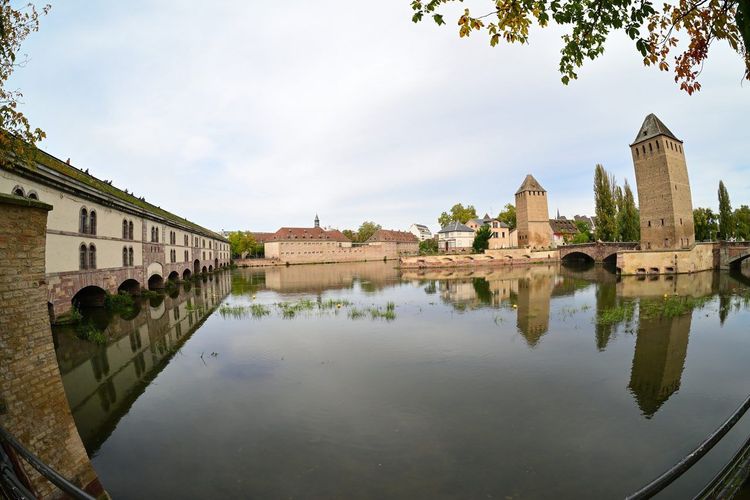
Discovering the barrage Vauban (Rue du Faubourg National, 67000 Strasbourg, rated 4.6/5 on Google from 10,873 reviews), a defensive structure from the late 17th century, always ends with the same highlight: its rooftop terrace, freely accessible, which offers a sweeping view over la Petite France, the Ponts Couverts and the cathedral in the distance. It is undoubtedly the best low-level viewpoint over the water in the entire city, and it remains surprisingly uncrowded outside summer weekends. Head up at the end of the day, when the light gilds the rooftops of the Ponts Couverts.
4. Visiting Strasbourg's Museums for Free
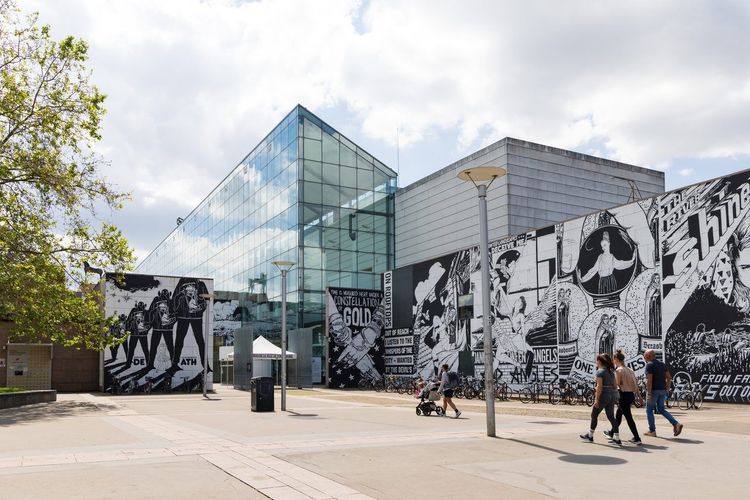
Strasbourg's museums do not offer permanent free admission, but a well-known calendar among locals changes the picture for those who plan ahead.
The First Sunday of the Month at the City Museums
Every first Sunday of the month, all year round, the eleven municipal museums open their permanent collections and temporary exhibitions without a ticket: the Museum of Fine Arts, the Museum of Modern and Contemporary Art, the Archaeological Museum, the Alsatian Museum, the Historical Museum, the Tomi Ungerer Museum and the Musée de l'Œuvre Notre-Dame, among others. To make the most of the museum collections on these occasions, arrive early: the Rhenish art rooms of the Œuvre Notre-Dame and the Palais Rohan fill up quickly by late morning. A tip: choose two nearby museums rather than rushing through four — you will get far more out of the experience.
The Adolf Michaelis Museum of Casts
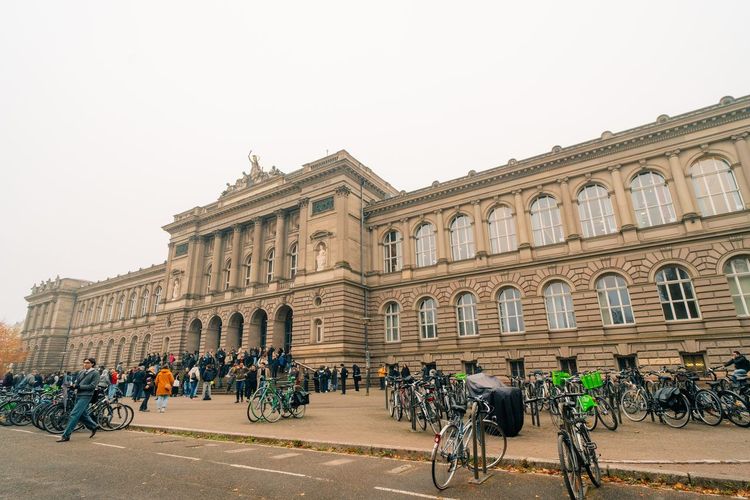
On the garden level of the Palais universitaire, the Adolf Michaelis Museum (Palais universitaire, Place de l'Université, 67000 Strasbourg, rated 4.5/5 on Google from 25 reviews) displays several hundred plaster casts of Greek, Roman and Near Eastern sculptures, assembled from 1874 for the teaching of archaeology. Admission is free on Mondays, Wednesdays and Fridays from 2 pm to 6 pm, outside the summer university holidays (from late May to early September). A discreet address, perfect for a quick dose of art and history between two walks in the Neustadt.
Galleries and Other Exhibitions
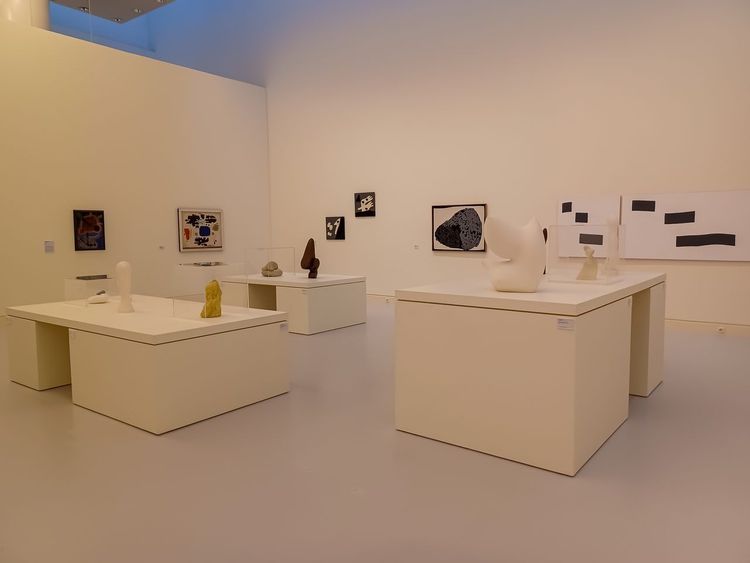
Beyond the municipal museums, several venues exhibit year-round without an admission charge: the 5e Lieu at place du Château, which we discuss further below, the exhibition spaces of the André-Malraux media library, and the contemporary art galleries in the centre, which throw open their doors at opening nights. In May, the European Night of Museums also allows visitors to explore the Museum of Modern and Contemporary Art in the evening, with performances and concerts in the galleries. Check cultural agendas before making the trip: exhibitions rotate with the seasons.
5. The Historic Cellar of the Hospices de Strasbourg
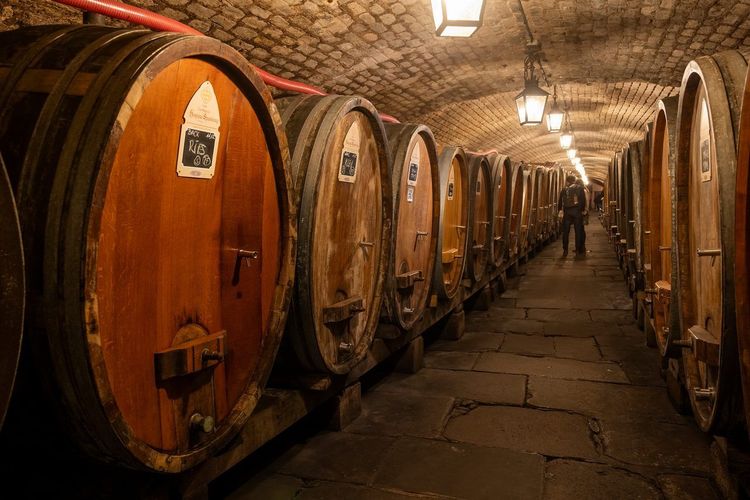
Beneath the civil hospital, the historic cellar of the Hospices de Strasbourg (1 Place de l'Hôpital, 67000 Strasbourg, rated 4.5/5 on Google from 2,187 reviews) deserves a special mention. This vaulted corridor, built in the late 14th century, can be visited freely during opening hours, and behind a grille you can see a cask containing a white wine from 1472, considered the oldest wine in the world kept in a barrel. Around it, enormous vats — some of them carved — serve as a reminder that wine received as payment once funded the care of the sick.
Just a few minutes' walk from the cathedral, this unusual detour escapes most hurried visitors, as there is no signage visible from the street. You, however, will know where to look.
6. Attending Free Shows and Concerts

Seeing performances in Strasbourg without paying for a seat means knowing the right doors: the conservatory, the national theatre and independent venues each offer their own free slots.
The Conservatory and Its Public Season
The Strasbourg Conservatory, housed in the Cité de la musique et de la danse, organises a public season of concerts and recitals given by its students and teachers throughout the year, largely free of charge. The standard often comes as a surprise, particularly during end-of-cycle chamber music recitals.
The TNS's Autre Saison
The Théâtre national de Strasbourg (1 Avenue de la Marseillaise, 67000 Strasbourg, rated 4.5/5 on Google from 704 reviews) programmes, through L'Autre saison, readings, artist meet-and-greets and residency showings accessible without a ticket, on the fringes of its regular programming. An ideal entry point for discovering a company's work before, if you wish, booking a seat for a full production.
Evening Events, Comedy and Unusual Concerts
From comedy to impromptu concerts, several bars and café-theatres in Strasbourg programme open-mic nights during the week, often with a hat passed around. La Soirée d'Olympe, a regular event dedicated to stand-up and performing arts, is a good example. These evenings regularly change venue: check the current address on social media before heading out. The conservatory, the TNS and independent venues are more than enough to fill a full week of culture, provided you keep an eye on agendas that are often published only a month in advance.
7. Discovering Digital Culture and Emerging Practices
Strasbourg nurtures a more contemporary side that is rarely mentioned in guides: that of venues dedicated to digital culture and emerging practices, often accessible without an entry fee.
The Shadok: Trying Out the Digital World
The Shadok, housed in a former port warehouse on the André-Malraux peninsula, presents itself as the city's digital workshop. Access to the building, its shared workspaces and part of its programme of exhibitions and talks requires neither a reservation nor a ticket.
Discovery Workshops: Mixing and Sound Creation
The venue also offers a variety of occasional activities, such as learning to DJ with Wom·x, a collective that introduces DJing and sound production, particularly to female audiences still under-represented in these fields. Slots are announced a few weeks in advance and fill up quickly: keep an eye on the online calendar. For certain workshops requiring specific equipment, a small contribution may be requested.
8. Exploring Media Libraries and Literary Life
Strasbourg's media libraries rank among the city's most generous cultural facilities, going far beyond simple book lending.
The Media Library Network and Its Events
The Eurométropole media library network's flagship is the André-Malraux Media Library, housed in a former industrial silo on the edge of the Dusuzeau basin, opposite the Shadok. On-site consultation, Wi-Fi, computer terminals and a large portion of the programming (talks, workshops, exhibitions) are open without registration. Reading clubs, writing workshops and storytelling sessions round out the offer, with simple booking required for some formats.
The Literary Meetings of the Bibliothèques Idéales
On the literary front, the unmissable event remains the Bibliothèques Idéales festival, held each year between mid-September and early October (18 September to 4 October in 2026). Author meetings, readings, debates and concerts take place at the European Parliament, the salle Saint-Guillaume, in the media libraries and bookshops, largely without a ticket.
Signings and Bookshop Exhibitions
The independent bookshops in the centre, particularly around the rue des Grandes-Arcades and place Kléber, regularly organise signing sessions and small exhibitions, often announced a few days in advance in the shop window. The media library network also runs literacy programmes and anti-misinformation initiatives aimed at schoolchildren and the general public, a lesser-known aspect of its mission.
9. Discovering Lesser-Known Cultural Venues: Archives and the 5e Lieu
The archives of the City and Eurométropole of Strasbourg, on the avenue du Rhin, open their reading room to anyone wishing to consult old maps, registers or historical documents. Registration is immediate and free on presentation of a form of identification, Monday to Friday (afternoons only on Mondays and Tuesdays).
At the foot of the cathedral, the 5e Lieu (5 Place du Château, 67000 Strasbourg, rated 4.7/5 on Google from 155 reviews) is the city's architecture and heritage interpretation centre. Across more than 1,000 m², the permanent exhibition 'A Journey Through Strasbourg' traces the city's urban evolution through models, maps and films, with a 360° panorama over the place du Château. Admission is free, Tuesday to Sunday. Starting your stay here means understanding in one hour what you will encounter on the street.
10. Following the Calendar of Major Events and Festivals
During major highlights, Strasbourg multiplies free events to the point where keeping up with the agenda becomes almost a local sport.
Festivals and Key Dates Throughout the Year
Throughout the year, several events mark the calendar. The O.Q.P. festival (Opération Quartiers Populaires) showcases urban cultures in local neighbourhoods with concerts and workshops open to all. The grand award ceremony of the Prix Strasbourg, held during the Bibliothèques Idéales, also welcomes the public. The Lectura Dantis, a public reading and commentary of the Divine Comedy, recently devoted to Purgatory, draws a loyal audience. Added to these are the European Heritage Days in September, which open courtyards and buildings normally closed, and the summer illuminations of the cathedral, projected onto the façade on summer evenings.
Guided Tours and One-Off Events
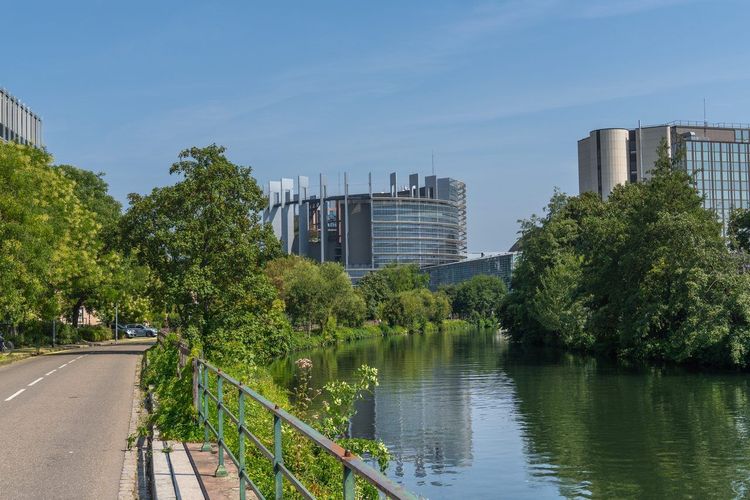
Upcoming events not to be missed also take place during the week. With the Monday Visits, the European Parliament offers a guided tour of around thirty minutes every Monday morning, in French, German and English, to explain the role of the institution. At the André-Malraux Media Library, the André Malraux talks series revisits the writer and Culture Minister's thought. These formats have one thing in common: they change quickly. The most reliable approach is to consult the City's cultural agenda at the start of each month.
11. Enjoying the Christmas Market in Winter
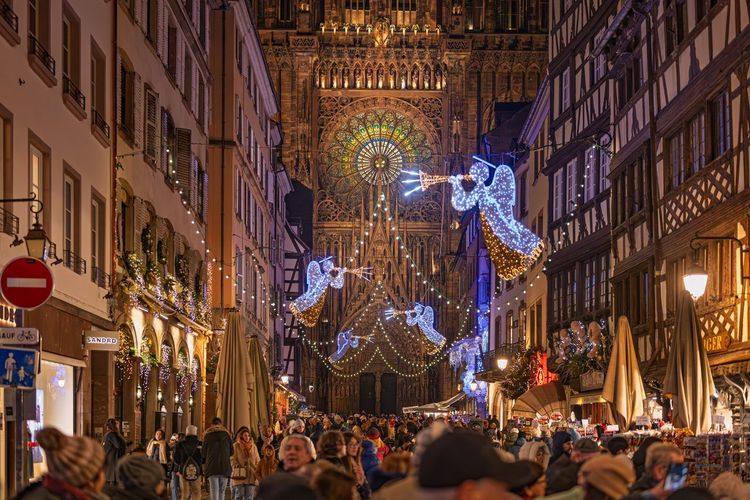
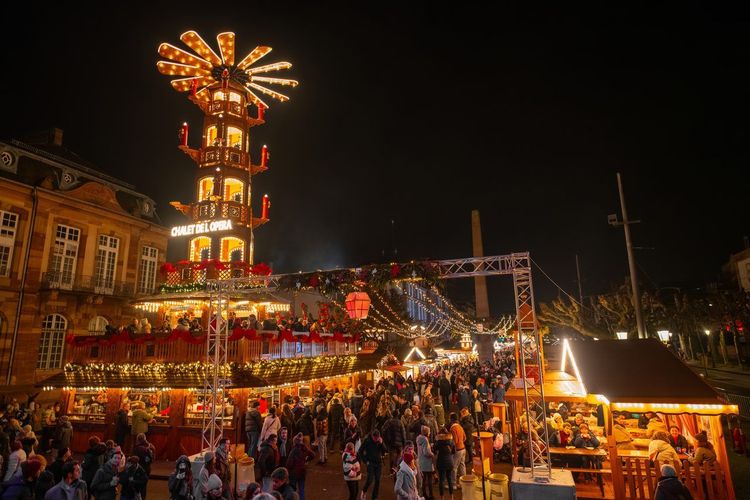
A special festive-season treat: strolling through the Strasbourg Christmas market (Place Broglie, 67000 Strasbourg, rated 4.4/5 on Google from 694 reviews) costs nothing. The roughly twelve sites stretching from place Broglie to place de la Cathédrale, via place Kléber, remain freely accessible; only the mulled wine and bredele are paid for.
The large Christmas tree on place Kléber, installed in late November, stands over 25 metres tall and features a new design every year. During Advent, the 32 audio stops of the Ryo tour can be followed through the illuminated city centre: they give meaning to the decorated façades that visitors so often simply photograph. To extend the walk to nearby villages, read our article on Christmas markets in Alsace.
12. Family Outings Without Spending a Cent
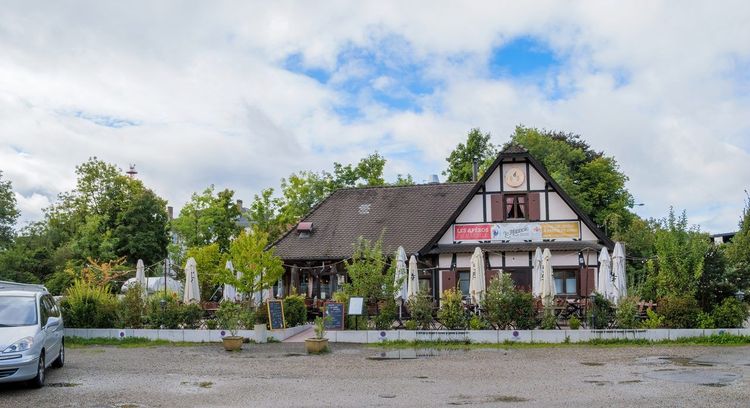
Family outings in Strasbourg require no compromise: the city is full of child-friendly options that don't involve a trip to the ticket desk.
Outdoor Walks and Play for Children
The Parc de l'Orangerie remains the number-one family playground, with its play areas, its mini-golf (paid, that one) and above all its storks, which fascinate visitors of almost every age. The banks of the Ill lend themselves to a bike or scooter ride. Also worth considering are the Parc de la Citadelle or the Jardin des Deux Rives, straddling the border with Kehl: further out, they offer wide lawns for a picnic and far more space for pushchairs than the cobblestones of the historic centre.
Enjoying Cultural Family Outings
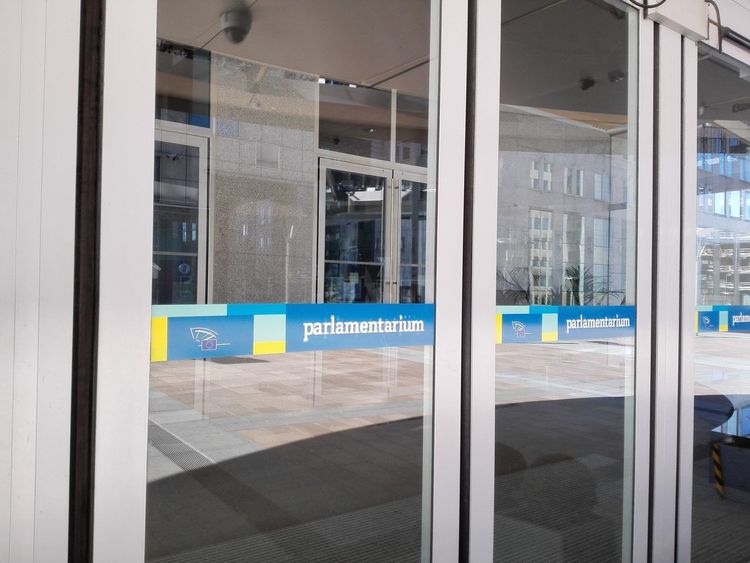
On the first Sunday of the month, several municipal museums offer activity booklets and children's events at no extra charge. The Parlamentarium Simone Veil, with its touchscreens, is also a big hit with 8-to-14-year-olds, as are the storytelling sessions at the media libraries. Simply plan your calendar in advance rather than turning up at random on a Saturday afternoon.
For the walk itself, the Ryo audio guide to Strasbourg can be downloaded on a smartphone and listened to as a family: the anecdotes slipped in between stops keep younger visitors engaged far better than a screen.
13. Practical Tips: Budget, Transport and Best Time to Visit
To fit as many visits as possible into a single day, group stops by district rather than criss-crossing the city: the cathedral, the 5e Lieu and la Petite France on one side; the Neustadt, the Orangerie and the European Parliament on the other.
The CTS bus and tram network is paid, but the Grande Île and a good part of the Neustadt are easily covered on foot. For the European district, tram E or a Vélhop hire bike will save you time. In terms of season, spring and early autumn offer the best balance between moderate crowds, pleasant weather and a packed cultural calendar. And if you want to add a few paid visits, the Strasbourg City Pass, sold at the tourist office, bundles discounts and admissions: a useful supplement, but never a prerequisite.
FAQ
How much time should you plan to visit Strasbourg without breaking the bank?
Two full days are enough to cover the cathedral, la Petite France, the Neustadt, the main parks and the European Parliament. With three days, you can add the Shadok, the media libraries, the 5e Lieu and a first Sunday at the museum.
Are Strasbourg's museums free all year round or only on certain days?
The eleven municipal museums open without a ticket every first Sunday of the month, all year long. The rest of the time, admission is charged, with the exception of places such as the Adolf Michaelis Museum or the 5e Lieu, which are freely accessible during opening hours.
What is the best time to enjoy free activities in Strasbourg?
Late summer and early autumn combine mild weather with a packed agenda, including the Heritage Days and the Bibliothèques Idéales in September. Winter adds the Christmas market, but with larger crowds.
Is Strasbourg's Christmas market free?
Yes, access to all the Christmas market sites is free. Only purchases on site, such as mulled wine or bredele, are paid for, as are certain organised events running alongside.
Do you need to book guided tours and workshops in advance?
It depends on the format: the European Parliament welcomes individual visitors without a reservation, unlike some workshops at the Shadok or Wom·x, where limited places go quickly. Check the organiser's website before making the trip.
Can la Petite France be visited for free?
Yes, entirely: the streets, the quays and the Ponts Couverts can be walked freely at any hour, as can the terrace of the nearby barrage Vauban. Only certain thematic guided tours offered by private operators are paid.
Where can you find the schedule of free events in Strasbourg?
The City of Strasbourg's cultural agenda, updated every week, remains the most reliable source, complemented by the tourist office website and the venues' own social media channels.
Strasbourg proves it step by step: a UNESCO-listed city can be explored without a single euro changing hands for the bulk of its heritage. The cathedral, la Petite France, parks, first-Sunday museums and lesser-known cultural life together make up a programme lasting several days.
To connect all these spots without wasting time finding your way, the Ryo audio guide tour of Strasbourg covers 32 audio stops over 6.6 kilometres — 2 hours and 40 minutes of listening — from la Petite France to the imperial Neustadt district.
À lire également