
Créé par Romane, le 17 nov. 2026
Votre guide Ryo
Arcachon, France
The City of Four Seasons
Parcours audioguidé pour visiter Arcachon en 1 jour
On the edge of the bay, Arcachon is a seaside resort renowned for its beaches, mild climate, and setting between ocean, forest, and dune. With the villas of the Ville d’Hiver, a lively seafront, and the landscapes of the bay, the town offers an atmosphere that is both elegant and natural.
Quand partir à Arcachon ?
Jan.
9°
12
Feb.
10°
10
March
12°
10
April
14°
10
May
17°
9
June
21°
7
July
24°
5
Aug.
24°
6
Sept.
22°
8
Oct.
18°
10
Nov.
13°
12
Dec.
10°
12
The climate in Arcachon is oceanic with a slight southern influence, featuring mild winters, generally between 6 and 13°C, and warm summers tempered by the ocean, most often ranging from 24 to 30°C, with occasional hotter periods during heatwaves; the best times to visit are typically from April to June and then from September to October, when temperatures are very pleasant, sunshine is already well established, and visitor numbers are lower, offering ideal conditions to enjoy the bay, the beaches, and the landscapes between ocean, pine forest, and dunes.
Départ conseillé
We design our tours in a loop so you can easily start your visit at the point closest to you, with the guidance adapting automatically. If you are nearby, we recommend an ideal starting point: on Thiers Square.
Parking à proximité
City Center – Beach Parking (Indigo): 14 Rue Jéhenne, 33120 Arcachon
Parking in Arcachon offers several options for visitors. In summer, the park-and-ride at the entrance to the town is convenient and cost-effective: for €4, a free shuttle takes you to the center in just a few minutes. Year-round, paid car parks such as those by the beach or the train station are open 24/7. Street parking is paid from April to September, with the first hour free on weekdays. Off-season, you can also find free parking spaces on the outskirts.
Découvrez 20 lieux d'intérêt pour visiter Arcachon





What to see in Arcachon on your 1h30 tour?
This 3.2 km loop takes about an hour and a half and links 18 sights. From Place Thiers it follows the seafront and the Grand Hotel, climbs to the Winter Town and its villas past the basilica and the Moorish park, crosses Place Turenne and Place Lucien-de-Gracia, then heads back down past the market and the casino to Thiers beach. With the Ryo app in your ears, every square and villa tells the seaside story of Arcachon, at your own pace.
Information checked in November 2026 and subject to change.
1 - Thiers Square
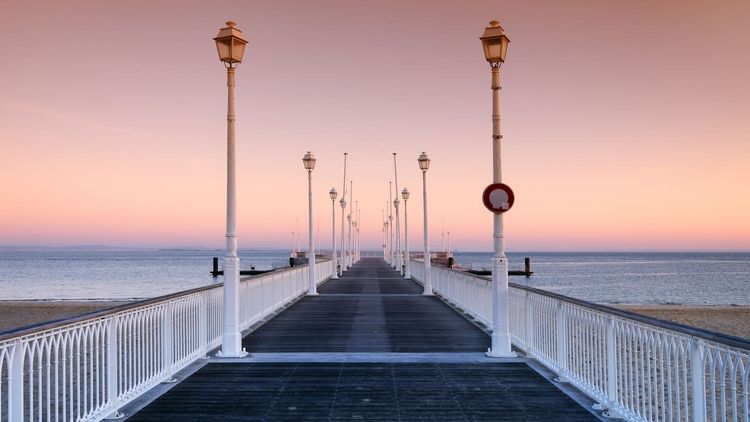
First stop on the walk: this square opening onto the Bassin marks the boundary between the town and the water. It takes its name from a former head of state who stayed here in the 1870s, long after leaving office. Once the terminus for trains arriving from Bordeaux, it has kept its welcoming role, framed by hotel facades and lively terraces. Below, a staircase leads to the nearby pier, destroyed during the Occupation and later rebuilt, with views towards the neighbouring island and its stilt huts.
Free entry
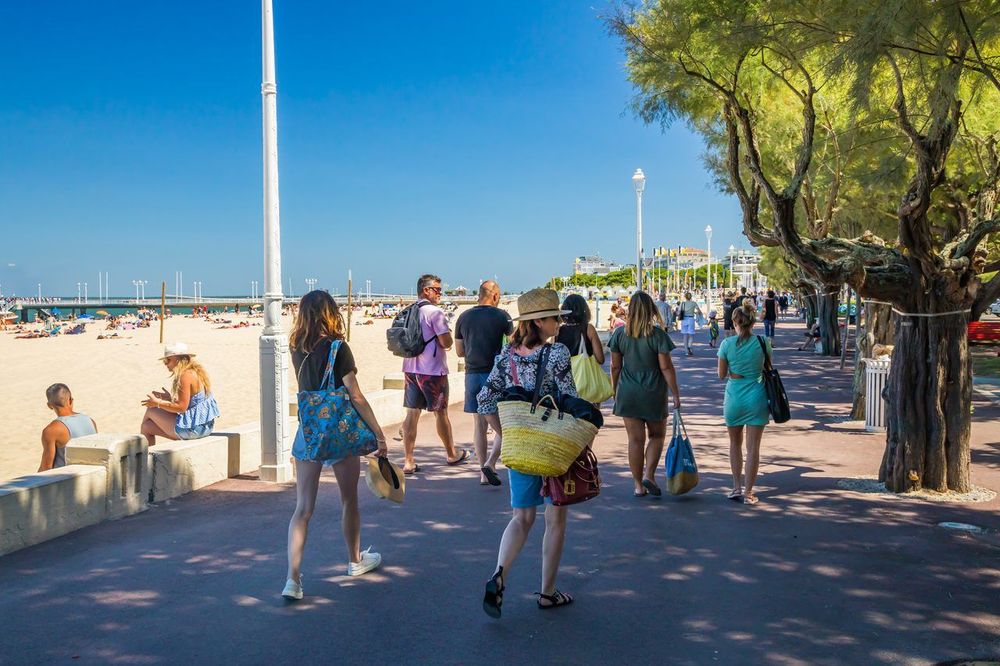
2 - Seafront Promenade
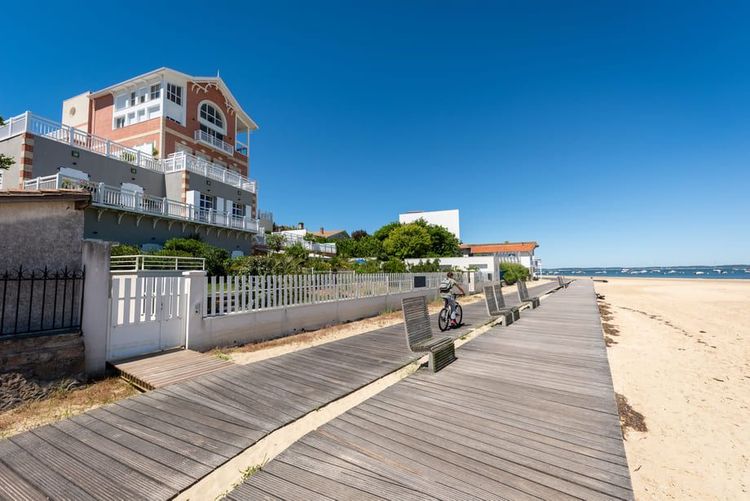
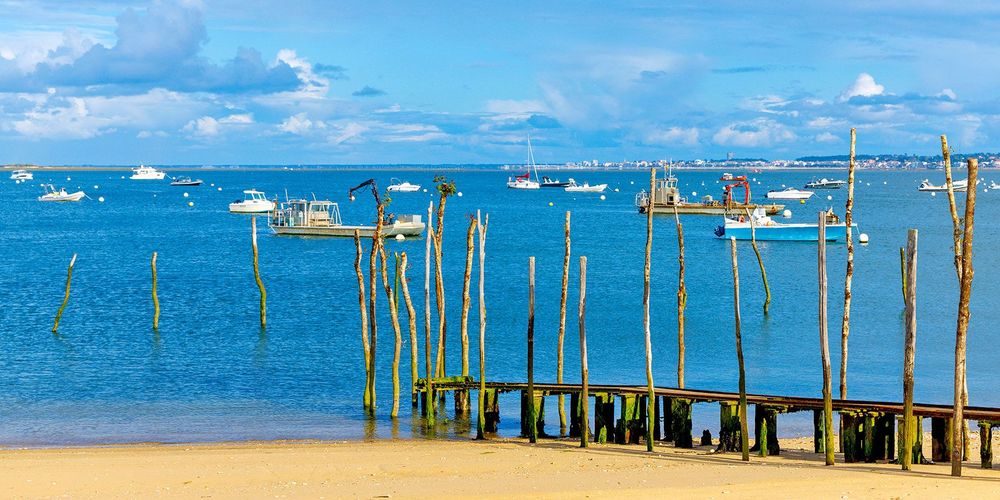
You are now walking one of the country's finest seaside avenues, laid out at the start of the last century to link the town's three piers. To the right opens the Bassin, a lagoon unlike any other in Europe whose surface shrinks sharply with the tide. At its centre, an island changes shape with every storm and shelters a sanctuary for migrating birds. All around, oyster farming supports hundreds of families, ringed by the largest planted pine forest in Europe.
Free entry · Best in the evening
3 - Grand Hotel
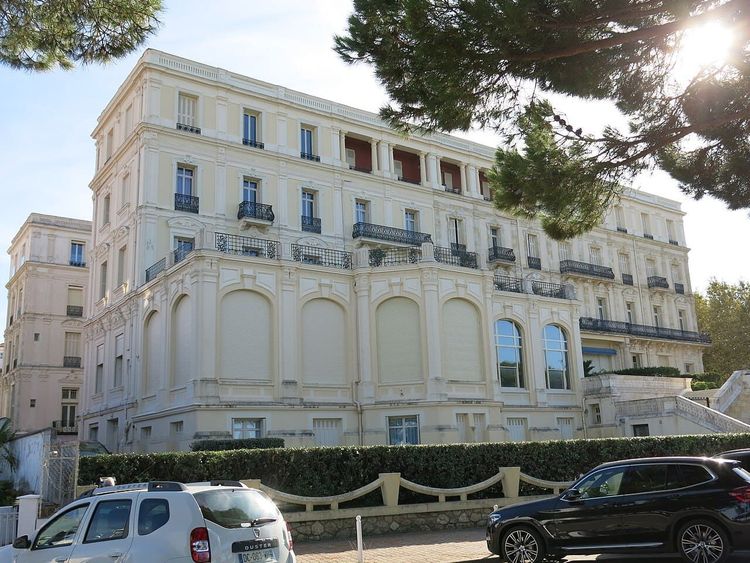
This Haussmann-style facade hides a vanished palace: opened by powerful financiers in the 1860s, it boasted a hydraulic lift and central heating, unheard of at the time. A fire burned it to the ground at the start of the 20th century; today's wider silhouette, topped with a terrace, dates from its rebuilding. Turned into a hospital and later a barracks during the wars, it stopped operating as a hotel in the 1950s and now houses flats, keeping its original grandeur intact.
Free to see from outside
4 - Summer Town, Winter Town
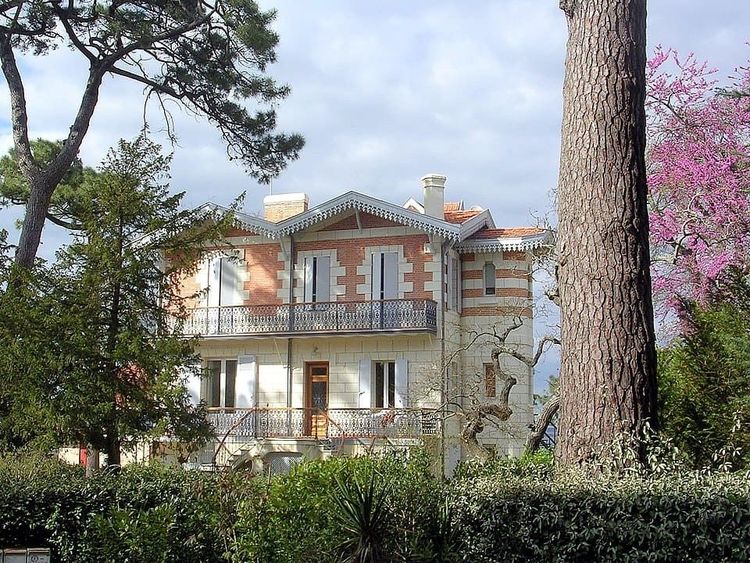
A quirk unique in France: the districts here are named after seasons. Two brothers, financiers close to Napoleon III, dreamed up in the mid-19th century a resort designed for the whole year rather than just summer. The district facing the Bassin welcomed bathers, while a second, built up in the pine forest, sheltered health-seekers from the wind and offered air thought beneficial for the lungs. Two further districts, named after spring and autumn, complete this layout that still sets the town apart.
Free entry
5 - Notre-Dame Basilica
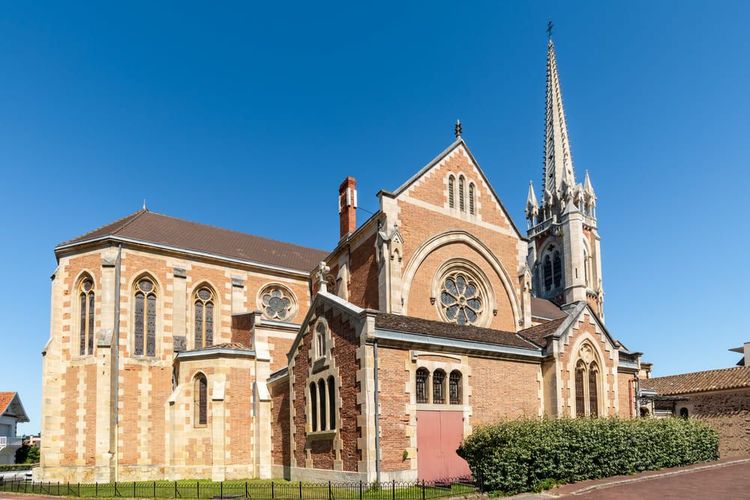
A few steps away stands the town's maritime sanctuary, born of an episode dating back centuries before the resort itself existed. A monk is said to have found a statue of the Virgin on the sand here, then drawn a cross to calm waters threatening two ships. On the nearby pier, a tall wooden cross marks the spot of his first place of prayer, still saluted by passing boats. Today's building, enlarged in the 19th century, keeps the original chapel and many offerings left by grateful sailors.
Free entry
6 - 8 May 1945 Square
This square, laid out in the years following the Liberation, commemorates the end of a world conflict that hit hard a town occupied for four years. Its design was part of a wider plan to smoothly link the seafront with the wooded heights above. A fountain stands at its centre, carried by a sculpture of a woman and a dolphin, the work of a locally born artist. Opposite, a lift carries visitors effortlessly up the slope to the hillside district, beneath a pediment decorated with a mythological relief.
Free entry
7 - Sainte-Cécile Belvedere
A little further hides one of the hillside district's quiet treasures: a metal tower built in the 19th century by the district's architect, assisted by a young engineer destined for a great career. To reach it, visitors cross a suspended footbridge linking two hills over a ravine. The climb follows a spiral staircase that sways slightly underfoot, harmless despite appearances. From the top, the view sweeps over the surrounding villas, the nearby island and, on a clear day, the tip of Cap Ferret.
Free entry · Best early in the morning
8 - Alexandre Dumas Villa
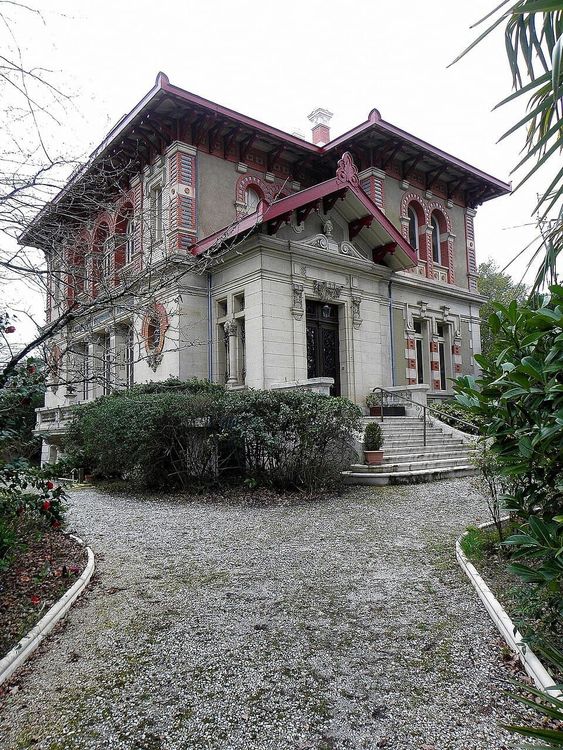
This mansion ranks among the finest in the hillside district, built at the end of the 19th century for a financier who became one of the country's most generous patrons, once his stock-market dealings had made him rich. Its architecture blends Hispanic and neoclassical influences, crowned by a small lookout tower offering a 360-degree view. First named after its owner, it later took the name of a famous novelist who, ironically, never saw it, having visited the town only decades earlier.
Free to see from outside
9 - Brémontier Villa
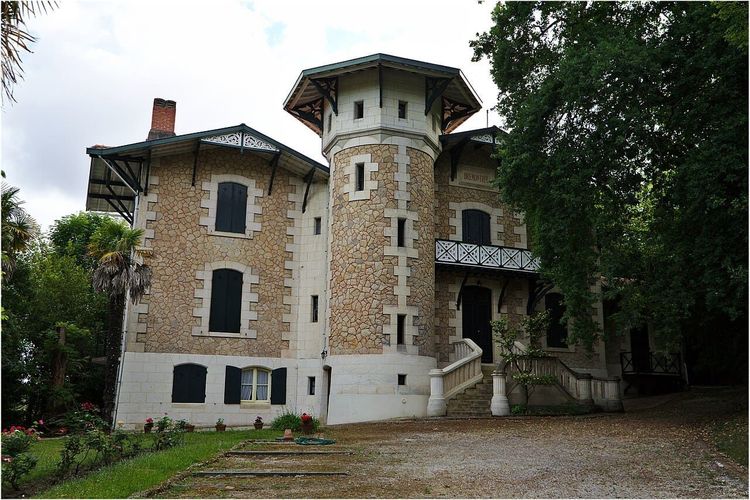
This villa beautifully illustrates the district's eclectic taste, built by the architect of the nearby belvedere for the railway company then developing the town. Its style draws on the alpine chalet, with rubble-stone walls, steep roofs and a polygonal tower housing a spiral staircase. Its name honours the engineer who, in the previous century, devised the technique for fixing shifting dunes with pines, creating the forest we know today, without which the town might not exist at all.
Free to see from outside
10 - Faust Alley
This lane takes the name of the hero of an opera first staged in 1859, whose composer was close to the district's architect. Three villas follow one another here, each named after a character from the work. One, tall and easy to spot thanks to its red-trimmed lookout tower, stood abandoned for decades before a recent spectacular restoration. Another, built in the 1880s, plays on alternating brick and stone. The last, the oldest of the three, has looked like a small fortified castle ever since a late transformation.
Free entry
11 - Mauresque Park
This leafy park occupies the site of a Moorish-style casino that stood here for over a century, visited in its day by Napoleon III himself. Handed over to the town at the end of the 19th century, the grounds became a promenade, linked to the seafront first by a funicular and later by a lift. Fire destroyed the casino in 1977. Today visitors find a model recalling the traditional boat of the Bassin and a monumental statue honouring the local Resistance.
Free entry
12 - Turenne Square
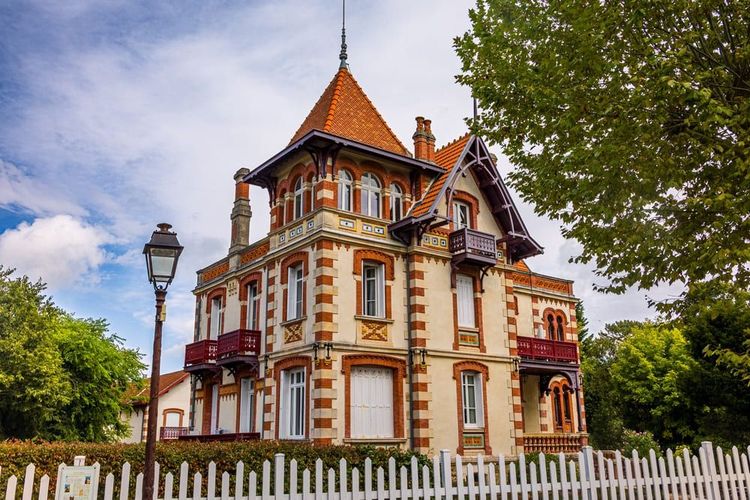
This quiet square bears the name of a 17th-century marshal renowned for his strategic genius, much like the neighbouring streets named after illustrious figures. Several remarkable villas surround it: one, built at the end of the 19th century, owes its name to a hit play of the era; another nearby shows a Hispano-Moorish style unique in the district, with walls mixing terracotta and limestone, and it nearly vanished before gaining protected heritage status.
Free entry
13 - Lucien de Gracia Square
Here is the town's administrative heart, dominated by an elegant building designed shortly after the commune was created, in the mid-19th century. Originally a market on the ground floor with offices above, the building gained the colonnaded portico that now adorns its facade early in the following century. The square itself was renamed in honour of a former mayor, a schoolteacher turned Resistance fighter, who ran the town for more than thirty years and gave it its harbours, swimming pool and golf course.
Free entry
14 - Marquises Square
Facing the town hall stretches this lively square, whose name recalls the wives of a noble family who once owned land on these moors. Its covered market, built at the end of the 19th century and rebuilt in the 2010s on the model of Paris's great metal market halls, hosts some thirty stalls every day. Here visitors find the local speciality par excellence, the Bassin oyster, but also regional caviar, artisan salt, beer brewed with ancient spring water and sweet treats invented locally.
Free entry · Best in the morning
15 - Roger Expert Square
Between the covered market and the beach stretches this square, paying tribute to a local son who became one of the great French architects of the last century. Trained at the Beaux-Arts, he rose to become a master of Art Deco without ever forgetting his roots: he designed several villas on the nearby coast before creating prestigious works elsewhere in the country and abroad. A lively crossing point between fresh produce and seaside pleasures, the square sums up this balance between local ties and international reach.
Free entry
16 - Pilat Dune
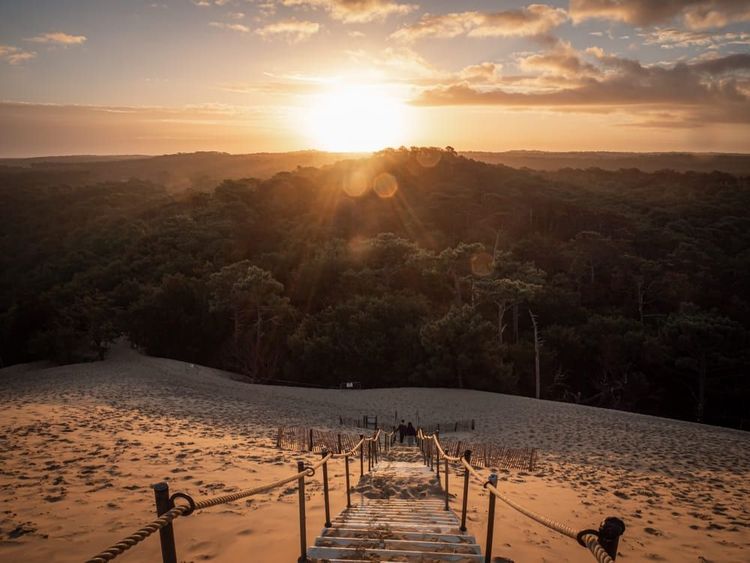
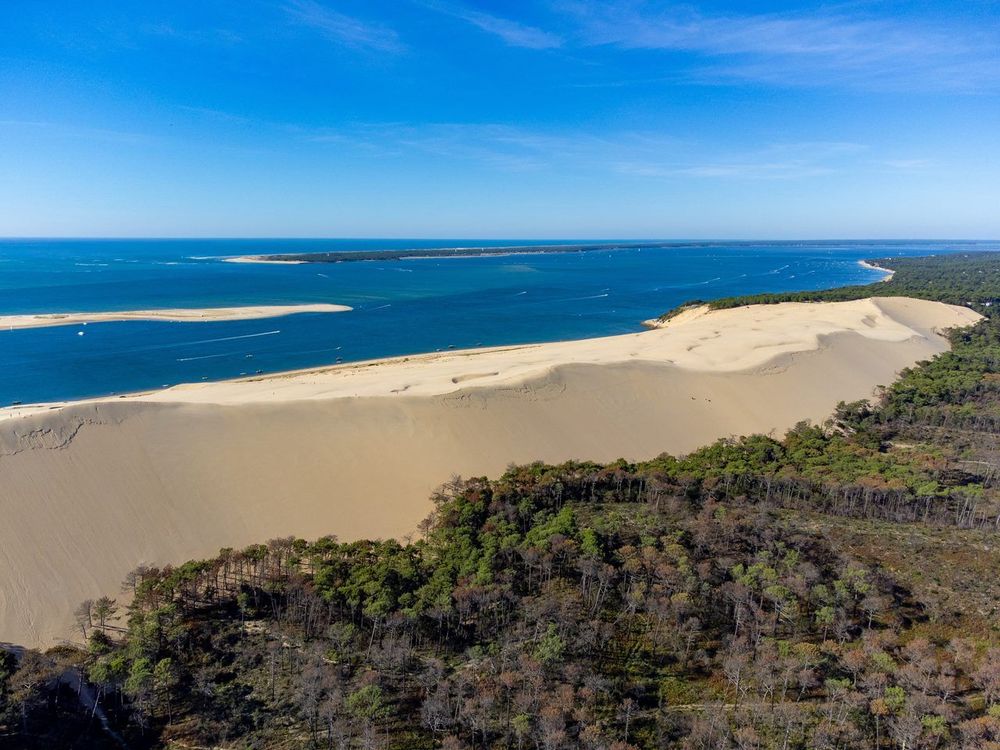
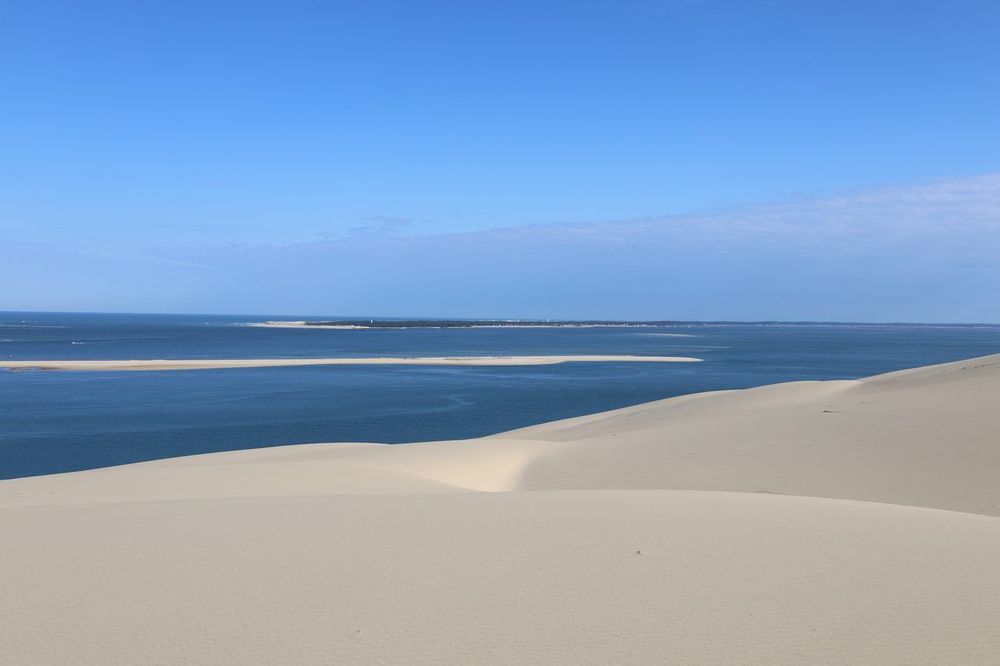
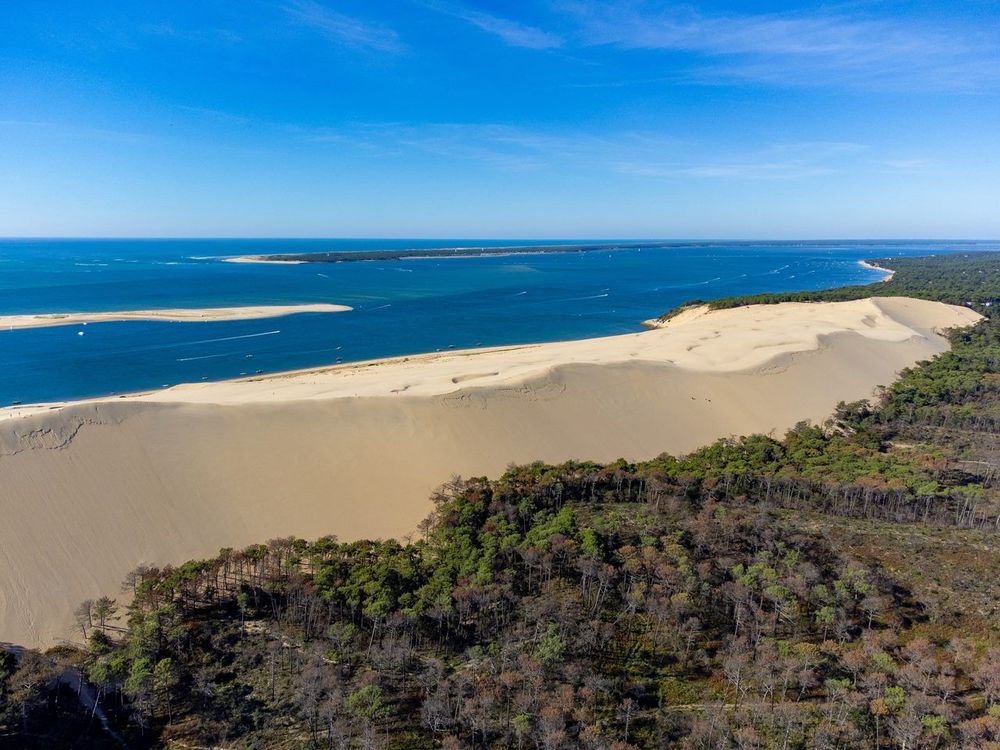
Walking along the beach boulevard, you can glimpse in the distance one of the region's natural treasures: Europe's tallest sand dune, which creeps a little further inland every year, nibbling at the forest as it goes. Formed thousands of years ago thanks to the only break in an otherwise straight coastline, it shelters remarkable biodiversity and remains a protected natural site. From its summit, the view stretches over the Bassin, the tip of Cap Ferret and the ocean beyond.
Free entry · Best late in the day
17 - Casino
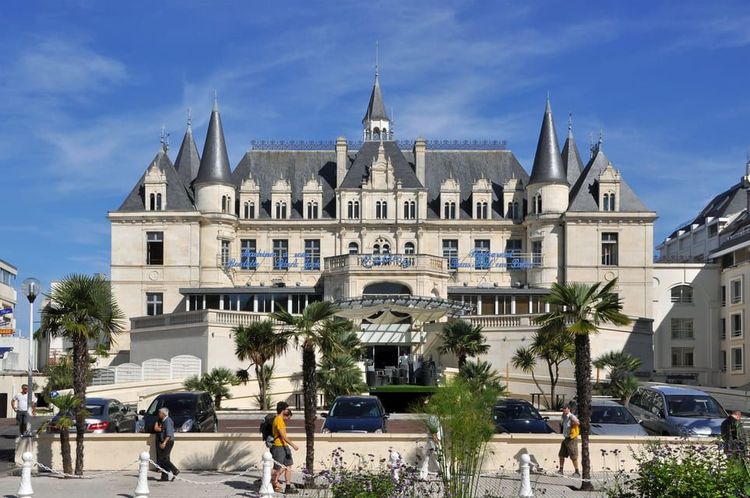
This neo-Renaissance castle, built in the mid-19th century by a wealthy businessman who later became mayor, now houses the town's casino. Its builder is said to have drawn inspiration from an impossible youthful love, and later welcomed leading figures here, including a former president of the Republic. Sold after his death, the building became a casino at the start of the 20th century, a role it has kept ever since. It thus took over from the old Moorish casino, lost to fire in 1977.
18 - Thiers Beach
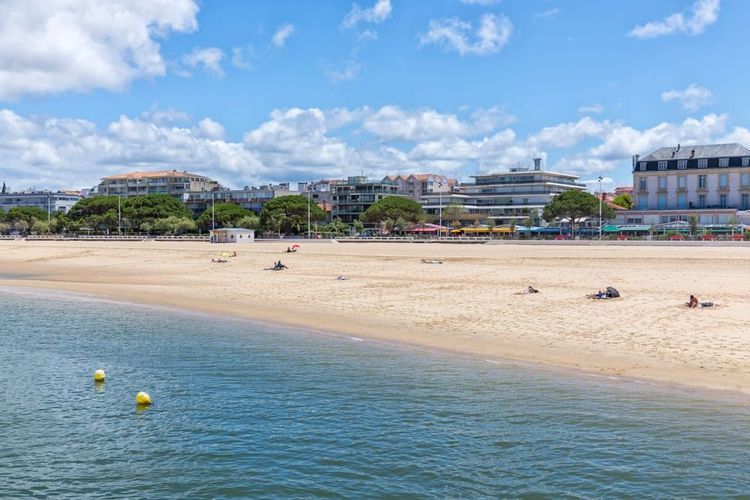
The walk ends on this fine sandy beach, flanked by two of the town's emblematic piers. The one facing it, rebuilt at the start of the 1900s and renovated for its centenary, was long called the new pier before taking the name of the neighbouring square. It remains today the starting point for most boat trips on the Bassin. The other, older pier once welcomed the town's first visitors arriving by train and was the heart of a sardine fishery that long made the harbour proud.
Free entry
What to do in Arcachon in 2 or 3 days?
One day is enough to cover the essentials of the resort: this 3.2 km loop of 18 stops takes about 1.5 hours, between the Summer Town by the Bassin and the villas of the Winter Town. With two or three days, head for the wider waters of the Bassin.
The next day, take the boat from the Thiers jetty across the Bassin to the Cap Ferret peninsula: its red-and-white lighthouse is climbed via 258 steps, and the oyster-farming village of L'Herbe lines its pedestrian-only lanes with colourful huts. Our guide to visiting Arcachon for the first time also covers boat trips on the Bassin and its oyster villages.
On the third day, head for the Pilat Dune, which the route only mentions along the way (stop 16): the climb is free, and from the top the view reaches the Banc d'Arguin, a nature reserve since 1972. On the way back, stop at Le Moulleau, a village within the town whose jetty frames the dune at sunset. Our guide to visiting Arcachon in 3 days adds the oyster villages around the Bassin.
Which neighbourhoods does the tour cross?
The route climbs and comes back down between Arcachon's two faces, the Summer Town by the Bassin and the Winter Town perched in the pine woods.
It starts at Place Thiers, by the Bassin, follows the seafront and the Grand Hotel, then crosses the Summer Town before climbing, past the 8 May 1945 square, towards the wooded heights of the Winter Town (stops 1 to 6).
The villas of the Winter Town then follow one another around the Sainte-Cécile belvedere, perched at the top of the district, then along Faust Alley and the Mauresque Park, as far as Turenne Square (stops 7 to 12).
The route then heads back down to the administrative heart of Lucien-de-Gracia Square, crosses the covered market of Marquises Square and Roger-Expert Square, then passes the casino before ending on Thiers Beach, close to the starting point (stops 13 to 18).
How much does it cost to visit Arcachon?
Of the 18 stops on the route, none requires a ticket to be admired from the street. Fourteen are freely accessible, including the Pilat Dune, which the route only mentions along the way. Three others are seen from outside, and the casino completes the list:
- the Grand Hotel, now an apartment building, whose Haussmann-style façade is admired from Place Carnot;
- the Alexandre Dumas villa, whose monumental gateway and Italian-style belvedere are seen from the street;
- the Brémontier villa, also divided into private flats, whose Swiss-chalet style is viewed from outside;
- and the casino, housed in the Château Deganne, built in neo-Renaissance style.
If you carry on to the Pilat Dune, note that access is free, but parking in the main car park is not: in high season, from €7 for 4 hours to €11 for 12 hours; in low season, from €1 to €4; a 30-minute stop stays free. To extend the day without spending anything, our guide to free things to do in Arcachon lists other ideas.
Information checked in November 2026 and subject to change.
Where to stop for a bite along the tour?
The covered market on Marquises Square (stop 14) brings together most of the local treats.
Under a market hall rebuilt in 2012 on the model of the Baltard halls in Paris, about thirty stalls gather produce from the Bassin. The must-try remains the Arcachon oyster, farmed in these brackish waters that give it a flavour mixing sweetness and iodine, eaten plain or with a dash of lemon and buttered rye bread.
Arcachon has other specialities too: Aquitaine caviar, the Dunes Blanches from Chez Pascal, crunchy choux pastries created in 2007, artisan salt from the Saline du Bassin in Gujan-Mestras, MIRA beer from La Teste-de-Buch, and chocolates from Les Gourmandises d'Aliénor.
What to do in Arcachon with children?
Thiers Beach and the Mauresque Park allow for a family outing without too much walking.
Thiers Beach (stop 18), at the heart of the resort, borders the Bassin: its waters, calmer and more sheltered than the ocean, are lifeguarded in season and popular with families. To climb up without tiring little legs, the public lift up to the Mauresque Park, facing 8 May 1945 Square (stop 6), reaches the Winter Town plateau for free from the boulevard de la Plage.
What should you know before visiting Arcachon?
One stop on the route has limited capacity, and parking in town follows seasonal rules.
The Sainte-Cécile belvedere (stop 7) can only hold 8 people at a time in its metal tower: it is best to climb up early, before the crowds, to enjoy the view without waiting.
If you come by car, street parking in the centre is charged from April to September, with the first hour free on weekdays; in summer, a park-and-ride at the edge of town offers, for €4, a free shuttle to the centre.
What to see around Arcachon?
Three towns in southwestern France, at varying distances from Arcachon, can also be discovered on an audio-guided walk.
The closest, Bordeaux, the Sleeping Beauty with its honey-stone façades and UNESCO-listed treasures, lies 51 km away as the crow flies. Further on, Mont-de-Marsan, the city of three rivers where the Douze and the Midou meet, is 101 km away, and Royan, the phoenix city of the Atlantic rebuilt after the war in a resolutely modern style, 108 km away.
Le plein d'inspirations
Explorez le monde en totale liberté, à pied au cœur des villes ou au fil des routes. Nos guides audios transforment chaque destination en une découverte culturelle immersive et unique.
FAQ for visiting Arcachon
When is the best time to visit Arcachon?
The best times to discover Arcachon run from April to June and then from September to October. During these months, you'll enjoy very pleasant temperatures and plenty of sunshine, perfect for exploring the town on foot and enjoying the bay. Tourist numbers remain moderate, which makes visits more peaceful. Summer offers hot days ideal for the beach, but draws bigger crowds. Winter stays mild, with temperatures generally between 6 and 13°C, allowing for lovely walks even in the low season. Arcachon's temperate oceanic climate makes it a pleasant destination all year round.
How long do you need to visit Arcachon?
For a first taste of Arcachon, allow at least two full days. In one day, you can wander through the town centre, stroll along the seafront and visit an iconic district such as the Ville d'Hiver. With two or three days, you'll have time to explore the town's different facets, enjoy the beaches and take an excursion to the Dune du Pilat. A week will let you range across the whole bay, discover the oyster-farming villages, sail out to the Île aux Oiseaux and really take the time to savour the local way of life between ocean and pine forest.
How do you get around Arcachon and the bay?
Arcachon is easy to explore on foot, especially the town centre and the seafront. To reach the more distant districts such as the Ville d'Hiver or Le Moulleau, the local bus network serves the whole town well. Cycling remains an excellent way to cover the town and the bay's cycle paths. To explore the surroundings, a car offers more freedom, but in season sea shuttles let you cross the bay and reach Cap Ferret. The little tourist train also runs in summer for a panoramic tour. From Bordeaux, the train serves Arcachon station directly in about one hour.
What are the must-see sights in Arcachon?
Arcachon reveals its charms through several iconic sites. The Ville d'Hiver will amaze you with its sumptuous 19th-century villas nestled in the pine forest. The seafront and its beaches invite you to stroll, while the Jetée Thiers offers an unobstructed view over the bay. Don't miss the covered market to taste the local produce. The Parc Mauresque and its belvedere reveal an exceptional panorama. The Ryo audioguide accompanies you on this discovery with a narrated route linking all these points of interest, enriched with anecdotes about the history and architecture of this unique seaside resort.
Where can you swim in Arcachon?
Arcachon offers several beaches to enjoy a swim according to your preferences. The central Thiers beach, right in the heart of town, is the most accessible and lively. The more family-friendly Eyrac beach offers calm waters ideal for children. In the Le Moulleau district, Pereire beach charms with its wilder atmosphere facing the ocean. The bay's beaches enjoy waters that are generally calmer and warmer than on the ocean side. At low tide, some areas can be very far from the shore, so favour swimming around high tide. All the main beaches are supervised during the summer season.
How do you visit the Dune du Pilat from Arcachon?
The Dune du Pilat is located about ten kilometres from Arcachon and remains easy to reach. By car, allow fifteen to twenty minutes via the coastal road that runs along the bay. Paid car parks, in season, are located at the foot of the dune. In summer, shuttle buses regularly connect Arcachon to the dune, a practical solution to avoid parking worries. The more sporty can reach the site by bike via the cycle paths. Access to the dune itself is free all year round. Bring good shoes, as the climb through the sand requires a little effort, but the view from the top over the ocean, the forest and the bay remains unforgettable.
What can you do in Arcachon when it rains?
On rainy days, Arcachon offers several sheltered activities. The covered market lets you wander among the stalls of regional produce in a warm atmosphere. The town centre's many shops make for a pleasant shopping session. Take the opportunity to visit the aquarium museum, which showcases the marine life of the bay. Wellness enthusiasts will enjoy a relaxing break in one of the resort's spas or thalassotherapy centres. Some restaurants with views over the bay create a cosy atmosphere, perfect for sampling local specialities while watching the boats. The multimedia library also provides a pleasant setting to settle down with a good book on the region's history.
Where can you taste oysters around Arcachon?
The Bay of Arcachon remains a paradise for oyster lovers with its many authentic oyster-farming villages. Head to Gujan-Mestras and its seven ports for a tasting with your feet in the water in the traditional cabins. Le Canon and L'Herbe at Cap Ferret offer a more intimate setting facing the bay. In Andernos, the cabins of the oyster-farming port offer a convivial atmosphere. Closer to Arcachon, the port of Larros lets you taste oysters directly at the producers'. Arcachon's markets also sell fresh oysters to take away. The tasting is traditionally accompanied by buttered bread, lemon and a glass of local white wine, ideally an Entre-deux-Mers.
What is Arcachon's Ville d'Hiver?
It is the most surprising district in town: an estate laid out in the 19th century on the wooded dune, sheltered from the wind, originally designed to welcome patients coming to benefit from the pine-scented air. You reach it from the seafront by stairways or by the public lift installed in the Parc Mauresque.
Winding lanes are lined with extravagant villas mixing Swiss chalet, neo-Gothic and far-flung influences, each with its name carved on the façade and its fretwork wooden balconies. The Sainte-Cécile observatory, a metal walkway perched above the rooftops, gives a clear view over the bay. The Ryo audio guide offers a dedicated Arcachon route taking in these villas and the seafront.
How can you see the cabanes tchanquées and the Île aux Oiseaux?
These two stilt houses standing opposite the Île aux Oiseaux are the symbol of the bay. As the island is a protected area you cannot wander freely, they are best seen from the water: from the Jetée Thiers, boatmen run tours of the bay that pass at the foot of the cabins, often with a detour by the oyster beds.
What you see depends on the tide, which completely redraws the landscape: at low tide the cabins sit on vast stretches of sand, at high tide they seem to float. From land you can also make out the outline of the island from the headlands around the bay, but the view stays distant and binoculars come in handy.
What itinerary should you follow for three days in Arcachon and around the Bay?
On day one, spend about 1.5 hours exploring the Ville d'Hiver, its 19th-century villas and the Sainte-Cécile observatory, reached by the free lift in Parc Mauresque, then climb the Dune du Pilat, Europe's highest at over 100 metres, arriving 1.5 hours before sunset. On day two, take the 30-minute boat from Jetée Thiers to Cap Ferret and its oyster villages. The Bay covers around 155 km² at high tide, so tide times shape much of the plan.
Follow it step by step in our 3-day Arcachon itinerary.
What can you do for free in Arcachon?
You can enjoy plenty of things in Arcachon without spending a cent. Wander through the four historic districts, including the Winter Town and its Belle Époque villas, stroll along the Thiers and Moulleau piers, and relax on the sheltered beaches of the Bassin, all free to access.
The coastal path can be walked or cycled, the Parc Mauresque offers lovely views, and the Dune du Pilat is free: only the parking lot costs money. The stilt-house cabins (cabanes tchanquées) can be spotted from the shore, no boat needed.
Find all the free activities, practical tips and the best viewpoints in our guide to free things to do in Arcachon.
When is the Arcachon Christmas market and what can you do there?
The "Féeries de Noël" take over the seafront, between the marina and the Thiers pier, from 11 December to 3 January. Entry is free, daily from 10am to 8pm; only the ice rink is paid, at around 4 euros.
On Place Thiers you'll find the food chalets; on Place des Marquises, an enchanted village with a circus theme. Santa arrives by boat on 12 December. About fifteen villages around the Bay also hold their own markets.
Dates, chalets, oysters and insider tips: find it all in our guide to the Christmas markets of Arcachon and the Bay.
Vos commentaires, idées et suggestions
Aucun avis pour le moment